

There has been extensive research on relationship characteristics and their health effects among heterosexual relationships (Braithwaite, Delevi, & Fincham, Reference Braithwaite, Delevi and Fincham2010; Jaremka, Glaser, Malarkey, & Kiecolt-Glaser, Reference Jaremka, Glaser, Malarkey and Kiecolt-Glaser2013; Love & Holder, Reference Love and Holder2016; Proulx, Helms, & Buehler, Reference Proulx, Helms and Buehler2007; Robles, Slatcher, Trombello, & McGinn, Reference Robles, Slatcher, Trombello and McGinn2014). Multiple studies of college students have showed that those in relationships experienced better wellbeing, fewer mental health problems, and a reduced risk of being overweight or obese (Love & Holder, Reference Love and Holder2016; Braithwaite et al., Reference Braithwaite, Delevi and Fincham2010). Another study showed that marital distress is associated with a decline in immune function (Jaremka et al., Reference Jaremka, Glaser, Malarkey and Kiecolt-Glaser2013). A meta-study of marriage and wellbeing showed that not only is there a relationship between marital quality and wellbeing, but that it can be moderated by various factors such as gender and marital duration (Proulx et al., Reference Proulx, Helms and Buehler2007). In addition to this association between relationship characteristics and wellbeing, it has been shown that multiple relationship characteristics can influence how members of a couple experience their relationship. Specifically, marriage has been associated with higher love for partner and relationship satisfaction (Kurdek & Schmitt, Reference Kurdek and Schmitt1986). Relationship duration has been shown to be associated with higher agreement in reports of positive romantic behaviour (Zimmer-Gembeck & Ducat, Reference Zimmer-Gembeck and Ducat2010), possibly because those with more positive relationships traits are more likely to stay together. One meta-review showed a communication style characterised by reduced emotional expression was associated with poorer relationship quality (Chervonsky & Hunt, Reference Chervonsky and Hunt2017). Last, research has shown that the way a partner approaches conflict can predict changes in relationship quality (Crocker, Canevello, & Lewis, Reference Crocker, Canevello and Lewis2017). Therefore, this wealth of research has established that the health of individuals in a heterosexual couple may rely on their perception of dyadic quality and relationship characteristics that influence those perceptions. Given these findings in heterosexual relationships, it is important to describe whether associations between relationship characteristics, perceptions of dyadic quality and health occur in same-sex couples.
In recent years there has been a growing interest in same-sex relationships in health research. As lesbian, gay, bisexual, and transgender (LGBT) research becomes more comprehensive (Heck, Sell, & Gorin, Reference Heck, Sell and Gorin2006), the scientific community has begun to examine how experiences of same-sex relationships affect the health of LGBT populations. Currently, this research primarily focuses on health concerns such as experiences of intimate partner violence (IPV; Stephenson, Rentsch, Salazar, & Sullivan, Reference Stephenson, Rentsch, Salazar and Sullivan2011), sexual risk behaviour (Crepaz & Marks, Reference Crepaz and Marks2002; Herbst et al., Reference Herbst, Sherba, Crepaz, DeLuca, Zohrabyan, Stall and Lyles2005), and HIV transmission risk (Mitchell, Harvey, Champeau, Moskowitz, & Seal, Reference Mitchell, Harvey, Champeau, Moskowitz and Seal2012) in same-sex male relationships. Additionally, research on same-sex relationships has typically only focused on one partner's report of the topic being examined. While this knowledge contributes somewhat to the understanding of male same-sex relationships, its limited focus on negative health outcomes and only one partner in the relationship may be potentially biased and maintains a gap in understanding how relationship quality and dynamics impact the health of male partners in a same-sex relationship.
Recently, researchers have begun to fill this gap through studying sexual agreements and HIV risk in terms of relationship characteristics. Sexual agreements — verbal agreements regarding which sexual act(s) within or outside the partnership are permitted — have been studied extensively within same-sex male relationships (Hoff, Chakravarty, Beougher, Neilands, & Darbes, Reference Hoff, Chakravarty, Beougher, Neilands and Darbes2012; Mitchell, Reference Mitchell2014; Mitchell et al., Reference Mitchell, Harvey, Champeau and Seal2012; Pilkington, Kern, & Indest, Reference Pilkington, Kern and Indest1994). One study showed psychological and sexual health benefits varied by type of sexual agreement (i.e., open or closed relationships; Parsons, Starks, DuBois, Grov, & Golub, Reference Parsons, Starks, DuBois, Grov and Golub2013). These benefits included less substance use overall and during sex among men in monogamous relationships. Other studies have shown that depending on the extent of the dyad's sexual agreement, an individual's sexually transmitted infection (STI) risk can vary greatly, as determined by the individual's number of sex partners and frequency of condom usage (Hoff et al., Reference Hoff, Chakravarty, Beougher, Neilands and Darbes2012). However, beyond sexual agreements and HIV risk, there has been little research around relationship characteristics and their health effects among same-sex male relationships, though this area has started to gain attention in the past few years.
Given this evidence in sexual agreements research and the precedents from the heterosexual relationships literature, certain relationship characteristics of same-sex male couples (such as marriage, relationship duration, and communication usage and conflict styles) may influence partners’ perceptions of the relationship, and therefore mental and physical health. Furthermore, the research on sexual agreements cited here demonstrates that it is important to know how characteristics across the dyad affect couples in addition to individual effects. Therefore, an in-depth understanding of how perceptions across same-sex relationships affect relationship quality could contribute insights into how dyadic health functions in these relationships. Ideally, the health consequences of how each individual's perceptions compare to his partner's under different relationship characteristics would be described. This knowledge could also inform counselling strategies in dyadic health interventions by identifying positive relationship dynamics a counsellor could emphasise when developing a couple's health plan.
In this article, concordance in partners’ self-reported experiences of love, trust, and dyadic quality in male couples is explored. The first aim of this analysis is to determine whether concurrence in experiences exists. Second, this article aims to determine whether concurrence varies under different relationship characteristics that have been shown to influence relationship experience. Both of these aims are analysed using intraclass correlation coefficients (ICCs). Finally, this article examines whether differing experiences of relationship measures are associated with changes in mental and physical wellbeing among the members of a couple. To explore these associations, an actor-partner interface model (APIM) is used to explore the effects of actor experiences, partner experiences, and divergence in these experiences on relationship satisfaction, sexual agreement breakage, and IPV.
Methods
Study Participants
Concurrence among love, trust, and dyadic quality in same-sex male relationships and its effect on health-related outcomes is analysed using the baseline data from the Stronger Together project, an ongoing randomised controlled trial of same-sex male couples in Atlanta, Boston, and Chicago (clinicaltrials.org reference # NCT01772992). Stronger Together is a trial testing a combination of couples’ HIV testing and a dyadic adherence intervention's effect on ART adherence and engagement in HIV prevention and care (Stephenson et al., Reference Stephenson, Suarez, Garofalo, Hidalgo, Hoehnle, Thai and Sullivan2017). Couples in the Stronger Together study were presumed either serodiscordant or concordant negative for HIV at the baseline visit, with only couples testing as serodiscordant at the baseline visit continuing on in the prospective RCT. Data presented here were from all couples at their baseline visit and thus includes serodiscordant and concordant negative couples. These couples were recruited through online websites and mobile applications (e.g., Facebook, Twitter, geospatial dating apps) as well as community venues (e.g., key locations in LGBT neighborhoods, bars, clubs, LGBT community events). Once recruited, each individual took a preliminary questionnaire screening for eligibility according to the following criteria: at least 18 years old, of male sex at birth, of male gender identity, had been in the partnership for at least 1 month, had been resident in the Atlanta, Boston, or Chicago metropolitan area for at least 3 months, and had not been coerced by their partner to participate in the study.
Of the 602 men preliminarily eligible, 586 (97%) men met eligibility criteria, consented to join the study, and completed a baseline visit. Study eligibility was confirmed by the completion of a couple verification survey at the start of the baseline visit that verified that the two individuals were in a sexual relationship and that no eligibility criteria had changed. Each study site obtained approval from its Institutional Review Board (IRB) for all study activities.
Relationship Measures
Scores from the previously developed love scale (Lemieux & Hale, Reference Lemieux and Hale1999), trust scale (Larzelere & Huston, Reference Larzelere and Huston1980), and Dyadic Adjustment Scale (DAS; Spanier, Reference Spanier1976) were used as relationship quality measures. Each scale was reliable, with Cronbach's alphas of .96, .93, and .96 for love, trust, and DAS respectively (Graham, Liu, & Jeziorski, Reference Graham, Liu and Jeziorski2006; Larzelere & Huston, Reference Larzelere and Huston1980; Lemieux & Hale, Reference Lemieux and Hale1999). All three scales generated scores through multiple items of Likert rating scales assessing consensus with statements or frequency of events. Higher scores for each characteristic indicate greater perceptions of love, trust, and relationship cohesion.
Perceptions of love within a relationship were measured by examining intimacy, passion, and commitment through 19 statements such as ‘[Partner's name] understands how you feel’ (Lemieux & Hale, Reference Lemieux and Hale1999). Items for the trust scale contained eight items, such as ‘There are times where [Partner's name] cannot be trusted’ and ‘[Partner's name] treats you fairly and justly’ (Larzelere & Huston, Reference Larzelere and Huston1980). To assess dyadic quality, the DAS examines dyadic satisfaction, cohesion, and consensus and affectional expression (Spanier, Reference Spanier1976). These 22 questions included, for example, ‘Do you kiss [Partner's name]?’ and ‘How often do you or [Partner's name] leave the house after a fight?’
Covariates
Marriage (categorised as married vs. not married), duration of relationship (categorised as <1 year, 1–5 years, and >5 years), communal coping scores (categorised as heavily coping together as a couple vs. lightly coping together as a couple), and conflict styles (categorised as effective styles outweighing ineffective vs. ineffective styles outweighing effective) were used to measure relationship characteristics that may affect love, trust, and DAS concurrence.
The communal coping score assigns a value for each participant based on that participant's reporting of the couple's communication level, joint effort, and planning and decision-making. A 5-point Likert scale (1 = not to any extent at all, 5 = to a great extent) assessed the participant's and his partner's communal communication use, joint effort, and couples-based decision making regarding sexual health items such as ‘using condoms when we have sex with each other’ and ‘getting tested regularly for STIs and/or HIV’.
Conflict styles were determined by the Rahim's (1983) Organizational Conflict Inventory-II scale. Using this scale, each participant reported frequency of avoiding, accommodating, contending, compromising, and collaborating styles. To obtain a binary measure of conflict style, each participant was categorised by whether they used effective or ineffective styles most often, according to a weighted average of effective styles (collaborating and compromising) compared to a weighted average of ineffective styles (avoiding, accommodating, and contending). This measure was used to categorise partnerships into those who used effective, healthy conflict styles most often and those who used ineffective, unhealthy conflict styles most often. This is a novel approach for converting the Rahim scale into a binary variable.
Health Concerns
Self-reported relationship satisfaction, sexual agreement breakage, and any presence of self-reported IPV victimisation were used as health concerns measures. ‘Health concerns’ refers to measures of mental and physical wellbeing that were examined as outcomes in this analysis. For these concerns, three binary outcomes were created where individuals were separated into categories of those who experienced relationship satisfaction, sexual agreement breakage and any presence of IPV versus those who did not experience any presence of each of these. Participants who did not have a sexual agreement were excluded from the sexual agreement breakage analysis.
Statistical Analysis
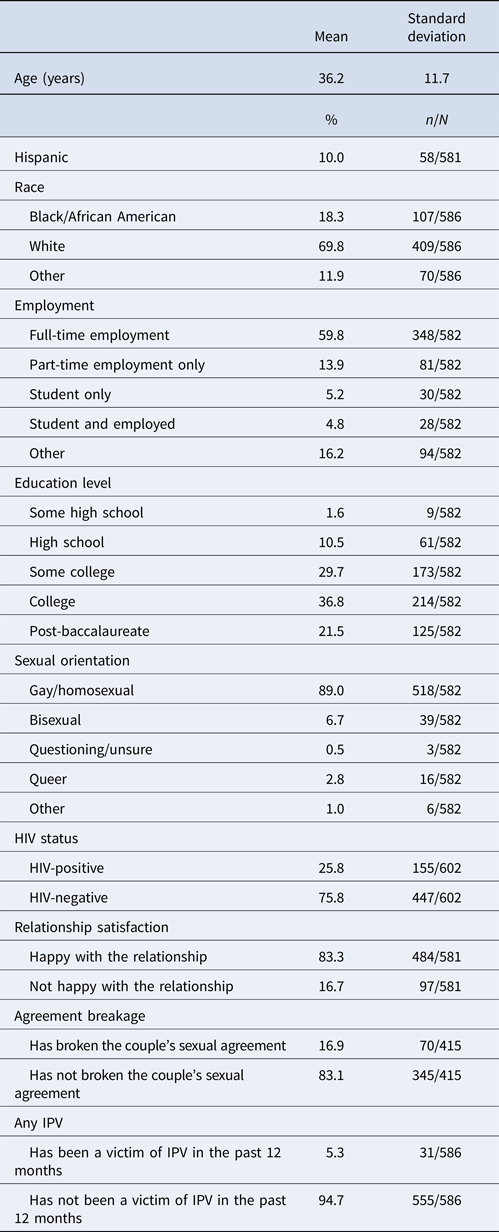
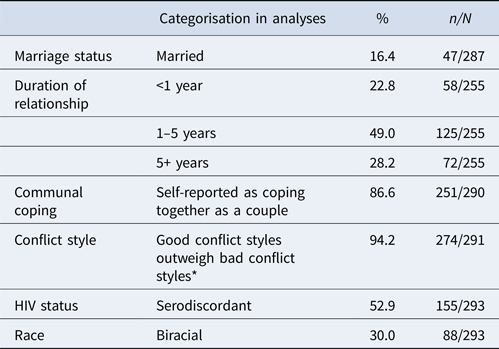
Table 1 shows sample characteristics. Table 2 displays descriptive statistics, including distributions of health-related outcomes and covariates in the sample.
Characteristics of the Stronger Together Sample: Men in 293 Male Couples in Atlanta, Boston and Chicago, 2014–2016

Descriptive Statistics of 293 Male Couples in Atlanta, Boston and Chicago, 2014–2016

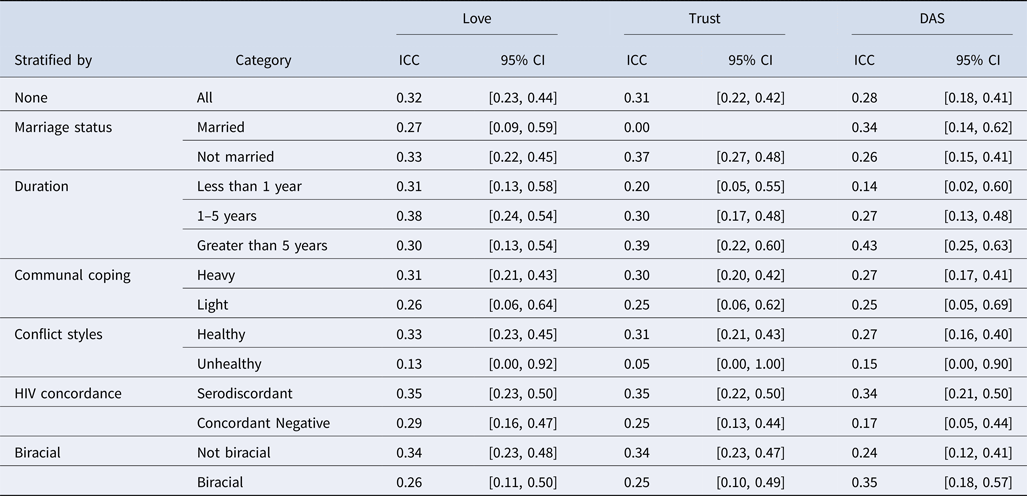
Table 3 exhibits ICC statistics for love, trust and DAS, and stratified ICCs for each covariate hypothesised to modify concurrence in the dyad. ICCs are frequently used to test interrater reliability, but for the purposes of this paper, they are used to measure the level of agreement between both partners’ responses to love, trust, and DAS items. The ICC ranges from 0 to 1, with 0 meaning no agreement and 1 meaning perfect agreement within the couple. ICCs have previously been used to assess concordance of self-reported measures within couples (Mohr & Fassinger, Reference Mohr and Fassinger2006). These ICCS were calculated using the %icc9 SAS macro developed by Harvard University (Hertzmark & Spiegelman, Reference Hertzmark and Spiegelman2010).
Intraclass Correlation Coefficients for Agreement Between Partners, Overall and Stratified by Covariates Among 293 Male Couples in Atlanta, Boston and Chicago, 2014–2016

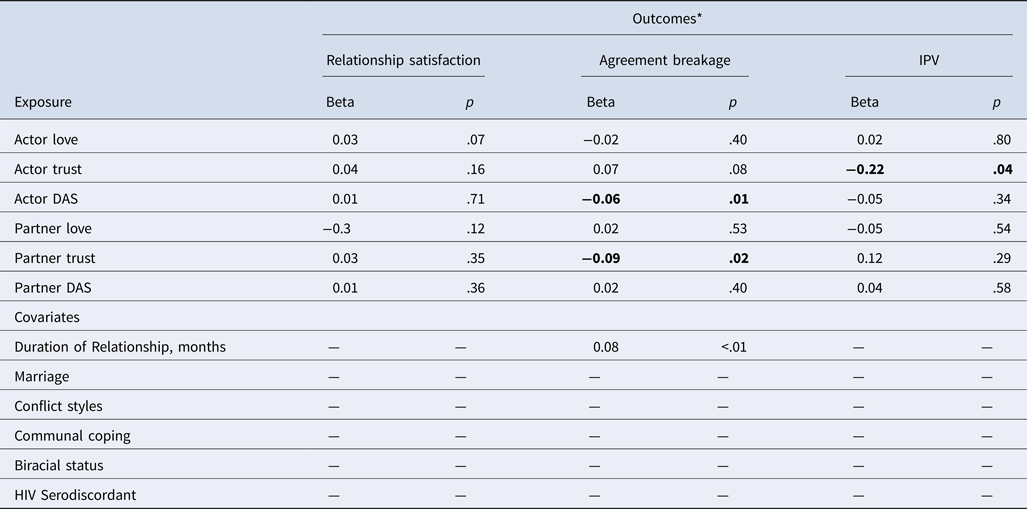
APIM was used to assess actor effects, partner effects, and the association between dyadic concurrence and health concerns (Kenny, Kashy, & Cook, Reference Kenny, Kashy and Cook2006). Here, simple backwards elimination was employed to produce the multivariable models outlined in Table 4. For each model, effects of the difference between the partner and actor were included for love, trust, and DAS. Each model was controlled for study site. All exposures regardless of significance were retained.
APIM Analyses of Love, Trust and Dyadic Quality and Their Association with Health Concerns Among 293 Male Couples in Atlanta, Boston and Chicago, 2014–2016

Note: *Controlled for study site. Bolded values indicate statistical significance at a 95% confidence level.
All statistical analyses were conducted using SAS 9.4 (SAS Institute Inc., Cary NC). For ICCs, 95% confidence intervals were used to assess significance, with an interval including zero indicating non-significance. Additionally, overlapping intervals indicated a non-significant difference between groups. In the APIM analysis, a p value of <.05 was utilised to determine significance. There are no corrections for multiple comparisons.
Results
Descriptive Statistics
The mean age of the study sample was 36.2 years (SD = 11.7). The sample was 10.0% Hispanic. Overall, 18.3% participants identified as Black/African American, 69.8% as White, and 11.9% identified as some other race. About 90% of the sample reported identifying as gay/homosexual, 6.7% as bisexual, 2.8% as queer, 0.5% as questioning/unsure, and 1.0% reported ‘other’ sexuality. The sample reported high levels of love, trust, and favorable dyadic quality with their partner (median = 78 on a scale of 0–95; median = 34 on a scale of 0–40; median = 108 on a scale of 0–132 respectively). Among relationship-related outcomes, the distributions were as follows: 83.3% of the sample reported being happy with the relationship, 70.1% had a sexual agreement, of which 16.9% had broken the agreement, and 5.29% had experienced physical IPV victimisation in the past 12 months.
Sixteen percent of the couples in the sample were married. Twenty-three percent of the couples in the sample had been in their relationship for less than a year, just under half (49%) between 1 and 5 years, and almost a third (28.2%) for longer than 5 years. The couples in the study sample reported high levels of communal coping (86.6%) and effective conflict style usage (94.2%). Just over half (52.9%) of the couples in the sample were serodiscordant for HIV. Thirty percent were biracial.
Intraclass Correlation Coefficients (ICCs)
The ICC statistics obtained for love, trust, and DAS scores (Table 3) indicated that partners reported experiences in measures of love, trust, and dyadic quality scores that were significantly more similar than if the partners had no concurrence in these measures. However, these agreement levels for love, trust, and DAS only indicated poor concurrence between partners (ICC = .32, ICC = .31, and ICC = .28 for love, trust, and DAS respectively). An ICC below .4 is considered poor (Cicchetti, Reference Cicchetti1994).
The stratified ICCs in Table 3 show ICC by marriage status, duration of relationship, communal coping usage, conflict style, couple's HIV status, and couple's racial status. The analysis found that for love, trust, and DAS, use of effective conflict styles was associated with a concurrence significantly better than zero, whereas use of ineffective conflict styles was associated with non-significant concurrence. Though not significantly different, frequent use of communal coping was also associated with higher point estimate of concurrence in love and trust compared to lesser use of communal coping. Similarly, the ICCs presented show a trend where concurrence in trust and dyadic quality increased from those together less than 1 year to those together from 1 to 5 years to those together greater than 5 years, though no two groups had significantly different ICCs. HIV serodiscordant couples showed a non-significant increase in agreements across all measures. Biracial couples showed a non-significant decrease in agreement of love and trust paired with a non-significant increase in agreement on dyadic quality.
Marriage status was also associated with concurrence of some relationship measures. A significant difference was observed where unmarried couples showed higher concurrence in experiences of trust than married couples, which showed no concurrence (ICC = 0). There was higher concurrence among DAS of married couples than among unmarried couples, though not significantly so. Additionally, higher concurrence among experiences of love was observed within unmarried couples, but less within married couples, though this was also not a significant difference.
Modelling Results
The APIM examined the relationship between actor effects, partner effects, and concurrence on love, trust, and DAS measures, and three outcomes: relationship satisfaction, sexual agreement breakage, and IPV in the partnership (Table 4). In the first model, no studied exposure or covariate was significantly associated with relationship satisfaction. The second model indicated that the more someone reported dyadic quality, the less likely he had broken the agreement (β = −0.06, p = .01). It also indicated that the more a partner trusted the actor, the less likely the actor was to have broken the agreement (β = −0.09, p = .02). One other significant variable of the agreement breakage model was duration of relationship (β = 0.08, p < .01). The third model indicated that the more someone reported trusting their partner, the less likely he had experienced IPV victimisation (β = −0.22, p = .04).
In addition to the covariates displayed in Table 4, each of the models included terms for the absolute difference in relationship measures between actor and partner to explore whether differences in partners’ perceptions were correlated with health concerns, independent of actor and partner effects. None of the relationship measures showed significance for these differences between partners. In response to this, these terms were removed from the models.
Results Summary
Our sample reported high levels of love, trust, relationship satisfaction, communication use, and effective conflict style use. Partners reported more similar perceptions of love, trust, and dyadic quality than would be expected by chance alone. However, this agreement in perception varied under certain relationship characteristics. Couples who used unhealthy conflict resolution styles more often than health conflict resolution styles did not share perceptions of love, trust, or dyadic quality. Married couples tended to show different perceptions of trust, while unmarried couples showed similar perceptions of trust. Further exploration revealed that the higher an individual reported dyadic quality, the less likely he was to have broken the couple's sexual agreement. Likewise, the more his partner trusted him, the less likely he was to have broken the couple's sexual agreement. This analysis also determined that the more an individual trusted his partner, the less likely he was to have experienced IPV.
Discussion
This sample of men in same-sex relationships reported somewhat similar experiences as their partners for love, trust, and dyadic quality in their relationships, but also retained variations from their partners in how they experienced these constructs. Furthermore, various relationship characteristics were differently associated with concurrence between partners. Effective conflict styles used within the dyad was associated with shared experiences of all relationship measures. This may indicate that the way couples interact can bring partners closer together in experience. However, the reverse causality may also be at play, where couples who are closer in experience tend to have healthy interaction and are thus more likely to have longer relationships.
Though there were no significant differences between groups, our point estimates showed a trend where duration of relationship increased partners’ likelihood of sharing experiences in trust and dyadic quality. Due to the wide confidence intervals here, more research is needed to determine whether this trend among our point estimates is an association that we did not have the power to mark as significant. If this trend does indicate a true association, it is possible that having similar experiences prompts longer relationships, or that experiences become more similar as the duration of the relationship increases.
Marriage also affected levels of concurrence among trust. Married couples in this sample reported less agreement in levels of trust, but unmarried couples were more likely to agree on their experiences of these relationship measures. Meanwhile, love showed a similar pattern, but the difference was not significant. In the literature on heterosexual relationships, researchers have reported non-concurrence for love and trust among engaged and newly married couples (less than 2 months married), but that love and trust concur among exclusively dating couples and longer-term married couples (Larzelere & Huston, Reference Larzelere and Huston1980). As hypothesised by Larzelere and Huston (Reference Larzelere and Huston1980), this pattern could be an indicator of a turbulent period in relationships. When considering this hypothesis in the sample, it is important to note that social and romantic stressors specific to married same-sex male couples may influence partner discord and, therefore, degree of concurrence among the couple (Todosijevic, Rothblum, & Solomon, Reference Todosijevic, Rothblum and Solomon2005).
Given this varied concurrence across relationship characteristics, analyses using APIM were performed to describe the association between health concerns and actor experiences, partner experiences, and the difference between the two. These models indicated that the differences between actor and partner experience did not affect relationship satisfaction, sexual agreement breakage, or presence of IPV. However, in some cases, actor and partner effects were differently associated with these health concerns.
The second of these models showed that actor experience of dyadic quality and partner's experience of trust were associated with sexual agreement breakage. First, the model showed that a higher perception of dyadic quality within the actor reduced the presence of agreement breakage. This relationship between components of dyadic quality (such as satisfaction, commitment, intimacy, and passion) and agreement breakage has been demonstrated before in same-sex male relationships (Gomez et al., Reference Gomez, Beougher, Chakravarty, Neilands, Mandic, Darbes and Hoff2012; Hosking, Reference Hosking2013; Mitchell et al., Reference Mitchell, Harvey, Champeau and Seal2012). However, to our knowledge, this is the first study to identify an association between the DAS measure of dyadic quality and agreement breakage. More research will be needed to confirm that this association is not due to residual confounding factors and assess whether low dyadic quality causes agreement breakage, or vice versa.
Second, the model showed that higher levels of trust reported by a partner is associated with reduced agreement breakage. This may indicate that sexual agreement breakage erodes trust of the non-breaking party. Another possibility is the opposite causality, where low trust by one's partner may lead one to break an agreement, as previous research has shown that the presence of one low trust partner can lead to both parties experiencing less closeness after conflict (Kim et al., Reference Kim, Weisberg, Simpson, Oriña, Farrell and Johnson2015). Low trust on one end could reduce closeness in the partnership, which in turn instigates low relationship quality and reduces the value of the sexual agreement to the more trusting partner. If the value of the agreement is significantly lessened, agreement breakage may become more common. The observed association could also be a product of a third factor that we did not control for, indicating residual confounding. This model also contained a significant covariate, where if the duration of the relationship increased, the likelihood of agreement breakage increased. Given the observed association, duration of relationships, along with dyadic quality and trust, is important to consider when developing dyadic level interventions, particularly those that discuss sexual agreement breakage.
In the final model, there was an association between the actor's perception of trust and presence of IPV. In our sample, the less an actor trusted a partner, the more likely they were to have been a victim of IPV in the relationship. This relationship had been demonstrated before (Finneran & Stephenson, Reference Finneran and Stephenson2014; Pruitt, White, Mitchell, & Stephenson, Reference Pruitt, White, Mitchell and Stephenson2015; Stephenson et al., Reference Stephenson, Rentsch, Salazar and Sullivan2011). One theory regarding this association is that a high level of trust reduces stress, and therefore reduces experiences of IPV among the couple (Bartholomew & Cobb, Reference Bartholomew, Cobb, Horowitz and Strack2010).
This knowledge is important when delivering couples-based health interventions, as one would expect interventions that respect the specific relationship dynamics displayed by each couple to be most effective in influencing mental and sexual health. In addition, couples’ interventions that discuss agreement breakage, such as couples’ HIV testing and counselling, can benefit from knowing that the actor's perception of dyadic quality and the partner's trust level may be influential in any agreement breakage. Additionally, all couples’ interventions should keep in mind that the actor's level of trust in his partner is associated with IPV victimisation. Being aware of these effects may help providers anticipate these concerns and more effectively address them with the relationship.
Limitations
This article was limited by the inclusion criteria of the sample and its cross-sectional nature. These findings can only be applied to urban same-sex male couples in the United States, the population included in the sample. Likewise, given the distribution of relationship characteristics, these findings may only apply to relationships with high love, trust, and DAS levels. This selection bias likely emerges from the nature of a sample consisting of volunteers who are willing to participate in research with their partner. Additionally, causal conclusions cannot be drawn due to the cross-sectional nature of the study. All findings indicate associations because a temporal ordering of events cannot be established with these data.
Strengths
This study also had several strengths, including the relatively large sample size of same-sex male couples, the use of validated scales, and the variety of relationships included. The inclusion criterion defines a relationship as having one partner who one is committed to above all others. This broad language included nearly all varieties of sexual agreements and relationship states, such as monogamous to open agreements and newly dating to long-term married relationships. Inclusion of a wide variety of relationship states created a thorough analysis that is generalisable to many types of relationships.
Conclusion
Same-sex male relationship dynamics, as with all relationships, are complex, with partners showing similar, but not identical experience of relationship characteristics. However, the experiences of two partners within a relationship can be more similar under certain relationship conditions, such as use of effective conflict styles. Various actor and partner perceptions of trust and dyadic quality are associated with mental and sexual health concerns, with higher experience of trust and dyadic quality in the actor and higher experience of trust in his partner leading to better outcomes.
When developing couples-based health interventions, it is necessary to respect these relationship dynamics as factors that may have an impact on the mental and sexual health of both partners. Providers administering couples’ interventions may benefit from knowing how each partner perceives the love, trust and dyadic quality among their relationship, as this is associated with agreement breakage and IPV. In addition, more research is needed to identify whether interventions influencing a couple's concurrence in perceptions of love, trust, and dyadic quality could be used to promote better health among couples. It has been previously suggested that providers could do this through emphasising empathy (Gerace, Day, Casey, & Mohr, Reference Gerace, Day, Casey and Mohr2017) and communication usage (Thompson & O'Sullivan, Reference Thompson and O'Sullivan2016) among couples. If further research shows that the associations observed in this analysis arise from a causal relationship, couples’ interventions may be able to influence health through shaping relationship characteristics among the dyad.