Introduction
The global population is expected to reach over 9 billion by 2050, providing a challenge to increase food production by 70–100% in order to meet increasing demand (van Wart et al., Reference Van Wart, Kersebaum, Peng, Milner and Cassman2013; Svubure et al., Reference Svubure, Struik, Haverkort and Steyn2015). Specifically, sufficient food supply has been the main concern in China due to its large and increasing population. Cropland areas in China have decreased gradually because of urbanization and economic development. Therefore, increasing crop production depends mainly on improving output from current cropland. Potato (Solanum tuberosum L.) is one of the main food crops and the Chinese government launched a strategy of potato staple food normalization to promote its production and consumption as the fourth major food crop following rice, wheat and maize. China's potato production is presently almost 100 million tonnes, making China the world's leading potato-growing nation. The northwest region of China produces nearly one-third of its annual harvest (MOA, 1982–2014). In future, potato will play an important role in China's food security.
Although China's northwest has great productive capacity, potato yield has been restricted by water shortages and imbalances of nutrient application. Increasing potato production through sustainable intensification depends on the yield gap between current actual (on-farm) yield and yield potential in a specific agroecological environment. Exploiting and narrowing the current yield gap through nutrient management is one way to increase potato production. Therefore, the first step is to determine yield potential and actual yield in a given region using scientific approaches and technologies.
Yield potential is the maximum attainable yield achieved under field conditions when all factors of crop management are as effective as possible (Svubure et al., Reference Svubure, Struik, Haverkort and Steyn2015). The maximum attainable yield can be estimated by crop model simulation or obtained through field experiments; maximum farmer yields are based on surveys at a local level (Lobell et al., Reference Lobell, Cassman and Field2009; Van Ittersum et al., Reference Van Ittersum, Cassman, Grassini, Wolf, Tittonell and Hochman2013). Multiple-year field experimental data have been used successfully to determine attainable yield for maize (Meng et al., Reference Meng, Hou, Wu, Chen, Cui and Zhang2013), wheat (Lu and Fan, Reference Lu and Fan2013) and rice (Xu et al., Reference Xu, He, Zhao, Qiu, Johnston and Zhou2016). More information about the region's attainable potato yield is needed to determine how it can best support increasing potato demand. The yield gap between attainable and actual yield could be closed through improved management practices.
Thus, the objectives of the current study were to: (1) quantify potato yield response to fertilization and nutrient use efficiency; (2) determine attainable yield, average actual on-farm yield and yield gaps of potato and (3) estimate nutrient gaps relative to yield gaps.
Materials and methods
Attainable yield
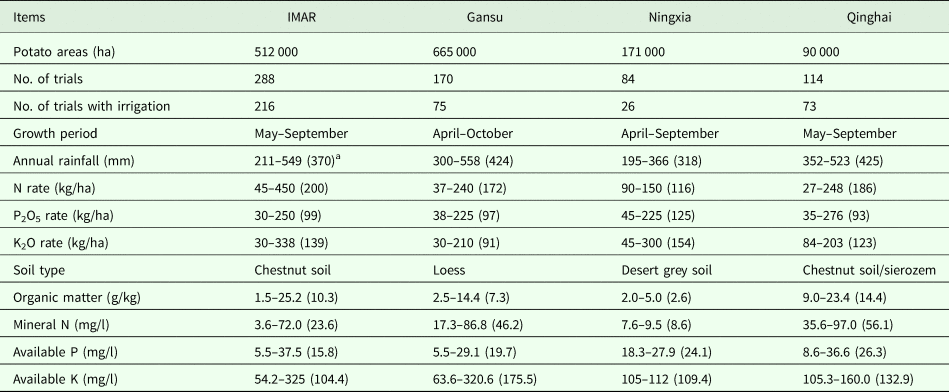
The multiple-year field experimental data, one of the four methods used at a local level (Van Ittersum et al., Reference Van Ittersum, Cassman, Grassini, Wolf, Tittonell and Hochman2013), were used to analyse and estimate attainable yields of potato. This included a total of 288, 170, 84 and 114 on-farm trials conducted since 2002 in the main potato production areas in Wuchuan county (111°45′N, 41°08′E, 1700 m asl), Wuyuan county (108°27′N, 41°10′E, 1050 m asl) and Linhe city (107°40′N, 40°75′E, 1038 m asl) of IMAR, Dingxi city (104°59′N, 35°46′E, 1985 m asl), Hezheng county (103°31′N, 35°43′E, 2000 m asl) and Jishishan (102°85′N, 35°74′E, 1700 m asl) of Gansu province, Tongxi county (106°39′N, 36°82′E, 1529 m asl), Xiji (105°73′N, 35°97′E, 1919 m asl) and Haiyuan county (105°65′N, 36°57′E, 1800 m asl) of Ningxia province, Huzhu county (101°95′N, 36°83′E, 2533 m asl), Ledu county (102°40′N, 36°48′E, 1974 m asl) and Gonghe county (101°40′N, 36°59′E, 2632 m asl) of Qinghai province (Table 1). Each trial had an optimum nutrient recommendation treatment (OPT) developed using the Agro Services International (ASI) ‘systematic approach’ (Hunter, Reference Hunter1980; Portch and Hunter, Reference Portch and Hunter2002), as well as corresponding nutrient omission treatments, e.g. without nitrogen (OPT-N), without phosphorus (OPT-P) and without potassium (OPT-K). Fertilizer recommendation rates varied greatly due to soil testing results and target yield. The amount of total NPK fertilizer applied in the OPT treatments ranged from 105–825 kg/ha in IMAR, 135–555 kg/ha in Gansu, 225–600 kg/ha in Ningxia and 186–588 kg/ha in Qinghai with averages of 438, 360, 395 and 402 kg/ha, respectively (Table 1). Potato cultivars used in the experiments were rounded white and oblong yellows, including Chinese selections such as Kexin (Su and Lai, Reference Su and Lai2007), Longshu (Wen et al., Reference Wen, Wang and Li2007) and Qingshu (Zhang et al., Reference Zhang, Na, Shi, Sun and Yuan2006).
Characteristics of the field trials and soil properties

N, nitrogen; P2O5, phosphorus pentoxide; K2O, potassium oxide; IMAR, Inner Mongolia Autonomous Region.
a Numbers in parenthesis represent the average.
Yield response to N, P or K fertilization was the difference between tuber yield obtained from OPT treatment and the respective yield from N, P or K omission treatment. Attainable yield was estimated from the yields of OPT treatments. Due to the arid climatic conditions in northwest China, it was reasonable to assume that reaching the 90th percentile yield threshold under an OPT treatment would mark the maximum attainable yield.
Actual on-farm yield
The actual on-farm yield was estimated using the method proposed by Van Ittersum et al. (Reference Van Ittersum, Cassman, Grassini, Wolf, Tittonell and Hochman2013) based on statistical data. Average actual on-farm yield was the crop yield achieved by farmers in a given agroecological region under the general management practices commonly used in the region (Cassman et al., Reference Cassman, Dobermann, Walters and Yang2003).
In the current study, official statistical data from the Chinese Ministry of Agriculture between 1982 and 2014 (MOA, 1982–2014) were used to estimate the actual on-farm yield. These statistical data represented the average yield of all potato planted within regions, including both rainfed and irrigated potato, collected by farm surveys that were generally used to estimate actual yield (Haverkort et al., Reference Haverkort, Sandaña and Kalazich2014; Svubure et al., Reference Svubure, Struik, Haverkort and Steyn2015). The soil types, properties and growing conditions in the main potato production areas in the four provinces were similar to the experimental sites (Table 1). Sequential average on-farm yields, starting from the yield in 2014 and gradually including yield from earlier years, and the coefficient of variation (CV) was calculated. The minimum number of recent years with stable sequential average yield and lower CV were used to calculate the average actual on-farm yield.
Yield and nutrient gaps
The yield gap in a certain location is defined as the difference between attainable yield and average actual on-farm yield. The nutrient gap, i.e. the increase of nutrients required to increase yield and close the yield gap, was estimated based on nutrient PFP and the yield gap, i.e. N (P or K or NPK) gap = Yield gap/PFPN (P or K or NPK). The PFP was calculated as potato tuber yield obtained under an OPT treatment divided by the amount of nutrient applied, i.e. PFP = potato yield/nutrient rate. The PFPN, PFPP, PFPK and PFPNPK represented PFP of N, P, K and NPK, respectively.
Statistical analysis
Statistical analysis and calculations, the relationship between potato yield and total fertilizer applied, relationship between PFP and nutrient application rate, relationship between tuber yield in OPT treatment and PFP, relationship between tuber yield and water supply, as well as sequential average actual on-farm yields and coefficients of variation were performed using Microsoft Excel. SigmaPlot14 (2017 Systat Software Inc.) was used to analyse the distribution of potato tuber yields from OPT treatments and to create the box plot.
Results
Identifying attainable potato yield
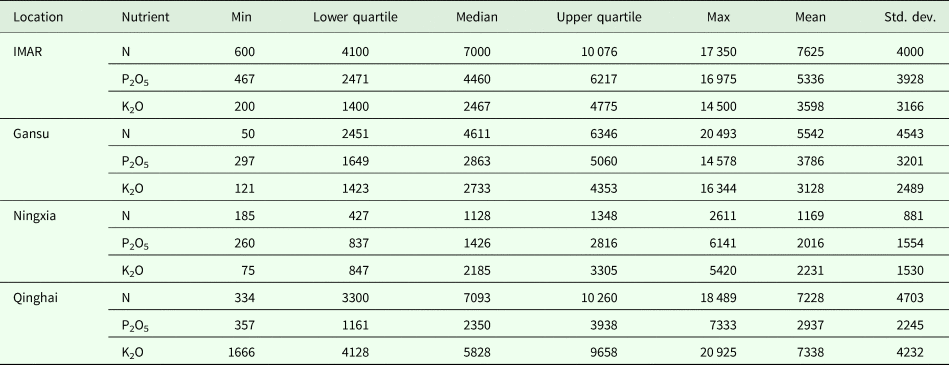
The network of field trials found great variations in tuber yield response to N, P and K fertilizer application throughout northwest China (Table 2). On average, N, P and K fertilization increased potato yield by 7625, 5336 and 3598 kg/ha in IMAR, by 5542, 3786 and 3128 kg/ha in Gansu, by 1169, 2016 and 2231 kg/ha in Ningxia and by 7228, 2937 and 7338 kg/ha in Qinghai, respectively.
Potato tuber yield response to nitrogen, phosphorus and potassium fertilizer application (kg/ha)

N, nitrogen; P2O5, phosphorus pentoxide; K2O, potassium oxide; IMAR, Inner Mongolia Autonomous Region.
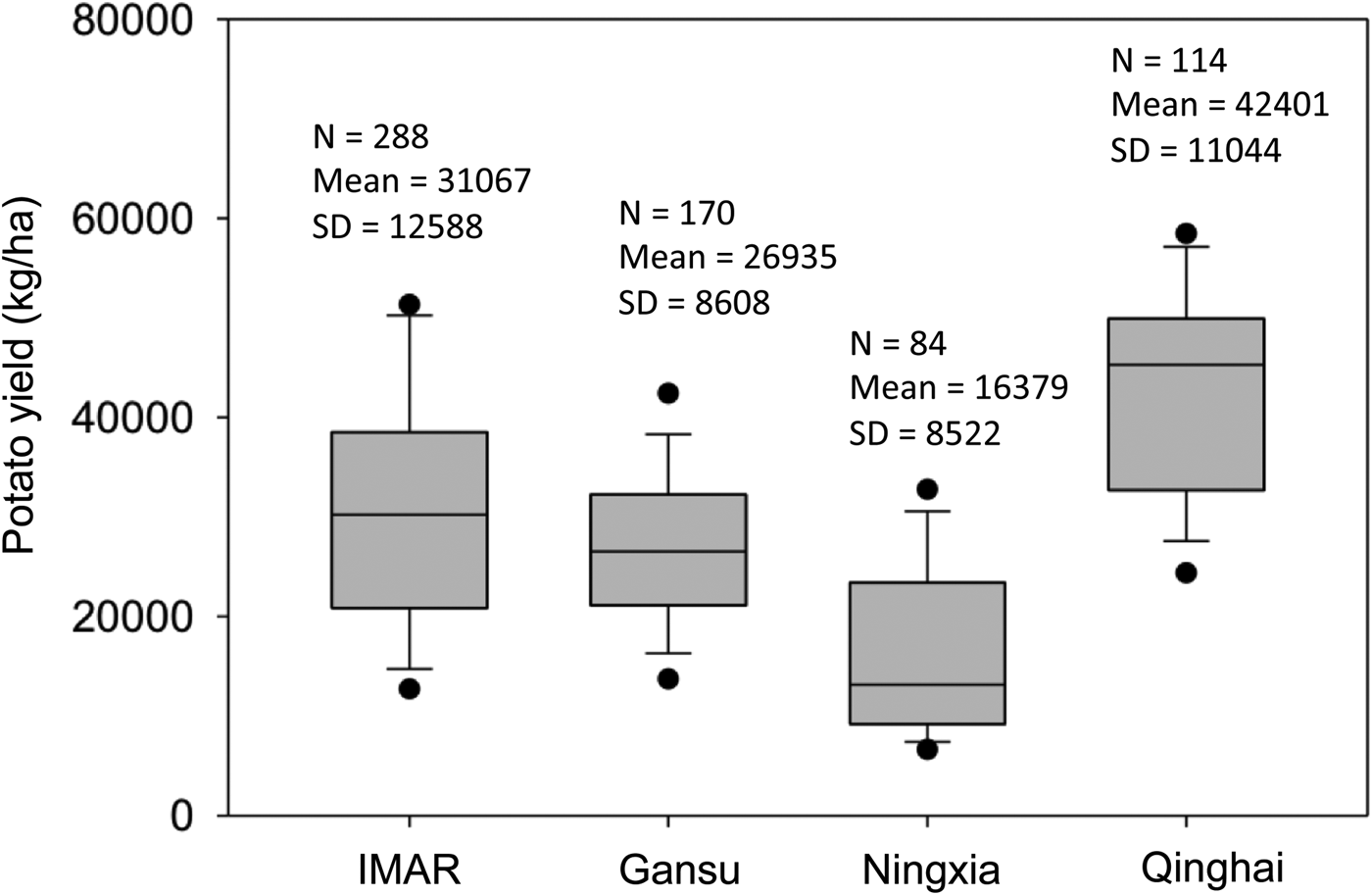
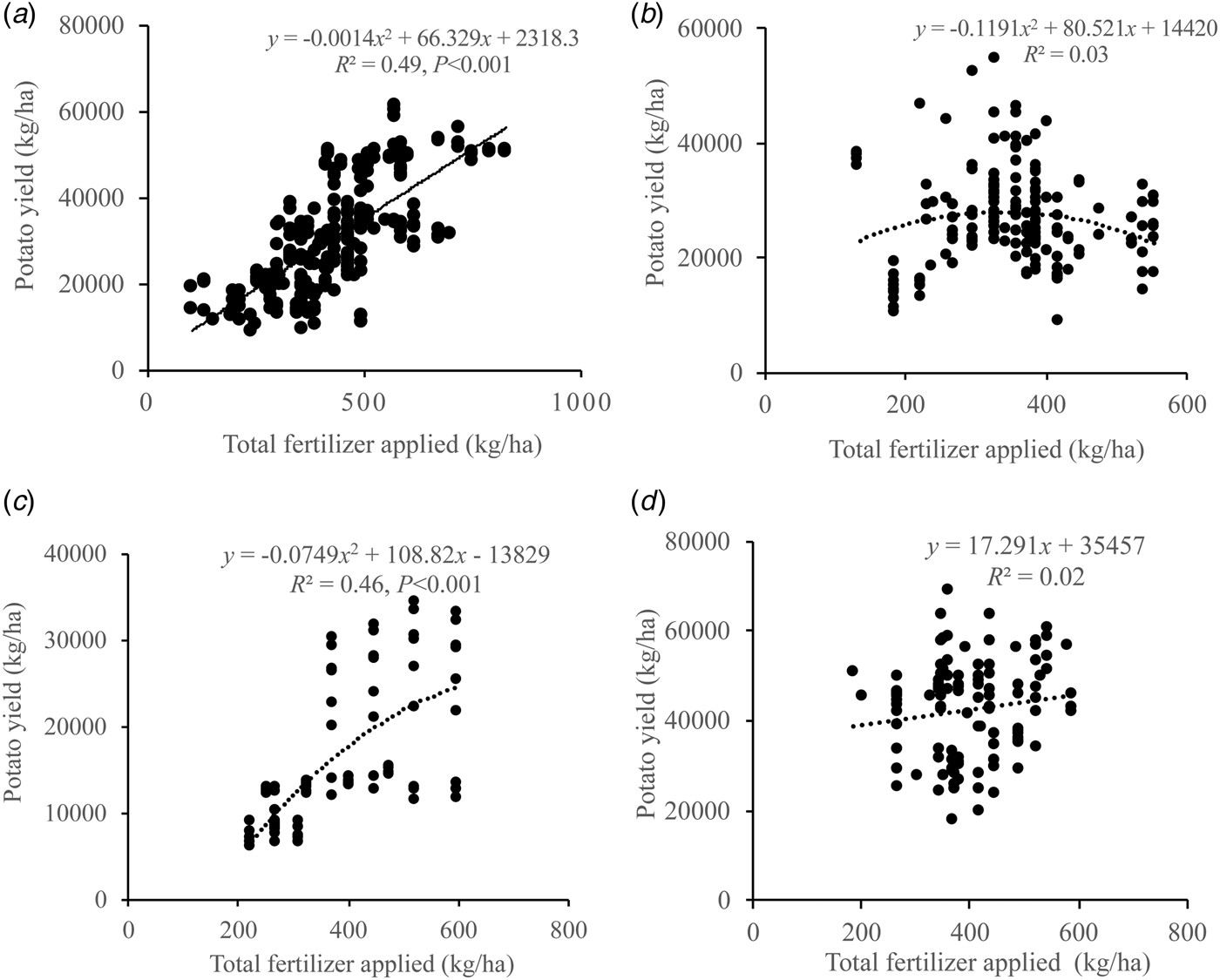
The distribution of potato yields obtained with soil test-based OPT treatments varied considerably within and across regions (Fig. 1). In IMAR, Gansu, Ningxia and Qinghai, the average yields were 31 067, 26 935, 16 379 and 42 401 kg/ha, maximum yields were 61 250, 54 898, 34 335 and 69 033 kg/ha and the 90th percentile yields (the maximum attainable yields for this study) were 50 145, 37 855, 30 261 and 56 616 kg/ha, respectively. There were significant (P < 0.001) relationships between total NPK fertilizer rates and potato yields of OPT treatments conducted in IMAR and Ningxia, explaining 49 and 46% of the variation in tuber yield. Although there were increased trends of potato yields with increase of NPK fertilizer rates in Gansu and Qinghai the relationships were not significant (Fig. 2).
Box plots showing the distribution of potato tuber yields in the IMAR and three provinces in northwest China resulting from optimum NPK recommendation treatments (box indicates lower quartile, median and upper quartile; error bars indicate 10th and 90th percentiles; solid circles indicate 5th and 95th percentiles; SD is standard deviation).

Relationship between potato yield and total NPK fertilizer applied in the optimum NPK recommendation treatments in IMAR (a), Gansu (b), Ningxia (c) and Qinghai (d).

Nutrient PFP
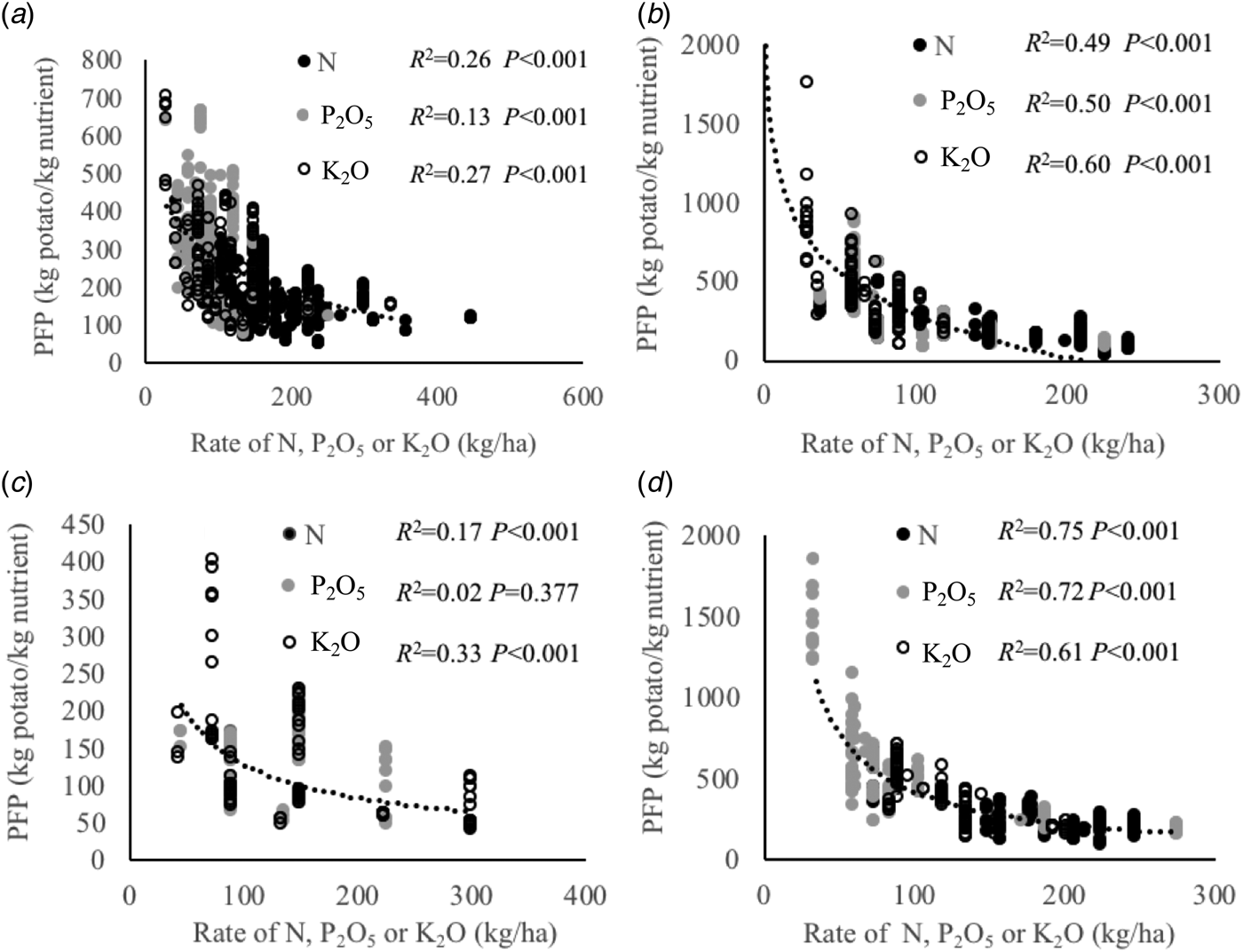
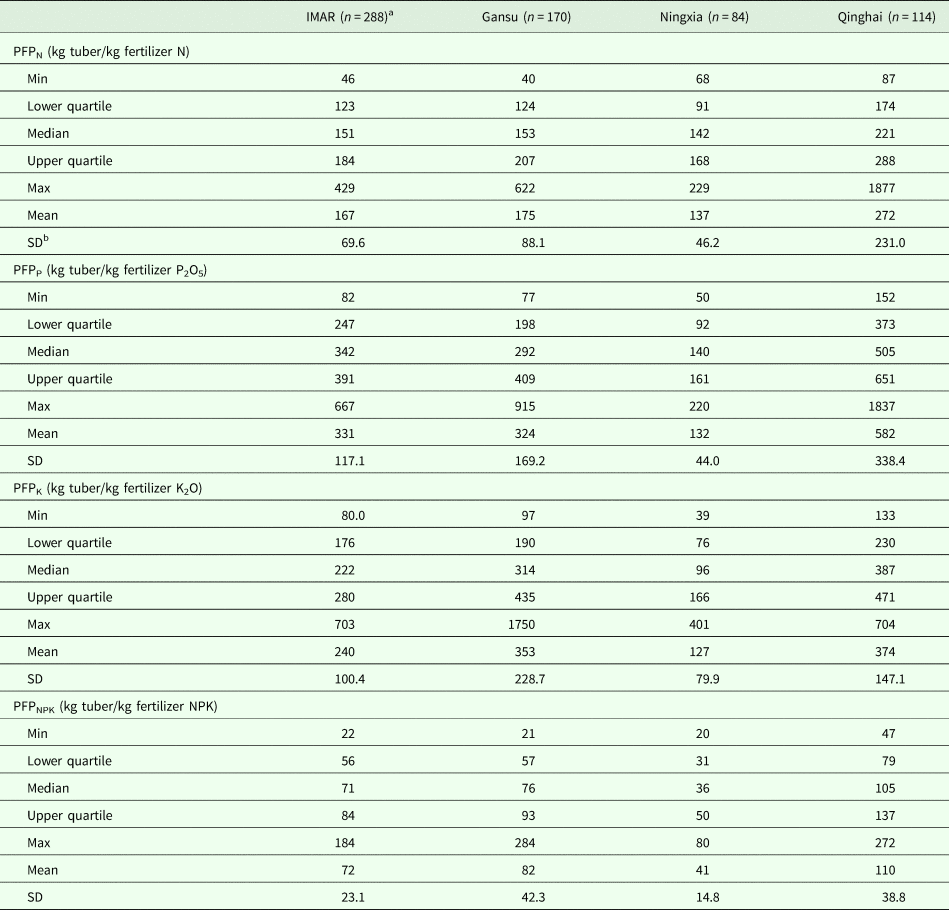
The average PFPN, PFPP, PFPK and PFPNPK were 167, 331, 240 and 72.2 kg/kg for IMAR, 175, 324, 353 and 81.6 kg/kg for Gansu, 137, 132, 127 and 40.8 kg/kg for Ningxia and 272, 582, 374 and 110.3 kg/ha for Qinghai, respectively (Table 3). The PFPN, PFPP and PFPK were significantly (P < 0.001) and negatively related to fertilizer N, P and K rates, respectively (Fig. 3).
Relationship between PFP of nutrient and the corresponding nutrient rate in IMAR (a), Gansu (b), Ningxia (c) and Qinghai (d).

PFP of applied N, P and K fertilizer

IMAR, Inner Mongolia Autonomous Region.
a Number of observations.
b Standard deviation.
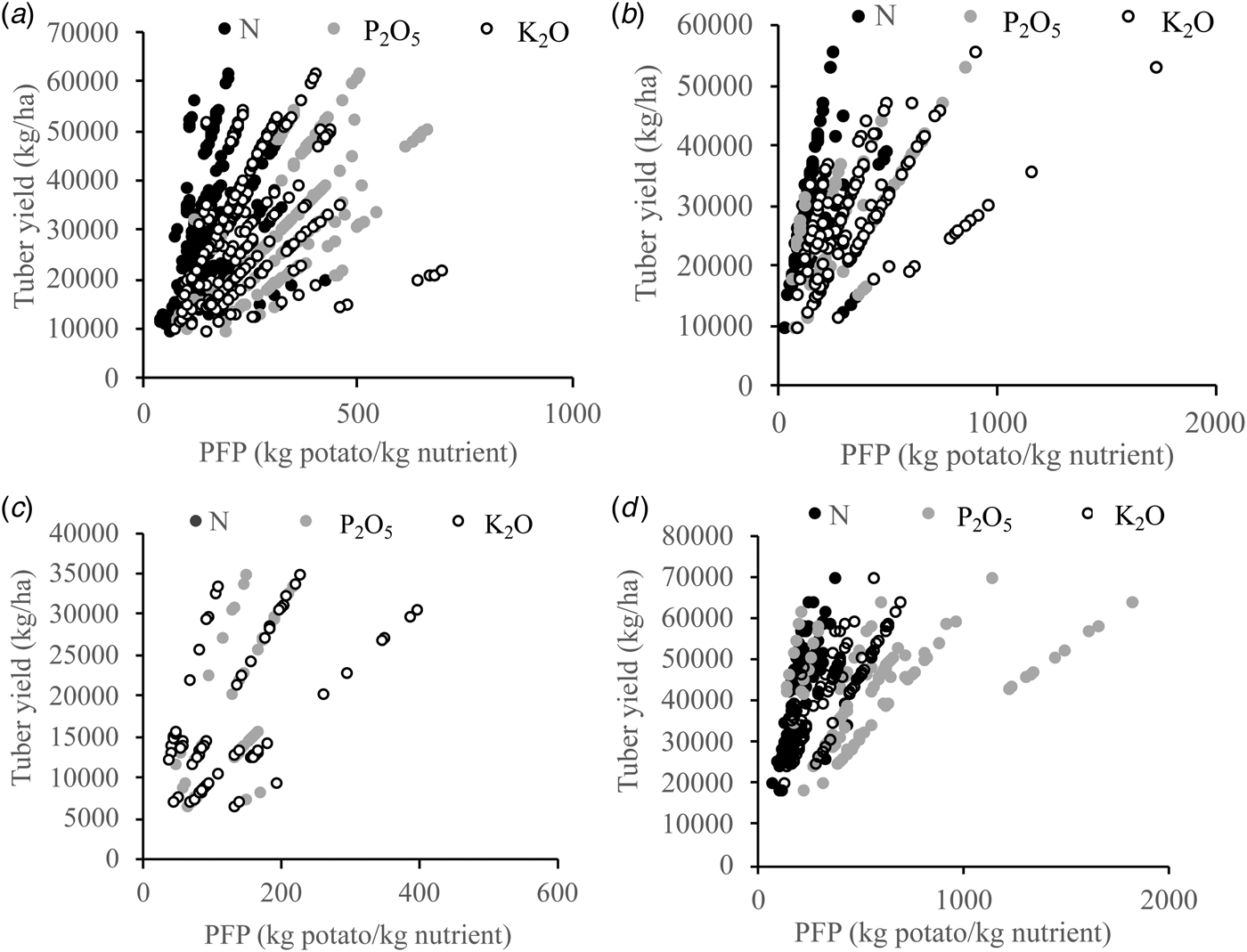
Significant (P < 0.001) positive relationship existed between tuber yield of the OPT treatments and PFPNPK, but the variations of tuber yield explained by these relations varied greatly with different nutrients and location (Fig. 4). The relationship could explain 13.9, 32.4 and 13.4% of tuber yield variations for N, P and K in IMAR, 25.4, 59.5 and 30.9% of tuber yield variations for N, P and K in Gansu, 79.9, 47.4 and 32.5% of tuber yield variations for N, P and K in Ningxia and 19.0, 19.5 and 70.3% of tuber yield variations for N, P and K in Qinghai.
Relationship between tuber yield in the optimum NPK recommendation treatment and PFP of nutrient in IMAR (a), Gansu (b), Ningxia (c) and Qinghai (d).

Determination of actual on-farm yield
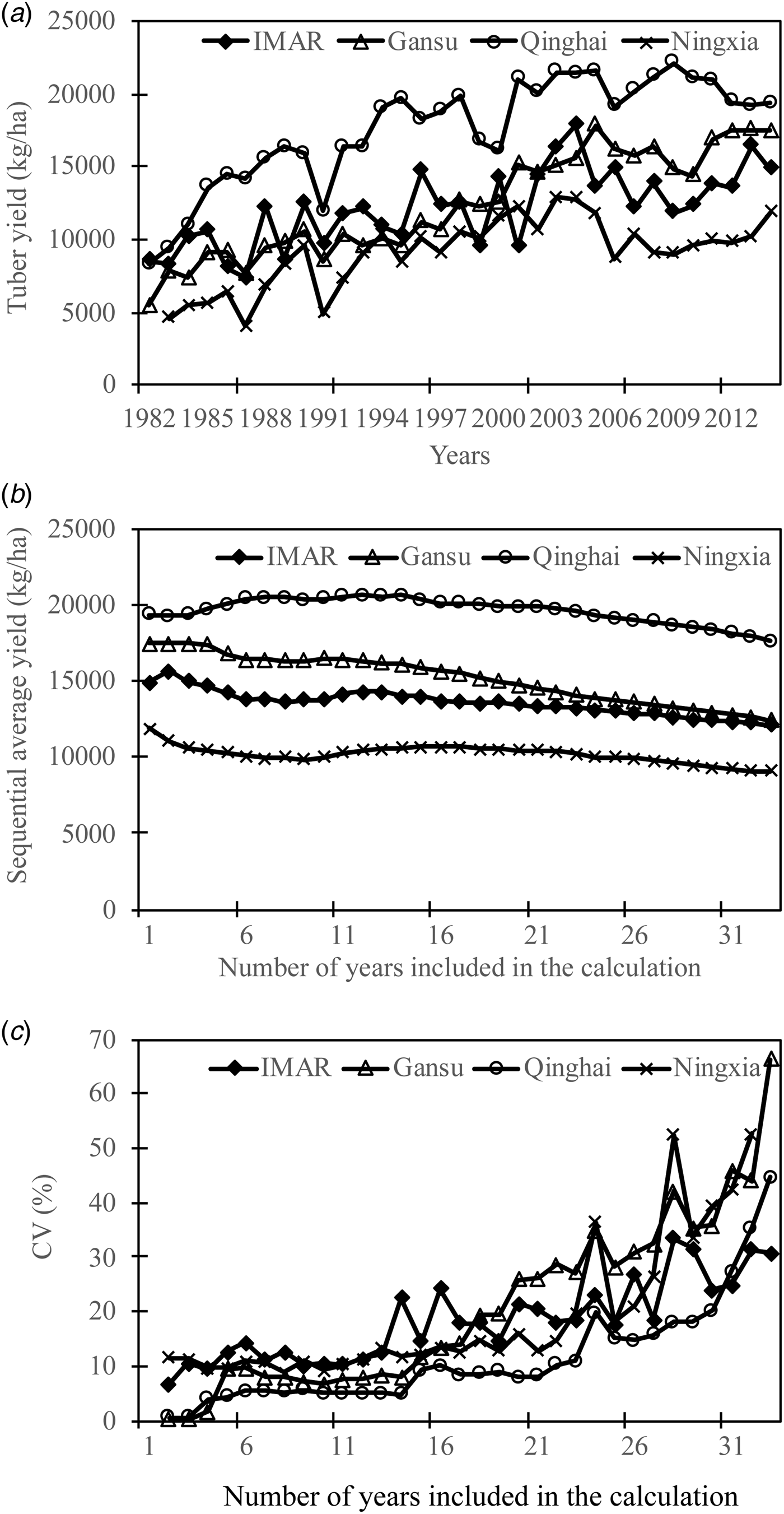
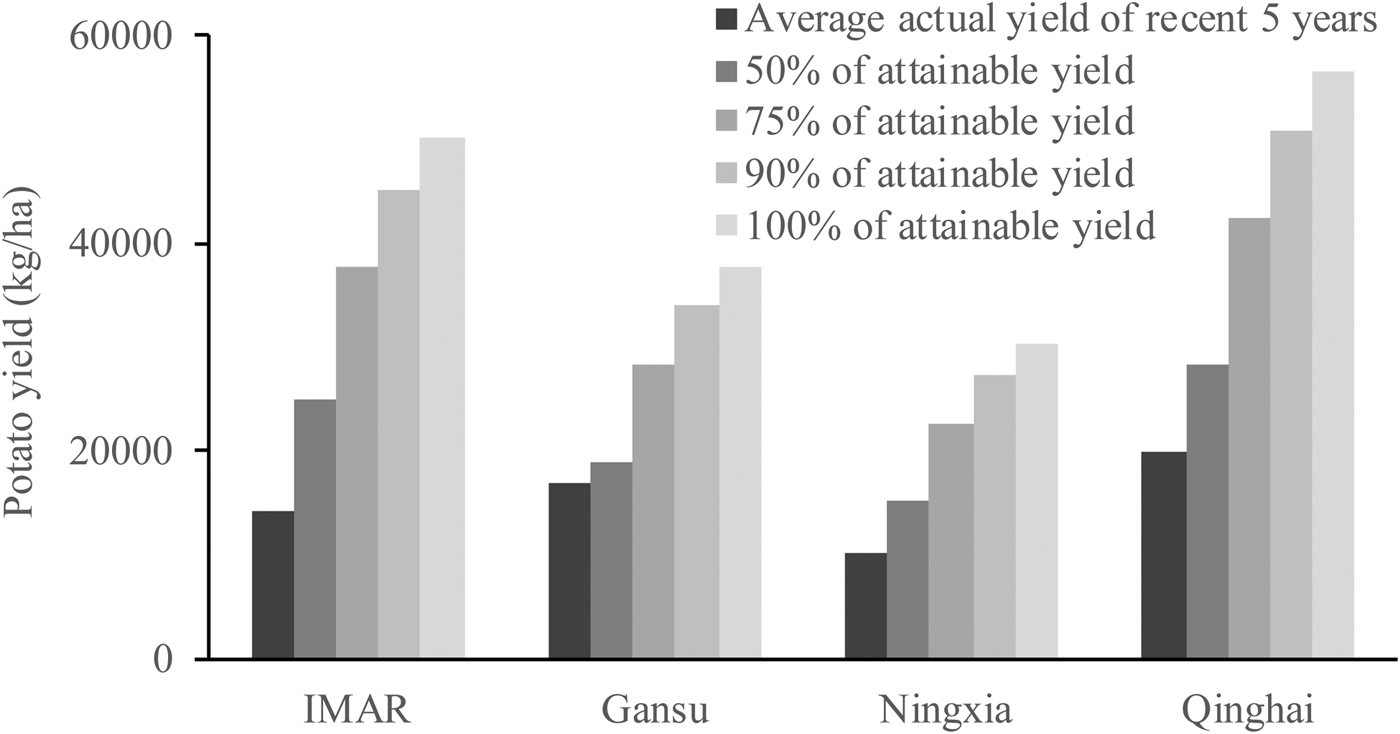
In northwest China, on-farm yield data from the Ministry of Agriculture show an increasing trend between 1982 and 2014 (Fig. 5(a)). The number of years utilized for estimation of average actual on-farm yield must avoid yield variability and the effect of technology and climate change. Sequential average on-farm yields and the corresponding CVs indicate that in IMAR and the three provinces, the average yields of the most recent 5 years (2010–2014) are similar to the average yields of most recent 13 years (2002–2014) and the CVs are relatively low (Figs 5(b) and (c)). Therefore, the most recent 5-year (2010–2014) yield averages, combining rain-fed and irrigated potato production, represent the actual on-farm yield and are 14 179, 16 732, 10 271 and 19 990 kg tuber/ha for the IMAR, Gansu, Ningxia, and Qinghai, respectively.
Trends in actual on-farm potato yield from 1980 to 2014 (a), sequential average yields starting from the year 2014 and gradually including earlier years (b) and the associated coefficients of variation (c) for IMAR and three provinces in northwest China.

Determination of yield gap
Yield gap is the difference between attainable yield and the average actual on-farm yield. Information about attainable and on-farm yield indicates that there is considerable potential to increase potato production in all four regions studied. However, the magnitude of the yield increase required to narrow the yield gap differed greatly across regions (Fig. 6). In IMAR, Gansu, Ningxia and Qinghai yields would need to increase by 76.8, 13.1, 47.3 and 41.6% to close yield gap to 50% of attainable yield, by 165, 70, 121 and 112% to close yield gap to 75% of attainable yield, and by 254, 126, 195 and 183% to reach a threshold equal to 100% of attainable yield.
Potato yield increase from closing yield gaps to 0.50, 0.75, 0.90 and 1.00 of attainable yields in IMAR and three provinces in northwest China.

Estimation of nutrient gap
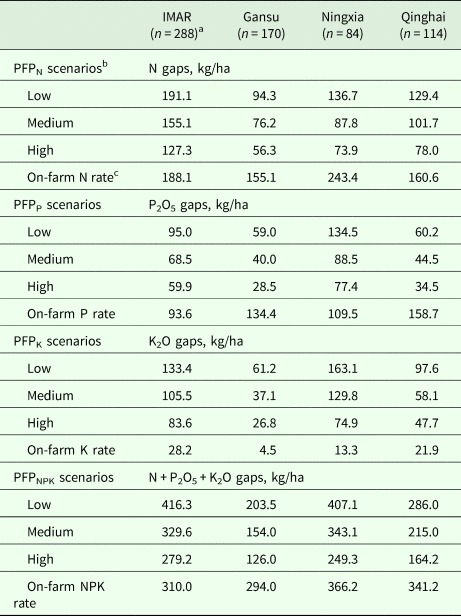
Adequate and balanced nutrient input is one of the most important factors that can contribute to the narrowing of any yield gap. In order to assess how current on-farm fertilization practices are impacting the size of each region's yield gaps, the amounts of N, P, and K fertilizer (i.e. nutrient gaps) needed to reach the 75% attainable yield threshold were estimated. The nutrient gaps were calculated by dividing the size of the yield gap by the PFP obtained for each nutrient at the lower quartile, median and upper quartile, which represent low, medium and high nutrient use efficiency scenarios, respectively (Table 4).
Projected nutrient gaps necessary to close yield gaps to 0.75 of attainable yields

IMAR, Inner Mongolia Autonomous Region.
a Number of observations.
b Calculated under low (lower quartile), medium (median) and high (upper quartile) scenarios of PFP.
c Recent 3-year average fertilizer rates applied by potato farmers (NDRC, 2014).
Compared with data for recent 3-year average rates of fertilizer application by potato farmer, in order to close the yield gap, N rates in IMAR, Gansu, Ningxia, and Qinghai need to increase by 67.7–101.6, 36.3–60.8, 30.4–56.2 and 48.6–80.6%, respectively. Similarly, P rates need to increase by 64.0–101.5, 21.2–43.9, 70.7–122.8 and 21.7–37.9%. Given the generally low K rates being used across the northwest region, K rates need to increase several-fold in order to balance with N and P to improve productivity to near the 75% attainable yield threshold. Considering the total combined NPK fertilizer rates for these regions, a 90.1–134.3% increase is recommended for IMAR, 42.9–69.2% for Gansu, 68.1–111.2% for Ningxia and 48.1–83.8% for Qinghai (Table 4). The suggested appropriate nutrient application rate is the sum of on-farm nutrient rate and the nutrient gap needed to close the yield gap between a target yield and actual on-farm yield. For example, in IMAR, assuming the potato target yield is 37 609 kg/ha (75% attainable yield), the average actual on-farm yield is 14 179 kg/ha, the PFPN at lower quartile scenario is 122.6 kg/kg N (Table 3) and the mean N rate by farmer is 188.1 kg/ha (Table 4), then:
 $$\eqalign{{\rm Yield}\,{\rm gap}\,({\rm kg/ha}) = &37609\ndash 14{\kern 1pt} 179 \cr = &23 430\,{\rm kg/ha}} $$
 $$\eqalign{{\rm Nitrogen}\,{\rm gap}\,({\rm kg/ha}) = &\; {\rm yield}\,{\rm gap}\,({\rm kg/ha}){\rm /PF}{\rm P}_{\rm N} \cr = & \;23{\kern 1pt} 430/122{\cdot}6 \cr = & \;191{\cdot}1\,{\rm kg/ha}} $$
 $$\eqalign{{\rm The}\,{\rm suggested}\,{\rm N}\,{\rm rate}\,{\rm (kg/ha)} = & \;188{\cdot}1 + 191{\cdot}1 \cr = & \;379{\cdot}2\,{\rm kg/ha}} $$
The N gap and suggested rate at other scenarios, P, K or total NPK gap and the suggested rate can be also determined by this procedure.
Discussion
Generally, it is difficult to achieve maximum yield with greater uncertainty in factors such as temperature, rainfall and pest/disease. Also, such high yields are not cost-effective because of diminishing returns when yields reach their ceiling (Koning et al., Reference Koning, Van Ittersum, Becx, van Boekel, Brandenburg, Van Den Broek, Goudriaan, Van Hofwegen, Jongeneel, Schiere and Smies2008; Lobell et al., Reference Lobell, Cassman and Field2009; van Wart et al., Reference Van Wart, Kersebaum, Peng, Milner and Cassman2013). The four provinces in northwest China are arid regions with annual rainfall typically <400 mm, which affects potato production greatly. It is reasonable to close yield gaps using a lower yield level. Therefore, the current study regards tuber yield at the 90th percentile in each province as maximum attainable yield.
PFP for applied nutrients reflects both indigenous soil nutrient productivity and yield increase by fertilization, so it is reasonable and practical to estimate nutrient gaps using PFP and yield gaps (Grzebisz et al., Reference Grzebisz, Gaj, Sassenrath and Halloran2012). The PFPs for applied N, P and K are significantly and negatively related to respective nutrient application rates, similar to results from Chile (Haverkort et al., Reference Haverkort, Sandaña and Kalazich2014) and Zimbabwe (Svubure et al., Reference Svubure, Struik, Haverkort and Steyn2015). In most cases, the high PFPs indicated low rates of applied nutrients and the soil might be mined for these minerals, especially in irrigated potato. In the current study, the significant positive relationships between tuber yields under OPT treatments and PFPs in the four locations indicate that higher tuber yields relate to higher PFP, suggesting high efficiency of applied nutrient at the recommended rate in the experiments.
There is considerable potential to increase potato production in these four regions. However, it is impossible and unnecessary for all farmers to achieve maximum attainable yield because of economic and environmental considerations (Koning et al., Reference Koning, Van Ittersum, Becx, van Boekel, Brandenburg, Van Den Broek, Goudriaan, Van Hofwegen, Jongeneel, Schiere and Smies2008; Lobell et al., Reference Lobell, Cassman and Field2009; van Wart et al., Reference Van Wart, Kersebaum, Peng, Milner and Cassman2013). It is reasonable to close yield gaps at a lower yield level threshold relative to yield potential, considering uncertainty over climatic conditions (Van Ittersum et al., Reference Van Ittersum, Cassman, Grassini, Wolf, Tittonell and Hochman2013). Therefore, in the current study nutrient gaps were estimated at 75% of maximum attainable yield under the arid climatic conditions and management level in northwest China. Mueller et al. (Reference Mueller, Gerber, Johnston, Ray, Ramankutty and Foley2012) also estimated the projected increase of nutrient rates to close maize, wheat and rice yield gaps to 75% of attainable yields.
In the current study, similar to other studies (Grzebisz et al., Reference Grzebisz, Gaj, Sassenrath and Halloran2012; Lu and Fan, Reference Lu and Fan2013; Van Ittersum et al., Reference Van Ittersum, Cassman, Grassini, Wolf, Tittonell and Hochman2013), yield gap was calculated as the difference between attainable yield and average actual on-farm yield in a region, reflecting the potential of yield increase in a regional scale. This method might over-estimate yield gaps because the average actual on-farm yield represents yields under various moisture, soil fertility and pest or disease control management conditions, reflecting situations of the whole area. Other studies (Xu et al., Reference Xu, Liu, He, Johnston, Zhao, Qiu and Zhou2015, Reference Xu, He, Zhao, Qiu, Johnston and Zhou2016) have estimated crop yield gaps as the difference between yields of balanced fertilization and farmer practice or nutrient omission treatments in the same experiment, reflecting the yield increase in the controlled situations, not the whole regional situations. This might under-estimate the yield gaps and be unsuitable for estimating yield gaps in regional or national scales.
Fertilization is one of the most important approaches to increase yield and close the yield gap to an attainable yield. Grzebisz et al. (Reference Grzebisz, Gaj, Sassenrath and Halloran2012) indicated that yield gap of wheat decreased with increased N application rate. The current study indicates that less than half of the variations in tuber yield could be explained by nutrient application rate, similar to the results of Haverkort et al. (Reference Haverkort, Sandaña and Kalazich2014) who showed that 45% of variation in actual potato yield was explained by fertilization. This information suggests a need for potato growers to focus on improving their management of other factors in addition to NPK fertilization (e.g. water management) in order to make the investment in fertilizer more effective.
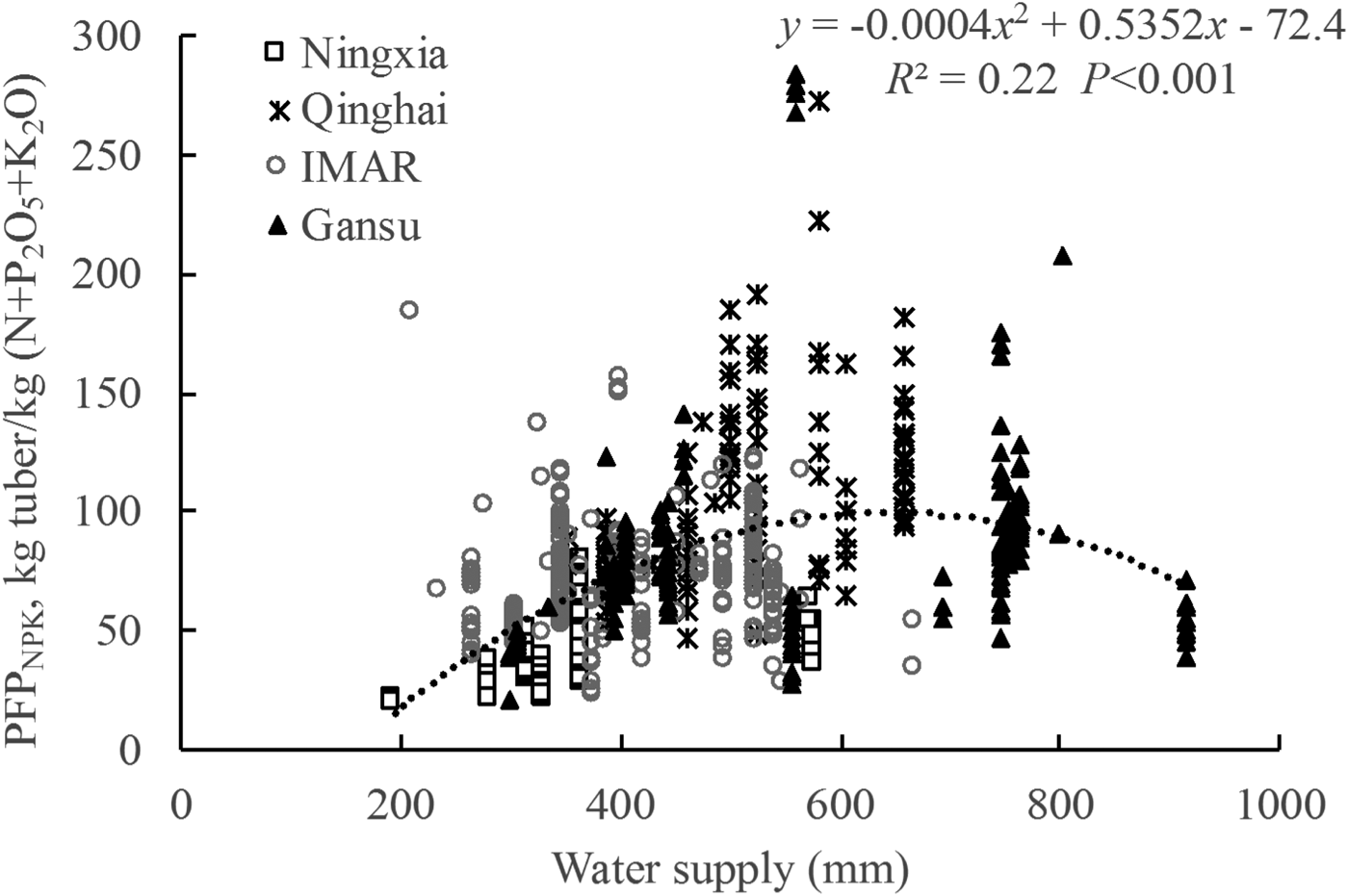
Water supply is an important factor that influences potato yield, yield gap and nutrient use efficiency in the arid regions of northwest China. The relationship between PFP of total NPK nutrient and water supply indicates that water supply can explain 22% of the variation in PFP (Fig. 7), suggesting that improving water supply can increase nutrient use efficiency and then reduce the nutrient gaps needed to close the yield gaps. Studies showed that better water management could improve tuber yield and nutrient use efficiency (Li et al., Reference Li, Duan, Guo and Zhang2011). Also, increasing irrigation area can increase potato yield in a whole region and contribute to narrowing the yield and nutrient gaps (Van Ittersum et al., Reference Van Ittersum, Cassman, Grassini, Wolf, Tittonell and Hochman2013). Therefore, growers have an opportunity for significant potato yield increases through improving both nutrient and water management in northwest China.
Relationship between water supplies (annual rainfall plus irrigation) and PFP of NPK fertilizers (PFPNPK).

Conclusion
High potato yield responses to N, P and K application provide the opportunities to close the large yield gaps through balanced crop nutrition. Closing the yield gap to 75% of the attainable yield is a realistic goal, which could be the expected response to application of about 43–134% more NPK compared with current practice. Water management is an alternative opportunity to closing the yield gap in the studied regions. It is desirable for narrowing the yield gap by integrated management of nutrient and water that need to be further studied.
Acknowledgements
The authors thank Soil and Fertilizer Institute of Qinghai Academy of Agriculture and Forestry Sciences, Institute of Agricultural Resources and Environment of Ningxia Academy of Agriculture and Forestry Sciences for their contribution to some field trials.
Financial support
The work was funded by the National Key Research and Development Project of China (2016YFD0200103) and the International Plant Nutrition Institute (IPNI).
Conflict of interest
None.
Ethical standards
Not applicable.