Introduction
CHINA DOLL
When memories dim, and fade, and soften
Our hard years in the army,
We'll think about the coolie often—
More often still, the warmie.
—A. L. Crouch, China Sketchbook: A Book of Army Verse (Reference Crouch1946, 9)In September 1945, over fifty thousand US Marines sailed from Guam and Okinawa to north China. Upon arrival, the soldiers rode on trains, open trucks, and Jeeps, passing through the streets of Tianjin and Beijing.Footnote 1 Their “victory parade,” as Private First Class E. B. Sledge (Reference Sledge2002, 20–22) recalled, was greeted by throngs of “liberated” local residents who “held American flags, waved, smiled, and shouted, ‘Ding hao (very good)!’ until it was deafening.” Battle worn and scarred, these surviving veterans of the Pacific War suddenly found themselves in a completely different world. As they savored the taste of victory and Oriental city life, they were also confronted by the harsh realities of China's economic devastation, social unrest, and renewed Civil War between the Nationalist and Communist Parties (Pepper Reference Pepper1999; Van de Ven Reference Van de Ven2018; Westad Reference Westad2003). Peace talks mediated by American ambassador Patrick Hurley and the yearlong mission of General George C. Marshall, President Harry S. Truman's special envoy to China, failed to appease either side. At the peak of the US military presence, over a hundred thousand US servicemen were stationed in China for various missions, including accepting Japanese surrenders, repatriating Japanese soldiers and civilians, transporting Nationalist troops to north and central China, and training the Chinese military.Footnote 2 This large-scale military presence created grassroots interactions that were unprecedented in Sino-US history.
This article investigates the sociocultural tensions caused by American servicemen's sexual relations with Chinese women between 1945 and 1949.Footnote 3 Among all the frictions involving GIs, ranging from daily traffic accidents to brutal murders, sexual relations triggered the strongest anti-American sentiments among the Chinese public. Conservatives condemned women for fraternizing with American soldiers and acting like whores. The infamous 1946 Peking Rape incident, in which a nineteen-year-old female student was raped by an intoxicated Marine, drew massive protests across the nation, demanding not only the punishment of the criminal, but also the complete withdrawal of the US military from China. The anti-American movements of the late 1940s engendered immediate and long-term political repercussions, accelerating the final defeat of the Nationalist Party in the Chinese Civil War, as well as drastically transforming Chinese views of the United States (Zhang Reference Zhang2002). If the first American Volunteer Group, affectionately dubbed the “Flying Tigers,” exemplified the altruistic American heroes during the war, drunken Marine rapists became the symbol of American imperialism. Through the injured and maligned bodies of Chinese women, the global US military empire became deeply entangled with China's local politics.
Although the United States’ post–World War II military presence is a flourishing interdisciplinary subject in global history, scholarship on American soldiers in China remains lacking. Largely framed in the context of the Chinese Civil War and Cold War struggles, traditional historiography on Sino-US relations during this period focuses on high-level political players, diplomatic exchanges, and military operations, with scant attention to the grassroots interactions or the roles of women in international politics. Meanwhile, studies of the American occupation in the region are limited to the more momentous cases of Korea and Japan, especially Okinawa, leaving out China. This oversight may be partially attributed to the smaller number of American troops in China and their shorter presence. But the dearth of work also has to do with the difficulty of situating this particular historical chapter within the normative narrative of World War II as “the Good War,” a just war that not only brought prosperity to the American nation, but also peace, progress, and democracy to the occupied people (Polenberg Reference Polenberg1992). GI misbehavior and the consequent anti-American sentiments, especially in an allied country, do not fit into the triumphalist tale of the American occupation in East Asia, but rather speak of the “loss of China” that has consumed American minds for decades.
Rather than a mere continuation of a wartime alliance, as some have indicated (Ren Reference Ren2003), the American military involvement in postwar China should be seen in the context of the US global military empire. Though debatable as to its particular nature, the American empire with its enormous soft and hard powers after World War II, in both territorial and nonterritorial forms, includes a crucial military dimension—what scholars call an “empire of bases.”Footnote 4 Unlike occupied Japan and Korea, China was a US ally during wartime, and American soldiers were officially “invited guests” of the Nationalist government. But a similar power asymmetry was embedded in Sino-US interactions at the national and individual levels. To begin with, America had exclusive military jurisdiction over its service members in China, who enjoyed immunity from Chinese laws, whether they were on or off duty. In reality, the US military stayed in China long after achieving its initial goal, which was to assist the Nationalist government in accepting the surrender of Japanese forces and repatriate them. American commanders and officers described their mission as occupation, and soldiers acted accordingly. Soon after their arrival, GIs launched victory marches on city streets, engaged in hunting trips during which they trampled the sanctity of the Imperial Palace in Beijing and Sun Yat-sen mausoleum in Nanjing, fenced off land to construct airports and military compounds, converted space for American entertainment sites and spectator sports, and affected local economies, including restaurants, brothels, dance halls, and rickshaws, as well as the black market.Footnote 5 In addition to material goods, Yankees brought with them cultural commodities such as dating practices through a global network of consumption. At the instigation of the American military, right-hand driving officially began in China on January 1, 1946, replacing the existing system of left-hand traffic. In many ways, the US military presence transformed the physical and mental geography of postwar China.
World War II extended the size and reach of American power around the world, enabling its access to local women “ranging from marriage to prostitution, and a range of relations and interactions in between” (Zeiger Reference Zeiger2010, 71). The rich corpus of studies on the American military has demonstrated the significant role of sex in reconfiguring the postwar power structure in both domestic and international contexts (Goedde Reference Goedde2003; Höhn and Moon Reference Höhn and Moon2010; Kovner Reference Kovner2012; Kramm Reference Kramm2017; Moon Reference Moon1997; Roberts Reference Roberts2013). Hierarchies of gender, race, and class informed attitudes, policies, and practices on both sides that can be traced to earlier imperial traditions and colonial institutions.Footnote 6 Old patterns of cultural bias and racial discrimination continued to structure the asymmetrical power relations between America and other nations, whether defeated, newly independent, or allied, and deeply shaped GIs’ daily interactions with local societies.Footnote 7 Despite drastically different political statuses and circumstances, the American military presence in China was similar to that in occupied Japan and Korea. American servicemen expressed Orientalist views, held racist and sexist attitudes toward Chinese women, took prostitution for granted, perpetrated sexual violence, and enjoyed immunity from local laws. These resemblances reveal the imperialist origins of the American empire, on the one hand, and the intimate links between military prostitution and sexual violence, on the other, which often transcend political agendas and military objectives. As Cynthia Enloe (Reference Enloe2000) argues, such “militarized masculinity” enabled specific kinds of sexual encounters in the shadow of military presence, promoted the image of a hypermasculine soldier, and legitimized the military's supportive attitudes toward prostitution and lack of disciplinary actions against sexual violence.
Actual and perceived sexual relations between local women and American soldiers often caused social animosity and even vengeful violence in occupied areas (Kovner Reference Kovner2012; Kramm Reference Kramm2017; Lilly Reference Lilly2007; Moon Reference Moon1997; Roberts Reference Roberts2013). Like these places, Chinese discussions of women mixed racial, cultural, and sexual anxieties and were formulated along class lines. Because of the Nationalist government's racist restrictions, no black troops were stationed in postwar Chinese cities, despite their critical contributions to the war effort in building the Burma Road (Gallicchio Reference Gallicchio1998).Footnote 8 Critics were mostly concerned about preventing “respectable” middle- and upper-class women from falling into disrepute or from suffering violence, whereas lower-class prostitutes were ignored or seen as a tool to protect the “purity” of the nation.Footnote 9 But the Chinese case stands out even more by virtue of the central role occupied by elite women, involving both romance and violence.
The Chinese controversy began as a vibrant debate over “Jeep girls” (jipu nülang 吉普女郎),Footnote 10 referring to women who socialized, sometimes intimately, with American soldiers during and after World War II. The early discussion, centering on modernity and Westernization, attracted a diverse group of conservatives, liberals, leftists, feminists, and the women themselves. Prevalent hostility toward Jeep girls continued the attacks on “modern women” that had occurred in earlier decades and was deeply embedded in the threats they posed to masculinity, patriarchal gender relations, and hegemonic nationalism. After the Peking Rape incident, however, the multivalent debate swiftly gave way to the dominant nationalist message of reclaiming sovereignty against American imperialism, accompanied by nationwide anti-American demonstrations. In this hypernationalist environment, little space remained for the modern Jeep girls, and Chinese women existed only as whores to be condemned or victims to be defended (Fredman Reference Fredman2019).
In contrast with previous studies highlighting how Communist propaganda stirred up new anti-American sentiments, this article foregrounds the key role of gendered nationalism in Sino-US relations. Simmering beneath the national alliance and harmonious Sino-American relations were long-standing dissatisfactions with and resentments toward American superiority since wartime, from the highest levels of the Chinese leadership to ordinary soldiers and civilians (Fredman Reference Fredman2017). As China recovered territories in former Japanese-occupied areas and rejuvenated the nation after eight years of devastating war, Chinese elites were eager to reclaim both national sovereignty and individual masculinity. Heightened nationalism clashed with the hypermasculine American military over actual and symbolic “territoriality” (Maier Reference Maier2007). Examining a variety of military, national, and local archives and periodicals from both countries, this research uncovers the complexities of Chinese women's experiences and their stories, which have been either muffled or filtered through patriarchal agendas. It also demonstrates how the entanglement of gender, sexuality, class, and race impacted Chinese postwar political struggles.
Modern Women or Parasitic Whores: The Jeep Girls Debate
The Chinese epithet “Jeep girls” began to circulate during the war when women were seen riding around in Jeeps with GIs, and it was later expanded to describe all types of women who were perceived to have intimate relationships with American soldiers (Lu 1946). Contemporaries divided the Jeep girls into three categories based on socioeconomic differences. At the bottom of the social ladder were destitute prostitutes who operated in registered or underground brothels, facing the precarities of economic exploitation, police harassment and arrest, physical violence, and venereal disease. The Nationalist government had long maintained an inconsistent and ineffective policy toward prostitution, while local governments adopted a variety of approaches, which often had conflicting objectives of revenue generation, morality, and public health (Remick Reference Remick2014). After the Japanese surrender, the American military increased in size and presence, extending from limited wartime military bases in southwest China to major cities formerly occupied by the Japanese. Their presence helped create a boom in the sex and entertainment industries. Suzhou Hutong in downtown Beijing had been a prospering district for international whorehouses with a history tracing back to the late Qing; it now included many white Russian, Japanese, and Korean women, as well as an increasing number of Chinese women who were rural war refugees (Guo [1946] Reference Guo and Mu2013).
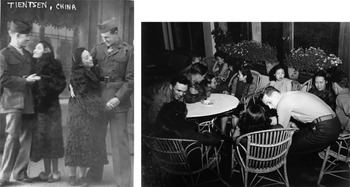
A second type worked in cafés, restaurants, cabarets, nightclubs, and hotels, providing entertainment and occasionally sexual services. With some social and cultural capital, such as varying levels of English-language proficiency, dance skills, and familiarity with modern leisure, these women often accompanied GIs to entertainment sites, creating a public spectacle, and appeared in popular souvenir photos that soldiers sent home (see figure 1). Postwar tabloids reported former dance stars, opera singers, and actresses becoming Jeep girls. The women in this group were not necessarily destitute, but economic interests remained central to their relationships with GIs, and their activities were a highly visible part of the postwar urban economy.
American soldiers with Chinese women in Tianjin and Qingdao. Left, USMC Rostad; right, USMC Shepherd.

The third group included upper-middle-class women whose motivation ranged from financial benefit to “service to the nation” (Yang Reference Yan1945; Yun 1946). During the war, English-speaking college students worked for the American military as clerks, translators, and volunteers. Members of women's organizations, often including government officials’ wives and daughters, facilitated the Allied forces’ operations and their daily lives in China by socializing with officers and soldiers (Huang Reference Huang1947, 39). Some of the earliest marriages between American soldiers and Chinese women resulted from these interactions (Xinwen tiandi 1945). After the war, the Nationalist government continued to encourage elite women to host or attend Victory parties to ensure that American soldiers would find China a hospitable place (see figure 1).
Variations notwithstanding, the “Jeep girl” label carried a negative connotation and even became a social taboo. Jeep girls were subject not only to voyeuristic gaze, media scrutiny, and state control, but also to actual violence. Since wartime, women seen in public with GIs were often insulted, threatened, and even attacked, regardless of the true nature of their interactions. In April 1945, an angry crowd in the wartime capital of Chongqing threw rocks and spat at women visiting cafés and restaurants with American soldiers, pulled their hair, and hurled curses at them (CMA 1945a). Mobs in Chongqing, Chengdu, Kunming, and Guiyang targeted women accompanying GIs in public, resulting in Chiang Kai-shek's order on May 31 to ban local newspapers’ “agitative reporting of ‘Jeep girls’” (CMA 1945c). In postwar Beijing and Tianjin, American soldiers and Chinese clients, including armed policemen, battled over dance hostesses (BMA 1946a, 1946b). The sentiment was clear and simple, as one Chinese officer declared: “I don't want American soldiers to be with Chinese girls!” (CMA 1945d). In 1946, in response to Chinese animosities, General Chen Cheng, chief of the General Staff of the Armed Forces, allegedly banned Chinese women from riding in American Jeeps (Lu 1946). The occasional street fights certainly encapsulated the mounting social tensions and made headlines. However, it is important to note that what occupied center stage in the Chinese media was the wholesale malignment of the so-called Jeep girl phenomenon (jipu nülang xianxiang 吉普女郎現象), pertaining to “respectable women's” willingness to fraternize with American soldiers.
One distinctive social and representational category—college students—was singled out as the primary target of media attacks.Footnote 11 Using various Chinese terms, such as “female college students” (nü da xuesheng 女大學生), “lady of noble birth” (dajia guixiu 大家閨秀) and “campus belle and socialite” (xiaohua mingyuan 校花名媛), commentators debated why students from affluent families would aspire to become Jeep girls. One critic claimed that “money is secondary; it is really vanity that harmed them” (Heibai zhoubao 1946). Another pointed to the corrupting effects of American commodities and lifestyles on Chinese morals; they were “even worse than the Soviet looting of Manchuria” (Xiao Reference Xiao1947). Other lines of criticism were more explicit in unveiling Chinese men's mixed sexual and racial anxieties over those “red-haired wild beasts” (Hui Reference Hui1946). One described educated women's attraction to Americans in postwar Shanghai as “just like an iron nail towards a magnet” (Wuming Reference Wuming1945), while another retooled a classical poem to mock female students for “spreading their legs wide open” (Liao Reference Liao2015, 235–37). The attraction to American soldiers, in one author's summation, was both physical and material, ranging from the exotic features of curly hair, blue eyes, pale skin, blond body hair, strong limbs, and “tall, big, manly, strong” physique to the material luxuries of perfume, skin powder, lip balm, and US dollars (Zhu Junle Reference Zhu1945).
These conservative reactions highlighted the perceived danger of the Jeep girl phenomenon: cultural contamination mixed with sexual and racial conquest. Similar cultural fears and sexual anxieties also existed in other parts of the world, where men resented the sexual rivalry presented by American soldiers, who were deemed “overpaid, oversexed, and over here!” (Costello Reference Costello1985, 230). Moreover, these hostile attitudes continued the critiques of “girl students” and “modern women” that had been made in earlier decades, reflecting a persistent Chinese discomfort with rapid Westernization and male intellectuals’ identity crisis and anxiety over educated women (Edwards Reference Edwards2000). While lower-class courtesans were expected to be sexually available, it only became a scandal when “good girls” were in danger of corruption. Late Qing regulators tried to control female students’ uniforms with increasing stringency, and critics warned that there was little distinction between girl students looking like prostitutes and prostitutes who dressed like students to incite licentiousness (Chen Reference Chen, Qian, Fong and Smith2008; Zhang Reference Zhang2014). In 1928, a group of students from Ginling Women's College who visited a cruiser and danced with British soldiers on board were condemned by outraged male students from nearby Nanking University and the public for engaging in a type of lewd, immoral act and causing national humiliation (Graham Reference Graham1994). In the 1930s, male Chinese elites criticized modern women's superficiality, using similar terms such as “vain,” “parasitic,” “indulgent,” and “degenerated” (Dong Reference Dong2008, 214). Assisted by social conservatives, Chiang Kai-shek's New Life Movement discouraged and even penalized women who “engaged in the ‘negative’ and ‘evil’ endeavours of modernity, such as wearing Western-style clothes, purchasing foreign products, or exposing parts of their bodies in public” (Yen Reference Yen2005, 165), and promoted a Chinese model of “frugal modernity” (Zanasi Reference Zanasi2015). As self-appointed enlightened guardians of women and advisors of the nation, reformist intellectuals were concerned with the moral attributes of modern women and saw it as their responsibility to guide women's morals, behaviors, and emancipation (Edwards Reference Edwards2000). Communists were also critical of what they considered the individualist lifestyle and materialist consumption rampant in Western capitalist society. Their agenda was to transform these women from “parasites of society” into active participants in political movements, achieving true liberation for women. It is not surprising that during the war these different groups converged in their condemnation of the vices of modernity, material pleasure, and moral degeneration. In their view, at a time of national salvation, women should first be patriotic citizens. The representational image of Jeep girls resembled modern girls’ shallow appearance, frivolous behavior, and immoral inner qualities. But their scandalous consumption of luxury foreign goods, now unaffordable or inaccessible to most citizens, made them even worse for the national betrayal.
Conservative attacks were quite effective in stigmatizing the label “Jeep girls,” which now bore a strong association with prostitutes. But not all critiques were denunciations of Jeep girls alone, and a more nuanced analysis reveals complexities in the critical voices. A fictional admirer wrote “A Farewell Letter to a Jeep Girl” in a Shanghai newspaper. The piece looks like a mockery of the girl, who is full of “exotic stench,” kissing an ugly, toad-like foreign solider and thereby losing the face of “our citizens of the big nation.” But quickly the reader realizes that the piece is actually satirizing the Chinese man, who, out of jealousy, threatens to take his own life if the girl does not reply to his letter. He then declares that from now on he will become decadent, and consequently China's revolution will not succeed (Wang Reference Wang1946). A fictional essay from another Shanghai tabloid begins with a girl's worry that her allied “darling” is being confined by Military Police for his late return to the barrack. But her “love letter” quickly moves on to ask whether he has received this month's pay, as he has promised to buy her more perfume. The letter ends with her Chinglish note, “Tomorrow I still wait you at the door of Cathay Hotel” (Zhengxing guanzhu Reference Zhengxing1946). In both cases, the main target of mockery is in fact the man.
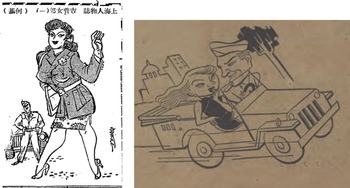
Modern urban men had long expressed paradoxical feelings toward Chinese women, from hidden voyeuristic desires for new female students in the late Qing whose new dress and public presence they also criticized, to the mixture of longing and fear of the modern girl in the 1920s and 1930s (Chen Reference Chen, Qian, Fong and Smith2008; Dong Reference Dong2008; Graham Reference Graham1994; Zhang Reference Zhang2014). Visual representations act out imaginary social scenes and capture such ambivalences. In Chinese illustrations, Jeep girls appear Westernized in their clothing, hairstyle, makeup, and accessories, as if they adorn the latest Hollywood movie poster (see figure 2). Even their physical features are often exaggerated, mimicking the perceived sexy white body (Cathcart Reference Cathcart2008). Like the modern Chinese women of earlier decades (Dong Reference Dong2008), they invoke sensational spectacles with their scandalous dress, bodies, and behavior in public, with their seductive looks, feet far apart, arms extended, and body exposed. These spectacles are enhanced by the objects that women carry, from high heels and sharp American uniforms to the attendant Jeep and GI. Jeep girls are depicted not in the distant background, but rather occupy the center of the picture, often looming larger than men. The Jeep girl is not the white man's concubine or his laundress, but rather the center of attention that she intentionally draws. She is aware of being a commodity, consumed by the GI, the street man, and the media; she is also a consumer herself, of commodities, modernist thrill and pleasure, and attention and prestige associated with the ride.

Despite the prevalent conservative attacks, the Chinese Jeep girl discussion was once a vibrant intellectual debate over modernity and Westernization, in which liberals, leftists, and feminists all participated. Hong Shen (Reference Hong1945), an American-educated writer and professor, attributed the enmity toward Jeep girls to the sensitive nature of sexual relations and common phenomena of xenophobia, a universal “bias towards a foreign race” in the game of love. Dong Shijin (Reference Dong1945), a Cornell-educated agriculturist and educator, encouraged such interactions because “no other bonds are stronger than the marriage bond,” and asked why Chinese students or workers abroad could marry foreign women but Chinese women could not seek foreign husbands. Luo Jialun (Reference Luo1945), a prominent Western-educated scholar, called for abolishing the frivolous term “Jeep girls,” encouraging educated Chinese men and women to interact more with the Americans to help eliminate the current misunderstanding. Such a suggestion was reiterated in an article in West Wind, one of the most popular magazines of the time, which introduced in detail the American dating culture as well as the idea of formulating a new “formal upper-class social intercourse” in China (Yan Reference Yan1945).
These liberal voices are not included in existing studies of the Jeep girls or, at best, are regarded as pro-government propaganda. Indeed, to “promote harmonious diplomatic relations,” the Nationalist government and officials did try to educate the Chinese populace on the American social custom of interacting with women along a similar line, for example, through edicts to local governments and instructional pamphlets (Guomin zhengfu 1945; He 1945). But these defenders spoke out of conflicting ideological and political positions. While some, like Luo Jialun, were anti-Communist officials who might have had the government's agenda on their mind, others, like Hong and Dong, were leftist intellectuals sympathetic to the Communist Party. What they shared was a defense of individual freedom and cultural cosmopolitanism, echoing the liberal avowal of modernity since the New Culture Movement of the early twentieth century.
Likewise, feminist critics were also divided on the issue. Some were critical of the corrupting effects of Western materialism on women, as Jeep girls’ “wallets are filled with American dollars, perfume, and powders. Everyone is westernized and forgets about their black hair” (Chen Reference Chen1946). Others, in contrast, linked the Jeep girls with women's liberation, instead highlighting gender inequality and systematic oppression. For example, one author wrote in the influential leftist magazine Modern Women that Jeep girls were cursed because of men's jealousy, and women were blamed as the primary cause of national and racial extinction only because they were easy to bully. The real oppressor here, they argued, was not men in general, but fascism and feudalism (Chao 1945). Another opined that Chinese women were always the ones to blame: “It would be your own fault if you got humiliated. The non-written constitution is that the fault always lies with the Chinese. … Our police did not try to catch the American soldier who rode a Jeep into a coal station causing a big mess, but everywhere looking for the Jeep girl” (Guo [1946] Reference Guo and Mu2013). These feminist critics shared the common agenda of gender equality. But their varying stances further underlined the ambiguity of the Jeep girls as symbols, as well as the difficulty of choosing sides when it came to these deeply entangled issues of Jeep girls, American soldiers, Western-style modernity, and women's liberation.
“I Am a Jeep Girl”
One might expect complete silence from members of such a marginalized and stigmatized group. But Jeep girls, either so labeled or self-claimed, did speak out, both in words and in action. In 1945, outraged female students from a missionary college in Chengdu smashed a newspaper office that had published a pornographic poem mocking them (Liao Reference Liao2015, 235–37). In postwar China, some women “instigated GIs to insult Chinese policemen” who were questioning them (Minzhong ribao 1946). More often, women wrote open letters to journals defending themselves, in the name of economic necessity or patriotic service to the nation. One college student in Chengdu explained that the majority of her roommates worked as dance hostesses for GIs at night because they needed additional income to pay off loans (Yang Reference Yang1945). Another student attributed working as a Jeep girl to the sacred cause of serving the nation after her family had rejected her plan to join the army (Cai Reference Cai1946). These voices reflect both the harsh material reality of dislocated students during and after the war and some women's ability to co-opt the official Nationalist agenda for their own narratives. Toward the end of the war, Chiang Kai-shek launched a major recruitment campaign, soliciting college students’ direct participation in the war effort. While few would see working-class women's hostessing as a sacrifice for the nation, educated women's wartime service using their bodies remained controversial for China's patriarchal nation-building project.Footnote 12
An analysis of two self-identified Jeep girls’ accounts, as I do in this section, may accord us insights into the experiences and thoughts of women who forged connections with American soldiers on various levels.Footnote 13 In 1948, West Wind published a letter from a university student named Lu Xi, asking whether a Chinese woman could and should marry an American man (Lu Reference Lu1948). She told the story of how she met an American officer on her way home and soon developed a close friendship with him. Afterward, she noticed a drastic change in the attitudes of her male schoolmates toward her: admiration became finger pointing, with some calling her a Jeep girl. Though her anguish and plight were unsurprising, her candid self-portrait was nonetheless most illuminating:
I am a twenty-one-year-old sophomore in college. I know my body is strong and pretty, not the Lin Daiyu type of frail beauty. I have an outgoing and carefree manner, earning me many male admirers at school.… I do not really like flamboyant clothing. But my clothes are fitting. I keep them tidy and elegant because I do not like to wear flowery clothes to show off. Meanwhile I do not want to wear non-fitting clothes to cover up my shapely body either. In middle school, I had enjoyed sports and music. My body was thus fully grown and spirit pleasantly developed. I have never restrained my breasts, nor do I like to use yellow cream to enhance leg skin color. I let nature take its place in everything. I am quite tall, neither fat nor skinny.
Lu Xi spent the entire first page of her four-page essay describing her own body. She emphasized her natural and healthy beauty, distinguishing herself from both traditional Chinese frail femininity, represented by Lin Daiyu from Dream of the Red Chamber, and the highly commercialized modern women's style fashioned by Western cosmetics, makeup, and other commodities. Almost unabashedly flaunting her unbound breasts, shapely physique, and love for sports, she celebrated a body free from both Chinese traditions and Western accessories. This image illustrated a type of ideal modern Chinese woman, healthy and fit, educated and civilized. She was neither traditional Chinese nor superficial Western, but a “real” modern woman.
The idea of a liberated woman's body aligned well with the May Fourth message of freedom and equality. The modern woman's “robust healthy beauty” (jianmei) was also promoted by reformist intellectuals and the Nationalist government through new physical education school curricula and mass sports programs (Cunningham Reference Cunningham, Pickowicz, Shen and Zhang2013; Gao Reference Gao2013, 58–80). However, Lu Xi's emancipation remained limited. Having acknowledged strong mutual feelings between her and the GI, she insisted that she had kept her “dignity and only allowed hand holding once but no kisses.” Neither did she have the courage to confess to her Confucian father about her American boyfriend. Her initial protest that “I do not accept that I belong to any type of Jeep girl” was eventually undermined by the self-questioning that ended the letter: “Am I a Jeep girl?” This question resonated with the dilemma faced by modern Chinese women in forging a type of “moderate Chinese modernity,” between “American depravity (glamorous and oh-so-romantic) and the dull prison of Confucian morality” (Edwards, Reference Edwards2012, 568–70). Despite her declaration of possessing a modern body, Lu Xi remained unsure of the subjective position of a Jeep girl.
Unlike Lu Xi, who was full of hesitancy, Shen Lusha identified herself as a Jeep girl and openly discussed her “desire to be possessed” by her lover, Harry. An English speaker brought up in a middle-class family, she presented herself as the lonely wife of a Nationalist army officer stationed in India and claimed to have met the American pilot through a female friend who was once a dance hostess. In her account, Harry's “greatness” included both his “body and soul” and the wealth of his material goods, including his rations of chocolate, gum, coffee, and milk, as well as American perfume, lip balm, nylon stockings, and Airstep leather shoes. Lusha was quite frank about the convenience and benefit of her using and sometimes selling these goods in the lucrative black market, while declaring her dislike of those women who focused only on money. Having an extramarital affair with a foreign man while her husband was serving the nation abroad certainly made her an easy target. As she puts it, she already paid the price of being ostracized by her family and social circles, and she was even stalked and reported on by local tabloids. But in the end she decided, “My behavior is my own business.” Knowing that Harry would be returning to America soon, “all I need is to enjoy my lover even for a month” (Shen Reference Shen1945).
Playing on the Chinese variant of carpe diem, Lusha's insistence on enjoying Harry while it lasts should be read as intentionally provocative. Her piece was a direct response to an earlier article published in the same journal that ridiculed Jeep girls’ attraction to GIs’ exotic physical features and material wealth (Zhu Junle Reference Zhu1945). The journal's intention in publishing her piece was also suspicious. In the accompanying illustration, she was dubbed “Eve of Chongqing,” with an unmistakable biblical connotation of seduction, corruption, and danger. Like most pictorial representations of Jeep girls, Eve of Chongqing sported curly hair, full lips, large eyes, a long nose, and a curvy body against a backdrop of department stores, movie theaters, dance halls, and restaurants. Her completely Westernized features, combined with a hedonistic lifestyle and philosophy, moral and sexual decadence, and unrepentant attitude, were supposed to trigger immediate aversion, fear, or discomfort, to say the least. But apparently not all readers felt this way. One female reader responded with praise for “Mrs. Lusha's courage and frankness” in “wanting and daring to love” as “a modern figure”; this reader asked the rhetorical question, “who would not hope for sexual and spiritual satisfaction?” (Zhu Zhechi Reference Zhu1945).
In fact, in the accounts by these “Jeep girls,” American soldiers were often portrayed as boyish, brash, crude, and fresh, like “kindergarten kids,” while Chinese women were the sophisticated ones (Cai Reference Cai1946). Remembering her first GI friend who laughed loudly, flirted constantly, and kissed her goodbye without permission, a college student said, “I really don't know what to do with these over-innocent country bumpkins” (Cheng Reference Cheng1945). These impressions might be informed by stereotypes that had long existed in Sino-US relations, metaphors such as China being the old civilization and the American nation like a young man. But their observations were not without merit: the majority of the soldiers they encountered had grown up in America's working-class suburbs or rural areas (Zeiger Reference Zeiger2010, 226), whereas some of the Chinese women actually came from families of wealth and privilege and had been educated at elite English schools. Such a dynamic was not exclusive to China. Women across the globe described American soldiers in similar language, as being childish, impetuous, boastful, and flamboyant, prone to talk big, and fond of chasing after girls and spoiling them, making them more attractive (Costello Reference Costello1985, 206).
Like the modern girls who emerged around the world in the interwar period, Chinese city girls had learned English, dance, and skating; consumed Hollywood movies, jazz music, stockings, and cigarettes; increasingly dressed according to the latest American fashions; and became conspicuously visible in public spaces (Edwards Reference Edwards2012; Lee Reference Lee1999; Pickowicz, Shen, and Zhang Reference Pickowicz, Shen and Zhang2013; Yeh Reference Yeh2007). They now met the real Yanks in movie theaters, dance clubs, and roller-skating rinks and at other events hosted by the government, US military, and organizations like the YMCA and YWCA. American dating was a foreign concept and an adventure, and the American dollars and products made these war heroes even more appealing in a time of postwar material dearth. As in other parts of the postwar world, in China, GIs were in demand for their sacrifice during the war, possession of material goods, and embodiment of the modern West. Meanwhile, such attractions also revealed existing racial and sexual ideas and fantasies about American men. One woman described her GI dance partners as having “blue eyes, blond hair, and long nose,” like “animals liberated from the lonely desert,” “thirsty for new things” (Cheng Reference Cheng1945). Another said she was attracted to her lover's red hair, thick eyebrows, straight tall nose, short beard, and handsome and strong body, better than any Chinese man, reminding her of a fictional medieval European knight or Douglas Fairbanks Jr. on the silver screen (Shen Reference Shen1945). Through popular magazines, movies, and real-life interactions, Chinese women encountered American men, whom many saw as more romantic, chivalrous, and attractive than Chinese men.
The limited voices from Jeep girls show a level of agency that has not been taken into account in previous studies of Sino-US encounters. These women fought conservative accusations, justified their relationships with foreign white men in the language of individual freedom and patriotism, and presented themselves as enlightened modern women. Some used their romantic encounters with GIs to explore more social and sexual freedom, which was largely restricted by traditional moral codes or the new conservative gender norms of the Nanjing decade. Others defied Orientalist fantasies about Chinese women popularized in Hollywood movies, such as bound-feet concubines or sexualized dolls. And yet most did not want to be called Jeep girls and insisted these interactions were romantic rather than materially driven; many who had actual romantic relationships or even married GIs did so quietly.Footnote 14
“China Doll” or “Chinese Rot”: GIs’ Views of Chinese Women
And take to heart the words in the section on Sanitation about disease.
The wine and the women are both loaded.
Stick to song.
—A Marine's Guide to North China (US Marine Corps 1945, 13)Upon landing, most American soldiers had only a foggy idea of the country. As William M. Lockwood, former US Army officer and future president of the Association for Asian Studies, recalled, back home, China meant “the end of the world,” “a lonely laundryman down the street, an occasional bowl of chow mein, a headline with unpronounceable names in the evening paper” (Lockwood Reference Lockwood1947, 11). Army soldiers in the China-Burma-India theater had been looking forward to girls in China long before stepping on the soil; prostitution in India was a routine recreation set up by the US military, which soldiers felt entitled to (Huang Reference Huang1947, 42). Marine veterans of the Pacific War were also thrilled to learn of their new mission in China, rather than in Japan, because of their knowledge of Marines’ historical ties and what China missions entailed (Sledge Reference Sledge2002, 9). If Marines had supposedly “enjoyed a reputation with the Chinese” since the nineteenth century, China also had a positive reputation among Marines, according to General DeWitt Peck, commander of the First Marine Division.Footnote 15 General William Worton, chief of staff for the Third Amphibious Corps, who had studied Chinese and was stationed in the American legation in Beijing from 1931 to 1935, told his assistants that China was a dreamland for assignments (USMC Curley, 113–37). Gerald Thomas, another old China hand, was greeted by the “ancient doorman” at the Wagons-Lit Hotel in Beijing with, “Welcome back, Captain Thomas” (USMC Thomas, 43). Senior members passed down their wisdom about what the decadent East could offer, from affordable and easily available entertainment in cosmopolitan cities to hospitable locals and light military tasks. But they also gave timely warnings. “I knew that venereal disease hits the white man harder than it probably does anyone else,” said General Worton, referring to various diseases that could not be cured by Western medicine, malaises conveniently dubbed “Chinese Rot” and “Chinese Crud” (Guo Reference Guo1998, 159; USMC Simms, 7).
Besides peer wisdom and popular knowledge, military publications were another major source of GI education. Special China guides repeatedly informed soldiers that Chinese were “much more reserved,” especially in relationships: except in a limited circle in Tianjin and Beijing, “You just don't have dates, you don't go to social dances, and parties with girls are few and far between” (US Marine Corps 1945, 13). “Cultural differences” were often used to account for friction over sex and became a convenient umbrella term that trivialized conflicts, freeing the US military from any responsibility. In his memorandum to Chiang Kai-shek, General Albert Coady Wedemeyer, who commanded US forces in China from 1944 to 1946, attributed criticisms of GI misbehavior to different social customs and protested against Chinese use of the term “Jeep girls,” emphasizing Americans’ high respect for Chinese women (CMA 1945b). Meanwhile, conservative Chinese women were also said to be warm and attractive, like “the modern Chinese girl, in her long, closely fitting gown, her bare arms and short hair” (US Army 1942, 15). Military publications and popular media continued to perpetuate the image of hypersexualized Oriental women in erotic bodies, including the official North China Marine and Yanks, which commonly plugged racially and sexually charged stereotypes (Huang Reference Huang1947, 97–101; Shaffer Reference Shaffer2000, 43). During World War II, American soldiers were seen as “red-blooded men” whose sex drive could only be channeled, not suppressed. The media promoted images of (over)sexualized women to motivate soldiers in their liberation missions, and “pinups” were developed to a new level. This hypermasculine culture in the American military induced sexual promiscuity and aggression and profoundly changed its young white soldiers (Costello Reference Costello1985; Enloe Reference Enloe2000; Roberts Reference Roberts2013; Zeiger Reference Zeiger2010).
Overall, when it came to Chinese women, the American military had conflicting messages for its soldiers: they were memorable warmie dolls, on the one hand, and dangerous carriers of diseases with hidden agendas, on the other. Race informed how the US military managed sexual relations with local women and affected how soldiers related to them. Since the nineteenth century, Chinese women had been linked to the duality of lure and danger. The ultimate embodiment of the Yellow Peril, they entrapped white men with sex and drugs, seducing them into a life of obscenity and violence and endangering the white race by giving birth to racially mixed children (Marchetti Reference Marchetti1993; Seshagiri Reference Seshagiri2006). The assorted racial stereotypes and sexual fantasies were best represented in the supporting characters that the likes of Anna May Wong played on the big screen in the 1920s and 1930s, images of women being as exotic and erotic, cunning and cruel. Many politicians and even medical professionals in the late nineteenth century believed that Chinese immigrants carried distinct germs that would be transmitted to white men through Chinese prostitutes, leading to the Page Act of 1874, the first restrictive immigration law in the United States, which effectively prevented the entry of Chinese women (Peffer Reference Peffer1986). The subsequent 1882 Chinese Exclusion Act, which prohibited all immigration of Chinese laborers, was not repealed until 1943, when an annual quota of 105 was set for Chinese immigration. Interracial marriage remained illegal in many US states until the miscegenation laws were challenged in the 1960s, and Chinese brides faced long-term racial discrimination and continuing immigration restrictions in America.
As the Chinese changed from inadmissible aliens to wartime allies after Pearl Harbor, a more positive China image emerged thanks to American propaganda. Chinese women now included modern, educated, English-speaking, and Christian women represented by Madame Chiang Kai-shek, as well as kind, hardworking, and resilient peasant women like those depicted in Pearl Buck's novel The Good Earth. However, the seductive and dangerous Oriental woman by no means disappeared from the American psyche. Even Madame Chiang, who conquered Congress with her Wellesley-educated eloquence, could not completely shed the shadow of the Dragon Lady, a staple of the Orientalist imagination (Leong Reference Leong2005). The mixed messages about Chinese women existed in parallel with the overall American view of China: a new modern democratic nation as an ally, on the one hand, and a conservative and corrupted country requiring mentorship, guidance, and even occupation, on the other.
Morale among veterans was low because of the dullness of the daily routine without a well-defined mission and frustration over the lack of a specific date for homecoming. In the words of Marine Private Sledge (Reference Sledge2002, 40), “We had survived fierce combat in the Pacific, and now none of us wanted to stretch his luck any further and get killed in a Chinese civil war. We felt a terribly lonely sensation of being abandoned and expendable.” Many did not feel safe in China, with occasional threats from both Communist and Nationalist troops as well as other local forces (Guo Reference Guo2001). Witnessing the war-torn country, many soldiers did not have any high regard for the corrupt Nationalist army or even the people in general. Once in China, American soldiers wrote about their initial excitement at seeing exotic women with bound feet, together with other “Oriental relics” like the Imperial Palace, or their disappointment over never spotting such a woman in cities. Soon, some complained about the limited opportunities for dating. Brothels quickly became a popular site for soldiers on liberty. According to Sledge (Reference Sledge2002, 25), “the first thing on the mind of every Marine I knew was non-GI food—women came second.” US military pay was undoubtedly attractive in war-torn China, which was filled with refugees and prostitutes. During and after the war, commanding officers and soldiers openly frequented brothels and brought women back to the barracks (Fredman Reference Fredman2019; USMC Curley; USMC Simms). At the beginning of the occupation mission, Major General William Worton requested that one million condoms be shipped (Guo Reference Guo1998, 159). Neighbors in Shanghai complained to police about the noise and disruption caused by prostitutes and the GI clientele (Hershatter Reference Hershatter1999, 291–94). Decades later, one commander admitted in an interview that there was “all kinds of misbehavior” and “it was not America at its best” (USMC Barrow, session 2).
In contrast with Japan and Korea, where the US military relied on regulated military prostitution (Kramm Reference Kramm2017; Moon Reference Moon1997), there was no separate system for GIs in China. In the middle of the Civil War, a camp town structure as adopted by its Asian neighbors would certainly threaten the Nationalist government's claims of sovereignty, legitimacy, and new status as a world leader. Instead, US troops were located in the very center of Chinese cities and relied on existing systems of prostitution, sharing space and competing with Chinese customers. As in Japan and Korea, the American military made halfhearted efforts to contain venereal disease. Prior to their arrival in China, Marines had been shown educational videos about the dangers of venereal disease. To ensure soldiers’ health, the Military Police labeled hotels, nightclubs, and dance halls “in bound” and “out limit” and occasionally raided brothels and hotels. Some commanding officers asked soldiers to be inspected and take prophylactics upon their return after liberty (USMC Simms, 7–8). But in general, regulations over prostitutes remained loose, and no punishments were issued as long as exposures and infections were reported. The wonder drug penicillin provided a safety net for soldiers on the ground, and how they spent their liberty time was “one of complete tolerance” (Sledge Reference Sledge2002, 31). On the one hand, the US military asked the Chinese government to ban unauthorized brothels and control the venereal diseases rampant among prostitutes. On the other hand, it never hesitated to request local governments’ cooperation to satisfy soldiers’ material, physical, and sexual needs, such as tax exemptions for restaurant checks and opening or reserving particular entertainment sites for servicemen, despite the Chinese ban or restrictions on cabarets and night clubs (Field Reference Field2010, 233–61; Hershatter Reference Hershatter1999, 271–303).
Military publications like A Pocket Guide to China and A Marine's Guide to North China were meant to prepare a young GI for his new mission in the foreign land. They advised him to stay away from the traditional solaces of “wine and women,” for both were “loaded,” and to “stick to songs” instead (US Marine Corps 1945, 13). They also told him to distinguish between “the average Chinese girl,” who “will be insulted if you touch her, or will take you more seriously than you probably want to be taken,” and “Chinese girls in cabarets and places of amusement who may be used to free and easy ways” (US Army 1942, 15). These nuggets of wisdom were confusing and impractical at best, if not misleading; their language mixed danger and attraction. In reality, the pronounced respect for Chinese women and harmonious relations often came to naught because of excessive consumption of alcohol, cultural arrogance, racial discrimination, and, ultimately, a toxic military culture that allowed or even enabled systematic tolerance. Americans’ long-term systematic racism toward the Chinese had a powerful impact on GIs’ perceptions of their occupation missions in the country and their attitudes toward the locals. US servicemen's descriptions of Chinese women and China at large, from commanders to soldiers, showed not only a feeling of national superiority, but also an enduring colonial mentality.
The Peking Rape Incident and the End of Jeep Girls
The actual and imagined romance between Chinese women and American GIs coexisted with the harsh reality of sexual violence toward women from all walks of life. On November 1, 1945, two working-class girls in Shanghai barely escaped assault by two GIs and one sailor, who stabbed local policemen with knives; they finally ran away only after spotting armed Chinese soldiers stationed nearby (SMA 1945). On September 1, 1946, a civil servant's wife in the capital of Nanjing was chased by GIs on her way home after watching a late show, then was raped outdoors and injured (Wang Reference Wang1947). On August 1, 1947, a factory worker in Qingdao was gang-raped by four American servicemen and pushed down a hill, after they had chased away her eleven-year-old son, who had been calling desperately for help (Yishi bao 1947). On August 7, 1948, an orchestrated gang rape took place at the end of a farewell dance party in Wuhan, perpetrated mostly by American merchants and officers (Shen bao 1948).
These seemingly isolated incidents show a familiar pattern: drunken soldiers on liberty seeking pleasure and behaving badly, followed by the American military's disappointing legal maneuvers and inconsistent compensation policies. To ordinary Chinese citizens, not only did GIs represent America, in the words of A Pocket Guide to China, as the new “ambassador of the American people to the Chinese people” (US Army 1942, 44), they were also the only Americans Chinese had ever encountered. In his “Letter from Shanghai” published in The New Yorker on January 24, 1946, John Hersey, an eminent reporter and writer born to a missionary family in China, wrote about American troops’ rowdyism in the city, ranging from deadly traffic accidents caused by drunk drivers to Military Police slapping coolies (Hersey Reference Hersey1946). On October 12, 1946, Zhang Dongsun, a renowned philosophy professor and principal exponent of Bertrand Russell, a prominent member of the liberal “third force,” made a public statement condemning American servicemen for being guilty of “drunkenness, gambling, seeking women, illegal sale of government properties, killing through reckless driving, and insulting and violating Chinese women” (Amerasia 1946, 174). Official complaints and public warnings like this were ignored. By the end of 1946, when the American left-wing magazine Amerasia warned “GI Welcome Wears Out in China,” a new type of anti-American sentiment was fermenting, a portent that a serious incident was about to break.
On Christmas Eve 1946, Peking University student Shen Chong was raped by an intoxicated Corporal William Gaither Pierson, assisted by Private Warren Pritchard. On her way to watch a Hollywood wartime romance, the nineteen-year-old encountered the two Marines, who proceeded to “escort” her to a nearby freezing-cold open field in downtown Beijing and held her there for three hours until she was rescued by the patrolling Joint Office Sino-American Police. In the wake of the rape, accumulated Chinese anger exploded immediately. On December 30, a large number of university students in Beijing joined a demonstration against the reported rape, and the protest quickly expanded nationwide to over twenty-five cities.Footnote 16 Protesters demanded apologies from the American military, the punishment of the rapists, and the complete withdrawal of the US military from China. A general court-martial held in Beijing from January 17 to 22, 1947, found Pierson guilty of rape and sentenced him to fifteen years of confinement. But the verdict was overturned by the Judge Advocate General of the US Navy in June, a recommendation approved by the Acting Secretary of the Navy in August (NARA, Pierson). Pierson was ultimately exonerated, an outcome that led to further demonstrations.
Ultimately, such legal injustice was enabled by the unequal system of extraterritoriality, which can be traced back to the First Opium War. Following the British, the United States and the Qing dynasty signed the unequal Treaty of Wanghia in 1844 that granted extraterritoriality to American citizens, who would be tried and punished only by American authorities for their crimes committed on Chinese soil. A more comprehensive and definitive version of legal rights than the British had won in the Treaty of Nanking, this provision became the model for other foreign powers and had long-term impacts on China's diplomatic history. Although the United States relinquished its extraterritorial rights in China during World War II, a Sino-American agreement in May 1943 granted the United States exclusive military jurisdiction over its service members in China; it was renewed in June 1946, well after Japan's surrender (Zheng Reference Zheng2015). Furthermore, the supposedly transparent, objective, and fair trial in fact illustrated long-standing individual and institutional prejudice against the Chinese and widespread suspicions of women in rape accusations within the American military. Before the trial, one Marine officer expressed fear that if Shen received compensation, many “girls of loose morals” who associated with GIs would cry rape (Shaffer Reference Shaffer2000, 43). During the trial, the defendant questioned Shen Chong's plan for filing claims for compensation (NARA, Pierson). After the initial guilty verdict, many Marines in China thought the sentence was unfair, as Pierson had had too much liquor and mistook Shen for a prostitute; he was only a political scapegoat (AHA Shen Chong Case II, 019). Never did it occur to them that sexual violence could be more than a mere verbal mix-up, an innocent cultural misunderstanding, or a simple “mistake” that could “cause a lot of trouble” (US Army 1942, 15). Military authorities had long maintained distrust of “ill-intentioned” foreign women trying to take advantage of innocent American boys abroad, as prostitutes, gold diggers, or alleged rape victims for US government compensation. Many commanders believed that sexual violence was unavoidable, and even General Wedemeyer seemed puzzled as to why the Peking Rape incident had caused such a big stir (Shen bao 1947). When facing violence on the street or injustice in court, women like Shen Chong had little chance of winning. Her elite family background and educational status might have made her case a national headline in China.Footnote 17 But they did not shield her from the trauma of sexual violence or the injustice of the American legal system, infused with racist and Orientalist biases and intricately linked to the military's systematic tolerance of sexual promiscuity and misbehavior.
Despite GIs’ sexual misconduct and Chinese women's victimization, both the Nationalist and Communist Parties focused on the student protests and political campaign, rather than the actual rape. Chiang Kai-shek called the student protests a result of “instigation by the evil party” and instructed his officials to attack the Communists instead (Zuo Reference Zuo2005). In the ensuing months, the Ministries of Foreign Affairs and Education handled diplomatic and student affairs with much trepidation, and both directly reported to Chiang and the Executive Yuan on their progress. Municipal governments tried to control the demonstrations, resulting in the arrest and injury of student protesters (AHA Shen Chong Case I and II). The government produced a propagandistic countercampaign portraying “Soviets’ atrocities” in Manchuria as much worse, and some pro-government student groups launched anti-Soviet protests (Wasserstrom Reference Wasserstrom1991, 240–62; Zhang Reference Zhang2002, 77–118). Since wartime, the Nationalist government had faced a dilemma in dealing with such sexual matters: it called on women to practice informal diplomacy and be good hosts, on the one hand, and had long promoted a conservative gender ideology, on the other. Full of ambiguities, the government tried to educate its people on the cultural differences between the two countries, for example, insisting that they “should not make a fuss about Americans dancing with Chinese women, a common practice for them, and the act should not be seen as promiscuous” (CMA 1945b; Guomin zhengfu 1945, 5); meanwhile, the government had attempted to control prostitution and even ban cabarets in the previous two decades, though inconsistently and ineffectively (Field Reference Field2010; Remick Reference Remick2014). Further, China lacked the legal authority and means to prosecute American soldiers protected by extraterritoriality. Hampered by the conflicting goals and legal restrictions, the Nationalists denied or trivialized the GIs’ sexual violence, a strategy that backfired. To many of its critics and supporters alike, the government failed in its mission to protect women and defend the nation. As an ally that had helped win the war, the Chinese had expectations for the American “liberators” that were drastically different from those of their East Asian neighbors. They also had renewed hopes for their own government, which had been actively promoting the new image of China as one of the “Big Four” nations in the world.
In contrast, the Chinese Communist Party was determined to make the case nothing but a political issue about American imperialism, and positioned the US military presence in a lineage tracing back to the Eight-Nation Alliance during the Boxer Uprising. As Mao ([1949] Reference Mao1991) wrote satirically on the eve of the 1949 victory, “Although extraterritoriality was ‘abolished,’ the criminal in the Shen Chong Affair returned to America and was exonerated by the US Navy; perhaps as a token of ‘friendship.’” Chinese animosities against the United States were a complete shock to many Americans, who vividly remembered the close wartime friendship, embodied in such representatives as the Flying Tigers and Madame Chiang, not to mention the rousing Chinese cheers for Marines upon their landing. Communist propaganda seemed the only plausible explanation for the about-face, and it became the answer supplied by the Nationalist government, the US military, and major American media outlets alike (Shaffer Reference Shaffer2000; Zuo Reference Zuo2005). Interestingly, such a narrative was also promoted by the Communist Party itself to highlight its legitimacy in the Civil War victory. Not unlike the Nationalists, who used the case to fire at the enemy, Communists blamed the Nationalist government for encouraging the American military's continued presence with its “secret treaties.” In official party histories, the late 1940s anti-American student movement was part of Mao Zedong's major strategy of “opening the Second Battlefield,” featuring “the struggles between the student movement and Chiang Kai-shek's reactionary government,” in addition to the military battleground (Mao [1947] Reference Mao1991).
The success of the anti-American movement should certainly be attributed to effective Communist propaganda and organizations across the country. But it is important to note that underground Communist members in Beijing were initially surprised by the rapid development of student protests and only later seized the opportunity (Guo Reference Guo2001, 240). Moreover, popular grievances against GI misbehavior had been accumulating since wartime (Fredman Reference Fredman2019), and none of the other American “atrocities” led to the same level of reaction as the Peking Rape case, including the 1946 murder of a rickshaw puller in Shanghai and the 1948 gang rape of dance girls and middle-class wives in Wuhan, both of which were widely reported (Wilkinson Reference Wilkinson2010; Wu Reference Wu1994).Footnote 18 The protest movement attracted a wide range of support among urban residents, from outspoken leftist and liberal intellectuals to businessmen and even government officials (Wu Reference Wu1947). A single rape case convulsed the entire nation, leading to the largest anti-American movement in Chinese history thus far.Footnote 19 In my view, the scale and intensity of this “Anti-Brutality” (kangbao 抗暴) movement should be ascribed mainly to gendered nationalist sentiments that brought together a variety of groups across ideological divides. Sex inflamed patriotic passions and provided an emotional bond to all, transforming a private matter into a national event overnight, while race and class provided the principal framing for viewing the incident.
University students, over 80 percent of whom were male (Jiaoyubu jiaoyu nianjian bianzuan weiyuanhui 1948, 1403, 1413), largely cast Shen Chong as a “virtuous elite woman” (Zhang Reference Zhang2002, 77–118). Replying to an American provocation that Chinese soldiers also committed rape, the students said bluntly, “They bothered only the peasants and did not molest intellectuals” (Shaffer Reference Shaffer2000, 40). A Tsinghua University student denounced GIs as being armed with American dollars, emasculating Chinese officials, and corrupting urban women (Xiao Reference Xiao1947). Women's groups actively participated in the movement, albeit following the overall male-dominated nationalist agenda. Female students’ organizations highlighted Shen's special status as a “holy university student” (shensheng daxuesheng神聖大學生), different from prostitutes who asked for it and housewives who had been raped many times previously but did “not have the strength to resist” (Zhonggong Beijing shiwei dangshi yanjiushi 1989, 421–23). Newspaper commentators attributed American soldiers’ misbehavior to racial discrimination and “colonialist mentality.” Some questioned why a white person raping a Chinese woman could walk free, while black rapists of white women in America would be sentenced to death, and “Shen Chong was not black” (Zeng Reference Zeng1947). A long-standing Chinese racial discourse on barbaric “foreign devils” also found its way into the new rhetoric, calling Americans beastly “red-haired bandits,” and shouting “Go home—American devils, beasts, and drunken soldiers!” (Zhonggong Beijing shiwei dangshi yanjiushi 1989). Overall, critics directly juxtaposed the rape, a national shame, with China's honor of being a victor of World War II (Cook Reference Cook1996). In these representations, in which Shen and China were violated by aggressive foreign soldiers, Chinese sovereignty was understood and defined in highly gendered terms, shaped by existing hierarchies of class and race.
Gendering China as a victimized young elite woman was a powerful nationalist trope that allows us to better understand why the Communists were so successful in propagating their political message of American imperialism, muffling and eventually replacing earlier intellectual debates over modernity and Westernization. In fact, both parties disregarded women's experience and voices in their own hegemonic nationalist discourses. The Nationalist government insisted that the Peking Rape was merely an isolated event caused by a drunk low-ranking solider, in sync with the usual discursive strategy of the US military; there was no place for victims of sexual violence in its desire for harmonious Sino-US relations. Communists, by contrast, while maximizing anti-American sentients inflamed by the rape, did not treat the incident as a women's issue either, but rather as a trigger for the larger anti-American, anti-Chiang movement. Despite the wishes of her family that she remain anonymous, Shen Chong became the focal point of the protest and her body the center of the national, and indeed international, gaze. While protesters cast her as a virtuous young woman who had been violated, rumors about Shen continued to spread, ranging from her being a Jeep girl who had willingly fraternized with American soldiers to being a Communist spy who was setting a trap to trigger an anti-American political storm.Footnote 20 The “Shen Chong Affair” remains an important chapter in Sino-US history. And yet the woman's voice remained absent, and her experience ignored. She was a victim of both the US military's hypersexualized and racist culture and China's domestic party politics, both male dominated, patriarchal in nature, and full of gender bias.
After the Peking Rape incident, sexual relations with American soldiers ceased to be a heated topic for serious intellectual debate or social gossip, and instead became a political battleground in the Civil War. There was little coverage of Jeep girls in popular periodicals or tabloids that had previously published editorials, readers’ letters, op-eds, and sensational news related to the topic. Earlier defenders of Jeep girls became silent or turned into outspoken critics of the American military. For example, Hong Sheng, then professor at Fudan University, publicly supported the protests and clashed with pro-government students (Min 1946). This reflected the larger political atmosphere of the late 1940s, when many Western-educated intellectuals grew increasingly skeptical of American claims to justice and liberalism. If sexual romance with the Americans had already triggered the conservatives’ fear of white soldiers in China and attacks on Jeep girls, the lack of justice in this case shook the liberals’ belief in the American system and certainly put them in a difficult position to defend Jeep girls. Amid this hypernationalist attitude toward sexual relations with American “beasts,” Chinese women could exist only as rape victims or prostitutes. There was little actual or symbolic space left for the modern Jeep girls, some of whom previously could voice themselves, albeit in a limited way. Women's sovereignty over their bodies was now displaced by exclusive claims of nationhood by elite men and the ascending Communist Party, which would soon take over the entire country and the destiny of Chinese womanhood (Barlow Reference Barlow, Zito and Barlow1994; Hershatter Reference Hershatter2018).
Shadow of Jeep Girls: Gendered Nationalism in China
Sexual dynamics, whether fraternization or violence, deeply shaped Chinese perceptions of the American military presence and formulations of anti-American narratives. Nationalism is a gendered discourse, entailing both gender power within a nation and gendering of different nations. Scholars have long shown the intimate connections between masculinity and nationalism and how the production of new national identities relies on gendered constructions (Höhn and Moon Reference Höhn and Moon2010; McClintock Reference McClintock1995; Stoler Reference Stoler2006; Yuval-Davis Reference Yuval-Davis1997). As World War II drew to a close, China's revival included the reclaiming of both masculinity and sovereignty. Facing the American military, a hypermasculine institution, the Chinese public projected their collective sexual, racial, and cultural anxieties onto the bodies of women as symbols of nationhood. Elite women, particularly university students, became a cultural fixture of desire and derision and a key arena of power contestations between genders, parties, and nations. Chinese women were divided between the Jeep girl, the fallen woman causing racial and cultural contamination, on the one hand, and the rape victim of a white solider, the symbolic bearer of the violated nation, on the other. Such gendered nationalist discourses, however, rarely take into account women's diverse experiences and their interests, but rather further subordinate them to masculine domination. As Enloe (Reference Enloe2014, 93) has pointed out, “nationalism typically has sprung from masculinized memory, masculinized humiliation and masculinized hope.” Conservatives and the Nationalist government portrayed women as frugal and virtuous dependents as well as patriotic pawns for promoting harmonious Sino-US relations. Communists targeted American imperialism for its assistance to the Nationalist government and remained equally hostile to the Jeep girls. As such, women remained voiceless, and their stories continued to be filtered through patriarchal nationalist agendas.
On May 25, 1949, the last American “liberators” withdrew from Qingdao under siege, and the surrounding People's Liberation Army took control of the coastal city just four months before the founding of the People's Republic of China. As the American military occupation became bygone history in China, memories of Jeep girls and the Peking Rape endure. In Lao She's famous 1957 play Teahouse (Chaguan), American soldiers appeared as villains on the streets of postwar Beijing, together with Nationalist spies and local hooligans who wanted to corral all dance hostesses, prostitutes, waitresses, and Jeep girls to establish a grand syndicate to serve the Americans (Lao Reference Lao2018, 45). During the Cultural Revolution, Mao's wife Jiang Qing, who was in charge of creating new revolutionary arts, removed a scene from the propagandistic movie Sea Eagle (Hai ying), in which a People's Liberation Army officer was driving a Jeep with his wife. Madame Mao declared that the character had a “Jeep girl” style (Yi and Zi Reference Yi and Zi2006). In Communist propaganda and literature, the Jeep girls remain stigmatized, and their portraits are deeply shaped by new political agendas in the Cold War era.
Whore or victim? The dichotomous portrayal of Chinese women reveals how their experiences were marginalized in hegemonic nationalist historiographies. In contemporary China, gendered nationalist discourse deeply ingrained in racism, sexism, and classism continues to play a prominent role in national and international politics. The trope of Jeep girls morphed into other forms, as miscegenation fears persisted in the presence of foreign men, stoking national pride.Footnote 21 Meanwhile, the victim prototype easily invoked strong sentiments in the Chinese psyche, especially during times of tensions. Upon entering the Korean War, the Chinese Communist Party organized a fierce mass mobilization campaign against the American imperialists, in which the Peking Rape incident appeared on the front page of publications on “American atrocities” to show their “beastly behavior” in China (Zhang Reference Zhang2002, 150). Mandatory secondary school history textbooks included the Peking Rape incident at least until the 1980s, ensuring its longevity as a collective national memory for future generations (Gaoji zhongxue keben 1957; Chuji zhongxue keben 1982, 1986). Even recent publications highlight scenes of Chinese girls being chased by “monstrous Jeeps” among all the other unforgettable “victory experiences” of 1945 (Minjian yingxiang 2017). Accompanied by the menacing specter of the GI rapist, the shadow of the Jeep girls remains long and haunting in modern Chinese history.
Acknowledgments
I want to thank Diana Lemberg, Y. T. Huang, Yinghong Cheng, David Cheng Chang, and the anonymous reviewers for their encouraging and thoughtful critiques that made this article possible. Generous feedback from colleagues at the two “Uneasy Allies: Sino-American Relations at the Grassroots, 1940–1949” workshops helped me improve the article. I am also grateful for the opportunities to present my research at the International Center for Studies of Chinese Civilization at Fudan University, Xue-heng Institute for Advanced Studies at Nanjing University, Department of History at Renmin University, and Hong Kong Institute of the Humanities and Social Sciences at Hong Kong University. This research is supported by a scholar grant from the Chiang Ching-kuo Foundation, a direct grant from Lingnan University, and a general research grant from the Hong Kong Research Grants Council (13602120).
Author Bio
Chunmei Du is Associate Professor in the Department of History at Lingnan University, Hong Kong.