Introduction
In this article, we explore the relationship between a lack of gender parity in undergraduate music technology education and the widespread gender imbalances that permeate the professional music technology workforce. Gender disparities in disciplines associated with music technology are well established in international industry research and scholarship. Despite their vital contributions across the myriad of fields within music technology, women have been routinely under-represented as audio engineers, consultants, sound mixers, sound recordists, broadcast technicians, post-production engineers, instructors, acousticians, researchers and developers (Mathew, Grossman, & Andreopolou, Reference MATHEW, GROSSMAN and ANDREOPOULOU2016). The dearth of women visible in the industry is further exacerbated by the disparities present within university education in music technology, where international studies have found that such cohorts are largely dominated by men (Born & Devine, Reference BORN and DEVINE2015; Mathew, Grossman, & Andreopolou, Reference MATHEW, GROSSMAN and ANDREOPOULOU2016). The data on gender diversity within tertiary-level music technology training suggest that the sector risks maintaining or even entrenching a ‘musicalized male hegemony’, institutionalising a future gendered division of labour in the music professions and in musical cultures more broadly (Born & Devine, Reference BORN and DEVINE2015: 151).
Through focusing on three music technology degree-level offerings in Aotearoa/New Zealand, we offer a discussion that examines broad inequities in gender representation in each programme. In doing so we critically examine the ways in which higher education in Aotearoa may perpetuate international trends concerning gender inequities in music technology. This article is hence structured around the following key stages. In the first section, we offer an overview of key extant research in the field of music technology, gender and education. From here, we offer a general overview of the landscape for music enrolments in Aotearoa, where gender disparities have been a consistent trend across all avenues of music training. Following this, we present data drawn from three music technology degree-level offerings in Aotearoa: University of Otago’s Bachelor of Music with Endorsement in Music Production, Waikato Institute of Technology’s (Wintec) Bachelor of Media Arts (Commercial Music) with Endorsement in Music Production and Massey University’s Bachelor of Commercial Music with a Major in Music Technology.Footnote 1 Following the discussion of these programmes, we explore how the data from university-level training map against inequitable industry outcomes in Aotearoa and conclude by offering reflections on key areas for interventions and avenues for further research.
Scholarly context
During a period marked by the growing utilisation of music technology in music education, two conferences held in the mid-1990s played a pivotal role in highlighting numerous concerns pertaining to gender and technology (Carrasco Benítez, Reference CARRASCO BENÍTEZ1996; Tomoko, Reference TOMOKO and TOMKO1995). Although the primary focus of these conferences was not exclusively on music technology, the discussions therein shed light on issues related to gender stereotypes, technology, as well as the prevailing power dynamics that governed access and perpetuated stereotypes (see Armstrong, Reference ARMSTRONG2008).
A rich body of subsequent scholarly research has engaged with music education, specifically questioning the role and nature of the pedagogical space within broader social and cultural issues (Comber et al., Reference COMBER, HARGREAVES and COLLEY1993; Winterson & Russ, Reference WINTERSON and RUSS2009; Burnard, Reference BURNARD, BURNARD and FINNEY2010; Dammers, Reference DAMMERS2012; Peters, Reference PETERS, RUTHMANN and MANTIE2017). Studies have begun to consider how tertiary and secondary music education programmes can become more equitable and diverse, both in terms of teaching and learning approaches and in terms of enrolment and demography (Bennett et al., Reference BENNETT, MACARTHUR, HOPE, GOH and HENNEKAM2018; de Boise, Reference DE BOISE2018; Escalante, Reference ESCALANTE2020). Moreover, educators have considered the ways in which students’ social and gendered positionalities define their learning (Hallam, Rogers, & Creech, Reference HALLAM, ROGERS and CREECH2008; Doubleday, Reference DOUBLEDAY2008), wherein the pathway for students to encounter music technology in particular becomes predicated on social phenomena, such as the reinscribing of gendered instruments and roles in music education and into the industry.
In her research, Cooper (Reference COOPER, FINNEY and BURNARD2007) examined the domain of lower secondary education with the objective of assessing the inclusivity of music technology instruction within her classes for both male and female students. The findings of her study revealed a discrepancy in confidence levels, with boys demonstrating a higher degree of confidence in this context. Cooper notes that ‘Data collected from the focus group discussion revealed that gender was not a factor in successful use of music technology. The overwhelming response was that in order to be successful, a musical understanding was required’ (p. 32). Exploring students’ perceptions of feminised musical activities, Pegley (Reference PEGLEY2006) points out that young girls might excel in music technology in the classroom, ‘but are reluctant to embrace it wholeheartedly’ (p. 60). Pegley’s research showed that boys wanted more technology while girls wanted less, commenting that ‘it is easy for the girls to be silenced’ (p. 65).
In looking to tertiary education in the broad field of music technology, scholarship has asserted that music technology training exhibits masculine bias, often in ways more immediately pronounced than in other areas of musical training. Despite the rapid rise of music technology courses in schools and universities since the early 2000s, scholars, including Armstrong (Reference ARMSTRONG2016), have observed the ‘paucity’ of academic studies into pedagogy in this area. Such a dearth, Armstrong argues, is surprising given the immediately complex gendered outcomes for the ‘technologisation’ of music classrooms, where ‘music technology is less likely to attract girls but is said to be of positive benefit for male pupils’ (see also Comber et al., Reference COMBER, HARGREAVES and COLLEY1993; Colley et al., Reference COLLEY, COMBER and HARGREAVES1997; Green, Reference GREEN1997; Byrne & MacDonald, Reference BYRNE and MACDONALD2002). Where studies have focused on music technology, gender and education, Hopkins and Berkers note that these have largely pertained to school-age children (Reference HOPKINS, BERKERS, RAINE and STRONG2019: 46). Hopkins and Berkers thus assert that while few studies have explored the educational experiences of women within the technical areas of the music industry, an explanation for the lack of women working in such areas might be women’s near absence in specialised educational programmes at tertiary levels (Reference HOPKINS, BERKERS, RAINE and STRONG2019: 46). UK data show that music technology degrees are 90% men to 10% women (Hopkins & Berkers, Reference HOPKINS, BERKERS, RAINE and STRONG2019: 46); in the USA, Mathew, Grossman and Andreopolou observe that:
…very few women enter universities for music technology or recording engineer degrees. The University of Colorado… does not usually have more than 6 women who apply for its Recording Arts Program each year out of 50–75 applicants. [At] American University the percentage of females in both the Audio Technology and Audio Production programs is less than 35%. (Reference MATHEW, GROSSMAN and ANDREOPOULOU2016: 3)
Such figures are further complicated by what Born and Devine call a ‘leaky pipeline’ (Reference BORN and DEVINE2015: 146–147), where data demonstrate a decline in the number of women studying music technology from one educational level to the next. Consequently, Born and Devine argue, music technology education has the characteristics of a ‘leaky pipeline’, an analogy developed to describe drop-off rates of women studying at higher levels observed in STEM subjects (see also Blickenstaff, Reference BLICKENSTAFF2005). Born and Devine posit that music technology is a ‘microcosm of broader processes relating to women and technology’ more generally (Reference BORN and DEVINE2015: 147) and that gendered preconceptions of classrooms, instruments and technologies all contribute to the experience women have in learning environments. Hopkins and Berkers (Reference HOPKINS, BERKERS, RAINE and STRONG2019), building on this understanding of the ‘leaky pipeline’, thus seek to explore ‘women’s experiences within music education as future producers and engineers’ (Reference HOPKINS, BERKERS, RAINE and STRONG2019: 46). They call for a critical understanding of women in technology’s lived experiences as they navigate ‘male-dominated spaces’, which feed into careers in a ‘male-dominated field’ (Reference HOPKINS, BERKERS, RAINE and STRONG2019: 46), where the behaviour and language of male peers and teaching staff alike significantly impact upon women’s educational outcomes.
Tertiary music education in Aotearoa
The above research demonstrates the need to engage with the personal and lived experiences of women studying music technology in order to explore the effects of structural issues in education. Nevertheless, this burgeoning field of research shows much room to develop, particularly in extending intersectional approaches that address how further factors such as ethnicity, access and location further impact upon enrolment data in music technology programmes. While we do not have the scope to comprehensively engage with such issues in music technology training and industry outcomes, this remains a key point of concern. Hess’ (Reference HESS2017, Reference HESS2018, Reference HESS2021) work has, at length, called to account the whiteness of music education more broadly, and the inequities produced accordingly (see also Bradley, Golner, & Hanson, Reference BRADLEY, GOLNER and HANSON2007). Further, the correlation between secondary education and the prevalence of Pākehā influence bears resemblance to the scholarly contributions of Talbot (Reference TALBOT2018) and Elpus (Reference ELPUS2015). Such research establishes the need for further intersectional approaches, particularly those which can attend to localised nuances. Certainly, our own cursory analysis of enrolment data from music programmes across Aotearoa points to disparities that extend beyond gender and require further investigation.
Data provided to us on request by the Tertiary Education Commission (TEC) show clear trends in tertiary music programme demographics in Aotearoa over the past decade. Data from intake enrolments in 40 music programmes offered by tertiary institutions in Aotearoa from 2010 to 2019 show the following general trends:
The gender balance between men and women is stable at a ratio of roughly 60:40.
Cohorts are largely dominated by Pākehā (New Zealand European) students, but the ratios of Māori and Pacific students are gradually increasing.
Cohorts are generally dominated by students from high decileFootnote 2 pre-tertiary schooling, and low decile enrolments remain consistently small.
Analysing tertiary cohorts at the ‘intake’ point of enrolment is particularly useful to map high school to university pipelines and target key areas from secondary education that may contribute to these numbers. This approach has benefits when considering STEM-related frameworks for understanding inequities in education and career pathways, as per the ‘leaky pipeline’ model, which we return to in this article’s discussion. However, while the TEC’s top-line data are useful for demonstrating broad inequities in gender representation in all tertiary music programmes in Aotearoa, this data does not provide any information around how demographics vary across majors and subject areas, whereas international research suggests disparities across different music enrolment areas present an issue (Born & Devine, Reference BORN and DEVINE2015).
A further issue we wish to draw attention to is the very binary way in which gender data have been recorded for student enrolments. The TEC has recorded data on gender diverse students only sporadically, and as such these findings are inconsistent and thus not able to be reported upon. This binary representation of gender is a key shortcoming for analysis in this area and should be a priority for both education providers, organisations, and researchers alike to better represent and understand the needs and pressures facing gender diverse students accordingly. The significance of documenting the absence of representation of non-binary and genderqueer individuals in scholarly literature and empirical data is underscored by the works of Matsuno and Budge (Reference MATSUNO and BUDGE2017), Monro (Reference MONRO2019) and Richards et al. (Reference RICHARDS, BOUMAN, SEAL, BARKER, NIEDER and T’SJOEN2016). We are further reminded here of Fiani and Han’s (Reference FIANI and HAN2018) call to confront the professional silencing of non-binary narratives:
Given the increasing preponderance of non-binary identifications and the unique needs and experiences of non-binary participants, it is crucial that professional and lay communities alike begin to take two steps moving forward: 1) explicitly acknowledge the existence of non-binary TGNC identities and 2) work to achieve fluency regarding the unique needs and experiences of this population. (2019: 181)
This ‘fluency’ is a vital reminder of the need for researchers and data collection systems alike to do better to amplify the experiences, and respond to the needs, of gender diverse folk. This is crucial for tertiary contexts, where trans and non-binary/gender-non-conforming students and staff experience significant barriers (Lawrence & McKendry, Reference LAWRENCE and MCKENDRY2019). As Gillard (Reference GILLARD2022) then argues, there is a ‘persistent disconnect between [a university] organisation’s public-facing queer-friendly image, and the realities of trans and gender diverse inclusion’ (Reference GILLARD2022: 354). We acknowledge the shortcomings of our own analysis accordingly, particularly as this further entrenches a lack of recognition around non-binary experiences in music technology classrooms (cf. Tapsell, Reference TAPSELL2021; Leavitt, Reference LEAVITT2022).
Tertiary-level music technology: methodology and comparative case studies
Given the need for more specialised data in order to understand how gender inequities are experienced across subject areas in tertiary music education, we formed a research group consisting of academics from Waikato Institute of Technology (Wintec), Massey University and the University of Otago. These three institutions represent a significant part of the music tertiary training sector in Aotearoa, as three of the largest providers include new and established programmes and geographically represent both the North and South Islands. All three programmes feature strong music technology, performance and composition strands, and all three market themselves as vocational towards music industry careers and ‘real-world’ outcomes. In approaching this article, we focused particularly on examining enrolment data in the general area of ‘music technology’, which here is taken to include audio engineering, production and software and hardware development.
The following case studies are not intended as exact comparisons; moreover, the differences in the ways and time periods over which data were collected by each institution make straightforward comparisons highly difficult. Rather, we offer these separate case studies to consider what each institution’s data can tell us about the landscape of music technology training within Aotearoa. In doing so, we can identify points of commonality and difference across the sector. The method deployed in this article uses secondary data analysis drawn from statistics on enrolments provided to the researchers from their respective institutions. Secondary analysis is the most appropriate approach, as it affords the opportunity to investigate research questions and apply hypotheses using large-scale datasets that are often inclusive of under-represented groups while also saving time and resources (Donnellan & Lucas, Reference DONNELLAN, LUCAS and LITTLE2013). We nonetheless remain cognisant of the disadvantages of secondary data analysis, namely, gaps and limitations in the existing datasets, and bias in the initial data recording process, which we discuss further below. For this study, figures were collected from each respective institution on enrolment numbers into programmes, and specific individual courses, in the form of flat data presenting raw student numbers in plain text files. A combined dataset showing enrolments (as percentiles) in music technology specialisations across all three institutions was created.
The data presented in the following section have a range of strengths and weaknesses. Firstly, as mentioned, there are variances in the way demographic data are recorded and represented across institutions. Without an integrated, uniform system for reporting data, establishing concrete conclusions beyond gesturing to trends and patterns must be done with caution. The degree programmes employed here as case studies vary in their structures and/or specifications, and each case study employed differing timeframes for which relevant data can be compared. Additionally, in a gendered context, there is little in the way of data representing gender diverse students, and as such these students cannot be accurately represented in data. Coupled with this, the authors’ own cultured and gendered positions limit our availability to understand postcolonial and intersectional issues emanating from this type of study. There is a need for further qualitative research in this space, which we encourage as the next stage of this kaupapa, or purpose.
Despite these limitations, the datasets we draw on here are useful for cursory analysis. These case studies represent three out of the five largest music programmes in Aotearoa; they all offer specialisations in music technology and they are spread across major metropolitan areas of the country, with the University of Otago in Dunedin, Wintec in Hamilton and Massey University in Wellington. They also present differences from which trends may be considered, principally, the content, scope and focus on their music programmes. Otago’s Bachelor of Music (MusB) includes ‘Western art’ ‘(classical) and ‘contemporary’ (branded as ‘rock’) performance approaches, alongside Western art composition, songwriting and studio production, whereas Massey’s Bachelor of Commercial Music (BCommMus) comprises only contemporary performance, music industry and music technology. Wintec offers music within a Bachelor of Music and Performing Arts (BMusPA) and Bachelor Media Arts (BMA), with a focus on more contemporary and media arts style performance pedagogies. Further details of each programme are elaborated on below.
University of Otago – Bachelor of Music
Established in 1869, the University of Otago is the oldest university in Aotearoa. Starting as a Department of Music in the early twentieth century, music is currently taught within the Music Programme as part of the School of Performing Arts. Most students specialising in music are enrolled into either the Bachelor of Arts (BA) in Music or the Bachelor of Music (MusB). Currently, the MusB has a generic option with no endorsement, or one or more of the following options: MusB endorsed in Performance; MusB endorsed in Composition; MusB endorsed in Studio Production.
The University of Otago’s offerings in music technology began with a 100-level course in 1998, which proved quickly popular and was soon consolidated with higher levels of study as a pattern of sequential learning at 200, 300 and 400 levels. This suite of four courses was extended into the area of Electronic Music Production in 2016. While Music Technology was a stand-alone area of study that could be taken by students studying any degree at the university, in 2016 a named major for the Bachelor of Music, ‘Recording and Production’, was introduced (later becoming an Endorsement in Music Production), reflecting growing student demands in the area. In the early 2020s, the University renamed the ‘technology’ courses ‘Music Production’, maintaining the pathway of sequential learning. Students enrolled in ‘Music Production’ engage with a range of music hardware and software, develop practical and theoretical skills in sequencing, mixing, audio recording, sound design and live sound, and eventually work independently to produce recordings in a range of environments.
In looking to the demographics of Otago’s music cohorts, the university provided data on the total number of students taking a music degree (MusB) in each of the years from 2017 to 2021. The data are grouped within three main sections: (i) Gender (Women, Men, Diverse); (ii) Ethnicity (European, Non-European); and (iii) School Decile (1–4, 5–7, 8–10, n/a). The figures for all MusB students help show overall trends across 5 years. More men have been enrolled in the degree for each year. The difference ranges from 6% to 30% more men to women, with an average of 16% more men across the 5 years. While the MusB continues to have higher numbers of men enrolled in the programme, over the 5 years of 2017–2021, the gap between men and women enrolled in the degree has continued to decrease, from 35% women to 65% men in 2017, to 45% women and 55% men in 2021.
In considering further intersectional factors, enrolment data show that within the MusB at large, there is a predominance of Pākehā/European students across all years (70%–81%). Enrolment numbers for non-European students were at a low in 2017 at just 3% and reached a high of 16% in 2018, while currently sitting at 9% in 2021. Regarding school decile across all endorsements and all years, while there has been a minor increase for decile 1–4 over the past 5 years (reaching 9% in 2021), decile 8–10 remains the largest group across all years and currently accounts for nearly half of all music student enrolments (49% in 2021).
Studio Production endorsement
While the data from the entire Bachelor of Music at Otago indicate that cohorts are dominated by men, Pākehā and high decile students, analysis of data at the level of the MusB endorsement in Studio Production reveals further considerations for research. In many ways, Studio Production enrolments exacerbate the inequities visible in the whole degree population: there is a predominance of men taking the endorsement, ranging from 74% to 83%, and the proportion of European students ranges from 67% to 86%. However, we also noted that the Studio Production endorsement has a higher number of lower decile students than did the general degree population, with decile 1–4 reaching 17% in 2021. This finding seems in keeping with wider international research on the class divides of music education potentially coinciding with the ‘vocational’ appearance of music technology training (cf. Born & Devine, Reference BORN and DEVINE2015) (Figure 1).
University of Otago Music endorsements 2017–2021, by gender.

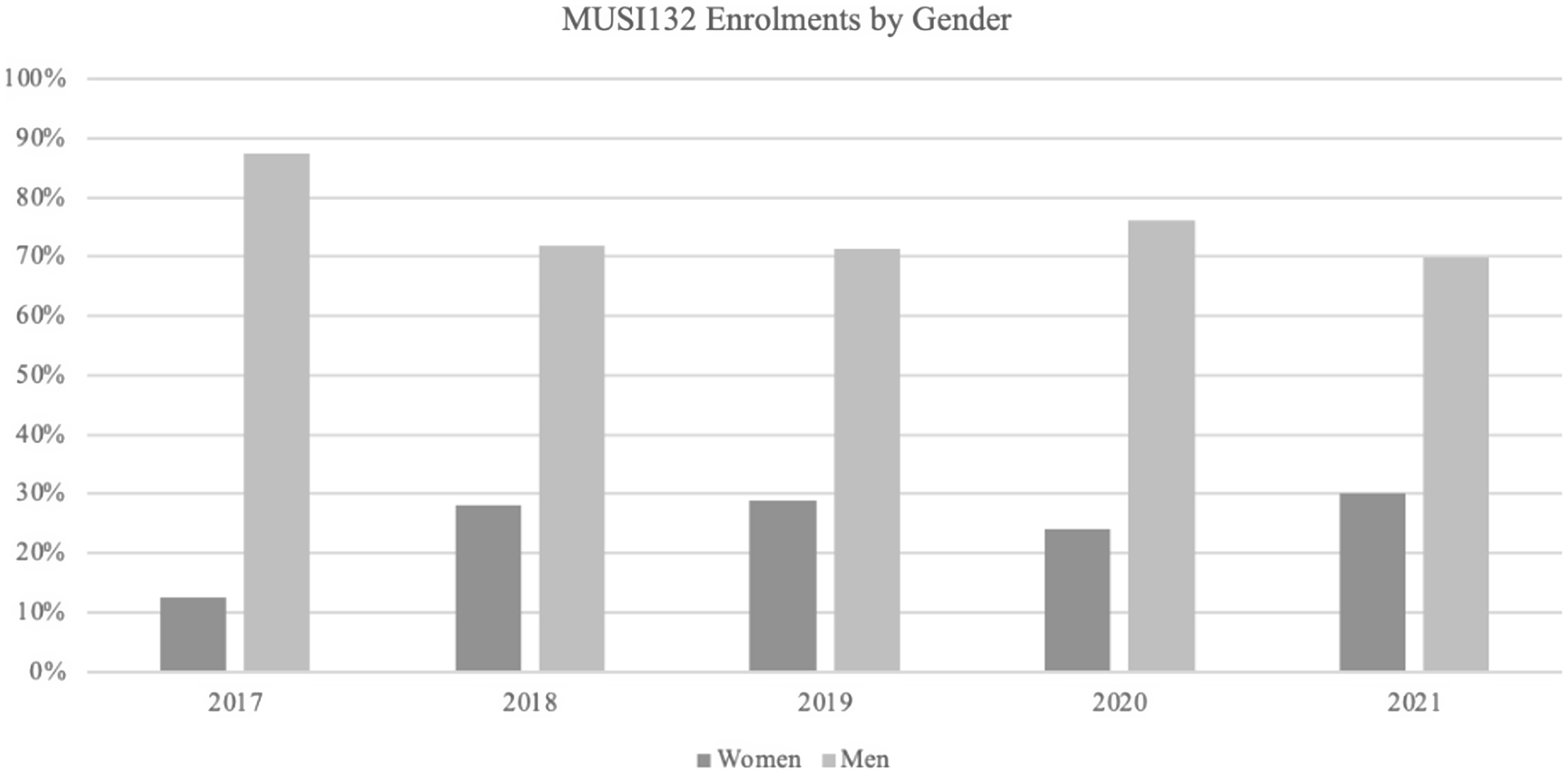
In distilling the data further, we examined enrolments in specific Music Production courses. Through considering enrolments in the first-year introductory course MUSI132, we see a sharp uptake of women enrolling from 13% in 2017 to 30% in 2021, averaging out at 25% women to 75% men. While women remain a significant minority both in the degree at large and within individual courses, the general trend suggests a slow but gradual increase in women studying music at Otago (Figure 2).
University of Otago MUSI132 enrolments 2017–2021, by gender.

Waikato Institute of Technology – Bachelor of Media Arts (Commercial Music)
Where Otago’s musical training has unfolded within a university context that had historically grown from a ‘conservatorium’ model of training, the second case study discussed here, Waikato Institute of Technology’s (Wintec) Bachelor of Media Arts (Commercial Music), offers perspectives from the vocational sector. Founded in 1924 as Hamilton Technical College, Wintec is one of the largest providers of tertiary-level vocational training in Aotearoa. Wintec developed a Media Arts degree programme in the 1990s in response to both changing employment needs and government tertiary reforms. While music training still sits within the School of Media Arts, the Bachelor of Media Arts (Commercial Music) was phased out starting in 2018 and replaced with the Bachelor of Music and Performing Arts, with its final cohort completing in 2020 and graduating in 2021. Because of this, this case study draws heavily on 2016–2018 enrolment data in the previous offering (BMA-ComMus).
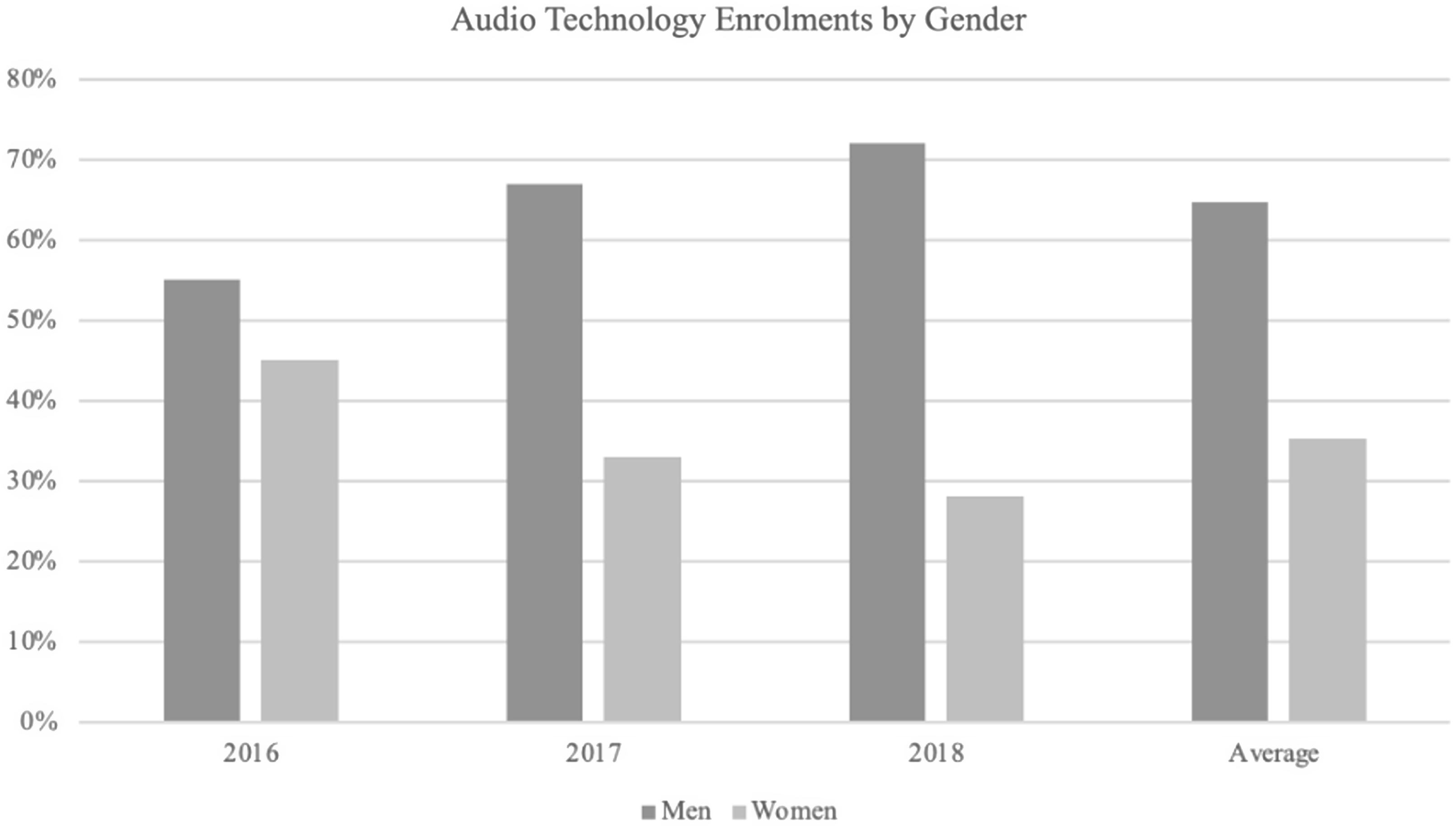
The Bachelor of Media Arts (Commercial Music) was essentially a contemporary music degree, wherein students could complete up to two endorsements in either Songwriting, Production or Performance. During the first year of study, students completed a variety of introductory courses, including the compulsory Audio Technology course. In the second year of the degree, students could begin to choose courses to work towards various endorsements, with Production students taking Music Production 1 and 2, and the third year included core courses related to endorsements – for Production, Electroacoustic Music, and Post-Production and Mastering. The student enrolment data on the 2016–2018 courses include demographic information on gender, ethnicity and age, organised by ‘module’, or individual courses, within the Bachelor of Media Arts (Commercial Music) degree. Overall BMA degree demographic information does not reflect the Commercial Music major, and so data from individual modules have been used here to construct a full picture of the programme. As a starting point, we examined the first-year module ‘Audio Technology’, which was compulsory for all music students and thus provides us with a general indication of the gender diversity amongst all first-year students (Figure 3).
Wintec Audio Technology enrolments 2016–2018, by gender.

Data from the enrolments into this first year compulsory course indicate that the Wintec music cohort at large aligns with gender imbalances seen more broadly across the tertiary music sector. Across the 3 years profiled here, the representation of women in the overall music cohort peaked at 45% in 2016 and declined to 28% by 2018; on average, women made up close to 35% of first-year enrolments for the BMA ComMus. What is significant about Wintec’s music cohort, however, is that Māori and Pacific student numbers were strong and continually increasing, peaking with 51% Māori and 17% Pacific students in 2018 enrolling in the Bachelor of Media Arts (Commercial Music). This shows a strong point of difference with TEC data trends, with Māori and Pacific students making up the majority of students in the Commercial Music degree at Wintec, compared to 11.5% Māori and 8.5% Pacific in Aotearoa’s tertiary music landscape at large.
Production endorsement
While a cursory overview of Wintec’s music cohort at large offers some useful insights relative to overall music enrolments in Aotearoa, analysis of the individual modules that constituted the Production endorsement under the BMA ComMus points to some further points for discussion relative to enrolment data from the whole degree population. Because Audio Technology is core for all students, while it gives us an overview of the degree programme at large, it does not allow us to examine technology as a chosen pathway by students. As such, for this case study we considered the enrolments into courses that were required for a Production endorsement at second- and third-year level – Music Production 1 and 2, Electroacoustic Music, and Post-Production and Mastering – to analyse any drop-off points, or ‘leaky pipeline’ concerns, as well as variations in patterns of study within the programme.
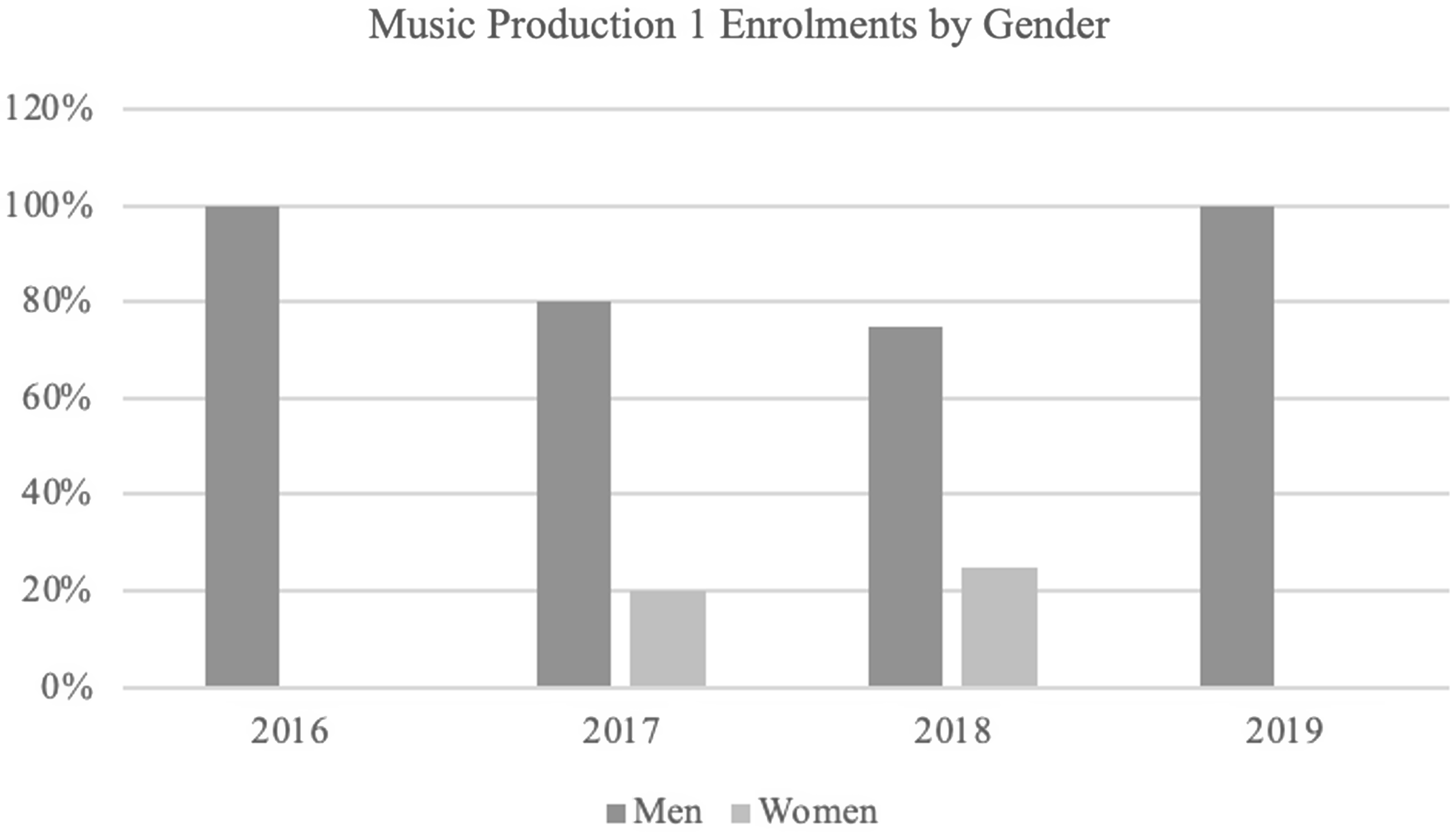
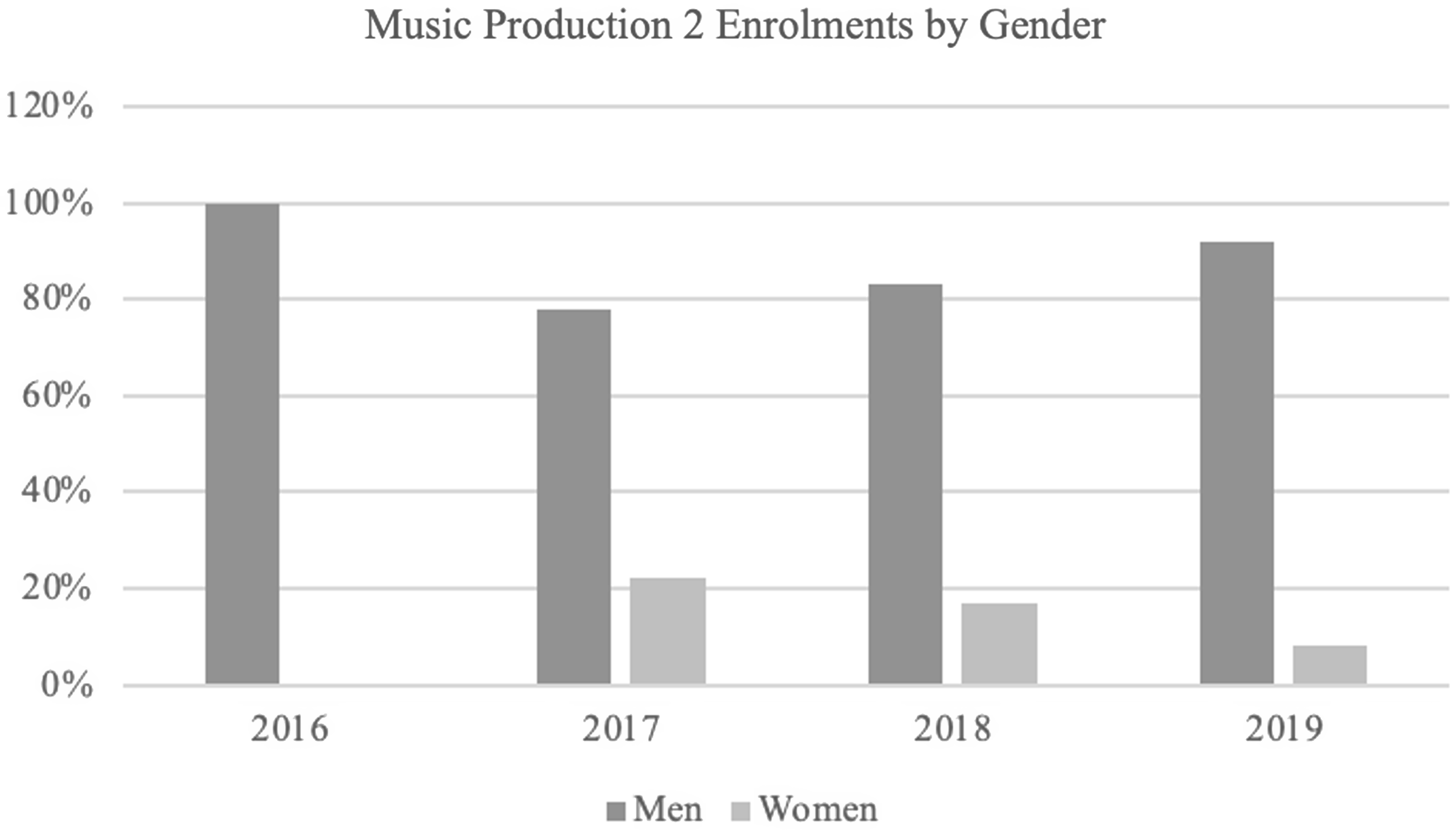
Music Production 1 and 2, which are taken by second-year production students in the first and second semesters, respectively, are small courses yet exacerbate the gender inequities identifiable in the cohort at large. These cohorts are dominated by men – no women took either course in 2016, for example, and enrolments for subsequent years show women only represent around 20%–25% of the course population (Figures 4 and 5).
Wintec Music Production 1 enrolments 2016–2018, by gender.

Wintec Music Production 2 enrolments 2016–2018, by gender.

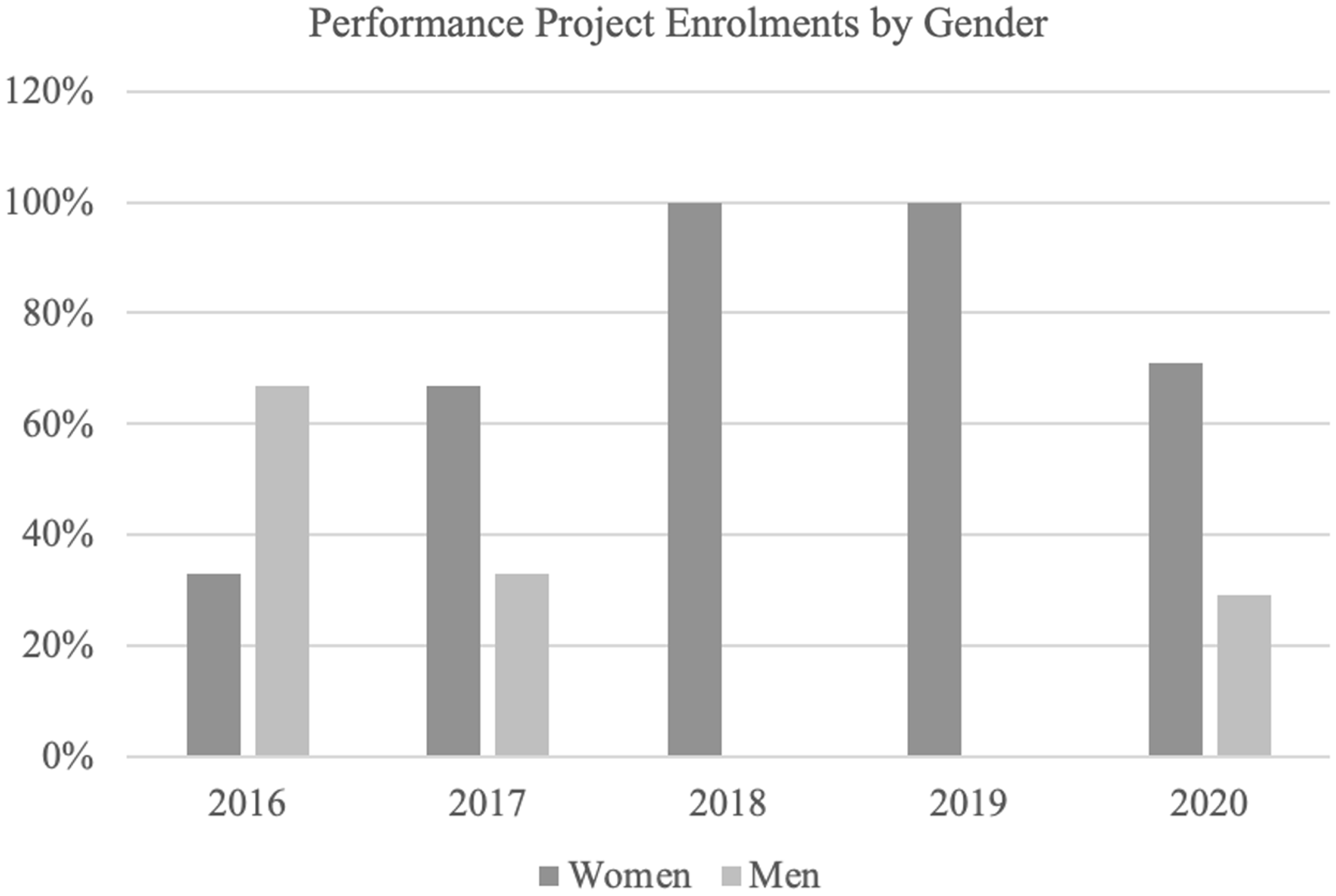
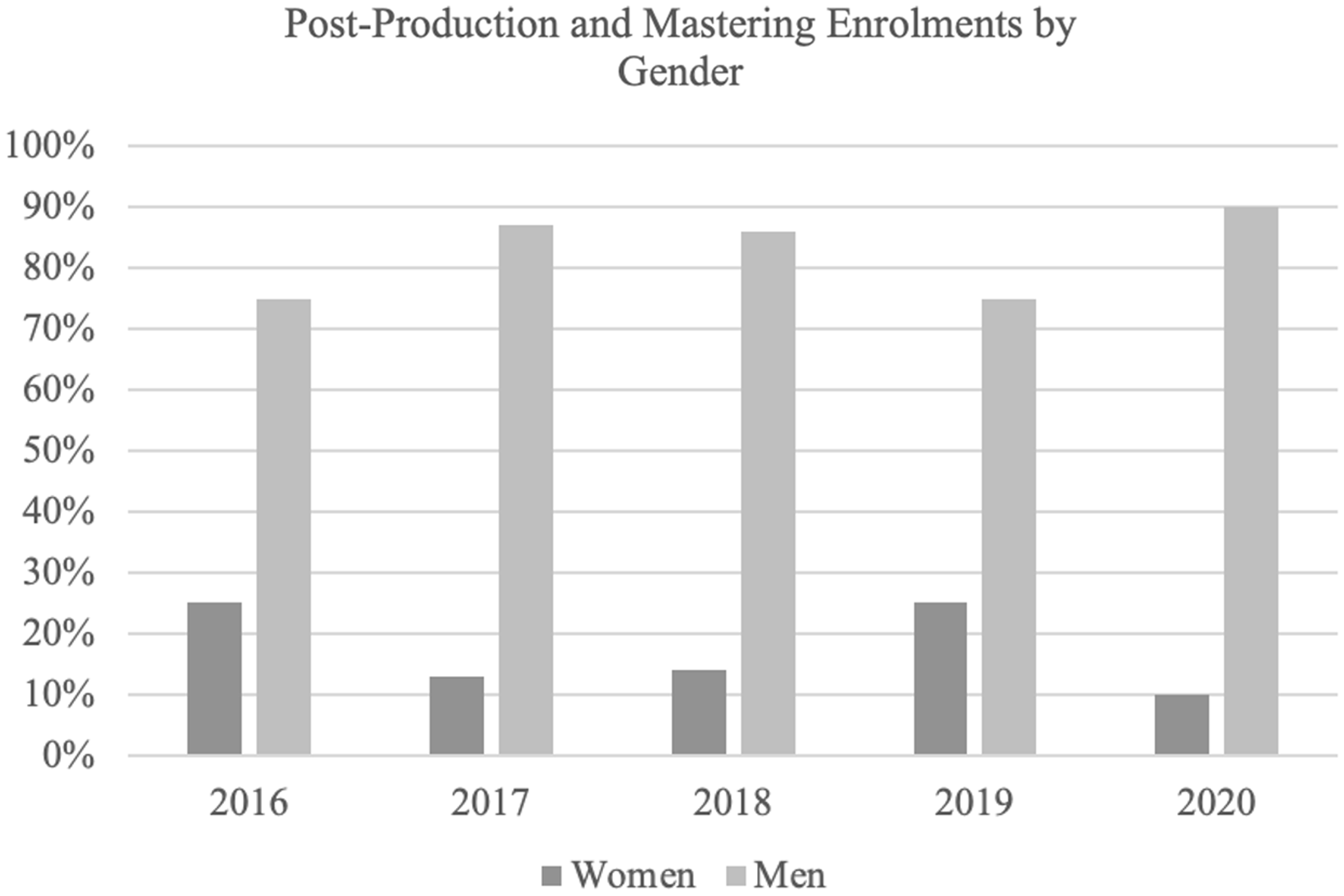
When we look to the third-year technology courses – Electroacoustic Music, and Post-Production and Mastering – we see similar patterns. This is particularly pertinent, as it is in the third year that students choose their specialisation. Electroacoustic Music, which was positioned more as a composition course than a technical course, fares slightly better in relation to gender inequity, despite women still being soundly in the minority; in Post-Production and Mastering, there is a significant underrepresentation of women, and furthermore, initial analysis suggests a drop-off in the already small number of women studying production between second and third year. Such a possibility is important for the ‘leaky pipeline’ analysis of tech education, a point we will return to in the discussion. Further, when comparing third-year endorsements – based on course enrolments into pre-requisites – we see a significantly higher proportion of women in Performance (indicated by enrolment in the course Performance Project) than Production (indicated by enrolment in Post-Production and Mastering) (Figures 6 and 7).
Wintec Performance endorsement (indicated by Performance project) 2016–2020, by gender.

Wintec Production endorsement (indicated by Post-Production and Mastering) 2016–2020, by gender.

Massey University – Bachelor of Commercial Music
The final case study we explore is Massey University’s Bachelor of Commercial Music. The Bachelor of Commercial Music (BCommMus) at Massey University opened to its first intake in 2016; prior to this, Massey’s Wellington Campus offered music degree courses through an agreement with Victoria University of Wellington (VUW) as part of the New Zealand School of Music (NZSM). Following the dissolution of this agreement, Massey developed a new degree, supported by major facilities renovations, and the appointment of new cohort of academic, technical and administrative staff. The BCommMus degree is structured around three majors – Music Technology, Music Practice and Music Industry. We focus here on enrolments from 2016 to 2021, with particular attention to gender and ethnicity data recorded by Massey.
Enrolments across this period demonstrate that music degree cohorts at Massey are consistently dominated by men, with enrolments by women ranging from 24% to 36% in any given year, and averaging out at 31% women 69% men over this period. In considering the ethnic diversity of Massey’s music cohorts, Pākehā students represent a majority across all years covered by the analysis, averaging at 84%: Massey’s total music enrolments for Māori students over this time ranged from 13% to 21%, and averaged out at 17%, with all but one year attracting over 14% Māori, more than the national average. Pacific cohorts were similarly varied, ranging from 8% to 10% – and averaging at 9%, also higher than the national average for this time.
Music Technology Major
Massey’s Music Technology Major has been offered every year since the establishment of the Bachelor of Commercial Music and focuses on a sequential pedagogy built around two key pathways that all technology students train in: interface design and audio engineering. Both areas follow a sequential pattern of learning across the 3 years of the undergraduate degree: interface design builds skills in software and hardware development, including instrument design, while the more traditional audio engineering pathway covers mixing and mastering techniques for studio production, and live light and sound skills, including programming and designing advanced lighting and projection rigs.
Because all enrolling students are required to select one major, we can easily ascertain the gender make-up of cohorts across Music Technology, Music Practice and Music Industry. Results here reveal a trend whereby Music Technology consistently attracts proportionally fewer women enrolments than Music Practice and Music Industry. In examining first-year intake across 2016–2021, average ratios in Music Industry are 38% women to 62% men, and Practice was 33% women to 67% men. Comparatively, Music Technology averaged only 16% women to 84% men. In examining the gender spread across entire cohorts, i.e. majors across all 3 years, we see that while women are still in the minority, there are marginally higher average ratios in both Industry (40% women to 60% men) and Practice (32% women to 68% men). However, Music Technology averages only 19% women to 81% men. In considering intersectional factors, we also note that Tech cohorts represent the largest proportion of European students, averaging at 88%, with Māori students representing only 14% of Music Technology enrolments, less than that of Practice and Industry, while Pacific students represent only 5% of the Music Technology cohort, again lower than the other majors (Figure 8).
Massey University Music majors (all years) 2016–2021, by gender.

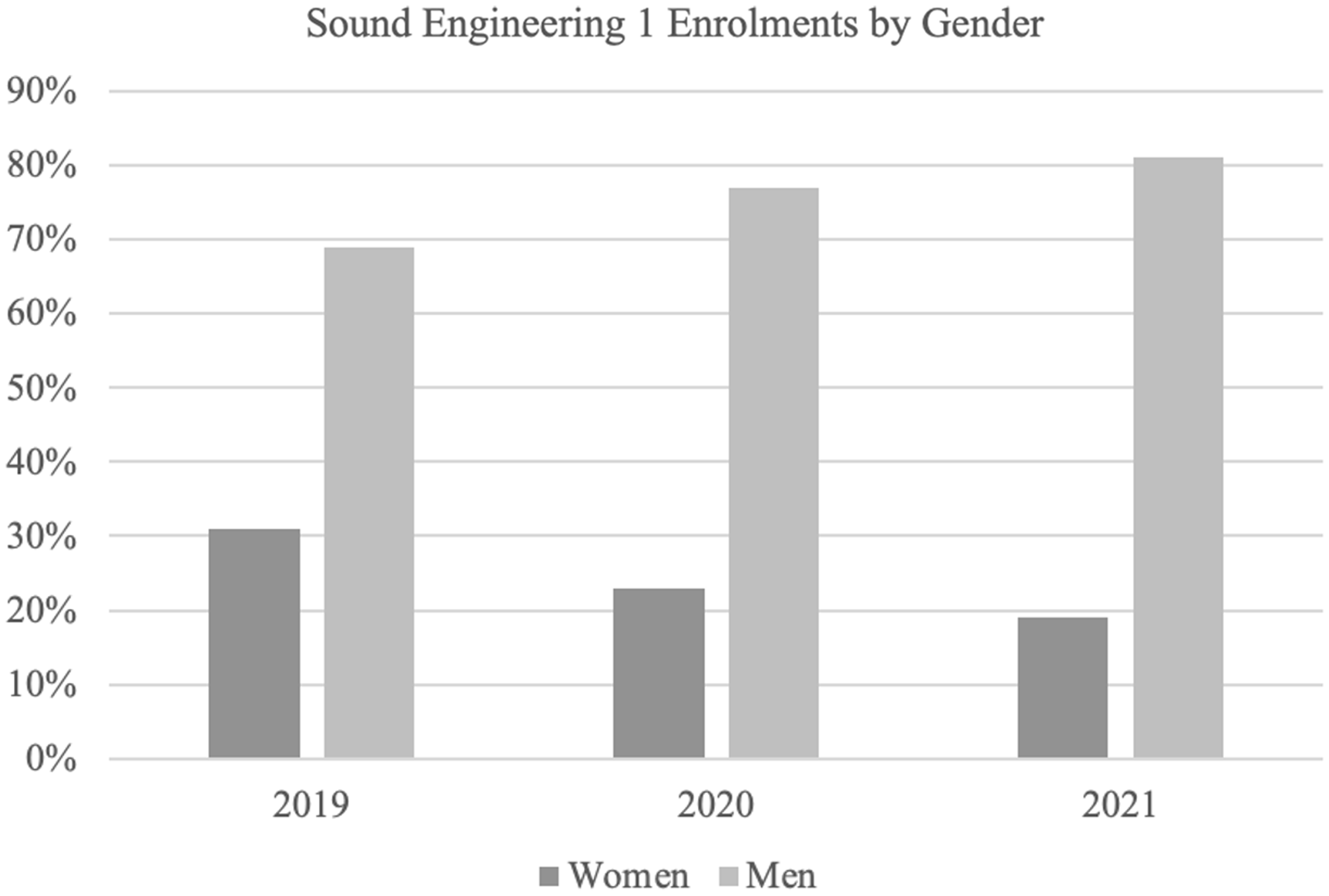
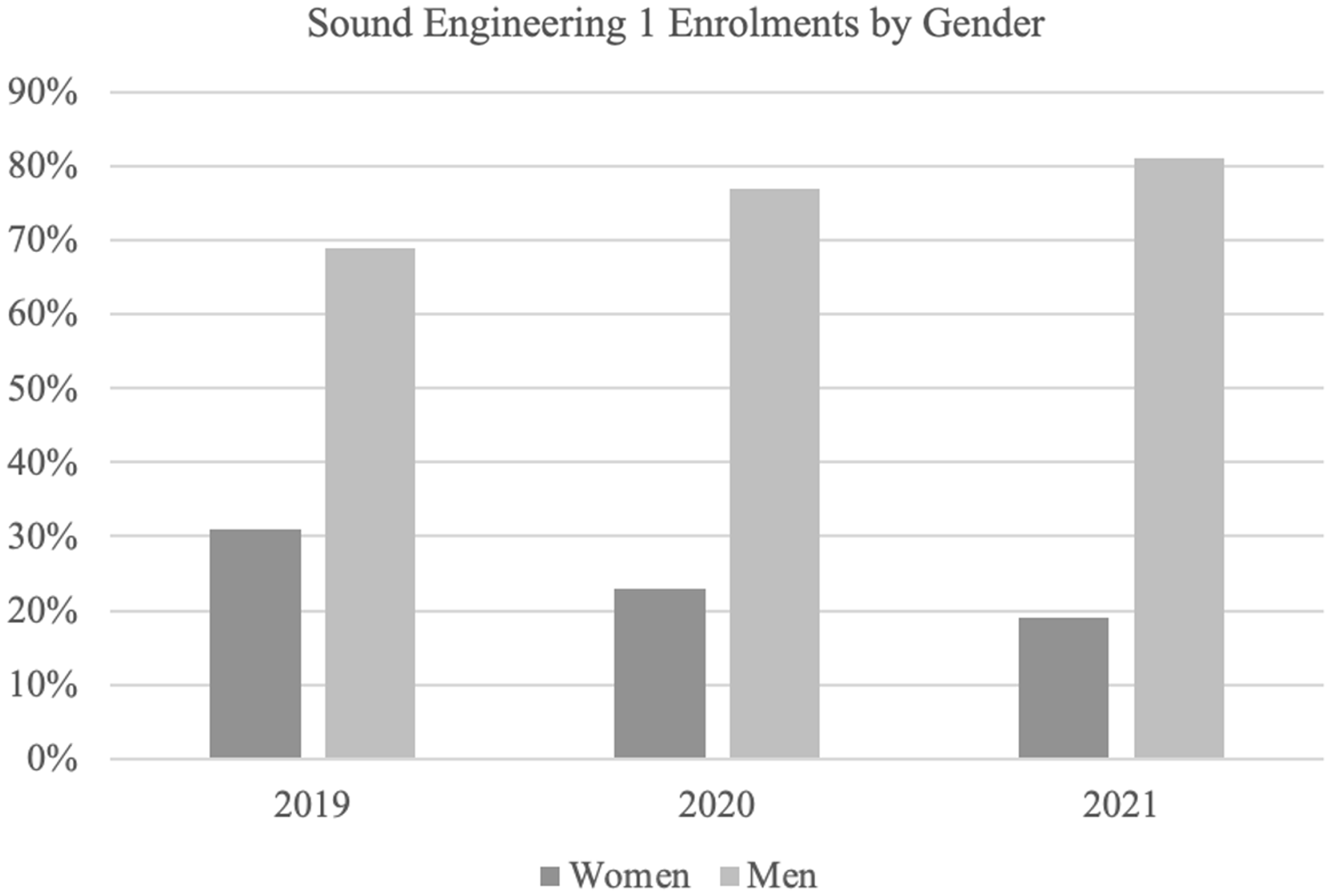
As with Otago and Wintec, further distilling data to consider enrolments at the level of individual courses gives us insights into where ‘leaks’ emerge. Due to students’ ability to take elective courses during their music degree, these figures also reveal how tech courses emerge as desirable, or unattractive, elective options for students from other majors. Looking to the two first-year music tech courses – Musical Interface and Interaction 1 and Music and Sound Engineering 1 – can give us some understanding of how disparities are experienced within specific classroom settings. Both courses are compulsory for students enrolled in a Music Technology Major, and both have historically been attractive elective options for students from other programmes. Available enrolment numbers for these courses are from 2019 to 2021 and show that women are significantly underrepresented in both courses, but that average enrolments for women in Musical Interface and Interaction 1 are lower than those in Music and Sound Engineering 1, i.e. 14% compared with 24% (Figures 9 and 10).
Massey University enrolments in Music and Sound Engineering 1 2019–2021, by gender.

Massey University enrolments in Musical Interface and Interaction 1 2019–2021, by gender.

The marked absence of women in both courses, and indeed the Technology cohort as a whole, is consistent with wider trends we note from the other case studies and international findings. However, we also note patterns within the field of tech itself, where ‘development’ spaces, such as that represented by Musical Interface and Interaction 1, show even further underrepresentation for women. This forms a point in our discussion below.
Discussion
We set out on this study not to compare three different Music Technology degree offerings, but rather to understand the different environments and experiences emergent in music technology training across Aotearoa. What we hoped to glean from a cursory overview of student demographics in different music technology programmes was to consider not only how Aotearoa is positioned within the underrepresentation of women in music technology, but how we might form an understanding of barriers to enrolment, ‘leaky’ points throughout degree pipelines, variations within the broad field of Music Technology itself and the impacts of different intersectional factors such as ethnicity and decile. While disparities in the way data are collected, as well as our own positionality as Pākehā researchers, means that we can only make limited observations about ethnicity, the pronounced underrepresentation of non-European students in music technology training in two of our three case studies, coupled with the domination of music tech vocations in Aotearoa by Pākehā (cf. Smith, Reference SMITH2010), indicates that further culturally responsive research is imperative here to explore the social and systemic issues at play.
In looking to commonalities in our case studies, there are consistent gender disparities across all three programmes. Women are underrepresented across the tertiary music sector in Aotearoa. These disparities are even more pronounced when we examine gender in Music tech training: women are significantly underrepresented as enrolments in music technology specialisations, compared to other areas such as performance, industry or composition. Our secondary analysis of the data provided by Otago, Wintec and Massey allowed us to estimate that the average ratio of men to women studying in music technology specialisations at each institution was roughly 80:20, compared to 60:40 across the entire tertiary music sector.
We were also interested in how demographic data from university enrolments could be considered in relation to the music technology workforce in Aotearoa. While further research is required on tertiary-to-employment pipelines for the music technology sector, we examined how the tertiary landscape fared compared to the realities of employment. Findings from the 2020 Amplify Aotearoa report, where participants were asked to document their experiences, roles and earnings in Aotearoa’s music industry, showed that disparities in gender representation were most pronounced in areas of audio and music technology. Women comprise only 19.2% of Producers and 12.5% of Audio Engineers in Aotearoa. Music technology development comprised only 11.1% women.Footnote 3 These numbers indicate that tertiary training is broadly reflective of the same disparities in the music tech sector as a whole, but that the significant disparities witnessed in specific areas point to a need to reframe homogenous approaches to ‘music technology’ as a future approach.
Reflections on the leaky pipe: the case for examining pre-tertiary music contexts
Our findings are not surprising, given what scholarship has already established about gender and the music industry, and especially gender in technology. Music, while providing many positive experiences, can highlight and exacerbate existing modes of privilege and hegemony. This is particularly true in the gender-oriented analysis adopted for our discussion of music technology training in Aotearoa. While additional research in the Aotearoa context is needed, extant research provides some insights into possible systemic and socio-cultural causes for the inequalities that we have outlined in this study. The ‘leaky pipeline’ model used elsewhere appears to align with our cursory findings and maps with studies globally (Born & Devine, Reference BORN and DEVINE2015; de Boise, Reference DE BOISE2018), which similarly depict the disparities between men’s and women’s involvement in music technology in the tertiary sector. Blickenstaff (Reference BLICKENSTAFF2005) suggests that the leaky pipeline disproportionately affects women, noting that:
…the effect of differential leaking is to create a sex-based filter that removes one sex from the stream and leaves the other to arrive at the end of the pipeline. No one in a position of power along the pipeline has consciously decided to filter women out of the STEM stream, but the cumulative effect of many separate but related factors results in the sex imbalance in STEM that is observed today. (p. 369)
Despite the limits of terminology such as ‘sex’, this can provide insights as to potential causes of inequities in music technology. Part of the issue, in Blickenstaff’s study, comes from a lack of women role models, a ‘chilly climate’ for girls/women in science classes and a ‘critical mass’, in which the low proportion of women may be unattractive to prospective entrants (p. 376). Similarly, Born and Devine (Reference BORN and DEVINE2015) theorise an ‘indirect discrimination’, whereby ‘through classroom observations and other methods, it is possible to identify how gendered preconceptions enter into teachers’ interaction with and assessment of school children in the classroom’ (p148). This thereby contributes to the ‘leaky pipeline’ in music technology contexts.
Born and Devine’s (Reference BORN and DEVINE2015) study applies the ‘leaky pipeline’ theory to a music technology context in the UK. From age 5 to 16, their study reveals that students choosing ‘music technology’ as their focus is around a 40:60 women-to-men ratio. After 16, this number drops to 25:75, and progressively lowers to a 10:90 women-to-men ratio by the time students enrol in university. This study highlights a key moment at around the age of 16, wherein the social implications of music and music technology (i.e. the gendered associations Doubleday (Reference DOUBLEDAY2008) points to) may become evident to a student and become the first ‘fracture’ in the leaky pipeline. This stage of secondary education is hence critical to combatting inequities present later in a person’s career – regardless of whether they engage with tertiary education or not. As such, it is reasonable to hypothesise that in order to address the inequities in tertiary music education, and subsequently the industry beyond, efforts should be focused on positive interventions in the ‘moment of realisation’ young people may have in their formative pre-tertiary years, alongside factors such as access, economies of availability and location.
While we are faced with a series of limitations, when we consider the ‘leaky pipeline’ model against the TEC data for enrolments at the start of a degree, where we see a ratio of 40:60 women to men in the general cohort, and roughly 20:80 in tech specialisations, we might comfortably argue that tertiary providers are inheriting an overwhelming disparity in terms of gender. Universities must still acknowledge their own compliance in exacerbating inequities through recruiting and marketing, but nevertheless such data suggest that these systemic issues begin before students set foot on a university campus. Targeting the root causes of gender disparities in a pre-tertiary environment similarly encompasses a complex range of issues – not only the insidious nature of gendered associations as they emerge within pedagogical and social structures but also the economy of availability and the politics of access. To continue developing as musicians, producers or technologists, students need access to the technologies they are likely to encounter in the industry, alongside a social environment conducive to learning that counters stereotypes relative to gender and ethnicity.
Conclusion
Through this article, we hope to expand a conversation on the role that tertiary education in music technology might play in exacerbating gender inequities in the wider workforce. Through focusing on three music technology degree-level offerings in Aotearoa/New Zealand tertiary education, we offered a cross-institutional analysis that examined broad inequities in gender representation at the point of intake levels. In doing so, we sought to critically examine the ways in which higher education can be seen to contribute to, rather than counter, issues of gender representation in music technology. By drawing on case studies from the University of Otago’s Bachelor of Music with endorsement in Studio Production, Waikato Institute of Technology’s (Wintec) Bachelor of Media Arts (Commercial Music) with endorsement in Music Production and Massey University’s Bachelor of Commercial Music with a major in Music Technology, we found that music technology training exacerbates the already notable underrepresentation of women as tertiary music students in Aotearoa and argue that these disparities contribute to inequitable industry outcomes in Aotearoa.
Examining training and dismantling preconceptions at pre-tertiary levels is crucial for reimagining the pipeline for women from education to the workforce, as is responsible research that targets intersectional factors such as ethnicity and decile. As music technology offerings increasingly become a core feature of tertiary music training, and as music technology furthermore becomes a key employment area within the music industry at large, it is vital to continue to proactively reframe music tech education as an inclusive and assessable space, and in doing so seek to disrupt a musicalised masculine hegemony, and the subsequent institutionalisation of a future gendered division of labour in the music professions and in musical cultures more broadly (Born & Devine, Reference BORN and DEVINE2015: 151).
Dr Catherine Hoad is a senior lecturer in music at Massey University, Aotearoa/New Zealand, and the Chair of the Australia-Aotearoa/New Zealand branch of the International Association for the Study of Popular Music. She co-leads the research project Amplify Aotearoa that seeks to enable a diverse and inclusive music industry, with a wider research interest in inclusion, access and equity in creative communities and education.
Professor Henry Johnson is a Professor of Music and an Associate Director of the Centre for Global Migrations at the University of Otago, Aotearoa New Zealand. He has published widely in the fields of heritage, performance, diaspora and island studies. His research has covered various musical fields in Europe, Asia, Australasia and the Pacific.
Megan Rogerson-Berry is a Principal Academic Staff Member at Te Kawau Toi, Music and Performing Arts Department, School of Media Arts, Wintec. In this role she teaches on and oversees music theory, songwriting, composition, arranging and critical media studies courses, and supervises a range of postgraduate projects. Her scholarly output includes work on gender, queerness and popular music; in particular, how queerness is heard in popular music. Other research interests include culturally responsive tertiary education practices, and affective and invisible labour in music academia.
Professor Oli Wilson is the Associate Dean Research at the College of Creative Arts, Massey University, Wellington. In this capacity, he oversees the college’s research and international strategies, and post-graduate programs. His academic focus lies in advancing equity, resilience and sustainability within the creative industries, and he contributes to transformative research initiatives in collaboration with industry and government partners. Beyond academia, Oli has over 20 years’ experience in the commercial music industry, and his contributions extend to multiple NZ Top 40 recordings, as well as tours across North America, the UK, Europe, Australia and New Zealand.
Josh Ellery is an independent researcher, educator and musician.