1. Introduction
The motion planning problem and topological complexity
By giving a solution for the motion planning problem on a topological space X we understand providing an algorithm which, given any pair of points  $(x,y) \in X \times X$, outputs a path in X with initial point x and terminal point y. Whenever considered in the context of robotics, X becomes the so-called configuration space, or space of all possible states of a mechanical system, and such an algorithm can be interpreted as finding the process of moving the robot from one state to another. Formally, let PX denote the space of continuous paths in X with the compact-open topology. A motion planning algorithm (or a motion planner) in X is a section of the so-called path space fibration
 $\pi \colon PX \to X \times X$ given by
 $\pi(\gamma) = \big(\gamma(0), \gamma(1)\big)$, i.e. a map
 $s \colon X \times X \to PX$ such that
 $\pi \circ s = \textrm{id}_{X\times X}$.
Naturally, one would hope for a motion planner to be continuous, i.e. that small changes in either of the state points translate into a predictable change of the path followed by the robot. However, this situation is rarely possible: as shown by Farber in [Reference Farber13], such continuous motion planners exist only in contractible spaces. Noticing the relationship between that instability and the topological features of the configuration space, Farber introduced the notion of topological complexity, denoted by TC, as a measure of the degree of discontinuity of the motion planning problem. TC turns out to be a particular case of the more general notion of sectional category originally introduced as the genus of a fibration by Schwarz in [Reference Schwarz29] and later on generalized to arbitrary maps, see for example [Reference Berstein and Ganea3]. Since its inception, the concept of topological complexity has proven to be extremely rich, both as a purely theoretical homotopy invariant related to other interesting notions (such as the Lusternik–Schnirelmann category) and as a tool with many possible applications in robotics. Many different variants of the original definition have sprouted, depending on the specific information each of them measure.
Symmetries on the motion planning
One of those kinds of “specific information” concerns the impact of the symmetries that often appear in the configuration spaces and that one might want to take into account whenever studying the instability of the motion planning problem. Formally, those symmetries are seen as actions of groups on the base topological space X, and as such, this naturally leads to the consideration of equivariant versions of topological complexity. There are several non-equivalent approaches to the matter, such as the equivariant topological complexity [Reference Colman and Grant9], the strongly equivariant TC [Reference Dranishnikov11] as a variant of the former, the invariant TC introduced in [Reference Lubawski and Marzantowicz24], or the more recent notions of effectual topological complexity [Reference Cadavid-Aguilar, González, Gutiérrez and Ipanaque-Zapata8] and orbital TC [Reference Balzer and Torres-Giese2]. We will not delve into the definitions, so we just refer the interested reader to the excellent surveys on the subject by Ángel and Colman [Reference Angel and Colman1] or Grant [Reference Grant18].
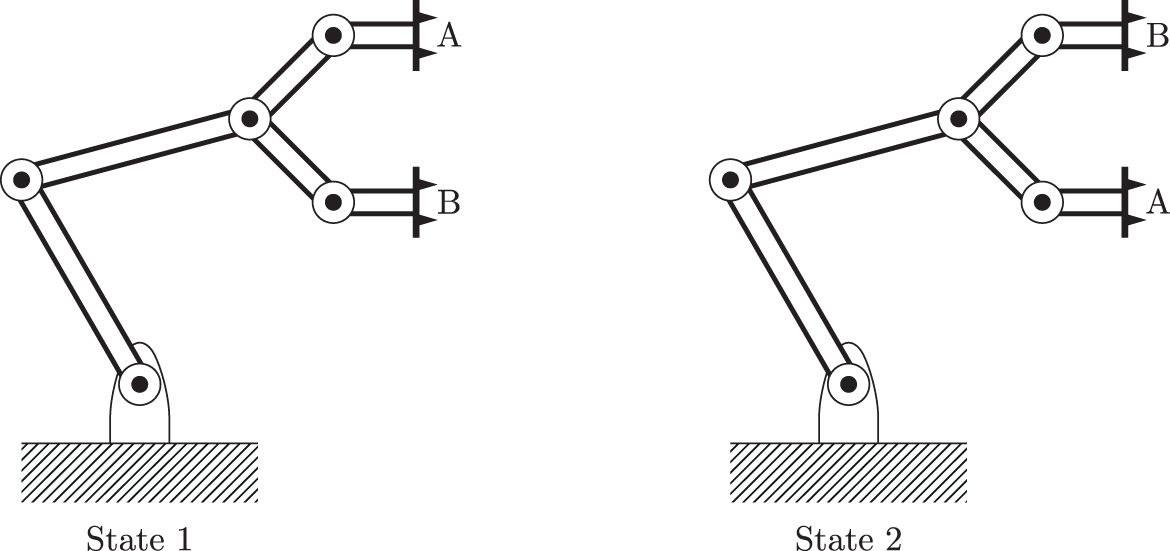
However, these versions of equivariant topological complexity, while mathematically relevant on their own, do not take into account the possibility of ‘easing’ the task of the motion planning through the use of the symmetries of the space. Consider, for example, the case of a robotic arm with two identical pliers, such as the one represented in
A mechanical arm in physically different, but functionally equivalent states, since grips A and B are indistinguishable.

Observe that, while both states are different, any object that has to be manipulated by the arm can be grabbed equally well in both cases. Situations equivalent to this one are extremely common in the world of mechanical systems. The problem is that the original approach to topological complexity does not take this sort of phenomena into account. Yet, the above example suggests that symmetries in configuration spaces can simplify the task of motion planning, given that, even though symmetric positions are physically different, they can be considered as functionally equivalent. Therefore, every planning algorithm instructing a robot how to move between all possible states is a waste of effort and can be made easier if we take into account this functional equivalence. In order to study this possibility, Błaszczyk and Kaluba introduced in [Reference Błaszczyk and Kaluba5] a new invariant, with precisely this foundational idea, which they baptized as effective topological complexity. In light of this notion, the effective motion planners considered in this context output paths that are typically no longer continuous, but with discontinuities parametrized by the symmetries of the configuration space. As such, whenever a mechanical system follows such a path and runs into a point of discontinuity, it re-interprets its position accordingly within a batch of symmetric positions and then resumes normal movement.
1.3. Contents and structure of this article
So far, the effective topological complexity remains as a poorly understood variant of TC. The purpose of this article is to contribute to the understanding of said invariant, by investigating some of its properties. In  $\S$2, we recall the notion of effective topological complexity and we review most of its basic properties. In
 $\S$3, we start our analysis by studying the relationship between the different broken path spaces and introducing the notion of the global effective path space, as a limit of a chain of inclusions.
 $\S$4 is devoted to the definition of an effective version of the Lusternik–Schnirelmann category, which will play an analogous role to the classic LS category in this setting. In particular, we obtain the effective version of the classic bound of TC in terms of LS category and other crucial properties summarized in the following theorem.
Theorem Theorem 4.2, Proposition 4.4, and Corollary 5.4
Let X be a G-space. The following statements hold:
(i)
 $ \text{cat}^{G, \infty}(X) \leq \text{TC}^{G, \infty}(X) \leq \text{cat}^{G \times G, \infty}(X \times X) \leq 2 \text{cat}^{G, \infty}(X).$
(ii) Let
$\rho_{X} \colon X \rightarrow X/G$ be the orbit map with respect to the action of G. Then,
$\text{cat}(\rho_X) \leq \text{cat}^{G, \infty}(X).$(iii)
$\text{cat}^{G,\infty}(X) = 0$ if and only if
$\text{TC}^{G, \infty}(X) = 0.$


In  $\S$5, we will turn our attention to discussing the problem of determining the kind of G-spaces with
 $\text{TC}^{G, \infty}(X) = 0$. The relationship hinted there between the orbit projection map
 $\rho_X \colon X \rightarrow X/G$ and the effective TC will be addressed further in
 $\S$6. Here, we study the relationship between ρX and
 ${\rm TC}^{G,\infty}(X)$ in two distinct cases: when the orbit projection map has a strict section and when it is a fibration. Our findings are summarized in the following theorem.
Theorem Theorem 6.1 and Theorem 6.4
Let X be a G-space.
(i) If
$\rho_X \colon X \rightarrow X/G$ has a strict section
$s \colon X/G \rightarrow X$, the following holds:(a)
$\text{cat}^{G, \infty}(X) = \text{cat}(X/G)$.(b)
$\text{TC}^{G, \infty}(X) = \text{TC}(X/G)$.
(ii) If the orbit map ρX is a fibration, then we have
(a)
$\text{cat}^{G, \infty}(X) = \text{cat}^{G, 2}(X) = \text{cat}(\rho_X) \leq \text{cat}(X/G)$.(b)
$\text{TC}^{G, \infty}(X) = \text{TC}^{G,2}(X) \leq \text{TC}(X/G)$.


We will discuss plenty of examples in both situations, mostly concerning actions of compact Lie groups, and some consequences of the above result.
In our final  $\S$7, we will show how the broken path space at stage two
 ${\mathcal{P}}_2(X)$ is homotopically equivalent to the saturated diagonal
 $\daleth(X)$, and we will make use of this information to derive some cohomological conditions for the non-vanishing of the 2-effective topological complexity for compact G-ANR with G finite.
Theorem Theorem 7.3 and Corollary 7.4
Let G be a finite group, and X a compact G-ANR such that  $\text{cd}(X^H) \leq \text{cd}(X)$ for all non-trivial subgroups
 $H \leqslant G$. Then, for any L list of elements of G,
 $\text{cd}(\daleth_L(X)) \leq {\rm cd}(X) + |L| - 1$. In particular, we have
 \begin{equation*} {\rm cd}(\daleth(X)) \leq {\rm cd}(X) + |G| - 1. \end{equation*}
Under these assumptions, if  $|G| \leq {\rm cd}(X)$, then it holds that
 ${\rm TC}^{G,2}(X) \gt 0$.
Note: In what follows, and unless something different is explicitly stated, we will always consider well pointed spaces with a CW-complex structure, and all the actions of the groups considered will be taken as cellular actions.
Convention on TC. In the literature, there exist two approaches to topological complexity, namely, the non-reduced and the reduced ones, depending on whether TC corresponds with the exact number of local sections or with the said number minus one, respectively. In this paper, all the topological complexities are considered as reduced, whereas all the calculations in [Reference Błaszczyk and Kaluba5] are made in the non-reduced setting.
2. Review of effective TC
Recall that the sectional category of a map  $f \colon X \to Y$, written
 $\text{secat}(f)$, is defined to be the smallest integer
 $n \geq 0$ such that there exist an open cover U 0, …, Un of Y and continuous maps
 $s_i \colon U_i \to X$ with the property that
 $f \circ s_i$ is homotopic to the inclusion
 $U_i \hookrightarrow Y$ for any
 $0 \leq i \leq n$. Further on, we will make extensive use of both the notion of sectional category and some basic properties of it, so let us recall some of the most useful ones. The following proposition summarizes the basic properties of the sectional category of a fibration. For details on the proofs, we refer the interested reader to the seminal paper on the topic by Schwarz [Reference Schwarz29] or to the classic monograph [Reference Cornea, Lupton, Oprea and Tanré10].
Theorem 2.1 Let  $F \rightarrow E \xrightarrow{p} B$ be a fibration. The following statements hold:
(i)
$\text{secat}(p) \leq \text{cat}(B)$.(ii) Let k > 0 be the maximal integer such that there exist
\begin{equation*} u_1, \cdots, u_k \in \ker \{\tilde{H}^*(B;R) \xrightarrow{p^*} \tilde{H}^*(E;R) \} \end{equation*}with
$u_1 \cup \cdots \cup u_k \neq 0$. Then,
$\text{secat}(p) \geq k$.(iii) Let
$p \colon E \rightarrow B$ be a fibration, and
$f \colon X \rightarrow B$ a map. Consider the pullback fibration
$f^*p$ over B. Then
\begin{equation*} \text{secat}(f^*p) \leq \text{secat}(p). \end{equation*}In particular, if
$p \colon E \rightarrow B$ is a fibration and
$h \colon B' \rightarrow B$ is a homotopy equivalence, then
$\text{secat}(p) = \text{secat}(p')$ for p ʹ the induced fibration of h by p.(iv) Given two fibrations
$p \colon E \rightarrow B$ and
$p' \colon E \rightarrow B$ consider their product
\begin{equation*} p \times p' \colon E \times E' \rightarrow B \times B.'\end{equation*}Then,
$ \text{secat}(p \times p') \leq \text{secat}(p) + \text{secat}(p')$.


Recall that, given a topological space X, we define the path space of X, denoted by PX, as the space of continuous maps  $\gamma \colon I \rightarrow X$, where I here denotes the unit interval in
 $\mathbb{R}$. For any element
 $x \in X$, denote by cx the constant map in x, i.e.
 $c_x(t) = x$ for all
 $t \in I$. Denote by
 $P_* X$ the base path space, which is defined as the restriction of PX to paths starting at an a priori fixed point
 $x_0 \in X$. Define the fibration
 \begin{align*}
\text{ev}_1 \colon P_* X \longrightarrow{r} X \\
\gamma \longmapsto \gamma(1).
\end{align*}
Then,  $\text{secat}(\text{ev}_1)$ becomes the well-known Lusternik–Schnirelmann category of X, denoted by
 $\text{cat}(X)$.
Conversely, if the fibration corresponds to the Serre path space fibration, i.e.
 \begin{align*}
\pi \colon PX \longrightarrow X \times X \\
\gamma \longmapsto (\gamma(0),\gamma(1)),
\end{align*}
then  $\text{secat}(\pi)$ coincides with the topological complexity of X, denoted by
 $\text{TC}(X)$.
We will devote this section of the article to a quick review of our main notion of interest, that of effective topological complexity. As such, we recall both its construction and the most useful properties that were first proved in [Reference Błaszczyk and Kaluba5].
Given a topological group G acting on a pointed CW-complex X, and  $k \geq 1$ an integer, define the k-broken path space by
 \begin{equation*} {\mathcal{P}}_k(X) = \{(\gamma_1, \cdots, \gamma_k) \in (PX)^k \mid G\gamma_i(1) = G \gamma_{i+1}(0) \mbox{for } 1 \leq i \leq k \}. \end{equation*}
In particular, for stages one and two, we have the obvious equalities
 \begin{equation*}{\mathcal{P}}_1(X) = PX \qquad {\mathcal{P}}_2(X) = PX \times_{X/G} PX.\end{equation*}
Denote by  $\rho_X \colon X \rightarrow X/G$ the projection of X onto its orbit space, and by
 $\delta_X \colon \daleth(X) \rightarrow X \times X$ the inclusion of the saturated diagonal into X × X. Recall that the saturated diagonal is defined to be the subset
 \begin{equation*} \daleth(X) = \{(g_1 x, g_2 x) \in X \times X \mid g_1, g_2 \in G \mbox{and } x \in X \}. \end{equation*}
In  $\S$7, we will see another characterization of the saturated diagonal as a union of ‘slices’ indexed by the elements of the group.
Now, we need to define the generalized path space fibrations that encapsulate the desired information about the symmetries in the configuration space. Define the map  $ \pi_k \colon {\mathcal{P}}_k(X) \rightarrow X \times X $ by
 \begin{equation*} \pi_k(\gamma_1, \cdots, \gamma_k) = (\gamma_1(0), \gamma_k(1)).\end{equation*}
Indeed, this can be seen as a fibration in the following manner: If  $\pi \colon PX \rightarrow X \times X$ denotes the path space fibration which sends every path to its end points, consider the restriction of the fibration
 $(\pi)^k$ to the subspace
 \begin{equation*}X \times \daleth(X)^{k-1} \times X \subseteq (X \times X)^k. \end{equation*}
Taking the pullback of  $(\pi)^k$ over the inclusion
 \begin{equation*} X \times \daleth(X)^{k-1} \times X \rightarrow (X \times X)^k \end{equation*}
gives a fibration
 \begin{equation*} p_k \colon {\mathcal{P}}_k(X) \rightarrow X \times \daleth(X)^{k-1} \times X \end{equation*}
fitting to a pullback diagram

Composing pk with the projection onto the first and last factors, we obtain πk.
Definition 2.2. With the above notation
• A (G, k)-motion planner on an open subset
$U \subset X \times X$ is defined as a continuous local section of πk over U, that is, a map
$s\colon U \rightarrow {\mathcal{P}}_k(X)$ such that
$\pi_k \circ s \simeq \text{Id}_U$.• The k-stage effective topological complexity
$\text{TC}^{G,k}(X)$ is defined as the smallest integer
$n \geq 0$ such that there exists an open cover of X × X by n + 1 sets admitting (G, k)-motion planners. Equivalently,
\begin{equation*} \text{TC}^{G,k}(X) = \text{secat}(\pi_k). \end{equation*}


The following lemma condenses some of the most basic properties of  $\text{TC}^{G,k}(X)$ introduced in [Reference Błaszczyk and Kaluba5]:
Lemma 2.3. [Reference Błaszczyk and Kaluba5, Lemma 3.2, Theorem 3.3]
 $\text{TC}^{G,k}(X)$ satisfies the following properties:
(i) The following inequalities hold for any
$k \geq 1$ and any subgroup
$H \leq G$:(a)
$\text{TC}^{G,k}(X) \leq \text{TC}^{H,k}(X)$.(b)
$\text{TC}^{G, k+1}(X) \leq \text{TC}^{G,k}(X)$.
(ii) If there exist a G-map
$f \colon X \rightarrow Y$ and a map
$g \colon Y \rightarrow X$ such that
$f \circ g \simeq \text{Id}_Y$, then
\begin{equation*} {\rm TC}^{G,k}(Y) \leq {\rm TC}^{G,k}(X).\end{equation*}In particular, if X and Y are G-homotopically equivalent, then
\begin{equation*}{\rm TC}^{G,k}(X) = {\rm TC}^{G,k}(Y).\end{equation*}


Definition 2.4. Let  $k_0 \geq 1$ be the minimal integer such that
 $\text{TC}^{G,k}(X) = \text{TC}^{G, k+1}(X)$ for every integer
 $k \geq k_0$. We define the effective topological complexity of X as
 \begin{equation*}\text{TC}^{G, \infty}(X) = \text{TC}^{G, k_0}(X).\end{equation*}
One of the main focuses of the original paper of Błaszczyk and Kaluba revolves around providing a full study of the effective topological complexity of  $\mathbb{Z}_p$ spheres of any dimension. As bedrock examples that come in handy in many situations, we summarize here the classification provided in [Reference Błaszczyk and Kaluba5]:
Theorem 2.5 [Reference Błaszczyk and Kaluba5, Corollary 5.10]
For any p prime, suppose  $\mathbb{Z}_p$ acts on Sn with an r-dimensional fixed point set, for
 $-1 \leq r \leq n-1$ (
 $r=-1$ meaning free action).
• If p > 2, then
$$\text{TC}^{\mathbb{Z}_p, \infty}(S^n) = \text{TC}(S^n) =\begin{cases}
1 & \text{if } n \text{ is odd} \\
2 & \text{if } n \text{ is even, } n \gt 0.
\end{cases}$$• If p = 2, then
$\text{TC}^{\mathbb{Z}_2, \infty}(S^n)$ depends on r as indicated in the following table:


Remark 2.6. In [Reference Cadavid-Aguilar, González, Gutiérrez and Ipanaque-Zapata8], the authors introduced a tweaked and alternative version of effective topological complexity, different from the original one defined above. They defined a variant of the k-broken path space,  $Q_k^G(X)$, as the subspace of
 $(PX \times G)^{k-1} \times PX$ consisting of the tuples
 $(\alpha_1,g_1,\cdots, \alpha_{k-1},g_{k-1},\alpha_k)$ such that
 $\alpha_i(1)\cdot g_i = \alpha_{i+1}(0)$. Defining the G-twisted evaluation map
 \begin{align*}& \qquad \varepsilon_k:\;Q_k^G\overset\;{\xrightarrow[\;\;\;\;\;\;\;\;\;\;\;\;\;\;\;\;\;\;\;\;\;\;\;\;\;]{} }X\times X\\
&(\alpha_1,\;g_1,\;\dots\;,\;g_{k-1},\;\alpha_k)\;\; \mapsto\;\; (\alpha_1(0),\;\alpha_k(1))\end{align*}
their alternative notion of k-effective topological complexity is defined as
 \begin{equation*}\text{TC}^{G,k}_{\text{effv}}(X) = \text{secat}(\epsilon_k). \end{equation*}
As is apparent at first glance, the space  $Q_k^G(X)$ is designed to encode the precise leaping that assembles a broken path, and this constitutes the main difference with the original notion. Indeed,
 \begin{equation*}\text{TC}_{\text{effv}}^{G,k}(X) = \text{TC}_{\text{effv}}^{G,k+1}(X) \end{equation*}
for every  $k \geq 2$, and moreover,
 \begin{equation}
\text{TC}^{G,k}(X) \leq \text{TC}_{\text{effv}}^{G,k}(X).
\end{equation}
The main advantage of this approach lies in its significant simplification with respect to the original definition. However, while conceptually interesting on its own, this alternative vision of effective TC does not address the foundational idea of reducing to the minimum possible complexity of the motion planning problem through the use of its symmetries, saving for nice enough cases, as inequality (2.1) shows. In fact, this simplification might be a tad excessive for some purposes, as the original notion of effective TC may fall non-trivially below stage 2 (we illustrate a basic example later on, see Proposition 7.7). Consequently, we think that the further development of the original notion continues to be a worthwhile enterprise.
It is also interesting to remark that, based upon this alternative notion of effective topological complexity, Balzer and Torres-Giese introduced in [Reference Balzer and Torres-Giese2] the sequential version of effective TC in the sense of [Reference Cadavid-Aguilar, González, Gutiérrez and Ipanaque-Zapata8], which coincides, at stage two, with  $\text{TC}^G_{\text{effv}}$.
3. The global effective path space
We will start our study on the properties of the effective topological complexity by taking a look in this section at the broken path spaces themselves. In particular, we define a notion of ‘final’ or global effective path space, encompassing the information of all the broken path spaces for each stage  $k \geq 0$.
Consider, for each integer  $k \geq 0$, the inclusion
 ${\mathcal{P}}_k(X) \hookrightarrow{\iota_k} {\mathcal{P}}_{k+1}(X)$ defined by
 $ \iota_0(x) = c_x \in PX $ and, for every k > 0,
 \begin{equation*} \iota_k((\gamma_1, \cdots, \gamma_k)) = (\gamma_1, \cdots, \gamma_k, c_{\gamma_k(1)}) \in {\mathcal{P}}_{k+1}(X). \end{equation*}
Definition 3.1. We define the global effective path space, denoted by  ${\mathcal{P}}_{\infty}(X)$, as
 $\text{colim}{\mathcal{P}}_k(X)$ with respect to the chain of inclusions
 \begin{equation*} X \hookrightarrow{\iota_0} PX \hookrightarrow{\iota_1} {\mathcal{P}}_2(X) \hookrightarrow{\iota_2} \cdots {\mathcal{P}}_k(X) \hookrightarrow{\iota_k} {\mathcal{P}}_{k+1}(X) \hookrightarrow{\iota_{k+1}} \cdots \end{equation*}
endowed with the final (colimit) topology.
Given that the global effective path space  ${\mathcal{P}}_{\infty}(X)$ is endowed with the weak (colimit) topology, any subset
 $U \subset {\mathcal{P}}_{\infty}(X)$ is open (respectively, closed) if and only if, for every
 $n \geq 0$, the intersection
 $U \cap {\mathcal{P}}_n(X)$ is open (respectively, closed).
Proposition 3.2. Let  $ S \colon F \rightarrow {\mathcal{P}}_{\infty}(X) $ be a continuous map. If F is both Hausdorff and compact, then S factors through
 ${\mathcal{P}}_n(X)$ for some integer n.
Proof. Take the image  $S(F) \subset {\mathcal{P}}_{\infty}(X)$ as a compact subset. Let us assume that the statement is false. As such, there exists an infinite subset of integers
 $\mathcal{J}$ such that the intersection
 $S(F) \cap ( {\mathcal{P}}_k(X) \setminus {\mathcal{P}}_{k-1}(X) )$ is non-empty for every
 $k \in \mathcal{J}$. Now, for each
 $k \in \mathcal{J}$, take exactly one distinguished element of each such intersection
 \begin{equation*} x_k \in S(F) \cap ({\mathcal{P}}_k(X) \setminus {\mathcal{P}}_{k-1}(X) ). \end{equation*}
This defines a sequence of points  $J = \{x_k \}_{k \in \mathcal{J}}$ of infinite length, such that
 $x_n \neq x_m$ if n ≠ m by its definition.
Given that  $J \subset {\mathcal{P}}_{\infty}(X)$ has the induced topology, any subset of J is open (alternatively closed) in
 ${\mathcal{P}}_{\infty}(X)$ if and only if its intersection
 $J \cap {\mathcal{P}}_k(X)$ is open/closed in
 ${\mathcal{P}}_k(X)$ for each
 $k \geq 0$. Now, for each
 $ x_k \in J$, notice that
 \begin{equation*} \{x_k\} \cap {\mathcal{P}}_r(X) = \begin{cases}
\emptyset & \text{if } r \lt k \\
\{x_k\} & \text{if } r \geq k.
\end{cases} \end{equation*}
It is clear that  ${\mathcal{P}}_r(X)$ and
 ${\mathcal{P}}_{\infty}(X)$ are Hausdorff spaces, given that PX is Hausdorff, and
 ${\mathcal{P}}_r(X)$ and
 ${\mathcal{P}}_{\infty}(X)$ can be seen as a subspaces of (in)finite products of copies of PX. As such, the one point set
 $\{x_k \}$ is closed. For any
 $r \in \mathcal{J}$, the intersection
 $J \cap {\mathcal{P}}_r(X) = \{x_{k_i} \}_{k_i \in \mathcal{J}}$ for
 $k_i \leq r$, and therefore
 $J \cap {\mathcal{P}}_r(X)$ is expressible as a finite union of closed subsets for every r, hence is closed. This implies that J is a closed subset of
 ${\mathcal{P}}_{\infty}(X)$. Now, it is straightforward to show that every subset of J is closed, and consequently, J is equipped with the discrete topology which, by the hypothesis of compactness of F, contradicts the assumption.
Consider now each broken path space  ${\mathcal{P}}_k(X)$ as a Gk-space via the component-wise action. The space X × X has a natural structure as a
 $(G\times G)$-space, but it can also be seen as a Gk-space via precomposition of the
 $(G\times G)$-action with the projection
 $G^k \to G\times G$ onto the first and last coordinates. In this manner,
 $\pi_k \colon {\mathcal{P}}_k(X) \to X \times X$ becomes a Gk-equivariant map, and one obtains the following commutative diagram.

Here, the vertical maps are orbit projections, the lower horizontal map is induced by πk, the oblique map on the left is the concatenation of a sequence of k paths in  $X/G$, and the oblique map on the right is the path space fibration for
 $X/G$. Thus, by composing the orbit projection of
 ${\mathcal{P}}_k(X)$ with respect to the action of Gk and then concatenating the resulting paths in
 ${\mathcal{P}}_k(X)/G^k$ in the order prescribed by their appearance in the k-tuple, we can define, for each
 $k \geq 1$, the map
 \begin{align*}
\theta_k \colon {\mathcal{P}}_k(X) \longrightarrow & P(X/G) \\
(\gamma_1, \cdots, \gamma_k) \mapsto & (\rho_X \circ \gamma_1) \ast \cdots \ast (\rho_X \circ \gamma_k).
\end{align*}
We get the obvious commutative diagram

Proposition 3.3. Let X be a G space, and suppose that, for some k > 0, there exists a continuous map
 \begin{equation*} \overline{s_k} \colon P(X/G) \rightarrow {\mathcal{P}}_k(X)\end{equation*}
such that  $ \theta_k \circ \overline{s_k} = \text{Id}_{P(X/G)}$. Then,
 $\text{TC}^{G, k+2}(X) \leq \text{TC}(X/G)$ and therefore
 \begin{equation*}\text{TC}^{G, \infty}(X) \leq \text{TC}(X/G).\end{equation*}
Proof. Let  $n := \text{TC}(X/G)$. Consider
 $\{V_i \}_{0 \leq i \leq n}$ with
 $V_i \subset X/G \times X/G$ and
 $s_i \colon V_i \rightarrow P(X/G)$ a local section for the path space fibration
 $\pi \colon P(X/G) \rightarrow X/G \times X/G$ for every
 $0 \leq i \leq n$.
Define for each  $0 \leq i \leq n$ the open set
 $U_i = (\rho_X \times \rho_X)^{-1}(V_i)$. The map
 $\overline{s}_k$ satisfies
 $ \overline{s}_k(s_i([x],[y])) = (\gamma_1, \cdots, \gamma_k) $ with the obvious condition
 $G \gamma_j(1) = G\gamma_{j+1}(0)$ for every
 $0 \leq j \leq k$. In particular, since
 \begin{equation*} (\rho_X \times \rho_X) \circ \pi_k \circ(\overline{s}_k(s_i([x],[y]))) = ([x],[y]), \end{equation*}
then  $\gamma_1(0) = g \cdot x$ and
 $\gamma_k(1) = h \cdot y$ for some
 $g,h \in G$. Now define, for each Ui, a map
 \begin{equation*} \xi_i \colon U_i \rightarrow {\mathcal{P}}_{k+2}(X) \qquad \xi_i(x,y) = (c_x, \overline{s}_k(s_i([x],[y])), c_y). \end{equation*}
It is immediate from its definition that  $\pi_{k+2} \circ \xi_i = \text{Id}_{U_i}$ and thus
 $\{U_i\}_{0 \leq i \leq n}$ constitutes a categorical cover for
 $\text{TC}^{G,k+2}(X)$. Consequently,
 \begin{equation*}\text{TC}^{G,k+2}(X) \leq n = \text{TC}(X/G).\end{equation*}
Remark 3.4. It is important to note that the section  $\overline{s_k}$ assumed before is not necessarily induced by a section
 $s \colon X/G \rightarrow X$ of the orbit map ρX. We will see that, if such a section s exists, then Proposition 3.3 is just an immediate consequence of Theorem 6.1, that we will state and prove in a later section.
4. Effective LS category
In most cases, topological complexity is a significantly difficult invariant to compute, one for which no general systematic way of calculation exists. One of the possible approaches to give estimates for TC relies in its well-known bounds by Lusternik–Schnirelmann category, which is, in most cases, an easier invariant to compute, and it is generally better understood than its counterpart.
There is a natural version of LS category in the equivariant setting, the so-called Lusternik-Schnirelmann G-category, which is defined as follows. For a G-space X, we say that a G-invariant open subset  $U \subseteq X$ is G-categorical if the inclusion
 $U \hookrightarrow X$ is G-homotopic to a G-equivariant map with values in a single orbit. Then, the LS G-category of X, denoted by
 $\text{cat}_G(X)$, is defined as the smallest integer
 $m \geq 0$ such that there exists an open cover of X by m + 1 G-categorical open subsets. Indeed, for both equivariant and invariant topological complexity, a lower bound in terms of LS G-category can be found, at least in cases where the set of fixed points is non-empty, see [Reference Colman and Grant9, Proposition 5.7, Corollary 5.8] and [Reference Błaszczyk and Kaluba4, Proposition 2.7] respectively. However, as discussed by Błaszczyk and Kaluba in [Reference Błaszczyk and Kaluba5, Section 7], such a lower bound is not possible for effective topological complexity. Moreover, they noted that this impossibility does not stem from the particular definition of the invariant, but rather from the philosophy behind it, i.e. such a bound would be impossible to accomplish for any other homotopy invariant
 $\mathcal{TC}$ with the property
 $TC(X)$. In fact, such an anomalous behaviour in the effective setting is hardly surprising. After all, unlike the cases of (strongly) equivariant and invariant TC, the effective motion planners are not required to be equivariant.
Given the additional layer of difficulty that the effective topological complexity carries, it is only natural to ponder whether a category lower bound can be laid down in the effective setting. The unfeasibility of the LS G-category points out the necessity of considering a new candidate, an analogue of the usual LS category for the effective setting. In this section, we will fill this void, and we will develop a notion of effective Lusternik–Schnirelmann category, which, we will show, behaves analogously in the effective setting to the classical LS category.
Recall that, given a fibration  $f\colon X \rightarrow Y$, property (1) in Theorem 2.1 gives the upper bound
 $\text{cat}(Y) \geq \text{secat}(f)$. Let
 $x_0 \in X$ such that
 $P_*X$ is the space of paths starting at x 0, and consider the inclusion
 $X \hookrightarrow X \times X$ by
 $x \mapsto (x_0,x)$. There is an obvious pullback diagram of the form

and taking into account that  $\text{cat}(X) = \text{secat}(\text{ev}_1)$, we have the classic chain of inequalities relating category and TC
 \begin{equation}
\text{cat}(X) \leq \text{TC}(X) \leq \text{cat}(X \times X) \leq 2 \text{cat}(X).
\end{equation}
We can further generalize the previous pullback diagram considering an analogous pullback diagram associated, for each k > 0, with the k-effective fibration πk :

In this way, we obtain a fibration  $q_k \colon P^k_*(X) \rightarrow X$ as a pullback of πk by the inclusion of
 $ X \hookrightarrow X \times X$. Those are, precisely, the fibrations that encode in the effective setting the relationship analogous to the one the usual LS category had with the standard TC. Thus, the definition comes naturally.
Definition 4.1. For an integer  $k \geq 1$, we define the k-effective Lusternik–Schnirelmann category of X as
 $\text{cat}^{G,k}(X) = \text{secat}(q_k)$. The effective LS category of X, thus, is defined as
 \begin{equation*} \text{cat}^{G, \infty}(X) = \text{min} \{\text{cat}^{G, k}(X) \mid k \geq 1 \}. \end{equation*}
Observe that a local section  $s\colon U \rightarrow P^k_*(X)$ automatically gives a local section
 $s' \colon U \rightarrow P^{k+1}_*(X) $ by just adding a constant map in the last coordinate, so the sequence
 $\{\text{cat}^{G,k}(X) \}_k$ is a descending chain, which justifies the definition of effective Lusternik-Schnirelmann category as above. It is straightforward from the definition that
 $q_1 = \text{ev}_1$, so
 ${\rm cat}^{G,1}(X) = {\rm cat}(X)$. Indeed, the classic chain of inequalities relating LS category and topological complexity (4.1) can be generalized to the effective setting in a natural way:
Theorem 4.2 For X a G-space, the following chain of inequalities holds:
 \begin{equation}
\text{cat}^{G, \infty}(X) \leq \text{TC}^{G, \infty}(X) \leq \text{cat}^{G \times G, \infty}(X \times X) \leq 2 \text{cat}^{G, \infty}(X).
\end{equation}
Proof. For the first inequality, observe that qk is defined as a pullback fibration of the k-effective fibration πk, so the inequality holds by (3) in Theorem 2.1.
To show the second inequality, first notice that we can immediately identify  $P^k_*(X \times X) = P^k_*(X) \times P^k_*(X)$. Consider a categorical cover
 $\{U_j\}_{0 \leq j \leq n}$ of X × X for qk, take any of its open subsets
 $U_i \subset X \times X$ and a local section
 $s_{U_j}$ of qk over U, defined as
 \begin{equation*} s_{U_j} := ((s_1, \cdots, s_k),(s'_1, \cdots s'_k)), \end{equation*}
where, for each  $1 \leq i \leq k$, the entries si and
 $s'_i$ correspond with components of the local section to the i-th coordinate of
 $P_*^k(X)$ for each of the two copies of X in the cartesian product. Now, define a map from Ui to the
 $(2k-1)$-broken path space
 \begin{equation*} \sigma_{U_j} \colon U_j \rightarrow {\mathcal{P}}_{2k-1}(X)\end{equation*}
by putting
 \begin{equation*}\sigma_{U_j}(x,y) := (s_k(x,y)^{-1}, \cdots, s_1(x,y)^{-1} \ast s'_1(x,y), \cdots, s'_k(x,y)), \end{equation*}
where, for each index  $1 \leq i \leq k$, we denote by
 $s_i(x,y)^{-1}$ the path walked in reverse orientation and
 $s_1(x,y) \ast s'_1(x,y)$ is just the corresponding concatenation of paths. One checks that this map determines a local section for the fibration
 $\pi_{2k-1}$ over Uj for each of the possible choices of Uj in the categorical cover, and hence
 $\text{TC}^{G,\infty}(X) \leq \text{cat}^{G, \infty}(X \times X)$.
Finally, the last inequality is just a consequence of property Theorem 2.1(4).
From the definition and Theorem 2.1, it is obvious that, in analogy with the effective topological case
 \begin{equation}
\text{cat}^{G, \infty}(X) \leq \text{cat}^{G,k}(X) \leq \text{cat}(X).
\end{equation}
As such, combining (4.3), Theorem 4.2 (and an immediate consequence of it that we will make explicit in the next section, Corollary 5.4) and Theorem 2.5, we immediately derive the effective LS category of  $\mathbb{Z}_p$-spheres.
Corollary 4.3. For any prime  $p \gt 2$, suppose
 $\mathbb{Z}_p$ acts on Sn. Then,
 $ \text{cat}^{\mathbb{Z}_p, \infty}(S^n) = 1$.
Recall that by the LS category of a map  $f\colon X \rightarrow Y$, we understand the minimal number of open sets in a covering of X such that f is nullhomotopic over each one of them. It is not surprising that the category of the orbit map of X with respect to the G-action turns out to be a lower bound for the effective LS category of X:
Proposition 4.4. Let X be a G-space, and  $\rho_{X} \colon X \rightarrow X/G$ the orbit map with respect to the action of G. Then,
 $\text{cat}(\rho_X) \leq \text{cat}^{G, \infty}(X).$
Proof. Consider, for  $k \geq 1$, the restriction of the map θk to the subspace of based k-paths,
 \begin{equation*}\theta^k_* := \theta_{k\vert_{{\mathcal{P}}_k(X)}} \colon P_*^k(X) \rightarrow P_*(X/G). \end{equation*}
The map  $\theta^k_*$ thus defined fits inside a commutative diagram of the form

Consider now  $\{U_i \}_{0 \leq i \leq n}$ an effective categorical open cover of X for
 $\text{cat}^{G, \infty}(X)$, and take for each index
 $0 \leq i \leq n$ a local section
 $s_i\colon U_i \rightarrow P^k_{\ast}(X) $ of qk. Observe that the restriction
 $\rho_{X_{\vert U_i}}$ satisfies
 \begin{equation*} \rho_{X_{\vert U_i}} = q_1 \circ \theta_*^k \circ s_i\,, \end{equation*}
the space  $P_*(X)$ is contractible, and therefore
 $\rho_{X_{\vert U_i}}$ is nullhomotopic. This shows that
 $\{U_i\}_{0 \leq i \leq n}$ is a categorical cover for
 $\text{cat}(\rho_X)$, so it follows
 $ \text{cat}(\rho_X) \leq \text{cat}^{G,\infty}(X)$.
Let us discuss an example on how to make use of the notion of effective LS category to bound effective topological complexity from below.
Example 4.5. Consider  $\mathbb{C} P^n \times \mathbb{C} P^n$ with
 $\mathbb{Z}_2$ acting on the product by switch of coordinates. By a standard transfer argument (see [Reference Bredon6, Theorem 2.4]), observe that the orbit projection map
 $\mathbb{C} P^n \times \mathbb{C} P^n \rightarrow (\mathbb{C} P^n \times \mathbb{C} P^n)/\mathbb{Z}_2$ induces an isomorphism
 \begin{equation*} H^*((\mathbb{C} P^n \times \mathbb{C} P^n)/\mathbb{Z}_2;\mathbb{R}) \xrightarrow{\cong} H^*(\mathbb{C} P^n \times \mathbb{C} P^n;\mathbb{R})^{\mathbb{Z}_2}. \end{equation*}
The category of a map is bounded below by the nilpotency of its image in cohomology, so we have  $\text{cat}(\rho) \geq \text{nil}(\text{Im} \rho^*)$. Recall that the real cohomology ring structure of
 $\mathbb{C}P^n$ corresponds with
 \begin{equation*} H^*(\mathbb{C}P^n; \mathbb{R}) = \mathbb{R}[\alpha]/(\alpha^{n+1}) \qquad |\alpha| = 2.\end{equation*}
If we denote by x and y the generators of the second cohomology group of  $\mathbb{C}P^n \times \mathbb{C}P^n$ corresponding to the factors of the product, then by [Reference Hatcher20, Proposition 3G.1] we have that
 $x + y \in \text{Im}\rho^*$. Given that
 \begin{equation*} (x+y)^{2n} = \binom{2n}{n} x^n y^n \neq 0, \end{equation*}
we obtain that  $\text{nil}(\text{Im}\rho^*) \geq 2n$, and so it follows that
 \begin{equation*} \text{TC}^{\mathbb{Z}_2, \infty}(\mathbb{C}P^n\times \mathbb{C}P^n) \geq \text{cat}^{\mathbb{Z}_2, \infty}(\mathbb{C}P^n\times \mathbb{C}P^n) \geq \text{cat}(\rho) \geq 2n. \end{equation*}
5. The problem of
$\text{TC}^{G,\infty}(X) = 0$

It is well known since the inception of the whole theory [Reference Farber13, Theorem 1] that the only spaces with topological complexity equal to zero are those which are contractible. Perhaps, it is not so surprising that, given the additional layer of complexity that is involved in the definition of the effective variant, such a basic case is still unknown. In this section, we will briefly discuss the situation and also present counter-examples to certain proposed characterizations of  $\text{TC}^{G,\infty}(X) = 0$.
It is immediate to check from the definition that, by design, if X is a contractible or G-contractible space, then  $\text{TC}^{G,\infty}(X)=0$. The converse, however, is not true, and an easy counter-example can be constructed by considering the computation of the
 $\mathbb{Z}_p$-spheres of Theorem 2.5:
Example 5.1. Consider the unit n-sphere Sn, for  $n \geq 1$, equipped with a
 $\mathbb{Z}_2$ action by involution, which interchanges the two hemispheres and leaves the equator fixed. By Theorem 2.5, we have that
 $\text{TC}^{\mathbb{Z}_2, \infty}(S^n) = 0$.
Despite the failure of this reciprocity, the condition that the effective topological complexity of a G-space is zero imposes a strong condition over the orbit map with respect to the action, as the following proposition shows.
Proposition 5.2. Let X be a G-space such that  $\text{TC}^{G,\infty}(X)=0$. Then, the orbit projection map
 $\rho_X \colon X \to X/G$ is nullhomotopic.
Proof. Assume that  $\text{TC}^{G, \infty}(X) = 0$. Then, there is an integer
 $k \geq 0$ such that there exists a global section of the k-effective fibration πk, i.e., a map
 \begin{equation*} s \colon X \times X \rightarrow {\mathcal{P}}_k(X) \qquad \pi_k \circ s \simeq \text{Id}_{X \times X}.\end{equation*}
Defining the map
 \begin{equation*}\zeta_k \colon X \times X \rightarrow P(X/G), \qquad \zeta_k :=\theta_k \circ s,\end{equation*}
we obtain the following commutative diagram:

Therefore, for a choice of a distinguished point  $x_0 \in X$, we can define a map
 \begin{align*}
H \colon X \times I \longrightarrow & X/G \\
(x,t) \mapsto & \zeta_k(x_0, x)(t),
\end{align*}
which, evaluated at t = 0 and t = 1, gives the following values:
 \begin{equation*} H(x,0) = \zeta_k(x_0,x)(0) = \rho_X(x_0), \qquad H(x,1) = \zeta_k(x_0, x)(1) = \rho_X(x). \end{equation*}
Hence, H defines a homotopy between the orbit map ρX and the constant path  $c_{\rho_X(x_0)}$, and as a result, ρX is seen to be nullhomotopic.
Unfortunately, the converse of the previous implication, again, does not hold in general. This time the counter-example is a little bit more elaborated, though.
Example 5.3. Consider the six-dimensional sphere, S 6, with  $\mathbb{Z}_2$ acting on it via the antipodal action. Now, take the orbit projection map
 $\rho \colon S^6 \rightarrow \mathbb{R}P^6$. The eighth suspension of the orbit projection
 \begin{equation*} \Sigma^8 \colon \Sigma^8 S^6 \to \Sigma^8 \mathbb{R}P^6\end{equation*}
coming from the antipodal action on S 6 can be seen to be nullhomotopic (by the work of Rees in his PhD thesis, see [Reference Rees28, Corollary 2]). However,  $\Sigma^8 S^6$, equipped with the corresponding involution, has a seven-dimensional fixed point set. By Theorem 2.5, we have that
 $\text{TC}^{\mathbb{Z}_2, \infty}(\Sigma^8 S^6) = 1$.
For an arbitrary G-space, we do not know yet the whole extent of the connection between having effective topological complexity equal to zero and the contractibility of the orbit space. However, Proposition 5.2 can be used to shed some light on the problem, at least under the consideration of certain additional hypothesis. For example, notice that, if  $\rho_X \colon X \rightarrow X/G$ has a strict section
 $s \colon X/G \rightarrow X$ and
 $\text{TC}^{G,\infty}(X) = 0$, Proposition 5.2 and the equality
 $s \circ \rho_X = \text{Id}_{X/G}$ imply that the map
 $\text{Id}_{X/G}$ is also a nullhomotopic map, and consequently,
 $X/G$ is a contractible space.
Assume now that the orbit map  $\rho \colon X \rightarrow X/G$ is a fibration. Furthermore, let us impose some additional mild conditions on
 $X/G$, such as being simply connected and of finite type. Suppose that
 $X/G$ satisfies that
 $H_n(X/G;\mathbb{F}) \neq 0$ for some
 $n \in \mathbb{N}$ and some field
 $\mathbb{F}$. By a classic theorem of Serre (see the celebrated paper [Reference Serre30]), this implies that the cohomology ring
 $H^*(\Omega(X/G);\mathbb{F})$ has an infinite cup length. If we impose that
 $\text{TC}^{G,\infty}(X) = 0$, Proposition 5.2 indicates that ρ is a null-fibre map and, as such, its fibre F decomposes as
 $ F \simeq \Omega(X/G) \times X. $ But this product decomposition, together with the infinite cup length of
 $H^*(\Omega(X/G);\mathbb{F})$ and the finiteness of F, yields a contradiction, which necessarily implies that
 $H_n(X/G;\mathbb{F}) = 0$ for all
 $n \geq 0$, and by Hurewicz’s theorem, this means that
 $X/G$ is contractible.
In the previous section, we made use of our definition of effective LS category to generalize the classic bound of topological complexity in terms of Lusternik–Schnirelmann category, see Theorem 4.2. It is important to notice that one of the immediate consequences of such upper and lower bounds indicates an alternative approach to the problem of determining the kind of G-spaces with effective topological complexity equal to zero.
Corollary 5.4. If X is a G-space,  $\text{cat}^{G,\infty}(X) = 0$ if and only if
 $\text{TC}^{G, \infty}(X) = 0.$
6. Effective topological complexity and the orbit projection
It is only natural to ponder (especially after the observations of the previous section) about the relationship between the effective topological complexity of a G-space and distinguished properties of the orbit projection map associated with the G-action. In this section, we will investigate the influence of two of such properties. First, we analyse the scenario where the orbit projection map is endowed with a strict section. After that, we consider the instance where the orbit map is a fibration. In both cases, plenty of examples of computations and bounds are given.
6.1. Orbit map has a strict section
In the circumstance that the orbit projection by the group action is equipped with a strict section  $s \colon X/G \rightarrow X$, the effective framework gets significantly simplified. By using this section, one can lift all paths in
 $X/G$ to paths in X, and the effective LS category and topological complexity coincide with the corresponding non-effective ones of the orbit space.
Theorem 6.1 Let X be a G-space. If the orbit map  $\rho_X : X \rightarrow X/G$ has a strict section
 $s \colon X/G \rightarrow X$, the following holds:
(i)
$\text{cat}^{G, \infty}(X) = \text{cat}(X/G)$.(ii)
$\text{TC}^{G, \infty}(X) = \text{TC}(X/G)$.


Proof. Let us prove the second claim. Start by considering an open cover  $\{U_i \}_{0 \leq i \leq n}$ with
 $U_i \subset X/G \times X/G$ and a local section
 $\sigma_i \colon U_i \rightarrow P(X/G) $ of the path space fibration
 $\pi \colon P(X/G) \rightarrow X/G \times X/G$ for each
 $0 \leq i \leq n$. Now, put
 $V_i := (\rho_X \times \rho_X)^{-1}(U_i)$ an open set in X × X, and consider the map induced at the level of path spaces by the section s, i.e.,
 \begin{align*}
\overline{s} \colon P(X/G) \longrightarrow & PX, \\
\overline{\gamma} \mapsto & \overline{s}(\overline{\gamma})(t) = s(\overline{\gamma}(t)).
\end{align*}
Now, we can define a local section of the effective fibration  $\pi_3\colon {\mathcal{P}}_3(X) \rightarrow X \times X$, denoted as
 $\varsigma_i \colon V_i \rightarrow {\mathcal{P}}_3(X)$, by the expression
 \begin{equation*} \varsigma_i(x,y) := (c_x, \overline{s}[\sigma_i([x],[y])], c_y). \end{equation*}
This shows that  $\text{TC}^{G, \infty}(X) \leq \text{TC}(X/G)$.
For the reverse inequality, let  $n := \text{TC}^{G,\infty}(X)$, and consider an open cover
 $\{V_i \}_{0 \leq i \leq n}$ of X × X and
 $\varsigma_i \colon V_i \rightarrow {\mathcal{P}}_k(X)$ as a continuous local section for the effective fibration
 $\pi_k \colon {\mathcal{P}}_k(X) \rightarrow X \times X$ for some k > 0 realizing
 $\text{TC}^{G,\infty}(X)$. Observe that for each
 $0 \leq i \leq n$ the composite map
 \begin{equation*}\xi_i := \theta_k \circ \varsigma_i \circ (s \times s)\end{equation*}
defines a local section of  $\pi \colon P(X/G) \rightarrow X/G \times X/G$ over
 $U_i := (s \times s)^{-1}(V_i)$, and so
 $ \text{TC}(X/G) \leq \text{TC}^{G,k}(X)$.
With this approach in mind, the proof of 1. is, essentially, analogous. Start by considering 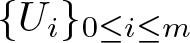 $\{U_i \}_{0 \leq i \leq m}$, a categorical open cover for
 $\text{cat}(X/G)$. If we regard cat as a sectional category, we have, for each
 $0 \leq i \leq m$, a local section
 $\sigma_i \colon U_i \rightarrow P(X/G)$. Define now, as above,
 $V_i = \rho_X ^{-1}(U_i)$ and a local section for the fibration
 $q_3 \colon P^3_*(X) \rightarrow X$ by
 \begin{equation*} \varsigma_i(x) := (c_{x_0},\overline{s}[\sigma_i([x])],c_x), \end{equation*}
where  $x_0 \in X$ is the a priori fixed initial point for paths. This shows that
 $\text{cat}^{G,3}(X) \leq \text{cat}(X/G)$.
For the reverse inequality, if we have an open cover  $\{V_i \}_{0 \leq i \leq m}$ and local sections
 $\varsigma_i \colon V_i \rightarrow P_*^k(X)$ of the fibration qk for some k realizing
 $\text{cat}^{G,\infty}(X)$ then, putting
 $U_i = s^{-1}(V_i)$, we can define a local section of
 $\text{ev}_1 \colon P(X/G) \rightarrow X/G$ over Ui by
 \begin{equation*} \xi_i := \theta^k_* \circ \varsigma_i \circ s, \end{equation*}
where  $\theta_*^k$ is as defined in the proof of Proposition 4.4.
Let us explore some examples of the above theorem:
(i) As an immediate consequence, we obtain that
$\text{TC}^{\mathbb{Z}_2, \infty}(S^n) = 0$ when the action is the flip (i.e., reflection interchanging the hemispheres and fixing the equator). Although this was computed in [Reference Błaszczyk and Kaluba5, Proposition 5.7], Theorem 6.1 provides a more general and conceptual explanation to it.(ii) Observe that in example 5.1, the orbit map of the action admits a strict section and
${S^n}/{\mathbb{Z}_2} \simeq D^n \simeq \ast$. As such, this example can also be seen as a consequence of Theorem 6.1.(iii) Another example of how to use Theorem 6.1 to produce a non-contractible G-space with effective topological complexity equal to zero is by taking the Hamiltonian action of S 1 on S 2. Consider the usual description of S 2 as a symplectic manifold with its symplectic form in cylindrical polar coordinates, i.e.,
$(S^2, \omega = d\theta \wedge dh)$. Then, one can define an action of S 1 by rotation on the z-axis by setting
\begin{equation*} t \cdot (\theta,h) := (\theta + t,h) \qquad t \in S^1. \end{equation*}It is not difficult to check that this action is Hamiltonian. Furthermore, the image of the convex moment map coincides with the quotient by the orbit action,
${S^2}/{S^1} = I$, the unit interval. By [Reference Bredon6, Lemma II.6.1], any orbit map with quotient I has a global section, and therefore Theorem 6.1 yields
$\text{TC}^{S^1,\infty}(S^2) = \text{TC}(I) = 0$.(iv) Recall that the unitary group
$\text{U}(n)$ fits inside a split short exact sequence of groups of the form
\begin{equation*} \text{SU}(n) \hookrightarrow \text{U}(n) \rightarrow \text{U}(1) \cong S^1. \end{equation*}Hence, by Theorem 6.1,
\begin{equation*} \text{TC}^{\text{SU}(n), \infty}(\text{U}(n)) = \text{TC}(S^1) = 1.\end{equation*}(v) Recall that the special orthogonal group, denoted as
$\text{SO}(n)$, is the group of orthogonal matrices in the n-dimensional euclidean space with the determinant equal to 1. The principal bundle
\begin{equation*} \text{SO}(3) \rightarrow \text{SO}(4) \rightarrow S^3 \end{equation*}has a section, and consequently,
\begin{equation*} \text{TC}^{\text{SO}(3), \infty}(\text{SO}(4)) = {\rm TC}(S^3) = 1. \end{equation*}Later on, we will see more applications of our results to more general cases of
$\text{SO}(n)$.(vi) As illustrated in the previous two cases, split Lie group extensions are a rich source of examples for G-spaces equipped with strict sections for their orbit map. Other instances of split exact sequences of groups in the spirit of the previous example can be obtained in the following manner: let p > 2 be a prime integer,
$r \geq 1$, and define the central product as
\begin{equation*} S(p^r,p^r) = \text{SU}(p^r) \times_{\Gamma_{p^r}} \text{SU}(p^r), \end{equation*}where
$\text{SU}(p^r)$ denotes the special unitary group of degree pr
\begin{equation*} \text{SU}(p^r) := \{A \in \text{U}(p^r) \mid \det(A) = 1 \} \end{equation*}and
$\Gamma_{p^r}$ corresponds with the diagonal cyclic subgroup of the center of order pr. Now, one can make
$\text{SU}(p^r)$ act on
$S(p^r,p^r)$ by left action on just the first coordinate of the central product. Under this action, we obtain a principal bundle
\begin{equation*} \text{SU}(p^r) \rightarrow S(p^r,p^r) \rightarrow \text{PU}(p^r). \end{equation*}Remember that
$\text{PU}(p^r)$ is the projective unitary group of degree pr, i.e.,
\begin{equation*}\text{PU}(p^r) := {\text{U}(p^r)}/{Z(\text{U}(p^r)),}\end{equation*}where
$Z(\text{U}(p^r))$ stands for the center of
$\text{U}(p^r)$. Such a bundle has, indeed, a global section. Hence, we get
\begin{equation*}\text{TC}^{\text{SU}(p^r), \infty}(S(p^r,p^r)) = \text{cat}(\text{PU}(p^r)) = 3(p^r-1),\end{equation*}where the last equality was computed in [Reference Iwase, Mimura and Nishimoto21].
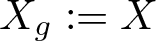
(vii) Let X be a based space, and G any group. Construct the space
$Z = \displaystyle{\vee_{g \in G} X_g}$ defined by putting
$X_g := X$ and equipped with a G-action given by
$h x_g = x_{hg}$ for
$x_g = x \in X_g$. Then,
$\text{TC}^{G, \infty}(Z) = \text{TC}(X)$.




The last case of the previous example allows us to give an easy realization result for effective topological complexity:
Corollary 6.3. Let G be any finite group, and  $n \geq 0$ a non-negative integer. Then, there exists a G-space X such that
 $\text{TC}^{G, \infty}(X) = n$.
Proof. Consider a space Y with  $\text{TC}(Y) = n$ (an easy example is
 $Y = T^n$). Now, construct the space
 $X = \displaystyle{\vee_{g \in G} Y_g}$ defined in the same manner as in Example 6.2 (7). As a consequence of Theorem 6.1, we have that
 $ \text{TC}^{G,\infty}(X) = \text{TC}(Y) = n$.
6.2. Orbit map is a fibration
In this case, the situation has richer derivations, but requires a bit more subtlety. The equality obtained in the presence of a strict section is not always possible. However, we can collapse both effective LS category and topological complexity at stage 2 and bound both of them by their corresponding non-effective counterparts of the orbit space by the group action, as the following theorem shows.
Theorem 6.4 Let X be a G-space such that the orbit map  $\rho_X \colon X \rightarrow X/G$ is a fibration. Then:
(i)
$\text{cat}^{G, \infty}(X) = \text{cat}^{G, 2}(X) = \text{cat}(\rho_X) \leq \text{cat}(X/G)$.(ii)
$\text{TC}^{G, \infty}(X) = \text{TC}^{G,2}(X) \leq \text{TC}(X/G)$.


Proof. To prove (i), let  $\{U_i \}_{0 \leq i \leq n}$ be a categorical open cover of X for
 $\text{cat}(\rho_X)$. By the hypothesis of nullhomotopy of ρX over every Ui, it is possible to construct a family of homotopies of the form
 \begin{equation*} H_i \colon U_i \times I \rightarrow X/G, \qquad H_i(x,0) = \rho_X(x_0), \qquad H_i(x,1) = \rho_X(x).\end{equation*}
Since ρX is a fibration, by the homotopy lifting property, Hi can be lifted through ρX to a homotopy  $K_i \colon U_i \times I \rightarrow X$, satisfying
 \begin{equation*}K_i(x,0) = x_0, \qquad \rho_X \circ K_i = H_i. \end{equation*}
Now, define, for every  $0 \leq i \leq n$, a map
 \begin{equation*}s_i\colon U_i \rightarrow P^2_{\ast}(X) \qquad \mbox{by } s_i(x) = (K_i(x,\cdot), c_x). \end{equation*}
It is clear that si constitutes a local section for the fibration  $q_2 \colon P^2_*(X) \rightarrow X$ over Ui, and therefore
 $\text{cat}^{G,2}(X) \leq \text{cat}(\rho_X)$. By Proposition 4.4, this means that
 \begin{equation*} \text{cat}^{G, \infty}(X) = \text{cat}^{G,2}(X) = \text{cat}(\rho_X),\end{equation*}
and the last inequality of the claim follows from usual properties of the category of a map.
To prove (ii), let  $\{U_i \}_{0 \leq i \leq n}$ be an open cover of X × X such that there exists, for every
 $0 \leq i \leq n$, a local section
 $s_i \colon U_i \rightarrow {\mathcal{P}}_k(X) $ of the k-effective fibration πk over Ui, for some k such that
 $\text{TC}^{G,k}(X) = {\rm TC}^{G,\infty}(X)$. Through the map θk, every local section si defines a homotopy
 \begin{equation*} H_i\colon U_i \times I \rightarrow X/G\end{equation*}
by substituting
 \begin{equation*} H_i((x,y),0) = \theta_k(s_i(x,y))(0) = \rho_X(x), \qquad H_i((x,y),1) = \theta_k(s_i(x,y))(1) = \rho_X(y). \end{equation*}
Since ρX is a fibration by hypothesis, we have a lifting for Hi, the homotopy
 \begin{equation*} K_i\colon U_i \times I \rightarrow X, \end{equation*}
satisfying
 \begin{equation*} K_i((x,y),0) = x, \qquad \rho_X \circ K_i = H_i. \end{equation*}
Through this homotopy, it is possible to define a local section  $\sigma_i \colon U_i \rightarrow {\mathcal{P}}_2(X)$ of the effective fibration π 2 over Ui, by substituting
 \begin{equation*} \sigma_i(x,y) := (K_i((x,y),\cdot),c_y), \end{equation*}
which shows that  ${\rm TC}^{G,\infty}(X) = {\rm TC}^{G,2}(X)$.
For the last inequality, consider  $\{V_i \}_{0 \leq i \leq m}$ an open cover of
 $X/G \times X/G$ such that there exists, for each
 $0 \leq i \leq m$, a local section
 $p_i \colon V_i \rightarrow P(X/G)$ of the path space fibration
 $\pi \colon P(X/G) \rightarrow X/G \times X/G$. We then obtain, for each i, a homotopy
 \begin{equation*} P_i\colon V_i \times I \rightarrow X/G\end{equation*}
, satisfying
 \begin{equation*}P_i(([x],[y]),0) = [x] \qquad \mbox{and} \qquad P_i(([x],[y]),1) = [y]\end{equation*}
for each  $([x],[y]) \in V_i$. Substitute
 $W_i := (\rho_X \times \rho_X)^{-1}(V_i)$. There are induced homotopies
 \begin{equation*} W_i \times I \xrightarrow{(\rho_X \times \rho_X)\times \text{Id}_{I}} V_i \times I \xrightarrow{P_i} X/G, \end{equation*}
since ρX is a fibration, we can lift them to obtain new homotopies
 \begin{equation*}Q_i \colon W_i \times I \rightarrow X\end{equation*}
such that  $ \rho_X \circ Q_i = P_i \circ ((\rho_X \times \rho_X)_{\vert_{W_i}} \times {\rm Id}_I), $ and consequently,
 \begin{equation*} Q_i((x,y),0) = x \qquad Q_i((x,y),1) = z \in [y].\end{equation*}
Through this last family of homotopies, a local section  $\lambda_i\colon W_i \rightarrow {\mathcal{P}}_2(X) $ for the effective fibration π 2 can then be defined by substituting
 \begin{equation*} \lambda_i(x,y) := (Q_i((x,y),\cdot),c_y),\end{equation*}
thus  $ \text{TC}^{G,2}(X) \leq \text{TC}(X/G)$.
The above theorem specializes in a straightforward manner to principal G-bundles.
Corollary 6.5. If  $G \rightarrow P \rightarrow B$ is a principal G-bundle, then
 \begin{equation*} \text{TC}^{G,\infty}(P) \leq \text{TC}(B) \leq 2(\dim(P)-\dim(G)). \end{equation*}
Proof. As any principal G-bundle is isomorphic to the quotient map, by virtue of Theorem 6.4, we get the inequality  $\text{TC}^{G,\infty}(P) \leq \text{TC}(B)$. The second inequality of the statement then just follows from the well-known dimensional upper bound of topological complexity, see [Reference Farber13, Theorem 5].
Whenever G is a discrete group acting properly discontinuously on X, Theorem 6.4 recovers the bound of effective topological complexity by  $\text{TC}(X/G)$ of [Reference Cadavid-Aguilar, González, Gutiérrez and Ipanaque-Zapata8, Theorem 1.1]. However, the situation is much more interesting if we are considering actions of compact Lie groups.
(i) Under the identification of S 1 as the topological unitary group U(1), we have a very well-known fibre bundle
\begin{equation*} S^1 \hookrightarrow S^{2n+1} \rightarrow \mathbb{C}P^n. \end{equation*}As a consequence of (2) of Theorem 6.4, we see that
(where the value of
\begin{equation*} \text{TC}^{S^1, \infty}(S^{2n+1}) \leq {\rm TC}(\mathbb{C} P^n) = 2n \end{equation*}
${\rm TC}(\mathbb{C} P^n)$ was computed in [Reference Farber, Tabachnikov and Yuzvinsky16]). In this case, however, the bound provided by the theorem is far from a sharp one. Notice that we can consider the subgroup inclusion
$\mathbb{Z}_p \leqslant S^1$, and hence, by virtue of Lemma 2.3 and Theorem 2.5 we get
\begin{equation*} {\rm TC}^{S^1, \infty}(S^{2n+1}) \leq {\rm TC}^{\mathbb{Z}_p, \infty}(S^{2n+1}) = 1 \end{equation*}and, as a consequence of Proposition 5.2,
${\rm TC}^{S^1, \infty}(S^{2n+1}) = 1$.Furthermore, we can take the principal bundle associated with the classifying space of U(1),
\begin{equation*} S^1 \hookrightarrow E\text{U}(1) \rightarrow B\text{U}(1) \qquad \equiv \qquad S^1 \hookrightarrow S^{\infty} \rightarrow \mathbb{C} P^{\infty},\end{equation*}and in this case, the contractibility of
$S^{\infty}$ implies that
$ \text{TC}^{S^1, \infty}(S^{\infty}) = 0$.(ii) It is well known that the identification map (sometimes called “realification”)
\begin{equation*} \phi \colon \mathbb{C}^{n\times n} \rightarrow \mathbb{R}^{2n \times 2n},\end{equation*}given by substituting
\begin{equation*} C := A + iB \mapsto \begin{bmatrix}
A & -B \\[1ex]
B & A
\end{bmatrix}, \end{equation*}allows us to identify the linear group
$\text{U}(n)$ as a subgroup of
$\text{SO}(2n)$. To be more specific, it can be shown that
\begin{equation*} \phi(\text{U}(n)) = \text{SO}(2n) \cap \phi(\text{GL}(n, \mathbb{C})). \end{equation*}There is then a principal
$\text{U}(3)$-bundle
\begin{equation*} \text{U}(3) \hookrightarrow \text{SO}(6) \rightarrow \mathbb{C} P^3, \end{equation*}which, in conjunction with Corollary 6.5 informs us that
\begin{equation*} \text{TC}^{\text{U}(3), \infty}(\text{SO}(6)) \leq \text{TC}(\mathbb{C} P^3) = 6. \end{equation*}(iii) Think of the
$S^{2n+1}$ sphere immersed in the
$(n+1)$-dimensional complex space
$\mathbb{C}^{n+1}$. Recall that the map
$T \colon \mathbb{C}^{n+1} \rightarrow \mathbb{C}^{n+1}$ defined as the scalar multiplication by the p-th root of unity (i.e.,
$T(z) = \exp(2 \pi i/p)z$ for
$z \in S^{2n+1}$) generates the standard complex representation of the cyclic group
$\mathbb{Z}_p$. This induces a free action on
$S^{2n+1}$ under a complex unitary map of period p. The orbit space of such an action is the well-known lens space
$L^{2n+1}_p$.We can consider in
$S^{2n+1}$ the scalar multiplication of
$z \in S^{2n+1}$ by
$\exp(2\pi ix/p)$, where
$x \in \mathbb{R}$. This operation defines a group homomorphism
$g \colon \mathbb{R} \rightarrow \text{Aut}(S^{2n+1})$, which commutes with the induced periodic map
$T \colon S^{2n+1} \rightarrow S^{2n+1}$. Consequently, g induces an action of
$\mathbb{R}$ on the lens space
$L^{2n+1}_p$ through an induced homomorphism
$\overline{g} \colon \mathbb{R} \rightarrow \text{Aut}(L^{2n+1}_p)$. If we take an integer k, it is easy to see that
$\exp(2\pi ik/p) = (\exp(2 \pi i/p)^k)$, which informs us that the integers act trivially on
$L^{2n+1}_p$. Therefore, the map
$\overline{g}$ factors through the exponential map and it subsequently induces an action of S 1, regarded as the circular group, on the lens space
$L^{2n+1}_p$, defined explicitly as
\begin{equation*} s\cdot [z] = [\exp(2\pi ix/p)z]\end{equation*}for
$z \in S^{2n+1}$,
$[z] \in L^{2n+1}_p$ and
$s \in S^1$,
$x \in \mathbb{R}$ such that
$s = \exp(2\pi i x)$. Jaworowski, in [Reference Jaworowski22], demonstrated that such an action is free and, furthermore, that the orbit space under it corresponds with the complex projective space
$\mathbb{C} P^n$. Therefore, by Theorem 6.4 we see that
\begin{equation*} \text{TC}^{S^1, \infty}(L^{2n+1}_p) \leq \text{TC}(\mathbb{C} P^n) = 2n. \end{equation*}(iv) Although the situation is significantly more complicated in the case of real projective spaces, we can still make use of the known topological complexity of
$\mathbb{R} P^n$ for certain values of n to derive even more examples from Theorem 6.4. As it is discussed in [Reference Iwase, Mimura and Nishimoto21, Section 4], we have the following principal bundles of compact Lie groups over real projective spaces:
\begin{equation*} \text{Sp}(1) \rightarrow \text{SO}(5) \rightarrow \mathbb{R} P^7, \qquad \text{SU}(3) \rightarrow \text{SO}(6) \rightarrow \mathbb{R} P^7, \end{equation*}
\begin{equation*} G_2 \rightarrow \text{SO}(7) \rightarrow \mathbb{R} P^{15}, \qquad \text{Spin}(7) \rightarrow \text{SO}(9) \rightarrow \mathbb{R} P^{15}, \end{equation*}
\begin{equation*} G_2 \rightarrow \text{PO}(8) \rightarrow \mathbb{R} P^7 \times \mathbb{R} P^7. \end{equation*}Therefore, by Corollary 6.5 and the computation of the topological complexity of real projective spaces in dimensions 7 and 15 carried out in [Reference Farber, Tabachnikov and Yuzvinsky16], we obtain the inequalities:
\begin{equation*} \text{TC}^{\text{Sp}(1), \infty}(\text{SO}(5)) \leq 7, \quad \text{TC}^{\text{SU}(3), \infty}(\text{SO}(6)) \leq 7, \end{equation*}
\begin{equation*} \text{TC}^{G_2, \infty}(\text{SO}(7)) \leq 23, \qquad \text{TC}^{\text{Spin}(7), \infty}(\text{SO}(9)) \leq 23, \end{equation*}
\begin{equation*} \text{TC}^{G_2, \infty}(\text{PO}(8)) \leq 14. \end{equation*}


Let G be a matrix Lie group, and  $H \leq G$ a closed subgroup. It is a well-known fact that G has the structure of a fibre bundle
 $ H \hookrightarrow G \xrightarrow{\rho} G/H $ (see, for example, [Reference Hall19, Proposition 13.8]). In particular, Corollary 6.5 produces very easy upper bounds for actions of closed matrix subgroups in their immediate matrix overgroup:
Corollary 6.7. Let  $n \in \mathbb{N}$. Then, the following holds:
(i)
$\text{TC}^{\text{SO}(n-1), \infty}(\text{SO}(n)) = 1$ for n even and
$\text{TC}^{\text{SO}(n-1), \infty}(\text{SO}(n)) \leq 2$ for n odd.(ii) For
$n \geq 2$, we have
$\text{TC}^{\text{U}(n-1), \infty}(\text{U}(n)) = 1$.(iii) For
$n \geq 3$, we have
$\text{TC}^{\text{SU}(n-1), \infty}(\text{SU}(n)) = 1$.(iv) For all
$n \geq 1$, we have
$\text{TC}^{\text{Sp}(n-1), \infty}(\text{Sp}(n)) = 1$.


Proof. The statements have essentially analogous proofs. All of them depend on the identification of the orbit maps with fibrations (indeed principal bundles) with base spheres of appropriate dimension (to see a proof of these facts see, for example, [Reference Hall19, Section 13.2]):
 \begin{equation*} \text{SO}(n-1) \hookrightarrow \text{SO}(n) \xrightarrow{\rho} {\text{SO}(n)}/{\text{SO}(n-1)} \cong S^{n-1}, \end{equation*}
 \begin{equation*}\text{U}(n-1) \hookrightarrow \text{U}(n) \rightarrow {\text{U}(n)}/{\text{U}(n-1)} \cong S^{2n-1}, \end{equation*}
 \begin{equation*} \text{SU}(n-1) \hookrightarrow \text{SU}(n) \xrightarrow{\rho} {\text{SU}(n)}/{\text{SU}(n-1)} \cong S^{2n-1},\end{equation*}
 \begin{equation*} \text{Sp}(n-1) \hookrightarrow \text{Sp}(n) \xrightarrow{\rho} {\text{Sp}(n)}/{\text{Sp}(n-1)} \cong S^{4n-1}. \end{equation*}
The result then follows from Corollary 6.5 and from the computation of the standard topological complexity of spheres (see [Reference Farber15]). Note that, as a consequence of Proposition 5.2, the previously determined upper bounds by 1 are, indeed, sharp equalities.
For any pair of numbers  $n,k \in \mathbb{N}$, with k < n, we denote the (compact) Stiefel manifold over a field
 $\mathbb{F} \in \{\mathbb{R}, \mathbb{C}, \mathbb{H} \}$ by
 $V_k(\mathbb{F}^n)$, the k-Grassmannian over
 $\mathbb{F}^n$ by
 $G_k(\mathbb{F})$, and the k-orthogonal group over
 $\mathbb{F}$ by
 $O(k,\mathbb{F})$. Recall that the group
 $O(k,\mathbb{F})$ acts freely on
 $V_k(\mathbb{F}^n)$, by rotating a k-frame in the space it spans. The orbits of this action are precisely the orthonormal k-frames spanning a given k-dimensional subspace, that is, the orbit map corresponds with a fibration (indeed a principal
 $O(k,\mathbb{F})$-bundle) of the form
 \begin{equation*}O(k,\mathbb{F}) \hookrightarrow V_k(\mathbb{F}^n) \xrightarrow{\rho} G_k(\mathbb{F}^n).\end{equation*}
If we specialize the concrete choice of the field, we obtain fibrations
 \begin{equation}
O(k) \hookrightarrow V_k(\mathbb{R}^n) \xrightarrow{\rho} G_k(\mathbb{R}^n) \qquad U(k,\mathbb{C}) \hookrightarrow V_k(\mathbb{C}^n) \xrightarrow{\rho} G_k(\mathbb{C}^n),
\end{equation}
which allow us to give upper bounds for the effective topological complexity of orthogonal actions on Stiefel manifolds.
Corollary 6.8. Let  $k,n \in \mathbb{N}$ with k < n. Then, the following bounds are satisfied:
(i)
$\text{TC}^{O(k), \infty}(V_k(\mathbb{R}^n)) \leq 2k(n-k)-1, $(ii)
$\text{TC}^{U(k), \infty}(V_k(\mathbb{C}^n)) \leq 2k(n-k).$


Proof. As a consequence of the fibrations in 6.1 and (2) of Theorem 6.4, we know that
 \begin{equation*} \text{TC}^{O(k), \infty}(V_k(\mathbb{R}^n)) \leq \text{TC}(G_k(\mathbb{R}^n)) \qquad \mbox{and } \qquad \text{TC}^{U(k), \infty}(V_k(\mathbb{C}^n)) \leq {\rm TC}(G_k(\mathbb{C}^n)). \end{equation*}
Then, both claims follow from the upper bounds for the topological complexity of Grassmann manifolds computed by Pavešić in [Reference Pavešić27, Proposition 4.1, Theorem 4.2].
We will briefly recall the definition of more general orthonormal frame bundles defined over smooth manifolds, and we will apply our results to that setting. Let M be an n-dimensional (oriented) Riemann manifold, define, for every  $x \in M$, the space
 \begin{align*} F_x(M) := &\{(v_1, \cdots, v_n) \in (T_xM)^n \mid (v_1, \cdots, v_n),\\& \quad \mbox{ a positive orthonormal basis of } T_xM \},\end{align*}
and from it the space of positive orthonormal frames of M by substituting
 \begin{equation*} F(M) := \{(x,b) \mid x \in M, b \in F_x(M) \}. \end{equation*}
Build the continuous map  $ p_{F(M)} \colon F(M) \rightarrow M$ by
 $p_{F(M)}(x,b) = x.$ Then,
 $p_{F(M)}$ has the structure of a smooth principal
 $\text{SO}(n)$-bundle, called the bundle of positive orthonormal frames of M.
Corollary 6.9. Let M a path-connected n-dimensional smooth manifold, and  $p_{F(M)} \colon F(M) \rightarrow M$ defined as above. Then
(i)
${\rm{TC}}^{\rm{SO}}{^{(n),\infty}}(F(M)) \leq TC(M) \leq 2\ dim(M)$.(ii) Furthermore, if M is parallelizable, then
$ \text{TC}^{\text{SO}(n), \infty}(F(M)) = \text{TC}(M). $


(i) Given that
$p_{F(M)}$ is a principal bundle, we are under the assumptions of Corollary 6.5, and hence
\begin{equation*} \text{TC}^{\text{SO}(n),\infty}(F(M)) \leq \text{TC}(F(M)/\text{SO}(n)) = \text{TC}(M) \leq 2 \dim(M), \end{equation*}where the last inequality just comes from the upper dimensional bound of topological complexity.
(ii) Under the hypothesis of M being parallelizable,
$p_{F(M)} \colon F(M) \rightarrow M$ becomes a trivial
$\text{SO}(n)$-bundle, and thus, the claim follows from Theorem 6.1.


To check computations of usual topological complexity of orthonormal frame bundles, we refer the readers to the analysis of Mescher on the matter, see [Reference Mescher26].
Under nice enough group actions, the quotient space of a smooth manifold is itself a manifold with a smooth structure, making the orbit map a fibration.
Corollary 6.10. Let G be a Lie group acting smoothly, freely, and properly on a connected smooth manifold M. Then,
 \begin{equation*} \text{TC}^{G,\infty}(M) \leq 2(\dim(M) - \dim(G)). \end{equation*}
Proof. By the quotient manifold theorem (see [Reference Lee23, Theorem 21.10]), the orbit space  $M/G$ has the structure of a topological manifold with
 \begin{equation*}\dim(M/G) = \dim(M) - \dim(G)\end{equation*}
and a unique smooth structure satisfying that the orbit map  $\rho_{M} \colon M \rightarrow M/G$ is a smooth submersion. By Ehresmann’s fibration theorem (see [Reference Dundas12, Theorem 8.5.10]), ρM is a (locally trivial) fibration, and hence Theorem 6.4 gives us
 \begin{equation*} \text{TC}^{G,\infty}(M) = \text{TC}^{G,2}(M) \leq \text{TC}(M/G) \leq 2(\dim(M) - \dim(G)), \end{equation*}
where the last inequality just follows from the dimensional upper bound of TC.
We can easily obtain the same inequality for locally smooth free actions although, unlike in the case above, we have to impose compacity as an additional restriction. Let G be this time a compact Lie group, acting over a closed connected smooth manifold M. Locally smooth actions come equipped with principal orbits P, i.e. orbits of type  $G/H$ such that H is subconjugated to any isotropy subgroup
 $G_x \leqslant G$. By virtue of [Reference Bredon6, Theorem IV.3.8], we have that
 \begin{equation*} \dim(M/G) = \dim(M) - \dim(P). \end{equation*}
If, furthermore, the action of G is taken as free, the orbit projection map  $\rho_M \colon M \rightarrow M/G$ becomes a fibration, hence Theorem 6.4 applies, and we have
 \begin{equation*} \text{TC}^{G,\infty}(M) \leq {\rm TC}(M/G) \leq 2 \dim(M/G), \end{equation*}
and since  $\dim(P) = \dim(G)$, we immediately get
 \begin{equation}
\text{TC}^{G,\infty}(M) \leq 2(\dim(M) - \dim(G)).
\end{equation}
Compare both Corollary 6.10 and inequality (6.2) with the upper bounds for usual topological complexity of smooth manifolds with locally smooth free actions obtained by Grant in [Reference Grant17].
It is possible to find conditions under which the effective LS category and the regular LS category coincide in this setting:
Corollary 6.11. Let X be a connected G-space with basepoint  $x_0 \in X$. If the orbit projection map
 $\rho_X \colon X \rightarrow X/G$ is a fibration and the orbit of the base point
 $G x_0$ is contractible connected in X, then
 \begin{equation*}\text{cat}^{G, \infty}(X) = \text{cat}(X).\end{equation*}
Proof. Let  $\{U_i \}_{0 \leq i \leq n}$ be a categorical cover for
 $\text{cat}(\rho_X)$, and define, for each
 $U_i \subset X$, a homotopy
 $H_i \colon U_i \times I \rightarrow X/G$ such that
 \begin{equation*} H_i(x,0) = \rho_X(x_0) \qquad \mbox{and} \qquad H_i(x,1) = \rho_X(x). \end{equation*}
Given that ρX is a fibration, we can lift Hi to a homotopy  $K_i \colon U_i \times I \rightarrow X$ satisfying
 \begin{equation*} K_i(x,1) = x \qquad \mbox{and} \qquad \rho_X \circ K_i = H_i. \end{equation*}
By the hypothesis of contractibility of the orbit of the basepoint, there is a continuous map  $\theta\colon G x_0 \rightarrow P_{\ast} X $ such that
 $\theta(x)(1) = x$ for all
 $x \in Gx_0$. Consequently, it is possible to define a section for the LS-cat fibration
 $\text{ev}_1$ over Ui as the concatenation
 \begin{equation*}s(x)(t):=\begin{cases}
\theta(K_i(x,0))(2t) & \mbox{for } 0 \leq t \leq \frac{1}{2} \\
K_i(x,2t-1) & \mbox{for } \frac{1}{2} \leq t \leq 1.
\end{cases} \end{equation*}
The claim thus follows from the equality  $\text{cat}(\rho_X) = \text{cat}^{G,\infty}(X)$ in (1) of Theorem 6.4.
Naturally, the previous corollary is of particular interest in situations where we can assume the coincidence between LS category and topological complexity, so the computation of effective topological complexity would be derived from the (generally easier) task of knowing the classic LS category.
Corollary 6.12. Let G be a group and X a free G-space satisfying the hypothesis of Corollary 6.11, such that  $\text{cat}(X) = \text{TC}(X)$. Then,
 ${\rm TC}^{G, \infty}(X) = {\rm cat}(X)$.
Proof. The chain of inequalities in Theorem 4.2 shows that  $\text{cat}^{G,\infty}(X) \leq {\rm TC}^{G, \infty}(X) \leq {\rm TC}(X)$. By Corollary 6.11, we know that
 ${\rm cat}^{G, \infty}(X) = {\rm cat}(X)$, and the claim follows from the hypothesis.
Remark 6.13. In the above corollary, notice that if G is a finite group acting freely on X, the hypothesis of Corollary 6.11 is satisfied. Naturally, that is not a necessary condition. If G is a compact Lie group, and X is a metrizable space, a free action of G on X gives rise to a principal bundle. The question is when is the orbit Gx 0 contractible in X? This is equivalent to request the map
 \begin{equation*} G_x \colon G \rightarrow X \qquad g \mapsto g \cdot x \mbox{ for any fixed } x \in X. \end{equation*}
to be null, which can happen for non-finite groups (such as in the Hopf fibrations).
We will close this subsection by mentioning some interesting examples of the previous corollaries.
(i) Let G be a connected Lie group. In [Reference Farber14, Lemma 8.2], Farber proved the equality
$\text{TC}(G) = {\rm cat}(G)$. Therefore, if there exists a finite non-trivial discrete subgroup
$H \leq G$, Corollary 6.12 implies that
\begin{equation*} {\rm TC}^{H,\infty}(G) = {\rm cat}(G).\end{equation*}Recall that, for example, if G is a non-nilpotent and simply connected group, there always exists a non-trivial finite subgroup H.
(ii) Generalizing Farber’s result, Lupton and Scherer demonstrated in [Reference Lupton and Scherer25, Theorem 1] that, if X is a connected CW H-space, then
$\text{TC}(X) = \text{cat}(X)$. Consequently, if G is a finite group acting freely on X, Corollary 6.12 applies and
$ \text{TC}^{G,\infty}(X) = \text{cat}(X)$.(iii) A particularly simple example comes from free products on spheres. Let G be a finite group acting freely on the k-dimensional torus
\begin{equation*} T^k = \underbrace{S^1 \times \cdots \times S^1}_{k}.\end{equation*}Then, we have
$\text{TC}^{G, \infty}(T^k) = k$.More generally, we can consider products of odd dimensional spheres, so if G acts freely on the product
$\underbrace{S^{2n+1} \times \cdots \times S^{2n+1}}_{k}$, we obtain
\begin{equation*}\text{TC}^{G,\infty}(\underbrace{S^{2n+1} \times \cdots \times S^{2n+1}}_{k}) = k.\end{equation*}


7. Cohomological conditions for non-vanishing of
$\text{TC}^{G,2}(X)$

One of the significant open problems suggested in the original article of Błaszczyk and Kaluba [Reference Błaszczyk and Kaluba5] concerned the determination of the kind of sequences that could arise as sequences of effective topological complexities. The problem is too broad and general, and it will most certainly require a specific in-depth inquiry on the matter, which goes beyond the scope of the present article. However, we will make a first contribution to the problem.
In this section, we will study some cohomological conditions to determine whether the effective topological complexity at stage two vanishes. The set stage is not arbitrary by any means: such cohomological conditions are examined over the saturated diagonal, and we will make use of an homotopy equivalence between  $\daleth(X)$ and the stage 2 broken path space
 ${\mathcal{P}}_2(X)$ to infer the aforementioned non-vanishing condition.
Let us start by noticing that the saturated diagonal  $\daleth(X)$ can be easily represented as
 \begin{equation*} \daleth(X) = \{(gx,x) \mid g \in G, x \in X \}. \end{equation*}
The inclusion  $\{(gx,x) \mid g \in G, x \in X \} \subset \daleth(X)$ is obvious, while for any pair
 $(g_1x, g_2x) \in \daleth(X)$, it is possible to define
 \begin{equation*} (\overline{g}y, y) \in \{(gx,x) \mid g \in G, x \in X \}, \qquad \mbox{for } \overline{g} = g_1 g_2^{-1} \mbox{and } y = g_2x. \end{equation*}
This, in turn, informs us that we can decompose  $\daleth(X)$ as the union of “slices” of the saturated diagonal, i.e.
 \begin{equation*} \daleth(X) = \displaystyle{\bigcup_{g \in G}} \daleth_g(X), \end{equation*}
where, for each  $g \in G$, we set
 \begin{equation*}\daleth_g(X) := \{(gx,x) \mid x \in X \}. \end{equation*}
This decomposition will be quite useful for the rest of our arguments throughout this section. However, before proceeding further, let us describe the homotopy equivalence between  $\daleth(X)$ and the broken path space
 ${\mathcal{P}}_2(X)$.
Lemma 7.1. Let X be a G space. There is a homotopy equivalence between  $\daleth(X)$ and
 ${\mathcal{P}}_2(X)$.
Proof. Start by noticing that there is an obvious inclusion
 \begin{equation*} \iota \colon \daleth(X) \hookrightarrow {\mathcal{P}}_2(X) \qquad \iota(gx,x) = (c_{gx},c_{x}). \end{equation*}
Now, consider a map  $f \colon {\mathcal{P}}_2(X) \rightarrow \daleth(X)$ defined as
 \begin{equation*} f(\iota \circ f) = (\gamma_1(1), \gamma_2(0)).\end{equation*}
It is immediate to see that the composition  $f \circ \iota$ corresponds with
 $\text{Id}_{\daleth(X)}$. For the other composition, we obtain
 \begin{equation*} (\gamma_1, \gamma_2) = \iota(\gamma_1(1), \gamma_2(0)) = (c_{\gamma_1(1)}, c_{\gamma_2(0)}). \end{equation*}
Define the map  $H \colon {\mathcal{P}}_2(X) \times I \rightarrow {\mathcal{P}}_2(X)$ by
 \begin{equation*} H((\gamma_1, \gamma_2),t) = (\gamma_1^{t}, \gamma_2^t) \qquad \forall 0 \leq t \leq 1, \end{equation*}
where for all  $0 \leq s \leq 1$, we substitute
 \begin{equation*} \gamma_1^t(s)= \gamma_1(t(1-s)+s), \qquad \gamma_2^t(s) = \gamma_2(s(1-t)). \end{equation*}
As a consequence of such definition, notice immediately that
 \begin{equation*} H((\gamma_1, \gamma_2), 0) = (\gamma_1, \gamma_2), \qquad H((\gamma_1, \gamma_2), 1) = (c_{\gamma_1(1)}, c_{\gamma_2(0)}). \end{equation*}
One observes that said map defines a homotopy between  $\iota \circ f$ and
 $\text{Id}_{{\mathcal{P}}_2(X)}$, and as such, we have the homotopy equivalence
 $\daleth(X) \simeq {\mathcal{P}}_2(X)$.
Notice that the above lemma generalizes the homotopy equivalence between  ${\mathcal{P}}_2(X)$ and
 $\daleth(X)$ noted by Cadavid-Aguilar and González in [Reference Cadavid-Aguilar and González7] for finite free actions to arbitrary group actions.
In the rest of this section, assume that G is a finite group, and X is a compact G-ANR. By [Reference Lubawski and Marzantowicz24, Theorem 3.15], this implies, in turn, that the saturated diagonal  $\daleth(X)$ becomes a
 $(G \times G)$-ANR, and we can apply the cohomological Mayer–Vietoris sequence for general subsets that are retractions of open subsets (check, for example, [Reference Hatcher20, p. 150]). Also recall that by the cohomological dimension of a space X, we mean the largest integer
 $n \geq 0$ such that there exists a local coefficient system M satisfying
 $H^n(X;M) \neq 0$.
Lemma 7.2. Let X be a G-CW complex such that  $\text{cd}(X^H) \leq \text{cd}(X)$ for all non-trivial subgroups
 $H \leqslant G$. Then, given any list L of non-trivial subgroups of G, we have
 \begin{equation*} \text{cd}\displaystyle{\left(\bigcup_{H \in L} X^H \right)} \leq \text{cd}(X) + |L| - 1. \end{equation*}
Proof. We will proceed by induction. Consider the base case  $|L| = 1$, then L consists of only one non-trivial subgroup H of G and hence
 $\text{cd}(X^H) \leq \text{cd}(X)$ by the initial hypothesis.
Now, assume that the claim is satisfied for any list of subgroups of cardinality n − 1 and define  $L:=\{K_1, \cdots, K_{n-1}\} \cup \{H\}$, with
 $H, K_i \leqslant G$ for all
 $1 \leq i \leq n-1$. Define the sets
 \begin{equation*} A := \displaystyle{\bigcup_{K_i \in L}}X^{K_i} \qquad \mbox{and} \qquad B := X^H. \end{equation*}
Notice that the intersection corresponds to the following union of fixed point sets:
 \begin{equation*} A \cap B = \displaystyle{\left(\bigcup_{K_i \in L}X^{K_i} \right)} \cap X^H = \displaystyle{\bigcup_{K_i \in L}(X^{K_i} \cap X^H)} = \displaystyle{\bigcup_{K_i \in L} } X^{\langle K_i, H \rangle}, \end{equation*}
where  $\langle K_i, H \rangle$ stands for the subgroup generated by Ki and H. By the induction hypothesis, we have the inequalities
 \begin{equation*}\text{cd}(A) \leq \text{cd}(X) + n-2 \qquad \text{cd}(A\cap B) \leq \text{cd}(X) + n-2,\end{equation*}
while we also have the inequality  $\text{cd}(B) \leq \text{cd}(X)$ as a consequence of the initial hypothesis. Applying the Mayer–Vietoris sequence to the spaces just defined, and substituting
 $d := \text{cd}(X)+n-2 $, we obtain a sequence

where M is an arbitrary (possibly twisted) coefficient system. By the cohomological dimensional bounds stated above, we have that  $H^{d+2}(A\cup B;M) = 0$, and thus we obtain that
 \begin{equation*} \text{cd} \left( \displaystyle{\left(\bigcup_{K_i \in L} X^{K_i} \right) } \cup X^H \right) \leq \text{cd}(X) + |L| - 1. \end{equation*}
The above lemma is instrumental, both in the result itself and in the argument of the proof of the following bound of the cohomological dimension of the saturated diagonal.
In the same spirit as before, for any list of elements  $L \subseteq G$, define the relative saturated diagonal with respect to L as
 \begin{equation*} \daleth_L(X) = \displaystyle{\bigcup_{g_i \in L}} \daleth_{g_i}(X).\end{equation*}
Theorem 7.3 Let X be a G-CW complex such that  $\text{cd}(X^H) \leq \text{cd}(X)$ for all non-trivial subgroups
 $H \leqslant G$. Then, for any L list of elements of G,
 \begin{equation*}\text{cd}(\daleth_L(X)) \leq \text{cd}(X) + |L| - 1.\end{equation*}
In particular, we have that
 \begin{equation*} \text{cd}(\daleth(X)) \leq \text{cd}(X) + |G| - 1. \end{equation*}
Proof. The idea of this proof builds upon the argument used in the previous lemma, and we will proceed, once again, by induction. First, assume that we consider lists consisting of only one element. Then,  $\daleth_L(X)$ is just homeomorphic to X and, as such,
 $\text{cd}(\daleth_L(X)) = \text{cd}(X)$.
Now, let us assume that the induction hypothesis is satisfied for any list of elements of G of length n − 1. Define an arbitrary list of such length  $L' = \{g_1, \cdots, g_{n-1} \}$, and let
 $L = L' \cup \{r\}$ for some
 $r \in G$ not included in L ʹ. Consider the decomposition
 \begin{equation*} \daleth_L(X) = \displaystyle{\bigcup_{k_i \in L}} \daleth_{k_i}(X) = \left( \displaystyle{\bigcup_{g_i \in L'}} \daleth_{g_i}(X) \right) \cup \daleth_{r}(X). \end{equation*}
Now define the sets
 \begin{equation*} A := \displaystyle{\bigcup_{g_i \in L'}} \daleth_{g_i}(X) \qquad B := \daleth_r(X). \end{equation*}
The intersection of these two subsets corresponds with the following set:
 \begin{equation*} A \cap B = \left(\displaystyle{\bigcup_{g_i \in L'}} \daleth_{g_i}(X) \right) \cap \daleth_r(X) = \displaystyle{\bigcup_{g_i \in L'}} \left( \daleth_{g_i}(X) \cap \daleth_r(X) \right). \end{equation*}
For each  $g_i \in L'$, the intersection
 $ \daleth_{g_i}(X) \cap \daleth_r(X)$ is equivalent to the set
 $ \{x \in X \mid (g_i x,x) = (rx,x)\},$ which implies
 $r^{-1}g_i x = x$. Thus, we can identify the intersection
 \begin{equation*}\daleth_{g_i}(X) \cap \daleth_r(X) \cong X^{\langle r^{-1} g_i \rangle },\end{equation*}
and consequently, the above intersection can be reformulated as a union of invariant sets of the form
 \begin{equation*} A \cap B = \displaystyle{\bigcup_{g_i \in L'}} X^{\langle r^{-1}g_i \rangle} . \end{equation*}
Define M as the collection of non-trivial subgroups of G
 \begin{equation*}M := \{\langle r^{-1}g_1 \rangle, \cdots, \langle r^{-1}g_{n-1} \rangle \}. \end{equation*}
By Lemma 7.2, we know that  $\text{cd}(A\cap B) \leq \text{cd}(X) + n-2$. By the induction hypothesis, one observes
 $ {\rm cd}(A) \leq {\rm cd}(X) + n-2$ and clearly
 ${\rm cd}(B) = {\rm cd}(X)$. Now applying the Mayer–Vietoris sequence as in Lemma 7.2, and given the cohomological dimensional bounds stated above, we obtain
 \begin{equation*}{\rm cd}(A\cup B) = {\rm cd}(\daleth_L(X)) \leq {\rm cd}(X) + |L| - 1. \end{equation*}
which gives us the desired result.
As a consequence of the previous result, we can deduce a cohomological condition on the base space X for non-vanishing second stage effective topological complexity, reflected in the following corollary.
Corollary 7.4. Under the assumptions of Theorem 7.3, we have that, if  $|G| \leq \text{cd}(X)$, then
 $\text{TC}^{G,2}(X) \gt 0$.
Proof. Substitute  $n := \text{cd}(X)$. Consider the second effective fibration
 $\pi_2 \colon {\mathcal{P}}_2(X) \rightarrow X \times X$. This map induces a homomorphism in cohomology
 \begin{equation*} H^*(X \times X;M) \xrightarrow{\pi_2^*} H^*({\mathcal{P}}_2(X);M).\end{equation*}
By the homotopy equivalence given in Lemma 7.1, this homomorphism can be seen as
 \begin{equation*} H^*(X \times X;M) \rightarrow H^*(\daleth(X);M), \end{equation*}
and by Proposition 7.3,  $H^k(\daleth(X);M) = 0$ for any
 $k \gt \text{cd}(X) + |G| - 1$. However,
 $H^{2n}(X \times X) \neq 0$, which implies the existence of at least one non-trivial element in
 \begin{equation*}\ker(H^*(X \times X;M) \rightarrow H^*(\daleth(X));M).\end{equation*}
Thus, by (2) in Theorem 2.1, we have  $ \text{secat}(\pi_2) = \text{TC}^{G,2}(X) \gt 0$.
Remark 7.5. In [Reference Cadavid-Aguilar and González7, Definition 7.3], the authors introduced the notion of effective zero-divisors. Namely, considering the inclusion of the saturated diagonal  $\delta_X \colon \daleth(X) \rightarrow X \times X$, we say that an effective zero-divisor is an element in the kernel of the induced map in cohomology
 \begin{equation*}\delta^*_X \colon H^*(X \times X;R) \rightarrow H^*(\daleth(X);R),\end{equation*}
where cohomology is considered with arbitrary coefficients. As noted by Grant in [Reference Grant18], it is implicit in [Reference Cadavid-Aguilar and González7] that, if X is a free G-space with G a finite group, we have the following lower bound:
 \begin{equation*} \text{TC}^{G,2}(X) = \text{TC}^{G, \infty}(X) \geq \mbox{nil} \ker (\delta^*_X \colon H^*(X \times X;R) \rightarrow H^*(\daleth(X);R)). \end{equation*}
Our Corollary 7.4 may be thought of as replacing the free action hypothesis with a condition on the cohomological dimension of the space.
Example 7.6. Let us now consider the case of our space being an n-sphere (for n > 1) with a  $\mathbb{Z}_2$-action having codimension one fixed point set. Adopt the notation
 $\mathbb{Z}_2 = \{e,g \}$, where e acts as the identity element. As above, take the saturated diagonal
 $\daleth(S^n)$ to be the union of slices
 \begin{equation*}\daleth_e(S^n) \bigcup \daleth_g(S^n),\end{equation*}
Similarly as before, the intersection  $\daleth_e(S^n) \bigcap \daleth_g(S^n)$ corresponds with the set of elements of Sn such that x = gx, which is precisely
 $(S^n)^{\mathbb{Z}_2}$, the set of fixed points.
By Lemma 7.1, we know thta  ${\mathcal{P}}_2(S^n)$ is homotopically equivalent to the saturated diagonal
 $\daleth(S^n)$. Given that the dimension of the fixed point set
 $(S^n)^{\mathbb{Z}_2}$ is n − 1 by the choice of the group action, we are under the hypothesis of Theorem 7.3, and thus, by Corollary 7.4, we have that
 $\text{TC}^{\mathbb{Z}_2,2}(S^n) \gt 0$.
The idea of how to find the  $(\mathbb{Z}_2,2)$-motion planners is essentially analogous to [Reference Błaszczyk and Kaluba5, Proposition 5.6]. Let us recall it briefly. Define a homeomorphism
 $\tau\colon S^n \rightarrow S^n$ by
 \begin{equation*} \tau(x_0, \cdots, x_n) := (-x_0, -x_2, x_1, \cdots, -x_n, x_{n-1}).\end{equation*}
The two-fold motion planners are given over the open covering
 \begin{equation*} U_1 = \{(x,y) \in S^n \times S^n \mid y \neq -x\}, \qquad U_2 = \{(x,y) \in S^n \times S^n \mid y \neq -\tau(x)\} \end{equation*}
(where it is obvious that all points of the form  $(x,-x)$ are indeed contained in U 2). The motion planner over U 1 is just
 $s_1(x,y) := s'(x,y)$, where
 $s'(x,y)$ denotes the shortest arc connecting two non-antipodal points x and y. Meanwhile, the motion planner
 $s_2 \colon U_2 \rightarrow {\mathcal{P}}_2(S^n)$ is defined by substituting
 \begin{equation*}s_2(x,y) := (c_x, s'(x, \tau(x)) \ast s'(\tau(x),y)) \qquad \forall (x,y) \in U_2.\end{equation*}
But under this choice of action, by Theorem 2.5, we actually know that
 \begin{equation*} \text{TC}^{\mathbb{Z}_2,\infty}(S^n) = \text{TC}^{\mathbb{Z}_2,3}(S^n) = 0. \end{equation*}
Indeed, recall that a  $(\mathbb{Z}_2,3)$-motion planner over Sn can be defined, as shown in [Reference Błaszczyk and Kaluba5, Proposition 5.7], by
 \begin{equation*} s(x,y) := (c_x, s'(\Gamma(x)x, N)\ast s'(N, \Gamma(y)y, c_y)) \end{equation*}
for any  $x,y \in S^n$, where
 $N \in S^n$ denotes the north pole and
 $\Gamma(x)$ is the trivial element of
 $\mathbb{Z}_2$ if
 $x \in S^n_{+}$ and its generator otherwise.
Notice that in the previous example, we have just realized the following basic sequence for involutions on arbitrary spheres Sn, n > 1, with codimension one fixed point set.
Proposition 7.7. Let  $\mathbb{Z}_2$ act on Sn by involution, with fixed point set of codimension one. Then, the effective topological complexity sequence associated with Sn is
 \begin{equation*}\text{TC}^{\mathbb{Z}_2,k}(S^n) = \begin{cases}
2, & k=1,\\
1, & k=2,\\
0, & k\geq 3.
\end{cases}\end{equation*}
for n even and
 \begin{equation*}\text{TC}^{\mathbb{Z}_2,k}(S^n) = \begin{cases}
1, & k=1,\\
1, & k=2,\\
0, & k\geq 3.
\end{cases} \end{equation*}
for n odd.
Acknowledgements
The second author was partially supported by the National Science Center, Poland, research grant UMO-2022/45/N/ST1/02814, by Excellence Initiative – Research University project 021-13-UAM-0051 and by a doctoral scholarship of Adam Mickiewicz University. The third author was partially supported by the Spanish Ministerio de Ciencia e Innovación, project PID2020-118753GB-I00, and Andalusian Consejeria de Universidad, Investigación e Innovación, project PROYEXCEL-00827. The authors would like to express their gratitude to Stephan Mescher for his many useful commentaries on an early version of the manuscript, which helped to improve the quality of the text, and for bringing to our attention the application of Theorem 6.4 to the setting of frame bundles of Riemannian manifolds (see Corollary 6.9). Also, they would like to convey their gratefulness to the referee for his/her thorough review and insightful suggestions, which have improved significantly the quality of the final manuscript.