INTRODUCTION
The recent clinical introduction into the UK of the technique of lung stereotactic body radiotherapy (SBRT) represents an exciting development in the delivery of radiotherapy which promises to improve outcomes for a group of patients for whom traditional techniques offer limited chance of disease control.
This article describes the development of lung SBRT worldwide and the technical requirements necessary to safely deliver the treatment. The role of the UK SBRT consortium in guiding implementation as a service development and the results of its recent nationwide survey on UK implementation are also considered.
THE IMPACT OF LUNG SBRT AND UK IMPLEMENTATION
No randomised controlled comparison of SBRT versus conventionally fractionated radiotherapy exists. Despite this, a worldwide consensus is forming that suggests SBRT is now the treatment of choice for treatment of inoperable peripherally located early stage non-small cell lung cancer. Whilst surgical resection remains the gold standard for treatment of early disease, around 25% of patients who are potentially resectable either refuse surgery or are considered inoperable due to high levels of co-morbidity.Reference Lagerwaard, Haasbeek, Smit, Slotman and Senan1 In such cases, the alternative to surgery has traditionally been high dose radical radiotherapy, conventionally delivered in 20–30 fractions over 4–6 weeks.
Five-year survival figures of 10–30% for primary radiotherapy remain disappointing when compared to the 60–70% suggested by surgery for early stage (T1–2, N0) disease,Reference Timmerman, McGarry, Yiannoutsos, Papiez, Tudor, DeLuca, Ewing, Abdulrahman, DesRosiers, Williams and Fletcher2 which Timmerman et al. attribute to high rates of local relapse (55–70%) which follow conventional radiotherapy. The suggestion by Martel et al. that tumour control probability was correlated with dose,Reference Martel, Ten Haken, Hazuka, Kessler, Strawderman, Turrisi, Lawrence, Fraass and Lichter3 inevitably resulted in attempts at improving survival following radiotherapy using dose escalation regimens. Although a number of single centre studies cited by Chi et al. suggested limited improvements in local control and survival when using three-dimensional (3D) conformal techniques and conventional fraction sizes, no such dose-response was observed in the phase II RTOG 9311, II trial. This was possibly due to the tumour cell repopulation associated with lengthy treatment times of over 8 weeks which were necessary to deliver an increased dose.Reference Chi, Liao, Nguyen, Xu, Stea and Komaki4
An alternative approach, first adopted in the early 1990s at the Karolinska institute, was to apply to abdominal and thoracic cancer the principles and methods of cranial stereotactic radiosurgery, whereby the employment of rigid patient immobilisation, abdominal compression, frame-based localisation and verification and reduction in treatment volumes allowed the use of hypofractionated, ablative doses.Reference Lax, Blomgren, Näslund and Svanström5
Early reports of the success of SBRT led increasing numbers of departments to adopt such techniques locally and over the course of the next decade, a consensus would begin to emerge as to what features defined SBRT. Work was undertaken to discover how it could be delivered safely and to investigate the optimum dose schedules required to balance tumour control with potential toxicity.
In 2004, an ACR/ASTRO working group developed and published guidelines for the conduct of SBRT which described the following essential components.Reference Timmerman, Galvin, Michalski, Straube, Ibbott, Martin, Abdulrahman, Swann, Fowler and Choy6
1. The necessity of secure immobilisation to prevent intra-fraction movement during a prolonged treatment session.
2. The need for accurate repositioning between planning and end of treatment.
3. The need to account for internal organ motion during breathing, in both planning and treatment delivery.
4. Construction of dose distributions that cover the tumour, with rapid fall off to surrounding normal tissues.
5. Registration of anatomy, dosimetry and treatment delivery to a 3D coordinate system referenced to fiducials.
6. The use of biologically potent dose prescriptions, through hypo-fractionation and with the aim of ablation of tumour.
STEREOTACTIC BODY RADIOTHERAPY IN AN ERA OF IGRT
Since 2004, improvements to technology available and adoption of image guided radiotherapy (IGRT) have made delivery of SBRT feasible in many more departments. This technological driver has catalysed the introduction of SBRT into the United Kingdom. We will now briefly consider how the fundamental prerequisites suggested in the guidelines above could be met today.
Adequate immobilisation and repositioning
SBRT delivery was initially dependant upon frame-based systems to immobilise patients during a lengthy planning, localisation and verification session. New methods of on-line verification using advanced imaging techniques such as cone beam computerised tomography (CBCT), mean such systems are no longer essential. It remains important, however, that reproducible treatment positions are achieved and that the tolerances and limitations of the selected immobilisation method are understood. Precise anatomical repositioning between fractions is essential to ensure the geographical and dosimetric accuracy of beams delivered. Any immobilisation technique that allows variable shoulder, arm or even head position can complicate localisation and verification of tumour position.
Inter-fractional reproducibility is likely to be the most significant source of error; however, intra-fraction mobility remains an important consideration. This requires attention to be paid to methods of maintaining patient comfort during a planning or treatment session which might last between 30 and 90 minutes.
In practice a variety of techniques may be used, ranging from traditional frame systems, use of vacuum bags or standard thoracic immobilisation devices.
Accounting for organ motion
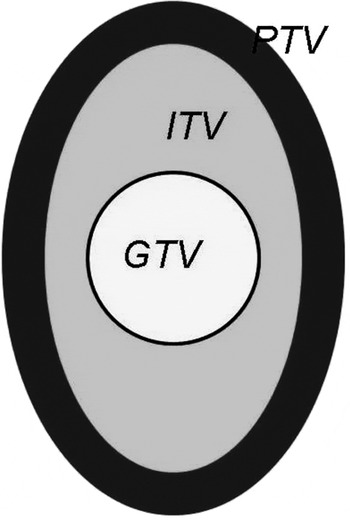
To minimise normal tissue doses whilst at the same time delivering ablative tumour doses to the planning target volume (PTV), SBRT requires a high dose gradient outside the PTV. To reduce the size of the PTV as far as possible, it is essential that the extent of tumour motion during normal respiration is appreciated and accounted for during planning. A number of approaches can be taken to achieve this. The first, adopting the internal target volume (ITV) concept, uses a four-dimensional computerised tomography (4D-CT) planning scan, from which respiratory correlated scan data is reconstructed. This allows a gross tumour volume (GTV) to be outlined on a range of phases in the respiratory cycle. From these multiple GTV’s, a composite volume (the ITV) is produced encompassing tumour position during all phases. An alternative method of ITV production makes use of the functionality of some applications to reconstruct a maximum intensity projection CT dataset upon which the ITV can be outlined. A small margin around the ITV (in the order of 0.5 cm) is produced to create the PTV which will receive the prescribed dose. This margin accounts for set-up variability, delineation and other errors. Figure 1 shows a schematic representation of target volumes.
Stereotactic body radiotherapy target volumes. GTV, gross tumour volume; ITV, internal target volume; PTV, planning target volume.

An alternative approach to using an ITV is the creation of a PTV based upon a time-weighted mean tumour position.Reference Hurkmans, Cuijpers, Lagerwaard, Widder, van der Heide, Schuring and Senan7
However, a lack of 4D-CT scanning capability does not exclude the possibility of undertaking SBRT. Alternative approaches such as slow-CT or the acquisition of several helical 3D scans (e.g. free breathing, inspiration and expiration) are acceptable, if not optimal, methods.Reference Hurkmans, Cuijpers, Lagerwaard, Widder, van der Heide, Schuring and Senan7
In cases where high amplitude breathing is demonstrated, (particularly when tumours are located close to the diaphragm) the use of abdominal compression or respiratory breath hold techniques may be adopted. This approach is useful to limit the size of the ITV and PTV volumes.
Dose distributions/planning
The need to deliver radio-ablative doses to the PTV, whilst ensuring dose to organs at risk (OAR) are minimized, requires complex treatment planning. Skilled planning ensures that dose objectives to the tumour, normal lung tissue and OAR constraints are met. The OARs which must be considered during assessment of a treatment plan include trachea and main airways, heart and pericardium, spinal cord, brachial plexus and oesophagus.
The treatment plan will usually employ 7–13 beams (including non co-planar beams) of energies between 6 and 10 MV, but may include dynamic arc therapy. Attention must be paid to ensure beams do not overlap or deliver high doses to unexpected organs outside the thorax. The calculation algorithm of the planning system used to generate a treatment plan becomes especially important with the small volume sizes used for SBRT and may influence the dose fractionation schedule selected. A description of the effects of this can be found in the report from the Quality Assurance working party for the ROSEL studyReference Hurkmans, Cuijpers, Lagerwaard, Widder, van der Heide, Schuring and Senan7 although the UK SBRT consortium strongly recommends that only a type B algorithm (which considers changes in lateral electron transport) should be used.8
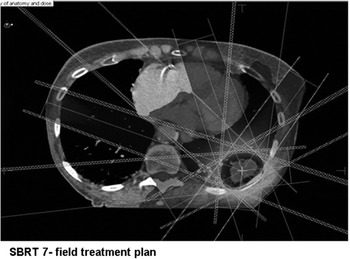
Figure 2 shows an example of a SBRT plan for a tumour in the posterior aspect of the left lung.
Stereotactic body radiotherapy 7-field treatment plan.

Localisation and verification during treatment delivery
A small GTV to PTV margin and rapid dose fall off outside the PTV makes positional accuracy during treatment delivery more critical than for conventional lung radiotherapy.
Traditional methods employed to ensure this level of accuracy included CT-based verification and isocentre correction, undertaken immediately prior to treatment with patient maintained in-situ within a body frame. Alternatively 2D imaging using orthogonal EPIDS or fluoroscopy was often deployed, using transplanted fiducial markers or bony anatomy as a surrogate for tumour position.
However, the potential variation in relative position of tumour and bony anatomy makes this method less than ideal for the precise verification required for SBRT. For many centres, a breakthrough came with the introduction of CBCT verification (Elekta Synergy, Varian OBI) at point of treatment delivery. This advancement enables acquisition of a volumetric dataset at the time of treatment and subsequent soft tissue registration with the reference planning scan.
Using on-line correction techniques, set-up errors below a 3 mm tolerance8 are corrected for, ensuring PTV coverage is maintained whilst minimising dose to nearby OAR.
On-line decision making during treatment requires an agreed strategy and an individualised approach to each patient and their disease. A consensus should be agreed between radiographers, clinicians and physicists, all of whom may be present during a treatment session. To facilitate such a multidisciplinary approach, many departments incorporate a ‘dummy’ set-up session prior to first treatment allowing an opportunity for registration options to be discussed.
During treatment delivery, additional CBCT scans are acquired as necessary according to local protocol and observed patient compliance. The need to undertake 2, 3 or 4+ CBCT scans with on-line evaluation and correction will inevitably require an increased time slot allocation per fraction, although this will be offset by the reduction in numbers of fractions delivered.
Dose prescriptions
Historically, a range of dose regimens have been reported although a consensus is emerging which suggests that to ensure local control rates equal to or exceeding surgery, a biologically effective dose (BED) of greater than 100 Gy is required.
Within the UK, the regimes recommended by the UK SBRT consortium are;
54 Gy in three fractions – the standard, preferred schedule
55 Gy in five fractions – a more conservative schedule used when PTV infringes on the chest wall
60 Gy in eight fractions – used in cases of previous irradiation or for more central tumours
All doses are delivered with a minimum of 40 hours between fractions, courses completing in 5–14 days.
Clinical results and toxicity
Data is increasingly available to suggest that local tumour control using SBRT can be in excess of even the 95% reported by Timmerman. For example, a recent Dutch study of 206 patients treated with SBRT reported only seven instances of local recurrence (3.5%) with a median overall survival rate of 34 months, and 81% and 64% survival at 1 and 2 years.Reference Lagerwaard, Haasbeek, Smit, Slotman and Senan1
Crucially a BED > 100 Gy seems necessary to provide the increased local control and forms the basis for many of the dose fractionation regimes currently adopted.
This high level of local control also appears to be achieved with low toxicity, the same study recording only 5% incidence of severe pneumonitis (greater than grade 3) or rib fracture – the two most commonly observed late side effects. Moreover half of their patients reported that no side effects were experienced at all.
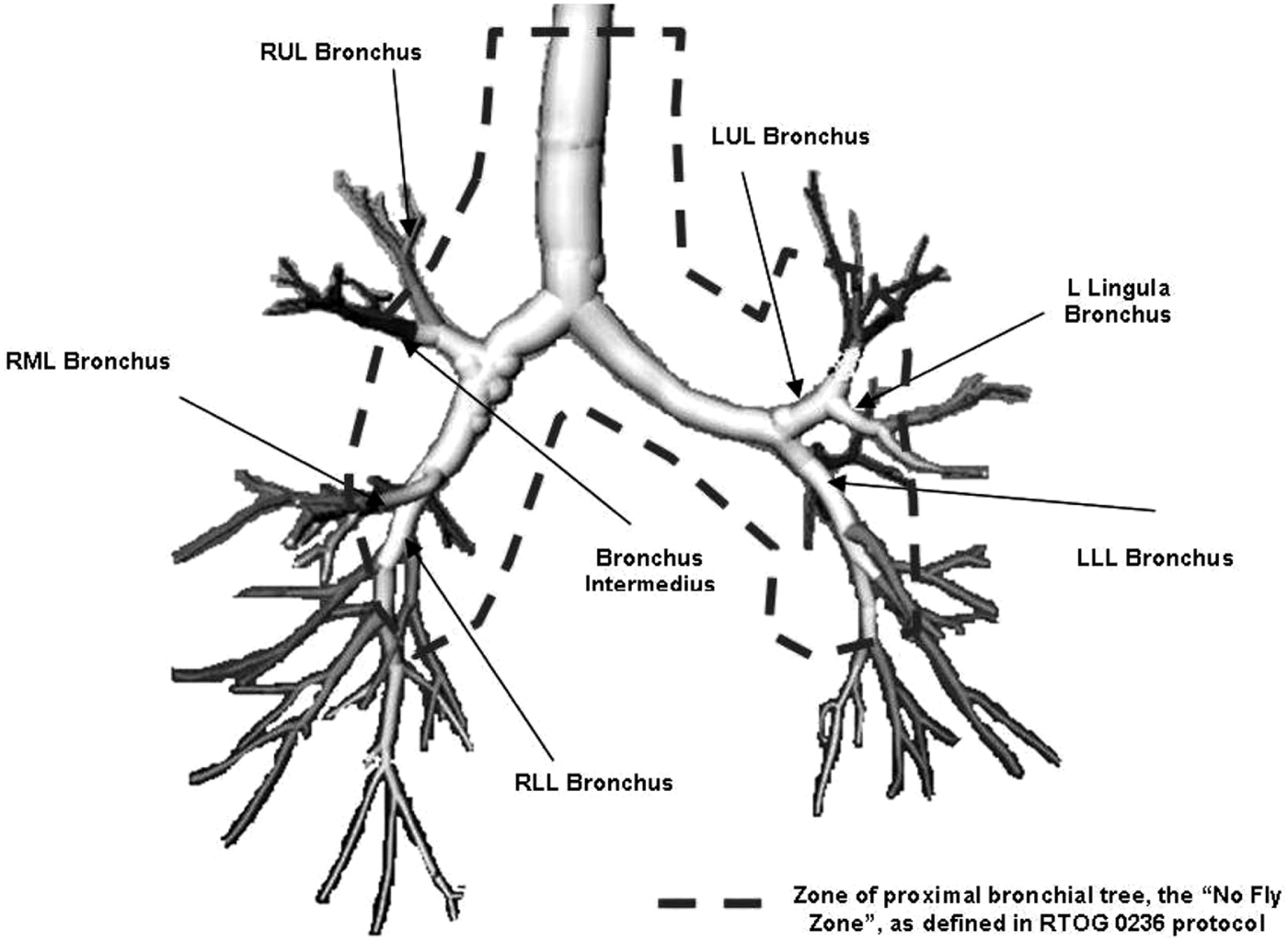
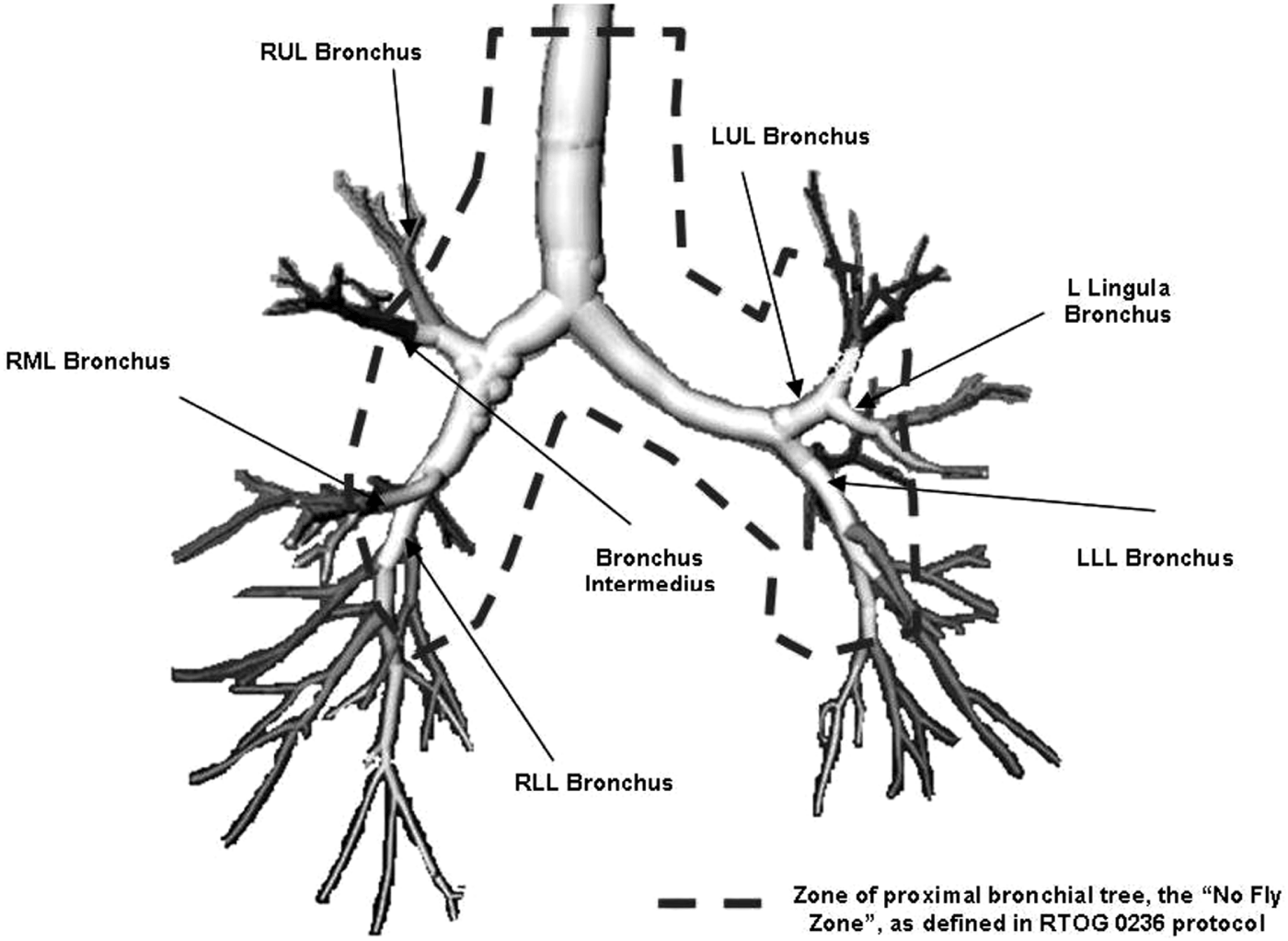
It has been suggested that tumour size and location are the strongest predictors of long-term toxicity with 83% of patients treated for peripheral tumours having 2-year freedom from toxicity compared to 54% for those with central tumours.Reference Timmerman, McGarry, Yiannoutsos, Papiez, Tudor, DeLuca, Ewing, Abdulrahman, DesRosiers, Williams and Fletcher2 Consequently, many departments including those in the UK, take a cautious approach and limit SBRT to peripheral tumours which fall outside the zone of the proximal bronchial tree approach as identified in Figure 3.
Bronchial tree demonstrating central exclusion zone where stereotactic body radiotherapy is deemed not appropriate.
The lack of robust long-term toxicity and survival data requires some caution in interpreting current results. An increase in overall survival of patients undergoing SBRT would provide the long-term prospective data necessary to evidence the efficacy of the technique. It is important, however, those results are placed within the context of the high morbidity which follows surgery, and post-lobectomy mortality rates of between 2.4 and 4.9% that are suggested for Europe.Reference Damhuis, Coonar, Plaisier, Dankers, Bekkers, Linklater and Møller9
The UK SBRT CONSORTIUM
SBRT is now accepted practice in many parts of the world and is recognized as an efficient, effective technique for early stage lung cancers. However, adoption within the UK has been slow, prompting the establishment of the UK SBRT consortium in 2008. The consortium’s remit was to:
• Recognise the current status of SBRT in the UK
• Collect baseline data against which future activity can be audited
• Assist UK departments in the implementation of SBRT techniques
• Feedback to the National Radiotherapy Implementation Group SBRT short life working group.
Membership of the consortium, which currently meets twice a year, is open to all centres considering introduction of lung SBRT. A document first produced in 2009, Stereotactic body radiation therapy (SBRT) for patients with early stage non-small cell lung cancer: a resource, provides guidance for departments, outlining technical aspects of the technique and suggesting minimum standards necessary for safe delivery, given the range of equipment and experience across the UK. In addition, the consortium supports several sub groups investigating in more detail issues such as quality assurance (QA), data collection and the direction of future research.
An initiative of the consortium was a survey undertaken in February 2010 to evaluate the current status of lung SBRT within the UK. Questionnaires were circulated to radiotherapy departments via Med Phys Eng list server and the Society of Radiographers ‘Head of Radiotherapy’ e-mail distribution list. Two questionnaires were available, one for those ‘intending to treat’ and a more detailed ‘treating’ option, dependant upon current departmental status.
Questions were asked on
• The specific tumour sites the department was intending to include in their local programme
• The equipment available within the department, including CT, treatment planning systems, Linacs, verification method and immobilisation
• The resource implications of introducing SBRT
• Local QA protocols.
By July 2010, responses were received from 18 centres, with seven indicating they were currently treating SBRT and a further six planning to implement the technique in the near future.
The questionnaire was designed to give a comprehensive view of SBRT in the UK through consideration of current activity levels, resource implications, and equipment. The questionnaire also served to provide a prediction of future SBRT availability in the UK. It was intended that any results would provide baseline information, and that the questionnaire could be re-circulated on an annual basis to assess activity changes. The results confirm that SBRT requires a multidisciplinary approach and offers exciting role development for therapy radiographers.
Activity was investigated through identification of patient numbers and anatomical sites, whilst resource implications resulting from planning and additional QA procedures were considered. The hardware and software departments used to plan and deliver SBRT were also surveyed. It was felt this information would facilitate the implementation process for those departments ‘intending to treat’ by identifying established departments with similar kit and established processes.
RESULTS
Sites treated/intended to treat
SBRT is currently available at seven UK centres with a further six in the process of implementation.
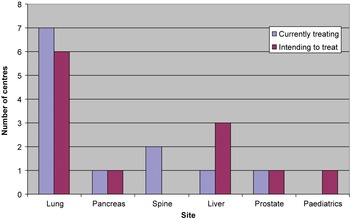
When questioned on which sites were being treated (or intended to treat) the results unsurprisingly identified lung as the main site, but with interest also expressed in spine, liver, pancreas, prostate and paediatrics, see Figure 4.
Current and proposed anatomical sites for stereotactic body radiotherapy in the UK.

Estimates for annual patient numbers within each department ranged between 12 and 150.
Equipment available within treating centres
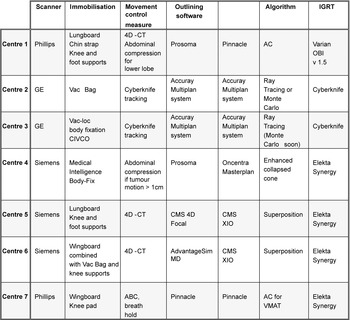
Figure 5 demonstrates the breadth of equipment and techniques used within the seven treating centres.
Equipment and techniques used to treat stereotactic body radiotherapy within the currently treating centres. 4D-CT, four-dimensional computerised tomography.

Resource implications
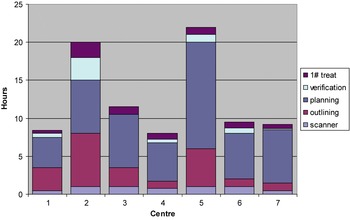
As with any modification to working practices, SBRT must be reviewed in terms of resource implications. Figure 6 demonstrates the number of hours it was felt were required to complete each task within each department. Data was collected for CT scanning, outlining of structures and OARs, treatment planning, verification and treatment delivery.
Resource implications of stereotactic body radiotherapy at currently treating centres.

It is very likely however that with experience these values, particular those concerned with the outlining and planning stages will decrease. It should also be remembered that despite increased planning and treatment times, SBRT remains highly efficient in comparison to conventional radical lung treatments by nature of the reduced fractionation required, as well as from benefits of improved local control and increased disease free survival. Table 1 shows the potential benefit of reduced ‘in-room’ time per patient using hypo-fractionation.
Reduction in overall treatment times

SBRT, stereotactic body radiotherapy, CRT, Conformal Radiotherapy
From the evidence collected from this first questionnaire, it is evident that a growing number of UK departments have programmes to implement stereotactic body radiotherapy for a number of sites.
The early implementers have also demonstrated that that this can be achieved using equipment that is in common usage and widely available, providing of course that IGRT techniques for improving accuracy are adopted for verification.
The opportunities for collaboration between centres using common equipment are clearly evident and provide further evidence of the usefulness of the SBRT consortium to coordinate such activity.
CONCLUSION
In comparison with many parts of the world where SBRT has been recognised as a standard technique for several years, implementation within the UK has been a more recent phenomenon.
The two main factors providing the impetus to adoption of SBRT here in the UK have been;
• The global acquisition of new technologies such as 4D-CT and CBCT.
• The formation of a national consortium coordinating implementation and providing practical guidelines for centres wanting to provide SBRT.
SBRT is now perceived to be the most effective radiotherapy regime currently available for early lung cancer.