Best defined as the ‘feel’ or collective personality of a workplace, organizational culture is the shared, self-sustaining and often taken-for granted values, beliefs, habits, collective memories, customs, rituals and routines that determine ‘the way we do things around here’ (Schein, Reference Schein2010; Lewis, Reference Lewis2011). Organizational culture is critical in a healthcare setting, where the attitudes and behaviours of staff directly affect patient experience, satisfaction, safety, health, and even mortality. A vast literature has highlighted the importance of organizational culture and authentic leadership in healthcare, linking a positive workplace culture to reduce absenteeism and turnover, and increased morale amongst staff (see, for example, Laschinger, Wong, & Grau, Reference Laschinger, Wong and Grau2012; Killett et al., Reference Killett, Burns, Kelly, Brooker, Bowes, La Fontaine, Latham, Wilson and O'Neill2016). In this paper, through a qualitative case study of one residential aged care (RAC) facility in Australia, we explore the rationale, processes, practices and impact of the decision to build an organizational culture explicitly centred on prioritizing the ‘happiness’ of residents and staff – and the learnings, lessons and potential of this happiness-focused approach for other healthcare organizations.
Positive Organizational Scholarship in Health Care
Many believe that developing a positive workplace culture in healthcare that supports the delivery of high-quality care requires focusing on what is positive, exemplary and ‘brilliant’ – rather than the negative (Dadich et al., Reference Dadich, Fulop, Ditton, Campbell, Curry, Eljiz, Fitzgerald, Hayes, Herington, Isouard, Karimi and Smyth2015; Dadich, Collier, Hodgins, & Crawford, Reference Dadich, Collier, Hodgins and Crawford2018). The umbrella term of positive organizational scholarship (POS) encapsulates this positive focus, with POS defined as the ‘study of especially positive outcomes, processes, and attributes of organizations and their members’ (Cameron, Dutton, & Quinn, Reference Cameron, Dutton, Quinn, Cameron, Dutton and Quinn2003, p. 3). Coining the phrase positive organizational scholarship in healthcare (POSH), Dadich et al. (Reference Dadich, Fulop, Ditton, Campbell, Curry, Eljiz, Fitzgerald, Hayes, Herington, Isouard, Karimi and Smyth2015) have shined the spotlight on exemplars of ‘good, excellent, and brilliant health service management’ (p. 769) as a conscious strategy to identify positive narratives and exemplars that inspire others. These brilliance studies offer insights into positive and flourishing practices, which are the focus of POS and POSH research.
To date, only a handful of healthcare researchers have explicitly used a POSH approach to identify the processes and factors that, ‘shape practice environments that support success and brilliant health care’ (Karimi et al., Reference Karimi, Dadich, Fulop, Leggat, Rada, Hayes, Kippist, Eljiz, Smyth and Fitzgerald2017, p. 337). Using video-reflexive ethnography to explore brilliance in palliative care practice, Dadich et al. (Reference Dadich, Collier, Hodgins and Crawford2018) found brilliance was defined as ‘exceeding expectations’, having close, caring relationships with patients, and was often demonstrated through hidden practices of positive deviance. Clinicians, for example, described attending a wedding of a patient's daughter to offer voluntary support, despite knowing that close, personable relationships with patients were ‘wrong’ according to organizational protocols. Similarly, researchers in the context of aged care also found that caring staff also describe ‘breaking the rules’ to better support older residents they consider friends (Donoghue & Miller, Reference Donoghue, Miller, Warr, Guillemin, Cox and Waycott2016). Clearly, both team capacities and organizational cultures need to change so that acts of brilliance become a more visible and standard part of care delivery – not the exception (Dadich et al., Reference Dadich, Collier, Hodgins and Crawford2018).
Contemporary Residential Aged Care – Perceptions, Culture, and Experiences
Our focus on this paper is organizational culture in aged care. Compared to other healthcare settings, RAC is unique: frail residents have multiple complex medical conditions (e.g., dementia, immobility, physical rehabilitation, incontinence) and a high mortality rate. Although there has been a significant paradigm shift in how RAC is delivered, moving from an institutionalized medical model of care towards individualized, person-centred and consumer-directed models of care (e.g., Brownie & Horstmanshof, Reference Brownie and Horstmanshof2012; Parker, Reference Parker2011; Snoeren, Janssen, Niessen, & Abma, Reference Snoeren, Janssen, Niessen and Abma2016), RAC is often stigmatized as a place of loss, suffering and illness.
When people think of feared or negative healthcare experiences, RAC is often front of mind. Aged care is frequently described negatively in our broader cultural narrative, with older Americans more fearful of life in a nursing home than their own death (Prince & Butler, Reference Prince and Butler2007). In Australia, the care practices inside RAC have become the topic of immense public scrutiny, with allegations of neglect and abuse triggering a 2019 Royal Commission into Aged Care. At the same time, attracting, recruiting and sustaining the aged care workforce remains a significant problem. Aged care has a poor professional image, with lack of pay parity, limited career promotion pathways, high levels of stress and a reputation for monotonous, non-challenging work meaning that many healthcare professionals are reluctant to work in what is widely perceived as a ‘hopeless, stressful and depressing work environment’ (Carlson, Rämgård, Bolmsjö, & Bengtsson, Reference Carlson, Rämgård, Bolmsjö and Bengtsson2014, p. 761). Staff turnover in Australia is variously estimated at 25 to 40%, with staff feeling overworked and unable to meet high resident, professional, organizational and policy expectations (Davis, Morgans, Birks, & Browning, Reference Davis, Morgans, Birks and Browning2016).
In response, some researchers have recently argued that as well as practicing an ethic of care towards residents, RAC organizations also need to start practicing an ethic of care towards the aged care workforce (Petriwskyj, Gibson, & Webby, Reference Petriwskyj, Gibson and Webby2014). Several studies have highlighted how organizational culture can support or undermine the delivery of person-centred care in aged care, as well as staff satisfaction (Etherton-Beer, Venturato, & Horner, Reference Etherton-Beer, Venturato and Horner2013; Kirkley, Bamford, Poole, Arksey, Hughes, & Bond, Reference Kirkley, Bamford, Poole, Arksey, Hughes and Bond2011; Sjögren, Lindkvist, Sandman, Zingmark, & Edvardsson, Reference Sjögren, Lindkvist, Sandman, Zingmark and Edvardsson2017). Drawing on an analysis of 11 diverse care homes in the United Kingdom, Killett et al. (Reference Killett, Burns, Kelly, Brooker, Bowes, La Fontaine, Latham, Wilson and O'Neill2016) described how staff needed to be supported in resolving the relentless everyday demands of practice in ways that aligned with the organization's espoused values – and this process requires active commitment.
Positive Organizational Scholarship in Aged Care
Despite a small body of research exploring how organizational culture and espoused values might positively change day-to-day practices of aged care staff, research to date has not used a POSH approach. This paper addresses this knowledge gap, using a POSH lens to identify examples of ‘brilliance’ that might help challenge a deeply embedded negative socio-cultural narrative towards aged care. As in-depth research documenting the underlying micro-processes and systems that help to facilitate ‘brilliance’ in healthcare is rare, this paper explores the journey of one RAC in Australia that has taken a unique approach to shift their care culture and placed ‘happiness’ at the centre of their organizational culture. Drawing on in-depth interviews, a focus group, and observations to document the journey and impact of this organizational culture change initiative on staff, we explore if and how prioritizing ‘happiness’ might make ‘brilliance’ more mainstream in healthcare practice.
Method
This study is part of the larger multi-year Inside Aged Care project which explored and tracked the day-to-day lived experience of aged care in one Australian facility, from the perspective of potential and current residents, as well as their nominated family member and formal service provider (Donoghue, Miller, & Buys, Reference Donoghue, Miller and Buys2017; Miller, Buys, & Donoghue, Reference Miller, Buys and Donoghue2019). The research design was a semi-longitudinal single case study, with this one aged care facility as the unit of analysis. Case study design was appropriate to develop an in-depth understanding of the organization's approach to care delivery, the factors and dynamics that affected how ‘the happiness initiative’ was enacted in practice, and the growth and evolution in care practices, communication processes and systems. Using within method triangulation, data were collected at multiple points in time from multiple sources. This paper focuses on the staff voice collected from three rounds of in-depth interviews, a focus group, and a week of formal staff-resident observations. The Consolidated Criteria for Reporting Qualitative Research were used to ensure quality of the research process (e.g., qualifications of the research team, study methods, findings, analysis and interpretations; Tong, Sainsbury, & Craig, Reference Tong, Sainsbury and Craig2007).
Setting, context and the emergence of the ‘happiness initiative’
The case study RAC facility is located in outer suburban Brisbane (population two million) the capital city of the state of Queensland, in Australia. Founded in 1983, the not-for-profit faith-based facility has 107 aged care rooms and 230 independent living units, with two swimming pools, small gym and a coffee-shop on a large and attractively landscaped outdoor space. In 2011, after a year of extensive planning, consultation and discussions amongst the senior leadership team and staff, the facility launched a new strategic direction with ‘the happiness initiative’. Drawing on their Irish heritage, the facility labelled this initiative SONA™, Gaelic for happiness. The change was motivated by observations of a disconnect between the person-centred care ethos and daily practice, with management wanting to operationalize its vision of ‘a community of happiness, respect and friendship’. Policies, procedures and practices were reframed around a vision where ‘happiness’ was the core value and guided operational principle for both staff and residents – an approach implicitly grounded in the strength-based POSH framework (although it must be noted that the RAC management team were not aware of this literature at the time of introducing SONA, which was an organic response to fostering person-centred care practices).
Participants and recruitment
Mixed purposive sampling and criterion sampling were used to identify those who led the happiness initiative (two senior management, including the Director of Care, DoC), as well as aged care staff with varying levels of professional expertize – from new graduate nurses in their first year (focus group participants) to senior nurses with over 20 years clinical experience. Thirteen aged care staff were interviewed, with an additional four graduate nurses participating in a focus group and guided photography task (taking pictures of artefacts/places/activities that represented the ‘highs and lows’ of their work). Interviewees consisted of both senior management (n = 2; 1 male and 1 female), who were instrumental in the development, design and ongoing implementation of the happiness initiative, and the staff tasked with day-to-day service delivery (n = 11; 2 males and 9 females). All the service delivery staff participating in individual interviews had been nominated as a ‘key informal network members’ for older-aged care residents in the study, and thus were also specifically interviewed regarding their views about that residents' experience in aged care. Staff represented a range of occupations, primarily nursing and care (n = 8), management (n = 2), occupational/diversional therapy (n = 4) and senior administrative/reception (n = 3). Ages ranged from early-20s to late-60s, with the majority in their 30s and 40s.
Procedure
Formal ethical clearance was obtained from the university human research ethics committee, with potential participants given a letter explaining the purpose and methodology of the study. Many staff already had informal relationships with the research team, as this was part of a semi-longitudinal study. Each gave informed consent, after they were verbally apprised about the background and study purpose; potential risks and benefits; privacy, anonymity and confidentiality processes, as well as their right to refuse participation or to withdraw from the study at any time. The focus group and in-depth interviews were conducted face-to-face, on-site in a private room at the facility between June 2014 and December 2016, by the female first (the chief investigator) and fourth authors (the project research fellow). Both researchers have significant prior qualitative research expertize, with formal training in psychology and sociology, respectively. Interview length ranged from 30 min to one hour, with the questions open-ended in order to encourage open, reflective and informal discussion. Both interviews and the focus group began by asking participants generally about their work experiences and a typical work day, and then more specifically about their awareness, evaluation and experience of ‘the happiness initiative’, facilitators and barriers to delivering person-centred care, working atmosphere, work interactions (with colleagues, residents, senior management), organizational training and decision-making processes, sources of professional satisfaction and dissatisfaction, as any specific challenges they experienced as facilitators of this happiness initiative. Data also included field notes and observations made during interviews, various RAC events and a week of formal observations (over 40 h of observations), as well as photographs taken by staff and residents as part of the larger research project depicting ‘highlights and lowlights’ in aged care (for details on the photographic process, see Miller, Buys, & Donoghue, Reference Miller, Buys and Donoghue2019).
Data analysis
All interviews and focus groups were transcribed verbatim, with staff opting to not check transcripts. Transcripts were systematically analysed, with the first author leading a manual thematic analysis using an inductive (data-driven rather than theoretical) approach to identify key categories, themes and patterns that explained how staff experienced ‘the happiness initiative’. Rice and Ezzy (Reference Rice and Ezzy1999, p. 258) describe how the identification of themes occurs through ‘careful reading and re-reading of the data’. They outline four key iterative steps: (1) mechanics (data preparation and transcription); (2) data immersion (i.e., listening to audio recordings, reviewing field notes, reading and re-reading transcripts); (3) initial pattern recognition, through generating initial codes, emergent patterns, common and contrasting concepts; and (4) identifying and categorizing dominant themes and sub-themes. All authors collaborated in this final step, where themes were identified, reviewed, categorized and named to create a comprehensive picture of SONA in action. This coding process was repeated until the point of data saturation, where no new themes emerged. To preserve anonymity in this semi-longitudinal study, we have used pseudonyms and purposely not individually linked quotes to specific participants. Where appropriate, photographs visually illustrate themes.
Results and Discussion
Too often, the aged care narrative emphasizes the challenges, the problems and the obstacles. A POSH lens changes the narrative, purposely searching for pockets of brilliance, which may become catalysts for widespread positive change across the broader healthcare system (Karimi et al., Reference Karimi, Dadich, Fulop, Leggat, Rada, Hayes, Kippist, Eljiz, Smyth and Fitzgerald2017). Here, we describe in detail the SONA philosophy and culture change journey, as its ethos of growing and nurturing both staff and resident happiness has the potential to inspire other aged care providers to examine how well their own organizational culture, values, and daily work practices support ‘brilliance’.
At its essence, SONA is about building a positive, strength-based organizational culture that challenges the dominant negative view of aged care with a strongly positive narrative of happiness. The triangulation of information from interviews, observations, and the focus group show that senior management and direct-care staff were highly engaged with, believed in and valued the ‘happiness’ mission. SONA resonated, both professionally and personally, with why most had chosen to work in aged care – to provide meaningful care experiences for older people and to ensure that their last few days, weeks, months or years of life were as enjoyable as possible.
Despite the reality of heavy workloads and time-constraints, staff believed the practices employed under SONA respected the personhood of the residents, and critically, also the physical and emotional labour invested by them as the care provider. This translated into stronger relationships not only between staff and residents, but also between staff members themselves. For any culture-change initiative to succeed, strong and supportive peer-to-peer relationships are essential. Indeed, as Karimi et al. (Reference Karimi, Dadich, Fulop, Leggat, Rada, Hayes, Kippist, Eljiz, Smyth and Fitzgerald2017) remind us, the ‘quest for brilliance in healthcare is not easy, but essential to reinvigorating and energizing health professionals to pursue the highest possible standards of health care delivery’ (p. 336). A strength of SONA, therefore, was a strong emphasis on collaboration and a ‘lead from where you stand’ philosophy. Every employee – whether they are the CEO, work in a direct care role, catering or laundry – shares the same central job description, title and badge: SONA officer. This very powerfully signals how everyone is an equally valued and an important part of the SONA team.
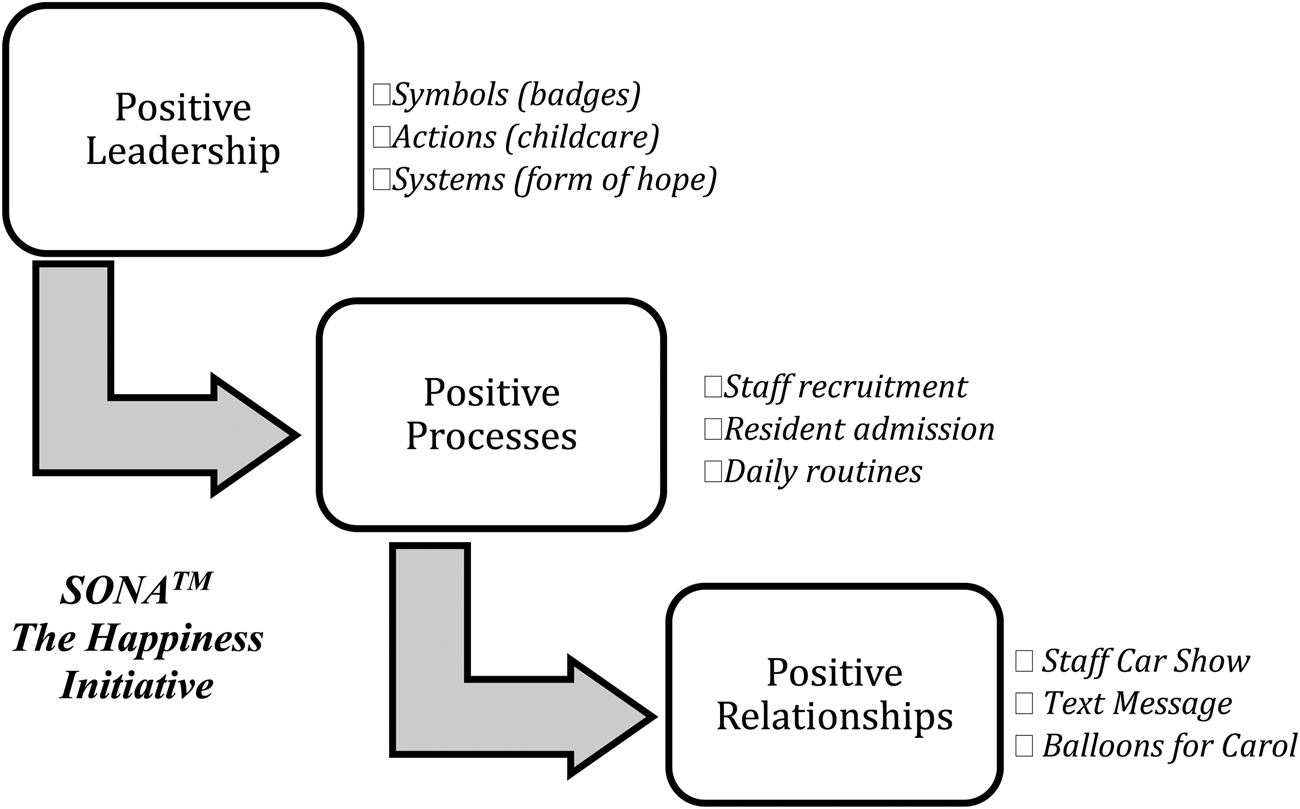
Figure 1 illustrates these processes, conceptualized and categorized into three key themes (or steps) crucial for building and sustaining this happiness-based organizational culture in this aged care facility. These steps are directly in line with POSH, in that they work to celebrate and acknowledge what is ‘the good, the excellent, and the brilliant’ in healthcare (Dadich et al., Reference Dadich, Fulop, Ditton, Campbell, Curry, Eljiz, Fitzgerald, Hayes, Herington, Isouard, Karimi and Smyth2015); in this context, positive psychology principles and POSH thinking implicitly underpin an organizational change initiative.
The three positive processes associated with embedding the SONA happiness initiative in RAC.

Step 1: Positive leadership – ‘we want them to be happy’
How do you foster brilliance in aged care? How do you support staff to always go the extra mile and deliver quality person-centred, consumer directed care? For this aged care facility, the answer was to create a new culture with a strongly positive ethos. As described briefly, the vision was developed and implemented over 2010/2011, when an incoming nurse and Director of Care (DoC) felt the care philosophy and organizational culture needed to better align with principles of person-centred care. After the broader management team reflected on their own expectations and beliefs about the treatment and care of older people through series of meetings and workshops, the notion of being guided by resident and staff happiness emerged organically. As the DoC explained, the management team asked: ‘what would we want for our own families? We want them to be happy. You only just want your loved ones to be happy. You want it as a parent; you want it for all of your family. It should be like their home… run like a family’. Driven by a strong desire to make a difference in this world (and not just cross the ‘T's and dot the ‘I's for accreditation), the happiness initiative was born. The management team turned their attention to creating a culture of happiness that was responsive, individualized, and applied to both residents and staff. With empathy for older people, and alignment with the shared meta-narrative of happiness at the core of the culture, the guiding philosophy of SONA is to work together to generate a sense of happiness – however that might be defined by each individual resident and staff member. The first theme (and step) towards building a happiness inspired organizational culture is positive and transformative leadership, through (a) the development and articulation of an engaging and inspiring vision of happiness, which is (b) clearly integrated into day-to-day operational processes.
Management's commitment to the happiness initiative can be seen in three different examples. First, every employee shares the same SONA officer title and badge which means to work with the core purpose or intent of wanting the best outcome for others: ‘as a SONA officer…your first and foremost role, your purpose here.. not what your role is as a cleaner, but what's your purpose, why are you here? Why did you choose aged care? Why did you want to be with…older people?'. It is designed to remind all staff that their first role, beyond being a carer or cleaner, is to support and foster the happiness of residents.
Second, recognizing that one of the pressures on staff was how to care for children during the school holidays, the facility started a free, legislated on-site child care service. All staff, with primary aged school children or grandchildren, can bring them to work with them to be cared for at no cost. As well as a significant benefit for staff (removing a significant stressor to enable their own personal and family happiness), the program also supports intergenerational connections, with children integrated into resident's scheduled activities (e.g., craft). Third, as a way to build a responsive culture of compassion and appreciation, management has reframed key performance indicators (KPIs). Traditionally, KPIs were about reducing the negative (falls, injuries, infections, negative behaviours); now, staff explained they are consciously used as positive incident reporting – a way to plan, program and implement a goal as an individual or work group. The ‘form of hope’ has also been implemented to formally record and acknowledge all positive incidents; for example, staff can give these to their peers to say ‘thank you for a great shift’ or to acknowledge that they have gone the extra mile with a resident, with this feedback formally recorded with human resources. Combined, these management-initiated systems help integrate happiness into everyday practices, and make brilliance mainstream.
Step 2: Positive Processes – ‘loves the SONA ethos and the systems’
Step 2 illustrates how the RAC worked to formally integrate processes that supported and encouraged ‘brilliance’ in healthcare. Their ‘happiness’ ethos is an explicit defining feature of recruitment, training, polices, procedures and practices, thus creating the environment for brilliance to flourish. As one nursing manager explained, she ‘loves the SONA ethos and the systems. You can have lovely, fluffy sentiments and ambition, but if you don't have those systems, the robust systems, then it's superfluous. It is too person dependent'. Three of these systems – rigorous recruitment, admission processes and daily routines – are described below.
First, SONA starts with a rigorous recruitment process that asks prospective job candidates to provide a written response to the question, ‘Do you think happiness is achievable for elderly people?’. This is followed by group and individual interviews, designed to recruit employees who are caring, compassionate and receptive to an organizational culture centred on happiness. In group interviews, potential employees engage in an empathy activity – asked to imagine they have had a stroke, and to select three deficits from a list of ten they will now live with (paralysis on one side, incontinence, loss of speech, blindness, inability to swallow, living with constant pain etc). They must write reflectively to communicate (1) how their life would change instantly; (2) how they would feel; and (3) what they want people to do for them. In small groups of three, potential employees then design would their ideal care/service plan would look like. This unusually rigorous approach to recruitment gives a glimpse of what life might be like for some residents (who have health conditions that constrain their mobility, communication and cognition) and helps ensure a staff-facility-organizational culture fit.
Second, happiness is an explicit part of the resident admission process. While putting together a ‘historical case file’ on each resident is good practice in RAC, in SONA each resident receives a future-orientated SONA Assessment and Care plan. For example, alongside standard questions on background, health, favoured activities, interests and life experiences, residents are asked ‘what makes you feel happy’, and ‘what goals do you have’. Residents' SONA care plan is constantly updated, with activities designed to foster resident happiness explicitly integrated into daily routines. This is an approach that enables the discussion of exciting, out of the box innovative ideas and goal setting; for example, the catering manager (who owns and races horses) noticed one resident, Graham, seemed to be quite depressed as he could not use his mobility scooter after a vascular event. Guided by the happiness ethos, she suggesting taking Graham to the races might foster his happiness, as he loved to gamble. As well as having a very tangible positive impact on both the participating staff and resident, the entire facility benefitted as the experience was relived multiple times in the retelling (a short 3 min video of the outing, including interviews with Graham and staff outlining the SONA rationale, can be viewed here: https://insideagedcareproject.wordpress.com). This is a brilliant example of the SONA ethos, and POSH, in action.
Staff work to focus an atmosphere that is ‘customer focused and approachable and happy, and there is laughter’. While person-centred care requires staff to be people, rather than task oriented, SONA takes an extra step, to prioritize happiness. As staff described, they were previously driven by deadlines such as ‘they had to get everyone up…and showered and sitting up before 8:00 a.m.…for bingo’; in contrast, the SONA care plan has helped embedded in a culture of first asking ‘do you like this?’. One staff member noted that residents now do not have ‘to fit the mould; you know, haven't to go to the Bingo. You know, it is not us that dictates what they do; it's them that dictates what they do'. Respecting choice is the essence of person-centred care, while fostering happiness lifts the bar.
Third, the SONA vision is constantly stated, referred to and reinforced throughout the facility; this is most evident in daily ‘running sheets’ where information about specific resident needs and wellbeing are outlined. As well as communicating standard everyday practical and health-related information, the daily running sheet also highlighted unique individual and happiness related quirks; for example, staff explained it would note it was this person's birthday (but they don't like a fuss, so don't mention it), this person is in hospital, this person's funeral, this person's SONA activity, here is a new residents SONA plan and so forth.
Yes, we had a SONA meeting yesterday with the residents and there's been a lot of focus now talking about the whole thing of not just ‘tick calendar', but really what staff enjoy and what they like to do with the residents. Well, the nursing home staff on the weekend presented yesterday, and it was a page long of ‘ nurse would like to do this with someone, and someone would like to do this’ – yes, amazing stuff.” For example, ‘Can we go fishing? Where are the rods?’
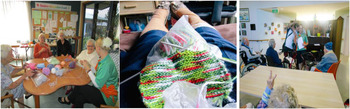
The above quote shows how staff view the workplace culture as receptive to innovative ideas. One nurse manager explained: ‘this is a thing that I like to see, just this idea coming from a resident, and we can try to make it happen; so a craft group, music group, reading group, this all happens’. This is demonstrated when, in response to one resident's desire to start knitting again, staff organized a knitting group and set up a challenge of knitting squares for blankets to be sent to low-income families. Figure 2 visually illustrates how a group of up to ten knitters now meet regularly to knit, with this simple activity giving back to others and also contributing to ongoing meaning (and happiness) in residents' lives. The last image shows staff and residents playfully interacting. In summary, the sustained leadership and customized in-house learning and development combines to grow a culture that supports and prioritizes ‘happiness’ – and this approach might be one way to better embed brilliance into everyday practices in aged care
Knitting circle, resident knitting in her room and having fun.

Step 3: Positive Relationships – ‘if it's going to make them happy, what's five minutes of your time, really?’
The POSH and brilliance ethos is most strongly demonstrated by the close relationships staff have, with their colleagues and superiors, but primarily with residents and their families. Their purposeful actions transform what can be a challenging and mundane role into something all can enjoy, as the Staff Car Show, Text Message, and Balloons for Carol examples below illustrate. The personalities, words, behaviours, and actions of aged care staff set the tone for residents' day-to-day lived experience. While some staff saw their role as just a job, most agreed ‘a very large percentage’ of their colleagues were committed to delivering the happiness ethos and went that ‘little bit extra’ to give a lot of themselves to the residents. Staff explained they worked to ‘make them happy, to make their day beautiful’ , to ‘see a resident, big smile, [feeling] happy’ and to make ‘a difference in someone's life, that you are looking after'. One nurse explained: ‘you just go that little bit extra. You know, if it's going to make them happy, then just – what's five/ten minutes of your time, really?'.
It is an emotional thing. You are walking out of their room and you can see they have a smile on their face. To me, that is just as important as giving them a shower, as toileting, as whatever. I think good care is just approaching a resident with a smile, making them happy. Even though you may be having a bad day, but don't let it show because that will make them have a bad day. And just getting to know them, personally, and not by routine. I think that is an important thing.
I think it's time. It is your time, giving to them. Not so much care; anyone can do care… anyone can do a shower, whether it's bad or not. But you think it's your time… having a chat with them.
Of course, time is a valuable commodity in aged care, as is energy. Staff explained how ‘we can be cranky some days, too and think, “Oh, God, do I have to listen to that anymore?”'. Balancing ‘fun’ activities (such as craft, going for walks etc) was always a challenge, balanced against the reality of labour-intensive care-giving and needing to respond to resident buzzers. Time was in short supply when it might take half an hour to get each resident ready (up showered, dressed and eating breakfast) every morning. Yet, all staff affectionately described the memorable moments and residents that made their job so worthwhile – and how the organizational vision of happiness guided actions.
Staff recalled three tangible examples. First, one weekend, they had arranged for a vintage car group to visit and all residents were lined up on the road outside. The car group was late and residents were waiting. In response, staff held their own car parade, getting into their own cars and bikes, riding by, laughing and waving. Second, one staff member explained her recent interactions with Audrey, an older women receiving respite care while her husband was in hospital. Audrey was given a phone to contact him, but did not know how to use it. This staff member explained how she ‘got it out, got it charged, got it going, got the data going on it, and sent her husband a text message’. Audrey did not know how to text, so the staff member sent the messages and took photographs of her room, so her husband could easily visualize where she was. The staff member explained when her husband texted, ‘oh, I miss you darling’, Audrey started crying and laughing. For this staff member, there was significant satisfaction in being able to help connect husband and wife.
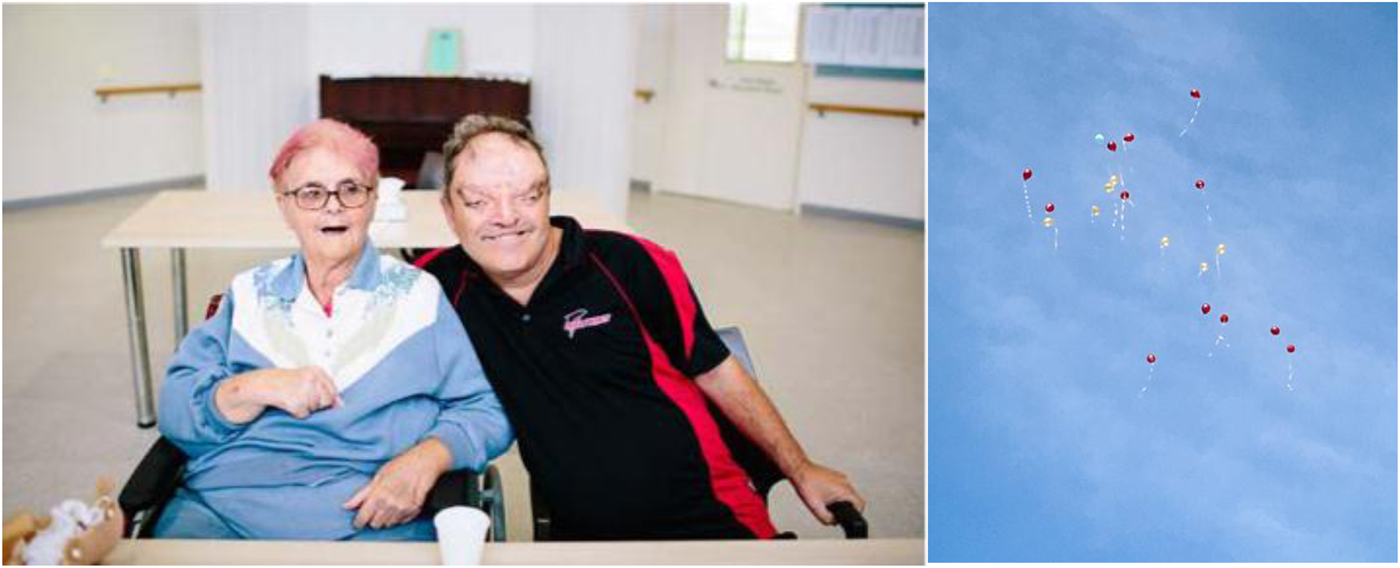
Finally, staff's connection and relationship to residents is powerfully demonstrated through the story of Carol, a now deceased resident. Carol was a devoted football fan, who had loved watching her favourite teams play and often dyed her hair maroon to match the colours from her beloved Brisbane Broncos (see her dyed maroon red hair in Figure 3). When Carol passed away, the staff and residents released balloons in her favourite colours: Brisbane Bronco maroon and gold. Staff added a blue balloon (representing a rival team) to ‘give her one last tease’. Even in dealing with death and grief, staff retained a sense of fun, humour and positivity in their memorial actions. Balloons for Carol are a poignant example of brilliance in healthcare, in that management have taken purposeful and innovative steps to support staff through the grieving process when a resident dies.
Balloons for Carol.

Conclusion
Changing public perceptions about aged care, and triggering a conversation about ageing, living and dying in aged care is a challenging undertaking (Parker, Reference Parker2011). Too often, aged care is viewed solely as a place of decline, decay and death. The power of POSH is that it deliberatively changes the narrative, to identify and celebrate what is positive and ‘brilliant’ in healthcare. Such a mindset shift is sorely needed in the public discourse on aged care. As a small step towards that this paper used a POSH lens to document how one RAC facility's unique journey to achieving a healthy organizational culture that prioritizes the happiness of staff and residents. The impact on the leadership team, staff, residents and their families has been significant. Staff demonstrates deep person-centred care and examples of ‘brilliance’ in healthcare on a daily basis, working tirelessly to find and support the happiness of residents. At the same time, their own happiness and the happiness of their peers are always priority; the provision of on-site childcare during school holidays for the children and grandchildren of staff is a tellingly brilliant example of a management-lead POSH initiative that benefits both staff and residents. Staff receive easily accessible childcare, and residents form ongoing intergenerational connections, getting to know and developing close, caring with these children who participate in RAC activities with them.
Consistent with other research, our sample of staff (mostly nurses) greatly enjoyed their role and valued the opportunity to develop meaningful personal relationships with the older people they care for. Their narratives, stories and photographs challenge the dominant negative narrative of working in aged care, and many seemed to relish the challenge of fostering the ‘happiness ethos’ within their organization. Within the POSH framework, the ‘O’ component addresses ‘the positive processes and states that occur in association with organizational contexts’ (Cameron & Spreitzer, Reference Cameron, Spreitzer, Cameron and Spreitzer2012, p. 2). A unique feature of this study is our purposeful focus on the ‘O’ component, documenting the processes, policies and initiatives that supported the delivery of brilliant healthcare in aged care. To our knowledge, this is the first study to use a POSH lens to document the culture change journey within aged care.
Even more unusual is that the facility embarked, with steadfast long-term commitment, on a mission to facilitate happiness. From changing job titles and recruitment practices to the tangible symbols of uniforms, badges and SONA happiness updates on daily ‘running sheets’, there was overt signalling about priorities and the ideal desired vision. In very pragmatic terms, SONA helped empower and enable front-line staff to prioritize the practices that fostered resident wellbeing and happiness. The explicit organizational emphasis on happiness also resonated with staff, who often work in aged care because they have a passion for supporting older people. At its core, SONA is an organizational commitment to building a culture of changing practice in aged care. Philosophically, it reminds us that the experience of happiness and of flourishing is not reliant on physical health, mobility or ability. Very frail residents, in extremely poor health and with limited cognition, can and do enjoy critical moments of happiness – and often, it is the interactions with staff that enable these.
Alongside resource constraints, a growing body of research points to organizational culture and the manager's leadership – their management of risk and how they support and value staff – as key enablers or barriers to person-centred care (Kirkley et al., Reference Kirkley, Bamford, Poole, Arksey, Hughes and Bond2011). Developing a shared culture, at all levels of the organization, that ensures person-centred care means enabling ‘respectful and meaningful relationships between professionals and older individuals in need of support or care’ (Snoeren et al., 2014, p. 2). Yet, as Snoeren et al., note, the traditional and hierarchical character of aged care organizations makes culture change difficult. What is needed is fresh approaches, such as POSH, to encourage, support and document ‘brilliance’ in clinical practice. By highlighting the positive aspects of aged care, our findings add to the small but growing body of the POSH literature that is challenging the seismic wave of pessimism in health care. Flipping the narrative, and sharing positive stories are critical ways to inspire others, change existing practices and trigger positive systematic change across the sector (Dadich et al., Reference Dadich, Fulop, Ditton, Campbell, Curry, Eljiz, Fitzgerald, Hayes, Herington, Isouard, Karimi and Smyth2015).
While we hope the themes, experiences and processes described here provide a useful starting point for other healthcare organizations wishing to refocus organizational culture around a happiness ethos, we also acknowledge the study limitations. This is a qualitative case study of one Australian aged care organization, documenting a grass-root initiative developed by a concerned nurse manager. These organic origins of SONA mean the creators had limited engagement with the positive psychology or POSH literatures; more systematic approaches are needed to apply and deeply embed concepts from positive psychology more fully into day-to-day practices. For example, implementing formal happiness and gratitude ‘count your blessings’ or ‘three good things’ interventions might further boost both resident and staff morale and enable true flourishing (see Lyubomirsky, Reference Lyubomirsky2007; Seligman, Reference Seligman2010). And, of course, the ‘how’ of implementing a happiness-focused initiative in aged care would greatly benefit from further investigation and explication. Additionally, as with any social research study, there is the possibility of sampling and respondent bias, as participants may have withheld critical negative evaluations. We believe that is unlikely, as participants openly reflected on the ‘ups and downs’ of their professional experiences, with the focus group and interviews characterized by open, honest and lively discussion. A significant strength of the study was the data triangulation and longitudinal lens, as tracking the lived experience of aged care over several years enabled a unique temporal lens and the development of trusting relationships (see Donoghue, Miller, & Buys, Reference Donoghue, Miller and Buys2017).
The findings of this study are important, as they show the value not only of a POSH approach but also the transformative power of an organizational culture that priorities happiness of both residents and staff. In our minds, there is no doubt that the focus on happiness changes how staff interact with residents. To illustrate this, we end with a final example. As is standard best-practice in individualized person-centred care, the staff member respects, interacts and responds to the resident's unique characteristics, needs and preferences. The nurse's respectful knock to enter the room, use of context, behavioural cues and past knowledge is an exemplary demonstration of person-centred care in action. What transforms this everyday interaction, however, is the focus on fostering the residents' happiness. Rather than merely moving on to the next task or resident, knowledge of organizational values and the SONA ‘happiness’ philosophy meant she responded differently. She purposely paused and initiated a conversation designed to explore what might make the resident happier.
One resident, Isobel, is very quiet and very much keeps to herself. She was in hospital recently and I knocked on her door, just to see how she was going. We had a little talk and she said, ‘Oh, I don't want to come out for a walk this morning', although she normally does. I said ‘Oh, you don't look happy'. She replied, ‘I'm just tired’. She had a beautiful crocheted rug on her bed and I said, ‘This is beautiful. I haven't seen this'. She said, ‘I made that.’ ‘Oh, wow, do you crochet now?’ . She said, ‘No, but I would like to.’ I am like, ‘Yes! Right, we need little rugs when people go out in wheelchairs, just small squares. Do you think you would be able to do that?’ ‘Oh, yes, I could definitely do that.’ I said, ‘Great, let's get you some wool and a crochet hook.' So it is really just finding about what makes that person happy. So she doesn't come to craft, but she is in her room, crocheting in the sunshine. She's happy. That's her happiness (Jane, Nurse).
This purposeful emphasis on happiness illustrates how the culture here is profoundly different to other aged care facilities, and how leadership, management structures, human resource practices and organizational culture can combine to facilitate positive experiences for both staff and residents. Meeting the expectations of staff, the general public, and older residents themselves require aged care management to think very carefully about how their organizational culture supports (or not) the delivery of person-centred and consumer-directed care. Critically, the concepts of positive psychology (Seligman & Csikszentmihalyi, Reference Seligman and Csikszentmihalyi2000; Seligman, Reference Seligman2010), the SONA ‘happiness initiative' and a POSH approach combine to provide a framework that supports ‘brilliance’ in aged care. Other aged care providers, and healthcare organizations should examine their own organizational culture and identify what values need to be emphasized to make ‘brilliance’ mainstream in healthcare.
Acknowledgements
The authors would like to thank the residents and staff of the case study aged care facility for so generously engaging with the research, and for allowing us to share their wonderful photographs so widely. We gratefully acknowledge the funding support and aspects of this work by BallyCara and the Australian Research Council's Linkage Projects funding scheme, to Evonne Miller, Laurie Buys and Nicole Devlin through Grant LP130100036.