Implications
An increase in the n-3 polyunsaturated fatty acid and conjugated linoleic acid concentration in lamb meat is desirable from a consumer health perspective. This experiment demonstrates that providing a source of linolenic acid, such as linseed or the novel alternative, Camelina sativa as sodium hydroxide-treated seeds, which could be prepared on-farm, is effective in this regard. While the increases in beneficial fatty acids in lamb are small relative to dietary requirement for humans, they can contribute to marketing strategies to enhance the image of lean lamb as a healthy food.
Introduction
Consumption of fat, and in particular saturated fat, is regarded as one of the contributing factors to the incidence of coronary heart disease in humans (World Health Organization (WHO), 2003). Enser et al. (Reference Enser, Hallett, Hewett, Fursey and Wood1996) showed that lean steaks from lamb loin had a fatty acid content of around 50 mg/g muscle or less and therefore they could be considered a low-fat food. However, because of biohydrogenation of dietary polyunsaturated fatty acids (PUFA) by ruminal microorganisms (Doreau and Ferlay, Reference Doreau and Ferlay1994), beef and lamb fat tends to contain more saturated fatty acids (SFA) than non-ruminant fat.
Feeding PUFA-rich plant oils or physically processed oilseeds to ruminants has been shown to increase the PUFA concentration in muscle (e.g. Bolte et al., Reference Bolte, Hess, Means, Moss and Rule2002), but an effect comparable to that achievable with non-ruminants would require protection of dietary PUFA from ruminal biohydrogenation. Feeding intact oilseeds has been shown to offer some degree of protection against ruminal biohydrogenation (Ekeren et al., Reference Ekeren, Smith, Lunt and Smith1992) and the use of seeds rather than oils has practical advantages in terms of handling of feed ingredients and ration manufacture. However, without some disruption of the seed coat, intact seeds may escape digestion completely as is the case with cereal grains (Drennan et al., Reference Drennan, Almiladi and Moloney1995). Chemical treatment of canola seeds with an NaOH solution increased digestibility compared to untreated whole seeds but decreased ruminal biohydrogenation of PUFA compared to crushed canola seeds (Aldrich et al., Reference Aldrich, Merchen, Drackley, Gonzalez, Fahey and Berger1997). Chemical protection of PUFA by direct reaction with amines also afforded some protection of fatty acids from ruminal biohydrogenation (Jenkins and Thies, Reference Jenkins and Thies1997). However, efficient protection of dietary PUFA while enhancing the deposition of PUFA in tissue would likely decrease PUFA availability to ruminal bacteria and consequently the formation of biohydrogenation intermediates such as trans-11 18:1 and conjugated linoleic acid (CLA), in particular the cis-9, trans-11 isomer which has been shown to possess a variety of health benefits in animal models (Pariza et al., Reference Pariza, Park and Cook2001).
Among plant oilseeds, linseed represents a rich source of 18:3n-3 and effects of inclusion of linseed or linseed oil (LO) as a means of increasing the n-3 PUFA content of ruminant muscle have been reviewed (Woods and Fearon, Reference Woods and Fearon2009). Camelina sativa is the second richest oilseed in 18:3n-3 (ranging between 30% and 40% of total fatty acids) having a high relative proportion of 18:2n-6 to 18:3n-3 (Budin et al., Reference Budin, Breene and Putnam1995; Givens et al., Reference Givens, Cottrill, Davies, Lee, Mansbridge and Moss2000). Biohydrogenation of 18:2n-6 leads to the formation of cis-9, trans-11 CLA and trans-11 18:1, whereas biohydrogenation of 18:3n-3 leads to the formation of trans-11 18:1 without involving cis-9, trans-11 CLA as an intermediate (Harfoot and Hazelwood, Reference Harfoot and Hazelwood1997). Little information is available on the effect of camelina per se or the form of camelina oil (CO) on the fatty acid composition of ruminant muscle.
The objective of this study was to compare the effects of addition of camelina or linseed per se as fat sources in sheep diets, the effect of feeding the fat sources as unprotected oils or caustic treated seeds and the effect of chemically protecting CO on the fatty acid composition of intramuscular and subcutaneous adipose tissue.
Material and methods
Feed preparation and animal management
The fat sources examined were Megalac® (MG, Volac Feeds Ltd, Co. Cavan, Ireland), CO (Camelina sativa grown at Teagasc, Oak Park Research Centre, Carlow, Ireland and extracted as described by Crowley and Fröhlich, Reference Crowley and Fröhlich1998), LO (Flood Horse Feeds, Newbridge, Ireland), camelina seed treated with NaOH (CS; Camelina sativa grown at Teagasc, Oak Park Research Centre, Carlow, Ireland and seeds harvested as described by Crowley and Fröhlich, Reference Crowley and Fröhlich1998), while linseeds treated with NaOH (LS, seeds supplied by Wholefoods Wholesale, Ltd, Dublin, Ireland) and CO amides (CA). The NaOH treatment was as follows: NaOH was added to the seeds (in batches of 25 kg; 10% w/w when treating camelina seeds and 5% w/w when treating linseeds, to compensate for the different surface area of the seeds), dry-mixed and then 6 l of water were added in the mixer. The seeds were mixed in a Little Benford Tip-up tumbling mixer 60 l (Terex Corporation, Westport, CT, USA) rotating at 27 rpm for 15 min. After removal from the tumbling mixer, treated seeds were spread on a concrete floor. The temperature was monitored and the seeds mixed by hand at regular intervals. After reaching ambient temperature the seeds were transferred to boxes for storage before preparation of the ration. Fatty acyl amides of CO were prepared by reacting CO and ethanolamine (1.38 g oil/g ethanolamine) at 70°C for at least 48 h according to the method described by Feairheller et al. (Reference Feairheller, Bistline, Bilyk, Dudley, Kozempel and Haas1994).
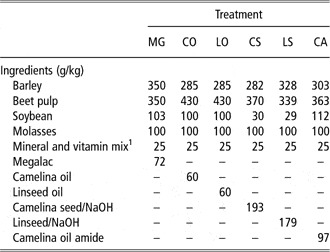
Six experimental rations were prepared that differed in the source of fat used (Table 1). All rations were formulated to be isoenergetic and a mineral and vitamin mix was added to the rations with a target vitamin E concentration of 500 IU/kg concentrate. In the CA diet, CO amides were included at a level calculated to provide the same amount of fatty acids as did the CO diet. Individual fat sources were added to the other ingredients in batches of approximately 500 kg using an Abbey Gearbox drive Diet Feeder 100 (Abbey, Nenagh, Co. Tipperary, Ireland), and mixed at 1700 rpm for 15 min. Fatty acyl amides were melted at 70°C immediately before inclusion in the diet mix to facilitate the mixing. Three batches of each ration were prepared during the course of the study.
Formulation of experimental rations

MG = megalac; CO = camelina oil; LO = linseed oil; CS = NaOH-treated camelina seeds; LS = NaOH-treated linseeds; CA = camelina oil amides.
1The mineral and vitamin mix contained Ca (48%), Na (12%), ammonium chloride (12%), vitamin A (480 000 IU/kg), vitamin D3 (96 000 IU/kg), vitamin E (20 000 IU/kg), cobalt carbonate (40 mg/kg), calcium iodate (80 mg/kg), iron sulfate (1000 mg/kg), manganese oxide (1600 mg/kg), sodium selente (8 mg/kg) and zinc oxide (2000 mg/kg).
Sixty-six Suffolk crossbred wether lambs (average weight 40.0 kg (s.d. 4.69) and approximately 10 months of age) were used. Prior to the commencement of the study, the animals were offered grass hay ad libitum and 0.5 kg whole barley/animal daily for 4 months. The animals were blocked by initial body weight (BW) and, within block, assigned at random to one of six rations. They were housed in individual pens and fed once daily in the morning and had free access to clean drinking water. The concentrate allowance was 25 g/kg BW and was increased every 4 weeks based on animal weight. Animals also received 100 g of chopped hay/day. Refusals, which were rare, were removed and weighed daily and the weight of the animals was monitored bi-weekly. Samples of the concentrates and hay offered were collected twice weekly and stored at −20°C for subsequent chemical analyses. After 8 weeks of treatment, animals in the first two blocks (i.e. no. = 2 per treatment) were transferred after weighing to metabolism crates that allowed the separate collection of urine and feces and offered the same dietary allowances. After a 1-day adjustment to the crates, all feces produced in the subsequent 8-day period were collected, the quantity recorded and representative subsamples stored at −20°C for subsequent chemical analyses. Upon completion of the above collections, the animals were returned to the regular sheep facility, replaced in the crates by animals from blocks three and four and the collection procedure repeated.
Post-slaughter measurements and sampling procedure
The animals were slaughtered after 100 days on the experimental rations. After slaughter, the weight of the carcass, kidneys, liver, and perirenal fat depot were recorded. Carcasses were then chilled for 24 h and the loin and associated muscles were removed by dissection. Two steaks approximately 25 mm thick were cut from the region of the 7th rib of the m. longissimus dorsi for fatty acid analysis. A sample of subcutaneous adipose tissue (SAT) was also taken from the region of the 9th rib. This was dissected free of muscle and connective tissue associated with the sample was not removed before analysis. Samples for fatty acid analysis and meat composition were vacuum-packed and stored frozen at −30°C.
General feed composition
The dry matter (DM) concentration of concentrates and feces was determined by drying at 98°C (15 h) as described by Moloney et al. (Reference Moloney, Read and Keane1996). Concentrates and dried feces (40°C for 48 h) were also analyzed for CP (Association of Official Analytical Chemists (AOAC), 1990), ash (Moloney et al., Reference Moloney, Read and Keane1996), oil (ether extract following acid hydrolysis, European Communities (EC), 1984) and NDF (Van Soest et al., Reference Van Soest, Robertson and Lewis1991).
Fatty acid analysis of intramuscular fat, SAT, feeds and feces
The procedures used for fatty acid extraction, separation of lipid classes, methylation and determination of the profile both for the intramuscular and SAT were described by Noci et al. (Reference Noci, Monahan, French and Moloney2005). This extraction and methylation procedure was also used for determination of fatty acids in dried feces. The fatty acid profile of the freeze-dried rations and the fat sources was determined as described by Sukhija and Palmquist (Reference Sukhija and Palmquist1988).
Statistical analysis
Data were subjected to analysis of variance in GenStat (12th edition, VSN International Ltd, Hemel Hempstead, UK) using a model that had block and ration as the main effects. Animals were considered the experimental unit and the following ‘a priori’ contrasts were carried out:
(i) PUFA-rich rations v. control (MG).
(ii) Method of oil supplementation (oil v. seed; CO + LO v. CS + LS).
(iii) Source of oil (camelina v. linseed; CO + CS v. LO + LS).
(iv) Interaction of method of feeding and source of oil.
(v) Method of protection of CO (CS v. CA).
Results
Feed chemical and fatty acid composition
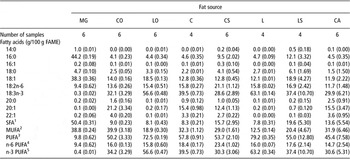
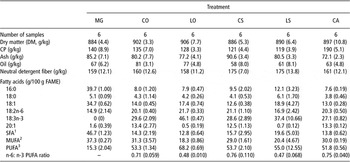
The fatty acid composition of the individual fat sources before mixing with other ingredients is summarized in Table 2. The trend in the data was for NaOH-treatment to increase the proportion of individual and total SFA and to decrease the proportion of 18:3n-3 and total PUFA in total fatty acids, the latter being particularly pronounced for LS. All sources of CO had 3% 22:1 approximately, in contrast to either MG or sources of LO. Compared to CO, treatment with ethanolamine tended to increase the SFA proportion and to decrease the proportion of monounsaturated fatty acid (MUFA), PUFA and unidentified fatty acids. The data relating to the chemical composition and fatty acid profile of the rations are summarized in Table 3. Camelina-based rations had similar fatty acid profiles with regard to 18:0, 18:1, 18:2n-6, 18:3n-3 and 20:1, while linseed-based rations had higher 18:1 and 18:3n-3 than camelina-based rations. The LS ration had the highest content of 18:2n-6 and was lower than the LO ration in 18:3n-3. Overall, linseed-based rations had a higher content of PUFA, while camelina-based rations were higher in MUFA and the MG ration was highest in SFA content.
Fatty acid composition (mean (s.d.)) of fat sources

MG = megalac; CO = camelina oil; LO = linseed oil; C = camelina seeds; CS = NaOH-treated camelina seed; L = linseed; LS = NaOH-treated Linseed; CA = Camelina oil amide; FAME = fatty acid methyl esters; SFA = saturated fatty acids; MUFA = monounsaturated fatty acid; PUFA = polyunsaturated fatty acid.
1SFA = sum of all even chain fatty acid up to 22:0.
2MUFA = sum of 14:1, 16:1, 18:1, 20:1 and 22:1.
3PUFA = sum of 18:2, 18:3, 20:2, 20:3, 20:4, 20:5, 22:4 and 22:6.
4n-6 PUFA = sum of 18:2, 18:3n-6, 20:2, 20:3n-6, 20:4 and 22:2.
5n-3 PUFA = sum of 18:3n-3, 20:3n-3, 20:5, 22:5 and 22:6.
Chemical and fatty acid composition of the concentrates (s.d.)

MG = megalac; CO = camelina oil; LO = linseed oil; CS = NaOH-treated camelina seeds; LS = NaOH-treated linseed; CA = camelina oil amide; FAME = fatty acid methyl esters; SFA = saturated fatty acids; MUFA = monounsaturated fatty acid; PUFA = polyunsaturated fatty acid.
1SFA = sum of all even chain fatty acid up to 22:0.
2MUFA = sum of 14:1, 16:1, 18:1, 20:1.
3PUFA = sum of 18:2, 18:3, 20:2, 20:3,20:4, 20:5, 22:4 and 22:6.
n-6 PUFA = sum of 18:2, 18:3n-6, 20:2, 20:3n-6, 20:4 and 22:2, n-3 PUFA = sum of 18:3n-3, 20:3n-3, 20:5, 22:5 and 22:6.
Intake, diet digestibility and components of BW
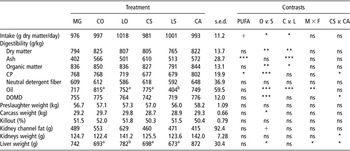
Compared to the MG ration, feed intake tended (P < 0.1) to be higher for lambs offered the PUFA-rich rations. Intake was higher (P < 0.05) for lambs offered the oil-based rations than for the NaOH-treated oilseed-based rations while camelina-based rations resulted in a lower (P < 0.05) intake compared to linseed-based rations. There was no difference in intake between lambs offered the two protected camelina treatments (Table 4).
Feed intake, ration digestibility in vivo and animal production characteristics

MG = megalac; CO = camelina oil; LO = linseed oil; CS = NaOH-treated camelina seeds; LS = NaOH-treated linseed; CA = camelina oil amide; O = oil; S = seed; C = camelina; L = linseed; M = method of feeding (oil or seed); F = fat source (camelina or linseed); DOMD = digestible organic matter in the dry matter; ns = non-significant, P > 0.05; +, *, ** and *** refer to significance levels P < 0.1, P < 0.05, P < 0.01 and P < 0.001, respectively. For a significant M × F interaction, means with a common superscript do not differ (P < 0.05).
Compared to the MG ration, the digestibility of dietary DM, organic matter, NDF, oil and the digestible OM in the DM (DOMD) was similar, the digestibility of ash was higher (P < 0.05) and the digestibility of CP was lower (P < 0.05) for the PUFA-rich rations. The digestibility of DM, OM and CP and DOMD were higher (P < 0.05) for oil-based rations than for NaOH-treated oilseed-based rations. The digestibility of DM and OM was higher (P < 0.05) for camelina-based rations than for linseed-based rations. There was an interaction for the digestibility of oil such that it was lower (P < 0.05) for the LS ration than for the LO ration but the corresponding camelina-based rations did not differ. The digestibility of CP and the DOMD were higher (P < 0.05) for the CA ration compared to the CS ration.
Growth rate averaged 169 g/day and did not differ between treatments. Compared to the MG ration, the animal production characteristics measured were similar for the PUFA-rich rations. Carcass weight was higher (P < 0.05) and the weight of perirenal fat tended (P < 0.1) to be higher for lambs offered the oil-based rations than for the NaOH-treated oilseed-based rations. There was an interaction for liver weight such that it was lower (P < 0.05) for lambs offered the LS ration than for the LO ration but the corresponding camelina-based rations did not differ. The weight of the kidneys and liver were higher (P < 0.05) for lambs offered the CA ration compared to the CS ration.
Fatty acid composition of feces
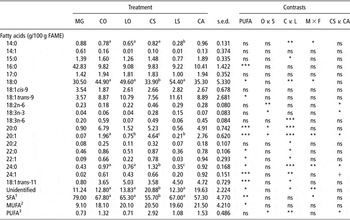
Compared to the MG ration, for the major fatty acids detected, feces from animals offered the PUFA-rich rations had on average a lower (P < 0.05) proportion of 16:0 and total SFA and a higher (P < 0.05) proportion of 18:0, trans-9 18:1 trans-11, 18:1, 20:0, 20:1, 22:0, 24:0, 24:1 and MUFA. Feces from lambs offered the oil-based rations had a lower (P < 0.05) proportion of 18:2n-6, 18:3n-3 and total PUFA and a higher (P < 0.05) proportion of 20:0 compared to that from the NaOH-treated oilseed-based rations. Feces from lambs offered the camelina-based rations had a higher (P < 0.05) proportion of 15:0, 18:3n-6, 20:0, 20:2, 22:0, 22:1, 24:1 and total PUFA and a lower (P < 0.05) proportion of trans 11 18:1 than that from the linseed-based rations. There was an interaction for 18:0 and total SFA such that the proportions were lower (P < 0.05) for feces from lambs offered the CS ration compared to the CO ration but were similar for the linseed-based rations. In contrast, the interaction for 20:1 and 24:0 indicated that the proportions were higher (P < 0.05) for feces from lambs offered the CS ration compared to the CO ration but were lower (P < 0.05; 24:0 only) for the LS ration compared to the LO ration. The proportions of 18:2n-6, 18:3n-3, 20:1, 24:0 and total PUFA were lower (P < 0.05) in feces from lambs fed the CA ration compared to the CS ration (Table 5).
Fatty acid proportion of fecal fat

MG = megalac; CO = camelina oil; LO = linseed oil; CS = NaOH-treated camelina seeds; LS = NaOH-treated linseed; CA = camelina oil amide; O = oil; S = seed; C = camelina; L = linseed; M = method of feeding (oil or seed); F = fat source (camelina or linseed); FAME = fatty acid methyl esters; SFA = saturated fatty acids; MUFA = monounsaturated fatty acid; PUFA = polyunsaturated fatty acid; ns = non-significant, P > 0.05; +, *, ** and *** refer to significance levels P < 0.1, P < 0.05, P < 0.01 and P < 0.001, respectively. For a significant M × F interaction, means with a common superscript do not differ (P < 0.05).
1SFA = sum of all even chain fatty acid up to 22:0.
2MUFA = sum of 14:1, 16:1, 18:1 and 20:1.
3PUFA = sum of 18:2, 18:3, 20:2, 20:3, 20:4, 20:5, 22:4 and 22:6.
Fatty acid composition of total lipids in intramuscular fat
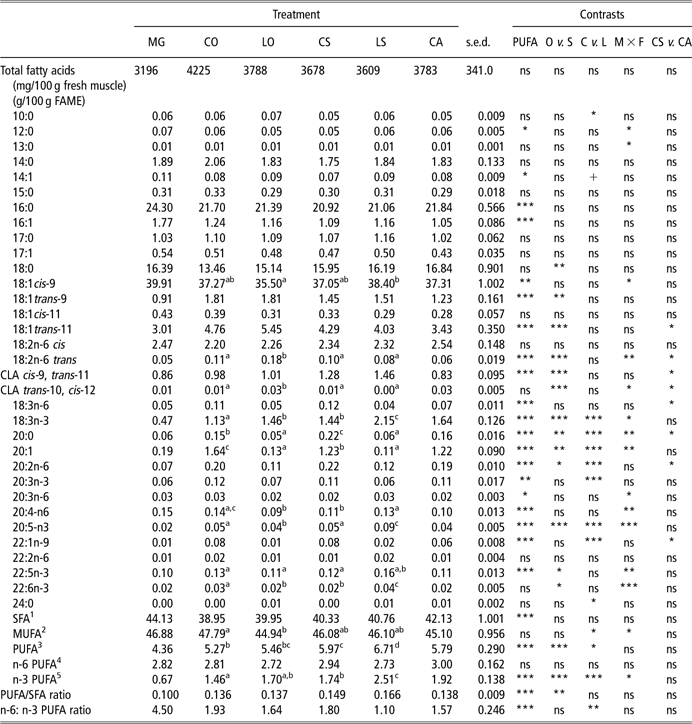
The fatty acid concentration in the total lipid fraction did not differ between treatments. Compared to the MG ration, total lipid from lambs fed the PUFA-rich rations had a lower (P < 0.05) proportion of 14:1, 16:0, 16:1, cis-9 18:1, cis-11 18:1, 18:2n-6, 20:3n-6, 20:4n-6, total SFA, n-6 PUFA and n-6: n-3 PUFA ratio and a higher (P < 0.05) proportion of trans-9 18:1, trans-11 18:1, cis-9, trans-11 CLA, 18:3n-3, 20:0, 20:1, 20:2n-6, 20:5n-3, 22:5n-3, PUFA, n-3 PUFA and PUFA/SFA ratio (Table 6).
Fatty acid proportion of total intramuscular fat from m. longissimus dorsi

MG = megalac; CO = camelina oil; LO = linseed oil; CS = NaOH-treated camelina seeds; LS = NaOH-treated linseed; CA = camelina oil amide; O = oil; S = seed; C = camelina; L = linseed; M = method of feeding (oil or seed); F = fat source (camelina or linseed); FAME = fatty acid methyl esters; CLA = conjugated linoleic acid; SFA = saturated fatty acids; MUFA = monounsaturated fatty acids; PUFA = polyunsaturated fatty acids; ns = non-significant, P > 0.05; +, *, ** and *** refer to significance levels P < 0.1, P < 0.05, P < 0.01 and P < 0.001, respectively. For a significant M × F interaction, means with a common superscript do not differ (P < 0.05).
1SFA = sum of all even chain fatty acid up to 24:0 + 13:0, 15:0 and 17:0.
2MUFA = sum of 14:1, 16:1, 17:1, all 18:1, 20:1, 22:1 and 24:1.
3PUFA = sum of total n-6, total n-3, total CLA.
4n-6 PUFA = sum of 18:2n-6, 18:3n-6, 20:2, 20:3n-6, 20:4 and 22:2.
5n-3 PUFA = sum of 18:3n-3, 20:3n-3, 20:5, 22:5 and 22:6.
Total lipid from lambs fed the oil-based rations had a lower (P < 0.05) proportion of 18:0, cis-9, trans-11 CLA, 20:2n-6, 20:4n-6, PUFA and PUFA/SFA ratio and a higher (P < 0.05) proportion of trans-9 18:1, trans-11 18:1 and n-6: n-3 PUFA ratio compared to that from lambs fed the NaOH-treated oilseeds-based rations.
Total lipid from lambs fed the camelina-based rations had a higher (P < 0.05) proportion of 18:3n-6, 20:2n-6, 20:3n-3, 22:1, MUFA and n-6: n-3 PUFA ratio and a lower (P < 0.05) proportion of PUFA and PUFA/SFA ratio compared to that from lambs fed the linseed-based rations. There was an interaction (P < 0.05) for the proportion of cis-9 18:1 (which was lower in LO than in CO, but not different between CS and LS) for the proportions of 18:3n-3 and n-3 PUFA (whereby the difference was greater between CS and LS than between CO and LO), for the proportion of 20:1 (whereby the difference was greater between CO and LO than between CS and LS), for the proportions of 20:5n-3 and 22:5n-3 (which were higher in LS than in CS, but not different between CO and LO) and for the proportion of 22:6n-3 (which was lower in LO compared to CO but higher in LS compared to CS).
The proportions of trans-11 18:1, trans 18:2n-6, cis-9, trans-11 CLA, 18:3n-6, 20:0, 20:2n-6, 20:4n-6 (P < 0.1), 20:5n-3 and 22:1n-9 were lower (P < 0.05) and the proportions of trans-10, cis-12 CLA, 18:3n-3 (P < 0.1) and total SFA (P < 0.1) were higher in total lipid from lambs fed the CA ration compared to the CS ration.
Fatty acid composition of neutral lipids (NL) in intramuscular fat
The total fatty acid concentration in NL did not differ between treatments. Compared to the MG ration, NL from animals fed the PUFA-rich rations had a lower (P < 0.05) proportion of 14:1, 16:0, 16:1, 18:0, 18:1n-9, 20:4n-6, SFA and n-6: n-3 PUFA ratio and a higher (P < 0.05) PUFA/SFA ratio (Table 7).
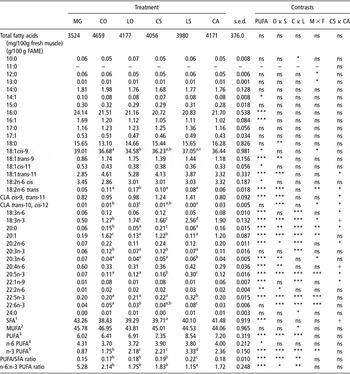
Fatty acid proportion of the neutral lipid fraction of intramuscular fat from m. longissimus dorsi
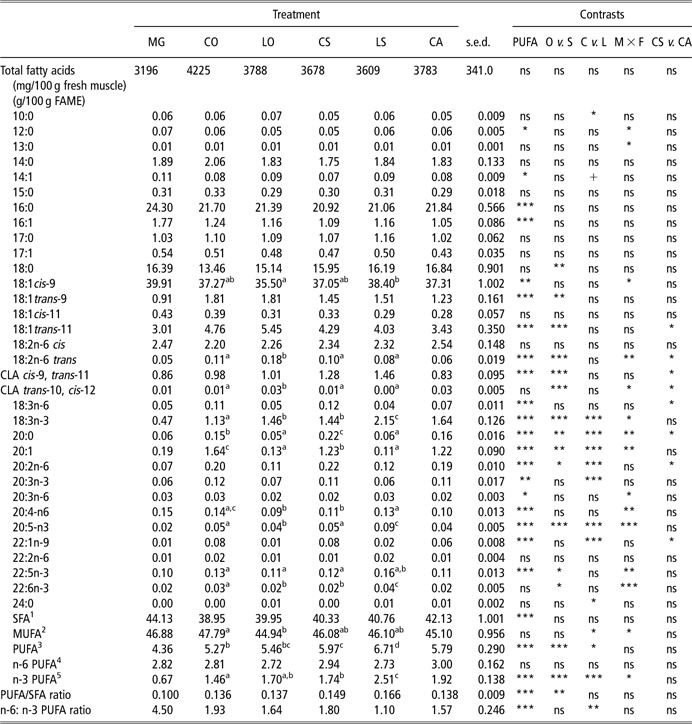
MG = megalac; CO = camelina oil; LO = linseed oil; CS = NaOH-treated camelina seeds; LS = NaOH-treated linseed; CA = camelina oil amide; O = oil; S = seed; C = camelina; L = linseed; M = method of feeding (oil or seed); F = fat source (camelina or linseed); FAME = fatty acid methyl esters; CLA = conjugated linoleic acid; SFA = saturated fatty acids; MUFA = monounsaturated fatty acids; PUFA = polyunsaturated fatty acids; ns = non-significant; P > 0.05; +, *, ** and *** refer to significance levels P < 0.1, <0.05, P < 0.01 and P < 0.001, respectively. For a significant M × F interaction, means with a common superscript do not differ (P < 0.05).
1SFA = sum of all even chain fatty acid up to 24:0+13:0, 15:0 and 17:0.
2MUFA = sum of 14:1, 16:1, 17:1, all 18:1, 20:1, 22:1 and 24:1.
3PUFA = sum of total n-6, total n-3, total CLA.
4n-6 PUFA = sum of 18:2n-6, 18:3n-6, 20:2, 20:3n-6, 20:4 and 22:2.
5n-3 PUFA = sum of 18:3n-3, 20:3n-3, 20:5, 22:5 and 22:6.
The NL from lambs offered the oil-based rations had a lower (P < 0.05) proportion of 18:0, cis-9, trans-11 CLA, 20:2n-6 (P < 0.01), PUFA and PUFA/SFA ratio and a higher (P < 0.05) proportion of trans-9 18:1 and trans-11 18:1 compared to lambs fed the NaOH-treated oilseeds-based rations. The NL from lambs fed the camelina-based rations had a higher (P < 0.05) proportion of 20:2n-6, 20:3n-3, 22:1n-9 and n-6: n-3 PUFA ratio and a lower (P < 0.05) proportion of 14:1 (P < 0.1) and PUFA compared to lambs fed the linseed-based rations. There was an interaction (P < 0.05) for the proportions of 18:1n-9, 20:4n-6, 20:5n-3, 22:5n-3 and 22:6n-3 (whereby LO tended to be lower than CO, but LS tended to be higher than CS) for 18:3n-3 and n-3 PUFA (such that the increase caused by feeding linseed was higher when it was fed as NaOH-treated seed than when it was fed as oil), for the proportion of 20:1 (whereby the decrease caused by feeding linseed was greater when it was fed as oil rather than as NaOH-treated seed) and for total MUFA (whereby LO was lower (P < 0.05) than CO, but LS and CS did not differ).
The proportions of trans-11 18:1, trans C18:2n-6, cis-9, trans-11 CLA, 20:0, 20:2n-6 and 22:1n-9 were lower (P < 0.05) in NL from lambs fed the CA ration compared to the CS ration.
Fatty acid composition of polar lipids (PL) in intramuscular fat
The total fatty acid concentration in PL did not differ between treatments. Compared to the MG ration, PL from animals fed the PUFA-rich rations had on average, a lower (P < 0.05) proportion of 16:0, 16:1, cis-9 18:1, cis-11 18:1, 20:3n-6, 20:4n-6, SFA, MUFA, n-6 PUFA and n-6: n-3 PUFA ratio and a higher (P < 0.05) proportion of 17:0, C18:0, trans-9 18:1, trans-11 18:1, cis-9, trans-11 CLA, 18:3n-3, 20:1, 20:2, 20:3n-3, 20:5n-3, 22:2n-6, 22:5n-3, PUFA, n-3 PUFA and PUFA/SFA ratio (Table 8).
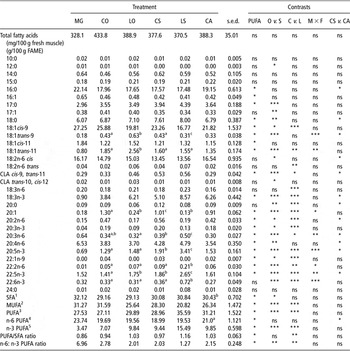
Fatty acid proportion of the polar lipid fraction of intramuscular fat from m. longissimus dorsi

MG = megalac; CO = camelina oil; LO = linseed oil; CS = NaOH-treated camelina seeds; LS = NaOH-treated linseed; CA = camelina oil amide; O = oil; S = seed; C = camelina; L = linseed; M = method of feeding (oil or seed); F = fat source (camelina or linseed); FAME = fatty acid methyl esters; CLA = conjugated linoleic acid; SFA = saturated fatty acids; MUFA = monounsaturated fatty acids; PUFA = polyunsaturated fatty acids; ns = non-significant, P > 0.05; +, *, ** and *** refer to significance levels P < 0.1, <0.05, P < 0.01 and P < 0.001, respectively. For a significant M × F interaction, means with a common superscript do not differ (P < 0.05).
1SFA = sum of all even chain fatty acid up to 24:0+13:0, 15:0 and 17:0.
2MUFA = sum of 14:1, 16:1, 17:1, all 18:1, 20:1, 22:1 and 24:1.
3PUFA = sum of total n-6, total n-3, total CLA.
4n-6 PUFA = sum of 18:2n-6, 18:3n-6, 20:2, 20:3n-6, 20:4 and 22:2.
5n-3 PUFA = sum of 18:3n-3, 20:3n-3, 20:5, 22:5 and 22:6.
The PL from lambs offered the oil-based rations had a lower (<0.05) proportion of 18:0, 18:3n-3, 20:0, 20:2n-6, 20:3n-3, 20:4n-6, SFA, PUFA and n-3 PUFA and a higher (P < 0.05) proportion of cis-9 18:1, 18:2n-6, 20:1, MUFA and n-6: n-3 PUFA compared to lambs fed the NaOH-treated oilseeds-based rations.
The PL from lambs fed the camelina-based rations had a higher (P < 0.05) proportion of cis-9 18:1, 20:0, 20:1, 20:2n-6, 20:3n-3, 22:1, MUFA and n-6: n-3 PUFA and a lower (P < 0.05) proportion of 18:3n-6, 18:3n-3, PUFA, n-3 PUFA and PUFA/SFA ratio compared to lambs fed the linseed-based rations. There was an interaction for the proportion of trans-9 18:1 (whereby LO was higher than CO but LS was lower than CS), for trans-11 18:1 (whereby LO was higher than CO but LS was similar to CS), for 20:1 (whereby CO was higher than LO but this difference was greater than that between LS and CS), for 20:3n-6, 20:5n-3, 22:2n-6 and 22:6n-6 (whereby there was no difference between CO and LO but LS was higher than CS) and for 22:5n-3 (whereby LO was higher than CO but this difference was greater between CS and LS).
The proportions of 18:0, trans-9 18:1, cis-9, trans-11 CLA, 20:0, 20:2n-6, 20:3n-6, 20:4n-6, 20:5n-3 and 22:5n-3 were lower (P < 0.05) and the proportions of 16:0, 18:2n-6, 18:3n-3 and n-6 PUFA were higher (P < 0.05) in PL from lambs fed the CA ration compared to the CS ration.
Fatty acid composition of SAT
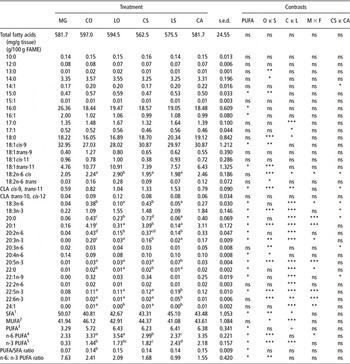
The total fatty acid concentration in SAT did not differ between treatments. Compared to the MG ration, animals fed the PUFA-rich rations had a lower (P < 0.05) proportion of 16:0, 16:1, cis-9 18:1, 20:4n-6, SFA and n-6: n-3 PUFA ratio and a higher (P < 0.05) proportion of trans-11 18:1, cis-9, trans-11 CLA, 18:3n-6, 18:3n-3, 20:0, 20:1, 20:2n-6, 20:3n-3, 20:5n-3, 22:1, 22:5n-3, PUFA, n-6 PUFA and PUFA/SFA ratio (Table 9).
Fatty acid proportion in the subcutaneous adipose tissue

MG = megalac; CO = camelina oil; LO = linseed oil; CS = NaOH-treated camelina seeds; LS = NaOH-treated linseed; CA = camelina oil amide; O = oil; S = seed; C = camelina; L = linseed; M = method of feeding (oil or seed); F = fat source (camelina or linseed); FAME = fatty acid methyl esters; CLA = conjugated linoleic acid; SFA = saturated fatty acids; MUFA = monounsaturated fatty acids; PUFA = polyunsaturated fatty acids; ns = non-significant, P > 0.05; +, *, ** and *** refer to significance levels P < 0.1, <0.05, P < 0.01 and P < 0.001, respectively. For a significant M × F interaction, means with a common superscript do not differ (P < 0.05).
1SFA = sum of all even chain fatty acid up to 24:0+13:0, 15:0 and 17:0.
2MUFA = sum of 14:1, 16:1, 17:1, all 18:1, 20:1, 22:1 and 24:1.
3PUFA = sum of total n-6, total n-3, total CLA.
4n-6 PUFA = sum of 18:2n-6, 18:3n-6, 20:2, 20:3n-6, 20:4 and 22:2.
5n-3 PUFA = sum of 18:3n-3, 20:3n-3, 20:5, 22:5 and 22:6.
The SAT from lambs offered the oil-based rations had a lower (P < 0.05) proportion of 18:0, cis-9 18:1, cis-9, trans-11 CLA, 18:3n-3, 20:4n-6, SFA and n-3 PUFA and a higher (P < 0.05) proportion of 14:0, 15:0, trans-11, 18:1 trans 18:2n-6, 20:3n-6 and MUFA compared to lambs fed the NaOH-treated oilseeds-based rations.
The SAT from lambs fed the camelina-based rations had a lower (P < 0.05) proportion of 18:0, cis-9, trans-11 CLA, 18:3n-3, SFA, PUFA (P < 0.1) and n-3 PUFA and a higher (P < 0.05) proportion of 20:2n-6, 22:1, 22:2 and MUFA compared to lambs fed the linseed-based rations. There was an interaction for the proportion of 18:2n-6 (whereby LO was higher than CO but there was no difference between CS and LS), for 18:3n-6 and 20:0 (whereby CS tended to be higher than CO but LS tended to be lower than LO), for 20:1 and 20:3n-3 (whereby the difference was greater for the oil-based rations), for 20:5n-3, 22:5n-3 and 22:6n-3 (whereby there was no difference between CO and LO but LS was higher than CS) and for n-6 PUFA (whereby there was no difference between CO and LO but LS was lower than CS).
The proportions of 14:1, 18:2n-6, 18:3n-3, 20:3n-6 and n-3 PUFA were higher (P < 0.05) and the proportions of cis-9, trans-11 CLA, 18:3n-6 and 22:1n-9 were lower (P < 0.05) in SAT from lambs fed the CA ration compared to the CS ration.
Discussion
Camelina sativa is a summer annual oilseed plant of the genus Cruciferae that grows well in temperate climates and has lower costs of production than other oilseed plants such as rapeseed (Crowley and Fröhlich, Reference Crowley and Fröhlich1998). Averaged across several varieties, CO contained approximately 16.5% linoleic acid and 39% linolenic acid (Crowley and Fröhlich, Reference Crowley and Fröhlich1998), making CO an attractive alternative source of n-3 PUFA to LO in both human and animal nutrition. Moreover, as there is increasing interest in CO as a feedstock for biodiesel production, an increase in the availability of both the oil and co-products is likely to occur (Fröhlich and Rice, Reference Fröhlich and Rice2005). As there are no reports on the effects of CO on the fatty acid composition of ruminant tissue, the main objective of this study was to compare camelina and LS in both oil and seed form relative to a non-PUFA-rich (isolipid) control ration. To avoid passage through the gastrointestinal tract, undamaged seeds were treated with NaOH since this is a procedure that can be used readily on the farm and Kirkland et al. (Reference Kirkland, Scaife and Goodwill1998) showed that NaOH treatment of LSs could increase the C18:3n-3 proportion of milk. The efficacy of amides of camelina fatty acids as a ruminal protection strategy was also examined as the potential of this strategy has been demonstrated for soybean (Jenkins and Bridges, Reference Jenkins and Bridges2007). The oil from the camelina seeds had a similar fatty acid composition to that reported by Crowley and Fröhlich (Reference Crowley and Fröhlich1998), which was expected, as the camelina was grown under similar environmental and agronomic conditions. The CO as used, was cold-pressed approximately 9 months before the commencement of the experiment and stored in a sealed opaque container at ambient temperature. Previous studies had shown that little oxidation occurs under these storage conditions (Crowley and Fröhlich, Reference Crowley and Fröhlich1998). Nevertheless, there was a small loss of 18:3n-3 due to storage of the oil as described above (32.1 v. 39.5 g/100 g fatty acid methyl esters for oil and seeds, respectively). The LSs and LO were from different suppliers but had a similar fatty acid composition. The apparent increase in SFA due to NaOH treatment of whole seeds can be also inferred in the data of Aldrich et al. (Reference Aldrich, Merchen, Drackley, Gonzalez, Fahey and Berger1997) in which total fatty acid consumption from rations based on crushed canola oil- and NaOH-treated seeds was similar, but SFA consumption tended to be higher from the latter ration. The intention was to formulate rations to the same oil concentration. While this was successful for MG, CS, LS and CA, the oil concentration in CO and LO was similar but higher than intended despite measuring the oil concentration in the seeds in advance of ration manufacture. The comparison of oil- and NaOH-treated seeds may be confounded to some extent by this difference. The CP concentration of MG, CO, LO, CS and LS was similar as intended. Owing to the uncertainty about the ruminal degradability and tissue metabolism of the nitrogen in the camelina amides, it was decided not to make the other rations isonitrogenous with CA. Comparison of CS and CA therefore incorporates differences in CP as part of the method of protection.
Apparent total tract digestibility was measured to determine the effectiveness of the chemical treatments. The digestibility of organic matter from the NaOH-treated oilseed rations was close to that of the corresponding oil-based rations (97% and 95% of that observed for CO and LO, respectively), indicating that the NaOH treatment was moderately effective. Nevertheless, this difference was reflected in higher carcass weights for the oil-based rations. In contrast, the lower oil digestibility of the LS ration (54% that of LO) suggests that the NaOH treatment as used in this study was not sufficient to ensure complete digestion. The higher CP digestibility in the CA ration may reflect the higher CP consumption due to the addition of the amide bond and/or differences in ruminal degradability. Similarly, the higher DOMD may reflect the higher consumption of digestible organic matter and lower consumption of NDF by animals offered the CA ration compared to those offered the CS ration. The lack of effect of the ethanolamine treatment on DM and NDF digestibility contrasts with the decreases reported by Jenkins (Reference Jenkins1997) due to similar treatment of soybean oil.
We have no explanation as to why the weight of liver was lower from animals offered the LS ration compared to the LO ration. The larger kidney and liver in animals offered the CA ration compared to the CS (or CO) ration may reflect the greater detoxification of ammonia in these animals due to the greater CP consumption. Support for this suggestion is found in Smith et al. (Reference Smith, Love, Durdle, Hatfield, Garrigus and Neumann1964) who observed heavier livers in lambs chronically fed urea in addition to soybean and merits further study.
In this experiment, total fatty acid concentration in muscle was similar across treatments, as planned. This result was desirable as an increase in intramuscular fat is generally accompanied by a decrease in the SFA and PUFA proportions and an increase in the MUFA proportion in intramuscular lipid (Moreno et al., Reference Moreno, Keane, Noci and Moloney2008). Thus, differences in total fatness or total intramuscular fat confound the effects of dietary PUFA on the fatty acid profile of muscle.
The efficacy of linseed as oil or extruded/damaged seeds in modifying the fatty acid composition of ruminant fat has been examined in several studies in sheep. When compared with studies that included a non-PUFA supplemented (isolipid) control ration, the results of this study are broadly similar to the literature, that is, a 3-fold increase in the proportion of 18:3n-3 in muscle lipids (e.g. Wachira et al., Reference Wachira, Sinclair, Wilkinson, Enser, Wood and Fisher2002; Bas et al., Reference Bas, Bertholet, Pottier and Normand2007). Similarly, 18:3n-3 was found in greater proportions in the muscle PL fraction than in the NL fraction and at a level similar to that reported by Cooper et al. (Reference Cooper, Sinclair, Wilkinson, Hallett, Enser and Wood2004) for lambs fed high concentrate rations. The effect of LO inclusion in this study on the 18:3n-3 proportion of the muscle PL fraction was greater than that observed by Demirel et al. (Reference Demirel, Wachira, Sinclair, Wilkinson, Wood and Enser2004a), which reflected the high concentration of forage used in the latter study.
To our knowledge, the effect of camelina on the fatty acid composition of sheep tissue has not been reported. Muscle from lambs offered the camelina oil-based ration had a higher content of long chain MUFA, in particular 20:1, a similar proportion of 18:2n-6, and a lower proportion of 18:3n-3 and n-3 PUFA and a tendency toward a higher n-6: n-3 PUFA ratio than the LO-based treatment, which largely reflected the fatty acid composition of the rations. In general, a diet with a low n-6: n-3 PUFA ratio is reflected in a low n-6: n-3 PUFA ratio in intramuscular fat and SAT despite the rumen biohydrogenation of dietary fatty acids.
An increase in the MUFA of milk fatty acids was reported by Hurtaud and Peyraud (Reference Hurtaud and Peyraud2007) due to the inclusion of camelina seeds or meal in the ration of dairy cows. However, 20:1 was not reported. Peiretti et al. (Reference Peiretti, Mussa, Prola and Meinori2007) also observed an increase in rabbit muscle perirenal adipose tissue 20:1 proportion due to dietary inclusion of pelleted camelina seeds. In this study, the proportion of 20:1 was higher in SAT, followed by muscle NL and PL fractions. This was unexpected given that long chain fatty acids tend to be associated more with the PL fraction than the triacylglycerol fractions (Noci et al., Reference Noci, French, Monahan and Moloney2007). While the proportion of 20:0 was higher in the tissue of lambs offered the camelina-based rations compared to the linseed-based rations, the levels were smaller than 20:1, suggesting that a considerable proportion of dietary 20:1 escaped ruminal biohydrogenation. The presence of 20:1 in feces from lambs offered the camelina-based rations also suggests that a proportion of this fatty acid escaped absorption for the small intestine. In contrast to tissue, the higher proportion of 20:0 compared to 20:1 in feces of lambs offered the camelina-based rations suggests that biohydrogenation occured in the large intestine.
In this study, feeding seeds treated with NaOH was a more effective method than feeding unprotected oil in enhancing the incorporation of PUFA in the muscle NL, PL and SAT, indicating the protection of oil by the chemically disrupted seed coat. However, the scale of increase in muscle PL in 18:3n-3 (1.33 and 1.38-fold for camelina and linseed, respectively) and 18:2n-6 (0.91 and 0.90-fold for camelina and linseed, respectively) suggests that modest ruminal protection was achieved. For logistical reasons, amide formation using ethanolamine as a means of ruminal protection was evaluated only with camelina and this approach was more effective than the NaOH-treatment of seeds (an increase in 18:3n-3 of 1.63 and 1.33 in muscle PL for CA and CS, respectively, compared to CO with corresponding values of 1.12 and 0.91 for 18:2n-2). There are no comparable data available for lamb muscle but Jenkins and Thies (Reference Jenkins and Thies1997) observed a 1.24-fold increase in sheep plasma 18:2n-6 concentration when soybean oil was replaced with ethanolamine-treated soybean oil.
Of the protection approaches examined, the most effective seems to be the encapsulation of oil in a matrix of formaldehyde-treated protein (e.g. Kitessa et al., Reference Kitessa, Gulati, Ashes, Scott and Fleck2001). Kitessa et al. (Reference Kitessa, Williams, Gulati, Boghossian, Reynolds and Pearce2009) applied this technology to a ground soybean/LO mixture (70:30) and observed a 1.82-fold increase in lamb muscle 18:3n-3 proportion compared to a non-lipid-supplemented control ration. This compares to a 1.50-fold increase for CA compared to CO and 1.47-fold increase for LS compared to LO in total muscle in this study. However, compared to the control ration in this study, increases of 3.8-fold for CA and 5.1-fold for LS were observed. The differences between these studies likely reflect differences in 18:3n-3 intake among other confounding factors and the absence of a direct comparison made the drawing of definite conclusions on the different protection technologies impossible.
The lack of an increase in 18:2n-6 in muscle NL, PL or SAT due to NaOH-treatment of either linseeds or camelina seeds was unexpected considering the increase in 18:3n-3. Kirkland et al. (Reference Kirkland, Scaife and Goodwill1998) similarly observed no increase in milk 18:2n-6 despite an increase in 18:3n-3 due to the consumption of NaOH-treated linseed. This may reflect a different structural arrangement of these fatty acids within the seeds but could be viewed as a positive effect contributing to the decrease in n-6: n-3 PUFA ratio observed due to NaOH-treated seed feeding. In contrast, treatment with ethanolamine also increased the proportion of 18:2n-6 in all tissues examined consistent with plasma data of Jenkins and Thies (Reference Jenkins and Thies1997) from sheep fed ethanolamine-treated soybean oil.
While linseed is considered the major plant source of 18:3n-3, these data demonstrate the potential of camelina as a means of enhancing the n-3 PUFA content of muscle. The observation of an increase in the proportion of longer carbon chain n-3 PUFA with an increase in 18:3n-3 supply (and absorption) is consistent with the literature (e.g. Wachira et al., Reference Wachira, Sinclair, Wilkinson, Enser, Wood and Fisher2002; Demirel et al., Reference Demirel, Wachira, Sinclair, Wilkinson, Wood and Enser2004a; Kitessa et al., Reference Kitessa, Williams, Gulati, Boghossian, Reynolds and Pearce2009). Nevertheless, the proportion of longer chain n-3 PUFA remains relatively low, particularly from a human consumption perspective. Thus, a 100 g serving of lamb from MG, CO, LO, CS, LS and CA would supply 13, 23, 18, 23, 31 and 19 mg long chain n-3 PUFA, respectively. The corresponding supply of 18:3n-3 would be 18, 59, 73, 67, 102 and 79 mg, respectively. These data can be viewed in the context of proposed labeling reference intake values for humans of 2 g and 250 mg/day for 18:3n-3 and EPA plus DHA (eicosapentaenoic acid and docosahexaenoic acid), respectively (European Food Safety Authority (EFSA), 2009).
Ruminant fat is the main dietary source of cis-9, trans-11 CLA (Chin et al., Reference Chin, Liu, Storkson, Ha and Pariza1992), which has a number of beneficial health effects (Pariza et al., Reference Pariza, Park and Cook2001). Cis-9, trans-11 CLA is produced in the rumen by incomplete biohydrogenation of dietary 18:2n-6 but is also synthesized in adipose tissue by desaturation of trans-11 18:1 produced during ruminal biohydrogenation of 18:2n-6 and 18:3n-3 (Griinari et al., Reference Griinari, Corl, Lacy, Chouinard, Nurmela and Bauman2000). Thus, Santora et al. (Reference Santora, Palmquist and Roehrig2000) reported 51% conversion of available trans-11 18:1 to cis-9, trans-11 CLA in mice. An increase in lamb muscle cis-9, trans-11 CLA concentration, with particular enrichment of the NL fraction, due to consumption of plant oils rich in PUFA is a consistent finding in the literature with oils rich in 18:2n-6 being more effective than those rich in 18:3n-3 (e.g. Mir et al., Reference Mir, Rushfeldt, Mir, Paterson and Weselake2000; Bessa et al., Reference Bessa, Alves, Jeronimo, Alfaia, Prates and Santos-Silva2007).
In this study, a similar amount of 18:2n-6 for direct ruminal synthesis of cis-9, trans-11 CLA, but smaller amounts of 18:3n-3 for indirect synthesis of cis-9, trans-11 CLA via tissue desaturation of ruminally derived trans-11 18:1 (Griinari et al., Reference Griinari, Corl, Lacy, Chouinard, Nurmela and Bauman2000) was supplied by camelina compared to linseed. We hypothesized, therefore, that the concentration of cis-9, trans-11 CLA would be higher in lambs fed the linseed-based rations and the results support the hypothesis that an increase in the availability of 18:3n-3 can enhance the proportion of cis-9, trans-11 CLA in muscle and adipose tissues. Raes et al. (Reference Raes, Haak, Balcaen, Claeys, Demeyer and De Smet2004) also observed an increase in bovine muscle cis-9, trans-11 CLA concentration due to linseed feeding at a constant 18:2n-6 consumption. Wachira et al. (Reference Wachira, Sinclair, Wilkinson, Enser, Wood and Fisher2002) found a 1.55-fold increase in the concentration of cis-9, trans-11 CLA in NL of muscle from lambs fed an linseed-based diet compared to the control diet (3.5% MG), while Demirel et al. (Reference Demirel, Wood and Enser2004b) observed a 1.68-fold increase in total intramuscular lipid, both findings being somewhat higher than that observed in this study.
If ruminal protection of dietary PUFA is efficient, a decrease in biohydrogenation intermediates would be expected as was seen by Scollan et al. (Reference Scollan, Enser, Gulati, Richardson and Wood2003) who used the aldehyde/protein technology. This was the case with ethanolamine-treated CO, that is, a decrease in cis-9, trans-11 CLA and trans-11 18:1. A decrease in cis-9, trans-11 CLA was also observed by Lundy et al. (Reference Lundy, Block, Bridges, Bertrand and Jenkins2004) in milk from cows due to feeding soybean oil amides rather than free oil. In contrast, the greater accumulation of cis-9, trans-11 CLA at the expense of trans-11 18:1 due to NaOH-treatment of seeds in this study indicates a decrease in the rate of biohydrogenation of 18:2n-6 and/or an increase in the extent of tissue desaturation. A possible explanation for the former hypothesis is likely the shorter time available to rumen micro-organisms to hydrogenate 18:2n-6 as they must digest and penetrate the NaOH-treated seed coat before the seeds leave the rumen. If this occurred, an increase in tissue 18:2n-6 would be expected that was not observed. Alternatively, the NaOH-treatment of seeds as carried out in this study may cause an inhibition of the hydrogenation of cis-9, trans-11 CLA per se. Owing to the positive influence on tissue CLA, this issue merits further investigation.
Epidemiological associations between the risk of coronary heart disease and the consumption of trans-PUFA has focused attention on their concentration in food products. Under the analytical procedure used in this study, trans-9 18:1 and trans-11 18:1 were the main trans fatty acids detected. While the proportion of both was elevated due to oil supplementation, trans-11 18:1 represented on average 73% of total trans-PUFA and this proportion was not affected by treatment. Jakobsen et al. (Reference Jakobsen, Overvad, Dyerberg and Heitmann2008) recently concluded that the consumption of ruminant trans-fatty acids does not pose a risk to human health most likely due to the high proportion of trans-11 18:1 in ruminant derived foods, as seen in this study.
Conclusions
The results of this experiment confirm the considerable influence of dietary fatty acid composition on the fatty acid composition of muscle and adipose tissue, despite extensive biohydrogenation in the rumen. Providing a fat source rich in 18:3n-3, such as linseed, caused a desirable increase in the proportion of cis-9, trans-11 CLA in muscle and SAT, while also contributing to a decrease in the n-6: n-3 PUFA ratio. The novel alternative source of 18:3n-3, Camelina sativa was also effective in this regard. Treatment of intact seeds with NaOH achieved some ruminal protection of PUFA and increased the incorporation of cis-9, trans-11 CLA in both intramuscular fat and SAT. Ethanolamine treatment of CO was a more effective protection strategy than NaOH-treatment of intact camelina seeds but consequently resulted in a lower proportion of cis-9, trans-11 CLA in tissue.
Acknowledgments
The assistance of the late Dr Jim Crowley (Oak Park Research Centre) in providing the CO and seeds is gratefully acknowledged. The technical assistance of V. McHugh and A. Marron (Grange Beef Research Centre) and E. Vesey (Ashtown Food Research Centre) is also acknowledged, as is the assistance of P. McGovern with the care of the animals.