Introduction
Physicians have 2 major purposes in the treatment process of infectious diseases. The first is to treat the disease while the second is to prevent the contagion of the microorganisms from spreading to other individuals. These 2 purposes cannot be separated from each other with a clearly defined line, because eliminating the contagion by exterminating the microorganisms in a patient during the early period is also the most basic step to help protect society. Reference Nahid, Dorman and Alipanah1
The most essential parameter that enables health workers to provide successful treatment and care is that the patient adheres to the treatment. Patient adherence to medication regimens and the outcome of this compliance to treatment has been observed since Hippocrates’ time. Reference Walsh, Mandalia and Gazzard2
In many chronic or infectious diseases, many situations where patients did not continue their treatment were revealed in the literature, and there are 2 basic terms featured in the research nomenclature. The first, a long debated topic in medicine, is discharge against medical advice (DAMA), or patient refusal of continued care. Reference Hadadi, Khashayar, Karbakhsh and Vasheghani Farahani3 Four main reasons have been classified for patients who do not continue treatment, especially in hospitalization Reference Albayati, Douedi and Alshami4 : (1) reasons caused by patients themselves, (2) reasons caused by the environment, (3) reasons related to the treatment provided, and (4) reasons caused by procedures/policies administered for treatment. When the studies were reviewed, it was concluded that this situation is more often evaluated as “DAMA” rather than “treatment rejection.” It has been observed that many studies conducted using this nomenclature are mostly cases of patients who did not accept surgical treatment and who left the hospital.
The second term is medication nonadherence (MNA) and is a situation where the patient does not use the treatment that has been provided by a physician. The term adherence, although it has a comprehensive definition, can be defined as the level to which patient behavior (in terms of taking medication, following a diet, changing habits, or going to clinics) aligns with medical or health advice. Reference Haynes, McDonald and Garg5 While examining the causes of MNA, it is noteworthy to mention that research has been carried out on separate groups specific to a disease. For instance, in 1 study concerning tuberculosis, it was revealed that many factors, such as the severity of symptoms, access to medical care, number of medications and their side effects, availability and cost of medications, dosing frequency, and duration of treatment, were adequate reasons for a patient not to continue the treatment prescribed by the physician. Reference Hadadi, Khashayar, Karbakhsh and Vasheghani Farahani3 Tuberculosis is similar to the coronavirus disease (COVID-19) pandemic in terms of being a contagious disease and, therefore, the protection of society is required. However, since the concept of MNA is mostly seen with chronic diseases that have long-term treatment protocols, such as tuberculosis, a different concept is required for COVID-19. Although there is no clear terminology, both of these situations are a global public health problem. This nonadherence to medical advice by patients causes negative economic and social effects and places a large responsibility on the health care system. Reference Southern, Nahvi and Arnsten6
While the concepts of improving the care that is provided and increasing patient adherence were still being discussed, in December 2019, a severe mRNA virus, severe acute respiratory syndrome coronavirus 2 (SARS-CoV-2), infected millions of people around the world and soon after became a worldwide pandemic. Reference Lu, Zhao and Li7,Reference Ak, Kurt and Bahadirli8 After SARS and the Middle East respiratory syndrome (MERS), COVID-19 is the third respiratory epidemic caused by a coronavirus. Although COVID-19 is genomically similar to the other 2, its different genomic sequences have created significant differences in transmission and mortality when compared to the other two. Reference Lu, Zhao and Li7 Since a clear, specific, and effective treatment protocol has not yet been established for SARS or MERS, the scientific community has now united in a search for new therapeutic and preventive solutions for the COVID-19 pandemic.
Treatment priorities have been divided into 2; first, to reuse already approved pharmacological agents, and second, to develop new treatments to reduce the morbidity and mortality associated with the rapidly spreading virus. Reference Izda, Jeffries and Sawalha9 Although studies continue, no specific treatment has been developed for SARS-CoV-2. A lack of specific treatment has required the use of general clinical infrastructure as well as treatments, the effects, and benefits of which cannot be clearly demonstrated with COVID-19. Although different treatment protocols are utilised by different countries around the world, antibiotics, antivirals, and antimalarial medications are being practiced in large patient populations. Reference Chakraborty, Sharma and Sharma10
During the early period of the pandemic, 3 medications became prominent, claiming to have antiviral efficacy in treatment protocols around the world and in Turkey. These are Hydroxychloroquine (HCQ), Favipiravir, and Azithromycin. During the early period of the pandemic, in particular, HCQ, known as an antimalarial, was being studied and it was claimed that it could be used against COVID-19 based on its in vitro antiviral effect. The advocacy of its effectiveness in treatment against the virus led it to be used by a large number of people who had not yet received treatment advice. Reference Meo, Klonoff and Akram11 After this, as HCQ was becoming more widely used, randomized trials began, which provided evidence that HCQ had no provable positive effect against COVID-19. Furthermore, in a study conducted with a group of non-hospitalized patients, it was found that HCQ did not reduce viral levels in the course of the disease and that, additionally, there was no decrease in the rate of hospitalization or reduction of symptoms in the users of the medication. Reference Reis, Moreira Silva and Medeiros Silva12 As this period continued, the number of studies that provided further negative outcomes increased. A few randomized studies argued that it had no effect on mortality or any other clinical benefits for either hospitalized or home-monitored COVID-19 patients. These even went so far as to argue that HCQ would actually have a negative rather than a positive effect on mortality. Reference Self, Semler and Leither13,Reference Tang, Cao and Han14
At the beginning of the pandemic, the combination of HCQ and Azithromycin also drew attention as agents having antiviral activity. However, studies have failed to demonstrate any clinical benefit for COVID-19 patients, including outpatients. It was determined that the combined use of these 2 medications in the very early period showed neither the expected efficacy nor the potentiation of side effects for each other. This combination was also removed from the COVID-19 treatment protocols throughout the world. 15
Another prominent medication protocol was to use Favipiravir as an antiviral. Favipiravir is an RNA-dependent RNA polymerase inhibitor marketed in Japan (Avigan) and China (Favilavir) as second-line therapy for new or re-emerging influenza epidemics. 16 In early 2020, it was reported that Vero E6 cells showed antiviral activity against SARS-CoV-2 and provided a shorter viral clearance time in COVID-19 patients. Reference Wang, Cao and Zhang17
A nonrandomized study conducted in China showed a median viral clearance of 4 days for Favipiravir versus 11 days for Lopinavir/Ritonavir. Reference Cai, Yang and Liu18 It managed to attract the attention of national treatment protocols around the world, especially since it shortened the disease period, and the World Health Organization listed Favipiravir as an experimental treatment candidate (broad-spectrum antiviral). 19
When the national treatment guidelines (published in March 2021) are compared with previous guidelines, we can clearly see the effect that the COVID-19 pandemic had on treatment protocols in Turkey; treatment instructions were developed, Favipiravir and Corticosteroid treatment instructions were created for the first time, and not prescribing HCQ pre-exposure prophylaxis was stated, since there was no evidence on its efficacy. Reference Yılmaz20 However, prior to this period, HCQ had been recommended for each diagnosed patient, regardless of the patient’s clinical status.
This research study will determine the effects caused by the dynamic changes in treatment protocols that were utilised during the pandemic on hesitancy regarding medical advice. We will reveal the effects of the rapid changes in prevention, diagnosis, and treatment instructions on patients, physicians, and treatment reliability during the pandemic. Moreover, we will also explain the medical treatments that have been advised by physicians during the pandemic, their point of view at that time, and the opinions concerning participation by the patients themselves.
Methods
Participants
In this study, qualitative data were collected regarding the opinions of patients who were diagnosed with COVID-19 but who did not use medications; the research follows the case study method. During the pandemic, people who were diagnosed with COVID-19 and who did not use the medication that was included in the COVID-19 guidelines were contacted through social media networks, and the opinions were recorded of the volunteer participants who met the criteria.
All 103 participants were diagnosed with COVID-19, which was confirmed by an Rt-PCR (reverse transcription-polymerase chain reaction) test and recovered from the disease at home without hospitalization. Participants experienced COVID-19 at various times, starting from the official announcement of the pandemic in Turkey in March 2020, up to the present day. For their treatment of COVID-19, medication with Favipiravir and HCQ active ingredients, which were included as antiviral treatments in the national guidelines of the Turkish Ministry of Health, was prescribed by the physicians who diagnosed the participants. The participants who did not find it advantageous to use these 2 medications or their combination were selected for this study. The number of people who were diagnosed with COVID-19 and who did not use medication during the out-of-hospital treatment process is not known exactly. Research data were collected through qualitative data from volunteer participants in order to gain an in-depth understanding of treatment concerns. Written informed consent for publication was received from all participants.
Collecting Data
After obtaining ethical permission for the research (No: 2021-46451), the research data were collected through standardized interviews with qualitative research techniques during May 2021.
Analyzing Data
The data in the study were collected systematically in 4 stages through descriptive and inductive analyses. Reference Yıldırım and Şimşek21 These 4 stages include: (1) coding the data, (2) finding the themes, (3) organizing the codes and themes, and (4) defining and interpreting the findings. The first stage was to determine the themes, codes, and concepts related to the patient experience of not using medication during the pandemic. While creating these concepts, the research literature, shared content on social media, and expert opinions were utilized. The coding was conducted by collecting the expressions that most accurately described the concepts, which had been determined by expert opinion from the literature.
Analysis of Data Through the MAXQDA
While analyzing the research data, the MAXQDA 2020 qualitative analysis program was used. The interview transcripts were transferred to the MAXQDA 2020 program, after which the predetermined codes were coded 1 by 1 onto the texts, sub-code groups were then created, and themes were achieved within the code groups.
Visual Display of Results
The research data were grouped and visualized through the MAXQDA 2020 program. The relationships between codes and themes, the size of the relationships, the density of the relationships, and their intersections and co-occurrence were then compared using the code theory, code map, and code re-occurrence models. These models display the relationships between different codes and categories.
The code theory model focuses on codes and can display code, sub-codes, and themes. In the code map, all codes are displayed as if on a map. The more that 2 codes overlap (ie, the more similar they are in terms of their use in the data), the closer they are placed together on the map. The code re-occurrence model serves to visualize the co-occurrence of codes as a network structure.
In order to increase the reliability of the interpretation of the analyzed results (and with the consideration of expert opinion), the reliability of the study was calculated as 0.88 with the formula developed by Miles and Huberman (1994) Reference Miles and Huberman22 : Reliability = Number of agreements/Number of agreements + disagreement.
Results
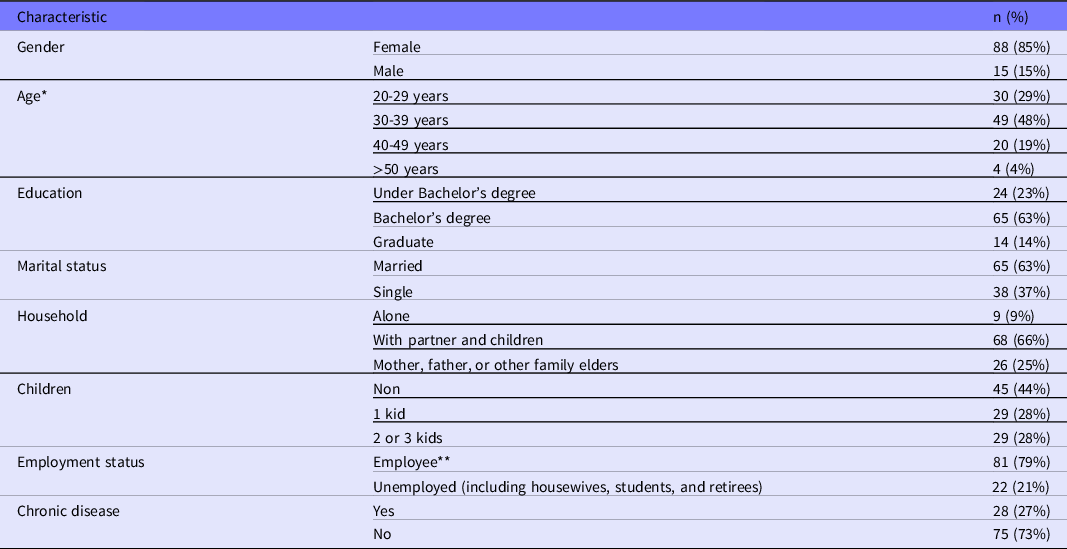
The characteristics of the 103 participants are presented in Table 1. The majority of the participants are women (85%) with the average age being 34. When looking at their educational background, 77% of them have a bachelor’s degree or higher, 63% are married, and 66% live in a household with a partner and children. The majority of the participants are living with older relatives and share the house with their family (91%); 56% of the participants have children. Those employed account for 81%; health care workers are also included in this group and are also the majority with 21%. The rate of participants who do not have any chronic disease is 73%. Those participants who had a chronic disease (familial Mediterranean fever, Hashimoto thyroiditis, asthma, cardiovascular disease, diabetes mellitus, hyperthyroidism, hypothyroidism, hypertension, ulcerative colitis) stated that they used their necessary medication and regularly followed their prescriptions.
Characteristics of participants (n = 103)

* Mean = 34; **Includes health workers (n = 16, 21%).
There were 97 participants (94%) who stated that they did not take medication and did not recommend taking medication to others. Only six (6%) stated that they did not take medication, but did not share this information with others.
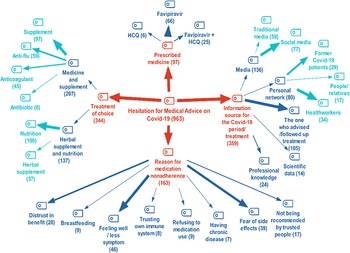
In this study, the participants were asked about which medication had been advised to them during their experience with COVID-19, when they had been diagnosed, how they had been informed, the reasons for not taking the prescribed medications, and any alternative types of treatment they preferred. The themes and codes were then created in line with their answers. Figure 1, the code-theory model, shows the themes, codes, and sub-codes obtained from an analysis of the transcripts that were organized according to our analytical framework. In the code-theory model, there are 4 themes: Prescribed Medicine, Information Source for COVID-19 Treatment, Reasons for Medication Nonadherence, and Treatment of Choice. There are 18 codes and 11 sub-codes under the themes. The frequency and percentages of each are also presented along with the codes under each theme, which can be seen in the model. The thickness of the lines in the model shows the frequencies of the codes and the sub-codes themselves. The codes that stand out in the model with most frequency include: Favipiravir; the ones who advised/followed up treatment; media; personal network; fear of side effects; feeling well/less symptoms; distrust in benefits; supplements; anti-flu; and nutrition. Explanations of the codes and sub-codes are provided below, under each theme.
The code-theory model-distribution of themes, codes, and sub-codes.

Theme 1: Prescribed Medicine
The frequency of the code for this theme is 97. Favipiravir was prescribed for 66 (68%) participants; Favipiravir+HCQ (26%) for 25; and HCQ (6%) for 6 participants. Of the remaining 6 participants, 4 stated that they had not taken the medicine prescribed because they were breastfeeding, 2 did not name the medicine that was prescribed and stated that they had not taken the medicine because there were other COVID-19 patients at home.
Theme 2: Information Source for COVID-19 Period/Treatment
The participants stated that they were informed about the disease and its treatment from various people and sources during the COVID-19 pandemic. The code frequency for this theme is 359. The frequency for the codes under this theme includes those who advised/followed up treatment: 105 (29%); personal network, 80 (22%); scientific data, 14 (4%); media, 136 (38%); and professional knowledge, 24 (7%). The individuals who are described under the code as those who advised/followed up treatment include the doctor who prescribes the medication, the filiation team who delivers medication to residents, the family physician who monitors the patient during this time, and the provincial health directorate officials. Included under the code, scientific data, the participants stated that they had read scientific articles. The code, professional knowledge, had been expressed by health professionals and other related employees who had gained information due to their profession. The personal network code includes the sub-codes: health workers, 34 (43%); former COVID-19 patients, 29 (36%); and people/relatives, 17 (21%). In the sub-code of the health workers, the participants described health workers who were friends or relatives in their own personal network, and not those who directly initiated or followed up treatment. In the sub-code, former COVID-19 patients, they described people who had had the disease and gained knowledge through the experience of those individuals. In the sub-code of people/relatives, the information obtained from the immediate environment of the patient was expressed. The sub-codes that were repeated within the code of media were traditional media, 59 (43%), and social media, 77 (57%). The traditional media sub-code includes TV channels, newspapers, and news websites. The social media sub-code includes social networks that offer digital and individual interaction opportunities, disease information, and patient experience sharing groups; examples include Twitter, Facebook, and Instagram.
Theme 3: Reason for Medication Nonadherence
The code frequency for this theme is 163 and, in accordance with the responses from the participants, 8 codes regarding not taking medication were determined. The most frequently repeated codes were feeling well/less symptoms, 46 (28%); fear of side effects, 39 (24%); and distrust in benefits, 28 (17%). Other less common codes included not being recommended by trusted people, 17 (10%); refusing to use medication, 9 (6%); breastfeeding, 9 (6%); trusting one’s own immune system, 8 (5%); and having a chronic disease, 7 (4%). The participants repeatedly stated in the code, feeling well/less symptoms, that they thought they had fewer and milder symptoms compared to those around them and that they felt better. It had been stated under the code of fear of side effects that participants thought those who took the medication would become worse and that the medication could cause other problems or allergic reactions. Under the code of distrust in benefits, participants thought that the medication did not work, based on their observations of others who had taken it and that the medication would not be effective because it was not produced specifically for the treatment of COVID-19. Other participants stated that they did not use the medication because the people they trusted (due to their personal and professional knowledge) did not recommend it. In the code, refusing to use medication, participants stated that they generally did not like or prefer to take medication. In the breastfeeding code, mothers stated that they did not think that using the medication was suitable during breastfeeding. Under the code, trusting one’s own immune system, participants stated that they believed their bodies to be strong, they did not often become sick, and that they thought they could recover from the disease without medication. In the code, having a chronic disease, the participants stated that they did not believe the use of the medication was appropriate due to their existing chronic diseases.
Theme 4: Treatment of Choice
Participants utilized various treatment methods of their own choice to cope with the COVID-19 disease. The code frequency for this theme is 344. There are two codes under this theme: medicine and supplements, 207 (60%), and herbal supplements and nutrition, 137 (40%). The sub-codes under the code of medicine and supplements are listed in order of frequency: supplement, 97 (47%); anti-flu, 59 (29%); anticoagulant, 45 (22%); and antibiotic, 6 (3%). Under the sub-code of supplement, vitamin group supplements such as vitamins C, D, B, and multivitamin, as well as mineral group supplements such as zinc and magnesium, were consumed. The 2 sub-codes under the code, herbal supplements and nutrition, include herbal supplement, 37 (27%), and nutrition, 100 (73%). The participants under the sub-code of nutrition stated that they had paid special attention to their nutrition while they had the disease, which included concepts such as protein-based diets, regular consumption of vegetables and fruits, adequate water or fluid intake, balanced diets, and healthy nutrition. Details about the sub-code of herbal supplement included steeped thyme, pine cone molasses, vinegar water, and ginger.
Intersection and Co-occurrence of Themes and Codes
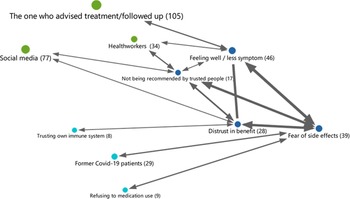
The intersection of themes and codes is seen in the code map in Figure 2. There is a strong relationship between the codes, fear of side effects from the medication (which was stated as a reason for not taking the medication in the code map), distrust in benefits of the medication, feeling well/less symptoms, and the medication not being recommended by trusted people. Among these codes, there is a strong relationship between the sub-code of social media (under the theme, Information Source for the COVID-19 Treatment) and the sub-code of health workers (under the code, personnel network) and the code, not being recommended by trusted people (which was provided under the theme, Reason for Medication Nonadherence). Similarly, the code of distrust in benefits and the sub-code of being informed on social media are related. The codes of distrust in benefits and trusting one’s own immune system are also related. The codes of fear of side effects and refusing to use medication (which were both stated under the theme of Reason for Medication Nonadherence) are related. There is a relationship between the code of fear of side effects and the sub-code of former COVID-19 patients. The code, feeling well/less symptoms (also mentioned under the theme of Reason for Medication Nonadherence by patients diagnosed with COVID-19), is also related to the (1) sub-code of health workers and (2) code of the ones who advised/followed up treatment, both of which are under the theme of Information Source for COVID-19 Treatment.
Code map/the intersection of themes and codes.

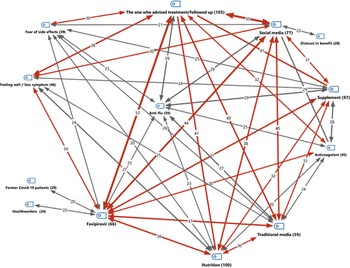
The code, co-occurrence model, which shows the co-occurrence of codes under the 4 main themes that arose in the research, can be seen in Figure 3. Each code individually has higher frequencies than are shown in the previous figure; however, this model presents the data according to the frequency of co-occurrence. In this model, 20 is accepted as the lowest frequency value. In addition, the thickness of the connection lines increases as the frequency increases, with the frequency number being located on each line. Frequency connections of 30 and above are colored red. In the model, the most common sub-codes within the theme of Treatment of Choice are nutrition+supplement, 23 anti-flu+supplement, Reference Shapiro, Tatar and Dube24 and anticoagulant+anti-flu. Reference McDonald, Garg and Haynes25 The code, fear of side effects, which is provided under the theme of Reason for Medication Nonadherence, is mostly seen together with the sub-codes of supplement Reference McDonald, Garg and Haynes25 and anti-flu. Reference Sørensen, Van den Broucke and Fullam26 The sub-codes that most often occur together in the Treatment of Choice are anti-flu+supplement Reference Shapiro, Tatar and Dube24 and anticoagulant+anti-flu. Reference McDonald, Garg and Haynes25 The code, Favipiravir (within the theme, Prescribed Medicine), is correlated with the code, the ones who advised/followed up treatment, Reference Bosworth, Granger and Mendys27 the sub-code social media, Reference Hugtenburg, Timmers and Elders28 and the sub-code traditional media, Reference Tamblyn, Eguale and Huang29 all of which are under the theme, Information Source for COVID-19 Treatment.
Co-occurrence model of codes/Co-occurrence of codes under 4 main themes.

Discussion
The process of determining a diagnosis and beginning treatment after the initial complaints of the patient is based on strong communication between the patient and the physician regarding the disease. According to Aristotle, the most important factor that increases the power of communication between individuals is persuasion. Reference Sørensen, Van den Broucke and Fullam26 The basis of persuasion lies in 3 important factors: logos, pathos, and ethos. If we examine patient-physician communication on the basis of persuasion by Aristotle, then ethos would be the credibility and prestige of the physician, that is, the person who makes the diagnosis, starts the treatment, and monitors the disease. Logos, would be explained as the statistics and facts that convince patients as to why they should take the treatment; this information should be based on a solid scientific infrastructure, have scientific proofs, and appeal to the logic of the patient. Pathos, on the other hand, would be the concept that strengthens patient-physician communication through effective empathy. As can be seen, the most important component of these 3 concepts in treatment-oriented communications is scientific knowledge based on evidence. However, for a physician who does not believe in the treatment protocols that will be applied to the patient, patient communication will be deficient in all three parameters and, therefore, the effectiveness of patient communication will decrease. For instance, it has been seen in vaccine studies that have been put forward during this pandemic that the most important factors on determining the vaccination of an individual are the consultant physician and the health workers in the personal network of that person. Reference Goldman, Joyce and Zheng30
In a study conducted by McDonald et al., it is revealed that the nonadherence of a patient who has been recommended a medical treatment by a physician is surprisingly not low; prescribed medications were not taken 50% of the time. Reference McDonald, Garg and Haynes25
When the literature is examined, there are various nonadherence reasons, such as low health literacy, low physician-patient communication, complex medication plans, forgetfulness, financial challenges, non-responders or medication ineffectiveness, mental illness, and side effects after taking the drug. Reference Shapiro, Tatar and Dube24,Reference McHorney, Schousboe, Cline and Weiss31–Reference Bosworth, Granger and Mendys35
It can be said that the participants in this study are educated and health-conscious people; therefore, they do not have low health literacy. Each of the participants was continually monitored by a physician who advised/followed up treatment. The participants stated that this group of individuals is the one which provided them with the most information, and yet they still did not adhere to the medication treatment. Since COVID-19 medication was free of charge, there was no financial difficulty. There was no complex medication plan, and it was a very common dosage procedure. However, it was stated that they found the initial dose quite high for Favipiravir. This situation can be thought to be related to the codes, fear of side effects (based on former COVID-19 patients) and the sub-codes, social media and health workers from their own personal networks. Similarly, with the information they obtained from these sources, the ineffectiveness of medication emerged as a cause of nonadherence.
It has been determined that causative factors in MNA studies conducted for different diseases are apparent. These factors include the severity of symptoms, access to medical care, the amount of medication and side effects, availability and cost of medication, frequency of dosage, duration of treatment, and so on. 23,Reference Siddiqi and Mehra36,Reference Ivashchenko, Dmitriev and Vostokova37 On the other hand, this study focuses on “prescribed” medicine. In all 3 treatment protocols (Favipiravir, Favipiravir+HCQ, HCQ), the participant hesitated to begin the treatment and eventually did not follow it. In other studies, the reasons that emerged for medical nonadherence were cost, dosage, and accessibility of the medication. However, unlike in previous studies, it is revealed for the first time in this study that patients prefer not to use medication in direct treatment protocols due to inadequate clinical infrastructure. Reference Siddiqi and Mehra36
In order to optimize treatment for people with COVID-19, the aim is to prevent virus entry into cells, viral membrane fusion, endocytosis, and replication by inhibiting the activity of RNA polymerase using antiviral medication in the treatment of those with mild, moderate, severe, or critical disease. Reference Solaymani-Dodaran, Ghanei and Bagheri38 In fact, the initiation of medication in the early period was emphasized, since it was believed that replication would be higher, especially during the hyper inflammation period in the early period of the disease. 39 However, although studies were carried out on many antiviral medications, there is still no antiviral whose benefit has been clearly demonstrated for practice in the treatment of COVID-19. Favipiravir was the only antiviral prescribed during the pandemic in the national guidelines that were provided in Turkey. Favipiravir is an RNA polymerase inhibitor used in a number of Asian countries for the treatment of influenza, as well as in India for the treatment of mild COVID-19. It is under evaluation in clinical trials for the treatment of COVID-19 in the United States and other countries. It is still not approved by the US Centers for Disease Control and Prevention. Certain benefits have been identified in early trials in Russia and China and have been advised for treatment. Reference Cai, Yang and Liu18,Reference Tamblyn, Eguale and Huang29 However, a study in Iran suggests that Favipiravir provides no benefit for severe COVID-19. 40 Another medication used during the pandemic is HCQ, which has antimalarial with antiviral activity. In Turkey, it was approved in the national guidelines to practice in the treatment of COVID-19 of patients for 1 year. Reference Venegas-Vera, Colbert and Lerma41 The Emergency Use Authorization for this medication was removed by the US Food and Drug Administration in June 2020 for use in patients with severe COVID-19, stating that the known and potential benefits no longer outweigh the known and potential risks. Reference Mehra, Ruschitzka and Patel42 In Turkey, this medication continued to be advised in the national guidelines until May 7, 2021. The fact that the clinical infrastructures were not strong for both medications used during this period, and that their benefits and risks were discussed in many studies, is what caused MNA in patients.
Another theme is the Information Source for COVID-19 Treatment. The most important factors in informing patients about the disease are described by the following codes: the people who advised/follow up treatment, personal network, scientific data, and media.
The individuals who are included in the code, the people who recommend/follow the treatment, are the doctors who prescribe the medicines to the patient, the filiation teams who follow up, family physicians, family health center nurses, and provincial health directorate officials. These officials recommend the medications that are included in the ministry guidelines. It has been determined that these individuals are not only important in terms of treatment initiation and follow-up, but also are the main information sources that patients trust when starting treatment. The period of informing the patient about the disease and treatments is one of the most important periods that affect the initiation and adherence to treatment by a patient. In this study, it is revealed that the attitude of health workers toward the disease and their belief in the effectiveness of the treatment that they are advising have an influential role in managing the treatment of the patient, even though the health worker who begins the treatment and the one who follow ups may be different. An important point has emerged in this study, which is that the physician (whom Aristotle shows to be the source for strong communication) must be convinced in terms of scientific competence and believe in the benefits of the treatment for the patient. Interestingly, although the individuals who received the most information were the health workers who had advised/followed up treatment, when we consider the nonadherence of patients, it emerges that patients are also heavily influenced by the media and other personal network resources.
In this study, the opinions of the participants during the pandemic are presented as self-reported qualitative data. It is known from other studies that self-reports tend to overestimate adherence. However, participants in our study voluntarily participated in this research to specifically describe their nonadherence experiences. It can be seen that most of the individuals who stated that they did not take medication also advise others not to take it. The effect that the nonadherent patient has on the treatment of others has not yet been clearly demonstrated. In this regard, this subject has not been thoroughly studied in the literature, and new studies regarding the dimensions and solutions of this effect in the composition of “one patient-impacts-other patient” are required and should be studied in the post-pandemic period. This study reveals that many patients see former COVID-19 patients as experienced and are affected by their advice. In addition, there is not yet sufficient data on the nonadherence status of COVID-19 patients who require hospitalization and are prescribed medication.
Another code under Information Source for COVID-19 Treatment that is as effective as personal network is the media. In a study conducted by Verner et al., it is revealed that social media have become both an ally and a potential threat during the COVID-19 pandemic. Reference Edifor, Brown, Smith and Kossik43 There are many reasons for this—the most important reason being that the high volume of information compressed into a short period of time causes a loss in the ability to distinguish truth from noise and quickly spreads false information that can be confusing and distracting. For this reason, it can be thought that a social and traditional media approach that presents unbiased resources during the pandemic will lower levels of nonadherence in patients. For instance, when similar codes are evaluated in combination, the 3 main information sources for patients of Favipiravir (which was the most frequently used medication in Turkey) are those who advised/followed up treatment, social media, and traditional media.
In this study, it can be seen that patients obtained scientific information directly from other studies, which is what causes their nonadherence. In an article published on May 22, 2020, in The Lancet, Mandeep Mehra et al. state that chloroquine and HCQ may not be suitable for the treatment of COVID-19; data were included that indicate that their use increases mortality rates and causes heart rhythm disorders. Reference Markowitz, Strickland and Huang44 The Lancet retracted this article due to methodological deficiencies and suspicions concerning data security, even though this is an uncommon occurrence in the scientific field. The public discussed this issue, especially on social media, and it was noticed that the concern of patients rose. In the analyses made here, this had a negative effect on the treatment of patients who followed scientific data, especially in cases where there was no consensus among the scientific world on treatment.
Edifor et al. developed a model to predict possible nonadherence to COVID-19 antiviral medication therapy. Reference Gahche, Bailey and Burt45 In this study, it is argued that the most important factors that contribute to nonadherence are therapy-related factors, such as the side effects of medication. This is followed by situational factors (asymptomatic nature of the disease) and patient-related factors (forgetfulness and other causes). This result agrees with the codes of nonadherence in our study, specifically, fear of side effects of the medication and feeling well/less symptoms. Additionally, other nonadherence codes in our study, such as breastfeeding, having a chronic disease, and trusting one’s own immune system, are included in the patient-related nonadherence factors mentioned in the Edifor et al. study. Reference Gahche, Bailey and Burt45 While the most frequently cited reasons for not taking medication in this study are feeling well/less symptoms and fear of side effects, other reasons are also mentioned, including distrust in benefit, not being recommended by trusted people, refusing to use medication, breastfeeding, trusting one’s own immune system, and having a chronic disease. SARS-CoV-2 is a virus that can be carried by asymptomatic people and is contagious even in the asymptomatic period. Reference Hugtenburg, Timmers and Elders28 There is a strong relationship between the 4 main factors—fear of side effects, distrust in benefit, feeling good/less symptoms, and not being recommended by trusted people—especially in the case of MNA.
In this study, similar to other studies in the literature, it is revealed that the presence of symptoms has an effect on the adherence to treatment by patients. Although the ability to use data (such as the fear of side effects and the severity of symptoms to understand whether treatment based on medication protocols that were adopted for COVID-19 will be used by patients) is similarly prominent pieces of data used for tuberculosis (which is also an infectious and severe disease), tuberculosis medication is not prominent in nonadherence studies. The key issue in this study was a disbelief in the effectiveness of medication.
When the use of themes and codes together and their intersections are examined, it is revealed that the majority of the participants in this study opted for other treatment methods, as seen under the theme, Treatment of Choice, because they did not take the recommended medication and they tried to cope with the disease using other methods. Considering the co-occurrence of the themes, Reason for Medication Nonadherence and Treatment of Choice, it can be seen that those who did not take medication due to feeling well/less symptoms emphasized nutrition more and turned to supplements. More than half of adults in the United States report taking at least 1 dietary supplement, with many reporting the purchase of more than 1 product. Reference Im, Je and Baek46
It is an important factor for those who market and support such non-pharmacological products to advise patients in how to fight effectively against diseases, especially in cases of MNA, since supplement and nutritional therapies hold high shares in health economies. During the pandemic, advertisements without a scientific basis, and based on limited observational data, suggested that there was a possible relationship between certain vitamin and mineral deficiencies and more severe disease cases. Reference Thomas, Patel and Bittel47 However, there have been no large case studies showing that vitamin C, vitamin D, or zinc supplements reduce the severity of COVID-19.48
In this study, it can be seen that patients who did not take antiviral medicine for COVID-19 instead used anticoagulant and antiflu treatments. Although it is thought that the clinical background of the medication recommended is important, the rate of nonadherence in patients was found only during certain treatment periods, but not for all treatment periods, especially with medication whose efficacy could not be clearly demonstrated.
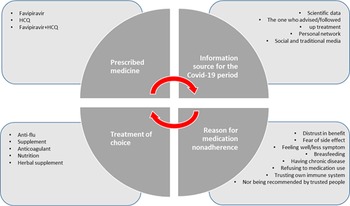
When the attitude toward treatment in patients who were diagnosed with COVID-19 and later started treatment with a physician is evaluated, 2 important aspects are identified. The first is that nonadherence emerges as a cycle. In the first step after diagnosis, medication is prescribed to the patient. Initially, a nonadherence state is observed due to the medication itself. The second step is a period when patients recognize their disease and collect information from the environment. Although this period starts before the disease and continues even after diagnosis, the search for information sources intensifies for the patient at this point. In the third step, with the diagnosis and information obtained, the patients develop reasons to take the medication and decide whether or not to take it. They often do not hesitate to express their reasons for their nonadherence. When the data of this study are analyzed, we can see that the participants were more decisive about their nonadherence decision after hearing the shared experience of someone who had had COVID-19 and who did not use treatment. For the individuals in the fourth step who do not use antivirals, they decided on other treatment methods for themselves, often taking various anti-flu, anticoagulants, and supplements, as well as enhancing their nutrition. It is deemed that these 4 steps are a cycle that cannot be clearly separated. If a patient exits the cycle after 14 days in a better clinical condition, the cycle has been completed. This cycle can be seen in Figure 4.
Hesitancy regarding medical advice on COVID-19.

The second important aspect that is identified is that patients did not even begin taking the antiviral treatments that had been advised for COVID-19, which clearly does not comply with the definitions of DAMA or MNH. A new descriptive concept is required, because the term DAMA was created mainly for surgical treatments while the term MNH was created for clinical advice, medication, and treatment advice on diseases that have been well studied; a specific treatment protocol has not yet been identified for COVID-19. In the current situation, “hesitation for medical advice” arises in non-hospitalized patients. When the results of this study are evaluated together with data from the literature, it is thought that, unless a treatment protocol is presented with a strong clinical infrastructure, high-budget medication protocols that are thrown away 50% of the time will cause health, social, and economic problems for society in the future.
The limitation of this study is that it is confined to data collected from volunteers diagnosed with COVID-19, who did not use medication during the home treatment process.
Conclusion
In a pandemic, in which millions of people are affected, we are faced with a situation where the clinical infrastructure of medication protocols is not only incomplete, but also the available data are insufficient to inform society properly. Our study shows that information concerning the patterns of MNA is inadequate and incomplete in order to define, understand, and develop strategies for this issue. Previously, the lack of a scientific basis of medication did not cause such a great amount of hesitation in both patients and treatment practitioners. The COVID-19 pandemic indicates a great waste in cost-effectiveness.
Data availability statement
The authors agree to the conditions of publication including the availability of data and materials in our manuscript.
Conflict(s) of interest
Authors declare they have no conflicts of interest.
Ethical standards
This study was approved by the local ethics committee. The principles outlined in the Declaration of Helsinki have been followed.
The treatments discussed in this publication were those available and thought to be possibly useful at the time; several have since been discontinued as more data and more effective therapeutics became available. The authors do not accept responsibility for the treatments mentioned by the participants in this study.