

Archaeologists know relatively little about the terminal Pleistocene archaeology of the Snake River Plain (SRP). This gap in knowledge stems from both a lack of field research and the often superficial and inadequate reporting of the collections from SRP sites known to contain terminal Pleistocene materials. These issues have prompted the archaeological community to disregard sites such as Jaguar Cave, Wilson Butte Cave, and Kelvin's Cave as unequivocal associations between people and extinct mammals (Cannon and Meltzer Reference Cannon and Meltzer2004; Henrikson and Long Reference Henrikson, Long and Schmitt2007).
None of this is to say that people were not present during the terminal Pleistocene in southern Idaho. In fact, fluted and stemmed projectile points are relatively common in some areas, especially around the margins of pluvial Lake Terreton (Armstrong et al. Reference Armstrong, Suzann Henrikson, Gilbert and Pace2016). As typical of the desert West, though, such artifacts occur most frequently as isolated surface finds (Long Reference Long2007; Titmus and Woods Reference Titmus, Woods, Bonnichsen and Turnmire1991; Yohe and Woods Reference Yohe and Woods2000). Excavations at Owl Cave, however, produced fluted points from a buried context, providing one exception to the broader pattern (Butler Reference Butler1978; Miller and Dort Reference Miller and Dort1978). Viewing these materials within the context of the region's terminal Pleistocene record makes understanding the Owl Cave record all the more important and motivates the analyses we present below.
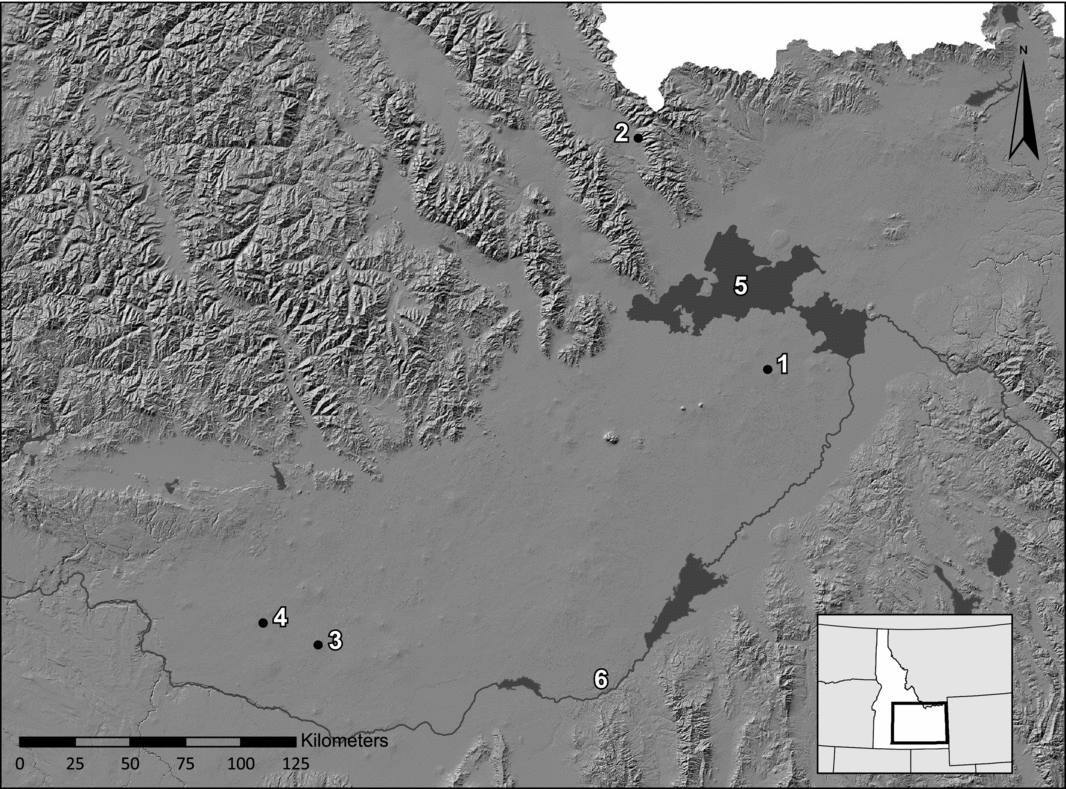
Owl Cave is one of three collapsed lava tubes collectively called the Wasden site (Butler Reference Butler1963, Reference Butler1968, Reference Butler1978). Wasden sits on the eastern SRP approximately 48 km west of Idaho Falls, Idaho (Figure 1). While Owl Cave may be one of the most important terminal Pleistocene archaeological sites in western North America, its research potential has yet to be realized. Despite the intensity of Idaho State University's original excavations in the 1960s and 1970s, and evidence suggesting the use of late Pleistocene fauna (Miller Reference Miller, Ericson, Taylor and Berger1982, Reference Miller and Sorg1989; Miller and Dort Reference Miller and Dort1978), we lack a synthesis of the excavation data. Furthermore, the fluted points recovered from the same stratigraphic unit as a number of fragmentary pieces of mammoth bone (Mammuthus sp.) appear most consistent with those typed as Folsom elsewhere (Titmus and Woods Reference Titmus, Woods, Bonnichsen and Turnmire1991) and, consequently, their association with mammoth appears anomalous given the known Paleoindian culture history of North America. If these artifacts are both morphologically and chronologically Folsom and they associate contextually with the mammoth remains, then Owl Cave contains an unexpected record of mammoth hunting that postdates Clovis. However, lacking a comprehensive report or a complete account of the site's fauna assemblage and its relationships with the fluted points, researchers have dropped Owl Cave from the list of sites with unambiguous associations between people and extinct megafauna (Grayson and Meltzer Reference Grayson and Meltzer2002).
Map of the Snake River Plain showing the location of Owl Cave and other sites mentioned in text: (1) Wasden site, (2) Jaguar Cave, (3) Wilson Butte Cave, (4) Kelvin's Cave, (5) Lake Terreton, (6) Snake River.

In this study, we evaluate the associations between the fluted points and the mammoth remains. Our analysis is based, in part, on the provenience data contained in a copy of the Idaho Museum of Natural History (IMNH) artifact catalog, photographs of maps and profiles obtained during a visit to the museum, and copies of original 1960–1970s documents (Miller Reference Miller1977). We augment this information with a series of new AMS dates, a recent bone-surface modification study of the mammoth remains, and a protein residue analysis of the projectile points in an effort to understand the formational history responsible for the artifacts and animals contained in the Owl Cave deposits.
Excavations at Owl Cave
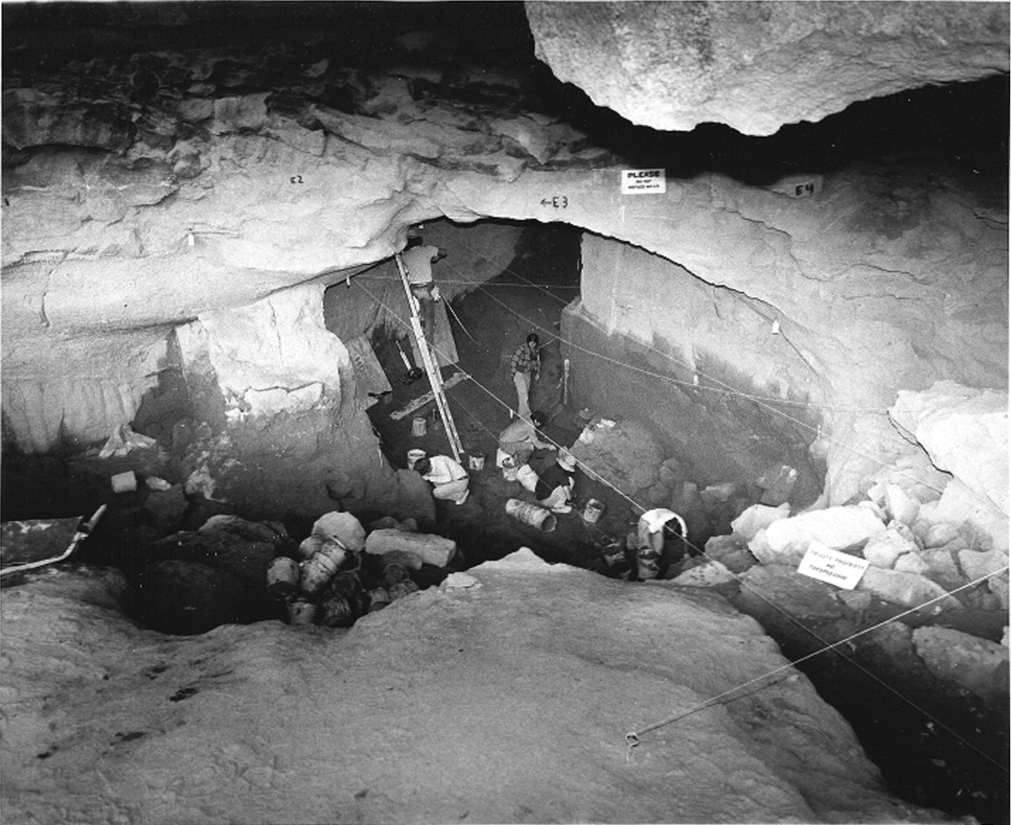
Idaho State University and the Upper Snake River Prehistoric Society first tested Owl Cave in 1964, with the approval and support of private landowners Leonard Wasden and Ken Huskinson. Full-scale excavations continued with occasional interruptions between 1965 and 1977 (Butler Reference Butler1968, Reference Butler1978; Butler et al. Reference Butler, Gildersleeve, Sommers, Stryd and Smith1971). During this time, excavators removed deposits in 2 × 2 m units and natural levels (Figure 2). The archaeological deposits in Owl Cave proved to have substantial depth and include a bison (Bison sp.) bone bed associated with lanceolate projectile points at roughly 3 m below main site datum (BMD). Excavators encountered the fluted points and extinct mammal remains about 5 m below surface (Butler Reference Butler1968, Reference Butler1978; Butler et al. Reference Butler, Gildersleeve, Sommers, Stryd and Smith1971). The bison bone assemblage has seen little research and no accelerator dates. Instead, attention has focused on the terminal Pleistocene component that we explore here.
Overview of 1970s excavations (courtesy of Richard Gildersleeve).

The discovery of a large roof/wall collapse at about 5 m BMD initially provided a difficult obstacle to further excavation. However, the promise of older deposits led to the removal of this debris in 1971. Soon after, the discovery of fragmentary mammoth (Mammuthus sp.) remains prompted additional excavation. Miller and Dort (Reference Miller and Dort1978) returned to the site in 1975 and 1976. This subsequent investigation recovered the fragmentary remains of a range of extinct fauna (including cf. Camelops sp., Canis dirus, and Bison sp.), as well as more mammoth bone recovered within an east trending alcove at roughly 6 m BMD (recorded as “level 18” in the IMNH catalog; Miller Reference Miller1977). In 1977, these excavations also recovered seven fluted point fragments, a biface fragment, and a small amount of debitage from the alcove, reportedly within the same stratum as the Pleistocene animal remains.
The Terminal Pleistocene Chronology of Owl Cave
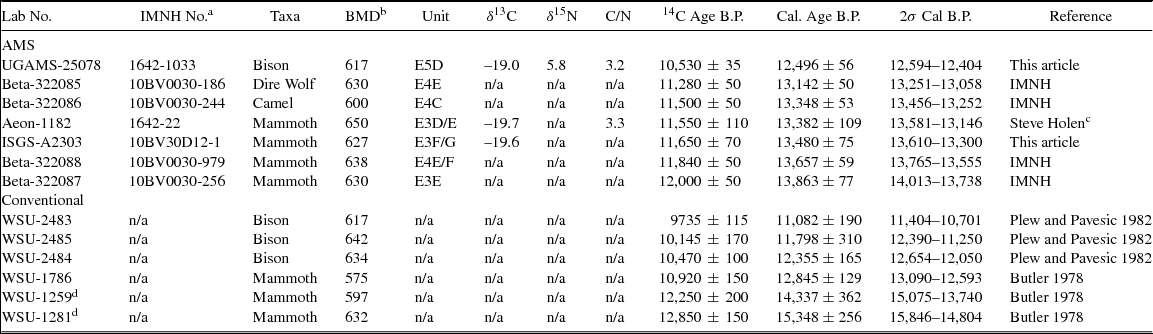
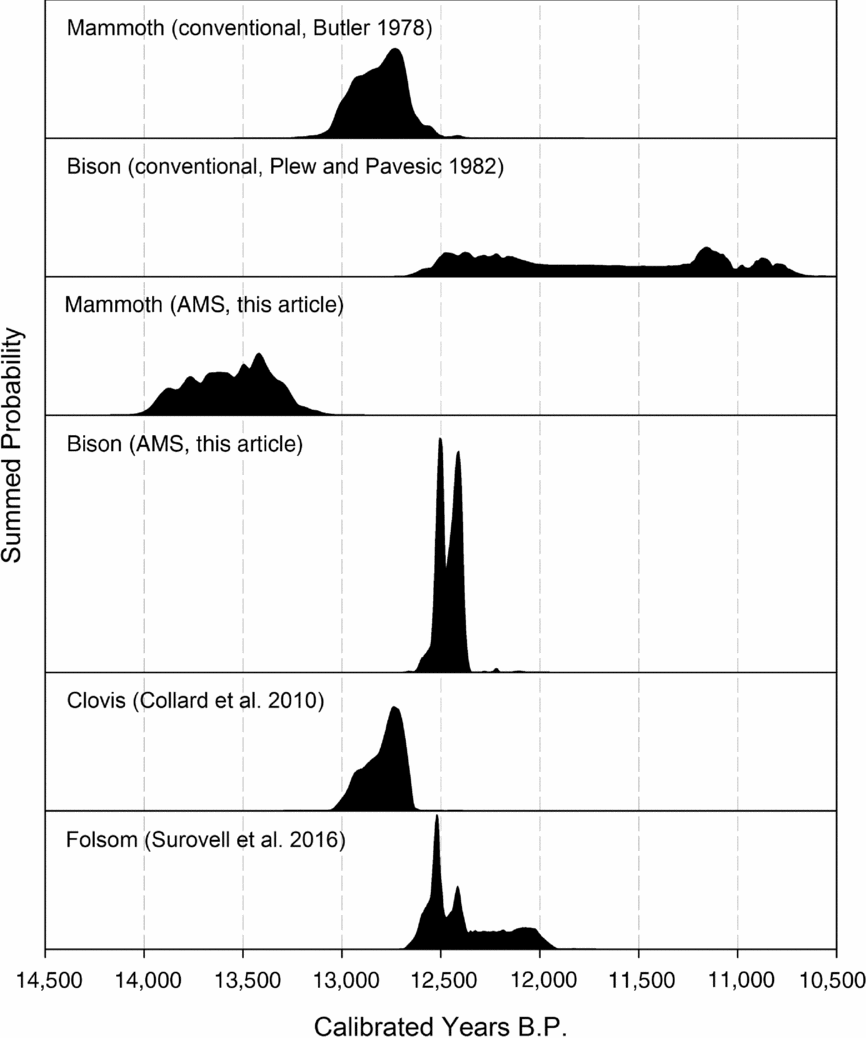
We begin by discussing the chronological placement of the terminal Pleistocene faunal material from Owl Cave, with a focus on the ages of the mammoth and bison in the collection. To do so, we collate and calibrate the available radiocarbon data from the Wasden site (Table 1) and compare them with the currently accepted ages for Clovis and Folsom. We calibrated all dates using the OxCal 4.2 software and the IntCal13 calibration curve (Bronk Ramsey Reference Bronk Ramsey2009). Figure 3 presents the summed probability distributions (SPD) for the conventional radiocarbon dates on mammoth and bison run by the original excavators, new AMS dates on the same taxa, in addition to SPDs for Clovis and Folsom (raw data from Collard et al. Reference Collard, Buchanan, Hamilton and O'Brien2010 and Surovell et al. Reference Surovell, Boyd, Haynes and Hodgins2016, respectively).
Owl Cave Radiocarbon Dates.

a Idaho Museum of Natural History specimen number.
b Below main datum.
c Personal communication 2016.
d Butler (Reference Butler1978) rejected these dates because they were not treated for humates.
Summed probability distributions derived from Owl Cave radiocarbon dates.

Immediately following the original excavations, Butler (Reference Butler1978; see also Miller Reference Miller and Sorg1989; Plew and Pavesic Reference Plew and Pavesic1982) ran several radiocarbon dates on mammoth and bison bone collagen. Butler's original dates on mammoth consisted of three assays, two of which he discarded because they were not pretreated to remove humic acid. A third treated sample returned a date of 13,090–12,593 cal B.P. Three dates on bison remains from the terminal Pleistocene deposits span the period 12,654–10,701 cal B.P. (Plew and Pavesic Reference Plew and Pavesic1982). Taken together, these results suggest a Clovis age for the mammoth remains and a Folsom age for the bison. However, these dates were run over 30 years ago using conventional radiocarbon methods, with uncertainty about the preparation protocols employed, as well as relatively large sigma values. Fortunately, more recent AMS results exist for the Owl Cave faunal material.
Between 2012 and 2016, one dentin and six collagen samples from Owl Cave were AMS dated by various investigators (Table 1). These derive from one bison (Bison sp.) tooth, one Dire wolf (Canis dirus) bone, one camel (Camelops sp.) bone, and four different pieces of fragmentary mammoth bone. The SPDs derived from the Owl Cave mammoth and bison peak at different times. The oldest derives from the four mammoth specimens and represents a calibrated time span of 14,013–13,146 cal B.P. In contrast, the younger distribution derives from the bison tooth, spans the calibrated 2σ range from 12,594–12,404 cal B.P, and does not overlap with the dates on mammoth, wolf, and camel in a statistically meaningful way. In fact, the 95 percent confidence interval around the bison tooth is separated from the next youngest specimen (wolf) by 464 years and from the youngest mammoth date by 552 years.
The AMS data also suggest that the collection contains the remains of least two mammoths. In this case, the oldest and youngest mammoth dates fail to overlap at 2-sigma and, instead, at least 220 years separates the 95 percent confidence intervals of each measure. If we accept Butler's mammoth date, a suggestion made with all due caution, then three mammoths might be present at Owl Cave, since Butler's date is both younger than and fails to overlap at 2-sigma with the youngest of the new AMS dates on mammoth presented here. Further dating of these remains might resolve the number of individuals present.
Finally, the SPDs derived from the AMS dates on the Owl Cave fauna becomes even more interesting when compared with the age ranges for Clovis and Folsom. As shown in Figure 3, the mammoth remains largely predate the Clovis period, while the bison tooth falls squarely within the SPD describing Folsom. This latter finding is consistent with Butler's earlier dates suggesting the introduction of bison remains into the cave during the Folsom period.
Fluted Points and Mammoth Bone: Spatial Associations
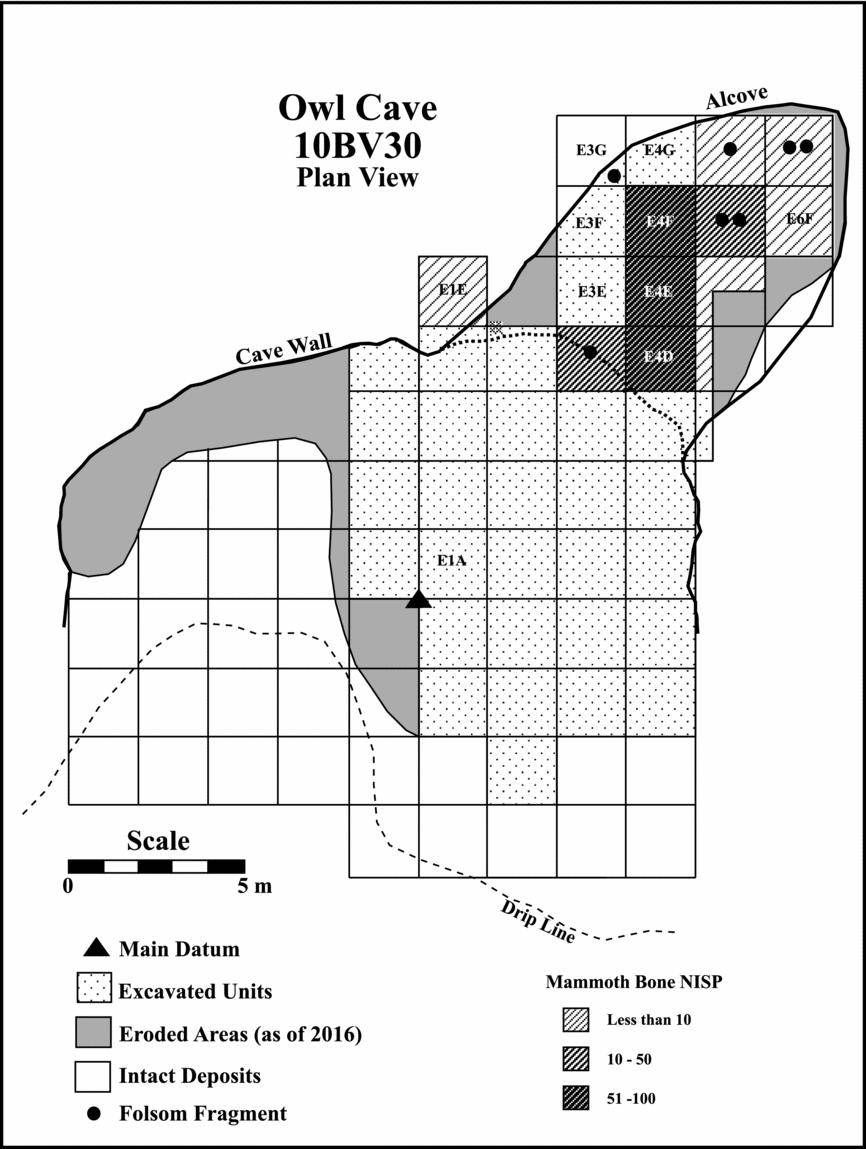
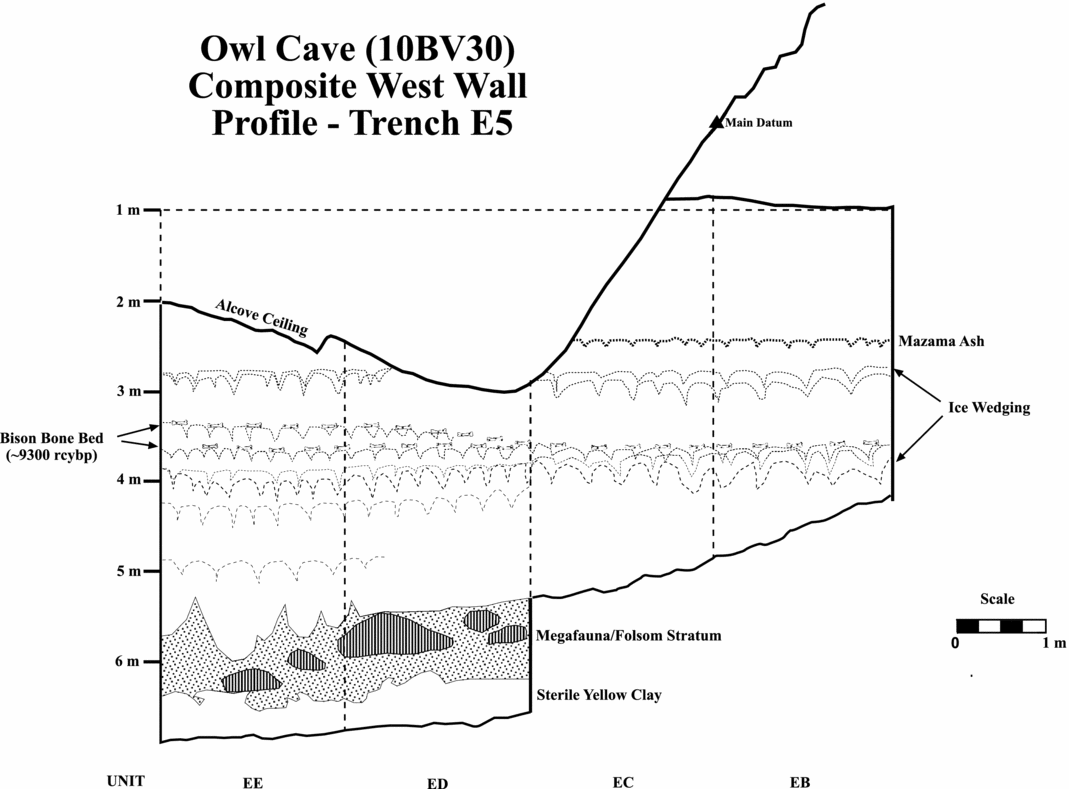
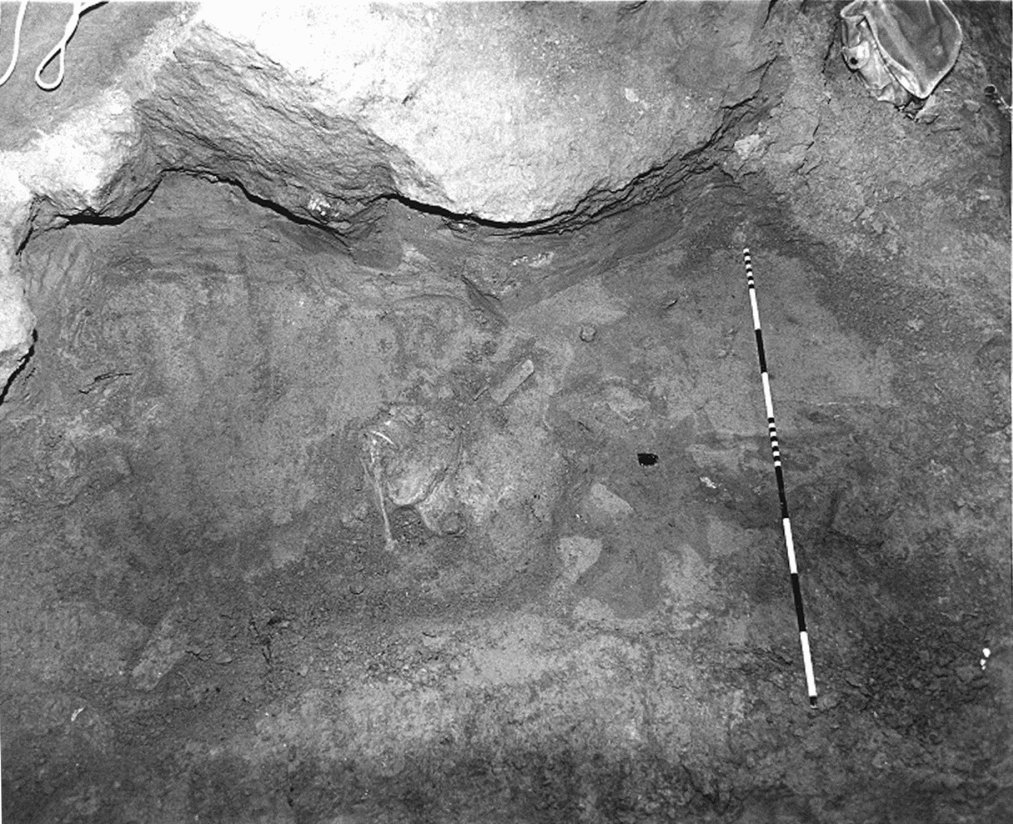
Illustrating the spatial relationships between the fluted points and mammoth remains presents another avenue for understanding Owl Cave's formational history. Figure 4 documents the excavation block in plan view. We generated this map from provenience data provided in the original notes, sketches, and catalogues (Miller Reference Miller1977), and it highlights those units containing mammoth bone and/or flaked stone tools. Using the unit profiles drafted during the excavations, Miller produced a generalized stratigraphic profile of Owl Cave showing the overall depth of the deposits, as well as significant features including abundant ice wedge casts, the bison bone bed, and the stratum containing the fluted points and extinct fauna (Figure 5). Excavators took several photographs to document the fluted points in situ, but these show no other items, including bone, in close association with the points (Figure 6).
Plan view map of the Owl Cave excavation block. Density of mammoth bone is based on Number of Identified Specimens (NISP) (redrawn from field notes [Miller Reference Miller1977]).

Generalized profile of the Owl Cave stratigraphy (redrawn from field notes [Miller Reference Miller1977]).

Fluted point in situ (courtesy of Susanne J. Miller). Point fragment is located in the center-right of photo.

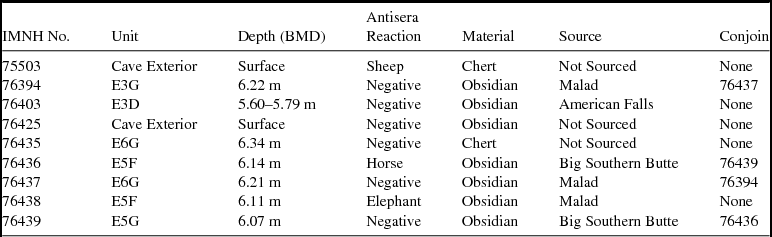
While the photographic evidence does little to aid in sorting out the relationships of interest, horizontal and vertical provenience to the nearest centimeter is available for both the projectile points and many of the mammoth remains. These data, however, key horizontally only to the 2 × 2 m excavation unit. The seven Folsom point fragments found in the cave distribute across five different excavation units (Table 2), with six of the artifacts located in the rear of the alcove. Also of note is the spatial distribution of conjoining fragments IMNH-76394 and IMNH-76437, which were separated horizontally by over two meters. Why the Folsom points are concentrated in the back of the cave is unclear, as it is a relatively cold and wet portion of the site today, but their locations might represent a toss zone into which broken, low-utility, and expended tools were discarded.
Provenience and Source Data for Owl Cave Fluted Points.

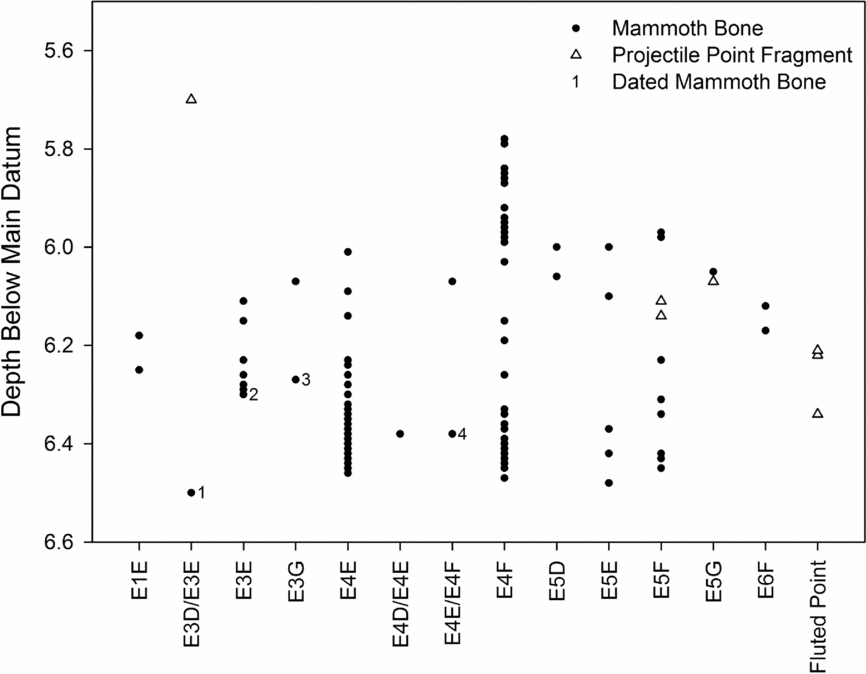
Figure 7 plots the vertical distributions of both the mammoth bone and the fluted points. These data show that mammoth bone distributes vertically from about 5.8 m BMD to basalt bedrock at about 6.5 m BMD. Of interest is the distribution of mammoth bone in Unit E4F. In this instance, mammoth specimens concentrate into two vertically discrete and dense groups of bone, suggesting two different depositional events. Unfortunately, only one specimen was dated (Beta-322088, 11,840 ± 40 B.P.; Table 1) from this unit and it was sampled from the lower concentration.
Comparison of the vertical distribution of mammoth bone and projectile points recovered from Owl Cave. The column labeled “fluted points” displays the vertical distribution of point fragments from units lacking mammoth bone. Numbers identify AMS-dated mammoth bone (see also Table 1): (1) Aeon-1182, (2) Beta-322087, (3) ISGS-A2303, (4) Beta-322088.

Arraying the distribution of the fluted points against that of the mammoth bone indicates that both sets occupy the same range of vertical space. For example, Unit E5F produced at least 19 pieces of mammoth bone and two projectile points. In this case, the fluted points rest about 10 cm above all but two of the mammoth specimens, and about 10 cm below the piece of mammoth bone highest in Unit E5F. A broader comparison between the site-wide data for both groups finds that all but one of the fluted points (IMNH-76403, Unit E3D) fall within the vertical range of mammoth bone and the single outlier lay above it.
Mammoth-Bone Surface Modifications
A study of bone surface modifications provides another avenue for evaluating behavioral connections between humans and mammoth at Owl Cave, and ours is not the first study to evaluate the Owl Cave mammoth remains for butchery traces. Since many of the shaft fragments exhibit breakage and flaking to some degree, Miller's (Reference Miller and MacEachern1983, Reference Miller and Sorg1989) analysis concluded that people had used many of the heavier cortical pieces as cores for the manufacture of sharp bone flakes. Miller also attributed some modifications to butchery for two reasons. First, long bones dominate the assemblage, suggesting to her that Pleistocene hunters transported specific elements into the site for marrow processing and tool production. Second, she saw the patterning and sequence of breakage as the intentional manipulation of the mammoth bone rather than the outcome of noncultural taphonomic processes (Miller Reference Miller and MacEachern1983, Reference Miller and Sorg1989). Others, however, have expressed skepticism, as do we, both because of the absence of hammerstones (cf. Grayson and Meltzer Reference Grayson and Meltzer2002; Haynes Reference Haynes1991) and the potential for roof fall in Owl Cave to modify mammoth long bone in ways mimicking human butchery (Karr Reference Karr2012). Because Miller's (Reference Miller and MacEachern1983, Reference Miller and Sorg1989) analyses of the mammoth bone from Owl Cave generated some controversy, we inspected these specimens for bone modifications. In this instance, however, instead of focusing on fracture patterns, we targeted surface modifications as a way to identify human agency in the creation of the mammoth bone assemblage.
We conducted our analysis of the Owl Cave mammoth assemblage at the IMNH during April 2014 (see DeCarlo Reference DeCarlo2017 for an exhaustive description of all surface modifications to the Owl Cave mammoth bone). We inspected the collection first with a 10× hand lens and then selected 46 specimens displaying modifications of interest. We examined these more closely at the Idaho State University Center for Archaeology, Materials, and Applied Spectroscopy (CAMAS) using an Olympus SZ61 stereo microscope at varying magnifications (6.7×–45×), angles, and lighting, resulting in the documentation of 102 surface modifications (DeCarlo Reference DeCarlo2017). To differentiate butchering marks from noncultural modifications resulting from, for example, carnivore gnawing or trampling, we compared the characteristics of each mark to a series of modification-specific rubrics derived from a review of replicative studies (Behrensmeyer et al. Reference Behrensmeyer and Kidwell1985; Blumenschine et al. Reference Blumenschine, Marean and Capaldo1996; Blumenschine and Selvaggio Reference Blumenschine and Selvaggio1988; Bunn Reference Bunn1981; Dominguez-Rodrigo et al. Reference Dominguez-Rodrigo, de Juana, Galan and Rodriguez2009; Fisher Reference Fisher1995; Greenfield Reference Greenfield2006; Haynes Reference Haynes1980, Reference Haynes1983, Reference Haynes1991; Potts and Shipman Reference Potts and Shipman1981; Redmond et al. Reference Redmond, McDonald, Greenfield and Burr2012; Shipman Reference Shipman1981; Shipman and Rose Reference Shipman and Rose1983; Shipman et al. Reference Shipman, Fisher and Rose1984).
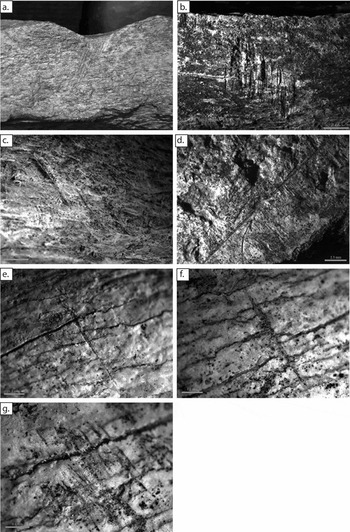
Ninety-five (93 percent) of the 102 Owl Cave mammoth bone modifications possess features readily attributable to a causal agent (DeCarlo Reference DeCarlo2017). Of these, one (1 percent) modification represents trowel or shovel damage, two (2 percent) represent rodent modification, 16 (16 percent) are consistent with carnivore ravaging, and 76 (75 percent) modifications likely result from either trampling or, more likely, roof fall, which is consistent with the excavation photographs. In this study, we use “trampling marks” as a generic term for non-culturally, non-carnivore generated striations. The remaining seven (7 percent) modifications were initially classified as “anomalous” marks (Figure 8). Although intriguing, none of these modifications held up under scrutiny as unambiguous evidence for butchery. It is important to note, however, that experimental studies demonstrate that butchers can fully process an elephant with stone tools without leaving any surface modifications on the skeleton (Frison, Reference Frison1989:778; Frison and Todd, Reference Frison and Todd1986:42, 130; Haynes Reference Haynes1991:185–186). We offer a brief discussion of these anomalous marks here.
Selected bone modifications to Owl Cave mammoth bone: (a) surface abrasion to IMNH-018, (b) surface abrasion to IMNH-210, (c) surface incisions to IMNH-719, (d) surface striations displayed by IMNH-195, (e) surface striation on IMNH-216, (f) surface striation on IMNH-216, (g) surface striation on IMNH-216.

Roof fall best explains several of the anomalously marked specimens. IMNH-018 is a long bone shaft fragment exhibiting numerous abrasions and incisions (Figure 8a). Close inspection showed that the specimen possessed both a flake scar and associated abrasion that might document a cultural modification. The flake scar shows the removal of a broad flake, including a feather termination and a negative bulb of percussion scar. At the striking platform, there is a short abrasion leading to the flake scar's point of impact. The flake scar appears to result from a percussion impact, but such impacts can result from non-cultural processes. This is important since this piece of mammoth bone was one of several described in the IMNH catalog (Miller Reference Miller1977) as resting among rock fall. Consequently, it is possible that the basalt boulders that landed on IMNH-018 may well account for the flake scar and associated surface abrasions (see also Karr Reference Karr2012).
Specimen IMNH-210 is a mammoth rib fragment displaying numerous curved abrasions whose trajectories intersect each other (Figure 8b). However, IMNH-210 displays one anomalous mark, which is reminiscent of cultural percussion battering. This modification consists of an oval-shaped depression located within 5 mm from a fractured edge, a location suggestive of a butchery-related impact (Blumenschine et al. Reference Blumenschine, Marean and Capaldo1996:496). This mark also displays striations emanating from the depression as if a hammerstone came into gradual contact with IMNH-210, incising the surface in the process. While this modification may document percussion battering, the depositional context of IMNH-210 offers a competing, noncultural agent. Considering that excavators recovered IMNH-210 from under roof fall, it is possible that this abrasion was the point of impact between the bone and a falling basalt boulder. In addition, percussion battery of bone often results in many depressions or a collapsed platform (Haynes Reference Haynes1991:240), making the single depression inadequate evidence of human percussion.
IMNH-719 is a weathered long bone fragment that was also located below rock fall according to Miller (Reference Miller1977; see Figure 8c). This specimen displays one anomalous mark, which includes three, closely spaced parallel incisions. Under magnification, only the middle incision displays a consistent depth and width at its center, but then tapers as it terminates; features that might suggest butchery (Greenfield Reference Greenfield2006:161; Redmond et al. Reference Redmond, McDonald, Greenfield and Burr2012:87; Shipman and Rose Reference Shipman and Rose1983:75). In contrast, the right incision flattens and widens into multiple, shallow incisions, while the left one widens and gouges the bone, all features indicative of an agent such as trampling or roof fall (Dominguez-Rodrigo et al. Reference Dominguez-Rodrigo, de Juana, Galan and Rodriguez2009:2650). Due to their spatial context, these three marks are most consistent with sediment or some object forced across the bone during a single event.
IMNH-195 also displayed an anomalous striation (Figure 8d). In this case, an incision displaying several features consistent with a cut mark. Though interrupted by some type of puncture, the incision was straight on either side of the puncture, suggesting that the puncture mark was unrelated to the initial incision. This modification also displays an adjacent incision that briefly parallels the main one and, consequently, is reminiscent of a shoulder effect (Dominguez-Rodrigo et al. Reference Dominguez-Rodrigo, de Juana, Galan and Rodriguez2009:2646; Shipman and Rose Reference Shipman and Rose1983). Under closer inspection, however, it also possesses many features of a noncultural abrasion. For example, the base of the incision appears fairly wide and flat and the supposed shoulder effect does not change in its width when the main incision narrows. If this second incision was the result of the tilting of the cutting blade, its shape would change as the main incision changes, again suggesting that this is the result of a separate projection or granule being dragged across the bone's surface.
IMNH-216 derives from a partial scapula and displays three anomalous surface modifications. Unmagnified, these modifications appear as parallel incisions consistent with cut marks. Under magnification, however, these markings possess features consistent with noncultural modifications. The most prominent of the three (Figure 8e) displays a flat incision base, a sinuous trajectory, and a crushed, rounded terminus, all features indicative of trampling (Dominguez-Rodrigo et al. Reference Dominguez-Rodrigo, de Juana, Galan and Rodriguez2009:2646, 2650; Redmond et al. Reference Redmond, McDonald, Greenfield and Burr2012:87). Similarly, the second incision (Figure 8f) also possesses a broad incision base, while magnification revealed the third (Figure 8g) as a series of shallow incisions indicative of some type of abrasion.
Projectile Point Protein Residue Analysis
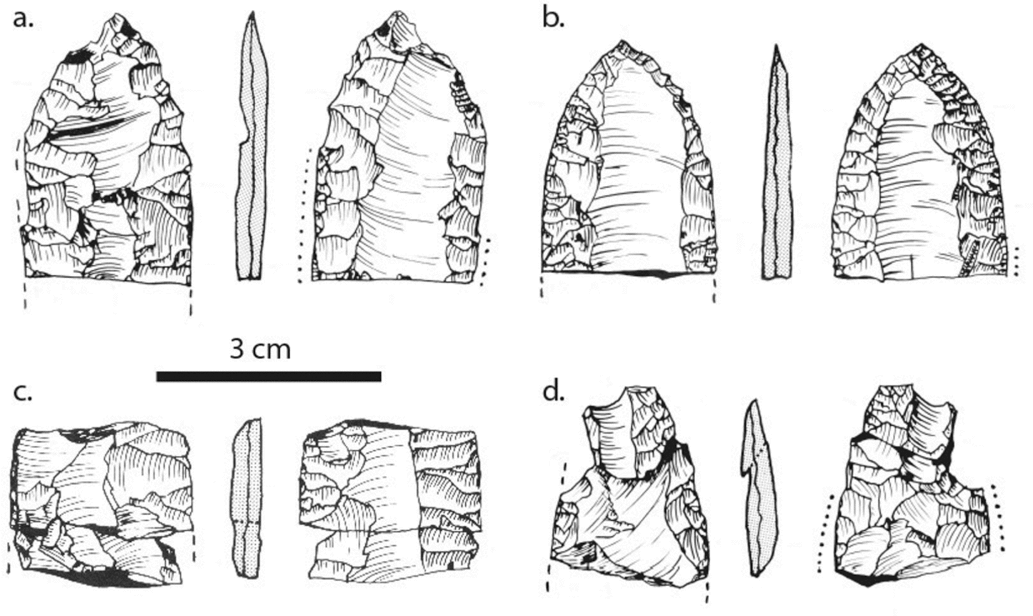
Several researchers have described the Owl Cave projectile points (Figure 9), with the consensus that they are morphologically consistent with the Folsom cultural complex best known from the Great Plains and Southwest (Henrikson and Yohe Reference Henrikson and Yohe2009; Miller Reference Miller, Ericson, Taylor and Berger1982, Reference Miller and MacEachern1983, Reference Miller and Sorg1989; Titmus and Woods Reference Titmus, Woods, Bonnichsen and Turnmire1991; Yohe and Woods Reference Yohe and Woods2000). Seven of the projectile point fragments come from the interior of Owl Cave, while two additional specimens (IMNH-75503 and IMNH-76425) come from the surface in the immediate area of the cave entrance. Of these, four fragments conjoin into two unique specimens. Table 2 lists these specimens, their proveniences, and the obsidian source from which they originated.
Illustrations of selected fluted points from Owl Cave: (a) IMNH-76438, (b) IMNH-76435, (c) IMNH-76436/76439, (d) IMNH-76394/76437. Drawings by Ruthann Knudson.

To test for the presence of blood protein, we used crossover immunoelectrophoresis (CIEP; Culliford Reference Culliford1964, Reference Culliford1971; Dorrill and Whitehead Reference Dorrill and Whitehead1979; Kooyman et al. Reference Kooyman, Newman and Ceri1992; Newman Reference Newman1990, Reference Newman1996; Shanks et al. Reference Shanks, Bonnichsen, Vella and Ream2001; Tuller and Saunders Reference Tuller and Saunders2013). This method is a biomolecular/immunological technique that archaeologists have successfully used to identify protein residues on flaked stone, ground stone, and ceramic artifacts (e.g., Barnard et al. Reference Barnard, Shoemaker, Rider, Craig, Parr, Sutton, Yohe and Eerkens2007; Hogberg et al. Reference Hogberg, Puseman and Yost2009; Newman and Julig Reference Newman and Julig1989; Newman et al. Reference Newman, Yohe, Ceri and Sutton1993; Yohe et al. Reference Yohe, Newman and Schneider1991). Moreover, archaeologists have used this technique in the analysis of Paleoindian material, including fluted points, resulting in the identification of horse, camel, elephant, and reindeer protein (Duke Reference Duke2015; Gilbert et al. Reference Gilbert, Jenkins, Göther-strom, Naveran, Sanchez, Hofreiter, Thomsen, Binladen, Higham, Yohe, Parr, Cummings and Willerslev2008; Kooyman et al. Reference Kooyman, Newman, Cluney, Lobb, Tolman, McNeil and Hills2001; Parr Reference Parr2006; Seeman et al. Reference Seeman, Nilsson, Summers, Morris, Parans, Dowd and Newman2008; Yohe and Bamforth 2012; Yost Reference Yost2013).
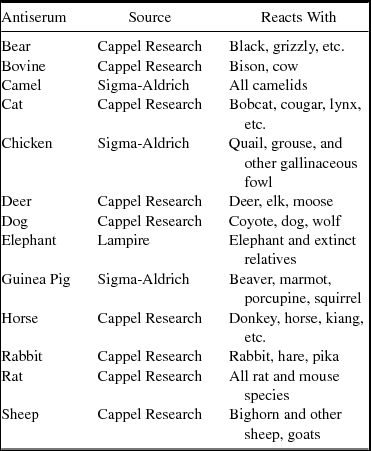
CIEP provides results by testing protein residues for reactions to various taxa specific antisera. In this instance, we tested the Owl Cave projectile points against a broad range of antisera expected to represent the suite of prey animals potentially available to SRP foragers. In all but one instance, the antisera used in this study were acquired commercially (Table 3). Given that CIEP requires the use of antisera specific to taxonomic families, and no antisera for elephants was readily available, a custom antiserum for elephants was produced from fresh, whole blood extracted from a modern Asian elephant (Elephas maximus) housed at the Fresno Zoo in Fresno, California, by LAMPIRE Biological Laboratories.
Antisera Used in This Study.

The nine fluted point fragments from Owl Cave were submitted for immunological analysis to the Laboratory of Archaeological Sciences (LAS) at California State University, Bakersfield (Henrikson and Yohe Reference Henrikson and Yohe2009). Yohe removed potential residues from the artifacts as discussed above and recorded three positive reactions (Table 2). IMNH-75503 tested positive for sheep indicating the presence of proteins from any species of sheep or goat. However, because this point fragment is an unprovenienced surface find and sheep have pastured there in recent history, this result may document modern contamination from urine or feces. IMNH-76436 tested positive for horse. Horse antiserum will react positively with species of horse or donkey, and we assume that extinct equids would also test positive. IMNH-76438 tested positive for elephant, indicating the presence of proteins from some related species, extinct or extant. The negative reactions for identifiable proteins on the remaining artifacts may result from poor preservation resulting in loss of antigeniety, insufficient trace protein quantities, or the possibility that the artifacts never contacted blood or any other proteins from any of the taxa included in this study. Finally, we would normally process associated soil samples as contamination controls. While the IMNH houses several soil samples, none came from the same units as projectile points, leaving their utility as controls dubious at best, and no such analysis is presented here.
Discussion
The analyses presented above fail to associate the fluted points with the mammoth remains in a way signaling mammoth hunting by Folsom foragers. While some of the data—AMS dates, for example—suggest one narrative, other information, such as the protein analysis, suggest another. Simply put, the dated mammoth remains predate Clovis, let alone Folsom, yet the Folsom points from Owl Cave were found mixed in with the mammoth remains and tested positive for elephant and horse protein residues. Faced with this quandary, we envision several competing formational histories that each might explain the composition of the Owl Cave terminal Pleistocene materials.
First, the fluted points and at least some of the mammoth remains associate directly through a hunting event. If true, and if the points represent a Folsom occupation, then, depending on whether or not one accepts Butler's mammoth date, either (1) Folsom predates Clovis on the SRP, (2) Folsom was contemporary to Clovis on the SRP, or (3) the fluted points from Owl Cave represent a morphologically similar but earlier and otherwise unrelated technology to the Folsom phenomenon (see Beck and Jones Reference Beck and Jones2010 for a related discussion of Western Fluted points). In this latter instance, “Folsom” becomes a definitional issue and one that no longer refers to a distinctive point style, but instead a chronological interval.
This scenario is problematic since widely accepted cases of mammoth hunting from the Great Plains and Southwest associate exclusively with Clovis points, which predate Folsom in every context in which they have either been dated or found in a buried, stratigraphic sequence. We are further troubled by the lack of documentation for direct associations between the Owl Cave projectile points and mammoth bone, the absence of horse remains, the presence of Folsom-age bison remains in the same deposit, the lack of cultural bone-surface modifications, and the absence of “Folsom” points from any other securely dated pre-Clovis or Clovis-period contexts. Such concerns lead us to explore alternative explanations for the Owl Cave materials.
A substitute, but related, explanation accommodating a direct contextual association between fluted points that are chronologically Folsom and mammoth remains would suggest that Owl Cave documents a rare example of Folsom predation on lingering populations of horse and mammoth. Consequently, Owl Cave may contain a Folsom-age mammoth that was not dated due to sampling error. Conversely, the extinct mammal remains from Owl Cave and the Folsom points may be unrelated, yet the protein residue accurately records Folsom-age hunting, scavenging, or other uses of mammoth and horse products, without any carcass parts from those events having been transported back to the cave. While these scenarios are not impossible, they are improbable, because such circumstances would suggest an undated and previously unrecognized remnant population of Pleistocene mammals in the northern Great Basin and Snake River Plain.
The Folsom points and mammoth remains may associate contextually in another way, one not requiring the contemporaneous presence of the two populations. In this scenario, much later Folsom foragers modified frozen or otherwise well-preserved mammoth bones into bone tools. Important to this scenario is recent research indicating that very old, but well-preserved, bone can break in ways fully consistent with the expectations for green-bone fractures. Haynes (Reference Haynes2016), for example, documents recent green-bone fractures caused by earthmoving equipment to mammoth bone at the Ingelwood mammoth site.
Recognizing that old bone can break in such ways accommodates many of the conflicting lines of evidence discussed above. In this scenario, Miller (Reference Miller and Sorg1989) could well be correct in suggesting that the fragmentary nature of the mammoth bone represents Pleistocene foragers using long bone diaphyses as cores for tool production, but in this case at the hands of Folsom, not Clovis or pre-Clovis, foragers. This scenario also suggests why the mammoth remains do not display any unambiguously cultural surface modifications. Simply put, there would have been little or no soft tissue to remove. Nor would this scenario require the improbable assertion that Folsom peoples were hunting mammoth at a time when the available data indicate that those animals were extinct. Instead, Folsom foragers may have sheltered in the cave and produced bone tools from well-preserved mammoth remains. Along the way, these visiting foragers would have deposited several broken projectile points as part of ordinary tool maintenance activities, contaminating these artifacts with persisting mammoth protein in the process. We note, however, that this scenario fails to explain the presence of horse protein on one of the Folsom points.
Finally, the fluted points and megafauna may represent completely unassociated events and the protein residue results reflect contamination from noncultural animal remains residing in the deposits. Cryoturbation represents one taphonomic process that might have contaminated the fluted points with otherwise unassociated protein. According to Dort (Reference Dort1968:33), the formation of ice wedges in Owl Cave signified extended periods of extreme cold (with ground temperatures consistently reaching –15° C). Based on the size of the largest Owl Cave ice wedge casts, Dort surmised that these intense cold periods may have lasted for several hundred years. The most significant ice wedging events are bracketed by the bison bone bed and the roof fall episode above the cave floor, with evidence for wedging in the lowest deposits as well.
Although not captured in the schematic profile, sediments near the ice wedge casts and below the roof fall in the alcove are characterized by “involutions,” which, according to Dort (Reference Dort1968:34), were likely the result of continuous seasonal freezing and thawing. Consequently, cryogenic distortion of the sediments could have led to the vertical movement of both animal protein and stone artifacts in the lower levels of the deposits, eventually leading to the contamination of the fluted points. Cryoturbated sediments have been noted in other Idaho lava tubes (Henrikson and Long Reference Henrikson, Long and Schmitt2007), and in at least one case, Scaredy Cat Cave, decomposed, frozen bison meat was recovered from deposits dating to roughly 4000 cal B.P. (Henrikson Reference Henrikson2002), suggesting that this contamination is not impossible. Yet, this scenario is problematic because no horse remains are known from the cave, and experimental data suggesting that protein contamination can occur through cryoturbation are lacking.
Conclusions
In the end, our study of the Owl Cave materials fails to establish a case for mammoth hunting at the site. Instead, one can read the available data in several different ways, leaving us with little more than a number of largely untestable suppositions about site formation processes at Owl Cave. Consequently, we present several competing scenarios illustrating how the terminal Pleistocene deposits could have formed.
To be clear, we take no position at this time on what Owl Cave truly documents, and instead have tried to give an even hand to discussing the various ways one might read the terminal Pleistocene materials from the site. It is apparent to us that Owl Cave contains a palimpsest of events. While our research efforts thus far have focused strictly on interpreting existing data from the lowest deposits, the bison bone bed has been, once again, neglected. However, a recent study (Guenther Reference Guenther2014) does suggest that the assemblage of bone and Agate Basin--style projectile points reflect an early Holocene bison drive. Based on Guenther's (Reference Guenther2014) analysis, additional bison remains are likely present in adjacent Coyote and Dry Cat Caves.
Although we are not compelled to accept any of the possible scenarios presented here, future research at the Wasden site has tremendous potential to resolve long-standing ambiguities in the existing documentation. The original excavators focused on deposits deep inside the alcove of Owl Cave; they did not excavate sediments in the cave's sunny, western portion, possibly leaving half of the bison bone bed intact. Likewise, if the fragmentary points in the alcove represent a discard zone, open areas just inside the drip line may contain more substantial evidence of a terminal Pleistocene occupation associated with fluted points, the only one of its kind in the desert West. In the near future, we hope to excavate the remaining deposits with modern methods designed to capture the fine-grained spatial data needed to properly evaluate associations between extinct animals and the material residues of the early peoples inhabiting the SRP.
Acknowledgments
The authors thank the numerous individuals who assisted in preparation of this manuscript. Susanne J. Miller and Wakefield Dort provided essential information and invaluable institutional knowledge on the original excavations. Lynn Murdock, Amy Commendador-Dudgeon, and Amber Tews of the Idaho Museum of Natural History allowed access to the collections and original field notes, and provided the loan of Owl Cave materials for these analyses. Ruthann Knudson graciously provided her illustrations of the fluted points. Wakefield Dort, the Idaho Heritage Trust and IMNH funded the new accelerator dates and Craig Skinner completed the XRF analysis in a professional and timely manner. Norman Henrikson of the Laboratory of Archaeological Science at CSUB conducted the immunological analysis of the Owl Cave points. Marissa Guenther, graduate student at CSUB, assisted with the illustrations. Shaunzi the elephant, assisted by the friendly staff from the Fresno Zoo, provided a blood sample in the generation of antisera for this study. Arantza Zabala translated the English abstract into Spanish. Lastly, we would like to thank Steve Croft (former Owl Cave landowner) for allowing unrestricted access to the site and the Archaeological Conservancy for recognizing the significance of the property and pursuing its acquisition.
Data Availability Statement
The original field notes and associated documentation used to support the findings of this study are available at the Idaho Museum Natural History, Pocatello. Recently generated AMS assays, as well as the reports associated with the CIEP and XRF analyses, are available at the Cultural Resource Management Office, Idaho National Laboratory, Idaho Falls.