Although the era of national or international databases to assess outcomes for paediatric cardiology practice is just beginning, momentum is building rapidly. A number of projects designed to have broad-based impact are currently in the design phase, or have already been implemented. Not surprisingly, most of the efforts thus far have focused on catheterization procedures and interventions, although some work examining other aspects of paediatric cardiology practice is also beginning. This manuscript will describe the current status of these foundational databases, all designed to assess outcomes and improve care for children and adults with congenital cardiac disease. We anticipate that significant progress will occur over the next few years, to allow rapid assessment and dissemination of information about how better to provide paediatric cardiology services to patients with congenital cardiac defects.
European paediatric cardiology outcome databases
No pan-European databases of congenital cardiac disease exist that examine outcomes after transcatheter interventions, to mirror the surgical database of The European Association for Cardio-Thoracic Surgery and The European Congenital Heart Surgeons Association, as described elsewhere in this Supplement. Nevertheless, several national databases have been set up where individual countries have attempted to prospectively monitor mortality and morbidity outcomes for these procedures. With the exception of the United Kingdom, described below, these tend to be voluntary registries without formal data validation. In Switzerland, for example, there is a voluntary nationwide registry for transcatheter and surgical procedures which uses the Short List of the European Paediatric Cardiac Code for the coding of diagnoses, procedures and postprocedural complications.Reference Franklin, Anderson and Daniels1 In Germany, a nationwide registry began in 1990, giving estimates of the numbers of diagnostic and interventional catheter procedures and the complications following these procedures.2 This German Database is due to be replaced by a nationwide quality assessment program for all patients with congenital heart disease that is in the process of formal approval by the German government and will also use the European Paediatric Cardiac Code. It is hoped that this data will facilitate European comparisons and the longitudinal assessment of outcomes.
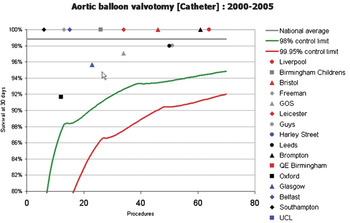
In the United Kingdom the Central Cardiac Audit Database was established in 1999 by the British Cardiac Society, the Society of Cardiothoracic Surgeons, and the British Paediatric Cardiac AssociationFootnote * to provide national analyses of outcomes after cardiovascular surgery and therapeutic catheterization. Data are collected electronically in an anonymised encrypted format with prospective tracking of mortality and reintervention using up to a 29 field minimum dataset. The diagnoses and procedures are coded using the 2002 version of the Short List of the European Paediatric Cardiac Code.Reference Franklin, Anderson and Daniels1, Reference Franklin, Anderson and Daniels3 The Central Cardiac Audit Database of the United Kingdom (UKCCAD) is centrally funded by the Department of Health; data submission is compulsory for all centres undertaking congenital cardiac disease interventions, whilst patients give informed consent to data submission. Independent validation of patients status (alive or dead) is achieved by central tracking of mortality using the linkage of the patients’ National Health Service number to the Office of National Statistics, where the death of every resident in England and Wales is registered (a separate Scottish system exists). In addition, annual data validation visits are undertaken to each hospital submitting data to ensure accuracy and that all procedures undertaken have been captured. The methodology allows interunit comparisons of performance and the benchmarking of those hospitals performing best to those relatively underperforming. The data to date have shown no statistical difference in 30 day, in hospital, and one year postprocedural outcomes between the 13 centres undertaking paediatric congenital cardiac procedures in the United Kingdom.Reference Gibbs, Monro, Cunningham and Rickards4, 5 This information has recently been published on the World Wide Web with free access to families and the media. It is presented with procedure and centre specific outcomes both in tabular and graphical format, using funnel plots (Fig. 1). In this way spurious ranking of the centres is avoided, whilst procedural complexity and the volume of cases is taken into account.Reference Spiegelhalter6
Funnel survival plot of the 453 transcatheter balloon valvotomy procedures for congenital aortic valvar stenosis undertaken in the United Kingdom between April 1st 2000 and March 31st 2005. This graph shows the national average survival as a horizontal grey line. Two control limits are shown: a warning limit (Green line, 98%) and an alert limit (Red line 99.95%). Unit performances are shown as identifiable coloured symbols. If a unit’s symbol is above the green line then the performance is no different from the national average. If a unit’s survival rate is below the warning limit, their performance will be closely monitored in subsequent years. If a unit’s survival rate is below the alert limit, an investigation into possible reasons and remedial actions will be launched by the appropriate professional and regulatory bodies.5

In addition to these National databases, the Association for European Paediatric Cardiology has several Working Groups, which have set up prospective international European registries for specific transcatheter interventions. These include separate registries for transcatheter closure of the patent arterial duct and ventricular septal defects,Reference Carminati, Butera and Chessa7 as well as the placement of Implantable Cardioverter and Defibrillator devices. Attempts to create a more comprehensive pan-European database of these interventions have been frustrated to date by a lack of financial backing.
United States paediatric cardiology outcome databases
Congenital Heart Disease Registry: The IMPACT Registry™ (IMproving Pediatric and Adult Congenital Treatment) of the National Cardiovascular Data Registry®
The American College of Cardiology Foundation® is developing a national registry to capture diagnostic cardiac catheterization and catheterization-based interventions in paediatric and adult patients with congenital cardiac disease. The registry will be run by the National Cardiovascular Data Registry® (NCDR®) of the American College of Cardiology, a confidential quality measurement program for cardiac and vascular facilities. The National Cardiovascular Data Registry® is the recognized resource for measuring and quantifying outcomes and identifying gaps in the delivery of quality cardiovascular patient care in the United States. Its mission is to improve the quality of cardiovascular patient care by providing information, knowledge and tools, implementing quality initiatives; and supporting research that improves patient care and outcomes.8 The National Cardiovascular Data Registry® has already developed four successful hospital-based cardiovascular registries for adult cardiology:
1. “ACTION Registry®–GWTG™” for acute coronary syndrome patients
2. “CathPCI Registry®” for diagnostic cardiac catheterization and percutaneous coronary interventions
3. “ICD Registry™” for implantable cardioverter defibrillators
4. “CARE Registry®” for carotid revascularization and endarterectomy procedures.
The National Cardiovascular Data Registry™ is also implementing an office-based program for adult cardiac patients named “ICReference Franklin, Anderson and Daniels3”™ – for improving continuous cardiac care. The National Cardiovascular Data Registry® is an initiative of the American College of Cardiology Foundation®, with partnering support from the following organizations:
1. ACTION Registry®–GWTG™ (GWTG is “Get with the Game”) – American Heart Association;
2. CathPCI Registry® – The Society for Cardiovascular Angiography and Interventions;
3. ICD Registry™ – Heart Rhythm Society;
4. CARE Registry® – The Society for Cardiovascular Angiography and Interventions, Society of Interventional Radiology, American Academy of Neurology, American Association of Neurological Surgeons/Congress of Neurological Surgeons, and Society for Vascular Medicine.
The approach of the American College of Cardiology Foundation® is to leverage expertise in existing congenital cardiac disease registries and develop collaborations with national associations in an effort to help cardiologists to measure performance and outcomes of procedures, design quality improvement initiatives, and improve quality of care for patients with congenital cardiac malformations.
The American College of Cardiology® and The Society for Cardiovascular Angiography and Interventions (SCAI) have begun work on a new, national, clinical data registry called the IMPACT Registry™ (IMproving Pediatric and Adult Congenital Treatment).9 Under the auspices of the National Cardiovascular Data Registry®, the IMPACT Registry™ will assess the prevalence, demographics, management, and outcomes of patients with congenital cardiac disease who are undergoing diagnostic catheterization and catheter-based interventions. The collection and analysis of this data will facilitate performance measurement, benchmarking, and quality improvement initiatives; and will provide significant contributions to the knowledge base and outcomes associated with congenital heart disease.9
The initial focus of the Congenital Heart Disease Registry will capture data for all patients with congenital cardiac disease receiving diagnostic cardiac catheterisation and the following interventional catheterization procedures:
1. closure of atrial septal defect, patent oval foramen, patent arterial duct, ventricular septal defect, fistula/collateral vessels, or blood vessel communication
2. relief of aortic and pulmonary valvar stenosis and coarctation of the aorta
3. intravascular stent placement for narrowed arteries and vessels
4. blood vessel coil occlusion.
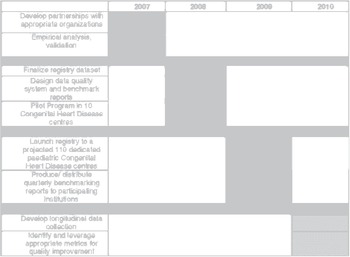
The registry will be a multi-centre registry that is web-based, with simple data collection variables. Additionally, the registry will indicate if a hybrid procedure was performed and, if so, identify the type of procedure. Electrophysiology procedures for paediatric patients and those with congenital cardiac disease will be considered as the National Cardiovascular Data Registry Implantable Cardioverter Defibrillator (ICD) Registry™ expands its scope into the full set of electrophysiological procedures. The registry is being developed over a phased, four-year period summarized by the following key milestones as shown in Table 1.
Summary of Key Milestones of National Cardiovascular Data Implantable Cardioverter Defibrillator (ICD) Registry.

The Mid-Atlantic Group of Interventional Cardiology (MAGIC) Catheterization Outcomes Project
The Mid-Atlantic Group of Interventional Cardiology (MAGIC) Catheterization Outcomes ProjectReference Everett, Ringel and Rhodes10 was developed because the continued evolution of the treatment of patients with congenital cardiac disease with cardiac catheterization has proceeded without the structures in place to determine, at a national level, the long term outcomes of these therapeutic procedures in children.Reference Everett, Ringel and Rhodes10 A novel aspect of this project is its link to existing catheterization software. Its developers worked with a manufacturer to modify a widely used clinical paediatric cardiac catheterization database, PedCath™ (Scientific Software Solution, Charlottesville, VA) into an automatic data submission tool to the Project’s database. This linkage involved adding extra windows for study data entry and automatic addition of unique study institution and patient identifier codes. Once clinical and study data entry are complete, case files (containing all hemodynamic, diagnostic and supplemental study data) are stripped of patient health information (in order to be compliant with the Health Insurance Portability and Accountability Act [HIPAA] of the United States of America) at the time of export by file transfer protocol to a secure database at Johns Hopkins. PedCath™ was also modified such that patient follow-up data post procedure could be added and transmitted by the same file transfer protocol process to update the database for long term outcome studies. In addition, software tools were developed for tracking follow up data, including the generation of email reminders. The significance of this approach is that data entry is minimal and is part of the healthcare delivery process, thus increasing compliance. A database of significant depth is therefore built as all catheterization data is captured. High data accuracy is maintained because the data is sent directly from the electronic medical record. Data is shared weekly with all study participants. Since the development of the Mid-Atlantic Group of Interventional Cardiology Catheterization Outcomes Project in 2004, it continues to expand and presently consists of 16 participating centres (15 in the United States, one in Belgium) with over 1400 cases entered, tracking 8 procedures (closure of atrial and ventricular septal defects, closure of patent oval foramen and arterial ducts, aortic and pulmonary balloon valvotomy, aortic coarctation angioplasty and stenting, and pulmonary hypertension).
The Congenital Cardiac Catheterization Project on Outcomes (C3PO)
The Congenital Cardiac Catheterization Project on Outcomes began as an outgrowth of a project intended to assess physicians’ performance for paediatric catheterizations at Children’s Hospital Boston. The purpose of the project is to:
1. develop and validate a risk adjustment tool for comparing preventable adverse event rates among practitioners and institutions
2. establish a measurement tool for assessing procedural efficacy in paediatric catheterization
3. apply measures of outcomes for the purposes of improving quality of care.
Seven sites (Children’s Hospital Boston, Morgan Stanley Children’s Hospital of New York Presbyterian, Cincinnati Children’s Hospital, Columbus Children’s Hospital, St. Louis Children’s Hospital, Pittsburgh Children’s Hospital, and Rady Children’s Hospital and Health Center San Diego) are participating in the Project. In February 2007 sites began recording patient and procedural characteristics, as well as the occurrence of adverse events, on all hemodynamic and interventional cases performed at the institution. Data are entered using a web-based data entry tool developed for the project with support from the Children’s Heart Foundation. Ongoing project expenses are supported by an American Heart Association Physician’s Round Table Award. Once sufficient data have been acquired, the Project’s investigators will refine and improve existing methods to assess procedural complications and efficacy.
The Congenital Cardiovascular Interventional Study Consortium (CCISC)
The Congenital Cardiovascular Interventional Study Consortium (CCISC) was developed in 2002. This Consortium is a not-for-profit organization dedicated to the advancement of the science and treatment of infants, children, and adults requiring surgical/interventional procedures for the treatment of congenital cardiac disease. The group’s mission is to design, conduct and report the findings of prospective scientific studies in interventional cardiovascular care for individuals with congenital cardiac disease.
The purposes of this group are:
1. To establish and maintain an international prospective, event driven database for interventional/surgical interventions in the treatment of congenital cardiac disease.
2. To use the database to encourage and stimulate clinical research in the fields of interventional/surgical paediatric cardiology.
There are currently more than 140 paediatric cardiology interventional physicians from around the world who participate. The group meets twice a year to discuss ongoing and future projects, with future projects being submitted by its members.
In 2005, the first study comparing the outcome of surgery versus balloon angioplasty versus stenting in coarctation of the aorta was launched, with over 40 institutions participating. The group intends to establish 5 more registry projects by mid 2008.
The Congenital Cardiovascular Interventional Study Consortium is a web-based data registry. This Consortium is unique in that it is supported by educational grants obtained through multiple industry sponsors. Using these grants, participating sites are paid a stipend for study start-up costs and completed patient visits in order to defray some of the cost of conducting research.
The Joint Council on Congenital Heart Disease (JCCHD) National Quality Improvement Initiative
In 2006 the Joint Council on Congenital Heart Disease, a paediatric cardiology leadership alliance, committed to developing a national Quality Improvement collaborative for paediatric cardiology. A national Quality Improvement collaborative taskforce was assembled, consisting of seven leaders from large paediatric cardiology and cardiac surgical centres. Facilitating the effort are faculty members from the Center for Healthcare Quality at Cincinnati and Chapel Hill.
The fundamental goals of this national quality improvement initiative are:
1. To improve care and outcome for children with cardiovascular disease;
2. To do so in a multi-institutional, collaborative fashion;
3. To develop a national registry to study care processes and outcomes; and
4. To apply formal Quality Improvement methods to test changes, and rapidly identify and spread improvements.
An initial project for the improvement collaborative was chosen using the criteria that the topic area is clinically important, has the potential for improvement, and is under the purview of paediatric cardiologists. With these qualifications, it was determined that the initial project will address care and outcomes for infants with hypoplastic left heart syndrome. The Specific Aim of the initial project is: “To improve survival and quality of life for infants with hypoplastic left heart syndrome during the ‘interstage’ period between discharge after Norwood stage I surgery and admission for stage II surgery”.
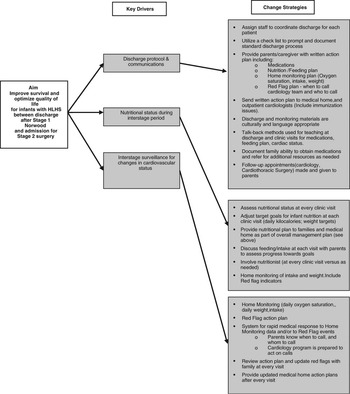
Utilizing Quality Improvement methods, and with facilitation by the Center for Healthcare Quality, a formal Key Driver diagram was constructed (Figure 2). The Key Drivers are processes that affect the ability of paediatric cardiologists to achieve the primary aim. Figure 2 omits some Key Drivers of outcome, such as patient characteristics and technical aspects of the surgery itself, which are not under the direct influence of paediatric cardiologists. Thus, the Key Drivers to be addressed in the initial project are:
Key Driver diagram for the initial project of the JCCHD national quality improvement initiative. A Key Driver is a process that directly affects the physician’s ability to achieve the Aim. Omitted from this diagram are Key Drivers, such as patient characteristics or technical surgical results, that affect the Aim but which are not under the influence of the paediatric cardiologist.

1. The discharge protocol and communications after the stage I Norwood procedure;
2. Infant nutritional status during the “interstage” period; and
3. Interstage surveillance for changes in patient cardiovascular status.
The right side of the Key Driver diagram (Fig. 2) lists possible change strategies related to Key Drivers that are derived from the literature or (more commonly) from expert consensus. The project design drew heavily from a quality improvement initiative at Children’s Hospital of Wisconsin and Medical College of Wisconsin.Reference Ghanayem, Hoffman and Mussatto11 These change strategies are clinical/system changes that relate to each Key Driver and that may ultimately assist in achieving the primary aim of the project. Formal Quality Improvement methods such as “Plan-Do-Study-Act (PDSA)” cycles and factorial statistical analyses, will enable centres in the collaborative to test the impact of one or more of these changes on the outcomes of patients undergoing treatment.Reference Langley, Nolan, Nolan, Norman and Provost12 Changes that might be tested, for example, include providing parents with a written “red flag” action plan explicitly defining problems to watch for and actions to take, a system to assess nutritional status and adjust nutritional goals at each outpatient visit, and a system of daily or weekly home monitoring of oxygen saturation, caloric intake and/or weight gain.
As this article is written in late 2007, the design of the multicentre database is well underway. The database will capture data regarding each patient’s presentation, initial stage I surgery, post-operative care, interstage management and course, as well as data regarding Stage II surgery and its outcomes. To the extent that is practicable, the registry dataset, measure definitions, and nomenclature, will be aligned with existing databases such as the Congenital Heart Surgery Database of The Society of Thoracic Surgeons. The nomenclature itself will be based on The International Pediatric and Congenital Cardiac Code [http://www.ipcc.net]. Soon the taskforce expects to have the following objectives:
1. create finalized specifications for process and outcome measures,
2. create and pilot-test data collection instruments,
3. refine the measures based on feedback from test centres, and
4. develop a system to support data collection across the collaborative sites.
Accomplishment of these objectives will result in a set of measures and improvement strategies that can be implemented by the seven pilot centres, and eventually spread to other paediatric cardiology centres as well. Pilot data collection for this project is expected to begin in 2008.
Conclusion
These projects, each leveraging multicentre data and collaboration, demonstrate the enormous progress that has occurred over the last several years to improve the quality and consistency of information about nonsurgical treatment for congenital cardiac disease. The paediatric cardiology field is well-poised to move quickly beyond outcome assessment and benchmarking, to collaborative quality improvement. Although much of the organized efforts thus far have centred around catheter-based interventions, the Joint Council on Congenital Heart Disease initiative is heralding important work to be done in other, less procedure-focused areas. As an example, the American College of Cardiology Adult Congenital and Pediatric Section has launched an initiative to define a comprehensive list of performance metrics that will encompass the breadth of paediatric cardiology practice, including diagnostic accuracy, longitudinal management, electrophysiology, intensive care, as well as the transition from paediatric to adult practitioners. These efforts will guide the path to ever improving outcomes for children and adults with congenital heart defects.
Acknowledgement
We thank The Children’s Heart Foundation (http://www.childrensheartfoundation.org/) for financial support of this research.