Introduction
Maize silage is the main forage source in the Brazilian dairy cows' systems (Bernardes and Rego, Reference Bernardes and Rego2014) because it is palatable, important as an energy and highly digestible forage source (Scheler and Cavichioli, Reference Scheler and Cavichioli2021). However, weather factors such as temperature, precipitation and solar radiation can affect the quality and productivity of whole-plant maize silage (Maldaner et al., Reference Maldaner, Horing, Schneider, Frigo, Azevedo and Grzesiuck2014). Whole-plant grain sorghum silage (WPSS) can be an alternative forage source that has higher adaptability to warm and dry environments (Zegada-Lizarazu et al., Reference Zegada-Lizarazu, Zatta and Monti2012) and shows high productivity and energy content.
Although sorghum is a more productive crop than maize, losses can be high during silage fermentation (Pinho et al., Reference Pinho, Santos, Oliveira, Bezerra, Freitas, Perazzo, Ramos and Silva2015). Several studies have attempted to improve the silage fermentation process, but the conditions are not always adequate to guarantee sufficient silage quality (McDonald et al., Reference McDonald, Henderson and Heron1991). Microbial inoculants are the main group of additives used to improve dry matter (DM) recovery (Muck et al., Reference Muck, Nadeau, McAllister, Contreras-Govea, Santos and Kung2018) and the aerobic stability of sorghum silage (Thomas et al., Reference Thomas, Foster, McCuistion, Redmon and Jessup2013). Kung et al. (Reference Kung, Stokes and Lin2003) evaluated a blend of essential oils (EO) as an additive in maize silage. EO are natural secondary metabolites extracted from plants (Benchaar et al., Reference Benchaar, Calsamiglia, Chaves, Fraser, Colombatto, McAllister and Beauchemin2008) and are known to have antimicrobial properties (Calsamiglia et al., Reference Calsamiglia, Busquet, Cardozo, Castillejos and Ferret2007). Despite the antimicrobial effects of known EO, few studies using these substances as additives for silage have been carried out (Besharati et al., Reference Besharati, Niazifar, Nemati and Palangi2020).
The ban on antibiotics used as growth promoters is negatively impacting the livestock sector (Laxminarayan et al., Reference Laxminarayan, Matsoso, Pant, Brower, Røttingen, Klugman and Davies2016). Innovative alternatives are needed to produce animal feed and help combat rising antibiotic resistance (Czaplewski et al., Reference Czaplewski, Bax, Clokie, Dawson, Fairhead, Fischetti, Foster, Gilmore, Hancock, Harper, Henderson, Hilpert, Jones, Kaioglu, Knowles, Ólafsdóttir, Payne, Projan, Shaunak, Silverman, Thomas, Trust, Warn and Rex2016). In a recent study of our research group, Cantoia et al. (Reference Cantoia, Capucho, Garcia, Del Valle, Campana, Zilio, Azevedo and Morais2020) observed positive effects using 2 ml of lemongrass essential oil (LEO) per kg of sugarcane silage (as-fed) on DM recovery, nutritional value and aerobic stability. This study also showed decreased yeast and mould count in LEO-treated silages, which are considered one of the main factors responsible for ethanol production and fermentation losses. Kholif et al. (Reference Kholif, Matloup, Hadhoud, Kassab, Adegbeye and Hamdon2021) observed improvements in rumen fatty acids and milk yield and better nutrient utilization efficiency in lactating ewes fed lemongrass. However, to the best of our knowledge, there is no study evaluating LEO addition during the ensiling of a less fermentable material, such as whole-plant sorghum silage (WPSS). Although fermentability of fresh material affects additives' effects on silage fermentation profile (Oliveira et al., Reference Oliveira, Weinberg, Ogunade, Cervantes, Arriola, Jiang, Kim, Li, Gonçalves, Vyas and Adesogan2017), we hypothesized that increasing doses of LEO would reduce fermentation losses, silage butyric acid concentration, and increase the aerobic stability of WPSS. The present study aimed to evaluate the effects of increasing LEO levels on silage fermentation profile, fermentation losses, chemical composition, in vitro degradation of DM and fibre, and pH and temperature after aerobic exposure.
Materials and methods
The present trial was conducted at the Itaqui Campus of the Federal University of Pampa (29.2° South, 56.6° West, and 57 m above sea level). Experimental procedures were previously approved by the Animal Welfare Ethics Committee from the Federal University of Pampa (approval number 042/2019).
Treatments, experimental design and ensiling
Fifty experimental silos were made in PVC tubes with 28 cm diameter and 25 cm height. A completely randomized design was used to evaluate increasing doses of LEO addition during whole-plant sorghum ensiling: 0 (control); 1, 2, 3 and 4 ml per kg of sorghum DM. Lemongrass EO was obtained from Quinarí (Ponta Grossa, Brazil) and the doses were defined to be lower than those evaluated by Cantoia et al. (Reference Cantoia, Capucho, Garcia, Del Valle, Campana, Zilio, Azevedo and Morais2020).
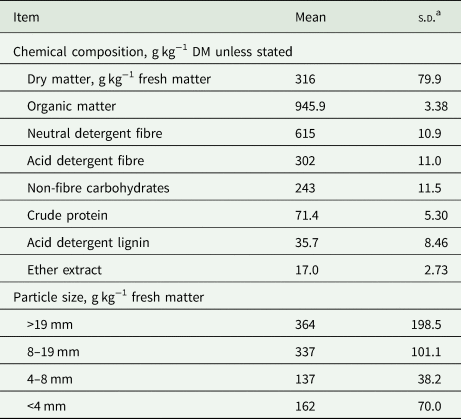
Five plots (each 180 m2) were conventionally prepared, and sown using five different sorghum cultivars (Nusil 426®, Taguá®, Nucover 100® and Qualysilos® from Sementes Nuseed, Curitiba, Brazil and AG2501®, from Agroceres, Rio Claro, Brazil) on 01 November 2019. Within each cultivar, two silos were prepared for each of five levels of LEO. The harvest was conducted on two subsequent days from each plot. Harvest commenced when the first cultivar (plot) reached 400 g kg−1 of DM content, and in subsequent days, it was performed in other plots. Plants were harvested on 7 (Soft dough stage) to 8 (Hard dough stage) phenological stage (Rao et al., Reference Rao, Elangovan, Umakanth, Seetharama, Reddy Belum, Ramesh, Ashok Kumar and Gowda2007). The harvests occurred from February 11–17, 2020 (105 ± 2.44 days after the seeding). Plants were harvested at 5 cm of height and processed in a stationary mill (GP 1500 ADI, Garthen, Navegantes, Brazil). Representative samples of each cultivar were collected for chemical analysis, in vitro assay, and particle evaluation according to Maulfair et al. (Reference Maulfair, Fustini and Heinrichs2011) (Table 1). Dried sand (5 kg) was positioned inside the silo in a layer below the silage to quantify effluents. The sorghum material for each silo was individually weighed, and LEO (or placebo) was added using a pipette. Then, the sorghum was manually mixed and compacted to 650 kg m−3 of bunker density, sealed, and stored with shelter from light and heat. The temperature was not controlled and averaged 19°C during the storage period.
Chemical composition and particle size of whole-plant Sorghum bicolor (L) before the ensiling (n = 5)

a Stardard deviation.
Data record and sampling
The silos were opened 168 ± 2.44 days after the ensiling. The extended period of storage occurred due to the COVID-19 pandemic condition. Silos were weighed before opening to assess the gas losses through the storage period. Once the silos were opened, the silage was completely removed from the silos; 5-cm of the top and bottom layer was discarded, and the silage was manually mixed to obtain samples for fermentation profile evaluation (500 g), chemical analysis and in vitro assay (500 g) and aerobic stability evaluation (3 kg).
After sampling, silage fluid was extracted using a hydraulic press, without any water addition. Silage pH was immediately evaluated using a bench pH metre (LUCA-210®, Lucadema, São José do Rio Preto, Brazil). Fluid was frozen (−20°C) without acid addition, prior to subsequent analysis. Samples for chemical and in vitro analysis were dried in a forced-air oven at 60°C for 72 h, and processed in a knives mill (SL-31®, Solab Científica, Piracicaba, Brazil) to pass through a 2 (in vitro assay) or 1-mm (chemical analysis) sieve before the storage until analysis. Samples for aerobic stability assay were packed in PVC pipes without compression and stored for 168 h in a temperature-controlled room (21.2 ± 2.27°C) (Wilkinson and Davies, Reference Wilkinson and Davies2012). The temperature at the centre of silage mass was evaluated every 12 h using a spit thermometer (K29-5030®, Kasvi – Produtos Laboratoriais, Pinhais, Brazil). Silage pH was recorded every 12 h after 15-min of water homogenization (dilution rate 15 g: 100 ml; Kung et al., Reference Kung, Grieve, Thomas and Huber1984).
Chemical analysis and in vitro assay
Silage fluid was thawed at room temperature, and centrifuged (500 × g for 15 min.) to remove solid contaminants. The supernatant was used to analyse ammonia (NH3-N), ethanol, and organic acids. Ammonia-N was analysed using the Kjeldahl method (984.13, AOAC, 2000) without sample digestion. The concentration of lactic acid was assessed after sulphuric acid solubilization and heating (75°C for 2.5 min). Samples were cooled and heated at 90°C for 1.5 min., after the addition of a colour reagent (4-phenylphenol, Sigma Aldrich, St. Louis, USA) addition. Readings were performed in a spectrophotometer at 560 nm (Pryce, Reference Pryce1969). Ethanol and other organic acids were evaluated using a gas chromatographic method. The sample was acidified with ortho-phosphoric acid (1.8 ml sample: 0.2 acid) and injected in a gas chromatograph (GC-2010 plus chromatograph, Shimadzu, Barueri, Brazil), equipped with an auto-sampler AOC-20i, capillary column Stabilwax-DA™ (30 m, 0,25 mm ID, 0.25 μm df, Restek©), and a flame ionization detector. It was used 1 μl of sample and 40:1 split ratio. Helium was the carrier gas and injection velocity was 42 cm s−1. The injector and detector temperatures were 250 and 300°C, respectively, whereas the initial temperature of the column was 40°C. The temperature increased from 40 to 120°C at 40°C min−1 rate, followed by increases from 120 to 180 and from 180 to 240°C at 10 and 120°C min−1, respectively. Then, the temperature remained for 3 min at 240°C. Fatty acids were quantified based on the peaks areas, and qualifications were realized using GC solution v. 2.42.00 software.
Unfermented sorghum and silage samples (processed at 1-mm sieve) were analysed for DM (method 930.15; AOAC, 2000), ash (method 942.05; AOAC, 2000), crude protein (N × 6.25; Kjeldahl method 984.13; AOAC, 2000), ether extract (method 920.39; AOAC, 2000), acid detergent fibre and lignin (method 973.18; AOAC, 2000), and neutral detergent fibre (NDF) using thermal-stable alpha-amylase without sodium sulphite (Van Soest et al., Reference Van Soest, Robertson and Lewis1991). Fibre contents were expressed including residual ash.
In vitro assay was performed according to Tilley and Terry (Reference Tilley and Terry1963) and Holden (Reference Holden1999) methods. Samples (processed at 1-mm sieve) were placed in nonwoven fabric (5 × 5 cm and 100 g m−2; Casali et al., Reference Casali, Detmann, Valadares Filho, Pereira, Henriques, Freitas and Paulino2008) and incubated for 48-h in ruminal inoculum using an in vitro incubator (NL162®, New Lab, Piracicaba, Brazil). The inoculum was prepared using ruminal fluid from two Dairy heifers maintained fed with Mombaça Guinea grass (Megathyrsus maximus) with no supplementation. Buffer was as described by McDougall (Reference McDougall1948). After incubation, bags were washed in running water, and analysed for NDF content, as previously described.
Calculations and statistical analysis
Gas (GL, Eqn 1) and effluent losses (EL, Eqn 2) were calculated using the following equations (Jobim et al., Reference Jobim, Nussio, Reis and Schmidt2007):


where WSW and ESW are whole and empty silos weight, respectively; en is weight at ensiling, whereas op is weight at silos opening, and EDM is ensiled DM. DM recovery is the ratio between DM obtained after storage and EDM.
Data were analysed using the PROC MIXED of SAS (version 9.4) according to the following model:

With $e_{ij}\approx N\; \left( {0,\; \sigma _e^2 } \right)$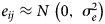 , where: Yijk is the observed value of the dependent variable; LEOi is the fixed effect of LEO level (i = 1 to 5); Cj is the fixed effect of cultivar (j = 1 to 5); LEO × Cij is the LEO and cultivar fixed interaction effect; eijk is the random residual error; N stands for Gaussian distribution; $\sigma _e^2$
 is the error variance. The LEO level effect was studied using polynomial regression: it evaluated the linear, quadratic, and non-quadratic (cubic) effect of LEO on evaluated variables.
Temperature and pH data obtained after aerobic exposure were analysed using the following model:

with ωij ≈ N (0, $\sigma _\omega ^2$ ); and eijkl ≈ MRN (0, R); where $Y_{ijkl}$
 is the observed value of the dependent variable; μ, $LEO_i$
 , Cj, LEO × Cij, and N were previously defined; $\omega _{ijk}$
 is the error associated with parcels (silos); $T_l$
 is the fixed effect of time after aerobic exposure; $LEO \times T_{il}$
 , $C \times T_{jl}$
 , and $LEO \times C \times T_{ijl}$
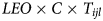 are the fixed interaction effects between previously defined effects; $e_{ijkl}$
 is the experimental error; $\sigma _\omega ^2$
 is the variance associated with parcels (silo); MRN: stands for multivariate analysis with approximately Gaussian distribution; R is the matrix of variance and covariance due to repeated measures. The following matrices were evaluated according to the Bayesian method: CS, CSH, AR, ARH, TOEP, TOEPH, UN, FA, ANTE. Treatment effect was decomposed when P ≤ 0.10. Significance was declared at P ≤ 0.05.
Results
Fermentation profile
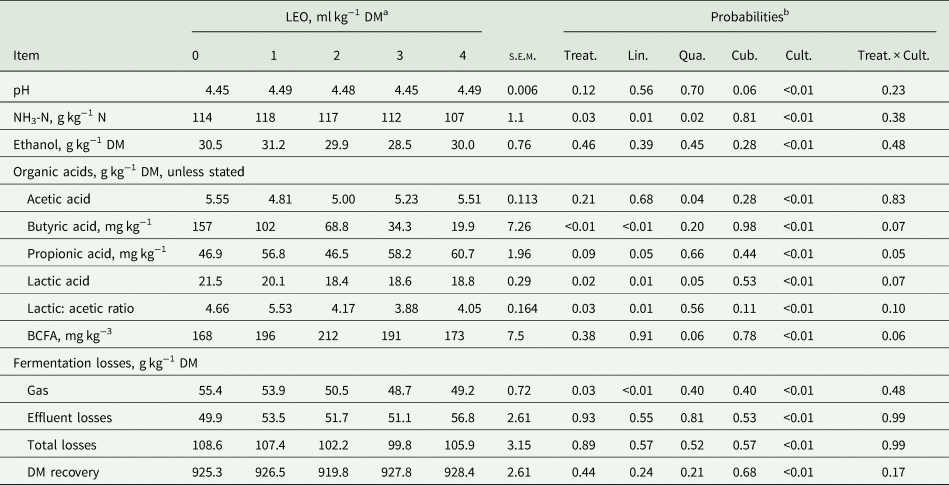
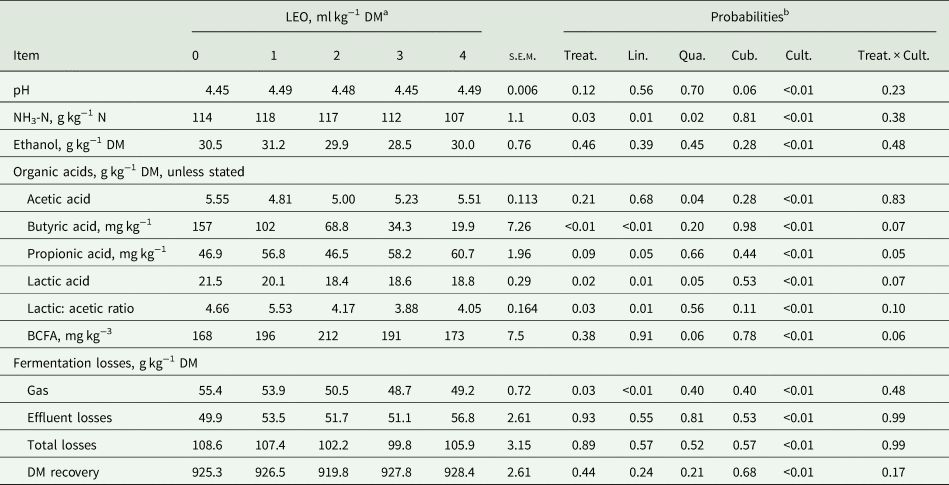
Utilization of LEO linearly decreased (P ≤ 0.01) butyric acid concentration and lactic to acetic acids ratio and linearly increased (P = 0.05) propionic acid concentration in WPSS (Table 2). Except for propionic acid silage concentration, there was no LEO and cultivar interaction effect (P ≥ 0.07) on the silage fermentation profile. In addition, LEO quadratically affected (P ≤ 0.05) silage NH3-N, lactic, and acetic acids concentrations. Intermediary levels of LEO increased NH3-N and reduced acetic and lactic acids concentrations in relation to control and upper level (4 ml kg−1 DM). However, treatments showed no effects (P ≥ 0.12) on silage pH and concentrations of ethanol and branched-chain fatty acids.
Silage fermentation profile and losses of WPSS containing increasing levels of LEOs
a Increasing levels of LEO in WPSS: 0, 1, 2, 3 and 4 ml kg−1 DM.
b Probabilities: LEO effect (Treat.), linear (Lin.), quadratic (Qua.); and non-quadratic/cubic (Cub.) of LEO.
c Branched-chain fatty acids.
Fermentative losses and DM recovery
There was no LEO and cultivar interaction effect (P ≥ 0.17) on fermentation losses and DM recovery. The addition of LEO linearly decreased (P ≤ 0.01) gas losses of silage. Lemongrass EO did not affect (P ≥ 0.89) effluent and total losses. Therefore, treatments showed no effect (P = 0.44) on DM recovery.
Chemical composition and in vitro degradation of DM and NDF
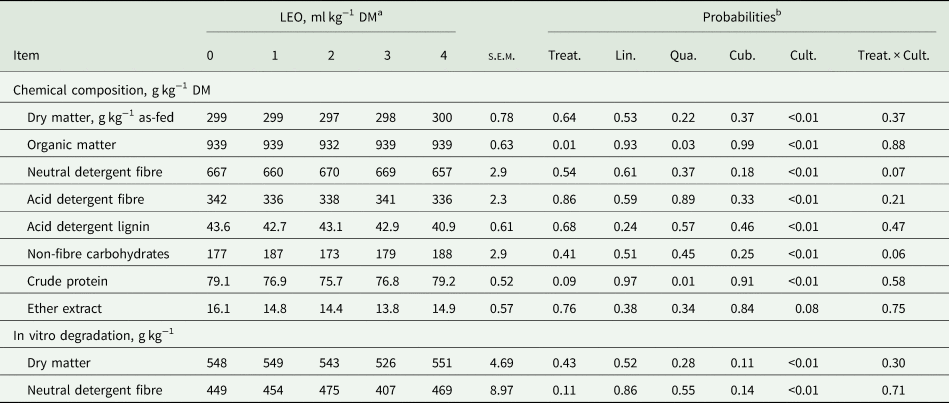
There was no LEO and cultivar interaction effect (P ≥ 0.06) on silage chemical composition and in vitro degradation (Table 3). The intermediate levels of LEO addition increased (P ≤ 0.03) the organic matter and crude protein of the silage. However, increasing levels of LEO did not affect (P ≥ 0.41) NDF, acid detergent fibre, acid detergent lignin, non-fibrous carbohydrates and ether extract content of the silage. Therefore, LEO had no effect (P ≥ 0.11) on in vitro degradation of DM and NDF.
Chemical composition and in vitro degradation of WPSS containing increasing levels of LEOs

a Increasing levels of LEO in WPSS: 0, 1, 2, 3 and 4 ml kg−1 DM.
b Probabilities: LEO effect (Treat.), linear (Lin.), quadratic (Qua.); and non-quadratic/ cubic (Cub.) of LEO.
Aerobic stability
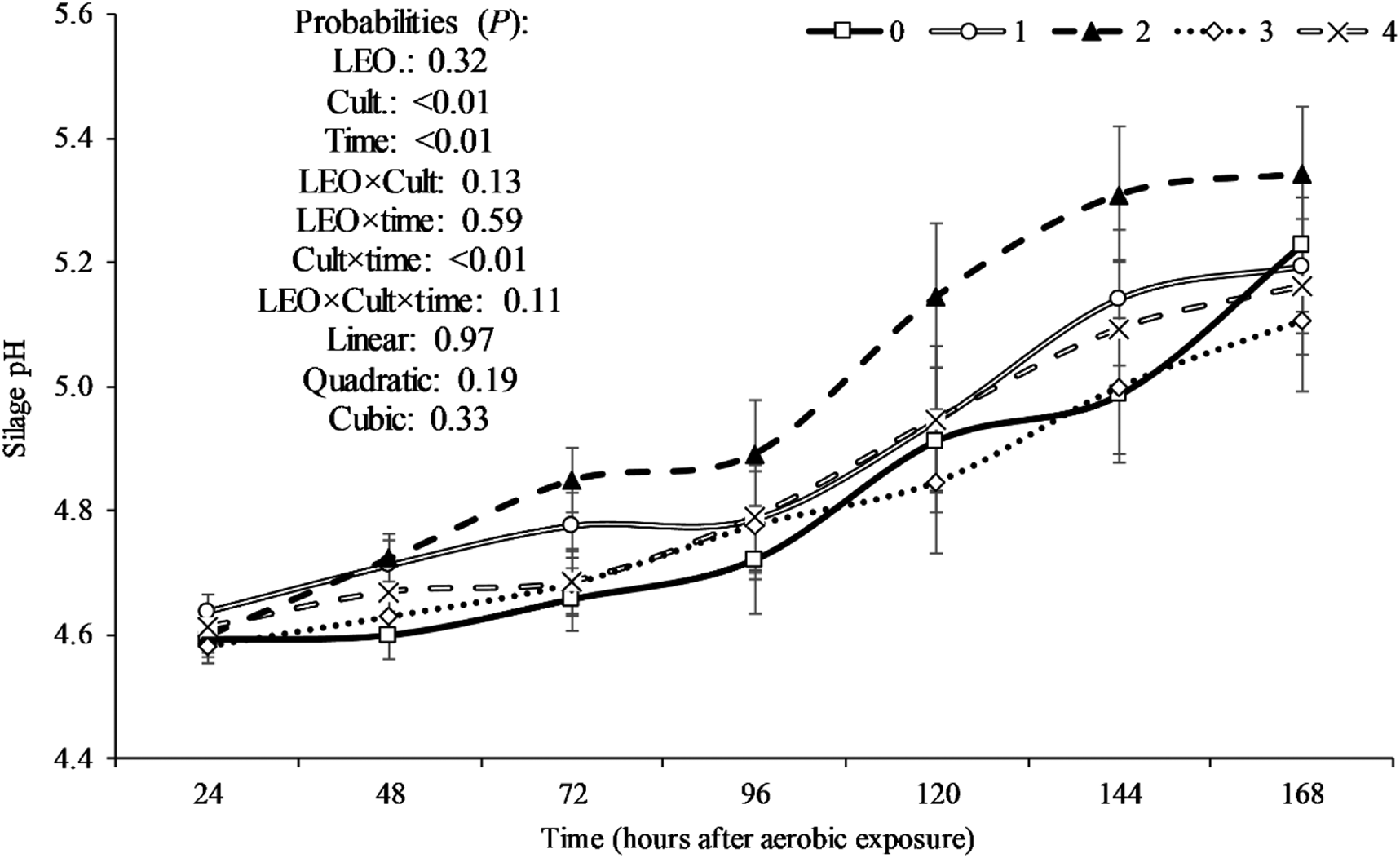
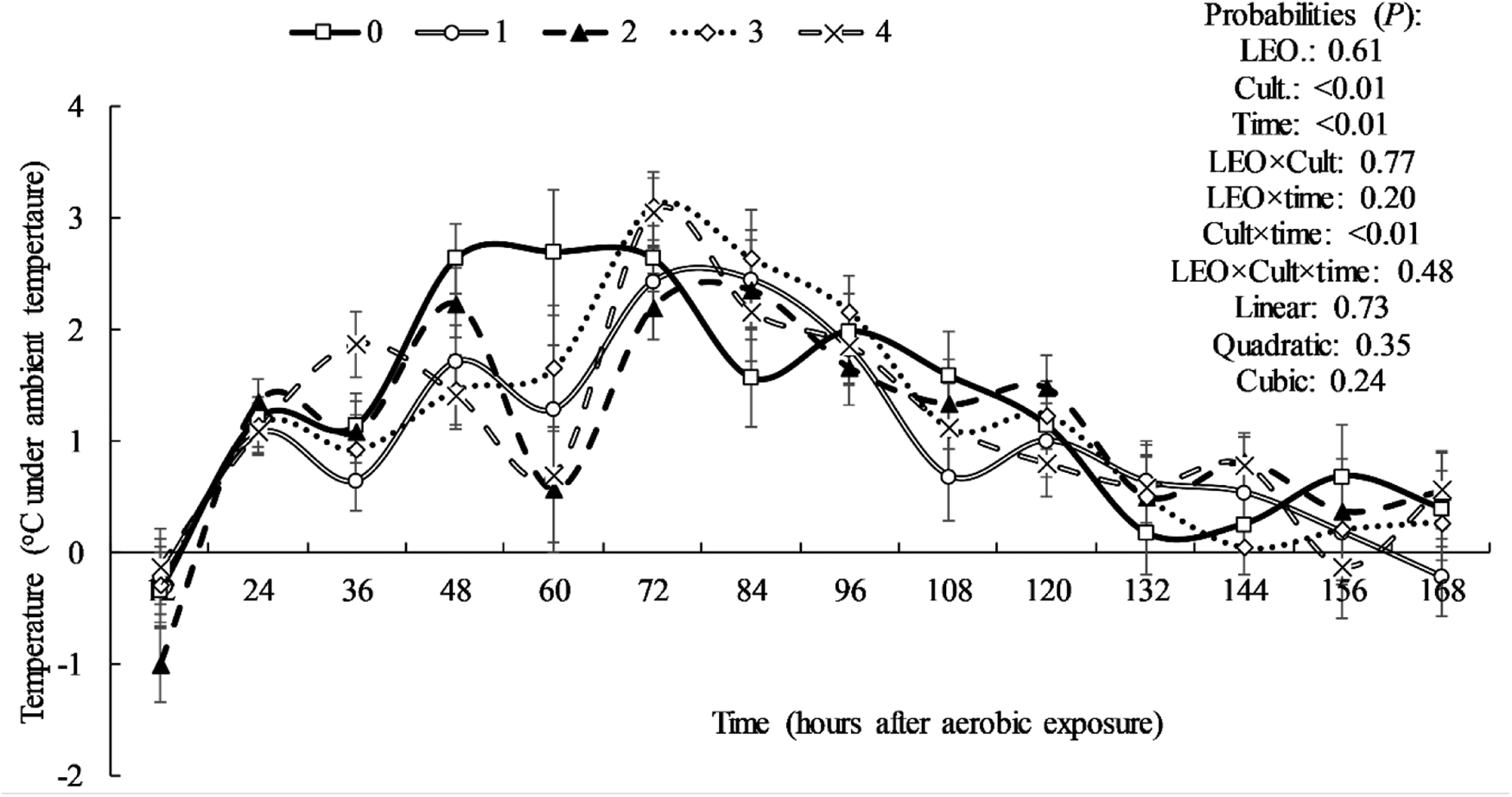
After aerobic exposure, the addition of increasing levels of LEO did not affect (P ≥ 0.32) the silage pH and temperature regardless of the cultivar (P ≥ 0.13) and evaluation period (P ≥ 0.20) (Figs 1 and 2).
pH after aerobic exposure of WPSS containing increasing levels of LEOs.

Temperature after aerobic exposure of WPSS containing increasing levels of LEOs.

Discussion
We hypothesized that LEO addition during WPSS ensiling could reduce fermentative losses and butyric acid silage content and increase silage in vitro degradation and aerobic stability of silage, based on previous studies in sugarcane silage (Cantoia et al., Reference Cantoia, Capucho, Garcia, Del Valle, Campana, Zilio, Azevedo and Morais2020). Although LEO reduced silage gas losses and butyric acid concentration, it did not affect DM recovery, in vitro degradation, and silage temperature and pH after aerobic exposure.
In the present study, we found a quadratic effect of LEO on NH3-N concentration, once silages containing 1 ml kg−1 of LEO had higher NH3-N concentration than control-silage. In a previous study of our research group (Cantoia et al., Reference Cantoia, Capucho, Garcia, Del Valle, Campana, Zilio, Azevedo and Morais2020), LEO increased NH3-N in sugarcane silage. Microbial and plant enzymes are the main accountable for protein solubilization and proteolysis (Junges et al., Reference Junges, Morais, Spoto, Santos, Adesogan, Nussio and Daniel2017). In addition, NH3-N and butyric acids are produced in high humidity silages by clostridial fermentation (Kung et al., Reference Kung, Shaver, Grant and Schmidt2018). Studies evaluating LEO in beef cattle diet observed a reduction in NH3-N in vivo (Wanapat et al., Reference Wanapat, Cherdthong, Pakdee and Wanapat2008) and in vitro (Nanon et al., Reference Nanon, Suksombat and Yang2014) and associated this with a negative effect of LEO on rumen ammonia bacterial production. In another study by our research group, Garcia et al. (Reference Garcia, Capucho, Cantoia Júnior, Burró, Noernberg, Zilio, Campana, Del Valle and Morais2022) observed a reduced NH3-N concentration in Guinea grass silage when LEO was added during ensiling. Ammonia-N has been associated with increased silage pH observed in LEO-treated silages: reduced pH could inhibit clostridial growth, showing a negative effect on NH3-N concentration (Kung et al., Reference Kung, Shaver, Grant and Schmidt2018). In the current study, LEO had no effect on silage pH and, therefore, it was possible to confirm that LEO inhibits WPSS proteolysis, once LEO reduces NH3-N and butyric acid content on silage.
As observed in NH3-N concentration, LEO showed a quadratic effect on silage CP and OM content. Increased protein solubilization increases N losses through the effluents, resulting in a lower CP content in the silage. As observed by Chaves et al. (Reference Chaves, Baah, Yang, McAllister and Benchaar2008), EO' effects on silage fermentation and aerobic stability are greatly affected by supplying level. On the other hand, LEO effect on OM content has limited implications on silage nutritional value.
Besides reported effects on NH3-N and butyric acid concentrations, intermediary levels of LEO reduced the acetic and lactic concentrations on WPSS. Evaluating increasing levels of cumin EO in alfalfa silage, Turan and Önenç (Reference Turan and Önenç2018) also observed a quadratic effect on NH3-N and organic acids production. According to those authors, the inhibition of lactic acid bacteria metabolism reduces organic acids production and proteolysis. However, increasing LEO levels linearly decreased the lactic to acetic acid ratio. This effect agrees with heterolactic fermentation, as observed using second-generation (heterolactic) microbial inoculants (Arriola et al., Reference Arriola, Kim and Adesogan2011). Besides linear negative of LEO on both acids production, Cantoia et al. (Reference Cantoia, Capucho, Garcia, Del Valle, Campana, Zilio, Azevedo and Morais2020) also observed a lactic to acetic ratio of 1.62 in control and 1.36 using 3 ml of LEO per kg of sugarcane. Heterolactic fermentation normally has a more positive effect on high fermentable substrates, as sugarcane evaluated by Cantoia et al. (Reference Cantoia, Capucho, Garcia, Del Valle, Campana, Zilio, Azevedo and Morais2020) than WPSS evaluated in the present study (Oliveira et al., Reference Oliveira, Weinberg, Ogunade, Cervantes, Arriola, Jiang, Kim, Li, Gonçalves, Vyas and Adesogan2017).
Although heterolactic fermentation results in higher water and CO2 production than homolactic fermentation (Muck, Reference Muck2010), the addition of LEO linearly reduced silage gas losses. Furthermore, possible increased gas production due to heterolactic fermentation largely reduced butyric acid content. According to Kung et al. (Reference Kung, Shaver, Grant and Schmidt2018), silages with higher clostridial growth have high concentrations of fibre and low DM digestibility because much of the readily available soluble nutrients have been degraded (Mills and Kung, Reference Mills and Kung2002). This degradation seems to increase gas losses of low-LEO treated silages. Besides the reduced lactic to acetic acid ratio, LEO increased propionic acid concentration in the present study. Inoculation with propionic acid bacteria has been used to increase propionic acid and increase aerobic stability by inhibiting yeast and mould growth (Filya et al., Reference Filya, Sucu and Karabulut2004). Although LEO did not affect WPSS aerobic stability, increased propionic concentration contributed to decreased fermentation gas losses in the present study.
Besharati et al. (Reference Besharati, Palangi, Niazifar and Nemati2021) evaluated increasing levels of lemongrass seed essential oil on alfalfa silage fermentation profile and in vitro de gradation kinetics. Intermediary levels evaluated in that study (60 ml /kg−1 DM) increased the potential DM degradation. However, in the present study there were no treatment effects on DM recovery, silage fibre concentration, and in vitro degradation of DM and NDF. It is possible to infer that LEO positive effects on silage fermentation and gas losses were slight to affect these variables. Other questions, such as effluent losses and fluidification of DM, could affect DM recovery and result in a lack of LEO impact on this variable. Although increased acetic acid content of silage can reduce feed intake (Steen et al., Reference Steen, Gordon, Dawson, Park, Mayne, Agnew, Kilpatrick and Porter1998), and butyric acid has been associated with decreased animals' performance (Scherer et al., Reference Scherer, Gerlach and Südekum2015), the absence of LEO effect on DM recovery, fibre content, and in vitro degradation limits its application in practical conditions, once these variables are the most associated with the financial viability of the additive.
The addition of LEO showed no effect on WPSS temperature and pH after aerobic exposure. A linearly reduced lactic to acetic ratio could lead us to expect increased aerobic stability of WPSS: acetic acid inhibits yeast and mould growth after aerobic exposure, whereas lactic acids serve as the substrate for these microorganisms' growth (Danner et al., Reference Danner, Holzer, Mayrhuber and Braun2003). However, butyric has been associated with extended aerobic stability (Kung et al., Reference Kung, Shaver, Grant and Schmidt2018). Consequently, LEO did not improve the aerobic stability of WPSS in the present study. Kung et al. (Reference Kung, Stokes and Lin2003) evaluated a blend of essential oil addition during whole maize plant ensiling. Besides positive effects observed on in vitro ruminal fermentation and animal performance, EO had no effects on silage fermentation and aerobic stability. Similarly, LEO altered WPSS silage fermentation and has limited effects on silage nutritional value and aerobic stability.
As previously mentioned, fermentability is one of the main factors influencing the effects of EO on silage parameters (Chaves et al., Reference Chaves, Baah, Yang, McAllister and Benchaar2008). EO could be considered inhibitors of silage fermentation by their negative effects on microbial growth. Considering the lower fermentability of WPSS compared to sugarcane silage, we prefer to evaluate lower LEO doses than the optimal doses recommended by Cantoia et al. (Reference Cantoia, Capucho, Garcia, Del Valle, Campana, Zilio, Azevedo and Morais2020). Low-fermentability material response is better when treated with fermentation promoters rather than inhibitors. It also explains the lower effects of LEO on Guinea Grass (Garcia et al., Reference Garcia, Capucho, Cantoia Júnior, Burró, Noernberg, Zilio, Campana, Del Valle and Morais2022) and WPSS (current study) when compared to sugarcane silage (Cantoia et al., Reference Cantoia, Capucho, Garcia, Del Valle, Campana, Zilio, Azevedo and Morais2020).
Conclusion
LEO reduces WPSS gas losses, butyric acid concentration, and the ratio between lactic and acetic acids. However, LEO does not improve silage chemical composition, in vitro degradation, or aerobic stability.
Author contributions
TADV and EBA conceived and designed the study. RCJr, RMS, TMG, EC and MC conducted data gathering. TADV performed statistical analyses. JPGM, FBF and TMG wrote the article. TADV, JPGM, FBF and EBA critically revised the article.
Financial support
This research was supported by Fundação de Amparo à Pesquisa do Estado do Rio Grande do Sul (FAPERGS #19/2551-0001983-1).
Conflict of interest
The authors declare that there are no conflicts of interest in the current manuscript.
Ethical standards
All procedures were previously approved by UNIPAMPA Animal Ethics Committee (#042/2019).