

INTRODUCTION
Allelopathy, a naturally occurring ecological phenomenon of interference among organisms, is of vital significance in agricultural systems (Farooq et al., Reference Farooq, Jabran, Cheema, Wahid and Siddique2011). Allelopathic plants exude diverse and numerous types of chemicals, which affect other plants in vicinity (Rice, Reference Rice1984). These chemicals, also known as allelochemicals, are largely classified as flavonoids, alkaloids, phenolics, isoprenoids, terpanoids and gluconolates (Putnam and Tang, Reference Putnam and Tang1986).
Allelochemicals are present virtually in all plant tissues including leaves, flowers, fruits, stems, roots, rhizomes, seeds and pollen, and are released into the environment through root exudation, leaching and decomposition of plant residues (Rice, Reference Rice1984). The plant releasing allelochemicals are recognized as the ‘donor’ and that being influenced are identified as the ‘target’ (Putnam and Duke, Reference Putnam and Duke1978). Several crops including rice (Farooq et al., Reference Farooq, Jabran, Rehman and Hussain2008; Kato-Noguchi et al., Reference Kato-Noguchi, Ino, Sata and Yamamura2002), barley (Ben-Hammouda et al., Reference Ben-Hammouda, Ghorbal, Kremer and Oussama2001), wheat (Bertholdsson, Reference Bertholdsson2010), sorghum (Cheema et al., Reference Cheema, Mushtaq, Farooq, Hussain and Islamuddin2009), sunflower (Anjum and Bajwa, Reference Anjum and Bajwa2010), crucifers (Chuanphongpanich et al., Reference Chuanphongpanich, Phanichphant, Bhuddasukh, Suttajit and Sirithunyalug2006) and tobacco (Malinowski et al., Reference Malinowski, Krzymowska, Godoń, Hennig and Podstolski2007; Rizvi et al., Reference Rizvi, Mishra and Rizvi1989a) possess allelopathic potential.
Stand establishment of crops following allelopathic crops is often affected. For instance, seedling emergence and stand establishment of crops following sorghum are erratic and often delayed (Ross et al., Reference Ross, King, Lzaurrolde and O’dohovan2001). Stand establishment and emergence of wheat are also suppressed if grown after sunflower (Purvis and Jones, Reference Purvis and Jones1990). Similarly, seedling emergence and growth of barley are suppressed when grown as subsequent crop after black mustard (Tawaha and Turk, Reference Tawaha and Turk2003). However, allelochemicals, which inhibit the growth of some species at certain concentrations, may stimulate the growth of the same or different species at different and/or same concentrations (Narwal, Reference Narwal2004; Rizvi et al., Reference Rizvi, Mishra and Rizvi1989a).
Although the allelopathic effects may be stimulatory or inhibitory, the adverse effects of allelopathic plants have been observed both in monocultures and multiple cropping systems (Farooq et al., Reference Farooq, Jabran, Cheema, Wahid and Siddique2011; Narwal, Reference Narwal2004). Crop rotations are practiced to reduce the ill effects of monocultures, but subsequent crop may be affected by the allelochemicals released by the preceding one (Narwal, Reference Narwal2004).
Tobacco plant is rich in allelochemicals including isoprenoids, alkaloids, cinnamoylputrescines, flavonoids and anthocyanins (Nugroho and Verpoorte, Reference Nugroho and Verpoorte2002). Nicotine, an alkaloid, is one of the most important allelochemicals present in tobacco. Nicotine only exists in tobacco plants and accounts for ~95% of total alkaloids in tobacco (Baldwin, Reference Baldwin1989; Hashimoto and Yamada, Reference Hashimoto and Yamada1994). Nicotine is synthesized in the roots and transported through xylem to the shoot (Alworth and Rapoport, Reference Alworth and Rapoport1965; Tso and Jeffrey, Reference Tso and Jeffrey1956); however, some of it is also released in the rhizosphere (Alworth and Rapoport, Reference Alworth and Rapoport1965). Nicotine has differential effects on different plant species, for instance externally applied nicotine stimulated the maize growth; however, growth of rice was suppressed (Rizvi et al., Reference Rizvi, Mishra and Rizvi1989a).
Although tobacco allelopathy is well documented (Nugroho and Verpoorte, Reference Nugroho and Verpoorte2002; Rizvi et al., Reference Rizvi, Mishra and Rizvi1989a, Reference Rizvi, Mishra and Rizvib); to best of our knowledge, the influence of tobacco on the stand establishment and growth of following crops has never been studied. This study was therefore conducted to evaluate the allelopathic effects of tobacco on the following maize and mungbean crops. It was hypothesized that stand establishment and growth of crops following tobacco are strongly influenced by tobacco allelopathy.
MATERIALS AND METHODS
Plant material
Seeds of tobacco (Nicotiana tabacum L.) cultivar ‘SH14’ and maize (Zea mays L.) hybrid ‘YHD-555’ used in this study were collected from the local market, whereas seeds of mungbean (Vigna radiata L.) cultivar ‘Azrai-2006’ were obtained from Pulses Research Institute, Ayub Agriculture Research Institute, Faisalabad, Pakistan.
Experimental details
The study consisted of three independent experiments; one experiment was conducted in field and two were conducted in pots. The pot experiments were conducted following completely randomized design. The field experiment was conducted according to randomized complete block design in split plot arrangement [keeping the previous crop (tobacco) and fallow in main plots, maize and mungbean in sub-plots] with four replications at Agronomic Research Area, University of Agriculture, Faisalabad, Pakistan (31.5°N, 73.09°S) with net plot size measuring 6.0 m × 3.0 m. Weekly mean minimum and maximum temperatures during the experimental period were 8 and 28 °C, respectively. Experimental soil was sandy loam having ECe 1.65 dS m−1 and pH 7.7, and belonged to Lyallpur soil series (aridisol-fine-silty, mixed, hyperthermic Ustalfic, Haplarged in USDA classification and Haplic Yermosols in FAO classification). Composite soil from entire profile was used in pots.
Experiment 1
Seedbed for the plantation of tobacco was prepared by four cultivations. Fertilizers were applied at 60, 25, 40 kg ha−1 NPK using urea (46% N), di-ammonium phosphate (18% N; 46% P2O5) and sulphate of potash (50% K2O) as sources as basal dose. Fallow land was prepared and applied with the same amount of fertilizers. Tobacco seeds were mixed with sand and broadcasted uniformly in standing water on 08 November 2010. Weeds were removed by hand to keep the crop weed free. The crop was harvested 6 weeks after seedling emergence at stem elongation stage.
After harvest of tobacco, seedbed was prepared with four cultivations. Maize was sown on 03 March 2011 in 75-cm-spaced rows with plant to plant distance of 22.5 cm with manually operated dibbler. Two seeds were sown per hill and were then thinned after uniformity of emergence. Mungbean was planted in 30-cm-spaced rows using seed rate of 20 kg ha−1 on 03 March 2011. Fertilizers were applied as urea (46% N), di-ammonium phosphate (18% N; 46% P2O5) and sulphate of potash (50% K2O) at 120, 50, 75, and 20, 40, 0 kg ha−1 NPK, in maize and mungbean, respectively. All of the potash and phosphorus fertilizers and half of the nitrogen were applied as basal dose. The rest of the nitrogen was applied in two equal splits at the 3rd and 4th irrigation. Both maize and mungbean were harvested on 05 June 2011.
Experiment 2
Tobacco seeds were sown (15 in each pot) in soil-filled (10 kg) earthen pots maintained at 65% of water-holding capacity. Same number of pots were filled with soil, maintained at the same level of soil moisture and were kept fallow. Soil was collected from the site of field experiment. Pots were placed in a net house under natural conditions. Plants were thinned to four per pot after emergence was complete. Tobacco plants were harvested 6 weeks after emergence. The soil samples were collected for mineral and biochemical analysis.
Experiment 3
Maize and mungbean seeds were soaked in 2 or 4 mM solution of nicotine for 8 h, washed thoroughly and were then sown (five in each) in soil-filled (2 kg) plastic pots. Water-soaked seeds were taken as control. The plants were harvested 2 weeks after sowing.
Stand establishment
All three experiments were inspected daily. The number of emerged seedlings was counted following the method given in seedling evaluation Handbook of Association of Official Seed Analysts (AOSA, 1990) until a constant count was achieved. Mean emergence time (MET) was calculated according to Ellis and Roberts (Reference Ellis and Roberts1981). Time to 50% emergence (E50) was calculated as described by Farooq et al. (Reference Farooq, Basra, Hafeez and Ahmad2005). Emergence index (EI) was determined as described by Association of Official Seed Analysts (AOSA, 1983). Whereas coefficient of uniformity of emergence (CUE) was calculated using the formula of Bewley and Black (Reference Bewley and Black1985).
Allometry
Plant height was measured daily with meter rod and number of leaves was counted daily. Crop growth rate (CGR) and net assimilation rate (NAR) were estimated following Hunt (Reference Hunt1978). After harvest from Experiment 3, seedlings were dried in electric oven till constant weight to record seedling dry weight.
Plant analysis
Leaf samples for biochemical analysis were collected at final harvest. Chlorophyll-a and chlorophyll-b were determined following Arnon (Reference Arnon1949) using 500 mg fresh leaf extracted overnight with 80% acetone and centrifuged at 14 000 × g for 5 min. The activity of α-amylase was determined by the modified 3,5-dinitrosalicylic acid (DNS) method following Varavinit et al. (Reference Varavinit, Chaokasem and Shobsngob2002).
Soil analysis
Soil samples were air-dried and passed through 2-mm sieve. Total nitrogen and soil organic contents were determined by modified Kjeldahl (ISO, 1995a) and elementary analysis (ISO, 1995b) methods, respectively. Available phosphorus was determined by the Burriel-Hernando method (Díez, Reference Díez1982). Exchangeable potassium was extracted in ammonium acetate and then measured by atomic absorption spectrometer. Soil available copper, zinc, iron and manganese were extracted using diethylenetriamine pentaacetic acid (DTPA) and measured using atomic absorption spectrophotometer (Lindsay and Norvell, Reference Lindsay and Norvell1978).
Total phenolic contents, from the soil after tobacco harvest, were determined using Folin-Ciocalteu reagent method as described by Chaovanalikit and Wrolstad (Reference Chaovanalikit and Wrolstad2004); whereas nicotine contents were determined by the method of Cundiff and Markunas (Reference Cundiff and Markunas1955).
Statistical analysis
Data collected were subjected to statistical analysis using the computer software COSTAT (Cohort Software, Berkeley, CA). The mean values were compared with the least significance difference test following Snedecor and Cochran (Reference Snedecor and Cochran1980). Microsoft Excel was used for the graphical presentation.
RESULTS AND DISCUSSION
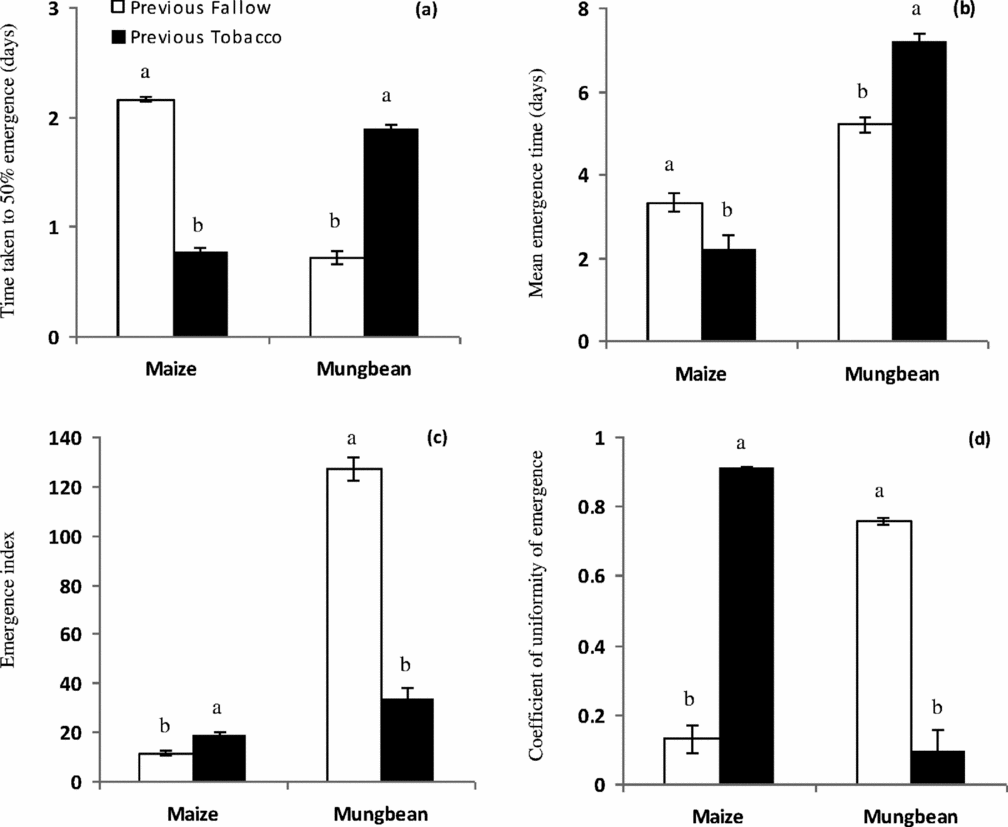
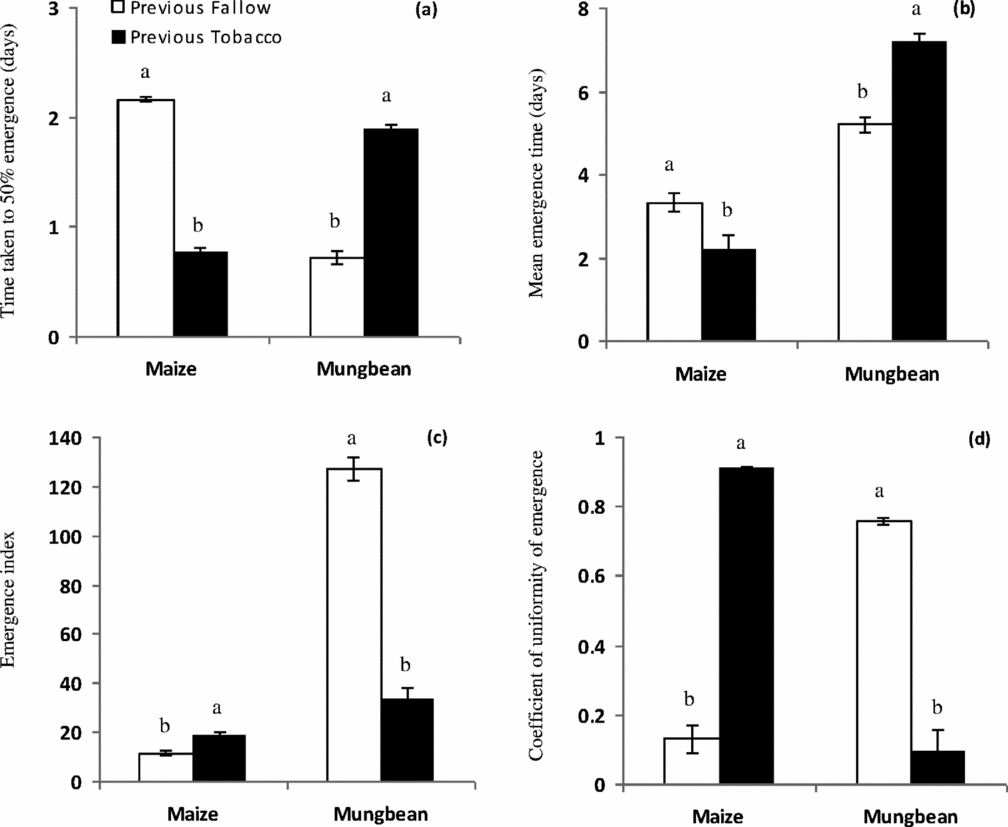
Tobacco allelopathy strongly affected the stand establishment and subsequent crop growth of following maize and mungbean crops (Figures 1–2). Tobacco allelopathy significantly decreased the time to 50% emergence (Figure 1a) and mean emergence time (Figure 1b) with simultaneous increase in emergence index (Figure 1c) and coefficient of uniformity of emergence (Figure 1d) in maize. Whereas in mungbean, time to 50% emergence (Figure 1a) and mean emergence time (Figure 1b) were increased, however, emergence index (Figure 1c) and coefficient of uniformity of emergence (Figure 1d) were decreased.
Effects of tobacco allelopathy on (a) time to 50% emergence, (b) mean emergence time, (c) emergence index and (d) coefficient of uniformity of emergence of subsequent mungbean and maize crops ± S.E. of treatment means.
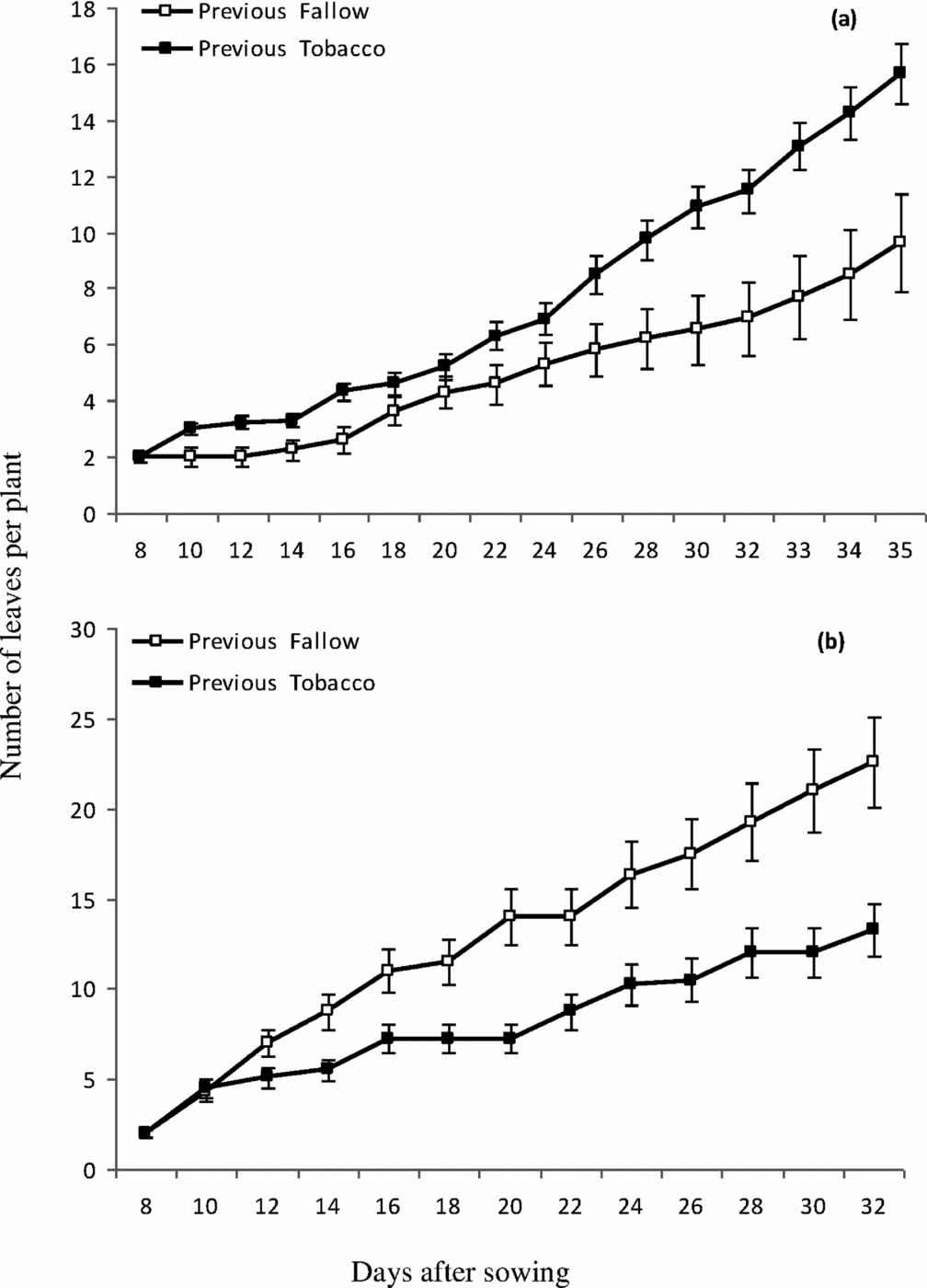
Effects of tobacco allelopathy on number of leaves per plant in subsequent (a) maize and (b) mungbean crops ± S.E. of treatment means.

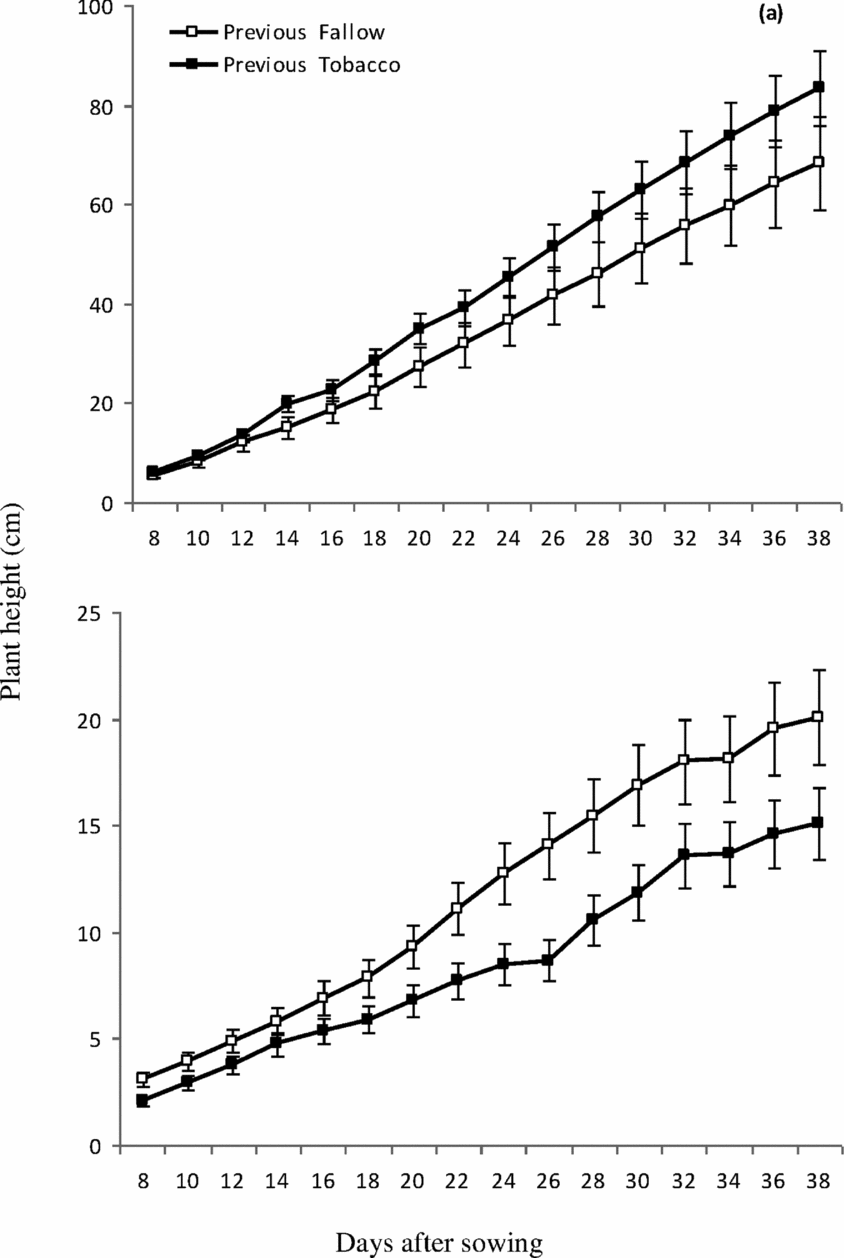
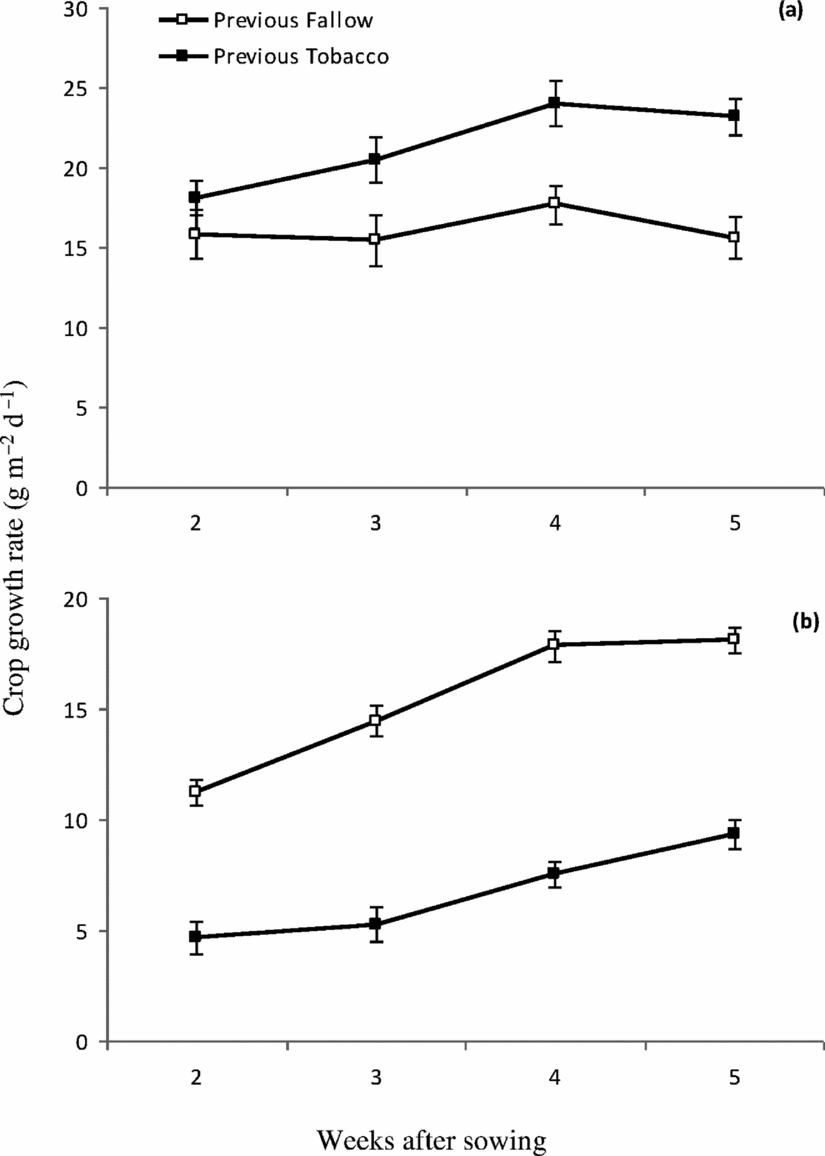
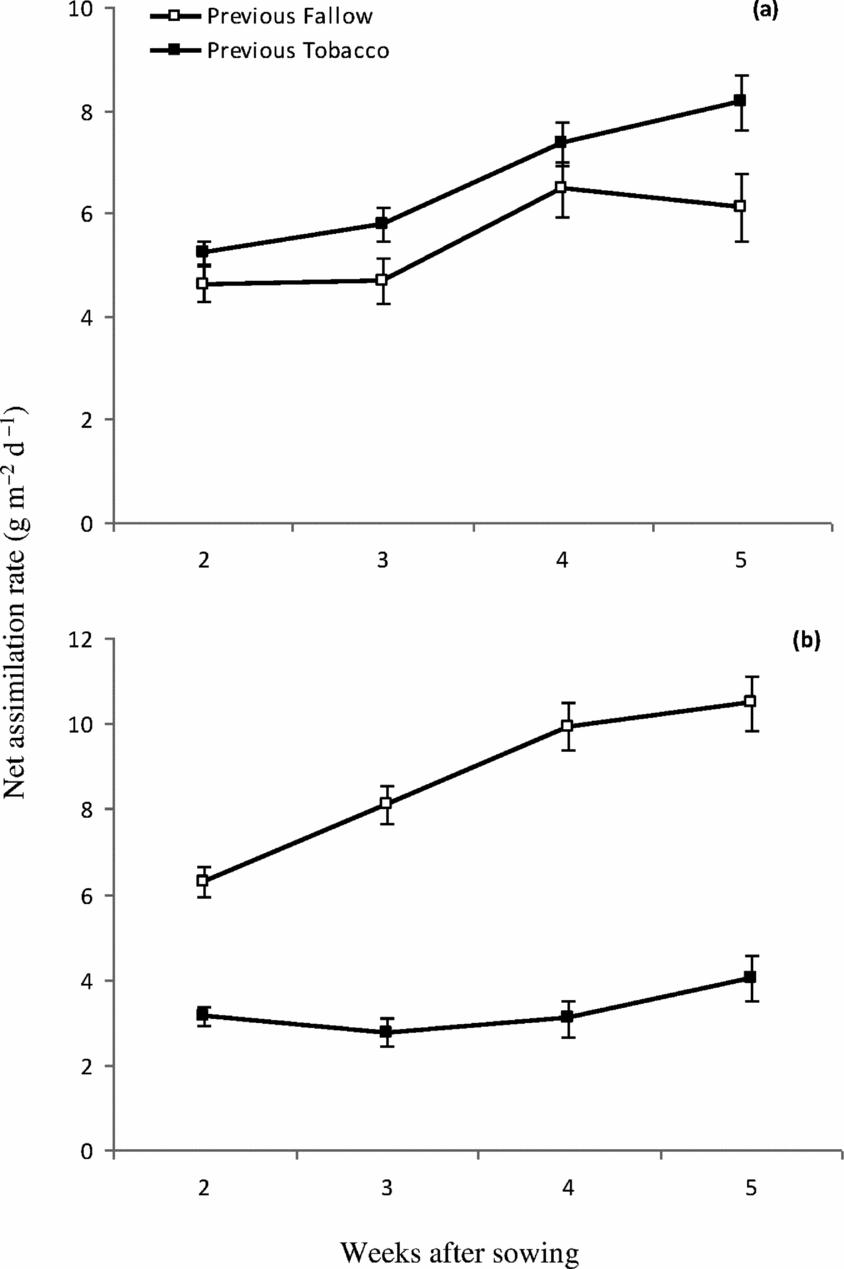
Tobacco allelopathy also affected the number of leaves in both subsequent maize and mungbean crops (Figure 2). Number of leaves was substantially higher in maize grown in plots previously possessed by tobacco than previously fallowed plots (Figure 2a). However, number of leaves was higher in mungbean grown in previous fallow plots than previously possessed by tobacco (Figure 2b). Likewise, tobacco allelopathy significantly affected the plant height (Figure 3), crop growth rate (Figure 4) and net assimilation rate (Figure 5) in both maize and mungbean. Although the plant heights of both maize and mungbean increased with time, whether raised in land following fallow or tobacco, the rate of increase for maize was maximum when following tobacco and, for mungbean, it was more when grown in previous follow field (Figure 3). Likewise crop growth rate (Figure 4a) and net assimilation rate (Figure 5a) were higher in maize raised in plots previously occupied by tobacco. However in mungbean, crop growth rate (Figure 4b) and net assimilation rate (Figure 5b) were higher when raised in previous fallow.
Effects of tobacco allelopathy on plant height of subsequent (a) maize and (b) mungbean crops ± S.E. of treatment means.
Effects of tobacco allelopathy on crop growth rate of subsequent (a) maize and (b) mungbean crops ± S.E. of treatment means.
Effects of tobacco allelopathy on net assimilation rate of subsequent (a) maize and (b) mungbean crops ± S.E. of treatment means.
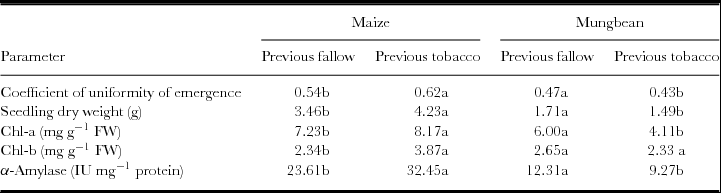
Coefficient of uniformity of emergence, seedling dry weight, chlorophyll-a, chlorophyll-b and α-amylase activity were significantly higher in maize plants raised in pots previously occupied by tobacco (Table 1). However in mungbean, coefficient of uniformity of emergence, seedling dry weight, chlorophyll-a, chlorophyll-b and α-amylase activity were significantly decreased by tobacco allelopathy (Table 1).
Influence of tobacco allelopathy on germination uniformity, seedling dry weight, chlorophyll contents and α-amylase in maize and mungbean.
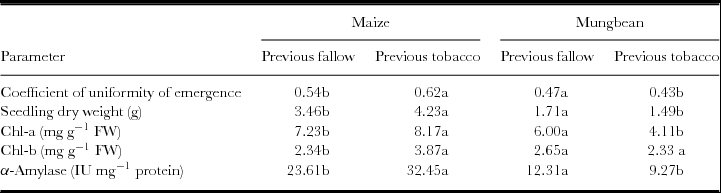
Means not sharing the same letter for a single parameter of individual crop differ significantly at p < 0.05.
Chl-a = Chlorophyll-a; Chl-b = Chlorophyll-b; FW = Fresh weight.
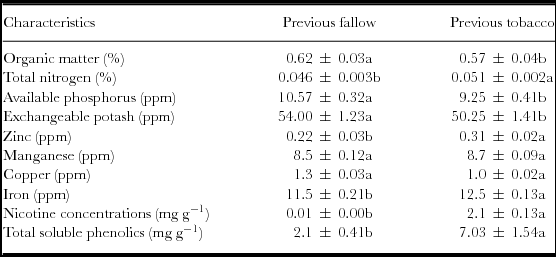
There was no effect of tobacco allelopathy on soil manganese and copper, however, soil organic matter, available phosphorus and exchangeable potash were significantly decreased by tobacco allelopathy (Table 2). Soil total nitrogen, zinc, iron, nicotine and total soluble phenolics were substantially increased by tobacco allelopathy (Table 2).
Influence of tobacco allelopathy on soil properties.
Means sharing the same letter for a single parameter do not differ significantly at p < 0.05.
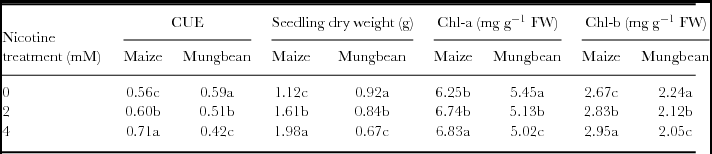
Exogenous application of nicotine significantly affected the germination uniformity, seedling dry weight and chlorophyll contents in maize and mungbean (Table 3). Nicotine seed treatment improved the emergence uniformity, seedling dry weight, chlorophyll-a and chlorophyll-b in maize (Table 3). Whereas in mungbean, emergence uniformity, seedling dry weight, chlorophyll-a and chlorophyll-b were significantly decreased by nicotine seed treatment (Table 3). Increase in concentration of nicotine during seed treatment was beneficial for maize and suppressive for mungbean (Table 3).
Influence of nicotine on germination uniformity, seedling dry weight and chlorophyll contents in maize and mungbean.
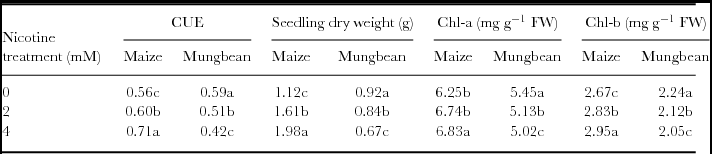
Means not sharing the same letter for a single parameter of individual crop differ significantly at p < 0.05.
CUE = Coefficient of uniformity of emergence; Chl-a = Chlorophyll-a; Chl-b = Chlorophyll-b; FW = Fresh weight.
This study indicated that tobacco crop has strong allelopathic influence on the subsequent maize and mungbean crops (Tables 1 and 3; Figures 1–5). There was a clear and differential response of subsequent maize and mungbean crops to previous tobacco crop (Tables 1 and 3; Figures 1–5). Tobacco allelopathy improved the stand establishment (Table 1; Figure 1), leaf emergence (Figure 2a), plant height (Figure 3a), crop growth rate (Figure 4a), net assimilation (Figure 4b), seedling dry weight, chlorophyll-a and –b contents and α-amylase activity (Table 1) in maize. Nonetheless, all these parameters were suppressed in mungbean by tobacco allelopathy (Table 1; Figures 1–5).
The harmful or beneficial impacts of allelopathic plants have been observed in different cropping systems including both monocultures and multiple cropping systems. For instance, seedling emergence and growth of barley were suppressed when grown in rotation with black mustard (Tawaha and Turk, Reference Tawaha and Turk2003); whereas continuous cultivation of soybean in the same field substantially reduced the grain yield by 6.2 to 35.4%; longer the continuous cropping lower was the yield (Xu et al., Reference Xu, Xiaobing, Xiaobing, Zhaolin, Shouyu, Xiyun and Li1999).
The total nitrogen, zinc, iron, nicotine and total soluble phenolics in the soil were significantly increased by tobacco allelopathy (Table 2). This caused improvement of stand establishment and growth of maize but not of mungbean (Tables 1 and 3; Figures 1–5). Allelochemicals in the rhizosphere may suppress the nitrification process in soil; the phenomenon known as biological nitrification inhibition (Subbarao et al., Reference Subbarao, Ito, Sahrawat, Berry, Nakahara, Ishikawa, Watanabe, Suenaga, Rondon and Rao2006, Reference Subbarao, Nakahara, Hurtado, Ono, Moreta, Salcedo, Yoshihashi, Ishikawa, Ishitani, Ohnishi-Kameyama, Yoshida, Rondon, Rao, Lascano, Berry and Ito2009), thus decreasing the nitrogen losses from the rhizosphere (Jabran et al., Reference Jabran, Farooq, Aziz, Siddique, Cheema, Farooq and Wahid2012). Phenolics, an important group of root-exuded allelochemicals (D’Arcy-Lameta, Reference D’Arcy-Lameta1982, Reference D’Arcy-Lameta1986), help in the solublization and release of iron and other nutrients in the soil solution. Nonetheless, some allelochemicals may decrease the uptake of certain nutrients in some crops, thus affecting their plant growth (Tharayil et al., Reference Tharayil, Bhowmik, Alpert, Walker, Amarasiriwardena and Xing2009). However, as the influence of allelochemicals is plant and concentration specific (Narwal, Reference Narwal2004), the same allelochemicals may even improve the nutrient uptake in certain other species (Jakkeral and Kajjidoni, Reference Jakkeral and Kajjidoni2011). This is also affirmed from the increase in chlorophyll contents and α-amylase activity in maize and decrease in mungbean (Table 2). As nicotine is one of the most important tobacco allelochemicals (Hashimoto and Yamada, Reference Hashimoto and Yamada1994), the increase in rhizosphere nicotine contents (Table 2) seems the possible reason of this differential response.
To confirm its specific role in maize and mungbean, nicotine was applied externally, which improved the emergence uniformity, seedling dry weight and chlorophyll contents in maize (Table 3). Whereas in mungbean, emergence uniformity, seedling dry weight and chlorophyll contents were significantly decreased by nicotine application (Table 3). In maize, improvement in stand establishment (Figure 1, Table 1) and growth (Figures 2–5) by tobacco allelopathy seems the result of nicotine-induced increase the chlorophyll contents (Tables 1 and 3) and α-amylase activity (Table 1). Whereas decrease in stand establishment (Figure 1, Table 1) and growth (Figures 2–5) by tobacco allelopathy in mungbean may be due to nicotine-induced decrease in chlorophyll contents (Tables 1 and 3) and α-amylase activity (Table 1). This confirms the effect of tobacco allelopathy on subsequent maize and mungbean crops is due to nicotine release in the rhizosphere. Nicotine is exclusively synthesized in the roots (Dawson, Reference Dawson1942a, Reference Dawsonb) particularly growing root tips (Solt, Reference Solt1957), from where this is released in the rhizosphere (Table 2) and influence the plants in vicinity. In a previous study, Rizvi et al. (Reference Rizvi, Mishra and Rizvi1989a) also reported that nicotine is released by tobacco, which promoted the growth of maize due to nicotine-induced increase in chlorophyll contents. Nicotine has also found to increase the amylase and sugar contents in maize seedlings (Rizvi et al., Reference Rizvi, Mishra and Rizvi1989b).
In conclusion, tobacco allelopathy has strong, although differential, influence on crops grown in rotation with it. Stand establishment and growth of mungbean were strongly suppressed; whereas these were improved in maize when grown after tobacco. Nicotine-induced change in chlorophyll contents and α-amylase activity seems the possible reason of differential response of maize and mungbean to tobacco allelopathy.
Acknowledgements
The assistance provided by H. Abid Karim in soil analysis is acknowledged.