Introduction: Framing the NarrativeFootnote 1
On 16 December 1972, at noon, uniformed men trained to kill surrounded five villages in a triangle hugging the mighty River Zambezi, just below the city of Tete in northwest Mozambique. They interrogated the inhabitants but failed to find what they were looking for: rebels and leads to local rebel bases. A bloodbath ensued. By late afternoon, they nearly wiped out four of the five core villages in the triangle,Footnote 2 reportedly with one man shouting, “Aphane Wense!” “Kill Them All. Leave No One Alive. Those Are Our Orders.”Footnote 3 For the next three days and nights, they hunted insurgents. Some of the same men returned weeks later, wearing “bandanas as masks soaked in ‘Old Spice’ aftershave,”Footnote 4 to counter the all-pervasive stench to burn and bury the bloating dead. This gruesome story stayed muffled for 206 days until Father Adrian Hastings,Footnote 5 a White Father, member of the Society of the Missionaries of Africa,Footnote 6 sent the narrative to The Times, which published the account on 10 July 1972. Six days later, Caetano, Portugal’s premier, was to arrive in London for a four-day visit to commemorate 600 years of imperial alliance between Portugal and Britain. Nine months thereafter, his regime fell. Mozambique was free.
Thus began the Wiriyamu narrative. Since then, a range of accounts have been published. Some are serious and scholarly,Footnote 7 others journalistic.Footnote 8 Inspired by the narrative, several are works of fiction.Footnote 9 Materials on the massacre have emerged in other formats: as blog entries,Footnote 10 as YouTube video clips,Footnote 11 as scanned newspaper postings,Footnote 12 as undergraduate research papers,Footnote 13 as web and blog sites.Footnote 14 Among these voices, two works in particular embody the polarization of power and perspective: they contest the place, the events, and the magnitude of the massacre.Footnote 15 One was crafted by the Portuguese government; the other published 14,424 days after Wiriyamu’s near total wipeout.Footnote 16
This essay tackles four aspects of this Wiriyamu narrative: its context; its genesis; its revelation; and, its contested veracity and acceptance as text published by The Times of London.Footnote 17
The Context
The Wiriyamu massacre occurred eight years after the start of the colonial war in Mozambique in September 1964, after which several groups had either agitated or sought to negotiate with the Portuguese authorities – over wages, better living conditions, and self-governance – to no avail. They were incarcerated or violently suppressed as seditious advocates to free Mozambique, which Portugal considered a legally binding overseas province since 1951. One exceptional case of violent repression transpired at Mueda on 16 June 1960.Footnote 18 After this incident, aspiring nationalist groups concluded that in order to be free, they had to resort to armed resistance against Portugal in Africa.Footnote 19 Two years later, three nationalist groups coalesced to become the Front for the Liberation of Mozambique (Frente de Libertação de Moçambique) Frelimo under the leadership of Eduardo Mondlane, with an exile base in Tanganyika.Footnote 20
On August 21 1964, during the rainy season, Frelimo attacked the Portuguese armed battalion 588 in Cabo Delgado. Similar attacks followed in two locations, Chai in Cabo Delgado and Xilama. A year later, the war spread to nearby Niassa district, thanks largely to four factors: President Julius Nyerere’s firm logistical support to allow Frelimo to operate from Tanzania; abundance of forage food; weak Portuguese intelligence; and an even weaker Portuguese presence in northern Mozambique.Footnote 21
Once Malawi attained independence on 6 July 1964, Frelimo forces said to be 7,000 strong attempted twice to open a new front in Tete north of the border from Zobue, once in 1965 and then in 1968-1969. On both occasions, the Portuguese thwarted them by skillfully exploiting the Malawi President Dr. Kamuzu Banda’s two proclivities: his ambition to turn Malawi into a regional power; and his staunchly held views of Frelimo as communist-inspired insurgents destabilizing the region.Footnote 22 Frelimo retreated from Tete, not to return until 1968 when Kenneth Kaunda assumed the Presidency of the newly independent republic of Zambia, formerly Northern Rhodesia, a territory that abutted Tete’s north westernmost snout above the Zambezi near Luangwa. With Kaunda seated and his blessing secured, Frelimo resumed its offensive in Tete, this time from Zambia, diagonal from Uncanha.Footnote 23
Meanwhile, both Frelimo and the Portuguese leadership changed hands. On one side, Samora Machel, a battle hardened fighter,Footnote 24 replaced Eduardo Mondlane, who had died from a bomb blast on 3 February 1969.Footnote 25 On the other side of the divide, Brigadier General Kaúlza de Arriaga was appointed to head Portugal’s colonial war in Mozambique.
On 10 June 1970, de Arriaga ordered 35,000 armed men – comprising paratroopers, commando, naval and specialist units – to launch Operação Nó Górdio, Operation Gordian Knot, as a way of crippling Frelimo in the north. The Portuguese Air Force provided cover, reconnaissance, and strategic bombardment to soften enemy units, bases, field clinics, and training and mobile camps. At the end of the operation, the most expensive in Portugal’s colonial war, Frelimo was considerably weakened, militarily speaking, having been deprived of a network of 165 camps affiliated to 61 bases and supplied with over 40 tons of war materiel, much of which had been obtained from African, communist, and the Eastern bloc states.Footnote 26
De Arriaga followed Operation Gordian Knot with a set of three well-tried and tested containment initiatives. In his view, the British had successfully deployed such initiatives against the Malayan National Liberation Army under the Briggs Plan,Footnote 27 as had the Americans under their own counter-insurgent attrition strategy in Vietnam under General Westmorland.Footnote 28 Accordingly, the Portuguese constructed strategic hamlets to asphyxiate Frelimo of its popular support;Footnote 29 deployed scorched earth tactics to extend fire-free zones aimed at paralyzing Frelimo’s movements, logistics, food sources and supply lines; and conducted pre-emptive hit and run strikes on areas suspected or proven to have Frelimo bases or party activists.
De Arriaga’s strategy, which remained unchanged until 1974 that is to say a year after he left, was effective in the Niassa and Cabo Delgado, but less so in Tete. Here foreign-born missionaries and the construction of Cahora Bassa dam complicated matters.
Some twenty years earlier, Salazar had presciently negotiated with Pius XII precise terms for the role of the Church in public education through a concordat signed on 7 May 1940. With that concordat and the encyclical Saeculo Exeunte Octavo that followed,Footnote 30 Salazar could fully control social change (or lack thereof) through proselytization. Portugal, however, was short of clergy to cover its imperial territories in Africa including Tete and was thus forced to fill the gap with imports: Italian, German, Dutch, Scottish, English, and Spanish priests trained in Comboni, Verona, White Father, and Burgos missionary societies.
By early 1960s, the Tete dioceseFootnote 31 had a strong network of foreign missionaries staffing the seminary, both at Zóbue, which was directly accessible by route 103 northeast of Tete bordering Malawi, and at missions and attendant parishes in central and western Tete. Of these, the most pertinent to this section of the narrative on Wiriyamu were located at Uncanha, near Zambia; Mucumbura, near the border with Ian Smith’s Rhodesia; Changarha, astride two highways, one leading to Beira and the other to Salisbury (now Harare); Matundo, across the Zambezi river on the way to the regional airport; and Moatize, near a coal mining town 25 miles directly north east of the regional headquarters of the colonial army in Tete. Tete city housed the bishopric itself and Missão São Pedro, which comprised of a day and boarding school, a parish center frequented by Burgos priests and missionaries on travel, and a nearby mission hospital.
The Burgos in Tete were technically on secondment from Spain and reported to the local bishopric as a courtesy. Their allegiance, however, was to the decanal authority some thousands of miles away in Spain who paid their monthly salaries but, for cost-prohibitive reasons, rarely saw them, let alone manage and guide their ecclesiastical work. In other words, they were de facto free agents reporting to two authorities but effectively supervised by neither.Footnote 32
In addition, almost all the foreign priests were trained in the socially transformative ministry being expounded then by Vatican II.Footnote 33 This applied in particular to the Burgos priests who in addition to having been trained in socially progressive ministries had had an opportunity to apply it to real life situations among the poorest of the poor in central Spain and the Basque region.Footnote 34 The Verona, Comboni, and White Fathers too were similarly trained in outlook and similarly experienced in dealing with the poor and the socially marginalized. The majority treated their parishioners as equals, exposing them to social justice issues. Parishioners exposed to this view of Christianity developed a new sense of selfhood, many ultimately questioning the existent Portuguese narrative on imperial rule in Tete. This consciousness spread the quickest where Portuguese administrative presence proved weakest, allowing the missions full reign to pursue a progressive agenda, unrestrained, free from Portuguese gaze.Footnote 35
Frelimo cadres could not have prayed for a better climate in which to resume their work left abandoned in 1965. In late 1968 early 1969, however, Frelimo faced a new challenge. In that year, the Portuguese began earnestly preparing to construct the Cahora Bassa Dam. Its first phase entailed engorging the margins of the Zambezi, creating a vast flood plain ballooning into fang-like tentacles on both sides of the river right up to Zumbo, near the Zambian border. Frelimo had to move quickly and decisively if it was to establish a self-sustaining presence south of the river from which to launch a military front in southern Tete.
The alternative was to face either being permanently locked out of the south or transporting men and arms across a vast expanse of water patrolled by Portuguese “birds of prey.” The Portuguese exploited this strategic dilemma and set up a rival organization comprised of exiled Frelimo dissidents some of whom were later to join the Resistência Nacional Moçambicana (Renamo), Mozambican National Resistance.Footnote 36 In essence, Frelimo faced uncertainty as the country’s future national liberators if they stayed put north of the river.
The opportunity to cross the margins of the Zambezi presented itself in Uncanha, which had a mission headed by Father José Fonte, a Burgos priest. Soon after Operation Gordian Knot, Portuguese commanders moved the Uncanha mission and its population south of the river in a cost-effective effort to create a fire free zone. Frelimo, on the other hand, saw this as an opportunity to load its activists on the trucks generously provided by the Portuguese military disguised as Uncanha parishioners and thus gained in one fell swoop a foothold near Buxo and Mucumbura whence they re-grouped to attack colonial assets in southern Tete.Footnote 37
Did the Portuguese military know the risk they had taken with the Uncanha move, and if they did, how confident were they in their ability to contain the insurgency? Subsequent military activities in the region suggest that the colonial army may well have been untroubled by the relocation and perhaps supremely confident that it could deal with the problem resulting from the move. If so, then this confidence was well placed. Tete had acquired a new military governor, Colonel Armindo Martins Videira. De Arriaga had handpicked Videira, one of the earliest green-beret graduates of the Portuguese military academy, and a veteran of Gordian Knot, to stop Frelimo’s advance southbound from Tete.
In the meantime, Frelimo selectively targeted the army and its valuable military assets. Videira’s men were immediately dispatched to rout them out, which they did at the cost of civilian casualties, some of whom were parishioners of the local church staffed by two young Burgos priests. Saddened by the specter of death and wholesale destruction of maize, cassava, seasonal perishables and crops, cattle, and food storage silos, the priests meticulously catalogued the killings at Buxo and Mucumbura as a list of the dead, which went on to serve as a template for the Wiriyamu narrative.Footnote 38
Frelimo temporarily froze in its track as a result of the clean-up in Buxo, Mucumbura, and southern Changarha. With food burnt, cattle dispersed, and foliage exposed to the elements and to air surveillance, Frelimo faced renewed threats to its survival. In the middle of 1971, Frelimo regional commanders met to confer at an undisclosed location in Tete, and concluded that they had to go on the offensive. They needed to focus on the dam to slow down its construction – and go for Portugal’s armed jugular, the colonial forces in and around the Tete headquarters. To this end, they chose the Wiriyamu triangle as their launching pad.Footnote 39
The triangle offered everything a guerrilla force would need for this two-pronged offensive. It was across the main road to Cahora Bassa, an ideal target with which to rattle Videira’s military cage.Footnote 40 Its back curled up against a crop of elevated rocks abutting the Zambezi at one of its many narrow points, an ideal location to transport arms and men across the river from the northern and eastern supply-lines. It was densely populated and rich in cattle and food crops. Subject to rains, local cooperation and wholehearted support, and good harvest, it could provide for an entrenched guerrilla force as well as supply much-needed fresh recruits. Tete city itself was twenty-five miles directly to the north along a well-tarred road. Attacks against the colonial army from this proximity made eminent psychological sense.
According to local informants, the Portuguese intelligence detected Frelimo presence in the triangle in late September early October 1972.Footnote 41 Frelimo cadres and commanders had accelerated the pace of gathering arms into the triangle; confident of the local support and the protection offered by Riacho, a ravine below the rocky outcrops on which Wiriyamu sat, Frelimo commanders in charge of logistics dispensed with scouts. Ignoring such precaution brought attendant dangers for the inhabitants of Wiriyamu. Unexpected visitors to Wiriyamu – of whom there were quite a few, given Wiriyamu’s active bovine, caprine and poultry trading – could easily spot the arms transporters as they entered or exited the ravine. The Portuguese could thus be needlessly alerted much earlier than planned, hastening Frelimo military action.
Not surprisingly, Frelimo were spotted on three separate occasions.Footnote 42 Frelimo commanders struck first by launching three assaults in rapid succession on Portuguese assets and the army. The Portuguese Army responded accordingly.
On 16 December 1972, Antonino Melo, head of an elite commando unit, was summoned at dawn to the regional headquarters for the Portuguese Army. He could not exactly recall who was there when he was ushered into the conference room near a big oval table. He stood still at full attention but did not know who exactly was who. One man was from the Air Force, that much he was sure. There may well have been another “guy from the secret police. They were all well above my pay grade.” I was told to go to Wiriyamu and “clean up the place. Those were my orders.”Footnote 43 He was told that a contingent of secret police dressed in combat uniform would accompany his men. “That is unusual, I said to myself. I have headed many combat missions but none were like this.”Footnote 44 The secret police did not ride with the commandos. The Portuguese air force bombed the triangle leaving a gauntlet open to funnel escapees towards a trough for an easier kill. At noon, Melo’s men and the secret agents in army fatigues surrounded Wiriyamu. The killings then began.Footnote 45
Genesis
We would remain ignorant of the massacre had it not been for data collectors, data handlers, informants and their priestly protectors, and data transcribers, some of whom began constructing the Wiriyamu narrative on the very night of 16 December 1972. One recent text claims that the story as revealed was based on a confidential report by “Spanish Catholic missionaries of the so-called Burgos order,” Father José Sangalo and Vincente Berenguer of Missão São Pedro.Footnote 46 When repeatedly quizzed in 1994 and 1995, neither claimed the report to be theirs. Padre Sangalo was not at the massacre site, did not go there during or after the massacre, and was not stationed in Missão São Pedro: “I was in Matundo then (...) e eu me lembro bem, I remember well (...) my house had no electricity, no running water.”Footnote 47 Padre Berenguer, too, played a peripheral role in the construction of this narrative.Footnote 48
However, both agreed to put their names forward as handlers of the report and that is perhaps why Reis and Oliveira erroneously identify them as authors.Footnote 49 In reality, the two priests were protecting the identity of a fellow priest – Padre Domingo Ferrão, who had spearheaded the collection of data. He and his close associates on the ground had then used the data to construct the narrative.
Padre Domingo Ferrão, a Mozambican priest with impressive skills in self-preservation, had good reasons to “lead the charge.” The Portuguese authorities had incarcerated him, having suspected him of inciting political unrest in the early sixties. He was subsequently released from the notorious Machava prison in the colonial capital, Lourenço Marques, and allowed to return to Tete as a diocesan priest on a strict condition: eschew politics.Footnote 50
Padre Ferrão returned to work at Tete’s Missão São Pedro where he said he devoted most of his spare time developing a comprehensive lexicography of the Chinungwe, Chaworha and Wiriyamu’s lingua franca. In reality, Padre Ferrão remained conflicted: “I could not engage in politics. That is not what priests do. I did and must help my people. Their suffering is mine. We have a culture and history here and I cannot let this culture and history disappear.” “Yet I did not want to go to prison again,” he added.Footnote 51
Ultimately, Padre Ferrão chose silence but spoke truth to power and coordinated the data-gathering project.Footnote 52 Subsequently, he helped produce two lists of the dead: one on the Chaworha killings and the other on Wiriyamu.Footnote 53 Padre Ferrão tapped informants near the Missão São Pedro, which was located near its mission hospital and which attracted the wounded. Irmã Lúcia, who ran the hospital, and who was under surveillance as an enemy of the state in colonial Mozambique,Footnote 54 had developed a close working relationship with Padre Ferrão, supplying him with medications for his parishioners, among whom were activists from Frelimo. Irmã Lúcia referred survivors to him as possible interviewees as they sought help at the hospital.Footnote 55 That is how one survivor, António Mixone, Mfumo Chaworha’s grandson, landed at the hospital agitated and desperate to tell what he had witnessed and undergone. In the end, he proved invaluable to Padre Ferrão as an informant; hence the genesis of the recorded dead at Chaworha.Footnote 56
The Chaworha report included data from other anonymous sources and incorporated accounts from five self-identified eyewitnesses led by António Mixone, who had escaped from underneath a pyre evading bullets from a semi-circular group of armed men in camouflage uniforms half-a-block away.Footnote 57 In its first four paragraphs, the Chaworha report outlined, albeit impressionistically, the massacre. It then gave a detailed list of the names of 42 men, women, girls, and boys killed, ending with short paragraphs proclaiming Chaworha a victim of a needless atrocity.Footnote 58
Regrettably, Padre Ferrão did not keep a record of the name of informants and their input for obvious reasons of security; he was under twenty-four-hour surveillance from secret police agents ensconced nearby in a bunker-like structure across from his parish.
“The purpose of the Chaworha list and the list on Wiriyamu was to produce a record of the dead,” said Padre Ferrão. ‘“É pá. Era uma lista, só uma lista. Nada mais” he said, “look, it was a list. Just a list. Nothing more. I was not interested in the history of what happened there. I wanted to name the people who died there. With such proof the Portuguese could not deny what they had done.”Footnote 59 In other words, the Padre Ferrão proved uninterested in the narrative anatomy of the massacre at Chaworha on 16 December 1972 – and for good reason!
To undertake such a task would have required an on-site reconstruction with the aid of survivors and eyewitnesses, which at the time would have been well nigh impossible given the political climate, the war conditions, and his mortal fear of being incarcerated again. Besides, Padre Ferrão was convinced of the efficacy of pursuing the project as a list. In his view, an earlier model had worked resoundingly well at the Mucumbura mission south of Tete, where its authors had used the list to bring sufficient pressure to bear on Videira’s men to ease off on pre-emptive fire free zone raids.Footnote 60
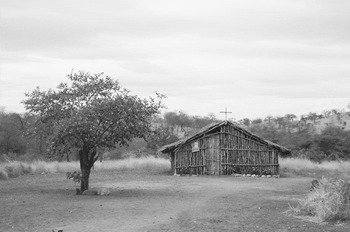
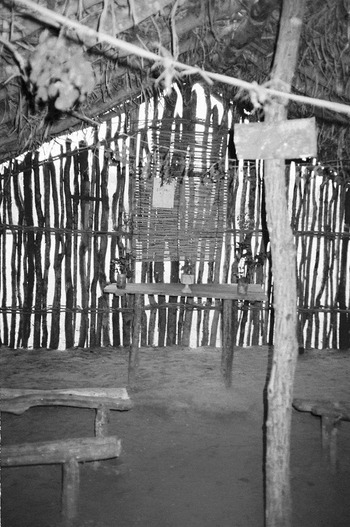
Unlike the Chaworha text, Padre Ferrão’s seven-page list of those killed at Wiriyamu used a much wider pool of informants. Again, this endeavor stuck to the format used in the Chaworha report, as a list of the dead. Young seminarians and churchgoers had alerted Combonian priests present at Sunday mass on the 17th at the mission church in Changarha.Footnote 61 Villagers from several locations near Wiriyamu on the western banks of the Zambezi River, particularly those who trusted the Burgos, went to them for guidance on whom to confide in what they saw or knew about the killings. Survivors followed suit, particularly those attempting to resettle among relatives in neighboring communities, in the fortified village of M’pharamadwe, and in a village unidentified by name by informants whose chief was patrilineal related to the Mfumo of Chaworha and Wiriyamu. This village was later abandoned amid rumors that “os soldados dos colonos estavam vir aqui,” that the soldiers were heading their way.Footnote 62 Today, a small chapel occupies the site of the massacre, its interior a sanctuary commemorating the dead – see Figure 1 and Figure 2.
Chapel built by António Mixone at the Chaworha massacre site taken by the author

Chapel built by António Mixone at the Chaworha massacre site taken by the author - Inside View

One other input helped determine the near-definitive accuracy of the numbers of dead at Wiriyamu and its vicinity. Unbeknown to Padre Ferrão and the Burgos fathers and unprompted by them, a team of recorders was already at work amassing data on that very night of the 16 December 1972. Domingos Kansande led the team. He was a young aspiring teacher, educated by the Burgos missionaries and sensitized by the church’s more progressive views on Christian theology.Footnote 63 Further, over the years, Kansande had grown close to Padre Ferrão: “I liked him. I respected him. I believed in him. He was black and not like the white colonial Portuguese priests.”Footnote 64
Kansande gave Padre Ferrão the preliminary list that he had compiled on his own on the night of the killings: “Yes on that night I used bits of butcher paper we kept for rolling cigarettes and a borrowed pencil to record the names of those killed. There was no light. We kept a fire going to help me write the list,” said Kansande later, “(…) and we were so afraid to be caught and killed that night, by ‘as tropas dos colonos’ the colonial soldiers.”Footnote 65
Kansande’s record only covered the dead for the day. Padre Ferrão expanded the list to include details of those killed during the three days that followed the initial carnage. To this end he repeatedly sent Kansande into the Wiriyamu triangle, which was now undergoing an extensive manhunt for insurgents in particular the chief of Wiriyamu and his family who were considered by the Portuguese military as ultimately responsible for welcoming Frelimo in the triangle. Ultimately Padre Ferrão used the material that Kansande procured this way to construct the final Wiriyamu list, which catalogued the names, ages, gender, marital status, and progeny of 135 out of nearly 400 reportedly killed.Footnote 66
Neither Padre Ferrão nor Kansande exaggerated the numbers killed. “At times,” said Kansande, “we knew who the person was who had been killed but we could not recall their names nor could we find the relatives to tell us the name.”Footnote 67 Both knew the risk they were taking. Padre Ferrão in particular took great pains to protect his sources while keeping his records as transparent and as close to the truth as he could. “After all I was a man of God, I had been tortured, and was terrified of going back to prison.”Footnote 68
In short, Padre Ferrão was one among many authors behind the Wiriyamu data collection enterprise, with Kansande leading the charge. The Burgos did not directly take part in this stage of the actual compilation, nor did Irmã Lúcia, as the Portuguese secret police documents allege,Footnote 69 not according to oral testimonies collected in 1994-1995. They certainly publically assumed the authorship at Padre Ferrão’s behest and reworked the text in part to protect him from retaliation by the Portuguese authorities. This is then the genesis of the Wiriyamu narrative!
Revelation
Like its genesis, the narrative of Wiriyamu’s outing in The Times of London is nuanced, perhaps more so than suggested in recent works.Footnote 70 Before its London landing, Padre Ferrão’s list had already reached two entities in Europe: one an Italian religious press which promptly printed the narrative for the benefit of its small readers just before June 1973; and the other, Amnesty International, which got the text in June 1973.Footnote 71 What was different this time was the timing of its publication, its wider and more global readership, the resources that The Times of London invested to fact check the narrative and then defend its integrity from pugilistic detractors, and its impact on imperial Portugal.
In the summer of 1973, the British government under Edward HeathFootnote 72 was about to host Marcelo Caetano in London to celebrate the 600th anniversary of Anglo-Portuguese Alliance.Footnote 73 Father Adrian Hastings was at the time serving on a committee of the Catholic Institute of International Relations (CIIR), which had been established to organize a serious public discourse on the imperial allianceFootnote 74
The CIIR committee asked Father Hastings to focus on the role of the church in the alliance. Neither the committee nor Father Hastings envisaged what followed. In fact, the committee proved deeply reluctant to allow the narrative to takeover the CIIR proceedings, which in the end it did. Father Hastings learned of the massacre by sheer coincidence when on a church-related visit to Ian Smith’s Rhodesia where he was informed that additional details were to be had from the Burgos priests in Madrid, Spain.Footnote 75
Fortuitously, according to Father Hastings, he happened to be in Madrid on his way back from Rhodesia via another European destination. However, he could not read Spanish. The documents had to be translated and then sent to him in England. Here it was validated and subsequently given to The Times of London,Footnote 76 more specifically Louis Heren, Deputy Editor, and “one of the greatest foreign correspondents,” according to its Editor, the late William Rees Mogg.Footnote 77
Even then the story would have remained unpublished in England had it not been for several factors at play at The Times of London. The first two of these had nothing to do with the merit of the story per se.
Until the fall of 1972, The Times of London had for the most part remained neutral on all aspects of Portugal’s colonial wars in Africa. In fact, between 1964-1965 and July 1973, it had published just under 535 articles related to Portugal and its African colonies, an average of 177 a year or an item of news every eight days.Footnote 78 An occasional article or two did appear during this period that sided with Portugal against communism and in favor of counter-insurgency in general in Africa.Footnote 79
With the arrival of Louis Heren in 1970, the paper appeared to change the frequency of its news reporting.Footnote 80 The coverage in 1973 resulted in a record number of articles, beginning with the publication of eighty-three pieces on Wiriyamu in the month of July. Subsequent months saw a decline, with twenty-four articles in August, eight in September, eleven in October, and then fourteen and five in November and December. In total, during the period between 1973 and 1975 just after the April revolution, The Times of London had devoted an average of an article every two days, almost all critical, of the Portuguese in Africa.Footnote 81
In addition, The Times of London faced the prospect of a strike that threatened to shut it down and bury the story for good. Three years earlier, the Tories had won the national elections under Edward Heath. They believed that their victory was a mandate to effectively dismantle the unions. Subsequent legislation a year later proved that, as it provoked a rash of general strikes predominantly led by British miners. By late 1972, The Times of London itself faced the specter of labor strikes, which became a near certainty in the summer of 1973 while it fact-checked the Wiriyamu narrative.
But perhaps the most important factor that tipped the balance in the narrative’s favor as a printable piece was timing. Father Hastings’s contact with The Times of London on that day could not have been more fortuitous. William Rees Mogg, its Editor, was not in at that late hour; Louis Heren was in executive charge. Heren himself was highly skilled at nurturing stories of momentous human interest.Footnote 82 He had risen from the ranks and had spent a ten-year stint to head the paper’s foreign desk in Washington DC, where he had seen the debacle of My Lai unfold. Heren had returned to London in 1970 first as its Foreign Editor and then its sole Deputy Editor. To him this story of Wiriyamu smacked of Portugal’s own My Lai in Mozambique.Footnote 83
His subsequent return call to Father Hastings that evening proved ominously thunderous for the story’s outing. “We have to run the story tomorrow,” he said to Father Hastings, “the typesetters are threatening to go on strike and we do not know when we will be in print again!”Footnote 84 That threat combined with a hunch to tell truth to imperial power convinced Heren to publish Wiriyamu. On 10 July 1973, The Times of London ran the story. Back in Lisbon, Caetano was six days away from a rather quiet landing at Heathrow.
Contest and Settlement
Portugal angrily denied the story outright.Footnote 85 Both the British and the AmericanFootnote 86 governments officially backed Portugal. The Tory “Young Turks”Footnote 87 demanded the British Press Council investigate The Times’ ethical conduct in publishing the story and examine any aberrations in fact-checking procedures,Footnote 88 while leaders of Tory opposition called for the cancellation of the visit and an inquiry into the massacre.Footnote 89 The Press Council on its part rejected the complaints from this group over the report of the massacre.Footnote 90 Several other social and economic forces chimed in: Tory patricians tied to economic interests in Southern Africa;Footnote 91 Tory entrepreneurs intimately connected with British exportsFootnote 92 and the manufacturing of Portuguese Port wines;Footnote 93 the majority of the Tory cabinet ministers in the government hosting Caetano in Britain;Footnote 94 and the conservative flank in the Foreign and Commonwealth Office.Footnote 95
The American position was further complicated by their Azores Bases Agreement much needed for American logistics for the war effort in Vietnam.Footnote 96 In one early instance, State Department officials overtly strengthened Portugal’s case by publicly voicing their doubts over the story.Footnote 97
Portugal drew strength from the British and American official positions and mounted a counter-attack. Its officials engaged a public relations’ firm to discredit the story while buttressing Caetano’s reputation as a respectable dignified academicFootnote 98 and not, as one placard had suggested, a “butcher” and an “assassin.”Footnote 99 120 young men and women were paid to distribute pro-Lisbon leaflets declaring “Portugal like Great Britain Loves Peace” and “Portugal is forced to fight for Freedom as Great Britain was.”Footnote 100 They hired a rent-a-mob outfit “for sixty-five pence an hour” to drown out 5,000 raging protesters standing in pouring rain vigorously chanting anti-Portuguese slogans. The counter-protesters-on-rent had their own display placards in bold lettering: “allegations have proved false,” and “Portugal fights to preserve non-racialism against all racialists.”Footnote 101
The Caetano government viewed The Times’ story as “a mare’s nest,” cooked up by its enemies against it and its overseas provinces. It was nothing short of an international conspiracy against Portugal. Wiriyamu did not exist. Where was the proof?Footnote 102 Given their own intimate knowledge of Tete, they could state with categorical assurance that Wiriyamu was an imagined setting and the “atrocity” a fiction. If The Times of London had proof apart from the claims by priests outside Mozambique, they should produce it.Footnote 103 They did indeed have a place locally known as Williamo, they added, but the locale was resoundingly bereft of any freshly executed carnage. Truth seekers Portugal averred were welcome to tour the area to check the facts for themselves. Should they “find such a village” said Portugal’s London-based director of Information Service stationed at the Portuguese Embassy for the purpose of facilitating Caetano’s visit, “we will immediately order an inquiry.”Footnote 104
Journalists who took up the Portuguese authorities’ offer to visit Tete found nothing. Once in Tete, they were shepherded on a carefully guided swift tour of Williamo arranged by a local influential pro-Salazarist businessman Jorge JardimFootnote 105 with the local chief of secret police, Senhor Joaquim Sabino, firmly in tow. Padre Ferrão was instructed to be cooperative and on call. “I was told by Jardim to nod when they came to see me,” he said, “(…) and I did. What else could I do? I did not lie, but I did not volunteer the truth. Remember, I had been in prison before. Besides these journalists spoke English and stayed for ten minutes or so.”Footnote 106
Of the journalists who returned from Tete empty-handed, one proved an exception: Bruce Loudon, a stringer based in Lisbon, served two masters: the London Financial Times and the Daily Telegraph on one hand and Portugal’s Secretariat of State for Information and Tourism on the other.Footnote 107 Texts obtained three years after The Times of London outed Wiriyamu reveal that Loudon had volunteered to help Caetano launch “effective counter campaigns” entailing “a daily flow of information from Mozambique to a central point in Lisbon” to key individuals and opinion formers.Footnote 108 Upon his return, Loudon wrote two damning reports for the Daily Telegraph repudiating the Wiriyamu story,Footnote 109 thereby strengthening the case for Portugal and its sympathizers.
The Times of London was now on the defensive and forced to address Portugal’s somewhat disingenuous lie. Its editors and staff felt the urgent need to corroborate its story with evidence from either journalists directly in touch with primary sources in Tete or sources independent of The Times of London who had spoken to eye witnesses. To avoid charges of ethical misconduct under a pressing exigency, its editors opted to do both: send its own journalists to Tete and procure eye-witnesses to “testify.” Michael Knipe and Peter Pringle of The Sunday Times were instructed to head for Tete, while Father Adrian Hastings set to work to procure sources with direct knowledge of the events to come to London for a de-brief.
Twenty-three years later, Knipe recalls that he was somewhere in Southern Africa but was ill-prepared for this assignment. However, once in Tete, he successfully interviewed de Arriaga for two hours but failed to elicit any response from the bishop of Tete who previously had raised serious concerns over the massacre and who was now resolutely silent during the interview.Footnote 110 “He was probably muzzled by the authorities,” Knipe hazarded a guess.Footnote 111 By this time, the secret police intensified surveillance, just as he sought out Tete’s missionaries and nuns with direct knowledge and information on the case.Footnote 112
Before he could tap into this nucleus of evidence, he was ejected from Tete “for (his) own protection mind you.”Footnote 113 “They could not guarantee my safety anywhere in Mozambique,” he said, “because of public protests against The Times of London.”Footnote 114 It appears that right then nearly 40,000 people had gathered in the colonial capital to protest against “what was called the international campaign against Portugal.”Footnote 115 It is unknown if these were genuine advocates pulling for the Caetano-led empire.
Peter Pringle followed Knipe to see if he could ferret out eyewitness details. Given how the Portuguese had skillfully managed to steer earlier investigators away from the real Wiriyamu, and given how they had ejected Knipe out of Tete before he could get to the evidence, Pringle knew it would be difficult to reach and interview informants without attracting the attention of the secret police. The Burgos fathers and their network in Madrid, Salamanca, and Tete proved immensely invaluable in preparing him on how to outmaneuver the secret police.Footnote 116
Pringle spent three days in Tete and quickly mined the appropriate sources, thereby establishing the veracity of the story – and the location of the place. One such source, António Mixone, was living right under the noses of the Portuguese secret police as a day school boarder at the Missão São Pedro, which was relatively close to the secret police headquarters. The Times of London now had what it needed to address its critics at home and the journalist Peter Pringle, had achieved this without attracting the attention of the secret police – or so it appeared.
Armed with a trove of evidence, Pringle sprinted out of Hotel Zambêzia where he was staying to interview Tete’s bishop. Unfortunately, a vigilant secret police agent lay in wait for him to appear near the bishopric, opposite the secret police headquarters; Pringle was whisked away for interrogation. The chief of secret police Joaquim Sabino and his associates were displeased with his inordinately long day-visits to Missão São Pedro. In the past, journalists had visited Missão São Pedro, they said, but none had spent so much time there. Most were done within ten minutes or so. Why was he there so long? What had he uncovered, they asked? They took away his notes, recordings, and photos, “for review, mind you,” they said. They assured him he would get them back. He was then ordered to leave Tete. His materials would be delivered upon his departure from Mozambique. These were never returned to him.Footnote 117
However, according to Padre Berenguer, during their interrogation, Joaquim Sabino’s men had failed to confiscate a couple of photographs of António Mixone, one with Pringle by his side and one showing a deep vertical gash on António’s body.Footnote 118 Clearly the Portuguese had historical wounds to hide.
Once in London, Pringle’s text appeared in The Sunday Times of London on 5 August 1973.Footnote 119 Portugal and pro-Portuguese detractors of the Wiriyamu narrative had one fewer weapon in their arsenal with which to target The Times’ procedural conduct in publishing the story. On its part The Times of London had exercised its due diligence and could comfortably stand by its narrative, which it had now verified against primary sources. The evidence did exist and would continue to exist as long as eye-witnesses and survivors remained alive and beyond the reach of the Portuguese secret police.
One such survivor nearly didn’t make it – António Mixone. After their filing, one of Pringle’s stories was picked up by the BBC. Padre Sangalo was in Tete then at his one-room residence in Matundo. “I used to listen to the BBC World Service regularly. That night the reception was bad and I had the radio close to my ear when I heard how a certain foreign journalist had found a young survivor and had interviewed him. Oh, my God, that is Mixone, I said. They will kill him if they catch him.”Footnote 120
He got on his motorbike very early the next morning and belted towards Wiriyamu. “I knew where I could find him.” António was totally oblivious of the mortal danger he was in. Before the secret police could grab him, Padre Sangalo found him in a makeshift shelter at the foot of a baobab in M’pharamadwe, some distance away from Wiriyamu. He transported Mixone to a neutral point of contact for Frelimo to take him away to safety and returned only to find Sabino’s men on a manhunt for Mixone. By then, Mixone had crossed the border into Zambia on his way to Tanzania to be de-briefed by Frelimo.Footnote 121
Although Pringle’s texts considerably helped strengthen the Wiriyamu narrative, The Times of London sought additional corroborative evidence. Without it, its critics could question Pringle’s powers of recall as a journalist.
On 6 August 1973, two priests arrived at the offices of The Times: Padre Vincente Berenguer Llopis and Padre Júlio Moure. Both said they knew exactly where Wiriyamu was. Both were on a bus at the 18th crossing near Wiriyamu when they saw survivors fleeing the triangle to board the bus in which they were travelling at a stop nearby.Footnote 122 Both corroborated the core of The Times of London’s Wiriyamu narrative. Both named five survivors who saw the massacre.Footnote 123 “In fact, Wiriyamu has a huge baobab tree with its name tattooed on its trunk,” recalled one of the Burgos’ fathers, Padre Berenguer. Another source quoting German engineers working in Cahora Bassa dam backed Pringle’s findings.
By mid-August, Portugal could no longer deny the existence of the place or the events. It still could vigorously deny the magnitude of the killings and whether it could have been avoided, the earlier of which it did somewhat indefensibly.Footnote 124 However the preponderance of evidence suggested that The Times of London’s Wiriyamu narrative was true and had been true all along. The story could have been told with greater depth and detail, perhaps, but for Portugal’s obduracy in obstructing access to primary sources. On balance, Portugal’s conduct after the revelations exacerbated the tragedy, said Father Hastings.Footnote 125 According to The Sunday Times of London, it shifted the burden of proof on Portugal to furnish the evidence needed to back their plausible deniability thesis.Footnote 126
In the face of mounting evidence that something out of ordinary had occurred in that triangle, Caetano secretly ordered his General in Mozambique to undertake an inquiry into Wiriyamu. This order was somewhat disingenuous on the part of Caetano because such investigations had already taken place before July 1973. Portuguese medics had headed two of these.Footnote 127 The office of the military justice itself have carried out the third “perhaps in January” of 1973, according to de Arriaga.Footnote 128 The present investigation was Lisbon’s fourth, fifth if a dissident probe into the affair headed by Jorge Jardim is included, and sixth if the church hierarchy’s airborne visit over the site is tallied.Footnote 129 By the time de Arriaga’s second investigation got underway after much resistance on his part, the dead had been incinerated or buried in communal graves. Some of the remaining informants were terrified of repercussions. Others who had been expelled in the meantime from MozambiqueFootnote 130 converged in October 1973 to testify before the UN’s “Commission of Inquiry on the Reported Massacres in Mozambique.”Footnote 131
De Arriaga’s second inquiry entailed oral interviews and no on-site inspection.Footnote 132 He subsequently communicated to Lisbon in a secret memorandum that civilian casualties had occurred and that the said casualties proved inevitable during a routine counter-insurgent operation. The persons responsible were being dealt with appropriately, he added.Footnote 133 Publically, though, de Arriaga absolutely denied his troops had done anything wrong and continued to do to the end of his life. Nothing unwarranted had occurred at Wiriyamu.Footnote 134 “Não ocorreu nada em Wiriamu. Não houve nenhum crime em Wiriamu,” said de Arriaga,Footnote 135 no crime was committed.
Lisbon on the other hand, grew concerned over its General’s determination to continue pursuing an uncompromisingly aggressive strategy of attrition in Tete. Lisbon had another reason to fear him: he had begun discreetly assembling a core of influential allies and supporters to challenge Caetano in a leadership battle, should such an opportunity arise. One key convert to his camp was Jorge Jardim, the influential Salazarist and Caetano’s damage control strategist in Tete. Before such a usurping storm could hit the metropolitan shores, Caetano relieved Kaúlza de Arriaga of his post and ordered him home.Footnote 136 De Arriaga had the last say as he left the colonial capital by declaring that his work remained unfinished but that was proud of his soldiers and their performance in battle. Wiriyamu was in essence inconsequential in the larger scheme of serving, protecting, and furthering the interests of the empire.
The Caetano regime was now on the defensive, in the face of de Arriaga’s secret findings that essentially confirmed the spine of The Times of London’s narrative to be true. By 20 August 1973, even Bruce Loudon who had backed Lisbon in its campaign of denial admitted in an apologia pro vita sua that the colonial army had engaged in carnage while explaining how and why such a violent aberration in a military operation had taken place.
More bad news followed that essentially exposed Portugal’s duplicity – claiming denial while clearly knowing the real truth. Nearly a month after Loudon’s piece appeared in The Daily Telegraph, The Times of London published a letter from the bishops of Mozambique that had been sent to the colonial Governor General well before The Times of London revelation, in which they had made the authorities aware of the massacre while protesting over the colonial army’s excessive use of violence in counter-insurgency. Five days after the publication of this latest revelation, the Johannesburg Star of 25 September 1973 confirmed the Wiriyamu story to be true according to Portuguese primary sources.Footnote 137 Following demands from fourteen countries for an international commission of inquiry, the United Nations set up three months later, a tri-continental commission of enquiry to investigate the massacre.
In the meantime, Portugal’s position remained unchanged. It continued denying the story and persecuted anyone in its empire, including priests, seditiously connected with the story. In some instances torture was used on victims to extort information leading to arrests on treasonous charges.Footnote 138 Then in April 1974 Caetano’s regime fell. The Portuguese armed forces toppled it in a bloodless coup and subsequently acknowledged the veracity of The Times’ narrative in carne et sanguine.Footnote 139 By then, the United Nations had already substantiated the story on its own by cataloguing the evidence behind the narrative in a report published seven months after the coup, on 22 November 1974. That is then how the Wiriyamu narrative was revealed, contested, and how it came to rest as a commonly agreed text.
Conclusion
Several factors determined the massacre: Portuguese counter-insurgency, the triangle’s location for insurgents to slow-down the construction of Cahora Bassa Dam, the premature discovery of Frelimo logistics in the triangle, and what appears to have been Wiriyamu’s hospitality extended to Frelimo into the triangle. The genesis of the narrative too was multi-layered, constructed by intrepid and courageous teachers, students, priests, informants, survivors and eye-witnesses. They contributed to the narrative at great personal risk to themselves, their lives, and their family.
The narrative traversed continents, sidewinding through Maputo, Beira, Harare, Johannesburg, Rome, Madrid, Lisbon, and New York to stop at the portals of The Times of London fortuitously studded with serendipity. The text had the fortune of being handled by individuals, men and women of the cloth, and pressure groups who skillfully navigated treacherous political waters infested with opportunists, mavericks, deniers, spin doctors gifted in Orwellian newspeak, mercenary protestors on hire amidst a dictator. The ultimate credit rests on the staying power of The Times of London and The Sunday Times of London, and the courage that the data collectors, data handlers, and data protectors showed as gatekeepers and guardians of the narrative. Ultimately, the story helped the demise of Portugal as an empire.
Autobiographical note
Mustafah Dhada, author of Warriors At Work: How Guinea Was Really Set Free (Niwot: University of Colorado Press, 1993) was born in Búzi, Mozambique, attended the School of African and Asians Studies at the University of Sussex as an undergraduate, and graduated with a doctorate from Oxford. He now teaches African and Middle Eastern history at California State University, Bakersfield campus, and is presently finishing a monograph on the subject provisionally entitled, The Wiriyamu Massacre and the End of the Portuguese Empire in Mozambique (London: Bloomsbury Academic Press, 2014). He can be reached at dhada@mindspring.com