We were privileged to work with Norman Garmezy at the University of Minnesota while he was first developing his construct of resilience. We are pleased to provide a novel perspective complementing his ideas for this special edition dedicated to Norm. Much of Professor Garmezy's scholarship occurred at a particularly rich time for psychological sciences at the University of Minnesota that was carving out a reputation for exploring the paramount importance of individual differences. Unlike other centers that were focusing on discovering universal “laws” of behavior or seeking to understand generalized principals underlying various psychological processes, the Minnesota emphasis focused on the question of why is one person different from another, given the constancy of equivalent stressors. The topics studied included variations in personality, cognitive skills, employee performance characteristics, and mental health, to name a few. To pursue these questions, reliable methods of measurement of human traits were required so the study of individual differences became one and the same with the science of psychological measurement. Tools applied to these questions ranged broadly from psychological testing via paper and pencil instruments, to psychophysiological measurements, pharmacological responsiveness, and genetic analyses. All of these efforts were wrapped in a package of groundbreaking advances in measurement theory (Campbell & Fiske, Reference Campbell and Fiske1959; Cronbach & Meehl, Reference Cronbach and Meehl1955) and research methodology (Waller et al., Reference Waller, Yonce, Meehl, Grove, Faust and Lenzenweger2006).
The Minnesota tradition also had a strong emphasis on humanitarian goals of addressing the psychological maladies that afflict our species by attempting to understand why, for example, do only some individuals have learning disorders or why do only some people develop mental diseases. Furthermore, during this period, there was a rich collaboration between the departments of psychology and psychiatry. It is not surprising then that the Minnesota Multiphasic Personality Inventory, the leading measurement of personality during those times (and today), evoked psychiatric diagnostic terms such as depression, schizophrenia, or hypomania to identify dimensions of personality (Hathaway & McKinley, Reference Hathaway and McKinley1943) with overt psychopathology as endpoints. It was in this context, 2 years before Norm arrived at Minnesota from Duke, that William Schofield and Lucy Balian from the medical school end of the Minnesota campus set out to test the then popular idea that the origins of severe personality disruption are to be found in critical periods of the individual's early life experiences (Schofield & Balian, Reference Schofield and Balian1959). The investigators compared, albeit retrospectively, the life experiences of 150 psychiatrically “normal” people (mostly hospital or clinic medical patients) with 178 people suffering from schizophrenia to test the hypothesis that the histories of “normals” would reveal much less in the way of trauma, deprivations, frustrations, conflicts, and so forth. The results, by contrast, indicated a great deal of similarity in the developmental histories of these two disparate groups. It was unexpected that normals and people with schizophrenia both reported that the relationship between the individual and their parents was predominantly affectionate. The authors remark on the “surprising frequency” of pathological circumstances in the histories of normals. Variables that did differentiate the groups such as adult occupational and social adjustment might well be regarded as consequences rather than causes of prodromal schizophrenia. Schofield and Balian (p. 224) go on to speculate that
It would appear that it is the patterning or chaining of experience rather than occurrence or absence which must be examined . . . May it not be that the development of serious mental disorder will be less well understood if we concentrate solely on examination of pathological process and injurious agents, rather than examining for the nature and extent of “immunizing” experiences? It seems necessary that we turn some of our research energies toward a discovery of those circumstances or experiences of life which either contribute directly to mental health and emotional stability or which serve to delimit or erase the effects of pathological event.
The seeds were sown for a new era of research into the risk and protective factors (Rolf, Masten, Cicchetti, Nuechterlein, & Weintraub, Reference Rolf, Masten, Cicchetti, Nuechterlein and Weintraub1990) in the development of psychopathology, and Norm Garmezy became an international leader in this effort. His early work utilized prospective studies of children thought to be at high risk for schizophrenia. During these endeavors he, like Schofield and Balian, was impressed by individuals who endured severe hardships but went on to do well. Dr. Garmezy's inspired an elaboration of concepts beginning with ideas of coping (Garmezy & Rutter, Reference Garmezy and Rutter1983) and competence (Garmezy, Masten, & Tellegen, Reference Garmezy, Masten and Tellegan1984) and then evolving to the construct of resilience (Garmezy & Masten, Reference Garmezy and Masten1986) that stimulated decades of ensuing research (Cicchetti, Reference Cicchetti2010; Luthar, Cicchetti, & Becker, Reference Luthar, Cicchetti and Becker2000; Masten, Reference Masten2011; Rutter, Reference Rutter, Shonkoff and Meisels2000, Reference Rutter2006), as evidenced by the contents of this Special Section of Development and Psychopathology.
The Multiple Phenocopies of Resilience
If we take a step or two back from psychological science and look at the broader domains of biological and of engineering sciences we see that the construct of resilience is ubiquitous. Resilience is such a key component to understanding humans of all ages (as well as societies, economies, and physical structures such as bridges) that it truly deserves all of the efforts we can muster to fully understand its meaning/construct validity. In the psychological sciences, resilience is often defined as a dynamic process creating positive adaptation within the context of significant adversity (Herrman et al., Reference Herrman, Stewart, Diaz-Granados, Berger, Jackson and Yuen2011; Luthar et al., Reference Luthar, Cicchetti and Becker2000). Evolutionary geneticists, however, would claim some circularity in defining resilience as adaptation since adaptation, itself, implies resilience or the ability to make adjustment or adaptations in behavior, physiology, and structure of an organism to become more suited to an environment (Gottesman & Hanson, Reference Gottesman and Hanson2005, Reference Gottesman, Hanson and Masten2007). Ecological scientists, starting with Holling's (Reference Holling1973) classic on the resilience of ecological systems, put forth their own, but similar, definition of resilience as the capacity of a system to absorb disturbance and reorganize while undergoing change so as to still retain essentially the same function, structure, identity, and feedbacks (Walker, Holling, Carpenter, & Kinzig, Reference Walker, Holling, Carpenter and Kinzig2004). Developmental biologists–geneticists starting with Waddington (Reference Waddington1942) and Schmalhausen (Reference Schmalhausen1949/1986) captured a similar concept (cf. Gottesman, Reference Gottesman, Pick and Pick1974) under the term “canalization.” They suggested that evolutionary mechanisms, through stabilizing selection, shaped developmental mechanisms to buffer the expression of traits, holding them near optimal constraints despite genetic and environmental perturbations, that is, traumatic events. Physiologists have their own perspective on resilience framing it as “homeostasis,” which is the tendency of a system to maintain internal stability by way of a coordinated response of its parts to any situation or stimulus that would tend to disturb its normal condition or function (Cannon, Reference Cannon1935). Our engineering colleagues hold similar views suggesting that resilience is the ability to recover from unexpected variations, disruptions, and deterioration of expected working conditions (Hollnagel & Woods, Reference Hollnagel, Woods, Hollnagel, Woods and Leveson2006). We cannot do justice to all of these perspectives on resilience in this short commentary. We will pick a couple (canalization and engineering resilience) to explore briefly because of the insights they offer for developmental psychopathology.
Waddington (Reference Waddington1942) posited that canalization was mediated by hidden genetic variation that was only expressed during disruptions of normal developmental trajectories. In contrast to older ideas about the static nature of genes, we now know genes are turned on and off, sometimes moment to moment, in response to environmental factors (Gottesman & Hanson, Reference Gottesman and Hanson2005, Reference Gottesman, Hanson and Masten2007). Waddington's brilliant idea, put forward well before the discovery of DNA or contemporary theories about epigenetics (Kaminsky et al., Reference Kaminsky, Tang, Wang, Ptak, Oh and Wong2009), has been accumulating support from modern molecular biology (Flatt, Reference Flatt2005; Stearns, Reference Stearns2002). The concept that part of the resilience story involves otherwise hidden genetic variation presents a profound challenge to those of us studying psychopathology. If the genetic factors that support resilience (or create vulnerability) are typically hidden except in the stressed state (Gottesman & Bertelsen, Reference Gottesman and Bertelsen1989), how are we ever going to find them? The engineering community can perform destructive testing to measure the weak or strong components of the materials and systems they work with. Ethically we cannot do this with people, although some, sadly, will do it to themselves or have it done to them in wars and famines. In addition, we must never forget that efforts to do so added to the horrors of the holocaust. The closest alternative is to study psychopathology in its earliest stages as Garmezy emphasized in his ideas about prospective high-risk strategies (Garmezy & Streitman, Reference Garmezy and Streitman1974). It is time to revisit those concepts but, perhaps, applied to individuals perceived as being at risk because of “prodromal” symptoms as identified in the growing research on first episode psychoses (McGorry, Reference McGorry2011; Niendam, Jalbrzikowski, & Bearden, Reference Niendam, Jalbrzikowski and Bearden2009) while utilizing the advances made in molecular genetics and immunology (see below) during the 30-some-year interval since the first high-risk designs were implemented (Watt, Anthony, & Wynne, Reference Watt, Anthony and Wynne1984).
It is likely that there are multiple strategies to achieve canalization, and a leading complementary hypothesis suggests that stability is maintained through highly interconnected and complex genetic networks (evolutionarily and within individuals; Siegal & Bergman, Reference Siegal and Bergman2002). This idea suggests that traits (or populations, ecosystems, etc.) remain stable because no one single factor influencing resilience is all that important in a multifactorial system. Complex systems were designed/evolved to have built-in redundancy and built-in regulation processes (i.e., homeostasis, ability to adapt) that detect and respond to perturbations (genetic or environmental) and signal a necessary diversion to alternate developmental pathways when any one pathway is disrupted (all roads lead to Rome). In opera and on Broadway, stand-ins go on stage when the star is out of action, and in sports the phenomena is described as a designated hitter or “depth on the bench.” These systems ideas from the canalization perspective support the growing emphasis in psychopathology research that resilience is not located only within individuals but, rather, resilience is an attribute of systems. If a child is neglected, abused, or otherwise traumatized, a negative outcome is not because of some failure of resilience in the child. Instead, a negative outcome indicates a failure of systems ranging across family, nutritional supplies, law enforcement, social service agencies, schools, religious groups, and all other systems/organizations that are available to buffer the impact of potentially damaging events. Thus, arguments have been put forward that enhancing resilience, whether we are talking about school children (Pianta & Walsh, Reference Pianta and Walsh1998) or soldiers going to war (Jarrett, Reference Jarrett2008; Polusny et al., Reference Polusny, Erbes, Murdoch, Arbisi, Thuras and Rath2010), we would be most effective by focusing on systems issues (Ideker, Galitski, & Hood, Reference Ideker, Galitski and Hood2001).
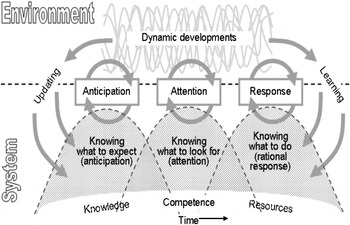
Although seemingly remote from developmental psychopathology, the perspective of the engineering sciences (where we both obtained our undergraduate degrees) deserves our attention. Their concepts of resilience have a lot to do with safety and the ability of structures and systems to function under both normal and adverse conditions. The life and death consequences of engineering failures (e.g., the collapse of Highway 35W in Minneapolis and airplanes falling out of the sky) have lead to much effort on the part of engineers to understand resilience, and they have many ideas useful to the behavioral sciences. Of all the various perspectives on resilience listed above, the engineers are among the most thorough in describing resilience in behavioral terms while continuing to emphasize the importance of systems. Resilient systems must have the ability to anticipate, perceive, and respond (Hollnagel & Woods, Reference Hollnagel, Woods, Hollnagel, Woods and Leveson2006). The engineering perspective also acknowledges the importance of a “requisite imagination” (Adamski & Westrum, Reference Adamski, Westrum and Hollnagel2003), which goes beyond experience and involves a capacity to respond to the unexpected. We read into this genetically programmed adaptive mechanisms some of which may be latent components of the canalization process and not expressed until needed. The innate immune system is another example where our immune system is ready to defend us against attack from pathogens we have never before encountered, although our ancestors may have. Figure 1 illustrates the basic considerations. Resilient systems have the ability to anticipate, to perceive, and to respond to the ever changing circumstances across time. Based on Figure 1 we can see how a newborn baby, all by itself, would lack resilience because of limited abilities to anticipate, detect, and respond to dangers. Resilience must come from the systems around the child (parents, adoptive relatives, healthcare professionals, etc.). At the other end of the life span we see a similar dynamic in the frail elderly (Varadhan, Seplaki, Xue, Bandeen-Roche, & Fried, Reference Varadhan, Seplaki, Xue, Bandeen-Roche and Fried2008). The research and clinical practices focused on first episode psychoses (McGorry, Reference McGorry2011; Niendam et al., Reference Niendam, Jalbrzikowski and Bearden2009) illustrates the implementation of the concepts of Figure 1. We know that there will be young people in our community who will develop severe mental illness (anticipation). Methods are put into place in the community to seek out those with unexpressed genotypes and endophenotypic or prodromal features (focused attention) and then provide therapeutic interventions (respond).
The required qualities of a resilient system. Reprinted from “Epilogue: Resilience Engineering Precepts,” by E. Hollnagel and D. D. Woods. In Resilience Engineering: Concepts and Precepts, by E. Hollnagel, D. D. Woods, and N. Leveson (Eds.), 2006. Burlington, VT: Ashgate Publishing. Copyright 2006 by Ashgate Publishing. Reprinted with permission.

Do the Mentally Ill Lack Resilience?
If mental illness can be avoided by whatever factors confer resilience to life's “slings and arrows of outrageous fortune (Shakespeare, Hamlet Act III, Scene 1),” then it would be logical to ask: “Do those who develop mental illness lack resilience?” One of us (D.R.H.) recently put this question to a team of mental health practitioners representing a variety of disciplines and the immediate, vigorous, and unanimous response was “no!” To the contrary, these seasoned practitioners described the seriously mentally ill as among the most resilient people they ever met. There are few who suffer more than those afflicted with demon voices and visions and, all too often, go on to endure poverty, homelessness, hopelessness, isolation, and discrimination. Despite all these slings and arrows, most of the seriously mentally ill carry on in life, and typically do so with no bitterness about the fate life handed them. Perhaps this kind of phenomena was what Ernest Hemingway (The Farewell to Arms, chap. 34) was referring to when he wrote “The world breaks every one and afterward many are strong at the broken places.” The fact that the seriously mentally ill are resilient is confirmed by relatively high remission rates (Robins & Regier, Reference Robins and Regier1991; van Os et al., Reference van Os, Burns, Cavallaro, Leucht, Peuskens and Helldin2006). The WHO studies on remission in schizophrenia (Haro et al., Reference Haro, Novick, Bertsch, Karagianis, Dossenbach and Jones2011) show that over a 3-year span, clinical remission ranges from 60% to 84% and functional remission occurs in about 18% to 35% of outpatients. How remissions come about is a major puzzle for resilience research. Did something come along and “erase” the effects of pathological event(s) as Schofield and Balian suggested? Were some genes turned off, or others on, by good experiences or good medicines? Was resilience lost then regained? Figure 1 suggests that, through learning and updating, the resilience dynamic can change. Resilience concepts are not just useful to answer the question “Why do some people get sick?” but also for the questions “Why do some people survive?” and, “Why do some people recover?” Our bet is that answers will be found to include good caring plus innate homeostatic and canalized mechanisms of healing. Caution is needed to prevent the unenlightened from turning the concept of resilience backward in ways that perpetuate the stigma that the mentally ill are somehow weak. In addition, to say that a person may have, for example, developed depression through a breakdown of resilience factors yet, to affirm they are also resilient people, poses a dilemma for theory makers. One possibility is that resilience varies with developmental stages as suggested above. Alternatively, we may need to invoke different dimensions of resilience. A person with depression may have a brain susceptible to biological consequences of stress but, at the same time, have a lot of acquired psychological reserves (ego strength).
Limits to Adaptation: A Worked Example
As the environment is in a constant state of flux, as illustrated by the “dynamic developments” in Figure 1, there must be a capacity to adjust to changing conditions. However, there are limits to any adaptive system. Frequent repeated stressors (multiple hits) without intervening pauses, or acute severely powerful stressors, will overwhelm resilience systems. In engineering terms and in the biological sciences, this concept is captured by the phrases “adaptive capacity” (Dalziell & McManus, Reference Dalziell and McManus2004) or “allostatic load” (Cicchetti, Reference Cicchetti2011). Buildings and bridges in Japan and San Francisco are now built with resilience built in and with considerable margins to allow for unexpected stressors from the forces of nature but are not 100% fail proof. How does all of this work to lead to our topic of psychopathology? For depression, we are close to having a well-developed answer.
It is reasonable for us to assume that everyone is born with an initial adaptive capacity that, in accord with the theme of individual differences, will vary across individuals because of genetic factors plus other congenital influences (e.g., anoxia, maternal nutrition, HIV, maternal phenylketonuria). For major depressive disorder, we are coming to understand that there are genetic factors that involve general stress sensitivity plus a second and independent set of genetic factors presumably more specific to channeling the effects of stress into a clinical state of depression (Li, McGue, & Gottesman, Reference Li, McGue and Gottesman2012). From the initial baseline adaptive capacity, life experience will subsequently modify the trajectory of an individual's adaptive capacity. We also know that one of the most robust environmental factors impacting resilience involves having strong social connections. Social affiliations not only help build resilience to depression, but also individuals with strong social connections seem less prone to many of life's maladies, including physical illness and frailty in old age. Social rejection, by contrast, erodes resilience by way of changes in the hypothalamic–pituitary–adrenal axis and by way of altering the immune system to stimulate the brain-disrupting inflammatory process (Jurgens & Johnson, Reference Jurgens and Johnson2012; Slavich, O'Donovan, Epel, & Kemeny, Reference Slavich, O'Donovan, Epel and Kemeny2010; Slavich, Way, Eisenberger, & Taylor, Reference Slavich, Way, Eisenberger and Taylor2010). Chronic stress, including social stress, induces inflammatory factors that disrupt central nervous system signal transduction cascades that normally allow neuronal plasticity. Neuronal plasticity, in turn, generates behavioral plasticity (adaptation). Chronic stress damages a wide variety of central nervous system plasticity modulators and, at the biochemical level, causes a reduction in expression of genes associated with synaptic plasticity resulting in diminished frontal cortical activity as well as other brain centers involved in mood/depression (Khairova, Machado-Vieira, Du, & Manji, Reference Khairova, Machado-Vieira, Du and Manji2009; Kuipers, Trentani, Den Boer, & Ter Horst, Reference Kuipers, Trentani, Den Boer and Ter Horst2003). A thorough review of the role of inflammatory cytokines in the development of depression is beyond the scope of this commentary; the interested reader is referred to citations above and a recent review by Miller, Maletic, and Raison (Reference Miller, Maletic and Raison2009). Similar lines of reasoning implicate stress-induced inflammation in schizophrenia (Hanson & Gottesman, Reference Hanson and Gottesman2005; Muller & Schwarz, Reference Muller and Schwarz2010) and in the loss of resilience in aging (Jurgens & Johnson, Reference Jurgens and Johnson2012; Sparkman & Johnson, Reference Sparkman and Johnson2008).
The story of resilience in aging introduces us to an additional biological reality to incorporate into our resilience theories in the form of telomeres. Telomeres are regions of repetitive DNA sequences at the end of a chromosome. They serve to protect the ends of the chromosomes from deterioration. They are consumed during cell division, and they are renewed by an enzyme called telomerase reverse transcriptase. Over time and with each cell division, the telomere ends become shorter. Shortened telomeres are associated with aging and age-related diseases. It turns out that telomeres are highly susceptible to inflammation and, further, life style factors including psychological stress and the associated cumulative inflammatory loads are linked to telomere shortening (Lin, Epel, & Blackburn, Reference Lin, Epel and Blackburn2012; O'Donovan et al., Reference O'Donovan, Pantell, Puterman, Dhabhar, Blackburn and Yaffe2011). Conversely, positive life style factors including such activities as meditation and mindfulness techniques may actually be protective against inflammatory damage and telomere shortening (De Meyer, Reference De Meyer2011; Epel, Daubenmier, Moskowitz, Folkman, & Blackburn, Reference Epel, Daubenmier, Moskowitz, Folkman and Blackburn2009). With these evidence-based perspectives in mind, it is not surprising then that children exposed to adverse life experience grow up not only to have increased rates of neurobehavioral problems such as depression, but also to have high rates of age-related maladies such as diabetes and cardiovascular disease and shorter lives, all of which are a mediated by inflammatory processes (Danese et al., Reference Danese, Moffitt, Harrington, Milne, Polanczyk and Pariante2009) that can erode resilience.
Does Resilience Have a Dark Side?
We think of resilience as a positive process that keeps developmental trajectories on healthy courses even in the face of repeated adversities. What about developmental trajectories that are on unhealthy courses and that remain so in the face of repeated positives? Those of us in clinical settings see this phenomenon frequently. The fussy baby progresses into the oppositional toddler who, by the age of 5, has thrown the family cat out of the second floor window, and it gets worse from then on. Efforts by parents, teachers, pediatricians, psychiatrists, social workers, and therapists have minimal impact. The unhealthy behaviors seem deeply canalized and resistant to modification. One has to wonder if incorrigibility is the dark side of resilience.
If resilience is a form of homeostasis or canalization (or what ever you want to call it), then there is no logical reason why this phenomenon cannot be attributed to any developmental trajectory whether considered healthy or not. It takes some cognitive rearranging to think of the “incorrigible child” as resilient, but their negative behaviors are just that. There are plenty of examples of other nearly intractable negative behaviors including, addictions, repeat criminal offenses, uncontrolled anger, eating disorders, child abuse, and domestic violence to name just a few. People who endure repeated victimization are also an example of a pattern of behavior that is difficult to modify. One has to wonder why people go from one abusive relationship to another? It is clear that victims of trauma have an increased risk of being victimized again (Chang, Chen, & Brownson, Reference Chang, Chen and Brownson2003; Finkelhor, Ormrod, & Turner, Reference Finkelhor, Ormrod and Turner2007; Ford, Elhai, Connor, & Frueh, Reference Ford, Elhai, Connor and Frueh2010). It is neither politically correct nor therapeutically helpful to blame the victim so we need an alternate perspective. Applying the systems way of thinking that has evolved out of resilience research may provide an answer. We would then stop focusing on the person as the source of the problem just as we have come to think of resilience lying not only in the individual but also in the systems surrounding the individual. From this perspective it becomes quickly apparent that the focus of remediation must not just be on the individual but needs to include the psychosocial–economic systems that perpetuate the negative outcomes. It takes a village to save a soul; it also takes one to destroy a soul.
As we have written elsewhere (Gottesman & Hanson, Reference Gottesman, Hanson and Masten2007), Newton's laws of thermodynamics apply to social and psychological organizations as well as physical systems. Newton's second law of thermodynamics indicates that for any organized system there must be a constant infusion of energy otherwise the system will revert to dark chaos. Invoking systems explanations for resilience, or the lack of same, we need to acknowledge that systems solutions will need much energy and constantly. As we write this article in the fall of 2011, a news item from the New Zealand Herald (October 13, 2011) catches our eye as an example of a systems approach to preventing damage to children. The Social Development Minister announced channeling an additional $11.1 million (NZ) into hiring more social workers for schools to provide support for at-risk children. The Social Worker in School Program (http://www.cyf.govt.nz/working-with-others/swis-services/index.html) coordinates services across school, home, and community. Their work includes helping children develop social skills and self-esteem, working with families to enhance parenting skills, helping teens to avoid high-risk activities (e.g., gangs), and getting families help with issues like finances. To put the 11 million dollars of additional funding into a per capita perspective, the population of New Zealand is about 4.4 million. For our children to develop resilience, the sources of energy are psychological in the form of nurturing, bonding/attachment, teaching, training, and so forth. Children are at risk if parents–caretakers are too fatigued, depressed, sociopathic, stressed, or intoxicated to channel positive energy into the child. A child is at risk if the community does not channel energy (money) into education, social programs, sanitation, peacekeeping, and health care. The energy supplied by the skilled people involved in working with our children is to be praised but such people rarely work for free. In this era of economic downturn and reduced funding for education, social services, and healthcare that are occurring in many parts of the world, we fear for the consequences and predict an increase in developmental trajectories turning to the dark side. Future resilience research should question whether persistent maladaptive behaviors are the result of a malevolent form of resilience or the consequence of chaos when the resilience engines are depleted of energy?
Reprise
Adverse life events can lead to a wide range of unhealthy emotional and physical consequences across the life span, but not always. The reasons why some people are affected, and some not, lie in a combination of individual genetic factors such as those that mediate stress responses, including inflammatory processes, and in networks of family and social systems including the quality of social connections. Each of these system components may augment or diminish the impact of stressors. It is daunting to develop strategies to reduce negative outcomes from adverse life events because some of the system components are gigantic and are highly energy (money) dependent, such as education, housing, poverty, and healthcare. Other strategies are more personal such as harm avoidance (get vaccinated, stay sober, wear your seat belts) and stress-reducing life style choices (exercise, meditation). We also have pharmacological interventions that alter stress-resilience homeostatic pathways. It is not surprising to discover that medicines for conditions such as depression have anti-inflammatory properties, and anti-inflammatory agents have antidepressant properties (Chavda, Kantharia, & Jaykaran, Reference Chavda, Kantharia and Jaykaran2011; Khairova et al., Reference Khairova, Machado-Vieira, Du and Manji2009). Likewise, antipsychotic medications also have anti-inflammatory benefits (Hanson & Gottesman Reference Hanson and Gottesman2005) that can protect against trauma/stress induced inflammation that leads to central nervous system dysfunction.
We cannot avoid all stress and moderate amounts may be protective (Seery, Reference Seery2011). We anticipate that it will be a long time before the entire macro-, and molecular systems components are optimized. In the meantime, let us try to optimize our own resilience by following the advice we often heard from Norm: work well, play well, and love well.