Introduction
Outcome of bulimia nervosa
Cognitive behavioral therapy (CBT) is widely regarded as the treatment of choice for bulimia nervosa (BN), and there is considerable evidence from review and meta-analysis of clinical trials that CBT is effective in reducing both behavioral and psychological features of BN (Thompson-Brenner et al. Reference Thompson-Brenner, Glass and Westen2003; Shapiro et al. Reference Shapiro, Berkman, Brownley, Sedway, Lohr and Bulik2007). The long-term outcome of CBT treatment has not been reported (Fairburn et al. Reference Fairburn, Norman, Welch, O'Connor, Doll and Peveler1995), but has been identified as a key area for further research (Shapiro et al. Reference Shapiro, Berkman, Brownley, Sedway, Lohr and Bulik2007).
CBT is a multi-component treatment including diverse elements: normalizing eating, psycho-education, identifying and challenging overvalued cognitions about food, eating, weight and shape, identifying cues for bulimic behaviors and use of strategies such as stimulus control to manage cues, exposure with response prevention (ERP), and relapse prevention (Fairburn et al. Reference Fairburn, Marcus, Wilson, Fairburn and Wilson1993). Little is known about which of these many components are necessary for effective treatment, although dismantling studies suggest that the cognitive component is crucial to therapeutic outcome (Fairburn et al. Reference Fairburn, Jones, Peveler, Carr, Solomon, O'Connor, Burton and Hope1991).
Consensus is lacking as to what should constitute criteria for the outcome of treatment for BN. It is proposed that abstinence from bulimic behaviors rather than reduced behavior frequency is a key outcome (Kordy et al. Reference Kordy, Kraemer, Palmer, Papezova, Pellet, Richard and Treasure2002; Shapiro et al. Reference Shapiro, Berkman, Brownley, Sedway, Lohr and Bulik2007), yet few studies report this.
Outcome of exposure with response treatment
ERP for BN was first developed within an ‘anxiety reduction’ model, with purging as the maintaining factor in the binge–purge cycle (Rosen & Leitenberg, Reference Rosen and Leitenberg1982; Leitenberg et al. Reference Leitenberg, Gross, Peterson and Rosen1984, Reference Leitenberg, Rosen, Gross, Nudelman and Vara1988; Agras et al. Reference Agras, Schneider, Arnow, Raeburn and Telch1989a, Reference Agras, Schneider, Arnow, Raeburn and Telchb; Leitenberg & Rosen, Reference Leitenberg and Rosen1989). ERP within this model involves sustained focus on cues for vomiting, typically by eating ‘forbidden’ foods (exposure) and prevention of vomiting (relapse prevention) until habituation occurs. An alternative model of ERP for BN proposes intervening at the pre-binge point of the binge–purge cycle (Schmidt & Marks, Reference Schmidt and Marks1988, Reference Schmidt and Marks1989), views binge eating as an escape-avoidance response from negative affect or a conditioned stimulus (Jansen et al. Reference Jansen, Klaver, Merckelbach and van den Hout1989a, Reference Jansen, van den Hout, de Loof, Zandbergen and Griezb), and advocates eating a small amount of food to trigger the urge to binge (exposure) without binge eating (relapse prevention).
Several studies have described the effectiveness of ERP in reducing bulimic behaviors in BN, including single case reports (Rosen & Leitenberg, Reference Rosen and Leitenberg1982; Jansen et al. Reference Jansen, van den Hout, de Loof, Zandbergen and Griez1989b) and small uncontrolled studies (Leitenberg et al. Reference Leitenberg, Gross, Peterson and Rosen1984; Giles et al. Reference Giles, Young and Young1985; Wilson et al. Reference Wilson, Rossiter, Kleifield and Lindholm1986; Schmidt & Marks, Reference Schmidt and Marks1988, Reference Schmidt and Marks1989; Toro et al. Reference Toro, Cervera, Feliu, Garriga, Jou, Martinez and Toro2003; Martinez-Mallén et al. Reference Martinez-Mallén, Castro-Fornieles, Lázaro, Moreno, Morer, Font, Julien, Vila and Toro2007). Martinez-Mallén et al. (Reference Martinez-Mallén, Castro-Fornieles, Lázaro, Moreno, Morer, Font, Julien, Vila and Toro2007) reported a case series of 25 adolescents with BN highly symptomatic after 6–8 months of combined CBT and high-dose selective serotonin reuptake inhibitor (SSRI) treatment who then had substantial reductions in binge frequency, after 12 sessions of ERP.
Three randomized controlled trials (RCTs) have examined ERP directly in BN. Two compared ERP with CBT directly (Leitenberg et al. Reference Leitenberg, Rosen, Gross, Nudelman and Vara1988; Agras et al. Reference Agras, Schneider, Arnow, Raeburn and Telch1989b), with divergent findings, one finding significantly greater improvement in the frequency of vomiting and the amount eaten during a test meal for two forms of exposure to pre-purge cues (Leitenberg et al. Reference Leitenberg, Rosen, Gross, Nudelman and Vara1988). The second found superior outcome compared with the waiting list control group for CBT without ERP, but not CBT plus ERP (Agras et al. Reference Agras, Schneider, Arnow, Raeburn and Telch1989b). In the third study we examined the added efficacy of ERP to a core of CBT (Bulik et al. Reference Bulik, Sullivan, Carter, McIntosh and Joyce1998a, Reference Bulik, Sullivan, Joyce, Carter and McIntoshb, Reference Bulik, Sullivan, Carter, McIntosh and Joyce1999; Carter et al. Reference Carter, McIntosh, Joyce, Sullivan and Bulik2003). Following eight sessions of CBT, a relaxation training (RELAX) control was compared with two forms of ERP: exposure to pre-purge cues (P-ERP), in which foods high risk for purging were eaten; and exposure to pre-binge cues (B-ERP), which involved ERP to cues for binging including the sight and smell of foods, but the foods are not eaten. At the end of treatment, significant advantages for B-ERP, but not P-ERP, were found compared with the relaxation control condition on measures of food restriction, body dissatisfaction and depression. No differences were found among the groups in the frequency of binging, purging, or in abstinence rates of bulimic behaviors (Bulik et al. Reference Bulik, Sullivan, Carter, McIntosh and Joyce1998a). At 3 years post-treatment, no differences were found among the groups in frequency or abstinence rates of bulimic behaviors (Carter et al. Reference Carter, McIntosh, Joyce, Sullivan and Bulik2003). The present study reports the final long-term outcome from this clinical trial.
Method
Participants
Participants for the study were women aged 17–45 years with a current primary DSM-III-R diagnosis of BN (APA, 1987). Exclusion criteria were current anorexia nervosa, current body mass index (BMI) ⩾30 kg/m2, current severe major depression with severe suicidal intent or requiring treatment with antidepressants, current severe medical illness or severe medical complications of BN, and current use of psycho-active medication and unwillingness to undergo a supervised drug wash-out period.
Procedure
Assessment
Baseline assessment
The presence of Axis I and II disorders was determined with the Structured Clinical Interview for DSM-III-R (I and II) (Spitzer et al. Reference Spitzer, Williams and Gibbon1987, Reference Spitzer, Williams, Gibbon and First1990) conducted by one of the investigators. The status of core bulimic symptoms was assessed by a structured clinical interview with the patient, and prospective self-monitoring data were available for corroboration.
Subsequent assessments
Assessments occurred at the point of randomization (between CBT and ERP or relaxation training) and at the end of treatment. Participants were contacted to complete a face-to-face assessment at 6 months, 1, 2, 3, 4 and 5 years post-treatment. Follow-up results to 3 years post-treatment have been reported previously (Bulik et al. Reference Bulik, Sullivan, Carter, McIntosh and Joyce1998a, Reference Bulik, Sullivan, Joyce, Carter and McIntoshb; Carter et al. Reference Carter, McIntosh, Joyce, Sullivan and Bulik2003).
Outcome measures
Primary, secondary and tertiary outcome measures were determined a priori. Primary outcome measures were core behavioral features of BN, the number of episodes of objective binging, self-induced vomiting, and purging (vomiting plus laxative use) over the previous 2 weeks. Data were obtained by using the same clinician-administered interview as at baseline. The weekly frequency of binging and purging over the period since the previous assessment was also determined during the clinical interview. Retrospective recall was aided by a life events inventory assessing occurrence of bulimic behaviors in conjunction with salient life events.
Secondary outcome measures were cognitive aspects of BN, body dissatisfaction, eating restraint and food restriction. These were dietary restriction and body dissatisfaction over the previous fortnight as assessed by structured clinical interview and subscales of the Eating Disorders Inventory (EDI; Garner et al. Reference Garner, Olmsted and Polivy1983a, Reference Garner, Olmsted, Polivy, Darby, Garfinkel, Garner and Coscinab), drive for thinness, bulimia and body dissatisfaction.
Tertiary outcome measures were mood symptoms on the Hamilton Depression Rating Scale (HAMD; Hamilton, Reference Hamilton1960) and the global assessment of functioning, Axis V of DSM-III-R (GAF; APA, 1987).
Treatments
Treatments in the study have been described elsewhere (Bulik et al. Reference Bulik, Sullivan, Carter, McIntosh and Joyce1998a). All treatments were manual based. Therapists were clinical psychologists who delivered all three experimental conditions. Patients had one therapist for the complete treatment protocol.
Phase I: CBT
Treatment consisted of eight sessions of CBT, followed by eight sessions of one of three experimental behavioral treatments (BTs), two ERP treatments and relaxation training. CBT consisted of psycho-education, self-monitoring, cue identification and sequencing, challenging automatic thoughts, thought restructuring, and relapse prevention. To reduce the occurrence of exposure-based interventions within CBT, treatment departed from standard CBT for BN (Fairburn et al. Reference Fairburn, Marcus, Wilson, Fairburn and Wilson1993) in an important way: normal eating was not prescribed and homework did not include incorporating avoided foods into daily eating. Instead, modifications that individuals commonly made with eating were through identifying and challenging cognitions related to restriction of food intake or identifying restrictive or erratic eating as cues for subsequent binge eating.
Phase II: Experimental treatments
At the completion of eight CBT sessions, participants were randomized to a BT: B-ERP, P-ERP, or relaxation training. ERP involved individualized assessment of cues for binging and purging respectively in the B-ERP and P-ERP conditions. Treatment involved therapist-assisted exposure to individualized high-risk cues, with prevention of the targeted response (binging in B-ERP, purging in P-ERP). In P-ERP, participants ate foods that were strong cues for purging (typically binge foods) while also being exposed to other cues (such as having laxatives available, being in a restaurant rest room or their home bathroom, and focusing on feelings of fullness or thoughts of weight gain), until the urge to purge was elicited, but were asked to refrain from purging. Participants in B-ERP did not eat during ERP, but were exposed to high-risk cues that elicited the urge to binge, and refrained from binging. Cues for binging included seeing and smelling (but not eating) binge foods along with non-food cues, activities, memories or affect associated with binging. Combinations of food and non-food cues from individualized assessments were used in each ERP session to approximate real antecedents for bulimic episodes. Exposure sessions continued until individuals had habituated to the urge to binge or purge. Sessions occurred both at and away from the clinic.
Relaxation training consisted of breathing techniques, imagery and progressive deep muscle relaxation, without a focus on food, eating, weight or shape. Sessions provided therapist contact without further cognitive or exposure techniques. Structured self-guided exposure or relaxation was assigned as homework during BT.
Data analyses
Data analyses involved three series of analyses. The first examined the effect of the experimental treatments at 5 years. The second examined the impact of treatment completion on outcome. The third involved comparison of response rates for the sample as a whole, according to different definitions of outcome.
For the first series, for continuously distributed outcome variables (frequency of binge eating and purging, clinician-rated body dissatisfaction and food restriction, EDI subscales, HAMD and GAF), change from point-of-randomization scores were calculated. Scores were inspected for normality using normal probability plots. Analysis of variance (ANOVA) was used to compare outcome at 5 years among the three treatment groups for normally distributed change from point-of-randomization variables. For non-normally distributed variables, the non-parametric Kruskal–Wallis statistic compared median values.
Given the high proportion of participants with no bulimic behaviors at 5 years, primary outcome measures were recoded as dichotomous variables (abstinence: yes/no). Logistic regression models were fitted with abstinence (from binging, purging and combined binging+purging) at 5 years as the dependent variables, main effects of experimental condition, and abstinence at point of randomization as covariates.
Two linear mixed effects regression models were used to model the frequency of binge eating and purging (combined vomiting and laxative use) over all assessment times. Baseline binge frequency and three variables found to have distinguished among the three treatment groups at earlier assessments, change in food restriction and body dissatisfaction from baseline to point of randomization, and anxiety during the cue reactivity assessment (area under the curve), were used as covariates in the models. Subject was incorporated as a random effect and assessment time as a fixed effect. All available data were used, and no imputation of missing data was performed.
For the second series of analyses participants were categorized into three groups: no treatment completed; CBT treatment only completed; both treatments (CBT and BT) completed. For continuous primary, secondary and tertiary outcome variables, change-from-baseline scores were calculated. Scores were inspected for normality using normal probability plots. ANOVA was used to compare outcome among the three groups according to treatment completion status for change-from-baseline outcome variables.
Primary outcome variables, binging and purging behaviors, were recoded as dichotomous variables (abstinence: yes/no). Logistic regression models were fitted with abstinence (from binging, vomiting, purging and combined binging+purging) at 5 years as the dependent variables and main effects of treatment completion status.
All analyses were performed using SPSS version 17 (SPSS Inc., USA). Significance was determined using the criterion p<0.05.
Results
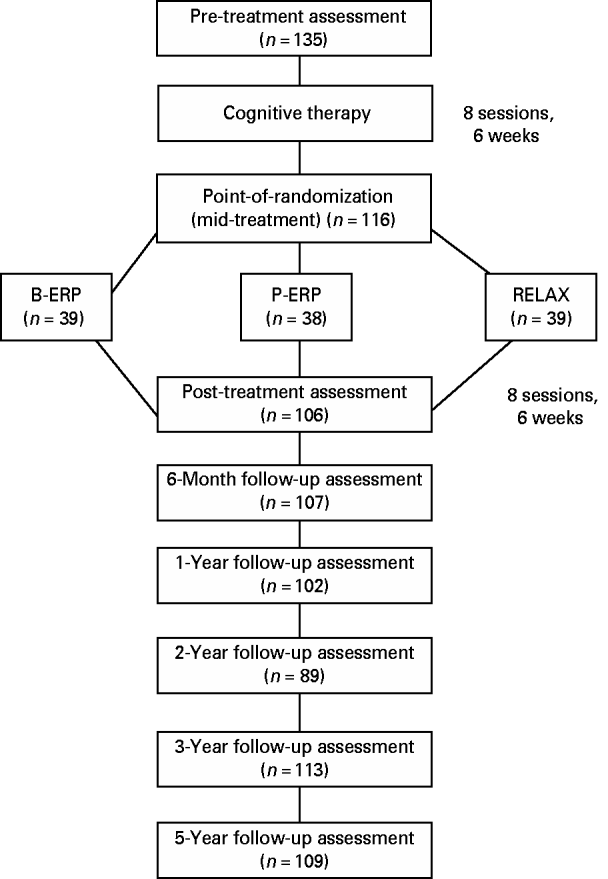
One hundred and thirty-five women met all inclusion and no exclusion criteria and began treatment. Fig. 1 shows participant flow during treatment and follow-up. Nineteen individuals (14.1%) did not complete the first phase of therapy, with drop-out occurring across the course of CBT. The remaining 116 individuals were randomized to an experimental condition (B-ERP n=39, P-ERP n=38, RELAX n=39). There were no differences in co-morbidity among the three treatment groups. One hundred and six women completed five or more sessions of the experimental treatment (B-ERP n=35, P-ERP n=33, RELAX n=38). Ten individuals did not complete the experimental treatment, with completion defined as attending five or more of the eight sessions. Thus, less than 9% of those randomized to BT dropped out. The proportion completing treatment was similar across the three treatment groups (p=0.23). Overall, 29 of the 135 participants (21.5%) failed to complete therapy, the majority dropping out from the first phase of treatment. The proportion of the total sample attending for follow-up assessment at 5 years was 81% of the original sample of 135 (n=109), 94% completed at least one assessment, and over half completed all follow-up assessments. Eighty per cent were followed up within 2 months of the planned 5-year assessment (range 56–74 months).
Overview of study design and patient flow at assessment points. ERP, Exposure with response prevention; B-ERP, exposure to pre-binge cues; P-ERP, exposure to pre-purge cues; RELAX, relaxation training.

Effects of randomization
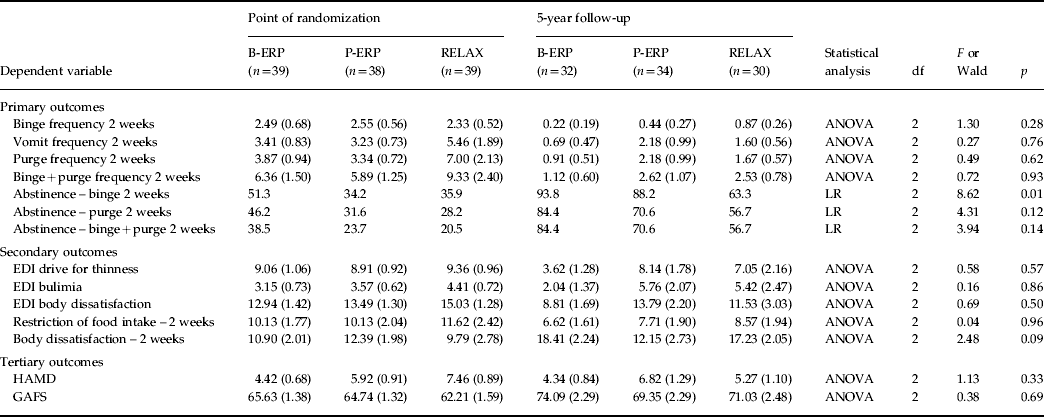
Table 1 presents means and standard errors, or percentage abstinence rates, and statistical analyses of effects of the experimental treatments. Data are primary, secondary and tertiary outcome variables for participants randomized to B-ERP, P-ERP and relaxation at point of randomization and 5 years. Change from point-of-randomization values for primary, secondary and tertiary outcome variables were normally distributed.
Statistical summary of the effects of the experimental treatments for primary, secondary and tertiary outcome variables for participants randomized to B-ERP, P-ERP and RELAX at point of randomization and 5 years

ERP, Exposure with response prevention; B-ERP, exposure to pre-binge cues; P-ERP, exposure to pre-purge cues; RELAX, relaxation training; EDI, Eating Disorder Inventory; HAMD, Hamilton Depression Rating Scale; GAF, global assessment of functioning; LR, logistic regression; df, degrees of freedom.
Values given as mean (standard error) or percentage abstinent.
For primary outcome variables, no differences were found among groups in change from point-of-randomization to 5-year frequencies of binging, vomiting, purging or combined binging+purging, using ANOVA on change scores. Logistic regression models with abstinence at 5 years as the dependent variable and relevant measures at the point of randomization as covariates revealed significant differences among the groups in abstinence rates from binging, with 93.8% of those randomized to B-ERP, 88.2% of those randomized to P-ERP, and 63.3% of those randomized to relaxation abstinent from binging at the 5-year follow-up, from 51.3, 34.2 and 35.9% at the point of randomization for B-ERP, P-ERP and relaxation respectively. The two exposure treatments were associated with significantly greater reductions in binging abstinence rates (42.5% and 54% for B-ERP and P-ERP respectively) than the relaxation condition (27.4%), with no difference between B-ERP and P-ERP. No significant effects of treatment type were found for abstinence from purging or combined binging+purging. For all secondary and tertiary outcome variables, no differences were found among groups in change from the point of randomization to 5 years, using ANOVA on change scores.
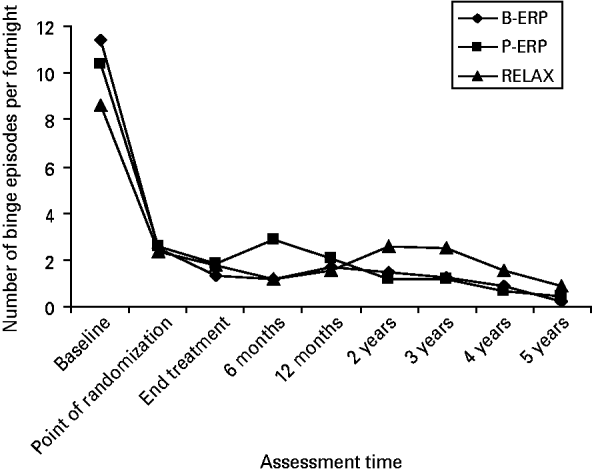
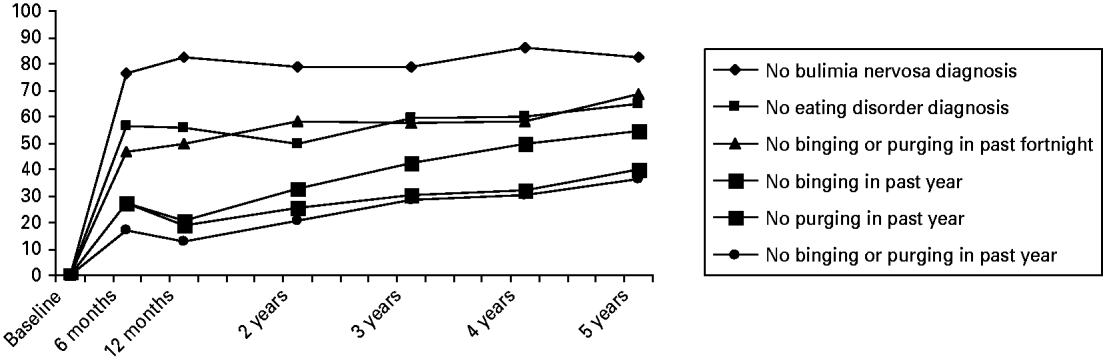
For the mixed effects regression model for binge frequency, over 5 years there were significant effects of baseline binge frequency (p=0.001), change in body dissatisfaction from baseline to point of randomization (p<0.004), and an interaction of assessment time by treatment group (p=0.004); however, the main effect of treatment was not significant (p=0.547) (see Fig. 2).
Binge frequency for the three treatment groups for all assessment times over 5 years. ERP, Exposure with response prevention; B-ERP, exposure to pre-binge cues; P-ERP, exposure to pre-purge cues; RELAX, relaxation training.
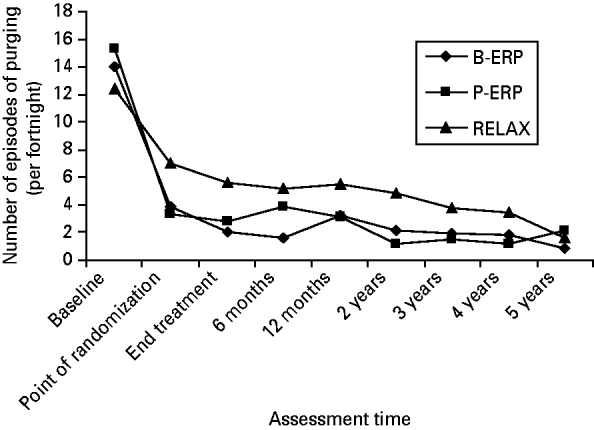
For the mixed effects regression model for purge frequency (vomiting and laxative use), over 5 years there were significant effects of baseline purge frequency (p<0.001), change in body dissatisfaction (p<0.001) and dietary restriction (p<0.001) from baseline to point of randomization, a main effect of treatment (p<0.001) and an interaction of assessment time by treatment group (p=0.024) (see Fig. 3). Pairwise comparisons among treatments indicated significantly lower purge frequencies for the two exposure treatment groups than the relaxation training group (p<0.001).
Purge frequency for the three treatment groups for all assessment times over 5 years. ERP, Exposure with response prevention; B-ERP, exposure to pre-binge cues; P-ERP, exposure to pre-purge cues; RELAX, relaxation training.

To compare outcome for exposure-based versus non-exposure-based treatment at 5 years, we combined B-ERP and P-ERP conditions. No differences were found in the frequencies of binging (F=2.28, df=1, p=0.14), vomiting (F=0.05, df=1, p=0.82), purging (F=0.37, df=1, p=0.54), or combined binging+purging (F=0.01, df=1, p=0.93) between the combined exposures group and the relaxation training group. Binge-eating abstinence rates were significantly different between the exposure and relaxation groups (Wald=8.60, df=1, p=0.003), and there were non-significant trends towards differences between the groups on abstinence rates for purging (Wald=3.38, df=1, p=0.06) and combined binging+purging (Wald=3.01, df=1, p=0.08).
Effects of treatment completion status
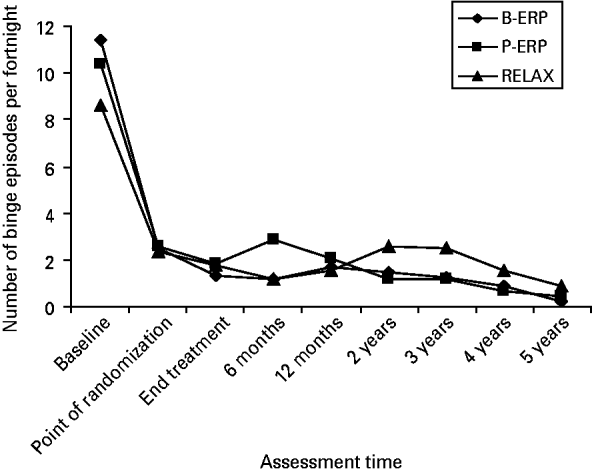
Table 2 presents statistical analyses of the effects of treatment completion status for primary, secondary and tertiary outcome variables, with participants classified according to whether they completed neither CBT nor BT, only CBT, or both CBT and BT. Data are means and standard errors, percentage abstinence, or medians at baseline and at 5 years. Change from baseline values for primary, secondary and tertiary outcome variables were normally distributed.
Statistical summary of the effects of treatment completion status for primary, secondary and tertiary outcome variables
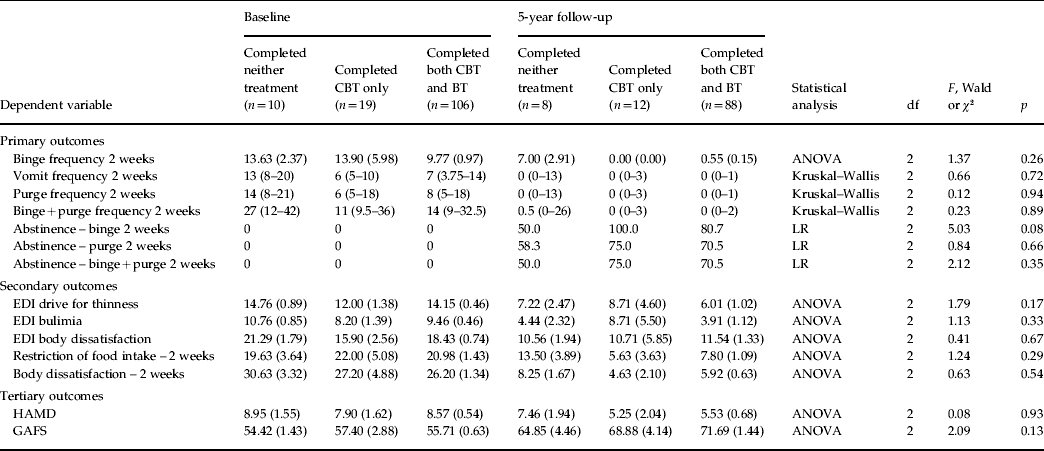
CBT, Cognitive-behavioral therapy; BT, behavioral treatment (exposure treatment or relaxation training); EDI, Eating Disorder Inventory; HAMD, Hamilton Depression Rating Scale; GAF, global assessment of functioning; LR, logistic regression; df, degrees of freedom.
Values given as mean (standard error), percentage abstinent or median (interquartile range).
No differences were found among treatment completion groups in the change from baseline to 5-year frequencies or medians for primary, secondary or tertiary outcome variables or in abstinence rates for bulimic behaviors.
Outcome for the total sample
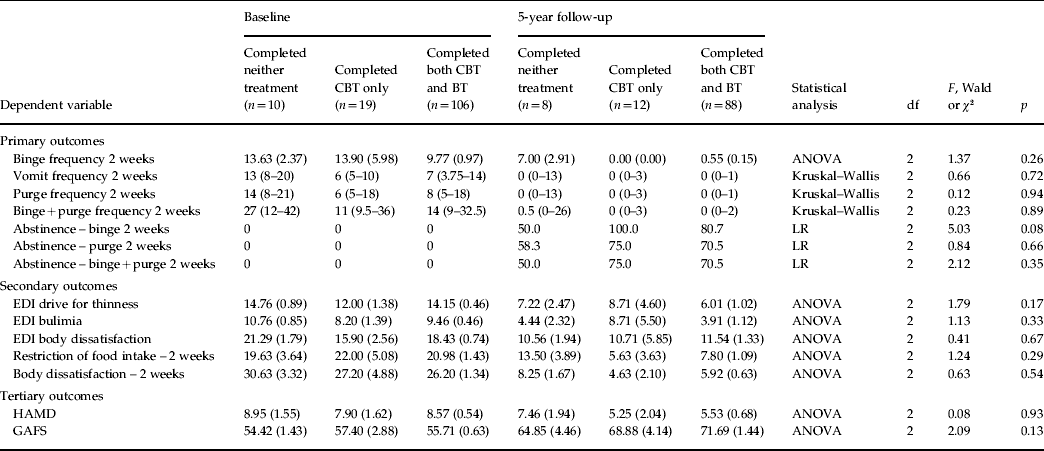
In addition to a priori definitions of outcome for the study (number of binge and purge episodes over the previous 2 weeks), percentage abstinence from binging and purging for the interval since the previous assessment (6 or 12 months) was calculated. Percentage abstinence from binging and purging and percentage with no diagnosis of BN or any eating disorder were calculated over the course of the study for the total sample.
Fig. 4 presents the outcome for the total sample from baseline to 5 years using these different definitions of outcome. The ‘strictest’ definition of outcome in the present study is the absence of any bulimic behaviors (i.e. binging or purging) over the previous 12 months. The percentage of the total sample meeting this definition of recovery was 13% at 1 year post-treatment and rose steadily over the 5-year period to 36% at 5 years post-treatment. Rates of the most ‘lenient’ definition of outcome, no longer meeting diagnostic criteria for BN, rose to 76% after 6 months of treatment and remained high across the 5 years of follow-up.
Outcome for the total sample from baseline to 5-year follow-up assessment for different definitions of outcome.

Rates of recovery at 5 years according to other definitions of outcome were 40% (absence of purging in the past year), 54% (absence of binging in the past year), 65% (no current eating disorder diagnosis), and 68% (absence of binging and purging in the past 2 weeks). With the exception of the diagnosis of BN, the rates for all definitions of outcome continued to increase over the 5 years post-treatment.
Discussion
The current study examined the long-term outcome of individuals with BN treated with CBT plus either relaxation training or one of two forms of exposure with response prevention: either exposure to pre-binge cues or exposure to pre-purge cues.
Modest effects at the end of treatment of superior outcome of B-ERP, but not P-ERP, with reduced anxiety on cue reactivity assessment (exposure to high-risk foods), food restriction, body dissatisfaction and depression, and at 12 months with lower food restriction and better global functioning, had disappeared at the 3-year follow-up. At 5 years no differences were found among the three treatment groups on measures of food restriction, body dissatisfaction or depression, but differences were found in rates of abstinence from binge eating, and over the entire 5 years of the study the two exposure treatments have lower rates of purging behaviors than the relaxation training condition.
The pattern of results requires cautious interpretation, and discussion of the implications of the study remains speculative. The absence of differences among the three groups at the end of treatment, at 12 months and 3 years, may suggest that the observed differences in binge abstinence rates at 5 years and in purging frequency overall represent chance occurrences. Alternatively, it is possible that the skills and/or conditioning experiences associated with exposure treatment may inoculate individuals in such a way as to protect against the more long-term continuation or re-emergence of symptoms.
In contrast to the two other RCTs in which CBT was compared with ERP (Leitenberg et al. Reference Leitenberg, Rosen, Gross, Nudelman and Vara1988) and a waiting list control was compared with CBT with or without ERP (Agras et al. Reference Agras, Schneider, Arnow, Raeburn and Telch1989b), the present study used an additive design in which ERP was added to a core of eight sessions of CBT. CBT was administered without the prescription of normal eating to avoid introducing exposure within CBT. In addition, CBT involved fewer sessions than in standard CBT. However, despite these departures from standard treatment, CBT was highly effective in reducing binge and purge behaviors, with over 40% of those completing CBT abstinent from binging and 28% abstinent from both binging and purging in the 2 weeks prior to randomization. It is possible that the substantial improvement that occurred during the eight sessions of CBT obscured the potential effects of ERP. Martinez-Mallén et al. (Reference Martinez-Mallén, Castro-Fornieles, Lázaro, Moreno, Morer, Font, Julien, Vila and Toro2007) reported significant reductions in binge eating after exposure treatment for individuals who had failed to respond to combined CBT plus SSRI treatment. It is possible that the effects of ERP may be most marked in individuals who do not respond, or respond only partially, to standard treatments. Neither of the other RCTs of ERP for BN have examined long-term outcome of treatment.
The linear mixed effects regression models for binge eating and purging over 5 years both included significant fixed effects for change in body dissatisfaction from baseline to randomization, and the model for purging also included change in dietary restriction, in addition to the main effect for treatment group. At the end of treatment we had found lower food restriction, body dissatisfaction and anxiety on eating for B-ERP, but not for P-ERP. For many individuals with BN, body dissatisfaction and the drive to restrict food intake in order to lose weight are powerful cues for subsequent binge eating and purging, and the role of hunger and negative affect as cues for binge eating is recognized (Steiger et al. Reference Steiger, Gauvin, Engelberg, Ying Kin, Israel, Wonderlich and Richardson2005; McIntosh et al. Reference McIntosh, Jordan, Carter, Latner, Wallace, Wilson and Latner2007; Stein et al. Reference Stein, Kenardy, Wiseman, Dounchis, Arnow and Wilfley2007). It is likely that greater opportunity existed to habituate to these cues in ERP because focus on non-food cues occurred alongside the focus on food cues. In our experience it is common for patients to report reductions in the strength and/or frequency of urges to binge as attempts to restrict food intake and the drive to lose weight diminish. Alternatively, patients in the ERP treatments received 6 weeks of treatment focusing on core symptoms of BN more than those in relaxation. This extended focus on core symptoms of BN in both ERP treatments compared with the focus on secondary symptoms of anxiety and muscle tension in relaxation training may have been responsible for the superior long-term outcome of the ERP treatments.
Overall, a substantial percentage of individuals remains symptomatic following treatment irrespective of the definition of recovery. Rates of ‘non-response’ to treatment at 5 years ranged from less than 20% to more than 60% depending on the definition of recovery. Thus, treatment outcome is highly dependent on the definition of outcome applied. Although the substantial change in BN diagnostic status occurs early and remains stable throughout the follow-up period, clearly clinical improvement continues to occur, with abstinence rates of bulimic behaviors continuing to rise between 4- and 5-year assessments. If classified using current nosology, these individuals would probably be diagnosed as eating disorder not otherwise specified (EDNOS), yet the clinical pattern suggests that this reflects residual symptoms of BN rather than a new disorder. These individuals would be better described using remission specifiers such as those suggested by Kordy et al. (Reference Kordy, Kraemer, Palmer, Papezova, Pellet, Richard and Treasure2002). The strictest definition of outcome in the present study essentially equates with Kordy et al.'s recommended definition of recovered, with no bulimic behaviors over the previous 12 months. The most lenient definitions of recovery, not having a current DSM eating disorder or BN diagnosis, are reported in studies of outcome (Fairburn et al. Reference Fairburn, Norman, Welch, O'Connor, Doll and Peveler1995), yet may fail to describe individuals with a partially remitted bulimic illness (Kordy et al. Reference Kordy, Kraemer, Palmer, Papezova, Pellet, Richard and Treasure2002). Four of the definitions of recovery relate to abstinence rates, as suggested by Kordy et al. (Reference Kordy, Kraemer, Palmer, Papezova, Pellet, Richard and Treasure2002) and Shapiro et al. (Reference Shapiro, Berkman, Brownley, Sedway, Lohr and Bulik2007).
Although the present study included some participants who did not complete treatment, the majority dropped out from the first phase of treatment, with less than 9% of those randomized to the second-phase treatments not completing treatment. In addition, a high proportion of those who entered the study completed follow-up assessment, with over 80% attending the 5-year assessment, 94% completing at least one follow-up assessment, and over half completing all follow-up assessments. A large proportion of the sample completed the assessment within 8 weeks of the 5-year anniversary of finishing treatment. The follow-up period was uncontrolled for further treatment.
In summary, at the 5-year follow-up, those who were randomized to an exposure therapy were more likely to be abstinent from binge eating. No differences were found in the rates of abstinence from other bulimic behaviors. The frequency of bulimic behaviors did not differ based on whether patients completed neither treatment phase, only CBT, or CBT plus ERP or relaxation. Rates of recovery varied markedly depending on the definition of recovery. The lowest rates of recovery were associated with the strictest definition of recovery, no binge or purge behaviors in the previous year, and the highest recovery rates were observed when recovery was equated with no current eating disorder or BN diagnosis.
Acknowledgments
This work was supported by project and program grants from the Health Research Council of New Zealand and the New Zealand Lotteries Board. We thank L. Livingston, A. Bartram, I. Stevens and R. Abbott for their assistance in the coordination and management of this study.
Declaration of Interest
None.