Over the past decade, respiratory syncytial virus has remained the leading viral cause of lower respiratory tract infections in young infants with a significant accompanying burden of illness.Reference Hall, Weinberg and Iwane 1 Respiratory syncytial virus-related hospitalisation rates are highest in infants <6 months of age, with an incidence of 2000 per 100,000 infants,Reference Schanzer, Langley and Tam 2 and decrease substantially after 2 years of life in the paediatric age group.Reference Schanzer, Langley and Tam 2 , Reference Iwane, Edwards and Szilagyi 3 In 2005, the global impact of respiratory syncytial virus-associated lower respiratory tract infection was estimated at 3.4 million hospitalisations in children <5 years of age, with almost all of the incumbent mortality occurring in developing countries.Reference Nair, Nokes and Gessner 4
Respiratory syncytial virus-related hospitalisation rates are higher in premature infants with or without chronic lung disease and infants with haemodynamically significant congenital heart disease.Reference Welliver 5 Children with symptomatic congenital heart disease have several pathophysiological factors that contribute to an increased risk of severe lower respiratory tract infection. These include altered pulmonary mechanics, potential cyanosis, pulmonary hypertension, and ventilation–perfusion mismatch.Reference Cabalka 6 Haemodynamically significant congenital heart disease in association with respiratory syncytial virus infection leads to prolonged hospitalisationReference Chang and Chen 7 – Reference Thorburn 10 and an increased risk of death.Reference Welliver 5 , Reference Chang and Chen 7 , Reference Thorburn 10 , Reference Navas, Wang, de Carvalho and Robinson 11 MacDonald et alReference MacDonald, Hall, Suffin, Alexson, Harris and Manning 12 documented a case fatality rate of 37%, but overall rates are likely lower with a reported range of 2–37% across 12 studies.Reference Welliver 5 Medrano, in 2007, noted that 10.4% of children aged <2 years with haemodynamically significant congenital heart disease required hospitalisation for acute respiratory tract infection and the majority of cases were respiratory syncytial virus related.Reference Medrano, Garcia-Guereta and Grueso 13 Risk factors for hospitalisation involve genetic and respiratory disorders, malnutrition, cardiopulmonary bypass, and incomplete prophylaxis.
In a randomised, double-blind, placebo-controlled trial, Feltes et alReference Feltes, Cabalka and Meissner 14 established the benefit and safety of palivizumab prophylaxis in reducing respiratory syncytial virus-related hospitalisations in children ≤24 months of age with haemodynamically significant congenital heart disease. A 45% relative reduction in respiratory syncytial virus hospitalisations was realised in the treatment arm (5.3%) compared with the placebo group (9.7%). This led to the approval of prophylaxis for haemodynamically significant congenital heart disease infants by the American Academy of Pediatrics, 15 the Canadian Paediatric Society,Reference Langley 16 and other international advisory bodies,Reference Figueras Aloy, Quero and Doménech 17 – Reference Tulloh and Feltes 21 and the adoption of these criteria into our respiratory syncytial virus prophylaxis programme.
It is almost a decade since the recommendations for palivizumab prophylaxis were published, and the analysis of the impact of these recommendations in this special high-risk group is warranted. The objectives of this study were to: (a) examine the characteristics of children with congenital heart disease hospitalised with respiratory syncytial virus infection after the implementation of a respiratory syncytial virus prophylaxis programme, (b) evaluate associated infant comorbidities following hospital admission, and (c) determine the incidence of breakthrough respiratory syncytial virus infection in patients who had received palivizumab.
Materials and methods
Procedures
This was a retrospective, single-centre study that was conducted at a major tertiary care children's hospital in Ontario, Canada, which services a community of 2.3 million people from the South-Central region of the province. The methodology employed mirrored that used by the research team in a study of Pediatric Intensive Care Unit admissions following respiratory syncytial virus infection.Reference Butt, Symington, Janes, Elliott, Steele and Paes 22 Electronic hospital medical records of all children with congenital heart disease who were hospitalised with respiratory syncytial virus infection over a 7-year period from 1 January 2003 to 31 December 2009 were examined. Congenital heart disease was identified by codes based on the 10th revision of the International Classification of Diseases and Related Health Problems (ICD-10; Codes Q20–Q28, inclusive) and classified as haemodynamically significant or non-significant using criteria outlined by Feltes et al.Reference Feltes, Cabalka and Meissner 14 , Reference Feltes, Sondheimer and Tulloh 23 Haemodynamically significant congenital heart disease was defined as uncorrected or palliated cyanotic or acyanotic congenital heart disease with pulmonary hypertension – systolic pulmonary arterial pressure ≥40 mmHg – and/or a requirement for medication to manage congestive heart failure.Reference Feltes, Sondheimer and Tulloh 23 The ICD-10 codes were also employed to identify children with the primary diagnosis of respiratory syncytial virus infection (Codes B97.4, J12.1, J20.5, and J21.0). Respiratory syncytial virus cases were confirmed by direct fluorescent antibody staining, culture, or reverse-transcriptase polymerase chain reaction on nasopharyngeal swabs or aspirates. All cases of children with congenital heart disease and respiratory syncytial virus from 0 to 18 years of age were selected for study inclusion. Cases were excluded only if, upon examination of the medical record, it was evident that respiratory syncytial virus was not the primary reason for admission but rather a secondary diagnosis during hospital stay.
Data were extracted by members of the research team using a standardised data collection form and included baseline demographics, structural type of congenital heart disease, other underlying diseases, criteria for hospitalisation, respiratory diagnosis and management, complications, and palivizumab prophylaxis. A single, pre-assigned investigator resolved any queries arising from the data collection.
Statistical analyses
Data were entered into the statistical software program SPSS® Statistics 17 and analysed using descriptive statistics. Cases were also classified into two age groups and sub-analyses conducted: children ≤2 years of age and children >2 years of age. Differences in the demographic and comorbidity variables between the two groups were analysed using the χ 2 or Fisher's exact tests for non-parametric data and the Mann–Whitney U test for non-normally distributed continuous variables. A p-value <0.05 was considered statistically significant. Ethics approval for the study was granted by the institutional research ethics board.
Results
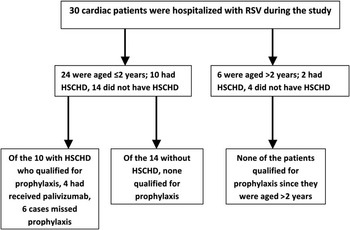
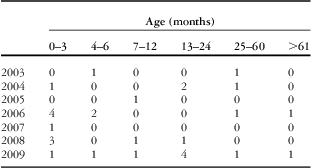
A total of 30 patients were admitted to the hospital with respiratory syncytial virus infection in the 7-year period, with the majority (83.3%) of the admissions occurring during the months of December through March. The flow diagram of the hospitalised patients with respiratory syncytial virus infection (n = 30) and their prophylaxis status is shown in Figure 1. In all, 53.3% were male, and 76.7% were ≥37 weeks’ gestational age at birth. The patients ranged in age from 0 to 71 months (Mean = 15.1 months; standard deviation = 18.30), with 80.0% (n = 24) of the cases ≤2 years of age. Admissions were highest for children aged 0–3 months (n = 10; Table 1). In all, 40% (n = 12) were classified as having haemodynamically significant congenital heart disease and most had acyanotic congenital heart disease (90.0%; n = 27). Similarly, among the children ≤2 years of age, 41.7% (n = 10) had haemodynamically significant congenital heart disease and almost all of them (91.7%; n = 22) had acyanotic congenital heart disease.
Flow diagram of hospitalised patients with respiratory syncytial virus infection and their prophylaxis status. HSCHD = haemodynamically significant congenital heart disease; RSV = respiratory syncytial virus.

Number of congenital heart disease patients hospitalised with respiratory syncytial virus infection by chronological age.

At the time of hospital admission, 86.7% (n = 26) of the patients had respiratory distress; 66.7% had decreased oxygen saturation; 60% had a fever; 36.7% could not maintain oral intake; and 16.7% had apnoea. These clinical signs were not mutually exclusive. The primary documented respiratory diagnosis in the medical discharge summary was bronchiolitis (73.3%), whereas the remainder had pneumonia (26.7%). More than half (60.0%; n = 18) of the cases had another underlying medical disease, and six had two or more diseases in addition to their cardiac problem. The most frequent underlying diseases were: genetic syndrome (other than Down syndrome; 20%; n = 6); neuromuscular impairments (16.5%; n = 5); and bronchopulmonary dysplasia/chronic lung disease (13.3%; n = 4). Less frequent comorbidities were congenital airway anomalies (n = 3), immunodeficiency (n = 2), Down syndrome (n = 2), lung malformations (n = 1), and other diseases (n = 2).
More than half (53.3%) of the children were admitted to the paediatric intensive care unit for treatment, as part of their course of illness. The median number of days spent in the paediatric intensive care unit was 11 days (range: 1–43 days). During hospitalisation, half of the children (50.0%) required respiratory support: nine were mechanically ventilated and six required continuous positive airway pressure or non-invasive positive pressure ventilation. In addition, one-third (33.3%; n = 10) of the children required only supplemental oxygen. Only one child received surfactant and none developed a pneumothorax. As part of their medical treatment, half (50.0%) of the children received intravenous antibiotics. The overall length of hospital stay for the patients was 10 days (range: 1–65 days).
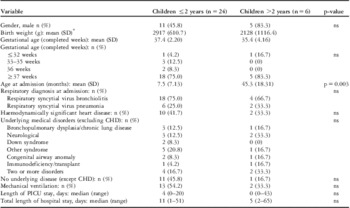
Infants ≤2 years of age were compared with the cohort of children in the age group of 2–18 years because in our institution prophylaxis is predominantly approved for those aged ≤2 years with haemodynamically significant congenital heart disease (Table 2). There were no significant differences in the two age groups in relation to the type of congenital heart disease (cyanotic versus acyanotic), whether or not they had haemodynamically significant heart disease, other underlying medical disorders, the clinical signs and symptoms that prompted hospital admission, primary diagnosis at discharge, the respiratory and medical management during hospitalisation, and the median length of hospital stay.
Comparison of demographic characteristics of respiratory syncytial virus cases by age group.

CHD = congenital heart disease; ns = not significant; PICU = paediatric intensive care unit; SD = standard deviation.
*Missing: 5 (20.8%) for infants ≤2 years of age; 7 (23.3%) for all infants.
Comorbidities during the hospital course
Bacterial co-infection – septicaemia, as denoted by a positive blood culture, occurred in 20.0% of all cases, and 10.0% of the cases concurrently had a urinary tract infection. A few patients also experienced electrolyte imbalances (16.7%), pulmonary hypertension (13.3%), had neurological problems (6.7%), or exhibited other complications (10%). There was one death related to respiratory syncytial virus infection: a 3-year-old preterm child with a large atrial septal defect who had accompanying chronic lung disease with dynamic pulmonary hypertension. This infant had received prophylaxis for two successive respiratory syncytial virus seasons, but did not qualify for palivizumab in the third year of life, based on current recommendations.
Incidence of respiratory syncytial virus infection following prophylaxis
Almost all of the children (86.7%; n = 26) who were hospitalised with respiratory syncytial virus infection had not received prophylaxis, but 58.3% (14/24) would not have qualified for prophylaxis based on existing criteria (Table 3).Reference Feltes, Cabalka and Meissner 14 , 15 All respiratory syncytial virus infections in those who had received palivizumab prophylaxis (n = 4) occurred in children ≤2 years of age (Table 3). These four cases had a mean age of 10.5 months (standard deviation = 6.14) at the time of admission to hospital; one was 32 weeks gestational age, and three were full term. All of these children had haemodynamically significant congenital heart disease, with one or more underlying medical conditions, which included chronic lung disease, neurological disorder, immunodeficiency, or a genetic syndrome. In all, 185 infants with haemodynamically significant cardiac disease received prophylaxis in our institution over the 7-year period. The breakthrough rate of respiratory syncytial virus infection in all infants with haemodynamically significant congenital heart disease was 2.2% (4/185).
Type of congenital heart disease and prophylaxis in cases ≤2 years of age (n = 24).

Discussion
In the United States, respiratory syncytial virus is seasonally associated with 20% of hospitalisations, 18% of emergency department visits, and 15% of office visits in children aged <5 years.Reference Hall, Weinberg and Iwane 1 Similarly in Canada, respiratory syncytial virus-associated lower respiratory tract infections account for 10% of all hospital admissions with a respiratory aetiology.Reference Schanzer, Langley and Tam 2 In Spain, from 2004 to 2008, Medrano Lopez et al reported a respiratory syncytial virus-associated admission rate of 3.8% in children aged ≤2 years with haemodynamically significant congenital heart disease.Reference Medrano López and García-Guereta 24
Over the study period, the majority of hospitalisations occurred in infants aged <3 months and 87.5% of paediatric intensive care admissions comprised children ≤24 months of age. Clinical signs such as apnoea, decreased oxygen saturation, and ability to maintain oral intake at the time of admission to intensive care were also more prevalent in younger children. Children aged ≤2 years compared with those >2 years were more likely to need mechanical ventilation (54.2% versus 33.2%), and the total length of hospital stay was longer (median days; 11 versus 5, respectively) impacting health-care resource utilisation. These findings are similar to the SpanishReference Medrano López and García-Guereta 24 and AustralianReference Alexander, Eastaugh, Royle, Daley, Shekerdemian and Penny 25 reports in which the median length of hospital stay (days [interquartile range]) of children who had symptomatic congenital heart disease in conjunction with respiratory syncytial virus infection was 7 [5–17] and 12 [9–31], while 30.4% and 52% required intensive care, respectively. This confirms that infants with haemodynamically significant heart disease experience more severe illness and are susceptible to major complications following respiratory syncytial virus infection based on aberrant pre-existing pathophysiology.
The breakthrough rate of respiratory syncytial virus infection, resulting in hospitalisation, in all children with haemodynamically significant congenital heart disease was 2.2%. In the United States, data from 2000 to 2004 showed an increase in prophylaxis from 4.8% to 11.4% for patients with congenital heart disease, especially those with cyanotic disorders, with a cumulative respiratory syncytial virus-associated hospitalisation rate of 1.9%.Reference Cohen, Zanni and Cohen 26 Over their 4-year study period, there was a 78% decline in respiratory syncytial virus -related hospitalisation in the acyanotic group and 58.9% among the cyanotic subjects.Reference Cohen, Zanni and Cohen 26 Medrano Lopez et al indicated that children with cardiac disorders who were adequately prophylaxed had a 3.3% hospital admission rate versus 7.9% in those who received incomplete prophylaxis.Reference Medrano López and García-Guereta 24 Comparatively, the Canadian-wide registry of palivizumabReference Mitchell, Paes, Li and Lanctot 27 documented a respiratory syncytial virus hospitalisation rate of 1.99% across 508 cardiac patients who were prophylaxed during the 2005–2009 seasons, which aligns with our results of 2.2% among 185 infants over 7 years. This is also consistent with the overall findings in other studies where the respiratory syncytial virus-associated hospitalisations for children ≤24 months, who received complete prophylaxis, ranged from 0.46% to 5.3%.Reference Chang and Chen 7 , Reference Medrano, Garcia-Guereta and Grueso 13 , Reference Feltes, Cabalka and Meissner 14 , Reference Feltes, Sondheimer and Tulloh 23 – Reference Mitchell, Paes, Li and Lanctot 27
In our study, 14 children with non-haemodynamically significant congenital heart disease were hospitalised with a respiratory syncytial virus infection. Congenital heart disease as a diagnosis, irrespective of haemodynamic significance, poses a significant risk for hospitalisation.Reference Cabalka 6 – Reference Thorburn 10 , Reference MacDonald, Hall, Suffin, Alexson, Harris and Manning 12 , Reference Medrano, Garcia-Guereta and Grueso 13 , Reference Alexander, Eastaugh, Royle, Daley, Shekerdemian and Penny 25 , Reference Khongphatthanayothin, Wong and Samara 28 Moreover, in an analysis of 12 studies by WelliverReference Welliver, Checchia, Bauman, Fernandes, Mahadevia and Hall 29 the case fatality rate among cardiac disease patients ranged from 2% to 37%. These 14 children would not be eligible for prophylaxis under the current guidelines 15 – Reference Chantepie 20 and prophylaxis cannot be justified because of the cost of palivizumab and limited evidence for use in such cases from well-designed, prospective trials. A recent systematic review of the cost-effectiveness of palivizumab prophylaxis compared with no prophylaxis in infants and young children with congenital heart disease showed a favourable trend in the cost-utility analyses, but overall the authors concluded that there was a need for more rigorous studies to address the issue.Reference Hussman, Lanctot and Paes 30
The American Pediatric Society recommendation 31 for the management of bronchiolitis stipulates that antibiotics should be reserved for children who have specific identification of the coexistence of a bacterial infection. However, 50% of the children admitted with respiratory syncytial virus-associated infection in this study received intravenous antibiotics. This is a reasonable approach to the management of these patients as the incidence of bacterial co-infection – lower airways positive for bacteria – in patients admitted to a paediatric intensive care unit with respiratory syncytial virus bronchiolitis is high, with a reported incidence between 33% and 44%.Reference Duttweiler, Nadal and Frey 32 – Reference Thorburn, Harigopal, Reddy, Taylor and van Saene 35 In addition, in a recent meta-analysis, the summary estimate for the prevalence of urinary tract infection among febrile infants at the time of presentation, who were aged ≤3 months with bronchiolitis or respiratory syncytial virus infection, was 3.3% (95% confidence interval, 1.9–5.7%). This may be a worthy reminder to screen sick infants who are admitted with severe viral infections for asymptomatic bacteriuria.Reference Ralston, Hill and Waters 36 , Reference Krief, Levine and Platt 37
This retrospective study is subject to several biases. The results are dependent on accurate documentation by the healthcare providers involved in the care of congenital heart disease patients hospitalised with a respiratory syncytial virus-associated infection. The incidence of respiratory syncytial virus positivity relies on efficient screening, proper viral sampling, and the use of high-quality diagnostic testing. Although our methodology was thorough, we may have underestimated the number of respiratory syncytial virus-related hospitalisations, and through a referral filter bias we may have missed a very small number of cardiac cases that were transferred directly from our region to a single major cardiac service in central Ontario. However, these patients are usually referred back to the hospital of origin and remain under our surveillance. Although this single-centre study has a relatively small sample size, it was conducted in a well-defined geographical region, which captures all the children with congenital heart disease who either received or did not receive respiratory syncytial virus prophylaxis and required hospitalisation. The results are therefore generalisable to similar tertiary care paediatric centres that provide care to comparable populations.
In summary, this study confirms the effectiveness of respiratory syncytial virus prophylaxis for children with haemodynamically significant congenital heart disease with a breakthrough rate of only 2.2%. The respiratory syncytial virus prophylaxis programmes in Canada, through the Canadian Registry of palivizumab (CARESS), have demonstrated very high compliance rates of 86–93%, which is likely responsible for the relatively low incidence of infection in patients who receive immunoprophylaxis.Reference Mitchell, Paes, Li and Lanctot 27 , Reference Paes, Mitchell, Li and Lanctot 38 , Reference Paes, Mitchell, Li and Lanctôt 39 In this study, six infants did not receive palivizumab despite being eligible. Improved vigilance in the identification of these infants early in the neonatal course is essential to further reduce respiratory syncytial virus-related hospitalisations and its attendant morbidities.
Acknowledgement
The research team would like to acknowledge the support of Elviera Janzen in facilitating access to the electronic databases at McMaster Children's Hospital.
Financial Support
None.
Conflict of Interest
Dr Paes has received investigator-initiated research funding from AbbVie Corporation and has been compensated as advisor and/or lecturer for AbbVie. The rest of the investigators have no conflicts of interest to declare.
Ethical Standards
The authors assert that all procedures contributing to this work comply with the ethical standards of the relevant national guidelines on human experimentation (Canadian Institutes of Health Research and the Medical Research Council of Canada) and with the Helsinki Declaration of 1975, as revised in 2008, and has been approved by the institutional committees (Hamilton Health Sciences, McMaster University, Research Ethics Board).