Introduction
Lichens have an intimate and often inseparable relationship with their substratum, even leading to unique lichen-geoedaphic associations (Brodo Reference Brodo, Ahmadjian and Hale1973; Garty & Galun Reference Garty and Galun1974; Wilson Reference Wilson1995). Although the geochemistry and mineralogy of rocks may play an important role in the occurrence of individual lichen species and assembly of lichen communities (Purvis & Halls Reference Purvis and Halls1996), the exact nature of such relationships or the mechanisms of such influences have not been thoroughly investigated.
Lichens are a dominant component of the biodiversity of many heavy metal-enriched sites, including mine tailings (Purvis & Halls Reference Purvis and Halls1996; Purvis & Pawlik-Skowrońska Reference Purvis, Pawlik-Skowrońska, Avery, Stratford and van West2008; Rajakaruna et al. Reference Rajakaruna, Harris, Clayden, Dibble and Olday2011) and ultramafic (‘serpentine’) substrata (Favero-Longo et al. Reference Favero-Longo, Isocrono and Piervittori2004; Harris et al. Reference Harris, Olday and Rajakaruna2007; Paukov Reference Paukov2009), at times displaying distinct species associations (Rajakaruna et al. Reference Rajakaruna, Harris, Clayden, Dibble and Olday2011, and references therein). Despite extensive research on the effect of ultramafic substrata on vascular plants, little research has been undertaken to describe lichen communities growing on ultramafic substrata (Favero-Longo et al. Reference Favero-Longo, Isocrono and Piervittori2004; Rajakaruna et al. Reference Rajakaruna, Harris and Alexander2009). Ultramafic rock is primarily composed of ferromagnesian silicates [<45% silica (Si); >18% magnesium oxide (MgO); Brooks Reference Brooks1987; Coleman & Jove Reference Coleman, Jove, Baker, Proctor and Reeves1992]. Common ultramafic rock types include peridotites (dunite, wehrlite, harzburgite, lherzolite) and the secondary alteration products formed by their hydration within the Earth's crust, including serpentinite (Coleman & Jove Reference Coleman, Jove, Baker, Proctor and Reeves1992). Ultramafic rocks and soils derived from them are generally deficient in plant-essential nutrients such as nitrogen (N), phosphorus (P), potassium (K), sulphur (S); have a calcium (Ca) to magnesium (Mg) molar ratio (Ca:Mg) of less than 1; and have elevated levels of heavy metals such as nickel (Ni) and chromium (Cr) (O'Dell & Rajakaruna Reference O'Dell, Rajakaruna, Harrison and Rajakaruna2011, and references therein). Due to the intense selective pressure generated by such stressful edaphic conditions, ultramafic substrata promote speciation and the evolution of ultramafic endemism in phanerogams (Kruckeberg Reference Kruckeberg1986; Rajakaruna Reference Rajakaruna2004; Kay et al. Reference Kay, Ward, Watt, Schemske, Harrison and Rajakaruna2011), contributing to unique floras with high rates of endemism and species with disjunct distributions (Harrison & Rajakaruna Reference Harrison and Rajakaruna2011). Interestingly, species-level ultramafic endemism is not a common phenomenon among cryptogams, including lichens (Alexander et al. Reference Alexander, Coleman, Keeler-Wolf and Harrison2007; Rajakaruna et al. Reference Rajakaruna, Harris and Alexander2009) where species- and community-level patterns appear to be more strongly influenced by macro- and micro-climate and the physical properties of the rock than by its mineral composition (Rajakaruna et al. Reference Rajakaruna, Harris and Alexander2009). In a comprehensive review of lichens found on ultramafic substrata worldwide, Favero-Longo et al. (Reference Favero-Longo, Isocrono and Piervittori2004) found co-occurrence of species characteristic of Ca-rich and Si-rich rocks and occurrence of species characterized by disjunct distribution patterns as common features of lichen communities in ultramafic environments. No consistent trends were detected in other features that are typical of phanerogams on ultramafics, such as paucity of species and occurrence of particular ecotypes. Several lichens collected from ultramafic substrata in Europe have been described as new to science, although it is unclear if these are truly ultramafic endemics, or species which are rare and were collected only from ultramafic substrata (Favero-Longo et al. Reference Favero-Longo, Isocrono and Piervittori2004, with references therein). Moreover, most of the species first reported as restricted to ultramafic substrata are poorly differentiated from related species and have been collected from other substrata (Wirth Reference Wirth1972; Hafellner Reference Hafellner1991). Whereas several recent lichen inventories exist for European ultramafic sites (Kossowska Reference Kossowska2001; Favero-Longo et al. Reference Favero-Longo, Isocrono and Piervittori2004, Reference Favero-Longo, Castelli, Salvadori, Belluso and Piervittori2005; von Brackel Reference von Brackel2007; Favero-Longo & Piervittori Reference Favero-Longo and Piervittori2009), including the earliest known published study of the relationship between lichens and ultramafic substrata (Hegetschweiler & Stizenberger Reference Hegetschweiler and Stizenberger1887), there are only a handful of published surveys to date of ultramafic lichens for North America (Ryan Reference Ryan1988; Sirois et al. Reference Sirois, Lutzoni and Grandtner1988; Sigal Reference Sigal1989; Harris et al. Reference Harris, Olday and Rajakaruna2007). Sirois et al. (Reference Sirois, Lutzoni and Grandtner1988) listed a total of 202 lichen taxa on Mt. Albert, Gaspésian Provincial Park, Québec, Canada, of which 157 were reported from partially serpentinized peridotite and 81 were restricted to this rock type. Of the taxa reported from ultramafic substrata, seven were new to North America, three were new to Canada, and 18 were new to Québec. They concluded that the ecological influences of ultramafic substrata on the lichens were similar to those observed on the region's vascular plants (Rune Reference Rune1954), where many taxa are largely restricted to ultramafic substrata. A study of marine and maritime lichens collected from partially serpentinized peridotite rocks from Fidalgo Island, Skagit County, Washington, USA, found 61 species, including 15 species new to the state and one (Verrucaria sandstedei B. de Lesd.) new to North America (Ryan Reference Ryan1988). Only one study of lichens on ultramafic substrata is known to have been conducted in California (Sigal Reference Sigal1989), despite the strong focus there to elucidate the relationship between vascular plant species and ultramafic substrata (Alexander et al. Reference Alexander, Coleman, Keeler-Wolf and Harrison2007). Sigal (Reference Sigal1989) reported 76 lichens from five ultramafic sites in central California. These included a collection of Ramonia gylactiformis (Zahlbr.) Vězda from peridotite and serpentinite at Complexion Springs in Lake County that was recently recognized as a distinct species and described as new to science as Ramonia extensa Lendemer, K. Knudsen & Coppins (Lendemer et al. Reference Lendemer, Knudsen and Coppins2009). The taxon is still known only from the type collection on ultramafic rock and deserves further study to determine if it is a strict ultramafic endemic. A recent study by Harris et al. (Reference Harris, Olday and Rajakaruna2007) explored the lichen flora of a partially serpentinized peridotite outcrop on Little Deer Isle, Hancock County, Maine. Sixty-three species in 35 genera were found, with two species, Buellia ocellata (Flörke) Körb. and Cladonia symphycarpia (Flörke) Fr., being new reports for New England. The handful of available studies suggest that there may be an ultramafic substratum effect for lichens in North America, and that further study may reveal new species or interesting floristic associations.
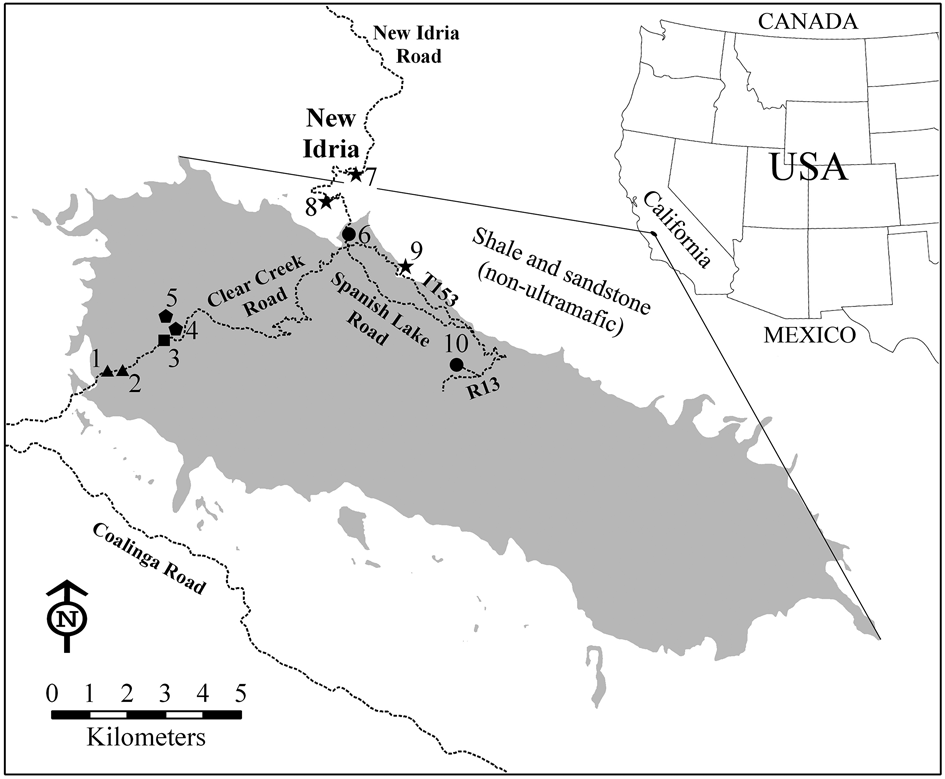
Our study examines the saxicolous lichen flora of the New Idria serpentinite mass, San Benito County, California, USA (Fig. 1). Whereas previous studies have explored the geology (Van Baalen Reference Van Baalen1995), soils (Alexander et al. Reference Alexander, Coleman, Keeler-Wolf and Harrison2007), and their relationship to plant species (Lazarus et al. Reference Lazarus, Richards, Claassen, O'Dell and Ferrell2011) of this area, no studies to date have surveyed the cryptogamic biota of the area, including lichens. We present the lichen biota of nephrite (jade), partially serpentinized peridotite, serpentinite, silica-carbonate, shale, and sandstone rocks associated with, or adjacent to, the New Idria serpentinite mass, with relevant geochemical information for the rocks from which the species were collected.
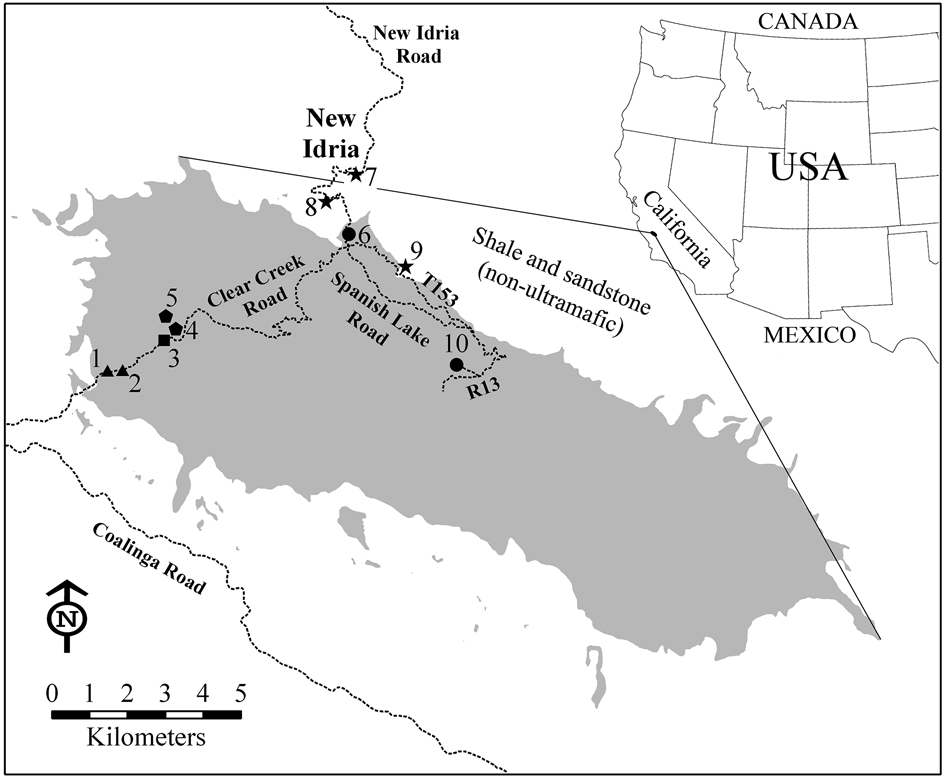
Map of New Idria serpentinite mass showing sampling sites and their geological characteristics. Geology:  =New Idria serpentinite (ultramafic),
 =Chert, shale, and sandstone (non-ultramafic). Collection locality geology:
 =Nephrite (ultramafic),
 =Serpentinized peridotite (ultramafic),
 =Silica-carbonate (non-ultramafic),
 =Shale and sandstone (non-ultramafic),
 =Serpentinite (ultramafic). Numbers refer to collection sites given in Table 1. R13 & T153 are road numbers.
Materials and Methods
Site description and field methods
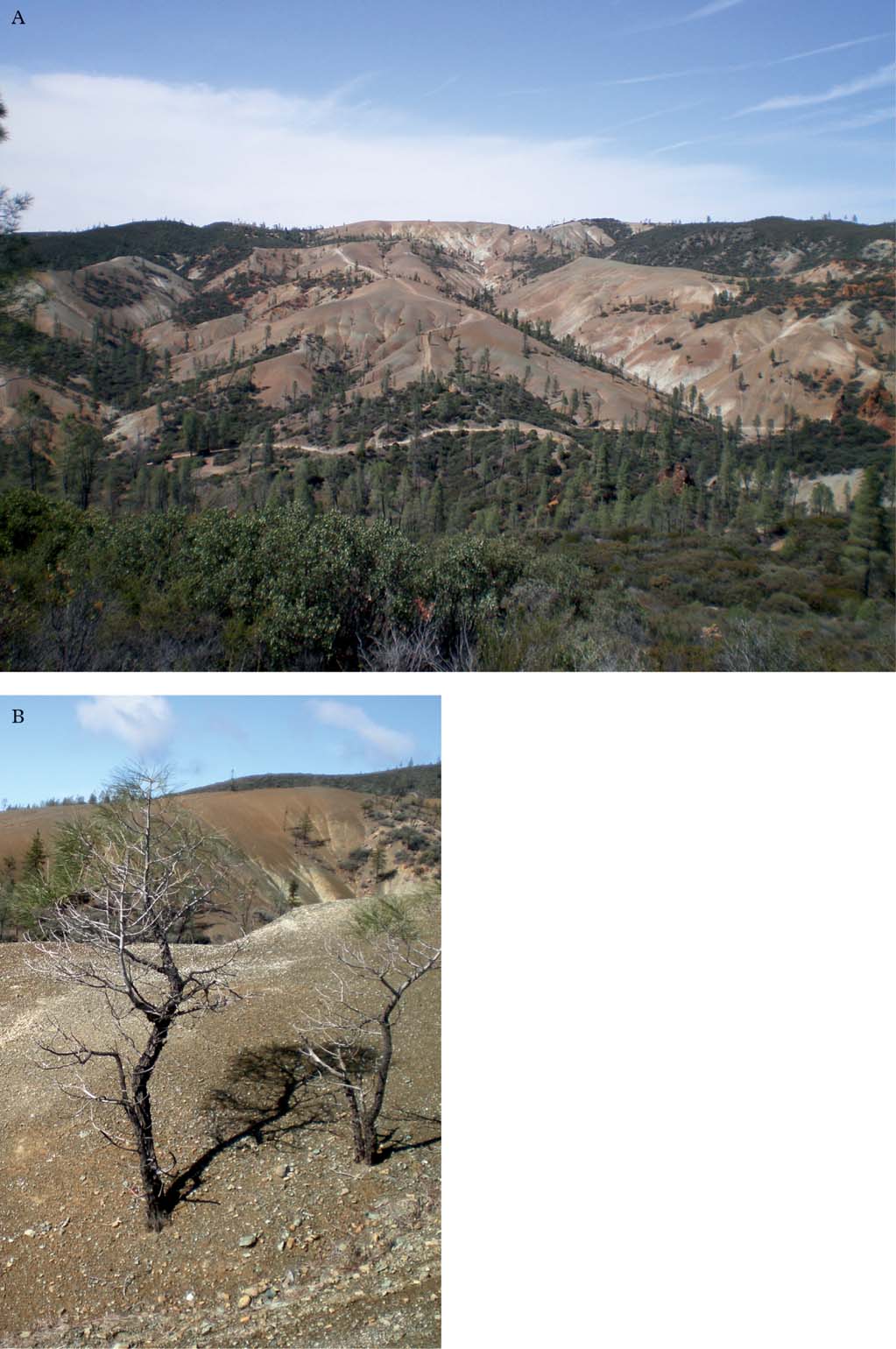
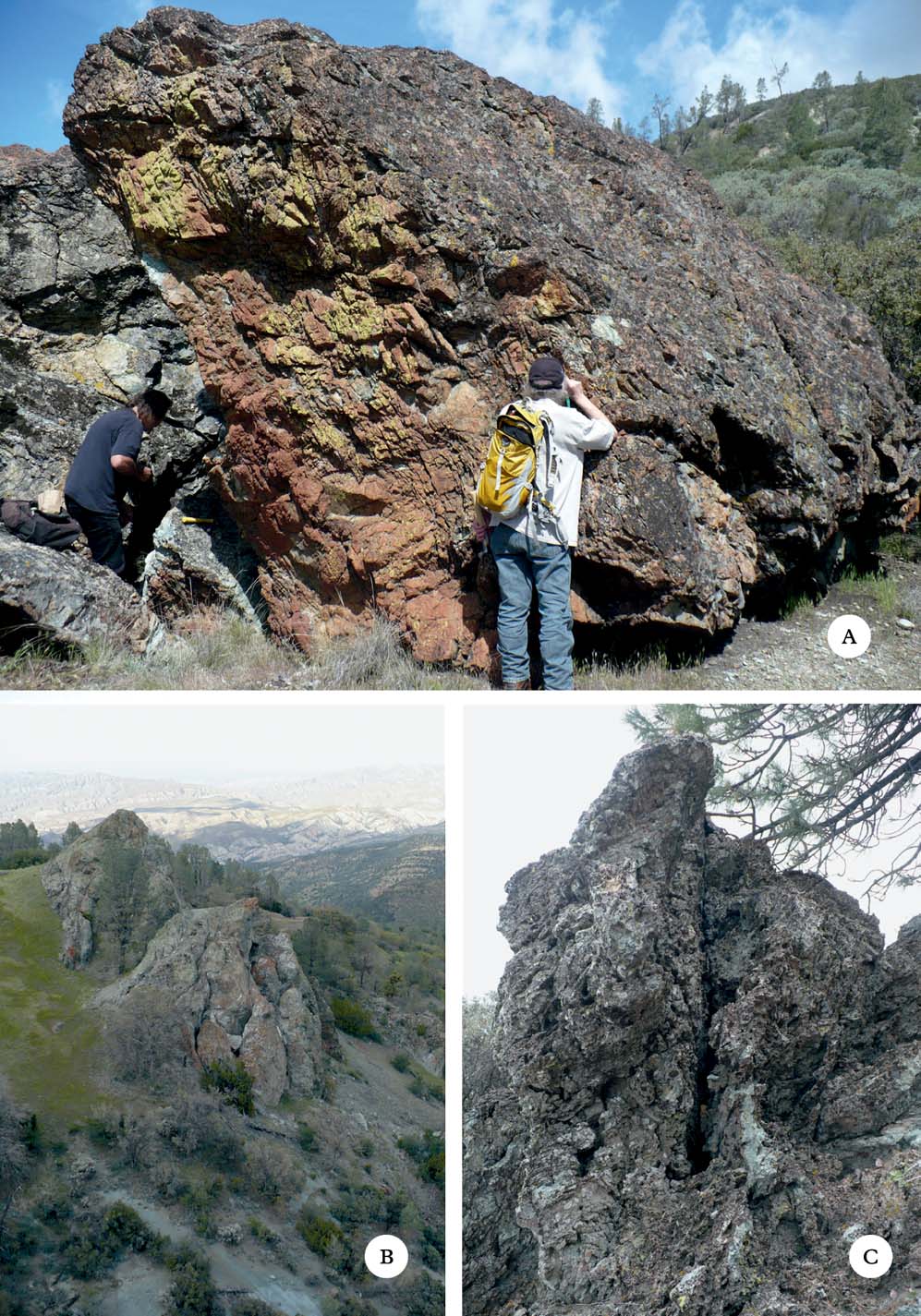
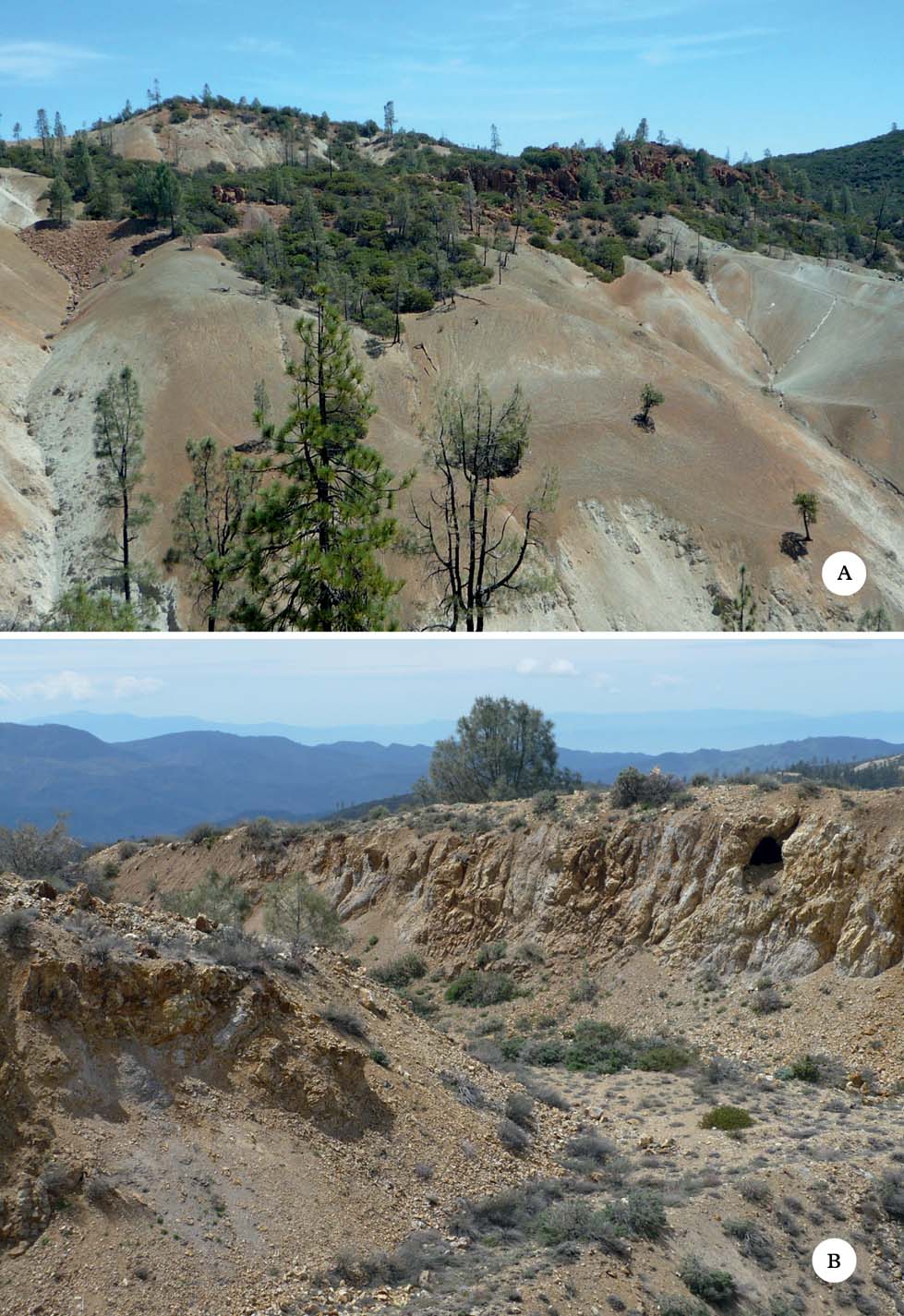
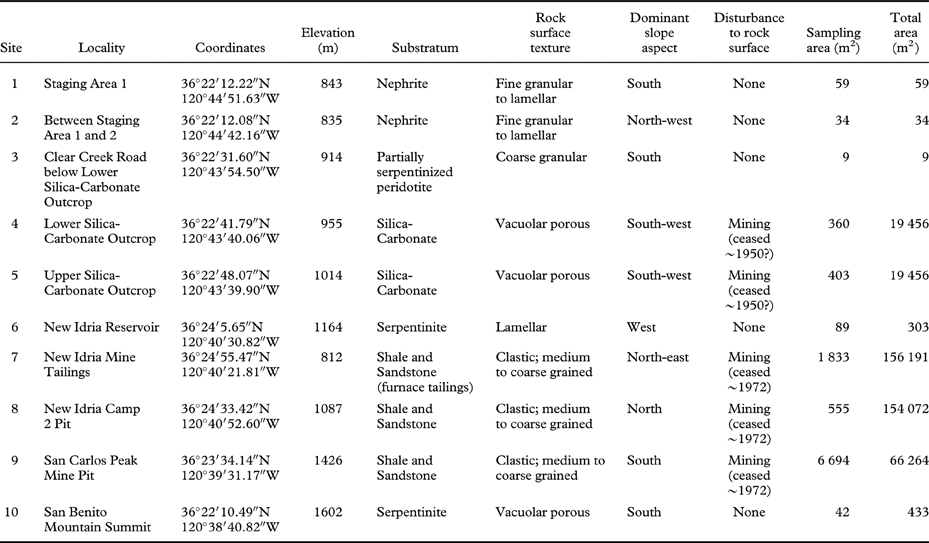
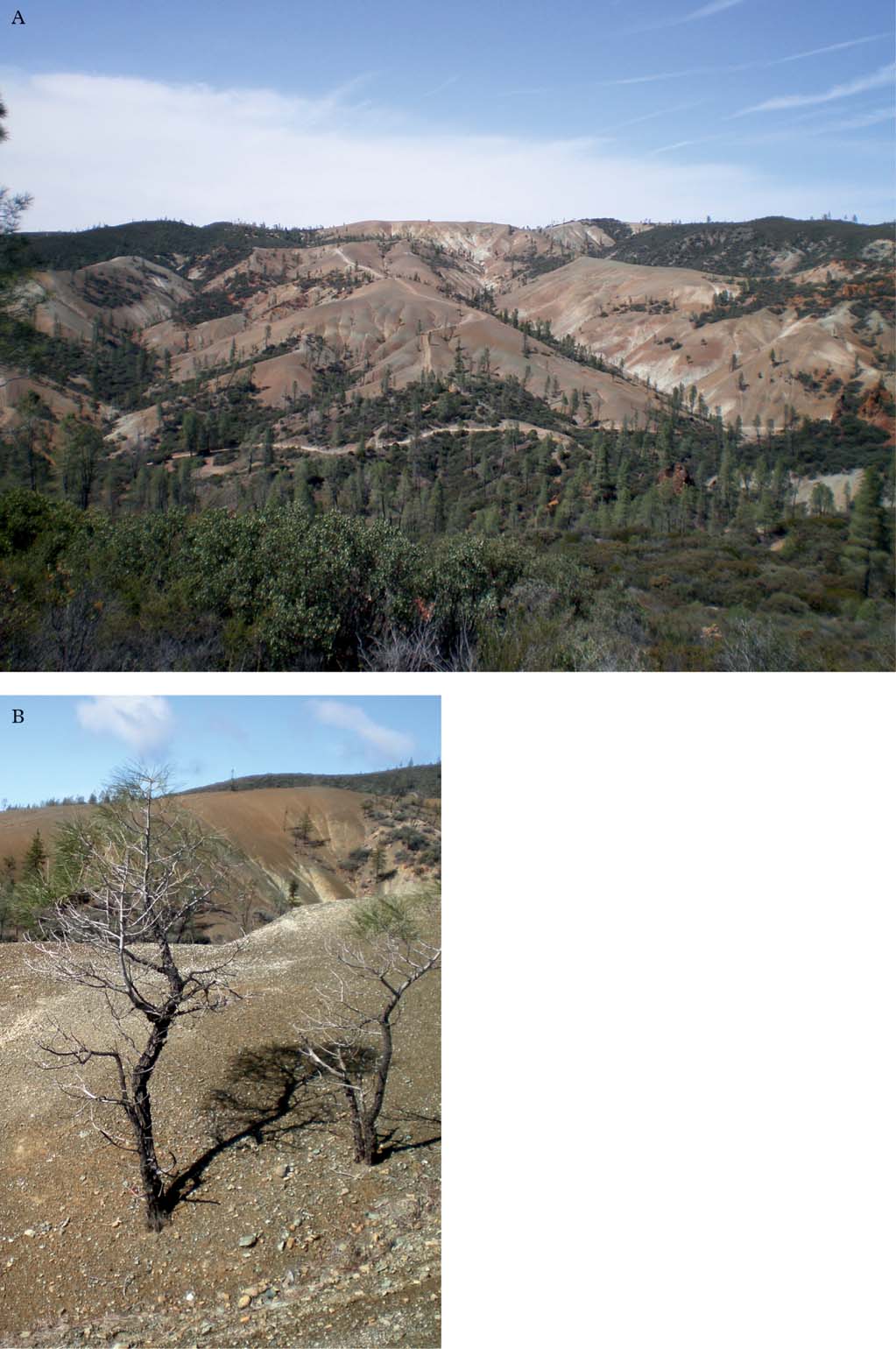
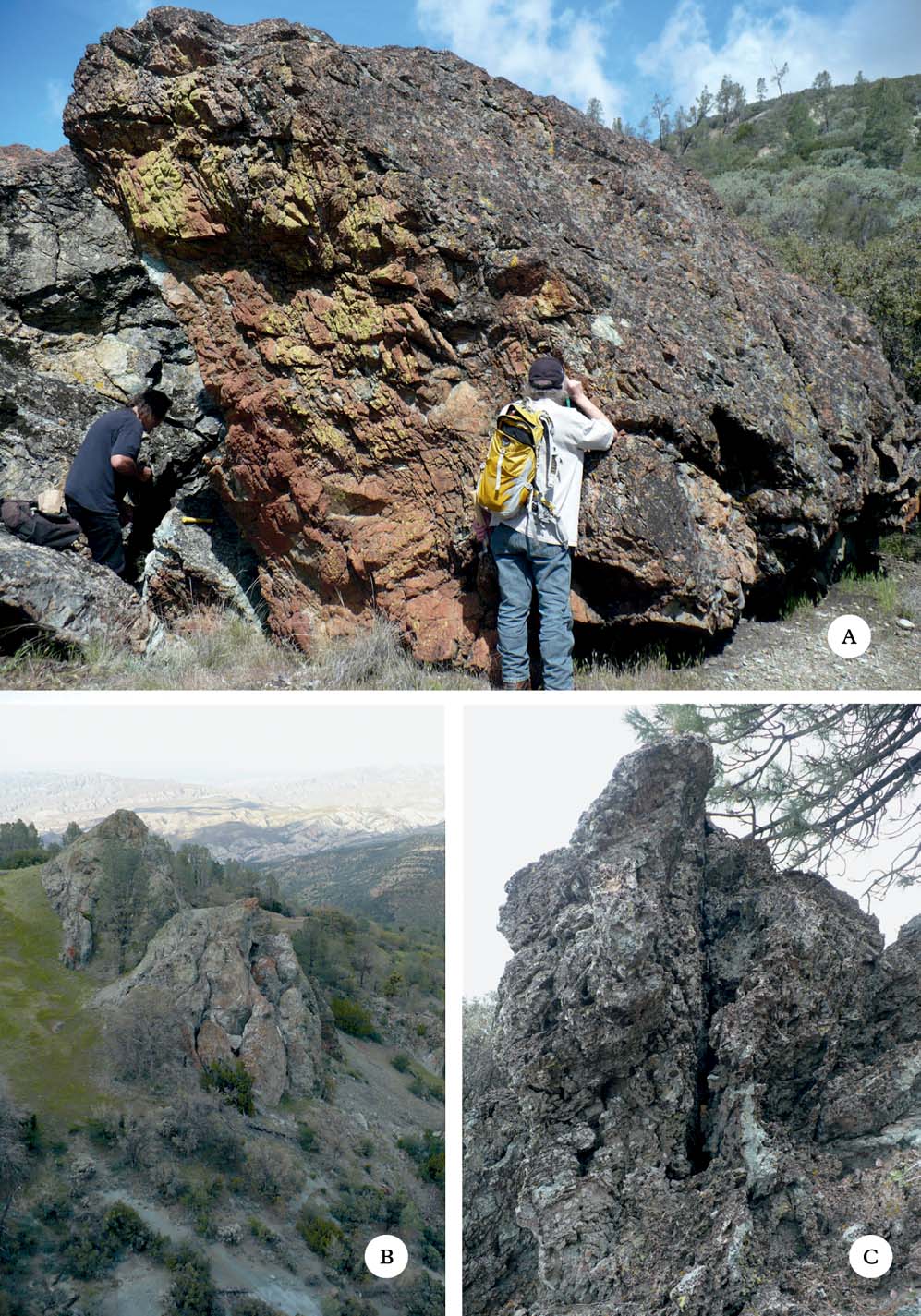
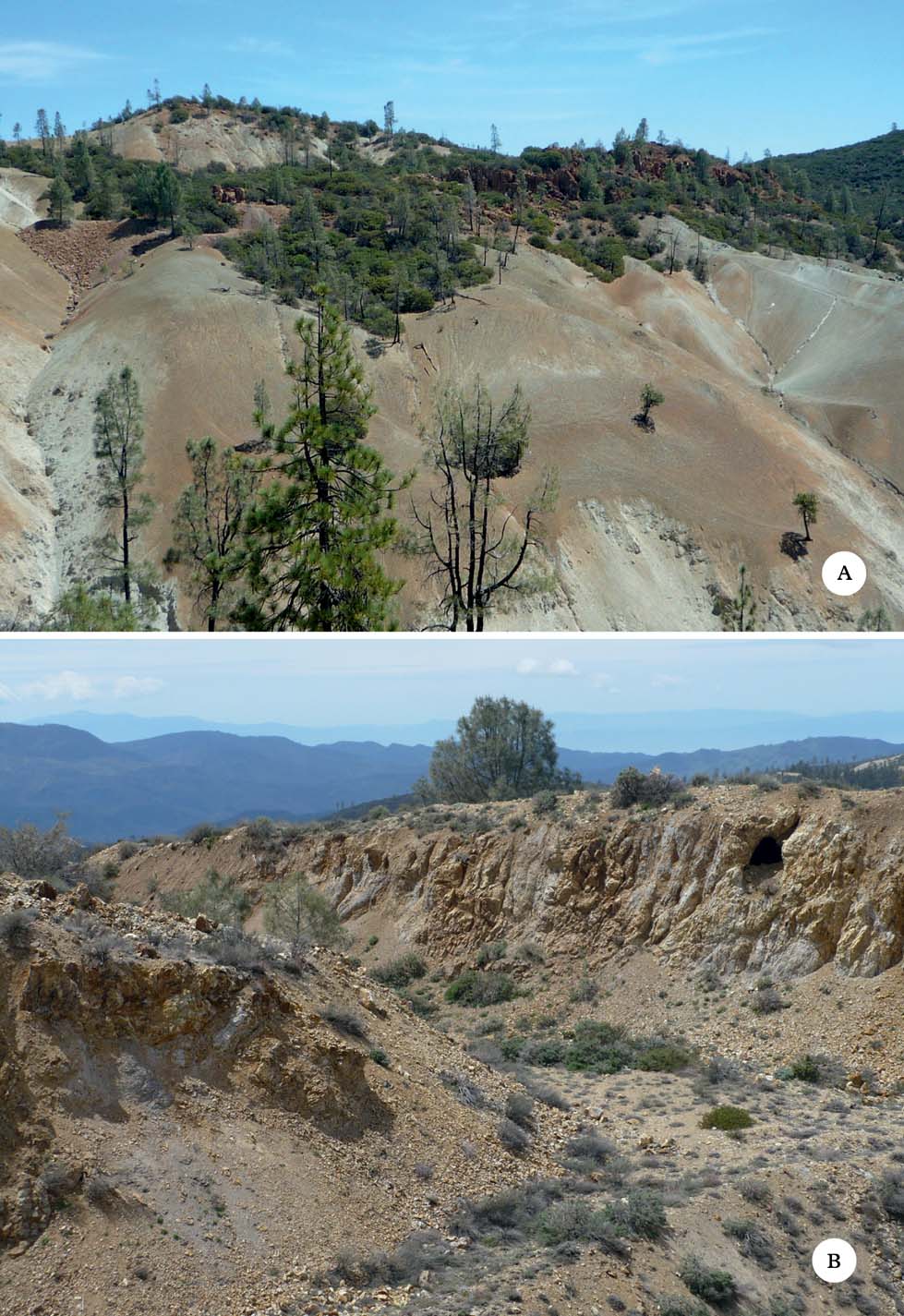
The New Idria serpentinite mass, located in far southern San Benito and far western Fresno Counties, is one of the largest ultramafic masses in the South Coast Range of California, USA (36·3°N, 120·6°W; Figs 1, 2A). The lenticular mass of serpentinite is c. 22 km long, 8 km wide, and totals 13 000 ha. It forms the centre of an asymmetrical anticlinal dome that is flanked by Jurassic and Cretaceous-aged sedimentary rocks (shale and sandstone) of the Franciscan and Panoche formations (Van Baalen Reference Van Baalen1995). The serpentinite mass was derived from peridotite (harzburgite and dunite), which has been completely minerologically altered, sheared, and crushed to yield a nearly incoherent mass of pulverized serpentinite, (Fig. 2B; Van Baalen Reference Van Baalen1995), although some small, scattered hard outcrops of nephrite, serpentinite and partially serpentinized peridotite remain (Fig. 3). The serpentinite of the outcrops is typically hard, but can flake off into large flakes and plates, and the surface texture varies from lamellar to granular to vacuolar porous. The partially serpentinized peridotite of the outcrops is typically hard, but can be crumbly, and generally has a coarse granular surface texture. Boulders of nephrite (very hard; granular surface texture) are distributed throughout the serpentinite mass. The New Idria serpentinite mass also contains massive inclusions of silica-carbonate rocks, many of which contain cinnabar (mercury ore) deposits (Fig. 4A). Silica-carbonate rocks are typically hard with a vacuolar porous surface texture and have a dominant mineral composition of quartz, chalcedony, opal, ankerite, magnesite, and dolomite (Van Baalen Reference Van Baalen1995). Silica-carbonate forms from the precipitation of minerals from hydrothermal fluids of ultramafic origin within the serpentinite mass (Van Baalen Reference Van Baalen1995). The rocks contain ≫45% Si and ≪18% MgO and, therefore, although they are derived from hydrothermal fluids of ultramafic origin, silica-carbonate is classified as a non-ultramafic rock in this study. Cinnabar deposits also occur in Panoche shale and sandstone on the north-eastern edge of the New Idria serpentinite mass at New Idria (New Idria Mine Tailings; New Idria Camp Pit 2) and San Carlos Peak (San Carlos Peak Mine Pit; Fig. 5B). Cinnabar was mined at New Idria and San Carlos Peak from 1851 to 1972 (Gilbert Reference Gilbert1984) and numerous large open mine pits and cinnabar-bearing tailing piles (tips) still remain.
A, general view of the New Idria serpentinite area, Site 5 (silica-carbonate rock) is just below horizon on the extreme right; B, close up of New Idria serpentinite mass near Site 5 (silica-carbonate rock) showing the generally fragmented nature of the substratum.
Ultramafic outcrops. A, nephrite: large boulder at Staging Area (Site 1); B, serpentinite: over view of New Idria Reservoir (Site 6); C, serpentinite: close-up of a small part of San Benito Mountain Summit (Site 10).
Non-ultramafic rock types studied. A, silica-carbonate: Clear Creek Mine just below horizon (Site 5); B, shale and sandstone: San Carlos Peak Mine (Site 9).
The New Idria serpentinite mass is subject to a Mediterranean-type climate (cool wet winters and hot dry summers) with mean annual precipitation of 40–60 cm (Alexander et al. Reference Alexander, Coleman, Keeler-Wolf and Harrison2007) that primarily occurs between October and April. Snow is occasional during winter (December–February) and short-lived. Elevation range across the sampling localities varies from 841 m to 1422 m. Vegetative cover consists of chaparral at lower elevations and conifer forest at higher elevations. ‘Moonscape’ barrens, completely devoid of vegetation, are abundant and a prominent feature of the New Idria serpentinite mass (Figs 2, 3 & 5A).
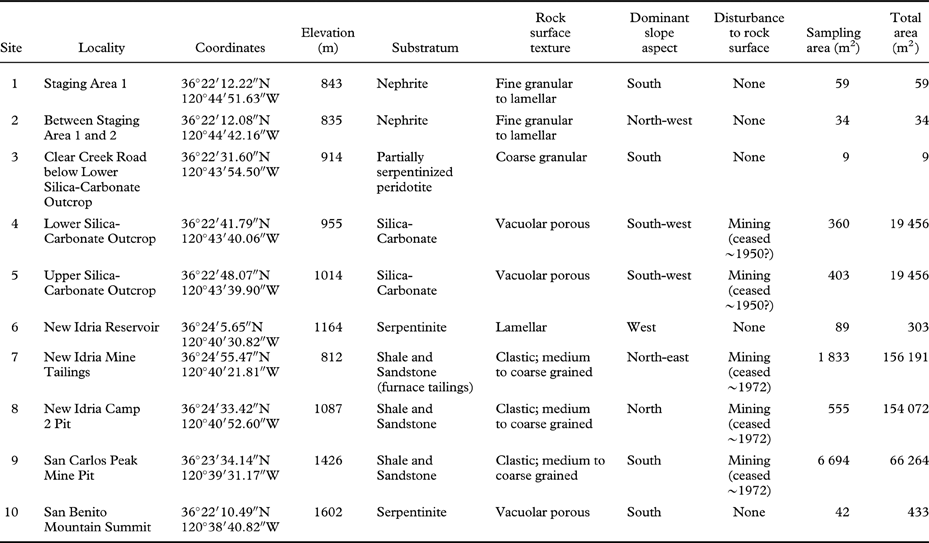
On 22 February 2010 and 21–22 April 2011, we collected lichens from ultramafic rocks including nephrite (n=2 sites), partially serpentinized peridotite (n=1), and serpentinite (n=2), and from non-ultramafic rocks including silica-carbonate (n=2) and shale and sandstone (n=3) adjacent to the New Idria serpentinite mass (Table 1; Fig. 1). For this study, sedimentary shale and sandstone are together considered a single rock type. All five non-ultramafic sites were extensively disturbed by mining as late as 1972, exposing fresh rock surfaces, in contrast to the little to no disturbance that has occurred at the ultramafic sites. As a result, the lichen community on the non-ultramafic sites represents a younger community than that on the ultramafic sites. Lichens were collected at each site until it was subjectively considered that the site had been well sampled. This varied from around 15 minutes (Sites 2, 3 and 8) to over an hour (Sites 1 and 10). It was considered that this was preferable to spending a fixed amount of time at each site, which would have resulted in disproportionate effort being expended on species-poor sites and would have resulted in these sites being over recorded. Representative rock samples, upon which the lichens were growing, were also collected. All lichen collections were identified by either the second or third authors, using standard reference works and comparison with named herbarium specimens or, for critical species, by experts in a particular group (see acknowledgments). All collections are permanently housed in the herbaria of either the College of the Atlantic (HCOA), University of California, Riverside (UCR), or Michigan State University (MSC). Nomenclature and naming authorities follow Index Fungorum Partnership (http://indexfungorum.org).
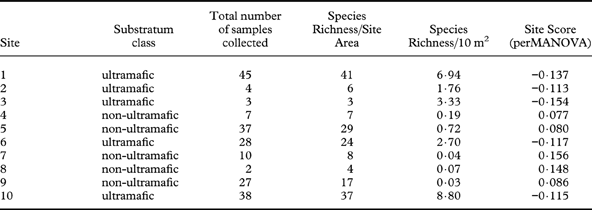
Locality and substratum information for Sites 1–10 from which lichens were collected
Elemental analysis
Elemental analysis (X-ray fluorescence) was conducted on pooled samples of 1–3 rock fragments from 1–2 different rock samples from each site where lichens were collected. Pooling of fragments and samples was necessary because of the high cost of the procedure. Elemental concentrations for each sample pooled were determined for major (Al-Ti) and trace (As-Zr) elements. The analyses were carried out by the GeoAnalytical Laboratory, Washington State University, WA, USA, using an automated Thermo ARL Advant'XP+ wavelength dispersive sequential unit running at 60 keV and 60 mA with a rhodium target. Samples received as rock were prepared for analysis by chipping in a hardened steel jaw crusher then ground to a very fine powder in a tungsten carbide ring mill. The sample powder was weighed with di-lithium tetraborate flux at a 2:1 (low dilution) flux to rock ratio, mixed, then fused at 1000°C in a muffle oven for 45 min. Once cooled, the glass pellet was then re-ground, re-fused, and polished on diamond laps to provide a smooth flat surface for analysis. The concentration of elements was measured in c. 66 min under full vacuum with a 29 mm mask. The net intensities for all elements were corrected for line interferences and background slopes. Inter-element absorption and secondary enhancement effects were calculated using the fundamental parameters method. Approximately 105 diverse certified reference materials were employed for instrument calibration, and two internal standards were run on a regular basis to provide a continuous check on instrument performance.
Statistical analysis
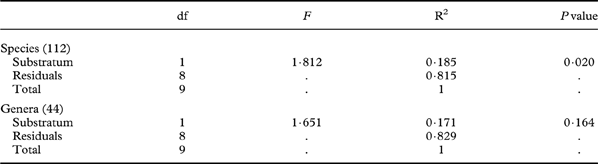
Multiple permutational one-way ANOVAs with 999 permutations (Legendre Reference Legendre2007) and post-hoc comparisons implemented by package coin (Hothorn et al. Reference Hothorn, Hornik, van de Wiel and Zeileis2008) were used to test the hypothesis that measured elemental concentrations differed across rocks collected from nephrite + partially serpentinized peridotite + serpentinite (collectively ‘ultramafic’), silica-carbonate, and shale and sandstone sites (collectively ‘non-ultramafic’). A Benjamini-Hotchberg correction for multiple comparisons was applied to the P-values from these 32 variables to control for false discovery rates (FDR), which is suitable for situations where explanatory variables are correlated between multiple tests (García Reference García2003). A t-test was used to compare log-transformed species richness per 10 m×10 m sampling area between ultramafic and non-ultramafic sites. A permutational multivariate analysis of variance (perMANOVA) with 999 permutations, function adonis of package vegan (Oksanen et al. Reference Oksanen, Kindt, Legendre, O'Hara, Simpson, Solymos, Stevens and Wagner2011) was used to compare the assemblage of lichens among ultramafic vs. non-ultramafic sites. This comparison was chosen based upon the substantial differences in elemental composition between the two rock types. The sizes of the matrices included in the perMANOVA were 10 sites by 112 species and 44 genera. Lichenicolous fungi were excluded from the analysis because they are mostly species-specific and including them in the analysis would be equivalent to including their host species twice. Function adonis uses a dissimilarity matrix to statistically compare the squared deviations of multivariate group centroids, and is well suited to the analysis of biotic community assemblage where the presence or absence of many taxa must be compared across few regions (Anderson Reference Anderson2001; McArdle & Anderson Reference McArdle and Anderson2001). Equal dispersion of group scores (analogous to a test for multivariate homogeneity of variances) was assessed using function betadisper in package vegan (Oksanen et al. Reference Oksanen, Kindt, Legendre, O'Hara, Simpson, Solymos, Stevens and Wagner2011). Kulczynski distance (Faith et al. Reference Faith, Minchin and Belbin1987) was chosen as an appropriate index of dissimilarity as it is robust to ‘richness dependency’, where site pairs with similar composition but differing richness receive high dissimilarity values (Hausdorf & Hennig Reference Hausdorf and Hennig2005). To check for correlation between patterns of community assemblage and substratum elemental composition, a Mantel test (with 999 permutations; function mantel in package vegan) was employed using a Kulczynski distance matrix of beta diversity and a matrix of variance-scaled, mean-centred Euclidean distances for the correlated elemental variables. All statistical analyses were performed using R version 2.13.2 (R Development Core Team 2011).
Results
Rock chemistry
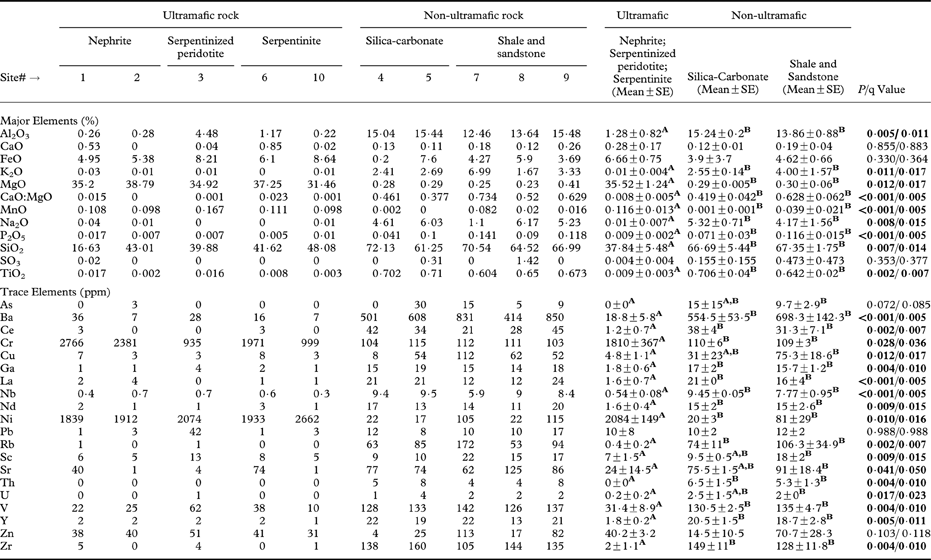
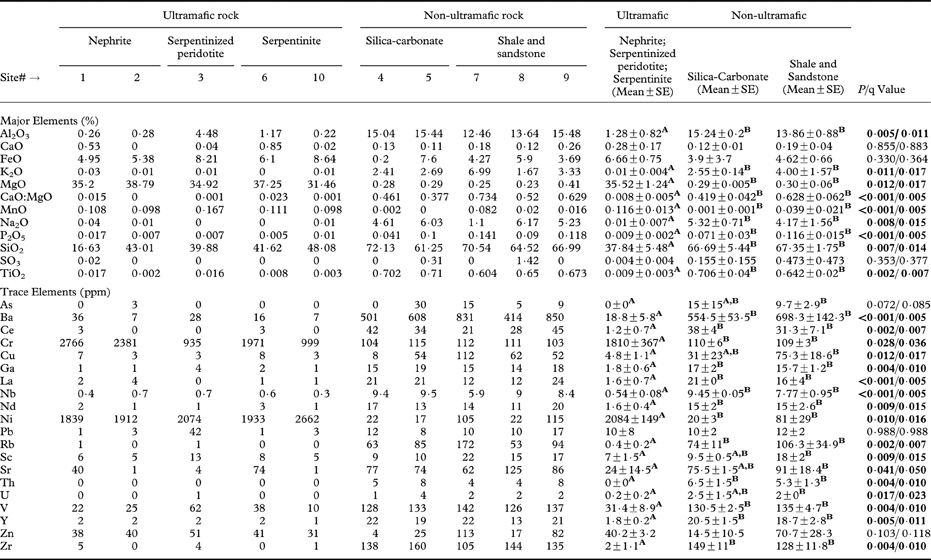
The composition of measured ultramafic, silica-carbonate, and shale and sandstone rocks differed significantly for 26 of 32 elements (Table 2; permutational one-way ANOVA; Benjamini-Hotchberg corrected P<0·05). Notable distinctions include significantly lower Ca:Mg ratios for ultramafic rocks and higher concentrations of heavy metals such as Ni and Cr. Additionally, non-ultramafic rocks were significantly higher compared to ultramafic rocks in rare earth elements such as Ba, Rb, Sr, V, Y, and Zr.
Elemental chemistry of ultramafic and non-ultramafic rocks from which lichens were collected. Major (Al-Ti) elements are reported as % weight, whereas the minor (As-Zr) elements are reported as ppm. Elemental analysis determined via X-ray Fluorescence (XRF) analysis. Original P values and Benjamini-Hotchberg q values (corrected p values) are from a permutational one-way ANOVA for each element across ultramafic (n=5), silica-carbonate (n=2), and shale and sandstone (n=3) substrata. Significant values (≤0·05) are in bold. Comparisons between substrata are denoted with superscripted letters adjacent to their respective means±standard errors; different letters indicate a significant difference
Floristics
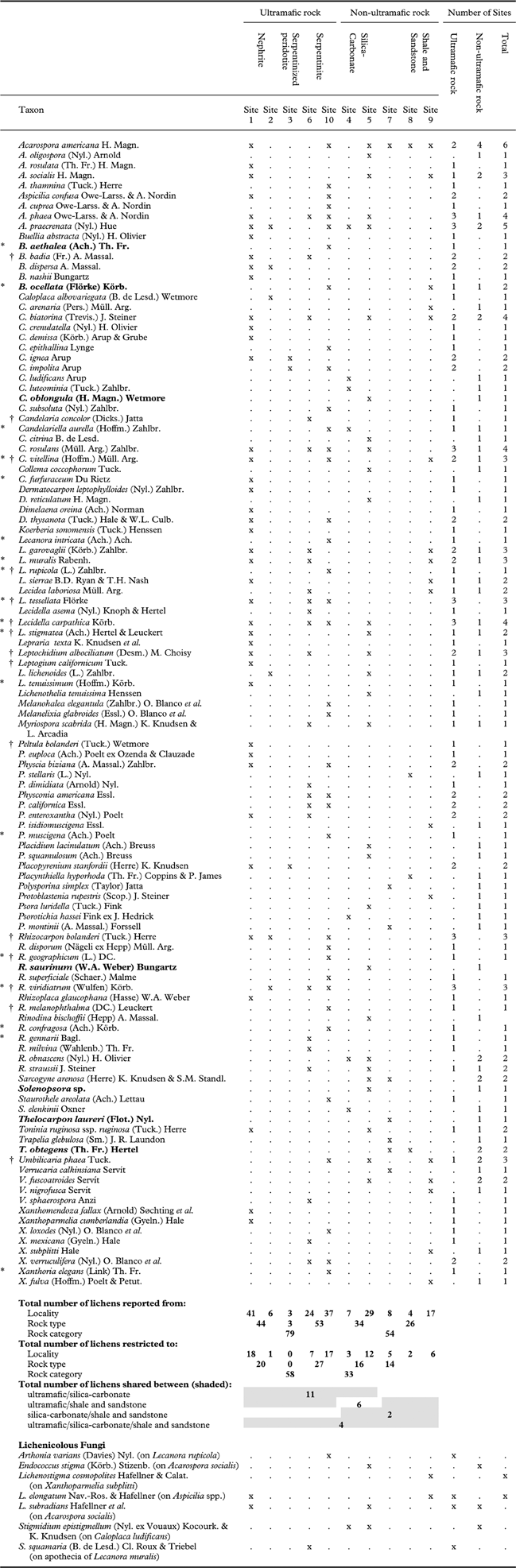
We identified a total of 119 species of lichenized and lichenicolous fungi (Table 3), of which four, Buellia ocellata, Caloplaca oblongula, Rhizocarpon saurinum, and Thelocarpon laureri, are reported for the first time from California, and two, Buellia aethalea and Trapelia obtegens, are represented from California only by unpublished collections in the Consortium of North American Lichen Herbaria database (http://symbiota.org/nalichens). Buellia aethalea was collected from ultramafic rocks, B. ocellata from ultramafic and non-ultramafic rocks, and the other four species from non-ultramafic rocks. Additionally, a collection of a Solenopsora sp. from silica-carbonate rock does not correspond to any of the species of this genus currently listed as occurring in North America (Esslinger Reference Esslinger2011), and is under further investigation by molecular methods to confirm its taxonomic status.
112 lichen taxa and 7 lichenicolous fungi collected from 10 sites at the New Idria serpentinite mass. The six taxa in bold font are new reports or newly published records for California. Names marked with a * were reported from more than one ultramafic site by Favero-Longo et al. (Reference Favero-Longo, Isocrono and Piervittori2004), and those with a † by Sigal (Reference Sigal1989). Nomenclature and naming authorities follow Index Fungorum Partnership (http://indexfungorum.org)
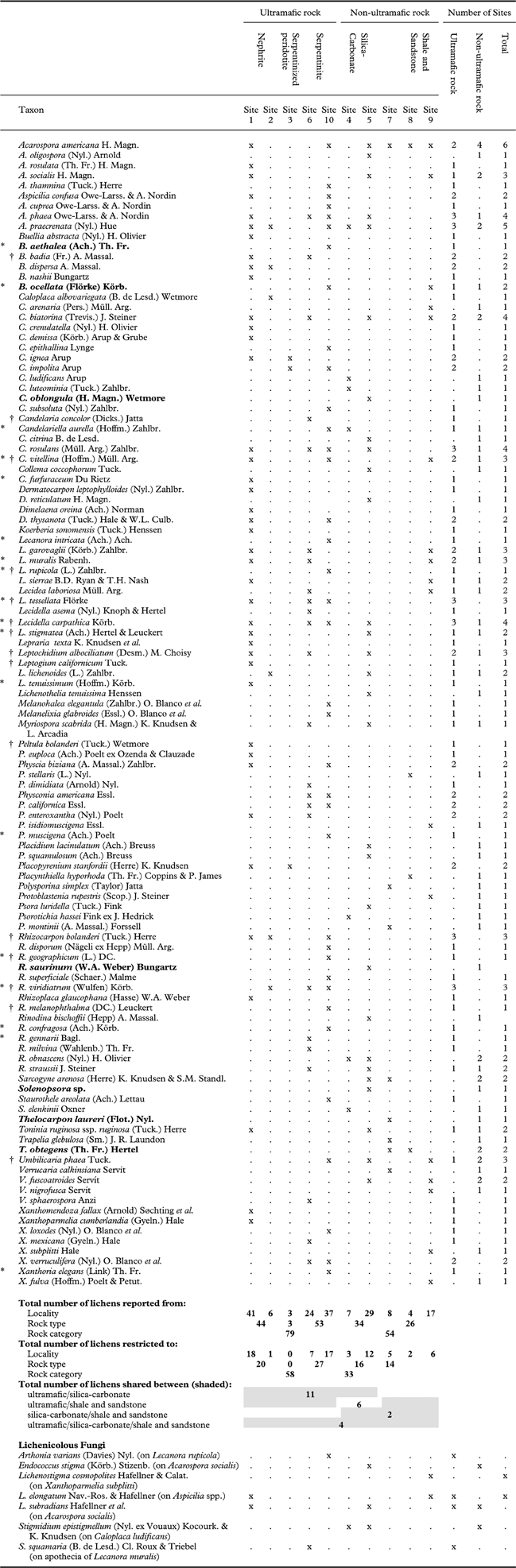
By far the largest number of taxa (83) was collected from ultramafic rocks, with the two other rock types sampled, silica-carbonate (37) and shale and sandstone (28) (non-ultramafic rocks), being far less species-rich. A similar pattern is apparent for taxa collected from only one rock type, with ultramafic rocks (60) having far more taxa restricted to that substratum than the two non-ultramafic rock types: silica-carbonate (19), shale and sandstone (15). Data for taxa occurring on more than one substratum were ultramafic and silica-carbonate (11), ultramafic and shale and sandstone (6), silica-carbonate and shale and sandstone (2). Interestingly, only four species (Acaropsora americana, A. socialis, Caloplaca biatorina, and Umbilicaria phaea) occurred on all three rock types (Table 3).
Lichen-substratum relations
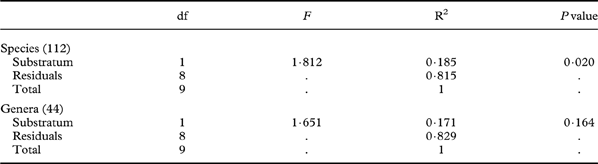
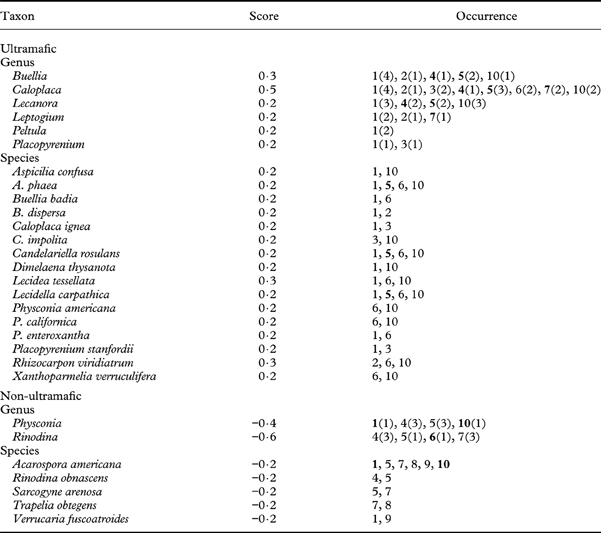
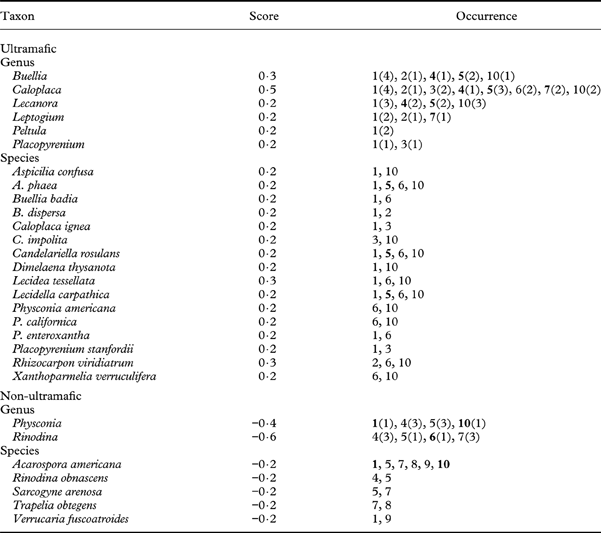
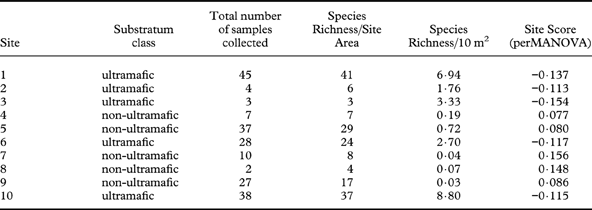
Species richness per 10 m×10 m sampling area was significantly greater at the ultramafic sites (t-test; t=5·51, P=0·002; see Table 4), despite the wide range in species richness per site within each site group (Table 3), which was due, at least in part, to differences in the range of microhabitats present. Species richness standardized by area surveyed may not be an entirely accurate measure of alpha-diversity, as species-area curves are asymptotic. However, undisturbed ultramafic areas had a much greater species richness than disturbed non-ultramafic areas, despite the much smaller average size of the former (Table 1). The perMANOVA revealed significant differences in lichen assemblage between ultramafic and non-ultramafic sites at the species level (P=0·020, 112 variables) but not at the generic level (P=0·164, 44 variables; see Table 5). Dispersion of group scores was equal between ultramafic and non-ultramafic sites (P=0·683, H0=no difference between groups). Species richness per 10 m×10 m sampling area and site scores from the species-level perMANOVA indicate that silica-carbonate sites supported lichen communities intermediate between ultramafic and shale and sandstone (see Table 6). However, we did not include silica-carbonate as a separate factor in our analysis due to small sample size. The most useful taxa in distinguishing groups by the perMANOVA are summarized in Table 6. Lichen species assemblage and elemental composition among sites were weakly correlated (Mantel test; r=0·273, P= 0·02).
Results from perMANOVA with 1000 permutations, showing differences in lichen community assembly between ultramafic and non-ultramafic (silica-carbonate and shale and sandstone) rocks at the species and generic level
Species and genera that contribute substantially (absolute scores above the 95th percentile) to distinguishing ultramafic and non-ultramafic lichen communities in the perMANOVA model. ‘Score' is the relative weight given to the taxon by the analysis. ‘Occurrence' lists the sites where a given taxon occurred, with cross-over between substrata in bold font and, for genera, number of subtaxa given in parentheses
Discussion
The importance of rock mineralogy, including elemental geochemistry, in determining the composition of saxicolous lichen communities has long been recognized (Purvis & Halls Reference Purvis and Halls1996). However, as pointed out by Brodo (Reference Brodo, Ahmadjian and Hale1973), attempts to analyze the distribution of saxicolous lichens according to their lithochemistry are not very common (e.g. Werner Reference Werner1956), and studies that directly associate quantitatively assessed mineralogy or elemental chemistry of host rocks to the presence of lichen species or the assemblage of lichen communities are rare (e.g. Boyle et al. Reference Boyle, McCarthy and Stewart1987). The exact nature of this substratum-level influence on lichens (i.e. whether chemical and/or textural) also appears to be obscure, although complex interactions between lichens and rocks and lichens and elements are often cited (Richardson Reference Richardson1995; Wilson Reference Wilson1995; Purvis Reference Purvis1996; Shimizu Reference Shimizu2004; Hauck et al. Reference Hauck, Huneck, Elix and Paul2007). Purvis (Reference Purvis1996) states that systematic description of lichen communities in relation to rock mineralogy, elemental chemistry, and geochemical processes is critical to advance understudied areas of lichenology, particularly physiological ecology and evolution. Thus, despite the obvious relationship between substratum and lichens, there still remains a critical need for the systematic description and characterization of lichen communities in relation to specific lithologies and chemical environments.
Our study is one of only a few to relate lichen occurrence to geochemistry of individual rocks (Boyle et al. Reference Boyle, McCarthy and Stewart1987) (Table 2). Only four species were shared in common between all three substrata, suggesting substantial differences in lichen community composition between ultramafic and non-ultramafic rocks at both the species and generic levels (Tables 5 & 6). Brodo (Reference Brodo, Ahmadjian and Hale1973) lists texture, water relations, and chemistry as the main factors that determine the composition of a lichen biota of a substratum. However, determining whether the differences we observed in lichen assemblages were due to the elemental content of the rocks, their physical properties, or age of the exposed rock surfaces was beyond the scope of this study. Generally, ultramafic rock outcrops are thought to support lichen taxa characteristic of exposed, sunny areas, those that have wide ecological amplitude, or taxa that colonize stressful habitats with reduced competition (Purvis Reference Purvis1996; Favero-Longo et al. Reference Favero-Longo, Isocrono and Piervittori2004; Harris et al. Reference Harris, Olday and Rajakaruna2007). Additionally, the lichen biota of ultramafic substrata appears to consist of a mixture of species having a high affinity for Si-rich and Ca-rich rocks (Purvis Reference Purvis1996; Favero-Longo et al. Reference Favero-Longo, Isocrono and Piervittori2004). The lichen biota of the New Idria serpentinite mass is generally consistent with these characteristics, and confirms the higher species diversity on ultramafic rocks than on other rock types already reported from other sites (Gilbert & James Reference Gilbert and James1987; Sirois et al. Reference Sirois, Lutzoni and Grandtner1988; Piervittori et al. Reference Piervittori, Isocrono, Favero-Longo and De Nicolò2004; Harris et al. Reference Harris, Olday and Rajakaruna2007; Favero-Longo & Piervittori Reference Favero-Longo and Piervittori2009), although this may be due to the physical properties of the rock and/or the history of disturbance (see below). Wirth (Reference Wirth1972) characterizes the ultramafic lichen communities of Central Europe by the absence or scarcity of lichens typical of Si-rich rocks [e.g. Rhizocarpon geographicum, Acarospora fuscata, Lasallia pustulata, Lecanora rupicola, Xanthoparmelia conspersa (as Parmelia conspersa)], the absence of species typical of base-rich rocks, and the occurrence of species at the northernmost limit of their ranges. Interestingly, the only two species found during the present study that were reported as scarce on ultramafic rocks by Wirth (viz. Rhizocarpon geographicum and Lecanora rupicola) occurred only on ultramafic rocks, which supports the hypothesis that the physical properties of the rock may be more important in determining lichen assemblages than their mineralization.
Bates (Reference Bates1978) suggested that lichen communities on ultramafic rocks were affected by the low availability of essential macronutrients such as N, P, K, S, and C, and/or high concentrations of Mg. Combined Ca deficiency and Mg toxicity results in the extreme adverse substratum condition of Ca:Mg molar ratio ≪1 (Brooks Reference Brooks1987). Ca is a plant-essential macronutrient and required in much higher concentrations than Mg (Marschner Reference Marschner2002). The two cations compete with each other for uptake at the root, and vascular plants with Type I cell walls (dicotyledon and most monocotyledon plants) contain cell walls that are highly dependent upon Ca-bridged pectins to maintain cell wall integrity (Marschner Reference Marschner2002; O'Dell & Rajakaruna Reference O'Dell, Rajakaruna, Harrison and Rajakaruna2011). Unlike most vascular plants, the cell walls of fungi lack pectin (Kirk et al. Reference Kirk, Cannon, Minter and Stalpers2011) and therefore fungi probably do not depend on an adequate supply of Ca to maintain cell wall integrity. It is thus unlikely that the chemistry of ultramafic substrata affects the fungal component of lichens in the same way that it affects vascular plants. It is possible, however, that the green algal (Chlorophyta; cell wall type similar to Type I) symbiont of lichens may be adversely affected by ultramafic substrata in the same manner as vascular plants since Ca-deficiency symptoms have been demonstrated for the non-lichenized, green algae Scenedesmus intermedius Chod. in a laboratory setting (Adam & Issa Reference Adam and Issa2000).
Heavy metal toxicity is another possible influence of ultramafic substrata on lichen species diversity and cover. Ultramafic substrata contain elevated concentrations of Ni, Cr, and other heavy metals (Brooks Reference Brooks1987). Many lichen species secrete oxalic acid, which weathers ultramafic rock and dissolves metals bound in minerals, thus increasing their bioavailability (e.g. Wilson et al. Reference Wilson, Jones and McHardy1981). It is possible that the heavy metals contained in ultramafic rocks could potentially be toxic to lichens. Likewise, lichens growing on ultramafic rocks may be physiologically adapted to tolerate high heavy metal concentrations, such as that demonstrated on Fe and Cu smelter slag (Lange & Ziegler Reference Lange and Ziegler1963). Substitution of heavy metals by magnesium in one chemical compound in Tephromela atra (Huds.) Hafellner (as Lecanora atra) on serpentinites was reported by Wilson et al. (Reference Wilson, Jones and McHardy1981) as a possible method of avoiding the effects of toxic elements. More generally, it is evident that oxalates of a range of elements can form directly as a result of precipitation by reaction with oxalic acid during lichen growth (Purvis Reference Purvis1984). Ultramafic rocks (nephrite, partially serpentinized peridotite, serpentinite) analyzed from lichen collection sites of the New Idria serpentinite mass have 37 times as much Ni (2084 ppm vs. 109 ppm) and 16 times as much Cr (1810 ppm vs. 56 ppm) than the non-ultramafic rocks analyzed (silica-carbonate; shale and sandstone). Which element or combination of elements may be critical in limiting lichen colonization remains elusive without element- and species-specific studies exploring the tolerance of various lichens to the significant elemental differences we observed among the rocks studied (Table 2).
The fact that the patterns of diversity and cover of lichens on ultramafic as compared to non-ultramafic rocks can be widely variable (Favero-Longo et al. Reference Favero-Longo, Isocrono and Piervittori2004, and references therein), suggests climate, elevation, history of land use, and other biotic and abiotic factors may complicate the substratum-level influence on lichens. The diverse lichen community we documented on ultramafic rocks of the New Idria serpentinite mass could be the result of the physical properties of the substratum (texture of the rocks) rather than due solely to their mineralogy. Ultramafic rocks of the sites from which we collected were typically hard with lamellar, granular, or vacuolar porous surface texture. In contrast, the non-ultramafic rocks were typically softer with vacuolar surface texture in the case of the silica-carbonate rock, and granular surface texture in the case of the shale and sandstone rock. Overall, the non-ultramafic rocks tended to have more friable surfaces that may be too unstable to permit the establishment of a diverse lichen biota. Similarly, hard-weathering serpentinites of alpine habitats were shown to host higher lichen diversity and cover than soft-weathering rocks such as calc-schists (Favero-Longo & Piervittori Reference Favero-Longo and Piervittori2009).
An alternative explanation may be the difference in rock surface ages between the ultramafic and non-ultramafic sites. Most, or portions, of the non-ultramafic sites have been extensively disturbed by mining within the past 62 years, creating fresh rock surfaces, whereas virtually none of the ultramafic sites have been disturbed within the same time period (and probably for much longer).
Our study is the second account published to date of lichens collected from ultramafic rocks of the biodiverse California Floristic Province (Myers et al. Reference Myers, Mittermeier, Mittermeier, Da Fonseca and Kent1999). Sigal (Reference Sigal1989) provided the earlier account of ultramafic-associated lichens in central California, excluding the New Idria serpentinite mass, reporting 76 taxa from five sites. Although taxonomic concepts have changed since Sigal's study, and in some cases it is not possible to ascertain which species was actually recorded in her study, we report approximately the same number of species (83), only 15 of which were also reported in the earlier study (Table 3). The reasons for this are unclear, but possible factors are that Sigal also included species reported from soil, and that three out of the five study sites were significantly further north in the state than the New Idria serpentinite mass. To date, no endemic lichens have been reported from any of the ultramafic sites in California (or North America), although further taxonomic and phylogenetic studies may reveal distinct ecotypes or species. It is intriguing that despite the well-known phenomenon of ultramafic (or substratum-level) endemism in vascular plants (Anacker et al. Reference Anacker, Whittall, Goldberg and Harrison2011), species-level endemism is not a common phenomenon among cryptogams, including lichens (Sigal Reference Sigal1975) and bryophytes (Shaw et al. Reference Shaw, Antonovics and Anderson1987; Lepp Reference Lepp and Prasad2001; Briscoe et al. Reference Briscoe, Harris, Dannenberg, Broussard, Olday and Rajakaruna2009). It is tempting to hypothesize that species- and community-level processes are more strongly influenced by other abiotic or biotic factors (e.g. microclimate, rock texture) than rock or soil mineralogy and, perhaps, the processes of speciation in cryptogams are less affected by isolation due to substratum chemistry (and other edaphic factors), known to be immensely important in generating diversity among vascular plants (Kruckeberg Reference Kruckeberg1986; Rajakaruna Reference Rajakaruna2004; Kay et al. Reference Kay, Ward, Watt, Schemske, Harrison and Rajakaruna2011).
Of the 83 taxa (including four lichenicolous fungi) that we collected from ultramafic substrata, only 20 (Table 3) were included in the list of c. 250 lichen taxa reported by more than one ultramafic survey given by Favero-Longo et al. (Reference Favero-Longo, Isocrono and Piervittori2004). This is largely explained by the lack of studies devoted to lichens on ultramafic substrata in western North America. Interestingly, the two species from ultramafic substrata new to California were also two of those already reported from this substratum elsewhere by Favero-Longo et al. (Reference Favero-Longo, Isocrono and Piervittori2004): Buellia aethalea is a frequent species of hard, silica-rich rocks in Europe, and B. ocellata is a frequent species on ultramafic substrata (Favero-Longo et al. Reference Favero-Longo, Isocrono and Piervittori2004) and was reported as new to New England from partially serpentinized peridotite by Harris et al. (Reference Harris, Olday and Rajakaruna2007). The two species reported from silica-carbonate are rare species, apparently restricted to calcareous sandstone in western USA, although R. saurinum has recently been reported from soft, aeolian sandstone in eastern Iran (Moniri et al. Reference Moniri, Kamyabi and Fryday2010). The two species reported from shale and sandstone are widespread but inconspicuous species that have probably been overlooked by previous workers.
Ultramafic substrata and other edaphically unusual habitats are undergoing drastic changes due to ever-expanding development, deforestation, mining, exotic species invasions, and atmospheric deposition of pollutants such as heavy metals or previously limiting nutrients such as nitrogen (Williamson & Balkwill Reference Williamson and Balkwill2006; Rajakaruna & Boyd Reference Rajakaruna, Boyd, Jorgensen and Fath2008; Harrison & Rajakaruna Reference Harrison and Rajakaruna2011). Such changes can have a drastic impact on the biota of these unique habitats. Floristic surveys in support of conservation efforts should be encouraged to document the wealth of biological diversity being frequently lost from such sites worldwide. These sites, perhaps one of the last remaining under-studied frontiers of genetic diversity, should be better explored to generate data for effective conservation planning.
We thank Othmar Breuss (Vienna, Austria), Theodore Esslinger (Fargo, North Dakota, USA), Anna Guttová (Bratislava, Slovakia), and John Sheard (Saskatoon, Saskatchewan, Canada) for assistance with identifying our collections; Jill Lee for assistance with preparing tables; Laureen Wagoner for providing details on the XRF analysis; Bruce McCune and an anonymous reviewer for providing useful comments for an earlier version of the manuscript; Maine Space Grant Consortium, College of the Atlantic, and San José State University for providing generous funding for the project.