Symptoms of psychopathology that onset during childhood and adolescence are associated with greater disease burden, course severity, and comorbidity relative to symptoms that first appear later in life (Dalrymple & Zimmerman, Reference Dalrymple and Zimmerman2011; Kim-Cohen et al., Reference Kim-Cohen, Caspi, Moffitt, Harrington, Milne and Poulton2003; Zisook et al., Reference Zisook, Lesser, Stewart, Wisniewski, Balasubramani, Fava and Rush2007). Furthermore, the prevalence rates of many childhood disorders are showing gradual but notable increases in many countries (e.g., Durbeej et al., Reference Durbeej, Sörman, Norén Selinus, Lundström, Lichtenstein, Hellner and Halldner2019; Ercan et al., Reference Ercan, Polanczyk, Akyol Ardıc, Yuce, Karacetın, Tufan and Yıldız2019). For example, recent work estimates that rates of major depressive episodes among 12- to 17-year-olds have risen by 52% from 2005 to 2017 (Twenge, Cooper, Joiner, Duffy, & Binau, Reference Twenge, Cooper, Joiner, Duffy and Binau2019). If unimpeded, these trends augur staggering emotional, social, and economic costs associated with developmental psychopathology (Cicchetti & Toth, Reference Cicchetti and Toth2006; Kessler, Reference Kessler2012; Lewinsohn, Rohde, & Seeley, Reference Lewinsohn, Rohde and Seeley1995). In order to reveal novel targets for therapeutics and identify children most at risk for future psychopathology, it is critical for scientists to elucidate factors implicated in the development of early emerging psychological symptoms.
Increasingly, researchers recognize that biological processes contribute to risk for developmental psychopathology (Miller, Chen, & Cole, Reference Miller, Chen and Cole2009; Mitchell & Goldstein, Reference Mitchell and Goldstein2014), such that several biological indicators measured in infancy forecast later risk (Simões e Siva, Moreira, & Magalhães, Reference Simões e Siva, Moreira and Magalhães2020), including cortisol, lipids, and immune molecules (Garay & McAllister, Reference Garay and McAllister2010; Goodyer, Park, Netherton, & Herbert, Reference Goodyer, Park, Netherton and Herbert2001; Manczak & Gotlib, Reference Manczak and Gotlib2019). These findings suggest that early differences in biological processes are implicated in psychological symptoms and may help us identify more vulnerable children; however, further research is needed to illuminate additional processes that may signal risk for future psychopathology.
One type of biological process that is increasingly gaining attention is accelerated aging. Very briefly, as cells age, they become less stable and more prone to mutation or dysfunction. At the same time, chronological age does not fully account for individual differences in rates of change in key aging markers (such as telomere length or DNA methylation patterns), suggesting that biological and chronological aging are related but distinct processes (Field et al., Reference Field, Robertson, Wang, Havas, Ideker and Adams2018). The resulting discrepancies (termed “accelerated aging”) may provide clues about a person's history or vulnerability to health problems.
Certain patterns of DNA methylation have emerged as reliable indices of accelerated aging, the first and most widely studied being Horvath's clock, which uses the methylation status of 353 5'-cytosinephosphate-guanine-3’ (CpG) sites across the genome to estimate biological age (Horvath, Reference Horvath2013). While several other methylation clocks exist, Horvath's clock was one of the few derived using samples taken across the life span, making it appropriate for application during early life, including at birth (Ryan, Reference Ryan2020) and with cord blood (Simpkin et al., Reference Simpkin, Hemani, Suderman, Gaunt, Lyttleton, Mcardle and Smith2016). Furthermore, Horvath's clock has been used in samples with diverse ethnic and racial compositions (e.g., Zaghlool, Al-Shafai, Kumar, Falchi, & Suhre, Reference Zaghlool, Al-Shafai, Kumar, Falchi and Suhre2015), in contrast to a gestational age-specific clock developed by Knight et al. (Reference Knight, Craig, Theda, Baekvad-Hansen, Bybjerg-Grauholm, Hansen and Smith2016), which – to our knowledge – has only been tested on cohorts of non-Hispanic White, Hispanic-White, and Black individuals. In turn, higher values on Horvath's clock have been associated with a variety of physical health disorders, including cardiovascular disease, cancer, and all-cause mortality (Perna et al., Reference Perna, Zhang, Mons, Holleczek, Saum and Brenner2016).
In addition to predicting physical health, Horvath's methylation index has found to be associated with mental health processes as well, including a diagnosis of depression (Han et al., Reference Han, Aghajani, Clark, Chan, Hattab, Shabalin and Penninx2018) and levels of hyperarousal symptoms in posttraumatic stress disorder (PTSD) (Wolf et al., Reference Wolf, Logue, Stoop, Schichman, Stone, Sadeh and Miller2018). However, it remains unclear whether symptoms of psychopathology contribute to accelerated aging or are caused by it, as most work to date relies on single – and often cross-sectional – assessments. Furthermore, research that does consider prospective associations reveals inconsistent patterns. Higher levels of methylation relative to chronological age have been shown to predict greater subsequent emotional distress in young adults (Brody, Yu, Chen, Beach, & Miller, Reference Brody, Yu, Chen, Beach and Miller2016) as well as degradations in neural integrity (Wolf et al., Reference Wolf, Logue, Hayes, Sadeh, Schichman, Stone and Miller2016). At the same time, greater exposure to stressors, such as discrimination and early adversity, have been found to relate to accelerations in epigenetic age (Brody, Miller, Yu, Beach, & Chen, Reference Brody, Miller, Yu, Beach and Chen2016; Sumner, Colich, Uddin, Armstrong, & McLaughlin, Reference Sumner, Colich, Uddin, Armstrong and McLaughlin2019), suggesting a reversed directionality.
Examining methylation patterns at birth through umbilical cord blood, however, offers a unique way to reduce some difficulties in establishing the temporal sequence, as it is impossible for a child to have pre-existing psychopathology symptoms prior to delivery. Acting as a conduit between the fetus and placenta, the umbilical cord is comprised of cells that are fetal in origin (baring contamination by maternal cells; Morin et al., Reference Morin, Gatev, McEwen, Macisaac, Lin, Koen and Jones2017). Because cord blood samples are noninvasive, it is one of the earliest feasible tissue sources from which to examine child biomarkers (e.g., Colquhoun et al., Reference Colquhoun, Goldman, Cole, Gucek, Mansharamani, Witter and Halden2009). Furthermore, studies of Horvath's clock in cord blood reveal substantial differences in accelerated aging (even after adjusting for gestational age at birth), suggesting that children are born with differing vulnerabilities and are not, in fact, “blank slates” (Clukay, Hughes, Kertes, & Mulligan, Reference Clukay, Hughes, Kertes and Mulligan2019; Javed, Chen, Lin, & Liang, Reference Javed, Chen, Lin and Liang2016).
Although it is possible that accelerated aging at birth may exert direct, additive risk for later mental and physical health problems, an alternative possibility is that epigenetic aging reflects a sensitivity factor. Briefly, theories of differential susceptibility propose that individuals vary in their responsiveness to environmental cues (Belsky & Pluess, Reference Belsky and Pluess2009; Ellis, Boyce, Belsky, Bakermans-Kranenburg, & van Ijzendoorn, Reference Ellis, Boyce, Belsky, Bakermans-Kranenburg and van Ijzendoorn2011); while less sensitive individuals may maintain stability despite difficult experiences, more susceptible individuals may experience deleterious effects of threat, but may also flourish in enriched contexts. (Of note, the inclusion of enhanced adaptivity in better environments is in contrast to theories of diathesis-stress, in which better contexts merely reduce risk.) To this end, accelerated aging at birth may distinguish children who are at heightened risk for the detrimental effects of later maladaptive environments, while leaving open the possibility that such sensitivity may sometimes be advantageous. This framework holds the promise to resolve why investigators have found inconsistent associations among stressors, cellular aging, and mental health functioning (e.g., Miller, Yu, Chen, & Brody, Reference Miller, Yu, Chen and Brody2015; Wolf et al., Reference Wolf, Logue, Hayes, Sadeh, Schichman, Stone and Miller2016), as it posits that these domains are tightly linked only in more environmentally sensitive individuals.
A hostile style of parenting is one prevalent form of aversive early life environment that may interact with children's biological susceptibility to predict subsequent developmental psychopathology symptoms. Parenting that is characterized by frequent or intense anger, yelling, and ignoring has been shown to adversely affect children, including predicting higher levels of aggressive and antisocial behaviors across development (Morris et al., Reference Morris, Silk, Steinberg, Sessa, Avenevoli and Essex2002; Vando, Rhule-Louie, McMahon, & Spieker, Reference Vando, Rhule-Louie, McMahon and Spieker2008). While hostile parenting has been previously linked to higher psychopathology symptoms in children, broadly, it is possible that children who are more sensitive may show stronger associations between parenting and subsequent early symptom risk.
Discrete psychopathology is typically not detectable until childhood (e.g., ages 4–5 years) (Merikangas, Nakamura, & Kessler, Reference Merikangas, Nakamura and Kessler2009); however, early signs of increased risk for poor psychosocial trajectories can be detected in infant temperament and early childhood dimensional symptoms. Temperament refers to individual differences in behavioral responses and tendencies in infancy and toddlerhood (Nigg, Reference Nigg2006). These dispositions are moderately stable across the life span and typically measured on four dimensions: fussiness, unadaptability, dullness, and unpredictability (Bates, Freeland, & Lounsbury, Reference Bates, Freeland and Lounsbury1979). The vulnerability transaction perspective suggests that temperament predisposes an individual to psychopathology but is not causal (Nigg, Reference Nigg2006). In toddlerhood and early childhood years, dimensional measures of psychological symptoms – including emotional symptoms, conduct problems, hyperactivity/inattention, peer problems, and prosocial behavior – may indicate early-emerging risk prior to the onset of discrete psychopathology (Goodman, Reference Goodman2001).
The current study sought to test whether accelerated aging at birth might signal children's greater susceptibility to the effects of aversive parenting on early emerging psychopathology risk. Using data collected as part of the Born in Bradford (BiB) study, we tested whether differences in epigenetic aging in cord blood interacted with later hostile parenting to predict perceptions of infant temperament at 6 months old as well as symptoms of child psychopathology at 3 years, even after controlling for the distribution of cell types (which age at different rates), sociodemographic factors, and differences in gestational age at birth. We tested whether the effects of accelerated aging and parental hostility on symptoms of psychopathology at age 3 were accounted for by intermediate effects on temperament.
Method
The current study was drawn from the BiB study, a multiwave cohort project in Bradford, England, that recruited pregnant women from the Bradford Royal Infirmary who were in their second trimester between March 2007 and December 2010 (Bryant et al., Reference Bryant, Santorelli, Fairley, West, Lawlor, Bhopal and Born in Bradford Childhood Obesity Scientific Group2013; Wright et al., Reference Wright, Small, Raynor, Tuffnell, Bhopal, Cameron and West2013). Variables pertinent to the current project included: demographic information, methylation in umbilical cord blood, infant temperament, child psychological symptoms, blood cell subtypes, and gestational age at birth. All data were collected using the participants’ preferred language by trained researchers, physicians, and staff (see Raynor, Reference Raynor2008).
Participants
Various components of the larger BiB study were administered to different subsets of participants. For the current study, we examined the subsample of participants who had data on basic demographic variables, methylation in cord blood, parental hostility at 6 months, and either infant temperament or child psychopathology symptoms, which resulted in a sample of 154 families. Reflecting the ethnic composition of Bradford, 48.7% of the current sample was Pakistani British, 42.2% was White British, and 9.1% did not report their ethnicity. Average family income was in the second decile of British incomes and average maternal education was a Graduate Certificate of Secondary Education or equivalent. Mothers were an average of 28.32 years old at the time of birth and 51% of the children were male. Comparing families who were included in the current analyses to those who provided data on at least one BiB measure but who were missing central study variables revealed that families with complete data were more likely to be White British (42% of the included sample versus 30% of families with missing data, χ2 = 11.08, p = .001). There were no other significant differences.
Measures collected during pregnancy
Demographic information
Mother's ethnicity, educational achievement, and family income decile were assessed during routine pregnancy visits.
Measures collected at birth
Child methylation
Umbilical cord blood samples were obtained at delivery by the attending midwife into ethylenediaminetetraacetic acid (EDTA) tubes. Buffy coat cells were isolated through centrifugation and stored at −80 °C until assayed. As described in Sharp et al. (Reference Sharp, Alfano, Lawlor, Sorensen, London, Felix and Relton2020), a total of 500 ng high molecular weight DNA was bisulfite-converted using the EZ-96 DNA methylation kit (Zymo Research, Orange, CA, USA). Methylations was quantified using Illumina HumanMethylation EPIC Arrays (866,553 probes; Illumina, San Diego, CA, USA). Sample quality control and normalization was performed using meffil (Min, Hemani, Davey Smith, Relton, & Suderman, Reference Min, Hemani, Davey Smith, Relton and Suderman2018), which included removal of participants where more than 10% of sites failed the detection p value of 0.1 and examining samples for mismatch using a genotype array and sex check. For each DNAm site, outliers that were 10SDs from the mean were replaced with the DNAm site mean. In addition, data were normalized using seven control probe principal components derived from the technical probes informed by meffil scree plots.
Methylation age estimates were calculated using the algorithm developed by Horvath (Reference Horvath2013) through the online calculator R script (http://labs.genetics.ucla.edu/horvath/dnamage/), with beta values preprocessed using the calculator's internal normalization method. This calculator was originally developed using the Illumina Infinium HumanMethylation450, but has been replaced by the EPIC chip used by the current study, resulting in several probes that are missing. However, prior work has found that the correlations between chronological age and estimated epigenetic age were largely unaffected by differences in these chips or normalization procedures (McEwen et al., Reference McEwen, Jones, Lin, Edgar, Husquin, MacIsaac and Kobor2018). Accelerated methylation aging was calculated from a linear regression model of methylation age on chronological age (in this case, age 0), with values indicating the estimated difference in years from chronological age.
Cell subtypes
Although Horvath methylation is robust to cell differences, estimates of cell populations were nonetheless computed at the time of DNA sampling, yielding percentages of cells within cord blood that were CD4+ T-cells, CD8+ T-cell, B-cells, eosinophils, Natural Killer (NK) cells, neutrophils, and monocytes.
Gestational age
Gestational age at birth was calculated based on gestational age estimated in medical records during a pregnancy visit and the duration between that assessment and birth.
Demographic covariates
The child's sex and mother's age at birth were also collected.
Measures collected at 6 months
Hostile parenting
When children were 6 months old, mothers completed a series of questionnaires that included responding to five items that assessed hostile parenting (e.g., “When this child cries, he/she gets on my nerves,”), which were summed to create a hostile parenting total score. These items were derived from other large cohort studies (Cohen, Dibble, & Grawe, Reference Cohen, Dibble and Grawe1977) and were rated on a scale of “1 = not at all” to “10 = all of the time” (α=.67).
Infant temperament
Mothers also reported on their infant's temperament using the Infant Characteristic Questionnaire (ICQ; Bates et al., Reference Bates, Freeland and Lounsbury1979), a widely used and well-validated measure of infant temperament. The ICQ contains 24 items that measure parental perceptions of distinct dimensions of temperament through four subscales: fussiness, unadaptability to new contexts and stimuli, inactivity or unsociability (“dullness”), and unpredictability. Each item is rated on scale of 1 to 7 with higher scores indicating a more challenging temperament construct and lower scores indicating an easier temperament (αs ranged .54 to .81). One item from the dullness subscale was missing at administration and was imputed with the mean of the other dullness subscale items.
Measures collected at 3 years
Child psychological symptoms
When children were approximately 36 months old, mothers completed the Strengths and Difficulties Questionnaire (SDQ; Goodman, Reference Goodman1997), a 25-item measure that examines four areas of difficulties, specifically, conduct problems, hyperactivity and inattention, emotional symptoms, and peer problems, as well as positive prosocial behaviors. Each subscale includes five items rated as “0 = not true,” “1 = somewhat true,” and “2 = certainly true.” Total difficulty scores (which include the sum of all items, except for prosocial behaviors), as well as subscale scores, were computed (total difficulties α = .73; prosocial behavior α = .66).
Data Analytic Plan
To examine whether accelerated epigenetic aging at birth predicted later temperament and child psychological symptoms – alone or in concert with hostile parenting – we conducted a series of linear regressions to first predict infant temperament dimensions at age 6 months and then to predict symptoms of psychopathology at 3 years. In each model, we entered main effects of accelerated methylation age at birth and parenting hostility at age 6 months as well as an interaction term between accelerated methylation age and parenting hostility. We also entered cell counts and demographic factors previously found to be associated with biological and psychological differences as covariates, specifically, child sex, gestational age at birth, maternal age at birth, family income decile, ethnicity (dummy codes reflecting White, Pakistani, or ethnicity not reported), and maternal education. Variables were centered before the creation of the interaction term and before being entered into the models. Results of models with significant interaction terms were probed using simple slope tests at one standard deviation above and below the mean of methylation age and evaluations of the regions of significance were used to assess support for differential susceptibility versus diathesis-stress patterns (Roisman et al., Reference Roisman, Newman, Fraley, Haltigan, Groh and Haydon2012).
First, a series of models were run to examine whether methylation, hostility, or their interaction predicted each of the four dimensions of child temperament, covarying for demographic factors, cell distributions, and gestational age. Second, we repeated the model to examine whether methylation and hostility predicted later child psychopathology symptoms (SDQ total score). Third, analyses were then conducted examining SDQ subscales to assess whether methylation, hostility, and their interaction predicted only certain types of symptoms or behaviors. Fourth and finally secondary analyses repeated the models of SDQ outcomes while covarying temperament at 6 months to determine whether associations with symptoms might be due to earlier emerging associations with temperament.
Results
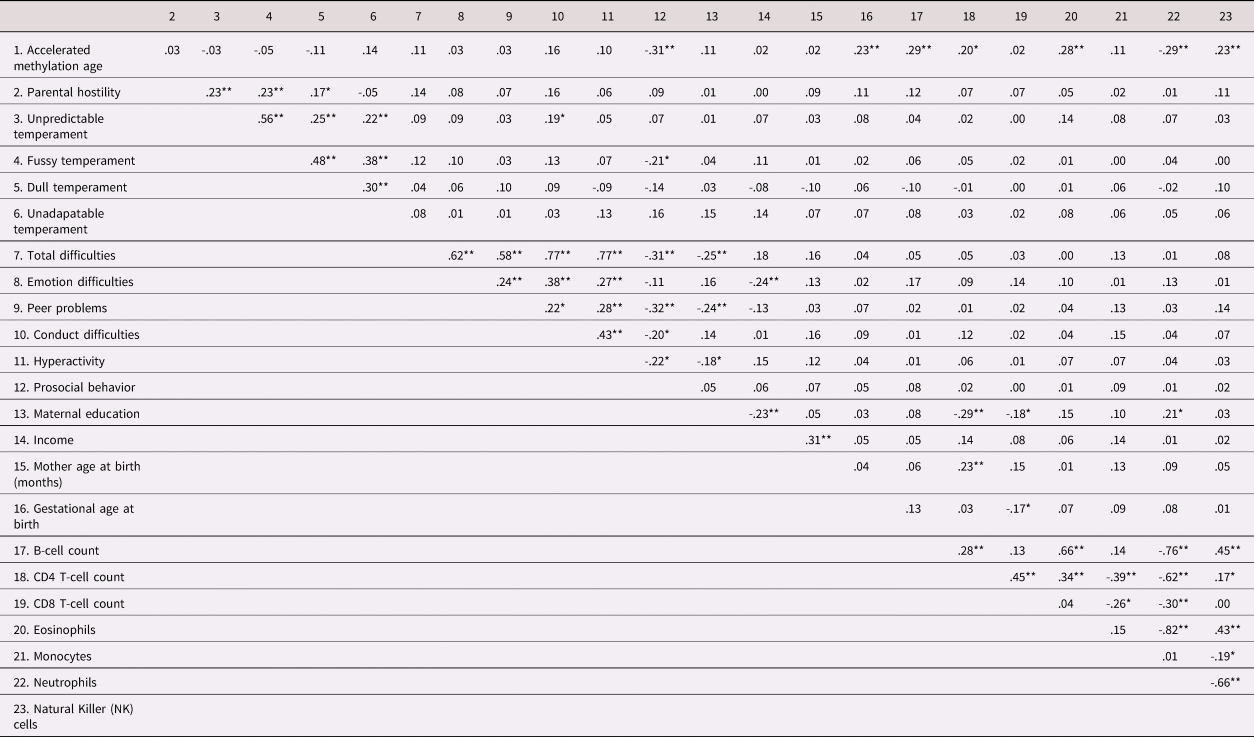
Descriptive statistics are presented in Table 1 and zero-order correlations are presented in Table 2.
Descriptive statistics for study variables

Correlations between all study variables
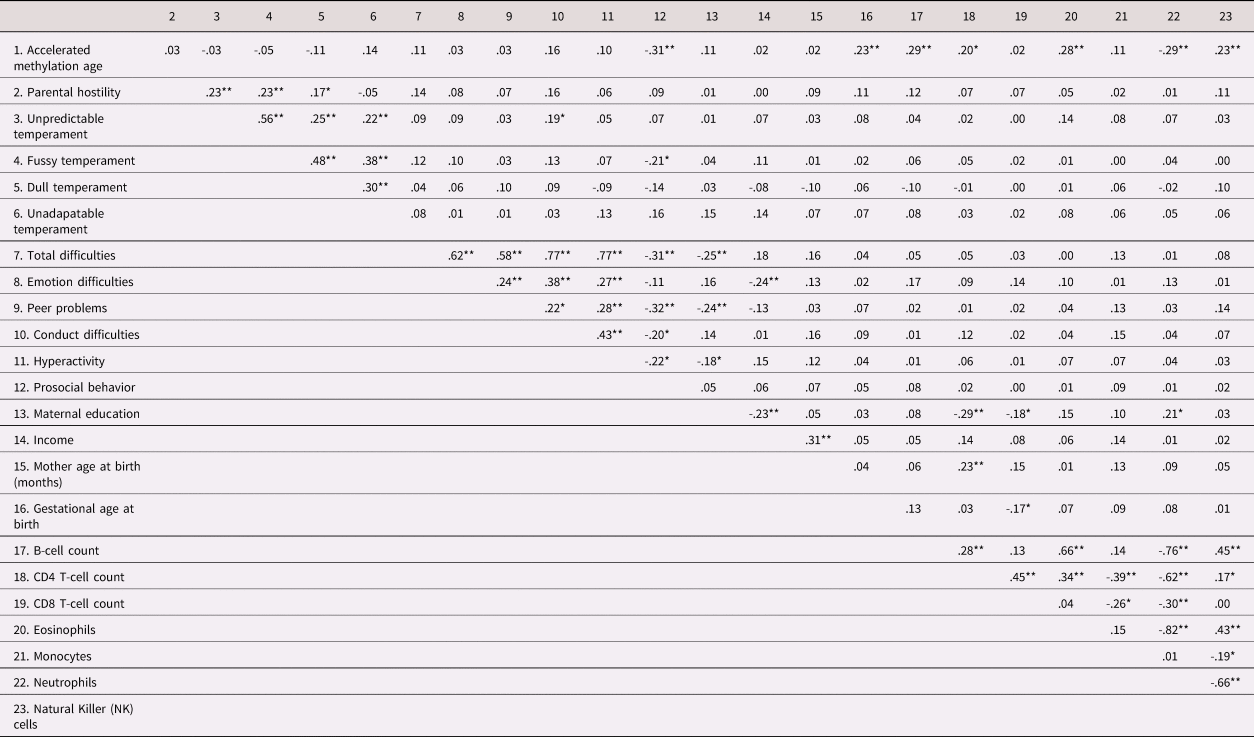
Note **Correlation is significant at the .01 level (2-tailed)., *Correlation is significant at the .05 level (2-tailed).
Methylation and hostility predicting temperament at 6 months
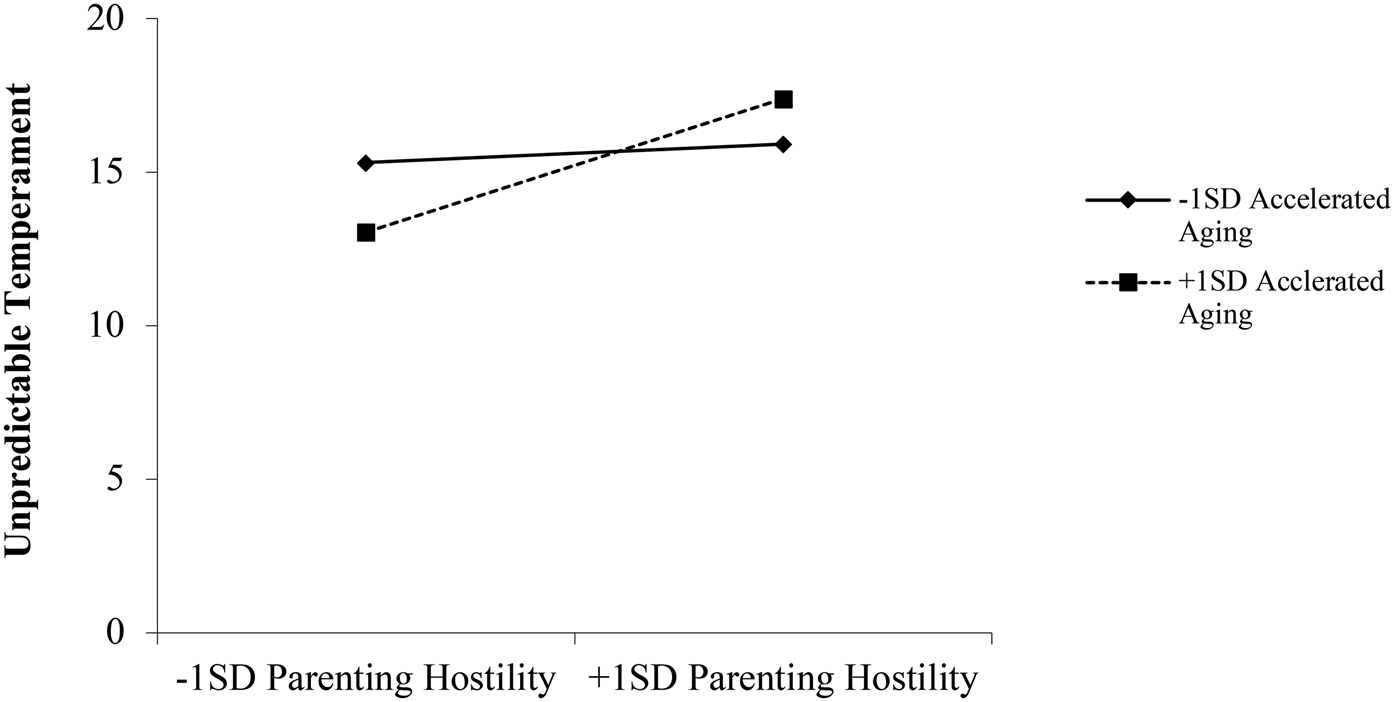
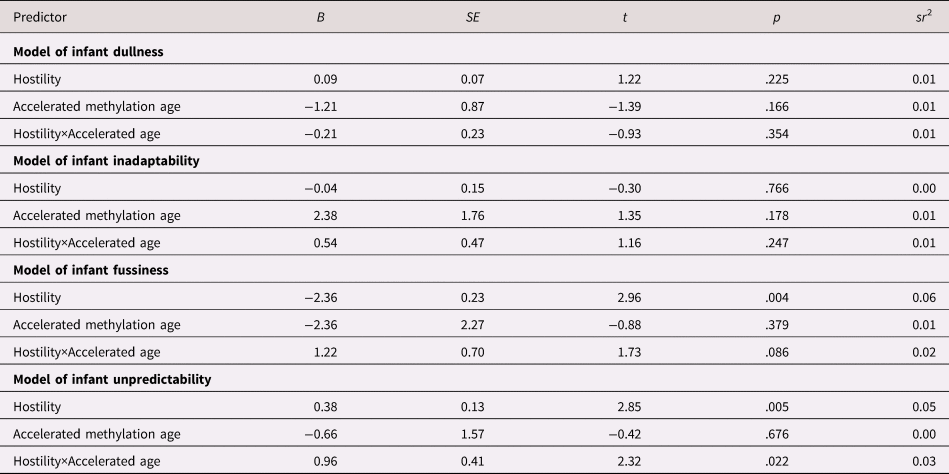
The results of linear regressions predicting infant temperament revealed several significant predictors, with abridged results for the predictors of hostility, accelerated methylation age, and their interaction presented in Table 3. The models of infant dullness and infant unadaptability did not reveal significant main effects or interactive effects of methylation or hostility. The model of infant fussiness revealed a main effect of hostility as well as a trend towards an interaction between hostility and accelerated methylation age. In the model of child unpredictability, there was a significant main effect of parenting hostility as well as a significant interaction between methylation and hostility. Tests of simple slopes revealed that infants with methylation patterns reflecting faster biological aging were more sensitive to the effects of parenting hostility (slope +1SD accelerated methylation age = 0.66, t = 3.52 p < .001; slope −1SD accelerated methylation age = 0.09, t = 0.52, p = .603; see Figure 1). Furthermore, the region of significance for the effect of methylation aging on temperament fell within +/− 2SDs and/or the observed range of hostility, consistent with a differential susceptibility pattern outlined by Roisman et al. (Reference Roisman, Newman, Fraley, Haltigan, Groh and Haydon2012), wherein accelerated methylation age related to both higher symptoms in more hostile environments and lower symptoms in less hostile contexts.
Interaction between accelerated aging at birth and parenting hostility predicting infant temperament unpredictability at 6 months.

Abridged results of models of infant temperament
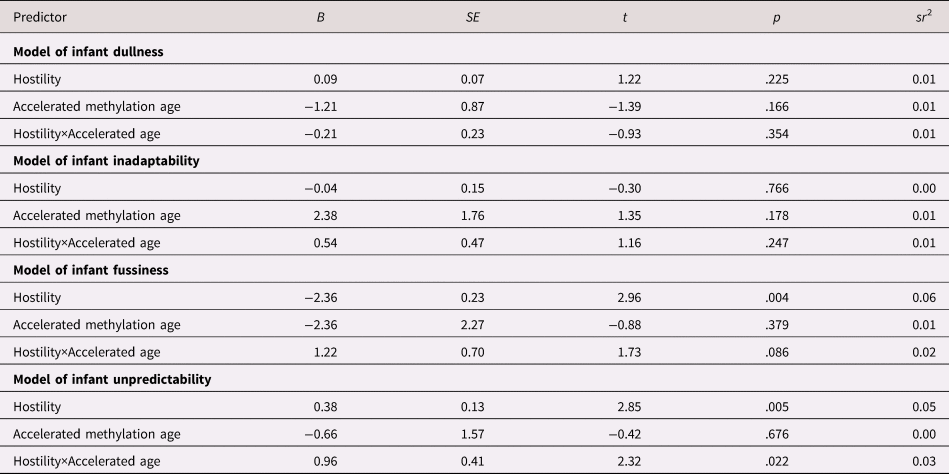
Note. Models also included child sex, ethnicity dummy codes, maternal education, income decile, maternal age, gestational age, B-cells, CD4+ T-cells, CD8+ T-cells, eosinophils, monocyte, neutrophils, and natural killer cells; see supplemental material for full models.
Methylation and hostility predicting psychopathology symptoms at 3 years
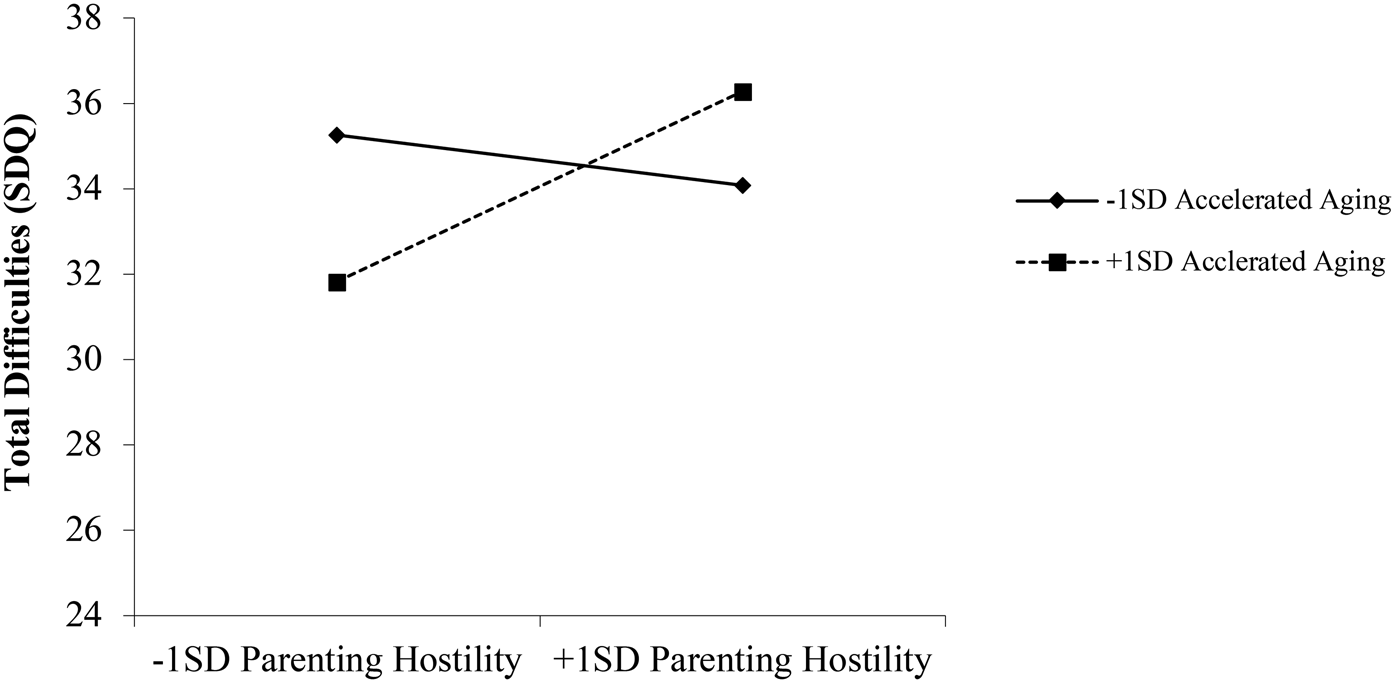
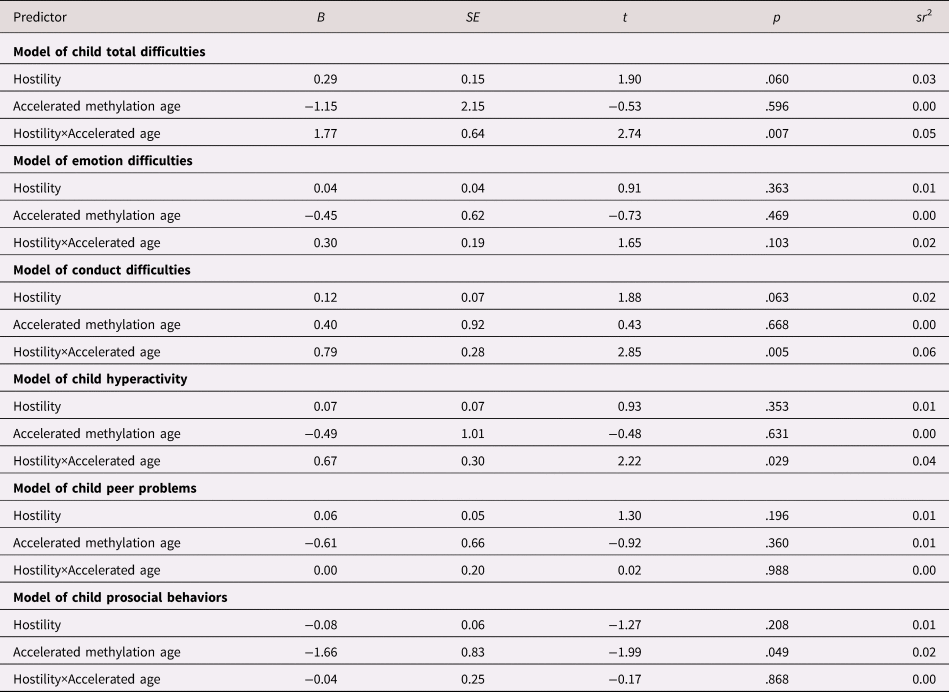
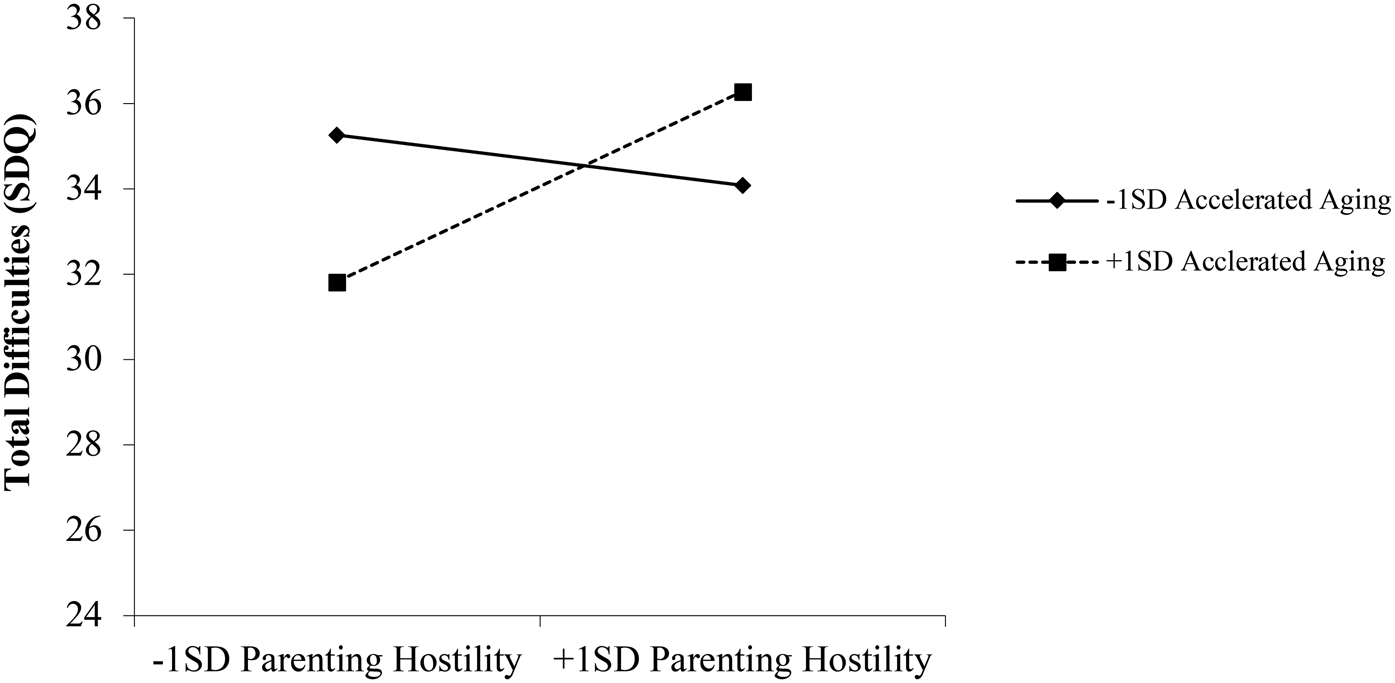
As presented in Table 4, linear regression analyses examining SDQ total score at 36 months revealed a significant main effect of hostility that was qualified by a significant interaction between hostility and accelerated methylation age. Here, simple slopes tests revealed that children with accelerated methylation age at birth showed a stronger positive association between parenting hostility and greater symptom difficulties (slope +1SD accelerated methylation age = 0.73, t = 3.16, p = .002; slope −1SD accelerated methylation age = −0.19, t = −0.86, p = .392; see Figure 2). As with infant's unpredictable temperament, the region of significance for the effect of accelerated methylation age on total difficulties fell within +/− 2SDs and/or the observed range of hostility, consistent with a differential susceptibility pattern.
Interaction between accelerated aging at birth and parenting hostility predicting child psychological symptom total at 3 years.
Following this omnibus test, exploratory analyses examining SDQ subscales did not reveal any significant main or interactive effects of methylation age and hostility in predicting emotional or peer difficulties; however, there was a marginal main effect of hostility and a significant interaction between hostility and accelerated methylation age predicting conduct symptoms, with simple slopes tests revealing a stronger association between hostility and conduct problems for children with more accelerated methylation age (slope +1SD accelerated methylation age = 0.32, t = 3.25, p = .002; slope −1SD accelerated methylation age = −0.09, t = −1.00, p = .319) and consistent with a differential susceptibility pattern. There was also a significant interaction between hostility and accelerated methylation age and predicting symptoms of hyperactivity. Here again, simple slopes revealed a stronger association between hostility and symptoms for children with accelerated methylation age at birth (slope +1SD accelerated methylation age = 0.24, t = 2.17, p = .032; slope −1SD accelerated methylation age = −0.12, t = −1.13, p = .263) and supported a differential susceptibility pattern. There was a significant main effect of accelerated methylation age predicting less prosocial behavior, regardless of hostility (Table 4).
Abridged results of models of child psychological difficulties
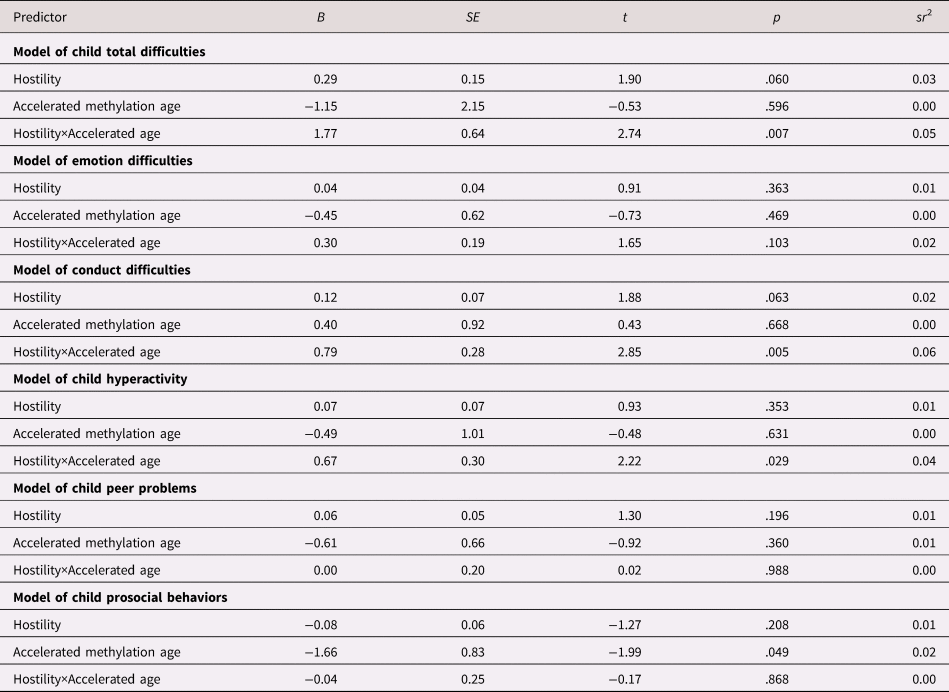
Note. Models also included child sex, ethnicity dummy codes, maternal education, income decile, maternal age, gestational age, B-cells, CD4+ T-cells, CD8+ T-cells, eosinophils, monocyte, neutrophils, and natural killer cells; see supplemental material for full models.
Controlling for child temperament
Because a more difficult infant temperament is often seen as a precursor to child psychological symptoms (Murris & Ollendick, Reference Murris and Ollendick2005), it is possible that significant results on the SDQ are simply due to enduring effects of methylation and parenting hostility on infant temperament. However, controlling for the four temperament dimensions in the prediction of SDQ scores in secondary analyses did not alter the pattern of effects, with the exception that the trend-level effects of hostility in the prediction of total symptoms and conduct symptoms became nonsignificant, and the significant main effect of accelerated methylation age on prosocial behaviors was reduced somewhat to trend (p = .063; see Supplementary material). Together, these results suggest that the effects of these factors on child symptoms are not entirely accounted for by earlier-emerging temperament differences.
Discussion
Given the prevalence and burden associated with early-emerging psychological risk, it is critical to elucidate new factors implicated in the development of psychopathology in order to ultimately increase potential targets for intervention. The results of the current prospective longitudinal study advance the possibility that accelerated epigenetic aging may be one such factor. Although correlational in nature, our findings were consistent with the proposal that accelerated aging at birth may sensitize children to the effects of hostile parenting on infant temperament and later psychological symptoms. Specifically, even after controlling for cell types, gestational age, and a variety of sociodemographic factors, we found that children with a more accelerated methylation age at birth showed a stronger association between parenting hostility and the infant temperament dimension of unpredictability at age 6 months compared to children who showed a less accelerated methylation age. In addition, there was a trend in the same direction for infant fussiness. Furthermore, similar patterns were observed when predicting psychological difficulties when children were 3 years old. Here, children with a more accelerated methylation age showed more overall difficulties in the context of more hostile parenting but fewer difficulties in the absence of hostile parenting. Finally, even when controlling for 6-month temperament ratings, the interaction between accelerated aging and parenting hostility continued to independently predict psychological symptoms at 3 years, suggesting that the associations are relatively long-reaching and function – at least partially – through additional pathways beyond changes in temperament. To our knowledge, this is the first study of accelerated methylation age at birth to predict developmental psychopathology risk.
Of note, our pattern of results yielded more support for accelerated methylation age as a differential susceptibility factor than an additive risk factor. If replicated, our work holds the potential to reconcile past inconsistent findings by suggesting that accelerated aging may predict greater risk for psychopathology only in individuals facing more aversive environments, while predicting lower risk in more beneficial environments. Substantial work has demonstrated that methylation age is related to experiences of stress (Palma-Gudiel, Fañanás, Horvath, & Zannas, Reference Palma-Gudiel, Fañanás, Horvath and Zannas2020); it is therefore possible that fetuses with greater biological susceptibility respond more substantially to noxious factors during gestation, resulting in accelerated aging signatures evident as early as at birth. These children may then remain more vulnerable to the negative effects of aversive parenting, but – importantly – also more sensitive to the positive effects of non-aversive parenting, both for early emerging temperament and later psychological difficulties at preschool age. Although it is not possible to determine causality given the correlational nature of the current work, this formulation would be consistent with methylation age as a proxy biomarker for differential susceptibility. Alternately, it is possible that accelerated aging is itself the mechanism of sensitivity; individuals whose cells are aging at faster-than-expected rates may be more prone to cellular (and, in turn, psychological) dysfunction in the context of adversity but also evince greater maturity in more advantageous early environments. If true, this would be consistent with models of biological sensitivity to context (Ellis et al., Reference Ellis, Boyce, Belsky, Bakermans-Kranenburg and van Ijzendoorn2011).
Exploratory analyses examining which dimensions of psychological difficulties were most closely associated with accelerated methylation age and parental hostility revealed that patterns emerged most strongly for subscales relating to externalizing presentations, specifically, to more symptoms of hyperactivity and conduct problems, and fewer prosocial behaviors. In contrast, there was no evidence that accelerated methylation age predicted difficulties relating to emotions (like anxiety and depressive symptoms), which are considered more internalizing presentations. If replicated, these patterns suggest that accelerated methylation age may be especially relevant for externalizing forms of developmental psychopathology.
These findings have several implications. First, this preliminary evidence that accelerated methylation age may be a susceptibility factor for later developmental psychopathology risk also implies that negative outcomes may be prevented by improving psychosocial environments, such as by training parents in more adaptive, less hostile parenting techniques. Under the differential susceptibility model, children with accelerated aging would be expected to not only overcome risk, but to thrive under more adaptive, supportive environments. Second, regardless of whether accelerated methylation age represents a proxy for differential susceptibility or is the mechanism through which risk is transmitted, if replicated, methylation profiles in cord blood hold the potential to identify infants at increased risk for later challenges, which could facilitate the efficient marshalling of therapeutic resources and interventions. Third, given that accelerated epigenetic aging is implicated in other health disorders, it is possible that the same children who evince greater risk for developmental psychopathology may also be at greater risk for chronic diseases and premature mortality, potentially pointing to shared mechanisms of mental and physical disease. Fourth and finally these findings reiterate that the “blank slate” of birth is hardly blank; not only are children born into different environments, but they are also born with measurably differing levels of risk, even at the cellular level.
Strengths of the current paper include use of a multiethnic and socioeconomically diverse sample. Families who are of an ethnic group other than White and/or who are economically disadvantaged are disproportionately overlooked in longitudinal birth cohorts (Grosser, Razum, Vrijkotte, Hinz, & Spallek, Reference Grosser, Razum, Vrijkotte, Hinz and Spallek2016); in order to truly represent and understand universal developmental processes, it is paramount to include heterogenous families in research. As well, the current study drew on a prospective, longitudinal design, allowing us to examine biological specimens obtained at birth to temporally sequence associations between biology and psychological symptoms.
At the same time, there are several limitations to acknowledge. In addition to the fundamentally correlational design of this work, one prominent weakness is the size of the current study sample. Although all data were drawn from a large-scale birth cohort, the administration of specific measures to only subsets of participants resulted in only 154 families with requisite data for study analyses. In addition to limiting analytic power, this leaves open the possibility that our final sample may be systematically biased in some way, although attrition analyses did not find substantial differences between families with and without missing data, except that our sample was more likely to be White. Despite this, 58% of the current study sample identified as of an ethnic group other than White, which may somewhat reduce generalizability concerns. Another limitation is the possibly of Type I error in the current work. Because (to our knowledge) no prior work has investigated accelerated methylation age in relation to child psychopathology risk, we opted to present models without penalizing for multiple comparisons in order to aid discovery and inform future research. However, it will be critical that the next wave of research on this topic engage in more targeted and conservative replication efforts. An additional limitation is that mothers were the sole reporters for their parenting, infant's temperament, and children's difficulties, raising the prospect of share method bias. While this is certainly possible, the significant moderation by a biological variable (methylation) in the current work makes this far less likely an explanation for observed results, as mothers were not aware of their children's biological aging status and would not be expected to systematically differ in their reporting as a result. Nonetheless, it will be important for future work to include information from other informants. We are unable to determine the source of individual differences in children's accelerated aging. It is possible that these methylation profiles may be due to shared genetics, to specific exposures during gestation (such as to toxins or maternal distress), or to other variables. In the current work, we demonstrated that gestational age and demographics did not account for methylation differences; however, it remains possible that other unmeasured variables contribute to accelerated methylation age.
In the context of these strengths and limitations, there remain many unanswered questions. For example, how long do effects of accelerated methylation age (in conjunction with hostile parenting) endure? Longer-term longitudinal studies will be critical for examining whether these factors predict differences in adolescent- and adult-onset disorders. Another question is how exposure to aversive environments (like hostile parenting) iteratively affect cellular aging across development. It is highly probable that there are bidirectional effects between cellular aging, psychopathology, and stress exposures; studies that assess each of these constructs multiple times across development will be well-positioned to illuminate important dynamics. Lastly, if accelerated epigenetic aging is a differential susceptibility factor, then to what other positive and negative external environments might children be rendered more sensitive and how might these associations change across development?
Despite these limitations and unanswered questions, the current study is the first to examine the association between accelerated methylation age at birth and later psychological risk. As such, it adds to a growing body of literature on differential susceptibility and suggests an additional factor to consider in the development of psychopathology.
Supplementary Material
The supplementary material for this article can be found at https://doi.org/10.1017/S0954579421000614
Acknowledgments
Born in Bradford is only possible because of the enthusiasm and commitment of the children and parents in BiB. We are grateful to all the participants, health professionals, and researchers who have made Born in Bradford happen.
Funding Statement
This paper presents independent research using data collected from Born in Bradford funded by the National Institute for Health Research (NIHR) under their program grant for applied research (PGfAR: RP-PG-0407-10044) and Collaboration for Applied Health Research and Care (CLAHRC) (IS-CLA-0113-10020) schemes, and from a Wellcome Trust Infrastructure Grant (WT101597MA). The views expressed are those of the author(s) and not necessarily those of Wellcome, the NHS, the NIHR or the Department of Health and Social Care.
Conflicts of Interest
None.