Introduction
Joining strategic networks (SNs) has been a relevant strategy for firms of different sizes and industries. Public data show that SNs composed of small and medium-sized firms play an important role in supporting their members in developed countries such as Germany (Der mittelstandsverbund, 2021; Pahnke & Welter, Reference Pahnke and Welter2019), Spain (Associación Nacional d Centrales D Compra Y Servicios., 2021), and Italy (Pastore, Ricciardi, & Tommaso, Reference Pastore, Ricciardi and Tommaso2019) but also in developing countries like Brazil (Wegner & Verschoore, Reference Wegner and Verschoore2022). Small firms especially benefit from collaboration in terms of accessing resources, developing innovations, and building barriers against large firms (Vătămănescu, Cegarra-Navarro, Andrei, Dincă, & Alexandru, Reference Vătămănescu, Cegarra-Navarro, Andrei, Dincă and Alexandru2020). Firms connected to SNs remain legally independent but agree to share knowledge and resources to reach collective goals that they would not be able to reach individually. These SNs may vary significantly in size and length of existence, but the number of members plays a relevant role for those operating in retail sectors (Wegner & Padula, Reference Wegner and Padula2010).
The organizational literature has devoted special attention to the role played by governance and management in supporting SNs' development and effectiveness (Provan & Kenis, Reference Provan and Kenis2008; Wegner & Verschoore, Reference Wegner and Verschoore2022). Network governance refers to collaboration rules and how these rules stimulate network members to commit to collective goals and offer resources to work together (Vangen, Hayes, & Cornforth, Reference Vangen, Hayes and Cornforth2015). Network management consists of the strategy, structure, processes, and leadership that help SNs reach common goals (Cristofoli, Trivellato, & Verzillo, Reference Cristofoli, Trivellato and Verzillo2019). Scholars recognize that both governance and management are necessary for network effectiveness (Wegner, Dias, Azevedo, & Marconatto, Reference Wegner, Dias, Azevedo and Marconatto2022). Still, surprisingly little theoretical or empirical attention has been devoted to understanding how governance and management differ according to SNs' size and duration of existence. Previous studies consider the number of members critical to define the governance mode (Provan & Kenis, Reference Provan and Kenis2008). However, to the best of our knowledge, empirical studies have not offered a fine-grained comprehension of SNs' governance regarding decision-making processes, formalization, incentives, and controls (Wegner, Teixeira, & Verschoore, Reference Wegner, Teixeira and Verschoore2019). Similarly, studies focusing on network management have not considered whether size and time affect SNs' management (Baraldi, Ciabuschi, Kronlid, & Lindahl, Reference Baraldi, Ciabuschi, Kronlid and Lindahl2022; Broadhurst, Berkeley, & Ferreira, Reference Broadhurst, Berkeley and Ferreira2021). To overcome this gap, we ask the following research question: How do network governance and network management differ in SNs with different sizes and existence lengths? As such, this study aims to identify whether governance and management differ in SNs with varying characteristics regarding the number of members and time in operation.
We reach this goal by analyzing a set of 20 SNs operating in Brazil. These SNs have been selected to compose a data set of diverse cases in terms of both member numbers and time active. Data come from 79 interviews with network members, managers, and representatives that shed light on how these SNs are governed and managed. Our findings contribute to the nascent theory of network governance by showing that governance configuration changes according to SNs' size and age. Surprisingly and contrary to the higher maturity we would expect in larger and older SNs, network management is very similar in SNs with different characteristics, showing that management follows a similar pattern in all SNs. We also contribute to practitioners by offering recommendations on how governance can be organized as SNs grow and attract new members.
Strategic networks
SNs may be seen as a type of coordination alternative to markets or hierarchies (Powell, Reference Powell1990; Williamson, Reference Williamson1979). Transaction cost economics explains that exchanges occur either in markets, hierarchies, or networks, depending on the transaction costs associated with each (Manser, Hillebrand, Woolthuis, Ziggers, Driessen, & Bloemer, Reference Manser, Hillebrand, Woolthuis, Ziggers, Driessen and Bloemer2016). In SNs (Jarillo, Reference Jarillo1988; Möller & Rajala, Reference Möller and Rajala2007; Perrow, Reference Perrow1992) or ‘business nets,’ firms are closely interrelated through resource ties and activity links (Easton & Axelsson, Reference Easton and Axelsson1992). This view is rooted in the firm's resource/capability view (Eisenhardt & Martin, Reference Eisenhardt and Martin2000). These SNs are intentionally formed by at least three firms (Möller, Rajala, & Svahn, Reference Möller, Rajala and Svahn2005). They are a distinct form of organization between markets and hierarchies (Thorelli, Reference Thorelli1986) that regulates complex transactional interdependence as well as cooperative interdependence among firms. Grandori and Soda (Reference Grandori and Soda1995) call them a model of organizing economic activities through inter-firm coordination and cooperation. Some authors call this organizational entity a ‘whole network’ (Provan, Fish, & Sydow, Reference Provan, Fish and Sydow2007) because it forms a new organization that reunites independent firms.
SNs operate in many forms and with many purposes (Möller, Rajala, & Svahn, Reference Möller, Rajala and Svahn2005). This type of organization has stable long-term ties and reciprocal interorganizational relationships (Järvensivu & Möller, Reference Järvensivu and Möller2009). They are constituted by a set of dense and multiple relationships and a shared value system (Amit & Zott, Reference Amit and Zott2001; Gulati, Nohria, & Zaheer, Reference Gulati, Nohria and Zaheer2000; Möller, Rajala, & Svahn, Reference Möller, Rajala and Svahn2005). Governing and managing SNs may be a complex and challenging task due to the heterogeneity and number of members, their particular goals, and the resources that have to be shared and combined to reach collective goals (Davis & Eisenhardt, Reference Davis and Eisenhardt2011). This study focuses on the two dimensions of the SN's theoretical perspective: network governance and network management. In the following two subsections, we present these concepts.
Network governance
Network governance refers to the structure and rules of business networks' internal coordination (Albers, Wohlgezogen, & Zajac, Reference Albers, Wohlgezogen and Zajac2016; Provan & Kenis, Reference Provan and Kenis2008). These rules aim to guide the members and stimulate them to develop collective actions (Wegner & Verschoore, Reference Wegner and Verschoore2022). The extant literature presents five dimensions involved in network governance: (i) specialization, (ii) centralization, (iii) incentives and sanctions, (iv) control, and (v) formalization. Riemer and Klein (Reference Riemer, Klein and S. A.2006) propose that governance is necessary to establish the network structures and mechanisms needed to sustain ongoing coordination efforts among network members, shape relationships, and execute tasks. To do so, SNs may utilize a shared governance model, a broker or core agency like a Network Administrative Organization (NAO) or a hub firm that plays a critical role in allocating funds, performing administrative tasks, and coordinating partner interaction (Macciò & Cristofoli, Reference Macciò and Cristofoli2017; Provan & Kenis, Reference Provan and Kenis2008).
Concerning specialization, SNs can have distinct actors that exert considerable control over the collective activities (Jarillo, Reference Jarillo1988; Möller & Rajala, Reference Möller and Rajala2007; Möller, Rajala, & Svahn, Reference Möller, Rajala and Svahn2005; Parolini, Reference Parolini1999). These actors may be organized in teams, working groups, committees, or departments responsible for executing specific tasks such as basic management activities within the SN (Albers, Wohlgezogen, & Zajac, Reference Albers, Wohlgezogen and Zajac2016; Wegner & Verschoore, Reference Wegner, Dias, Azevedo and Marconatto2022). Tasks within a network can be allocated to specific partners or jointly carried out by all partners (Riemer & Klein, Reference Riemer, Klein and S. A.2006). The more focused and specialized the actors are, the greater the actors' effectiveness and productivity (Perrow, Reference Perrow1967).
Centralization refers to the locus of authority and its dispersion among actors (Albers, Reference Albers2010). Thus, centralization defines the extent to which decisions and relevant aspects of the network will be centralized (or parity-based) in a small group of representatives or a coordinating firm (Grandori & Soda, Reference Grandori and Soda1995) or manager (Cristofoli & Markovic, Reference Cristofoli and Markovic2016). In SNs with a large number of members, the more centralized the network, the higher the probability of good network performance (Cristofoli & Markovic, Reference Cristofoli and Markovic2016; Provan & Milward, Reference Provan and Milward1995). A high level of centralization facilitates decision-making and makes the network more agile, but it also reduces the participation of entrepreneurs in decisions and can decrease the internal legitimacy of decisions (Albers, Reference Albers2005, Reference Albers2009; Wegner & Verschoore, Reference Wegner and Verschoore2022).
Incentives and reward mechanisms aim to enable and encourage the participants' cooperative behavior to achieve the SN's goals, especially when that behavior falls outside their normal role within the SN (Riemer & Klein, Reference Riemer, Klein and S. A.2006). For example, profit-sharing or income-sharing is an incentive mechanism found in consortia and franchising (Grandori & Soda, Reference Grandori and Soda1995). Incentives may also be a solution that mitigates differences between members to achieve collaborative advantage and avoid situations of collaborative inertia (Cristofoli & Markovic, Reference Cristofoli and Markovic2016). On the other hand, sanctions are safeguards that act as ‘defense mechanism[s] that discourage opportunistic tendencies by punishing the respective firm’ (Albers, Reference Albers2010: 209). Sanctions may reduce opportunistic behavior from network members (Manser et al., Reference Manser, Hillebrand, Woolthuis, Ziggers, Driessen and Bloemer2016).
Networks have goals to be achieved individually at the members' level and collectively at the group level. Control mechanism refers to the monitoring, evaluation, and measuring of the behavior and the expected results of the members and the network as a whole (Albers, Reference Albers2005, Reference Albers2009; Nassimbeni, Reference Nassimbeni1998; Wegner & Verschoore, Reference Wegner and Verschoore2022). The SN can formally or informally monitor members. Formal monitoring mechanisms consist of performance indicators and reports. SN can also apply informal mechanisms by socially pressuring members to adhere to network norms, values, or goals by demonstrating and reinforcing expected behaviors, and by showing what can happen if norms and values are violated (Jones, Hesterly, & Borgatti, Reference Jones, Hesterly and Borgatti1997).
The last dimension of governance refers to formalization, i.e. the procedural controls, standardization, and application of rules and processes to predict members' activities. This is an important mechanism for maintaining network safeguards (Isett & Provan, Reference Isett and Provan2005), stability (Herranz, Reference Herranz2009), and endurance (Agranoff, Reference Agranoff2006). If formalization is reduced or limited somehow, direct supervision or mutual adjustment becomes necessary (Albers, Reference Albers2010). It is common for SNs to elaborate explicit rules, regulations, codes of ethics, formal written contracts (defining relationships, roles, responsibilities, boundaries, and communication channels), member selection policies, and regularized services. These controls are vital for coordinating members (Albers, Reference Albers2005, Reference Albers2009; Hernández-Espallardo & Arcas-Lario, Reference Hernández-Espallardo and Arcas-Lario2003; Nassimbeni, Reference Nassimbeni1998; Schminke, Ambrose, & Cropanzano, Reference Schminke, Ambrose and Cropanzano2000; Wegner & Verschoore, Reference Wegner and Verschoore2022). The bureaucratic coordination of joint efforts has been shown to have positive effects in decentralized network settings (Marcovik, 2016). Formal coordination mechanisms are especially critical when the network chooses the NAO mode of governance due to the high complexity of coordination among members. In addition, it has been shown that different degrees of formalization have varying effects on network performance (Cristofoli & Markovic, Reference Cristofoli and Markovic2016).
Network management
While governance refers to the rules that guide network members, network management is a set of processes and practices carried out by a group of individuals focused both on the direction to be taken by an interorganizational entity and on the allocation and implementation of resources to reaching such goals (Wegner, Silva, & De Rossi, Reference Wegner, Silva and De Rossi2018). An SN is a new organization, a unique combination of (i) strategy, (ii) structure, (iii) management processes (Miles & Snow, Reference Miles and Snow1986), and (iv) service portfolio (Milward & Provan, Reference Milward and Provan2006). These main elements constitute network management.
Regarding strategy, an SN is created to achieve the goals set by its members (Jarillo, Reference Jarillo1993; Provan, Fish, & Sydow, Reference Provan, Fish and Sydow2007). Network-level strategies are collective alignments, based on joint discussions, and considered legitimate by the participants. In this process, network managers may lead by developing a vision, activating network partners, and promoting identification among members (Cristofoli & Markovic, Reference Cristofoli and Markovic2016). In the context of SNs with a collaborative strategy, the network may improve their performance by providing members access to strategic resources (Wegner, Silva & De Rossi, Reference Wegner, Silva and De Rossi2018).
The network structure is also considered a key determinant of network performance (Provan & Milward, Reference Provan and Milward1995). The relations between autonomous yet interdependent firms can be complex if lacking a good management structure. In this sense, structure refers to the human capital and infrastructure necessary for coordinating and allocating resources (Vangen, Hayes, & Cornforth, Reference Vangen, Hayes and Cornforth2015). SNs need tangible and intangible resources to meet their needs and support the implementation of its strategy. Some examples of resources are adequate physical infrastructure and human and technical resources to support collective strategies (Wegner, Bortolaso, & Zonatto, Reference Wegner, Bortolaso and Zonatto2016). Financial resources are also necessary to support the professional managers, physical space, and materials necessary for managing the SN (Wegner & Verschoore, Reference Wegner and Verschoore2022).
Another important element of network management is the management processes that support collective work. Processes can be defined in several key areas of the SN, such as negotiating with suppliers and external partners, defining marketing actions, training and qualification of employees, expanding and selecting new members (Riemer & Klein, Reference Riemer, Klein and S. A.2006; Verschoore, Wegner, & Balestrin, Reference Verschoore, Wegner and Balestrin2015). They should be formulated, mapped, analyzed, and implemented in the network to ensure that all members and relevant external parties know the protocols, rules, and expected results from everyone involved. Likewise, processes that facilitate the codification of the knowledge into manuals and guidelines may result in better coordination of network activities (Kale, Dyer, & Singh, Reference Kale, Dyer and Singh2002).
An SN is also designed to offer a service portfolio to its members. These services aim to improve members' competitiveness and provide solutions that the members could not develop on their own (Isett, Mergel, LeRoux, Mischen, & Rethemeyer, Reference Isett, Mergel, LeRoux, Mischen and Rethemeyer2011; Mays & Scutchfield, Reference Mays and Scutchfield2010; Milward & Provan, Reference Milward and Provan2006; Shortell et al., Reference Shortell, Zukoski, Alexander, Bazzoli, Conrad, Hasnain-Wynia and Margolin2002). In addition, the increase in the number of services offered by the SN may reduce the members' probability of individually searching for alternatives to meet their needs (Cristofoli & Markovic, Reference Cristofoli and Markovic2016).
In the following subsection, we present insights from the extant literature on how size and length of time affect network governance configuration and network management.
Variations in strategic network governance and management dimensions according to their size and age
Previous studies argue that size and age shape the governance and management choice of SNs (Provan & Kenis, Reference Provan and Kenis2008). Network size refers to the number of members affiliated with an SN. When investigating whether larger or smaller SNs could have differences in strategy adoption since they have more or fewer resources, Bortolaso, Verschoore, and Antunes Júnior (Reference Bortolaso, Verschoore and Antunes Júnior2012) found that size does not significantly affect the SNs' strategy. Network age refers to the SN's lifespan. Older SNs may have developed stronger social relations among their members, which helps them better manage conflicts and accumulate experience that favors positive results (Child & Yan, Reference Child and Yan1999).
As the SN becomes older, there may be a change in governance modes (Wegner & Padula, Reference Wegner and Padula2010), manifesting in visible changes in the specialization, centralization, incentives, sanctions, control mechanisms, and formalization of the SN. Following the organizational literature, older/larger SNs will probably have higher degrees of formalization (Child, Reference Child1973; Donaldson, Reference Donaldson2014), more specialized governance structures, and more ‘elaborated systems of monitoring and control’ (Albers, Reference Albers2010: 213). When studying how to enhance the longevity of business networks, Macciò and Cristofoli (Reference Macciò and Cristofoli2017) argued that they should be capable of attracting and retaining new members, offer a broad range of services to satisfy all clients' needs, strengthen ties within the network, and improve coordination among members.
Older and larger SNs should also have a higher level of specialization, with actors, teams, working groups, and specific committees performing specialized functions (Jarillo, Reference Jarillo1988; Möller & Rajala, Reference Möller and Rajala2007; Möller, Rajala, & Svahn, Reference Möller, Rajala and Svahn2005; Parolini, Reference Parolini1999) and achieving a high degree of effectiveness and productivity (Perrow, Reference Perrow1967). Likewise, SNs should also be more centralized, with a low number of members participating in decision-making (Albers, Reference Albers2005, Reference Albers2009; Wegner & Verschoore, Reference Wegner and Verschoore2022) due to the trust accumulated (Bryson, Crosby, & Stone, Reference Bryson, Crosby and Stone2006; Klijn, Steijn, & Edelenbos, Reference Klijn, Steijn and Edelenbos2010; Zhong, Su, Peng, & Yang, Reference Zhong, Su, Peng and Yang2017) and the costs of shared decision-making. However, to counterbalance the lack of participation in decision-making, larger SNs must invest resources to encourage members' engagement in the collective strategies proposed (Olson, Reference Olson2009. Therefore, they must have incentive and reward mechanisms (Cristofoli & Markovic, Reference Cristofoli and Markovic2016) that stimulate members following the rules and strategies defined.
More experienced, older SNs may have developed over time a greater need for a control mechanism for monitoring, evaluating, and measuring the behavior, expected results (i.e., performance) of the members and the SN as a whole (Albers, Reference Albers2005, Reference Albers2009; Nassimbeni, Reference Nassimbeni1998; Wegner & Verschoore, Reference Wegner and Verschoore2022). Likewise, larger SNs have a more significant number of affiliated members, which also demands greater operations control.
Formalization and procedural controls are important for maintaining the SNs' safeguards (Isett & Provan, Reference Isett and Provan2005). Older SNs (Herranz, Reference Herranz2009) are generally more experienced. Therefore, this type of SN may have more explicit rules, regulations, codes of ethics, and formal written contracts. In addition, larger SNs may have many instruments for coordinating members (Albers, Reference Albers2005, Reference Albers2009; Hernández-Espallardo & Arcas-Lario, Reference Hernández-Espallardo and Arcas-Lario2003; Nassimbeni, Reference Nassimbeni1998; Schminke, Ambrose, & Cropanzano, Reference Schminke, Ambrose and Cropanzano2000; Wegner & Verschoore, Reference Wegner and Verschoore2022).
As an SN evolves, there may be visible changes in its strategy, management structure, and internal processes. Strategy formulation and implementation demand efforts to collect and organize processes to bring together all members (or at least part of them) to carry out the strategic definitions (Cristofoli & Markovic, Reference Cristofoli and Markovic2016). Therefore, larger SNs with more specialized teams are likely to be better positioned to carry out strategic planning.
Similarly, mapping, analyzing, and implementing the management process demand time, investment, people to perform these functions, and financial resources for software investments. Therefore, this activity is more likely to happen in larger and older SNs (Verschoore, Wegner, & Balestrin, Reference Verschoore, Wegner and Balestrin2015). Regarding the change in management structure, there may be an increase or decrease in the number of members according to network structure (i.e., physical infrastructure, human and technical resources to support collective strategies, financial resources). A robust management structure is therefore more common in larger SNs (Wegner, Bortolaso, & Zonatto, Reference Wegner, Bortolaso and Zonatto2016). Finally, older SNs may have more time and to improve the service portfolio. Larger SNs may also face more member pressure to offer a broad portfolio of services (Wegner & Padula, Reference Wegner and Padula2010).
The literature review shows that occasional studies have analyzed how specific governance and management dimensions change over time to ensure network effectiveness (Albers, Reference Albers2005, Reference Albers2009; Bortolaso, Verschoore, & Antunes Júnior, Reference Bortolaso, Verschoore and Antunes Júnior2012; Möller & Rajala, Reference Möller and Rajala2007; Möller, Rajala, & Svahn, Reference Möller, Rajala and Svahn2005), but there are no studies that systematically analyze whether size and age affect this set of dimensions in SNs. The available empirical evidence comes from research in different contexts and therefore does not offer an integrated answer for the role of size and age in network governance and management. In the next section, we present the method we followed to fill this research gap and answer our research question.
Methods
This study aims to identify whether the elements of governance (specialization, centralization, incentives, control, and formalization) and management (strategy, structure, processes, and services portfolio) differ in SNs with varying characteristics regarding the number of members and time in operation.
Case selection
Exploratory research performed by the research team in 2019 identified 250 SNs operating in Brazil. These SNs are composed of a set of firms oriented toward a common goal. The governance of these SNs is shared among all members or conducted by an NAO (Provan & Kenis, Reference Provan and Kenis2008). Five business sectors concentrated the largest number of SNs in this data set: pharmacies (60 SNs; 24% of the population), food retail (52 SNs; 20.8%), building construction retail (50 SNs; 20%), auto parts retail (12 SNs; 4.8%), and furniture retail (10 SNs; 4%).
We then calculated the median size and age of SNs operating in each business sector. We considered SNs below the median age as ‘young SNs’ and those above the median as ‘old SNs.’ Similarly, we considered SNs below the median size as ‘small SNs’ and those above the median as ‘large SNs.’ Finally, a sample of four SNs has been selected from each business sector to meet the following criteria: one ‘small and young SN,’ one ‘small and old SN,’ one ‘large and young SN,’ and one ‘large and old SN.’
Therefore, our final sample consisted of 20 SNs of different sizes and ages from five business sectors. This sample allowed us to compare and reach conclusions regarding the effects of size and age on network governance and management. We are also confident that selecting 20 cases from the business sectors with the largest number of businesses allows us to offer a proper representation of the population of SNs operating in Brazil.
Data collection
We interviewed four members of each SN directly involved in the strategic decision-making of these SNs (i.e., presidents, executive managers, and SN members). There was an exception (network B) in which we conducted only three interviews due to schedule difficulties. Thus, we conducted 79 interviews. We chose the president and the executive manager due to their involvement in defining the governance configuration and managing the network. Their roles in the SNs allow them to offer accurate information about the topics we wanted to investigate.
Moreover, we asked the network manager to share the complete list of network members so that we could randomly select two members to participate in the research. A third network member was interviewed in those cases where no executive was in charge of network management. Although network members may not be directly involved in the SN day-to-day activities, we considered they could help us confirm whether the members perceive network governance and management as similar to what the president and the executive informed. Data collection finished after four interviews in each SN, except in one SN that allowed us to make only three interviews. We are confident that these four interviews with people who occupy different roles in the SNs helped us to avoid biased perceptions and get precise information about each SN.
Most of the interviews lasted an average of 30 min and were conducted by telephone. The interview protocol was composed of open questions focused on the five governance elements (specialization, centralization, incentives, control, and formalization) and management elements (strategy, structure, processes, and services portfolio) described in the literature review. We followed an exploratory approach and asked the interviewees to describe how the SN operates regarding each element (e.g., ‘Could you describe the strategy followed by your SN?’ and ‘Could you please tell us which processes your SNs follows to achieve the collective goals set?’). For a complete breakdown of the networks where interviews were conducted, please access Supplementary File 1.
The interview script was written and applied in the respondents' native language (i.e., Portuguese) so that they could supply the information solicited in detail. Because of this, we analyzed the imported corpus and software-generated data in Portuguese, opting to translate the materials only for this article. This measure aimed to increase the consistency of the analysis performed and reduce possible errors in textual interpretation. The interviews' anonymity was guaranteed through the global designation of ‘network’ with sequential numbering.
Data analysis
All interviews were recorded, transcribed, and imported into the Iramuteq Software. We used Iramuteq software (version 0.7 alpha 2) as a tool to organize the textual corpus developed from the transcription of the 79 interviews, which were then grouped into a single text file and separated by command lines. We followed the codification guidelines suggested by Gourlay (Reference Gourlay2019) concerning input files.
It is worth noting that several researchers in the field of management studies have already used the Iramuteq software to analyze qualitative data. For example, Marques, Marques, Braga, and Marques (Reference Marques, Marques, Braga and Marques2019) assessed stakeholders' perceptions on implementing the smart specialization strategy in north Portugal, focusing on technology transfer. Also, Mion, Loza Adaui, and Bonfanti (Reference Mion, Loza Adaui and Bonfanti2021) examined the legal form of ‘benefit corporations’ in Italy and their mission statements. Fabrizio, Kaczam, and de Moura (Reference Fabrizio, Kaczam, de Moura, da Silva, da Silva and Veiga2022) conducted a systematic literature review (SLR) regarding the competitive advantage and dynamic capability in small and medium-sized enterprises. Finally, Oliveira, Lohmann, and Oliveira (Reference Oliveira, Lohmann and Oliveira2022) also conducted an SLR on air transportation networks. All these papers run a similar type of data analysis, using the Iramuteq software as a tool.
Iramuteq is an acronym for ‘Interface de R pour les Analyses Multidimensionnalles de Textes et de Questionnaires,’ or R Interface for multidimensional analysis of texts and questionnaires. This software was developed by Pierre Ratinaud in 2009 using the French language and also has full dictionaries in other languages such as English, Portuguese, and Spanish. It is a free software linked to the statistical software R and the Python programming language, which enables statistical calculations of qualitative data (Ratinaud, Reference Ratinaud2014), working as a tool that facilitates organizing and interpreting the collected material. Iramuteq allows a deeper exploration of data, providing the sophistication of textual analysis conducted by researchers (Loubère & Ratinaud, Reference Loubère and Ratinaud2014). However, statistical calculations of qualitative material do not make the software a research method per se because it does not replace the role of the researcher (Chartier & Meunier, Reference Chartier and Meunier2011; Lahlou, Reference Lahlou2001).
After processing the textual corpus, we performed data categorization using Descending Hierarchical Classification (DHC). This analysis sorts word clusters, allowing the observation of their hierarchical relationships (Ratinaud & Marchand, Reference Ratinaud and Marchand2012; Reinert, Reference Reinert1990). We set only nouns as active forms while performing DHC because of the need for greater semantic relevance. Exploratory tests with other active forms, such as verbs and adjectives, did not add to the analysis, so other lexical forms were set as Supplementary. The χ2 test is used in DHC to verify the association of text segments (TSs) with a particular cluster. This associative strength is analyzed when the test is greater than 3.84, representing p < .0001, indicating a significant association (Chartier & Meunier, Reference Chartier and Meunier2011). The higher the χ2 value, the greater the association.
The textual corpus must be substantial, having a certain thematic coherence in analyses that employ DHC (Dalud-Vincent, Reference Dalud-Vincent2011). It is worth mentioning that we reached 95.34% of classified TSs on DHC, revealing remarkable thematic coherence. TSs were approximately three lines long, scaled according to the corpus size as a software default procedure. Iramuteq also assigns a value (score) for each TS. The higher the value of this score, the greater the density of a specific TS (Ramos, Rosário Lima, & Amaral-Rosa, Reference Ramos, Rosário Lima and Amaral-Rosa2018). We analyzed data employing textual content analysis (Bardin, Reference Bardin1977), led by reading several TSs associated with each cluster.
We chose high-scoring TSs as empirical evidence of each topic addressed. We used the absolute score provided by Iramuteq. That is, the score of the TS considers the sum of the χ2 value associated with each word classified in a given cluster. This process was performed after data categorization to determine whether the terms identified statistically correspond to a semantic consistency via an abductive inference process (Chartier & Meunier, Reference Chartier and Meunier2011). The interpretation of DHC is based on the hypothesis that using similar lexical forms is linked to common concepts (Reinert, Reference Reinert1987). Therefore, these results often identify different themes within a corpus, which leads us to discuss the specific content regarding network governance and management.
Results
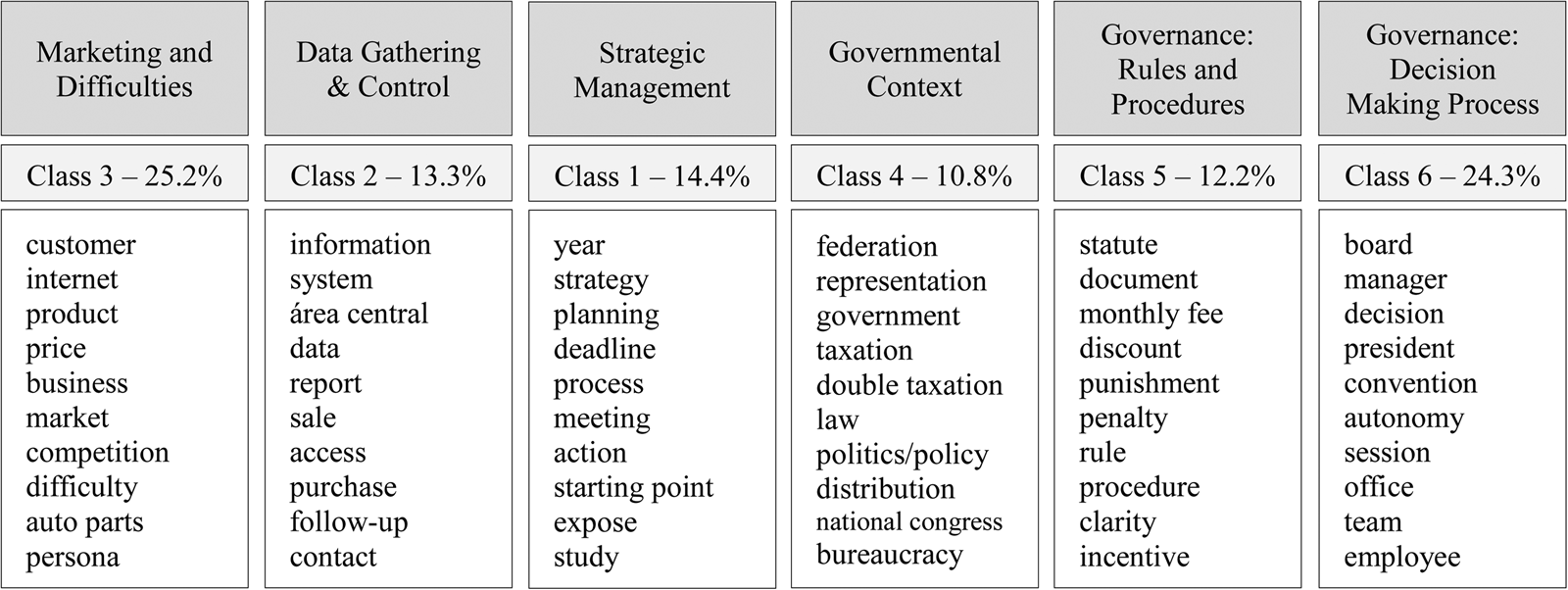
We analyzed the data using the DHC performed on Iramuteq software. It processed the textual corpus and sorted it into 1932 TSs, classifying 1842 of them (95.34%). TSs were then categorized into six clusters concerning different contents. The words' associative strength relative to each cluster was measured using the χ2 test. For a complete breakdown of each cluster, please access Supplementary File 2. We picked 10 words with the highest χ2 scores to highlight the topics addressed in each of the six clusters, namely ‘marketing and difficulties,’ ‘data gathering and control,’ ‘strategic management,’ ‘governmental context,’ ‘governance: rules and procedures,’ and ‘governance: decision-making processes.’ Figure 1 visually depicts these clusters.
Descending Hierarchical Classification.
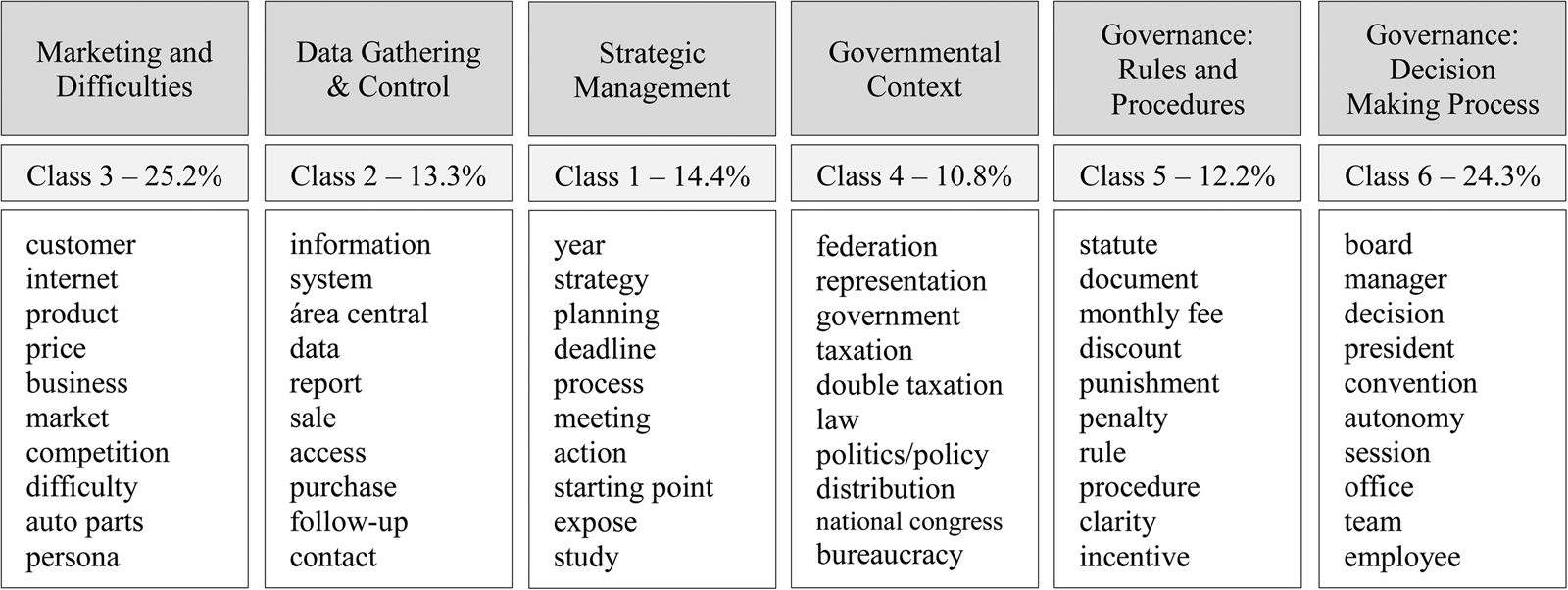
Figure 1 shows the existence of three main themes that emerged from the data: details on the governance of the SN (classes 5 and 6), aspects involving the management of the SN (classes 1–3), and the governmental context (class 3). Although these clusters have content focused on governance or management, discussions other than the main subject are not excluded. The material analyzed exposed similarities and differences concerning the governance and management of SNs, depending on network size and length of existence.
Network governance
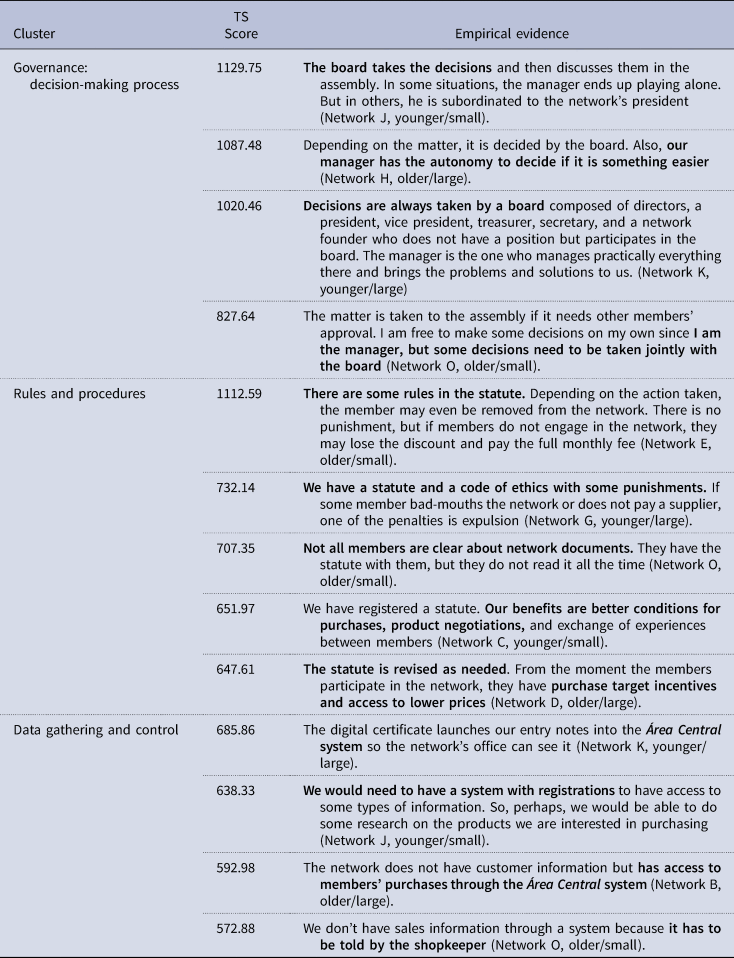
Figure 1 highlights the ‘governance: decision-making process’ cluster, which emphasizes the structure accountable for strategic decision-making. We analyzed the specialized hierarchical structure of network governance, focusing on older or younger and larger or smaller SNs. We detected that strategic decisions are centralized in both contexts, as managers only have more autonomy to make decisions at an operational level. In older SNs, we found that members vote on strategic decisions but do not engage in the strategic formulation process. The engagement was more prevalent in younger SNs. A possible explanation is that small groups, as in the case of young and recent SNs, are socially monitored, reducing members' attempts to free-ride (Olson, Reference Olson2009).
The content analyzed in ‘rules and procedures’ (Figure 1) highlights statutes, regulations, and codes of ethics. This dimension embraces the formalization mechanisms of the SN. There seems to be no difference between SNs regarding this; all SNs maintain at least one of these documents. However, many interviewees reported that members usually are not familiar with the contents of such documents, mainly due to a lack of interest. Despite this, analyzed SNs continue developing these formalization aspects. Bureaucratic processes can be transversal to all types of SNs. The existence of a set of formal and informal rules helps to govern the economic interactions between agents. Therefore, whether the SN is small or large, formalization helps agents feel minimally protected against opportunistic behaviors (Jarillo, Reference Jarillo1988, Reference Jarillo1993; Williamson, Reference Williamson1979).
This cluster also revealed financial incentives and rewards, most frequently seen in large SNs (for instance, incentives such as trips and tickets to the theater for network members that engage with the planned activities and follow the governance rules). In the case of SNs, a greater number of members generates more revenue for the SN, increasing its resource base and resources available to allocate to financial incentives and rewards. In addition, incentives stimulate members to collaborate and do their best toward collective goals (Riemer & Klein, Reference Riemer, Klein and S. A.2006). The larger the group, the more critical the incentives to avoid free riders and stimulate members to contribute (Olson, Reference Olson2009).
Younger/small SNs diverge in that they rarely offer financial incentives. What motivates their members is the chance to engage in teams and collective activities. Nevertheless, in older/small SNs, we found some situations concerning financial rewards. In addition, this cluster presented content about punishments and sanctions; however, no well-defined pattern existed. Some SNs apply several types of punishment while others do not. Network size does not seem to be the differentiating factor. Some younger/small SNs show that they develop good relationships and engage in dialogue with network members as an alternative. Such a difference could be associated with network path dependence and accumulated knowledge.
The cluster ‘governance: data gathering and control’ demonstrated a distinction between large and small SNs. The large ones have a formal structure developed to control information, usually supported by robust information systems such as Área Central. On the other hand, small SNs rely on their members to obtain information. For example, members are asked to share data about sales, but small SNs, even older ones, deal with difficulties obtaining information. In addition, small SNs offer information-sharing incentives, such as monthly fee deductions, to counteract this. They also employ informal mechanisms to collect data, such as shopkeepers' self-report via mobile messaging apps.
Table 1 shows the empirical evidence for interpretations of the governance of analyzed SNs. We selected TSs according to the score value in the topic addressed, giving priority to higher value TSs.
Empirical evidence on the role of network governance
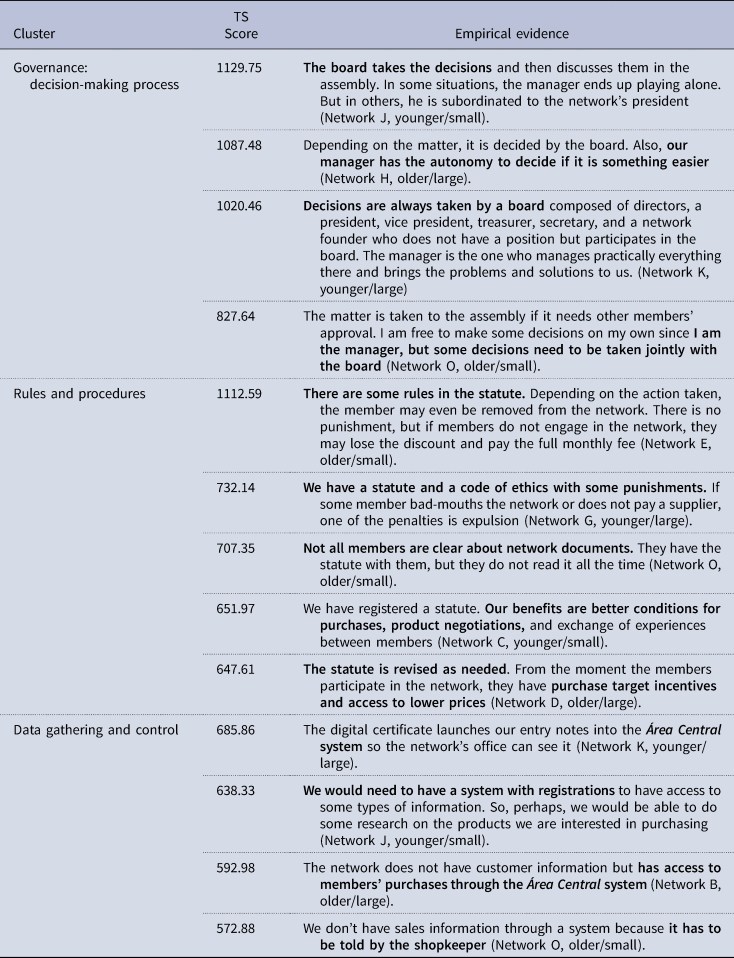
Note. Each cluster has a different TS score variation. The boldface quotes are meant to be an emphasis.
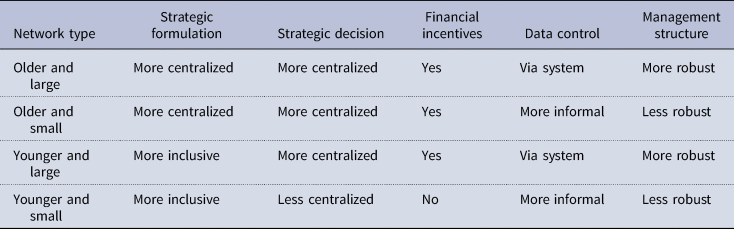
Network governance comprises specialization, centralization, incentives and sanctions, control, and formalization. Strategic decisions are centralized to gain agility in the decision-making process and are well-organized and formal in almost every scenario. Only younger and small SNs showed lower centralization in the decision-making process. Likewise, only that scenario showed a lack of financial incentives offered to members to encourage them to participate and increase their engagement with the network (Macciò & Cristofoli, Reference Macciò and Cristofoli2017). There is an incentive for small SNs only if they are also older. In this sense, larger SNs have more robust information control via the system (Albers, Reference Albers2010), while smaller SNs have less robust structures and carry out information control without a systematized process shared among all members in the cloud.
Network management
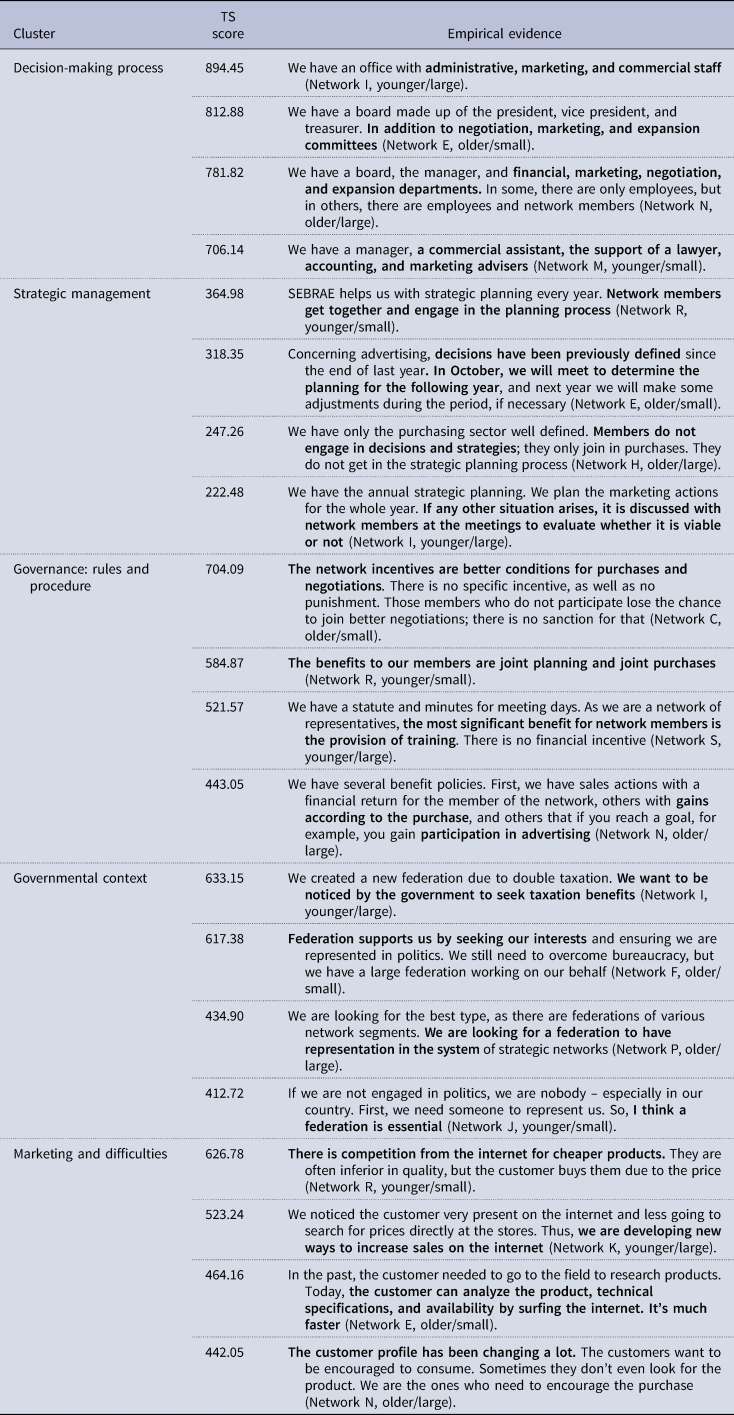
The network management dimension comprises strategy, structure, management processes, and service portfolio. The content analyzed from the ‘strategic management’ cluster (Figure 1) addresses the network's strategic guidelines. SNs have clearly defined strategies and a long-term orientation. We discovered that older SNs are centralized and do not include members in the strategic formulation process. The participation of members in older SNs is limited to voting. On the other hand, younger SNs have been more inclusive regarding this aspect and sometimes allow members to engage in the strategic formulation process. Members' participatory action is given by the increased need for network legitimacy. An SN's success depends partly on its acceptance as a legitimate organizational form (Provan & Kenis, Reference Provan and Kenis2008). Getting legitimacy occurs gradually and is not yet fully constituted in young SNs (Provan, Kenis, & Human, Reference Provan, Kenis and Human2014).
Likewise, we identified from the ‘governance: decision-making process’ cluster that almost all SNs had a specialized management structure separated into departments and a physical structure to support the tasks performed by the SNs, regardless of age and size. It is noteworthy that large SNs have presented a more robust management support structure (well-defined areas, more employees to support management, and well-defined internal departments such as marketing, sales, and purchasing). Only three SNs reported not having a standardized management structure (C, E, and R). The structure is an attribute found in different types of SNs. Even small in some cases, it guarantees that the planned actions can be developed and generate results (Vangen, Hayes, & Cornforth, Reference Vangen, Hayes and Cornforth2015; Wegner & Verschoore, Reference Wegner and Verschoore2022).
Most of the SNs reported having formalized and documented management processes. Some SNs emphasize their processes to measure performance, while others focus on job descriptions. Also, formalization of the purchasing process is very common. However, no relevant pattern was identified in terms of age or size of the SN on this matter. Our impression is that management processes are defined and formalized according to the needs observed by network managers.
The ‘rules and procedures’ cluster also addresses the services offered by the SNs when presenting the benefits to the members. Mainly, benefits were reported for access to more aggressive negotiations with suppliers, ensuring better prices and terms. Similarly, several SNs offer their members services that range from management tools to training and advantages in negotiating credit card fees and mobile phone plans. However, we did not observe a relevant pattern or distinction between the reports of SNs of different sizes and ages.
Figure 1 also shows two other clusters that emerged from the data. The cluster ‘governmental context’ focuses on problems faced by SNs in their day-to-day activities. This cluster highlights taxation, double taxation and SNs' desire to pay a single tax to the government. Several SNs reported the existence of federations that fight for their interests, seeking incentives. Size and length of existence do not seem to differentiate factors in whether the network belongs to a federation.
Finally, the ‘marketing and difficulties’ cluster shows situations faced by SNs concerning the internet, digital commerce, and offering competing products at a lower price. The SNs point to a change in customers' profiles, who remain more informed and encouraged to consume. Younger/small SNs emphasized the difficulty of competing with the much lower prices offered via e-commerce, sometimes losing sales. Table 2 shows the empirical evidence for interpretations of the SNs' management. We selected TSs according to the score value in the topic addressed, prioritizing higher value TSs.
Empirical evidence on the role of network management
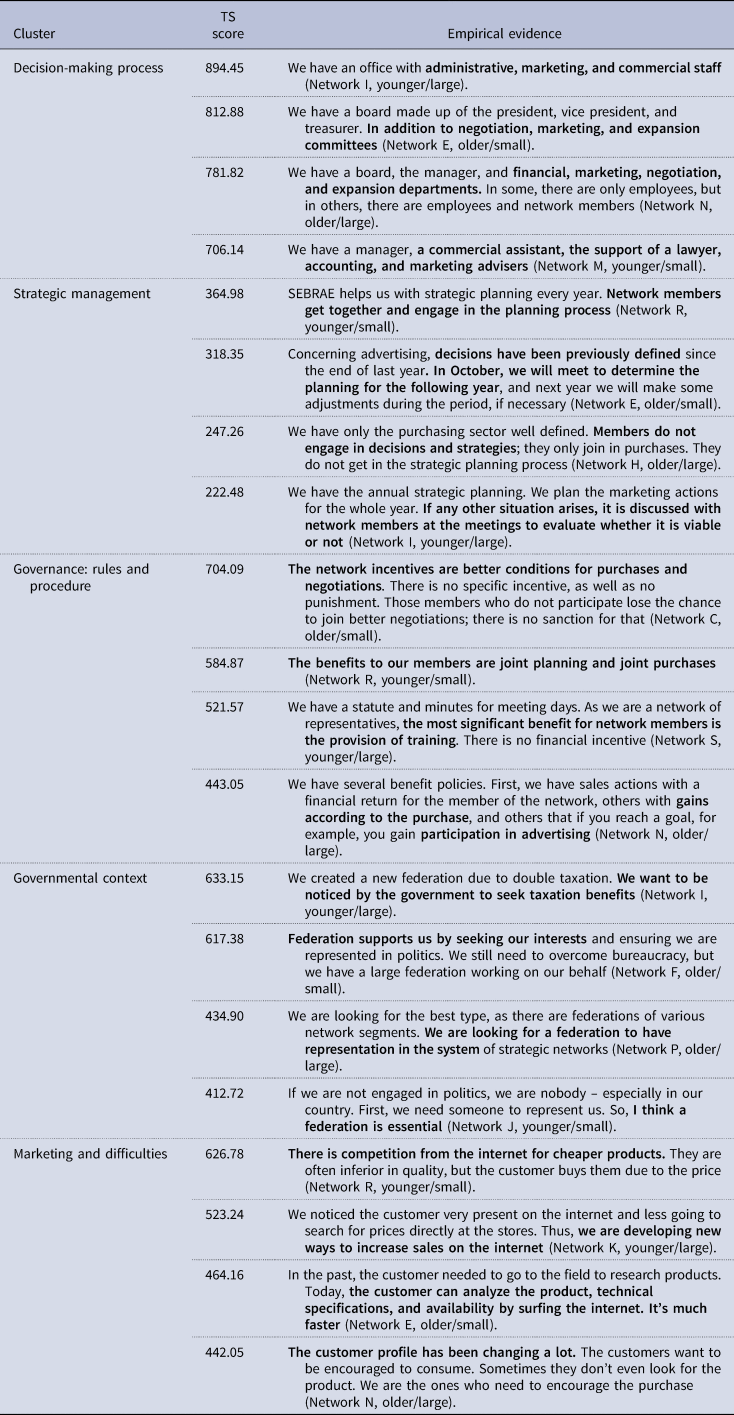
Note. Each cluster has a different TS score variation. The boldface quotes are meant to be an emphasis.
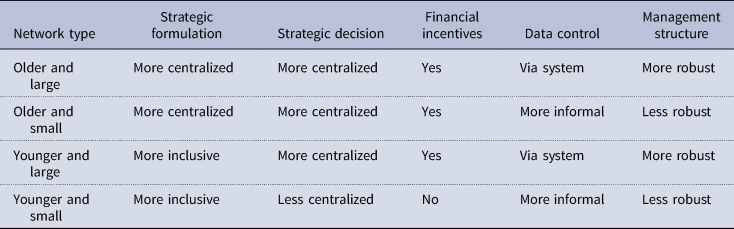
Table 3 summarizes, in four scenarios, all the results for each dimension analyzed. The governance dimension formalization and the management dimensions management processes and service portfolio have not varied according to the age and size of the investigated SNs.
The framework of strategic networks scenarios
Theoretical contributions
The literature has already addressed governance and management of alliances, partnerships, and joint ventures extensively (see Chapman et al., Reference Chapman, Cully, Kosiol, Macht, Chapman, Fitzgerald and Gertsen2020; Jeong, Reference Jeong2014, Kim & Kim, Reference Kim and Kim2017; Poole & Robertson, Reference Poole and Robertson2003; Yoon, Lee, & Song, Reference Yoon, Lee and Song2015). However, we still may contribute for other collaboration models such as SNs, which are a new form of collective organization. Our theoretical contributions are threefold.
First, we contribute to the theory of network governance (Albers, Wohlgezogen, & Zajac, Reference Albers, Wohlgezogen and Zajac2016; Macciò & Cristofoli, Reference Macciò and Cristofoli2017; Provan & Kenis, Reference Provan and Kenis2008) by showing that governance changes according to the size and age of SNs. The empirical evidence shows that SNs change their governance as they grow and age. Provan and Kenis (Reference Provan and Kenis2008) proposed four key predictors of network governance effectiveness: trust, number of participants, goal consensus, and need for network-level competencies. Our study adds a new variable to this framework by highlighting that time also plays an important role in network governance. While participation and democratic decision-making are important in small SNs to foster legitimacy and collaboration (Albers, Reference Albers2005; Reference Albers2009; Wegner & Verschoore, Reference Wegner and Verschoore2022), they are no prerequisites in larger and older SNs. One possible reason for this change is that, over time, network members develop social relations and trust (Bryson, Crosby, & Stone, Reference Bryson, Crosby and Stone2006; Klijn, Steijn, & Edelenbos, Reference Klijn, Steijn and Edelenbos2010; Zhong et al., Reference Zhong, Su, Peng and Yang2017) that facilitates relationships, reduces the risk of opportunism, and allows the SN to centralize decision-making.
Second, we contribute to the network governance theory by showing that incentives and controls play an important role in older (both small and large SNs) and younger (but large) SNs. Previous studies proposed that incentives foster collaborative behaviors and members' engagement in collective activities (Cristofoli & Markovic, Reference Cristofoli and Markovic2016; Riemer & Klein, Reference Riemer, Klein and S. A.2006). However, these studies did not provide a fain-grained comprehension of incentives in different categories of SNs. Our pieces of evidence allow us to conclude that only young/small SNs can waive the use of financial incentives as social control seems to be enough to guarantee members' engagement and commitment to collective goals (Olson, Reference Olson2009). With regards to control, our results show that small SNs – irrespective of whether they are old or young – rely on informal data control while large SNs use structured controls. The results confirm previous studies (e.g., Jones, Hesterly, and Borgatti, Reference Jones, Hesterly and Borgatti1997), which proposed that informal mechanisms can be effective in small groups by socially pressuring members to adhere to norms and procedures.
Third, our network management results show no significant differences in SNs with different sizes and ages. This finding is surprising since the literature proposes that the management of larger and older SNs is better structured than that of smaller and younger SNs (Verschoore, Wegner, & Balestrin, Reference Verschoore, Wegner and Balestrin2015; Wegner & Padula, Reference Wegner and Padula2010; Wegner, Bortolaso, & Zonatto, Reference Wegner, Bortolaso and Zonatto2016). Our results challenge this literature and show that management remains similar in the entire set of SNs. A possible explanation for this result is that the analyzed SNs are composed of small and medium-sized firms with a low management strategy, structure, and processes. This fact has been widely documented by the literature (Ahmad, Reference Ahmad2012; Chakraborty, Mutingi, & Vashishth, Reference Chakraborty, Mutingi and Vashishth2019; Crovini, Ossola, & Britzelmaier, Reference Crovini, Ossola and Britzelmaier2021; Gonda, Gorgenyi-Hegyes, Nathan, & Fekete-Farkas, Reference Gonda, Gorgenyi-Hegyes, Nathan and Fekete-Farkas2020; Johnson & Schaltegger, Reference Johnson and Schaltegger2016; Yadav, Jain, Mittal, Panwar, & Sharma, Reference Yadav, Jain, Mittal, Panwar and Sharma2019) and may reflect in the management of SNs which therefore face difficulties to improve their management practices.
Practical implications
The study also shows practical implications. First, we show that governance and management have different configurations in SNs according to their sizes and length of existence. Large SNs have a more robust management structure and an automated process control system for network management, ensuring efficiency gains and operational transparency. It means that SNs with a larger number of members invest in physical and human structures to develop their activities and benefit their members. These SNs have already implemented mechanisms to encourage their members to participate in the network's initiatives. On the other hand, strategic decision-making in these larger SNs is centralized, whereas younger SNs have a much more inclusive and participatory strategic formulation and implementation process. Small and newer SNs lack both governance and management infrastructure.
As practical advice, the results allow us to recommend that large SNs move toward more centralized strategic decisions to foster efficiency and effectiveness since it fastens decision-making and avoids long discussion. However, younger/small and younger/large SNs should opt for a more inclusive strategic formulation. Such an approach makes sense since internal legitimacy still needs to be developed, and preventing members' participation could foster conflicts and dissatisfaction. Another practical recommendation refers to the use of financial incentives. They seem necessary in older SNs where members may lack the motivation to engage in collective activities and even in younger/large SNs due to the number of members. Thus, the results contribute to managerial practice by showing that no single governance configuration can be used in all SNs since time and size play an important role in this kind of interorganizational relationship.
Limitations and directions for future research
While our study renders new insights, it also has two major limitations. First, we analyzed a set of 20 SNs with different sizes and ages while a much larger number of SNs operate in Brazil. Second, we recognize that the number of interviews was small in some of the cases we studied compared to the total number of network members. We aimed to minimize the first limitation by selecting cases from business sectors that represent 73.6% of the entire population of SNs in Brazil. Besides that, we believe that interviewing four relevant representatives of each SN allowed us to reduce bias and misperceptions. Especially the combination of president/executive and regular members helped us to get a broader perspective of network governance and management.
Our study also opens avenues for future research. First, future studies may analyze how older SNs manage to reduce the gap between strategy formulation and implementation, considering that members are quite unengaged in this process. Second, small and younger SNs have few incentives for members. Finally, new studies can also investigate what strategies aside from social control can help to increase member cohesion and engagement. Finally, we suggest confirmatory studies through surveys and statistical analysis to test the findings of our study in larger samples of SNs in different contexts.
Conclusion
This study aimed to identify whether governance and management differ in SNs with varying characteristics regarding the number of members and time in operation. We investigated 20 Brazilian SNs of different sizes and ages operating in the five business sectors with the largest number of SNs among the entire population. The results offer relevant insights regarding the governance and management of such SNs and contribute to the theory and management practices.
Supplementary material
The supplementary material for this article can be found at https://doi.org/10.1017/jmo.2022.84
Conflict of interest
None.
Caroline Cordova Bicudo da Costa holds a master's degree in business administration from the University of Brasília (Brazil). She is a PhD candidate at the Department of Business of the University of Brasília, a member of IOR&N/CNPq (Interorganizational Relationships and Networks Research Group), and an assistant professor at the Ibmec Business School. Her research interests include interpersonal/interorganizational relationships and research ethics.
Aruana Rosa Souza Luz holds a master's degree in business administration from Unisinos University (Brazil) and is a PhD candidate and researcher at the Business School of Unisinos University. She was a visiting researcher at the University Ramón Llull – La Salle. Her research interests include collaborative networks, innovation ecosystems, and network orchestration.
Douglas Wegner holds a PhD degree in business administration from the Federal University of Rio Grande do Sul (Brazil) and was visiting researcher at the University of Dortmund – Germany (2019) and University of Sevilla (2016). He is a full professor at the Business School of Fundação Dom Cabral. He has published papers in journals such as Journal of Management and Governance, Creativity and Innovation Management, Journal of Knowledge Management, International Journal of Entrepreneurial Behaviour & Research, International Review of Applied Economics, Journal of Cleaner Production, and Journal of Small Business Management. His current research interests include collaborative networks, network governance, and network orchestration.