Introduction
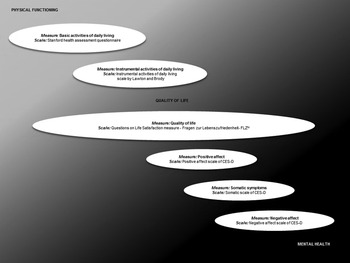
In clinical care and research, objective measures such as laboratory findings, imaging techniques or tissue diagnosis are often used to assess and predict health outcomes (David & Streiner, Reference David and Streiner2008). However, subjective reports of various domains of functioning have also been shown to be associated with health and well-being (Mossey, Reference Mossey1982; Narain et al. Reference Narain, Rubenstein, Wieland, Rosbrook, Strome, Pietruszka and Morley1988; Nakazawa et al. Reference Nakazawa, Nakamura, Kitamura and Yoshizawa2012; Smith et al. Reference Smith, Kupper, Schiffer and Denollet2012). Previous research on the subjective assessment of health was mostly conducted within the realm of psychological research focused on life satisfaction and mental aspects of health such as positive affect and lack of negative affect. Perception of physical functioning is, however, understudied. Against this background, we conceptualized subjective health as a continuum consisting of physical functioning at one end and mental health at the other (Fig. 1). Within the possible parameters of this continuum, we emphasized the various subjective measures of health in the present study. Each subjective measure of health serves as a specific combination of items or indicators, which cover a broad aspect of physical functioning and mental health. A large aspect of overall subjective physical functioning is assessed by basic activities of daily living (BADL) that directly measure locomotive health in daily functioning such as eating, bathing and grooming; and instrumental activities of daily living (IADL), which cover the cognitive attributes of performing self-reliant daily tasks such as meal preparation, shopping and managing finances (Gobbens & van Assen, Reference Gobbens and van Assen2014). Similarly, the broad aspect of mental health is evaluated by positive affect (i.e. the level of happiness), somatic symptoms (i.e. the physical manifestations of depression) and negative affect (i.e. symptoms of depressive mood). Finally, we studied quality of life (QoL) that assesses perceived general well-being of daily life and aims to bridge the physical and mental attributes of overall health (Fig. 1). Importantly, any of these indicators is affected strongly by both physical and mental aspects of health, even if the instruments directly measure only one of these specific aspects. For example, symptoms of depression are related to higher scores on scales measuring activities of daily living, although these symptoms are not directly assessed as part of this measure. Similarly, physical and functional decline is related to higher scores on the depression questionnaires (Ormel et al. Reference Ormel, Rijsdijk, Sullivan, van Sonderen and Kempen2002).
Overview of measures of subjective health and their respective scales used in the present study. The ellipses indicate the coverage of the domains by each measure ordered on an a priori conceptual basis. CES-D, Center for Epidemiologic Studies Depression Scale

Previous literature suggests that lower ratings on subjective health questionnaires are strongly associated with mortality in population studies (Schoenfeld et al. Reference Schoenfeld, Malmrose, Blazer, Gold and Seeman1994; Drubbel et al. Reference Drubbel, de Wit, Bleijenberg, Eijkemans, Schuurmans and Numans2013; Wurm & Benyamini, Reference Wurm and Benyamini2014). Therefore, measures of subjective health can be used for screening of overall health, health outcomes and mortality on a population level. In order to distinguish the associations between specific aspects of subjective health and mortality, it becomes important to determine the independent effect of different measures of subjective health on mortality that largely remains unclear in previous literature.
Our study aims to investigate the associations of six different measures of subjective health with all-cause mortality. Furthermore, we aimed to determine the independent associations of these measures of subjective health with all-cause mortality if mutually adjusted.
Method
Study population
This study was embedded in the Rotterdam Study, a prospective population-based cohort that started in 1990 among inhabitants aged ⩾55 years residing in a suburb of Rotterdam, the Netherlands (Hofman et al. Reference Hofman, Brusselle, Darwish Murad, van Duijn, Franco, Goedegebure, Ikram, Klaver, Nijsten, Peeters, Stricker, Tiemeier, Uitterlinden and Vernooij2015). The Rotterdam Study has been approved by the medical ethics committee according to the Population Study Act Rotterdam Study, executed by the Ministry of Health, Welfare and Sports of the Netherlands. Written informed consent was obtained from all participants. For the present study, the completed measurements in 6055 persons taken between 2002 and 2005 constituted the baseline. After exclusion of participants with missing interview dates (n = 5), with baseline missing data on one of the predictors (IADL, n = 169; BADL, n = 58; QoL, n = 114; negative affect, n = 9; positive affect, n = 12) and prevalent dementia (n = 150), information on each predictor was available from 5538 participants for analyses. The total number of person-years in the analysis of total all-cause mortality was 48 534 person-years (mean follow-up 12.2, s.e. = 0.09 years).
Measures and scales
Assessment of BADL
The Dutch version of the disability index from the Stanford Health Assessment Questionnaire (Fries et al. Reference Fries, Spitz and Young1982) was the only instrument used to measure BADL due to the study's policy. The disability index consists of 20 items constituting eight components: dressing and grooming, arising, eating, walking, hygiene, grip, reach and activities. Two of the three items belonging to the eating component (ability to cut meat and ability to lift a glass) were combined into one item. Each item was scored from 0 to 3, with higher scores indicating worse ability: 0 = without any difficulty; 1 = with some difficulty; 2 = with much difficulty; 3 = unable to. The component score was calculated as the value of the highest scored item available within that component. The overall BADL score was calculated by summing all component scores, thus obtaining a score between 0 and 24 (Fries et al. Reference Fries, Spitz and Young1982).
Assessment of IADL
IADL were measured using the IADL scale by Lawton & Brody (Reference Lawton and Brody1969). The IADL scale consists of eight complex tasks that require higher cognitive abilities to successfully live independently: telephone use, medication maintenance, shopping, travelling on your own, management of finances, laundry, housekeeping and meal preparation. Consistent with the disability index, we scored items from the IADL scale from 0 to 3. For telephone use, participants using an adapted phone were categorized as 2 (with much difficulty). The IADL score was subsequently calculated by summing the scores on all individual items, obtaining a score between 0 and 24.
Assessment of QoL
A short questionnaire for measuring QoL adapted from Questions on Life Satisfaction measure (in the original German: Fragen zur Lebenszufriedenheit – FLZM) was used (Herschbach, Reference Herschbach2000). This module contains eight dimensions of health (including physical condition/fitness, ability to relax, energy/vitality, mobility, vision and hearing, freedom from anxiety, freedom from aches and pains, and independence from help/care) which the subject must rate twice on a four-point scale; once for the subjective importance of the component and once for the subjective degree of satisfaction. The importance and satisfaction ratings are then combined to yield the weighted satisfaction score, which varies from −12 to +20 for each dimension (Herschbach, Reference Herschbach2000). The sum of eight individual weighted satisfaction scores represents overall QoL.
Positive affect, somatic symptoms and negative affect
We present data for positive affect, somatic symptoms and negative affect that indicate mental health. These measures are included in the Center for Epidemiologic Studies Depression Scale (CES-D). The CES-D is a validated, widely used standardized self-report instrument that broadly assesses current depressive symptoms (Radloff, Reference Radloff1977). The CES-D scale consists of 20 items, reported on a four-point scale indicating mood and feelings experienced in the past week: 0 = ‘rarely or none of the time (0–1 day)’; 1 = ‘some or a little of the time (1–2 days)’; 2 = ‘occasionally or a moderate amount of the time (3–4 days)’; and 3 = ‘most or all of the time (5–7 days)’. The CES-D has four underlying factors: interpersonal relations; positive affect; somatic symptoms; and negative affect (Radloff, Reference Radloff1977; Olson et al. Reference Olson, Presniak and MacGregor2010). We tested four scale items that relate to positive affect, which are reversed coded and summed producing a score range from 0 to 12. We also selected the somatic scale, which emphasizes the experience of physical symptoms related to depression. Seven scale items relate to somatic symptoms that are summed to produce a score range from 0 to 21. Further, we tested the negative affect scale with seven items related to depressed affect. These are summed to produce a score range from 0 to 21. Weighted scores were calculated if 25% or fewer of questions were missing.
Assessment of mortality
Municipal records were checked bimonthly for information on vital status. In addition, deaths were continuously reported through automatic linkage of general practitioner files. Research physicians reviewed all available information and coded the events according to the International Classification of Diseases, 10th edition. The follow-up was complete until 1 October 2015.
Other measures
Smoking habits were assessed during home interview asking participants whether they were currently smoking cigarettes, cigars or pipe. Information on alcohol consumption was also assessed using home interview. The attained level of education was measured and educational levels were defined by highest completed educational level and classified into three categories: low, intermediate and high. Participants were invited to visit the research centre for clinical examinations and laboratory measurements. Body mass index (BMI) was determined using weight divided by the square of height. Total cholesterol and high-density lipoprotein (HDL)-cholesterol levels were acquired by an automated enzymatic procedure. Blood pressure was measured at the research centre twice in the sitting position on the right arm with a random zero sphygmomanometer. The average of the two measurements was used in the analyses. Diabetes mellitus was defined as a fasting glucose level of ⩾7.0 mmol/l or use of blood glucose-lowering medication. Prevalent heart failure at baseline was measured using a validated score that was based on the heart failure definition of the European Society of Cardiology (Remme et al. Reference Remme and Swedberg2002). Joint problems were obtained from home interview and a physician also measured the participants for joint complaints. Radiographic assessment for the diagnosis of osteoarthritis and rheumatoid arthritis was made at the research centre. Cognitive function was tested by trained investigators with the 30-point Mini-Mental State Examination (MMSE). A history of stroke was determined by interview or proxy informant interview. Confirmation of stroke diagnosis by a treating physician was required. A previous myocardial infarction was determined using an electrocardiogram. Diagnosis of chronic obstructive pulmonary disease (COPD) was confirmed by spirometry.
Statistical analysis
All measures are converted to standard deviation scores (Z-scores) and the results are presented per Z-score that enables comparisons between effect estimates across measures. We first examined the Spearman rank-order correlations between BADL, IADL, QoL, positive affect, somatic symptoms and negative affect. Next, we conducted an exploratory factor analysis using the principal component method incorporating all six measures of subjective health in order to determine the number of factors that are needed to explain correlations among the subjective health scales. By using exploratory factor analysis, we aimed to explain the structure of correlations among all measures. This can aid the interpretation of our analyses.
We used oblimin (oblique) rotation that permits identification of variables to create indexes with inter-correlated components. Parallel analysis was used to determine the number of factors to be retained in the final model. Suitability of data for exploratory factor analysis was checked using the Kaiser–Meyer–Olkin measure of sampling adequacy. We further investigated the associations of each measure of subjective health with all-cause mortality using Cox proportional hazards models adjusting for confounders. The proportional hazard assumption was evaluated using Schoenfeld residuals (Schoenfeld, Reference Schoenfeld1982). The underlying time-scale in these models was the follow-up time in years, which was complete until 1 October 2015. Participants were censored within this follow-up period at date of death, date of loss to follow-up, or 1 October 2015, whichever date came first.
All models were adjusted for age and gender. Next, we adjusted for education level, MMSE, joint problems, prevalent stroke, prevalent myocardial infarction, prevalent diabetes mellitus, prevalent COPD, prevalent heart failure, BMI, smoking and alcohol consumption. In order to test the independent association of each measure of subjective health with mortality, we mutually adjusted for the other measures in a third model. Pseudo R 2 values were checked to look at the predictive capability of each sequential model. We also calculated the variance inflation factor to examine multicollinearity between the predictors.
To investigate whether the association between subjective health and mortality remained after the exclusion of participants with a psychiatric diagnosis, we excluded participants with major depressive disorder (n = 109) at baseline in a sensitivity analysis. A trained psychiatrist, geriatrician or psychologist conducted a semi-structured psychiatric interview in persons with depressive symptoms as defined by a CES-D score of 16 or above, which is considered indicative of a depressive disorder (Luijendijk et al. Reference Luijendijk, van den Berg, Dekker, van Tuijl, Otte, Smit, Hofman, Stricker and Tiemeier2008). This interview was performed with the Schedules for Clinical Assessment in Neuropsychiatry (SCAN) (Wing et al. Reference Wing, Babor, Brugha, Burke, Cooper, Giel, Jablenski, Regier and Sartorius1990). Major depressive disorder was classified according to the Diagnostic and Statistical Manual of Mental Disorders, 4th edition (DSM-IV) criteria, with an algorithm based on the item scores (Luijendijk et al. Reference Luijendijk, van den Berg, Dekker, van Tuijl, Otte, Smit, Hofman, Stricker and Tiemeier2008).
Missing values for the confounding variables (0.1–13.2% missing data) were imputed by multiple imputation using chained equations in which 40 completed datasets were generated and analysed by using the standard combination rules for multiple imputation. Each variable was used as a predictor in the imputation model. Each variable was modelled according to its distribution, with binary variables modelled using logistic regression and continuous variables modelled using linear regression. The data were imputed assuming that the data were missing at random. Pseudo R 2 and variance inflation factor were calculated by taking the mean for the imputed results across datasets. All analyses were performed using Stata 14 (StataCorp LLC, USA).
Ethical approval
The Rotterdam Study has been approved by the institutional review board (Medical Ethics Committee) of the Erasmus Medical Center and by the review board of The Netherlands Ministry of Health, Welfare, and Sports. The approval has been renewed every 5 years. All participants gave informed consent to participate in the study.
Results
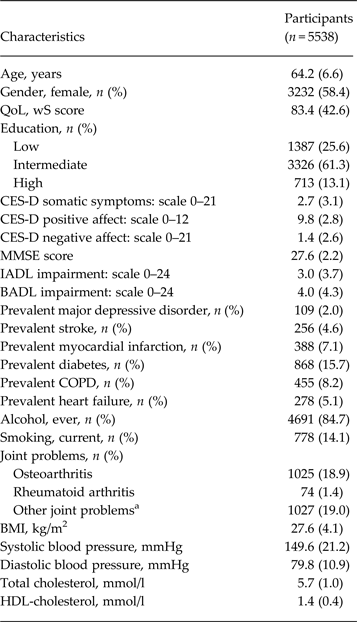
Baseline characteristics of the study population are presented in Table 1. The mean age of participants was 64.2 (s.d. = 6.6) years, 13.1% (n = 713) of the study population was highly educated and 14.1% (n = 778) were current smokers. The average BMI of the participants was 27.6 (s.d. = 4.1) kg/m2, 32.3% (n = 1790) had prevalent cardiovascular disease (including stroke, myocardial infarction, diabetes, heart failure), 8.2% (n = 455) had COPD, 38.4% (n = 2126) had joint problems, and the average MMSE score was 27.6 (s.d. = 2.2). The total number of person-years in the analysis of total mortality was 48 534 person-years (mean follow-up 12.2, s.e. = 0.09 years), during which a total of 2021 participants died.
Characteristics of the study population

Data are given as mean (standard deviation) unless otherwise indicated.
QoL, Quality of life; wS, weighted satisfaction; CES-D, Center for Epidemiologic Studies Depression scale; MMSE, Mini-Mental State Examination; IADL, Instrumental Activities of Daily Living scale; BADL, Basic Activities of Daily Living scale; COPD, chronic obstructive pulmonary disease; BMI, body mass index; HDL, high-density lipoprotein.
a Other joint problems included gout, back pain and ankylosing spondylitis.
The Spearman's correlations (correlation coefficient; ρ) between all subjective health measures are presented in online Supplementary Table S1.
The factor structure for the two-factor model is shown in online Supplementary Table S2. Only factor loadings exceeding 0.3 are shown. The eigen values of the first two factors were 3.25 and 1.23. The Keiser–Meyer–Olkin measure of sampling adequacy was 0.79, which supported the appropriateness of the factor analysis. Parallel analysis indicated that two factors could be retained in the model. The first factor accounted for 47.6% of the total variance, with the second factor accounting for 39.0% of the total variance. Factor 1 had strong loading scores for positive affect (−0.85), somatic symptoms of depression (0.80) and negative affect (0.94), and was labelled as ‘mental health’. Factor 2 had strong loading scores for BADL (0.87) and IADL (0.92). We interpreted this factor as ‘physical functioning’. QoL had cross-loadings on both factors (−0.48). Factor correlations were 0.37 for the two factors. In the association with mortality, physical functioning was significantly related to higher mortality [hazard ratio (HR) = 1.33, 95% confidence interval (CI) 1.27–1.39] while mental health was not (HR = 1.02, 95% CI 0.97–1.06) in the mutual factor adjusted model (online Supplementary Table S3), which is in line with the results of our main analysis.
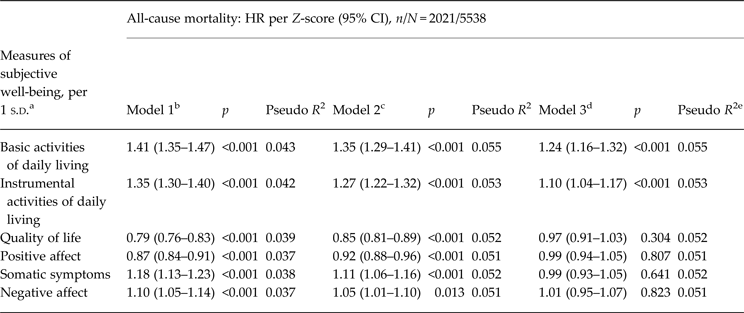
Table 2 shows the HRs of all-cause mortality for each predictor of mortality. The proportional hazards assumption was met for all associations tested. In the initial model, adjusted for age and gender, all measures of subjective health were related to mortality. After further adjustment for education status, MMSE, blood pressure, total and HDL-cholesterol, joint problems, cardiovascular factors, prevalent COPD, smoking and alcohol consumption (model 2), higher impairment in BADL (HR per s.d. = 1.35, 95% CI 1.29–1.41) and IADL (HR per s.d. = 1.27, 95% CI 1.22–1.32) and higher scores on somatic symptoms (HR per s.d. = 1.11, 95% CI 1.06–1.16) and negative affect (HR per s.d. = 1.05, 95% CI 1.01–1.10) were associated with higher all-cause mortality. Correspondingly, higher scores on QoL (HR per s.d. = 0.85, 95% CI 0.81–0.89) and positive affect (HR per s.d. = 0.92, 95% CI 0.88–0.96) were associated with lower all-cause mortality.
Relationship of subjective health measures with all-cause mortality

HR, Hazard ratio; CI, confidence interval; n/N, number of persons who died (n)/number of persons in the total population (N); s.d., standard deviation; MMSE, Mini-Mental State Examination; COPD, chronic obstructive pulmonary disease; HDL, high-density lipoprotein; BMI, body mass index.
a For basic activities of daily living, instrumental activities of daily living, somatic symptoms and negative affect, higher scores indicate greater impairment; for quality of life and positive affect, lower scores indicate greater impairment.
b Model 1: adjusted for age and gender.
c Model 2: additionally adjusted for education level, MMSE, joint problems, prevalent stroke, prevalent myocardial infarction, prevalent diabetes mellitus, prevalent COPD, prevalent heart failure, systolic blood pressure, diastolic blood pressure, total cholesterol, HDL-cholesterol, BMI, smoking and alcohol.
d Model 3: model 2 + mutual adjustment for each predictor.
e Pseudo R 2 are the same as for model 2, as they come from one mutually adjusted model.
Further mutual adjustment for each predictor showed that only BADL (HR per s.d. increase in BADL impairment, 1.24, 95% CI 1.16–1.32) and IADL (HR per s.d. increase in IADL impairment, 1.10, 95% CI 1.04–1.17) remained associated with all-cause mortality (model 3). The associations of QoL, positive affect, somatic symptoms and negative affect with mortality were strongly attenuated after mutual adjustment for each measure of subjective health. We observed only minimal improvement in the pseudo R 2 values in model 2/3. The variance inflation factor was <2.5 for all predictors in the models used, which indicates that there was no multicollinearity.
Additional analyses (after exclusion of persons with diagnosed major depressive disorder at baseline) showed that the association between negative affect and mortality were attenuated substantially (online Supplementary Table S4) in the fully adjusted model (model 2). The associations of all other subjective health measures with mortality remained virtually unchanged.
Discussion
In this large population-based cohort study of 5538 persons (aged on average 64 years), 2021 persons died during 48 534 follow-up person-years (mean follow-up 12.2 years). In this study, all six measures of subjective health were related to mortality after adjustment for age, gender, education, cognition, prevalent chronic diseases, cardiovascular risk factors, and lifestyle factors such as BMI, smoking and drinking. After mutual adjustment for each measure of subjective health was carried out to determine their independent effect on mortality, only impairment in physical functioning assessed by either self-report of BADL or IADL was related to mortality. Further, the association of negative affect with mortality was primarily explained by persons with diagnosed major depressive disorder.
The exploratory factor analysis yielded two factors that we labelled ‘physical functioning’ and ‘mental health’, which confirmed our a priori concept of clustering of the domains. Not surprisingly, some measures of subjective health assess mostly physical health, others mental health, whereas our measure of QoL covers both. However, all measures were at least moderately related. Yet the factor analyses also suggested that two distinct main dimensions could be derived. Future research should contrast these dimensions in aetiological and prognostic studies to detect risk factors (or outcomes) specific to each domain.
In the present study, we observed strong associations of BADL and IADL with mortality after controlling for educational status, cognition as assessed by MMSE, numerous prevalent diseases and several lifestyle factors. We also observed a two-fold increase in the effect size (HR) of the association of the highest v. lowest tertile of BADL with mortality (online Supplementary Table S5). Previous studies have reported higher mortality in older people with impairments in BADL and IADL (Matsubayashi et al. Reference Matsubayashi, Okumiya, Osaki, Fujisawa and Doi1999; Lee et al. Reference Lee, Chau, Hui, Chan and Woo2009). Higher impairment in BADL may decrease the ability to maintain minimal level of physical activity. The loss of independence may ultimately lead to shortened survival (Ekelund et al. Reference Ekelund, Ward, Norat, Luan, May, Weiderpass, Sharp, Overvad, Ostergaard, Tjonneland, Johnsen, Mesrine, Fournier, Fagherazzi, Trichopoulou, Lagiou, Trichopoulos, Li, Kaaks, Ferrari, Licaj, Jenab, Bergmann, Boeing, Palli, Sieri, Panico, Tumino, Vineis, Peeters, Monnikhof, Bueno-de-Mesquita, Quiros, Agudo, Sanchez, Huerta, Ardanaz, Arriola, Hedblad, Wirfalt, Sund, Johansson, Key, Travis, Khaw, Brage, Wareham and Riboli2015). Since impairments in IADL may be due to progressive cognitive decline, this loss of independence may be more pronounced in already cognitively impaired persons (van Gelder et al. Reference van Gelder, Tijhuis, Kalmijn, Giampaoli and Kromhout2007). There is evidence that neuropathological changes leading to executive and frontal lobe dysfunction are related to deterioration in performing BADL and IADL tasks (Marshall et al. Reference Marshall, Fairbanks, Tekin, Vinters and Cummings2006, Reference Marshall, Rentz, Frey, Locascio, Johnson and Sperling2011). There is also evidence that limitations in physical functioning have a profound impact on mood (Erdal & Zautra, Reference Erdal and Zautra1995). In particular depression and some somatic diseases exhibit similar symptoms (Pieper et al. Reference Pieper, Schulz, Klotsche, Eichler and Wittchen2008). In one study, the risk of depression on mortality was more pronounced by somatic symptoms of depression, rather than cognitive affective symptoms of depression (Martens et al. Reference Martens, Hoen, Mittelhaeuser, de Jonge and Denollet2010). As somatic symptoms related to depression are a component of the CES-D questionnaire, it can be difficult to assess whether persons with physical dysfunction exhibit depression or have somatic co-morbidity only. Therefore, we simultaneously tested the association of negative affect with mortality. It is well known that depressive symptoms may lead to early mortality (Cuijpers & Smit, Reference Cuijpers and Smit2002). It is also previously known that patients with major depressive disorder have a two-fold increased risk of death than their non-psychotic depressed counterparts (Vythilingam et al. Reference Vythilingam, Chen, Bremner, Mazure, Maciejewski and Nelson2003). The mechanisms include physiological changes that adversely affect endocrine, neurological and immune processes (Irwin et al. Reference Irwin, Patterson, Smith, Caldwell, Brown, Gillin and Grant1990; Benedetti et al. Reference Benedetti, Bernasconi and Pontiggia2006). Conversely, disorders that inhibit daily physical function may be responsible for the onset of depressive symptoms, depressive disorders, and ultimately mortality. In one study by Blazer & Hybels (Reference Blazer and Hybels2004), somatic symptoms and negative affect were not associated with mortality, while positive affect was the only subscale predicting mortality after controlling for potential confounders. To exemplify, in the present cohort, another study showed that positive affect was associated with survival but the associations were no longer significant once controlled for health status (Krijthe et al. Reference Krijthe, Walter, Newson, Hofman, Hunink and Tiemeier2011). Concurrently, we found that subjective QoL was related to mortality after adjustment for relevant confounding variables in model 2. QoL combines assessments of perceived physical and mental life satisfaction that contribute towards overall health into one scale. Ford et al. (Reference Ford, Hartman, Still, Wood, Mitchell, Erickson, Bailey, Smiciklas-Wright, Coffman and Jensen2014) reported higher levels of QoL to be inversely associated with mortality but survival was reported without controlling for any prevalent diseases. It follows that the association of mental health with mortality is strongly attenuated once perception of physical functioning are carefully accounted for. In this context, we may have over-adjusted our associations in the final model by controlling for other measures of subjective health tested in this study that may be inter-related. We argue that this was deliberate; it was our goal to determine the independent relation between each measure of subjective health and mortality while other measures of health are accounted for. However, if the interest lies in the understanding of the association between subjective health and mortality in general, as in most previous studies, the second model should be considered primarily.
This is the first study to determine the independent association of various measures of subjective health with mortality. In this study we showed that IADL and BADL have an independent relation with mortality after other measures of subjective health are accounted for. Previously, only few studies have showed an effect of physical functioning independent of other subjective measures (Bernard et al. Reference Bernard, Kincade, Konrad, Arcury, Rabiner, Woomert, DeFriese and Ory1997; Takata et al. Reference Takata, Ansai, Soh, Awano, Nakamichi, Akifusa, Goto, Yoshida, Fujii, Fujisawa and Sonoki2013). These findings may have clinical implications on risk factor reduction for debilitating diseases that hamper physical functioning.
We further investigated the differential effect of chronic disease in the associations between the subjective measures of health and mortality by formally testing the interaction. We found that prevalent chronic diseases modified only the effect of BADL on mortality (P interaction = 0.035). Additional analyses conducted in the sample stratified by disease status showed that in those without chronic disease, the association between BADL scores and mortality was much stronger (online Supplementary Table S6). This suggests that assessing impairment in a chronically diseased population adds less information to a model estimating the mortality risk.
Older individuals living in the community, who have impairments in daily living tasks, are more vulnerable to health and safety risks within their environment (Naik et al. Reference Naik, Kunik, Cassidy, Nair and Coverdale2010). Thus, these older individuals may be at a higher risk of neglect, mistreatment, exploitation, co-morbidity and decreased survival (Lachs et al. Reference Lachs, Williams, O'Brien, Pillemer and Charlson1998; Pavlik et al. Reference Pavlik, Hyman, Festa and Bitondo Dyer2001). Furthermore, ageing may accelerate the inability to compensate functional loss referred to as frailty. A previous study imbedded within the Rotterdam Study found an increased risk of death in frail persons compared with non-frail elderly persons (Lahousse et al. Reference Lahousse, Maes, Ziere, Loth, Verlinden, Zillikens, Uitterlinden, Rivadeneira, Tiemeier, Franco, Ikram, Hofman, Brusselle and Stricker2014).
The strengths of our study include a large sample size and a population-based longitudinal approach. Most importantly, several instruments were tested. This enabled us to investigate the specific associations of positive affect, somatic symptoms and negative affect with mortality above that of other measures of subjective health. Nearly all participants included in our study had a complete follow-up; there was less than 1% loss of person-years. Nevertheless, most people are tracked via general practitioner records, community and mortality registers. Only a small group of those moving out of the community could not be followed further. This group comprised of somewhat healthier persons and thus we cannot rule out bias, but given the numbers it is unlikely to affect the results. Another potential limitation of the current study was the absence of evaluation of nutritional state of participants. Malnutrition in older adults has been linked to mortality, especially the oldest-old with disabilities who are hindered in regular functioning of preparing their own meals and are dependent on others for their nutritional provisions (Romagnoni et al. Reference Romagnoni, Zuliani, Bollini, Leoci, Soattin, Dotto, Rizzotti, Valerio, Lotto and Fellin1999; Gentile et al. Reference Gentile, Lacroix, Durand, Cretel, Alazia, Sambuc and Bonin-Guillaume2013). We used BMI as a proxy for nutritional status in order to account for malnutrition as previously undertaken in other studies (Winter et al. Reference Winter, Macinnis, Wattanapenpaiboon and Nowson2014). Other important variables, not included in our study, could perhaps explain part of the relationship of subjective health with mortality. Even though we adjusted for the presence of co-morbid diseases, we did not have information on the severity of the disease. Further, all variables indicating health-related risks were collected at baseline, which did not allow us to test whether change of these risk factors during the long follow-up of this study explained the association between subjective health and mortality. Additionally, incident co-morbidities occurring in the time period between baseline and death were not assessed and could lead to underestimation of our results.
Conclusions
In conclusion, the level of BADL and instrumental aspects of physical functioning is a prominent independent predictor of mortality in older individuals. Our study suggests that this aspect largely explains the association of subjective health and mortality. These findings may have clinical implications for risk factor reduction in debilitating diseases that impede physical functioning. QoL, positive affect, somatic symptoms and negative affect did not predict mortality once self-rated physical functioning is accounted for and may be less optimal screening goals. Therefore, interventions aiming at improving survival could focus on subjective indicators of physical well-being, namely BADL and IADL.
Supplementary material
The supplementary material for this article can be found at https://doi.org/10.1017/S0033291717000381
Acknowledgements
We gratefully acknowledge the contribution of participants, staff, general practitioners and pharmacists in the Rotterdam Study. The Rotterdam Study is supported by the Erasmus Medical Center and Erasmus University Rotterdam, the Netherlands Organization for Scientific Research (NWO), the Netherlands Organization for Health Research and Development (ZonMW), the Research Institute for Diseases in the Elderly (RIDE), the Netherlands Genomics Initiative, the Ministry of Education, Culture and Science, the Ministry of Health, Welfare and Sports, the European Commission (DG XII) and the Municipality of Rotterdam. R.L.F.-P. is supported by a National Health and Medical Research Council (NHMRC) Early Career Fellowship (1053666). H.T. is supported by a ZonMw VIDI grant (2009-017.106.370).
Declaration of Interest
None.