INTRODUCTION
The level of intracellular glutathione (GSH) can have a major impact on a number of macrophage cellular responses. For example, it can influence a macrophage's ability to protect against oxidative stress, it can control gene transcription (Haddad, 2002, Haddad, Saade and Sfieh-Garabedian, 2002), it can influence cytokine and nitrite production, and the type of T helper (Th) responses they promote in vivo (Murata et al. 2002). Buthionine sulfoximine (BSO) is a specific irreversible inhibitor of gamma glutamyl cysteine synthetase, the enzyme which catalyses the rate-limiting step in GSH synthesis (Bailey, 1998). We have shown that combined treatment with a non-ionic surfactant vesicular (NIV) formulation of BSO and sodium stibogluconate (SSG) is more effective than treatment with SSG alone in an in vivo murine model of visceral leishmaniasis (VL, Carter et al. 2003), indicating that GSH can influence the therapeutic efficacy of SSG. This is not unexpected since previous workers have shown that thiols are important in resistance to heavy metal drugs (Grondin et al. 1997; Legare et al. 1997; Haimeur and Ouellette, 1998) and various mechanisms have been proposed to explain their role. GSH alone, or the parasite-specific thiol trypanothione alone (TSH, Wyllie, Cunningham and Fairlamb, 2004), or a complex of the two, may directly conjugate to heavy metals such as antimony before they are exported from the host/parasite cell (Haimeur and Ouellette, 1998) so that the level of GSH or TSH (Leishmania) would therefore impact on drug efflux from the host and/or parasite cell. However, GSH could also act indirectly by influencing the host's immune response. Intracellular GSH levels can control cytokine and nitrite profiles of stimulated macrophages and therefore influence the in vivo balance of Th1/Th2 responses (Murata et al. 2002). The outcome of antimonial drug treatment in VL is dependent on the host having a fully competent immune response and both Th1 and Th2 parasite-specific immune responses are required for antimonial therapy to be fully effective (Murray and Delph-Etienne, 2000).
Therefore in this study the role of host immune responses in controlling the susceptibility of SSG-R and SSG-S strains of L. donovani to BSO-NIV/SSG treatment was determined. In addition, the susceptibility of SSG-S and SSG-R strains to potassium antimony tartrate (trivalent antimony, SbIII) was also determined in vitro and in vivo to ascertain whether it correlated to susceptibility to SSG (pentavalent antimony, SbV).
MATERIALS AND METHODS
Materials
SSG was provided by Glaxo-Wellcome (31·7% Sbv w/w). Potassium antimony tartrate hydrate (PAT, 37·47% SbIII w/w) was obtained from Sigma-Aldrich (Poole, UK). The non-ionic surfactant tetraethylene glycol mono-n-hexadecylether was purchased from Chesham Chemicals Ltd, UK. L-buthionine sulfoximine-[S, R]-sulfoximine (BSO) was obtained from Sigma-Aldrich (Poole, UK) and used within 6 months of purchase. Capture and detection anti-cytokine antibodies, IL4, IL6, IFN γ and IL12 standards and alkaline phosphatase conjugate were obtained from PharMingen and supplied by Insight Biotechnology (Wembley, UK). All other reagents were of analytical grade.
Animals and parasites
Age and sex matched BALB/c mice (20–25 g, in-house male or female) bred at University of Strathclyde were used in this study. In addition respiratory-burst deficient gp91phox−/− (X-linked granulomatous disease [X-CGD]) male mice with a targeted disruption of the gp91phox subunit of the NADPH-oxidase complex [phox, Cornell University, USA, (Murray and Nathan, 1999) provided by Cornell University and normal C57BL/6 mice (Jackson Laboratories, USA) were used in this study. Commercially obtained Golden Syrian hamsters (Mesocricetus auratus) were used for maintenance of L. donovani strains (Harlan Olac, Bicester, UK; Harlan, Indianapolis, USA). L. donovani strains 200011 (SSG resistant, SSG-R1), 200015 (SSG resistant, SSG-R2) and 200016 (SSG susceptible, SSG-S), which were clinically derived from patients in India and collected under the regulations of Bihar University Ethical Committee (Carter et al. 2001) were used in studies performed at the University of Strathclyde. L. donovani strain 1S (SSG-S1, Murray and Nathan, 1999, was used in studies carried out at Weill Medical College. Mice were infected by intravenous injection (tail vein, no anaesthetic) with 1–2×10⁷ L. donovani amastigotes (Carter et al. 1988). The day of parasite administration to the mice was designated day 0 of the experiment. Animal experiments were carried out in accordance with UK Home Office regulations or Weill College IACUC regulations.
Vesicle formulations
Vesicle constituents (600 μmol), consisting of 3[ratio ]3[ratio ]1 molar ratio of mono-n-hexadecyl ether tetraethylene glycol, cholesterol and dicetyl phosphate were melted by heating at 130 °C for 5 min. The molten mixture was cooled to 70 °C, and hydrated with 5 ml of pre-heated (70 °C) aqueous BSO (1·54 mg/ml, to form BSO non-ionic surfactant vesicles, BSO-NIV) or aqueous potassium antimony tartrate hydrate (PAT, 5 mg/ml) to form PAT non-ionic surfactant vesicles (PAT-NIV). Vesicular formulations were homogenized at 8000±100 rpm for 15 min at 70 °C, using a Silverson mixer, Model L4R SU (Silverson Machines, UK), fitted with a 5/8″ tubular work head. Vesicle suspensions were stored at room temperature until used, usually on the day of manufacture.
In vitro studies
Macrophage isolates from bone marrow
Bone marrow was harvested from the femur of individual mice by washing with 10 ml of medium (Dulbecco's medium supplemented with 20% (v/v) heat-inactivated foetal calf serum, 30% (v/v) L-cell supernatant, 100 μg/ml penicillin/streptomycin and L-glutamine). The resulting cell suspension was incubated in a Petri dish for 7–10 days at 37 °C in an atmosphere of 5% CO2. Cells were harvested from the plates, pooled, pelleted by centrifugation and resuspended in complete medium (RPMI 1640 supplemented with 10% (v/v) foetal calf serum and 100 μg/ml penicillin/streptomycin and L-glutamine) and the number of live cells determined by Trypan Blue exclusion. Then 1–2×10⁵ cells in 0·3 ml were added to individual wells of a 24-well tissue culture plate, which contained a 13 mm diameter circular glass cover-slip. Plates were incubated at 37 °C in an atmosphere of 5% CO2 for at least 1 h to allow macrophage adherence.
Infection of cells
The medium was removed from each well and replenished with 0·25 ml of fresh complete medium (uninfected controls) or 0·25 ml of fresh complete medium containing L. donovani promastigotes, obtained by in vitro culture of spleen samples from infected hamsters. Parasites were used at a 1[ratio ]1–1[ratio ]10 parasite[ratio ]host cell ratio and were at least 7 days old. The cells were incubated as before for 1–3 h, the well contents were aspirated to remove any unattached parasites and 0·5 ml of complete medium (controls) or complete medium containing BSO (50–500 μM), SSG (140 μgSbv/ml), BSO and SSG (500 μM BSO, 140 μgSbv/ml), hydrogen peroxide (1·56–25 μM) or PAT (0·75–3·75 μgSbIII/ml) was then added to the appropriate wells of the plate (n=4/treatment) and the cells were incubated for a further 72 or 96 h. In other experiments cells were treated with 0·5 ml of complete medium alone (unstimulated controls), or complete medium containing BSO only (50–500 μM), IFN γ/LPS (0·01–100 U IFN γ/ml, 0·01–100 ng/ml LPS) or BSO and IFN γ/LPS (50–500 μM BSO, 0·01–100 U IFN γ/ml, 0·01–100 ng/ml LPS) was then added to the appropriate wells of the plate (n=4/treatment). The contents of each well were then transferred to individual Eppendorf tubes. The Eppendorf tubes were stored at −20 °C until nitrite or cytokine levels could be determined. The wells of infected 24-well plates were washed with PBS and then 0·2 ml of methanol was added to fix the cells. After 2–3 min at room temperature the methanol was removed and 0·5 ml of aqueous 10% (v/v) Giemsa was added. After 20 min incubation at room temperature the Giemsa was removed and the wells washed with water. The cover-slips from individual wells were removed, air dried, and mounted on to glass slides. The percentage of cells infected from 200 randomly selected cells, and the mean number of parasites/host cell from 20 randomly selected cells, were then determined microscopically on each cover-slip.
In vivo efficacy of drug formulations
Groups of infected mice (n=4 or 5/treatment) were treated intravenously on day 7 with one of the following: PBS (controls), free SSG (equivalent to a final dose of 70–300 mg Sbv/kg); free PAT (equivalent to a final dose of 16·64 or 33·2 mg SbIII/kg); PAT-NIV (equivalent to a final dose of 16·64 mg SbIII/kg); BSO-NIV mixed 1[ratio ]1 v/v with SSG solution (equivalent to a final dose of 70 mg Sbv/kg and BSO 13·7mg/kg, BSO-NIV/SSG treatment) or distilled water (equivalent to a final dose of BSO 13·7 mg/kg, BSO-NIV treatment. Parasite burdens were determined on day 7 post-treatment. PAT was used at a maximum dose of 33 mgSbIII/kg, well below its reported LD50 of 45 mgSbIII/kg after intravenous injection (TTECS, 2003) so that animals were not exposed to potentially toxic doses. In some experiments, uninfected mice, age and sex-matched with infected animals, were similarly treated with BSO-NIV/SSG and sacrificed on day 7 post-treatment. In studies using X-CGD mice a lower final dose of BSO-NIV/SSG was used since the animals were heavier. X-CGD mice and their C57BL/6 counterparts, were treated on day 7 post-infection with PBS (controls) or BSO-NIV mixed 1[ratio ]1 v/v with SSG just prior to dosing (equivalent to a final dose of 56 mg Sbv/kg and BSO 11 mg/kg). Parasite burdens were determined on day 7 post-treatment.
Specific antibody response of infected mice
ELISA assays were carried out to determine the end-point titres of parasite specific IgG1 and IgG2a using methods described by Banduwardene et al. (1997), using horseradish peroxidase anti-mouse IgG1 and IgG2a conjugates (1/1000 dilution, Binding Site, UK).
Flow cytometry
The percentage of CD3+, CD45R/B220+ and F4/80+ cells present in the spleen of control and treated mice were determined by flow cytometry. Briefly, single-cell suspensions were prepared from the spleens of uninfected and infected mice in medium (RPMI 1640 supplemented with 100 μg/ml penicillin/streptomycin and L-glutamine, Gibco BRL, UK). The cell suspensions were centrifuged at 1000 g at 4 °C for 5 min and the resulting cell pellets resuspended in 3 ml of erythrocyte lysing solution (0·007 M ammonium chloride, 8·5 mM Tris, pH 7·2) and incubated at 37 °C for 5 min. Cells were washed 3 times in PBS/1% FCS and then 1×10⁶ spleen cells were stained with 0·1–1 μg of the appropriate anti-mouse antibody/200 μl PBS/1% FCS (FITC-labelled anti-CD3, FITC-labelled anti-CD45R/B220 or FITC or PE-labelled IgG isotype controls, BD Biosciences, UK, PE-labelled F4/80, Caltag Medsystems, UK) for 30–60 min at 4 °C. Cells were washed 3 times in PBS/1% FCS then resuspended in 200 μl of 0·1% formalin before collecting data on a FACS Canto™ (BD systems). Colour compensation was set up using BD™ Compbeads and the antibodies used to stain cells. Cells were gated on forward and side scatter and the FACsDiva™ software used to analyse results.
In vitro proliferation assays
Lymphocyte proliferation assays were carried out using the methods described by Banduwardene et al. (1997). Spleen cells were incubated with medium alone (unstimulated controls), L. donovani soluble antigen (12·5 μg/ml) or Concanavalin A (5 μg/ml, stimulated controls) for 96 h at 37 °C in an atmosphere of 95% air/5% CO2.
Nitrite determination
Fifty μl of the test sample (cell supernatant or nitrite standard using doubling dilutions starting at 100 μM) was added to a well of a 96-well ELISA plate and 50 μl of Greiss reagent (1[ratio ]1 v/v mixture of 2% (w/v) sulphanilamide in 5% (v/v) orthophosphoric acid: 0·2% (w/v) naphthylene diamide hydrogen chloride) added. The plate was incubated for 5 min and the absorbance of the samples then read at 540 nm. Nitrite levels for the samples were determined from the standard curve obtained. The correlation coefficient for a linear fit for the standard data was >0·97.
Cytokine determination
ELISA assays were carried out to determine cytokine levels in cell supernatants using methods described by Banduwardene et al. (1997). Cytokine levels present in the samples were determined from the standard curve obtained. The correlation coefficient for a linear fit for the standard data was >0·97.
Presentation and statistical analysis of data
Parasite data from in vivo experiments were analysed using a one-way ANOVA (using log10 transformed parasite burden for the spleen and liver data). Differences between treatments were then analysed using a Fisher's PLSD test using the Statview® version 5.0.1 software package. Cytokine, flow cytometry and nitrite data were analysed using the non-parametric Mann Whitney U-test.
RESULTS
Combined BSO-NIV and SSG (BSO-NIV/SSG) treatment does not preferentially induce a Th1 or Th2 response but is associated with induction of nitrite and IL6
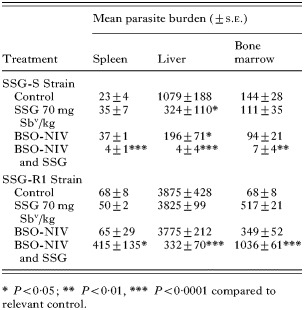
Consistent with previous published data single dose treatment with 70 mg Sbv/kg SSG resulted in a significant reduction in liver parasite burdens in mice infected with the SSG-S strain but had no suppressive effect on liver parasite burdens in mice infected with the SSG-R1 strain (Table 1). In addition, treatment with BSO-NIV significantly reduced liver parasite burdens in mice infected with the SSG-S strain (P<0·05), but had no significant effect on liver parasite burdens of mice infected with the SSG-R strain. BSO-NIV/SSG treatment resulted in significant suppression of liver parasite burdens for both L. donovani strains (P<0·001, Table 1). BSO-NIV/SSG treatment also resulted in significant reductions of splenic and bone marrow parasite burdens (P<0·001) in mice infected with SSG-S strain whereas similar treatment of mice infected with the SSG-R1 strain resulted in a significant increase in parasite burdens compared with control values (Table 1).
Table 1. The effect of different treatments on the parasite burdens of mice infected with an SSG-S or SSG-R1 Leishmania donovani strain (Mice (4/group), infected with L. donovani strain SSG-S or SSG-R1, were treated intravenously on day 7 post-infection with PBS (controls), free SSG (70 mgSbv/kg), BSO-NIV (BSO 13·7 mg/kg), or BSO-NIV and SSG (final dose BSO 13·7 mg/kg; SSG 70 mg Sbv/kg; 2× formulations were mixed 1[ratio ]1 immediately prior to dosing). Parasite burdens were determined on day 14 post-infection.)

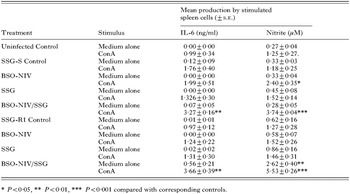
Cytokine and nitrite levels in the supernatants of unstimulated and ConA stimulated spleen cells from the different groups of mice were assessed to determine whether differences in antiparasitic efficacy were related to alterations in cytokine and/or nitrite production. Background and ConA stimulated production of IFN γ, IL4, IL10 or IL12 by spleen cells from mice infected with either strain and treated with PBS (controls), BSO-NIV, SSG or BSO-NIV/SSG were similar (data not shown). However, treatment with BSO-NIV/SSG was consistently associated with a significant strain-independent up-regulation in IL6 (P<0·05, Table 2) and nitrite production by stimulated cells (P<0·01, Table 2), indicating that this treatment enhanced inflammatory responses in these mice. This would be consistent with the significant increase in splenic weights for BSO-NIV/SSG treated mice compared to controls (mean weight, g±S.E., SSG-S: control 0·17±0·01; BSO-NIV/SSG 0·33±0·01; SSG-R: control 0·20±0·01, BSO-NIV/SSG 0·61±0·06). Spleen weights for SSG treated and BSO-NIV treated animals were similar to control values (data not shown). The only consistent strain-dependent effect caused by BSO-NIV/SSG treatment was the presence of higher levels of nitrite in the supernatants of unstimulated cells from mice infected with the SSG-R1 strain (P<0·05, Table 2). Antibody levels did not indicate that any treatment was associated with a preferential Th1 or Th2 response since similar levels of parasite specific IgG1 and IgG2a were present in the serum of control and treated mice on day 14 post-infection (data not shown).
Table 2. Comparison of IL-6 and nitrite production by spleen cells obtained from mice infected with SSG-S or SSG-R1 strain of Leishmania donovani (IL6 (ng/ml+S.E.) and nitrite (μM+S.E.) levels present in the supernatants of spleen cells obtained on day 14 from L. donovani infected mice (strain SSG-R1 or SSG-S) mice treated with PBS (controls), SSG only (70 mgSbv/kg), BSO-NIV alone (BSO 13·7 mg/kg) or BSO-NIV and SSG (final dose BSO 13·7 mg/kg; SSG 70 mg Sbv/kg; 2×formulations were mixed 1[ratio ]1 immediately prior to dosing). The cells were incubated with medium alone (unstimulated cells) or Concanavalin A (5 μg/ml, stimulated cells) for 96 h. The results shown are from 1 of 3 separate experiments.)

BSO-NIV/SSG treatment is associated with an increase in splenic F4/80+ cells but not CD3+ or CD45R/B220+ cells
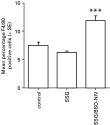
Analysis of the cell populations present in the spleens of control, BSO-NIV treated, SSG-treated or BSO-NIV/SSG treated animals infected with L. donovani showed that none of the treatments had any significant effect on the percentage of splenic CD3+ or CD45R/B220+ cells present (data not shown). BSO-NIV treatment had no significant effect on the percentage of splenic F4/80+ cells present compared to control values for mice infected with either strain of L. donovani (data not shown). In contrast, BSO-NIV/SSG treatment caused a significant increase in the percentage of F4/80+ cells present compared with controls (P<0·001, Fig. 1). This effect was strain independent, and L. donovani infection-independent, since similar results were obtained in uninfected mice and L donovani infected mice (data not shown).

Fig. 1. The effect of different treatments on the percentage of F4/80+ cells present in the spleen of Leishmania donovani (strain SSG-R1). Spleen cells (5×10⁵/sample) from control, SSG (70 mgSbv/kg) or SSG/BSO-NIV (SSG, 70 mgSbv/kg; BSO 13·7 mg/kg) treated mice (n=4) were stained with 0·5 μg of PE labelled anti-mouse F4/80 antibody. The percentage of positive cells was determined using a FACSCanto™ and FACsDiva™ software. Compared to control data, ***P<0·001. The results are representative of 4 separate experiments.
The efficacy of BSO-NIV/SSG treatment is dependent on the ability of mice to mount a respiratory burst
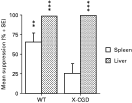
The above results indicate that activity of BSO-NIV/SSG treatment against L. donovani is related to its ability to induce an enhanced inflammatory response and influx of F4/80+ cells into the spleen. Therefore the activity of BSO-NIV/SSG was compared in X-CGD mice, which are unable to mount a respiratory burst and have impaired influx of mononuclear cells into the liver during L. donovani infection, and their normal counterparts. BSO-NIV/SSG treatment had no significant effect on splenic parasite burdens of infected X-CGD mice compared to its control nor did it result in a significant increase in splenic weight. In contrast, similar treatment of their normal counterparts with BSO-NIV/SSG resulted in a significant reduction in L. donovani spleen parasite numbers (P<0·01, Fig. 2) and was associated with a significant increase in spleen weight (P<0·02) compared to its corresponding control (data not shown). BSO-NIV/SSG treatment caused a similar reduction in liver parasite burdens in both types of mice (P<0·001, Fig. 2).

Fig. 2. The effect of BSO-NIV/SSG treatment on the parasite burdens of X-CGD or normal mice infected with Leishmania donovani. Mice (n=5), normal C57BL/6 or X-CGD, were infected with the 1S strain of L. donovani and treated on day 7 post-infection with PBS (controls) or BSO-NIV mixed 1[ratio ]1 with SSG immediately prior to injection (SSG, 56 mgSbv/g; BSO 11 mg/kg). On day 14 post-infection mice were sacrificed and the percentage reduction in splenic and liver parasite burdens in BSO-NIV/SSG treated mice compared to corresponding control values determined. Compared to the relevant control data, **P<0·01, *** P<0·001.
SSG resistance is related to the ability to withstand exposure to BSO, activated macrophages, hydrogen peroxide and potassium antimony tartrate
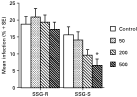
Treatment with the highest BSO dose (500 μM) resulted in a significant reduction in parasite numbers in macrophages infected with the SSG-S strain of L. donovani (P<0·05) but had no effect on the survival of the SSG-R1 strain (Fig. 3). BSO treatment was not associated with the induction of nitric oxide since similar levels of nitrite were present in the supernatants of control and BSO treated cells (data not shown).

Fig. 3. The effect of BSO treatment on the intracellular survival of Leishmania donovani (strain SSG-S or SSG-R1). Cells (1×10⁵/well) were infected with L. donovani promastigotes at a 1[ratio ]10 ratio for 24 h and then treated with medium alone (controls) or different concentrations of BSO (50–500 μM) for 72 h. The percentage of cells infected+S.E. is shown. *P<0·05 compared to corresponding controls. Results are representative of 4 separate experiments.
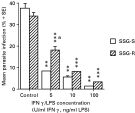
IFN γ/LPS treatment of infected macrophages had a dose-dependent suppressive effect on L. donovani parasite burdens in infected macrophages (Fig. 4). High dose treatment (100 U IFN γ/ml: 100 ng/ml LPS) resulted in a similar reduction in parasite numbers for both strains (>97% suppression compared to relevant controls). However, at lower levels of stimulation (<10 U IFN γ/ml: 10 ng/ml LPS) the SSG-R1 strain was significantly more resistant to the macrophage's antileishmanial killing mechanisms (P<0·01, Fig. 4). IFN γ/LPS treatment of infected macrophages was associated with significant IL6, IL12 and nitrite production compared to unstimulated controls at all doses used (P<0·001, data not shown). There was no inter-strain difference in the levels of IL6, IL12 or nitrite produced by infected cells treated with 100 U IFN γ/100 ng/ml LPS (data not shown). Similarly, there was no consistent inter-strain difference in the amount of IL6, IL12 or nitrite produced by cells stimulated with lower doses of IFN γ/LPS (5U/ml IFN γ[ratio ]5 ng/ml LPS or 10 U/ml IFN γ[ratio ]10 ng/ml LPS, data not shown).

Fig. 4. The effect of stimulation with IFN γ and LPS on parasite burdens of cells infected with a SSG-S or SSG-R strain of Leishmania donovani. Cells (1×10⁵/well) were infected with L. donovani SSG-S or SSG-R1 promastigotes at a 1[ratio ]10 ratio for 24 h and then treated with medium alone (controls) or different concentrations of IFN γ/LPS (IFN 5: 5U/ml IFN γ: 5 ng/ml LPS; IFN 10: 10 U/ml IFN γ[ratio ]10 ng/ml LPS). After 72 h the percentage of cells infected for each treatment was determined. Infection with either strain resulted in similar control parasite burdens. **P<0·01; ***P<0·001 compared to corresponding control value for the relevant strain, aP<0·01 comparing results for the same treatment for the two strains.
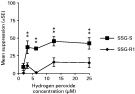
Exposure to hydrogen peroxide at doses above 3 μM resulted in a significant parasite killing in macrophages infected with the SSG-S strain of L. donovani (P<0·01) compared to controls. In contrast, similar treatment with hydrogen peroxide had no significant suppressive effect on the infection level of cells infected with the SSG-R strain of L. donovani (Fig. 5).

Fig. 5. The effect of hydrogen peroxide treatment on the intracellular survival of Leishmania donovani (strain SSG-S or SSG-R1). Cells (1×10⁵/well) were infected with L. donovani promastigotes at a 1[ratio ]10 ratio for 24 h and then treated with medium alone (controls) or different concentrations of hydrogen peroxide (1·56–25 μM) for 72 h. The percentage of cells infected+S.E. is shown. **P<0·01 compared to corresponding controls. Results are representative of 4 separate experiments.
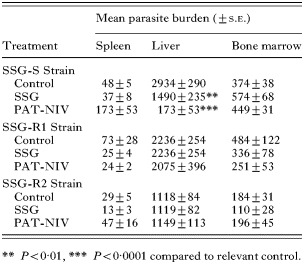
Single-dose intravenous treatment with PAT solution at the highest dose of 33 mgSbIII/kg had no significant effect on liver, spleen or bone marrow parasite burdens of mice infected with any of L. donovani strains compared to relevant controls (data not shown). We have previously shown that using a vesicular formulation can improve the efficacy of a number of drugs. Therefore the effect of treating mice with a vesicular formulation of PAT was determined. Treatment with PAT-NIV caused a significant reduction in liver (P<0·0001, Table 3) but not splenic or bone marrow parasite burdens of mice infected with the SSG-S strain compared to controls. In contrast, similar treatment of mice infected with SSG-R strains of L. donovani had no significant effect on parasite burdens in any of the sites surveyed (Table 3). The susceptibility to PAT-NIV treatment mirrored the in vivo susceptibility to SSG since treatment with SSG only caused a significant reduction in liver parasite burdens of mice infected with the SSG-S strain (P<0·01, Table 3).
Table 3. Effect of different treatments on the parasite burdens of mice infected with different strains of Leishmania donovani (Mice infected with L. donovani strain SSG-S, SSG-R1, or SSG-R2 were treated intravenously on day 7 post-infection with PBS (controls), free SSG (70 mgSbv/kg) or PAT-NIV (17 mgSbIII/kg). Parasite burdens were determined on day 14 post-infection. The results are representative of 3 separate experiments.)

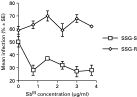
In vitro studies reflected in vivo studies in that a SSG-S strain was more susceptible to PAT treatment than a SSG-R strain of L. donovani (Fig. 6). All doses of PAT caused a significant reduction in the percentage of cells infected with the SSG-S strain (P<0·01, Fig. 6) whereas none of the PAT treatments had any significant effect on the percentage of cells infected compared to controls for cells infected with the SSG-R strain.

Fig. 6. The effect of PAT treatment on parasite burdens of cells infected with a SSG-S or SSG-R1 strain of Leishmania donovani. Cells (1×10⁵/well) were infected with L. donovani SSG-S or SSG-R1 promastigotes at a 1[ratio ]10 ratio for 24 h and then treated with medium alone (controls) or different concentrations of PAT (0·75–3·75 μgSbIII/ml). After 72 h the mean percentage of cells infected+S.E. for each treatment was determined.
Antimony resistance is associated with higher parasite virulence
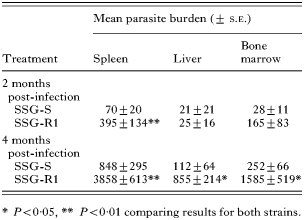
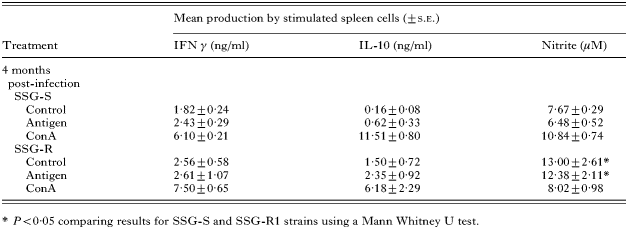
In previous studies parasite burdens were determined early post-infection, usually on day 14, which may have been too early for the oxidative stress responses associated with L. donovani infection to develop. Therefore parasite burdens of mice infected with a SSG-S or a SSG-R strain of L. donovani were compared up to 4 months post-infection. Delaying assessment of parasite burdens until 4 months post-infection showed that infection with the SSG-R strain was associated with higher parasite burdens compared to those of mice infected with the SSG-S strain (Table 4; P<0·01, spleen, liver and bone marrow). Spleen cells taken from mice infected with either L. donovani strain at 4 months post-infection did not respond to stimulation with specific antigen since levels of IFN γ, IL10 or nitrite produced were similar to unstimulated control values (Table 5). Con A stimulation did induce IL10, IFN γ and nitrite production compared to unstimulated controls, but the levels were similar for cells isolated from mice infected with either strain (Table 5). Higher levels of nitrite were produced by unstimulated cells from mice infected with the SSG-R strain in 1 experiment (P<0·05, Table 5) but this effect was not obtained in a second experiment (data not shown). Similar titres of antigen-specific IgG1 and IgG2a antibodies were present in the serum of mice infected with either strain throughout the course of infection (data not shown).
Table 4. Comparison of the parasite burdens of mice infected with a SSG-S or SSG-R1 strain of Leishmania donovani at different times post-infection (Parasite burdens were determined at 1, 2 or 4 months post-infection in the spleen, liver or bone marrow of mice infected with either the SSG-S or SSG-R1 strain of L. donovani. The results are representative of 3 separate experiments.)

Table 5. Comparison of IFN γ, IL10 and nitrite production by spleen cells obtained from mice infected with SSG-S or SSG-R1 strains of Leishmania donovani (Results for spleen cells taken from mice in Table 3. The results are representative of 3 separate experiments.)

DISCUSSION
The results of this study showed that spleen cells from SSG/BSO-NIV treated mice infected with a SSG-S or SSG-R strain of L. donovani produced enhanced levels of IL6 and nitrite compared to controls, whereas IL4 and IFN γ production were unaffected. Thus indicating that a treatment designed to inhibit GSH production (BSO-NIV; Haddad, 2002) whilst simultaneously exposing mice to an antimonial drug, known to induce oxidative stress (Gebel, 1997) and the production of reactive oxygen and nitrogen species (Sudhandiran and Shaha, 2003), induced an inflammatory response rather than a switch in the type of T helper cell response induced (Murata et al. 2002). The ability of BSO-NIV/SSG treatment to induce an inflammatory response would be consistent with the significant increase in the percentage of splenic F4/80+ cells caused by SSG-NIV/BSO treatment in both uninfected and L. donovani infected mice, and the ability of this treatment to result in a significant increase in splenic weight found in this, and previous studies (Carter et al. 2003). The inability of BSO-NIV/SSG treatment to suppress L. donovani splenic parasite burdens or cause a significant increase in spleen weight in X-CGD mice, which are unable to produce respiratory burst-derived reactive oxygen intermediates (Murray and Nathan, 1999) would indicate that host inflammatory responses play an important role in determining the efficacy of BSO-NIV/SSG treatment in the spleen. Similar treatment of their normal counterparts gave the anticipated significant reduction in splenic parasite burdens and a significant increase in spleen weights. The effects of BSO-NIV/SSG treatment were organ specific since a similar increase in liver weight was not obtained in treated animals and the antileishmanial efficacy of this treatment was similar in normal and X-CGD mice. This may be related to the higher level of GSH present in the liver compared to the spleen (Carter et al. 2003) being able to protect liver cells against the inflammatory response induced, or the presence of different cells types in the two organs. Organ-dependent differences in immune responses have already been reported in L. donovani (Engwerda and Kaye, 1999).
Results from this study confirmed the findings of Kapoor, Sachez and Madhubala, (2000), who showed that treatment of L. donovani infected macrophages with 5 mM BSO resulted in a significant reduction in the infectivity and the mean percentage of cells infected. However, in the present study BSO treatment was active against the SSG-S strain of L. donovani at a much lower concentration (0·5 mM). Kapoor et al. (2000) suggested that BSO acted though the induction of nitric oxide via the down-regulation of intracellular GSH. The results of this study showed that the antileishmanial effects of BSO may not be reliant on nitric oxide production since in vitro treatment of macrophages infected with the SSG-S strain caused a significant reduction in parasite numbers without inducing a measurable change in nitrite production compared to control values. GSH and TSH are involved in a number of metabolic processes in the parasite (Wyllie et al. 2004), and down-regulation of these pathways by limiting thiol availability may induce parasite death.
The results of this study showed that the SSG-R strains were more resistant to a range of toxic compounds compared to SSG-S strains. Thus in vitro exposure to BSO, hydrogen peroxide, antimicrobial agents produced by macrophages following stimulation with low doses of IFNγ/LPS, or PAT, resulted in a significantly lower reduction in the percentage of cells infected with SSG-R compared to SSG-S strains of L. donovani. In addition, in vivo treatment with PAT-NIV was only effective at reducing liver parasite burdens in mice infected with a SSG-S strain of L. donovani. These results suggest that SSG-R strains have inherent mechanism(s) that can protect against toxic compounds which are known to induce oxidative stress. This would explain why BSO-NIV/SSG treatment is not only less effective against SSG-R strains, but may also account for the significant increase in splenic parasite burdens obtained in BSO-NIV/SSG treated mice compared to controls. Thus the increased tolerance of the SSG-R strain, coupled with the significant increase in splenic F4/80+ cells caused by SSG/BSO-NIV treatment, would provide more host cells for parasite growth. A relationship between susceptibility to SSG and host antiparasitic immune responses may not seem unreasonable since it is well known that the efficacy of SSG treatment is dependent on the host having a fully competent immune response (Croft and Coombs, 2003). Therefore development of mechanisms to evade the effects of SSG treatment may also protect L. donovani against host immune effectors. This would explain the increased virulence of the SSG-R strain compared to a SSG-S strain at 4 months infection. Assessment of IFN γ and nitrite production, known stimulators of macrophage leishmanial killing mechanisms (Murray and Delph-Etienne, 2000), by spleen cells from mice infected with either strain at 4 months post-infection did not indicate that differences in parasite burdens were related to a deficiency in the ability to produce these mediators. Studies by other workers have already shown a correlation between the ability of L. donovani to resist oxidative stress and parasite virulence (Goyal, Roy and Rastogi, 1996; Barr and Gedamu, 2003).
Previous workers have suggested that activity of SSG is dependent on the bioreduction of Sbv to SbIII (Goodwin and Page, 1943). Implying that treatment with SbIII would negate resistance to Sbv. However, results from this study suggest that this is not the case since SSG resistance correlated with resistance to PAT indicating that SSG-R strains were more resistant to both Sbv and SbIII than SSG-S strains. This may not be surprising since previous workers have shown that L. infantum strains selected for resistance to SbIII were cross-resistant to Sbv (Sereno et al. 1998).
Our results do not rule out the possibility that the increased efficacy of BSO-NIV/SSG treatment compared to SSG alone is due to increased drug accumulation in infected cells compared to treatment with SSG alone. A reduction in GSH/TSH availability in infected macrophages and/or in Leishmania parasites could result in lower levels of GSH/TSH for conjugation to GSH/TSH prior to drug export (Legare et al. 1997). Data from our previous study (Carter et al. 2003) showed that combined treatment with BSO-NIV/SSG was not associated with a significant decrease in spleen and liver GSH levels, but rather a significant increase in the levels of reduced GSH present in the liver and a significant increase in the total amount of GSH present in the spleen. However, levels were determined at day 7 post-treatment in that study and may not reflect GSH levels immediately after dosing and may not be representative of the effect of treatment on parasite-specific thiols. Wyllie et al. (2004) demonstrated that treatment with SbIII (promastigotes and amastigotes) or Sbv (amastigotes) had two effects on thiol metabolism which would make parasites more susceptible to the toxic effects of reactive oxygen species, i.e. causing rapid efflux of intracellular GSH and TSH on an equimolar basis from the parasites, and accumulation of oxidized GSH and TSH, probably by inhibition of TSH reductase. Therefore, differences in the susceptibility of the L. donovani strains used in this study may be related to inherent differences in intracellular GSH and/or TSH levels.
In summary our results indicate that resistance to the pentavalent antimonial drug SSG also confers cross-resistance to trivalent antimonials. In addition our results indicate that SSG resistant strains may be more virulent due to an enhanced ability to tolerate oxidative stress.
The authors would like to thank Professor Alexander for useful criticisms in preparation of this manuscript. H. W. Murray was supported by NIH grant no. AI 16963.