Introduction
Adverse childhood experiences (ACEs) include all forms of physical, psychological, and sexual abuse, neglect, and household dysfunction such as parental death before the age of 18 years (Felitti et al., Reference Felitti, Anda, Nordenberg, Williamson, Spitz, Edwards and Marks1998). Further, Finkelhor, Shattuck, Turner, and Hamby (Reference Finkelhor, Shattuck, Turner and Hamby2015) added peer victimization, peer isolation/rejection, community violence exposure, and low socioeconomic status (SES) into the original ACEs scale. In many previous meta-analysis studies, it is well established that ACEs are related to higher risk of health (e.g., Huang et al., Reference Huang, Yan, Shan, Chen, Li, Luo and Liu2015; Hughes et al., Reference Hughes, Bellis, Hardcastle, Sethi, Butchart, Mikton and Dunne2017; Jakubowski, Cundiff, & Matthews, Reference Jakubowski, Cundiff and Matthews2018; Norman et al., Reference Norman, Byambaa, De, Butchart, Scott and Vos2012). In addition to the adverse impact of ACEs on health in adulthood, there are a number of studies on the intergenerational effects of ACEs among infants (Folger et al., Reference Folger, Eismann, Stephenson, Shapiro, Macaluso, Brownrigg and Gillespie2018; Madigan, Wade, Plamondon, Maguire, & Jenkins, Reference Madigan, Wade, Plamondon, Maguire and Jenkins2017; McDonnell & Valentino, Reference McDonnell and Valentino2016; Racine et al., Reference Racine, Madigan, Plamondon, Hetherington, McDonald and Tough2018), and even adolescents’ mental health (Le-Scherban, Wang, Boyle-Steed, & Pachter, Reference Le-Scherban, Wang, Boyle-Steed and Pachter2018; Schickedanz, Halfon, Sastry, & Chung, Reference Schickedanz, Halfon, Sastry and Chung2018).
The intergenerational effects of maternal ACEs on child mental health problems may be explained through a biological mechanism. A growing body of literature examines the impacts of maternal lifetime trauma exposure on fetal effects (Enlow et al., Reference Enlow, Devick, Brunst, Lipton, Coull and Wright2017; Flom et al., Reference Flom, Chiu, Hsu, Devick, Brunst, Campbell and Wright2018). Maternal lifetime trauma exposure is more likely to have abnormal reactivity of the hypothalamic–pituitary–adrenal (HPA) axis after a traumatic event (Enlow et al., Reference Enlow, Devick, Brunst, Lipton, Coull and Wright2017; Glover, O'Connor, & O'Donnell, Reference Glover, O'Connor and O'Donnell2010; Tyrka, Ridout, & Parade, Reference Tyrka, Ridout and Parade2016). This HPA dysfunction among mothers may have a direct impact on the critical period of fetal brain development through higher exposure to cortisol (O'Donnell et al., Reference O'Donnell, Glover, Jenkins, Browne, Ben-Shlomo, Golding and O'Connor2013), which may last until the offspring become adolescents. Therefore, maternal ACEs might be associated with mental health problems in offspring.
In addition to a biological mechanism, psychosocial factors may mediate the association of maternal ACEs on child mental health problems. For example, McDonald et al. (Reference McDonald, Madigan, Racine, Benzies, Tomfohr and Tough2019) found that maternal ACEs were associated with the child internalizing and externalizing their problems at age 3 and mothers with a higher number of ACEs were more likely to report mental health problems assessed using the Edinburgh Postnatal Depression Scale (Cox, Holden, & Sagovsky, Reference Cox, Holden and Sagovsky1987) and parenting morale concern. Further, Schickedanz et al. (Reference Schickedanz, Halfon, Sastry and Chung2018) showed that maternal psychological distress assessed using the Kessler-6 (K6; Kessler et al., Reference Kessler, Barker, Colpe, Epstein, Gfroerer, Hiripi and Zaslavsky2003) and parental aggravation have a mediation effect on the association between maternal ACEs and internalizing and externalizing problems in offspring aged 3–17 years old. Therefore, we focused on maternal psychological distress and parenting behaviors including positive and negative aspects as possible mediators, and we hypothesized that the association of maternal ACEs with child mental health problems is mediated by maternal mental health and parenting.
In addition, ACEs may lead not only to maternal psychological distress and poor parenting skills but also low SES in adulthood (Kawakami et al., Reference Kawakami, Abdulghani, Alonso, Bromet, Bruffaerts, Caldas-de-Almeida and Kessler2012). Further, ACEs are associated with higher risk of pregnancy in young adulthood (Hillis et al., Reference Hillis, Anda, Dube, Felitti, Marchbanks and Marks2004) and intimate partner violence (IPV) in adulthood (Li, Zhao, & Yu, Reference Li, Zhao and Yu2019; Mair, Cunradi, & Todd, Reference Mair, Cunradi and Todd2012), which may lead to problems with marital relationships, that is, a child who has a mother with ACEs may be more likely to experience parental loss. Low SES and parental loss are associated with child mental health problems in their offspring (Letourneau, Duffett-Leger, Levac, Watson, & Young-Morris, Reference Letourneau, Duffett-Leger, Levac, Watson and Young-Morris2013; Strohschein, Reference Strohschein2012). Whereas low SES in adulthood for parents and parental loss for children may also mediate the association of maternal ACEs with child mental health problems according to these previous studies, little is known about mediation effects of low SES in adulthood for parents and parental loss for children, which may be helpful to elucidate the association of maternal ACEs with child mental health problems. Thus, we also hypothesized that the association between maternal ACEs and child mental health problems are mediated by SES in adulthood for parents, which is current SES for children, and parent loss for children.
In the current study, we used data from the Kochi Child Health Impact of Living Difficulty (K-CHILD) study, which examined the health and living environment of children in all public elementary schools, junior high schools, and high schools in Kochi Prefecture, Japan. Kochi Prefecture, known as a socioeconomically disadvantaged area in Japan (e.g., in 2015, the total rate of children from household receiving public assistance, child institution, or single-parent home was 12.4%, which was higher than Japan's average of 8.0% in the same year (Bureau, Reference Bureau2016)), is serious about tackling child poverty. Further, Kochi Prefecture bolstered its policies to improve the physical and mental health of children from socioeconomically disadvantaged backgrounds. In the K-CHILD study, child mental health outcomes were not only parent- but also child-reported. Considering these points, it was feasible to conduct the study in Kochi Prefecture.
The aim of this study is to examine the association of maternal ACEs with mental health problems in adolescent offspring. Additionally, we aim to assess the mediation effect for maternal psychological distress, current SES, maternal parenting including positive parenting behaviors and child maltreatment, and parent loss for children on the association between maternal ACEs and child mental health.
Methods
Participants
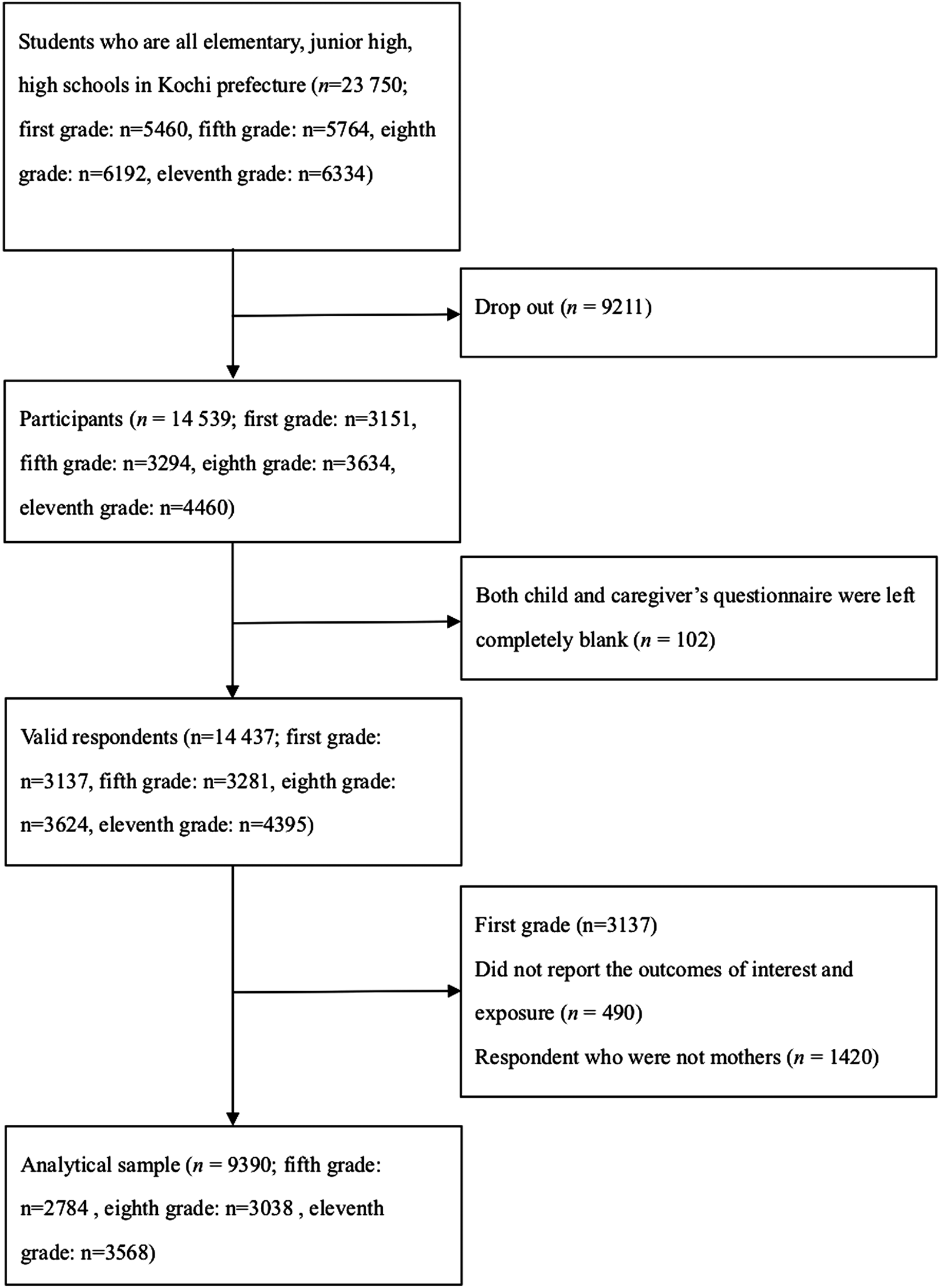
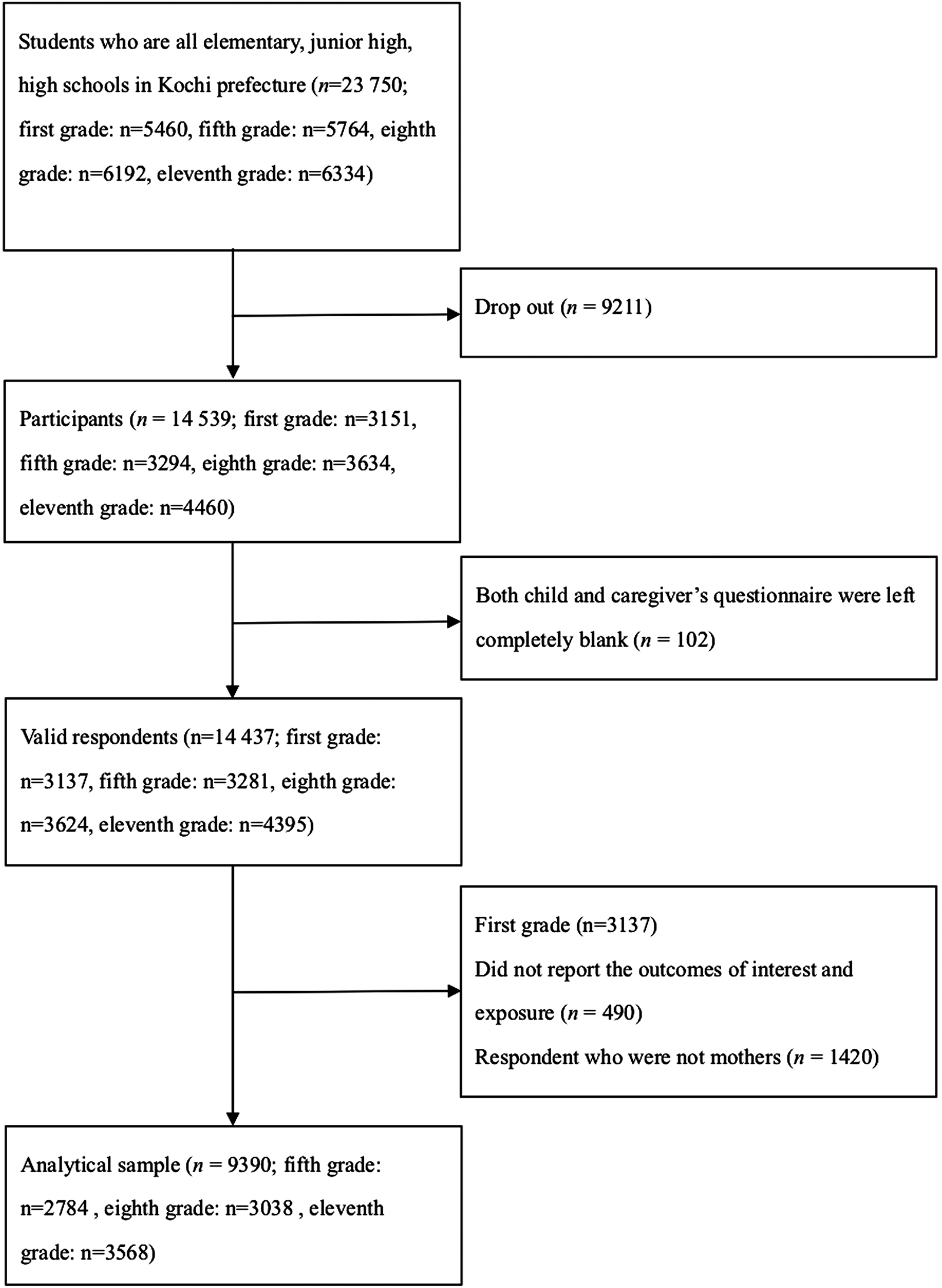
Data were obtained from the K-CHILD study in 2016, which examined the living environment and health of first graders and fifth graders in all elementary schools, second graders in all junior high schools (i.e., eighth grade), and second graders in all high schools (i.e., eleventh grade) in Kochi Prefecture, Japan. Targeted schools included public, private, and special needs schools and excluded correspondence-course high schools and one special needs school (196 elementary schools, 115 junior high schools, 48 high schools, and 15 special needs schools). Located in Shikoku island in southwest Japan, Kochi Prefecture has a population of 704,546 people and its main industries are fishing, agriculture, and forestry. Kochi Prefecture has 34 municipalities (11 urban areas and 23 rural areas), with most children concentrated in the urban areas. For example, over 80% of students in elementary and junior high schools live in urban areas and over 50% of those live in the capital city of Kochi. The self-administered anonymous questionnaires for children (for fifth, eighth, and eleventh grades) and caregivers (all grades) were distributed to a total of 23,750 children, of which 5,460 were in the first grade, 5,764 were in the fifth grade, 6,192 were in the eighth grade, and 6,334 were in the eleventh grade. Children brought the caregiver's questionnaire home to their caregivers. Completed questionnaires (both child and caregiver questionnaires) were returned to the Office of Children and Family Services in Kochi Prefecture by mail in anonymous envelopes (n = 3,517, response rate = 38.6%), or returned to the schools in person in anonymous envelopes (n = 11,022, response rate = 75.3%). Among the questionnaires returned, 106 child–caregiver pairs were left completely blank. Therefore, the total amount of valid responses was 14,437.
In this analysis, we used data from the fifth, eighth, and eleventh grade questionnaires because we focused on child depression, which was assessed in the child questionnaires only (n = 11,300). Additionally, we excluded from our sample respondents who were not mothers of the child (n = 490) and who did not report the outcomes of interest (i.e., child behavioral problems and depressive symptoms) and exposure (i.e., maternal ACEs) (n = 1,420). Finally, we used a sample of 9,390 pairs in fifth grade (n = 2,784), eighth grade (n = 3,038), and eleventh grade (n = 3,568) for analysis (Figure 1).
Requirement flow chart.
Measurements
Maternal adverse childhood experiences
The questions were developed based on Felitti et al. (Reference Felitti, Anda, Nordenberg, Williamson, Spitz, Edwards and Marks1998) and Green et al. (Reference Green, McLaughlin, Berglund, Gruber, Sampson, Zaslavsky and Kessler2010), and modified to suit the Japanese context. The questions asked if the mother had the following experiences during her childhood: (a) death of mother, (b) death of father, (c) parental divorce, (d) IPV against her mother, (e) physical abuse from parents, (f) neglect from parents, and (g) psychological abuse from parents. The total number of ACEs (deaths of mother and father were counted as parental death) reported by participants was used in the analysis to assess the cumulative effect of multiple ACEs (ACE total score).
Child behavioral problems
Child behavioral problems were assessed using the Japanese version of the Strength and Difficulties Questionnaire (SDQ; Matsuishi et al., Reference Matsuishi, Nagano, Araki, Tanaka, Iwasaki, Yamashita and Kakuma2008), which was translated from the English version of the SDQ (Goodman, Reference Goodman1997). Despite the evidence of the impact of maternal ACEs on behavioral problems in offspring, further studies are needed to establish these previous findings in a broader range of countries. The outcome of this study is child behavioral problems assessed using the SDQ, which is widely used and convenient to assess compared to other scales due to its short form. Mothers were asked to rate 25 items, which consisted of five subscales: emotional symptoms, conduct problems, hyperactivity/inattention, peer relationship problems, and prosocial behavior, on a scale of 0 (not true) to 2 (certainly true). In this study, the Cronbach alpha was 0.80, and we only used the total difficulties score, which is calculated using the sum of four subscale scores (emotional symptoms, conduct problems, hyperactivity/inattention, and peer relationship problems), as both continuous and categorical variables. For continuous variables, a higher total difficulties score indicates that children experience more difficulties. For categorical variables, the total difficulties score can be categorized as “normal,” “borderline,” or “abnormal” (Matsuishi et al., Reference Matsuishi, Nagano, Araki, Tanaka, Iwasaki, Yamashita and Kakuma2008).
Child depressive symptoms
Child depressive symptoms were assessed using the Japanese version of the Depression Self-Rating Scale (DSRS; Sato & Arai, Reference Sato and Arai2002), which was translated from the English version of the DSRS (Birleson, Reference Birleson1981). Maternal psychological distress, which is another possible mediator in this study, leads to child depressive symptoms (Weissman et al., Reference Weissman, Wickramaratne, Nomura, Warner, Verdeli, Pilowsky and Bruder2005) through not only biological but also psychological pathways such as learning depressed cognitive and behavioral reaction to stimuli from mothers (e.g., social learning theory). Few studies have examined the association between maternal ACEs and child depressive symptoms, which may have a significant and long-lasting impact in later adulthood (Clayborne, Varin, & Colman, Reference Clayborne, Varin and Colman2019; McLeod, Horwood, & Fergusson, Reference McLeod, Horwood and Fergusson2016). Thus, another outcome of this study is child depressive symptoms assessed using the DSRS, which is a widely used self-reported scale. We chose a self-reported scale because mothers with a larger number of ACEs are more likely to have mental health problems (e.g., Bowers et al., Reference Bowers, Ding, Gregory, Yolton, Ji, Meyer and Folger2018), which in turn leads to maternal negative perception of their child's behavior (Najman et al., Reference Najman, Williams, Nikles, Spence, Bor, O'Callaghan and Andersen2000). Further, it becomes more difficult for parents to evaluate their child's behavior as children get older (Van Lippevelde et al., Reference Van Lippevelde, Te Velde, Verloigne, Van Stralen, De Bourdeaudhuij, Manios and Maes2013). Sato and Arai (Reference Sato and Arai2002) omitted two items (i.e., “I can stick up for myself” and “I think life isn't worth living”) from the English version of the DSRS to avoid psychological invasiveness during completion of the DSRS. Additionally, we omitted another item (i.e., “I like talking with my family”) from the DSRS (Sato & Arai, Reference Sato and Arai2002), because the questionnaire was supposed to be filled out at home, and caregivers may check this item, which may lead to a biased response. Children rated 15 items on a scale of 0 (never) to 2 (most of the time). The Cronbach alpha in this study was 0.84. In this study, we used both continuous and categorical variables. For continuous variables, a higher score indicates that children have more depressive symptoms. For categorical variables, we used the higher 10th percentile (i.e., score of 15/16) as a cut-off point for having depression, in line with the previous cut-off point in the Japanese version of the DSRS (Murata, Shimizu, Mori, & Oshima, Reference Murata, Shimizu, Mori and Oshima1996).
Main possible mediators
Four possible mediators were assumed. First was maternal mental health, which was assessed using the Japanese version of the K6 (Furukawa et al., Reference Furukawa, Kawakami, Saitoh, Ono, Nakane, Nakamura and Kikkawa2008). Mothers rated 6 items on a scale of 1 (all of the time) to 5 (none of the time). Second was current SES, which was assessed as annual household income (0, <500,000 yen, 500,000–999,999 yen, 1,000,000–1,999,999 yen, 2,000,000–2,999,999 yen, 3,000,000–3,999,999 yen, 4,000,000–4,999,999 yen, 5,000,000–5,999,999 yen, 6,000,000–6,999,999 yen, 7,000,000–7,999,999 yen, 8,000,000–8,999,999 yen, ≧9,000,000 yen, or unknown), material deprivation (e.g., not having a telephone or air conditioner), and their experience of being unable to pay for lifeline utility costs (e.g., electricity or gas). Third was parenting, for both positive parenting and maltreatment. Maternal positive parenting behaviors were assessed by four items. Mothers rated items about frequency of talking about school life with their child (“a family member talks with your child about their school life”) on a scale of 1 (frequently) to 5 (never), and frequency of cooking for their child (“how often does your family cook meals for your child?”) on a scale of 1 (almost every day) to 5 (rarely), which is one of the parenting behaviors to express parental affection to a child in the Asian culture (Choi, Kim, Pekelnicky, & Kim, Reference Choi, Kim, Pekelnicky and Kim2013). Children rated the items about frequency of having breakfast (“Do you eat breakfast every weekday?”) on a scale of 1 (every day) to 4 (never) and frequency of eating vegetables (“How often do you eat vegetables outside of school meals?”) on a scale of 1 (every day) to 5 (never), which are specific child health and feeding-related parenting behaviors (Pearson, Atkin, Biddle, Gorely, & Edwardson, Reference Pearson, Atkin, Biddle, Gorely and Edwardson2010; Van Lippevelde et al., Reference Van Lippevelde, Te Velde, Verloigne, Van Stralen, De Bourdeaudhuij, Manios and Maes2013) and are associated with authoritative parenting style (i.e., high in both responsiveness and demandingness) (Lytle et al., Reference Lytle, Varnell, Murray, Story, Perry, Birnbaum and Kubik2003). These items were developed through arguments made by experts in child and maternal health to suit the Japanese cultural context. Child maltreatment was assessed as physical abuse (hitting and beating), neglect (shutting the child outside and not feeding the child), and psychological abuse (yelling, insulting repeatedly, and witnessing domestic violence from father to mother), modified from a validated child maltreatment questionnaire (Tokunaga et al., Reference Tokunaga, Ohara, Kayama, Yoshimura, Mitsuhashi and Senoo2000). The fourth mediator was parental loss for children, which was assessed by marital status (married, unmarried, divorced, or widowed).
Covariates
Mothers were asked about their child's sex (male or female), their maternal age, if they have an older sibling (yes or no) or younger sibling (yes or no), whether they had economic difficulties in their childhood (yes or no), their education level (high school or less, some college education, college education or higher, or other/unknown), and their weight and height.
Ethics
This study was approved by the Ethics Committee of the Tokyo Medical and Dental University (M2017-243).
Statistical analysis
Multivariate regression analysis was conducted to examine the association of maternal ACEs and child behavioral problems, in which the missing data were treated as a dummy variable (Cohen & Cohen, Reference Cohen, Cohen and Hillsdale1983; Orme & Reis, Reference Orme and Reis1991). After estimating a crude model, basic demographics (child's sex, grade, maternal age (<35 year, 35–<40 year, 40–<45 year, 45–<50 year, and 50 year+), having an older sibling, having a younger sibling), maternal childhood SES (maternal economic difficulties in childhood, maternal education), and all 34 municipalities in Kochi Prefecture were added (Model 1). We considered Model 1 and adjusted for potential confounders.
Additionally, we added four mediators one by one in order of proximity to the maternal ACEs. First, we added maternal health status (maternal psychological distress (K6; <5, 5–<13, and 13+)) (Furukawa et al., Reference Furukawa, Kawakami, Saitoh, Ono, Nakane, Nakamura and Kikkawa2008), maternal BMI (<18.5, 18.5–<25.0, 25.0–<30.0, and 30.0+), and maternal history of smoking (never, used to smoke, and currently smoking) to Model 2, which is conceptually closer to ACEs. Model 3 also incorporated the second mediator, current SES (household income (<3,000,000 yen, 3,000,000–<6,000,000 yen, 6,000,000+ yen, and unknown), lacking basic necessities, and lacking payment capacity). The third mediator was added to Model 4: maternal positive parenting behaviors (frequency of talking about school life with the child, frequency of cooking for the child, frequency of having breakfast, and frequency of eating vegetables), and child maltreatment (physical abuse, neglect, and psychological abuse). The fourth mediator was added to Model 5: parental loss for children. The same analyses were stratified by grade for sensitivity analysis (see Supplement 2). Further, we also performed ordinal logistic regression analysis using the SDQ categories (normal, borderline, and abnormal) as outcomes (see Supplement 3).
Similarly, child depressive symptoms were used as outcomes. The construct of models was similar to those of the analyses for child behavioral problems (i.e., crude model, Model 1, Model 2, Model 3, Model 4, and Model 5). The same analyses were stratified by grade for sensitivity analysis (see Supplement 4). Further sensitivity analyses were performed using the DSRS categories (<16 and 16+) (see Supplement 5). These analyses were adjusted for response rates of each municipality (i.e., probability weight).
Additionally, mediation analyses were conducted using the “paramed” command (Emsley, Liu, Dunn, Valeri, & VanderWeele, Reference Emsley, Liu, Dunn, Valeri and VanderWeele2014) to quantify the mediation effect of the possible mediators (i.e., maternal psychological distress, current SES, maternal parenting including positive parenting behaviors and child maltreatment, and parental loss for children) between maternal ACEs and child behavioral problems (see Supplement 6) and child depressive symptoms (see Supplement 7). In the mediation analyses using complete data, we used the existence of maternal ACEs (i.e., no ACEs vs. 1+ ACEs) as the exposure (binary variable), the SDQ and DSRS scores respectively as the outcomes (continuous variables), the K6 score (continuous variables), current household income (continuous variables), lacking basic necessities (binary variable), lacking payment capacity (binary variable), each score of maternal positive parenting behaviors (continuous variables), child maltreatment (binary variables), and parental loss for children (binary variables) as mediators, and child's sex, grade, maternal age, and having older and younger siblings as covariates.
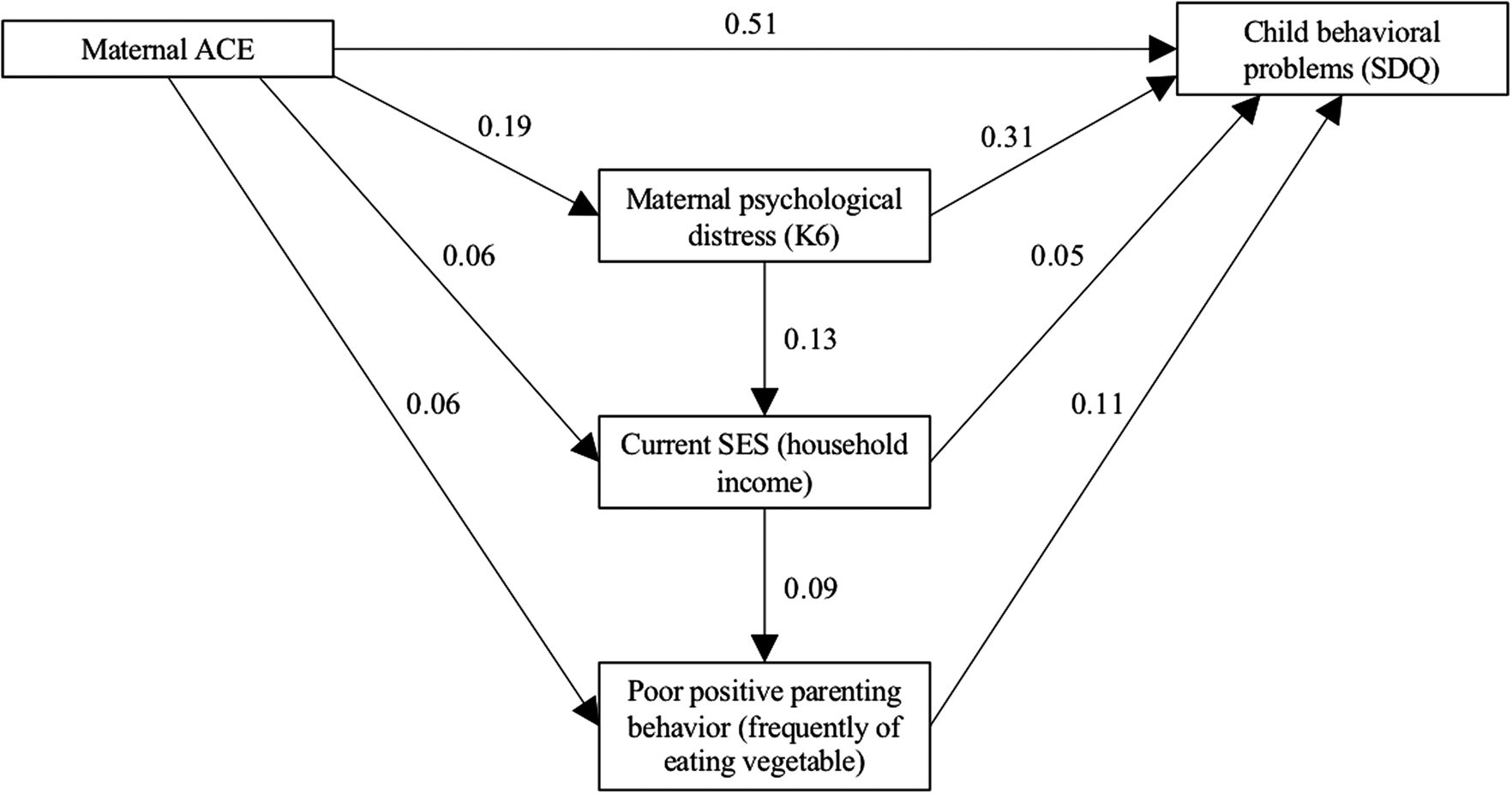
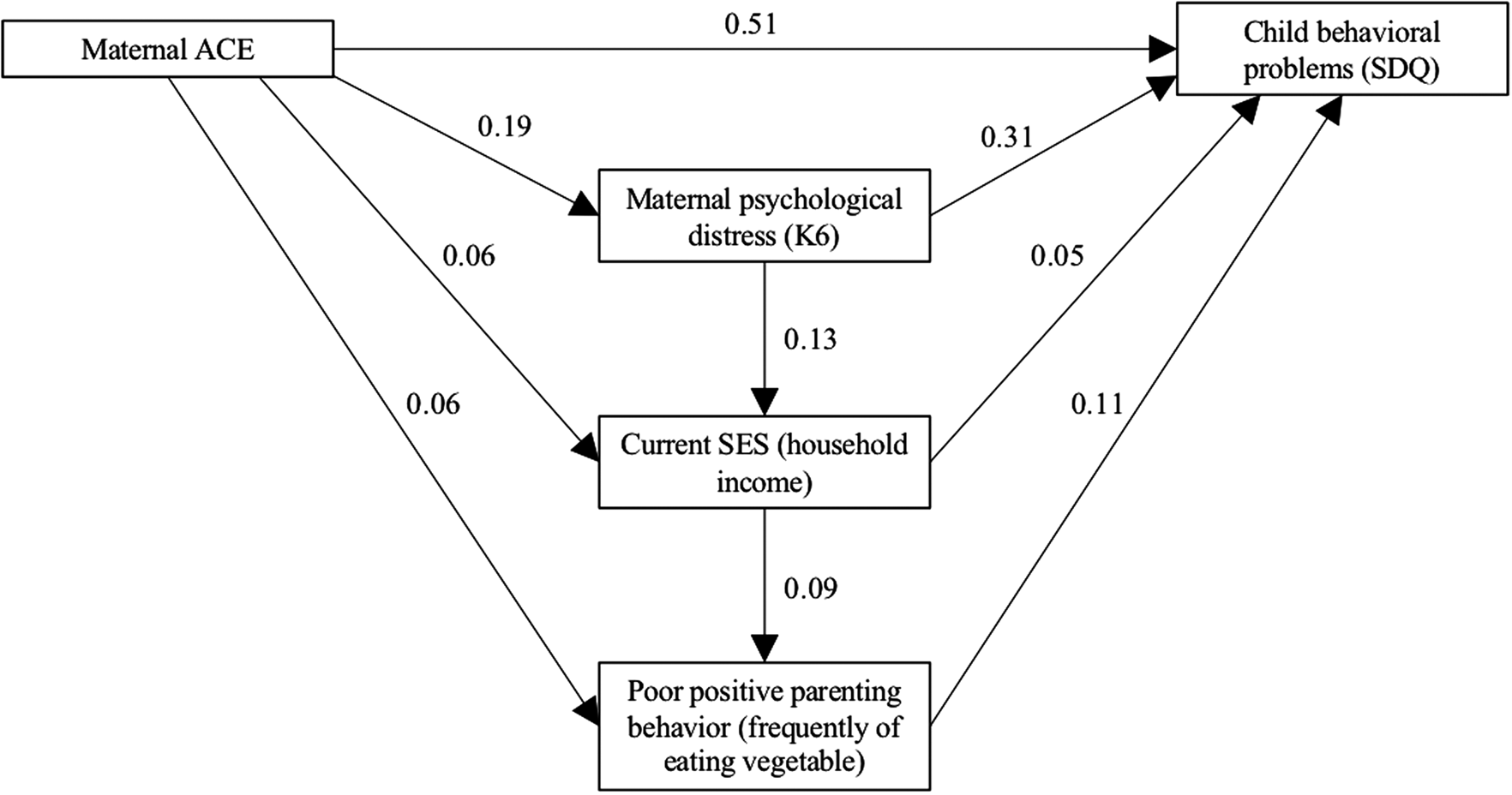
Finally, we assumed a cascade model for the association between maternal ACEs and child behavioral problems (see Figure 2). We performed this analysis for only child behavioral problems because child behavioral problems were assessed by mothers, which can be biased. Thus, this cascade model may be needed to show a psychological pathway rather than maternal bias. In the cascade model, maternal ACEs are associated with maternal psychological distress, current SES, and maternal parenting. Maternal ACEs lead to maternal psychological distress, which can subsequently affect current SES and maternal parenting. We did not include parental loss for children in the cascade model because parental loss is conceptually and statistically closer to current SES. We examined this cascade model using structural equation modeling (SEM). To assess the fitness of the model, fit indices including standardized root mean square residual (SRMR), root mean square error of approximation (RMSEA), and comparative fit index (CFI) were used. In this study, the following criteria (Hu & Bentler, Reference Hu and Bentler1998) were used to evaluate model fit: SRMR value below 0.08; RMSEA value below 0.06, and CFI value above 0.95.
Results of Structural Equation Modeling. Standardized beta of path coefficient is reported. All coefficients were significant (p < .001).
All analyses were conducted using STATA version 14.2 SE.
Results
The distribution of characteristics
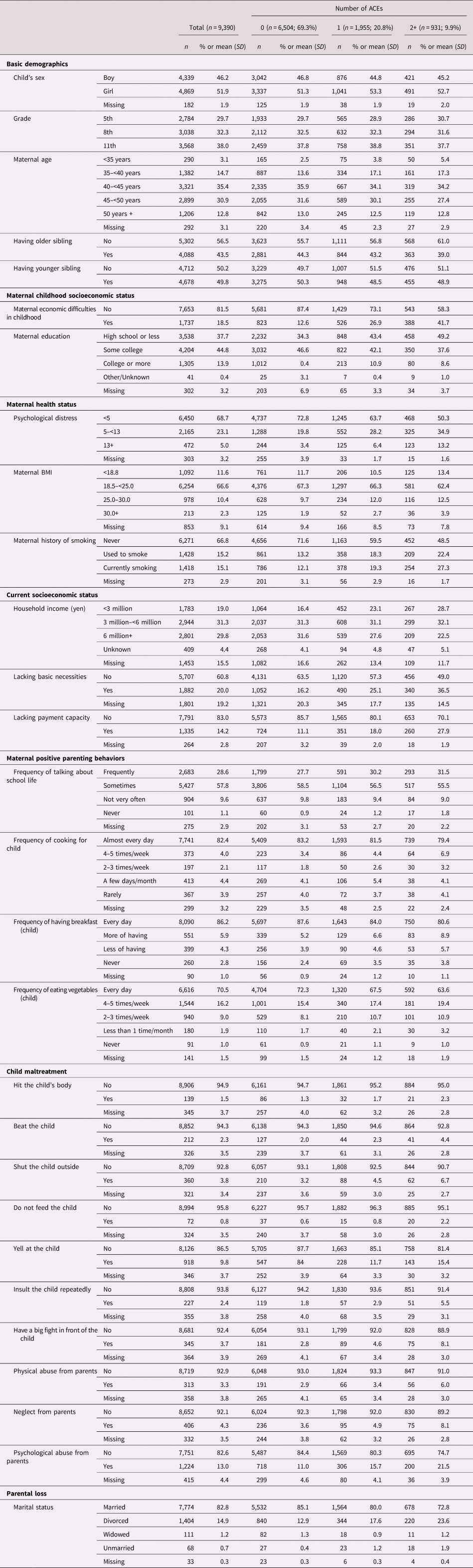
Table 1 shows the distribution of characteristics among all participants and by ACE categories. The majority of mothers, that is, 6,504 mothers (69.3%) reported no ACEs, 1,955 mothers (20.8%) reported one ACE, and 931 mothers (9.9%) reported two or more ACEs. Over 60% of all participants were 40–50 years old, one-fourth were unmarried, one-fifth experienced economic difficulties in childhood, and one-third had an educational level of high school or less. Approximately 30% of participants reported psychological distress, 25% were out of the normal body mass index (BMI) range, and 15% currently smoked. Approximately 20% of participants had low household income (<3,000,000 yen), 20% reported lacking basic necessities, and 15% reported lacking payment capacity. Over 80% of participants frequently or sometimes talked about school life with their child, cooked for their child 4 or more times a week, had breakfast every day (children-reported), and ate vegetables 4 or more times a week (children-reported). Less than 5% of participants reported physical abuse and neglect for their child, over 10% reported psychological abuse for their child, and over 15% were unmarried, divorced, or widowed.
Descriptive characteristics of the participants in this study
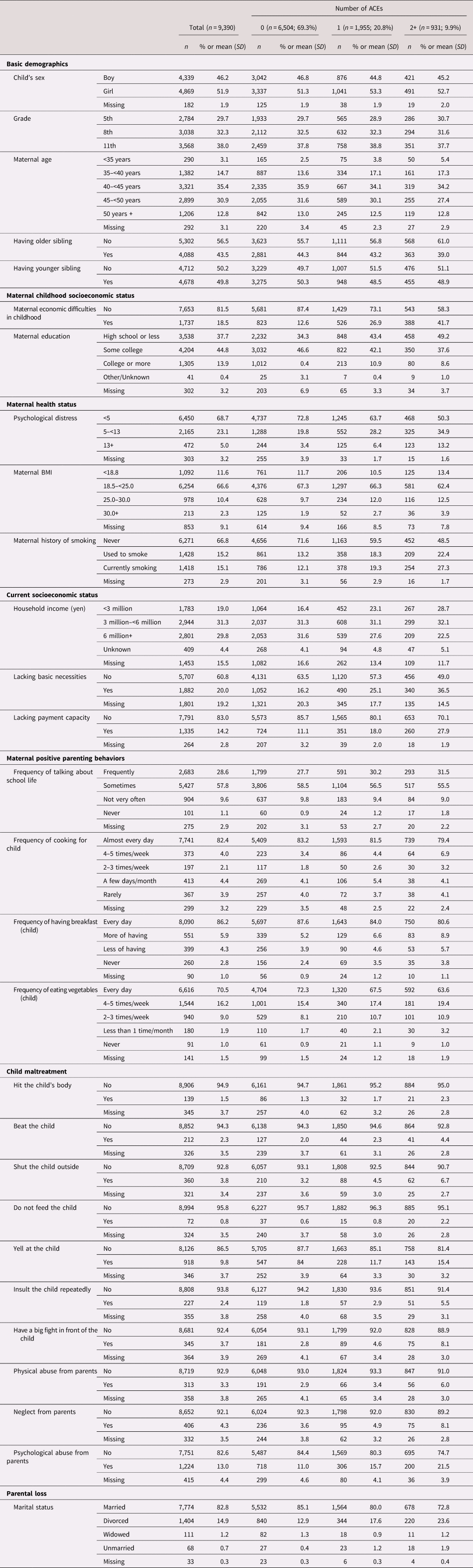
Participants with a higher number of ACEs were more likely to be young, more likely to have experienced economic difficulties in childhood, and were more likely to have a low educational level. They were also more likely to show severe psychological distress, less likely to have a normal BMI, more likely to currently smoke, more likely to have low SES (i.e., household income, lacking basic necessities, and lacking payment capacity), less likely to have positive parenting behaviors (i.e., frequency of talking about school life with their child, cooking for their child, having breakfast and eating vegetables), more likely to report child maltreatment, and more likely to be divorced. Characteristics by grade are available in Supplement 1.
The association between categories of maternal ACEs
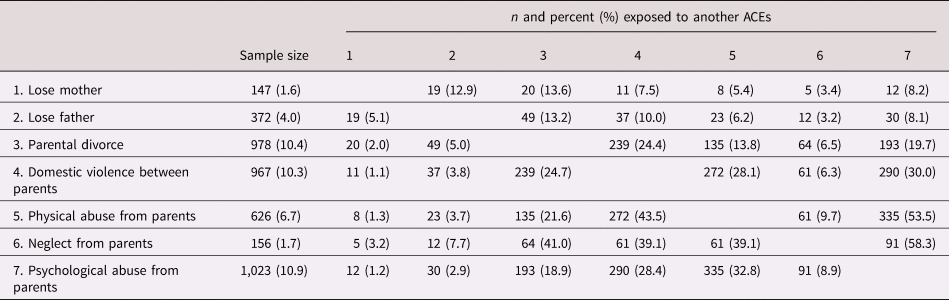
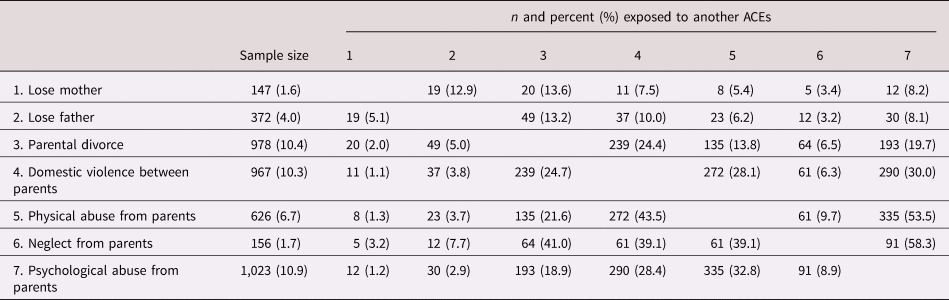
Table 2 shows the relationships between categories of maternal ACEs. We found high comorbidity of ACEs; for example, about half of mothers who have experienced physical abuse from their own parents were more likely to witness domestic violence between their parents (43.5%) and were more likely to experience psychological abuse from their parents (53.5%). Mothers who were neglected by their parents were more likely to experience psychological abuse from their parents (58.3%), parental divorce (41.0%), physical abuse from their parents (39.1%), and reported witnessing domestic violence between their parents (39.1%).
Relationships between categories of parental adverse childhood experiences (ACEs)
The impact of maternal ACEs on child behavioral problems (SDQ)
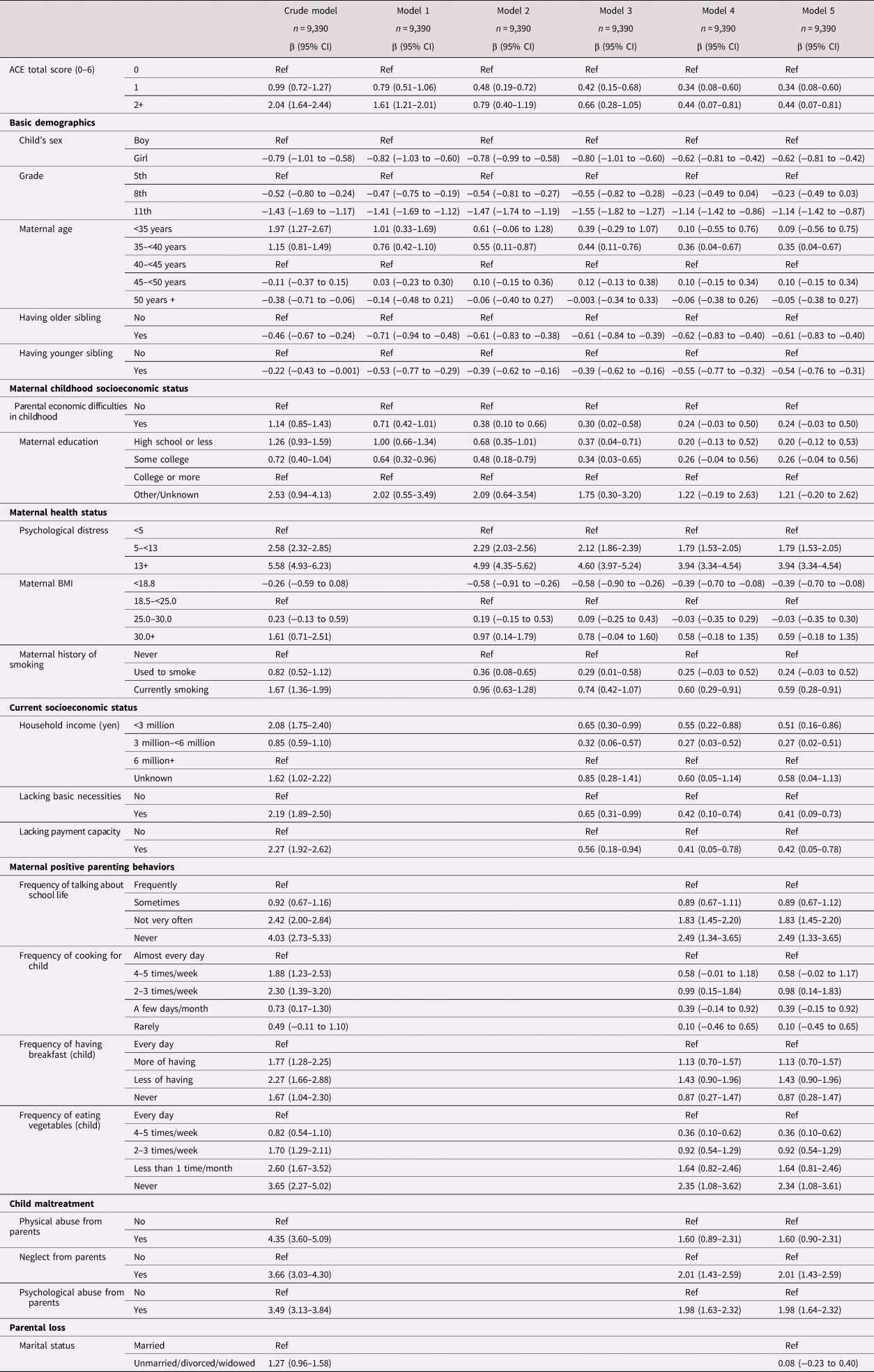
Table 3 shows the results of regression analysis to examine the association between maternal ACEs and the Total Difficulties Scores of SDQ. In Model 1 (adjusted for potential confounders: basic demographics, maternal childhood SES, and all 34 municipalities in Kochi Prefecture), the coefficients of maternal ACEs remained significant (1 ACE: β = 0.79, 95% confidential interval (CI) = 0.51 to 1.06; 2+ ACEs: β = 1.61, 95%CI = 1.21 to 2.01, p for trend<.001). In Model 2 (adjusted for potential mediators of maternal health status in addition to the covariates in Model 1), the coefficients of maternal ACEs remained significant (1 ACE: β = 0.48, 95% CI = 0.19 to 0.72; 2+ ACEs: β = 0.79, 95% CI = 0.40 to 1.19, p for trend<.001). In Model 3 (adjusted for potential mediators, that is, current SES in addition to Model 2), the coefficients of maternal ACEs remained significant (1 ACE: β = 0.42, 95% CI = 0.15 to 0.68; 2+ ACEs: β = 0.66, 95%CI = 0.28 to 1.05, p for trend<.001). In Model 4 (adjusted for other potential mediators, that is, maternal positive parenting behaviors and child maltreatment in addition to Model 3), the coefficients of maternal ACEs remained significant (1 ACE: β = 0.34, 95% CI = 0.08 to 0.60; 2+ ACEs: β = 0.44, 95% CI = 0.07 to 0.81, p for trend = .002). Further, in Model 5 (adjusted for another potential mediator, that is, parental loss for children in addition to Model 4), the coefficients of maternal ACEs remained significant (1 ACE: β = 0.34, 95% CI = 0.08 to 0.60; 2+ ACEs: β = 0.44, 95% CI = 0.07 to 0.81, p for trend = .002). Grade stratified analysis confirmed a similar trend for all grades (see Supplement 2). The results of ordinal logistic regression analysis are shown in Supplement 3, and basically reported the same results as in the continuous SDQ outcomes. The main difference is that the odds ratio of two or more ACEs was not significant in Models 3, 4, and 5.
Results of regression analysis (SDQ Total Difficulties Score)
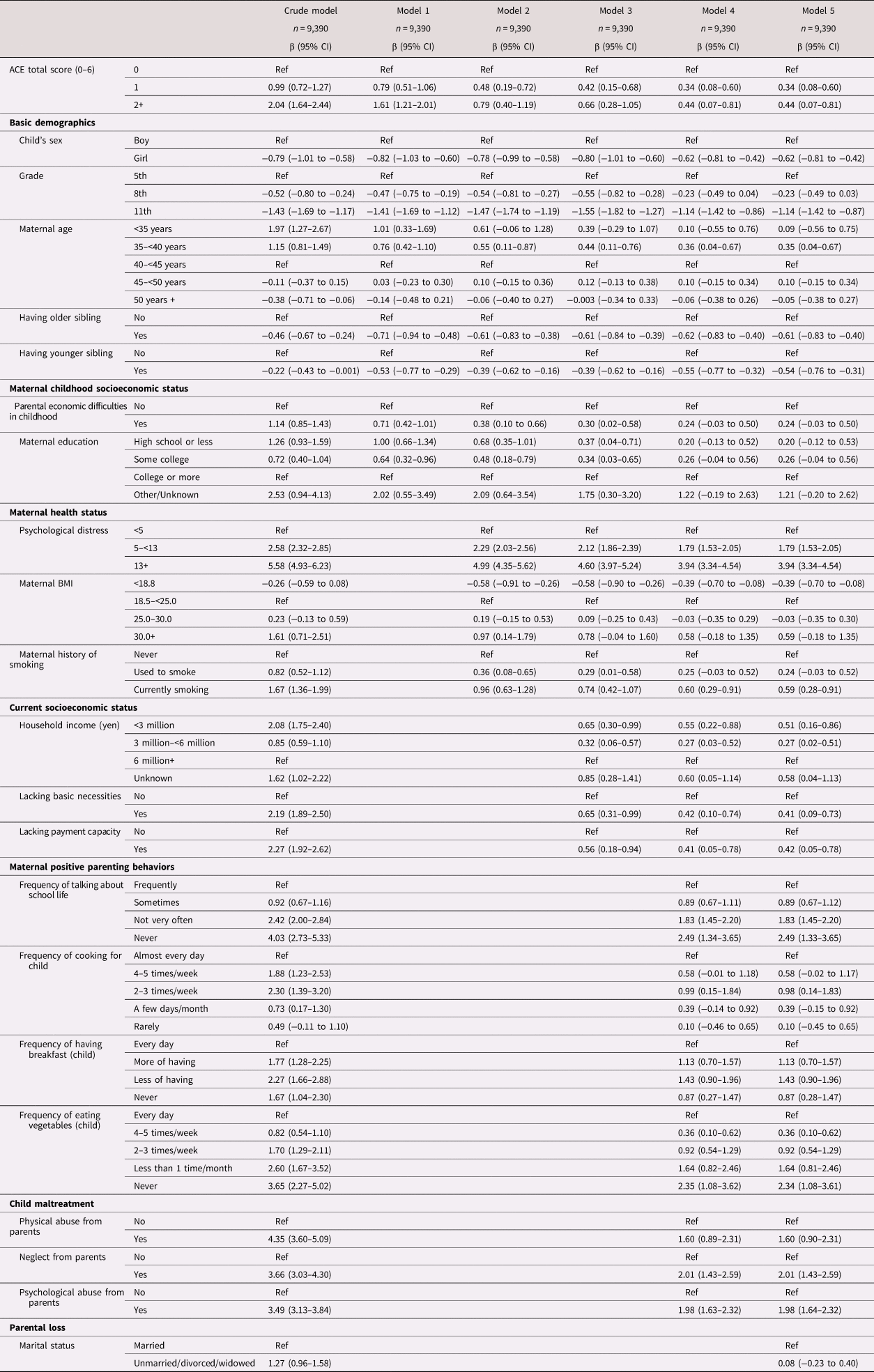
Note: All 34 municipalities in Kochi Prefecture were adjusted in Model 1–5.
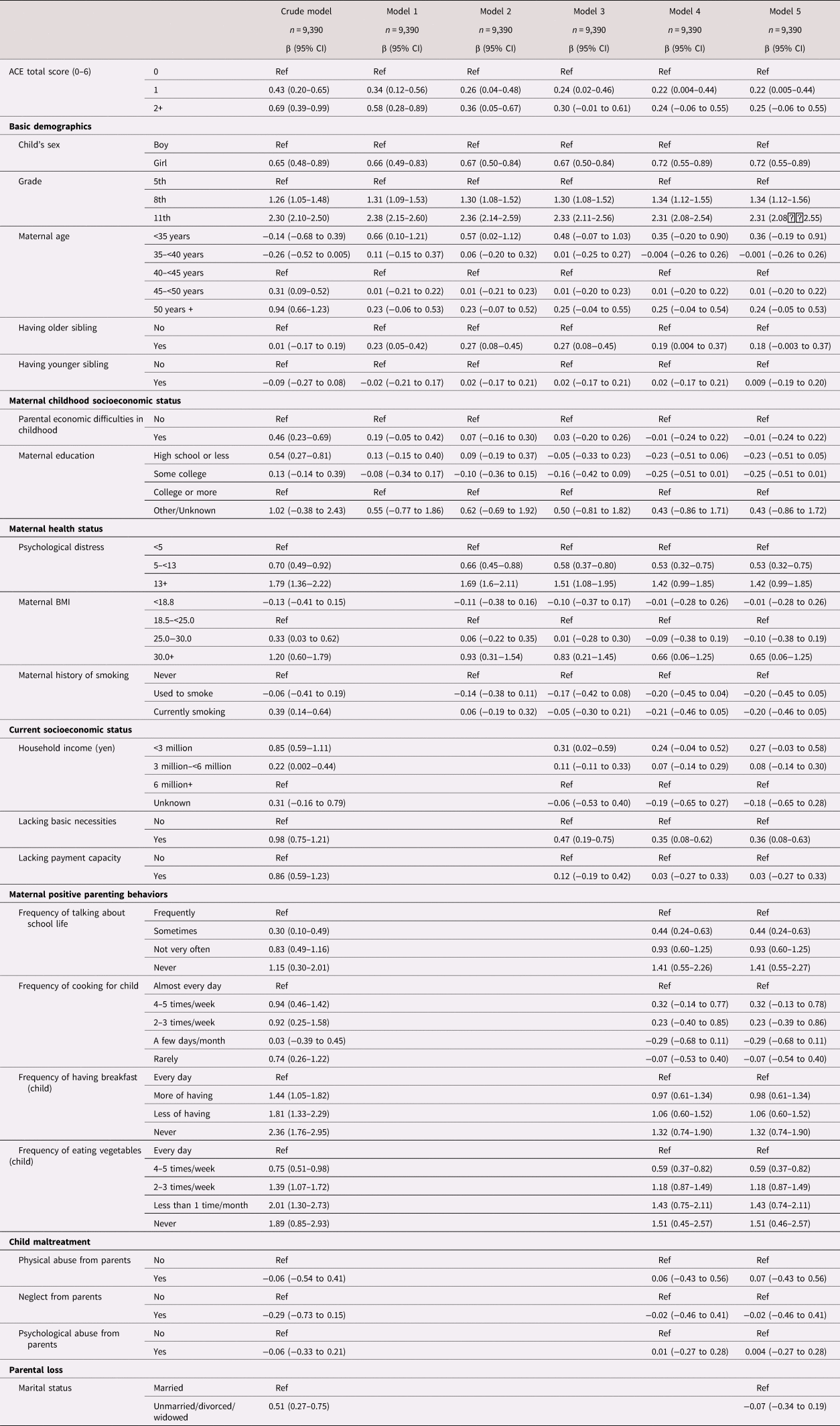
The impact of maternal ACEs on child depressive symptoms (DSRS)
Table 4 shows the results of regression analysis on the association between maternal ACEs and DSRS scores. In Model 1 (adjusted for confounders: basic demographics, maternal childhood SES, and all 34 municipalities in Kochi Prefecture), the coefficients of maternal ACEs remained significant (1 ACE: β = 0.34, 95% CI = 0.12 to 0.56; 2+ ACEs: β = 0.58, 95%CI = 0.28 to 0.89, p for trend<.001). In Model 2 (adjusted for potential mediators, i.e., maternal health status, in addition to the covariates in Model 1), the coefficient of one ACE remained significant (1 ACE: β = 0.26, 95% CI = 0.04 to 0.48; 2+ ACEs: β = 0.36, 95%CI = 0.05 to 0.67, p for trend = .004). In Model 3 (adjusted for potential mediators, i.e., current SES in addition to Model 2), the coefficients of one ACE remained significant (β = 0.24, 95% CI = 0.02 to 0.46), the same is true for the linear trend of the association between ACE and DSRS scores (p for trend = .014). In Model 4 (adjusted for other potential mediators, i.e., maternal positive parenting behaviors and child maltreatment in addition to Model 3), similar results were observed (p for trend = .032). Further, in Model 5 (adjusted for another potential mediator, i.e., parental loss for children in addition to Model 4), similar results were observed (p for trend = .030). Grade stratified analysis confirmed a similar trend for all grades (see Supplement 4). The results of logistic regression analysis using dichotomized DSRS, that is, depression, are shown in Supplement 5. We found that the odds ratios of maternal ACEs were not significant for depression in all models aside from the crude model.
Results of regression analysis (DSRS total score)
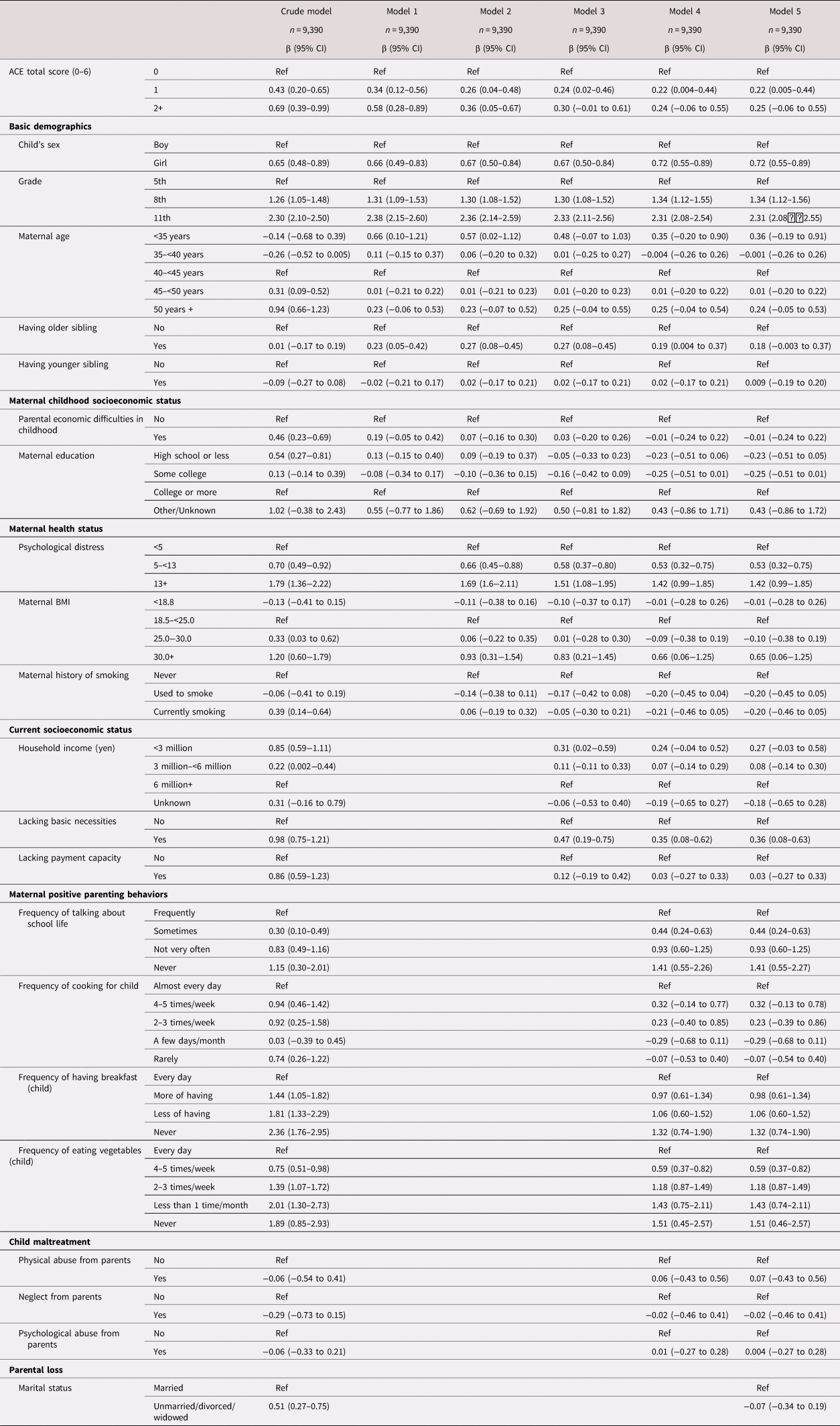
Note: All 34 municipalities in Kochi Prefecture were adjusted in Model 1–5.
Mediation effects for behavior problems (SDQ)
Mediation analyses results for the mediation effects of maternal psychological distress, current SES, maternal positive parenting behaviors, child maltreatment, and parental loss for children on the association between maternal ACEs and child behavioral problems are shown in Supplement 6. Adjusting for child's sex, grade, maternal age, and having older and younger siblings, maternal psychological distress mediated approximately half of the association between maternal ACEs and child behavioral problems (49.5%). Current SES, especially household income, mediated the association even though the effect size was moderate (6.4%). On the other hand, maternal positive parenting behaviors, especially talking about school life with their child and cooking for their child, did not mediate the association between maternal ACEs and child behavioral problems. Although frequencies of having breakfast and eating vegetables significantly mediated the association, the effect sizes were small (having breakfast: 5.3%; eating vegetables: 7.1%). Further, child maltreatment (i.e., physical abuse, neglect, and psychological abuse) also significantly mediated the association; however, the mediation effects were small (physical abuse: 3.5%; neglect: 5.4%) to moderate (psychological abuse: 14.9%). Parental loss for children mediated the association, but the effect size was small (3.5%).
Mediation effects for child depressive symptoms (DSRS)
The results of mediation analyses on the mediation effects of maternal psychological distress, current SES, maternal positive parenting behaviors, child maltreatment, parental loss for children on the association between maternal ACEs and child depressive symptoms are shown in Supplement 7. Adjusting for child's sex, grade, maternal age, and having older and younger siblings, again, maternal psychological distress mediated approximately half of the association between maternal ACEs and child depressive symptoms (44.2%). Current SES, especially household income, mediated the association even though the effect size was moderate (6.3%). On the other hand, maternal positive parenting behaviors, especially talking about school life with their child and cooking for their child, did not mediate the association between maternal ACEs and child depressive symptoms. Having breakfast and eating vegetables significantly mediated the association, and the effect sizes were moderate (having breakfast: 10.1%; eating vegetables: 14.0%). Further, for child maltreatment, the effect sizes for mediation effects were small (physical abuse: 1.0%; neglect: 1.3%; psychological abuse: 4.6%). Parental loss for children mediated the association, but the effect size was small (3.8%).
Cascade model for the association of maternal ACEs and behavior problems (SDQ)
SEM was performed to examine the association between maternal ACEs and child behavioral problems via maternal psychological distress, current SES, and maternal parenting behaviors (Figure 2). We selected household income as current SES, which had a larger mediational effect on child behavioral problems than lacking basic necessities and payment capacity, and frequency of eating vegetables as parenting behavior, which was statistically affected by household income (i.e., no association between household income and psychological abuse) and a larger mediational effect on child behavioral problems than other positive parenting behaviors.
The SEM results showed that the fit indices were good (SRMR = 0.011; RMSEA = 0.040; CFI = 0.993) compared to another model in which the associations between mediators were not assumed (SRMR = 0.045; RMSEA = 0.096; CFI = 0.874) (see Supplement 8). Maternal psychological distress mainly mediated the association of maternal ACEs on child behavioral problems. Maternal psychological distress is another pathway that subsequently leads to current lower SES and poor positive parenting behavior, which has an impact on child behavioral problems.
Discussion
In the current study, we found a dose–response relationship between maternal ACEs and child behavioral problems and child depressive symptoms. These results indicated that maternal ACEs from grandparents could last beyond one generation, that is, affecting the mental health of the mother's offspring. After adjusting for maternal health, the association decreased by a large margin, suggesting that the association between maternal ACEs and child mental health problems might be mediated by maternal mental health. In fact, the mediation analyses indicated a mediation effect of maternal psychological distress on the association between maternal ACEs and child behavioral problems (49.5%). Similarly, maternal psychological distress also mediated the association between maternal ACEs and child depressive symptoms (44.2%).
Our results, in which children who had a mother with higher ACEs were more likely to show higher levels of behavioral problems and depressive symptoms, are consistent with previous studies examining the association of parental ACEs and child physical and behavioral health problems (Le-Scherban et al., Reference Le-Scherban, Wang, Boyle-Steed and Pachter2018; Schickedanz et al., Reference Schickedanz, Halfon, Sastry and Chung2018). The effects of maternal ACEs on child mental health problems may endure through biological pathways due to fetal programming caused by cortisol exposure, which deteriorates the HPA axis of offspring. That is, maternal ACEs may lead to increased cortisol levels among pregnant women (Thomas et al., Reference Thomas, Magel, Tomfohr-Madsen, Madigan, Letourneau, Campbell and Giesbrecht2018), and prenatal maternal stress may impair the activity of placental enzyme 11-hydrozysteroid dehydrogenase type 2, which protects the fetus from cortisol exposure. Thus, it can be explained that increased cortisol levels due to maternal ACEs affect the fetus directly, which might lead to epigenetic changes in the glucocorticoid receptor (NR3C1) (Oberlander et al., Reference Oberlander, Weinberg, Papsdorf, Grunau, Misri and Devlin2008) or brain structure, whereby the volume of the hippocampus downregulates the negative feedback of cortisol (Coe et al., Reference Coe, Kramer, Czéh, Gould, Reeves, Kirschbaum and Fuchs2003). In support of this speculation, a human study reported that maternal diurnal cortisol during pregnancy was associated with stress reactivity in newborns (Nazzari et al., Reference Nazzari, Fearon, Rice, Dottori, Ciceri, Molteni and Frigerio2019). Further prospective studies are needed to assess pregnant women and their offspring from biological and psychosocial perspectives.
Alternatively, as shown in the results of our mediation analyses, maternal mental health may partially explain this association. That is, maternal ACEs have an effect on mental health problems in adulthood, which may impact on child mental health problems in offspring (Letouneau et al., Reference Letourneau, Dewey, Kaplan, Ntanda, Novick, Thomas and Team2019). Similarly to Letourneau et al., (Reference Letourneau, Dewey, Kaplan, Ntanda, Novick, Thomas and Team2019), the results of our mediation analyses showed that maternal psychological distress mediates 49.5% of the association between maternal ACEs and child behavioral problems, and mediates 44.2% of the association between maternal ACEs and child depressive symptoms, whereas the mediation effects of maternal positive parenting behaviors and child maltreatment are small. On the other hand, Schickedanz et al. (Reference Schickedanz, Halfon, Sastry and Chung2018) showed that the association between parents’ ACEs and child behavioral problems was mediated by parents’ mental health problems (27%) and the aggravation of parenting (19%). Additionally, Roberts et al. (Reference Roberts, Chen, Slopen, McLaughlin, Koenen and Austin2015) in a 21-year longitudinal study in the United States, showed that the association between maternal childhood abuse and depressive symptoms in offspring during adolescence and adulthood (offspring age ranged from 12 to 14 years at the first wave and 25 to 31 years at the fifth wave) was mediated by maternal mental health problems (20.9%) and offspring exposure to abuse from their parents (30.3%). Although the current study found the mediation effect of maternal mental health status rather than parenting, we did not assess maternal parenting skills using existing validated scales. Furthermore, it is unclear whether the intervention to improve maternal parenting skills can alleviate the impact of maternal ACEs on child mental health problems.
Additionally, we found possible apsychosocial mechanism between maternal ACEs and child behavioral problems by the cascade model, in which maternal ACEs predict maternal psychological distress, which can subsequently affect current SES and maternal parenting. This finding may be helpful to elucidate the association between maternal ACEs and child mental health problems. Based on our finding, further longitudinal studies to review this cascade model are needed.
The current study has several limitations. First, maternal ACEs did not include items on sexual abuse from parents and parental psychiatric disorders, which are considered to be an ACE (Felitti et al., Reference Felitti, Anda, Nordenberg, Williamson, Spitz, Edwards and Marks1998). With regard to sexual abuse, a previous Japanese study showed low prevalence of childhood sexual abuse (i.e., 0.5%) (Fujiwara, Kawakami, & World Mental Health Japan Survey, Reference Fujiwara and Kawakami2011). Additionally, other previous Japanese studies also did not ask participants about sexual abuse (Amemiya, Fujiwara, Murayama, Tani, & Kondo, Reference Amemiya, Fujiwara, Murayama, Tani and Kondo2017; Isumi & Fujiwara, Reference Isumi and Fujiwara2016) because sexual abuse is considered to be a sensitive issue in the Japanese context (Yoshihama & Horrocks, Reference Yoshihama and Horrocks2010) and including an item on sexual abuse may cause a lower response rate (Ishii, Asukai, Konishi, Inamoto, & Kageyama, Reference Ishii, Asukai, Konishi, Inamoto and Kageyama2002). With regard to parental psychiatric disorders, which may be biologically related to depressive symptoms in offspring, we need to examine the intergenerational effect, including parental psychiatric disorders. However, the item on parental psychiatric disorders was excluded from the questionnaire because of stigma towards psychiatric disorders. Even though we assessed maternal mental health using the K6, we could not assess psychiatric disorders other than depression and anxiety, such as schizophrenia, personality disorders, and bipolar disorder. For these reasons, we did not use a validated ACE measurement. However, a previous Japanese study (Doi & Fujiwara, Reference Doi and Fujiwara2019) showed that ACE measurement is associated with maternal health outcome (i.e., self-harm ideation). Moreover, we confirmed that the ACE measurement is significantly associated with maternal physical and mental health outcomes using the data of this study (data not shown). Therefore, the ACE measurement used in this study could be useful to assess maternal ACEs even though the validity is not sufficient. Further studies are needed to examine the validity of this ACE measurement and to review this finding using the validated measurement. In addition, further studies assessing maternal ACEs based on the revised ACE measurement including peer victimization, peer isolation/rejection, and community violence exposure (Finkelhor et al., Reference Finkelhor, Shattuck, Turner and Hamby2015) are needed. Second, as mothers reported their ACEs retrospectively, some ACEs may have been underreported due to recall bias (Hardt & Rutter, Reference Hardt and Rutter2004; Widom & Morris, Reference Widom and Morris1997; Widom & Shepard, Reference Widom and Shepard1996). Despite underreporting, we found a positive association between ACEs and children's mental health, suggesting an underestimation of the association. Third, a common method bias may have existed in the association between ACEs and the SDQ, although it may not have existed in the association between ACEs and depression because children responded to questions relating to the depression scale. Further, we left the caregiver and child to decide where to complete their questionnaires. If the caregiver and child completed the questionnaire at home, it might be possible that the child's responses are affected by desirability bias, where children choose a response based on pleasing their parents, and vice versa. Fourth, the cross-sectional design of the study might cause a reverse relationship between mediators and outcomes. Further longitudinal studies are needed to review our cascade model (Figure 2). Fifth, generalizability of this study is limited, because the response rate was lower in Kochi city, and findings were derived from only one rural prefecture in Japan. Further studies using a representative sample of the Japanese population with better response rates are warranted.
Despite these limitations, our findings suggest that maternal ACEs not only have short-term negative effects, such as physical and mental illness in adulthood, but also long-term negative effects, such as mental health problems in offspring. Obstetric, gynecological, and pediatric clinics have opportunities to assess maternal ACEs and provide prevention strategies to affected mothers. Further, practitioners need to consider not only the care of affected mothers but also of their offspring. For mothers with ACEs, an intervention which is combined trauma-focused interventions such as Trauma Informed Care (Cohen & Mannarino, Reference Cohen and Mannarino2008) and parenting and self-care interventions (e.g., Muzik et al., Reference Muzik, Rosenblum, Alfafara, Schuster, Miller, Waddell and Kohler2015) may be effective to prevent various problems including mental health issues and parenting problems. For instance, there are a few parenting and self-care interventions for mother with health problems such as HIV and substance use (Murphy, Reference Murphy and & F2016; Murphy, Armistead, Payne, Marelich, & Herbeck, Reference Murphy, Armistead, Payne, Marelich and Herbeck2017). For children who have a mother with ACEs, self-care interventions such as mindfulness-based interventions (Kallapiran, Koo, Kirubakaran, & Hancock, Reference Kallapiran, Koo, Kirubakaran and Hancock2015) may be effective to improve or prevent their mental health problems. In the future, a new intervention for children who have a mother with ACEs is warranted, which can use psychological interventions for children of depressed parents (Compas et al., Reference Compas, Forehand, Keller, Champion, Rakow, Reeslund and Cole2009) as a reference, for example. Additionally, practitioners can target their community and school to prevent the intergenerational effects of maternal ACEs. Therefore, we need to identify not only mediators but also resilient factors of the association between maternal ACEs and child mental health, for example, maternal social capital and child–school relationships.
Supplementary material
The supplementary material for this article can be found at https://doi.org/10.1017/S0954579420000334
Acknowledgments
We thank all the participants who contributed to this study, which was supported by Grants-in-Aid for Scientific Research from the Japan Society for the Promotion of Science (JSPS KAKENHI Grant Number 16H03276).