Witnessing destructive interparental conflict characterized by hostility, negative escalation, and detachment is stressful for children and increases their risk for adjustment problems (Cummings & Davies, Reference Cummings and Davies2010). In addressing why and how interparental discord promotes psychological problems, prevailing theories point to children's negative internal representations as a key mediating mechanism (i.e., Davies & Cummings, Reference Davies and Cummings1994; Grych & Fincham, Reference Grych and Fincham1990; Johnston, Roseby, & Kuehnle, Reference Johnston, Roseby and Kuehnle2009; Repetti, Taylor, & Seeman, Reference Repetti, Taylor and Seeman2002). For example, emotional security theory (EST; Cummings & Davies, Reference Cummings and Davies1996; Davies & Cummings, Reference Davies and Cummings1994) suggests that exposure to destructive interparental conflict undermines children's sense of safety and security in the family. Children's concerns for security (i.e., emotional insecurity) are proposed to manifest in insecure representations of the interparental relationship, or implicit appraisals of parental conflicts as having threatening implications for themselves and for the integrity of the family unit. Although insecure representations have the adaptive function of heightening children's ability to efficiently scan for, interpret, and respond to cues of impending interparental conflicts, the effort of managing persistent concerns for security is proposed to take a physical and psychological toll, ultimately undermining children's ability to meet subsequent developmental challenges (Davies, Sturge-Apple, & Martin, Reference Davies, Sturge-Apple, Martin, Lansdale, McHale and Booth2013; Davies, Winter, & Cicchetti, Reference Davies, Winter and Cicchetti2006).
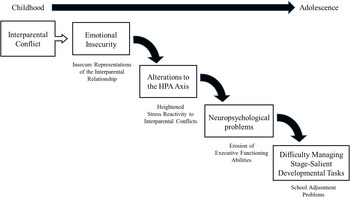
In support of EST, research documents insecure representations of the interparental relationship as a consistent mediator explaining the association between early exposure to destructive interparental conflict and a wide array of psychological problems (Buehler, Lange, & Franck, Reference Buehler, Lange and Franck2007; Coe, Davies, Sturge-Apple, Reference Coe, Davies and Sturge-Applein press; Davies & Cummings, Reference Davies and Cummings1998; Shelton & Harold, Reference Shelton and Harold2008; Sturge-Apple, Davies, Winter, Cummings, & Schermerhorn, Reference Sturge-Apple, Davies, Winter, Cummings and Schermerhorn2008). However, far less is known about how and why emotional insecurity increases children's vulnerability to psychological problems. Developmental psychopathology models of early adversity illustrate how short-term ways of processing and responding to harsh conditions in childhood can trigger an unfolding series of processes that, over time, confer risk for psychopathology (e.g., Masten & Cicchetti, Reference Masten and Cicchetti2010; Repetti, Robles, & Reynolds, Reference Repetti, Robles and Reynolds2011). In an effort to provide further direction and specificity in characterizing these developmental cascades, the reformulation of emotional security theory (EST-R) proposes that a history of insecure representations of the interparental relationship in childhood ultimately leads to psychopathology and school difficulties in adolescence by disrupting neuropsychological functioning (Davies & Martin, Reference Davies and Martin2013). Drawing on physiological models of risk, alterations to the stress response system (i.e., the hypothalamus–pituitary–adrenal axis) are further proposed to serve as the biological mechanism underlying this link. Accordingly, as shown in Figure 1, the goal of this study is to utilize EST-R as a guide in elucidating an understanding of children's adrenocortical reactivity to stress and neuropsychological functioning as mediators of the pathway between children's insecure representations and their psychological problems.
An illustration of the developmental cascade from emotional insecurity to psychological adjustment problems outlined by the reformulation of emotional security theory (Davies & Martin, Reference Davies and Martin2013). The specific construct listed underneath each box represents the process we chose to represent each component of the proposed cascade in the current study. HPA, hypothalamus–pituitary–adrenal.

Executive Functioning as a Mediator in the Link Between Children's Insecure Representations and Their Psychological Problems
Evolutionary life history theories and resource models of self-control share in common the underlying concept that organisms need to efficiently distribute limited resources (e.g., caloric energy, mental effort, and time) to support the developmental and cognitive tasks necessary for survival and reproductive success across the life span (e.g., Del Giudice, Elis, & Shirtcliff, Reference Del Giudice, Ellis, Shirtcliff, Laviola and Macri2013; Inzlicht & Schmeichel, Reference Inzlicht and Schmeichel2012; Korte, Koolhaas, Wingfield, & McEwen, Reference Korte, Koolhaas, Wingfield and McEwen2005). From this perspective, biases toward pursuing selective goals will necessarily limit the resources that can be devoted to other significant domains of functioning. For example, repeated exposure to interparental conflicts may promote a “better safe than sorry” strategy in which children devote significant efforts toward vigilantly processing cues signaling the potential for threat and coping with negative affect in order to manage their insecurity. Accordingly, EST-R proposes that insecure representations of the interparental relationship, over time, tip the balanced allocation of psychobiological resources toward investing in immediate personal safety at the cost of equal investment in mastering longer term goal pursuits, such as gaining knowledge of the physical world or developing strong social bonds (Davies & Martin, Reference Davies and Martin2013). The resulting attenuation of resources is proposed to have a negative impact on the executive domains of neuropsychological functioning that require considerable motivation, effort, planning, and cognitive sophistication (Cowell, Cicchetti, Rogosch, & Toth, Reference Cowell, Cicchetti, Rogosch and Toth2015; Hofmann, Schmeichel, & Baddeley, Reference Hofmann, Schmeichel and Baddeley2012; Kaplan & Berman, Reference Kaplan and Berman2010).
As a demanding, higher order set of processes, executive functioning is one component of neuropsychological functioning that may be particularly likely to serve as an intermediary mechanism linking childhood insecurity and adjustment problems. Executive functioning refers to a multidimensional set of goal-directed, purposeful skills in domains of planning, problem solving, working memory, self-monitoring, cognitive flexibility, and inhibitory control (Zelazo et al., Reference Zelazo, Anderson, Richler, Wallner-Allen, Beaumont and Weintraub2013). Prior research clearly demonstrates that family adversity in childhood, including exposure to interparental conflict, sets the stage for executive functioning impairments (e.g., Bernier, Carlson, & Whipple, Reference Bernier, Carlson and Whipple2010; Blair, Raver, & Berry, Reference Blair, Raver and Berry2014; Gustafsson, Coffman, & Cox, Reference Gustafsson, Coffman and Cox2015; Hinnant, El-Sheikh, Keiley, & Buckhalt, Reference Hinnant, El-Sheikh, Keiley and Buckhalt2013; Lengua et al., Reference Lengua, Kiff, Moran, Zalewski, Thompson, Cortes and Ruberry2014). However, although interparental conflict and children's insecure representations are lawfully related, multiple theories underscore that family factors (e.g., exposure to interparental conflict and parental hostility) and children's processing and coping (e.g., internal representations and emotional reactivity) operate in distinctive ways in models of psychopathology (e.g., Davies & Cummings, Reference Davies and Cummings1994; Grych & Fincham, Reference Grych and Fincham1990; Repetti et al., Reference Repetti, Taylor and Seeman2002). The current study is designed to build on previous research by providing a first test of whether executive functioning serves as an intermediary mechanism in the association between children's early histories of insecure representations of interparental relations and their adjustment problems in adolescence.
In turn, impairments in executive functioning have been linked with a wide array of problems including poor emotional, behavioral, peer, and academic functioning in childhood and adolescence (e.g., Blair & Raver, Reference Blair and Raver2015; Ellis, Rothbart, & Posner, Reference Ellis, Rothbart and Posner2004; Holmes, Kim-Spoon, & Deater-Deckard, Reference Holmes, Kim-Spoon and Deater-Deckard2016; Latzman, Elkovitch, Young, & Clark, Reference Latzman, Elkovitch, Young and Clark2010; Zelazo & Müller, Reference Zelazo, Müller and Goswami2010). Difficulties in regulating impulses, engaging in strategic planning, flexibly tailoring responses to environmental input, and marshalling attentional resources are all proposed to broadly increase children's risk for self-regulation difficulties (Cowell et al., Reference Cowell, Cicchetti, Rogosch and Toth2015; Hofmann et al., Reference Hofmann, Schmeichel and Baddeley2012). Given the multiple regulatory demands required to manage the challenges of adjusting to school, particularly during a transition period, we examined the hypothesized cascading role of executive functioning in influencing adolescent adjustment following the transition to high school. Successful school adjustment requires not only academic engagement and achievement but also the ability to regulate emotions and behavior, and to effectively navigate peer challenges and opportunities. Therefore, we utilized a comprehensive index of school adjustment composed of functioning in academic, social, and psychopathology (i.e., internalizing and externalizing symptoms) domains.
Cortisol Reactivity as an Explanatory Mechanism
If executive functioning is an explanatory mechanism in the pathway between children's insecurity and their school adjustment, as EST-R proposes, it raises the further question of how and why children's concerns about security increase their risk for executive functioning difficulties. In drawing on the psychobiological literature (e.g., Blair et al., Reference Blair, Granger, Willoughby, Mills-Koonce, Cox, Greenberg and Fortunato2011; Repetti et al., Reference Repetti, Robles and Reynolds2011), EST-R further posits that alterations in the stress response system serve as the central biological mechanism explaining how early histories of insecurity ultimately undermine cognitive control processes (see Figure 1). The hypothalamus–pituitary–adrenal (HPA) axis is a central component of the stress-response system (Lupien, McEwen, Gunnar, & Heim, Reference Lupien, McEwen, Gunnar and Heim2009). With its end product of cortisol, the HPA axis primes homeostatic defense mechanisms by mobilizing energy (e.g., glucose and oxygen) and modulating the processing, encoding, and memory consolidation of emotionally significant events. Altered HPA axis activity is regarded as a key mediator of associations between early adverse experiences and dimensions of executive functioning, including planning, problem solving, working memory, and inhibitory control (Blair et al., Reference Blair, Granger, Willoughby, Mills-Koonce, Cox, Greenberg and Fortunato2011; Suor, Sturge-Apple, Davies, Cicchetti, & Manning, Reference Suor, Sturge-Apple, Davies, Cicchetti and Manning2015). For example, De Bellis and Thomas (Reference De Bellis and Thomas2003) posited that adverse family experiences result in alterations in the HPA axis that damage neuronal pathways in the prefrontal cortex, ultimately compromising the development of executive functions. Likewise, Loman and Gunnar (Reference Loman and Gunnar2010) noted that brain regions that serve to organize automatic cognitive and behavioral responses to threat are strongly interconnected with the HPA axis. As a result, significant alterations in cortisol production may disrupt children's executive functioning by impacting the operation of the prefrontal cortex.
Building on these findings, EST-R posits that insecure representations reflecting pervasive concerns about the threat posed by interparental conflict will alter the stress-response system and its biological function of coordinating physiological responses to environmental challenges (Davies, Sturge-Apple, & Cicchetti, Reference Davies, Sturge-Apple and Cicchetti2011; Davies et al., Reference Davies, Sturge-Apple, Martin, Lansdale, McHale and Booth2013). Accordingly, several studies have demonstrated that emotional insecurity serves as the more proximal predictor of the pathogenic effects of interparental conflict on children's stress response (Davies, Sturge-Apple, Cicchetti, & Cummings, Reference Davies, Sturge-Apple, Cicchetti and Cummings2008; Sturge-Apple, Davies, Cicchetti, & Manning, Reference Sturge-Apple, Davies, Cicchetti and Manning2012). However, models of allostatic load offer two differing hypotheses on how adrenocortical functioning may mediate the pathway between early family adversity and children's vulnerability to executive functioning difficulties (Susman, Reference Susman2006). The attenuation hypothesis proposes that chronic stress may compromise neuropsychological functioning by dampening cortisol output when confronted with subsequent stressors (i.e., subsequent interparental difficulties). In contrast, the sensitization hypothesis suggests that the internalization of adverse experiences sensitizes the HPA axis, with the resulting elevations in cortisol reactivity increasing children's vulnerability to psychological adjustment problems (Davies, Sturge-Apple, et al., Reference Davies, Sturge-Apple and Cicchetti2011; Gunnar & Vazquez, Reference Gunnar, Vasquez, Cicchetti and Cohen2006; Susman, Reference Susman2006).
Determining the relative viability of sensitization and attenuation models in understanding the cascading sequelae of insecurity is made difficult by the paucity of studies examining cortisol reactivity as a mediator of associations between histories of family adversity and neuropsychological functioning. Components of emotional insecurity (e.g., emotional reactivity and involvement in interparental disputes) have been identified as correlates of both heightened and diminished adrenocortical reactivity to interparental conflict (Davies et al., Reference Davies, Sturge-Apple and Cicchetti2011; Davies, Sturge-Apple, et al., Reference Davies, Sturge-Apple, Cicchetti and Cummings2008; Koss et al., Reference Koss, George, Davies, Cicchetti, Cummings and Sturge-Apple2013). No studies to date have explicitly examined children's cortisol reactivity to conflict as predictive of their neuropsychological functioning. However, lower basal cortisol levels in children have been related both to better executive functioning and self-regulation (e.g., Blair, Grange, & Razza, 2005; Spinrad et al., Reference Spinrad, Eisenberg, Granger, Eggum, Sallquist, Haugen and Hofer2009) and, in some studies, to cognitive impairments (e.g., Blair et al., Reference Blair, Granger, Willoughby, Mills-Koonce, Cox, Greenberg and Fortunato2011). Given these gaps in knowledge, the present study represents the first effort to examine cortisol reactivity to interparental conflict as an explanatory mechanism in the mediational pathway involving children's history of insecurity in the interparental relationship, executive functioning impairments, and school adjustment difficulties.
Developmental Considerations
We specifically examined whether children's history of insecurity during the early school years (i.e., 6 through 8 years old) and subsequent individual differences in cortisol reactivity to conflict (i.e., 8 years old) would be linked with increases in school difficulties during the transition from eighth to ninth grade (i.e., 14 to 15 years old) through its association with earlier executive functioning impairments (i.e., 14 years old). The early school years are regarded as a particularly sensitive developmental window for emotional insecurity. Compared to older children, early school age children report experiencing more fear and threat in response to interparental conflict (Kitzmann, Gaylord, Holt, & Kenny, Reference Kitzmann, Gaylord, Holt and Kenny2003). Children's increasing capabilities in social-perspective taking, representing the family, and understanding and communicating affective states may also heighten awareness and concerns about the quality of family relations beyond the parent–child subsystem (i.e., interparental relationship; Davies, Sturge-Apple, Winter, Cummings, & Farrell, 2006). Moreover, early adolescence is a period of considerable plasticity and growth in executive functions (Steinberg, Reference Steinberg2005). For example, brain imaging work indicates that this developmental period is marked by synaptic pruning and myelination in the frontal lobes and prefrontal cortex and accompanying increases in executive functioning abilities (Luciana, Conklin, Hooper, & Yarger, Reference Luciana, Conklin, Hooper and Yarger2005). Heightened plasticity of neurological pathways involved in executive functioning is also theorized to amplify vulnerability to enduring psychosocial (i.e., insecurity in the interparental relationship) and neurobiological (i.e., cortisol reactivity) stress (Lupien et al., Reference Lupien, McEwen, Gunnar and Heim2009). Finally, school adjustment during the transition to high school is viewed as a pivotal foundation for long-term prosperity in academic, occupational, interpersonal, and emotional domains of functioning during a challenging developmental period in which adolescents experience a peak in the onset of mental health disorders (Langenkamp, Reference Langenkamp2010; Steinberg, Reference Steinberg2005).
The Present Study
Little is known about the potential operation of neuropsychological impairments in accounting for the vulnerability of adolescents with histories of insecurity. As the closest test of the proposed cascade to date, Davies, Woitach, Winter, and Cummings (Reference Davies, Woitach, Winter and Cummings2008) found that insecure representations predicted greater school problems through their association with attention difficulties in a sample of children in the school years. However, as noted in the limitations of this study, assessment of attention difficulties does not sufficiently capture executive functioning difficulties (e.g., planning and working memory) that are central to testing the proposed pathway in EST-R. Thus, our paper is designed to provide the first comprehensive test of the theoretically guided hypothesis that insecurity in the interparental relationship increases children's school adjustment problems by undermining their executive functioning abilities. In breaking additional ground, we also examine whether cortisol reactivity to interparental conflict further mediates the cascade of executive functioning and school adjustment difficulties proposed to develop from children's enduring experiences with insecurity in the interparental relationship. Finally, we expand beyond the previous short-term longitudinal study on attention problems in childhood, by tracing the longer term significance of insecurity over the course of multiple developmental periods.
To reduce common method and informant variance and increase our ability to identify the temporal sequence in our proposed cascade, we drew upon a multimethod, multiagent assessment battery nested within five measurement occasions spanning childhood (i.e., kindergarten; 6 years old) through middle adolescence (i.e., ninth grade; 15 years old). Observational assessments of children's insecure representations of the interparental relationship across the first three annual waves of data collection were specified as a predictor of a computerized measure of adolescent executive functions during the fourth measurement occasion. Executive functioning, in turn, was specified as a predictor of teacher reports of academic, social, and psychological domains of school adjustment at the fifth measurement occasion, 1 year later. Autoregressive analyses, which controlled for prior values of school adjustment, were also conducted to derive more rigorous tests of directionality in the proposed mediational pathways. Although assessments of executive functioning were not available in childhood, a childhood assessment of attention was included as a covariate to reduce the plausibility that the proposed cascade was an artifact of early histories of attention problems. Children's cortisol reactivity to simulated interparental conflicts during the third wave of assessment (i.e., age 8) was further specified as a mediating mechanism linking children's earlier histories of insecurity with their executive functioning during adolescence. Finally, child and demographic characteristics (i.e., gender, socioeconomic status, and exposure to interparental conflict) were included as covariates in light of their potential associations with children's insecure representations, cortisol reactivity to conflict, executive function abilities, and school adjustment (Cummings & Davies, Reference Cummings and Davies2010; Hill, Laird, & Robinson, Reference Hill, Laird and Robinson2014; Loney, Butler, Lima, Counts, & Eckel, Reference Loney, Butler, Lima, Counts and Eckel2006; Lupien, King, Meaney, & McEwen, Reference Lupien, King, Meaney and McEwen2001).
Methods
Participants
Participants for this study were drawn from a larger project that consisted of 235 children, their parents, and teachers, recruited through schools and the community centers in a metropolitan area in the Northeast and a small city in the Midwest. Interested families were included in the project if they had a child in kindergarten and lived together with two primary caregivers for at least the preceding 3 years. The longitudinal design occurred in two stages. In the first, families participated in three annual measurement occasions beginning when children were in kindergarten (M age = 6 years). In the second stage, families returned for two additional waves of data collection when children were in eighth (M age = 14 years) and ninth (M age = 15 years) grades, respectively. Girls comprised 55% of the sample. Median household income of the families was between $40,000 and $54,999. On average, mothers and fathers completed comparable years of education (14.47 years, SD = 2.33) and 14.60 years, SD = 2.69, respectively). Most parents (i.e., 92%) were married at the outset of the study. The majority of the participants were White (74%), followed by smaller percentages of Black (16%), multiracial (3%), and other races (3%). Four percent of the sample identified as Hispanic or Latino. Children lived with their biological mother in most cases (95%), with the remainder of the sample living with either an adoptive mother (3%) or a stepmother or female guardian (2%). In addition, children lived with their biological father in the majority of cases (87%), with the remainder of the sample living with either an adoptive father (4%) or a stepfather or male guardian (9%). Families were compensated for their participation on a graduated basis (i.e., payments across two visits within each measurement occasion ranged from $120 in Wave 1 to $155 in Wave 6). Teachers also received $25 payments for completing questionnaires. Retention rates across contiguous waves of data collection averaged 94% (range = 88%–97%) across the five waves.
Procedures and measures
At each of five waves of data collection, families visited the laboratory at one of the two sites. Laboratories at each site were designed to be comparable to each other in size and quality and included (a) an observation room that was designed to resemble a living room and equipped with audiovisual equipment to capture family interactions, and (b) interview rooms for completing confidential interview and survey measures. The study was approved by the institutional review board at each research site.
History of emotional insecurity
At Waves 1 (i.e., kindergarten), 2 (i.e., first grade), and 3 (i.e., second grade), children's history of emotional insecurity in the interparental relationship were assessed through the revised version of the MacArthur Story Stem Battery (MSSB-R; Davies et al., Reference Davies, Sturge-Apple, Winter, Cummings and Farrell2006). Consistent with the original version of the MSSB (Bretherton, Oppenheim Buchsbaum, Emde, & MacArthur Narrative Group, Reference Bretherton, Oppenheim, Buchsbaum and Emde1990), the MSSB-R is a narrative storytelling technique designed to assess children's internal representations of family relationships. However, unlike the original MSSB, the MSSB-R is designed to systematically capture children's representations of the interparental conflict as a threat to themselves and their families through the presentations of three story stems about interparental conflict. To facilitate engagement in the task, experimenters used dramatic, animated voices, various toy props, and family action figures matching the child's sex and race. After the experimenter presented each story stem, children completed the story with the assistance of the action figures, props, and experimenter probes. The three specific stories assessing insecure representations of interparental conflict included (a) a mild interparental conflict regarding a lost set of keys, (b) an intense interparental conflict regarding a messy kitchen, and (c) a relatively calm interparental disagreement about one of the parents returning home late. Child stories were videotaped for later coding.
Coders rated the videotaped records of each of the three MSSB-R interparental narratives at each wave along four 5-point scales assessing child representations of the implications of interparental difficulties for the welfare of child and family. Maternal and paternal caregiver incompetence ratings indexed the extent to which each parent failed to use available resources in ways that protected or improved the well-being of the child and family. Whereas “very competent” (1) ratings reflect that child portrayals of the caregivers as sources of support and protection for the child and family in the face of interparental disagreements, “very incompetent” (5) ratings reflect that caregivers are depicted as completely inept or threatening. As a third assessment, the relationship quality code captured child representations of the long-term emotional impact of the conflict on the interparental relationship. At the low end of the scale, “intense harmony” (1) was designated for stories where relationships were predominantly characterized as harmonious. Conversely, “intense discord” (5) reflected expectations of protracted, intense problems between parents. For the final assessment, emotional insecurity was a global rating designed to assess collective representations of the interparental relationship as a source of support or threat. Whereas “strong security” (1) ratings were characterized by depictions of parents resolving challenges in a manner that facilitated family harmony and the physical and emotional welfare of the child, “strong insecurity” (5) ratings portrayed family relationships as persistently in conflict and as posing a clear threat to the child's security.
To assess interrater reliability at each wave, trained coders independently overlapped in their ratings of 20% of the MSSB-R interviews. Intraclass correlation coefficients for each of the four rating scales within each story ranged from 0.85 to 0.95 (M = 0.90). The four MSSB-R ratings (i.e., maternal and paternal incompetence, relationship quality, and emotional insecurity) were averaged together within each wave to obtain a comprehensive assessment of children's emotional insecurity in the interparental relationship at Waves 1, 2, and 3. The resulting composites evidenced high internal consistency (α = 0.95 at each wave). Accordingly, the three composites were specified as manifest indicators of a latent construct of children's history of insecurity in the interparental relationship.
Childhood attention problems
Although our childhood assessment battery did not contain executive function measures, children did complete the Continuous Performance Test II (CPT II; Conners, Reference Conners2000), a computerized assessment of children's difficulties controlling and sustaining attention, at Wave 2. Consistent with standard procedures for the CPT-II, children were instructed to watch a series of letters and respond to all letters except the target letter X by pressing the spacebar as quickly as possible. Each letter was displayed for a 250-ms time period. To obtain a more sensitive measure of attention difficulties in the face of changing task demands, the time between stimulus (i.e., letter) presentations varied by 1-, 2-, and 4-s intervals across the task. Following a practice session, children completed six blocks of letter presentations, each lasting approximately 2 min. Each block in turn contained three subblocks of 20 trials each. We utilized two key measures as indicators of attentional difficulties. First, the hit-rate reaction time score indexed the mean response time to all letters except the target letter X across all six CPT session blocks. Longer latencies in reaction time are indicative of attention problems. Second, the hit reaction time standard error score was calculated as the standard error of responses to all the letters except the target letter X. Thus, higher scores reflect more erratic responding characteristic of inattention and impulsivity. The variables were transformed into T scores, adjusting for child age and gender. Each of these CPT variables has demonstrated adequate reliability (i.e., test–retest) and validity across comparable samples (e.g., Conners, Reference Conners2000).
Adolescent executive function problems
At Wave 4, three subtests of a computerized battery of tests from the Cambridge Neuropsychological Testing Automated Battery (Cambridge Cognition) were used to assess teen executive function (e.g., Luciana et al., Reference Luciana, Conklin, Hooper and Yarger2005). First, the Spatial Span Task assesses the spatial short-term memory component of working memory. Children viewed up to nine boxes that change color in a sequence and then reproduced the original order of the sequence. If participants made a mistake, they were given a second chance to complete the sequence. The length of the span increases with each correctly reproduced sequence. We derived a composite measure based on the average of two standardized measures: (a) the spatial span score, defined as the longest sequence of boxes correctly recalled; and (b) total usage errors, characterized by the number of times the subject selected an incorrect box in the sequence (see Gau & Shang, Reference Gau and Shang2010). To maintain consistency with the other assessments of childhood executive function problems, the spatial span variable was reverse scored prior to calculating the composite so that higher values indicated more executive function problems.
Second, the Spatial Working Memory Task is a self-ordered task that measures executive planning and working memory (Luciana & Nelson, Reference Luciana and Nelson2002). The object of the task is to efficiently search for tokens hidden inside a number of colored boxes. Because tokens appear in each box only once, efficiency is maximized by remembering boxes that have been previously searched. Consistent with previous approaches (e.g., Gau & Shang, Reference Gau and Shang2010), executive function problems were assessed by total errors, calculated based on the number of times the participant chose a box they had already found to be empty (within) or returned to boxes that had previously contained a token (between).
Third, the Stockings of Cambridge Test was used to assess children's planning and spatial working memory. Participants transported colored balls into three socks in the minimum number of moves possible to reproduce a model display of colored balls. Problems vary in complexity, requiring anywhere from one to five moves in order to obtain a successful solution. In accord with prior research (e.g., Luciana & Nelson, Reference Luciana and Nelson2002), we calculated the reverse score of the number problems solved in the minimum number of moves to obtain an indicator of children's executive function problems.
Cortisol reactivity to interadult conflict
To assess cortisol reactivity, children provided two saliva samples during the third wave of data collection (i.e., second grade). Children provided the sample using the passive drool technique prior to and after witnessing a series of seven videotaped conflicts depicting conflict between adults. Children were asked to imagine the disagreements were taking place between their parents. The vignettes, which were each approximately 1 min in duration, were ordered in the following way: (a) two unresolved conflicts depicting moderate displays of anger between the adults, (b) a constructive conflict characterized by mild expressions of adult anger that were fully resolved, (c) an escalating conflict characterized by the progressive intensification of hostility and anger, and (d) a child-rearing conflict depicting unresolved displays of anger over a child-related issue. To reduce any distress experienced by children, the task concluded with a videotaped depiction of the adults fully resolving the issues raised in the unresolved conflict vignettes. Experimenters collected the preconflict saliva sample immediately prior to children viewing the videotaped vignettes. Consistent with previous research indicating that salivary cortisol peaks 20 to 40 min after the stressful event (Dickerson & Kemeny, Reference Dickerson and Kemeny2004), the postconflict saliva sample was obtained 25 min after exposure to the final unresolved (i.e., child-rearing) conflict. Saliva collection took place during the afternoon and early evening to limit the effects of the natural diurnal pattern of cortisol (M sampling time 3:43 p.m., SD = 2 hr).
All samples were assayed for salivary cortisol using a highly sensitive immunoassay at Salimetrics Inc. (State College, PA). The assay test process utilized 25 μl of saliva; samples were tested in duplicate form. The test had a lower test sensitivity of 0.007 μg/dl and an upper test sensitivity of 3.0 μg/dl. The average intraassay coefficient was 4.2% for the current sample. After removing three outlier values (3.5 SD from the mean) from the data, preconflict and postconflict cortisol variables were transformed using the logarithmic calculation to normalize cortisol distributions. Consistent with previous procedures (e.g., Granger, Weisz, McCracken, Ikeda, & Douglas, Reference Granger, Weisz, McCracken, Ikeda and Douglas1996), a multiple regression analysis was then conducted to assess children's cortisol reactivity to the interparental conflict vignettes. In the analysis, preconflict cortisol level was specified as a predictor of postconflict cortisol. As an additional control for variability resulting from differences in the diurnal rhythm of cortisol, time since awakening was also specified as a predictor in the first step of analyses. The cortisol reactivity variable used in our primary analyses consisted of the standardized residual score from the regression analysis, reflecting the difference between the observed postconflict score and the predicted score based on preconflict and time since awakening variables. Thus, higher scores reflect greater cortisol reactivity following exposure to conflict vignettes.
Adolescent school problems
At Waves 4 and 5, teachers completed surveys assessing adolescent psychopathology and school functioning. An assessment of scholastic competence consisted of three scales, including the Hyperactivity/Distractibility Scale from the Child Behavior Scale consisting of four items indexing concentration and attention problems in school (Ladd & Profilet, Reference Ladd and Profilet1996; e.g., “poor concentration”); the seven-item cooperative participation subscale of the Teacher Rating Scale of School Adjustment assessing engagement and compliance in classroom activities (Birch & Ladd, Reference Birch and Ladd1997; e.g., “Follows teacher's directions”); and the Academic Competence Scale of the Teacher's Rating Scale of Child's Actual Behavior (TRSCAB; Harter, Reference Harter1988), composed of two items assessing children's academic abilities (e.g., “This individual does well at schoolwork.”). Internal consistencies for the three scales across the two waves ranged from 0.73 to 0.92 (M = 0.84). To obtain a parsimonious indicator of academic problems at each wave, the three scales were standardized and summed together within each measurement occasion after reverse scoring the TRSCAB Academic Competence and Teacher Rating Scale of School Adjustment Cooperative Participation scales. Supporting this practice, the scale-level α coefficient for the academic problems composite was 0.86 at both waves.
Three scales assessing the social dimension of school functioning included the Social Competence Scale of the TRSCAB (Harter, Reference Harter1988), containing 2 items assessing children's ability to get along with peers (e.g., “This individual does have a lot of friends”); the Peer Problems Scale of the Strengths and Difficulties Questionnaire (SDQ; Goodman & Scott, Reference Goodman and Scott1997), containing 5 items indexing interpersonal difficulties with peers (e.g., “Picked on or bullied by other children”); and the 11-item Social Problems Scale (e.g., “Doesn't get along with other children”) from the Teacher Report Form (TRF; Achenbach, Dumenci, & Rescorla, Reference Achenbach, Dumenci and Rescorla2003). Across the two waves, internal consistencies for the three scales ranged from 0.77 to 0.86 (M = 0.80). A composite of social problems was created at each wave by standardizing and summing the three scales together after reverse scoring the TRSCAB Social Competence Scale (scale-level α = 0.84 and 0.81 for the Wave 4 and 5 composites, respectively).
The final dimension consisted of teacher reports of adolescent psychopathology, including both internalizing and externalizing symptoms. Internalizing symptoms were assessed using two scales: the TRF Anxious/Depressed Scale (Achenbach et al., Reference Achenbach, Dumenci and Rescorla2003), consisting of 16 items (e.g., “There is very little s/he enjoys”); and the 5-item SDQ Emotional Problems Scale (e.g., “Many worries,” “Often unhappy, downhearted”). Alpha coefficients for the scales ranged from 0.63 to 0.86 across the two waves (M = 0.74). Externalizing problems were assessed using three scales: the Aggression Scale of the TRF (Achenbach et al., Reference Achenbach, Dumenci and Rescorla2003), consisting of 25 items (e.g., “Gets into many fights”); the TRF Delinquency Scale, including 8 items (e.g., “Steals”); and the 5-item Conduct Problems Scale from the SDQ (e.g., “Often fights with other youth or bullies them” and “Often lies or cheats”). Alpha coefficients for these three scales ranged from 0.68 to 0.94 across the two waves (M = 0.80). Consistent with the other school dimensions, these five scales were standardized and summed together to create a composite assessment of adolescent psychopathology at Waves 4 (scale-level α = 0.59) and 5 (scale-level α = 0.62).
Covariate: Demographic characteristics
Child gender and a multiple-indicator construct of socioeconomic status (SES) were included as covariates. At Wave 1, parents completed a demographic survey to obtain SES indices of maternal education (years), paternal education (years), and parental occupational level using the socioeconomic index (Entwistle & Astone, Reference Entwistle and Astone1994). Higher socioeconomic index scores reflect greater parental occupational prestige.
Covariate: Interparental conflict
At each of the first three waves, we created a multimethod composite of interparental conflict based on maternal reports and observer ratings of interparental conflict. Maternal reports of destructive interparental conflict over the past year were derived from three well-established measures: the Frequency Scale from the Conflict and Problem-Solving Scales (CPS; Kerig, Reference Kerig1996), the CPS Verbal Aggression Scale, and the O'Leary-Porter Scale (Porter & O'Leary, Reference Porter and O'Leary1980). The CPS Frequency Scale consists of the number of times the primary caregiver reports engaging in minor (e.g., “spats”) and major (e.g., “big fights”) conflicts over the past year, whereas the CPS Verbal Aggression Scale contains 16 items indexing the extent to which mothers and their partners engage in verbally aggressive conflict tactics such as yelling, accusing, and insulting (e.g., “Raise voice, yell, shout”). Finally, the 10-item O'Leary–Porter Scale assesses children's exposure to interparental hostility (e.g., “How often do you and/or your partner display verbal hostility [raised voices, etc.] in front of your child?”). Internal consistencies for the three scales across the three waves ranged from α = 0.72 to 0.90.
Observer ratings of interparental conflict were derived from an interparental interaction task in which mothers and fathers engaged in two interparental disagreements that they viewed as problematic in their relationship. Following similar procedures in previous research (i.e., Du Rocher Schudlich, Papp, & Cummings, Reference Du Rocher Schudlich, Papp and Cummings2004), parents conferred to select two common, difficult conflict topics that they both felt comfortable discussing. The couples subsequently discussed each topic for 10 min while they were alone in the laboratory room. Consistent with the use of similar interaction tasks in prior research, the aim of the interparental interaction task was to assess parents’ characteristic ways of managing conflict in the interparental relationship (Du Rocher Schudlich et al., Reference Malik, Lindahl, Kerig and Baucom2004). Trained coders independently rated videotaped records of the couples’ interactions using three interparental hostility and negativity codes from the System for Coding Interactions in Dyads (Malik & Lindahl, Reference Malik, Lindahl, Kerig and Baucom2004). Specifically, coders separately rated maternal and paternal negativity and conflict, which reflects the extent to which each individual in the dyad displays anger, frustration, and tension. At a dyadic level of analysis, coders rated negative escalation, defined as the degree to which the couple as a unit has a tendency to reciprocate or escalate expressions of anger, hostility, and negativity. Each code was rated along 5-point dimensional scales, ranging from 1 (very low) to 5 (high). To assess interrater reliability, coders independently rated at least 20% of the tapes at each wave. The resulting intraclass correlation coefficients across the three waves ranged from 0.73 to 0.87 (M = 0.82). The six measures of interparental conflict within each of the three waves were standardized and aggregated to form multimethod composites of interparental conflict. Internal consistencies for the interparental conflict composites were satisfactory: 0.80 at Wave 1, 0.83 at Wave 2, and 0.82 at Wave 3. Therefore, each of the three composites served as indicators of a larger latent construct reflecting children's history of exposure to interparental conflict.
Results
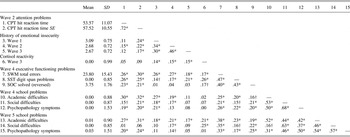
Table 1 shows the means, standard deviations, and correlations among the main variables in the primary analyses. Due to moderate kurtosis, the cortisol reactivity measure was log transformed to increase normality in the distribution prior to the calculation of the correlations and the primary analyses. As indicated by the correlations in Table 1, associations between the proposed manifest indicators of the latent constructs were all significant and generally moderate in magnitude. The moderate associations evident between children's representations of the interparental relationship across time (i.e., rs = .30–.46) are consistent with previous findings regarding stability in children's appraisals and representations of interparental conflict in childhood (Davies et al., Reference Davies, Sturge-Apple, Winter, Cummings and Farrell2006; Grych, Harold, & Miles, Reference Grych, Harold and Miles2003; Toth, Rogosch, Sturge-Apple, & Cicchetti, Reference Toth, Rogosch, Sturge-Apple and Cicchetti2009). Structural equation models were estimated using full-information maximum likelihood in Amos 22.0 to retain the full sample for primary analyses (Enders, Reference Enders2001).
Means, standard deviations, and correlations of the primary variables in the analyses

Note: CPT, Continuous Performance Test; SWM, Spatial Working Memory Task; SST, Spatial Span Task; SOC, Stocking of Cambridge Test.
†p < .10. *p ≤ .05.
Executive functioning as a mediator of the sequelae of children's insecurity
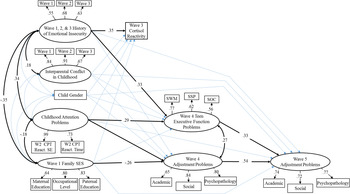
Figure 2 provides a depiction of the structural equation modeling (SEM) analysis of adolescents’ executive function problems as a mediator of associations between childhood insecure representations of the interparental relationship and their school difficulties. As shown in the figure, a latent construct assessing children's history of insecure representations over the three measurement occasions was specified as a predictor of each of the downstream endogenous variables comprising Wave 3 cortisol reactivity, Waves 4 and 5 school problems, and most important for mediational tests, Wave 4 executive function difficulties. In reflecting the second link in the mediational chain, Wave 4 teen executive function difficulties in turn served as a predictor of the latent construct of school problems 1 year later at Wave 5 after controlling their school problems at Wave 4. To provide a more stringent test of the hypothesized mediational pathway, we also specified pathways among (a) the three covariates (i.e., child gender, SES, and interparental conflict history) and the endogenous variables consisting of Wave 3 cortisol reactivity, Wave 4 executive function problems, and Waves 4 and 5 school problems; and (b) attention difficulties in childhood and school problems at Waves 4 and 5. The light-colored, dashed lines in Figure 2 illustrate the nonsignificant pathways that were included in the structural model. Because our first aim was to test executive functioning as a mediator of children's insecurity prior to examining cortisol reactivity as an explanatory mechanism, predictive pathways from Wave 3 cortisol reactivity to Wave 4 adolescent executive functioning and Waves 4 and 5 school problems were constrained to 0.
(Color online) Structural equation model examining adolescent executive functioning mediating early histories of insecure representations of the interparental relationship and later school functioning. All path coefficients are standardized values. Light-colored dotted lines indicate structural paths that were included in the model, but were not significant at p < .05. CPT, Continuous Performance Test; SWM, Spatial Working Memory Task; SST, Spatial Span Task; SOC, Stocking of Cambridge Test; SES, socioeconomic status.

The model provided a good representation of the data, χ2 (175, N = 235) = 238.49, p < .001, root mean square error of approximation = 0.04, and χ2 /df ratio = 1.36, and comparative fit index = 0.95. Consistent with hypotheses, children's history of emotional insecurity predicted adolescent executive function problems 7 years later at Wave 4 (β = 0.33, p = .02). Moreover, this pathway was robust in a broader model that also controlled for childhood attention problems (β = 0.29, p = .01), SES, child gender, and interparental conflict history as predictors of teen executive functioning problems. In turn, adolescent executive function problems at Wave 4 predicted their school adjustment problems 1 year later at Wave 5 (β = 0.33, p = .01). In addition, this association was evident in a broader analysis that controlled for the autoregressive path for adolescent school problems (β = 0.54, p < .001), the covariates, and childhood executive function problems. Further supporting the mediational hypothesis, bootstrapping tests utilizing the PRODCLIN software program indicated that the indirect path involving childhood history of insecurity, Wave 4 executive function difficulties, and Wave 5 school difficulties was significantly different from 0, 95% confidence interval (CI) [0.01–0.33] (MacKinnon, Fritz, Williams, & Lockwood, Reference MacKinnon, Fritz, Williams and Lockwood2007). Finally, supporting the possibility that cortisol reactivity to interparental conflict may mediate the first part of the cascade between childhood insecurity history and Wave 4 executive functioning, childhood insecurity also predicted greater cortisol reactivity to the videotaped vignettes of interparental conflict (β = 0.35, p = .002).
The role of adrenocortical reactivity in the cascade of emotional insecurity
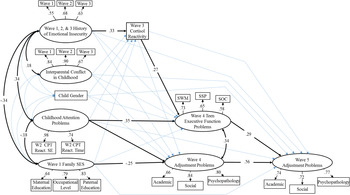
Given the evidence supporting mediation, we proceeded to examine a more complex cascade whereby childhood history of insecure representations increased vulnerability to teen executive function difficulties and, ultimately, school problems through its association with heightened cortisol reactivity to conflict. Thus, in addition to estimating all the pathways specified in Figure 2, we also freed up the constraints placed on the predictive paths for Wave 3 cortisol reactivity. Pathways were specifically estimated between Wave 3 cortisol reactivity to the interparental conflict vignettes and adolescent Wave 4 executive functioning and Waves 4 and 5 school problems. The model, which is presented in Figure 3, fit the data well, χ2 (172, N = 235) = 227.58, p < .01, root mean square error of approximation = 0.04, χ2 /df ratio = 1.32, and comparative fit index = 0.96. In support of the first link in the proposed mediational chain, children's cortisol reactivity at Wave 3 was predicted by their insecure representations of interparental conflict from Waves 1 through 3 (β = 0.33, p < .01), even with the inclusion the covariates in the model. In the second link in the mediational chain, children's cortisol reactivity to conflict at Wave 3, in turn, was associated with greater Wave 4 executive function problems (β = 0.27, p = .01) in the broader model that also specified SES, interparental conflict history, childhood executive function problems, and children's gender and insecurity as predictors. Moreover, the original structural path between childhood insecurity and Wave 4 executive function impairments in Figure 2 (i.e., β = 0.33, p = .02) dropped by 52% to β = 0.16, ns, following the inclusion of Wave 3 cortisol reactivity as a predictor (see Figure 3). Finally, consistent with the results for analyses presented in Figure 2, poor executive function at Wave 4 continued to predict higher levels of school maladjustment 1 year later after estimating for the autoregressive path, covariates, and cortisol reactivity as predictors (β = 0.29, p = .03).
(Color online) Structural equation model including cortisol reactivity as an intervening mechanism explaining the mediating role of adolescent executive functioning between early histories of insecure representations of the interparental relationship and later school functioning. All path coefficients are standardized values. Light-colored dotted lines indicate structural paths that were included in the model, but were not significant at p < .05. CPT, Continuous Performance Test; SWM, Spatial Working Memory Task; SST, Spatial Span Task; SOC, Stocking of Cambridge Test; SES, socioeconomic status.

Our findings on the multichain cascade of processes involving emotional insecurity can be further dichotomized into two interlocking indirect pathways. In the first part of the cascade, Wave 3 cortisol is hypothesized to mediate prospective associations between childhood history of emotional insecurity and Wave 4 executive function problems. Consistent with this prediction, the PRODCLIN bootstrapping analyses indicated that the indirect path in Figure 3 involving childhood history of insecurity, Wave 3 cortisol reactivity, and Wave 4 executive function problems was significantly different from 0, 95% CI [0.28–4.37]. In the subsequent part of the cascade, the results in Figure 3 also highlighted the plausibility of Wave 4 executive function problems serving as an intermediary process linking Wave 3 cortisol reactivity to Wave 5 school problems. Supporting this proposed pathway, the results of the PRODCLIN indicated that the mediational link involving Wave 3 cortisol reactivity, teen executive function problems at Wave 4, and their school problems at Wave 5 was also significantly different form 0, 95% CI [0.003–0.12] (MacKinnon et al., Reference MacKinnon, Fritz, Williams and Lockwood2007).
Finally, in the context of research highlighting the potential influence of both dampened and heightened cortisol levels on executive functioning (e.g., Blair et al., Reference Blair, Granger and Razza2005, Reference Blair, Granger, Willoughby, Mills-Koonce, Cox, Greenberg and Fortunato2011), an alternative interpretation is that the linear association between greater cortisol reactivity and poorer executive functioning may be masking a more complex curvilinear relationship. To investigate this possibility, we retested our SEM model after including a manifest indicator representing a curvilinear (i.e., squared) term for cortisol reactivity. In support of original findings, the curvilinear term did not add unique explanatory power as a predictor of Wave 4 executive functioning impairments (β = –0.03, p = .85). In addition, the linear index of cortisol reactivity at Wave 3 continued to significantly predict Wave 4 executive functioning impairments (β = 0.29, p = .04).
Discussion
In spite of its consistent documentation as a mediator in the association between interparental conflict and children's psychological problems, little is known about how and why children's insecure representations of the interparental relationship increase their risk for adjustment problems (Cummings & Davies, Reference Cummings and Davies2010). Research in the broader literature has provided important clues to addressing this question by identifying dimensions of interparental conflict (e.g., hostility and aggression) that alter adrenocortical functioning and impair executive functioning (e.g., Blair et al., Reference Blair, Granger, Willoughby, Mills-Koonce, Cox, Greenberg and Fortunato2011; Repetti et al., Reference Repetti, Robles and Reynolds2011). In integrating these two literatures, EST-R hypothesizes that insecure representations of the interparental relationship increase children's vulnerability to psychological problems by altering their cortisol reactivity to subsequent conflicts and executive functioning (Davies & Martin, Reference Davies and Martin2013). This study provided a first test of this theoretically driven hypothesis whereby children's cortisol reactivity and executive functioning difficulties serve as unfolding mediators in the link between their insecure representations and school adjustment problems (see Figure 1). Consistent with the first link in the mediational chain, the findings indicated that children's insecure representations of the interparental relationship across three annual measurement occasions in childhood predicted greater executive functioning problems during early adolescence, even after controlling for childhood attention difficulties, interparental conflict exposure, family SES, and child gender. Adolescent executive functioning difficulties, in turn, were associated with teacher reports of school problems 1 year later, even after accounting for the autoregressive path and covariates. Further supporting the developmental cascade of the processes underlying this link, children's cortisol reactivity to conflict in childhood mediated the relationship between their insecure representations and later executive functioning difficulties in adolescence.
Executive functioning mediates insecure representations and later school adjustment
EST-R specifically proposes that insecure representations increase adjustment problems over time by prioritizing quick and efficient self-defense over more effortful, goal-directed skills characterized by flexible planning, working memory, and behavioral organization and flexibility (e.g., Davies & Martin, Reference Davies and Martin2013). Our documentation of a prospective association between insecure representations in childhood and executive functioning problems in early adolescence provides initial support for the first link in the mediational chain. Moreover, these results are broadly consistent with both evolutionary and resource allocation proposals highlighting the mental health implications of individual differences in how organisms apportion limited psychobiological resources to multiple developmental tasks (e.g., Del Giudice et al., Reference Del Giudice, Ellis, Shirtcliff, Laviola and Macri2013; Inzlicht & Schmeichel, Reference Inzlicht and Schmeichel2012). Interpreted within this framework, insecure representations represent the heavy dedication of affective and information processing capacities toward identifying and responding to threats in the interparental subsystem. Although highly specialized and elaborative ways of processing danger in the family may be adaptive for children in high-conflict homes, this can occur at the expense of a more balanced investment of resources toward mastery of other important goal pursuits (Davies & Martin, Reference Davies and Martin2013). Children drawing on insecure representations as blueprints for interpreting and responding to subsequent interpersonal interactions are likely to be narrowly attentive and motivated toward defending against threat, and this may initially be manifested in decrements to higher order, sophisticated, and goal-oriented executive functions.
The second link in this mediational chain, our finding that neuropsychological impairments predict difficulties across academic, social, and psychological domains of school adjustment, contributes to the growing literature emphasizing the central role of executive functioning for healthy adjustment (e.g., Rothbart & Posner, Reference Rothbart and Posner2015; Suor et al., Reference Suor, Sturge-Apple, Davies, Cicchetti and Manning2015). For example, although longitudinal studies are largely limited to early childhood, empirical findings have identified children's executive functioning abilities as predictors of subsequently higher levels of academic abilities, social competence, and emotional well-being in school contexts (Blair & Raver, Reference Blair and Raver2015). Likewise, conceptualizations of executive functioning underscore their role in flexibly coordinating and shifting attention, affect, and cognition in a goal-directed manner that facilitates the enactment of contextually sensitive, reflective responses across challenging and novel settings, ultimately supporting academic, emotional, and social well-being (Blair, Reference Blair2002; Snyder, Reference Snyder2013).
Cortisol reactivity mediates the link between insecure representations and executive functioning
Although resource allocation models provide a general foundation for understanding why insecurity may be associated with deficits in executive function, they offer less guidance as to the precise mechanisms that may explain how or why neuropsychological impairments would develop in the wake of early histories of insecurity. To address this substantive gap, EST-R draws on canalization and risky families models in proposing that this cascading pathway is underpinned by neurobiological mechanisms. According to these frameworks, early histories of family adversity alter neural connections between the limbic system (e.g., amygdala) and the prefrontal cortex in ways that increase the reflexive processing of environmental threats at the expense of neural structures that organize top-down control (i.e., executive functions; Blair et al., Reference Blair, Granger and Razza2005, Reference Blair, Granger, Willoughby, Mills-Koonce, Cox, Greenberg and Fortunato2011; Repetti et al., Reference Repetti, Robles and Reynolds2011). Consistent with these broader models, EST-R posits that cortisol, as a central component of the stress response system, interferes with executive functioning in the wake of interpersonal threats (Davies et al., Reference Davies, Sturge-Apple and Cicchetti2011, Reference Davies, Sturge-Apple, Martin, Lansdale, McHale and Booth2013). Thus, to further trace the legacy of childhood histories of insecurity, our second aim was to test the hypothesis that children's cortisol reactivity to interadult conflict served as an explanatory mechanism in the first link of our proposed mediational chain (see Figure 1). Supporting the iatrogenic role of heightened cortisol, our findings indicated that children's higher cortisol reactivity to videotaped simulations of interadult conflict during late childhood mediated the link between their insecure representations earlier in childhood and their subsequent executive functioning impairments in adolescence. Additional analyses revealed that the linear, prospective association between cortisol reactivity and executive functioning difficulties was not simply an artifact of a more complex curvilinear relationship whereby children with dampened or heightened cortisol reactivity exhibited the poorest executive functioning.
Neurobiological theory and research vary in their support of whether associations between early adversity and executive functioning difficulties are mediated by dampened cortisol, elevated cortisol, or both (Blair et al., Reference Blair, Granger, Willoughby, Mills-Koonce, Cox, Greenberg and Fortunato2011; Gunnar & Vazquez, Reference Gunnar and Vazquez2001; Koss et al., Reference Koss, George, Davies, Cicchetti, Cummings and Sturge-Apple2013; Susman, Reference Susman2006). Therefore, it is important to further address the question of why higher, rather than lower, cortisol reactivity to conflicts was identified as a risk mechanism. In drawing on neuroscience research, heightened cortisol activity has been consistently designated as having toxic effects on brain regions mediating executive functioning. A common hypothesis shared by multiple frameworks is that pronounced increases in cortisol may lead to reduced sensitivity and efficiency of neuronal pathways in the prefrontal cortex, particularly given the dense population of glucorticoid receptors in the brain region (Blair et al., Reference Blair, Granger and Razza2005; De Bellis & Thomas, Reference De Bellis and Thomas2003; Lupien et al., Reference Lupien, Fiocco, Wan, Maheu, Lord, Schramek and Tu2005). Consistent with this hypothesis, Blair et al. (Reference Blair, Granger and Razza2005) found that preschool children who evidenced higher cortisol levels prior to meeting an unfamiliar adult and at the midpoint of the assessment with the unfamiliar adult exhibited poorer fluid cognitive abilities that, in turn, were associated with teacher reports of poorer school (e.g., social and academic competence) adjustment. Our findings are also consistent with other studies linking greater cortisol activity or reactivity with poorer executive functioning for both adults (e.g., Gonzalez, Jenkins, Steiner, & Fleming, Reference Gonzalez, Jenkins, Steiner and Fleming2012; Monk & Nelson, Reference Monk and Nelson2002) and children (e.g., Blair et al., Reference Blair, Granger, Willoughby, Mills-Koonce, Cox, Greenberg and Fortunato2011). Even conceptual proposals highlighting links between attenuated cortisol and psychological problems commonly implicate heightened cortisol output as a primary agent of toxicity. For example, as a key pathway in the attenuation hypothesis (Susman, Reference Susman2006), downregulation of the HPA axis is postulated to thwart the chronic overarousal of the stress response system (e.g., higher cortisol) and its toxic effects on the brain. Thus, the toxic effects of HPA axis sensitization in the early or middle stages of contending with histories of threat may account for why dampened cortisol is associated with poorer executive functioning in some studies.
Limitations and conclusions
Our findings must be interpreted within the context of several methodological limitations. First, our community sample of families was predominantly White and from working- or middle-class backgrounds. Therefore, the cascading pathway identified in the present study may not necessarily generalize to families with other racial, ethnic, or social (e.g., poverty and family violence) backgrounds. Addressing questions about the applicability of our findings to other samples is particularly important given empirical evidence that children from higher risk backgrounds (e.g., economic impoverishment) may experience multiple pathogenic forms of HPA functioning (e.g., attenuated levels; Blair et al., Reference Blair, Granger, Willoughby, Mills-Koonce, Cox, Greenberg and Fortunato2011; Lupien et al., Reference Lupien, King, Meaney and McEwen2001; Suor et al., Reference Suor, Sturge-Apple, Davies, Cicchetti and Manning2015). Second, although the timing of our measures was broadly consistent with the expected sequence of unfolding processes in the proposed cascade, the study design did not permit a full prospective analysis of change at each link in the mediational chain. For example, because repeated measures of children's cortisol reactivity to interadult conflict were not obtained in our study, we could not examine whether children's histories of insecure representations predicted subsequent increases in their cortisol reactivity over time. Likewise, although our inclusion of attention measures reduces the plausibility that the identified pathways were an artifact of early attention difficulties, we could not test a more rigorous autoregressive analysis of executive functions due to the absence of neuropsychological assessments in our measurement battery during childhood. Third, even with the inclusion of an autoregressive path for school adjustment and multiple covariates, we cannot rule out the possible operation of other extraneous variables in accounting for mediational pathways. For example, it is possible that more complex, transactional chains of processes are operating whereby executive functioning deficits increase children's insecure representations of interparental relations (Beevers, Reference Beevers2005).
Fourth, future research would benefit from employing more extensive assessments of physiological reactivity and executive functioning than were available in our data set. Although our multitask assessment of executive functioning captured planning, problem solving, and spatial working memory, it still only captures a subset of the broader multidimensional construct. Thus, broadening neuropsychological assessments to also include indices of self-monitoring, task switching, and inhibitory control would provide a more comprehensive account of executive functions (Zelazo et al., Reference Zelazo, Anderson, Richler, Wallner-Allen, Beaumont and Weintraub2013). Likewise, complementing performance-based measures, like those used in this study, with self- or informant-report measures of executive functioning will be important for future work. Improvements in the assessment of physiological reactivity beyond our pre–post measure of adrenocortical reactivity could also be achieved by the collection of more cortisol samples within and across measurement occasions within a more diverse physiological assessment battery (e.g., sympathetic nervous system reactivity).
Despite these limitations, the longitudinal findings of this multimethod, multilevel study were designed to break new ground in several ways. As the first comprehensive test of the role of neuropsychological functioning in EST-R, the findings provided support for a developmental pathway whereby insecure representations of interparental relations predicted greater executive functioning impairments in early adolescence that, in turn, were linked with subsequent increases in school adjustment problems following the transition to high school. Toward the goal of identifying the neurobiological underpinnings of this cascade, our SEM analyses further revealed that higher levels of cortisol reactivity to interadult conflict mediated the prospective links between insecurity in childhood and executive functioning and school adjustment difficulties in adolescence. Together, these findings begin to articulate a more precise understanding of the target mechanisms linking insecurity and school adjustment problems across multiple levels of analysis (e.g., psychological, cognitive, and physiological). Ultimately, articulating this complex cascade of developmental processes has the potential to inform interventions designed to stop the pathogenic consequences of early histories of emotional insecurity.