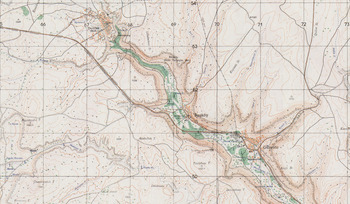
Mavrucandere, one of the remarkable medieval settlements, is situated within a quite deep and wide valley located at the southern part of Cappadocia (fig. 1). The valley, known today as Güzeldere and called Potamia by its local Greek population in the nineteenth century, is positioned between the important medieval transportation hubs of Koloneia (Aksaray) and Caesarea (Kayseri). An extensive Byzantine rock-cut settlement lies upon its slopes. The starting point of this research is the survey entitled ‘The Byzantine Settlements in and around Güzelöz Başköy in Cappadocia’ that I have conducted under the authorization of the Turkish Ministry of Culture and Tourism.Footnote 2 Following six fieldwork seasons, several notable issues have been raised regarding the settlement's organization, masonry and rock-cut architecture, agrarian life, characteristics of underground dwellings, wall-paintings, and other artistic production in the valley, and many important new discoveries came to light.Footnote 3
The map of Mavrucandere in Cappadocia.

Apart from a few recent studies, agricultural installations in Cappadocia have not been investigated in terms of their architecture, location and production processes, nor indeed has their relationship with consumption and trade been examined.Footnote 4 Hence, the wine-making facilities we have investigated in and around Mavrucandere offer some original data on medieval wine production in Cappadocia. The purpose of this paper is to introduce the architecture of Mavrucandere's agricultural installations, the wine-making process, and the location of the installations in the settlement, in order to understand the relationship between the wine production and the landlords of the region, to consider the importance of the installations for the region's trade activities during the Byzantine period, to reveal the estimated production capacity of these wine-presses within commercial purposes, and finally to suggest a date for the agricultural production area. I shall begin by setting the agricultural production area's framework in the settlement both within the context of Byzantine Cappadocia's rural character and the concerns of the region's wine production.
Historical context of the settlement in the light of the archaeological findings
The large rock-cut settlement contains ample evidence of quite significant architectural and artistic investment during the late ninth and tenth centuries, and then again during the thirteenth century. Given the archaeological evidence, we may assume that the settlement existed before the medieval period. Among the ceramic findings, which were not recorded in detail, are potsherds dating from the Early Bronze Age to the Late Ottoman period.Footnote 5 There are also a great number of rock-cut burial spaces with kline, dating from the late Roman period.
Because of the nature of the region, most of the buildings are rock-cut rather than built. We have documented around thirty-five rock-cut churches, the majority of which have been identified for the first time. Furthermore, some of the churches in the valley are masonry buildings constructed of finely cut stone. In addition, the settlement contains a small number of rock-cut domestic units such as halls, rooms and stables, which were possibly reused after the Byzantine period.
As one might expect, there is quite limited material evidence remaining in the valley from the early Byzantine period. The majority of the settlement's context has been eradicated by landslides and erosion. For that reason, with regard to the date of the settlement and its various structures, we can only provide a simple conjectural chronology based on the archaeological and art historical evidence. The earliest clear evidence is a masonry-built single nave basilica, erected in Başköy near the river. The church has architectural features which date from the fourth to sixth centuries and is comparable to some early Byzantine churches in Cappadocia.Footnote 6
Cappadocia suffered from Persian invasions in the sixth and seventh centuries, and also from Arab invasions at the beginning of the eighth and ninth centuries. We discovered the remains of a small military post, a kastron, in our 2013 campaign. This evidence suggests that the small Mavrucandere fortress, which is located at the top of the valley, could have been built in this period or a short time before.
Clearly, stability was not regained in Cappadocia until the second half of the ninth century. In Mavrucandere, some of the wall-paintings may belong to the second half of the ninth century or immediately after, judging from their style and the epigraphic features of the epitaphs.Footnote 7 Among these, Başköy Church 3 has a particularly unique iconographical character, not only in Cappadocian art but also in Byzantine monumental painting. There is indeed a genesis cycle in the north nave's vault which we discovered during our 2009 campaign.Footnote 8
Thereafter, we can observe an impressive period of artistic investment in the thirteenth century. One of the most remarkable masonry churches is dedicated to St. George and has mural paintings from the end of this century. There are other groups of wall paintings still in evidence which indicate a strong emphasis on artistic production in the valley throughout that period.Footnote 9
Architecture of the agricultural installations
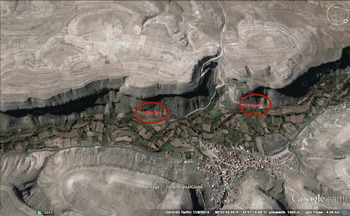
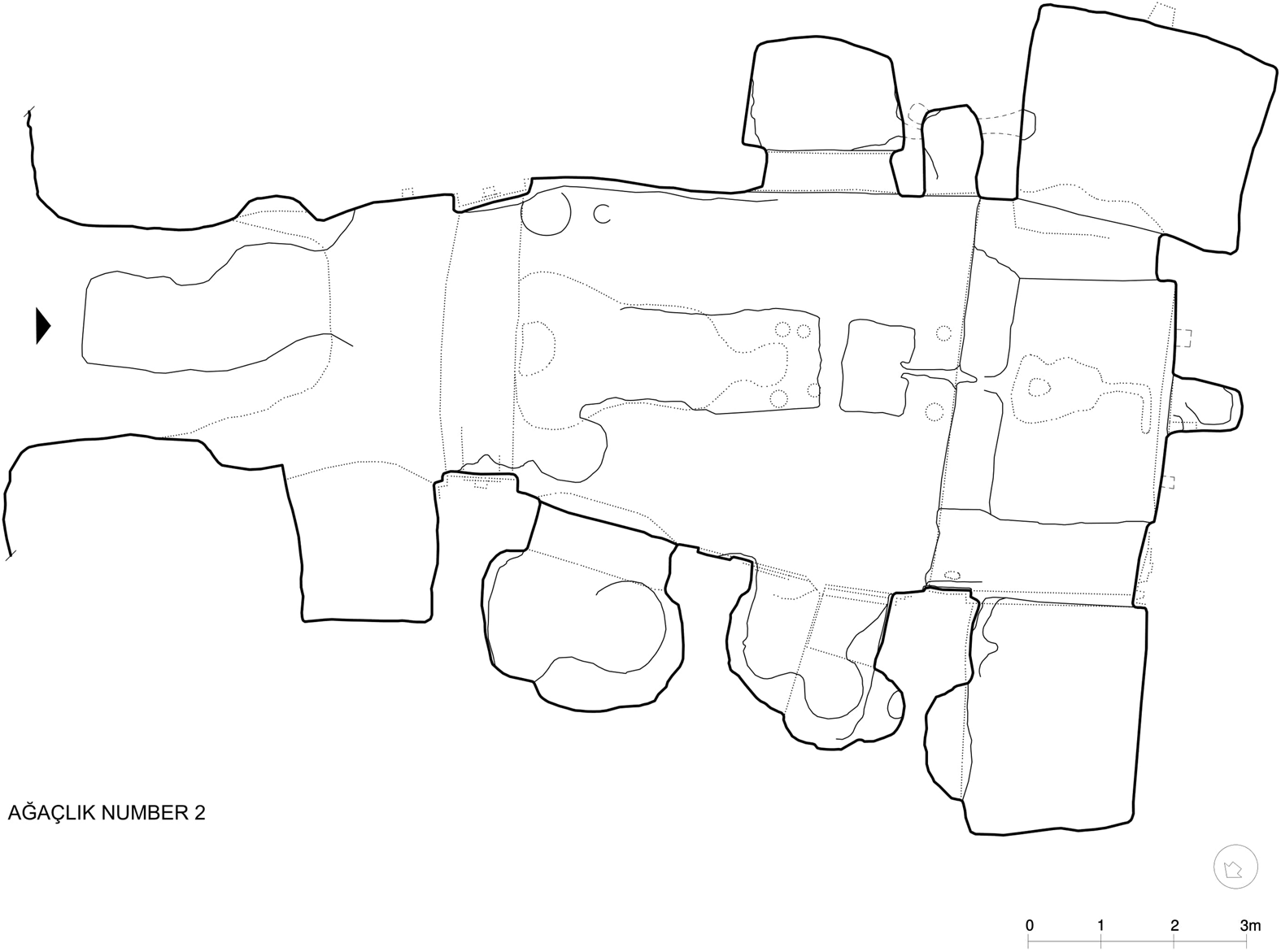
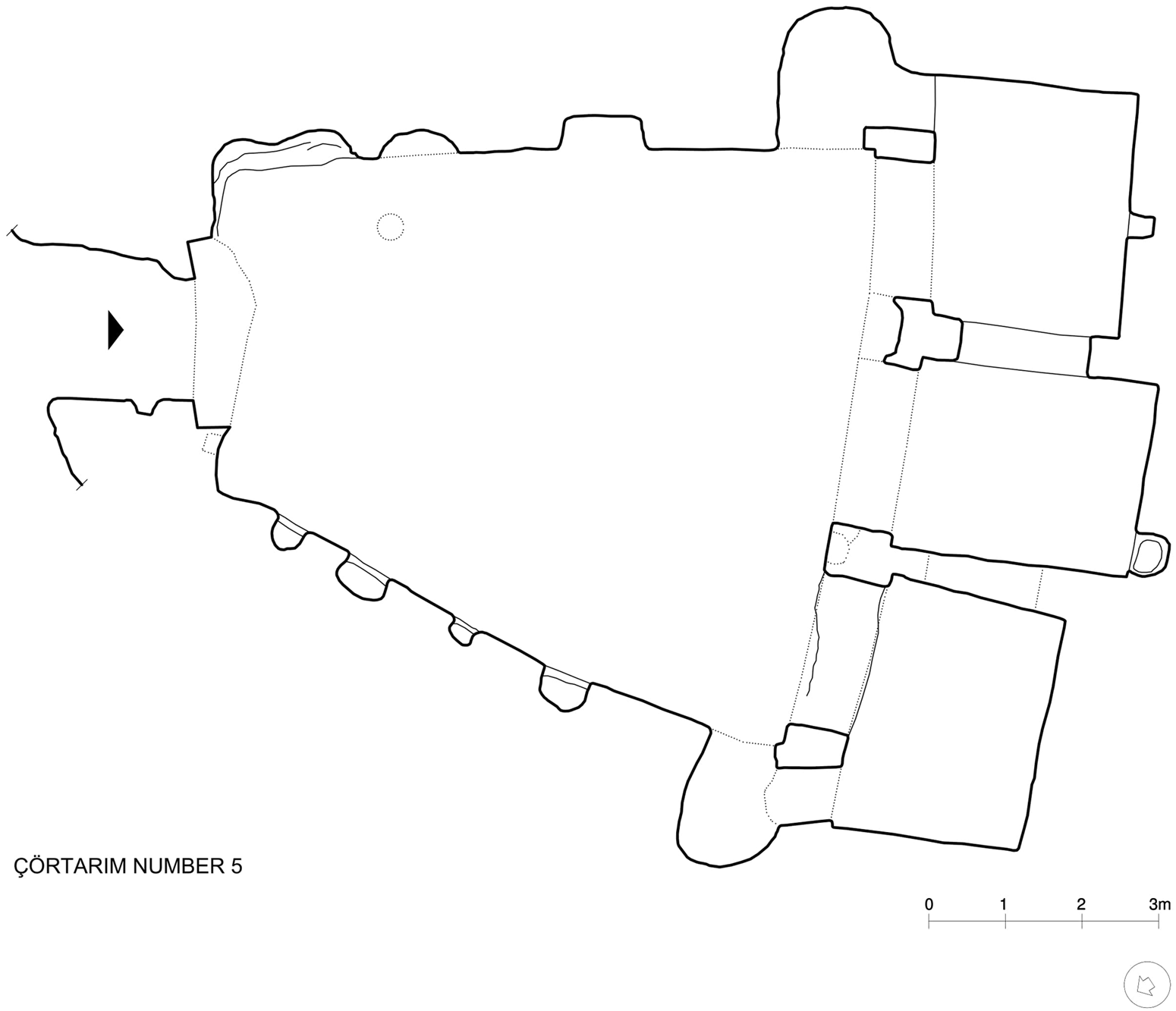
The agricultural area known as Ağaçlık lies on the western slope of the southern extension of the valley (fig. 2). On the same side of the valley, there is a similar agricultural area which the villagers call Çörtarım (fig. 2). We discovered nine wine-presses, two drainage channels, a well and a watermill in Ağaçlık and we have also recorded five wine-presses and some unidentifiable irregular rooms in Çörtarım. Based on our examinations, we can say that there were many more installations than those which have survived until now.
The agricultural area of Ağaçlık and Çörtarım in Mavrucandere.

In Ağaçlık, these installations are located in close proximity to each other. Similarly, in Çörtarım, wine-presses are closely situated along the same pathway. There are both simple, single-roomed installations and more complex layouts, indicating the presence of large-scale production.
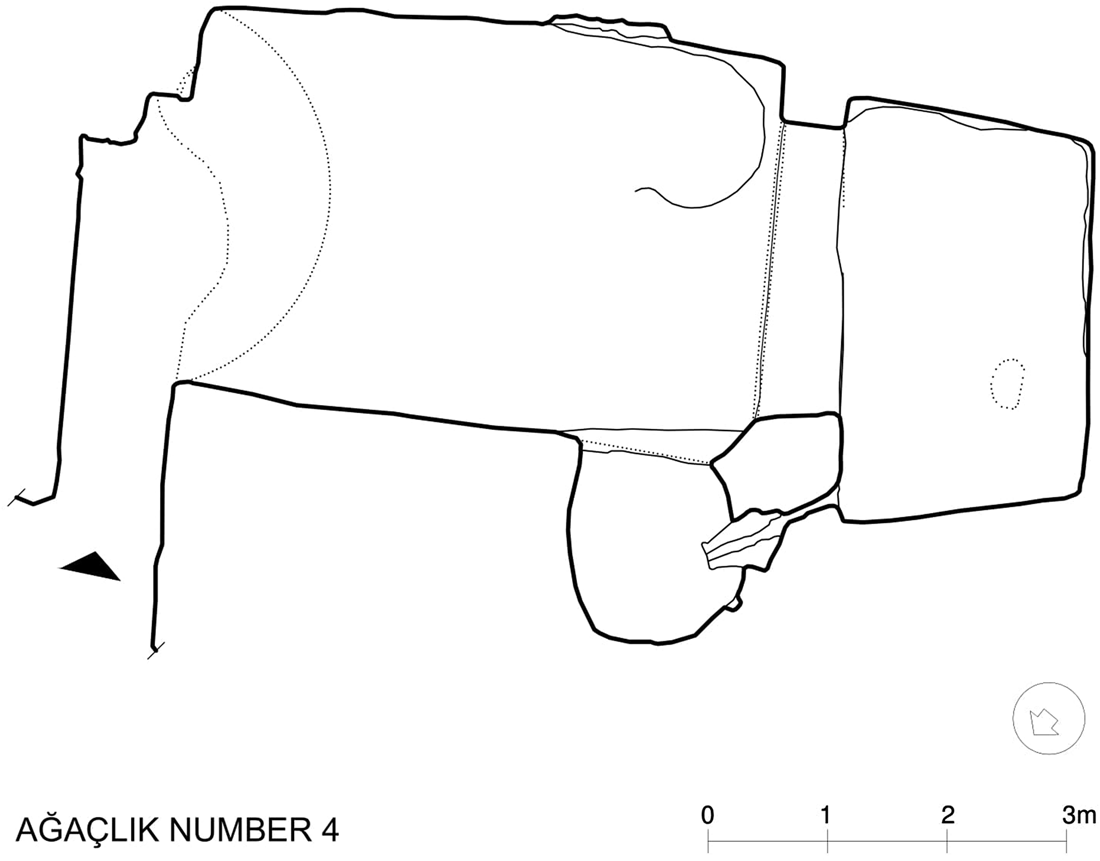
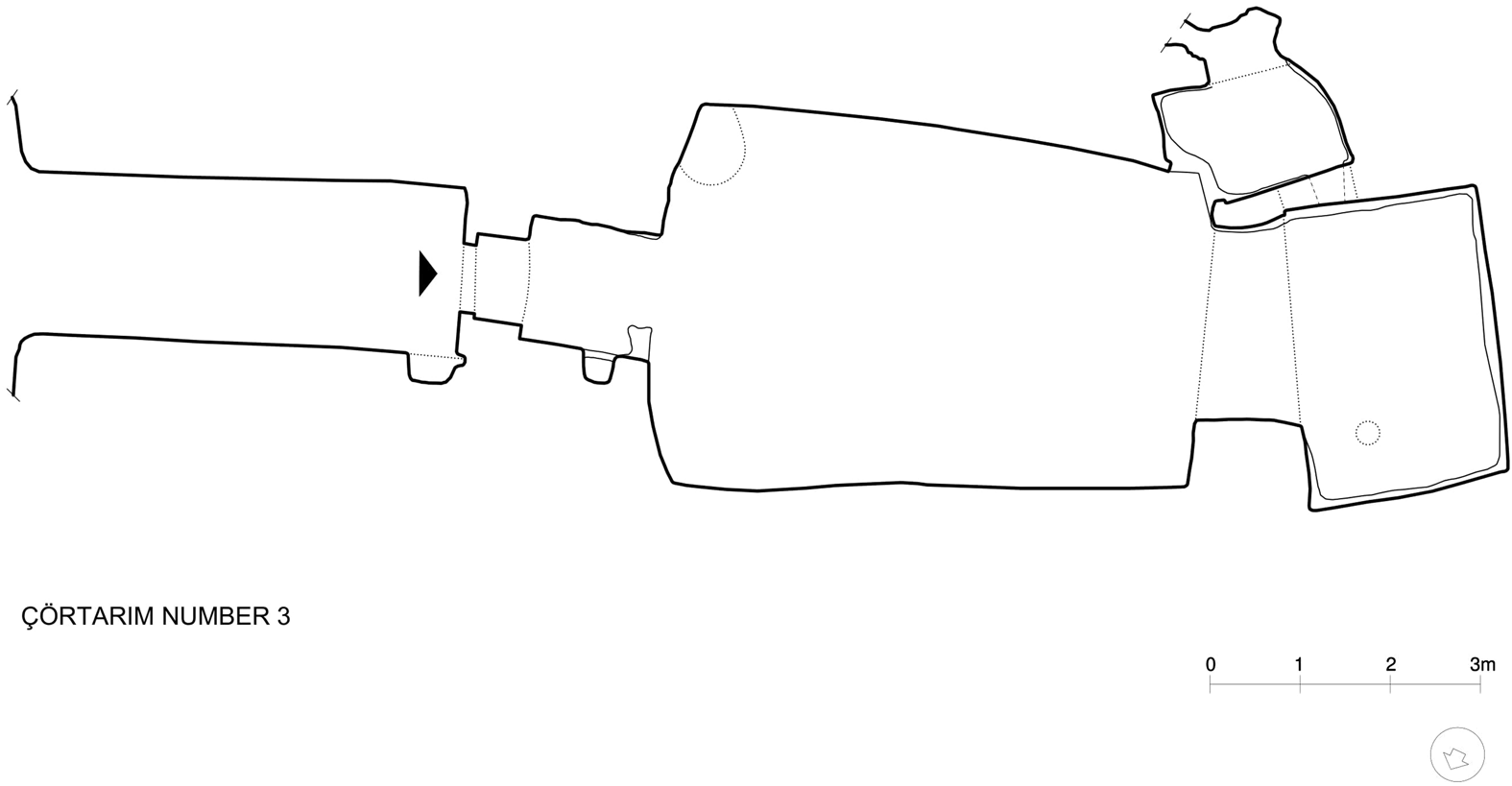
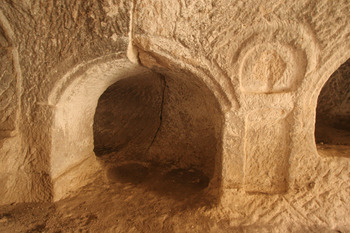
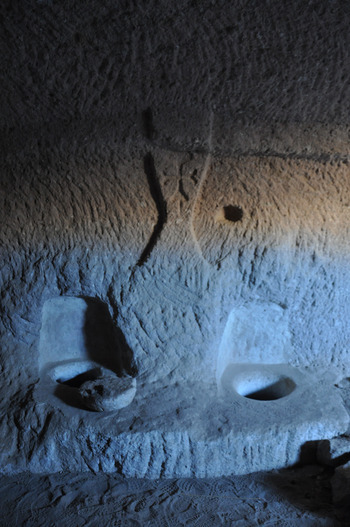
These wine-presses can be divided into two groups, each of which can be classified by the number of vats and also by the existence of other components such as pipes, fermentation vats and storages. The first group of wine-presses (Group one) have a single treading floor and one collecting vat, with examples in Ağaçlık including numbers 3, 4, 5, 6 and 9; and in Çörtarım numbers 1, 3 and 4 (fig. 3, 4). They are all relatively simple in their conception and structure, and smaller in size than those in the second group (Group two). Although the majority have a rectangular treading floor, the shape of the collecting vats differs: some of them are carved as a rectangular space, while the others are almost circular in shape.
Wine-press 4, Ağaçlık.

Wine-press 3, Çörtarım.

Examples of the second group are more sophisticated and can be seen in Ağaçlık numbers 1, 2, 8; in Çörtarım numbers 2 and 5 (fig. 5, 6). All of these presses have larger proportions than those categorized in group one. These installations consist of one or two treading floors and collecting vats, storage units and fermentation vats.Footnote 10 In this category, the treading floors are rectangular while, in contrast, the majority of the collecting vats are round in shape.
Wine-press 2, Ağaçlık.

Wine-press 5 Çörtarım.

Although Mavrucandere's wine-presses can be divided into two distinct groups, both share a range of similar architectural features;
Sizes: In all wine-presses, the collecting vat is slightly lower and smaller than the treading floor because of the necessities of the production process. Each treading floor is sloping to a certain extent so that the must can flow easily out from the treading floor. The Geoponika, compiled during the tenth century in Constantinople for the Byzantine emperor Constantine VII Porphyrogenitus, includes some relevant information on agricultural practices and agronomy. This Byzantine agricultural treatise strongly emphasizes the importance of the size of collecting vats:
‘Vats should not be large. In (smaller) ones that are not too narrow the wine does not bubble up too vigorously; the excess rises by itself and expels not only the odour but also the anthos (yeast). Small containers help greatly with storage and with wine quality. If we still have some big old vats, we should put the weaker and poorer (must) into them; the better should go into smaller vats’.Footnote 11
Kingsley, in his study of fourth and seventh century wine-presses from Israel, noted that the average installation consisted of a collecting vat measuring between 1.3–1.7 meters wide, and 1.1 meters in depth.Footnote 12 These earlier examples are significantly larger than those found in the Mavrucandere wine-presses. In Mavrucandere, there is clear evidence of a common standardization in the size of the collecting vats. The diameter of all circular well-shaped vats is between 50 and 75 centimeters. The rectangular vats are also approximately the same size. Equally, in the adjacent settlement of Soğanlıdere, the collecting vats have almost the same dimensions as their counterparts in nearby Ağaçlık and Çörtarım. Similarly, in Erdemli, another neighboring settlement, the collecting vats also have approximately the same size. In Cappadocia, there are another two settlements which contain quite intensive agricultural areas; one of them is near Aksalur (Nevşehir) and the other is called Bayatönü in Altunhisar of Niğde. Based on our observations, circular- shaped collecting vats have equivalent dimensions in both settlements. This evidence tells us that round well-shaped collecting vats are the most common type in Cappadocia.
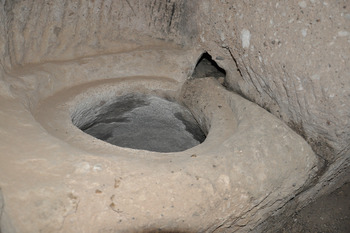
Covering: The interiors of all the treading floors and collecting vats are plastered, as it provides a more flawless surface to assist production (fig. 7). Without this, the volcanic dust could contaminate the process and affect the quality of the wine. In addition, the majority of collecting vats also have a plastered cover house. It shows that a cover was used during wine-making and afterwards for storage. It indicates that the wooden cover might have been used in the Late Antiquity examples of Cilicia.Footnote 13Geoponika recommends a broad piece of wood to cover it.Footnote 14 We might suggest that the first fermentation takes place in the collecting vat. To make wine, Geoponika recommends nine days for the first fermentation, which should be a short and very turbulent fermentation.Footnote 15
Collecting vat, Wine-press 1, Ağaçlık.

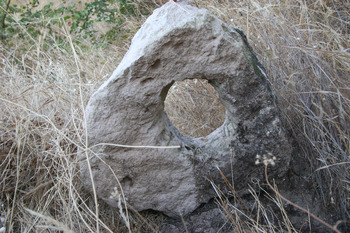
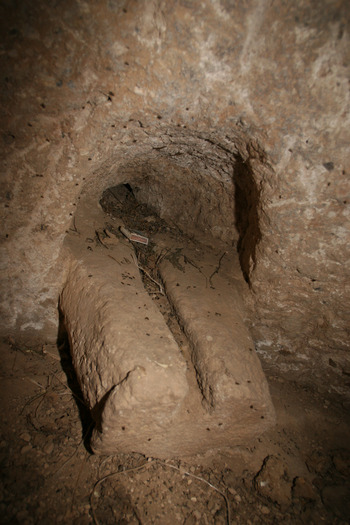
Pressing mechanism: The majority of wine-presses have some niches along the walls of the treading floor, possibly for oil lamps, as the interiors of these installations are quite dark for wine-making. However, many of the niches are quite low for illumination purposes and may have been part of a pressing mechanism, as suggested by the presence of a beam weight which we found during our 2011 campaign (fig. 8). Nonetheless, Karakaya has claimed that a beam press system was not used in wine production because of the lack of press beds evident in Erdemli.Footnote 16 Our findings and observations therefore suggest an alternative opinion regarding the use of the pressing mechanisms in Byzantine Cappadocia. In Antiquity, grapes were first trodden and then grape skins and stalks were separated from the pulp. Secondly, the grapes were then pressed. Frankel already claims that grapes were certainly always first trodden and then pressed in ancient times.Footnote 17 It would appear that the same production process was continued throughout the Byzantine period. Although there is no secure archaeological evidence of a screw press system in Cappadocia, it may be argued that, in Mavrucandere, a beam press technique was used during the medieval period. On the other hand, Amorium's wine-presses, dated from the seventh to the ninth century, have some archaeological evidence of both beam and screw presses systems.Footnote 18
Beam weight, Ağaçlık.

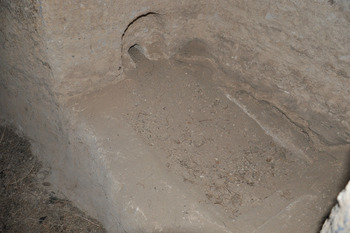
Pipe and Channel: In most of the installations, there is a connection between the treading floor and the collecting vat via a pipe or a channel. However, some of them are still partly covered by soil, so that some details cannot yet be ascertained. It seems that there are two different connection types in wine-presses. One of them is a pipe, which is preserved today in-situ to the connection point; we have found other similar pipes which had been removed from their original position on the treading floor (fig. 9). The second connection type is composed of channels which are cut into the treading floor and the collecting vat; available evidence suggests that this is a more common mechanism than the pipe system across the region's installations (fig. 10). As far as we could determine, the rest of the installations in Cappadocia are not designed with pipe connectors.
Pipe, Wine-press 4, Ağaçlık.

Channel, Wine-press 6, Ağaçlık.

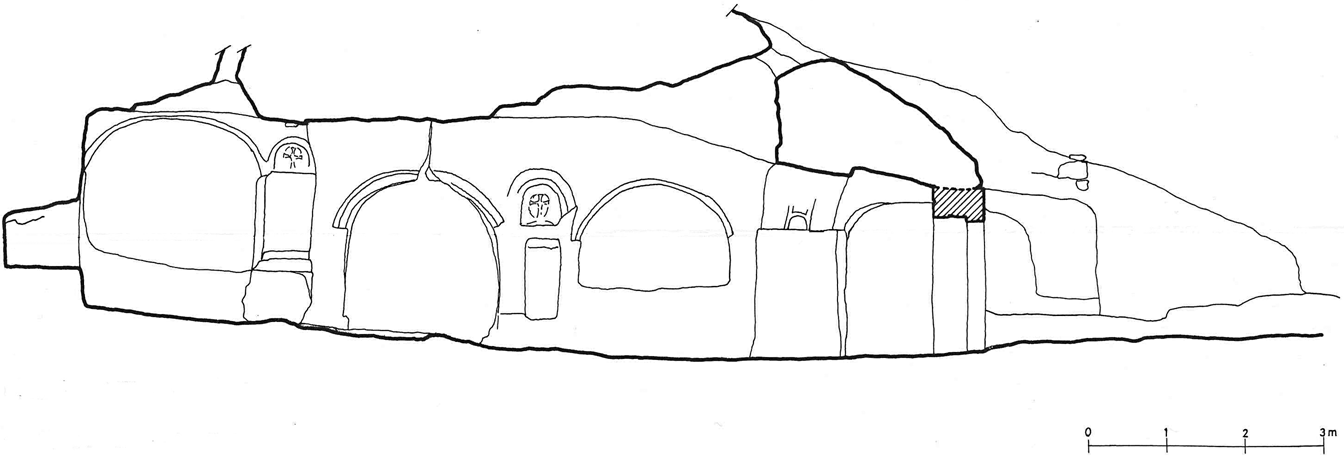
Ventilation: All treading floors are covered by a ceiling with an aperture for ventilation during the wine-making process (fig. 11). Today, the majority of these have already been closed by landslides and erosion. Clearly, in the Roman and the late Antique periods, all wine-presses were open in the Eastern Mediterranean, so there was no need for such a design.
Winepress 2, longitudinal section looking north, Ağaçlık.

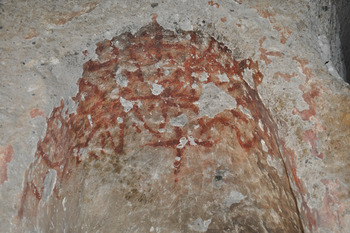
Decoration: In Mavrucandere, treading floors and collecting vats generally open onto a central area with an arch. On the arches, or between the two arches, there is often a simple red painting directly over the thin plaster surface. Two of them in Ağaçlık (numbers 4 and 5) preserve a variety of simple geometrical decorations on the arch surface, which includes a red zigzag. In number 4, the arch is flanked by two medallions, each with a cross and a short text at the inner surface of the arch. The text, in quite poor condition, is unfortunately unreadable. In Ağaçlık, the treading floor and collecting vat of the wine-press number 9 are also both decorated with some engaged lines (fig. 12). One hypothesis is that this depiction might refer to vine branches. Alternatively, a few bunches of grapes are flanked by two doves which are directly over the rock surface depicted in the wall of number 5 in Çörtarım. Moreover, Ağaçlık numbers 2 and 8 both contain carved crosses (fig. 13, 14). Similar decorations can also be observed in Erdemli and Aksalur. Furthermore, in Aksalur, there is a remarkable short text with a bunch of grapes in a collecting vat which is part of an ongoing research project by Uyar.Footnote 19
Engaged lines, Wine-press 9, Ağaçlık.

Storage unit, Wine-press 2, Ağaçlık.

Pithoi and carved crosses, Wine-press 8, Ağaçlık.

Storage: In Group two, the installations all have storages which differ in size and shape. These storages have either rectangular or circular shapes (fig. 13). Some of these also have shallow pits which might have been used for wine amphorae - the dimensions of the most common pear-shaped middle Byzantine amphorae (Günsenin 1-2) correspond to these pits.Footnote 20 Erdemli wine-presses also have similar pits in their interior. We know that, with the fall of Palestine and North Africa in the seventh century, amphorae production shifted to the Aegean and Anatolia. This can be followed on the basis of local production for ceramics during the middle Byzantine period. Undoubtedly, there were local ceramic workshops in Cappadocia, as there are today. As previously mentioned, we cannot trace the stratigraphic context of the ceramic findings in Mavrucandere because of the problems posed by erosion, and we cannot clearly identify their typology due to the corrosion. Furthermore, the lack of extensive archaeological excavations restricts our understanding of ceramic findings in the region. Therefore, it is difficult to say anything about local amphorae production. Ağaçlık number 8 includes a storage unit quite different in shape, which is planned like a narrow and lower corridor. Wine jars may have been piled up in this unit because of the suitable temperature. In addition to the storage unit, two isolated fermentation rock-cut pithoi are also preserved on the northern wall (fig. 14). The pithoi are emphasized by two plastered niches. There is a carved cross between both the niches on the upper level of the wall. We have also discovered a rock-cut cover which is precisely fitted to the pithos. Apparently, this wine-press is well-designed not only for wine making but also for the fermentation process. In Belentepe (Caria) some wine-presses have similar pithoi-shaped storage units which are dated to the last quarter of the tenth and into the eleventh centuries.Footnote 21
Among all the installations, two wine-presses in particular have some extraordinary details. One of these, Ağaçlık number 2, is one of the largest and most complicated installations in the valley (fig. 5). It contains two treading floors connecting to the collecting vats, and two storage units as well as some evidence of production equipment on the floor and ceiling of the installation. A shallow rectangular vat connects to another larger vat with a channel on the floor. On the ceiling there are six well-organized pits for the screw-press mechanism immediately on the top of this shallow vat. However, the shallow vat is less deep in order to collect must. It seems that this equipment must have been used for oil production. Brun states that one installation was often used for both wine and oil production in Mediterranean Antiquity.Footnote 22 Linseed oil was one of the most important products in central Anatolia, and was used in wall-painting decoration, culinary culture and folk medicine. More importantly, it was also widely used in oil lamps.Footnote 23 Apparently, medieval peasants have used Ağaçlık number 2 for both linseed oil and wine production. We have also found a portable press bed in number 1 in Ağaçlık, which is designed with a peripheral groove flanked by two pits. It was probably designed to produce linseed oil. A number of similar press beds for oil production can also be seen in the Eastern Mediterranean, such as a sixth century press bed in Israel, and a middle Byzantine period press bed in Hierapolis in Phrygia.Footnote 24
This production area, largely used for wine and partially used for linseed oil, also has an array of agricultural equipment. One of them, in Ağaçlık near the installation area, is a rock-cut qanat which extends into the hillside. These remains may have belonged to an irrigation and drainage system. Today, a small part of it can be seen on the surface. It was quite likely connected to the watermill on the same slope. The watermill is roughly carved, without any interior detail that is partially damaged. It is organized with two separate-entranced adjoining rooms. While the eastern room contains two different channels, the western room is smaller and more simple; it may have been used as a storage room. The eastern room probably included a mill mechanism. As far as we know from speaking with the current inhabitants of Güzelöz, some surviving pieces of the machinery (such as a rolling stone) disappeared in the twentieth century. At the western part of the watermill, and up above on the slope, there is a masonry well which was most probably connected to the watermill. According to some written sources from the nineteenth century, there were three operational watermills in Potamia.Footnote 25 In terms of its relevance to wine-presses, and because of its location, the remains belong to the Byzantine period and must be part of a wider irrigation and a drainage system, although it is unclear how this actually operated.Footnote 26 Another example of an irrigation system is to be found on the opposite hillside which lies almost parallel to today's main road. As far as we can identify from the surviving archaeological evidence, the channel is approximately 1.50 meters high and, at a few points, connected to some of the rock-cut rooms. These rooms may originally have been for water collection (cistern) or an agronomy-related workshop. In fact, one should be careful with dating any rock-carved utilitarian spaces due to the prevalence of successive reuse and deterioration. On the other hand, this system does seem to be related in some way to the wine-presses. Thus, it could be argued that the entire system is medieval. Cooper identified an intensive irrigation system in the region extending from Sinasos (Mustafapaşa) past Soğanlıdere to the south.Footnote 27 Furthermore, Bicci has also determined some drainage systems in Meskendir and Kılıçlar of Cappadocia.Footnote 28 One of the most important problems confronting Byzantine farmers was the preservation of soil fertility in the climatic conditions of Anatolia, characterized by winter rains and long summer droughts. Therefore, it is very likely that landowners would have built at least some irrigation systems to maintain in their arable lands. Although vines could withstand very dry conditions, they needed regular watering in the early stages until their root-systems had developed properly.Footnote 29 Kekaumenos’ advice for landowners is quite helpful for understanding the regulation of production. He recommends self-sufficiency to landowners, particularly the creation of autourgia - vineyards, olives and fruit trees, gardens, mills and workshops -which would give an annual return with few revenue charges and labour.Footnote 30 Obviously, in Mavrucandere, the irrigation system and the water-mill both imply a larger and more organized vine cultivation. At the same time, viticulture needed extra labour, but this was spread more evenly throughout the year.Footnote 31 Considering this large-scale and cost-intensive production process, it is likely that this agricultural area belonged to a wealthy owner.
Production capacity and the location of the installation
This agricultural area, which contains a number of installations, is worth examining in several respects but it may be best to read the archaeological evidence in the valley as a whole. Firstly, the archaeological evidence precisely shows that this area was deliberately planned for utilitarian and agricultural purposes. Apparently, this production area had significantly more installations than those surviving today and it appears to have been an extensive and highly organized production area for the medieval wine industry. Today, there are fourteen wine-presses, and these installations also have at least seventeen collecting vats, each of which has a capacity of approximately 1000 litres. Therefore, roughly calculated, the overall annual production capacity may have reached 17000 litres, based on an assumption that each vat was only filled once per year. It is more likely, however, that the collecting vats were filled with wine more than once, so the region was producing wine on a large scale, which must have been driven by a similar level of consumption.
Based on archaeological and contextual evidence, the Mavrucandere settlement was likely to have been a large medieval agrarian village.Footnote 32 The wine-presses are all situated at the south-west slope of the valley; there is no evidence of any religious or civil architectural investment on this hillside, which indicates that the production area was planned as distinct and separate from the settlement. Consequently, we may assume that the agricultural area has been organized with regard to the necessities of agrarian life, and in response to the geographical conditions. Furthermore, in the entire settlement, the visible layout implies a clear separation between domestic, monastic and agrarian areas.
The wine production area receives relatively low levels of sunlight because of the location in the valley. It has been situated to achieve the maximum protection from the powerful Anatolian sun. The entrance to each of the installations is intentionally designed with a long entrance hall, which would probably have helped to preserve a stable temperature inside. Geoponika recommends that the building housing the vats should have its window facing east and north in warm districts but facing south in colder districts. It should be a long way from the treading room and be free of any bad smells.Footnote 33
The location of the Mavrucandere wine-presses is convenient not only for wine making but also for viticulture. The current agricultural function of the Ağaçlık zone, used as a vineyard until the early twentieth century according to the written and oral sources, further attests to this fact. Kingsley states that the wine-presses in Israel, dating from the fourth to the seventh centuries, were located inside or on the edge of vineyards and also argued that these areas were mainly associated with villages, farmsteads, monasteries or, in a few cases, with rural estatesFootnote 34. This high level of organization provides efficiencies to the overall production process. In Erdemli, wine-presses are located on the slope of the valley and, while these installations are part of the Saray monastery, there is no mention of vineyards in the adjacent vicinity. However, we have very insufficient data regarding the vineyards of the Bayatönü and Aksalur wine production zones.
Relative dating and conclusion
Ultimately, how should we suggest a date for the large-scale agricultural production area within the framework of the larger Byzantine village? These installations cannot be dated by conventional methods like ceramic analysis; however, the historical and artistic evidence confirms that the region's prosperity, and consequently that of the settlement, reached its peak during the tenth and then again in the thirteen centuries. The best way to consider the archaeological and historical evidence may be to approach it from the perspective of the region's climatic changes altogether.
In terms of plaster type, the decorations of Mavrucandere's wine-presses present some notable similarities with the wall paintings which come from the second half of the ninth to the tenth century in Cappadocia. The simple, red painted plasters that appear in numbers 4, 5 and 9 are white and thin, without any aggregate. Based on a comparison with the plaster types found in St. Michael, St. Chrysostom and St. Basil churches in Başköy, and first period mural paintings of Karabaş kilise in Soğanlıdere, Mavrucandere's wine-presses might be dated to the beginning of the tenth century. In addition, the types of carved crosses that appear in Ağaçlık numbers 2 and 8 belong to the early medieval period in Cappadocia.Footnote 35 Furthermore, the mouldings that surround the semicircular arches of wine-presses are also similar to that of early medieval examples.Footnote 36
At the same time, considering the stability of Cappadocia in terms of wealth, peace, and agricultural development, and the area's production capacity, these wine-presses might be dated to as early as the tenth century. In Anatolia, at the end of the eighth century, there was a notable rise of various powerful families.Footnote 37 While the civil aristocrats held hereditary nobility and lived in cities, the military aristocrats preferred to gain status through military merit and lived in their rural estates.Footnote 38 This rural aristocracy began to appear in Cappadocia from the mid-ninth century onwards, and comprised a number of landowning military magnates.Footnote 39 Vryonis indicates a number of the names which belong to Cappadocian elites in the tenth and eleventh centuries.Footnote 40 During this period, indeed, the wealth increased, thanks to this new elite society in Cappadocia. One of the most valuable documents which attests to the wealth of these Cappadocian elites, the will of the protospatharios Boilas from the year 1059, provides a detailed account of the estate of a large landowner in one of the eastern provinces.Footnote 41
The primary questions regarding the nature of this agrarian settlement are thus linked to the identities of the landowners and also to that of the land exploiters. Who then could be the lord of such a modest village as Mavrucandere? Despite the documents’ silence on this issue, we might assess it by means of the historical and archaeological evidence. The aforementioned social and legislative context encourages us to consider whether Mavrucandere's agricultural production area was one of the estates of a rural elite family or alternatively whether it was run by a cohort of small landowners. While such associations are tempting, it remains hypothetical without further convincing evidence. In general terms, the social organization of production in tenth century Byzantium seems to have been arranged around two poles: the estate (proasteion, ktema) and the village (kome, chorion).Footnote 42 The farm legislations which had begun to be composed in the tenth century had a direct impact upon the organization of the agrarian life.Footnote 43 In this period, there were many tenants who lived on the estates, and the village inhabitants, many of whom owned land and paid taxes to the state.Footnote 44 If we take into consideration the aforementioned social and legislative context during the tenth century, it is likely that Mavrucandere's agrarian production area was owned either by a “local aristocratic” family, or by middle small landowners who can be seen as low/middle class.Footnote 45 As a consequence of the new farm legislations from the tenth century, the rural elites became increasingly powerful and gradually predominated over the small landowners, in terms of land tenure, and ended up possessing the lands of the more insignificant land holders.Footnote 46 Regarding its elaborated organization and larger scale, a production area such as that seen in Mavrucandere must also have belonged to a rural aristocratic family.
Although the geography and climate of Cappadocia was suitable for grape cultivation, some periods of famine occurred. Some remarkable investigations about pollen data in Nar Lake located in western Cappadocia, about 40 kilometers distance from Mavrucandere, precisely overlaps with this historical context. The pollen data indicate that two periods in particular, correlated by archaeological and historical evidence, falling between 550–650 and 950–1080, correspond to the periods of strongly negative isotopic values at Nar. These periods included significantly higher levels of rainfall and less frequent droughts, conditions climatically much more suitable for agricultural prosperity.Footnote 47 The latter period would lend support to the date we suggest for the agricultural installations in Mavrucandere.
One of the major medieval roads is the route between Aksaray-Kayseri which is significant because it links Cappadocia to the Aegean coastal cities. It extends from Konya (Iconium) to Aksaray via Mavrucandere to Kayseri. The other important route extends from Kayseri to the Cilician Gates via Kyzistra, which is very close to Mavrucandere as well. The strategic significance is confirmed by the presence of sizeable fortresses, such as Kyzistra, but there are also a number of quite small kastra, such as the one which remains at Mavrucandere, and these are dotted along the aforementioned routes.Footnote 48 Note also that Cappadocia served as a base camp for the assembly and concentration of troops before eastern military campaigns and retained its strategic importance as a buffer zone between the Byzantine Empire and its neighbors throughout the Middle Byzantine period. Considering the scale of wine production in Mavrucandere, it is reasonable to assume that it may have been related to the supply of a Byzantine military force in the region. An army's consumption of wine was quite precise during these campaigns.Footnote 49 When an expedition was planned, local fiscal officials co-operated with the central authorities and military department so that each of the regions through which the army passed had to set aside adequate supplies of grain, meat, oil and wine for the required numbers of troops.Footnote 50 Based on some tenth century documents, Haldon states that protonotarioi of the affected themes were made responsible for raising additional supplies for the military expedition.Footnote 51 Indeed, some provisions such as lard, cheese, animals for slaughter and local wine were provided by the protonotarioi.Footnote 52 Considering the density of population in the surrounding area, the estimated production capacity of Mavrucandere wine-presses may indicate the presence of at least some production for commercial purposes as well. However, too much data is missing to allow for a more comprehensive picture of the Byzantine rural economy to be drawn for medieval Cappadocia. Although there is no evidence for the commercial circulation of Cappadocian wine in the eastern Mediterranean up to the late Medieval period, during the thirteenth century, the Danishmendname mentions famous Cappadocian wine and Christian vineyards during the Anatolian campaign of Muhammed II in Beyşehir.Footnote 53
In conclusion, this survey of the agricultural production area yields a fresh understanding of Byzantine rural culture in Cappadocia. It also clarifies some previously unknown technical production details. This well-planned agrarian area, with its large-scale wine production, illustrates the importance of the role of viticulture in the local rural economy and further implies a commercial scale of wine production as well.Footnote 54 The association of Mavrucandere's agricultural production area, within the context of the road hub, encourages the identification of this agrarian village as a large scale ‘industrial’ production center managed in relation with the powerful landowners engaged in the wine trade. The locations of the known wine production settlements (Mavrucandere, Erdemli, Bayatönü and Aksalur) overlap with the region's main routes and were probably chosen for their convenience in the transportation of wine for military supply or commercial purposes. Ultimately, it appears that this large agrarian village's economy might have been entirely based on wine production as well as provisioning the army in Mavrucandere.