

The valorization of local materials and sustainable waste management are crucial challenges facing modern industries, particularly in the ceramics sector (Zanelli et al., Reference Zanelli, Conte, Molinari, Soldati and Dondi2020). In Tunisia, clays are abundant resources that are widely used in ceramic production, offering significant potential for the development of innovative and eco-friendly products across the central (Weslatiya), northern (Sejnène) and southern (Douiret) regions (Baccari et al., Reference Baccari, Boussema, Lamachère and Nasri2007; Bennour et al., Reference Bennour, Mahmoudi, Srasra, Boussen and Htira2015; Mahmoudi et al., Reference Mahmoudi, Bennour, Meguebli, Srasra and Zargouni2016). However, the ceramic industry generates waste that, if not properly managed, can lead to environmental issues (Worasith & Goodman, Reference Worasith and Goodman2023). The reuse of this waste not only reduces its ecological impact but also decreases the consumption of raw materials and enhances industrial efficiency. This study proposes an in-depth investigation of the valorization of a local clay from the Weslatiya region combined with the reuse of ceramic waste from faience and stoneware tiles to develop new materials, adopting an approach focused on sustainability and the circular economy.
The Weslatiya region, recognized for its substantial clay deposits, is strategically located in central Tunisia, situated between the Houareb and Makthar regions. This province has drawn attention due to its rich geological composition, particularly its clay resources. Baccari et al. (Reference Baccari, Boussema, Lamachère and Nasri2007) have made significant contributions to understanding the geological nature of Weslatiya by providing in-depth lithostratigraphic insights. In addition, extensive geological investigations have been carried out in the neighbouring regions of Houareb and Makthar. These studies have produced schematic lithostratigraphic columns for the Houareb and Makthar regions of central Tunisia (Hajjaji et al. Reference Hajjaji, Moussi, Hachani, Medhioub, Lopez-Galindo and Rocha2010; Salah et al., Reference Salah, Jemai, Sdiri, Slim and Boughdiri2016). These comprehensive studies have provided valuable data regarding the lithological layers, stratigraphy and mineral composition of the clay deposits in these regions. Given the geological similarities between the Weslatiya, Houareb and Makthar regions, it is reasonable to assume that the used clays, primarily composed of montmorillonite and kaolinite, share many characteristics with the clays studied in these areas (Krichen et al., Reference Krichen, Baklouti, Bonnet and Bouaziz2008).
These attributes make them valuable for the production of ceramics, bricks and refractory materials (Medeiros et al., Reference Medeiros, Pedroti, Mendes, Pitanga and Da Silva2019). By incorporating locally sourced materials, production costs can be reduced and a more sustainable approach to the ceramic industry can be promoted. The findings of this study will enable the development of innovative formulations tailored to meet the specific requirements of industrial applications, such as grey tiles (Blb group; a category of ceramic tiles that fall within the range of non-porcelain stoneware), while preserving the environment and supporting the local economy.
Optimizing clay–degreaser agent formulations is a crucial challenge to improving the mechanical, thermal and aesthetic properties of ceramic materials. In this context, the feasibility of replacing quartz sand with chamotte (a refractory material made from waste fired clay and collected from Agareb region) is being explored in the ceramic industry so as to leverage its unique properties for improving material performance while promoting sustainability and improving cost-efficiency. A key task of this research is to analyse the distinct behaviours of the samples under various manufacturing and operational conditions. By closely examining how each formulation responds during critical preparation stages such as mixing, drying and firing, we aim to gain valuable insights into the internal dynamics of the material. This knowledge will enable more precise control over essential properties to be achieved, including porosity, viscosity and mechanical strength, thereby optimizing the overall performance of ceramic products (Chen et al., Reference Chen, Chen, Yang, Bi, Ding, Huang and Wang2020).
Previous studies have thoroughly explored the properties of ceramic materials, particularly focusing on how various tempering agents influence both the microstructure and mechanical performance of the finished products. Microstructure plays a crucial role in determining the strength of ceramics, influencing key variables related to mechanical performance (Davidge, Reference Davidge, Bradt and Lange1974). A series of studies on clay–degreaser mixtures for ceramic production have been conducted with the aim of establishing a robust foundation for developing advanced ceramic materials, such as tiles and bricks, that tackle contemporary technical challenges while promoting sustainability (Alonso-Santurde et al., Reference Alonso-Santurde, Coz, Viguri and Andrés2011; Zawrah et al., Reference Zawrah, Gado, Feltin, Ducourtieux and Devoille2016; Maalla et al., Reference Maalla, Boussen, Fagel and Gaied2021). The ‘state of the art’ in clay additives extends beyond synthesizing previous findings (Djangang et al., Reference Djangang, Elimbi, Melo, Lecomte, Nkoumbou and Soro2007; Lorente-Ayza et al., Reference Lorente-Ayza, Orts, Pérez-Herranz and Mestre2015). It thoroughly examines the techniques used, identifies their shortcomings and offers suggestions for reusing chamotte and/or quartz sand in ceramic production. This in-depth analysis is crucial for formulating robust hypotheses and designing an experimental approach to test the proposed substitutions.
To assess mechanical performance, researchers typically evaluate parameters such as bending strength, Vickers microhardness, fracture toughness, and Young’s modulus following the sintering process. A typical example of such a study is that on the mechanical characteristics of porcelain conducted by Martín-Márquez et al. (Reference Martín-Márquez, Rincón and Romero2010). Consequently, significant emphasis is placed on both the composition of these composites and the impacts of heat treatment on the microstructure of clay ceramics. This relationship is critical to understanding how thermal processes influence not only microstructural development but also the resulting thermal and mechanical properties of the ceramics (Nigay et al., Reference Nigay, Cutard and Nzihou2016). Overall, these studies contribute to a deeper understanding of how to optimize ceramic materials for various applications, paving the way for advancements in material science and engineering.
The traditional formulation of ceramic products typically relies on sand as the main tempering agent (Mymrin et al., Reference Mymrin, Alekseev, Catai, Nagalli, Aibuldinov and Bekturganov2015). However, this approach has its limitations, particularly in terms of particle cohesion and porosity management (Romero & Pérez, Reference Romero and Pérez2015). Chamotte, a refractory material derived from fired clay, presents potential advantages, including improved thermal and mechanical resistance and reduced plasticity (López-Perales et al., Reference López-Perales, Sánchez-Rodríguez, Suárez-Suárez and Rodríguez2023). By replacing quartz sand with chamotte, we aim to improve the properties of the final product while also promoting the valorization of local resources.
Other previous studies have focused on the incorporation of chamotte into clay, utilizing waste materials from the ceramics industry. These studies employed a specific formulation consisting of 70% local clay sourced from Weslatiya, Tunisia, and 30% additives, and they offered valuable insights into the processing and performance characteristics of the formulations (Zouaoui et al., Reference Zouaoui, Lecomte-Nana, Krichen and Bouaziz2016; Zouaoui & Bouaziz, Reference Zouaoui and Bouaziz2017). By optimizing the ratio of clay and additives, essential parameters that can guide manufacturers of ceramics in Tunisia were established. The use of local clay is particularly significant, as it supports local economies and reduces any dependency on imported materials. Additionally, incorporating chamotte helps to improve the mechanical strength and thermal stability of the final products, making them more suitable for various applications in the ceramics market (Zouaoui et al., Reference Zouaoui, Lecomte-Nana, Krichen and Bouaziz2016).
This work focuses on the optimal addition of chamotte to semi-stoneware formulations, targeting a percentage that maximizes the reuse of this ceramic waste while reducing the need for quartz sand as a degreasing agent. The characterization of the materials used involves chemical analyses, such as inductively coupled plasma atomic emission spectroscopy (ICP-AES), and mineralogical analysis via X-ray diffraction (XRD). Physical properties, including particle size, specific surface area and porosity, are also key parameters influencing the behaviour of these materials during sintering. This approach valorizes an industrial by-product and reduces reliance on natural quartz sand, promoting sustainability.
Materials and methods
This study compares local clay formulations with chamotte and quartz sand additives in complementary proportions, totalling no more than 30 wt.%, to understand their behaviour under various conditions. The analysis encompasses both physicochemical properties – specifically open porosity, pore size and pore distribution – and mechanical properties, which collectively govern the material’s performance throughout manufacturing and subsequent application. Testing these parameters is crucial to determining the feasibility of using chamotte as a substitute for quartz sand, allowing for a comparison of its effectiveness at improving material strength and resistance to deformation.
Sample preparation
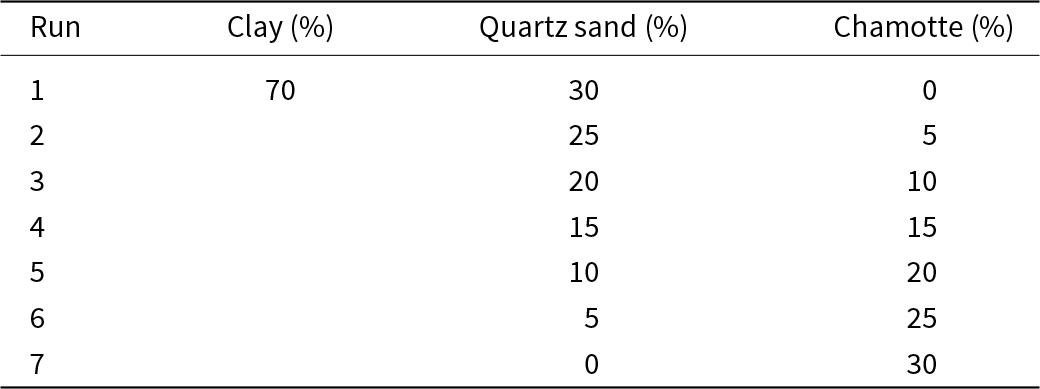
The raw clay (Weslatiya, Tunisia) was air dried to reduce its moisture content, followed by grinding in a Retsch Agate grinder to obtain a fine and homogeneous powder. The material was then passed through a 63 µm sieve to standardize the particle size and ensure uniform sintering. Then the clay was mixed with degreasers (70% or 30%) to improve its mechanical and/or thermal properties based on the degreaser proportions recommended in the literature (Djangang et al., Reference Djangang, Elimbi, Melo, Lecomte, Nkoumbou and Soro2007: 10–30% chamotte; Zawrah et al., Reference Zawrah, Gado, Feltin, Ducourtieux and Devoille2016: 25% quartz sand). Finally, the powder was slightly moistened, pressed under a uniaxial pressure of 25 MPa to prepare specimens with a 16 mm diameter and a 5 mm thickness and dried again before being subjected to high-temperature sintering (1150°C). The dimensions of the specimens were standardized to allow for consistent testing and comparison with other mixtures.
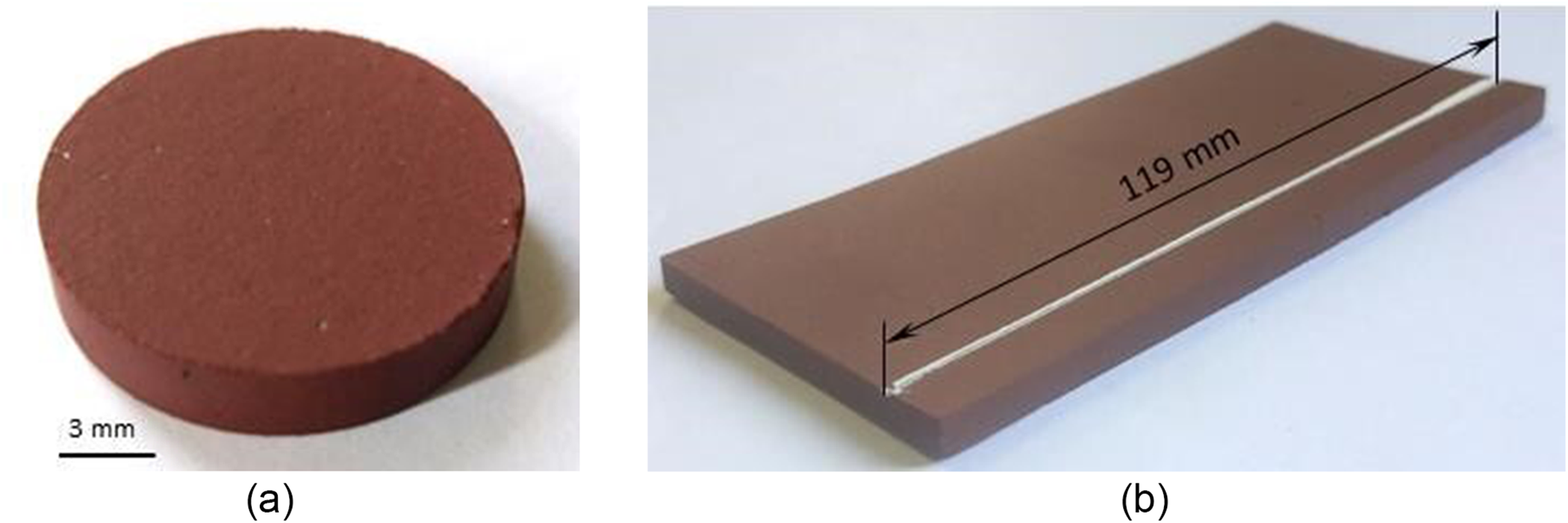
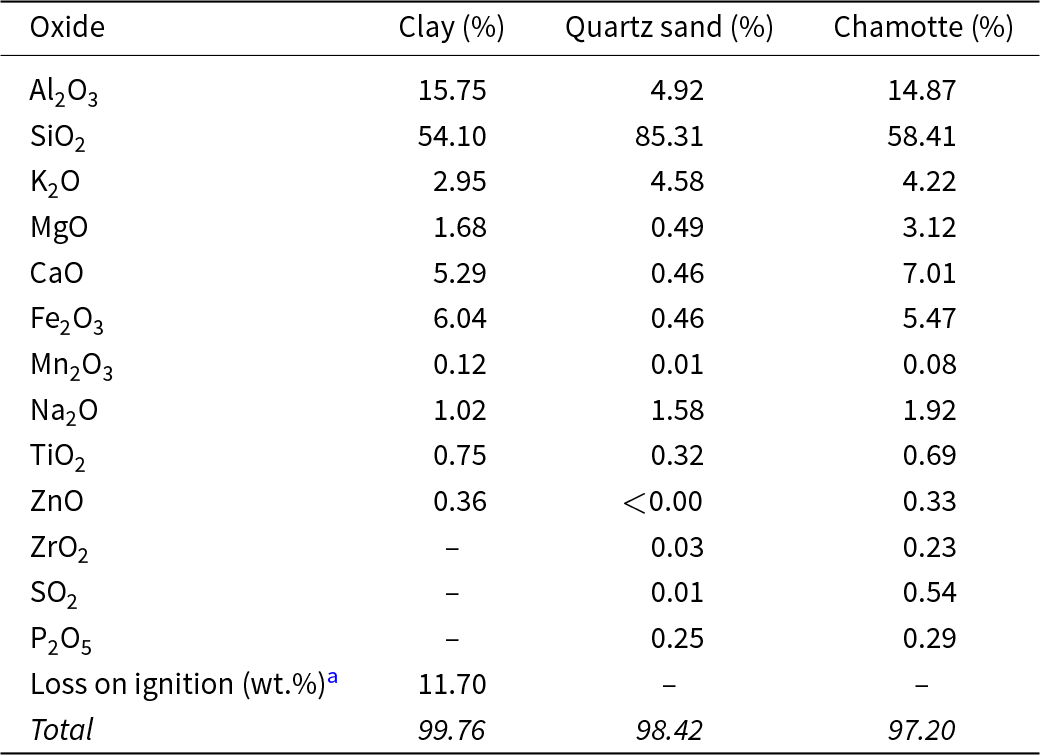
Figure 1a illustrates a prepared specimen from one of three identical pieces each composed of 70% clay, 15% quartz sand and 15% chamotte. The test specimens were subsequently fired in air in a furnace working with a 5°C min–1 heating and cooling rate. Apparent sample density and porosity were determined using the imbibition method. This specific formulation was varied to evaluate the combined effects of these materials on the overall properties of the ceramic product. The proportions of clay, quartz sand and chamotte were carefully selected to assess their influence on the material’s workability, strength and thermal stability (Tables 1 & 2).
(a) Sintered sample prepared for SEM and XRD analysis. (b) Pre-sintered sample prepared for ultrasonic testing.

Formulations of the studied specimens.

Results of the elemental chemical analysis of clay, quartz sand and chamotte.

a At 1200°C.
For ultrasonic echography characterization, long bar-shaped specimens (Fig. 1b) were used. Following the aforementioned approach, the powder was uniaxially pressed at 25 MPa into a mould. After drying for 12 h at 110°C, the 5.5 × 50 × 119 mm tile obtained was heated at 5°C min–1 up to 850°C in a muffle furnace (AMSlab), held at this temperature for 12 min and then cooled at 5°C min–1. This pre-firing step was essential to limit deformation and strengthen the tile, from which the bar-shaped specimen shown in Fig. 1b was cut. At high temperatures, shrinkage measurements may be subject to uncertainties caused by anisotropic deformation and thermal reactions, often resulting in imprecise interpretations (Teng et al., Reference Teng, Ou and Hsieh2013). The length of these bars was carefully controlled during the sintering process, as any variation in length could affect the material’s final properties. By monitoring this parameter, the mechanical performance of the product could be accurately assessed, specifically regarding its stiffness and elasticity, by the determining Young’s modulus as a function of temperature.
Chemical composition of the sample
The chemical and mineralogical compositions of the clay from Weslatiya have been detailed and published previously (Krichen et al., Reference Krichen, Baklouti, Bonnet and Bouaziz2008). This investigation examined a mixture of clay and degreaser, primarily consisting of quartz sand and chamotte, sourced from glazed ceramic industrial waste in Agareb (Tunisia), which explains the presence of ZnO and ZrO2. The major and trace element compositions of the sample were determined using a Philips PV 8210 1.5 m ICP-AES device.
Microstructure of the sintered specimens
Ceramic samples for scanning electron microscopy (SEM) analysis (Hitachi SC2500) were cut into small pieces, polished with progressively finer sandpapers and colloidal silica to obtain a smooth, mirror-like surface, cleaned in ethanol using ultrasonic cleaning and then dried. Proper handling prevented contamination with oils or dust. A thin conductive coating of gold was applied if necessary to prevent charging.
Pore-size variations were analysed by evaluating quantitative characteristics, such as pore-size distribution, using the open-source ImageJ/Fiji pore-counting software. This software enables precise particle counts, morphological assessments and additional functionalities for shape and dispersion analysis. It effectively translates SEM or optical microscopy results into quantifiable data, allowing for the evaluation of pore-size distribution, as illustrated in the following microstructural analysis.
Mineralogical composition
XRD analysis of the specimens was performed using a D8 Advance diffractometer (Bruker) with Cu-Kα1 radiation (λ = 0.15406 nm). The ceramic samples were finely ground and carefully sieved to achieve a uniform particle size (typically less than 63 µm) to reduce the effects of preferred orientation. The powdered samples were then placed on a sample holder, ensuring an even distribution for accurate measurement. The indexing of the obtained peaks was carried out using Joint Committee on Powder Diffraction Standards (JCPDS) datasheets. The mineralogical composition of the same batch of chamotte, sourced from the ceramic industrial zone in Agareb, has been previously determined (Zouaoui et al., Reference Zouaoui, Lecomte-Nana, Krichen and Bouaziz2016).
Ultrasonic echography characterization
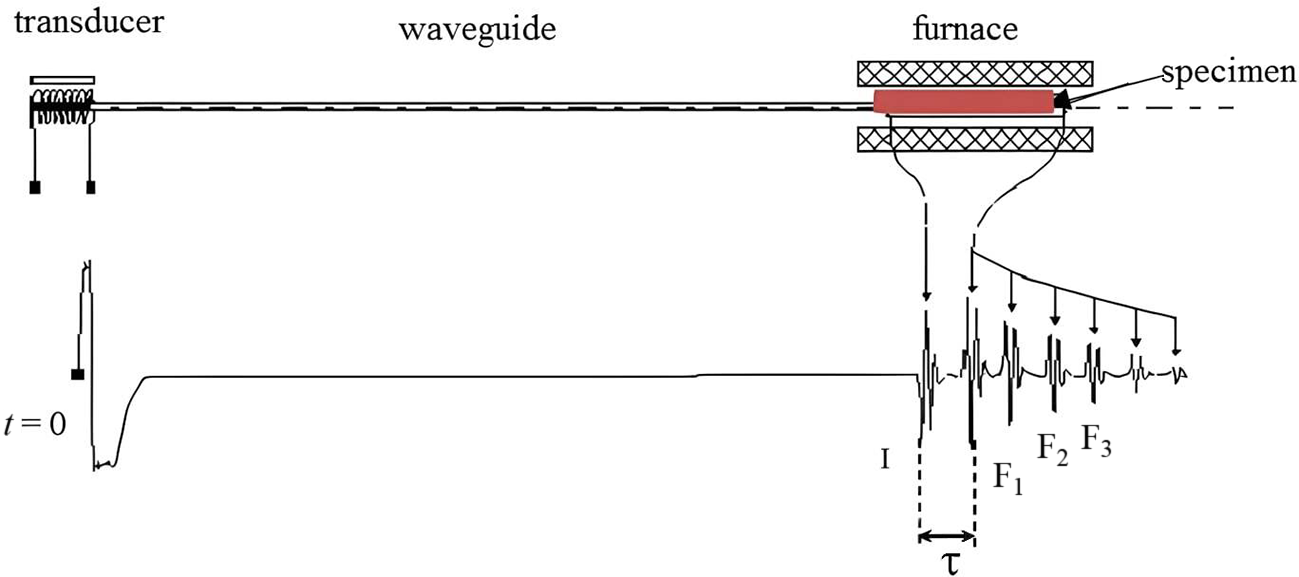
Ultrasonic testing is useful for tracking variations in the apparent Young’s modulus of ceramic samples as a function of temperature (Sasmita et al., Reference Sasmita, Wibisono, Judawisastra and Priambodo2018). The Young’s modulus or modulus of elasticity, which quantifies a material’s stiffness, is sensitive to various factors such as phase transitions, changes in material density and alterations in microstructure (Fig. 2). To measure the modulus of elasticity as a function of temperature, tiles of pre-sintered ceramic samples were prepared to precise, standardized dimensions for consistency. The pre-fired ceramic tiles were cut into 5 × 5 × 119 mm bars (Fig. 1b), mounted on a 3 mm waveguide and placed in an oven for heat treatment. The thermal cycle included a maximum temperature of 1150°C at a heating rate of 5°C min–1, followed by a 10 min hold at this temperature before cooling back to room temperature (Luz et al., Reference Luz, Huger and Pandolfelli2011). During the thermal cycle, the apparent Young’s modulus was monitored in air. This thermal analysis enabled the study of how the modulus of elasticity evolved with temperature, offering valuable insights into phase transitions and microstructural changes in sintered ceramics. By carefully monitoring wave velocities at various temperatures, it is possible to obtain precise measurements of the Young’s modulus and gain a deeper understanding of the mechanical behaviour of the material as it responds to temperature changes.
Ultrasonic testing for measuring elasticity.

Results and discussion
Mineralogical identification
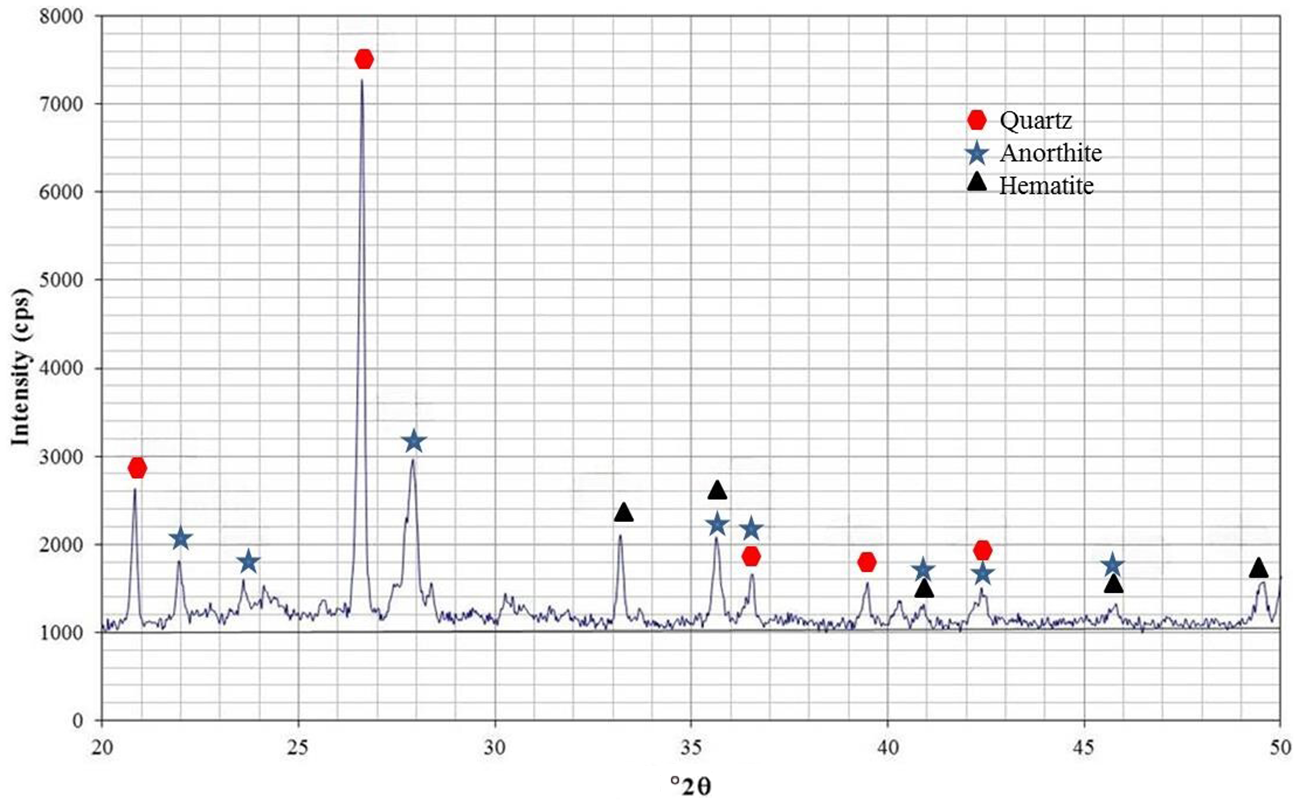
The sintered samples, based on the formulations in Tables 1 & 2, show similar XRD traces, with key peaks indicating the presence of various mineral phases. Specifically, the traces indicate significant amounts of quartz, anorthite and hematite (Fig. 3). These minerals commonly occur in ceramic formulations, and their presence provides valuable insights into the material’s composition and thermal behaviour.
XRD trace of the sintered compound (70% clay, 15% quartz sand, 15% chamotte).

Microstructural analysis
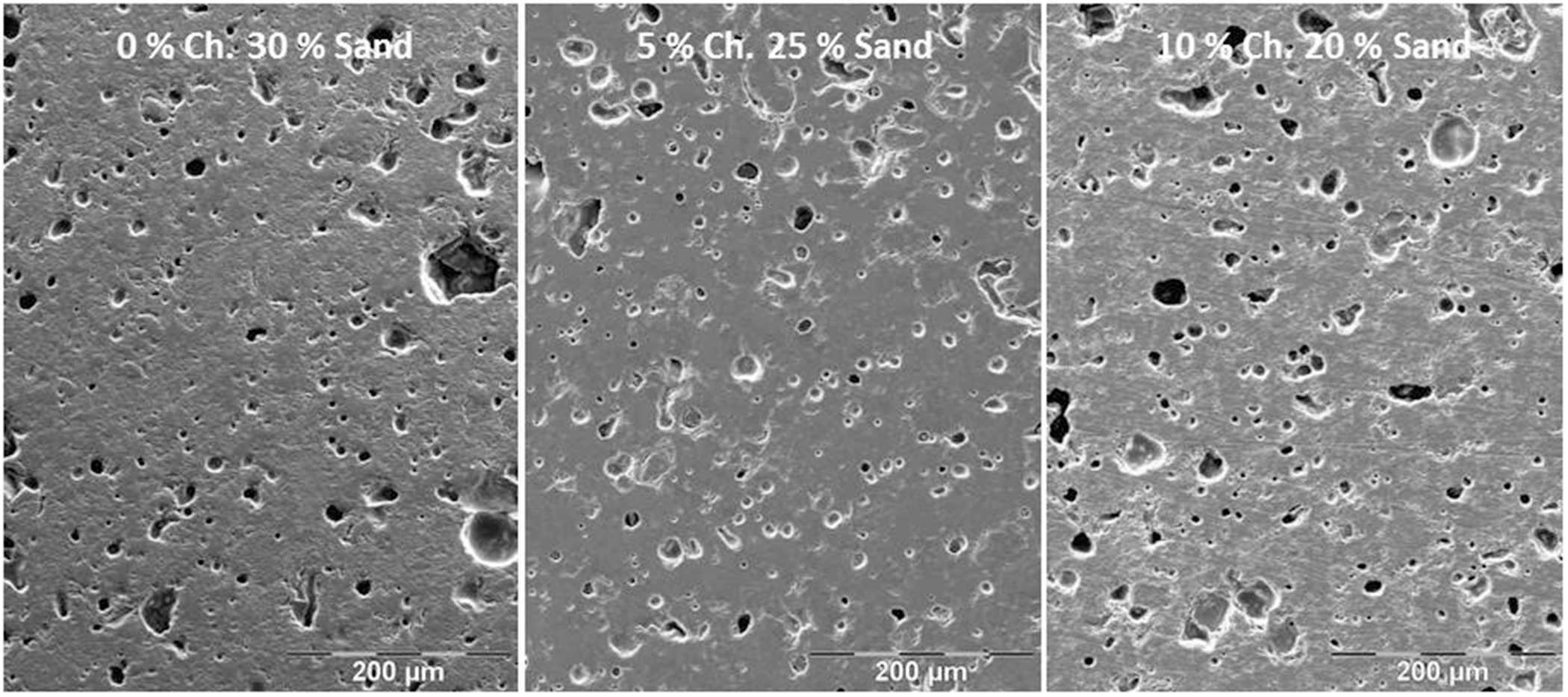
Before sintering, the microstructure consists of interlocking quartz sand grains and clay particles. The latter partially coat the grains, enhancing the cohesion of the mixture. The chamotte fills the intergranular spaces, thereby modulating the porosity and density of the material (Hyeon-Myeong et al., Reference Hyeon-Myeong, Park, Kim, Ko and Lee2020). This texture allows quartz sand grains to interlock, thereby enhancing the structural stability of the mixture. Voids often form between the quartz sand grains, which clay and, in particular, chamotte particles can fill, influencing the porosity and water retention properties of the material. Before firing, the specimen is subjected to compression, causing the clay particles to deform and compact around the degreaser grains. This process can lead to the formation of cracks during handling or pre-treatment (Abid et al., Reference Abid, Bouaziz and Ksibi2009). This process influences the density and mechanical strength of the mixture. In contrast, sintered clay–chamotte–quartz sand mixtures reveal a complex and interconnected microstructure resulting from the thermal treatment process (Fig. 4). Sintering leads to densification, with the clay filling the voids and adhering to the larger, coarser quartz sand particles, thereby creating a more solid structure. The sintering process typically enhances the mechanical strength of the clay–quartz sand mixture by reducing weak interfaces and promoting solid bonds within the microstructure.
SEM images of sintered samples at 1150°C as a function of high-added sand weight percentage. Ch = chamotte.

The formation of pores during compaction is influenced by the viscous nature of the mixture. The resistance to flow restricts the movement of air bubbles, preventing them from merging into larger ones. As a result, a uniform distribution of small, trapped bubbles is established throughout the material. These small bubbles enhance the microstructure’s stability, improving its mechanical properties by ensuring consistent strength and uniform porosity. Although larger cavities, created by larger bubbles, provide better thermal resistance, they can also introduce mechanical brittleness. Understanding the dynamics of bubble formation allows for better control of the microstructure and optimization of material properties to meet specific engineering requirements.
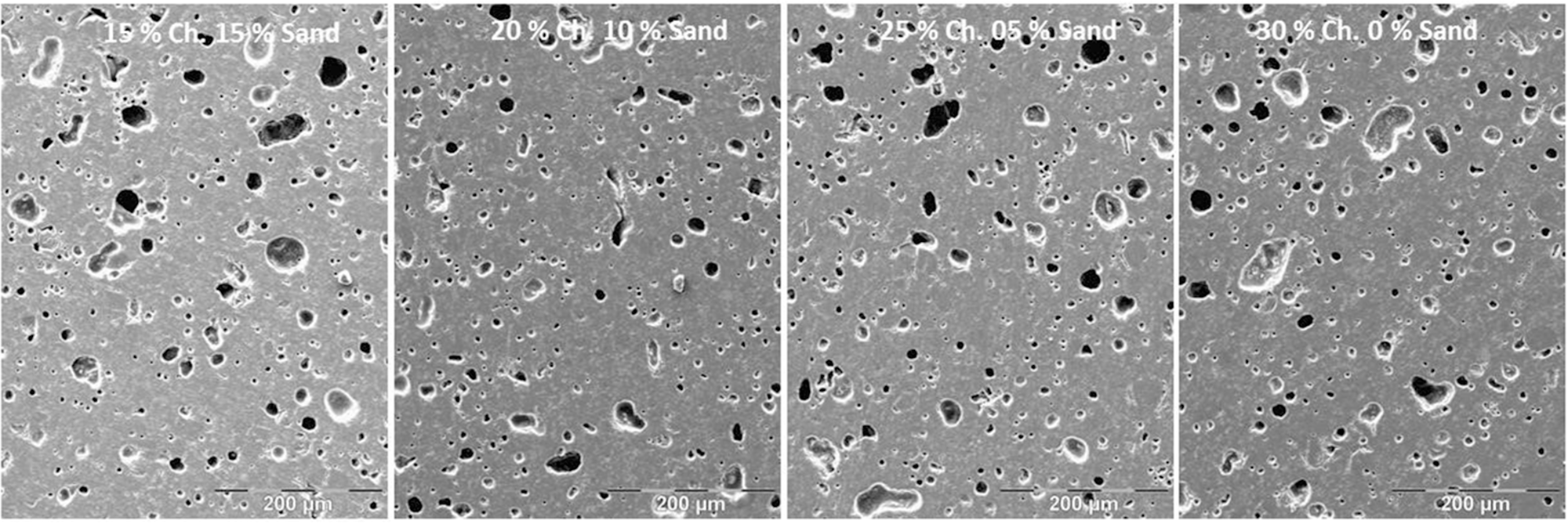
Samples from various runs exhibit a nearly constant number of pores regardless of compositional differences (Fig. 5). This consistency can be attributed to the clays’ ability to maintain a certain homogeneity of pore distribution, even with the addition of degreasers. However, the size and shape of the pores can subtly vary depending on the type and amount of degreaser used. The pore size is determined by the content of degreasers, directly influencing the material’s microstructure. The chamotte added into the viscous flow fills the voids within the matrix during sintering, leading to a reduction in pore size. In contrast, quartz sand, which only becomes pasty at temperatures of 1200–1400°C, fails to contribute to densification.
SEM images of sintered samples at 1150°C as a function of high added chamotte (Ch) weight percentage.

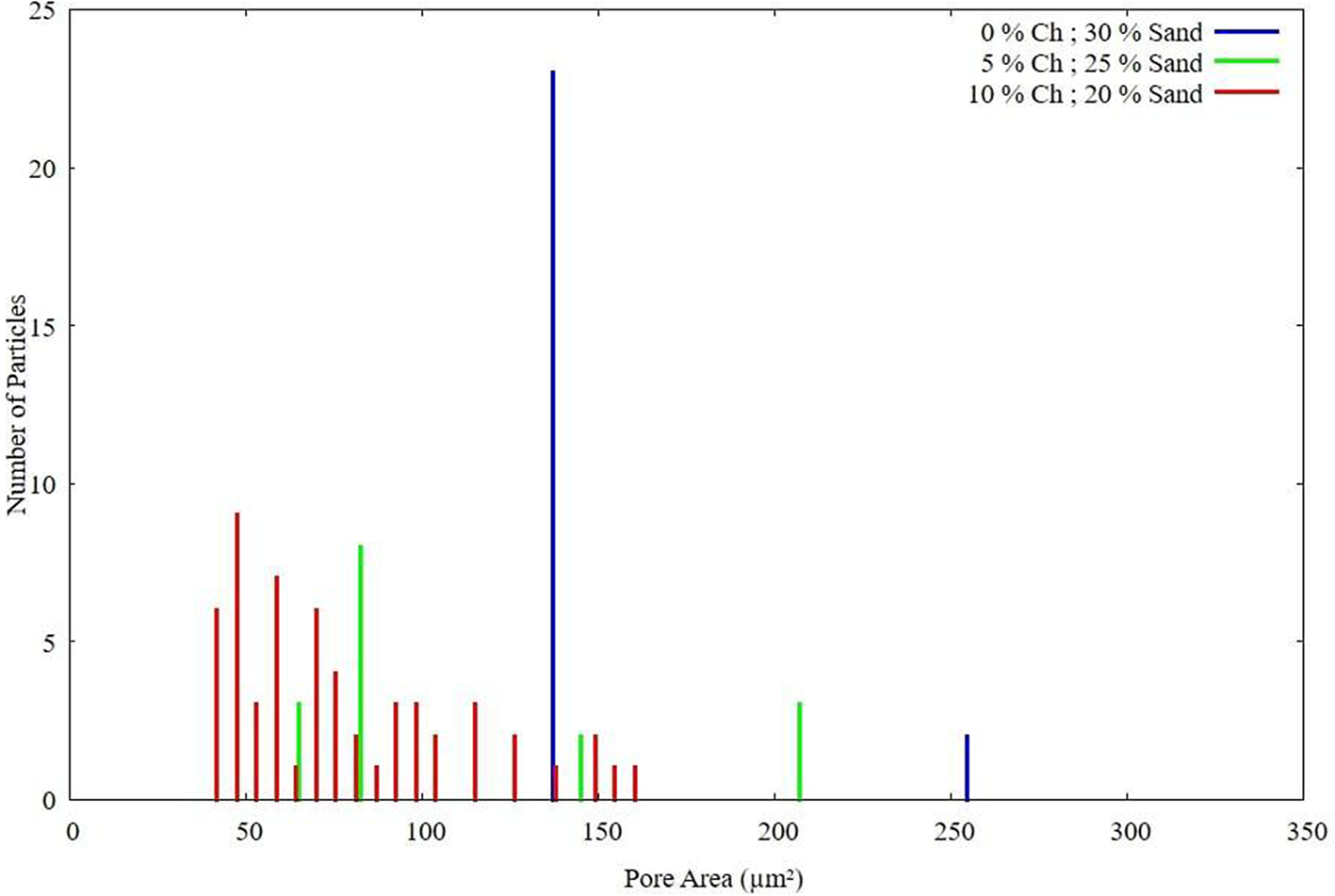
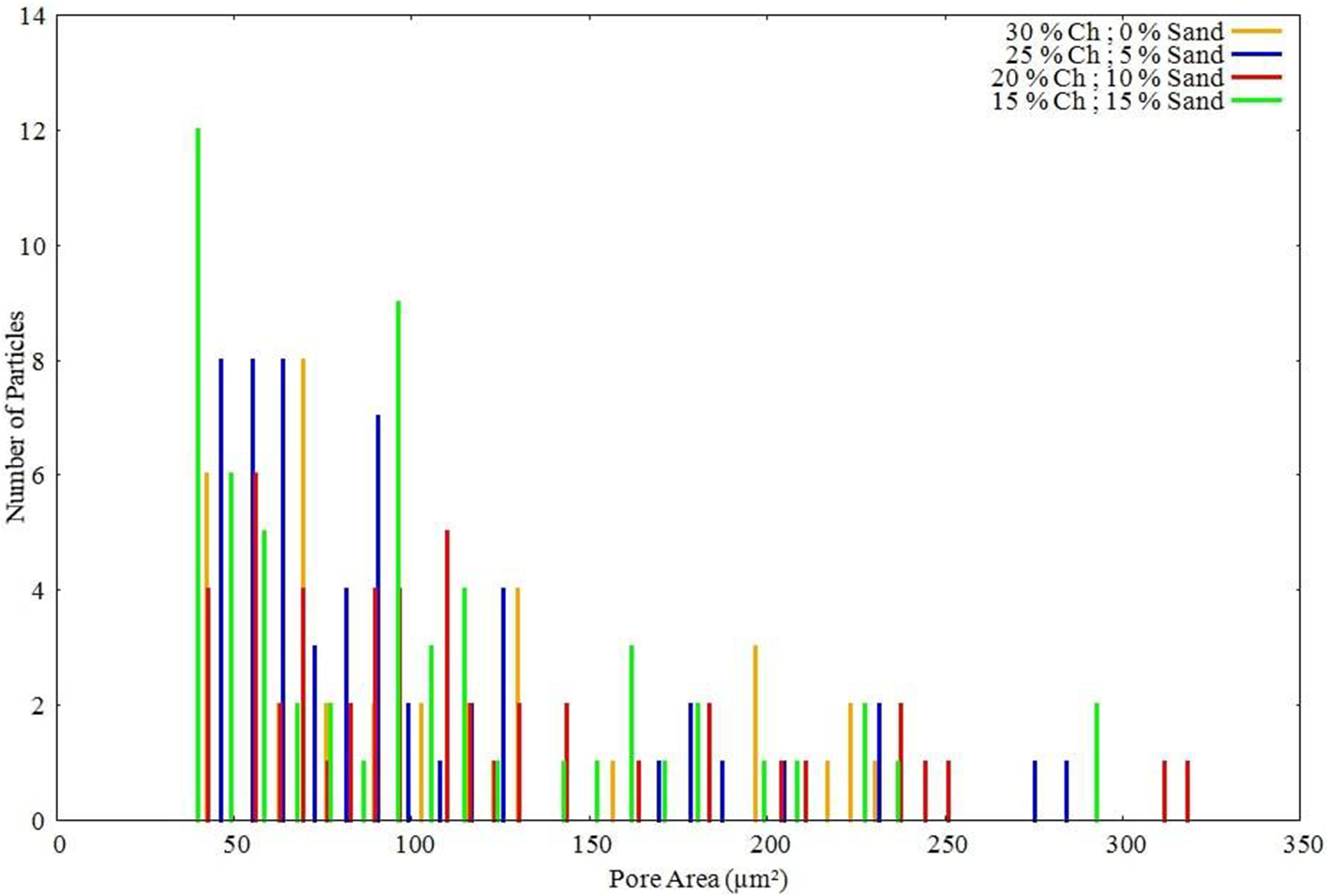
A sintered mixture with a high quartz sand content (30%) yields a highly concentrated pore structure with a narrow distribution, typically centred on an average pore area of 140 µm2 (Fig. 6). This composition, however, tends to feature occasional large pores, with areas reaching up to ∼250 µm2. These large pores suggest a less uniform distribution within the material, which could impact its density and overall structural integrity. Additionally, a high percentage of quartz sand affects the plasticity of the specimen, altering its shrinkage capacity during drying and firing. This leads to increased pore sizes rather than pore counts when shrinkage is limited, preserving the cavities formed by the degreasers. This increased porosity can significantly influence the material’s mechanical properties, such as compressive and flexural strength, as well as its thermal properties and absorption capacity, resulting in greater roughness when quartz sand is included.
Pore-size distribution in sintered samples with high quartz sand contents. Ch = chamotte.

When part of the quartz sand is substituted with small amounts of chamotte (5–10 wt.%), a notable shift occurs in the pore structure. With a 5 wt.% addition of chamotte, the most common pore area decreases to 70 µm2, whereas a 10 wt.% addition reduces it further to 50 µm2. This trend indicates that replacing quartz sand with chamotte promotes a reduction in overall pore size and encourages a broader distribution skewed towards smaller pore dimensions.
The underlying mechanism of this change lies in the textural and granulometric properties of chamotte. Due to its finer grain structure and specific texture, chamotte is better suited for filling intergranular spaces within the mixture. This enhanced packing reduces the prevalence of larger voids and results in a more uniform pore distribution. The finer particles of chamotte act as fillers that occupy spaces between larger quartz sand grains, thus minimizing the formation of large pores and promoting a denser and more homogeneous microstructure. Consequently, adding chamotte to quartz sand-based sintered mixtures can provide a pathway towards optimizing the structural properties for applications requiring high durability and consistent material performance, such as in construction and ceramic engineering.
The focus then moved towards gradually increasing the percentage of chamotte in a semi-stoneware formulation, potentially up to a complete replacement of quartz sand with chamotte as an additive. This adjustment was intended to assess chamotte’s impact on the porous microstructure of the material, particularly by examining the pore-size distribution of chamotte-rich mixtures. The results for runs 4–7 (Fig. 5) indicate that the pore distribution extended across a range of 50–300 µm2, representing a relatively broad spectrum of pore sizes (Fig. 7). Interestingly, an almost Gaussian distribution was retained, reflecting a symmetrical pore spread around a mean value. This distribution pattern suggests that the texture and particle size of chamotte stabilized the porosity structure, resulting in a more homogeneous arrangement. A greater chamotte content significantly altered the microstructure of the clay–degreaser mixture. As the chamotte content increased, several microscopic and macroscopic phenomena occurred, including decreased viscosity and changes in pore-size distribution. Therefore, by increasing the chamotte content, the porous microstructure of the ceramic product could be modified. This modification not only reduced the number of large cavities that occurred in the quartz sand-rich mixtures but also enabled control to be gained over the pore-size distribution, optimizing the material’s final properties. With controlled porosity, improvements in mechanical strength, density and durability are achievable, essential for applications that require high-performance, durable materials.
Pore-size distribution in composites with high chamotte (Ch) contents.

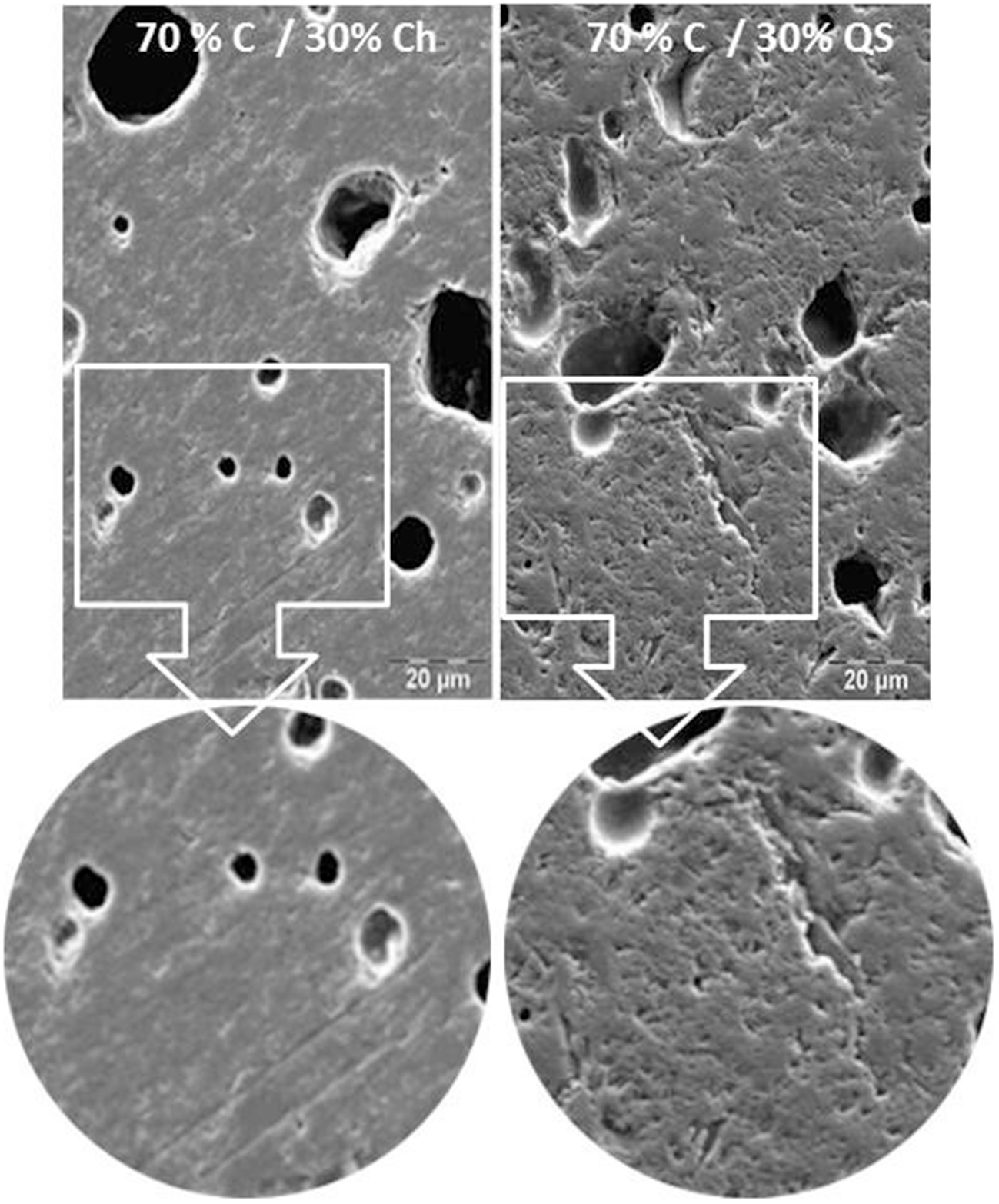
The microscopic analysis focused on the surface state of the samples to illustrate the effects of substituting quartz sand with chamotte (Fig. 6). An enlargement of pore area from 50 to 300 µm2 was observed on the photomicrographs from runs 1 and 7 (Fig. 7). The magnified surfaces show marked differences: run 7, containing 30 wt.% chamotte, presented a compact and more homogeneous structure with reduced fragility (Fig. 8). This observation reflects that, firstly, chamotte limits clay shrinkage during drying by remaining stable, thereby preserving larger pores despite water loss. When clay dries, it shrinks due to water loss, reducing particle size and pore volume. Chamotte, however, does not undergo shrinkage and helps maintain larger pores. Secondly, due to its greater refractoriness, chamotte develops viscous flow during firing but retains its shape while the surrounding clay partially melts. This property allows for the formation of new pore spaces without filling the existing pores, thus contributing to the final microstructure of the material.
Comparison of SEM images of sintered samples: (70% clay (C)/30% quartz sand (QS)) and (70% C/30% chamotte (Ch)) at 1150°C.

In conclusion, the chamotte content plays a crucial role during firing by significantly affecting the material’s viscosity, which in turn influences pore movement and the overall shaping process. As the chamotte content increases, the mixture becomes less viscous, restricting pore movement and potentially complicating the shaping and firing stages. This process produces new pore spaces without filling the existing ones, contributing to the final microstructure of the material. These effects have significant implications for both the shaping and sintering processes, impacting the porosity, strength and overall performance of the fired ceramic.
Densification and porosity measurements
It is crucial to understand subtle porosity differences to be able to predict the behaviour of clay–binder mixtures in practical applications, because variations in porosity can affect properties such as strength, permeability and overall material performance. The analysis of the densities of specimens made with varying percentages of chamotte and quartz sand (Tables 1 & 2) offers insights into both the compaction level of the sintered material and porosity trends. Indeed, density is pivotal for the mechanical behaviour and robustness of the formulated material, directly influencing its performance properties under real-world conditions.
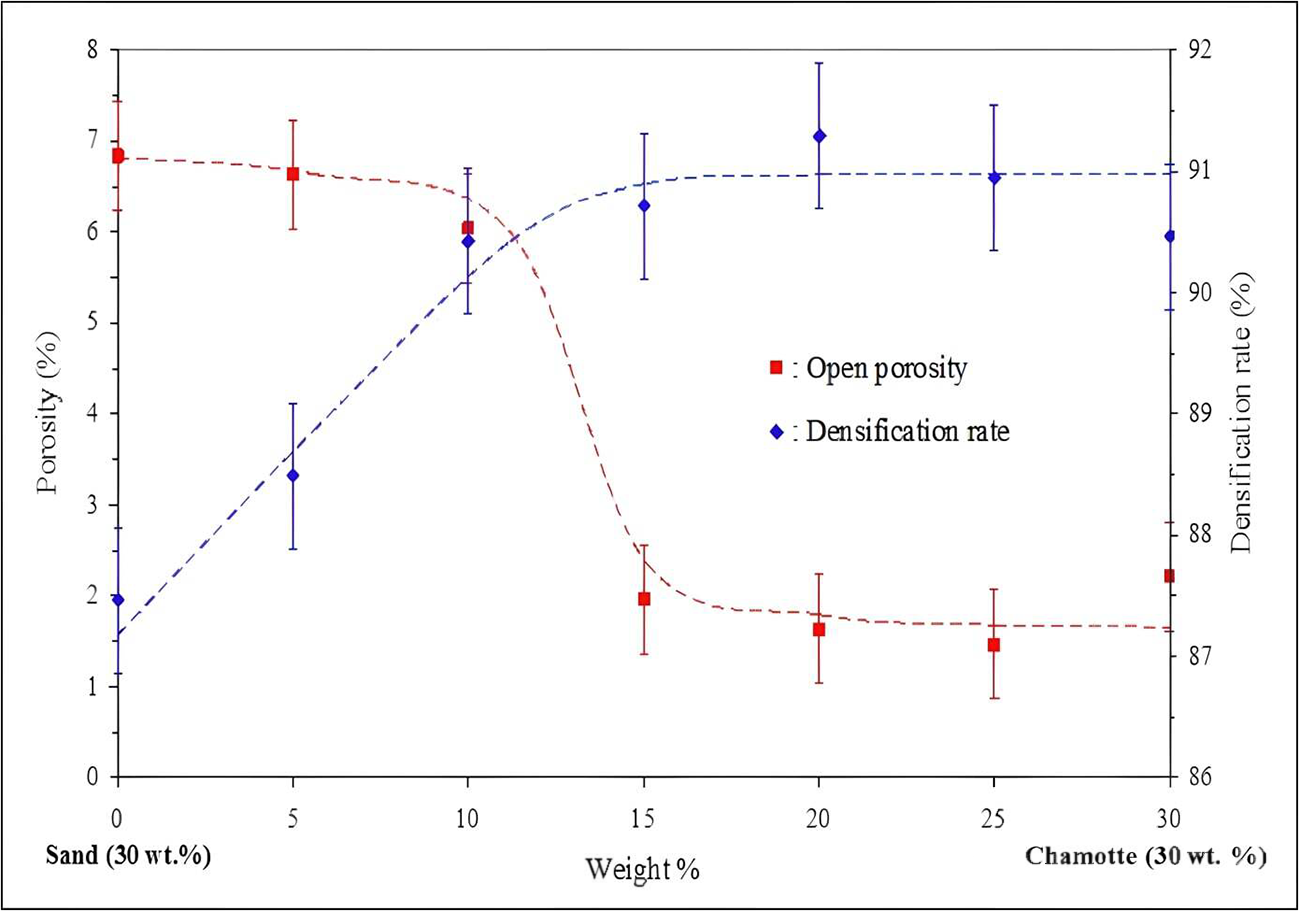
By gradually replacing quartz sand with chamotte in the mixture from 0 to 30 wt.% in 5 wt.% increments, the porosity of the specimens could be observed to change (Fig. 9). The samples, initially consisting of 70 wt.% clay and 30 wt.% quartz sand, showed a significant decrease in porosity as the chamotte content increased. Specifically, the porosity dropped from ∼7 wt.% for the specimen with 30 wt.% quartz sand to as low as 1 wt.% in specimens with greater chamotte contents. The red curve in Fig. 9 closely resembles a sigmoidal shape, indicating that chamotte played a key role in reducing porosity, thus promoting greater densification of the material. In contrast, the blue curve in Fig. 9, which represents the densification process, reveals two distinct phases: an initial increase in density from 87% to 91% with increasing chamotte content, followed by a plateau in densification when the chamotte proportion became too high. This suggests that although chamotte contributes to greater densification and reduced porosity, an excessive chamotte content might limit further improvements in density, possibly due to the material reaching a point at which it no longer benefits from additional chamotte quantities. This observation underscores the importance of optimizing the chamotte content for achieving the desired balance between porosity, density and mechanical properties in the final material.
Densification and porosity curves after sintering at 1150°C as a function of chamotte content.

Young’s modulus
To validate the microscopic observations regarding pore formation and pore-size distribution in the various clay–quartz sand mixtures, an elasticity study was conducted on the optimal sintered composition (70 wt.% clay, 15 wt.% chamotte, 15 wt.% quartz sand) during the sintering process. This study aimed to investigate the temperature dependence of Young’s modulus, providing a deeper understanding of how the material’s mechanical properties evolve during firing. The selected clay–quartz sand–chamotte formulation proved to be the most suitable for producing a ceramic material that balances both density and toughness while maintaining reasonable compactness.
The results of this elasticity study were then compared to those related to a pure Weslatiya clay without any additives (Krichen et al., Reference Krichen, Baklouti, Bonnet and Bouaziz2008). By comparing the temperature-dependent variation in Young’s modulus for both formulations, it was possible to assess how the addition of chamotte and quartz sand influenced the ceramic’s mechanical performance, particularly in terms of its stiffness and structural integrity at various firing temperatures (Fig. 10). This comparison provided valuable insights into the optimization of material compositions for specific applications requiring a balance of mechanical strength and thermal stability.
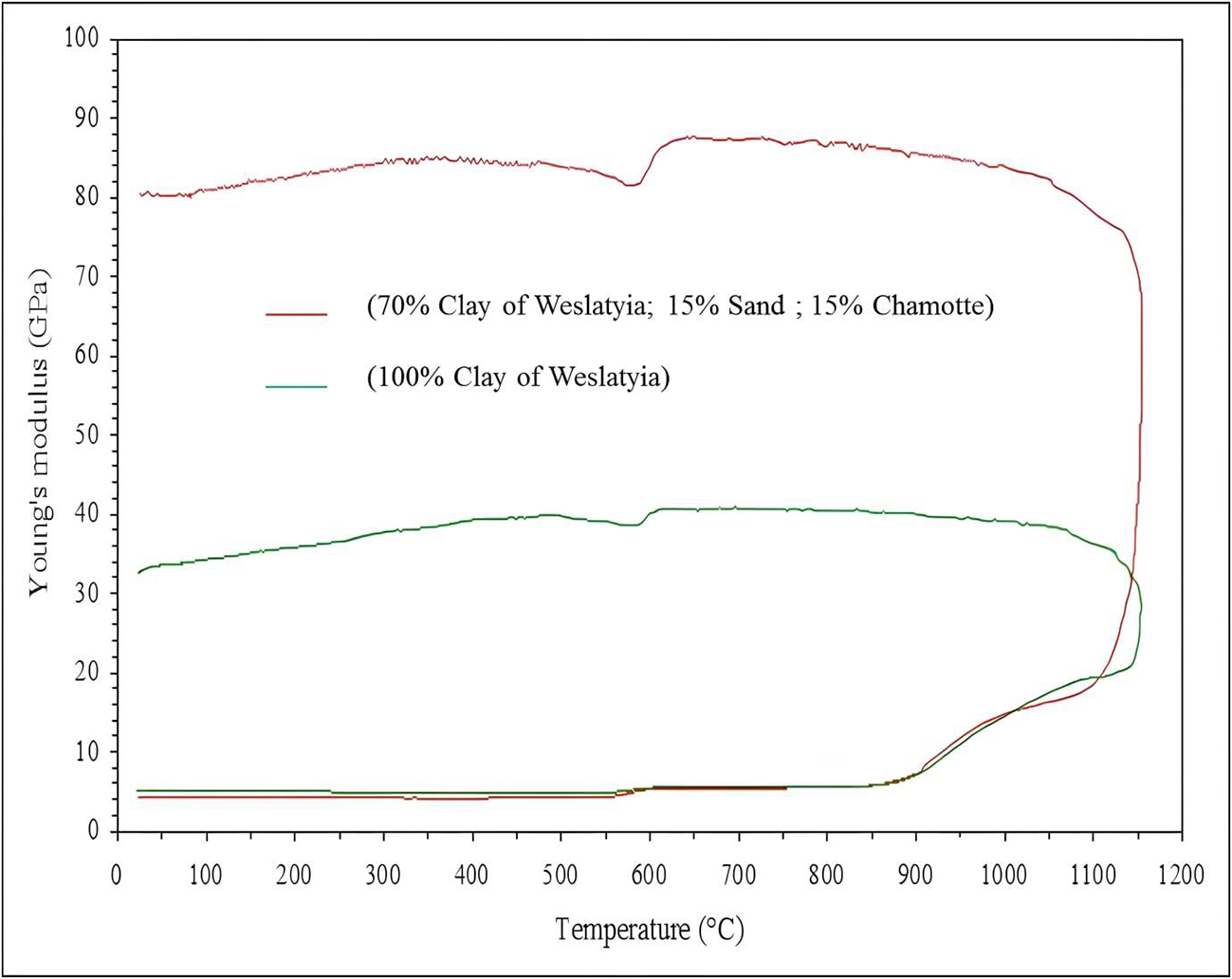
Variation in Young’s modulus with temperature for the Weslatiya clay and the sintered compound (70% clay, 15% quartz sand, 15% chamotte).

The red curve in Fig. 10, which represents the variation in Young’s modulus for the compound consisting of 70 wt.% clay, 15 wt.% quartz sand and 15 wt.% chamotte), mirrors the same trend as the 100% clay sample during the sintering process up to 1150°C. At this point, however, a significant change occurs: the Young’s modulus of the compound increases sharply, reaching nearly 2.5 times the value of the pure clay sample. This dramatic increase in Young’s modulus indicates a significant improvement in the material’s stiffness, suggesting that the addition of chamotte and quartz sand improved its mechanical properties.
At its peak, the Young’s modulus of the clay–quartz sand–chamotte compound reached ∼80 GPa. This value reflects a very high level of elasticity, which is indicative of a material that possesses both strength and toughness. Such a combination makes the final product extremely resilient, demonstrating excellent performance under stress. The remarkable increase in elasticity at this stage suggests that the material had transitioned to a much stronger and more rigid state, probably due to the microstructural changes that occurred during sintering.
The observed behaviour aligns closely with that of individually studied illitic clays (Štubňa et al., Reference Štubňa, Húlan, Kaljuvee and Vozár2017; Húlan et al., Reference Húlan, Štubňa, Ondruška, Csáki, Lukáč and Mánik2020, Reference Húlan, Štubňa, Kaljuvee and Knapek2021). Specifically, after the dehydration phase, the Young’s modulus remains nearly constant for the Weslatiya clay, as well as for the illitic clays (Štubňa et al., Reference Štubňa, Húlan, Kaljuvee and Vozár2017; Hulan et al., Reference Húlan, Štubňa, Ondruška, Csáki, Lukáč and Mánik2020). Starting at 850°C, crystallization and structural reorganization begin, resulting in a slight increase in Young’s modulus. Sintering begins at ∼1130°C, marking the onset of densification, which leads to a significant increase in Young’s modulus, surpassing 80 GPa in this study. The Young’s modulus increases with the content of the degreasing agent, a trend that is particularly evident in the case of chamotte. This pattern is supported by the values of Young’s modulus obtained for various illitic clays, which generally increase with increasing silica content (degreasing agent) but remain below 70 GPa, as was observed with the addition of chamotte.
Conclusion
This study examined the impacts of chamotte, a by-product of the ceramic industry, on the sintering behaviour and mechanical properties of fine-grained (≤63 µm) clay–chamotte–quartz sand mixtures. Chamotte boosted densification by aiding crystalline-phase formation and its incorporation into the viscous sintering flow. This process induced the closure of open pores and modified the distribution of closed pores. In the case of the mixture containing 70 wt.% clay and 30 wt.% quartz sand, the pore-size distribution remained relatively narrow, with an average pore area of ∼140 µm2. By contrast, for the optimized formulation comprising 70 wt.% clay, 15 wt.% sand and 15 wt.% chamotte, the pore-size distribution increased within the amorphous matrix, with pore areas of ∼40–50 µm2.
This optimized densification results in a significant improvement in the mechanical properties of the samples, as confirmed by ultrasonic analysis. A notable increase in Young’s modulus was observed, reaching 80 GPa for samples from the optimized mixtures compared to 30 GPa for samples made from the pure clay. Thus, the controlled addition of chamotte emerged as an effective strategy for improving the performance of ceramic materials based on this local clay (Weslatiya), paving the way for the optimized valorization of natural resources and industrial by-products.
Acknowledgements
The authors thank the Head of the Technology Department at IPEIS, University of Sfax, for their valuable support and guidance in carrying out the experimental analysis.
Financial support
None.
Competing interests
The authors declare none.