Introduction
Drosophila suzukii Matsumura (Diptera: Drosophilidae) is a global economic pest of soft fruits (Rota-Stabelli et al. Reference Rota-Stabelli, Blaxter and Anfora2013; Asplen et al. Reference Asplen, Anfora, Biondi, Choi, Chu and Daane2015). Female D. suzukii lay eggs in healthy fruits and berries, which are then damaged by larval feeding and associated necrosis (Rota-Stabelli et al. Reference Rota-Stabelli, Blaxter and Anfora2013). Both larvae and adults of D. suzukii are chill susceptible and are thus killed by low temperatures prior to any internal ice formation (Jakobs et al. Reference Jakobs, Gariepy and Sinclair2015, Reference Jakobs, Ahmadi, Houben, Gariepy and Sinclair2017). Short exposures to sub-freezing temperatures (e.g., one hour at −7.5 °C) are lethal to adults and larvae, as are prolonged exposures (i.e., one to two weeks) at 0 °C (Jakobs et al. Reference Jakobs, Gariepy and Sinclair2015, Reference Jakobs, Ahmadi, Houben, Gariepy and Sinclair2017; Toxopeus et al. Reference Toxopeus, Jakobs, Ferguson, Gariepy and Sinclair2016). Eggs appear susceptible to cold and are killed after 72 hours at 1–2 °C (Aly et al. Reference Aly, Kraus and Burrack2016; Kim et al. Reference Kim, Kim, Jeong, Choi, Park and Kim2018). Most soft-skinned fruits, such as raspberries (Rubus Linnaeus; Rosaceae) and strawberries (Fragaria × ananassa Duchesne; Rosaceae), are refrigerated above 4 °C for transport, but can be stored at temperatures between 0 °C and 2 °C for days to weeks (Lidster et al. Reference Lidster, Hildebrand, Bérard and Porritt1988). This postharvest chilling may provide an opportunity to use cold exposure to control D. suzukii (also discussed by Aly et al. Reference Aly, Kraus and Burrack2016; Kim et al. Reference Kim, Kim, Jeong, Choi, Park and Kim2018). Such an approach is used for phytosanitation of apples (Malus domestica Borkhausen; Rosaceae) that might contain Rhagoletis pomonella (Walsh) (Diptera: Tephritidae) (Canadian Food Inspection Agency 2017), although the timing of this treatment (42 days at +0.6 °C or 90 days at +3.3 °C) would likely be inappropriate for the soft-skinned fruit and berries that D. suzukii infests. In addition, wandering larvae leave the fruit and pupate in packaging (a possible means of spread among fields; Asplen et al. Reference Asplen, Anfora, Biondi, Choi, Chu and Daane2015); thus, these life stages may be targeted by cold treatment of packaging.
Diet can modify insect thermal biology. For example, increased dietary cholesterol enhances cold tolerance of Drosophila melanogaster Meigen, probably by increasing cell membrane fluidity (Shreve et al. Reference Shreve, Yi and Lee2007), whereas increased dietary sugars create metabolic imbalances and impair cold survival (Colinet et al. Reference Colinet, Larvor, Bical and Renault2013). Insects reared on laboratory diets may have different cold tolerance compared to those feeding on natural diets (Coudron et al. Reference Coudron, Ellersieck and Shelby2007), and the effects of diet may hinge on differences in the microbial composition of the food (Colinet and Renault Reference Colinet and Renault2014). In D. suzukii, 72 hours at 1.1 °C kills 97% of third instars and all eggs and first and second instars in artificial cornmeal diet but only 61–98% in raspberries and 76–100% in blueberries depending on the developmental stage tested (Aly et al. Reference Aly, Kraus and Burrack2016). Although the physical properties of fruits will differ, these differences among larvae reared on different fruits could be because fruit-specific macro-nutrient or micro-nutrient profiles affect some aspect of metabolism or because they yield different gut microbiomes (Vacchini et al. Reference Vacchini, Gonella, Crotti, Prosdocimi, Mazzetto and Chouaia2017) that may affect cold tolerance (Colinet and Renault Reference Colinet and Renault2014; Jiménez Padilla Reference Jiménez-Padilla2016; Henry and Colinet Reference Henry and Colinet2018). However, if a D. suzukii larva or pupa is in a fruit shipment, we know (by definition) the fruit in which it developed. Thus, any phytosanitary cold treatment can be adjusted for fruit-specific impacts on cold tolerance once those have been isolated.
We had two objectives. First, to identify combinations of time and temperature that reduce survival of immature stages of D. suzukii. Second, to determine whether cold tolerance of these stages is affected by the composition of the larval diet. For larvae inside food (i.e., feeding larvae), we chose temperatures above the freezing point of most fruits, which would be suitable for fruit storage and shipping. For life stages outside of food (i.e., wandering larvae and pupae), we extended this to temperatures suitable for rapid treatment of pallets and storage containers. We measured development time on the different diets to quantify the sublethal impacts of cold exposure. To control for the physical effects of different fruits and potential microbiota, we developed artificial diets based on soft-skinned fruits of economic importance (blueberries (Vaccinium Linnaeus; Ericaceae), cherries (Prunus avium Linnaeus; Rosaceae), grapes (Vitis Linnaeus; Vitaceae), raspberries, and strawberries) and compared these with the standard banana-based laboratory diet we have used previously (Jakobs et al. Reference Jakobs, Gariepy and Sinclair2015, Reference Jakobs, Ahmadi, Houben, Gariepy and Sinclair2017) and diets based on apples and oranges (Citrus × sinensis (Linnaeus) Osbeck; Rutaceae), which are not within the normal host range of D. suzukii.
Methods
Animal rearing and collection
We established a population of D. suzukii from stock collected in the Halton Hills region, Ontario, Canada (43°37 N, 79°57 W) in 2012 (Jakobs et al. Reference Jakobs, Gariepy and Sinclair2015). We reared D. suzukii on generic banana (Musa Linnaeus; Musaceae)-based laboratory food (Markow and O’Grady Reference Markow and O’Grady2005), at 25 ± 1 °C, 60 ± 5% relative humidity, and 14 h:10 hour light:dark cycle. We transferred five-day old adult flies to small acrylic egg collection cages (ø = 3.5-cm, 5.8-cm high) and maintained them on the banana medium supplemented with inactive yeast for three days to stimulate oviposition. On the fourth day, the standard food was removed and replaced with fruit-based media (100 mL deionised water, 25 g agar, 4 mL propionic acid, and 500 g mashed organic frozen fruit – raspberry, blueberry, cherry, strawberry, or apple, or 500 mL organic grape or orange juice). Drosophila suzukii laid eggs overnight in the fruit-based media, and we transferred the eggs in the media to rearing cages (30 cm × 15 cm × 15 cm plastic boxes) until the larvae reached the desired developmental stage.
To determine the effects of diet type on cold tolerance, we collected eggs, first and second instars, feeding third instars (the stage with the longest duration within the food), wandering third instars (which have left the food), and early-stage and late-stage pupae. We determined the age of larvae by observing the mandible structures and anterior spiracles of a subset of larvae under a light microscope (Demerec Reference Demerec1965). Since the fruit-based food is darker than standard laboratory food, the wandering larvae were easily identified by the lack of visible food in their gut (Jakobs et al. Reference Jakobs, Ahmadi, Houben, Gariepy and Sinclair2017). We differentiated pharate from early pupae by the presence of eyes and black wings visible through the puparium. We flooded the media plates with water – the larvae crawl to the surface of the food and the pupae float. We collected the larvae and pupae with a soft paintbrush, removed any food residue with tap water, and blotted them dry (see Jakobs et al. Reference Jakobs, Ahmadi, Houben, Gariepy and Sinclair2017).
Effects of low-temperature exposure on Drosophila suzukii third instars and pupae
To determine the survival of feeding third instars, we placed 10 larvae on top of 1 mL of media in a 2-mL microcentrifuge tube (five tubes/diet/temperature or time, three cohorts) and allowed them 15–20 minutes to burrow into the food before cold exposure. We exposed the remaining stages to cold in empty microcentrifuge tubes (five tubes/diet/temperature or time, three cohorts) because wandering larvae and pupae are outside food. We placed the tubes into aluminium blocks cooled by circulating methanol or ethylene glycol from a refrigerated bath (Lauda Proline 3530, Lauda, Würzburg, Germany). We recorded the temperature via a 36-AWG type-T thermocouple (Omega, Laval, Québec, Canada) inserted into the food or touching the larvae or pupae in the tubes without food. The thermocouples were connected to a computer by a TC-08 interface running Picolog software (version 5.24.2, Pico Technology, Cambridge, United Kingdom). After exposure, all stages were transferred to 35-mL narrow Drosophila Fallén vials with 10 mL of the appropriate food and returned to their rearing conditions. We monitored vials every 24 hours until eclosion ceased. We calculated development time as the time elapsed from egg collection to eclosion and survival as the number of adults eclosed per vial. We determined the average fresh mass of all eclosed adults per sex for each treatment in the first cohort using a microbalance (MX5, Mettler Toledo, Columbus, Ohio, United States of America).
We exposed feeding larvae to +4 °C for one day to simulate the storage of fruits in a standard fridge or cooler for a day. We also exposed the larvae to +0.6 °C for three, four, five, seven, or ten days based on Canadian government recommendations for optimal storage conditions of berries (Lidster et al. Reference Lidster, Hildebrand, Bérard and Porritt1988; Ontario Ministry of Agriculture, Food, and Rural Affairs 2019).
Additionally, we recorded larval survival after exposure to −1 °C for two or four days, which approximates the highest freezing points for strawberries and blackberries (−0.8 °C), raspberries (−1.1 °C), and blueberries (−1.3 °C) (Lidster et al. Reference Lidster, Hildebrand, Bérard and Porritt1988; Ontario Ministry of Agriculture, Food, and Rural Affairs 2019). We exposed stages out of food (wandering larvae and pupae) to 4 °C for one or 10 days, −4 °C and −5 °C for one or two hours, and −6 °C for two hours.
We controlled for the effect of diet and handling on survival, development time, and mass by collecting feeding third instar and wandering larvae, as well as early and pharate pupae using the same technique as for the cold-treated individuals. We collected the larvae or pupae from flooded media plates with a soft brush, transferred them to fruit-media vials (five vials/cohort/stage, 10 larvae, or pupae per vial), and reared them under standard conditions and measured survival, development time, and mass in the same manner as for the cold-exposed D. suzukii.
Statistical analysis
All analyses were performed in R version 3.1.2 (R Development Core Team 2017), and preliminary data exploration was conducted according to Zuur et al. (Reference Zuur, Ieno and Elphick2010). We used analysis of variance to compare the development time and mass of control D. suzukii, followed by Tukey’s Range post hoc test. We compared survival of controls and cold-exposed D. suzukii, as well as development time following cold exposures using generalised linear models with a binomial distribution. We used analysis of deviance to determine the significance of the main effects in these models.
Results
Survival and development in different diets without cold exposure
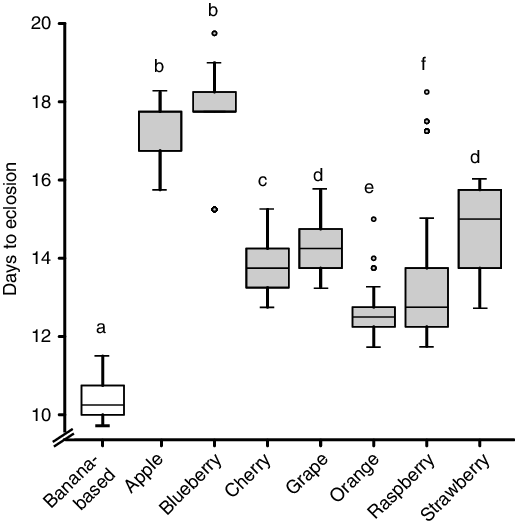
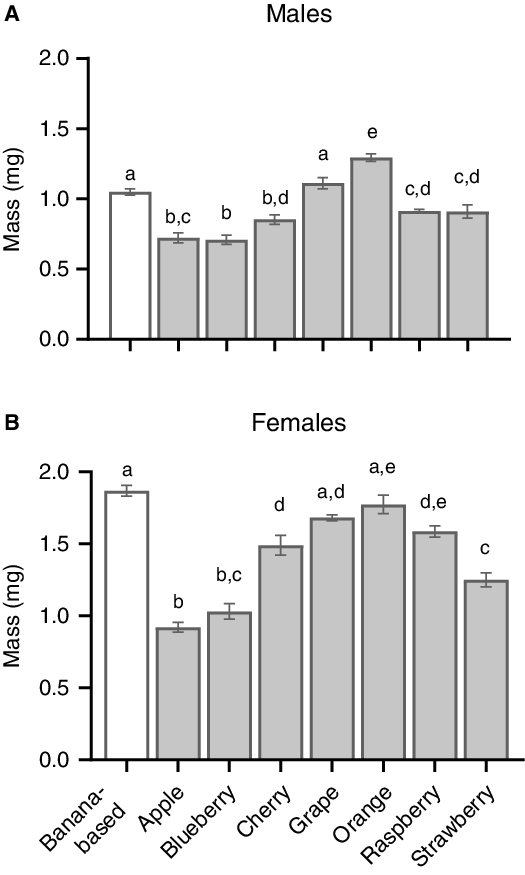
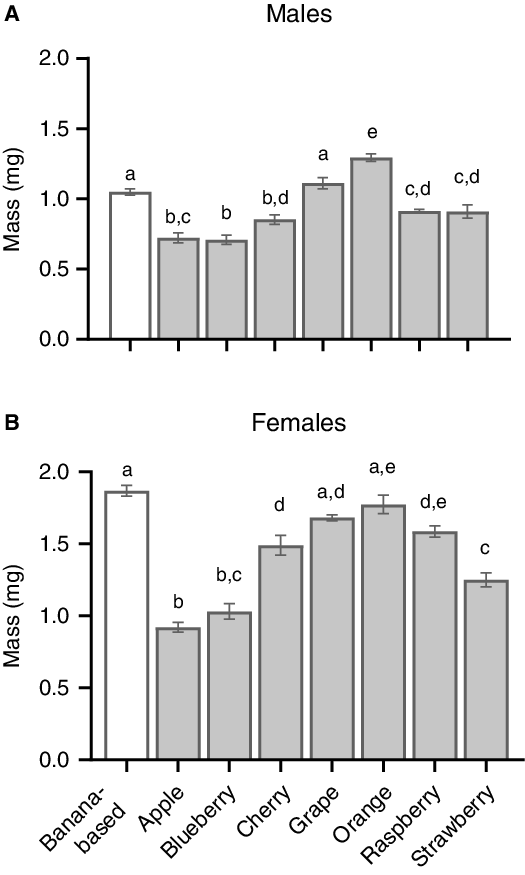
Fruit type had significant, but complex, effects on survival and development of immature D. suzukii. Fruit type significantly affected survival of D. suzukii removed from food without exposure to low temperatures (Supplementary Table S1, Supplementary Figure S1). Generally, development on food derived from blueberries, grapes, and raspberries decreased overall survival of D. suzukii compared to other fruit types (Supplementary Figure S1). Diet also affected development time (F 7,604 = 451.8, P < 0.001; Fig. 1): D. suzukii reached adulthood faster on standard (banana-based) laboratory food, but more slowly on blueberries and apples compared to other fruit types (Fig. 1). Fresh mass of both males (F 7,32 = 36.71, P < 0.001; Fig. 2A) and females (F 7,32 = 52.72, P < 0.001; Fig. 2B) was dependent on food type – in general, D. suzukii reared in apple-based and blueberry-based diets were smaller than the flies reared in other fruit types.
Egg-adult development time of Drosophila suzukii reared on diets derived from different fruits. Note that the banana-based food was a standard laboratory food that included a range of additional ingredients. Boxes indicate the interquartile range, the error bars denote the minimum and maximum values, and we plot individual points that fell outside this range (n = 10 vials/diet and each vial contained 7–10 D. suzukii). Different letters signify statistically significant differences in development time among fruit types (P < 0.05, Tukey’s post hoc test; see Supplementary Table S1 for statistics).

Fresh mass of adult Drosophila suzukii reared on diets derived from different fruits. A, Males; B, females. Note that the banana-based food was a standard laboratory food that included a range of other ingredients. Mean ± standard error of the mean shown (n = 5 vials/diet, vials contained 10–21 females and 12–29 males); different letters signify statistically significant differences in mass among fruit types (P < 0.05, Tukey’s post hoc test; see text for statistics).
Cold tolerance
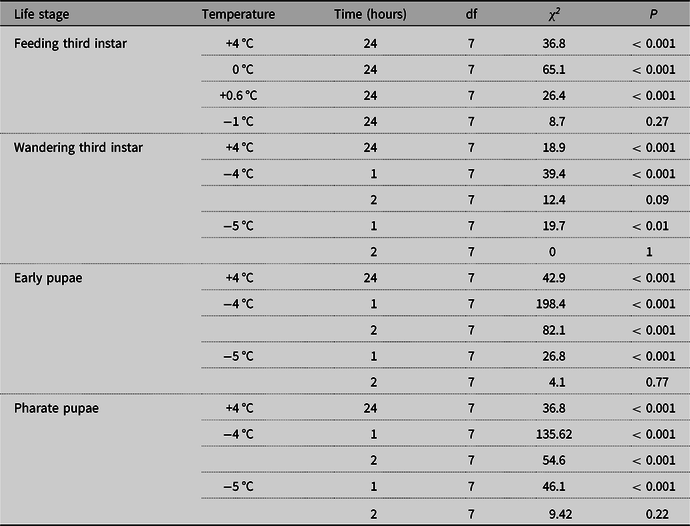
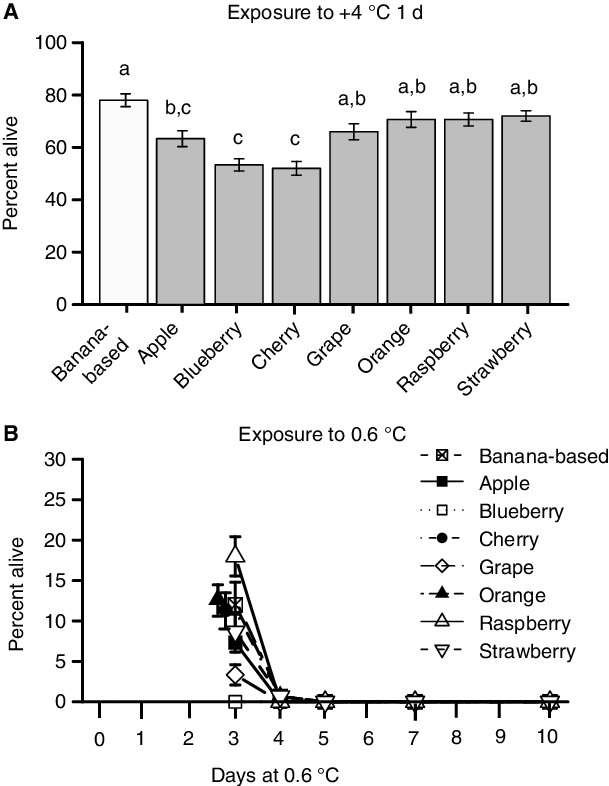
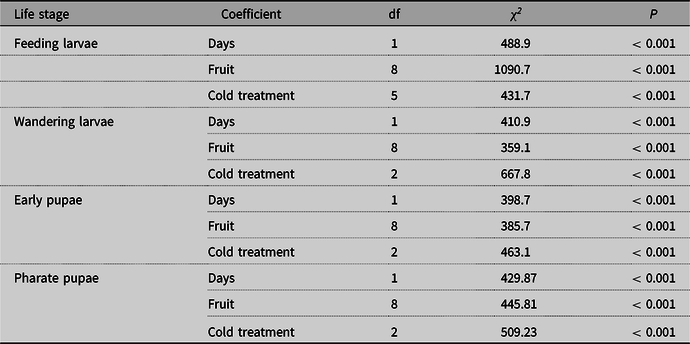
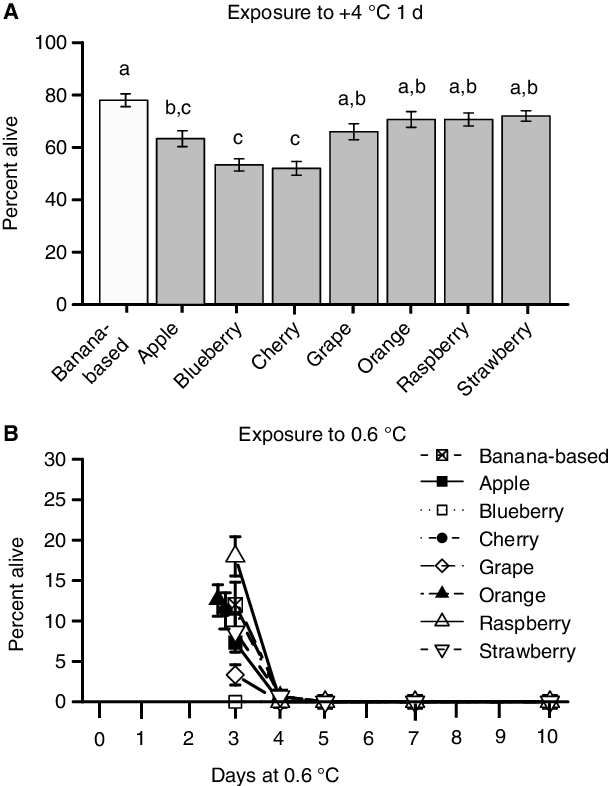
Cold exposure killed all eggs and first and second instars. We exposed feeding third instars to above-zero temperatures simulating fruit storage conditions. More than half of larvae from all foods survived exposure to +4 °C for 24 hours; survival varied by diet (Table 1) and was highest in larvae from the banana-based diet and lowest in blueberry-based and cherry-based diets (Fig. 3A). However, when exposed to +0.6 °C, some feeding larvae from all diets survived after three days; 1–2 larvae from the banana, strawberry, orange, and cherry diets survived four days; and all larvae, irrespective of diet, were killed after five days (Fig. 3B). A four-day exposure was sufficient to kill more than 90% of feeding third instars at 0 °C, regardless of fruit (Supplementary Figure S2), while four days at −1 °C killed all feeding third instars (see Supplementary Table S3). Some feeding third instars developed dark melanised spots after exposure (Supplementary Figure S3); none of the larvae that developed these dark spots successfully eclosed.
Statistics for the main effect of diet type on survival of immature Drosophila suzukii exposed to a range of low temperatures for various durations. Results are from an analysis of deviance for a generalised linear model with binomial error distribution.

Survival of exposure to different temperatures by feeding third-instar Drosophila suzukii larvae reared on diets derived from different fruits. A, +4 °C; B, +0.6 °C. Mean ± standard error of the mean shown (n = 15 vials/diet and each vial contained 10 D. suzukii); different letters signify statistically significant differences in survival among fruit types (P < 0.05, generalised linear model with binomial error distribution test; see Table 1 for statistics). Data points on Day 3 are slightly offset to improve visibility of data.
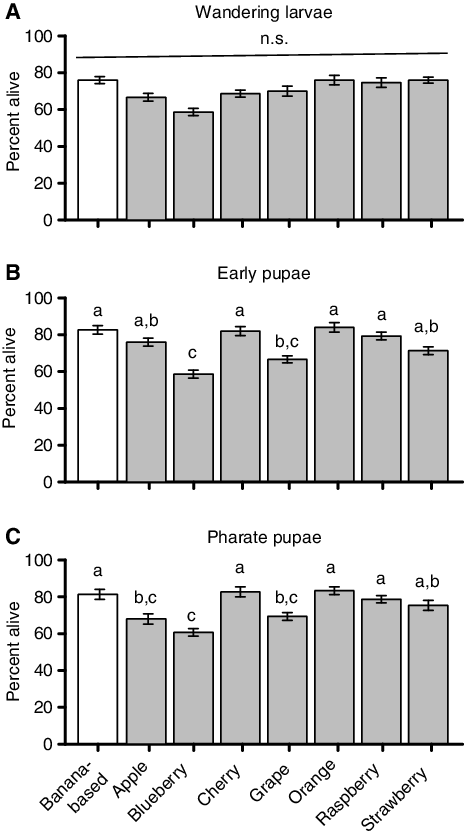
More than 50% of wandering larvae, early pupae, and pharate pupae survived a 24-hour exposure to +4 °C (Fig. 4), but none survived a 10-day exposure at this temperature (see Supplementary Table S3). Survival did not vary among diets in wandering larvae, but was lower in blueberry-based diets than other diets (Fig. 4). None of these life stages survived a five-day exposure to +0.6 °C (see Supplementary Table S3).
Survival of 24 hours at +4 °C by immature Drosophila suzukii reared on diets various fruit media. We measured survival as eclosion as adults. Mean ± standard error of the mean shown (n = 15 vials/diet and each vial contained 10 D. suzukii); different letters signify statistically significant differences in survival among fruit types (P < 0.05, generalised linear model with binomial error distribution; see Table 1 for statistics).

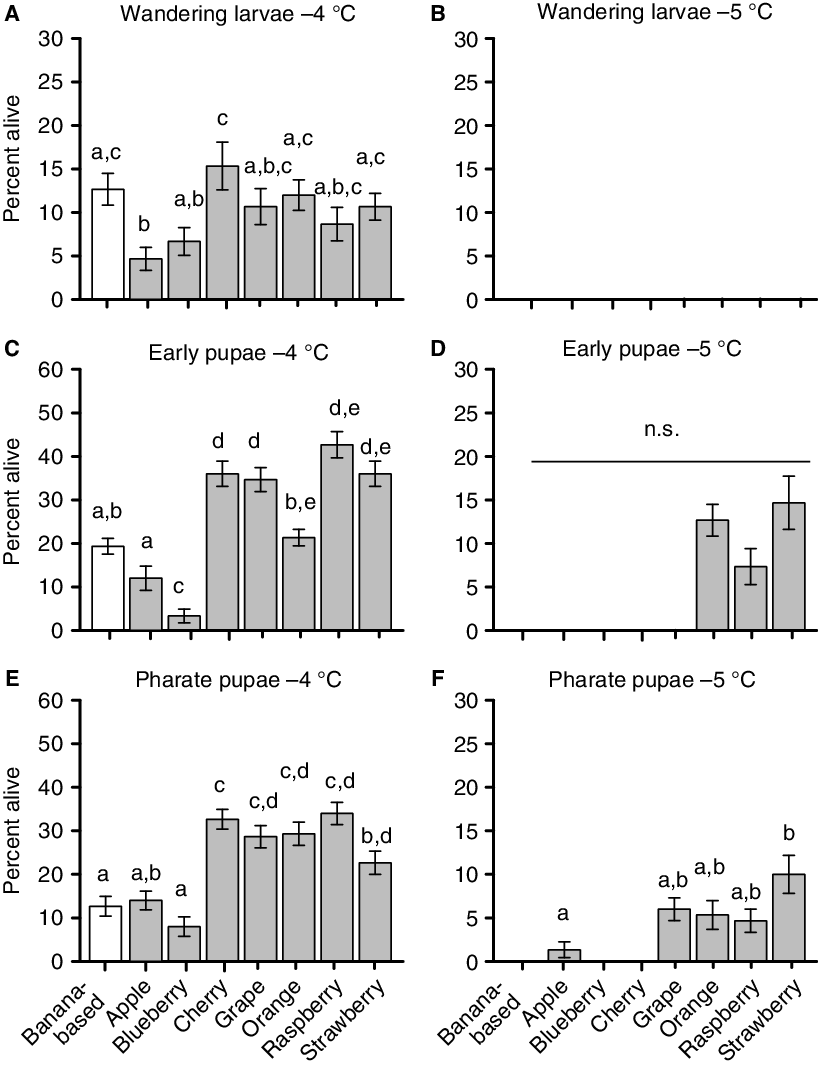
Brief exposure to acute low temperatures caused significant mortality in postfeeding life stages but survival varied depending on diet prior to cold exposure (Table 1). We observed significant, but not complete, mortality in postfeeding life stages exposed to −4 °C and −5 °C for one hour (Supplementary Figure S4). The effects of diet were variable among life stage and temperature, but postfeeding life stages raised on blueberry had consistently poorer survival of acute cold than other foods (Fig. 5, Supplementary Figure S4). Longer exposures to subzero temperatures led to more significant mortality. Some individuals of all postfeeding life stages survived a two-hour exposure to −4 °C, and a few pupae survived two-hour exposure to −5 °C (Fig. 5); all postfeeding life stage individuals were killed by a two-hour exposure to −6 °C (see Supplementary Table S3). Many wandering third instars that survived cold exposure accrued developmental abnormalities due to either incomplete pupation or malformation upon eclosion as adults (Supplementary Figure S5); however, we did not quantify these effects.
Survival of immature stages of Drosophila suzukii following acute cold exposure to −4 °C and −5 °C for 1 hour. We measured survival as eclosion as adults. There was no survival of wandering larvae at −5 °C. Mean ± standard error of the mean shown (n = 15 vials/diet and each vial contained 10 D. suzukii); different letters signify statistically significant differences in survival among fruit types (P < 0.05, generalised linear model with binomial error distribution; see Table 1 for statistics).

Development time following cold exposure
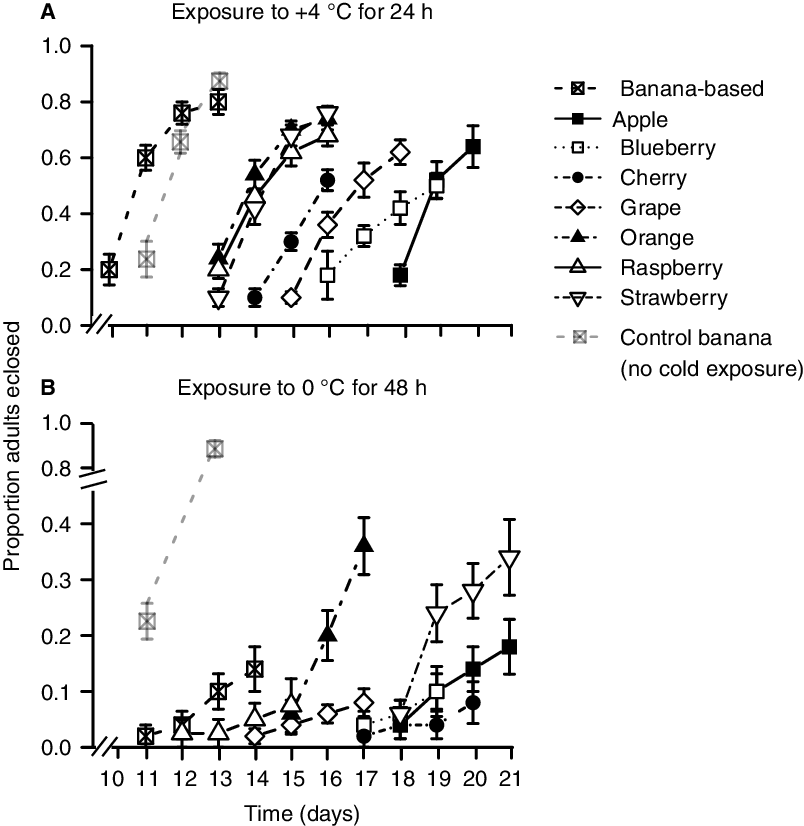
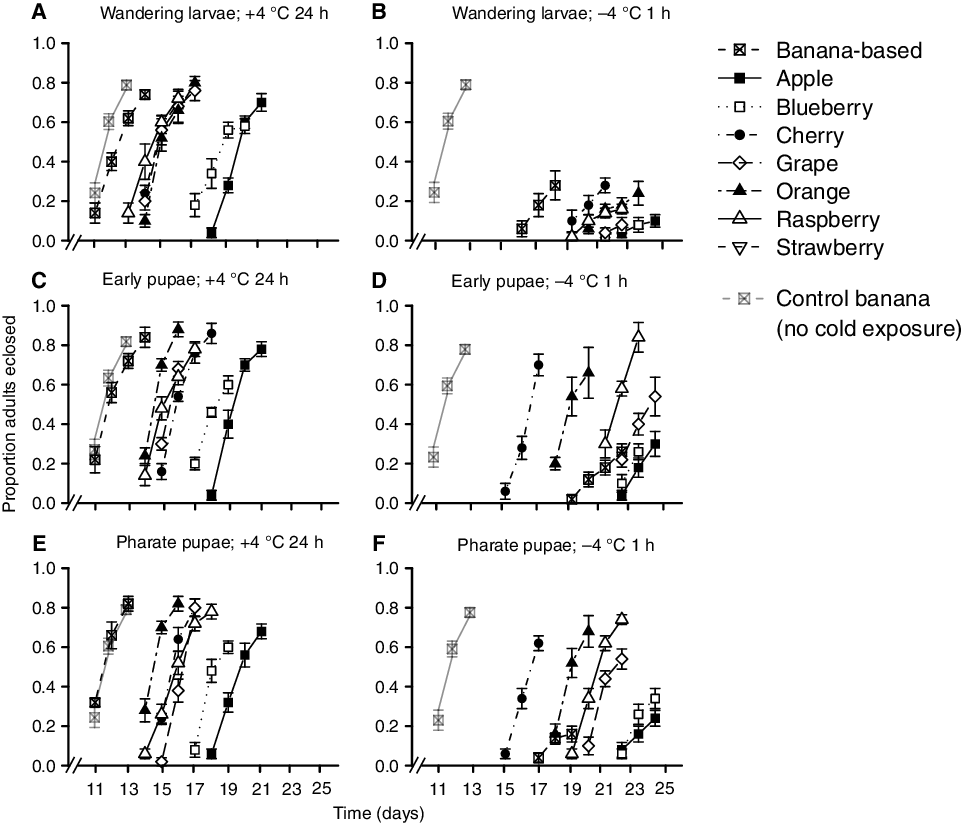
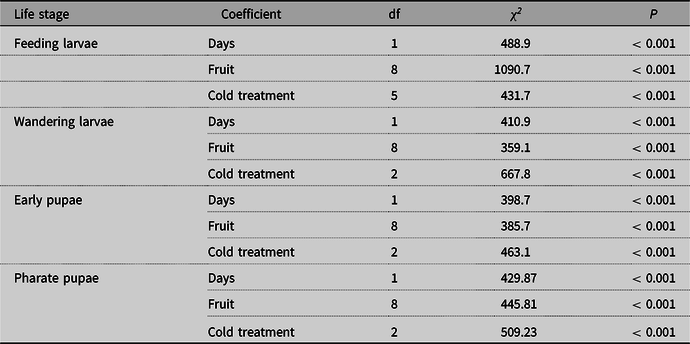
Cold exposures that were less effective in reducing survival (i.e., +4 °C for 24 hours, −4 °C for one hour) did increase the development time of flies that survived long enough to eclose as adults (Figs. 6–7; Table 2) in a diet-dependent manner. As for other treatments, rearing on apple-based or blueberry-based diet had the greatest effect, slowing development more than the other foods (Figs. 6–7). Drosophila suzukii reared on a banana-based diet developed fastest after a 24-hour exposure to +4 °C, and if exposed to acute cold for one hour as wandering larvae (Fig. 7), but pupae reared on apple-based or cherry-based media performed best after an acute exposure of one hour at −4 °C (Fig. 7).
Cumulative development of Drosophila suzukii third instars following cold exposure. We reared flies from egg to feeding larvae on one of eight diets derived from different fruits (apples, blueberries, cherries, grapes, oranges, raspberries, strawberries) or a banana-based control laboratory diet. We exposed feeding third instars to +4 °C for 24 hours or 0 °C for 48 hours and measured the number of days from egg to adult eclosion in surviving D. suzukii. Mean ± standard error of the mean shown (n = 5 vials/diet and each vial contained 10 D. suzukii); see Supplementary Table S2 for statistics.

Cumulative development of postfeeding immature Drosophila suzukii following cold exposure. We reared D. suzukii from egg to wandering third instars, early pupae, and pharate pupae on one of eight diets derived from different fruits (apples, blueberries, cherries, grapes, oranges, raspberries, strawberries) or a banana-based control laboratory diet. We exposed D. suzukii to +4 °C for 24 hours, 0 °C for 48 hours of cold exposure, and measured the number of days from egg to adult eclosion in surviving flies. Mean ± standard error of the mean shown (n = 5 vials/diet and each vial contained 10 D. suzukii); see Supplementary Table S2 for statistics.

Statistics for main effects of duration, temperature, and diet type on survival of immature Drosophila suzukii. Results are from an analysis of deviance for a generalised linear model with binomial error distribution.
Discussion
Drosophila suzukii is a polyphagous pest, and here we show that the cold susceptibility of the immature stages depends on the fruit in which the animals are reared. Furthermore, D. suzukii reared on fruit-based diets often had slower development, smaller adult size, and reduced cold tolerance compared to those reared on our standard (banana-based) laboratory diet. From a control perspective, this is (partly) a positive finding: we found that performance was worse on some commercial fruits than on laboratory food, which implies that conclusions based on D. suzukii reared on high-quality laboratory diet may be conservative. In particular, D. suzukii reared on blueberry-based and cherry-based foods were particularly cold susceptible; however, D. suzukii reared on strawberry and raspberry were comparably more cold tolerant. By contrast, Aly et al. (Reference Aly, Kraus and Burrack2016) found that berry-reared immature stages had slightly higher cold tolerance than their counterparts reared on a cornmeal-based laboratory diet. The banana-based diet is particularly nutrient rich, whereas cornmeal-based diets are less so (Markow and O’Grady Reference Markow and O’Grady2005). We expect that D. suzukii reared on cornmeal-based diets likely experience more (and different) nutrient stress compared to our fruit diets. We have observed poor performance of D. suzukii when reared in cornmeal-based diet (Y.J.-P., unpublished observations) and nutrient balance is important in overwintering of adult D. suzukii (Rendon et al. Reference Rendon, Walton, Tait, Buser, Lemos Souza and Wallingford2019). This among-diet variation in laboratory phenotype is increasingly acknowledged in Drosophila research (e.g., Ormerod et al. Reference Ormerod, LePine, Abbineni, Bridgeman, Coorssen, Mercier and Tattersall2017; Rendon et al. Reference Rendon, Walton, Tait, Buser, Lemos Souza and Wallingford2019) and is important when extrapolating pest management decisions to new crops. We also included two nonhost fruit diets, apples, and oranges. While this is the archetypal inappropriate comparison, the effects of both of these (very different) fruits fell within the range of other fruits, suggesting that we are probably seeing close to the full range of expression of diet-related variation in phenotype in our experiments.
Our data indicate that although there is only limited mortality after a day at a typical refrigeration temperature (+4 °C), at +0.6 °C, there is high mortality after three days and complete mortality of immature life stages after four days. Thus, +0.6 °C, a temperature used for storage and transport of soft fruits (Lidster et al. Reference Lidster, Hildebrand, Bérard and Porritt1988) appears to be an appropriate temperature to kill D. suzukii in fruit. While this is not useful for control (infested fruit are generally not marketable; Rota-Stabelli et al. Reference Rota-Stabelli, Blaxter and Anfora2013), chilling for more than four days at +0.6 °C could be an appropriate treatment to maintain market access for shipments from known infested areas. Postfeeding life stages are more cold tolerant, but brief (two-hour) exposures led to complete mortality at −5 °C or −6 °C. We expect that such temperatures are readily and quickly attainable in commercial freezers, even with the buffering effect of packaging. Thus, cold treatment of packaging and pallets is a viable approach for preventing spread of D. suzukii among fields (Asplen et al. Reference Asplen, Anfora, Biondi, Choi, Chu and Daane2015).
We did not explore the physiological mechanisms underlying the effects of diet on D. suzukii performance. However, we speculate that there are likely nutritional sources of the variation we observed. The different fruit diets likely have very different nutritional properties. Bananas, oranges, and raspberries are relatively high in protein (Hulme Reference Hulme1972), which might enhance the melanisation response (Lee et al. Reference Lee, Simpson and Wilson2008), and therefore repair and protect tissues after cold exposure (see Sinclair et al. Reference Sinclair, Ferguson, Salehipour-Shirazi and MacMillan2013 for discussion). Protein is also a source of proline and arginine, which have significant cryoprotective effects in D. melanogaster (Koštál et al. Reference Koštál, Simek, Zahradnickova, Cimlova and Stetina2012, Reference Koštál, Korbelová, Poupardin, Moos and Šimek2016). However, high-protein diets reduce lifespan and fecundity of winter morph D. suzukii (Rendon et al. Reference Rendon, Walton, Tait, Buser, Lemos Souza and Wallingford2019). Interactions with microbes may also mediate the effects of diet on cold tolerance. Fruit type can alter the gut microbiome (Martinez-Sañudo et al. Reference Martinez-Sañudo, Simonato, Squartini, Mori, Marri and Mazzon2018) and hence nutrient absorption and development (Bing et al. Reference Bing, Gerlach, Loeb and Buchon2018). Because we used homogenised fruit and included propionic acid, it is possible that our fruit-based diets lacked beneficial fruit-specific microbes that might enhance performance in nature or had microbe × fruit interactions that reduced performance. However, other work in our laboratory shows that D. suzukii reared on propionic acid-containing diets (to reduce mould growth) still have a substantial gut microbiota, including yeasts (Jiménez-Padilla et al. 2020).
We identify several possible caveats to our results. We prepared our diets using essentially homogenised fruit, which although nutritionally similar to fruit, lacks the physical structure of living fruit (Reeve Reference Reeve1956), or the interactions between the larva and the (living) host tissue (Corrado et al. Reference Corrado, Alagna, Rocco, Renzone, Varricchio and Coppola2012). The laboratory fruit diets probably also lack some components of the natural microbiota (discussed above). The flies that oviposited onto our fruit diets were raised on banana-based food, so there is a possibility that the larvae missed any maternal effects that would be present if their mothers were reared on the same fruit (see Matzkin et al. Reference Matzkin, Johnson, Paight and Markow2013). Finally, Drosophila larvae generally have considerable plasticity in cold tolerance (e.g., Rajamohan and Sinclair Reference Rajamohan and Sinclair2008, Reference Rajamohan and Sinclair2009; Jakobs et al. Reference Jakobs, Ahmadi, Houben, Gariepy and Sinclair2017), so it is quite likely that D. suzukii larvae reared in our fruit diets may have the capacity to improve their cold tolerance. However, we assume that larvae in commercial crops would not have been exposed to cold prior to harvest. We also reared our larvae under constant temperatures, and fluctuating temperatures can sometimes improve low-temperature performance, even if they do not include significant cold spells. While it is important to consider these caveats when interpreting our results, most of the effects we describe yield effect sizes similar to those we observed, which suggests to us that the diet effects will remain a key determinant of cold tolerance in D. suzukii larvae.
Conclusions
Drosophila suzukii development rate, final body size, and cold tolerance are dependent on their diet. Nevertheless, immature D. suzukii are susceptible to cold. Feeding stages are all killed by more than four days of exposure to +0.6 °C and postfeeding stages by a brief (approximately two hours) exposure to −5 °C or −6 °C. We suggest that the former would be an appropriate temperature regime for sanitising fruit from infested areas, and the latter is an achievable set of conditions for killing postfeeding stages in packaging.
Acknowledgements
The authors thank Joanne Tang, Adam Smith, Lamees Mohammad, SongMin Lee, Eddy Huang, Xin Wang, and Dina Mostafa for laboratory assistance and to Martin Damus for extensive discussions. This work was supported by the Canadian Food Inspection Agency and a Natural Sciences and Engineering Research Council of Canada Discovery Grant to B.J.S. and by an Ontario Graduate Scholarship to Y.J.-P.
Supplementary material
To view supplementary material for this article, please visit https://doi.org/10.4039/tce.2020.36.