In hisStudy inAustrianIntellectualHistory, Robert Kann unobtrusively posed a pivotal question that continues to engage practitioners of intellectual history. Whose culture, he asked, are we talking about when we generalize about the literary, artistic, and musical products of an age?Footnote 1 His unhesitating answer, “the culture of the select few,” reflected the dominant view of intellectual historians in 1960, the year when the book was first published.Footnote 2 Since then, our sense of what constitutes historical relevance has expanded, and the automatic equation of culture with social and intellectual elites has eroded but has by no means disappeared.
During the past decade in particular, historians of the Habsburg monarchy have begun to pay closer attention to such manifestations of popular culture as the operetta, the music hall, the Orpheum, the cabaret, and the coffee house, which had been ignored or marginalized in earlier accounts. Works by Moritz Csáky on the Viennese operetta,Footnote 3 by Péter Gál Molnár on Budapest night life,Footnote 4 and the thematic numbers of the Hungarian journal, Budapesti Negyed (Budapest Quarterly),Footnote 5 have put this neglected field on the map of scholarly research. From their studies, we now know that fin-de-siècle Vienna and Budapest gave rise not only to modernist art and philosophy,Footnote 6 but also to an entertainment industry of unparalleled brilliance and vitality. In Budapest, the feverish millennial celebrations of 1896 created an especially favorable climate for the upsurge of popular entertainment. As Hungary's political elite transformed Budapest into a historical theme park, with pseudomedieval castles, oriental bazaars, and processions of office holders in national costume, the city's entertainment professionals followed suit, capitalizing on the public's new-found taste for theatricality, fantasy, and exoticism. The Orpheums, music halls, coffee houses, and fair grounds built during these years outdid in opulence and extravagance the creations of official culture.
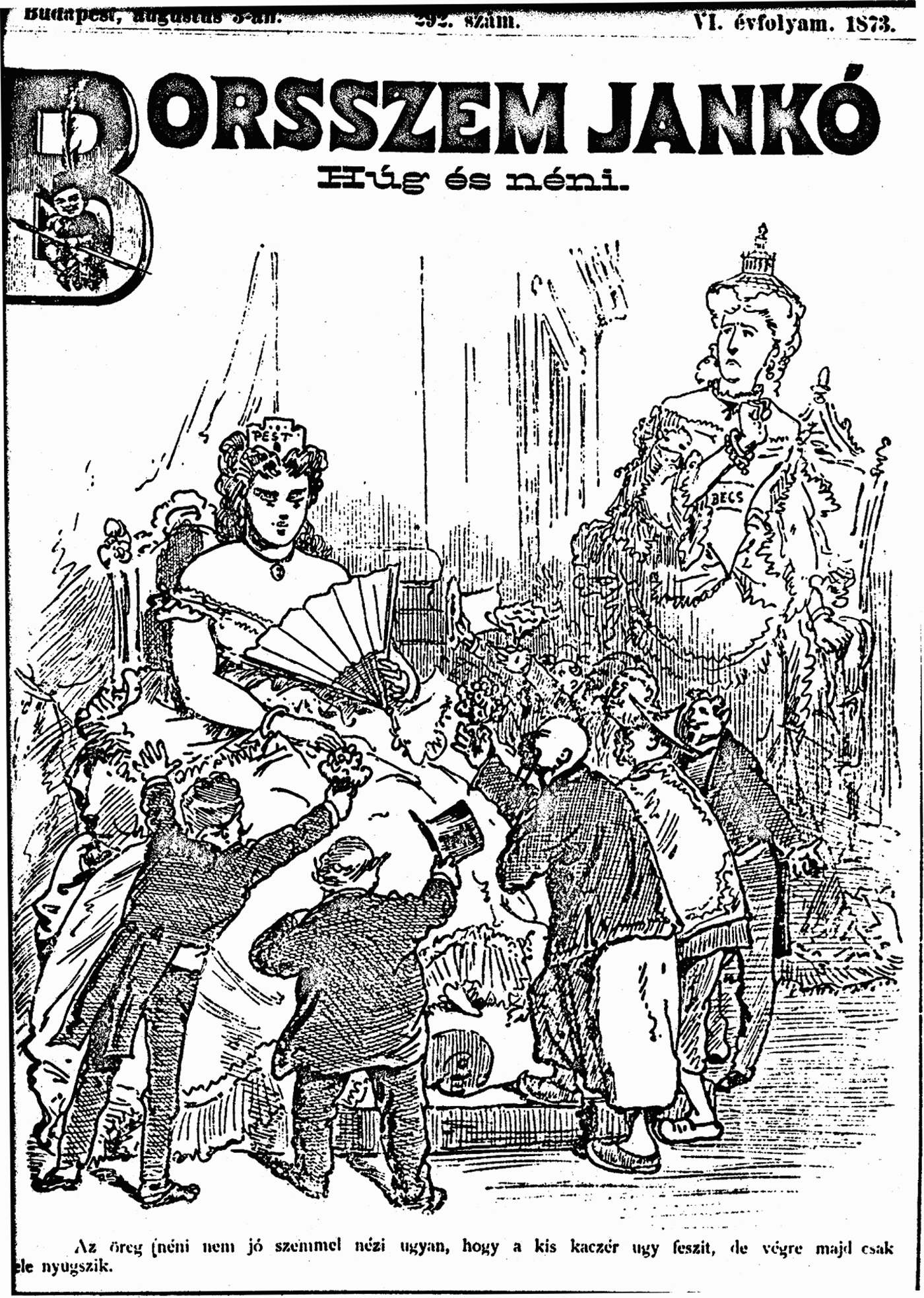
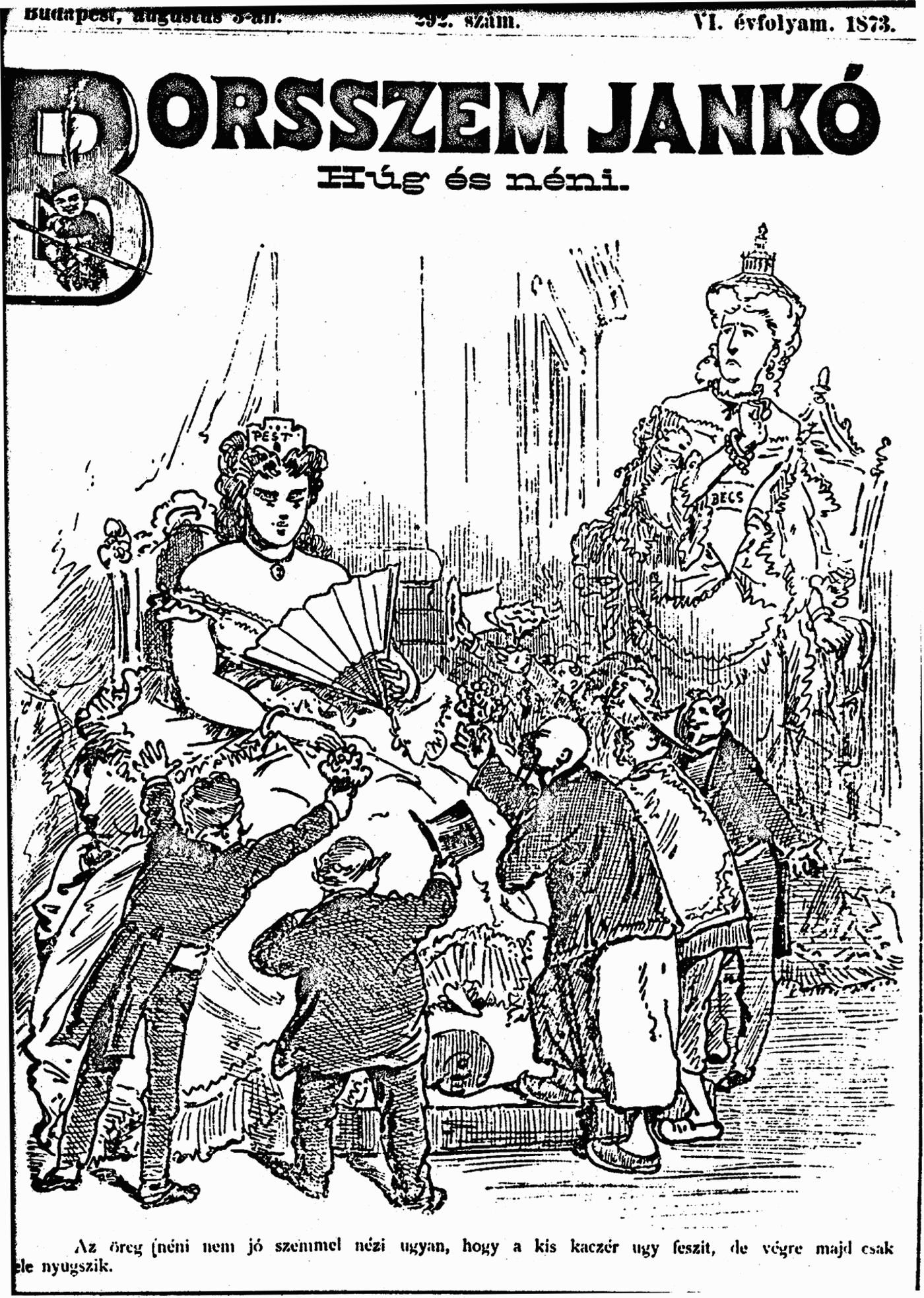
Sustaining such commercial enterprises was an increasingly self-conscious middle- and lower-middle-class public no longer willing to accept the cultural tutelage of traditional elites. For these newly enfranchised masses, urban culture became not only a source of amusement, but also of pride and collective belonging that compensated for the erosion of traditional loyalties and attachments. As residents of Budapest liked to boast, their city had overtaken Vienna, if not in the beauty of its historical squares and palaces, certainly in the liveliness of its entertainment industry. If you want to sleep well, one popular pamphlet advised, “Go to Vienna,” but if you want to have fun, “Come to Budapest.” Going even further, the pamphleteer grandiosely proclaimed: “In respect to night-time entertainment, we have surpassed Paris and Berlin as well” (see Figure 1)Footnote 7.
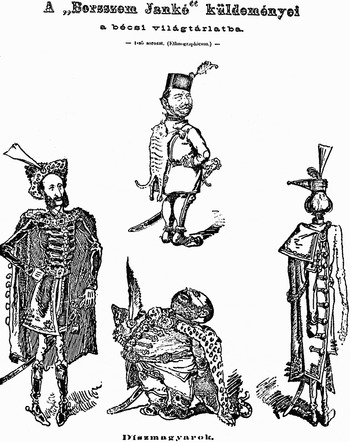
From the cover of the Borsszem Jankó.
How are we to evaluate the historical meaning and importance of popular entertainment in the late-nineteenth-century monarchy? The question may seem disingenuous since we already seem to know the answer. The culture industry, as Theodor Adorno and others remind us, was a product of capitalism, which perverted the genuine function of culture by erasing the distinction between art and commerce.Footnote 8 It created cheap amusements and superficial distractions for a mass audience incapable of participating in the difficult effort of high culture. Tainted by the stigma of triviality, aesthetic mediocrity, and commercialism, the entertainment industry is not considered a serious cultural phenomenon. Even sympathetic historians like Csáky and Molnár share these implicit assumptions. They admit in their respective accounts that popular entertainment was often scandalous and almost always lacking in aesthetic merit. They argue, however, that popular entertainment is worthy of scholarly attention because of the sociological insights it sheds into the lives of ordinary people.
In what follows, I would like to suggest that these notions are problematic and that popular entertainment had everything to do with the serious business of culture. Moreover, its importance lay precisely in its scandalous and transgressive character. From this new perspective, commercial entertainment appears not simply as a debased mirror that reflected existing economic conditions or social relations, but also as a magic lantern that transfigured the “real,” creating new cultural horizons for a population caught up in changing times. Its ultimate importance lay in its ability to destabilize official discourses about the nation, morality, progress, and art and to replace these with the fluid, contingent, often disenchanted truths of individual experience. Questioning established ideologies on both the left and the right, popular culture implicitly proclaimed itself to be the true site of “modernity” whose task was to replace traditional practices with new visions of the modern. These claims were not merely rhetorical. In the final analysis, urban popular culture did help create new cultural spaces, new ideas about identity and urban citizenship that proved remarkably conducive to the coexistence of multiethnic and multilingual populations.
It is far from coincidental that the antiauthoritarian spirit of popular entertainment should find common ground with humor. Theorists of humor such as Sigmund Freud, Arthur Koestler, and Henri Bergson have long argued that joking challenged social authority and replaced the “reality” principle with individual fantasy, creativity, and unconscious motivations.Footnote 9 What they failed to acknowledge is how closely the comic impulse was intertwined with commercial entertainment in the modern world. In this article, I would like to explore the intersection between these two realms by focusing on the performance of Jewish humor in Budapest popular entertainment.
Why Jewish humor? The long answer will hopefully emerge in the course of this paper, but the short answer is that the entertainment industry in Budapest was closely identified with Jews, who by 1900 accounted for roughly 23 percent of the population. The city's famous or infamous music halls, Orpheums, all-night coffee houses, and cabarets were concentrated in the sixth and seventh districts where the vast majority of Budapest Jews lived and worked. The Király utca, the main commercial thoroughfare of the seventh district, had so many music halls that it was commonly referred to as the Broadway of Budapest. These venues were, for the most part, financed by Jewish capital. Their programs were invented by Jewish directors, performed by Jewish actors, and patronized by largely Jewish audiences.
German remained the dominant language of Budapest night life until the early twentieth century for the simple reason that Jewish audiences still felt more comfortable with German than Hungarian. In 1895 the minister of the interior, Dezső Perczel, issued an ordinance that required 50 percent of the programming in Budapest night spots to be in Hungarian. This law was either ignored or circumvented. One common solution was to begin performances two hours earlier in Hungarian and then to switch to German for the regular show.Footnote 10 The language controversy surrounding Budapest night life had a subtext that was scrupulously avoided by Hungarian officialdom but openly touted by anti-Semites. The true scandal of Budapest night life, they pointed out, was not the fact that it was in German but that it was in a Yiddish-inflected German, commonly spoken by Budapest Jews. As one contemporary moralist bluntly put it, the performances were in a “debased German jargon” that repelled German tourists who happened to wander into such places. “These music halls of the seventh district around the Király utca,” concluded the writer, “are truly the shame of our capital and it is high time that the police come down on such places of amusement.”Footnote 11
The Scandal of Jewish Humor
What were the distinctive features of the Budapest Orpheums, music halls, or zengerei as they were popularly called? The contemporary Jewish humorist Adolf Ágai provides a suggestive entry into the subject. In his 1911 celebration of the emergence of Budapest as a major metropolis, Ágai not only pointed to the close connection between Jewish humor and night-time entertainment, but he also observed a paradoxical feature about these performances. They were mostly based on the performance of Jewish racial and ethnic stereotypes ordinarily considered taboo in polite society. “Strange!” he mused, “If our Israelite fellow citizens are made fun of in Hungarian—be it on stage, in literature, or in art—he is full of complaint. But if the Jew is represented through the characteristic dialect and disjointed gestures of the Szerecsen utca [a street in the sixth district, known as the Terézváros, MG], or in the Polish-Jewish inflection of ‘Ingvár’ [i.e. Ungvár], great is his amusement.”Footnote 12
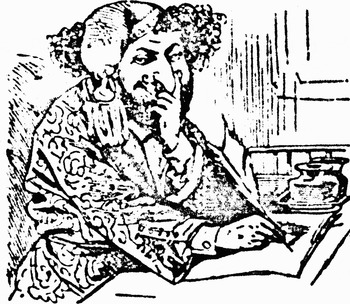
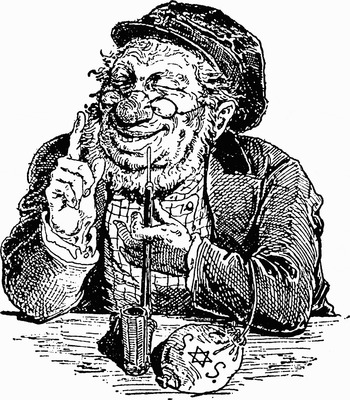
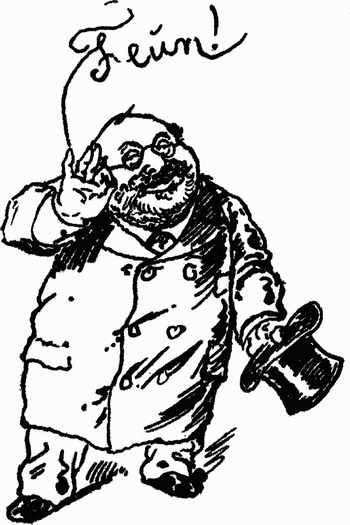
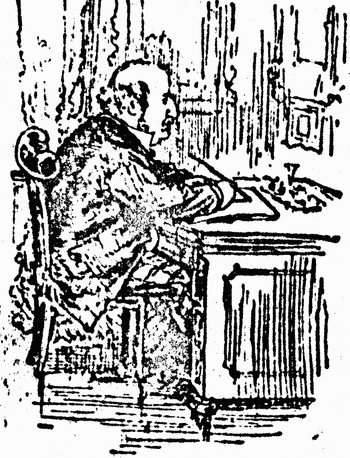
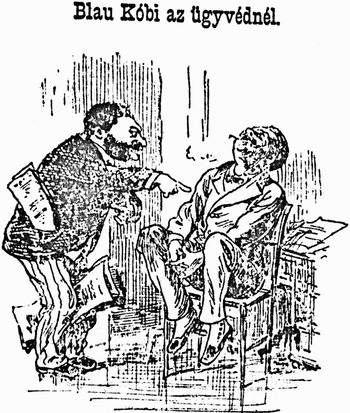
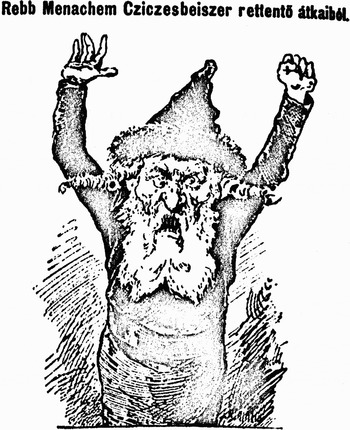
Ágai’s ambivalence about such performances is complicated since he himself was a pioneer of the genre of Jewish self-parody. On the pages of the humor magazine, the Borsszem Jankó, which began publication in January 1868 and remained in circulation until 1938, Ágai helped create some of the most enduring caricatures of Budapest Jewish life.Footnote 13 The figures of Itzig Spitzig, the journalist (see Figure 2), Salamon Seiffensteiner, the grocer (see Figure 3), W. M. Börzeviczy, the banker (see Figure 4), Dávid Vöröshegyi, the ennobled landowner (see Figure 5), Kóbi Blau, the litigious businessperson (see Figure 6), and Reb Menachan Czicziszbeiser, the Orthodox rabbi (see Figure 7), became urban icons for generations of Budapesters, who avidly followed their hilarious letters to each other and to the editor of the journal. The essential novelty of these Jewish types with their exaggerated racial physical features and their Yiddish-inflected speech patterns was that they mobilized and amplified common stereotypes about Jews that circulated in Hungarian society.
Itzig Spitzig, Budapest journalist.

Salamon Seiffensteiner, Budapest grocer.

W. M. Börzeviczy, Budapest banker.

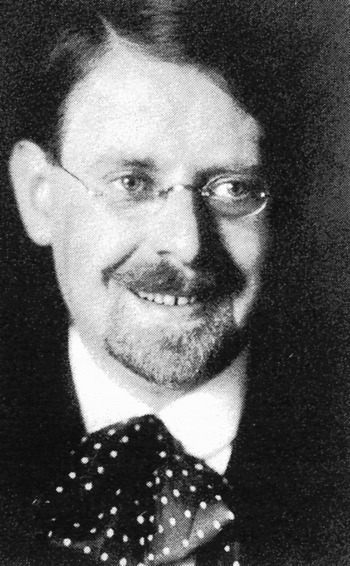
Dávid Vöröshegyi, Budapest landowner.

Kóbi Blau, Budapest businessperson.

Reb Menachan Czicziszbeiser, Budapest Orthodox rabbi.

How can we explain the appeal of these patently unflattering images to Jewish audiences? Why did they flock to places of popular entertainment to laugh at parodic representations of themselves? More generally, what was the function of the self-deprecatory joke for a rapidly assimilating, upwardly mobile Jewish population that publicly professed itself to be Hungarian? Ágai, as we saw, was deeply concerned with this problem and attempted to address it indirectly in an article of 1887, celebrating the twentieth anniversary of the founding of the Borsszem Jankó. Humor, Ágai pointed out here, was a crooked mirror that reflected the deepest truths of society, ordinarily repressed or unavailable for serious discussion. The humorist, for this reason, enjoyed the protective mantle of the classic fool who could give voice to taboo subjects without being held to the standards of mainstream society.Footnote 14 Central to Ágai's argument was the rejection of a naturalist approach to humor. Jokes, he implied, were not reflections of social realities but distortions that needed to be decoded by culturally competent audiences.
Empirical evidence supports Ágai’s contention that audiences rarely took jokes literally and knew how to read them in appropriate ways. Acculturated Budapest Jews, who avidly followed Itzig Spitzig's Yiddish-inflected “Letters from Király utca” or were connoisseurs of W. M. Börzeviczy’s witticisms and Reb Menachen Czicziszbeiser’s “terrible curses,” did not necessarily feel that these caricatures were direct mirrors of their lives or circumstances. Their laughter was double-edged, based on simultaneous differentiation from, and identification with, the stylized images of the humorist. By laughing at exaggerated racial representations of themselves, Jews expressed their superiority over such images and affirmed their secular identities as middle-class Hungarians. But they also laughed with them, acknowledging solidarity with their ethnic and religious origins. There was in such laughter an element of self-recognition and in-group solidarity that could not be expressed in ordinary social interactions.Footnote 15
This interpretation is undoubtedly true and goes some way to explain the phenomenology of the reception of Jewish humor. Yet, it does not dig deep enough for the roots of the powerful, transformative impact of humor on urban culture. It only hints at the transgressive energies of popular Jewish humor and fails to account for the widespread stigmatization of the phenomenon by respectable society. Jewish humor, in other words, was not simply the particular expression of a minority’s cultural ambivalence, but it was also a general counterdiscourse that challenged the official discourses of established society.Footnote 16 The opposition of Hungarian officialdom is understandable since popular Jewish humor was correctly seen to be antithetical to a heroic conception of the nation and corrosive of respectful attitudes to nationalist values.
But the ambivalence of Jewish religious and intellectual leaders is equally striking and proves more useful for our attempts to penetrate to the deeper significance of Jewish joking. On the most obvious level, the raucous world of Jewish popular entertainment was a source of embarrassment to Jewish elites who felt threatened in their newfound middle-class respectability. On a more complex level, the tradition of Jewish popular humor brought into question the universal ethical and philosophic values of Jewish liberalism itself, with its emphasis on progress, science, education, and political assimilation. Not surprisingly, official publications of Hungarian Jewry, such as the Magyar Zsidó Szemle (Hungarian Jewish Observer) and the Egyenlőség (Equality), ignored the existence of Jewish popular humor, considering it an unfortunate fact of life about which the less said the better. The deafening silence of official Jewry on the question of Jewish humor gradually changed to open hostility during the interwar years when anti-Semitism became part of state policy in Hungary. In these reinterpretations, Jewish humor came to be associated with self-hatred and the internalization of the negative stereotypes of anti-Semitism. The literary historian Aladár Komlós gave perhaps the classic expression to this view. He wrote in 1940:
It is striking that the Jew invents jokes at his own expense. There is no other people or class that is accustomed to make fun of itself…. The Talmud does not acknowledge plays on words, bon mots, anecdotes, or anything that is reminiscent of the Jewish joke. Only the modern Jew can tolerate laughing at himself. But if we think about it, it becomes clear that it is the stranger alone, who is capable of seeing us, and that the Jewish joke can only be invented by Jews who look at themselves through the eyes of strangers…. It is one of the more painful moments of Jewish history when the son of the ghetto first laughs at himself.Footnote 17
Komlós’s outrage at the self-deprecatory joke, which he perceived to be the ultimate humiliation of Jewish life in the Diaspora, is understandable given the circumstances in which he wrote his essay. What is surprising is the remarkable longevity of this interpretation born of crisis. The view of Jewish humor and self-parody as a form of autoaggression has, in fact, become the dominant analysis of the phenomenon among both scholars and lay people. A particularly elegant example of this view is to be found in the work of the psychoanalyst, Martin Grotjahn, who in 1957 described the Jewish joke as a “masochistic mask” that perfected anti-Semitic stereotypes as a way of upstaging anti-Semitism. In these acts, Grotjahn illustrated, “the Jew carefully and cautiously takes a sharp dagger out of his enemy's hands, sharpens it so that it shines brightly, stabs himself with it, then returns it gallantly to the anti-Semite with a silent reproach: Now see whether you can do half so well.”Footnote 18
The Performance of Jewish Jokes
The difficulty with such wholesale condemnations of Jewish humor is that they radically oversimplify an extremely complex phenomenon and reduce it to one ideological formula that ignores its historical settings and circumstances. In order to recontextualize Jewish humor, we must ask not what the Jewish joke meant in some abstract, formal sense, but how it functioned within the lives of the individuals who performed and consumed it. We need to see Jewish humor as a particular kind of social practice and cultural performance that Jews invented to negotiate the increasingly treacherous currents of Central European modernity in the late nineteenth century. There were two distinct crises that impacted on the Jewish community at almost the same time and would ultimately find therapeutic expression through Jewish humor. The first was anti-Semitism, which assumed distinctly racial forms from the early 1880s, and the second was exceptionally rapid social and economic mobility, which shattered traditional practices that had sustained Jewish collective life for generations.
Of the two crises, the disruptive impact of social and economic mobility appeared by far the more disturbing in the short run. It is, in any case, revealing that the defining bildungsroman of fin-de-siècle Budapest Jewry, Tamás Kóbor’s Out of the Ghetto, deals only peripherally with anti-Semitism, focusing instead on the social conflict within a Jewish artisan family from the Terézváros whose moral unity and entire way of life is shattered by the rise to wealth and social status of its eldest son. The tragic climax of the novel comes when the rich brother's butler is ordered to turn the family away to avoid disrupting an elegant soiree in progress at his home.
How did Jewish humor operate as a therapeutic response to the social and political crises of the fin de siècle? How did it simultaneously confront and counteract the problems of class-society and anti-Semitism? The solution would be, as I have already suggested, the parodic performances of Jewish stereotypes, which staged Jewish identity for Budapest audiences in much the same way as blackface entertainers in American minstrel shows staged black identity for northern urban audiences.Footnote 19 There is an element of aggression in all such performances, but I think Komlós and others have been wrong to identify it as autoaggression. The goal of self-parody was not to discredit Jewry as a whole, but to satirize the social practices of the parvenu Hungarian-Jewish middle class, which defined itself through the essentialist categories of class and nation. Self-parody, however, could equally effectively be turned against the political aggression of anti-Semitism, which used another form of essentialism, that of race, to define Jews as alien and dangerous to the nation. The ultimate goal of Jewish humor was to undermine all ideological definitions of identity, be they of race, class, gender, or nation, and to substitute for such stabilizing fictions the liberating potential of individual self-invention.
These far-reaching cultural agendas were not necessarily apparent to the producers or consumers of popular Jewish humor. Indeed, most humorists and entertainment professionals, not to speak of their audiences, were hardly aware of the profound ideological or philosophical implications of humor. For contemporaries, the immediate and ostensible purpose of music hall and Orpheum performances was to amuse audiences and to create profit for the owners, not to challenge the established epistemological order of society. Lack of self-consciousness does not mean, however, that the social impact of Jewish humor was not widely felt. Jewish self-parody challenged intellectual categories and personal identity on the level of everyday life, and its success as a social gesture was directly related to the depth of the transgression committed.
Reconstructing how this challenge was posed and understood at the time requires some ingenuity on the part of the historian. Unlike conventional theater performances—and elite culture in general—the routines of music halls and cabarets were rarely scripted. Much of their effectiveness depended on improvisation and the spontaneous interaction between performers and audiences. Traditional textual analysis of popular humor is rendered even more difficult by the fact that its subject matter was usually based on ephemeral events and local references that have inevitably lost their meaning for later observers. The task of the historians is not completely hopeless, however. It is possible to recover at least some of the more famous comic routines from the recollections of participants, observers, and critics. Moreover, these accounts can be supplemented by the texts of humor magazines such as the Borsszem Jankó whose themes invariably paralleled and duplicated the concerns of popular entertainment. With their aid, we can gain at least glimpses into the conventions of Jewish humor and music hall clowning that constituted the heart of popular entertainment at the turn of the century.
Perhaps no theme was more frequent in the repertoires of Jewish humorists than parodies of the parvenu Jewish middle classes, eager to shed vestiges of their humble origins and determined to move into the exalted circles of the Hungarian elites (see Figure 8). One of the best-known skits of the 1880s, performed in the Kék Macska (Blue Cat) cabaret, was a piece called The Bernstein Family, which was a satire of a recently ennobled Jewish family. It seems that the subject was not entirely fictional, for the Bernsteins offered the Kék Macska ten thousand forints to have the skit taken off its program. The offer was not accepted, and the skit continued with great success for two more years.Footnote 20
A parody of the parvenu Jewish middle classes.

Another well-known enactment of the same topic was a one-act play called the Vonósnégyes (String Quartet), written and performed in 1922 by the humorist Szőke Szakáll (see Figure 9). (Szőke Szakáll became a minor Hollywood actor after emigrating to the United States in 1940. Under his Americanized name, S. K. Sakall, he played Carl, the chief waiter in Rick’s Café in Casablanca.) The skit depicts a soirée at the Schwartzes’, a wealthy silk manufacturer, who decides to entertain guests in his sumptuous home in the Lipótváros. Being too stingy to provide a proper meal, he comes up with the ingenious solution of welcoming his guests with tea and a musical performance by a string quartet. Rather than hiring professional musicians, however, the tight-fisted Schwartz decides to further reduce costs by using his shop assistants as musicians. The comic interaction between the hapless shop assistants, terrified of losing their jobs and desperate for excuses to get out of their impossible assignment, is matched by the equally desperate attempts of the guests to find something more substantial to eat than the cups of tea they are offered.
Humorist Szőke Szakáll.

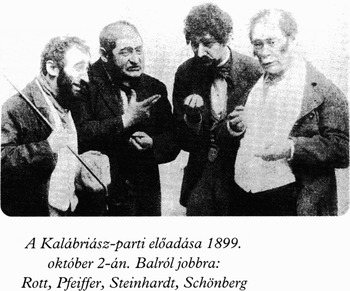
The related problems of social climbing and status anxiety, which were the real themes of the String Quartet, were to find another classic enactment in the Kalábriász-parti, or the Klabriasparthei in German, which became probably the best-known cabaret act in Central Europe before World War I. The skit, first performed in 1889 in the Folies Caprice in Budapest, takes place in an imaginary coffee house, the Café Abeles, and depicts the interactions of three card players, Kohn, Lewy, and Brüll, and the kibitz, Grűn, who is of lower social status and whose every effort is to become part of the group (see Figure 10). Although there were to be countless variations of this basic situation in offshoots of the Kalábriász-parti in Budapest, Vienna, and Berlin, the original play obviously tapped into a basic archetype that resonated with contemporary audiences. It reenacted in the simplest terms possible the treacherous experience of social inclusion and exclusion in a newly emerging bourgeois society. As Molnár put it, the Kalábriász-parti was ultimately about the “life and death struggle between society and the socially excluded.”Footnote 21
Kalábriász-parti.

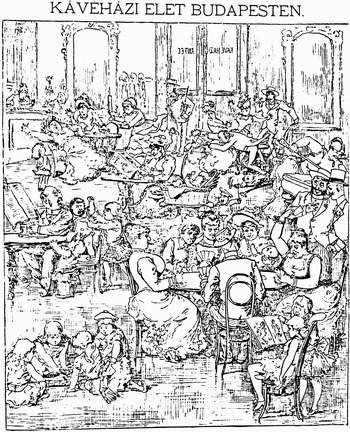
Another recurring theme of Budapest popular entertainment was the Jewish woman in public places, unable or unwilling to assume the appropriate role of the domestic woman. The most familiar embodiment of this type was the Terézváros housewife in the coffee house, gossiping with her friends and neglecting her children and domestic duties. So central was this figure to the cultural imagination of the time, that she found incarnation in a whole range of genres, including novels, short stories, and caricatures (see Figure 11). As Endre Nagy, the founder of Budapest cabaret, recounted, one of the all-time hits of his establishment was a one-act play lasting no more than ten minutes, depicting this familiar icon in “all her glory,” as she “gossips, preens, plots, throws hysteric, tortures her husband and flirts with her admirers.”Footnote 22
Terézváros housewives in a coffee house.

The deeply misogynistic implications of this image need no special comment. It is important, however, to see it as part of a broader social critique directed not against women, per se, but against an emerging Jewish bourgeoisie that was abandoning traditional social practices. Like caricatures of the nouveau riche, parodies of the Jewish woman were fundamentally conservative and backward looking, idealizing a mode of life fast disappearing from the modern world.
Social satire did not exhaust the repertoire of popular Jewish humor, however. Parallel and intertwined with this rather traditional form of humor was a more radical and transgressive strain that attacked the very foundations of gender and racial identity. Triggered by anti-Semitic stereotypes about the feminized Jewish man and generally by racial images of Jews,Footnote 23 music hall skits and caricatures exaggerated and destabilized these images through the practice of cross-dressing.
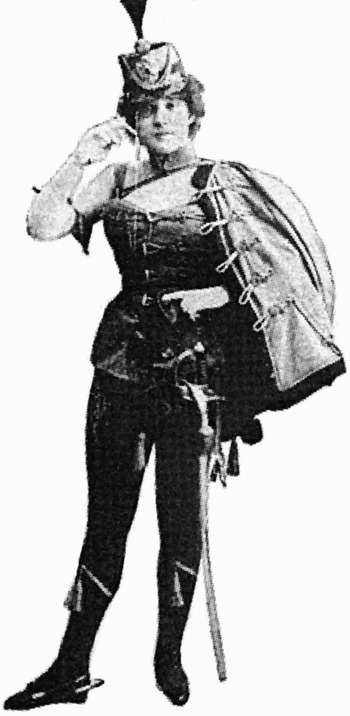
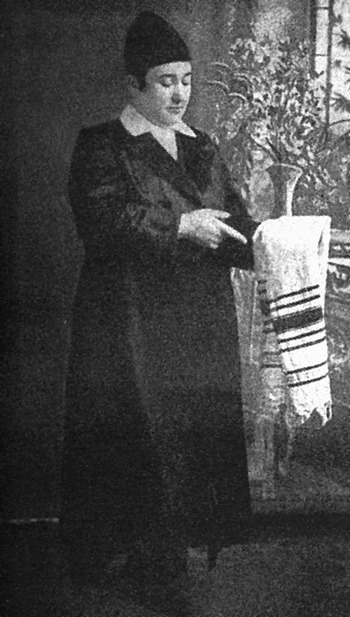
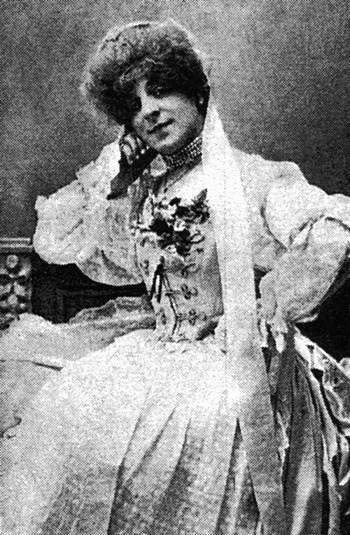
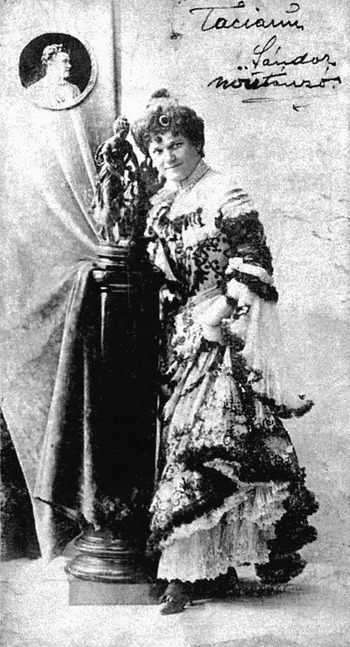
While gender cross-dressing was by no means unique to the Budapest popular stage, the practice was more pervasive here than elsewhere. The music hall diva, Carola Cäcilie, assumed man’s pants for her impersonation of the Hungarian outlaw, Imre Bogár, chorus girls performed comic musical skits in skimpy hussar uniforms (see Figure 12), and all-girl orchestras became the rage of Budapest coffee houses. Sexual titillation was clearly an important factor in these acts. But there were other kinds of cross-dressers such as the Polish transvestite, Pepi Littman, whose role as a male Talmud scholar was the hit of the Budapest Orpheum stage and anticipated such recent popular figures as Barbara Streisand’s Yentle (see Figure 13). There were also numerous male cross-dressers whose female impersonations were received with equal enthusiasm by Orpheum audiences such as Elemér Szilágyi (see Figure 14) and Sándor Lehoczky (see Figure 15).Footnote 24
A chorus girl.

Pepi Littman portraying a male Talmud scholar.

Elemér Szilágyi.

Sándor Lehoczky.

The comic destabilization of the “natural” boundaries between men and women had a secret political appeal for Jewish audiences, because its subversive implications were not limited to the realm of gender. Gender crossings on the music hall stage brought into question not only the essentialism of sex but also of race, a problem that was becoming of increasing concern to the Jewish community as a whole. As Jews confronted the pressures of racial anti-Semitism under the guise of the “Jewish Question,” Jewish humorists adopted what can only be called racial cross-dressing as a defensive response to the assault.
Perhaps the most revealing example of such humor can be found in the years 1882–83 during the Tiszaeszlár blood-libel trial, when the entire Jewish community stood accused of the crime of ritual murder. As anti-Jewish riots broke out in the countryside and Budapest itself was briefly placed under a state of siege, a particular brand of black humor appeared on the pages of the Borsszem Jankó in which Jews deliberately assumed the role of ritual murderers to explode the plausibility of the myth. A typical example of such jokes is the question why the Passover matzo tasted bad that year. The answer was that Jews were unable to find a young Hungarian girl to slaughter and had to make do with the blood of an old Czech woman. Such grim joking continued well beyond the 1880s, as indicated by a curious letter that Ágai wrote to the celebrated actress Mari Jászai. It appears from the letter that Ágai, a great fan of the actress, was in the habit of sending her a pot of sólet (a bean dish traditionally consumed by Jews on the Sabbath), which was the culinary specialty of his wife. In the letter accompanying the gift, Ágai could not help adding the sarcastic line that ever since the slaughter of young Christian girls has been outlawed in Hungary, the sólet had become the characteristic ritual dish of the Jews.Footnote 25
The Therapeutic Implications of Jewish Humor
To what extent can such transgressive joking be considered therapeutic? Why did the performance of parodic stereotypes in the context of mass entertainment prove so liberating and so self-affirming for generations of Budapest Jews? Finally, what was the broader appeal of night-time entertainment in general, and Jewish humor in particular, for the Hungarian public at large? No simple answer is possible to these questions, since humor served many different functions for different audiences. Moreover, its broader cultural implications were always mediated by politics and ideology that attempted to stabilize and neutralize its impact. On the most general level, however, it can be argued that humor and commercial entertainment were intricately linked with the destabilizing and liberating energies of modernity as it came to be experienced in fin-de-siècle Budapest.
For Jews, the political and cultural stakes in the performance of parodic humor and urban entertainment were obviously different and more urgent than for the rest of the population. It ultimately meant escape from the lethal paradoxes of the “Jewish Question,” which defined the nation as an organic unity incompatible with the Jewish ideology of assimilation that insisted on Jews being both Jewish and Hungarian at the same time.
In writing about the phenomenon of joking among ethnic and racial minorities, the cultural critic Homi Bhabha has advanced the concept of the “self-critical community” to suggest the positive, potentially creative implications of such comic traditions. According to Bhabha, the self-deprecatory joke helped create dual identities for minorities within majority cultures by reconciling ethnic difference with majority identity. The joke was, he wrote, “a minority speech act,” which “circulates around a doubly articulated subject: singled out, at first, as a figure of fun or abuse, it is turned through the joke-act into an inclusive, yet agonistic, form of self-critical identification for which the community takes responsibility.”Footnote 26 The critical and integrative potential of self-deprecatory humor lay in its antiessentialism, Bhabha implied, which repudiated the straightjacket of unitary cultural identities.
The singular achievement of Jewish humor at the turn of the century was to create the condition of possibility for such fluid, polyglot identities. It proposed that in everyday life people created themselves in many different ways and that they performed multiple and overlapping roles without succumbing to anarchy or immorality. This simple yet radical idea was perhaps the central message of Ágai’s comic social types. It was most explicitly spelled out by Itzig Spitzig, who insisted on signing his letters from Király utca as “Itzig Spitzig, the well-known Jew and patriot,” or alternately as “Itzig Spitzig, the well-known family man and patriot.” Spitzig's hyphenated identity proclaimed that it was possible to be both a Jew and a citizen, that there was no essential conflict between religious and national loyalties or between private life and public activity. Ironically, it was Spitzig, the scandalous “other” of the respectable middle-class Jew, who became the embodiment of the elusive ideal of Jewish liberalism, the Hungarian-Jewish citizen.
There was a price for Spitzig’s hard-won wisdom, however. It meant the destabilization of the rationalist categories of liberal ideology that had promised Jewish citizens full and unambiguous integration within the nation-state. More painful still, it meant abdication of the very achievement that Hungarian Jewry felt most proud of and considered its entry ticket to secular European culture: its bourgeois status. It is far from coincidental that the representative Jewish social type of the Borsszem Jankó, who eventually came to speak for Hungarian Jewry as a whole, was not the banker, landowner, or professional but Salamon Seiffensteiner, the grocer. His was a prescriptive, rather than a descriptive, figure and demonstrated the undesirability as well as the futility of erasing traces of Jewish difference in secular society. Unlike ordinary middle-class people, Jews could never become invisible flâneurs in the city. They had to remain ethnic types clearly visible and identifiable by the rest of society.Footnote 27
This explains why fin-de-siècle Jewish comics assumed Jewish-sounding stage names that accentuated, rather than erased, their Jewish origins. Thus, Sándor Rott had changed his name from Rothmann; Carl Baumann, from Grünbaum; and Géza Steinhardt from Goldstein. Unlike the majority of Hungarian Jewry, who Magyarized their German names to blend in with the mainstream, the Jewish comics stylized their original German names to stand out as Jewish performers.Footnote 28 They implicitly rejected the assimilation strategies of the Hungarian Jewish middle classes and chose to impersonate, instead, the persona of the little man who refused to be duped by the intellectual abstractions and platitudes of political and social elites. In this, they were all descendants and close relatives of Salamon Seiffensteiner. They pioneered a new kind of Jewish particularism that was at the same time profoundly modern and inseparably linked to the realities of the popular press, mass politics, and urban advertising. Indeed, one could argue that the universal appeal of Jewish humor lay precisely in its ability to give voice to the experiences of an increasingly democratic and dynamic urban environment where people could no longer take for granted the cultural models of the past.
It is at this point that the history of Jewish humor merges imperceptibly with the history of Budapest urban culture. It is not fortuitous that the original audiences for music halls were drawn from lower-middle-class shopkeepers, petty craftspeople, maids, laborers, merchants, and market women who were by definition excluded from elite culture pursuits.Footnote 29 Perhaps nothing gives a better picture of this audience than the weekly guide to Budapest popular entertainment, Mulatók Lapja (The Journal of Carousers), which began publication in 1890. The journal, published simultaneously in both Hungarian and German (the texts appeared side by side on the same page), displayed advertisements not only for the programs of music halls and Orpheums but also for consumer items such as gloves, hats, undergarments, furniture, and home remedies, which were often declared to be of high quality as well as inexpensive. If any doubts remained about the target audience of the journal, the editor spelled it out in the concluding remarks of the introduction: “We set the cost of the journal so low as to assure that everyone who wants to have access to night life, even the poorest, would be able to purchase it.”Footnote 30
Significantly, commercial entertainment did not remain the unique preserve of the poor and the marginal. By the 1880s, popular music halls in the Király utca, such as the Kék Macska, were attracting a mixed audience of politicians, judges, teachers, and lawyers as well as ordinary people. So great, in fact, was the fame of this particular venue that foreign dignitaries, including the Prince of Wales, visited it when they passed through Budapest. Ágai remarked tongue in cheek that the European reputation of the Kék Macska surpassed that of “Petőfi, Tokai wine, and the Hungarian horse …”Footnote 31 The founder of Budapest cabaret, Endre Nagy, also emphasized the remarkable heterogeneity of the audience that regularly visited his establishment. In a relatively small space seating approximately three hundred people, he claimed, “aristocrats, industrialists, and bankers from the Lipótváros, politicians, generals, sociologists, leaders of the social democrats, and church dignitaries” rubbed shoulders with each other.Footnote 32
The broad appeal of commercial entertainment among Budapest audiences is not hard to explain. (I might add that the appeal was not restricted to Budapest. There is considerable evidence that music halls were making their impact on the countryside as well and that visitors often came to the capital to take in a show and then return home with the midnight train.) The brilliant spectacles, international star performers, and irreverent humor of music hall performances introduced people to a world of informality, innovation, and exoticism that official theaters could not compete with. Endre Nagy’s characterization of the appeal of Budapest cabaret holds true for other places of popular entertainment as well: “It was a liberation, though it did not specify where it was leading. At all events, it was a door that opened from a stuffy room into the wide world.”Footnote 33
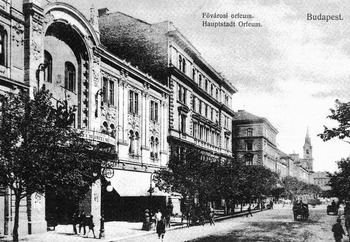
As music halls and Orpheums began to attract a more heterogeneous audience, their physical appearance also assumed an increasingly luxurious character. Like the contemporary department store, they too held out the promise of a modern world of material plenty and unlimited possibilities where even ordinary people could rise above their limited circumstances. The pattern of monumentality and extravagance that came to characterize the Budapest music hall found possibly its most perfect embodiment in the Somossy Establishment, which was completed in 1894 (see Figure 16). It cost roughly a million forints to build and consisted of an all-night coffee house facing the street and the Orpheum itself, which had three floors and a seating capacity for 1,400 guests. The night club’s luxurious furniture, paintings, and sculpture, along with its famed winter garden on the second floor, were considered among the “most interesting spectacles of the capital.”Footnote 34
Somossy Establishment.

Budapest, notorious for its social fragmentation and its tendency to splinter into “a mosaic of a hundred little societies”Footnote 35 seems to have found common ground in its love of night-time entertainment. The creators of this culture were clearly driven by commercial considerations, but the profit motive was not incompatible with a sense of cultural mission. According to an article published in 1901 in the Mulatók Lapja, the goal of modern commercial entertainment was to transform the cultural horizons of the city by introducing its population to a more discriminating, more sophisticated, form of entertainment. “Hungarians,” proclaimed the writer, “uprooted by the tornado of modern times, generally do not know how to have a good time.” The only patterns they had were traditional forms of carousing, which generally centered on the tavern and involved drinking, singing, and brawling. New kinds of amusements were needed, continued the article, which were more varied and also more readily available to people of modest means. In this enterprise, “unlimited money can help, but cannot guarantee, the art of good carousing. To carouse well,” concluded the article, “people need to possess originality, spirit, cleverness, tact, good instincts and many other characteristics; in other words, genuine talent and art.”Footnote 36 Implicit within this image of the “appropriate carouser” was a much more general idea: that of discriminating consumers, whose wit and improvisational skills allowed them to choose between competing options and possibilities and to compose a modern identity no longer dependent on inherited forms and traditions.
This enterprise sprang from the same sources as Jewish humor and often found its natural expression through this tradition. It articulated a particular vision of self and the world, which refused the straightjacket of ideology and politics and erased, at least temporarily, the impermeable walls of religion, ethnicity, and even class within the common space of urban culture. Let me end by recounting a contemporary Jewish joke that succinctly illustrates this point and shows how Hungarian and Jewish identities, as well as high and popular cultures, could be linked through the tradition of urban humor. The joke asks: “Why does Cohen want the establishment of a Jewish state in Palestine?” Answer: “So he can become Jewish consul in Budapest.” Writing shortly before his death in 1972, Georg Lukács resorted to the same joke to illustrate his father’s Hungarian-Jewish identity. The elder Lukács was, the son cryptically noted, “Jewish consul in Budapest.”
MaryGluck is Professor of History at Brown University, Providence, RI 02912, where she teaches modern European cultural and intellectual history. She has published on the young Lukács, modernism, and the Jewish Question. Her most recent publication is Popular Bohemia: Modernism and Urban Culture in Nineteenth Century Paris. She is currently working on a book on Jewish urban culture in fin-de-siècle Budapest entitled The Invisible Jewish Budapest. The present article is based on research for the book.