Introduction
Psychotic symptoms (PS) are not experienced only by people with psychotic disorders but also by a substantial proportion of the general healthy population (Johns, Reference Johns2005). When not reaching a threshold of clinical relevance, these self-reported hallucinatory or delusional symptoms are referred to as psychotic experiences (PEs) (van Os, Reference Van Os2003; Kelleher and Cannon, Reference Kelleher and Cannon2011; Linscott and van Os, Reference Linscott and van Os2013) and may exist on a continuum with psychotic disorders (Johns and van Os, Reference Johns and van Os2001; Verdoux and van Os, Reference Verdoux and van Os2002; Linscott and van Os, Reference Linscott and van Os2013). A recent meta-analysis reported that the median lifetime prevalence of PEs was 7.2%, with a phenomenological and temporal continuity between PEs and psychotic disorders (Linscott and van Os, Reference Linscott and van Os2013). Children and adolescents who experience PEs are at higher risk to develop psychotic disorders later in life (Poulton et al., Reference Poulton, Caspi, Moffitt, Cannon, Murray and Harrington2000; Welham et al., Reference Welham, Isohanni, Jones and McGrath2009; Zammit et al., Reference Zammit, Kounali, Cannon, David, Gunnell, Heron, Jones, Lewis, Sullivan, Wolke and Lewis2013) rather than other psychiatric disorders (Kaymaz et al., Reference Kaymaz, Drukker, Lieb, Wittchen, Werbeloff, Weiser, Lataster and van Os2012). PEs are also strongly associated with suicidal behaviors (Kelleher et al., Reference Kelleher, Devlin, Wigman, Kehoe, Murtagh, Fitzpatrick and Cannon2014; DeVylder et al., Reference DeVylder, Lehmann and Chen2015a, Reference DeVylder, Lukens, Link and Liebermanb; Honings et al., Reference Honings, Drukker, Groen and van Os2016), later substance use (Cederlöf et al., Reference Cederlöf, Kuja-Halkola, Larsson, Sjölander, Östberg, Lundström, Kelleher and Lichtenstein2017), psychological distress and a greater need for care (Murphy et al., Reference Murphy, Shevlin, Houston and Adamson2012; Kelleher et al., Reference Kelleher, Wigman, Harley, O'Hanlon, Coughlan, Rawdon, Murphy, Power, Higgins and Cannon2015; Demmin et al., Reference Demmin, DeVylder and Hilimire2017).
There is a large body of evidence implicating socio-environmental variables as a risk factor along the continuum of psychosis (Bentall and Fernyhough, Reference Bentall and Fernyhough2008; van Os et al., Reference Van Os, Kenis and Rutten2010; Boydell et al., Reference Boydell, Bebbington, Bhavsar, Kravariti, van Os, Murray and Dutta2013; Veling et al., Reference Veling, Susser, Selten and Hoek2015), including a socio-economic and ethnic patterning for ultra high-risk status (Kirkbride et al., Reference Kirkbride, Stochl, Zimbron, Crane, Metastasio, Aguilar, Webster, Theegala, Kabacs, Jones and Perez2015; Bhavsar et al., Reference Bhavsar, Fusar-Poli and McGuire2017a, Reference Bhavsar, Maccabe, Hatch, Hotopf, Boydell and McGuireb) and first episodes of psychosis (Kirkbride et al., Reference Kirkbride, Barker, Cowden, Stamps, Yang, Jones and Coid2008, Reference Kirkbride, Jones, Ullrich and Coid2014; Omer et al., Reference Omer, Kirkbride, Pringle, Russell, O'Callaghan and Waddington2014). The socio-developmental model of psychosis developed by Morgan et al. (Reference Morgan, Charalambides, Hutchinson and Murray2010) proposes that socio-environmental and genetic factors interact to affect the developing brain during sensitive periods (fetal period, childhood, adolescence), leading to an increased vulnerability to PS.
Among these factors, migrant status (MS) and ethnic minority position (EMP) have been associated with the psychosis continuum (Veling, Reference Veling2013; Brucato et al., Reference Brucato, Masucci, Arndt, Ben-David, Colibazzi, Corcoran, Crumbley, Crump, Gill, Kimhy, Lister, Schobel, Yang, Lieberman and Girgis2017). Ethnicity is defined as a self-reported and past-oriented group identification, based on conceptions of cultural and social distinctiveness (Morgan and Bhugra, Reference Morgan and Bhugra2010; Schofield et al., Reference Schofield, Das-Munshi, Becares, Morgan, Bhavsar, Hotopf and Hatch2016). EMP is defined as belonging to an ethnic group representing a minority percentage (<50%) of the total population. MS is generally defined as being foreign-born or having at least one parent born abroad (Cantor-Graae and Selten, Reference Cantor-Graae and Selten2005). As a large proportion of migrant people consists of ethnic minorities in the host countries, it is important to separate the respective roles of MS and EMP as risk factors for psychosis. We thus chose to use a more restrictive definition of MS in our meta-analysis, i.e. only people who were foreign-born. Bourque et al. (Reference Bourque, van der Ven and Malla2011) have shown that a personal or familial history of migration increases the risk of developing psychosis in first- [OR 2.3, 95% confidence interval (CI) 2.0–2.7] and second-generation (OR 2.1, 95% CI 1.8–2.5) migrants, consistent with a previous meta-analysis from Cantor-Graae and Selten (Reference Cantor-Graae and Selten2005). In previous studies, differences were observed for the risk of psychosis according to ethnic groups. For instance, in their meta-analysis of incidence studies in England between 1950 and 2009, Kirkbride et al. (Reference Kirkbride, Errazuriz, Croudace, Morgan, Jackson, Boydell, Murray and Jones2012) reported an increased risk for schizophrenia in Black Caribbean (RR 5.6, 95% CI 3.4–9.2), Black African (RR 4.7, 95% CI 3.3–6.8), and South Asian groups (RR 2.4; 95% CI 1.3–4.5). Another recent meta-analysis provided strong evidence for a dose effect of ethnic density in buffering this risk: the greater the proportion of an ethnic groups in an area, the lower the risk for psychotic disorder (Bosqui et al., Reference Bosqui, Hoy and Shannon2014). In ethnic minority populations, social factors may include social adversity (e.g. discrimination, marginalization) and social defeat, which is defined as subordinate position or outsider status (Selten et al., Reference Selten, van der Ven, Rutten and Cantor-Graae2013). Outside of Europe, the role of migration and EMP in the psychosis continuum has not been demonstrated (O'Donoghue et al., Reference O'Donoghue, Nelson, Yuen, Lane, Wood, Thompson, Lin, McGorry and Yung2015; Oh et al., Reference Oh, Abe, Negi and DeVylder2015).
Despite a consequent emerging literature, the respective role of EMP and MS in the psychosis continuum remains unclear (Oh et al., Reference Oh, Abe, Negi and DeVylder2015). Studies measuring the association between EMP and psychosis generally focus on the role of MS (Cantor-Graae and Selten, Reference Cantor-Graae and Selten2005; Bourque et al., Reference Bourque, van der Ven and Malla2011), and the discrepancies observed between ethnic groups and within countries have yet to be better understood. To date, no review of the literature has been specifically dedicated to the analysis of the role of EMP and MS in the development of PS and PEs in the general population. A better comprehension of the pathway to psychosis in ethnic minority and migrant groups is a crucial issue for our understanding of the etiopathogenesis of psychosis (van Os et al., Reference Van Os, Kenis and Rutten2010; Kirkbride, Reference Kirkbride2017).
Aims of the study
The aim of our study was to systematically review the literature and to conduct a meta-analysis of the data on the role of EMP and MS in the development of PS and PEs in the general population. Our primary objective was to determine whether EMP and MS were independently associated with an increased report of PS and PEs. A secondary objective was to investigate whether ethnicity, host country, and age influenced the risk of developing PS and PEs. We also aimed to investigate the role of EMP and MS in the persistence of PEs.
Method
Systematic research
The review protocol was based on the Preferred Reporting Items for Systematic Reviews and Meta-Analyses (PRISMA, Liberati et al., Reference Liberati, Altman, Tetzlaff, Mulrow, Gøtzsche, Ioannidis, Clarke, Devereaux, Kleijnen and Moher2009). We conducted a systematic review on Medline, Scopus, EMBASE, Web of Science, and PsycINFO databases. The following search terms were used to search for studies. They were grouped by subject as follows:
(a) Entries containing: ‘ethnic*’ OR ‘migration’ OR ‘migrant’ OR ‘general population’
(b) Entries containing: ‘psychosis’ OR ‘psychotic’ OR ‘delusion’ OR ‘hallucination’
(c) Entries containing: ‘proneness’ OR ‘experience*’ OR ‘liability’ OR ‘continuum’ OR ‘transient’ OR ‘persistence’
Inclusion criteria
Inclusion criteria were (a) articles published in peer-review journals in the English language; (b) articles published between 1 January 1980 and 31 May 2017; (c) articles using odds ratios (ORs) for measuring the risk of PS in ethnic minority or migrant populations in comparison to the general population, (d) articles using a well-validated scale to assess the presence of PS or PEs, (e) articles including children and/or adolescents and/or adults. Following previous meta-analyses on the psychosis continuum (Kaymaz et al., Reference Kaymaz, Drukker, Lieb, Wittchen, Werbeloff, Weiser, Lataster and van Os2012; Honings et al., Reference Honings, Drukker, Groen and van Os2016), we retained studies that assessed the report of PS under the following terms: ‘psychotic symptoms’, ‘psychotic experiences’, ‘psychotic-like experiences’, ‘delusional experiences’, ‘hallucinatory experiences’, ‘hallucination-like experiences’, or ‘delusion-like experiences’. We defined the outcome as PEs when people with psychotic disorder were excluded from the analyses, independently from the term used by the authors in their article. We excluded all articles in which (i) there was no comparison group, or the comparison groups were not from the general population; (ii) studies used statistical measures other than ORs; (iii) the concerned population measure was a subgroup from other included studies; and (iv) the sample was smaller than 100 people.
Selection process
The search was conducted independently by two reviewers using the same criteria and search procedure. The electronic search was supplemented by a hand search of reference lists of relevant publications; the studies were then pooled, and the results were discussed between reviewers. Three selection filters were used: first at the level of titles, then at the level of abstracts, and finally at the level of full-text articles. Reference lists of included studies were then examined by title, abstract, and full text. All discrepancies at each step were discussed, and we agreed on which studies to include. We assessed the methodological quality of the included studies according to the Strengthening the Reporting of Observational Studies in Epidemiology (STROBE) statement (von Elm et al., Reference Von Elm, Altman, Egger, Pocock, Gøtzsche and Vandenbroucke2007).
Statistical analysis
Data were analyzed using Comprehensive Meta-analysis software version 2 (Borenstein et al., Reference Borenstein, Hedges, Higgins and Rothstein2005). Pooled ORs were calculated using a random-effect model. A random-effect model was used to consider between-study variability and thus provide a more precise estimate of the summary ORs (Cooper et al., Reference Cooper, Hedges and Valentine2009). For each study, ORs were converted into the log OR. The weighted sum of the log OR was measured and then reconverted into ORs. Regarding predictors, we considered only first-generation migrants for MS, whereas we considered second- and third-generation migrants as people from EMP. The reference category was the non-migrant (i.e. native) population when considering MS and people from the largest ethnic group in the country when considering EMP.
Heterogeneity between studies was quantified with the Q statistic and the I 2. The Q statistic determines whether the observed variations in ORs are caused by a between-study true difference and not by the within-study sampling error. A significant Q-value reflects a true variation of ORs between studies. I 2 is the proportion of inconsistency between studies’ results attributable to heterogeneity. I 2 values of 25, 50, and 75%, respectively, reflect a small, moderate, or high degree of heterogeneity (Higgins et al., Reference Higgins, Thompson, Deeks and Altman2003).
Publication bias
Publication bias was assessed with the funnel plot of the standard error by the log OR and Egger's regression intercept (Egger et al., Reference Egger, Davey Smith, Schneider and Minder1997). In the absence of bias, the plot should resemble a symmetrical inverted funnel. An asymmetric funnel indicates a systematic relationship between reported effects and study size (Egger et al., Reference Egger, Davey Smith, Schneider and Minder1997). Publication bias was also estimated using the Rosenthal's fail-safe N. The fail-safe N indicates the number of studies with null effect that would have to be included in the analyses to obtain a p value that would no longer be significant.
Socio-demographic confounds
When available, we performed the meta-analysis with adjusted ORs (adjusted on age, sex, and socio-economic conditions). Analyses were also performed separately for the UK, The Netherlands, the USA and high-income countries (HIC) and low- or middle-income countries (LMIC). HIC and LMIC were identified according to the World Banks Group Classification (2017) based on gross national income. Summary OR were computed for each region. Analyses were also conducted separately for children/adolescents and adults.
Subgroup analysis
Subgroups analyses were performed to determine if there was a significant effect of ethnicity. The pooled OR was separately computed according to different ethnic groups. Following previous studies, five main ethnic groups were identified: Asian, Black (e.g. Black Caribbean, Black African), Hispanic (e.g. Latinos), Middle East and Maghreb, and White other (e.g. non-Hispanic White). A second subgroup analysis was performed to examine the effect of the scale used in the studies and types of PS. The pooled ORs were computed for each subgroup and compared with each other with the Q statistic. The between-subgroup Q statistic was calculated in a random-effect model. A significant Q statistic reflects significantly different ORs between subgroups.
Registration
The protocol for this meta-analysis was registered at PROSPERO (registration number 42016047742).
Results
Included studies
The search yielded more than 5000 articles. After duplicates were removed, a total of 2013 articles were identified through the electronic database research. Three articles (Scott et al., Reference Scott, Chant, Andrews and McGrath2006; Calkins et al., Reference Calkins, Moore, Merikangas, Burstein, Satterthwaite, Bilker, Ruparel, Chiavacci, Wolf, Mentch, Qiu, Connolly, Sleiman, Hakonarson, Gur and Gur2014; DeVylder et al., Reference DeVylder, Burnette and Yang2014) were excluded, as they used data reported in other studies (Saha et al., Reference Saha, Scott, Varghese and McGrath2013; Oh et al., Reference Oh, Abe, Negi and DeVylder2015; Paksarian et al., Reference Paksarian, Merikangas, Calkins and Gur2016). Twenty-three articles identified through a database search met the inclusion criteria, and one was identified through a hand search of reference lists from identified articles. The inclusion process is detailed in online Supplementary Material 1.
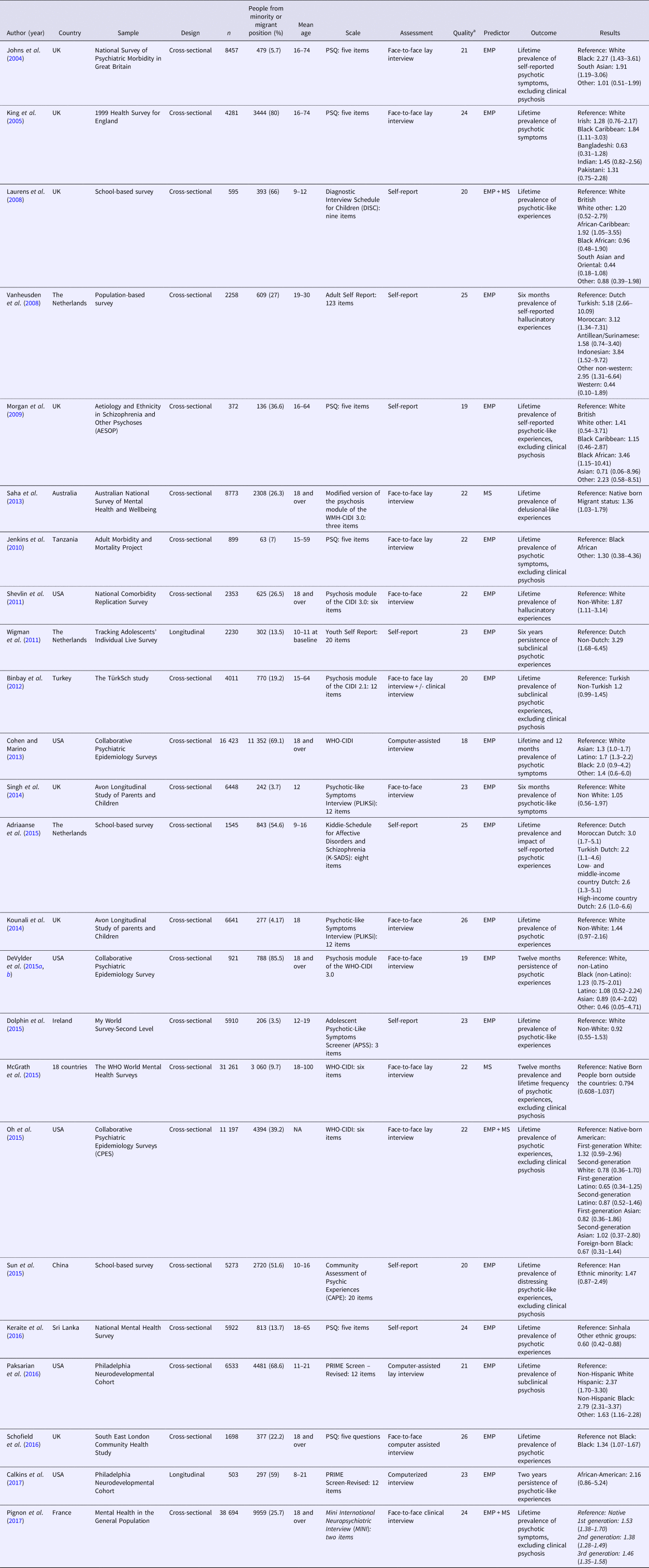
Twenty-one articles measured ORs for the role of EMP or MS in reporting PS in the general population, including 169 544 people, 47 551 of them belonging to ethnic minorities or having a personal or parental history of international migration. Eight articles excluded people with psychotic disorders. Data were collected in a total of 23 countries. All studies were cross-sectional, with samples ranging from 372 to 38 694 people. Two main scales, the Composite International Diagnostic Interview (CIDI, n = 7) and the Psychosis Screening Questionnaire (PSQ, n = 6) were used in more than half of the studies to assess the prevalence of PS. Nine studies reported data on adults, four on children and adolescents, and seven on both adults and children/adolescents. Three articles measured ORs for the role of EMP in the persistence of PEs, including 3654 people in three different countries. The characteristics of the studies included in the meta-analysis are listed in Table 1.
Characteristics of studies included in the meta-analysis

EMP, ethnic minority position; MS, migrant status; PEs, psychotic experiences; PSQ, Psychosis Screening Questionnaire, CIDI, Composite International Diagnostic Interview.
aQuality of studies was assessed with the 30-item STROBE statement, a score of 1 (presence) or 0 (absence) was coded for each item (total score on 30).
Reporting PS
Ethnic minority position
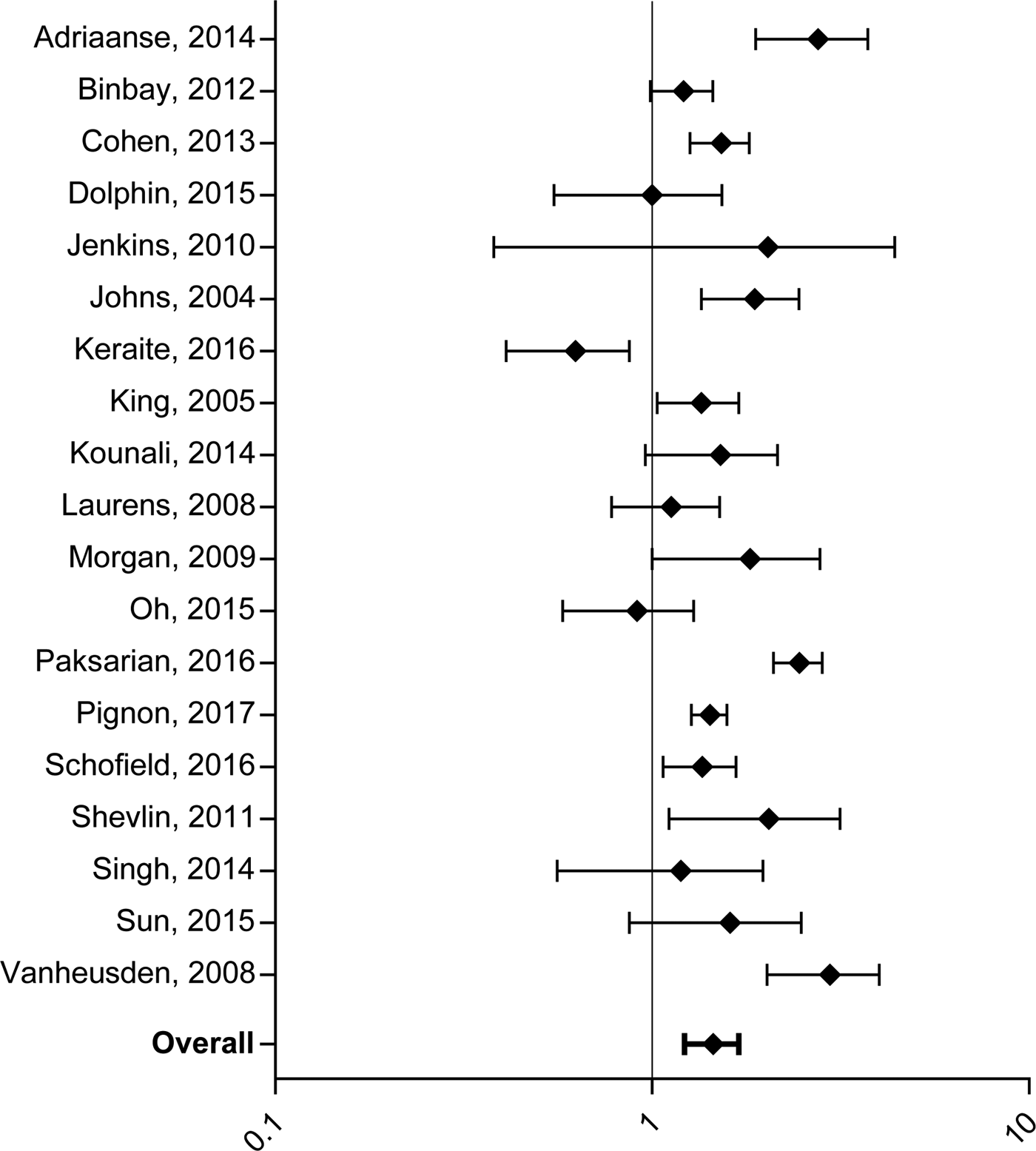
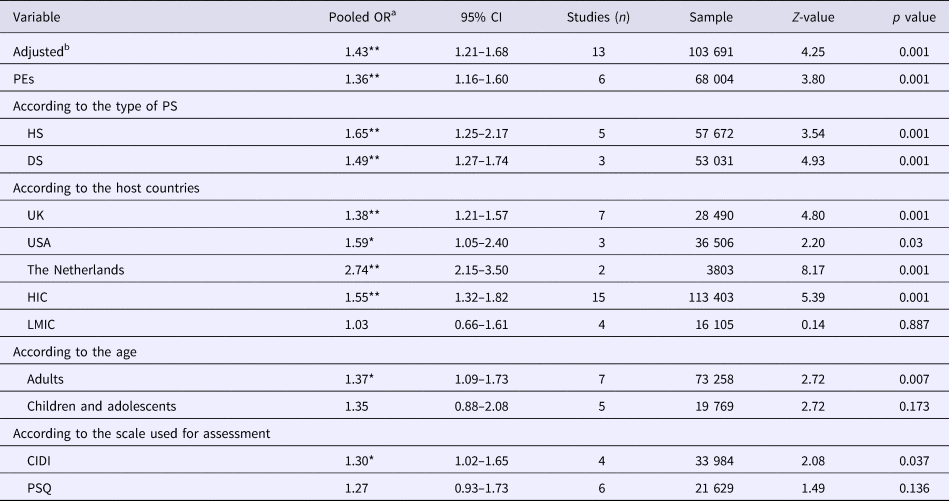
Nineteen studies assessed the risk of developing PS in ethnic minorities and showed a significant risk effect [OR 1.44 (95% CI 1.22–1.70), p = 0.001] (Fig. 1). Heterogeneity between studies was high [I 2 84.41%, Q(18) 115.48, p < 0.001]. The association remained significant for PEs and when adjusting for socio-demographic variables (Table 2). When considering children and grandchildren of migrants, the association was not significant [OR 1.11 (95% CI 0.76–1.23), p = 0.579]. The difference between pooled ORs related to the use of the CIDI v. the PSQ was not significant [Q(1) 0.015, p = 0.903].
Pooled meta-analytic odds ratio for the association between psychotic symptoms and ethnic minority position.

Meta-analytic odds ratios for reporting psychotic symptoms according to ethnic minority position

CIDI, Composite International Diagnostic Interview; HIC, high-income countries; LMIC, low- and middle-income countries.
a Pooled ORs are given with people from the largest ethnic group in the country as reference category.
b Adjusted for age, sex, and socioeconomic conditions.
*p < 0.05 **p < 0.001; PEs, psychotic experiences; HS, hallucinatory symptoms; DS, delusional symptoms; PSQ, Psychosis Screening Questionnaire.
Ethnicity
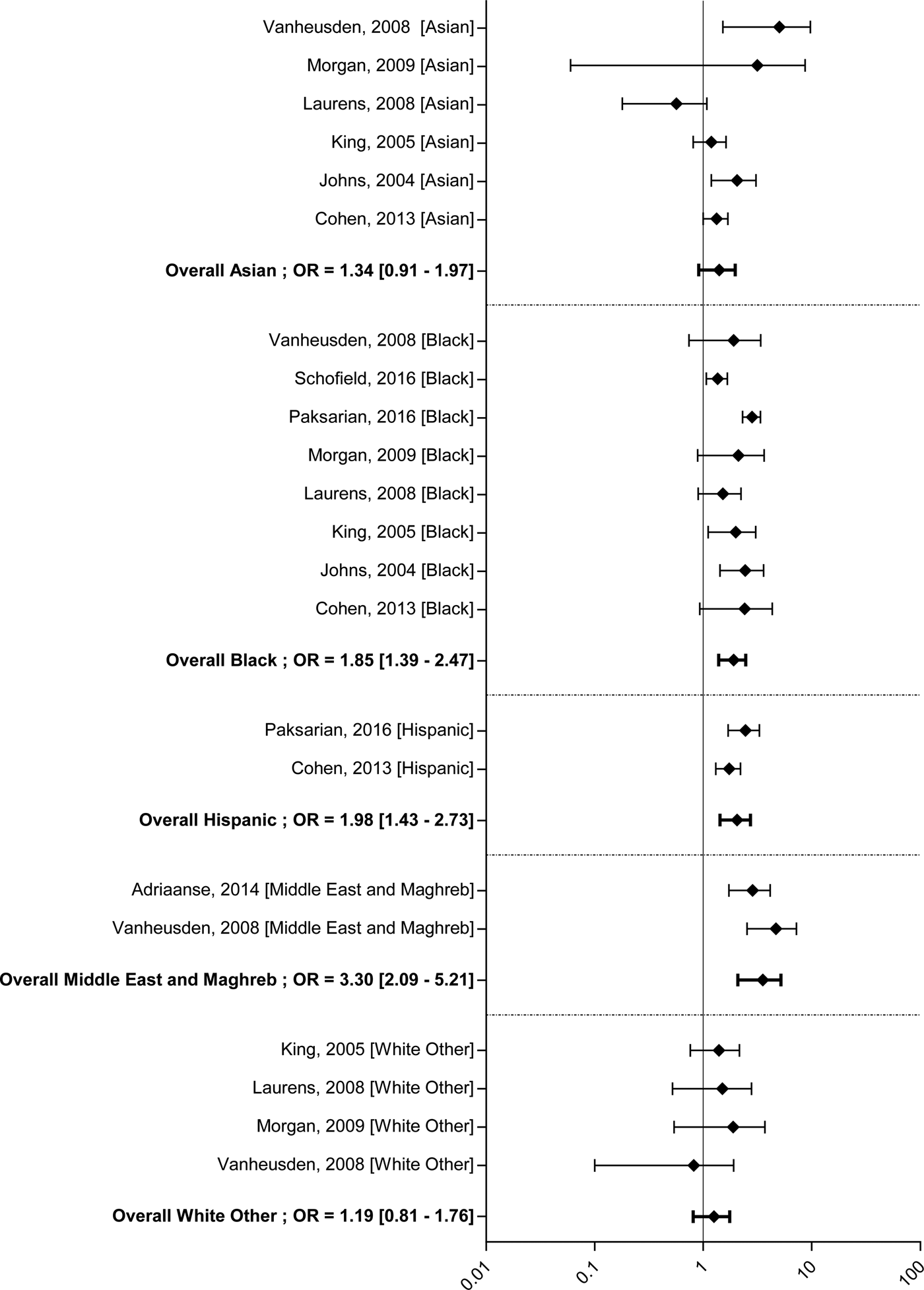
We found no association between ethnicity and PS for Asian and White people. The association was significant for people from the Middle East and Maghreb and for Hispanic and Black people (Fig. 2). Between subgroups, analysis showed significant variations between ethnic groups, especially when considering people from the Middle East and Maghreb related to other groups (compared with Asian: p = 0.003, Black: p = 0.035, White: p = 0.001) and between Hispanic and White (p = 0.05). We found no significant differences regarding the other ethnic subgroups.
Forest plot of pooled odds ratios for different ethnic sub-groups.

Migrant status
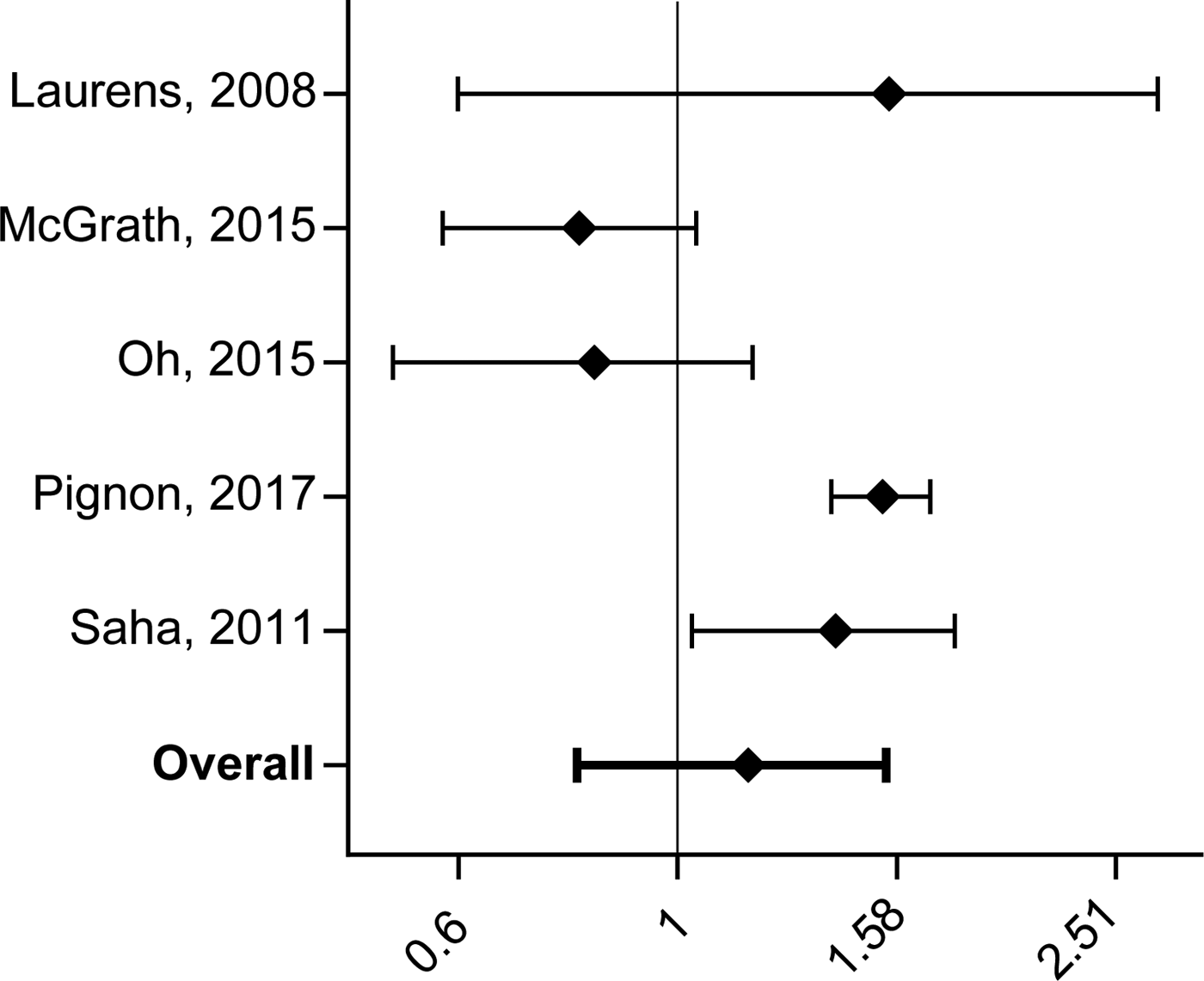
Five studies assessed ORs for MS. There was no significant association between MS and an increased report of PS [OR 1.12; (95% CI 0.81–1.55), p = 0.504] (Fig. 3). Heterogeneity between studies was high [I 2 85.77%, Q(4) 28.10, p < 0.0001]. A sensitivity analysis excluding the largest study (McGrath et al., Reference McGrath, Saha, Al-Hamzawi, Andrade, Benjet, Bromet, Browne, Caldas de Almeida, Chiu, Demyttenaere, Fayyad, Florescu, de Girolamo, Gureje, Haro, Ten Have, Hu, Kovess-Masfety, Lim, Navarro-Mateu, Sampson, Posada-Villa, Kendler and Kessler2016) found no significant association [OR 1.25 (95% CI 0.94–1.66), p = 0.123]. When considering PEs, results remained not significant [OR 1.09 (95% CI 0.76–1.57), p = 0.625].
Pooled meta-analytic odds ratio for the association between migrant status and psychotic symptoms.

Types of PS
Seven studies assessed specific types of PS, four related to EMP and three related to MS. Concerning EMP, we found a significant association with hallucinatory and delusional symptoms (Table 2). There was a significant association between MS and delusional symptoms [OR 1.47 (95% CI 1.33–1.62), p < 0.001] but not with hallucinatory symptoms [OR 1.23 (95% CI 0.53–2.88), p = 0.631].
Country of assessment
Among the studies measuring the association between PS and EMP, 11 were performed in Europe, four in the USA and four in LMIC (China, Turkey, Sri Lanka, and Tanzania). The association between EMP and PS was significant in the UK, the Netherlands, and the USA. The association was significant in HIC but not in LMIC (Table 2).
Age at assessment
Considering EMP, the ORs were significant for adults but not for children and adolescents (Table 2). Concerning MS, the association was not found to be significant in adults [OR 1.20 (95% CI 0.81–1.76), p = 0.368] or in children/adolescents [OR 1.08 (95% CI 0.68–1.70), p = 0.753].
Persistence of PEs
Three articles reported ORs for the persistence of PEs related to EMP. We found no significant association [OR 1.89 (95% CI 0.88–4.03), p = 0.102]. No article assessed the role of MS for the persistence of PEs.
Publication bias
Visual inspection of the funnel plot of the standard error by the log OR for EMP showed symmetry (online Supplementary Material 2). Egger's regression was not significant (r = −0.9; p = 0.45), and the fail-safe N was n = 621. This suggests the absence of publication bias regarding the association between EMP and PEs.
Discussion
Summary
Our meta-analysis provided evidence for a significant role of EMP as a consistent risk factor for PS and PEs. The level of risk differed across ethnic groups and within countries, and the increased risk associated with EMP was significant in adults but not in children/adolescents. We found no significant association between EMP and the persistence of PEs. MS was significantly associated only with delusional symptoms.
Strengths and limitations
The primary strength of this meta-analysis is the inclusion of a large sample of people from the general population. A total of 24 good quality studies (including 173 198 people) was included. In their previous meta-analysis, Linscott and van Os (Reference Linscott and van Os2013) used a smaller sample of 12 studies to assess the role of ethnicity and migration in the report of PEs. Our results were obtained in a total of 23 countries, including HIC, LMIC, in which several ethnic groups were represented. Additionally, we estimated the role of several associated factors, such as ethnic group, age, host country, types of PS and the scales used for assessing PS, thus providing a more precise understanding of the association between EMP or MS and PS.
Our meta-analysis has several limitations. First, the heterogeneity among the studies was high in terms of definition and assessment of outcomes. The assessment of PS was performed using different scales and assessment procedures, potentially leading to lower accuracy and reliability of our results. Lee et al. (Reference Lee, Chan, Chang, Lee, Hui and Chen2016) demonstrated that the screening method for PEs might be partly responsible for prevalence variations. For example, while the PSQ mainly relies on self-reported PS (Bebbington and Nayani, Reference Bebbington and Nayani1995), the CIDI is performed through clinical or lay interviews (Andrews and Peters, Reference Andrews and Peters1998). Self-report of PS is known to generate false-positive ratings, with varying rates ranging from 7% to 61% when verified by clinical interviews (van Os et al., Reference Van Os, Hanssen, Bijl and Vollebergh2001; Kaymaz et al., Reference Kaymaz, Drukker, Lieb, Wittchen, Werbeloff, Weiser, Lataster and van Os2012). Laurens et al. (Reference Laurens, Hodgins, Maughan, Murray, Rutter and Taylor2007) previously found moderate agreement between their screener questionnaire and the results of a subsequent clinical interview in a random sample of their screened population. However, in the current study, we did not find significant difference of association depending on the use of the CIDI or the PSQ (p = 0.903). Second, despite the wide range of countries of assessment, most of the included studies were performed in only three countries (the UK, the USA, and The Netherlands), which included over half of the sample. Studies performed in other countries found more heterogeneous results (Dolphin et al., Reference Dolphin, Dooley and Fitzgerald2015; Keraite et al., Reference Keraite, Sumathipala, Siriwardhana, Morgan and Reininghaus2016), raising questions about the representativeness of our conclusions. However, more recent studies performed in other countries, such as France, China, and Turkey, showed concordant results with the current meta-analysis (Binbay et al., Reference Binbay, Drukker, Elbi, Tanik, Özkinay, Onay, Zagli, van Os and Alptekin2012; Sun et al., Reference Sun, Hu, Zhang, Guo, Hu, Mwansisya, Zhou, Liu, Chen, Huang, Shi, Chiu and Liu2015; Pignon et al., Reference Pignon, Schürhoff, Szöke, Geoffroy, Jardri, Roelandt, Rolland, Thomas, Vaiva and Amad2017). Third, most of the included studies were cross-sectional, reducing the level of evidence of our conclusions and the ability to make causal inferences (Keraite et al., Reference Keraite, Sumathipala, Siriwardhana, Morgan and Reininghaus2016). Fourth, in the current meta-analysis, it was not possible to adjust for potential confounders, such as urbanicity or substance use. Further studies should investigate the role of these two factors regarding the occurrence of PS in ethnic minorities. Fifth, exploration of the role of EMP for PS and PEs is a recent field of research in the international literature. All studies included in our meta-analysis were performed and published during the past 15 years. This emergent literature indeed lacks a sufficient and effective background on the socio-economical and historical issues of immigration conditions. Dealberto (Reference Dealberto2010) demonstrated that the risk for psychosis differs in countries of short- or long-term immigration, highlighting the role of socio-economic and political conditions for psychosis risk in ethnic minorities.
Interpretations of results
We observed a significant effect of EMP on the report of PS and PEs in several countries, with high discrepancies between ethnic groups. Our results thus provided evidence for heterogeneity of the risk between ethnic minorities and within countries. The social reception context, being favorable or not to a particular ethnic group, could thus influence the development of PS (Schwartz et al., Reference Schwartz, Unger, Zamboanga and Szapocznik2010). In Europe, people from the Maghreb and Middle East, who showed the most elevated risk in our meta-analysis, face greater social adversity and discrimination than do other ethnic groups (Veling et al., Reference Veling, Selten, Mackenbach and Hoek2007b). Several studies have focused on the role of social adversity and social defeat in psychosis (Selten and Cantor-Graae, Reference Selten and Cantor-Graae2007; Morgan et al., Reference Morgan, Fisher, Hutchinson, Kirkbride, Craig, Morgan, Dazzan, Boydell, Doody, Jones, Murray, Leff and Fearon2009; Selten et al., Reference Selten, Booij, Buwalda and Meyer-Lindenberg2017). The association between perceived discrimination and the increased reporting of PS has notably been demonstrated in the general population in the USA (Oh et al., Reference Oh, Yang, Anglin and DeVylder2014; Anglin et al., Reference Anglin, Greenspoon, Lighty and Ellman2016a) and in Moroccan-Dutch migrants in the Netherlands (van de Beek et al., Reference Van de Beek, van der Krieke, Schoevers and Veling2017). Police discrimination was notably associated with lifetime PEs among Black minorities in the USA (Oh et al., Reference Oh, Cogburn, Anglin, Lukens and DeVylder2016). Previous studies highlighted the role of discrimination to induce delusional experiences (Janssen et al., Reference Janssen, Hanssen, Bak, Bijl, de Graaf, Vollebergh, McKenzie and van Os2003; Oh et al., Reference Oh, Abe, Negi and DeVylder2015). Interestingly, we reported a significant association between both EMP and MS and delusional symptoms in our meta-analysis. Low ethnic density and low ethnic identity are also known to increase the risk for PS (DeVylder et al., Reference Devylder, Oh, Yang, Cabassa, Chen and Lukens2013; Anglin et al., Reference Anglin, Greenspoon, Lighty and Ellman2016b; Cicero and Cohn, Reference Cicero and Cohn2017; Bécares et al., Reference Bécares, Dewey and Das-Munshi2017), probably by increasing the impact of social adversity and discrimination in ethnic minorities. EMP may thus have psychopathological consequences through its relation to chronic social stress. We observed a greater risk in adults but not in children and adolescents, which may therefore reflect a dose–response relationship between social stress and the development of PS. For instance, a recent study found an elevated perceived chronic stress level and increased activity in the stress-related brain network in people from the Turkish minority in Germany when confronted with a social stress task (Akdeniz et al., Reference Akdeniz, Tost, Streit, Haddad, Wüst, Schäfer, Schneider, Rietschel, Kirsch and Meyer-Lindenberg2014). However, the absence of an increased report of PS in children of migrants raises a question about the precise role of social adversity as it relates to psychosis risk in ethnic minorities. Several studies demonstrated that the members of the second-generation migrants are particularly exposed to discrimination and social defeat (Waters, Reference Waters1994; André and Dronkers, Reference André and Dronckers2016), and we would have expected higher reporting of PS in this population. On the other hand, some studies found no association between discrimination and health in second-generation migrants (Borrell et al., Reference Borrell, Palència, Bartoll, Ikram and Malmusi2015). Moreover, discrepancies for risk within countries must be cautiously interpreted according to the heterogeneous numbers of studies performed in different countries.
While we found that EMP is a risk factor for PEs, no significant association between EMP and the persistence of PEs was observed. According to these results, it remains unclear whether PEs in ethnic minorities are predictive for later psychotic clinical disorders, and the precise period of liability for PEs in ethnic minority groups remains unexplained. However, the absence of association between EMP and persistence of PEs must be cautiously interpreted, as the number of studies assessing this outcome was low. Moreover, a recent umbrella review demonstrated that EMP is among the most relevant environmental factors for clinical psychosis (Radua et al., Reference Radua, Ramella-Cravaro, Ioannidis, Reichenberg, Phiphopthatsanee, Amir, Amir, Yenn Thoo, Oliver, Davies, Morgan, McGuire, Murray and Fusar-Poli2018). The observation of a more severe symptomatology along the psychosis continuum for ethnic minorities is also a relevant argument for its role all along the continuum. For example, a Dutch study found poorer cognitive performances in ethnic minority groups with a first episode of psychosis (FEP) when compared with native Dutch patients (Stouten et al., Reference Stouten, Veling, van der Helm, Laan and van der Gaag2013). Other studies found a more severe psychopathology at FEP in a Malaysian ethnic minority in Singapore (Lim et al., Reference Lim, Subramaniam, Poon, Chong and Verma2011) or more depressive symptoms in Moroccan subjects with FEP in the Netherlands (Veling et al., Reference Veling, Selten, Mackenbach and Hoek2007a).
According to cross-cultural theories, one may argue that our results provide evidence for the misdiagnosis hypothesis in the association between psychosis and ethnicity or migration (Reeves et al., Reference Reeves, Hudson, Fletcher, Sauer, Stewart and Howard2003). Indeed, cross-cultural studies showed that the high rates of psychosis in ethnic minorities could result from diagnostic biases: their experiences and behaviors may be misinterpreted as PS by interviewers or clinicians who are not familiar with their culture (Zandi et al., Reference Zandi, Havenaar, Limburg-Okken, van Es, Sidali, Kadri, van den Brink and Kahn2008, Reference Zandi, Havenaar, Smits, Limburg-Okken, van Es, Cahn, Algra, Kahn and van den Brink2010, Reference Zandi, Havenaar, Laan, Kahn and van den Brink2011). A recent study showed that in ethnic minorities, PEs are associated with non-psychotic disorders such as depression, anxiety or post-traumatic stress disorder (DeVylder et al., Reference DeVylder, Burnette and Yang2014). The association between EMP and report of PEs but not with the persistence of PEs could thus reflect the cultural inadequacy of the existing scales to assess PS in cultural minorities. Earl et al. (Reference Earl, Fortuna, Gao, Williams, Neighbors, Takeuchi and Alegría2015) suggested that cultural beliefs could wrongfully have been understood as PS in ethnic minorities because of diagnostic biases. This could partly explain our findings of ethnic differences in the reported PS. However, in a cross-sectional study on sociocultural beliefs, Pechey and Halligan (Reference Pechey and Halligan2011) found no significant differences in the prevalence of such beliefs between Whites and non-Whites in the Irish population. Moreover, the CIDI, with which we found the most significant association, was validated across different cultures (Robins et al., Reference Robins, Wing, Wittchen, Helzer, Babor, Burke, Farmer, Jablenski, Pickens, Regier, Sartorius and Towle1988).
Previous literature highlighted the strong association between psychosis and migration (Cantor-Graae and Selten, Reference Cantor-Graae and Selten2005; Bourque et al., Reference Bourque, van der Ven and Malla2011). In contrast with these results, we found an increased risk only for delusional symptoms associated with MS. Our results, however, confirm those from Linscott and van Os (Reference Linscott and van Os2013) showing a significant effect of ethnicity (OR 1.35, 95 CI 1.09–1.67) but no effect of MS (OR 0.83, 95% CI 0.36–1.89) on the risk of developing PEs. This is also consistent with a previous study showing no association between foreign-born status and PEs in three ethnic minority samples in the USA (DeVylder et al., Reference DeVylder, Burnette and Yang2014). At the same time, forced migration (e.g. refugee status) has been found to represent a greater risk factor for PS compared with voluntary migration in the USA (Crager et al., Reference Crager, Chu, Link and Rasmussen2013). Moreover, recent studies highlighted putative neurobiological mechanisms related to social stress that could play a key role in the psychosis risk associated with migration, such as elevated brain dopaminergic function (Egerton et al., Reference Egerton, Howes, Houle, McKenzie, Valmaggia, Bagby, Tseng, Bloomfield, Kenk, Bhattacharyya, Suridjan, Chaddock, Winton-Brown, Allen, Rusjan, Remington, Meyer-Lindenberg, McGuire and Mizrahi2017) or hypercortisolism (Mewes et al., Reference Mewes, Reich, Skoluda, Seele and Nater2017). It is possible that MS is a risk factor mainly intervening at the upper end of the continuum, for example, during the persistence of PEs or during transition from high-risk status to clinical psychosis. This could reflect the fact that long-term exposure to daily stress related to social adversity is needed to develop psychosis in migrant populations. Some authors previously described migration as a delayed risk factor for psychosis in Denmark, with an increased risk of 1.02 for every year post-migration (Pedersen and Cantor-Graae, Reference Pedersen and Cantor-Graae2012), whereas younger age at migration has also been associated with an increased risk in the UK (Kirkbride et al., Reference Kirkbride, Hameed, Ioannidis, Ankireddypalli, Crane, Nasir, Kabacs, Metastasio, Jenkins, Espandian, Spyridi, Ralevic, Siddabattuni, Walden, Adeoye, Perez and Jones2017) and the Netherlands (Veling et al., Reference Veling, Hoek, Selten and Susser2011). The healthy migrant effect, i.e. the fact that migrants arrive in the host countries with an initial health advantage over their native counterparts (Hamilton, Reference Hamilton2015; Rivera et al., Reference Rivera, Casal and Currais2016), may also be protective against the development of PS. The results concerning MS may also reflect low statistical power according to the small number of included studies for this predictor and must be interpreted with caution. Moreover, we could not adjust our results on migration conditions (forced or voluntary migration, recent or longstanding migration, country of birth), and the migrant group may thus include heterogeneous populations with different levels of risk for PS.
Conclusion
In conclusion, EMP was a consistent risk factor for PS and PEs in several countries, and the risk differed across different ethnic groups. The risk was notably higher in ethnic groups facing deprivation and discrimination. We found significant evidence that MS was a risk factor only for delusional symptoms. We found no association between EMP and persistence of PEs. These results raise questions about the precise role of socio-environmental factors along the psychosis continuum and further studies are required to better understand the respective role of both EMP and MS on psychosis.
Supplementary material
The supplementary material for this article can be found at https://doi.org/10.1017/S0033291718002271
Acknowledgements
The authors wish to thanks Dr Roger Broughton, M.D., Ph.D., for his invaluable assistance in translation
Conflict of interest
None.