Disease outbreaks and pandemic-related crises have caused enormous negative impacts on health, economies, and national and global security.Reference Maurice 1 Effectively dealing with such events continues to present a significant challenge for China and other countries in the world. In the past 15 years China has suffered numerous public health crises, including major disease outbreaks, such as severe acute respiratory syndrome (SARS) in 2003, the H1N1 flu pandemic in 2009, and H7N9 avian influenza in 2013. These outbreaks have affected public health and, also, social stability.
Effective emergency response is very important to reduce the adverse impacts of all public health emergencies.Reference Verikios, Sullivan, Stojanovski, Giesecke and Woo 2 Good-quality risk communication and coordination among relevant stakeholders is crucial for the effectiveness of an emergency response, which relies greatly on the amount of useful information that is available at any given time. However, for many reasons, it can be problematic for stakeholders to collaborate and share knowledge in a timely manner during response to a disease outbreak or pandemic crisis.
Since the SARS outbreak in 2003, China has established and strengthened national and local surveillance systems to prevent and control diseases and has also expanded its laboratory capacity.Reference Lu and Xue 3 , Reference Hu, Zeng and Zhao 4 In addition, China’s collaboration and communications with WHO and international scientific communities have increased and strengthened.Reference Zhu and Yang 5 The threat of H7N9 avian influenza reminded the Chinese public of the SARS outbreak that their country experienced only a decade before. This new, potentially serious outbreak provided an opportunity for comparison to evaluate the changes in the emergency management approach: particularly, in the risk communication implemented.
A new type of pathogen was identified for the first time on November 16, 2002, in China. This pathogen was responsible for severe acute respiratory symptoms, and was later named SARS-CoV.Reference Anderson, Fraser and Ghani 6 H7N9 was a known agent, although the serotype was unfamiliar. The first case of human infection with the avian influenza virus H7N9 was detected in China in 2013.Reference Liu, Sun and Cai 7 SARS coronavirus and the H7N9 virus share some similarities: both can lead to severe disease; there are still no specific antiviral drugs or vaccines for them; worldwide, people of all ages have little protective immunity; and both diseases presented a global epidemic and potential pandemic threat.Reference Zhong, Zheng and Li 8 , Reference Gao, Cao and Hu 9 Although the case fatality rate of H7N9 in China was higher than that of SARS, the latter had far greater health and socio-economic impacts globally.Reference Wong and Leung 10 , Reference Reperant, MacKenzie and Osterhaus 11 In China, control efforts for SARS were heavily criticized and considered to be suboptimal.Reference Xiu 12 In contrast, the H7N9 response earned the praise of the international community.Reference Gu, Lu, Yu, Wei and Hu 13
Risk communication can play an important role in the management of infectious disease. It is central to epidemic and pandemic control.Reference Gamhewage 14 Risk communication is considered a core competence for public health responses to infectious disease threats under the International Health Regulations.Reference Cool, Claravall and Hall 15 Comparing the different risk communication practices in response to SARS and H7N9 and the subsequent outcomes presents a rare opportunity to examine the key role that risk communication can play in emergency management.
The aim of this article is to compare the strengths and weaknesses of the risk communication conducted in SARS and H7N9 prevention and control in China using a set of 8 principles selected to form a frame of referenceReference Qiu, Rutherford, Chu, Mao and Hou 16 for the comparative analysis. The article is based on an extensive PhD study investigating the role of risk communication in China’s emergency management of infectious disease outbreaks in order to inform risk communication strategy development for future public health emergencies.
Methods
Data Collection and Analysis Methods
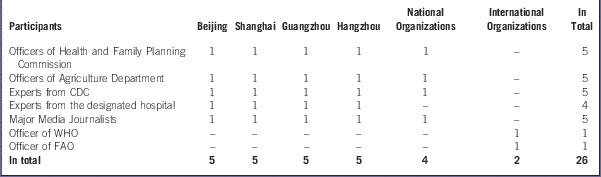
We collected data for this research from peer-reviewed literature, secondary statistical data, face-to-face in-depth interviews, and focus group discussions. On the basis of literature review and the research purpose, we developed a set of questions for key informants and focus groups for the residents of the affected communities. All the informant groups were identified through the stakeholder analysis and a snowball sampling method was used to increase the number of informants to adequately represent the key stakeholders.Reference Biernacki 17 The key stakeholders were selected from the municipal, national, and international levels based on their responsibilities, expertise, roles, and tasks in the prevention and control of SARS and H7N9. Table 1 describes their details.
In-Depth Interview, Key Informant Details

Semi-structured in-depth interviews were conducted with 26 key stakeholders (Table 1) including officers from various national and international agencies as well as experts from local health departments, agriculture departments, centers for disease control and prevention (CDCs), hospitals, and journalists who have experience with SARS and/or H7N9 in the key cities of Beijing, Shanghai, Guangzhou, and Hangzhou, which were most affected by SARS and/or H7N9.
We interviewed the key informants about their experience of and reflections on the emergency management of the SARS and H7N9 events, and the problems and suggestions concerning risk communication for emergency management of disease outbreaks. All the informants answered the same 12 questions with follow-up probing questions to provide further insights, explanations, and examples (see Appendix 1). Each interview lasted for about 60 minutes.
In all, 7 focus groups (3 groups of local residents in Beijing who had experience with SARS and 4 groups of local residents in Guangzhou who had experience with SARS and H7N9) were conducted to investigate participants’ views and experience relevant to the understanding of the quality of emergency management response, social impacts, and public demand for information about SARS and H7N9 prevention and control in China. Each group consisted of 6 to 8 people. The participants were identified and recruited with the assistance of Beijing CDC and Guangdong CDC, using informal networks of local community health centers. Three questions with follow-up questions were discussed in the focus groups (see Appendix 2). Each focus group lasted for about 1.5 hours.
For the comparative analysis of the 2 cases, this study adopted a frame of reference consisting of a set of 8 key risk communication principles applicable and relevant for China developed by Qiu et al.Reference Qiu, Rutherford, Chu, Mao and Hou 16 The 8 principles were selected from over 20 principles and themes about good risk communication practices using international literature and guidelines from the World Health Organization (WHO), Food and Agriculture Organization (FAO), US CDC, and some other national agencies. They are as follows: developing trust, being transparent, making announcements early, listening well, planning well, being honest and open, being empathetic and caring, and accepting and involving the public as a partner. The answers for the key principles were drawn from the interviews and focus groups.
The analysis of data from the interviews and focus group discussions included the following stepsReference Hilal and Alabri 18 , Reference Noble and Smith 19 : (1) before analysis the data was transformed into a format amenable to manipulation and analysis, by transcribing audio-taped interviews and entering text and audio data into qualitative analysis software Nvivo 10 and MindManager; (2) the first analysis step was to determine what the codable units of data were and, then, to identify those units within the data; (3) the next step was to understand the meaning of what was said; (4) on the basis of the meanings, a discovery process of grouping data with similar meanings to form categories was used.
This research used MindManager to manage qualitative data and analyze the themes of perceptions and information from different interviewees. QSR NVivo 10.0 was used to assist analysis and facilitate the coding process. The data were analyzed separately for the key themes relative to risk communication and specific to the interviews and focus groups. After the categories were reasonably well established, definitions of the categories were developed and relationships between them identified. This research analyzed the results against criteria for good risk communication practice from the literature, and analyzed the SARS and H7N9 responses according to the theoretical framework of the 8 key principles of risk communication to compare the cases and to identify strengths and weaknesses.
Ethical Approval
The research design, methods, the interview, and questionnaire guidelines were approved by the Griffith University Human Research Ethics Committee (HREC) on Human Research Ethics (Protocol Number ENV/63/14/HREC). Interviews and focus groups were carried out only when informed consent was obtained. Protocols to ensure confidentiality and anonymity were followed.
Findings
The following sections present the findings of the comparative analysis using the set of 8 principles from the risk communication frame of reference for China.Reference Qiu, Rutherford, Chu, Mao and Hou 16
Developing Trust
Trust is the basis for communication. Trust in the information provided is very important for stakeholders to build confidence for their response to a crisis. As stakeholders such as government officers, experts, and the public have different professional and cultural backgrounds and different perceptions of risk and behavior, it is necessary to strengthen mutual trust for effective management of risks. If stakeholders trust the information they get, they are more likely to make the right decisions to avoid risks.Reference Mishra 20
During the SARS outbreak in 2003, just after the Spring Festival in Guangzhou, there were rumors about the disease and citizens panicked and hoarded white vinegar and Radix Isatidis, which they believed would treat the illness.Reference Han, Song and Zhang 21 At this time, officials had not released any authoritative information, and even though some Guangzhou media were aware of cases in the community, they were required by the publication administration department of Guangdong province not to report the information. The delays of more than 2 months in reporting the first cases of SARS caused significant distrust both within China and internationally and this, arguably, contributed to an ineffective response.
The outbreak escalated after March, and although the Ministry of Health (MOH) released epidemic information in early April, subsequent investigation found that the information released was not accurate. Some army medical institutions in Beijing had not reported information to the local health administration department, which meant that the MOH not did have the complete picture of the epidemic.Reference Xiang 22 The epidemic information released to the public was inconsistent with the reported figures from various sources, and this increased the mistrust in the government.
However, from April 20, there was a change as the Chinese government demanded the accurate, timely, and honest reporting of the SARS situation.Reference Zhang and Benoit 23 The government utilized its administrative control of local cadres, improved its gathering of information from localities and the disclosure of that information, improved its control measures, and actively coordinated bureaucracies and local administration in SARS management. Under the unified leadership of the State Council, it established an epidemic reporting system. This allowed the central emergency leading group to obtain timely and accurate SARS epidemic information, and to deal with the questions more effectively.Reference Wang and Ruan 24 At the same time, prevention and control measures were released through the mass media, and the media began to widely report relevant epidemic prevention and control information. Communication pathways between the government and the public were established, and information collection was unobstructed outside the system, which led to improved control. Gradually, social order recovered and panic subsided.Reference Ding 25 This largely constructive change in the interaction between the national centre and localities helped China to bring SARS under control within 2 months.
By contrast, 10 years later, in response to H7H9, after the first 3 cases were identified on March 29, the National Health and Family Planning Commission (NHFPC) made an announcement of the H7N9 epidemic, and published “Questions and Answers” about the epidemic situation on the official website on March 31. Besides, basic information on all the cases in China and measures taken were reported in a timely manner to the WHO. As mentioned by an international officer: “During H7N9, because the information was more promptly disclosed, there was more transparency. We trusted the information.”
Despite this improved trust, there was still inaccurate information that may have affected the trust between the public and governments. Some provincial health departments advised that Radix Isatidis could prevent H7N9 flu, but the effectiveness of this drug had not been confirmed.Reference Xie 26 However, some interviewees reported that they “did not worry at all” suggesting that it was their trust in the government’s competence that made them worry-free about H7N9. As mentioned by a community resident: “As we could know the information of H7N9 by TV, newspaper, internet, it was clearer for us to know the dangers of H7N9 than SARS. We trusted the information [of H7N9].”
Trust is related to the information provider and the information distributor. For the H7N9 outbreak, almost all the interviewees trusted the information released by the government agency and authoritative official traditional media or websites. As mentioned by one journalist: “The [H7N9] epidemic information released from the authoritative official traditional media was more trusted.”
The information channels most trusted by most of the focus group participants included China Central Television, major web portals, national and local newspapers, local TV channels, community information boards, and health education materials disseminated by health authorities. As reported by a community resident of one focus group: “I would not fear [SARS] again after the information was transmitted by the China Central Television.”
In contrast, most focus group participants distrusted information from social media such as network blogs, QQ, and WeChat. One media journalist agreed: “I think a lot of things from social media were untrue, unreliable, the impact was not good.”
Being Transparent
Transparency of information serves to maintain a sense of honesty and trust. In the early period of the SARS outbreak in Guangzhou, there was no public information release. As mentioned by an international officer: “I think the information was not open during SARS outbreak, and there were lots of rumors everywhere.”
Under pressure, around February 11, almost 3 months following the first case, the local government and health authorities held press conferences in Guangzhou, Foshan, and Zhuhai providing simple reports about the epidemic situation. However, the theme of these conferences was that the epidemic had been brought under control: “you don’t need to panic” was the message. Key information, such as infectivity, transmission, infectivity, clinical characteristics, and treatment was not provided. Further, the Department of Health still claimed that “China is safe” in a news conference on April 2. This lack of information disclosure meant that, in other parts of the country, targeted measures were not taken when they were needed to contain the spread. As mentioned by one hospital doctor: “I felt that the dangers and treatments of SARS were not made clear at that time.”
By contrast, during the H7N9 outbreak, China reported on the epidemic every day and the media discussion was also quite open and frank. Two days after confirming the first cases on the afternoon of March 29, 2013, the NHPFC published detailed information about the number of cases and about measures to limit transmission, and continued to report this on a daily basis throughout the peak of the epidemic.Reference Zhang, Yu, Tang, Chen and Zang 27 This transparency was thought to reduce panic in the public. As mentioned by an Agriculture Officer: “During H7N9, the impact on people’s lives was very limited. In fact, the panic is derived from what people don’t know. There wasn’t any panic, as we knew something with H7N9.”
At the same time, basic information on all cases in China and measures taken was reported in a transparent manner to the WHO. Further medical information about cases and the nucleotide sequence of the H7N9 virus was shared with the international community.Reference Zong 28
In stark contrast to the early stages of SARS, the result was that H7N9 was brought under control quickly and the potentially significant large-scale negative impacts of H7N9 were limited. This transparency helped to subdue rumors and maintain social stability and helped maintain trust in the government by both Chinese and international communities, hence, ensuring more cooperation to reduce the spread of the disease.
Announcing Information Early
During a public health emergency, health departments and emergency professionals need to respond quickly and provide a timely release of information so that the public, all relevant government agencies and businesses can understand the actual situation of the event as soon as possible and take necessary actions. A timely response encourages public confidence.
In 2003, governments at all levels in China kept information regarding the incidence of SARS a secret, and this practice resulted in misjudgement of the situation and erroneous decision-making. As the epidemic information was not transparent, and as local government did not report cases, the health sector couldn’t truly grasp the dynamics of the epidemic situation and could not do its job effectively and respond adequately to the outbreak.
The first incidence of SARS (initially called atypical pneumonia) was reported in Guangdong province in mid-November 2002, but Chinese provincial officials withheld important information about the disease from the general public and other sectors in China for another 3 months. This enabled the disease to be rapidly transmitted to more than 30 countries on 5 continents in early 2003, and there were rumors circulating about the disease. Citizens were panicking and hoarding white vinegar and Radix Isatidis. This caused distrust and inappropriate responses between the government and the public. Further, the WHO did not get the epidemic report from China until 4 months after the first case appeared in Guangdong. This severely reduced the global response to the disease that had become a global outbreak: a true pandemic.
In contrast, during the H7N9 outbreak, the information was released quickly and updated frequently. As mentioned by a Health Department officer: “Updating the information was certainly not timely in SARS, but the information was provided every day in H7N9.”
The first patient was hospitalized on February 20, 2013, with an unknown type of influenza. On the afternoon of March 29, diagnoses of 3 patients were confirmed as human infection with H7N9 avian influenza by experts in the NHFPC.Reference He and Zhang 29 Two days later, on March 31, the NHFPC made an announcement about the 3 cases. The Health Department and the WHO worked together to develop appropriate risk communication and prevention, and control measures were quickly made public. Despite a 39-day delay between the first case and its announcement, the result was more trust and more appropriate and effective cooperation between the public and the Chinese government—as well as between China and the international community—and, therefore, a more effective prevention and control response.
Listening Well
As the perceptions of the health risk from an issue can differ between organizations and different parts of the community, it is necessary for all stakeholders to listen to each other and exchange information, attitudes, values, beliefs, and perceptions about risks. This interaction should ideally be ongoing before a crisis so that during a crisis there is a greater understanding of risk across key stakeholders, including the community. This understanding of stakeholder perspectives may lead to a better understanding of risk perception differences and, hence, shape risk communication.Reference Covello 30 It may also lead to more widely understood and accepted risk management decisions. As indicated by an expert from the CDC “I need to listen to different people’s opinion and attitude to the disease outbreak, and I need to know what they need. What made them panic? What can make them feel safe? What are they pleased about?”
In response to a public health event, some government officers in China still try to restrict access to information because of a long history of doing so but, generally, officials endeavor to give the public information that they think they need. As mentioned by a CDC expert: “If we listen and promptly respond to the concerns of the people and other sectors, then we can increase the degree of trust among the public during the whole prevention and control of disease outbreak.”
However, with no shared understanding of needs, there was demonstrated mistrust, conflict, and contradictions between different sectors, which affected the preparedness and response to disease outbreaks such as SARS and H7N9.
As the SARS epidemic went largely unnoticed at first, there was little communication between government departments or other organizations and other sectors or the public. At the beginning of the outbreak, some local governments did not communicate with the public or other sectors, leading to public panic and loss of government credibility. Further, many clinicians were unaware of the epidemic threat posed by the “atypical pneumonia.” As mentioned by a hospital doctor: “At that time, I was a new doctor. I only knew the SARS was very severe from the old doctor, but we didn’t know the pathogen of SARS and the good treatment method for SARS.”
In response to H7N9, there was also a lack of communication between the Health and the Agricultural Department, which, arguably, led to unnecessary negative impacts on farmers. As indicated by officers of the Health Departments: “If we listened to more viewpoints of the Agriculture Department, then that would have been better for the control and prevention for the H7N9.”
Planning Well
Before crises, there should be a health emergency risk communication plan developed. There should be different communication methods for the government, the public, and medical personnel in a single plan or in different plans.Reference Qiu, Mao and Yan 31 With a well-developed plan and good preparation, the responsibilities of different departments can be made clear, and the public health emergency risk communication can be well informed and conducted in an orderly manner. Testing the plans for different circumstances is also important to develop different messages and strategies for different types of emergencies.Reference Lin and Wu 32
Since SARS, China has gradually started to attach importance to the practice of risk communication in emergency management. However, in 2003, there was no formal risk communication plan that could be used for the SARS outbreak. To improve risk communication, in collaboration with China CDC and the US CDC, the Health Emergency Response Office, China MOH, developed the Guidebook on Risk Communication of Public Health Emergency in 2007.Reference Cope, Frost, Richun and Xie 33
Interestingly, what emerged from interviewees involved in the H7N9 response was that many did not know the name or the contents of the Guidebook, or if they did, it was not actively implemented. As mentioned by a Health Department officer: “There wasn’t a risk communication plan in hospital, and [some public health emergency plans] are impractical, operability is not very strong. It is common.”
This reflects that the Guidebook is an internal document accessible only to some departments of the Ministry of Health and CDCs and not to all public health emergency professionals. Further, as indicated by a CDC expert, even it was accessible, it lacked operability for relevant stakeholders in practice. As mentioned by a CDC expert: “The operation of the emergency management planning and guidelines were not comprehensive, and there was no target audience.”
Although several interviewees said that the concept of risk communication was new to them, most of the in-depth interviewee’s comments specifically indicated the need for and importance of a risk communication plan, specifying the importance of identifying responsibilities of the different departments and the critical importance of working collaboratively. As indicated by officers of the Agriculture and Health Departments: “In fact, I think the risk communication plan is very important, but overall they are still lacking, especially lacking in a theoretical framework” and “Before a new crisis event happens, we should have a plan of [risk communication]. There should also be prepared some exercises for risk communication.”
Being Honest and Open
Being honest and open is critical for building trust. Chinese governments have had a history of keeping information regarding incidents and disasters secret, and such practices throughout the SARS epidemic resulted in misjudgement of the situation and erroneous decision-making. As highlighted by one TV reporter: “ The Propaganda Department controlled and did not allow us to have an interview. We had no way to find any information about the disease outbreak except hearsay [in SARS] .”
During the SARS epidemic, the Chinese Ministry of Health reportedly sent a team to Guangdong to investigate in late January, but the results were classified “top secret” and no nation-wide health advisory was issued until April 3.Reference Chang 34 Despite the rapid development of the SARS epidemic, formal authoritative information release was limited, leading to gossip circulation and significant delays in responding to reduce disease spread, as mentioned by one community resident from Beijing. “In the early stage of SARS, there were many people in hospital with the disease, and there wasn’t good communication with the public, which caused lots of people to panic and fear. Many people left Beijing, which was detrimental to infectious disease management. If the government had strengthened the overall risk reminders and announced some of the [solid] information, it would have facilitated the prevention and control of the entire work.”
By contrast, disclosure of information was a priority in the H7N9 outbreak management. The newly established NHFPC reported to the WHO and the public about the epidemic on March 31, 2013, shortly after the China CDC completed full-gene sequencing (on March 29) and the cases were diagnosed (on March 30, after discussion with clinicians and epidemiologists). Information about new confirmed cases was released on a daily basis until the later stage of the epidemic.Reference Wang 35
Being Empathetic and Caring
Empathy concerns a person’s resonant emotional response to another’s distress.Reference Thompson 36 Caring concerns a person’s efforts to help another person, or a sector’s efforts to help the population. Empathy and caring are important during disease outbreaks, because the nature of this type of public health event means that there is a lot of anxiety around illness and contagions. In these circumstances, people may feel empathy for another’s distress but may not be capable or competent enough to respond in a helpful and caring manner. Knowing how to assist a case, for example, is a challenging task for a doctor, public health professional, or for a government officer. Further, knowing how to formally communicate with a worried community in a way that demonstrates empathy is also important.
Humanistic care measures were identified as important by key informants. As mentioned by a CDC expert: “The community people should come to see them [patients] and to be concerned about what they want, including physiological and psychological needs.” And by an Agriculture Officer: “It was necessary to give care, sympathy, and help [to SARS or H7N9 patients].”
During the SARS period, the state appropriated funds to establish a disease prevention fund, and introduced a series of regulations about relief of medical expenses and related industry taxes, which reflected humanistic care to some extent. However, in the course of SARS treatment, some hospitals only paid attention to the physical treatment of patients and ignored psychological aspects. As mentioned by a hospital doctor: “Human care was very bad during SARS. The family was not allowed to visit a SARS patient in hospital. Pagers and mobile phones were collected on one side and the patients were not allowed to use them as they had been infected. Then a SARS patient could not contact with their family. Some patients could not see anyone before they died in hospital. There was no video system at that time.”
Quarantine has been used for centuries in an effort to prevent the introduction, transmission, and spread of communicable diseases. However, psychological stress is a risk for those confined because of a quarantine order. The psychological impact of quarantine can be derived from 2 sources: (1) the fear and ambiguity of the disease and (2) incarceration.Reference Barbisch, Koenig and Shih 37 Patients with SARS reported fear, loneliness, boredom, and anger, and they worried about the effects of quarantine and contagion on family members and friends. As reported by a community resident: “During SARS, I also had a high fever, but I didn’t dare go to hospital, as I feared the hospital would keep me and not allow me to go home.”
Similar problems were also identified in the treatment of H7N9 cases. However, during the H7N9 outbreak, in addition to focusing on infected patients, the media and health authorities were also concerned about health care workers and the health of vulnerable groups of the public. As mentioned by a CDC expert: “The SARS or H7N9 patient suffered from the disease as well as the panic. We should give them more sympathy and care for them including psychological help and physical help.”
Accepting and Involving the Public as a Partner
In response to public health emergencies, the measures adopted by the government and health administration should be communicated to the public through the media, on the internet and though advertisements and announcements; and at the same time, the information needs and concerns of the public should be sought and passed to the health administration and relevant government departments. This 2-way process will facilitate more support and cooperation between government departments and the public when it is really needed, thus, helping stakeholders to work together to cope with emergencies under highly stressful circumstances.Reference Fairbanks, Plowman and Rawlins 38 Government departments need to choose the appropriate channels to convey the actual situation of risk events in a way that can be understood, and provide timely disclosure of the necessary relevant measures that need to be or have been carried out. As mentioned by a Health Department officer and an international officer: “We only [need to] know what the public wants or what they lack, then [we can know] what we can give to them.” “It is more important to pass on information, which helps the public to understand and accept it.”
During the early stages of SARS, there was no listening to the public’s voice as officials withheld information. In the later stage, the national government used the Chinese media to gain public support for the SARS response, including posters and publications.Reference Wishnick 39 Thus although the government’s communication strategy improved, it was still a 1-way communication system.
During the H7N9 outbreak, there were daily reports of the epidemic in China, and there was open discussion about H7N9 in the Chinese media. The Chinese government also paid special attention to interacting with the public, by creating public accounts on WeChat and by updating epidemic information and providing necessary responses and anti-rumors on social media, such as Weibo, in a timely manner. These represented an attempt at 2-way communication.
Overall, the quality of the response to H7N9 indicated that the different agencies received regular feedback from the public and that the agencies were responsive to the public’s needs. As mentioned by a Health Department Officer: “It is necessary to listen to the needs of the public, or what are they want to know and to pay attention to the public. For example, some relatively new information needs to be updated promptly to them [in H7N9].”
However, health officials also recognized the importance, as well as the difficulty, of verifying information received from the public. Several interviewees indicated that they did not believe useful information had been received or could be received from the public, as they thought the public lacked professional knowledge of public health.
Almost all interviewees indicated that a mechanism now exists to ensure that the views and perceptions of the public are taken into account during an emergency and at the planning stage. As mentioned by a CDC expert: “For a response department, it is certainly important to collect epidemic information and the public’s concerns, then to analyse the reasons and how to guide the public correctly.”
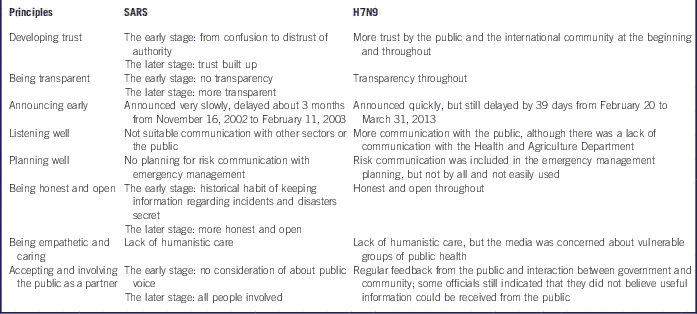
Table 2 provides a comparison of China’s response to SARS and H7N9 against 8 key risk communication principles.
A Summary of How Risk Communication was Implemented in SARS and H7N9 Events According to the Key Principles

Discussion
From the disorder of the early stage of SARS in 2003 to the globally recognized self-confidence, calm, and order in the response to the H7N9 events, China’s infectious disease outbreak management system has improved significantly. This not only reflects China’s achievements in the construction of the emergency management system, but also suggests that China’s concept of risk management has changed from a “reactive” approach of waiting for events to occur before acting, to a more “proactive” one of working in advance and focusing more on preparedness within the system. Before the SARS outbreak in 2003, some government officials lacked psychological preparation for the advent of risk in society and lacked a comprehensive understanding of risk management in China.Reference Fang and Qi 40 At present, preparedness is an important task of the relevant authorities and risk communication has become more integrated in the preparedness and decision-making processes in public health crisis management.
As SARS was a novel virus, there was confusion and delays in identifying it and understanding its transmission and, thus, in its diagnosis and treatment. Therefore, faced with the SARS outbreak in 2003, many government officials lacked experience and were inadequately prepared for the advent of risk and emergency in society. This reflected a lack of comprehensive understanding of risk management of emergencies in China at the time.Reference Fang and Qi 40 H7N9, 10 years later, although not known to China at the time, was a new serotype of a familiar virus (influenza). Thus, the identification, transmission, diagnosis, and treatment were more quickly determined. Currently, preparedness is an important task of relevant authorities and risk communication has become more integrated in the preparedness and decision-making processes in public health crisis management in China.
Trust is necessary for stakeholders to build the public’s confidence in the responses to a public health event.Reference Mishra 20 Trust is the basis for communication. In a crisis, trust can assist parties to maintain a positive and cooperative attitude in the face of uncertain risks, with the belief that the event will move in a better direction.Reference Liu 41 Delays of more than 2 months in reporting the first cases of SARS caused distrust both in China and in the international community as well as in an inadequate response. However, in response to H7H9, after the first 3 cases were identified on March 29, 2013, the NHFPC notified the public of the H7N9 epidemic, and published “Questions and Answers” about the epidemic on the official website on March 31. Basic information on all the cases in China and measures taken were reported in a timely manner to the WHO. As the information was more promptly disclosed, and as there was more transparency, there was more trust by the public and the international community.
In an environment of open, comprehensive, transparent risk information, one can have a more comprehensive understanding of risk and accurate risk assessments. One can ease emotions of fear and anxiety, and can increase rationality.Reference Liu 41 When facing risk events, open, honest reports can address the concerns of the public. When the health authorities also sought to listen to the public’s concerns, they could get an accurate grasp of the public opinion. This enabled them to respond in a way that helped to curb rumors, ease panic, and prevent social unrest.Reference Liu 41 During the SARS outbreak, there was no transparency, it was announced very slowly, and the government didn’t listen well to other sectors or the public and lacked attention to people’s needs in care. When dealing with H7N9, the Chinese Government had a stronger epidemic information management system, and it adopted a more open, timely, and accurate reporting process. Generally, there was no mass panic and the social situation was relatively stable.
The consequences of sudden events not only depend on the incident itself but also depend on the public perception, interpretation, and response to these sudden events.Reference Yan 42 The aim of risk communication is not only to reduce public concerns and increase the efficiency of actions, but also to foster an informed, involved, interested, rational, thoughtful, and committed cooperative partnership of stakerholders.Reference Liu 41 This partnership, once established and maintained, will affect the risk communication effectiveness to a certain extent. Open communication makes a decisive impact on the effectiveness of risk communication.Reference Xie and Zhen 43 Effective emergency risk communication should be a 2-way interactive communication with the public. It needs to fully mobilize the initiative and enthusiasm of the public.Reference Guo 44 During the early stages of SARS, there was no communication with the public as the officials withheld information. In contrast, during the H7N9, the media gave daily reports of the epidemic, and there was heated discussion about H7N9 in the media. The Chinese government also paid special attention to interacting with the public, by creating public accounts on the extensively used social media platform “WeChat,” updating epidemic information in a timely manner, and by giving timely responses and countering rumors on social media such as microblogs. Overall, the responses to H7N9 indicated that the different agencies received regular feedback from the public and that the agencies were responsive to the public’s needs.
The emergency plan is the blueprint of emergency management. If an effective plan of risk communication cannot be developed, it will be difficult for the risk management strategy and policy planning to be completed.Reference Lin and Wu 32 Chinese public health risk communication includes few detailed plans either at the national or local government levels. After the SARS outbreak in 2003, in order to improve risk communication, the MOH developed the Guidebook on Risk Communication of Public Health Emergency in 2007. However the Guidebook is an internal document for some health departments and CDCs, and is not accessible to all public health emergency professionals. All the interviewees indicated that some of the main principles of risk communication have been included in their emergency management planning, although there was not a special guidebook on risk communication for H7N9 in their organization. There was a lack of operability and a lack of clarity about the target audience in some emergency management planning, which limited the effectiveness of the response. This finding identifies the importance of developing culturally relevant guidance material but also investing in its implementation and operability across its target users.
Conclusions
From SARS to H7N9, risk communication practices in China have greatly improved, which, in turn, has lessened adverse social impacts and improved disease control outcomes. The SARS outbreak fully exposed China’s lack of experience in public health risk communication. Poor internal communication and external information blockades seriously affected the credibility of the government internally and externally. By contrast, by the time of the H7N9 outbreak, the Chinese government’s risk communication strategies had improved significantly, increasing its public trust by providing open, transparent, and timely dissemination of information, effective planning, honest engagement with the public, and collaboration among sectors. These were associated with a smoother process, a more responsive community, fewer social disruptions, and rapid control of this serious disease. However, in the H7N9 events in 2013, there was still room for improvement such as involving the relevant stakeholders early as partners in planning and implementation, and listening carefully to and promptly identifying information needs by the public in risk communication strategy design. These matters, which will involve a change in organizational culture, need to be addressed urgently in order to prepare for future public health emergencies that arise in the context of climate change and global movement of people and goods.
Limitations of the Research
Because of a limited budget and time-frame for the scope of a PhD dissertation, the study did not include all the stakeholders from county-, township-, or village-levels organizations. It is by design that the study used a triangulation approach to collect data: in-depth interviews to collect data from key informants, 7 focus groups to investigate experience of members of selected communities affected, and an extensive literature and document review including secondary statistical data analysis for the case study of historical events. Thus, this study does not intend to represent all levels of the Chinese populations affected nor does it attempt to generalize experience beyond the 5 cities under investigation.
Acknowledgments
I thank Griffith University for providing Postgraduate Research Scholarships and abundant research resources, which have strongly supported my research for this paper. I also give thanks to my editor, Duncan Frewin, for his efforts in English modification.
Conflict of Interest
The authors declare that they have no competing interests.
Appendix 1: Interviewing Guide for In-Depth Interviews

Appendix 2: Interview Outline for Focus Groups