Introduction
There is no shortage of books on archaeological theory; indeed, the continual turnover of interpretive frameworks is perhaps the discipline's greatest constant (e.g. Trigger Reference Trigger1989; Bentley, Maschner and Chippindale Reference Bentley, Maschner and Chippindale2009; Bintliff and Pearce Reference Bintliff and Pearce2011). Archaeologists have always sought to develop ever more sophisticated paradigms to understand the past. Issues of ethnicity, gender, identity and life course have been theorized (e.g. Gilchrist Reference Gilchrist1999); so too has the political impact of archaeological interpretations (Meskell Reference Meskell2002; Smith Reference Smith2004). Even the shape of the discipline, in particular the friction between scientific and arts-based research, has been the subject of theoretical discourse (Jones Reference Jones2001).
The importance of these debates to the discipline's advancement cannot be overstated. Yet it is well known that the dynamics of archaeological theory mirror contemporary politics and ideology (e.g. Trigger Reference Trigger1989; Bintliff and Pearce Reference Bintliff and Pearce2011). We might therefore legitimately question, as others have before (e.g. Bentley, Maschner and Chippindale Reference Bentley, Maschner and Chippindale2009, 2), whom archaeological theory serves: those in the present or peoples of the past? Anthropologists, for instance, are very aware that their work is inherently political and unavoidably infused with contemporary concerns; but, as their subjects are alive, anthropologists perceive that they have an ethical duty to at least attempt to create fair representations of, and avoid projecting modern beliefs onto, those they study (Marvin Reference Marvin and Pink2005). Archaeologists, it would seem, can be more cavalier. We habitually draw with impunity on ideas from everywhere and nowhere – from the indigenous peoples of Papua New Guinea to a stellar cast of French and German philosophers of the 20th century – pressing these into service as analytical and interpretive lenses in all contexts irrespective of time or place. It is perhaps the remote nature of the archaeological record that has alleviated concern for authentic representation within the discipline. No one can tell us whether our interpretations hold validity or not. But whatever the cause, the effect has been profound. Archaeological theory now embraces an eclectic mix of competing paradigms – ‘Darwinism’, ‘Marxism’, ‘structuralism’, ‘agency’, ‘phenomenology’, ‘personhood’, ‘dwelling’, ‘materiality’ and ‘entanglement’ – but, with few exceptions (e.g. Fowler Reference Fowler2004; Johnson Reference Johnson2002; Gilchrist Reference Gilchrist2013; Poole Reference Poole2013; Robb and Harris Reference Robb and Harris2013), elemental and humoral philosophy are rarely considered in the literature, and where they have been, their true potential for the interpretation of the archaeological record has yet to be worked through fully.
Elemental and humoral theory
Across many parts of the Western world and beyond, for at least the last 2,500 years, all aspects of human life, lifestyle and behaviour were – to a greater or lesser extent, and with important local variations and shifting forms of emphasis over time – perceived, explained and dictated by the principles of the four elements (earth, air, fire and water) and their corresponding humours (melancholy, sanguine, choler and phlegm) (Glacken Reference Glacken1967; Arikha Reference Arikha2007; Grant Reference Grant2000). Elemental and humoral theory guided, among many other things, dietary preferences, farming practices, medicine, interpretations of the human life cycle, and overarching cosmologies. Detailed evidence for these belief systems is to be found in the written record from the Vedas of India, through pre-Socratic Greek philosophy and the later works of Pliny and Galen, to medieval and post-medieval agricultural, culinary and medical treatises (figure 1; Scully Reference Scully1995; Olivelle Reference Olivelle1996; Hernandez Reference Hernandez, Collard, Morris and Perego2010). In western Europe, these ideas were abandoned during the Enlightenment. But elsewhere they have persisted and remain influential in medical practice and dietary choice to the present day (Ahmad and Qadeer Reference Ahmad and Qadeer1998; Foster Reference Foster1994; Horden and Hsu Reference Horden and Hsu2013; Messer Reference Messer1987; and other papers in the Social science & medicine 25(4) special issue Hot–cold food and medical theories. Cross-cultural perspectives).
17th-century marginal annotations in Gerard's Herbal (1633) highlighting the elemental properties of knotgrass (private collection).

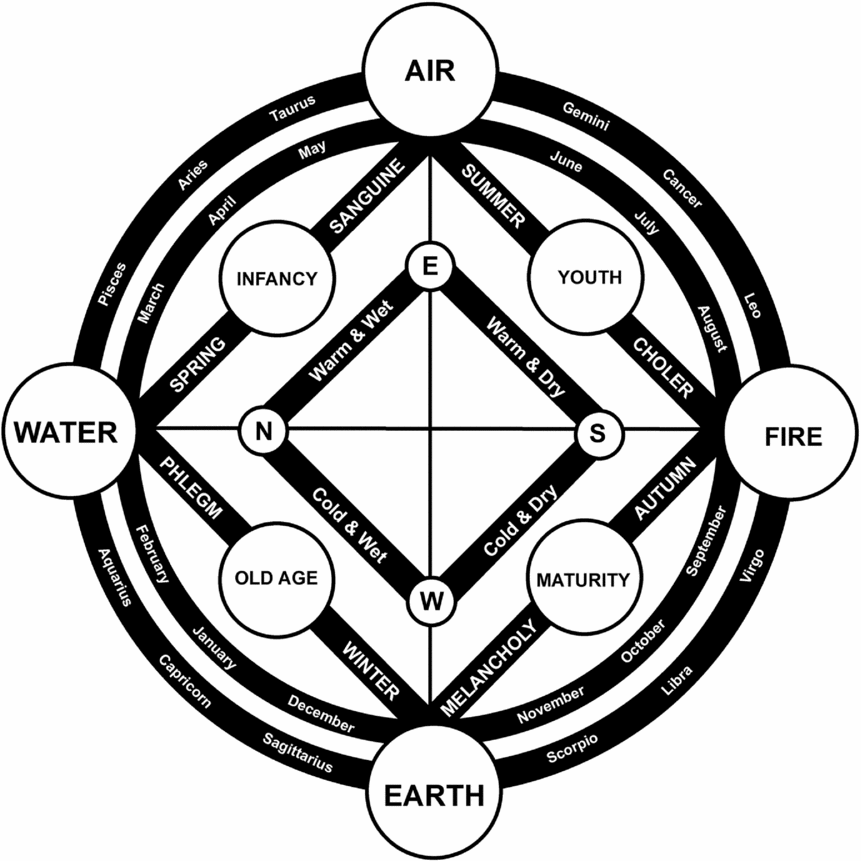
The earliest western European text to describe the workings of the four elements has been ascribed to the pre-Socratic philosopher Empedocles, whose poem Physis, written in the 5th century B.C., laid the foundation for later humoral theory (Arikha Reference Arikha2007; Jones Reference Jones2013, 12). Developed more fully in Plato's (429?–347 B.C.) Timaeus, the cosmos was conceptualized in terms of the four elements which, in combination, composed all physical matter (Inwood Reference Inwood2001; Taylor Reference Taylor2012). The perpetual movement of these elements was believed to animate the cosmos (Lang Reference Lang2007; Bostock Reference Bostock2008). Each element was associated with certain qualities (figure 2): fire was considered hot/dry, air hot/moist, water cold/moist, and earth cold/dry. These qualities, first articulated by Anaximander (c.611–547 B.C.) were held responsible for state changes in objects and were later more formally connected to the elements by Aristotle (384–322 B.C.).
Interconnections of the elements, humours, temperaments, seasons, cardinal points and life stage. After Byrhtferth's Enchiridion (early 11th century).

The human body, composed of the same elements and subject to the working of their qualities, was viewed as a microcosmic reflection of the macrocosm. Elemental theory thus spawned the theory of the four humours which inseparably linked the elements to the four corporeal fluids – blood (air), yellow bile (fire), black bile (earth), and phlegm (water) (Jones Withington and Potter Reference Jones, Withington and Potter1923–88). The humours were not fixed, but rather found in varying quantities in different individuals according to personal character, sex (men were comparatively hot/dry, women cold/wet) and age. According to humoral theory, the nature of the human body changed over an individual's life course. Infants were born warm/moist as a consequence of exposure to fluids in their mother's womb. With the end of infancy (around age seven) individuals became progressively drier, then, in older age, colder and wetter in a sequence mimicking the turn of the seasons. Infancy was thus equated with spring (warm/wet), adolescence and youth with summer (warm/dry), and maturity with autumn (cold/dry). In old age (winter) individuals became colder still, promoting the wetter, more prurient state that completed the elemental cycle (figure 2).
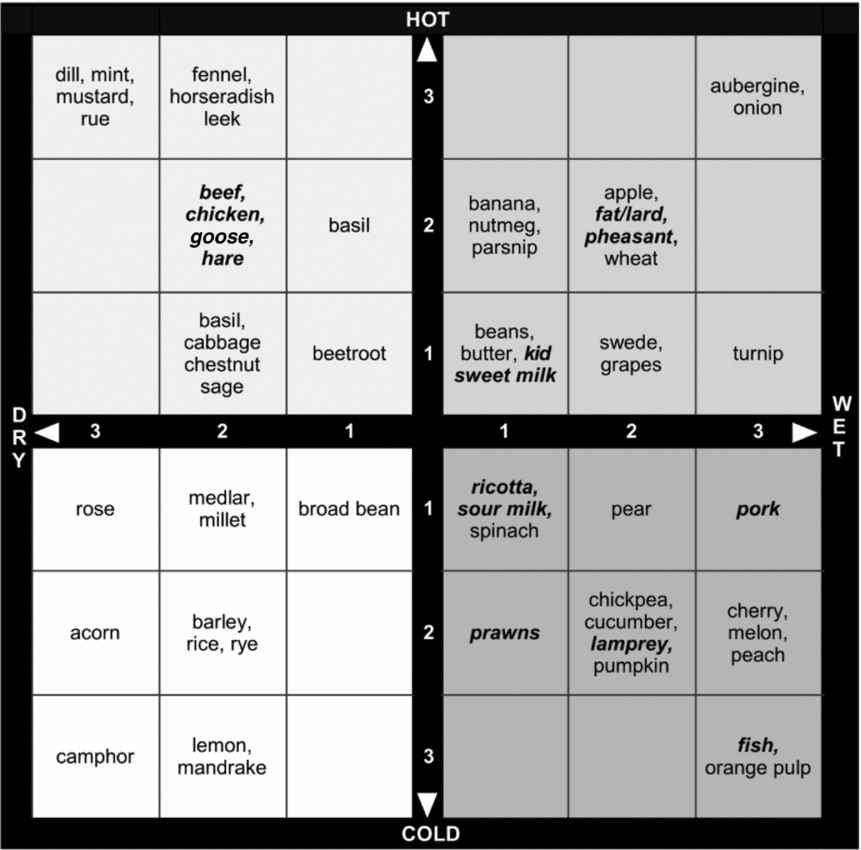
At shorter timescales, humours would change through the year, bodies being naturally hotter and drier during the summer months, colder and wetter in winter. On a daily basis the humours were affected by the qualities of foods consumed since different plants and animals possessed their own humoral make-up or ‘temperament’ (figure 3). For this reason, Hippocratic and later Galenic dietary regimes, linking food to age, sex, season and many other things, became deeply influential, shaping who ate what and how it was prepared (Scully Reference Scully1995; Mazzini Reference Mazzini, Flandrin and Montanari1999; Grant Reference Grant2000; Hernandez Reference Hernandez, Collard, Morris and Perego2010).
Humoral temperaments of selected foods after various late medieval editions of the Tacuinum sanitatis. Numbers refer to elemental degree (1 = moderate, 2 = strong, 3 = excessive). Thus fennel was ‘warm in the third degree, dry in the second’.

Importantly, temperaments were perceived to transfer through all five senses. Consequently plants, animals, objects and entire landscapes were attributed with considerable ‘agency’: all had the capacity to alter human character and well-being. Such ideas were to remain influential into the early modern period, and were used to explain national character traits as well as local and regional differences. Thus in John Aubrey's Natural History of Wiltshire, completed before 1691, we learn that the inhabitants of north Wiltshire
are phlegmatique, skins pale and livid, slow and dull, heavy of spirit . . . they feed chiefly on milke meates, which cooles their braines too much, and hurts their inventions. These circumstances make them melancholy, contemplative, and malicious . . . It is a woodsere country, abounding much with sowre and austere plants, as sorrel &c. which makes their humours sowre, and fixes their spirits (Britton Reference Britton1847, 11).
Beyond humoral associations, the elements and their qualities came to provide a universal schema for codifying the natural world, explaining the causes of all phenomena – from illness to lightning – and giving both practical and symbolic meaning to human experience (Jones Reference Jones2013). In this way, elemental philosophy conceptualized no boundaries between nature and culture, science and religion, sacred and profane, landscape and well-being, food and medicine (Miller and Sykes Reference Miller and Sykes2016).
The elements and humors in archaeology
Given their historically attested application in many societies, the near total absence of any discussion of elemental and humoral theories in current archaeological dialogue is astonishing. The discipline's disregard of these ideas appears to be a matter of timing. The birth of archaeology and the demise of elemental philosophy both belong to the ‘Age of Reason’ (Thomas Reference Thomas1983; Trigger Reference Trigger1989, 73–109). Perhaps because of this coincidence, and possibly also because of the historical legacies of British empiricism which privileged substantiated facts over unsubstantiated popular lore (Johnson Reference Johnson2011), archaeology has neither explored nor rejected the paradigm of elemental philosophy; it has simply looked forward, not back, arguably viewing any return to pre-Enlightenment ideas as regressive. Archaeological phenomenology, for instance, which explicitly engages with lived experience, environmental immersion, and being – concerns which, as outlined, lie at the very heart of elemental and humoral theory – has been particularly slow to ask about the philosophies that actually informed past experience. Instead, its foundations build on more recent ontologies (Olsen Reference Olsen2007). Yet some of the most influential of these – Heidegger's ‘fourfold’ of earth, sky, divinities and mortals being perhaps the most obvious example – are themselves ultimately assembled from, even if they fundamentally alter the parameters of, elemental and humoral theory (Heidegger Reference Heidegger2001, 141–60).
Any elemental (re)turn, of course, must acknowledge the impossibility of achieving anything approaching full empathy with our subjects. But it does respond to Collingwood's notion that all history ‘is the history of thought . . . The history of thought, and therefore all history, is the re-enactment of past thought in the historian's own mind . . . It is not a passive surrender to the spell of another's mind; it is a labour of active and therefore critical thinking’ (Collingwood Reference Collingwood2006, 215–16). We would argue that archaeologists should look wherever possible to adopt ancient rather than modern philosophies as their analytical framework where these exist, because to discard the doctrines of the societies we study in favour of theoretical concepts derived from modern ideology is to construct barriers to comprehension that take us further away from our subjects rather than bringing us into closer alignment.
Both in this respect and in this endeavour, archaeology is quickly being left behind. Recently, other parts of the academy have witnessed what might be termed an ‘elemental turn’. The elements have become part of discourse in the environmental sciences (Macauley Reference Macauley2010), philosophy (de Courcelles Reference De Courcelles2011) and architectural studies (Stasinopoulos Reference Stasinopoulos, Weber and Yannas2013). Hence our question: is it time for an elemental and humoral (re)turn in archaeology? And if so, what benefits might accrue from such a turn? Following earlier calls to arms (Jones Reference Jones, Klápšte and Sommer2011; Sykes Reference Sykes2014a, 17–20; Miller, Sykes and Ward in press; Miller and Sykes Reference Miller and Sykes2016), we wish to argue that richer interpretations of the archaeological record can be achieved if they are grounded in the cosmologies of the people under study, as opposed to those conducting the research. We limit discussion here to elemental and humoral theory as it developed in the Hellenistic world in the first millennium B.C., and its subsequent adoption by the three great Abrahamic religions of Judaism, Christianity and Islam. However, since parallel elemental traditions developed, and continue to exist, in other parts of the world (e.g. Manderson Reference Manderson1987), this approach, if realigned in consideration of local context, might find wider global application. Indeed, some South American archaeologists are already there (Lima Reference Lima1995–96).
Temporal extension might also be possible. The widespread appeal of elemental and humoral theories, as they can be traced in historical texts and in contemporary anthropological studies both within complex societies and among indigenous peoples worldwide, founded on simple recurring oppositions in nature, makes it likely, we believe, that comparable, if not directly analogous, schemes may have operated within some prehistoric societies too. Indeed this has not gone unnoticed by prehistorians who have been prepared to toy with the idea of an ‘elemental archaeology’ (e.g. Richards Reference Richards1996; Parker Pearson Reference Parker Pearson, Boivin and Owoc2004; see papers in the World archaeology 40(2) (2008) special edition Elemental archaeologies) even if this has subsequently morphed into a more narrow concern for materiality; and many of the fundamental principles of elemental theory – the constant recycling of the elements, and the transfer of their essential qualities across the nature/culture divide – are implicit in Thomas's (Reference Thomas and Robb1999) model of an ‘economy of substances’ in the early Neolithic.
Of course, as a means of interpreting the archaeological record, the uncritical transfer of ontologies such as elemental and humoral theory across time and space, into contexts where their validity cannot be directly proven, would be unwise and potentially misleading. Demonstrating where and when elemental and humoral theory might find application beyond their attested geographical and temporal ranges ultimately rests with those studying those societies and lies beyond the scope of this paper. In what follows we restrict ourselves to a series of examples taken from contexts in which elemental and humoral theory was known to operate, and grouped into four interconnected themes, which highlight how engagement with the principles of these theories might enrich archaeological discourse and interpretations.
Elements of landscape
People shape landscapes; landscapes shape people. This concept underpins all landscape archaeology. But while this feedback loop acknowledges the intimate and complex relationships that societies forge with their environments, it remains solidly Cartesian in outlook. Implicit is the gap between people and their surroundings. Viewed through an elemental lens, however, this separation narrows significantly, even if it does not disappear entirely.
Although no longer considered in terms that Aubrey would recognise, the idea that the landscape leaves its impression on the human body is now a fundamental principle of archaeological science. For instance, modern strontium and oxygen isotope analyses both examine how chemical elements transfer through the food chain into skeletal tissue – the former relating to geological terrain (e.g. Bentley Reference Bentley2006), the latter to variations in drinking water (e.g. Evans, Chenery and Fitzpatrick Reference Evans, Chenery and Fitzpatrick2006). Furthermore, the ancient belief that water quality changed with the seasons also appears to mirror modern scientific studies that show that oxygen isotope values vary across the year or with climatic change (Angert, Lee and Yakir Reference Angert, Lee and Yakir2008; Fricke, O'Neil and Lynnerup Reference Fricke, O'Neil and Lynnerup1995). None of this is out of place with the Hippocratic understanding, exemplified by On airs, waters and places (Jones Reference Jones and Jones1923, 65–138), that landscape and environment influenced an individual's humoral make-up.
Prior to the Enlightenment, the perceived significance of the environmental contribution to human character meant that elemental and humoral theory dictated all landscape interactions and interventions. The Roman architect Vitruvius used it to identify appropriate sites for settlement, to decide the orientation of streets and buildings, and even to select construction materials (Rowland and Noble Howe Reference Rowland and Noble Howe1999). De architectura, written in the 1st century B.C., remained influential through to the 17th century (e.g. Reid Reference Reid1683). Yet the elemental aspect of Virtuvius’ work has been generally ignored in landscape and architectural analyses (e.g. Hamerow Reference Hamerow2002; James Reference James2003), even those that have attempted to theorize social space and its materiality (Rogers Reference Rogers2014).
In similar vein, for medieval (and Roman) agriculturalists, the working of the elements was vital for understanding natural processes such as germination and crop growth (Seymour and Trevisa Reference Seymour and Trevisa1975). Since every soil had its elemental characteristics, this dictated how it was prepared and when: ground treatments sought to create seedbeds that mirrored the healthy warm/moist state of the human body, and to exploit the vertical movement of the elements through the soil according to season and lunar phase. Historians of agriculture would be wise to think in elemental terms, rather than focusing attention on soil chemistry and NPK inputs and outputs, because they have the potential to explain recurring patterns of farming regimes such as, in England, the long-term associations of sheep (whose dung was warm/dry) with wheat-growing on cold/wet claylands, and of cattle (whose dung was warm/wet) with barley-growing in the cold/dry sandlands (Thirsk Reference Thirsk1984; Sykes Reference Sykes2007; Banham Reference Banham, Higham and Ryan2010; Jones Reference Jones and Jones2012).
Texts such as Walter of Henley's 13th-century agricultural treatise (Oschinsky Reference Oschinsky1971), written for bailiffs and reeves – estate managers often appointed from the peasant ranks – prove that elemental theory was understood at every social level. And archaeological evidence for the elemental literacy of peasant farmers is provided by the spatial distributions of pottery sherds representing manure scatters. Studies have shown that concentrations of hot/dry ceramics are often found on cold/wet soils, reflecting early farmers’ attempts to bring their soils back into elemental balance (Jones Reference Jones, Klápšte and Sommer2011; Reference Jones and Jones2012). It is perhaps through these elemental farming practices that we see most clearly how a theory that originally belonged to the educated few became firmly rooted and widely influential across the whole of vernacular and secular culture.
Often condemned by later thinkers as being of the age of unreason, elemental and humoral theory provided the pre-Enlightenment world with a coherent set of landscape parameters within which, and according to its particular precepts, very rational social, economic and spatial behaviours can be seen to have developed.
Elements of material culture
The deliberate incorporation of pottery into farming soils reveals not only that material culture was elementally infused, but also that objects retained these properties beyond their original lifespan. Of course, the current paradigm of ‘materiality’ (e.g. Knappett Reference Knappett and Smith2014) gives significance to an artefact's materials, manufacture and meaning. But elemental readings offer additional ways of thinking about objects. Thus, at its most basic, to make a pot one takes clay (earth), adds water, and dries it (in air) before firing. Not only are all four elements implicated in ceramic production, but they are also introduced in their natural order. Unrevised elemental readings – while resonating with Heidegger's understanding of a thing, using the example of a jug made of earth but ultimately defined by the void it encapsulates (Heidegger Reference Heidegger2001, 161–84), ideas that have been so readily taken up in subsequent archaeological interpretation – are arguably far more authentic for the interpretation of historic material culture produced by those societies guided by their principles.
In this context it may be significant that just as archaeologists have recognized that cosmological symbolism played an important role in the manufacture and use of certain objects in the past (for discussion of metalwork see Goldhahn and Østigård Reference Goldhahn, Østigård, Childis, Lund and Prescott2008), many non-Western societies continue to recognize this aspect of their material culture into the present day. The globular form of earthenware vessels, for example, has encouraged their interpretation across diverse cultures as a representation in microcosm of the macrocosm; so too the elemental composition and manufacture of these vessels – God as potter is a common trope in many religions. This opens up interpretive possibilities for objects such as Anglo-Saxon cremation urns. Whilst some scholars (e.g. Williams Reference Williams2004; Reference Williams, Carver, Sanmark and Semple2010) have acknowledged the importance of the cadaver's transformation by fire in the cremation rite, more profound elemental ideas have been overlooked. Yet these are omnipresent within most cremating cultures. For Hindus and Buddhists, cremation offers the most efficient method of quickly reducing the body to its individual elemental components. In Cambodia, fire and air are thought to transform the body to water (vapour) and earth (ash) (Habashi Reference Habashi2004); while all the elements are implicated in modern neo-pagan ceremonies (Lewis and Pizza Reference Lewis and Pizza2009). Additionally, each stage of the cremation rite can be seen to have an elemental dimension: the body (representing earth) is washed in water and displayed on the pyre (air), before being set alight. In the absence of direct evidence, might it be possible to use an elemental framework to conceptualize why a ‘cosmic’ urn became the depositional vessel of choice for pagan Anglo-Saxons and to ascribe it a greater role in this ceremonial performance than has previously been permitted? Such ideas are no more fanciful, it might be suggested, than interpreting the symbolism of the materials used at Woodhenge and Stonehenge on the basis of analogies drawn from Madagascar (Parker Pearson and Ramilisonina Reference Parker Pearson1998).
Evidence for more quotidian subscription to elemental philosophy in material-culture studies can be gauged through lipid and protein analysis of archaeological ceramics, which seek to establish, quite literally, transfers between animals, plants and material culture (e.g. Evershed et al. Reference Evershed, Dudd, Copley and Mukerjee2002). As research into residue analysis progresses, the problem of identifying specific animal products is becoming apparent (e.g. Craig et al. Reference Craig, Allen, Thompson, Stevens, Steele and Heron2012): for instance it is difficult to separate residues from the flesh of fish and pigs or chickens and geese, or the adipose fats from cattle and sheep, or to distinguish the dairy fats of ruminant species. In humoral terms, however, these amorphous groups are less problematic. Each corresponds to a discrete temperament. As figure 3 shows, fish and pork were both considered ‘moist’, and dairy was perceived as comparatively wet regardless of the animal from which it derived, whereas beef and mutton were seen as relatively dry, although younger animals (veal, lamb and kid) were slightly more moist (Spenser Reference Spenser1984; Scully Reference Scully1995). Engagement with elemental philosophy therefore opens up new avenues to investigate ancient cuisine through residue analysis, as well as a range of other issues relating to the choice of materials used in the making of objects and their intended function.
Elements of consumption
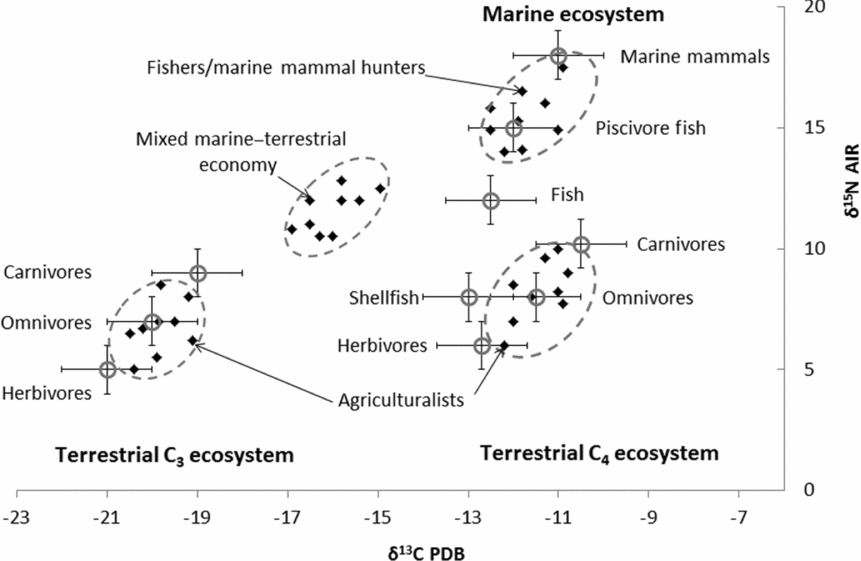
Humoral theory proposed that human behaviour and well-being were fundamentally influenced by diet (Arano Reference Arano1976). It mattered what people ate, and particular ingredients, especially flesh foods, were deliberately consumed or avoided by different gender, age, social and ethnic groups. ‘You are what you eat’ is also an underlying principle of modern stable isotope analysis, which seeks to understand how the elemental composition of food and drink derived from different ecosystems transfers through the food chain to become reflected in the consumer's body tissues (figure 4; Ambrose and Norr Reference Ambrose and Norr1993; Tieszen and Fagre Reference Tieszen and Fagre1993).
You are what and where you eat – stable isotope analysis as modern elemental and humoral theory.

Despite the similarities of humoral and isotope theory, the connection has not been widely recognized, especially by archaeological scientists who are best placed to generate and interpret relevant data. Take Nehlich et al.’s (Reference Nehlich, Fuller, Jay, Mora, Nicholson, Smith and Richards2011) multi-isotope study of human remains from Roman Oxfordshire. They examined carbon (δ13C) and nitrogen (δ15N) isotope ratios, in conjunction with sulphur (δ34S), which allowed the contribution of marine, freshwater and terrestrial food sources to be estimated. On the basis of their results, it was proposed that children aged between two and four years were fed significant quantities of freshwater fish, perhaps as a weaning food, before moving to a more terrestrial-based diet by the age of eight. Nehlich et al. (Reference Nehlich, Fuller, Jay, Mora, Nicholson, Smith and Richards2011, 4973) state that it is ‘difficult to speculate’ about the reason for this infant diet and subsequent shift; however, this must be a compelling case for the application of humoral theory. Since infants were thought to be moist (figure 2) and fish were deemed to be of a similar humour (figure 3), this rendered them an ideal foodstuff for the young. The timing of the identified shift towards terrestrial proteins coincides with the traditional age of transition into youth, when individuals entered their warm/dry phase, thus requiring foodstuffs of a similar temperament: terrestrial plants and meats (with the exception of pork) tended towards the dry end of the scale (figure 3; Spenser Reference Spenser1984, 140–41; Scully Reference Scully1995, 62). An elemental reassessment of this study might conclude, then, that humoral principles dictated the consumption practices of these Romano-British populations.
Elements of the senses
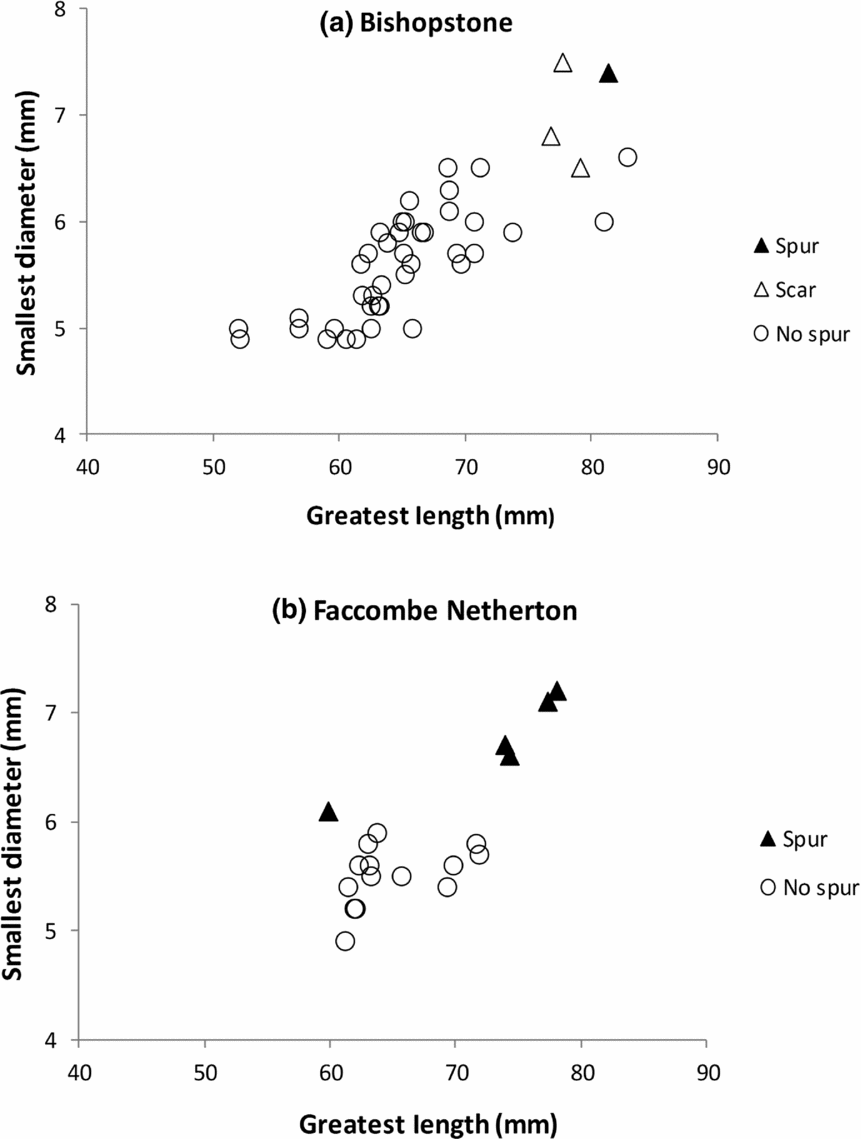
Oral consumption was just one way in which humours and elements could be exchanged and absorbed. Other senses played a part in elemental transfer. Elemental transfer by touch may explain the material choice of a medical instrument case from the Roman Castellum of Valkenburg in the Netherlands. Made from a fallow deer metapodial, the case material may well have been purposely chosen for its capacity to imbue the tools contained with the healing power associated with fallow deer in antiquity (Miller, Sykes and Ward in press; Miller and Sykes Reference Miller and Sykes2016). The idea that ancient manuscripts, being made from animal skins, could also transfer their properties to those who touched them seems increasingly plausible based on recent proteomic studies of medieval documents: work by Matthew Collins has highlighted that some ecclesiastical documents were made of a combination of roe deer and sheep skins, both animals deemed chaste and pious in character, thus any transfer of their temperament was suitable for good Christians (Sykes Reference Sykes2014b). The sound of animals could be equally important for medieval ecclesiasts: Poole and Lacey (Reference Poole and Lacey2014) suggest that the large numbers of chickens found at Anglo-Saxon monastic sites may reflect a deliberately engineered ‘soundscape’, appropriate for ecclesiastic aural consumption. But this is perhaps not taking the issue far enough, since human–animal encounters are multi-sensory, combining sound with sight, touch and smell (Sykes Reference Sykes2014a). The idea that living animals could transfer their temperament through the senses is interesting given that zooarchaeological assemblages from Anglo-Saxon monastic sites are typified not only by the sheer quantity of chicken remains but also by their demographic composition: the late Saxon site of Bishopstone, Sussex, for example, has just c.1 per cent mature cockerels in its assemblage (figure 5a). The dearth of noisy, aggressive and sexually violent roosters makes sense in humoral terms, since cockerels embody the very character traits that monks sought to avoid. These animal traits are more fitting for the warrior classes, which may explain why mature cockerels abound on secular elite settlements: for example, at the manorial site of Faccombe Netherton, Hampshire, mature cockerels account for c.26 per cent of the chicken assemblage (figure 5b).
Demographic composition of the chicken assemblages from (a) Bishopstone and (b) Faccombe Netherton based on the measurements and presence/absence of spurs on the tarsometatarsus. Spur = mature cockerel, scar = juvenile cockerel, no spur = female.

Considered in this way, elemental philosophy provides landscape archaeologists, zooarchaeologists, archaeobotanists and artefact researchers with the theoretical basis that many have sought in recent years (Overton and Hamilakis Reference Overton and Hamilakis2013; Van der Veen Reference Van der Veen2014). It rolls into one issues of ‘agency’, ‘materiality’ and ‘entanglement’, and emphasizes the role of the soil, of living plants and of animals (as opposed to dead products) in the construction and perception of human worlds.
Conclusion
Four lightly sketched examples cannot do justice to the array of possibilities that open up when the archaeological record is examined through an elemental or humoral lens. They certainly do not add up to a perfectly developed paradigm and may even mislead some into thinking that our call for their introduction into archaeological interpretation is a call for a return to a form of structuralist archaeology rejected by archaeologists in the first wave of postprocessualism (Hodder Reference Hodder1982). It should not be seen as such. All we hope is that our case studies have hinted at what might be developed if more widely adopted by others. Elemental philosophy and humoral theories, we have tried to argue, represent an intellectual framework which archaeologists have been striving to invent since the discipline's creation – one that considers entanglement, agency, materiality, object biographies, individual identities and life course; one that sees no separation between nature and culture or religion and daily practice; and one through which arts- and science-based archaeologists can converse. For instance, the commonalities between humoral theory and isotope analyses are striking, both being based on the fundamental principle that ‘you are what (and where) you eat’, and both recognizing that the elements of earth, water, air and fire (or strontium, oxygen, nitrogen and carbon) are in a state of continual movement as they transfer from environment to organism and back again.
Perhaps the greatest irony is that this most appropriate set of theories for archaeological discourse has existed for at least 2,500 years, developed by the very people we are often seeking to understand but whose world view we have, paradoxically, chosen to ignore. At a time when traditional and indigenous knowledge is once again being valued in other fields for the wisdom it contains (Nieves Zedeño Reference Nieves Zedeño2009), perhaps it is time for archaeology to look to its past and make an elemental (re)turn. Such a move may even have consequences beyond archaeological interpretation.
Reflecting on a number of modern environmental disasters, Dominque de Courcelles (Reference De Courcelles2011) highlights the dangers inherent in the actions of people who no longer conceive of the world elementally. Viewed against the broad sweep of global history the modern West stands apart in its refusal to imagine a world constructed in philosophical and folkloric traditions, turning instead to science for answers and explanations. Yet as de Courcelles cautions, to reject a ‘world architecture’ founded on the elements and to abuse the first principles of the philosophy – to balance and respect the elements – might not turn out well for humanity. Funding bodies are increasingly coming to recognize the value of the past for developing strategies for the future. Archaeology is well placed to lead the field. We would argue that if we are to draw upon the past to find solutions to present-day world problems, we need to consider not only the data but also the dialogue of the people. It is not simply that the elements are good to think with; they have been essential to thinking for millennia. Reconnecting with these ideas may prove useful for modern society too as it begins to chart its own future course.
Acknowledgements
This work was supported in part by two AHRC-funded projects: Cultural and Scientific Perceptions of Human–Chicken Interactions (Ref. AH/L006979/1) and Dama International (AH/1026456/1). We would like to thank Professors Mark Pearce, Matthew Johnson and Sarah Tarlow for their comments on earlier versions of this article, together with the journal's anonymous referees.