Prenatal substance exposure is a significant public health problem that affects millions of children and imposes enormous social, emotional, medical and financial burdens on society. Children exposed to cocaine in utero may be more vulnerable to aggression and externalizing behavior than other children (Bada et al., Reference Bada, Das, Bauer, Shankaran, Lester and LaGasse2007; Bendersky, Bennett, & Lewis, Reference Bendersky, Bennett and Lewis2006; Jones, Field, Davalos, & Hart, Reference Jones, Field, Davalos and Hart2004; Lester et al., Reference Lester, Bagner, Liu, LaGasse, Seifer and Bauer2009; Linares et al., Reference Linares, Singer, Kirchner, Short, Min and Hussey2006; Richardson, Goldschmidt, & Willford, Reference Richardson, Goldschmidt and Willford2009; Stanger et al., Reference Stanger, Higgins, Bickel, Elk, Grabowski and Schmitz1999; Yolton & Bolig, Reference Yolton and Bolig1994), although findings have been inconsistent (Accornero, Anthony, Morrow, Xue, & Bandstra, Reference Accornero, Anthony, Morrow, Xue and Bandstra2006; Accornero, Morrow, Bandstra, Johnson, & Anthony, Reference Accornero, Morrow, Bandstra, Johnson and Anthony2002; Bennett, Bendersky, & Lewis, Reference Bennett, Bendersky and Lewis2002; Kilbride, Castor, & Fuger, Reference Kilbride, Castor and Fuger2006; Richardson, Conroy, & Day, Reference Richardson, Conroy and Day1996) or gender specific (Bailey et al., Reference Bailey, Sood, Sokol, Ager, Janisse and Hannigan2005; Delaney-Black et al., Reference Delaney-Black, Covington, Templin, Ager, Nordstrom Klee and Martier2000; Lewis et al., Reference Lewis, Singer, Short, Minnes, Arendt and Weshampel2004; Sood et al., Reference Sood, Bailey, Covington, Sokol, Ager and Janisse2005). Children who are constitutionally more vulnerable (e.g., difficult temperament) and exposed to a stressful environment may be more likely to display externalizing behaviors (Susman, Reference Susman2006; van Goozen, Fairchild, Snoek, & Harold, Reference van Goozen, Fairchild, Snoek and Harold2007). Although dysregulated behavior and arousal are evident in cocaine-exposed neonates and 1-month-olds (e.g., Lester et al., Reference Lester, Tronick, LaGasse, Seifer, Bauer and Shankaran2002), what is known about cocaine-exposure effects on temperament at later periods of infancy is sparse and inconsistent. Understanding these temperamental vulnerabilities may be particularly relevant given that cocaine-exposed infants are also more likely to experience parental and environmental stressors (Arendt et al., Reference Arendt, Short, Singer, Minnes, Hewitt and Flynn2004; Bendersky, Gambini, Lastella, Bennett, & Lewis, Reference Bendersky, Gambini, Lastella, Bennett and Lewis2003; Bennett et al., Reference Bennett, Bendersky and Lewis2002; Chaffin, Kelleher, & Hollenberg, Reference Chaffin, Kelleher and Hollenberg1996; Frank, Augustyn, Knight, Pell, & Zuckerman, Reference Frank, Augustyn, Knight, Pell and Zuckerman2001; Lewis et al., Reference Lewis, Singer, Short, Minnes, Arendt and Weshampel2004; National Center on Addiction and Substance Abuse, 1999; Prevent Child Abuse America, 1996), putting them at increased risk for later maladaptive social and emotional outcomes.
In early infancy, cocaine-exposed infants show more dysregulated behavior than their peers (Chiriboga, Kuhn, & Wasserman, Reference Chiriboga, Kuhn and Wasserman2007; Eiden, Lewis, Croff, & Young, Reference Eiden, Lewis, Croff and Young2002; Karmel & Gardner, Reference Karmel and Gardner1996; Lester et al., Reference Lester, Tronick, LaGasse, Seifer, Bauer and Shankaran2002; for a review, see Bandstra, Morrow, Mansoor, & Accornero, Reference Bandstra, Morrow, Mansoor and Accornero2010; but see Myers et al., Reference Myers, Dawson, Britt, Lodder, Meloy and Saunders2003). Behavioral dysregulation is reflected in lower arousal, poorer quality of movement and self-regulation, higher excitability, increased tone, and poorer reflexes (Lester et al., Reference Lester, Tronick, LaGasse, Seifer, Bauer and Shankaran2002). These behavioral differences may be accompanied by poorer regulation of physiological systems (Schuetze, Molnar, & Eiden, Reference Schuetze, Molnar and Eiden2012), including hypothalamic–pituitary–adrenal axis activity (Eiden, Veira, & Granger, Reference Eiden, Veira and Granger2009; Magnano, Gardner, & Karmel, Reference Magnano, Gardner and Karmel1992) and cardiac responsivity (Schuetze, Eiden, & Coles, Reference Schuetze, Eiden and Coles2007; Schuetze, Eiden, & Danielewicz, Reference Schuetze, Eiden and Danielewicz2009; Schuetze, Eiden, & Edwards, Reference Schuetze, Eiden and Edwards2009). The pattern of dysregulated physiology and behavior associated with prenatal cocaine exposure persists beyond the infant period into childhood (e.g., Richardson et al., Reference Richardson, Goldschmidt and Willford2009).
The direct effects of prenatal cocaine exposure on reactivity and regulation may be attributable to mechanisms by which cocaine disrupts programs for brain development that may be associated with lasting alterations in brain structure and neuronal function and have unique behavioral consequences (for reviews, see Mayes, Reference Mayes1999, Reference Mayes2002). Cocaine binds to presynaptic monoamine transporters and acts primarily by inhibiting reuptake at dopaminergic terminals. It also acts at noradrenergic and serotonergic sites throughout the basal forebrain and cerebral cortex (Caine, Reference Caine1998; White, Reference White1998). The monoamine system affects various aspects of brain development (Lauder, Reference Lauder1988) and is involved in autonomic function, state regulation, and responses to sensory stimuli (Rasmussen, Strecker, & Jacobs, Reference Rasmussen, Strecker and Jacobs1986). Cocaine is likely to affect brain development differently depending on the timing of the prenatal exposure (Mayes, Reference Mayes1999, Reference Mayes2002).
Prenatal Drug Effects on Temperament Are Context Dependent
Studies of prenatal cocaine exposure on infant behavioral reactivity and regulation (definition of temperament; Rothbart & Derryberry, Reference Rothbart, Lamb and Brown1981) beyond 1 month of age are limited in scope and inconsistent. Part of this inconsistency may be due to differences in how infant temperament was assessed. For example, the contexts of assessments differ by social factors (e.g., with mom, experimenter, alone) and presence of emotional cues (e.g., unfamiliar objects, sensory stimulating objects). In challenging but nonemotional contexts (e.g., learning paradigms; Alessandri, Sullivan, Imaizumi, & Lewis, Reference Alessandri, Sullivan, Imaizumi and Lewis1993), cocaine-exposed infants appear less behaviorally reactive (flatter) than nonexposed infants. However, the opposite pattern emerges when infants are placed in negative emotion eliciting contexts. Cocaine-exposed infants displayed more negativity in prototypically negative tasks involving blocked goals (e.g., arm restraint, toy retraction, reengagement of face-to-face; Bendersky & Lewis, Reference Bendersky and Lewis1998; Eiden et al., Reference Eiden, Lewis, Croff and Young2002; Eiden, McAuliffe et al., Reference Eiden, McAuliffe, Kachadourian, Coles, Colder and Schuetze2009) or novel stimuli (e.g., during the initial phases of habituation paradigm; Mayes, Bornstein, Chawarska, Haynes, & Granger, Reference Mayes, Bornstein, Chawarska, Haynes and Granger1996). Conversely, cocaine-exposed infants appear as positive as other infants when placed in contexts devised to elicit positive affect (e.g., puppets, cognitive assimilation; Eiden et al., Reference Eiden, Lewis, Croff and Young2002).
We may deduce from the limited contexts studied thus far that cocaine-exposed infants are more behaviorally reactive than other infants in negative emotional contexts but may be no different from other infants in positive emotional contexts. However, an understanding of how prenatal cocaine exposure influences infant temperament beyond the first month would benefit from more comprehensive assessment of behavior across different emotional contexts.
Present Study Design
In this study, we sought to identify patterns of behavioral reactivity/regulation (temperament) associated with cocaine exposure that could increase children's vulnerability to later psychopathology and academic and social maladjustment. This study included a comprehensive measure of emotional contexts in predicting differences in infant temperament associated with prenatal cocaine exposure. We investigated 4-month-olds' temperament in contexts similar to those associated with childrearing using the Behavior Assessment of Infant Temperament (BAIT; Garcia Coll et al., Reference Garcia Coll, Emmons, Vohr, Ward, Brann and Shaul1988; Garcia Coll, Halpern, Vohr, Seifer, & Oh, Reference Garcia Coll, Halpern, Vohr, Seifer and Oh1992). BAIT items can be characterized by whether they are expected to elicit positive versus negative affect. Very few studies have looked at prenatal cocaine exposure effects on infant affect during contexts designed to elicit positive or negative affect (Eiden et al., Reference Eiden, Lewis, Croff and Young2002; Eiden, Veira, et al., Reference Eiden, Veira and Granger2009). Based on prior research, we expected cocaine-exposed infants would show more negativity than nonexposed infants during the negative BAIT contexts that involve intrusive caregiving behaviors (irritability items) and discrepant or novel stimuli (threshold items; Bendersky & Lewis, Reference Bendersky and Lewis1998; Eiden et al., Reference Eiden, Lewis, Croff and Young2002; Eiden, McAuliffe, et al., Reference Eiden, McAuliffe, Kachadourian, Coles, Colder and Schuetze2009; Mayes et al., Reference Mayes, Bornstein, Chawarska, Haynes and Granger1996) and not differ from nonexposed infants in positivity during the positive BAIT context that involves presentation of dangling toys (activity items; Eiden et al., Reference Eiden, Lewis, Croff and Young2002).
Another important contextual distinction for the BAIT may be whether a particular item set is considered social or nonsocial. We considered the sociability and activity items as social contexts and the other domains (irritability, threshold) as nonsocial contexts. Studies have examined the socioemotional functioning of cocaine-exposed infants during maternal interaction (e.g. Bendersky & Lewis, Reference Bendersky and Lewis1998; Tronick et al., Reference Tronick, Messinger, Weinberg, Lester, LaGasse and Seifer2005), but less is known about how cocaine-exposed infants may respond during social interactions with novel adults. Therefore, we did not have any predications on how cocaine-exposed infants would differ from nonexposed infants during the social BAIT contexts.
Most studies on infant temperament examine emotion that is typically shown in a given emotional context. Although emotional expressions can be associated with prototypical incentives (i.e., fear with perceived threat, anger with blocked goals, sadness with lost goals, pleasure with safety, see Lazarus, Reference Lazarus1991), emotional expression is not a simple reaction to the immediate context. In a given context, it is unlikely that one will observe the expression of a particular emotion by all individuals or by the same individual consistently (Ekman, Reference Ekman, Scherer and Ekman1984; Frijda, Reference Frijda1986; Scherer, Reference Scherer, Hamilton, Bower and Frijda1988). Therefore, a more comprehensive assessment of cocaine exposure effects on temperament would assess emotional responses that are not typical for a given emotional context (context-inappropriate [CI] affect; Locke, Davidson, Kalin, & Goldsmith, Reference Locke, Davidson, Kalin and Goldsmith2009). In this study we included measures that may be construed as CI affect: summary scores for negativity during the positive tasks (e.g., activity items), as well as positivity during the negative tasks (e.g., irritability items). Given others have identified CI negative affect in cocaine-exposed infants (more distress during positive play and attention-getting tasks with mom; Gottwald & Thurman, Reference Gottwald and Thurman1994), we expected the cocaine-exposed infants would show more CI negative affect than nonexposed infants.
An additional part of the inconsistency across temperament studies of prenatal cocaine exposure may be due to degree of prenatal exposure, so we analyzed both presence and level of cocaine exposure predictors. Bendersky and Lewis (Reference Bendersky and Lewis1998) found heavily cocaine-exposed infants showed more negativity than nonexposed infants during reengagement of a face-to-face paradigm. Therefore, infants exposed prenatally to greater doses of cocaine may show more negativity during the BAIT than infants with some or no cocaine exposure.
Like Schuetze and colleagues (Reference Schuetze, Molnar and Eiden2012), we also included a person-centered approach in our analyses. In our study, profile analysis was used with other statistical methods to determine how patterns of temperament across positive and negative contexts are associated with prenatal cocaine exposure. To do this, we examined the predictive power of temperament profiles on cocaine exposure status. Similar to Schuetze et al. (Reference Schuetze, Molnar and Eiden2012), we expected infants with a more dysregulated temperamental profile would be more likely to be exposed to cocaine in utero than infants with moderate levels of negativity and positivity during the BAIT.
Infant temperament was also assessed using maternal report on the Infant Behavior Questionnaire (IBQ; Rothbart, Reference Rothbart1981). Parent ratings were expected to augment some of the behavioral differences shown in the BAIT. Based on past research (Edmondson & Smith Reference Edmondson and Smith1994; Eiden et al., Reference Eiden, Lewis, Croff and Young2002; Richardson, Goldschmidt, & Willford, Reference Richardson, Goldschmidt and Willford2008), we expected cocaine-exposed infants to be reported as less positive and more negative than other infants.
Method
Recruitment
The Maternal Lifestyle Study (MLS) on cocaine exposure involves a unique population given its multisite component, racial diversity, and extensive long-term follow-up. The overall purpose of the study was to investigate the developmental sequelae of prenatal cocaine exposure on physical and behavioral development. MLS was begun with the assumption, based on pilot data from the hospitals where recruitment took place, that cocaine exposure would often occur in the presence of opiate exposure. The rate of opiate exposure among cocaine-exposed infants was lower than expected when the study sample was actually recruited. The analysis strategy described later retains both cocaine and opiates as factors when evaluating substance exposure effects despite the smaller than anticipated cell sizes.
The study was carried out at the four MLS sites, which are part of the National Institute of Child Health and Human Development Neonatal Research Network (Brown University, University of Miami, Wayne State University, and the University of Tennessee at Memphis). George Washington University served as the Biostatistical Coordinating Center. The study was approved by the institutional review board at each site. Maternal exclusion criteria included the following: younger than 18 years, psychosis or history of psychiatric institutionalization, or language barriers that prevented informed consent. Infant exclusion criteria included the following: multiple gestation, birth weight less than 501 g, gestational age greater than 42 weeks, infant unlikely to survive in the judgment of the attending physician, or being born outside one of the four hospitals in which recruitment occurred.
Meconium samples were collected in the nursery and shipped to a central laboratory (ElSohly Laboratories, Inc., Oxford, MS) for analysis of metabolites of illicit drugs (Lester et al., Reference Lester, ElSohly, Wright, Smeriglio, Verter and Bauer2001). The assay consisted of an enzyme multiplied immunoassay technique screen for cocaine, opiates, tetrahydrocannabinol, amphetamines, and phencyclidine followed by confirmatory testing of positive screens using gas chromatography–mass spectroscopy. A history of maternal alcohol, marijuana, and nicotine use during the pregnancy was recorded during a hospital interview with the mother. These were considered background variables in both the exposed and unexposed groups (Lester et al., Reference Lester, ElSohly, Wright, Smeriglio, Verter and Bauer2001). Self-reported cocaine, opiate, and other illicit drug use history was also obtained during the maternal interview.
The study definition of exposure was either maternal admission of cocaine or opiate use during this pregnancy, based on the hospital interview, or positive gas chromatography–mass spectroscopy confirmation of cocaine or opiate metabolites. Unexposed was defined as denial of cocaine or opiate use during this pregnancy and a negative enzyme multiplied immunoassay technique screen for cocaine and opiate metabolites. A list of possible comparison infants from the unexposed group within each center that matched an exposed-group infant on race, sex, and gestational age was sent by the data center to each study site. Recruitment of all exposed infants was attempted but was not always possible. Thus, it was possible for either an exposed or comparison infant to be in the study without a match. This procedure resulted in two groups for the larger MLS study that were matched on race, sex, and gestational age (for details, see Bauer et al., Reference Bauer, Shankaran, Bada, Lester, Wright and Krause-Steinrauf2002; and Lester et al., Reference Lester, Tronick, LaGasse, Seifer, Bauer and Shankaran2002). The follow-up phase of the study began at the 1-month visit.
Subjects in the temperament study
A total of 1,388 mother–infant dyads (606 in the cocaine- or opiate-exposed group and 782 in the comparison group) attended the 1-month visit. Of the 1,119 infants who attended the 4-month visit, 980 participated in the BAIT and 958 had usable data for analysis. Of the 430 infants who did not have BAIT scores, 269 infants did not attend the 4-month visit and 139 infants attended the 4-month visit but the BAIT was not attempted because of infant state, equipment failure, or caregivers' needing to leave the visit early. The remaining 22 cases of missing BAIT data were attributable to coding issues (e.g., missing audio/video). Infants without BAIT scores (n = 430) were more likely to be exposed to cocaine (48.1%), opiates (10.9%), marijuana (27.7%), and less likely to be firstborn (17.7%) than infants with BAIT scores (n = 958; 41.6%, 7.3%, 21.4%, 23.2%, respectively; ps = .02, .03, .01, .02). Mothers of infants without BAIT scores were more likely to be of low socioeconomic status (M = 3.71, SD = 1.04) and be a Medicaid recipient (91%) than mothers of infants with BAIT scores (M = 3.57, SD = 1.06, 86.7%, respectively; ps = .03, .02).
In the final sample (n = 958), 366 infants had been exposed to cocaine, 37 had been exposed to opiates, 33 had been exposed to both drugs, and 522 were matched comparison infants. On the basis of previous studies from the MLS project (LaGasse et al., Reference LaGasse, Messinger, Lester, Seifer, Tronick and Bauer2003; Lester et al., Reference Lester, Tronick, LaGasse, Seifer, Bauer and Shankaran2002), we included these 958 infants in analyses of the effects of cocaine exposure and the analyses of the effects of opiate exposure. In this final sample, there were 404 infants seen at the Detroit site, 146 seen at the Providence site, 218 seen at the Memphis site, and 190 seen at the Miami site.
Of the 958 infants, 823 biological mothers were available to report on the level of cocaine use during the pregnancy on the Maternal Inventory of Substance Use (MISU; Shankaran et al., Reference Shankaran, Das, Bauer, Bada, Lester and Wright2004), administered at the 1-month visit. Mothers who denied cocaine use on the MISU but tested positive for cocaine use based on infant meconium were excluded from level analyses, but included in the presence analyses. In this subsample used to analyze effects of level of cocaine use on 4-month temperament, mothers with prenatal opiate use (n = 70) were also excluded. Opiate users were excluded because opiate use could cooccur with heavy, some, or no cocaine use and potentially confound the level of cocaine exposure effects. Infants not included in the level of cocaine use analyses had lower negativity to threshold items (M = 3.31, SD = 4.30; n = 110) than the infants included in level analyses (M = 4.76, SD = 6.48; n = 670).
Laboratory setting and procedures
Each mother brought her infant to the follow-up clinic when the infant was 4 months old (age corrected for prematurity for infants below 37 weeks gestation; Ballard et al., Reference Ballard, Khoury, Wedig, Wang, Eilers-Walsman and Lipp1991). Infants were videotaped in the BAIT (Garcia Coll et al., Reference Garcia Coll, Emmons, Vohr, Ward, Brann and Shaul1988, Reference Garcia Coll, Halpern, Vohr, Seifer and Oh1992). The infant's caregiver typically watched from the other side of a one-way mirror but did not interact with the infant.
Behavioral assessment of temperament
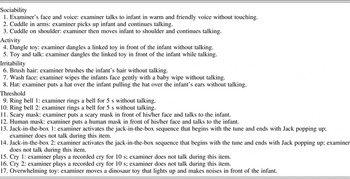
During the BAIT, infants were presented with 17 items in an order of increasing intensity and amount of sensory modalities being used (see Table 1). Others have adopted similar paradigms to measure infant and toddler reactivity to discrepant and novel stimulation (Fox, Henderson, Rubin, Calkins, & Schmidt, Reference Fox, Henderson, Rubin, Calkins and Schmidt2001; Kagan & Snidman, Reference Kagan and Snidman1991; Kagan, Snidman, & Arcus, Reference Kagan, Snidman and Arcus1998). Pilot studies have confirmed the order of the individual items and appropriateness of the stimuli for eliciting the expected behavioral domains (Garcia Coll et al., Reference Garcia Coll, Emmons, Vohr, Ward, Brann and Shaul1988). The various temperamental domains are well supported by theoretical and empirical support (Garcia Coll et al., Reference Garcia Coll, Halpern, Vohr, Seifer and Oh1992). The procedure took approximately 15 min during which time an experimenter presented each stimulus for 30 s to the infant who was either held by the experimenter or in an infant seat and videotaped for later coding. If the infant became upset during the procedure, the examiner stopped the presentation of the stimulus and allowed 15 s for the infant to quiet on its own. If the infant continued to cry, the examiner conducted a series of interventions, each 15 s in duration, to console the infant. The soothability intervention sequence in order ranged from self-quieting (Level 1); examiner talked softly to the infant (Level 2); examiner talked to infant, touching or holding arms, and/or giving pacifier (Level 3); examiner picked up the infant (Level 4); and caretaker consoled infant (Level 5). If the infant was inconsolable after the five levels, the procedure was interrupted. Up to two soothability interventions were allowed within each item. If the infant became inconsolable a third time, the procedure was interrupted. If the infant returned to a calm, attentive state in half an hour or less, the item that was interrupted was repeated. If the interruption was greater than 0.5 hr, the entire procedure was repeated from the beginning. If the infant became inconsolable a second time, the procedure was terminated. Infants who had the BAIT procedure terminated due to inconsolability (N = 248, 26%) were not more likely to be exposed to cocaine or opiates than the other infants (N = 710, 74%).
Order of presentation of temperament stimuli at 4 months

The BAIT procedure and subsequent scoring were developed and validated with preterm and growth-retarded infants (Garcia Coll et al., Reference Garcia Coll, Emmons, Vohr, Ward, Brann and Shaul1988, Reference Garcia Coll, Halpern, Vohr, Seifer and Oh1992; Halpern & Garcia Coll, Reference Halpern and Garcia Coll2000; Halpern, Garcia Coll, Meyer, & Bendersky, Reference Halpern, Garcia Coll, Meyer and Bendersky2001). BAIT outcomes relate to parent perception of temperament (Wolk, Zeanah, Garcia Coll, & Carr, Reference Wolk, Zeanah, Garcia Coll and Carr1992) and predict infant sleeping behavior (Halpern, Anders, Garcia Coll, & Hua, Reference Halpern, Anders, Garcia Coll and Hua1994).
Coding of behavioral data
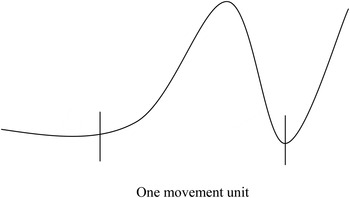
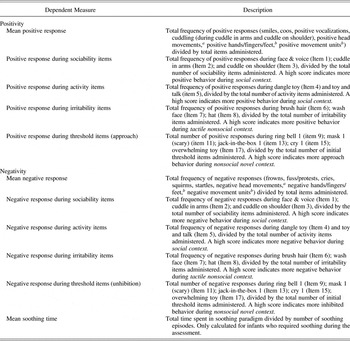
In accordance with published methods (Garcia Coll et al., Reference Garcia Coll, Emmons, Vohr, Ward, Brann and Shaul1988), research assistants masked to exposure status coded the videotaped temperament assessment for the total frequency of the following behavioral categories during each completed item: facial expression, vocalizations, global body responses, and movements. The specific positive and negative behaviors that were coded are provided in Table 2. The intensity of movement of arms/legs was coded as low, moderate, or high, based on number of limbs moved and rate of movement. Change in movement was coded in movement units (von Hofsten, Reference von Hofsten1991). The algorithm to determine a movement unit began with acceleration in movement followed by an eventual deceleration in movement and ended with the next acceleration in movement (or zero movement; see Figure 1 for an example). Movement of head qualified as positive if head movements were toward stimulus and negative if head movements were away from stimulus. Movement of hands/fingers/feet and movement units were qualified as positive or negative by whether a positive or negative event occurred during the movement. Positive events that were used to qualify movement included smiles, coos, and positive vocalizations and negative events included frowns, fuss/protests, cries, squirms, and startles. Negative and positive head movements, negative and positive hands/fingers/feet, and negative/positive movement units were treated as individual affect events in calculations of summary scores (described below). After each episode of crying, the soothability of the infant was rated according to the level of intervention (1–6) required to calm the infant down.
Depiction of one movement unit. The change in movement was coded in movement units. The algorithm to determine a movement unit began with acceleration in movement followed by an eventual deceleration in movement and ended with the next acceleration in movement (or zero movement).

Summary scores for BAIT
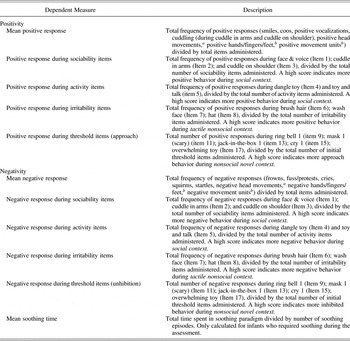
a Movement of head qualified as positive if head movements were toward stimulus and negative if head movements were away from stimulus.
b Movement of hands/fingers/feet and movement units were qualified as positive or negative by whether a positive or negative event occurred during the movement.
The Action Analysis Coding and Training (Oller, Yale, & Delgado, Reference Oller, Yale and Delgado1997) software interface used to control the videotaping device allowed coders to indicate when a particular behavior occurred. The time code corresponding to the relevant frame was automatically entered into a data file on the Action Analysis Coding and Training system. Tapes were played at normal speed during coding, although they were frequently stopped or run in slow motion to accurately determine the beginning and end of shifts in infant behavior.
Reliability of BAIT coding
Seven coders were trained to reliability on an initial set of 10 videotapes prepared by two gold standard coders, coding 10 additional tapes as an initial reliability check (mean κ for coded behaviors = 0.60). Additional interrater reliability tapes (1 of every 10) were coded to monitor coder drift and thereby maintain a high level of reliability. Reliability tapes that resulted in a κ statistic less than 0.60 were reviewed for consensus, and any remaining disagreements were refereed by the master coder.
BAIT data reduction and dependent measures
Episode data loss occurred for short administrations of items (episodes; <15 s, or <24 s if due to missing audio/video or examiner error) or administration of multiple items out of order. Variable data loss occurred for vocalization and movement variables that were unscorable (e.g., loss of video, audio; <2%). For items lasting more than 30 s, data was truncated at 39 s. Frequency data was prorated based on the standardized length of item administration (30 s).
BAIT positivity and negativity
As indicated in Table 2, the summary scores were formed by computing a sum of individual affect events (e.g., coos, startles) divided by number of items administered for that item set. We adopted the typical BAIT summary scores (see Table 2), including positivity across all BAIT items, while interacting with the infant (sociability) and talking to the infant while presenting dangling toys (activity), and negativity across all BAIT items, during intrusive caregiving behaviors (irritability), and during discrepant or novel stimuli (threshold: initial presentation of threshold items only; Garcia Coll et al., Reference Garcia Coll, Halpern, Vohr, Seifer and Oh1992). To assess CI affect, we also included summary scores for positivity during irritability and threshold items and negativity during sociability and activity items. Soothability across all items is also commonly included in BAIT scoring (Garcia Coll et al., Reference Garcia Coll, Halpern, Vohr, Seifer and Oh1992). This study analyzed the duration of time spent in the soothing paradigm across all episodes of soothing for infants who required soothing.
Parent report on temperament
A modified version of the IBQ (Rothbart, Reference Rothbart1981) was administered as a measure of parent-reported infant temperament (Sheinkopf et al., Reference Sheinkopf, Lester, LaGasse, Seifer, Bauer and Shankaran2006). Modifications of the IBQ included simplification of language for the MLS population and reduction of response scale to 5 points (approved by M. K. Rothbart). The IBQ yields six summary scales: activity level (α = 0.77), smiling and laughter (α = 0.78), distress to novelty (α = 0.73), distress to limitations (α = 0.76), soothability (α = 0.72), and duration of orienting (α = 0.66).
Statistical analysis
We used t tests and χ2 statistics to compare the cocaine- and/or opiate-exposed and comparison groups on medical and other characteristics. The 11 BAIT dependent measures in Table 2 and six IBQ scales were tested with four sets of analyses. These analyses used Type III sum of squares and an alpha level of 0.05. Analysis 1 was a two-way analysis of variance testing two factors: any cocaine exposure (exposed/nonexposed) and any opiate exposure (exposed/nonexposed). The analysis of variance (Type III sum of squares) tests each factor after adjustment for the other. The Cocaine × Opiate interaction was tested in all models, and was left in the final model only if significant. Analysis 2 was a two-way analysis of variance testing cocaine and opiate effects after adjustment for covariates described below. Analysis 3 was a univariate analysis of heavy cocaine exposure and some/none cocaine exposure. Maternal report of prenatal drug use generally shows poor reliability (Jacobson, Jacobson, Sokol, Marfier, & Chiodo, Reference Jacobson, Jacobson, Sokol, Marfier and Chiodo1996), so we dichotomized the degree of cocaine use similar to Jacobson et al. (Reference Jacobson, Jacobson, Sokol, Marfier and Chiodo1996). Heavy cocaine exposure was defined as at least 3 days a week during the first trimester (Seifer et al., Reference Seifer, LaGasse, Lester, Bauer, Shankaran and Bada2004). Any other cocaine exposure was considered some exposure. These analyses were conducted on a subset of subjects (761 of 958) who admitted cocaine use on the MISU and who did not use opiates during pregnancy based on initial hospital interview, toxicology, or self-report on the MISU. As noted above, opiate users were excluded because opiate use could co-occur with heavy, some, or no cocaine use and potentially confound level of cocaine exposure effects. We did not examine degree of opiate exposure in analyses because determination of common metrics for opiate doses and frequency across heroin and methadone was judged too difficult to identify the amount of use (Seifer et al., Reference Seifer, LaGasse, Lester, Bauer, Shankaran and Bada2004). Analysis 4 was a one-way analysis of variance testing the two level of cocaine exposure groups after adjustment for covariates described below.
Covariates
In Analyses 2 and 4, covariates were included either because of relevance to drug-using populations (e.g., birth weight, polydrug use) or because they met the following statistical criteria: the variable correlated with both cocaine exposure and temperament (p < 0.10) and did not correlate highly with other covariates (Pearson r < .70; Jacobson & Jacobson, Reference Jacobson, Jacobson, Rovee-Collier and Lipsitt1990; LaGasse et al., Reference LaGasse, Seifer, Wright, Lester, Tronick and Bauer1999; Leon, Reference Leon1993; Richardson & Day, Reference Richardson and Day1999). Covariates and covariate interactions with cocaine that predicted outcomes at p < .10 were included in the final Analyses 2 and 4. Study site was included in all final Analyses 2 and 4. At the 1-month visit mothers were interviewed on socioeconomic status, which is an assessment of the Hollingshead index of social prestige modified for high-risk families (Lagasse et al., Reference LaGasse, Seifer, Wright, Lester, Tronick and Bauer1999). Prenatal care was assessed through maternal interview where the mother was asked, “did you see a doctor or nurse for prenatal care during this pregnancy?” The variables in Tables 3 and 4 were examined for possible inclusion as covariates because temperament has been associated with maternal age (Secco & Moffatt, Reference Secco and Moffatt2003), low income (Jansen et al., Reference Jansen, Raat, Mackenbach, Jaddoe, Hofman and Verhulst2009), maternal education (Jansen et al., Reference Jansen, Raat, Mackenbach, Jaddoe, Hofman and Verhulst2009), race (Weiss, St. Jonn-Seed, & Wilson, Reference Weiss, St. Jonn-Seed and Wilson2004), infant's gestational age (Langkamp, Kim, & Pascoe, Reference Langkamp, Kim and Pascoe1998), birth order (Kerestes, Reference Kerestes2006), and birth weight (Davis, Chang, & Burns, Reference Davis, Chang and Burns2006). The maternal and infant characteristics that met the criteria and were used in the adjusted analyses included: socioeconomic status, birth weight, maternal age, infant's sex, poverty line status, private insurance, marital status, maternal education, prenatal care, first born status, study site, and other drug use.
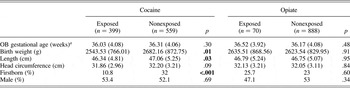
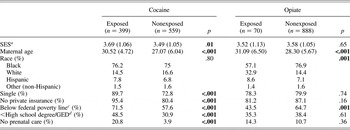
Infant characteristics of cocaine/opiate exposed and comparison groups

Note: Unless otherwise indicated, values are mean (SD). The bold p values are significant. OB, Obstetrical estimate.
a Gestational age was unknown for two exposed and one comparison subject.
Maternal characteristics of cocaine/opiate exposed and comparison groups

Note: Unless otherwise indicated, values are mean (SD). The bold p values are significant.
a SES, Socioeconomic status, which is unknown for 20 exposed and 5 comparison subjects.
b Insurance status unknown for 4 exposed and 7 comparison subjects.
c Poverty unknown for 41 exposed and 26 comparison subjects.
d High school/GED unknown for 1 exposed and 2 unexposed subjects.
Covariates for other drug use
The pattern of drug use reported by the mother on the MISU was used to generate covariates for alcohol, marijuana, and tobacco use during any of the three trimesters of pregnancy. Covariates were produced for alcohol (presence of alcohol use during pregnancy), marijuana (presence of marijuana use during pregnancy), and tobacco (presence of tobacco use during pregnancy).
Patterns of individual differences: Latent class/profile analysis
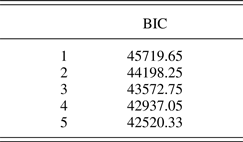
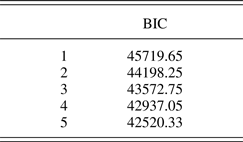
Analysis of subgroups may be important for detecting subtle effects of prenatal drug exposure. This analysis is also useful in circumstances in which summary scores are constructed from measures that have substantially different metrics, such as temperament. We used latent profile analysis using MPlus Version 4.1 software to examine patterns of response across diverse measures and relate these patterns to the outcome of interest. The specific variables included in profile analysis were positivity and negativity levels during each item domain (sociability, activity, irritability, and threshold), as well as duration of soothability intervention across the BAIT. This variant of structural equation modeling defines constructs based on a series of continuous measured variables. The end result of the profile analysis is a probability for each case on each profile. We fitted latent profile analysis models with two to five profiles to determine the optimal number of profiles. As the number of profiles increased from two to five, the sample size-adjusted Bayesian information criterion values decreased, suggesting improvement in the goodness of fit. With consideration for the model fit statistics (Table 5), the resulting profiles were evaluated in terms of their match with theoretical expectations and whether they define a meaningful number of cases. With more profiles, class sizes became smaller with no theoretical meaning added by the new classes. Based on these criteria, we determined the three-profile solution was the optimal solution. To test the hypothesis that profiles are associated with cocaine exposure, we examined the resulting group membership variables (transformed from profile probabilities) using a general linear model approach. Class membership required a minimum 0.70 loading on a profile (n = 903 of the 958 completing the BAIT). For these analyses we included temperament profile class membership status, opiate exposure, and the standard set of covariates used in all other analyses to predict presence of cocaine exposure. However, opiate exposure was not included in profile analyses on level of cocaine exposure, for the same reasons given for other analyses involving level of prenatal cocaine exposure.
Model fit statistics for the profile solutions
Note: BIC, Bayesian information criterion values adjusted for sample size.
Results
Neonatal, maternal, and exposure characteristics
Neonatal characteristics of the infants are presented in Table 3. Infants prenatally exposed to cocaine had lower birth weights (range = 519–4880 g) and were smaller in length at birth (range = 28–57 cm) than infants not exposed to cocaine. The cocaine-exposed infants were also less likely to be first born. There were no statistically significant differences between the cocaine-exposed and nonexposed groups on gestational age, head circumference, or sex. There were no statistically significant differences between the opiate-exposed and nonexposed groups on gestational age, birth weight, length at birth, head circumference, first-born status, or sex.
Demographic information on mothers is presented in Table 4. Mothers who had used cocaine were more likely to be of poorer socioeconomic status and be older, unmarried, a Medicaid recipient, below the poverty line, without prenatal care, and less educated than mothers in the comparison group. Mothers in the comparison group who had used opiates were more likely to be older than the comparison group, White, and above the poverty line.
Infants exposed to cocaine were significantly more likely to be exposed to tobacco (84%), alcohol (74.7%), and marijuana (38.6%) than infants not exposed to cocaine (29.7%, 47.9%, 9.1%, respectively; all ps < .001). Infants exposed to opiates were significantly more likely to be exposed to tobacco (72.9%) than infants not exposed to opiates (50.7%; p < .001), but they did not differ on alcohol or marijuana exposure.
Temperament differences between substance-exposed and nonexposed infants
Positive temperament
There were differences in positive affect shown during the BAIT between the cocaine-exposed and the nonexposed infants (see Table 6). After covariate adjustment, cocaine-exposed infants showed a lower level of mean positive affect across all BAIT items than infants not exposed to cocaine. A Cocaine Exposure × Opiate Exposure interaction effect for overall positivity (unadjusted, p = .01; adjusted, p = .02) indicated that cocaine-exposed infants who were not exposed to opiates showed less positivity across the BAIT than nonexposed infants (unadjusted, p = .66; adjusted, p = .03). There were no effects of exposure to both cocaine and opiates (unadjusted, p = .01; adjusted, p = .15).
Positive temperament measures in cocaine and opiate-exposed and nonexposed infants

Note: Unadjusted total numbers and means. The bold p values are significant.
a Covariates included were overall positivity: site, alcohol, marijuana, birth weight, cocaine by marijuana, cocaine by birth weight; sociability items: site, sex, alcohol, marijuana; activity items: site, birth weight; irritability items: site, sex, alcohol, maternal education, birth weight, cocaine by birth weight; threshold items: site, tobacco, prenatal care, marital status, birth weight, cocaine by tobacco.
*Significant Cocaine × Opiate interaction (see text).
When positivity during specific BAIT items was compared, cocaine-exposed infants exhibited less positivity during the activity and threshold items than nonexposed infants. A Cocaine Exposure × Opiate Exposure interaction effect for threshold items (unadjusted, p = .02; adjusted, p = .01) indicated that cocaine-exposed infants also exposed to opiates showed less positivity during threshold items than nonexposed infants (unadjusted, p = .01; adjusted, p = .045). No differences in positivity during threshold items were shown for single drug exposure. There were no significant differences between cocaine-exposed and nonexposed infants in positivity during sociability or irritability items. There were no significant differences between opiate-exposed and nonexposed infants in positivity during the BAIT.
Negative temperament
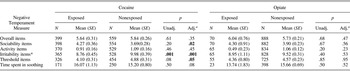
There were differences in negativity shown during the BAIT between the cocaine-exposed and the nonexposed infants (see Table 7). Although there were no differences between groups on overall negativity during the BAIT, when specific BAIT items were compared, cocaine-exposed infants showed greater negativity during sociability and less negativity during irritability and threshold items than infants not exposed to cocaine (see Table 7). A Cocaine Exposure × Opiate Exposure interaction effect for irritability items (unadjusted, p = .01; adjusted, p = .01) indicated that cocaine-exposed infants also exposed to opiates showed less negativity during irritability items than nonexposed infants (unadjusted, p = .001; adjusted, p < .001). No differences in negativity during irritability items were shown for single drug exposure. There were no significant differences between cocaine-exposed and nonexposed infants in negativity during activity items or time spent in the soothing intervention. There were no significant differences between opiate-exposed and nonexposed infants in negativity during the BAIT.
Negative temperament measures in cocaine and opiate-exposed and nonexposed infants

Note: Unadjusted total numbers and means. The bold p values are significant.
a Covariates included were overall negativity: site, marijuana, cocaine by marijuana; sociability items: site, marijuana, cocaine by marijuana; activity items: site; irritability items: site; threshold items: site, alcohol, cocaine by alcohol; time spent in soothing: site, marijuana, birth weight, cocaine by marijuana.
*Significant Cocaine × Opiate interaction (see text).
Heavy cocaine exposure
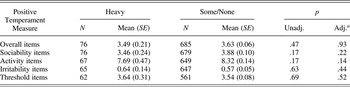
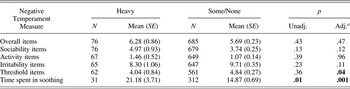
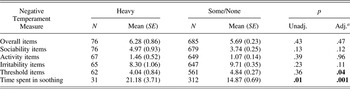
Tables 8 and 9 give the results of BAIT differences between the two levels of cocaine exposure groups. Infants with heavy cocaine exposure levels showed less negativity during threshold items and required longer periods of the soothing intervention paradigm compared with other infants, and this difference remained significant after covariate adjustment. There were no effects of level of cocaine exposure for negativity during the other items of the BAIT or positivity during the BAIT.
Positive temperament measures in groups with heavy cocaine exposure and no/some cocaine exposure

Note: Unadjusted total numbers and means.
a Covariates included were overall positivity: site, socioeconomic status, alcohol; sociability items: site, sex, socioeconomic status, alcohol, cocaine by alcohol; activity items: site; birth weight; irritability items: site, sex, alcohol; threshold items: site, prenatal care.
Negative temperament measures in groups with heavy cocaine exposure and no/some cocaine exposure
Note: Unadjusted total numbers and means. The bold p values are significant.
a Covariates included were overall negativity: site; sociability items: site, sex; activity items: site, birth weight, tobacco, cocaine by tobacco; irritability items: site, sex, cocaine by sex; threshold items: site, birth weight, cocaine by birth weight; time spent in soothing: site, sex, alcohol, cocaine by site, cocaine by alcohol.
Individual differences in temperament
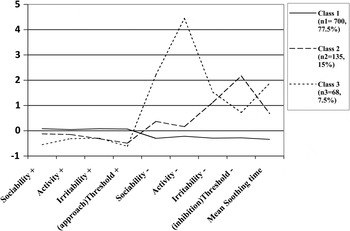
Individual differences in patterns of temperament at 4 months were examined using latent profile analysis. These measures yielded three classes (Figure 2). In Figure 2, standardized scores were used for the graph because the original scores were not on the same scale. The largest group represented a low/moderate overall reactivity profile, with average positivity and lower than average negativity during the BAIT, and lower than average duration of soothability intervention (Class 1, n = 700). The other two classes may represent poor regulatory functioning. Class 2 (n = 135) exhibited a high nonsocial negative reactivity profile, with lower than average positivity across the BAIT and higher than average negativity toward the nonsocial stimuli in the irritability and threshold items and higher than average duration of soothability intervention. The smallest group, Class 3 (n = 68), exhibited a high social negative reactivity profile, with high negativity to the sociability and activity items and higher than average duration of soothability intervention.
Latent class analysis of temperament (standardized values for each variable; n = 903). (+) Positive affect and (–) negative affect.

The pattern of cocaine exposure status associated with class membership indicated that Class 3 had the highest rate of cocaine exposure (M = 0.50, SE = 0.06), Class 1 had moderate rates (M = 0.42, SE = 0.02), and Class 2 had the smallest rate of cocaine exposure (M = 0.38, SE = 0.04). Class membership was not associated with prenatal cocaine exposure status (unadjusted, p = .25; adjusted, p = .08). However, when level of cocaine exposure was considered, class membership predicted level of cocaine exposure. Follow-up analyses indicated that Class 3 (M = 0.21, SE = 0.04) was more likely to have been exposed to heavier levels of cocaine use than Class 1 (M = 0.10, SE = 0.01) and Class 2 (M = 0.07, SE = 0.03; unadjusted, p = .02; adjusted, p < .001). These analyses suggest that profiles indicating patterns of individual differences in temperament across contexts relate to degree of prenatal cocaine exposure.
Parent report of temperament
Parent report of temperament showed small significant correlations with BAIT summary scores: IBQ smiling and laughter and BAIT overall positivity, r (918) = .07, p = .03; IBQ distress to novelty and BAIT overall negativity, r (800) = .11, p = .002; IBQ distress to limits and BAIT overall negativity, r (901) = .09, p = .01.
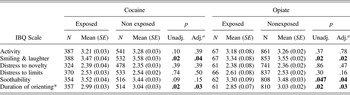
There were differences in parent-reported temperament between the cocaine-exposed and the nonexposed infants (see Table 10). Infants exposed to cocaine had lower scores on the smiling and laughter scale than nonexposed infants. Similarly, opiate-exposed infants had lower scores on the smiling and laughter and soothability scales than nonexposed infants. Cocaine-exposed and opiate-exposed infants received lower duration of orienting scores than nonexposed infants. A Cocaine Exposure × Opiate Exposure interaction effect for duration of orienting (unadjusted only, p = .046) indicated that cocaine-exposed infants also exposed to opiates were rated lower in duration of orienting than other infants (unadjusted, p = .03, adjusted, p = .03). No differences in duration of orienting were shown for single drug exposure. There were no significant differences between cocaine-exposed and nonexposed infants or between opiate-exposed and nonexposed infants in the activity, distress to novelty, or distress to limits scales.
IBQ in cocaine and opiate-exposed and nonexposed infants

Note: Unadjusted total numbers and means. The bold p values are significant. IBQ, Infant Behavior Questionnaire.
a Covariates included were Activity Scale: site, SES, maternal age, sex, cocaine by sex; Smiling & Laughter Scale: site, birth weight; Distress to Novelty Scale: site, marijuana, birth weight, sex, cocaine by SES; Distress to Limits Scale: site, SES, maternal age, birth weight, tobacco, cocaine by tobacco; Soothability Scale: site, sex, SES; Duration of Orienting Scale: site, sex, prenatal care, first born status, cocaine by sex.
*Significant Cocaine × Opiate interaction (see text).
Covariate effects
Regardless of group membership, the following covariate effects emerged in analyses of the presence and absence of cocaine and opiate exposure, analyses of degree of cocaine exposure, and univariate analyses of the association between the covariate and the outcome (see Tables 6–10). Lower birth weight was related to less positivity during all BAIT items and less IBQ smiling and laughter, greater distress to novelty, and greater distress to limits. When examining the temperament profile groups, Class 2 (high nonsocial negative reactivity) had marginally greater birth weight (M = 2759.28, SD = 806.60) than Class 3 (high social negative reactivity; M = 2492.12, SD = 891.38; p = .08), but both Classes 2 and 3 did not differ from the larger Class 1 profile group (low/moderate reactivity) on this infant characteristic.
Maternal alcohol use was associated with less overall positivity, specifically during sociability and irritability items, and less negativity during threshold items. Maternal marijuana use was associated with less overall positivity, specifically during sociability items; less overall negativity, specifically during sociability items; shorter duration of soothing intervention; and less IBQ distress to novelty. Maternal tobacco use was associated with greater positivity during threshold items and less IBQ distress to limits. Males were more likely to show higher levels of positivity during sociability and irritability items and females were rated by parents as higher in activity, distress to novelty, duration of orienting, and easier to sooth (soothability). Infants with first-born status were rated by parents as higher in duration of orienting. Generally, lower socioeconomic status and other maternal indicators (younger, less educated, and no prenatal care) were related to positivity during the BAIT and higher ratings on the IBQ activity, distress to limits, duration of orienting, and soothability scales. Site differences were prevalent in overall positivity, specifically during sociability and activity, duration of soothability intervention, and IBQ activity, distress to novelty, soothability, and duration of orienting scales. Site differences are common in multisite studies (Vohr et al., Reference Vohr, Wright, Dusick, Perritt, Poole and Tyson2004) including the MLS (Lester et al., Reference Lester, Tronick, LaGasse, Seifer, Bauer and Shankaran2002). These differences were not analyzed further because they reflect demographic particularities specific to different geographic regions, which were not captured by other covariates.
There were also several polydrug interaction effects on temperament (see Tables 6–10). There were Cocaine Exposure × Alcohol Exposure interaction effects for negativity during threshold items and time spent in the soothing intervention. There were significant Cocaine Exposure × Marijuana Exposure interaction effects for overall positivity, overall negativity, negativity during sociability items, and time spent in the soothing intervention. There were significant Cocaine Exposure × Tobacco Exposure interaction effects for positivity during the threshold items, negativity in activity items, and distress to limits scores. There was also a Cocaine Level × Alcohol Exposure interaction effect for positivity during sociability items.
Discussion
By measuring emotional behavior across situations that varied in emotional incentives, we were able to specify the contexts in which cocaine- or opiate-exposed infants may differ in temperament from nonexposed infants. The BAIT provided an array of caregiving contexts that differ in degree of social interaction and emotional cues, such as familiarity of objects and auditory and tactile sensory stimuli. Overall, effects of prenatal cocaine exposure on both positivity and negativity appeared to be specific to the context of the response.
Upon initial examination of the findings across the BAIT one might conclude that cocaine-exposed infants were generally less positive (flatter) than their peers, but they were only less positive in response to presentation of toys or novel and discrepant stimuli. Likewise, cocaine exposure status was only related to negativity shown during specific BAIT contexts; cocaine-exposed infants were more negative than nonexposed infants in response to social interaction with the examiner but were less negative (flatter) in response to tactile stimulation and presentation of novel and discrepant stimuli.
Decreased reactivity to nonsocial contexts
Compared to their peers, cocaine-exposed infants showed less positivity in response to dangling toys, were less negative or irritated by the intrusive caregiving behaviors (putting on a hat, wiping face), and showed less positivity (approaching behavior) and less negativity (inhibition) when presented with various novel and discrepant stimuli that provoked the visual and auditory senses. These findings generally agree with other studies that present a flatter temperamental profile for cocaine-exposed infants (Alessandri et al., Reference Alessandri, Sullivan, Imaizumi and Lewis1993; Singer, Hawkins, Huang, Davillier, & Baley, Reference Singer, Hawkins, Huang, Davillier and Baley2001; but see Eiden et al., Reference Eiden, Lewis, Croff and Young2002; Mayes et al., Reference Mayes, Bornstein, Chawarska, Haynes and Granger1996). It is interesting that flatter response style has also been shown by prenatally cocaine-exposed toddlers (Roumell, Wille, Abramson, & Delaney, Reference Roumell, Wille, Abramson and Delaney1997).
Although others did not find cocaine-exposed infants were less positive than nonexposed infants during standardized positive contexts (Eiden et al., Reference Eiden, Lewis, Croff and Young2002), this discrepancy with our finding may be explained in part by contextual differences between the BAIT activity items (dangling toys) and the puppets episode (Laboratory Temperament Assessment Battery; Goldsmith & Rothbart, Reference Goldsmith, Rothbart, Strelau and Angleitner1991) used in the Eiden et al. (Reference Eiden, Lewis, Croff and Young2002) study. The puppets paradigm involves more visual and auditory (scripted) positive interaction with the puppets, compared with presentation of dangling toys (activity items). Even in toddlers, we see no difference between cocaine-exposed and nonexposed children when placed in social play contexts (Uhlhorn, Messinger, & Bauer, Reference Uhlhorn, Messinger and Bauer2005). Cocaine-exposed infants (and toddlers) may require more positive cues in the context to elicit positive affect. This need for exposure to multiple positive stimuli is not surprising given the low physiological and behavioral arousal and engagement that is typically displayed by cocaine-exposed infants (Lester et al., Reference Lester, Tronick, LaGasse, Seifer, Bauer and Shankaran2002).
Although cocaine-exposed infants did not show increased negativity during negative nonsocial tasks, the BAIT tasks do not include similar frustrating tasks (arm restraint, toy retraction) that have been used in other studies (Eiden et al., Reference Eiden, Lewis, Croff and Young2002; Eiden, Veira, et al., Reference Eiden, Veira and Granger2009; Schuetze et al., Reference Schuetze, Molnar and Eiden2012). Similar inconsistent findings occur in studies of prenatal cocaine exposure at older ages. For example, cocaine-exposed 2.5-year-olds showed greater negativity than nonexposed toddlers while waiting for an attractive toy (Chaplin, Fahy, Sinha, & Mayes, Reference Chaplin, Fahy, Sinha and Mayes2009), whereas cocaine-exposed 3- to 6-year-olds were not more aggressive than their peers when asked to complete a challenging puzzle with mom (Jones et al., Reference Jones, Field, Davalos and Hart2004). It may be that determining how prenatal cocaine exposure influences temperament will require using a more nuanced approach to studying emotion in context as advocated by Cole, Martin, and Dennis (Reference Cole, Martin and Dennis2004). Furthermore, unlike the BAIT, the negative tasks used by some other studies (e.g., Eiden et al., Reference Eiden, Lewis, Croff and Young2002; Eiden, Veira, et al., Reference Eiden, Veira and Granger2009; Jones et al., Reference Jones, Field, Davalos and Hart2004; Schuetze et al., Reference Schuetze, Molnar and Eiden2012) required participation of the infant/child's mother, who may be less sensitive and more negative than other mothers when interacting with her infant/child (e.g., Blackwell, Kirkhart, Schmitt, & Kaiser, Reference Blackwell, Kirkhart, Schmitt and Kaiser1998; Eiden, Reference Eiden2001; Lagasse et al., Reference LaGasse, Messinger, Lester, Seifer, Tronick and Bauer2003).
Increased reactivity to social contexts
Although the cocaine-exposed infants did not respond as negatively as their peers in nonsocial emotional contexts, they were more distressed while being talked to and held by the examiner (sociability items). Given the lack of previous infant research on this topic, it was unknown how cocaine-exposed infants would respond to social interactions with the examiner. Given the sociability items are the first three administered in the BAIT, increased negativity during these tasks may reflect a “slow to warm up” profile (Thomas, Chess, Birch, Hertzig, & Korn, Reference Thomas, Chess, Birch, Hertzig and Korn1963). Likewise, Mayes and colleagues (Reference Mayes, Bornstein, Chawarska, Haynes and Granger1996) found that cocaine-exposed infants showed more negativity than nonexposed infants in the initial phases of a habituation paradigm.
Individual differences in temperament
Using a person-centered approach, we also conducted latent profile analyses on levels of positivity, negativity, and soothing time across all BAIT contexts. A majority of infants showed low/moderate reactivity during the BAIT. However, two other temperament profiles emerged, one showing negativity to the presentation of nonsocial stimuli (high nonsocial negative reactivity) and the other expressing high levels of negativity to tasks that have a social component (high social negative reactivity). The infants with heavy cocaine exposure (≥3 days a week during the first trimester) were more likely than other infants to be high social negative reactive infants. Infants with heavy cocaine exposure also required longer soothing time when distressed compared to infants exposed to lesser amounts of cocaine. Heavy cocaine exposure may be related to poorer regulatory functioning indicated by more negative reactivity in social contexts and difficulty regulating negative affect when distressed. Considering Bendersky and Lewis (Reference Bendersky and Lewis1998) found heavily cocaine-exposed infants were more distressed during the face-to-face reunion with mothers, perhaps heavily cocaine-exposed infants generally have greater difficulty regulating negative affect in social contexts. Another interpretation of the person-centered findings is that heavily cocaine-exposed infants were more distressed earlier in the BAIT, indicating a slow to warm up profile (Thomas et al., Reference Thomas, Chess, Birch, Hertzig and Korn1963). Using the BAIT procedure gave us the opportunity to examine patterns of response across an extended assessment of temperament that is not typically used in other studies.
Schuetze and colleagues recently (Reference Schuetze, Molnar and Eiden2012) used a person-center approach (cluster analysis) that produced five reactivity profiles based on behavioral and physiological (respiratory sinus arrhythmia) reactivity and maternal report of reactivity in cocaine-exposed and nonexposed 13-month-olds. Cocaine-exposed infants were more likely to be in clusters showing dysregulated reactivity (high physiological reactivity and moderate behavioral reactivity) rather than optimal levels of reactivity. Although we found social negative reactivity predicted degree of cocaine exposure in our study, direct comparison with our study is limited by how behavioral reactivity was measured in the studies. Schuetze et al. (Reference Schuetze, Molnar and Eiden2012) measured negative reactivity during arm restraint by the caregiver. In all of our tasks, the infant was unrestrained and items were administered by the experimenter. Nonetheless, both studies indicate that a person-centered approach can yield interesting cocaine exposure effects on temperament patterns.
Parent report of temperament
It was not surprising that parent report and behavioral measures of temperament were mildly correlated (Seifer, Reference Seifer2002). Furthermore, any correlation between BAIT scores and the two negative scales of the IBQ should be interpreted with caution, given the BAIT did not include a frustrating task to compare with IBQ distress to limits and the IBQ distress to novelty items combines novel objects/situations and people, whereas the BAIT measures these responses separately.
As did other researchers using parent report (Edmondson & Smith, Reference Edmondson and Smith1994; Eiden et al., Reference Eiden, Lewis, Croff and Young2002; Richardson et al., Reference Richardson, Goldschmidt and Willford2008), we found cocaine-exposed infants were rated by parents as less positive than nonexposed infants. We also found some congruence between cocaine exposure effects on parent ratings and behavior during the BAIT. Compared to nonexposed infants, cocaine-exposed infants were more likely to show less positivity during the BAIT and be rated by parents as showing less positivity on the IBQ Smiling and Laughter scale.
Given the impairments in attention and engagement linked to prenatal cocaine exposure (Alessandri et al., Reference Alessandri, Sullivan, Imaizumi and Lewis1993; Bendersky & Lewis, Reference Bendersky and Lewis1998; Eiden et al., Reference Eiden, Lewis, Croff and Young2002; Gaultney, Gingras, Martin, & DeBrule, Reference Gaultney, Gingras, Martin and DeBrule2005; Mayes et al., Reference Mayes, Feldman, Granger, Haynes, Bornstein and Schottenfeld1997; Romano & Harvey, Reference Romano and Harvey1996), it was not surprising that cocaine-exposed infants were rated lower in duration of orienting than nonexposed infants.
CI affect
We computed BAIT summary scores to inquire if cocaine or opiate exposure status is also relevant for CI affect (e.g., positivity during irritability items). For example, only positive affect is typically rated during the BAIT sociability items, but negative affect in such contexts may indicate more maladaptive emotion responses. In this study, cocaine-exposed infants were more negative during social interaction (sociability) items, perhaps indicating increased social inhibition. Cocaine-exposed infants were also less positive to novel nonsocial (threshold) items, perhaps indicating more nonsocial inhibition as well. Gottwald and Thurman (Reference Gottwald and Thurman1994) found that cocaine-exposed infants were more distressed during positive play and attention-getting tasks with mom. Although the cocaine-exposed infants in this study did not show more negativity in the positive context of dangling toys, play contexts typically include more social interaction. Therefore, in play contexts it may be the social aspects of the context that are distressing for the cocaine-exposed infant. In addition, unlike the BAIT, the tasks used by Gottwald and Thurman (Reference Gottwald and Thurman1994) required participation of the infant's mother, who may be less attentive and more negative than other mothers when interacting with her infant (e.g., Mayes et al., Reference Mayes, Feldman, Granger, Haynes, Bornstein and Schottenfeld1997; Singer et al., Reference Singer, Hawkins, Huang, Davillier and Baley2001). It is interesting that the latent profile class associated with heavy cocaine exposure infants did show high levels of negativity during the positive context of dangling toys, which may indicate those experiencing high levels of prenatal cocaine exposure are more at risk for showing CI affect responses.
Cocaine-exposed infants show limited engagement, memory, and attentional processes (Alessandri et al., Reference Alessandri, Sullivan, Imaizumi and Lewis1993; Bendersky & Lewis, Reference Bendersky and Lewis1998; Eiden et al., Reference Eiden, Lewis, Croff and Young2002; Gaultney et al., Reference Gaultney, Gingras, Martin and DeBrule2005; Mayes et al., Reference Mayes, Feldman, Granger, Haynes, Bornstein and Schottenfeld1997), which all may impair the cocaine-exposed infant's ability to attend to relevant stimuli, learn from sustained attention to certain cues, and adapt to contextual changes to promote flexible and contextually appropriate emotional responses. The flatter positive and negative temperament shown by cocaine-exposed infants in nonsocial BAIT contexts could indicate low arousal and decreased engagement with the context. Including emotional responses across appropriate and inappropriate contexts in studies at older ages may elucidate how prenatal cocaine exposure influences the emotional processes important for adaptive and maladaptive behavior (Locke et al., Reference Locke, Davidson, Kalin and Goldsmith2009). As the cocaine exposed child develops, impaired attention and memory (Accornero et al., Reference Accornero, Amado, Morrow, Xue, Anthony and Bandstra2007; Bandstra, Morrow, Anthony, Accornero, & Fried, Reference Bandstra, Morrow, Anthony, Accornero and Fried2001; Eghbalieh, Crinella, Hunt, & Swanson, Reference Eghbalieh, Crinella, Hunt and Swanson2000; Heffelfinger, Craft, White, & Shyken, Reference Heffelfinger, Craft, White and Shyken2002; Richardson et al., Reference Richardson, Conroy and Day1996) and flatter temperament (Molitor, Mayes, & Ward, Reference Molitor, Mayes and Ward2003; Roumell et al., Reference Roumell, Wille, Abramson and Delaney1997) may contribute to the development of CI affect.
Cocaine effects on temperament were modified by opiate use
Some of the cocaine exposure effects on temperament were modified by whether infants were also exposed to opiates. Only those exposed to both drugs in utero showed less overall positivity and less negativity during irritability items compared to nonexposed infants. Some of the effects of prenatal cocaine exposure on parent-reported temperament were also shown by infants exposed to opiates. Like cocaine-exposed infants, those exposed to opiates had lower ratings on IBQ smiling and laughter and duration of orienting scales than nonexposed infants. It is interesting that opiate exposure was uniquely related to IBQ soothability ratings. Parents of opiate-exposed infants rated their infant as less capable of being soothed compared to the parents of nonexposed infants.
Study limitations
A primary strength of this study is the measurement of temperament across situations that varied in social factors and emotional incentives. Studies of infant temperament typically assess only positivity or negativity in a given context. Although this large, multisite, multimethod study provided a comprehensive assessment of prenatal cocaine effects on infant temperament, there are some limitations to note when interpreting study findings. The predominantly African American and low-income sample limits generalizability of our findings. Recall bias is also a possibility, as mothers provided information on prenatal cocaine (and other drug) use at the time of delivery and the 1-month follow-up visit. Although cocaine is likely to affect brain development differently depending on the timing of the prenatal exposure (Mayes, Reference Mayes1999, Reference Mayes2002), we did not analyze the pattern of cocaine use across pregnancy. However, the criteria for heavy prenatal cocaine exposure was based on frequency of cocaine use during the first trimester only.
Procedural and coding differences across paradigms may explain some of the discrepant outcomes when our results are compared with other studies. Individual BAIT items are shorter in duration (30 s) compared to some of the other temperament paradigms that have examined cocaine exposure effects (e.g., Eiden et al., Reference Eiden, Lewis, Croff and Young2002). Another caution is that the effect sizes we report for associations between cocaine and opiate exposure status and temperament were small (range partial η2 = 0.001–0.01); however, both temperament and prenatal drug exposure are multidetermined factors and strong associations would not be anticipated.
Study outcomes indicate behavioral dysregulation associated with prenatal cocaine exposure may be context specific. The pattern of responses across social and nonsocial contexts are reminiscent of the conundrum of both increased excitability and decreased arousal (depressed) shown in cocaine-exposed 1-month-olds (Lester et al., Reference Lester, Tronick, LaGasse, Seifer, Bauer and Shankaran2002). Future studies on prenatal substance exposure in infancy and beyond should include comprehensive measures of temperament to qualify the aspects of the context that may be salient for behavioral and physiological dysregulation.