





Introduction
Birds constitute one of the most diverse and ecologically significant vertebrate groups, playing fundamental roles in ecosystem functioning through seed dispersal, trophic interactions and nutrient cycling (Peña et al. Reference Peña, Schleuning, Miñarro and García2023). Among them, members of the Columbidae family, including pigeons and doves, are particularly notable for their wide geographic distribution and remarkable ecological plasticity, allowing them to thrive across a broad spectrum of habitats ranging from natural forests to highly urbanized environments. Their close association with human settlements, facilitated by synanthropic behaviour and high reproductive potential, has led to their proliferation in cities and agricultural landscapes worldwide (Bendjoudi et al. Reference Bendjoudi, Voisin, Doumandji, Merabet, Benyounes and Chenchouni2015). This proximity to humans and domestic animals places Columbidae at the interface of wildlife, livestock and urban ecosystems, thereby increasing their relevance in studies addressing ecological health and disease transmission dynamics (Sadeghi-Dehkordi et al. Reference Sadeghi-Dehkordi, Azami, Gharekhani, Yousefi and Gerami-Sadeghian2019; Aouissi et al. Reference Aouissi, Ababsa, Gaagai, Bouslama, Farhi and Chenchouni2021; Sánchez-Cano, Reference Sánchez-Cano2025).
From a parasitological perspective, birds serve as hosts to a wide range of endoparasites, including protozoans, nematodes, cestodes and trematodes, many of which can significantly influence host fitness, survival and reproductive success (Gutiérrez et al. Reference Gutiérrez, Piersma and Thieltges2019; Malik et al. Reference Malik, Milton, Ghatak and Ghosh2021; Schumm et al. Reference Schumm, Bakaloudis, Barboutis, Cecere, Eraud, Fischer, Hering, Hillerich, Lormée, Mader and Masello2021; Semmar et al. Reference Semmar, Bendjoudi and Marniche2022). Bird parasites can impair nutrient absorption, induce pathological lesions and alter host behaviour, thereby affecting population dynamics and ecological interactions (Dunn et al. Reference Dunn, Hawley, Huyvaert, Owen, Owen, Owen, Hawley and Huyvaert2021; Alvarado-Piqueras et al. Reference Alvarado-iqueras, Gómez-Muñoz and Martín-Maldonado2025; Semmar et al. Reference Semmar, Bendjoudi, Dik, Marniche and Chenchouni2026). In addition, parasitic infections in birds are shaped by multiple interacting factors, including environmental conditions, host density, feeding behaviour and the availability of intermediate hosts (Gutiérrez et al. Reference Gutiérrez, Piersma and Thieltges2019; Dunn et al. Reference Dunn, Hawley, Huyvaert, Owen, Owen, Owen, Hawley and Huyvaert2021; Marzal, Reference Marzal2026). Such complexity makes avian parasitism a valuable model for understanding broader ecological and epidemiological processes (Boyd et al. Reference Boyd, Nguyen, Allen, Waterhouse, Vo, Sweet, Clayton, Bush, Shapiro and Johnson2022; Sánchez-Cano, Reference Sánchez-Cano2025).
Within this context, pigeons and doves are recognized as important reservoirs of parasitic infections, capable of harbouring and disseminating a variety of pathogens with potential veterinary and public health implications (Attia et al. Reference Attia, Yehia, Soliman, Shukry, El-Saadony and Salem2021; Attia and Salem, Reference Attia and Salem2022; Salem et al. Reference Salem, Khattab, Yehia, El-Hack, El-Saadony, Alhimaidi, Swelum and Attia2022a; Semmar et al. Reference Semmar, Bendjoudi, Dik, Marniche and Chenchouni2026). Their droppings constitute a major pathway for environmental contamination, facilitating the spread of infective stages such as oocysts, eggs and larvae in soil, water and urban infrastructures (Sadeghi-Dehkordi et al. Reference Sadeghi-Dehkordi, Azami, Gharekhani, Yousefi and Gerami-Sadeghian2019; Vogt, Reference Vogt and Sing2023). This contamination may lead to indirect transmission of parasites to other bird species, domestic animals and potentially humans, particularly in densely populated areas (Sánchez-Cano, Reference Sánchez-Cano2025). Therefore, Columbidae play a critical role in maintaining parasite life cycles and contributing to the persistence of parasitic communities in both natural and anthropogenic ecosystems.
Globally, numerous studies have documented the diversity and prevalence of endoparasites in columbids, highlighting considerable geographic variability in parasite assemblages and infection patterns (Diakou et al. Reference Diakou, Ptochos and Papadopoulos2013; Amin and Kakabwab, Reference Amin and Kakabwab2019; Yousafzai et al. Reference Yousafzai, Rafiq, Kamal, Khan, Yasmeen, Masood, Usman, Ghani, Mohsin and Ul Hassan2021). These variations are often linked to differences in climatic conditions, habitat characteristics, host ecology and methodological approaches used for parasite detection (Rodrigues et al. Reference Rodrigues, Felix, Pichorim, Moreira and Braga2021; Alvarado-Piqueras et al. Reference Alvarado-iqueras, Gómez-Muñoz and Martín-Maldonado2025). Despite this growing body of knowledge, significant gaps remain in many regions, particularly in North Africa, where comprehensive parasitological surveys are still scarce. In Algeria, existing studies have provided valuable but fragmented insights into the parasitic fauna of pigeons and doves, often focusing on limited host species or restricted geographic areas.
Specifically, previous investigations in Algeria have primarily targeted Columba livia Gmelin, 1789 and, to a lesser extent, Streptopelia decaocto (Frivaldszky, 1838), with studies conducted in the Algiers Sahel and the Mitidja region (Djelmoudi et al. Reference Djelmoudi, Milla, Daoudi-Hacini and Doumandji2014; Bendjoudi et al. Reference Bendjoudi, Marniche and Messaoudi2018). More recently, Semmar et al. (Reference Semmar, Bendjoudi and Marniche2022) reported initial data on cestode infections in columbids, contributing to the documentation of helminthic diversity in these hosts. However, these studies remain limited in scope and do not provide an integrated assessment of endoparasite communities across multiple host species, nor do they fully address the ecological relationships between hosts and parasites or their potential implications for public health. To date, no comprehensive investigation has simultaneously examined protozoan, nematode and cestode assemblages in Algerian Columbidae within a unified analytical framework.
Beyond their role in local ecosystems, pigeons and doves are increasingly recognized within the broader framework of the ‘One Health’ concept, which emphasizes the interconnectedness of human, animal and environmental health (Sadek et al. Reference Sadek, Farghaly and Ghazy2025; Sánchez-Cano, Reference Sánchez-Cano2025). Urbanization, agricultural intensification and climate change are reshaping ecological conditions in ways that can enhance parasite transmission, for instance by increasing host density, modifying habitat structure and accelerating parasite development cycles (Marzal, Reference Marzal2026). In this context, Columbidae may act as key epidemiological bridges, facilitating the circulation of parasites across ecological compartments and contributing to emerging health risks (Malik et al. Reference Malik, Milton, Ghatak and Ghosh2021). Understanding the diversity, distribution and dynamics of endoparasites in these birds is therefore essential for developing effective surveillance and management strategies.
In addition to epidemiological considerations, the study of host–parasite interactions in Columbidae provides valuable insights into ecological specialization, co-evolutionary processes and community structuring (Aouissi et al. Reference Aouissi, Ababsa, Gaagai, Bouslama, Farhi and Chenchouni2021; Kaszewska-Gilas et al. Reference Kaszewska-Gilas, Kosicki, Hromada and Skoracki2021). Patterns of parasite richness, prevalence and host specificity can reveal underlying ecological mechanisms, such as niche overlap, habitat sharing and differential exposure to infective stages (Boyd et al. Reference Boyd, Nguyen, Allen, Waterhouse, Vo, Sweet, Clayton, Bush, Shapiro and Johnson2022). Comparative analyses among host species can further elucidate the extent to which phylogenetic relatedness and ecological similarity influence parasite assemblages, thereby contributing to a more integrative understanding of biodiversity and ecosystem functioning. Against this background, the present study aims to provide a comprehensive assessment of endoparasite communities in Columbidae species from northern Algeria. Specifically, this work seeks to (i) identify and characterize the diversity of endoparasites infecting multiple pigeon and dove species, (ii) quantify their prevalence and relative abundance (RA) across hosts, (iii) analyse host–parasite associations and community similarity patterns and (iv) evaluate the potential epidemiological and ecological implications of these parasitic infections within a ‘One Health’ perspective. This study is expected to contribute to filling a significant knowledge gap in North African avian parasitology and provides a robust baseline for future research on parasite ecology, zoonotic risk assessment and biodiversity conservation.
Materials and methods
Study area and sampling sites
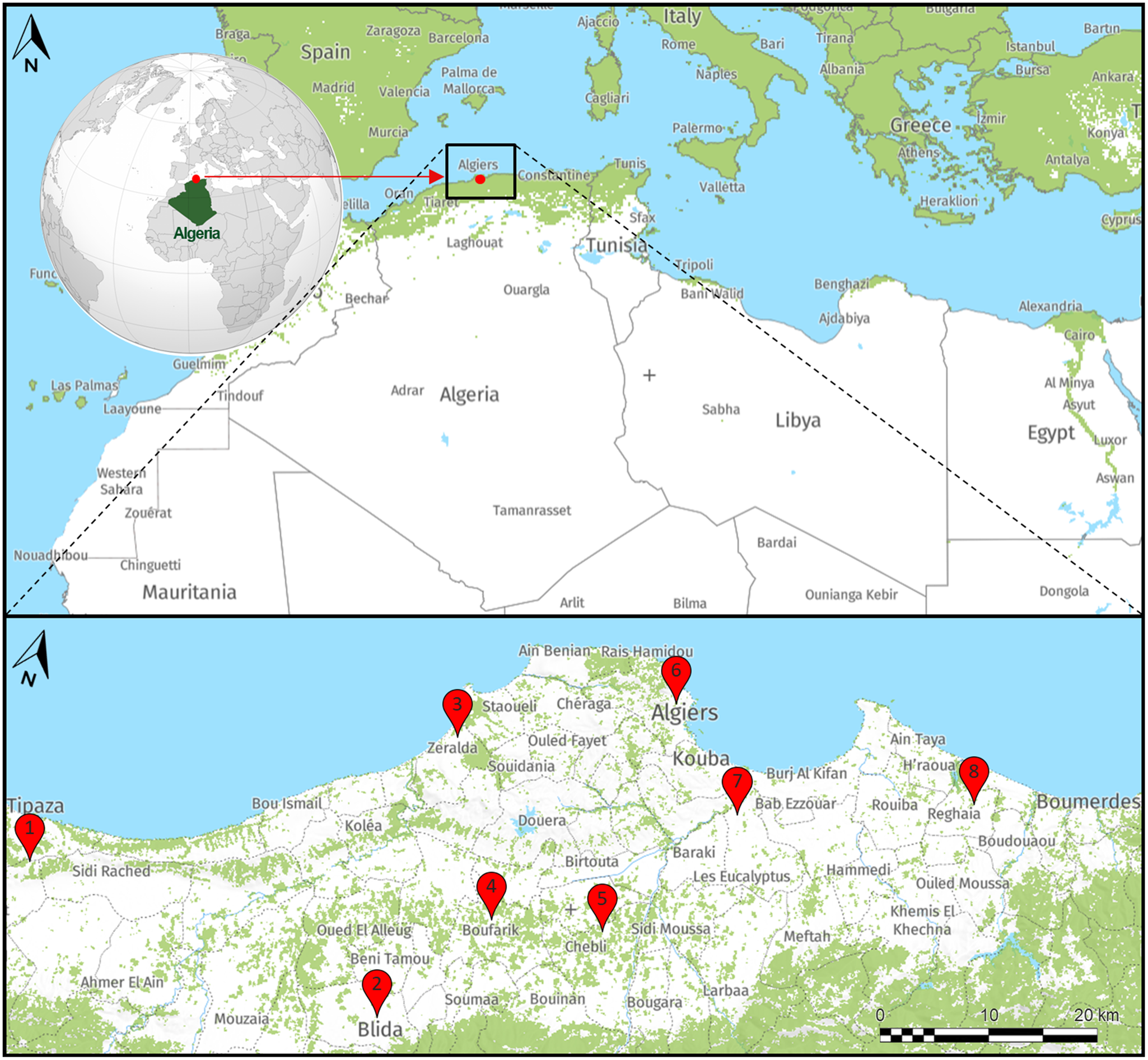
The study was conducted in the Mitidja Plain (36.4°–36.9° N, 1.7°–4.1° E) (Figure 1), Algeria’s largest sublittoral plain with an area of 1450 km2 (Imache et al. Reference Imache, Kuper, Bouarfa and Hartani2011), averaging 100 km in length and 10–18 km in width (Yahiaoui et al. Reference Yahiaoui, Meddi, Razack, Boufekane and Bekkoussa2023). It extends across 4 provinces, namely Algiers, Blida, Tipaza and Boumerdes (Nacer et al. Reference Nacer, Hamidat and Nadjemi2014).
Tree cover map (green shade) displaying geographic location of the Mitidja Plain and sampled localities (1: Tipaza, 2: Blida, 3: Zeralda, 4: Boufarik, 5: Ouled Chbel, 6: Algiers, 7: El Harrach and 8: Réghaïa) in northern Algeria.

Figure 1 Long description
The map displays tree cover in the Mitidja Plain, northern Algeria, with sampled localities marked by red pins. The inset shows Algeria′s location in North Africa. Key localities include Tipaza, Blida, Zeralda, Boufarik, Ouled Chbel, Algiers, El Harrach and Réghaïa. The map highlights the geographic distribution of tree cover, with denser areas in the central and southern regions of the plain. The scale bar indicates distances in kilometers and a compass rose shows north orientation.
Sampling and capture of columbids
Field surveys were conducted between December 2020 and May 2023, during both pre- and post-breeding periods, in 8 localities in northern Algeria (Figure 1), including Algiers, El Harrach, Blida, Tipaza, Boufarik, Zeralda, Réghaïa and Ouled Chbel. Pigeons were captured using baited moult-box traps with seeds (Christophe, Reference Christophe2003) and ornithological nets set-up early in the morning. The captured birds were transported to the laboratory of the National Veterinary School of El Alia for parasitological examination.
A total of 133 individuals of Columbidae were collected and analysed during the study, including 103 C. livia, 12 Streptopelia turtur (Linnaeus, 1758), 11 S. decaocto, 3 Streptopelia senegalensis (Linnaeus, 1766), 2 Streptopelia roseogrisea (Sundevall, 1857) and 2 Streptopelia risoria (Linnaeus, 1758). Faecal samples were collected directly from the birds’ cages using sterile equipment and preserved in suitable containers, labelled with the date, species name and sampling site.
Coprological examination
The analysis of faeces was based on 2 complementary approaches: direct examination and the flotation technique. Direct examination, which is quick and simple, allowed for the observation of parasitic forms (cysts, trophozoites, eggs and larvae) after diluting the faeces in a saline solution and examining them under a microscope. At the same time, the flotation technique (Sivajothi et al. Reference Sivajothi, Reddy and Rayulu2014; Hendrix and Robinson, Reference Hendrix and Robinson2023), which relies on the use of a saturated NaCl solution, was applied to concentrate and isolate the eggs and oocysts by causing them to rise to the surface, followed by microscopic observation at various magnifications after a settling period.
The pigeons were euthanized and subsequently dissected to remove their internal organs for analysis. The intestinal scraping technique was employed to detect intestinal parasites, cestode scolices and eggs within the intestinal mucosa. First, the digestive tract was immersed in water and gently shaken. The intestines were then placed on a metal tray, and all worms were collected and preserved in 70% ethanol. Deep scrapings were prepared on microscope slides, the mucus was smeared and fixed with methanol, and the slides were examined under an optical microscope at 10× and 40× magnification.
Collection and staining of cestodes
Live adult cestodes were collected using a fine brush in water until they became immobile after the small intestines of pigeons and turtledoves were dissected. The cestodes were then counted and preserved in 70% ethanol.
The cestodes were subjected to a modified borax carmine staining procedure. They were first decalcified in a bath of distilled water supplemented with acetic acid, then rinsed under tap water for 1 h. The specimens were stained with borax carmine for 5 min, differentiated in 70% acidified ethanol and then dehydrated through an ascending ethanol series (70%, 96% and 100%) for 10–15 min each. After clearing in toluene for 10 s, the cestodes were mounted on slides in Canada balsam and incubated at 60 °C for several days. Identification of the cestodes was carried out using the keys and descriptions available in the literature (Diakou et al. Reference Diakou, Ptochos and Papadopoulos2013; Ibrahim et al. Reference Ibrahim, Hassan, Moawa and Ghobashy2018; Al Quraishy et al. Reference Al Quraishy, Abdel-Gaber, Alajmi, Dkhil, Al-Jawher and Morsy2019; Safi-Eldin et al. Reference Safi-Eldin, Hoda, Taha and Ashour2019), with confirmation by Prof Faiza Marniche.
Data analysis
The ecological index of composition employed in this study is RA%, defined as the percentage of individuals of 1 species relative to the total number of individuals across all species. The formula is RA (%) = N i/N × 100, where N i is the number of individuals of a specific prey species, and N is the total number of individuals across all species. Statistical analysis of parasites was conducted using Quantitative Parasitology V 3.0 (Rózsa et al. Reference Rózsa, Reiczigel and Majoros2000) to assess parasite prevalence. Endoparasite similarities among the studied columbids (C. livia, S. turtur, S. decaocto, S. risoria, S. roseogrisea and Spilopelia senegalensis) were estimated based on species richness using Jaccard’s (IJ) and Sørensen’s (IS) similarity indices. Finally, the distribution and overlap of endoparasite species among the studied hosts were visualized using a 6-set Venn diagram and chord diagram generated by R software version 4.5.1 (R Core Team, 2025).
Results
Parasitological faecal examination
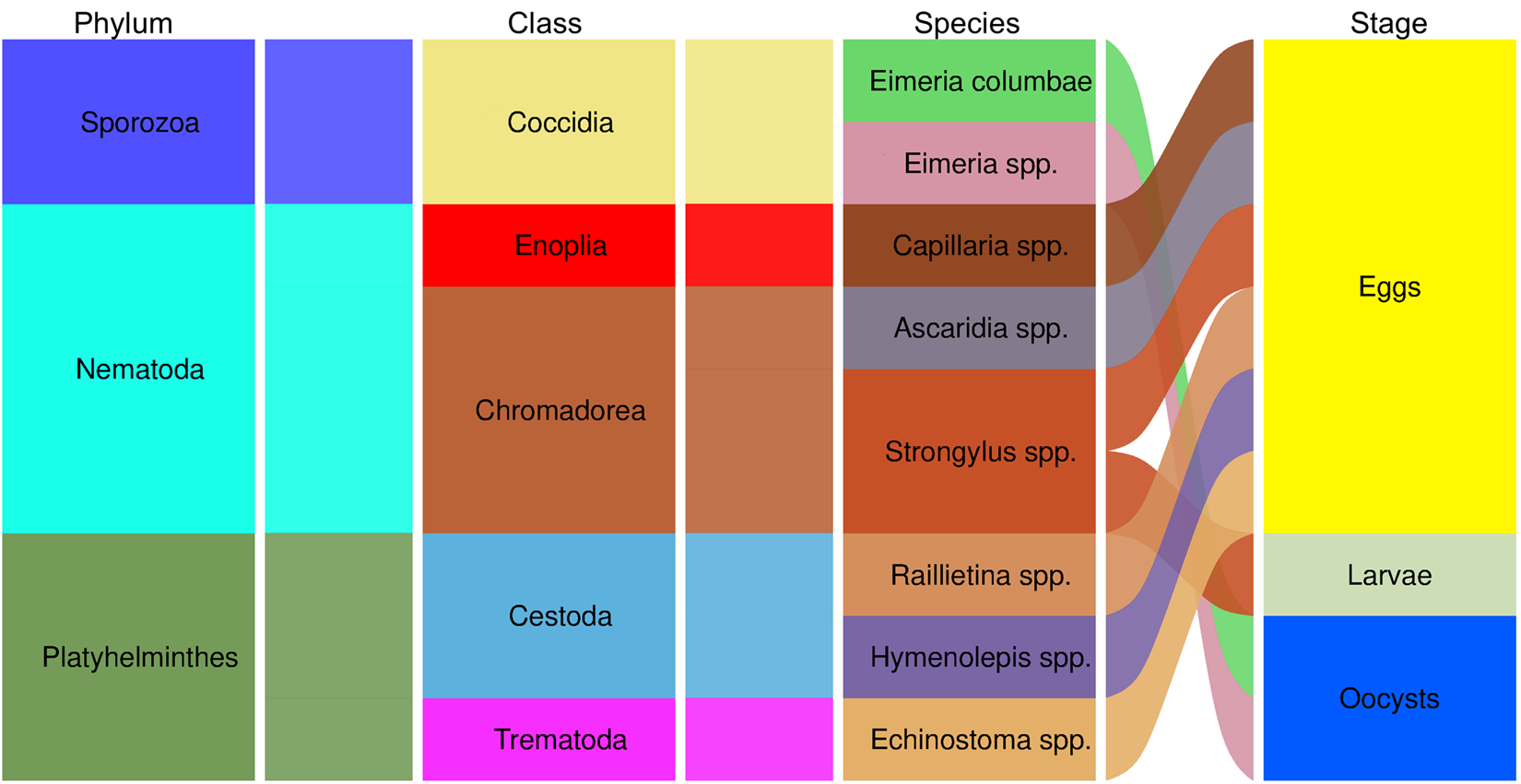
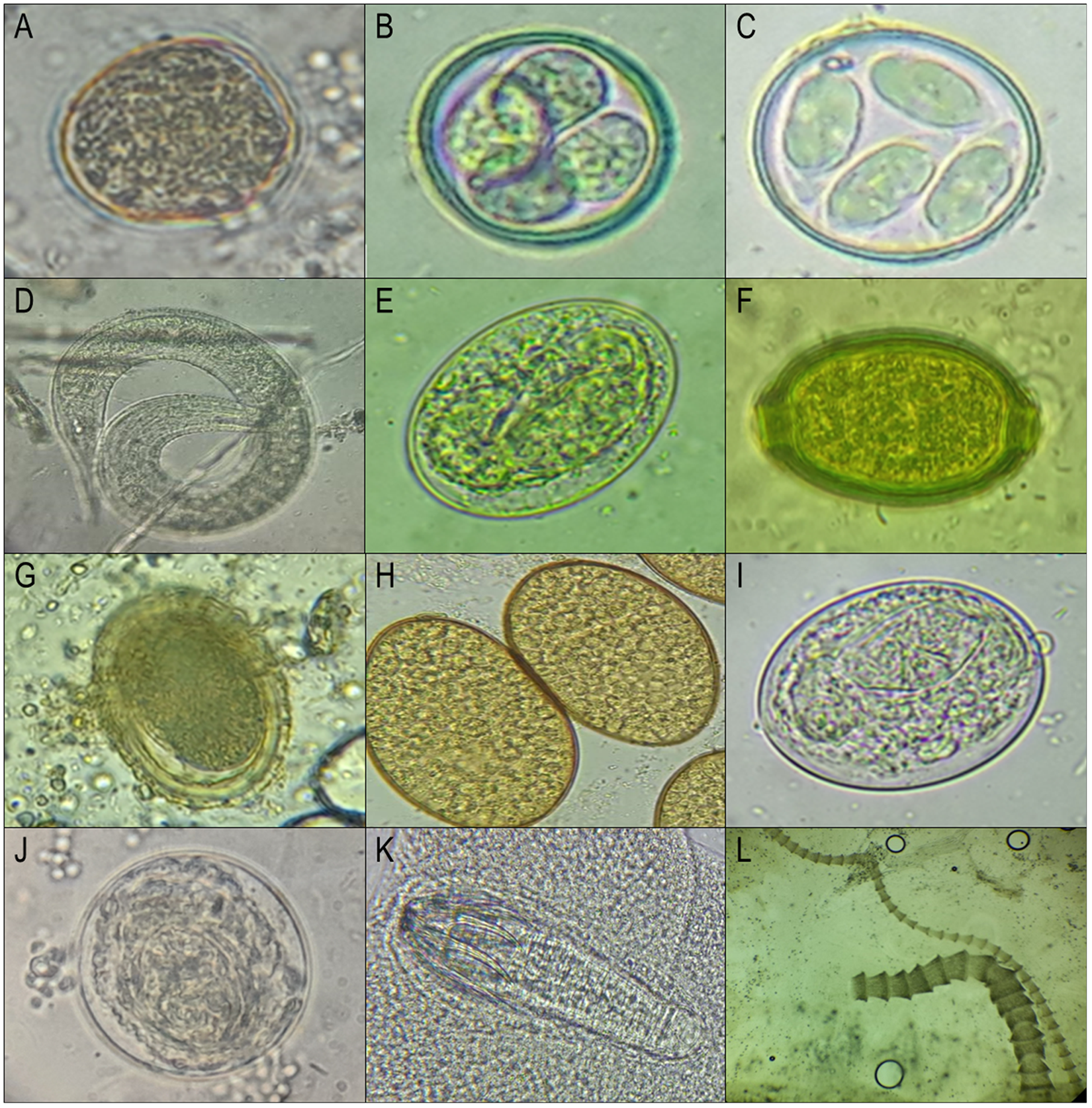
A total of 133 pigeons were examined for endoparasites, and all were infected with at least 1 species, corresponding to an overall prevalence of 100%. Coprological analysis identified 8 species of endoparasites belonging to 3 phyla: Sporozoa, Nematoda and Platyhelminthes (Figures 2 and 3).
Taxonomic list and life-history stages of endoparasite species identified in Columbidae faeces.

Figure 2 Long description
Taxonomic list of endoparasites identified in Columbidae faeces, organized into columns labeled Phylum, Class, Species and Stage. The phylum column includes Sporozoa, Nematoda and Platyhelminthes. The class column lists Coccidia, Enoplida, Chromadorea, Cestoda and Trematoda. The species column features Eimeria columbae, Eimeria spp., Capillaria spp., Ascaridia spp., Strongylus spp., Raillietinaspp.,Hymenolepis spp. and Echinostoma spp. The stage column includes Eggs, Larvae and Oocysts. Arrows connect species to their respective life-history stages, illustrating the progression from species to stage.
Intestinal endoparasites identified in the faeces of columbids under a light microscope. (A) Non-sporulated Eimeria sp. Oocyst (100× magnification), (B) sporulated Eimeria sp. oocyst (100×), (C) sporulated Eimeria columbae oocyst (100×), (D) Strongylus sp. adult (10×), (E) Strongylus spp. egg (40×), (F) Capillaria sp. egg (4×), (G) Ascaridia sp. egg (40×), (H) Echinostoma sp. eggs (100×), (I) Raillietina sp. egg (40×), (J) Hymenolepis sp. egg (40×), (K) cestode scolex and (L) cestode strobila.

Sporozoans (Class: Sporozoasida) were represented by Eimeria columbae and Eimeria spp., observed in the form of oocysts. Nematodes included Capillaria spp. (Class Enoplia), as well as Ascaridia spp. and Strongylus spp. (Class Chromadorea), identified by their eggs and, in some cases, their larvae. The flatworms included cestodes (Raillietina spp., Hymenolepis spp.) and a trematode (Echinostoma spp.), detected based on eggs observed in faeces.
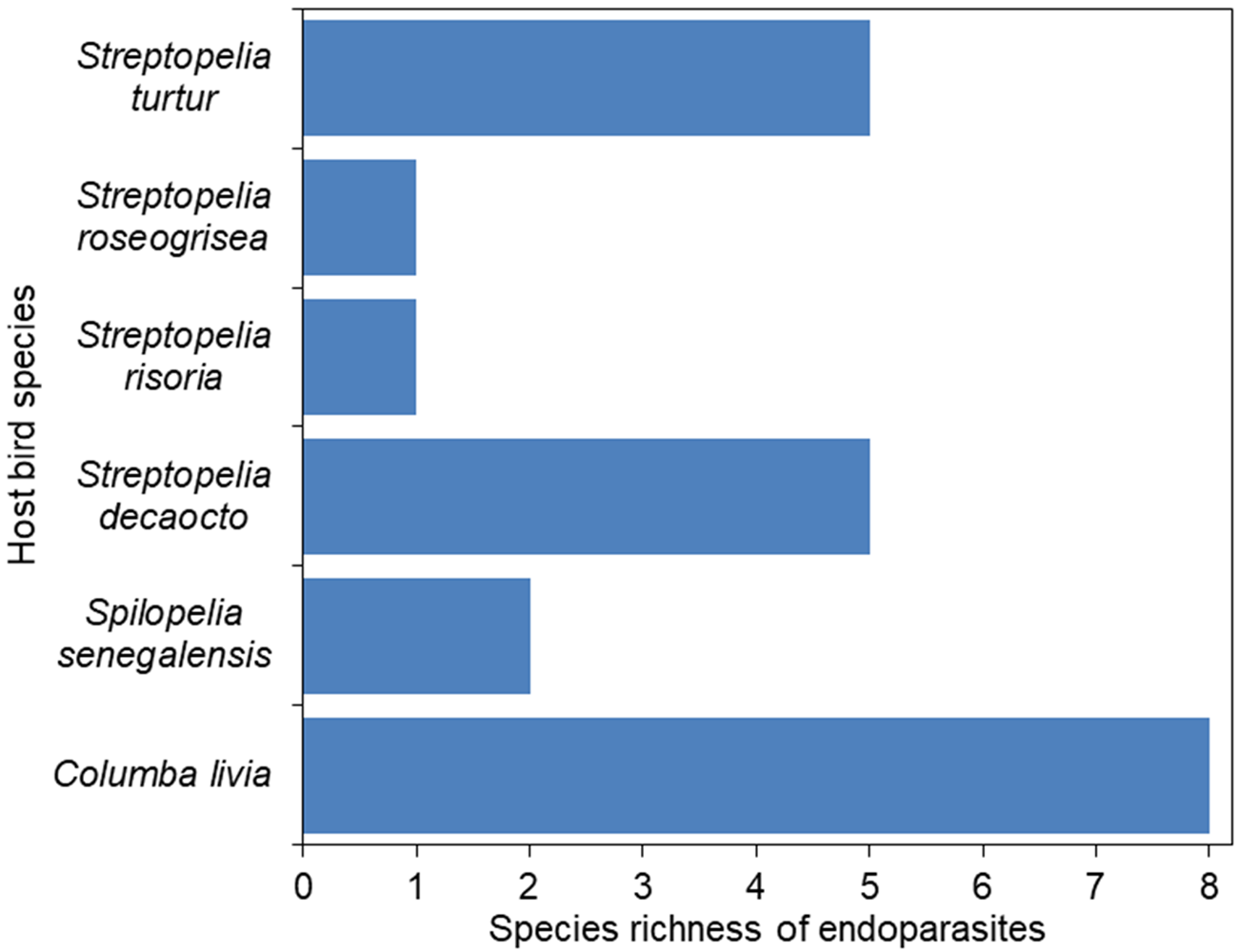
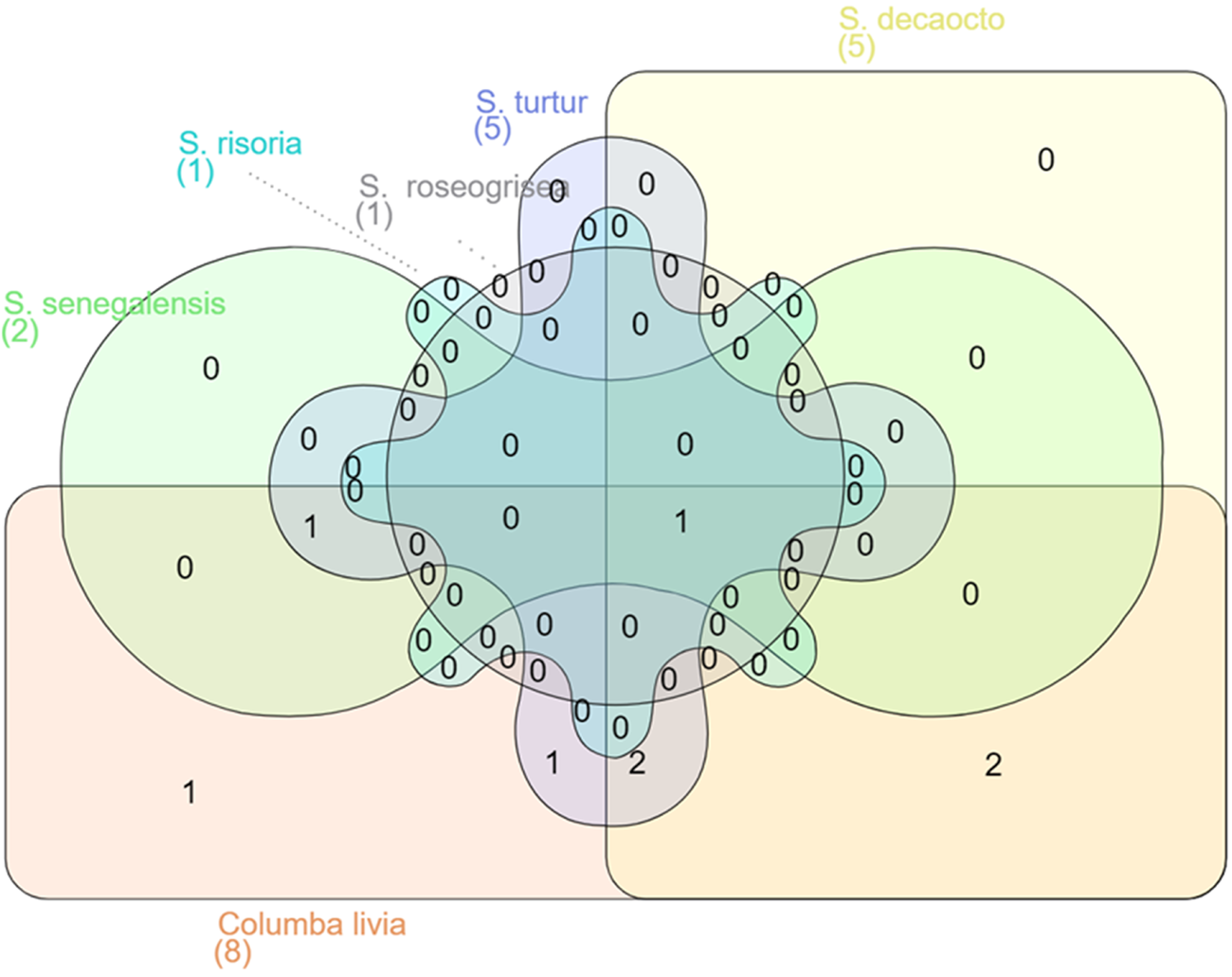
The highest number of parasitic species was observed in C. livia (Figure 4), with 8 species identified. Streptopelia decaocto and S. turtur each hosted 5 parasitic species. Spilopelia senegalensis hosted 2 species, while S. risoria and S. roseogrisea each hosted only 1 parasitic species. These results reflect high parasite pressure as well as marked interspecific variability among the columbids studied.
Species richness of endoparasites recorded in 6 Columbidae species in Algiers.

Host–parasite associations and parasite community similarity
According to the Venn diagram (Figure 5), the possible relationships between the different columbid species studied are clearly represented in 6 sets, where the 6 host species share a single species, Eimeria spp. Thus, 2 common species are noted between C. livia and S. decaocto (Ascaris spp., E. columbae) and a single species (Hymenolepis spp.) between S. turtur and C. livia. In addition, there is a single species common to C. livia, S. turtur and Spilopelia sengelensis.
Six-set Venn diagram showing the overlap of species rich in endoparasites among the Columbiformes (Columba livia, Streptopelia decaocto, Streptopelia turtur, Spilopelia senegalensis, Streptopelia risoria and Streptopelia roseogrisea). Figures between brackets are the total number of taxa per host species.

Figure 5 Long description
The diagram consists of six sets representing different Columbiformes species: Columba livia, Streptopelia decaocto, Streptopelia turtur, Spilopelia senegalensis, Streptopelia roseogrisea and Streptopelia risoria. Each set is labeled with the species name and the total number of taxa per host species in brackets. The central overlapping region shows the number ′1′, indicating a single species shared among all six host species. The overlap between Columba livia and Streptopelia decaocto contains the numbers ′2′, representing two common species. The overlap between Streptopelia turtur and Columba livia shows the number ′1′, indicating one shared species. Additionally, the overlap among Columba livia, Streptopelia turtur and Spilopelia senegalensis also contains the number ′1′, denoting a single common species. Other regions within the diagram are marked with ′0′, indicating no shared species in those overlaps.
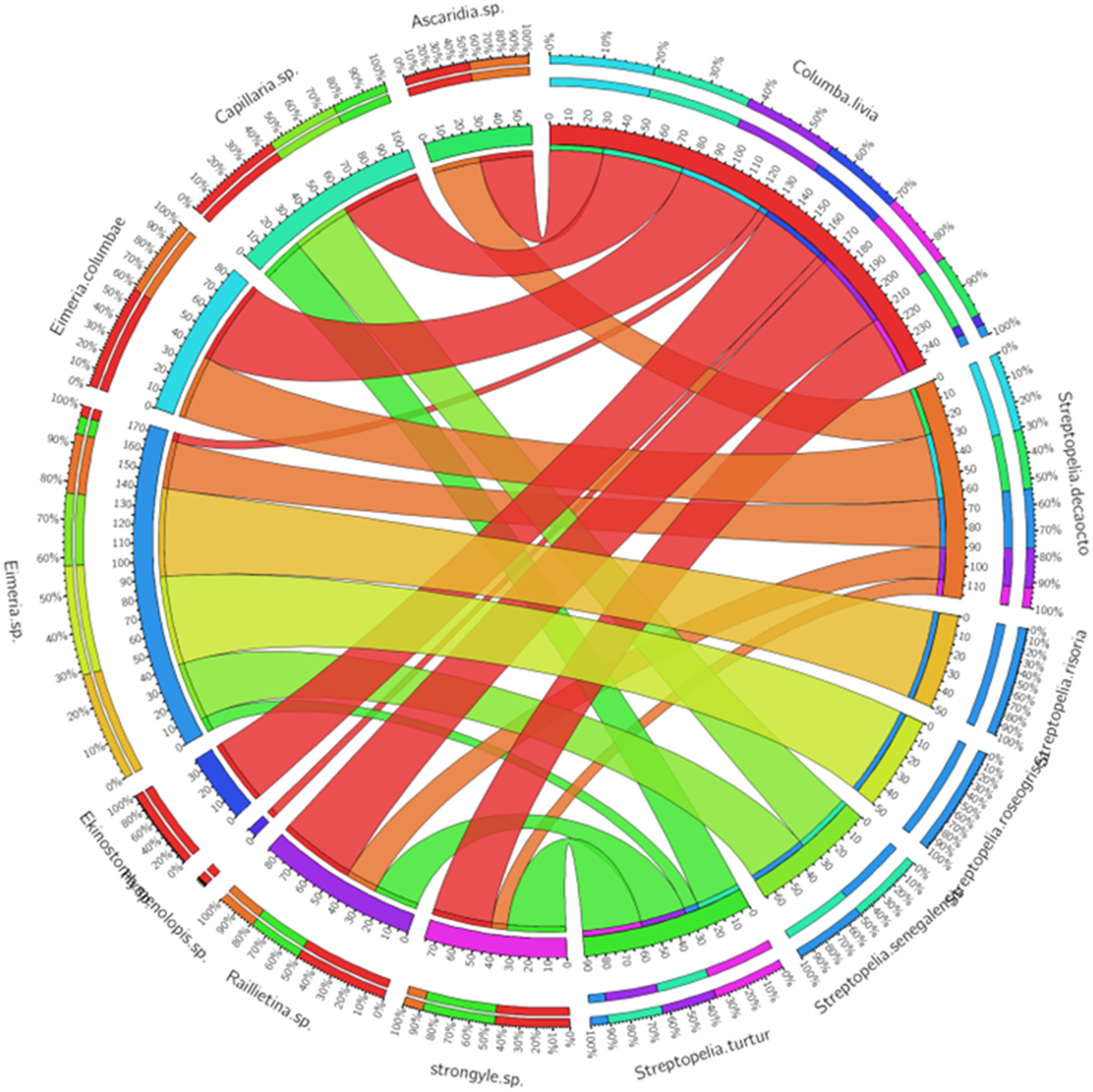
The chord diagram (Figure 6) illustrates the 6 host species connected to their respective endoparasite species. It can be observed that all identified parasites are reported in a total of 8 species in C. livia. It is noteworthy that the band containing 6 colours represents the species common to all host species with a high prevalence (Eimeria spp.), and C. livia shares at least 1 parasite species with all other hosts.
Chord diagram showing the distribution of endoparasite taxa based on prevalence in Columbiformes (Columba livia, Streptopelia decaocto, Streptopelia turtur, Spilopelia senegalensis, Streptopelia risoria and Streptopelia roseogrisea).

Figure 6 Long description
Chord diagram showing the distribution of endoparasite taxa based on prevalence in Columbiformes. This diagram has no Cartesian axes. Instead, each species occupies a labeled arc segment arranged in a circle. The outer edge of each arc segment carries a numeric scale running from 0 to 100 percent in visible increments, representing the prevalence proportion within that species segment. Ribbons connecting two arc segments indicate a shared parasite taxon and the width of each ribbon at its base corresponds to the prevalence value at that point on the arc scale. Host species visible on the outer ring include Columba livia, Streptopelia decaocto, Streptopelia senegalensis, Streptopelia turtur, Eimeria sp. and Emeria sb. Parasite taxa visible on the outer ring include Ascaridia sp., Capillaria sp., Raillietina sp., Strongyle sp. and additional taxa including Parastrongylus sp. The arc segment for Columba livia is the largest and carries ribbons connecting to all other host and parasite segments, indicating the greatest number of parasite taxa recorded. Eimeria sp. shows ribbons extending to all host segments, reaching scale values near the upper range of each host arc, indicating high prevalence across all hosts. Raillietina sp. and Strongyle sp. show ribbons of moderate width connecting to multiple hosts. Capillaria sp. and Ascaridia sp. show narrower ribbons concentrated toward fewer host segments. Streptopelia turtur and Streptopelia senegalensis carry fewer and narrower ribbon connections compared to Columba livia, indicating lower parasite taxon diversity. The overall structure shows Columba livia as the host with the greatest ribbon count and Eimeria sp. as the parasite taxon with the widest arc coverage across all host segments.
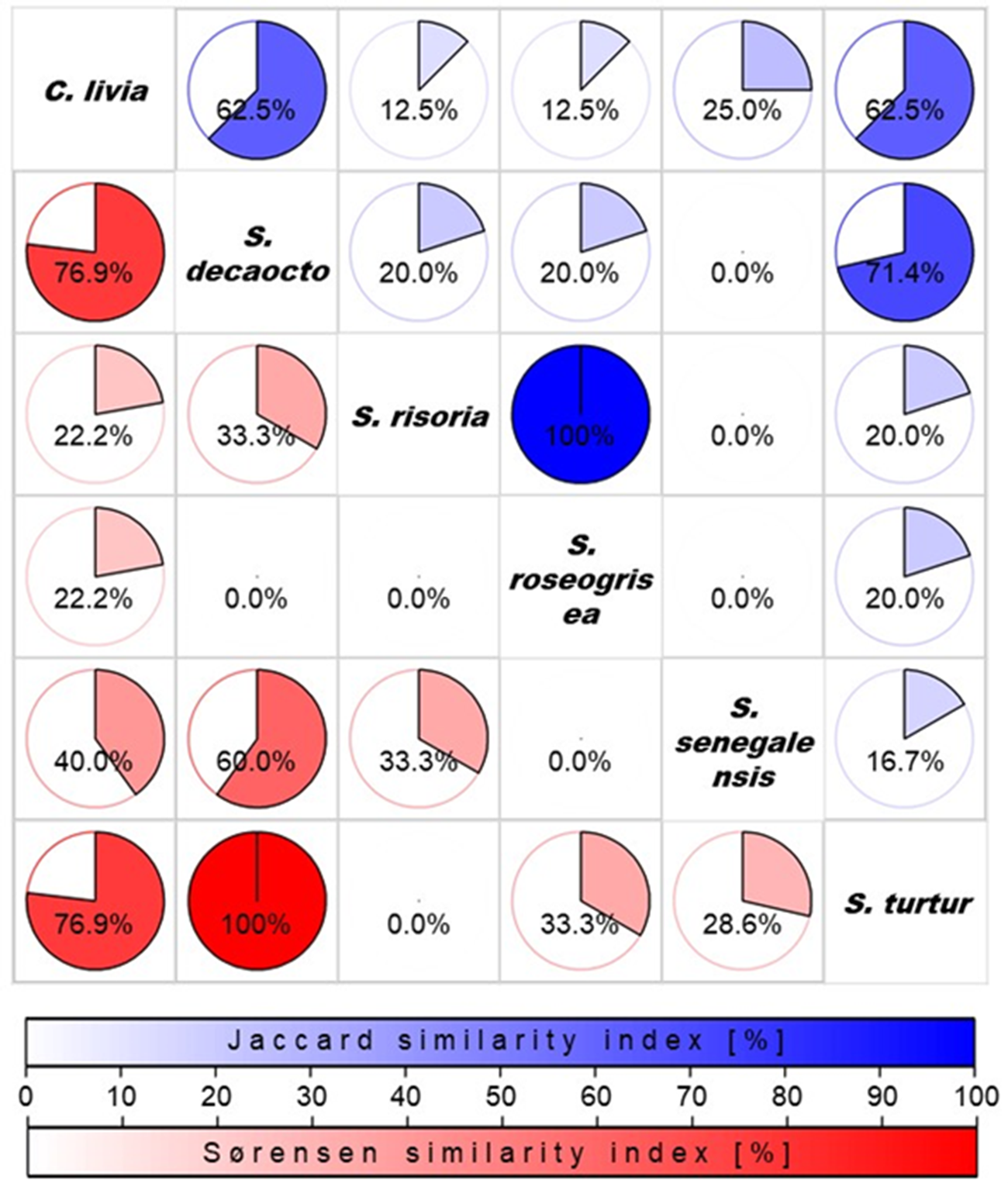
A high degree of similarity between S. risoria and S. roseogrisea (100%), as indicated by both the IJ and IS, confirms their biological proximity and suggests that the analysed characters are virtually identical. Furthermore, the other species of Columbidae form a relatively homogeneous group, but with varying degrees of similarity; for example, S. senegalensis showed moderate similarity to S. risoria (IJ = 50%) and S. roseogrisea (IJ = 50%), respectively, and S. turtur to C. livia (IJ = 62.5%) and S. decaocto (IJ = 71.4%), respectively (Figure 7).
Matrix of qualitative similarity (Jaccard and Sørensen indices) of endoparasitic species among infested Columbidae species in Algeria.

Figure 7 Long description
Matrix of pie charts displaying the Jaccard and Sørensen similarity indices for endoparasitic species among Columbidae species. Each cell contains two pie charts: the left chart represents the Jaccard similarity index and the right chart represents the Sørensen similarity index. The species compared are C. livia, S. decaocto, S. risoria, S. roseogrisea, S. senegalensis and S. turtur. The indices are color-coded, with blue for Jaccard and red for Sørensen, ranging from 0 to 100 percent. Notable similarities include 100 percent similarity between S. risoria and S. roseogrisea in both indices and high similarity between S. decaocto and S. turtur. The legend at the bottom indicates the color gradient for each index.
Prevalence of endoparasite infestation
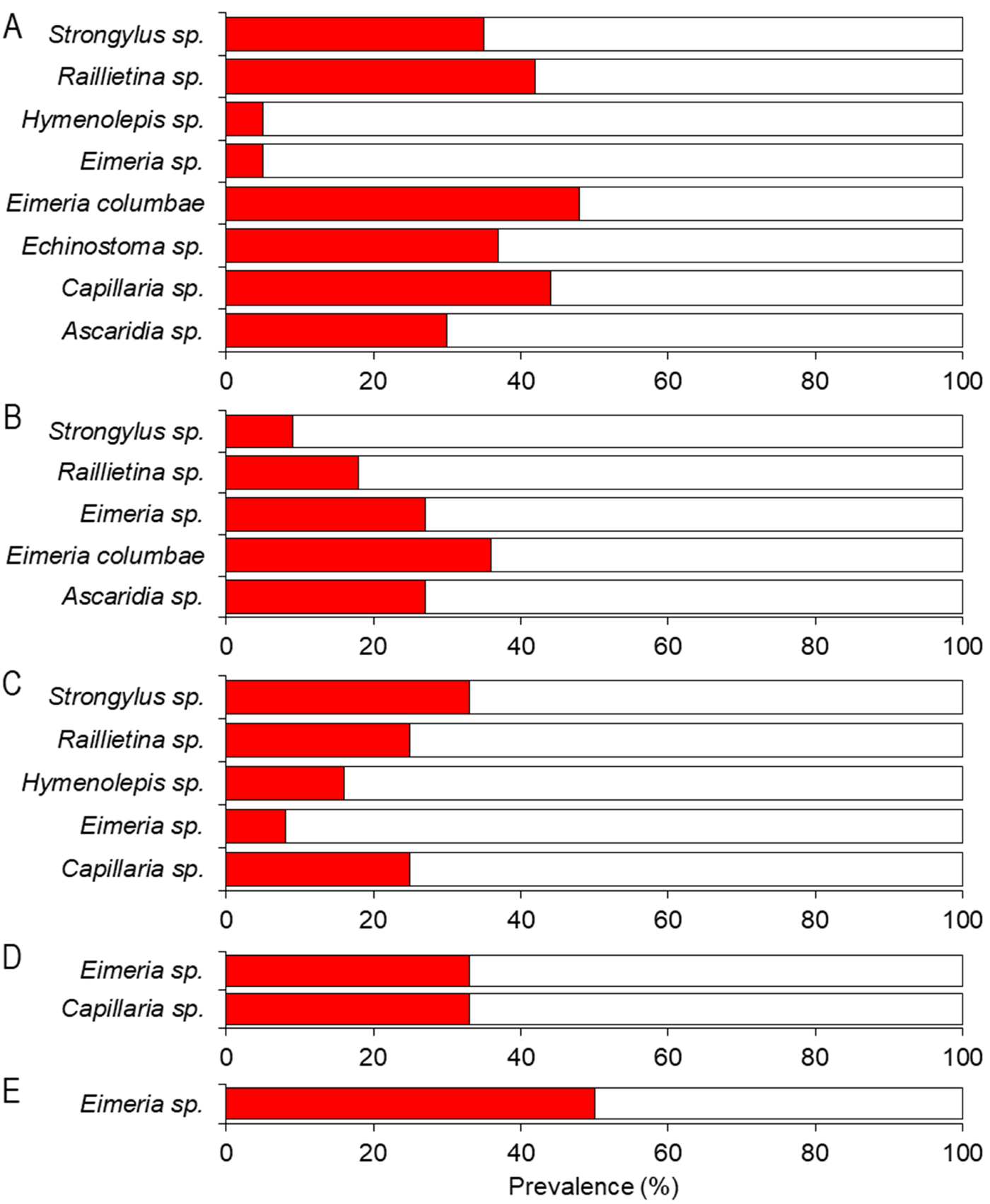
Out of a total of 103 individuals of C. livia, 47.57% were infested with E. columbae. We also observed prevalence rates of 44.66%, 42.72%, 36.89% and 33.98% for Capillaria spp., Raillietina spp., Echinostoma spp. and Strongylus spp., which were classified as satellite species. The rarest species found were Eimeria spp. and Hymenolepis spp., each accounting for 4.85% (Figure 8).
Prevalence score (red horizontal bars) of endoparasites found in columbids (A: Columba livia, B:Streptopelia decaocto, C: Streptopelia turtur, D: Spilopelia senegalensis, E: Streptopelia risoria and Streptopelia roseogrisea).

Figure 8 Long description
Horizontal bar graph A with x axis label Prevalence left parenthesis percent right parenthesis, range 0 to 100. Category labels on the y axis: Strongylus sp., Raillietina sp., Hymenolepis sp., Eimeria sp., Eimeria columbae, Echinostoma sp., Capillaria sp., Ascaridia sp. Bar endpoints: Strongylus sp. 35, Raillietina sp. 40, Hymenolepis sp. 5, Eimeria sp. 5, Eimeria columbae 50, Echinostoma sp. 35, Capillaria sp. 40, Ascaridia sp. 30. Horizontal bar graph B with x axis label Prevalence left parenthesis percent right parenthesis, range 0 to 100. Category labels on the y axis: Strongylus sp., Raillietina sp., Eimeria sp., Eimeria columbae, Ascaridia sp. Bar endpoints: Strongylus sp. 5, Raillietina sp. 15, Eimeria sp. 25, Eimeria columbae 35, Ascaridia sp. 25. Horizontal bar graph C with x axis label Prevalence left parenthesis percent right parenthesis, range 0 to 100. Category labels on the y axis: Strongylus sp., Raillietina sp., Hymenolepis sp., Eimeria sp., Capillaria sp. Bar endpoints: Strongylus sp. 35, Raillietina sp. 25, Hymenolepis sp. 15, Eimeria sp. 5, Capillaria sp. 20. Horizontal bar graph D with x axis label Prevalence left parenthesis percent right parenthesis, range 0 to 100. Category labels on the y axis: Eimeria sp., Capillaria sp. Bar endpoints: Eimeria sp. 35, Capillaria sp. 35. Horizontal bar graph E with x axis label Prevalence left parenthesis percent right parenthesis, range 0 to 100. Category label on the y axis: Eimeria sp. Bar endpoint: Eimeria sp. 50.
Out of the 11 individuals of S. decaocto, 36.36% were infested with E. columbae, 27.27% with Eimeria spp. and Ascaridia spp., and 18.18% with Raillietina sp., which are satellite species. In contrast, Strongylus spp. is considered a rare species with a prevalence of 9.09%.
Among the 12 S. turtur individuals, Strongylus spp., Raillietina spp., Capillaria spp. and Hymenolepis spp. were considered satellite parasite species, with infection rates of 33.3%, 25%, 25% and 16.67%, respectively. This is followed by Eimeria spp., which is a rare species with an infestation rate of 8.33%. Two satellite species, Eimeria spp. and Capillaria spp., infested S. sengelensis, with a prevalence of 33.33% for each. Furthermore, out of a total of 2 individuals for each host species of S. risoria and S. roseogrisea, a 50% prevalence of Eimeria spp. was observed.
Cestode species
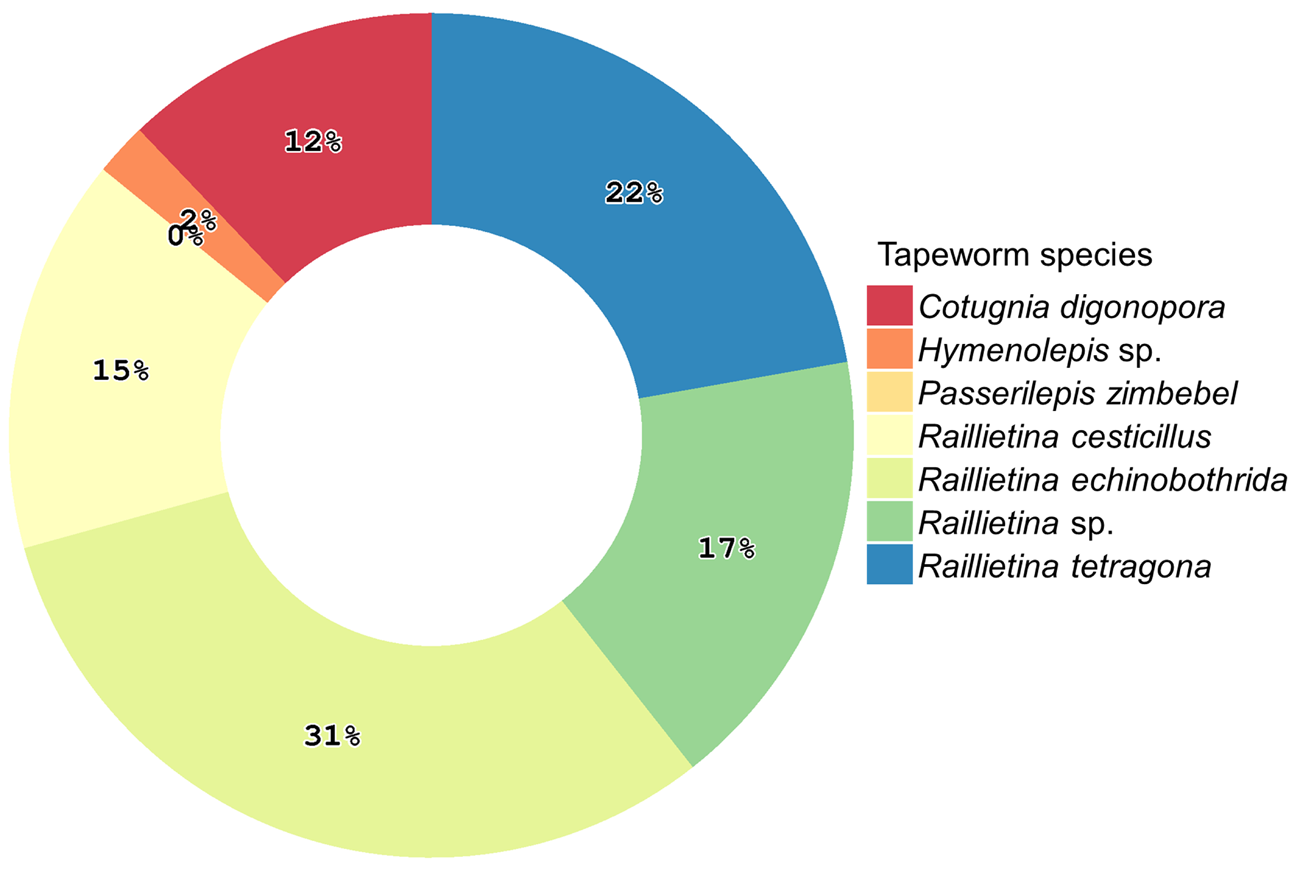
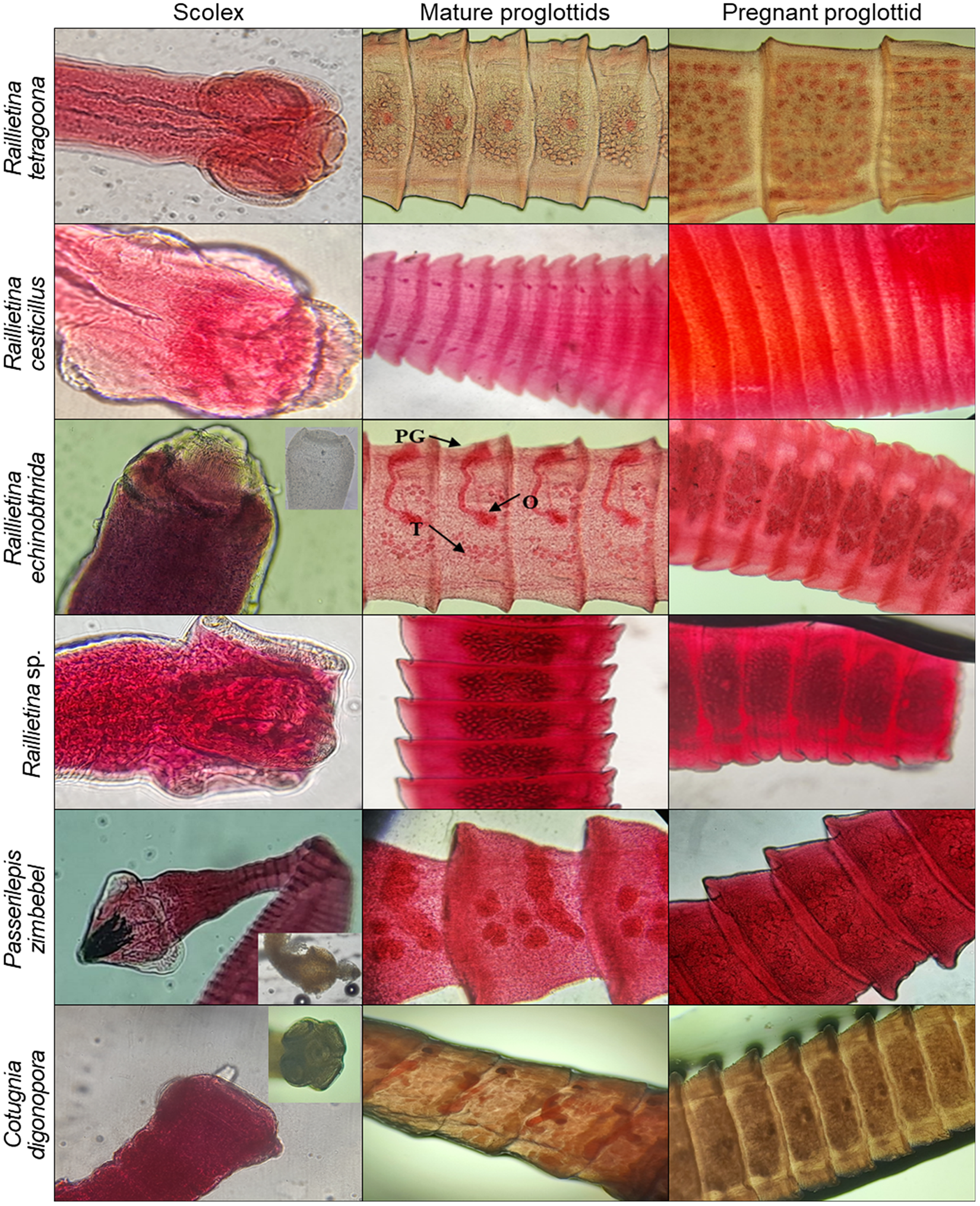
The mounting of the worms revealed the presence of 7 cestode species (Figures 9 and 10). Six cestode species were identified in C. livia and S. turtur, while 2 species were recorded in S. decaocto. No cestode species were found in the remaining dove species. In terms of parasitic abundance, Raillietina echinobothrida was the predominant cestode in C. livia (31.28%) and Raillietina tetragona (21.51%). Other species showed lower abundances, including Raillietina sp. (17.32%), Raillietina cesticillus (15.08%) and Cotugnia digonopora (12.29%). Finally, some species were very rare, with only 8 individuals of Hymenolepis spp. (2.23%) and a single individual of Passerilepis zimbebel (0.27%) (Figure 9).
Relative abundance (%) of adult tapeworm species (Platyhelminthes: Cestoda) infesting Columbidae species in Algeria.

Scolex (observed at 40× magnification), mature proglottids (GP: genital pore, O: ovary, T: testes) at 40× magnification, and pregnant proglottid at 40× magnification of different cestode species infesting Columbidae in Algeria.

Host–parasite associations and community similarity
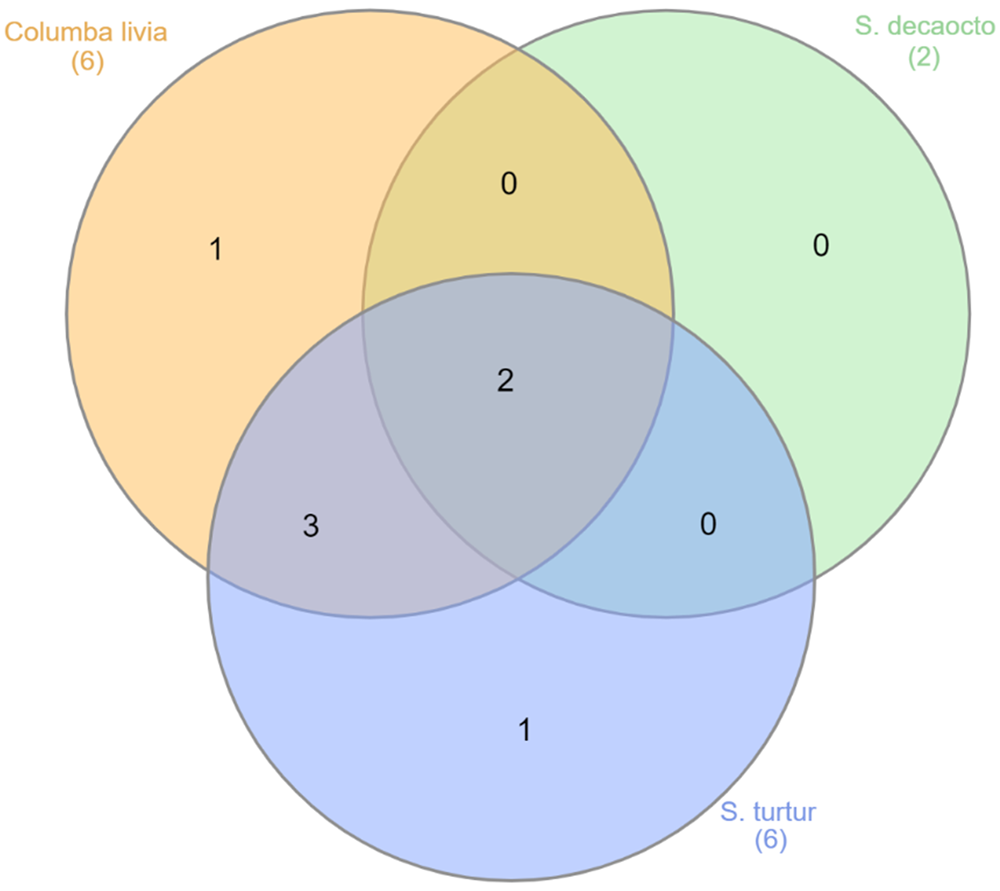
The Venn diagram (Figure 11) shows all possible relationships among Columbidae hosts infected with cestodes. C. livia, S. decaocto and S. turtur share 2 species in common, while C. livia and S. turtur share 3 species.
Three-set Venn diagram showing the overlap in cestode diversity among the 3 columbid species (C. livia, S. decaocto and S. turtur). Figures between brackets are the total number of taxa per host species.

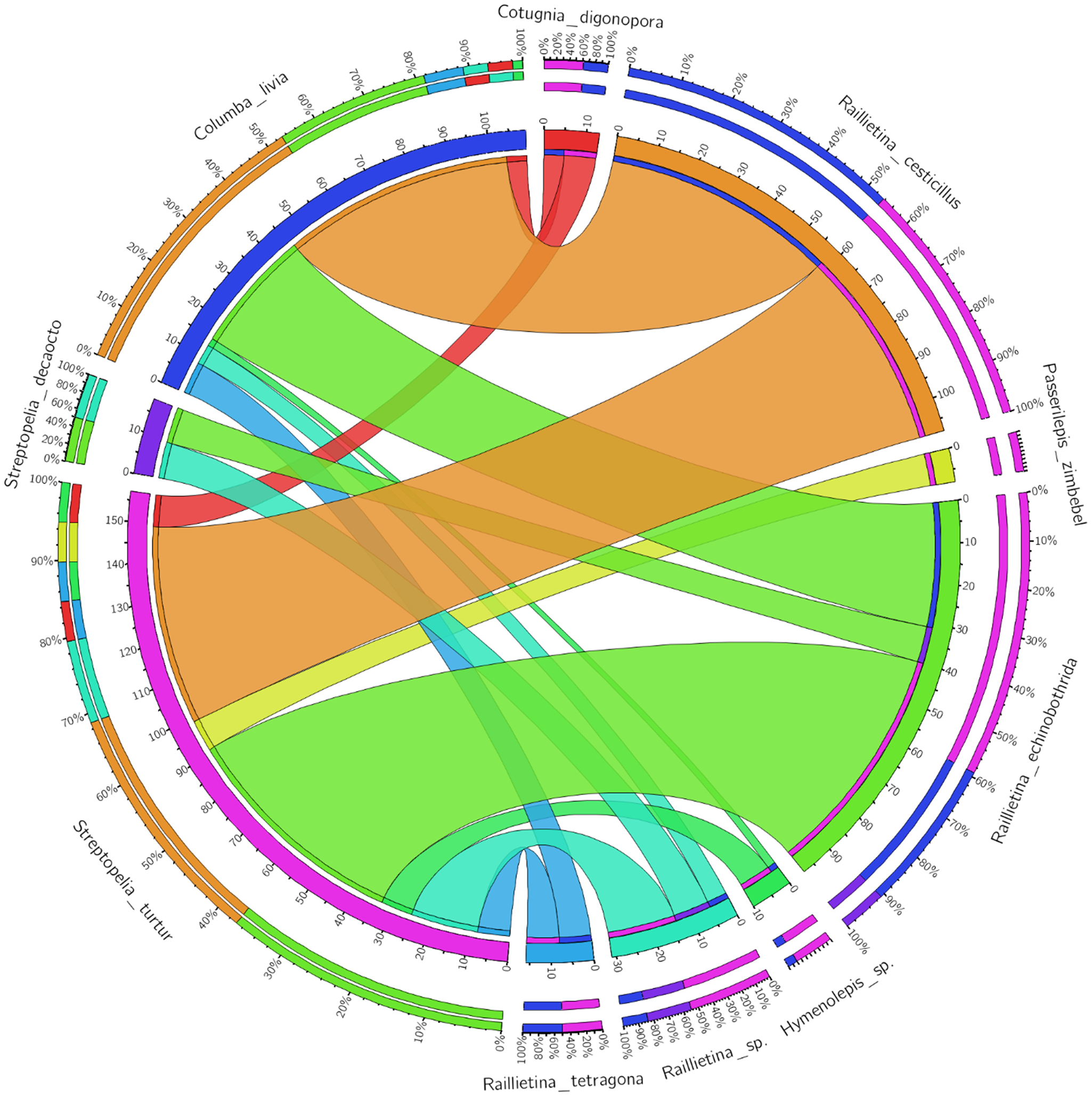
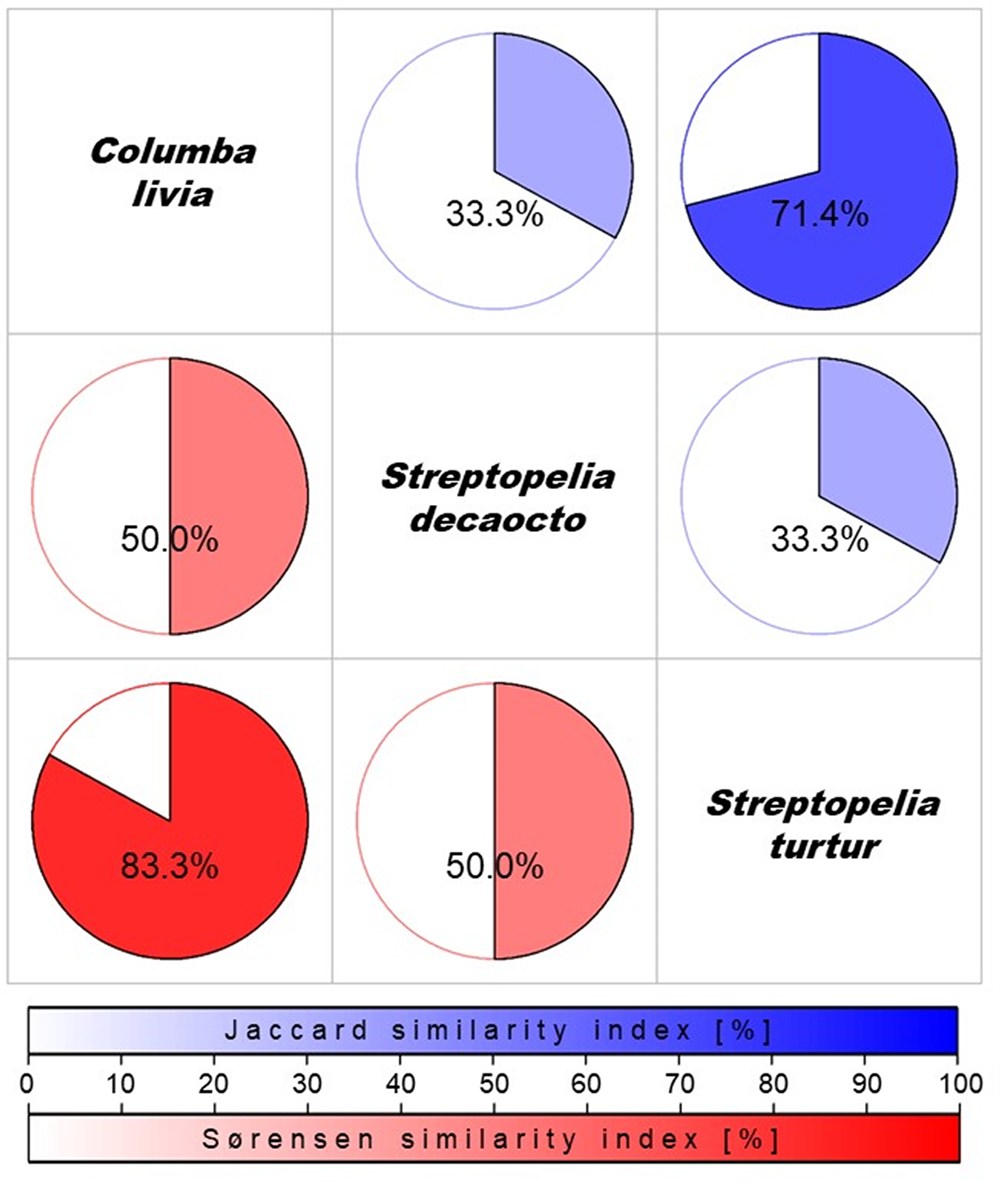
The chord diagram (Figure 12) illustrates the relationships between the 3 bird hosts and the 7 cestode species. The similarities between C. livia and S. turtur are easily observed, showing a strong association across all identified cestodes, except for P. zimbebel, which is found only in S. turtur. In contrast, S. decaocto shows a weak relationship with the other 2 hosts, as it shares only 2 cestodes with them (Raillietina sp. and Raillietina echinobotreda). The highest qualitative similarity score (IJ = 71.4%) was observed between C. livia and S. turtur (Figure 13). Furthermore, the similarity between C. livia and S. decaocto, as well as between S. decaocto and S. turtur, is identical, with a value of (IJ = 33.3%).
Chord diagram showing the distribution of cestode species in columbids (C. livia, S. decaocto, S. turtur, Spilopelia sengelensis, S. risoria and S. roseogrisea).

Figure 12 Long description
Chord diagram illustrating the distribution of cestode species among three bird hosts: Columba livia, Streptopelia turtur and Streptopelia decaocto. The diagram shows connections between the hosts and seven cestode species: Cotugnia digonopora, Raillietina cesticillus, Passerilepis zimbebel, Raillietina tetragona, Raillietina sp., Hymenolepis sp. and Raillietina echinobotreda. The connections indicate the presence and sharing of cestode species among the bird hosts, with varying thicknesses representing the strength of associations. Columba livia and Streptopelia turtur show strong associations with most cestodes, except Passerilepis zimbebel, which is exclusive to Streptopelia turtur. Streptopelia decaocto shares only Raillietina sp. and Raillietina echinobotreda with the other hosts, indicating a weaker relationship.
Qualitative similarity (Jaccard and Sørensen indices) of cestode species among Columbidae species.

Figure 13 Long description
Matrix of pie charts displaying similarity indices among Columbidae species. The diagonal cells contain species names: Columba livia, Streptopelia decaocto and Streptopelia turtur. The other cells contain pie charts with percentages. The top-right pie chart shows Columba livia with Jaccard index 33.3 percent and Sørensen index 71.4 percent. The middle-left pie chart shows Streptopelia decaocto with Jaccard index 50.0 percent and Sørensen index 33.3 percent. The bottom-left pie chart shows Streptopelia turtur with Jaccard index 83.3 percent and Sørensen index 50.0 percent. The filled wedge in each pie represents the percentage value. A legend below indicates that blue corresponds to Jaccard index and red to Sørensen index, with darker shades indicating higher values. The legend scale ranges from 0 to 100 percent.
Distribution of cestodes in sampled sites
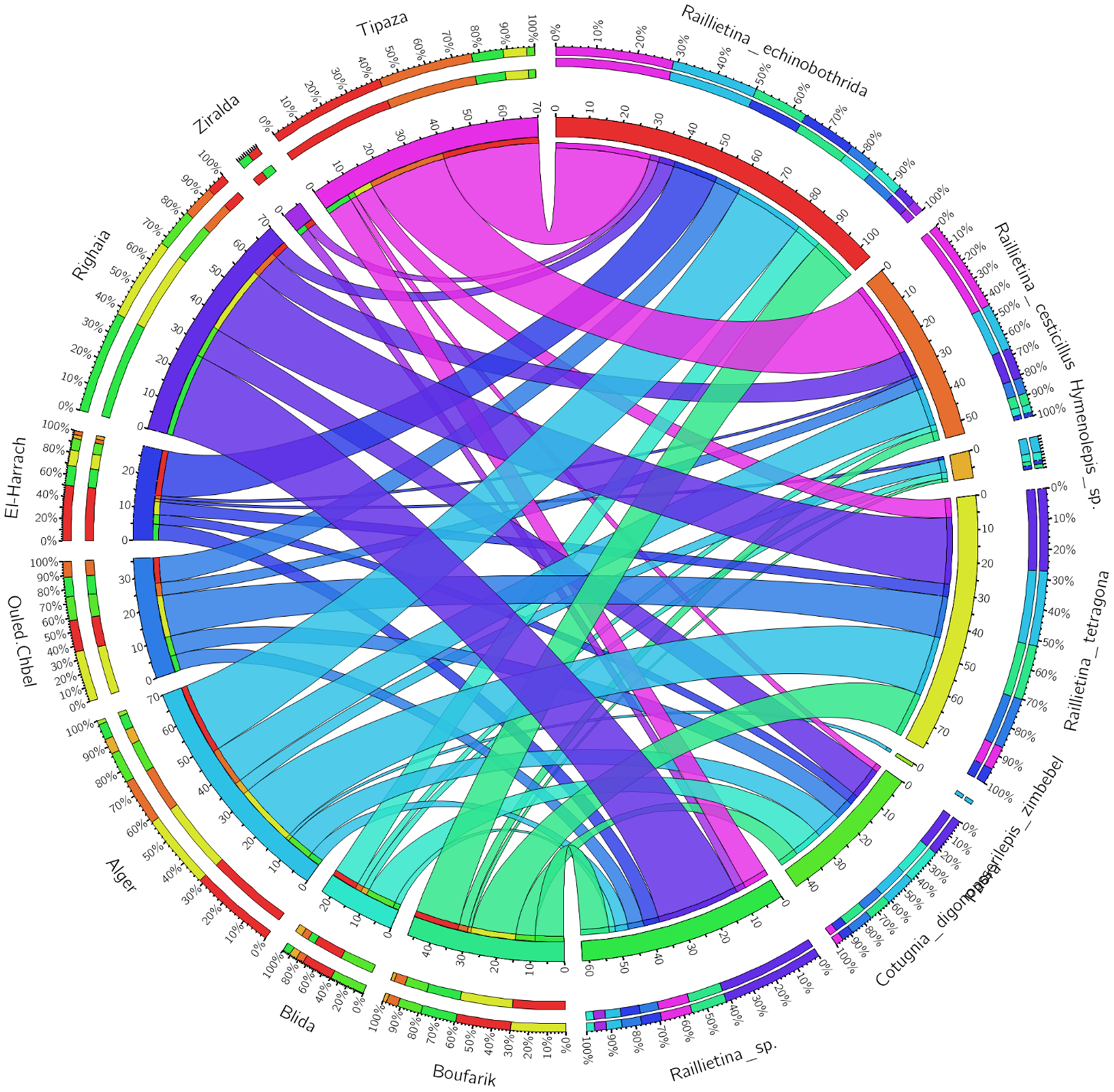
The chord diagram, which highlights the relationships between collection sites and parasite species (Figure 14), shows a heterogeneous distribution of parasite species across the stations. Raillietina tetragona and R. echinobothrida appear to be the most abundant species, found at several sites, notably in Boufarik and Tipaza. Other species, such as Hymenolepis sp. and C. digonopora, are found at only a limited number of sites, suggesting lower prevalence or a more restricted distribution. The thickness of the lines connecting each station to a species reflects the infestation rate, making it possible to visualize both parasite diversity and infestation hotspots. This illustration highlights the geographic variability of cestodes in the study area and provides a clear overview of the interactions between hosts and their parasites.
Chord diagram showing the distribution of cestode species at the sampling sites (Algiers, El Harrach, Blida, Tipaza, Boufarik, Zeralda, Réghaïa and Ouled Chbel).

Figure 14 Long description
Chord diagram illustrating the distribution of cestode species at sampling sites: Algiers, El Harrach, Blida, Tipaza, Boufarik, Zeralda, Réghaïa and Ouled Chbel. The diagram highlights relationships between sites and parasite species, showing a heterogeneous distribution. Raillietina tetragona and Raillietina echinobothrida are the most abundant, notably in Boufarik and Tipaza. Other species like Hymenolepis sp. and Cotugnia digonopora have limited distribution. Line thickness reflects infestation rates, visualizing parasite diversity and infestation hotspots, highlighting geographic variability and host-parasite interactions.
Prevalence of cestode infestation
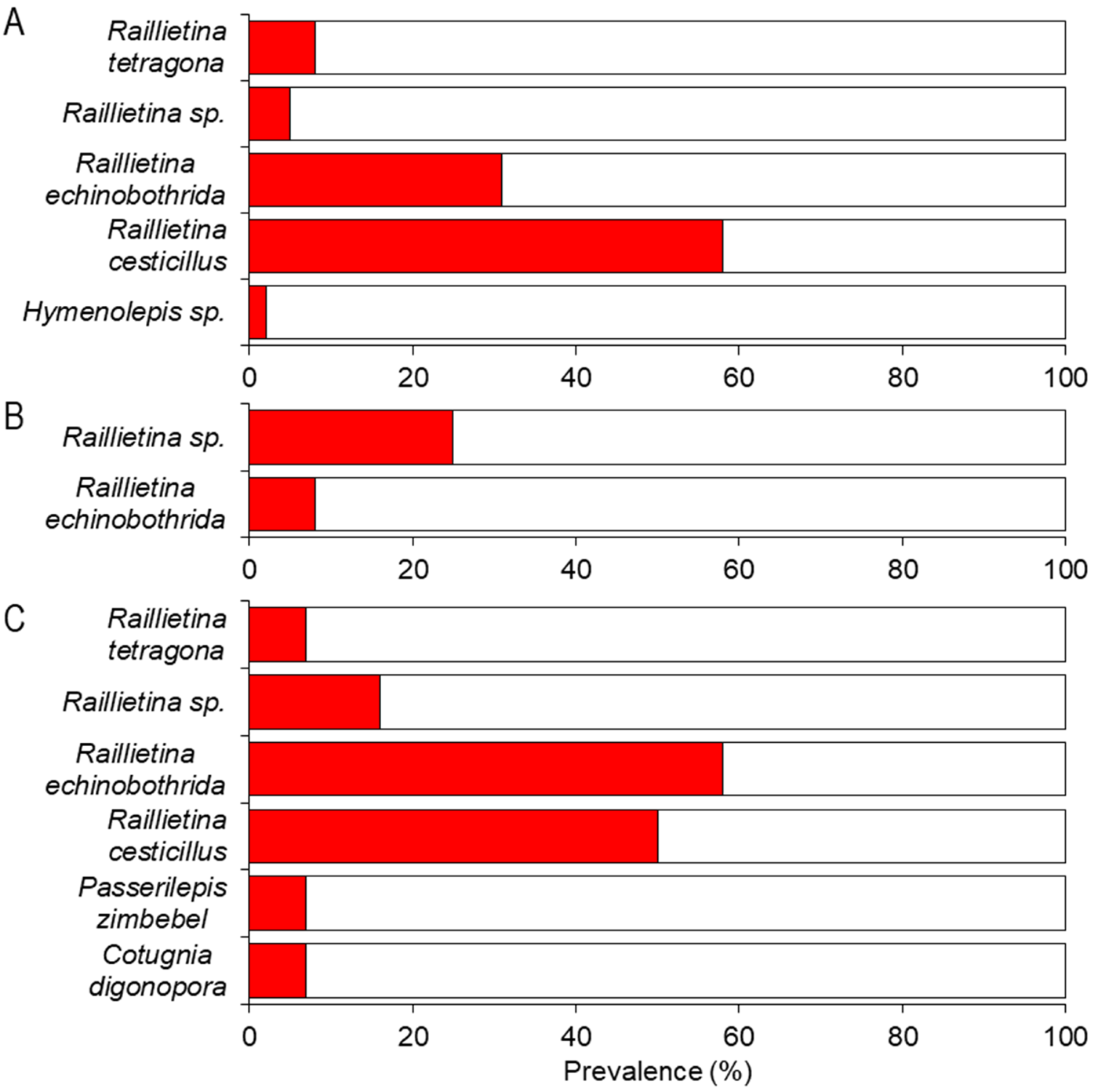
Across all Columbidae populations, prevalence rates range from 0% to 58.33%, with R. cesticillus and R. echinobothrida reaching their highest levels in C. livia (57.83%, 31.33%, respectively) and in S. turtur (50%, 58.33%, respectively) (Figure 15). However, R. echinobothrida in S. decaocto has a very low prevalence (9.09%). The prevalence of the cestodes R. tetragona, Raillietina sp. and C. digonopora is very low in all hosts, and they are considered rare species. Furthermore, P. zimbebel and Hymenolepis spp. show very low infestation rates in S. turtur and C. livia, respectively.
Prevalence of endoparasitic cestodes (red horizontal bars) found in columbids (A: C. livia, B: S. decaocto, C: S. turtur) in Algeria.

Figure 15 Long description
Horizontal bar graph A with x axis label Prevalence left parenthesis percent right parenthesis, range 0 to 100, with tick labels 0, 20, 40, 60, 80, 100. Y axis categories, top to bottom: Raillietina tetragona; Raillietina sp.; Raillietina echinobothrida; Raillietina cesticillus; Hymenolepis sp. Bars extend to: Raillietina tetragona about 5; Raillietina sp. about 2; Raillietina echinobothrida about 30; Raillietina cesticillus about 60; Hymenolepis sp. about 2. Horizontal bar graph B with x axis label Prevalence left parenthesis percent right parenthesis, range 0 to 100, with tick labels 0, 20, 40, 60, 80, 100. Y axis categories, top to bottom: Raillietina sp.; Raillietina echinobothrida. Bars extend to: Raillietina sp. about 25; Raillietina echinobothrida about 10. Horizontal bar graph C with x axis label Prevalence left parenthesis percent right parenthesis, range 0 to 100, with tick labels 0, 20, 40, 60, 80, 100. Y axis categories, top to bottom: Raillietina tetragona; Raillietina sp.; Raillietina echinobothrida; Raillietina cesticillus; Passerilepis zimbebel; Cotugnia digonopora. Bars extend to: Raillietina tetragona about 5; Raillietina sp. about 15; Raillietina echinobothrida about 60; Raillietina cesticillus about 50; Passerilepis zimbebel about 2; Cotugnia digonopora about 5.
Discussion
The present study provides one of the most comprehensive assessments of endoparasite diversity and prevalence in Columbidae species in Algeria to date. This work combined coprological examinations, intestinal scraping and cestode staining techniques across multiple sampling sites in northern Algeria, which expands current knowledge on the parasitic fauna associated with both pigeons and doves inhabiting urban and peri-urban ecosystems. The study revealed a remarkably high overall infestation rate and documented a diverse assemblage of protozoans, nematodes, trematodes and cestodes distributed among 6 columbid host species. In addition to describing parasite prevalence and host specificity patterns, the study explored host–parasite associations through similarity analyses and network-based visualizations, thereby providing new ecological insights into parasite sharing among sympatric bird species. Importantly, the detection of P. zimbebel in S. turtur constitutes a new host–parasite association and confirms the continued geographic expansion of this cestode in Algeria. Beyond its taxonomic and epidemiological contributions, the study emphasizes the potential role of Columbidae as reservoirs and disseminators of parasitic agents within the framework of the One Health concept, highlighting the interconnected implications for wildlife conservation, animal health, environmental contamination and public health.
Numerous studies have been conducted on the prevalence of endoparasitic infections in columbids worldwide (Diakou et al. Reference Diakou, Ptochos and Papadopoulos2013; Amin and Kakabwab, Reference Amin and Kakabwab2019; Yousafzai et al. Reference Yousafzai, Rafiq, Kamal, Khan, Yasmeen, Masood, Usman, Ghani, Mohsin and Ul Hassan2021). However, in Algeria, few studies have been conducted on endoparasites of columbids (Bendjoudi et al. Reference Bendjoudi, Marniche and Messaoudi2018; Semmar et al. Reference Semmar, Bendjoudi and Marniche2022). Our study enabled us to capture 133 pigeons, 115 of which were infected with multiple species of endoparasites, representing a prevalence of 88.72%. However, the prevalence of rock pigeons (94.17%) was higher than that of all other species, including the collared dove (90.9%), the Eurasian collared dove (58.33%), the ring-necked dove (66.67%), the rock dove and the Eurasian collared dove, both with an infestation rate of 50%. The high prevalence among rock pigeons may be due to the large number of samples collected from this species.
Our prevalence rate observed in C. livia (94.17%) is consistent with that reported by Salem et al. (Reference Salem, Salaeh and Ragni2022b), who found an infestation rate of 97% in Egypt. Adhikari et al. (Reference Adhikari, Ale, Dhakal and Ghimire2022) reported a prevalence of 87.1% in Nepal. Our prevalence rate is lower than that reported by Balicka-Ramisz et al. (Reference Balicka‐Ramisz, Laurans, Ramisz, Stolbowa and Bal2021) in the Szczecin region of Poland, who found a 100% infestation rate among C. livia. This difference may be due to the breed and size of the pigeons, the locations and topography of the sampling areas, as well as differences in temperature and geography. Authors from various countries have reported a prevalence rate lower than that reported in this study. Dakheel et al. (Reference Dakheel, Mukdad and Naji2022) reported a prevalence of 19.6% in Iraq, while Ali et al. (Reference Ali, Ibrahim, Alahmadi and Elshazly2020) reported a very low prevalence rate of 14.28% for endoparasites in Saudi Arabia. According to Syed et al. (Reference Syed, Nawab, Jafrin and Sanku2019), the prevalence of parasitic infection in India reached 36.67%; similarly, Bendjoudi et al. (Reference Bendjoudi, Marniche and Messaoudi2018) reported a prevalence of 47% in Algeria, and Yousafzai et al. (Reference Yousafzai, Rafiq, Kamal, Khan, Yasmeen, Masood, Usman, Ghani, Mohsin and Ul Hassan2021) found a prevalence of 60% in Pakistan.
Our results for C. livia identified 3 major groups of bird parasites: 2 protozoan species, namely E. columbae with a prevalence of 47.57% and Eimeria spp. (4.85%), 2 nematode species, namely Capillaria spp. (44.66%) and Strongylus spp. (33.98%), as well as 7 species of flatworms, including a single species of trematodes (Echinostoma spp. (36.89%)) and 6 cestodes, namely R. echinobothrida, R. cesticillus, R. tetragona, Raillietina sp., C. digonopora and Hymenolepis spp. with prevalence rates of 31.33%, 57.83%, 8.43%, 4.82%, 4.82% and 2.41%, respectively. The diversity of helminth species is greater than that of protozoa. The diversity of intestinal parasites found in bird infestations may be influenced by various factors, such as the extent of the infection, the accumulation of parasite eggs in the soil and the duration of their virulence, all of which also affect their variety, making them a constant threat to the lives of animals and humans (Bowman, Reference Bowman2020).
The results of this study on intestinal parasites do not align with those of Amin and Kakabwab (Reference Amin and Kakabwab2019) in Iraq, who reported an infection rate of 42% for Eimeria spp., 5.64% for nematodes and 1.56% for cestodes. Dakheel et al. (Reference Dakheel, Mukdad and Naji2022) from the same country identified a single protozoan species, Eimeria sp., as well as 6 helminth parasites, namely Cappillaria anatis, Ascaridia galli, Ascaridia columbae, R. cesticillus, R. tetragona and Raillietina echinoboihrida, with prevalence rates of 0.8%, 1.2%, 1.2%, 3.0%, 4.9% and 7.6%, respectively. Similar studies have been conducted on intestinal parasites in pigeons around the world. He et al. (Reference He, Zhang, Li, Wang, Chen and Liu2024) identified Eimeria columbarum from C. livia in Guangdong (China) using molecular techniques. Dehghani-Samani et al. (Reference Dehghani-Samani, Pirali, Madreseh-Ghahfarokhi and Dehghani-Samani2020) in Iran reported the presence of Eimeria labbeana oocysts, Cryptosporidium meleagridis oocysts, A. columbae eggs and A. galli eggs with infection rates of 30.90%, 3.63%, 21.81% and 5.45%, respectively, while the findings of Salem et al. (Reference Salem, Salaeh and Ragni2022b) in Egypt identified 3 nematode species – namely Capillaria columbae, A. columbae and Heterakis gallinarum (12.5%, 83.5% and 18.7%), respectively, and 5 species of cestodes, namely R. cesticillus, R. echinobothrida, Choanotaenia infundibulum, Davainea proglottina and Cotugnia proglottina (29%, 7.5%, 22.9%, 26.6% and 14.5%), respectively, and 2 protozoan species, Trichomonas gallinae with an infestation rate of 25% and E. columbae with a prevalence of 79%. In the same year and country, Salem et al. (Reference Salem, Salaeh and Ragni2022b) reported an infection of C. livia by a single species, A. columbae, with a prevalence of 63.1%. These results are inconsistent with our data.
Several studies support our findings, which show that cestodes are predominant in pigeons, including the study conducted by Mohammed et al. (Reference Mohammed, Simon, Agbede and Arzai2019) in the Kano region of northwestern Nigeria, which identified 6 species of cestodes and 2 species of nematodes. Kamal et al. (Reference Kamal, Khan, Nisa, Yasmeen and Ihsanullah Hassan2020) and Yousafzai et al. (Reference Yousafzai, Rafiq, Kamal, Khan, Yasmeen, Masood, Usman, Ghani, Mohsin and Ul Hassan2021) reported a single species of cestode (Raillietina spp.) in Pakistan. Similarly, a study conducted by Al Quraishy et al. (Reference Al Quraishy, Abdel-Gaber, Alajmi, Dkhil, Al-Jawher and Morsy2019) in Saudi Arabia found that 77.78% of pigeons were naturally infected with a cestode. Moreover, Ali et al. (Reference Ali, Ibrahim, Alahmadi and Elshazly2020), from the same country, reported that cestodes were more prevalent than nematodes in pigeons. In contrast, the findings of Sadeghi-Dehkordi et al. (Reference Sadeghi-Dehkordi, Azami, Gharekhani, Yousefi and Gerami-Sadeghian2019) in Hamedan (Iran) showed that nematodes were predominant. They identified a single species of cestode, R. echinobothrida, with a prevalence of 20%. However, in general, the prevalence of cestodes is higher than that of nematodes, which may be related to the wide availability of suitable intermediate hosts such as snails, beetles, bugs, ants and earthworms that facilitate the development of cestodes. It is also possible that parasite transmission in pigeons occurs through contamination of food and water (Demis et al. Reference Demis, Anteneh and Basith2015).
Adhikari et al. (Reference Adhikari, Ale, Dhakal and Ghimire2022) investigated parasitic infestations in pigeons in Nepal and reported a total of 16 endoparasites. This parasite richness may be explained by the types of parasitological techniques used, the sample size and the ecology of the sampled geographic areas.
As for turtle doves, few studies have been conducted on these birds in Algeria (Bendjoudi et al. Reference Bendjoudi, Marniche and Messaoudi2018) or worldwide (Jassim, Reference Jassim2016; Bogach et al. Reference Bogach, Paliy, Liulin, Bohach and Palii2021). The recorded infection rates are 90.9% for S. decaocto, 58.33% for S. turtur, 66.67% for Spilopelia sengelansis and 50% for S. risoria and S. roseogrisea.
Among the 12 S. turtur individuals, Strongylus spp., Raillietina sp., Capillaria spp. and Hymenolepis spp. were detected, with infection rates of 33.3%, 25%, 25% and 16.67%, respectively. Followed by Eimeria spp. with a prevalence of 8.33%. 36.36% of S. decaocto are infested with E. columbae, 27.27% with Eimeria spp. (which are protozoan species), 27.27% and 9.09% with nematodes (Ascaridia spp. and Strongylus spp., respectively) and 6 species of cestodes, R. echinobothrida (58.33%), R. cesticillus (50%), R. tetragona (8,.33%), Raillietina sp. (16.67%), C. digonopora (8.33%) and P. zimbebel (8.33%), which is reported for the second time in Algeria in S. turtur, representing a new record for the geographical distribution and host–parasite associations of this cestode. To our knowledge, this species was first described in Ethiopia by Dimitrova et al. (Reference Dimitrova, Georgiev, Mariaux and Vasileva2019) from Terpsiphone viridis and for the first time in Algeria by Semmar et al. (Reference Semmar, Bendjoudi and Marniche2022). The occurrence of P. zimbebel in a new host species belonging to the Columbidae suggests a certain degree of ecological plasticity and an ability to adapt to different avian hosts. This finding may also reflect complex ecological interactions, particularly those related to shared habitats or common intermediate hosts.
Our prevalence results for S. decaocto are very similar to those reported by Bogach et al. (Reference Bogach, Paliy, Liulin, Bohach and Palii2021) from the northern Black Sea coast of Ukraine, who found an overall parasite infection rate of 83.3% involving 4 species of cestodes (Raillietina sp. with an infection rate of 52.2%, Davainea proglottina 6.7%, Amoebotaenia cuneata 3.3% and Echinolepis carioca 2.2%). Six pigeons (6.7%) were infected with the nematode A. columbae, and 5 turtle doves, representing a prevalence of 5.6%, were infected with Baruscapillaria spp. Eimeria oocysts were found in 10%, and T. gallinae was also recorded in 16.7%. The results of our study are lower than those of the previous study regarding the prevalence of cestodes and higher than those regarding nematodes. The study conducted by Jassim (Reference Jassim2016) reported an infestation rate of 50%, with only 3 species of cestodes identified: R. echinobothrida, R. tetragona and Raillietina sp. This is inconsistent with our results, which identified 3 groups of parasites.
The results of the present study showed that S. risoria and S. roseogrisea were infected by Eimeria spp. with a prevalence of 50%, which does not agree with the findings reported by Okoh et al. (Reference Okoh, Idowu, Akinsanya and Okwuzu2023), who conducted a study on parasites of S. roseogrisea and identified 3 species of cestodes, namely R. echinobothrida, R. tetragona and R. cesticillus, as well as a single species of nematode, A. galli. However, the prevalence rates and parasite richness reported worldwide differ considerably from those of the present study, likely due to differences in feeding habits, geographic location and environmental conditions.
The ‘One Health’ concept highlights the interdependence between human, animal and environmental health and plays a crucial role in the study of Columbidae, particularly pigeons (Devulder et al., Reference Devulder, Polack and Mammeri2025). These birds have adapted to both urban and rural environments as a result of human activities, which significantly influence the spread of parasites and pathogens by altering environmental and ecological conditions. Urbanization creates artificial habitats that promote mass nesting by pigeons, thereby increasing population density and facilitating pathogen transmission, either through direct contact or via environmental sources such as contaminated droppings, thus posing risks to public health. In addition, climate change – largely driven by human activities – creates favourable conditions, such as higher temperatures and increased humidity, which can accelerate the life cycles of parasites (Boyd et al. Reference Boyd, Nguyen, Allen, Waterhouse, Vo, Sweet, Clayton, Bush, Shapiro and Johnson2022; Vogtn, Reference Vogt and Sing2023; Marzal et al. Reference Marzal2026).
Conclusion
Our work falls within the framework of studies on the impact of droppings and endoparasites infesting columbids in Algeria, covering 6 host species: C. livia, S. decaocto, S., S. risoria, S. roseogrisea and S. senegalensis. A total of 13 endoparasite species were identified, belonging to 3 phyla: 2 sporozoans, 3 nematodes and 8 Platyhelminthes. The study of endoparasites highlights a pronounced structuring of host–parasite relationships, characterized by a certain specificity, with several parasite species showing a preferential affinity for particular Columbidae hosts. This organization reflects close ecological and evolutionary adaptations that influence the presence, distribution and persistence of parasites within avian populations. The observed diversity, including species that are sometimes rare or scarcely documented in the literature, underscores the importance of Algerian ecosystems as favourable environments for maintaining a rich and dynamic community of internal parasites. Thus, these results emphasize the role of these environments as reservoirs of complex interactions between hosts and endoparasites, reflecting the biological richness and ecological balance inherent to these systems.
Limitations and future perspectives
Although this study provides the most comprehensive assessment to date of endoparasite diversity in Algerian Columbidae, some limitations should be acknowledged. First, the sampling effort was uneven among host species because their natural abundance and capture success differed across the study area. Consequently, C. livia accounted for the majority of examined individuals, whereas species such as S. risoria and S. roseogrisea were represented by only a few specimens. This imbalance may have led to an underestimation of parasite richness and prevalence in the less frequently sampled hosts and should therefore be considered when comparing parasite communities among species. In addition, parasite identification relied primarily on morphological characteristics, which, although widely accepted for parasitological surveys, may overlook cryptic taxa that require molecular confirmation. The geographical coverage was also restricted to northern Algeria, preventing extrapolation of the observed parasite assemblages to the diverse ecological regions of the country.
Future investigations should adopt broader and more balanced sampling strategies encompassing a wider range of Columbidae species, habitats and bioclimatic regions throughout Algeria and North Africa. Integrating morphological and molecular diagnostic approaches, including DNA barcoding and phylogenetic analyses, would substantially improve taxonomic resolution and reveal hidden parasite diversity. Long-term monitoring programmes are also needed to investigate seasonal and interannual dynamics of parasite communities in relation to host demography, migration, land-use change and climate variability. Further research should clarify the complete life cycles of identified parasites, characterize their intermediate hosts and evaluate the influence of environmental contamination by bird droppings on parasite persistence and transmission. From a One Health perspective, future studies should assess the zoonotic potential of columbid parasites, investigate transmission interfaces among wild birds, domestic poultry, companion animals, livestock and humans and evaluate environmental reservoirs of infective stages in urban and agricultural ecosystems. Such multidisciplinary research will improve our understanding of host–parasite ecology, strengthen epidemiological surveillance and provide the scientific basis for integrated wildlife conservation, animal health management and public health strategies across North Africa.
Data availability statement
The datasets used and analysed during the current study are available from the corresponding author on reasonable request.
Author contributions
A.S.: Methodology, investigation, writing – original draft; D.B.: Conceptualization, methodology, supervision; F.M.: Methodology, investigation; H.C.: Formal analysis, visualization, writing – original draft, writing – review & editing.
Financial support
This study was not funded by any source.
Competing interests
The authors declare that they have no known competing financial interests or personal relationships that could have appeared to influence the work reported in this paper.
Ethical standards
The study received approval from the Scientific Committee of the Faculty of Nature and Life Sciences at the University of Blida 1 in Algeria. Additionally, the study was performed following ARRIVE guidelines (Animal Research: Reporting of In Vivo Experiments) and U.K. Animals Act 1986 and associated guidelines. All the animal studies were conducted with the utmost regard for animal welfare, and all animal rights issues were appropriately observed. No animal suffered during the course of the experiment.

 Open access

