Introduction
Since the first report of clinical cases (Young, Reference Young1996), Internet addiction disorder (IAD) has been gradually recognized as a potential threat to the well-being and mental health of billions of people currently using the Internet and was considered for inclusion in the fifth edition of the Diagnostics and Statistical Manual of the American Psychiatric Association (O'Brien, Reference O'Brien2011). The wider debate referred to two major questions; first, as to whether this concept merits inclusion as a primary disorder or whether IAD was a consequence of other underlying disorders (Pies, Reference Pies2009). Second, if we consider it as a specific disease, should IAD be categorized in the obsessive-compulsive disorder (OCD) spectrum (Bernardi & Pallanti, Reference Bernardi and Pallanti2009) or with other ‘behavioural’ addictions, like gambling? (Grant et al. Reference Grant, Potenza, Weinstein and Gorelick2010). The authors of DSM-5 concluded in the inclusion of ‘Internet Gaming Disorder’ in Section III ‘Emerging Measures and Models’, as a condition warranting more clinical research and experience, before it might be considered for inclusion as a formal disorder (American Psychiatric Association, 2013). The fact that more research was available on adverse outcomes of online gaming led to the limiting of the scope to gaming and not extending to Internet use, online gambling or social media, for the time being.
The first large-scale survey on IAD in Greece in 2006 demonstrated that there existed a significant percentage of affected adolescent Internet users (Siomos et al. Reference Siomos, Dafouli, Braimiotis, Mouzas and Angelopoulos2008). Other surveys using the same research tools, the Young's Diagnostic Questionnaire (YDQ) (Young, Reference Young1996), consistently demonstrated a gradual increase in the percentages of affected users between 2008 and 2010 (Frangos & Kiohos, Reference Frangos and Kiohos2010; Fisoun et al. Reference Fisoun, Floros, Geroukalis, Ioannidi, Farkonas, Sergentani, Angelopoulos and Siomos2012; Siomos et al. Reference Siomos, Floros, Fisoun, Evaggelia, Farkonas, Sergentani, Lamprou and Geroukalis2012). This paper presents the results from a follow-up survey 5 years later, on a subset of the high-school population of the area of Thessaly. The aim was to provide an accurate picture of the progression of IAD symptomatology, if any, over this timeline.
Five years from the original survey may not seem as a long time span; however, in the technological revolution that is constantly shaping our daily lives, there have been some marked changes; e.g., Internet penetration in Greece from 2006 to 2011 has risen from 3.8 million to 5.2 million users, a 55.8% increase (ITU Telecommunication Development Sector, 2012).
Another important turn of events of a much larger scale was the economic crisis that engulfed Greece in late 2009 and was fully manifested by the time of the second survey. Economic hardship can be expected to have an impact on the mental health of the general population; this effect can be direct, through hardship or indirect, through the reduction in spending for the provision of mental health. A recent survey in Greece comparing two large randomly selected adult samples concluded that an increase in the prevalence of major depression was evident from 2008 to 2011 (Economou et al. Reference Economou, Madianos, Peppou, Patelakis and Stefanis2013). There is no study to date that compares rates of adolescent mental health problems before and during the crisis.
Methods
Design
The study was designed by the Hellenic Association for the Study of IAD in collaboration with the Institute of Psychosocial Development (IPSA). Proper permission for the study was granted by the official governing body of the educational system after a review for matters of ethics and legality. This study was of a cross-sectional design similar to the original study of 2006. In the initial study design, which was undertaken before the onset of the economic crisis, it was deemed important to collect data for underlying psychopathology in both waves for a particular reason; it is important on the one hand to document any IAD correlations with other expressions of psychopathology, which may denote comorbidity, and whether those correlations remain relatively stable over this longer time span. Since the economic crisis started after the follow-up survey was arranged it also became important to have the ability to control for any changes in underlying psychopathology itself, since an increase might affect IAD statistics as well.
Research hypotheses
Our research hypotheses were formulated as follows:
• IDA would increase in our population compared with the findings from 5 years ago.
• Indexes of general psychopathology would demonstrate an increase following the effects of the economic crisis.
• The increase in IAD scores would remain statistically significant after controlling for any changes in psychopathology.
• The online habits and comparative results on IAD scores of males and females have changed over this period of time, with females becoming more involved with the Internet and demonstrating smaller differences with regards to IAD scores when compared with males.
Measures
Students were handed material that included a demographics questionnaire with questions on various aspects of Internet use (time spent online, online gaming and social networking preferences, etc.), the YDQ questionnaire and the Symptom Checklist (SCL-90) questionnaire.
The demographics questionnaires included questions on sex, age, parents' educational and occupational background, family's financial status, school performance and related goals. All Internet activities were measured on a Likert scale for frequency during the last 3 months.
The eight-question YDQ (Young, Reference Young1996) was utilized with our sample. Categorization is based on the number of positive criteria, with individuals responding positively to 0–2 questions deemed as moderate users, those responding positively to 3–4 as possibly prone to addiction and those with 5+ as being addicted to Internet use. Cronbach's alpha in our sample was 0.775. The YDQ has been criticized as not adequately discriminating individuals following a study of 424 Australian university students (Dowling & Quirk, Reference Dowling and Quirk2009). However, the YDQ has been accepted as the golden standard against which both the Online Cognitions Scale (Floros & Siomos, Reference Floros and Siomos2012) and the Internet Addiction Test (Stavropoulos et al. Reference Stavropoulos, Alexandraki and Motti-Stefanidi2013) have been validated in Greek adolescent samples. Its seven out of eight criteria directly correspond to seven out of nine criteria employed in the definition of Internet gaming disorder in the DSM-5, denoting that past research conducted with it may be easily included in future meta-analyses regarding Internet gaming disorder as well.
The SCL-90-R is a multidimensional self-report symptom inventory (Derogatis, Reference Derogatis1983) and its derived Greek standard version was used in this study (Donias et al. Reference Donias, Karastergiou and Manos1991). The SCL-90-R consists of 90 Likert-type questions, divided into nine symptom dimensions: somatization, obsessive-compulsive, Interpersonal sensitivity, depression, anxiety, hostility, phobic anxiety, paranoid ideation and psychoticism and three global indexes: global severity index (GSI), representing the extent or depth of the present psychiatric disturbance, positive symptom total (PST), representing the number of questions rated above 1 point, and positive symptom distress index (PSDI) representing the intensity of the symptoms.
Sample
Seventeen High Schools of the city of Larisa participated in the study (ten Gymnasiums and seven Lyceums, the former being the junior grade and the latter the senior grade of high school education in Greece). The research material was distributed in schools and participation was voluntary and confidential during one school hour offered to the project by each school's director. Our research sample consisted of 650 teen students, aged 12–19. This sample was compared with the student data which were gathered in the 2006 survey and were made available for our comparison study by the original research team. The corresponding 2006 sample from the same classes of the same High Schools was comprised of 693 students, aged 12–19. From these two samples we selected those students who reported using Internet, 431 in 2006 and 645 in 2011. The large numerical difference in the two samples is due to the fact that Internet penetration in our research population has risen from 64.79% in 2006 to 99.23% in 2011, mirroring similar reported changes in the official Greek statistics for this age group (ITU Telecommunication Development Sector, 2012).
Statistical analysis
According to our research hypotheses, data analysis includes a comparison between Internet users in 2006 and 2011, a comparison on SCL-90 scores for the two samples of 2006 and 2011 regardless of Internet use, correlations between SCL-90 and YDQ scores for the two samples and a comparison between the Internet use groups in 2011, ranked by severity of their YDQ responses, as to their favourite online activities. An analysis of covariance (ANCOVA) is performed in order to determine the effect of gender, school type, psychopathology and their interaction effects on the change in the YDQ score between the two populations. The ‘IBM SPSS Statistics 20’ (Nie et al. Reference Nie, Hull and Bent2011) package was used for data analysis.
Results
There were a total of 645 students participating in the 2011 survey and answering all questionnaires. There were 302 boys (46.8% of the sample, mean age 15.14 years, s.e. = 0.095) and 343 girls (53.2% of the sample, mean age 15.12, s.e. = 0.087). The corresponding Internet users subsample in 2008 consisted of 217 boys (50.34% of the sample, mean age 15.36 years, s.e. = 0.117) and 214 girls (49.65% of the sample, mean age 15.46 years, s.e. = 0.115). There were no statistically significant differences between our two samples on sex or age distribution.
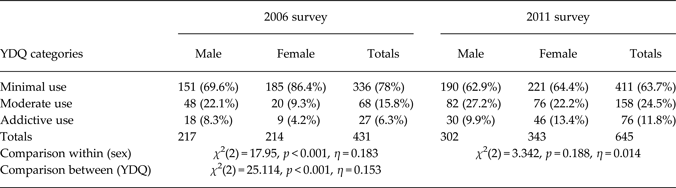
Table 1 presents the relevant comparative results from the 2006 and 2011 surveys. The comparison revealed that adolescents shifted to more addictive use, χ 2(2) = 25.114, p < 0.001, effect size η (eta) was moderate, η = 0.153. Eta scores correspond to the magnitude of those differences (effect sizes), or just how notable they are, with threshold values ranging from 0.10 for a small effect, to 0.24 for a medium effect, 0.37 for a large effect and 0.45+ for a very large effect (Cohen Reference Cohen1988). The trend for males to present with more IAD symptoms, which was detected in 2006, was no longer present in 2011 (p > 0.05).
Categorization of Internet users according to levels of Internet use in 2006 and 2011 with comparisons between and within the two surveys

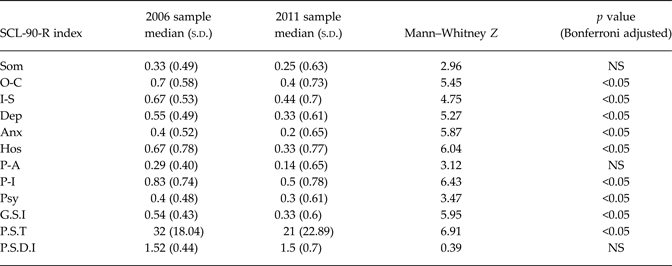
Table 2 presents median scores with standard deviation for the SCL-90 subscales with comparisons between the two full samples. The Mann–Whitney test is employed since the variables were not normally distributed. Computations are adjusted for multiple comparisons with the Bonferroni correction on the individual indexes, target p set at <0.004 for an alpha level of 0.05. Most indexes except for the somatization, phobic anxiety and PSDI reported statistically significantly lower values for the 2011 sample compared with the 2008 sample.
Differences on SCL-90 indexes between users and non-users of the Internet and between those users classified as dependent and non-dependent (adjusted for multiple comparisons)
Abbreviations used: Standard Deviation, Somatization, Obsessive-Compulsiveness, Interpersonal Sensitivity, Depression, Anxiety, Hostility, Phobic Anxiety, Paranoid Ideation, Psychoticism, Global Severity Index, Positive Symptom Total, Positive Symptom Distress Index.
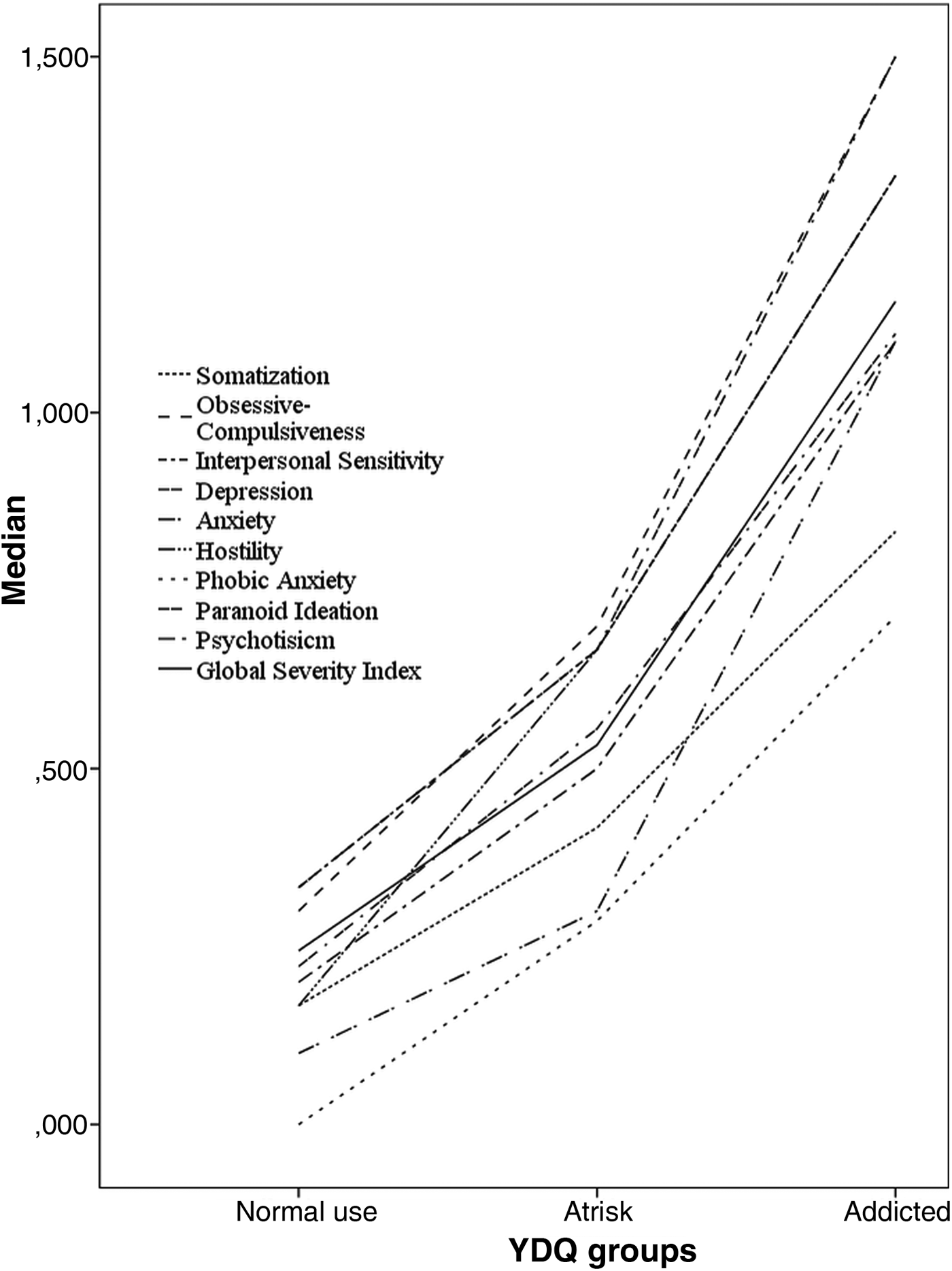
Figure 1 presents median scores for the SCL-90 subscales in the 2011 survey for each YDQ category. ANOVA comparisons with Tukey post-hoc testing has revealed statistically significant differences for all subscales between each subsequent YDQ category (p < 0.001), the sole exception being the PSDI index with differences between YDQ groups at p < 0.05.
Median scores on SCL-90 subscales across the YDQ groups.
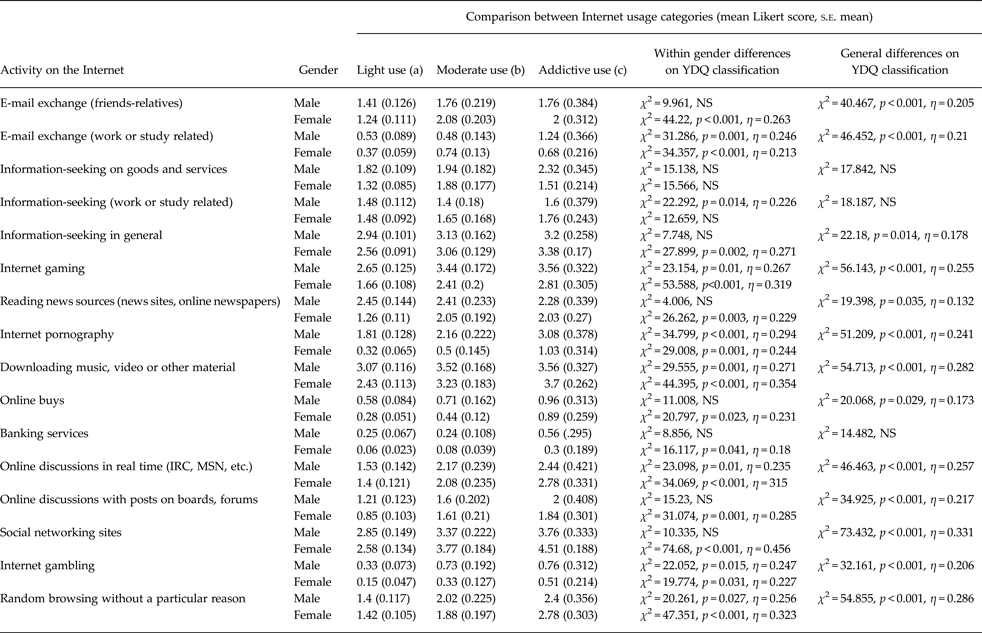
Table 3 presents the surfing habits of the two sexes in the 2011 survey. Two comparisons are made, within the sexes and between them. The within gender comparisons measure whether there are statistically significant differences on YDQ means when we examine the three groups of use. When we have a statistically significant difference it denotes that the rise in frequency between the light v. moderate v. addictive categories of use is high enough to be notable. The between gender comparisons measure whether there are statistically significant differences on YDQ means as a whole for each online activity. With regards to between gender differences, we found that boys are more frequent users than females of online pornography, online gaming, online gambling, participation in online discussions with posts (asynchronous communication), downloading online content, exchanging study-related e-mails, making online buys, reading online news sources and seeking general information online. Girls are more frequent users of social networking sites, enjoy more often participation in real-time online discussions, random browsing and exchanging e-mail with friends and relatives.
Internet activities of male and female students across the three YDQ groups
With regards to within gender differences we notice that girls tend to present with larger effect sizes (etas) than boys in all comparisons save for online pornography, gambling and the exchange of study related e-mails. Especially prominent is the value for social networking (η = 0.456), a very large effect size, denoting that there is a steep increase in the frequency of social networking as we progress from typical to moderate to addictive use of the Internet. The same was not true for boys. Even for online gaming, an activity typically associated with addicted boys, girls tended to present with steeper increases as their YDQ score increased.
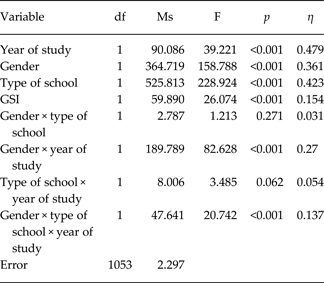
An ANCOVA was used to assess whether differences in the YDQ scores seen as a function of gender, school type and year of research persist after controlling for differences in the psychopathology GSI index. School type was deemed an important parameter since changing from Gymnasium to Lyceum marks the end of the mandatory schooling and is considered a minor developmental milestone. Results presented in Table 4 indicate that after controlling for the GSI index score, there are significant differences in the subjects' YDQ scores which are attributed to the effect of time between the surveys, the effect of gender, type of school (Gymnasium v. Lyceum), a combined effect of gender and time passed between the surveys and a combined effect of gender, time passed and the type of school. Eta values offer us an effect size measure; the passage of time has a very large effect on the YDQ scores, followed by the high school type and gender, which have large effects, with GSI having a small to medium effect.
ANCOVA for YDQ score as a function of gender, school type and year of research with GSI score as a covariate
The two interactions have the following meanings: gender by time reflects the large change evident in our figures of the change of habits mainly of girls between the two surveys (their mean scores in the YDQ went up) while the combined three-way interaction reflects a small effect, specific to a particular change of Internet habits between the two surveys that was related to a high school grade. It is important to note that the gender by type of school effect was insignificant, showing that the differences were not attributable to any differences between the school experience of males and females in Gymnasium and Lyceum (a possible sociological factor).
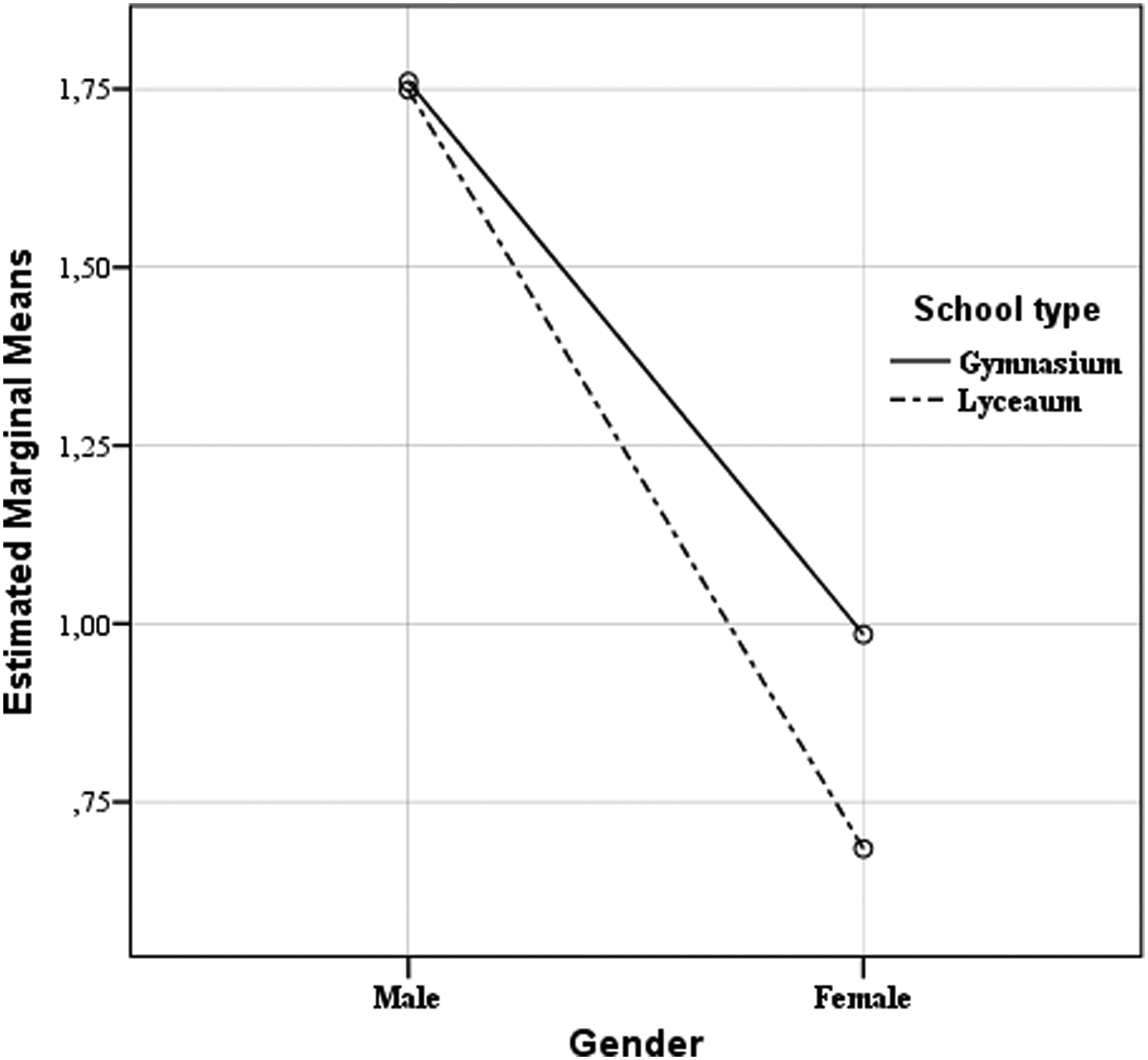
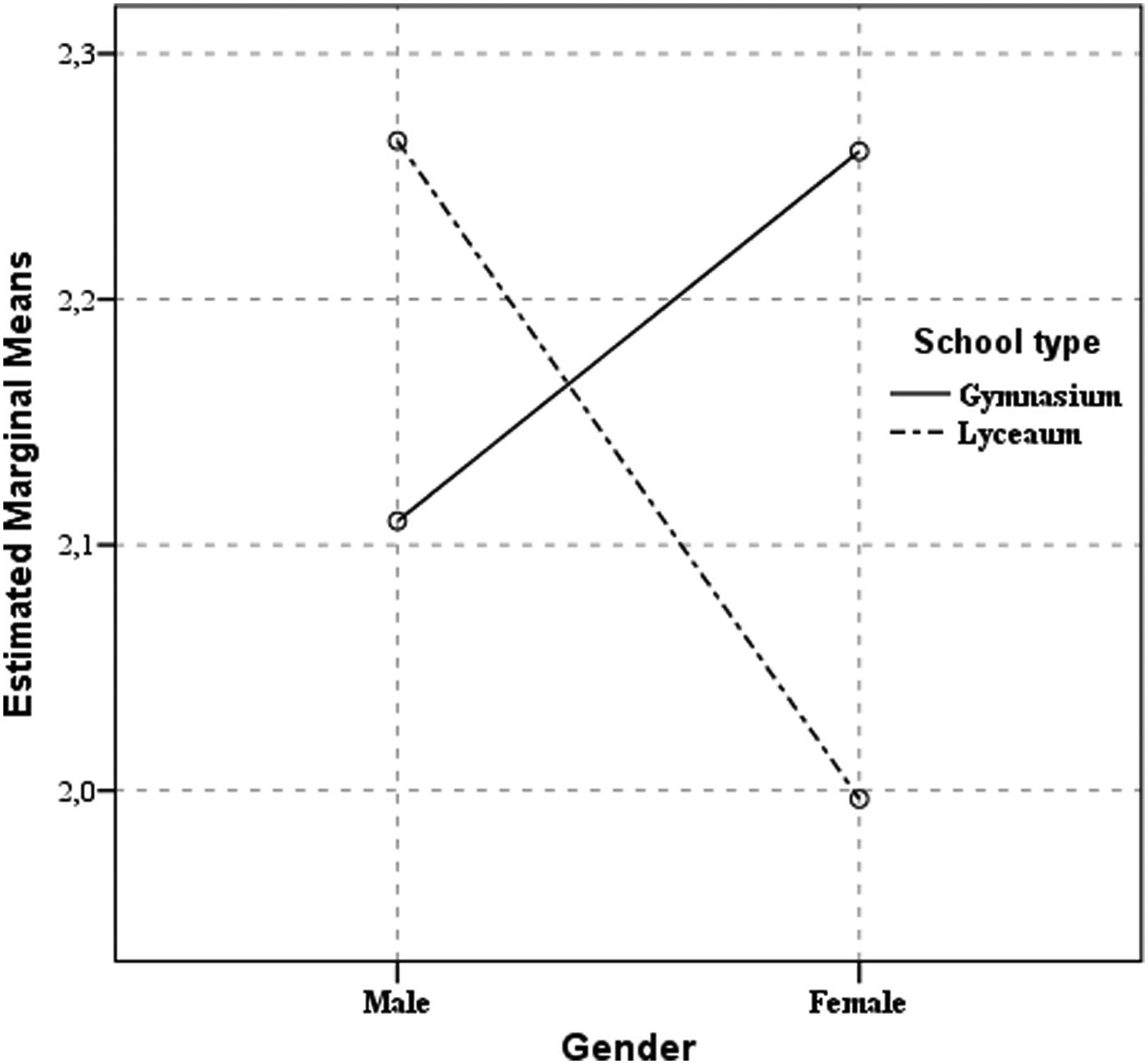
The results of these effects are graphically depicted in Figs 2 and 3 for the benefit of the reader. Those figures present the estimated marginal YDQ means for the 2006 and 2011 surveys, respectively. The estimated marginal means are considerably higher for the 2011 survey. Although in the first figure (2006) boys presented with the higher YDQ values and those means were similar in both grades of high school, girls in the junior high school grade had higher means than girls in senior gigh school. This picture is completely different in the 2011 survey where boys presented with higher YDQ values in the senior high school grade and girls in the junior high school grade. This confirms the radical change in the online behaviour of the two sexes that was alluded to from the simple comparisons; this difference is unrelated to any fluctuations in psychopathology.
Estimated marginal YDQ means of males and females in 2006.
Estimated marginal YDQ means of males and females in 2011.
Discussion
Internet addiction increase and change in related online activities
Internet addiction symptomatology, measured with the same research instrument, was higher in our follow-up survey for the same age range while controlling for shifts in psychopathology and gender factors. There were no large-scale prevention programmes initiated in the time span between the two surveys (2006–2011). This finding demonstrates that the phenomenon of Internet addiction tends to rise as Internet penetration rises in the population and is not a novelty that can be attributed to an initial enthusiasm with Internet use. The increase from the 2006 survey in absolute numbers is alarming. There is also a marked shift with regard to online activities and gender preferences. Girls now face similar risks in addictive online behaviour, mostly attributed to the rise of social networking. Girls also present with steeper increases in specific online activities as Internet use increases; this means that it is easier to discern girls who present addictive online behaviour from those who do not, judging on activity frequency alone.
Psychopathology symptoms before and during the economic crisis
There were a number of statistically significant differences between the 2006 and the 2011 sample with regard to psychopathology symptoms, with the mean scores actually being lower in the 2011 sample than in the 2006 sample. The PST index which denotes the number of positive responses in all questions was also significantly lower, although the PSDI index, which denotes the distress suffered from individual complaints, remained roughly unchanged. This means that the 2011 sample had fewer complaints to report but, when reported, their complaints were of similar magnitude to those complaints reported by the 2008 sample. Although this fact was combined with lower GSI results in 2011, it does not necessarily mean that manifest psychopathology was higher but rather that there were fewer cases of individuals reporting widespread complaints across various indexes. An adolescent in the 2011 sample would complain with more specific problems compared to an adolescent in the 2006 sample, although the problems would be of roughly equal severity.
Still, our original hypothesis predicted an increase in general psychopathology; this counter-intuitive finding may be attributed to various possible reasons. A simple reason could be that the economic crisis had only lasted for a year and a half, with Greek economy officially shrinking for the first time in the third quarter of 2009. This fact however also stood during the time a related survey on depression was conducted in an adult population (Economou et al. Reference Economou, Madianos, Peppou, Patelakis and Stefanis2013). A recent review of the health effects of economic decline (Catalano et al. Reference Catalano, Goldman-Mellor, Saxton, Margerison-Zilko, Subbaraman, LeWinn and Anderson2011) made a case that while individual risk factors for health problems such as job loss can lead to adverse health outcomes, there is little more in the way of comprehensive evidence regarding direct effects of other less obvious factors, such as health expenditure or psychological climate. Hence, a possibility exists that since adolescents are not directly exposed to an obvious risk factor for adverse mental health outcomes but rather only to indirect risk factors (such as the decline of available income in the family) they may not suffer the full impact of those changes in the same way adults do. A review article has suggested that ‘children have considerable inner resources for coping with contradiction and that fears of permanent psychological stunting by change, confusion and misfortune may be somewhat overblown’ (Boyden, Reference Boyden2003). The percentage of those adolescents who are adversely affected may be counter-balanced in the population by those adolescents who may find a source of strength and self-definition in adversity or may even psychologically overcompensate in order to lighten the burden of their parents (Werner & Smith, Reference Werner and Smith1992; Werner, Reference Werner1993). Interestingly, in times of acute external threat to a society such as war, it was found that the number of cases of mental disorders, either neuroses or psychoses, decreased followed by a large increase with the advent of less turbulent times (Lewis, Reference Lewis1942; Ødegaard, Reference Ødegaard1954; Svendsen, Reference Svendsen1953). Even when confronted with the unpredictable, as is the case with air raids, civilians proved more resilient that the planners had predicted and the mental health of the nation seemed to improve (Jones et al. Reference Jones, Woolven, Durodié and Wessely2004). Proposed explanations included an earlier psychodynamically oriented one, that as external stressors increase intrapsychic conflicts are repressed, and a more recent constructivist one, that the conflict involved civilians in constructive participant roles that gave meaning to their suffering. In a related study of psychopathology in Greece during occupation in WWII the authors claimed that an alternate ‘volitional’ stance towards adversity could signify a cognitive adaptation that does not permit the emergence of distress with overt manifestations (Skouras et al. Reference Skouras, Chatzidimos, Kalousis and Papadimitriou1991).
On a more abstract level, the behaviour during economic crises has been the subject of the Prospect theory of decisions under time of risk (Kahneman & Tversky, Reference Kahneman and Tversky1979). The theory posits that individuals evaluate outcomes with respect to deviations from a reference point rather than net asset levels, that their identification of this reference point is a critical variable and that more weight is given to prospective losses than to comparable gains. Hence, when the reference point is ‘downgraded’ for the entire society, individuals may evaluate the outcome in more favourable terms than if it was limited to them. When current hardship is designated a necessity that safeguards against further losses, it becomes the favourable course of action when compared with an alternate plan which carries a risk not only of better outcomes but also of further hardship. Having made the ‘right’ choice that entails hardship for all affected, the individual is tasked with carrying it through so as to avoid further catastrophic outcomes. This way the individual is offered a sense of direction and meaning to the ordeal, and possibly a motive for repressing psychological symptoms that may discourage others who share the same reference point as well. Prolonged crises may thus differ significantly from acute crises, man-made or not, which have different characteristics and an immediate need for focused intervention to those directly affected (Amaddeo &Tansella, Reference Amaddeo and Tansella2012).
It is important to note however that multitude stressors are likely to have a cumulative effect which ultimately may overwhelm coping capacity; our findings should not serve to alleviate concerns, more so since the economic crisis continues for more than 2 years since the second wave of our survey.
Internet addiction and general psychopathology
As mentioned above, the debate continues as to proper classification for IAD, despite initial focus on online gaming. Our results did not reveal a specific area of psychopathology that was more pronounced in those adolescents in the abuse group; this finding is mirrored in chemical addictions where the SCL-90 mostly captures general psychiatric distress rather than specific complaints (Zack et al. Reference Zack, Toneatto and Streiner1998; Maremmani et al. Reference Maremmani, Pani, Pacini, Bizzarri, Trogu, Maremmani, Gerra, Perugi and Dell'Osso2010). This may denote that IAD would be best classified with other addictions rather as an OCD-spectrum disease. We must stress however that in the context of an epidemiological survey one cannot ascertain any underlying psychiatric diagnoses, so this finding has a limited value.
Limitations of this study and directions for future studies
Our study has the typical limitations of cross-sectional designs. We cannot attribute any etiological factors to the shifts in the measured variables from 2006 to 2011; instead we are dealing with epidemiological data that provide a clear, controlled comparison with regard to some of the more important mediating factors reported for IAD. Our results raise the question of whether a prevention programme would be beneficial for the adolescent population which is prone to addictive online behaviours.
Our findings also offer a snapshot of a population in a time of crisis; it is hard to predict future responses and the exact limits of adolescent coping. The impact of a crisis outside the family setting can be alleviated or amplified by societal, familial and intrapsychic processes. A cultural response to a crisis is evolving in various stages as well and the sum of all those interactions can only be monitored rather than predicted. As noted elsewhere ‘interactive processes should be considered over time as part of the development that affects individual reactions to stressors and not as an element of chemistry at the single point of time when an individual encounters stress or adversity’ (Rutter, Reference Rutter1985). Future research on the effects of the economic crisis in Greece would require not only a quantitative component but also extensive interviewing and longitudinal following of specific individuals in order to have a clear view of those underlying processes. It is not enough for example to merely ascertain the presence of depression or anxiety following set criteria, but one should also inquire as to whether those feelings arise from a sense of hopelessness, personal loss or failure to maintain outward appearances and ‘be strong’ in the face of adversity.
Acknowledgements
The authors wish to acknowledge the valuable assistance of the entire staff of the Institute of Psychosocial Development (IPSA) in Larisa for the duration of the research project. We also wish to thank the anonymous reviewers who helped with the discussion on the drop in psychopathology between the two studies of 2006 and 2011.
Financial Support
This research received no specific grant from any funding agency, commercial or not-for-profit sectors.
Conflict of Interest
None.
Ethical Standards
The authors assert that all procedures contributing to this work comply with the ethical standards of the relevant national and institutional committees on human experimentation and with the Helsinki Declaration of 1975, as revised in 2008.