CHD is one of the most common birth defects in the United States of America, affecting nearly 40,000 infants born each year.Reference Hoffman, Kaplan and Liberthson1,Reference Marelli, Miller, Marino, Jefferson and Newburger2 Children born with CHD are at increased risk for disrupted brain development, including immature development of the cortex, smaller brain volume compared to healthy controls across various regions (especially subcortical areas), and white matter injury.Reference Mebius, Kooi, Bilardo and Bos3 These developmental abnormalities can occur through multiple mechanisms, including prenatal hypoxia resulting from suboptimal blood flow to the developing brain.Reference Mahle, Clancy, Moss, Gerdes, Jobes and Wernovsky4,Reference Sun, Macgowan and Sled5 Brain insult can also occur in association with surgical repair, especially those utilising cardiopulmonary bypass which has been linked to risk for emboli and inflammation.Reference Wray6–Reference Mahle, Tavani and Zimmerman8 In association with these effects on the brain and its development, a range of neurocognitive effects have been identified in this population, including poor functioning in the areas of attention and executive function, working memory, visuospatial construction, and language.Reference Cassidy, Ilardi and Bowen9–Reference Mussatto, Hoffmann and Hoffman14 Additionally, various studies utilising MRI volumetric analysis, fMRI, and diffusion tensor imaging have demonstrated associations between brain characteristics and cognitive outcomes, supporting the notion that abnormal brain development in CHD is related to the cognitive dysfunction seen in these patients.Reference Semmel, Dotson, Burns, Mahle and King15–Reference Rollins, Asaro and Akhondi-Asl18 Thus, children with CHD remain at risk for neurological injury and neurodevelopmental challenges that threaten quality of life across the lifespan.
Children with CHD have also been noted to be at higher risk for deficits in social cognition skills.Reference Bellinger19,Reference Calderon, Bonnet, Courtin, Concordet, Plumet and Angeard20 Autism spectrum disorder (hereafter referred to as “autism” for brevity) is a neurodevelopmental disorder characterised by impairments in social communication and restricted or repetitive behaviours; children with autism present with a range of outcomes, including varying levels of cognitive and language development and need for support.Reference Association21 Autism is a lifelong disorder that can be associated with high societal costs due to lower work productivity/income, higher rates of disability services, and medical/therapy costs.Reference Ganz22 While the overall prevalence of autism in the United States of America is reported to be 1.7%, emerging research has demonstrated a two- to five-fold increase (2.6-3.2% of the sample) in incidence of autism for children with CHD.Reference Baio, Wiggins and Christensen23–Reference Tsao, Lee and Jeng26 For example, a recent study by Bean Jaworski and colleagues examined a longitudinal research sample of 195 children with high-risk CHD at around 4 and 9 years old. Based on parent report via health screening and cut-off score with the Social Communication Questionnaire, they found that 3.2% (n = 7) of children with CHD were classified as at risk for autism.Reference Bean Jaworski, Flynn and Burnham24 Razzaghi and colleagues used data from a large national survey in the United States of America that included a subsample of 420 children with CHD. Concern about autism was based on parent response to the question: “Has doctor/health professional ever told you that your child has autism?”; autism screening measures were not collected. Their results indicated a significantly higher autism risk with an odds ratio of 4.6 in children with CHD (2.6% of those with CHD) compared to typically developing children.Reference Razzaghi, Oster and Reefhuis25 Finally, Tsao and colleagues conducted a nationwide community study in Taiwan using health survey data, but diagnoses of autism were made with behavioural assessments by providers in the formal clinic setting. Their results showed an adjusted hazard ratio of 1.97 (n = 30, 1000 person-years, or 3%), suggesting a significantly higher risk for an autism diagnosis in the sample of children with CHD (n = 3552) compared to those without CHD (n = 14,208).Reference Tsao, Lee and Jeng26 Social deficits in CHD have been found to persist into adolescence and young adulthood.Reference Bellinger, Rivkin and DeMaso27,Reference Bellinger, Wypij and Rivkin28 Additionally, risk for autism in CHD has been associated with a variety of medical and comorbidity factors, such as those related to surgical intervention, CHD severity, and genetic disorder.Reference Bean Jaworski, Flynn and Burnham24
Given the evidence supporting an increased risk for autism in the population with CHD, implementation of standard screening procedures is critical and should occur beyond universal screening in the medical home. It is well documented that early identification and intervention predicts better outcomes, including cognitive development, adaptive functioning, and reduction in autism symptoms.Reference Dawson, Rogers and Munson29 It is also well established that screening instruments need to have strong sensitivity and specificity,Reference Thabtah and Peebles30 and that repeated assessment for autism across development is needed in higher risk and medically complex populations with other developmental problems.Reference Kentrou, de Veld, Mataw and Begeer31,Reference Davidovitch, Levit-Binnun, Golan and Manning-Courtney32 To this end, the Cardiac Neurodevelopmental Outcome Collaborative has made recommendations for Cardiac Neurodevelopmental Programs to include routine screening for autism as part of repeated neurodevelopmental evaluations. As of July 2019, the assessment protocol for the high-risk child with CHD consists of the following standardised, normative parent/caregiver questionnaires from infancy to adolescence: Modified Checklist for Autism in Toddlers (aged 16–30 months), Social Responsiveness Scale, Second Edition (aged 2-adult), Adaptive Behaviour Assessment System, Third Edition (aged 0–21 years), Behaviour Assessment System for Children, Third Edition (aged 2–21 years), and Behaviour Rating Inventory of Executive Functioning, Second Edition (aged 5–18 years). Publication of infancy and school-age assessment protocols in manuscript form is underway, but members can access details online at: www2.cardiacneuro.org/members/. It remains unknown whether the incidence of autism differs across research samples, the general population, and clinically referred samples with CHD. This critical information can inform care given higher rates of developmental comorbidities in high-risk clinical samplesReference Kentrou, de Veld, Mataw and Begeer31,Reference Antshel, Aneja and Strunge33 and a delayed or missed diagnosis of autism even in children monitored by multi-disciplinary teams.Reference Davidovitch, Levit-Binnun, Golan and Manning-Courtney32
The objectives of the present study are two-fold. First, the risk for autism was examined at a single Cardiac Neurodevelopmental Program prior to implementation of assessment protocols by the Cardiac Neurodevelopmental Outcome Collaborative. The authors hypothesised that a clinically referred sample of patients with high-risk CHD would demonstrate a higher frequency of autism compared to the general population. Those at risk for autism are expected to show impairments in relevant social, adaptive, and behavioural functioning subscales commonly completed by parents. Associations between autism risk, comorbidities, and demographic characteristics were examined. The second objective of the current study was to describe the sequence of clinical practice at this single centre and highlight opportunities for quality improvement that can also be implemented at other institutions.
Materials and methods
Patients
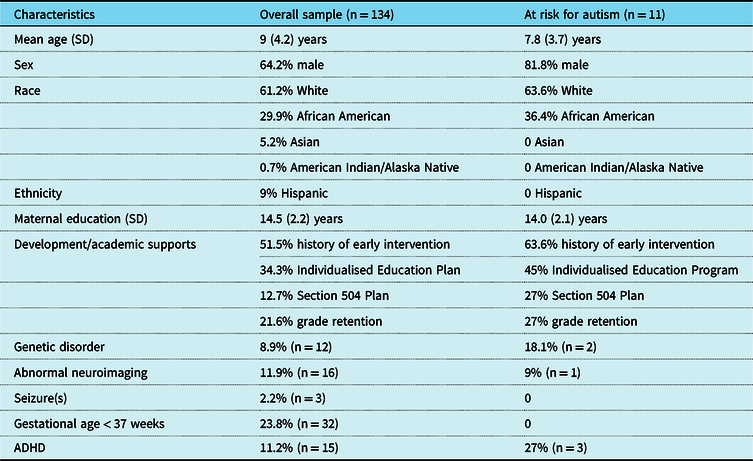
The present sample consisted of 134 children and adolescents with CHD who completed an outpatient neuropsychological evaluation. Mean age was 9 years (3-19 years), and children were predominantly white (61.2%) or African American (29.9%) and male (64%). Mean for maternal education included some college/vocational training (14.5 years). All patients were referred by cardiology following implementation of a formalised referral process (i.e., via electronic medical records) to the Cardiac Neurodevelopmental Program at Children’s Healthcare of Atlanta between February 2018 and February 2019, thus resulting in a 1-year clinical sample. These patients were identified as appropriate for a referral due to their high-risk CHD diagnosis (e.g., hypoplastic left heart syndrome, transposition of the great arteries, tetralogy of Fallot, etc.), cardiac surgery within the first year of life, and other medical comorbidities (see high-risk criteriaReference Marino, Lipkin and Newburger34). There were no exclusion criteria. Demographic characteristics, education, supports, and comorbidities are displayed in Table 1.
Descriptive information for clinical sample (n = 134) with CHD

SD = standard deviation; ADHD = attention-deficit/hyperactivity disorder.
Procedures
Data were derived from a retrospective chart review that was then entered into a department clinical registry. Following protocol review by the Institutional Review Board at Children’s Healthcare of Atlanta, this clinical registry was considered quality improvement research and thus did not require informed consent or ongoing review. Patients completed a flexible neuropsychological evaluation as part of routine clinical care in the Cardiac Neurodevelopmental Program. Medical record review and a patient background form were used to collect data related to demographic characteristics and medical history (e.g., neurological complications or prematurity). For purposes of the current study, only measures/subscales from the evaluation relevant to symptoms of autism were included (Adaptive Behaviour Assessment System, Third Edition, and Behaviour Assessment System for Children, Third Edition).Reference Harrison and Oakland35,Reference Reynolds and Kamphaus36 Information related to the sequence of clinical care in the subsample at risk for autism was also collected from review of electronic medical records (e.g., number of evaluations in the department, completion of follow-up autism specialty referral).
Regarding symptoms consistent with autism at the time of the neurodevelopmental evaluation, this was based on results from a thorough assessment (e.g., intellectual, language, visuospatial, academic, sensory/motor, learning/memory, attention/executive, social-emotional, behavioural, and adaptive), developmental history via parent interview, and behavioural observations. In select cases, this was sufficient to diagnosis autism. In other cases, the child was referred to an autism specialist for a focused, follow-up evaluation. A child was determined to be at risk for autism (categorical variable) if either autism was diagnosed in the neurodevelopmental evaluation by the psychologist or the child was referred to an autism specialist due to significant symptoms consistent with autism but whether the child met criteria for a diagnosis was not yet clear.
Measures
The Adaptive Behaviour Assessment System, Third Edition is a widely used parent questionnaire assessing adaptive functioning, abilities that are important for daily living.Reference Harrison and Oakland35 The questionnaire computes three composite scores (conceptual, social, and practical) and an overall General Adaptive Composite based on parent/caregiver ratings. Of particular interest in this study were scales related to social communication (i.e., leisure, social, and communication). Age-based norms were derived from a large sample representative of the United States population, and adequate internal consistency, test-retest reliability, and inter-rater reliability have been demonstrated. Standard scores were obtained, with a mean of 100 and a standard deviation of 15; lower scores indicate weaker abilities in these skill areas.
The Behaviour Assessment System for Children, Third Edition is a widely used questionnaire assessing emotional and behavioural functioning which yields a variety of subscales quantifying concerns about internalising symptoms, externalising symptoms, behavioural functioning, and adaptive functioning.Reference Reynolds and Kamphaus36 Only the parent report version was included. Of particular interest in this study were scales related to social communication (i.e., withdrawal, social skills, and functional communication) and restricted/repetitive behaviours (i.e., atypicality, adaptability). The atypicality scale measures the presence of odd or unusual behaviours, while the adaptability scale measures the degree to which the child is flexible and adaptable to changes in routine and environment. Age- and gender-based norms were derived from a representative sample in the United States, and adequate internal consistency, test-retest reliability, and inter-rater reliability have been demonstrated. Standardised T-scores were obtained, with a mean of 50 and a standard deviation of 10. On the clinical scales (atypicality, withdrawal), higher scores indicate elevated symptoms of concern; on the adaptive scales (adaptability, social skills, and functional communication), lower scores indicate weaker abilities.
Analyses
Descriptive statistics were used to examine the overall means, variability, and frequency of impairment on parent rating scales. Frequency analyses were used to describe those at risk for autism. Fisher’s exact test was used to determine whether the risk for autism in the present sample was significantly different from the overall prevalence rate of autism. Cramér’s V correlation analyses were used to determine whether significant associations were present between risk for autism and demographic/medical factors. Point-biserial correlational analyses were used to investigate the relationship between risk for autism and social/behavioural functioning based on data from standardised parent questionnaires. All statistical analyses were conducted using the IBM® Statistical Package for the Social Sciences, Version 24.0.
Results
Overall clinical sample
This was the first neurodevelopmental evaluation for 79.1% of the sample, and no children were diagnosed with autism at the time of referral. Table 1 highlights that for the overall clinical sample (age range: 3.2-19.0 years), about half received early intervention services in the past and about half currently receive school supports (34.3% with special education under Individualised Education Plan, 12.7% with Section 504 Plan). Approximately 11% of the sample had a diagnosis of attention-deficit/hyperactivity disorder. Regarding medical risk factors, 5.2% have a history of neurological complications (i.e., seizures, strokes), while 23.9% had premature birth (gestational age < 37 weeks).
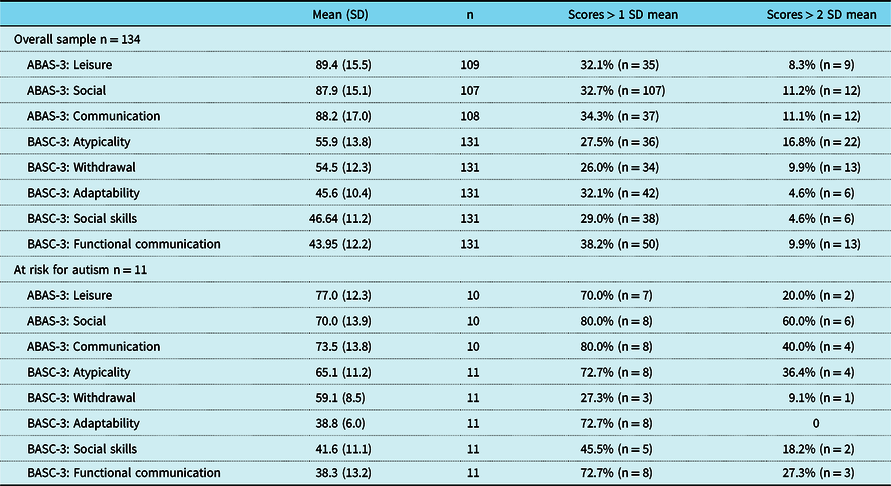
Table 2 shows parent ratings relevant to symptoms of autism in the overall clinical sample. Results from an adaptive functioning measure (leisure, social, and communication skills) are in the low average range overall. About a third of the sample falls 1 standard deviation below the mean and between 8 and 11.2% fall 2 standard deviations below the normative mean compared with other same-age children. This indicates significant delays in functional independence for the overall clinical sample. Parent rating scales relevant to social and behavioural functioning (atypicality, withdrawal, adaptability, social skills, and functional communication) generally fall within the normal range for the overall sample, although significant variability is present. Across the various scales, 26–38.2% of the sample were rated as over 1 standard deviation beyond the normative mean, while 4–9% were beyond 2 standard deviations from the normative mean.
Descriptive statistics for subscales from parent-report measures in a clinical sample with CHD

SD = standard deviation; ABAS-3 = Adaptive Behaviour Assessment System, Third Edition; BASC-3 = Behaviour Assessment System for Children, Third Edition.
At risk for autism
Autism-related concerns (i.e., concerns regarding social communication or restricted/repetitive behaviours) were reported in 11.2% of cases at the time of referral. Following the neurodevelopmental evaluation, 8.2% (11 out of 134) of the clinical sample was identified to be at risk for autism. Two children were diagnosed with autism as a result of the evaluation, and nine patients were referred to an autism specialist after completion of the evaluation, with six of the nine confirmed to have autism by a specialist at follow-up (5.9%). The remaining three patients have not yet completed their follow-up evaluation with an autism specialist. Frequency analysis revealed a nearly five-fold increase in risk for autism compared to the overall prevalence of 1.7%, and Fischer’s exact test revealed a statistically higher (p < 0.01) frequency of observed cases at risk for autism compared to the overall prevalence. Correlation analyses revealed no significant associations between at risk for autism and presence of neurological complications, genetic disorder, or prematurity based on Cramér’s V values. Additionally, no significant correlation was found between at risk for autism and gender or race/ethnicity. Review of Table 1 shows qualitatively that, compared to the overall clinical sample, the subsample at risk for autism is somewhat younger and required more community and academic services.
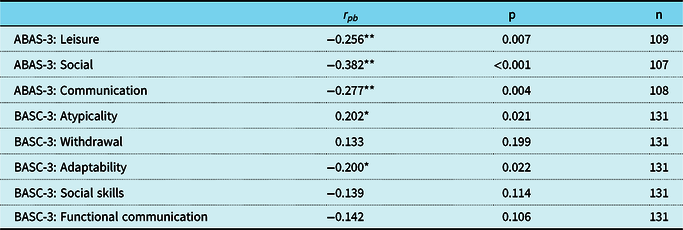
Results of correlational analyses investigating the relationship between at risk for autism and social/behavioural functioning from parent questionnaires are displayed in Table 3. Results of point-biserial correlations revealed significant negative associations (p < 0.1) between at risk for autism and all three scales on the Adaptive Behaviour Assessment System, Third Edition: leisure (r = −0.256), social (r = −0.382), and communication (r = −0.277). These findings indicate that being at risk for autism was associated with less ability to engage in leisure activities, poorer social functioning, and lower effectiveness in functional communication. Results of point-biserial correlations also revealed significant negative associations (p < 0.05) between being at risk for autism and the atypicality (r = 0.202) and Adaptability (r = −0.200) scales on the Behaviour Assessment System for Children, Third Edition. These findings indicate that being at risk for autism was associated with having increased atypical behaviour and poor flexibility or adaptability. No significant correlations were found between being at risk for autism and the withdrawal, social skills, or functional communication scales on this measure. Also see Table 2 for descriptive statistics on parent measures for the subsample at risk for autism.
Correlations between risk for autism and parent rating scales in a clinical sample with CHD

ABAS-3 = Adaptive Behaviour Assessment System, Third Edition; BASC-3 = Behaviour Assessment System for Children, Third Edition.
**p < 0.01; *p < 0.05.
Clinical practice factors
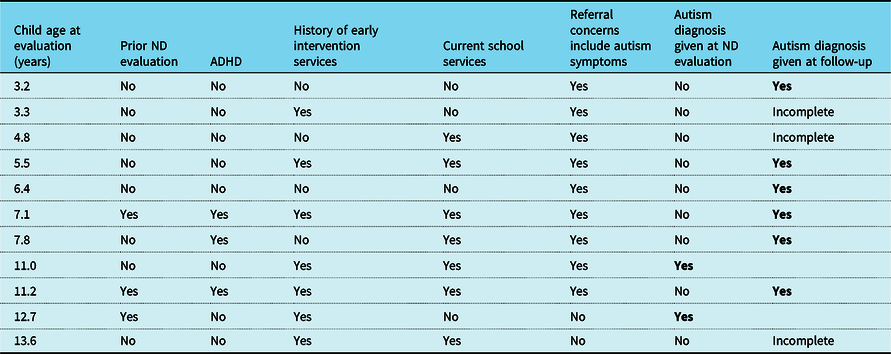
Table 4 summarises the sequence of clinical care and related variables for the subsample identified as at risk for autism (aged 3.2-13.6 years). Three children had been previously evaluated by this department, and two had a missed diagnosis of autism at the first evaluation (prior to this study). For at least one of the two children diagnosed with autism, the reasons for referral did not include autism symptoms. As noted above, 2 out of 11 children were diagnosed with autism at the conclusion of the evaluation, 9 were referred to an autism specialist, and 6 of those were confirmed to meet criteria for autism. The remaining three have not yet completed their follow-up with an autism specialist. Barriers to follow-up are unknown. Regarding assessment measures for autism in this practice, only 3.0% of the sample was administered an autism-specific screener (i.e., Social Responsiveness Scale, Second Edition).Reference Constantino and Gruber37 None of the patients were administered the Autism Diagnostic Observation Schedule, Second Edition, which is considered the gold standard assessment measure when evaluating concerns for autism.Reference Lord, Rutter, DiLavore, Risi, Gotham and Bishop38 At the time of this study, no department clinical providers were trained in the Autism Diagnostic Observation Schedule, Second Edition, which required a referral to an autism specialist.
Clinical follow-up and outcome in subsample with CHD identified at risk for autism

School services include an Individualised Education Plan and/or Section 504 Plan.
ND = neurodevelopmental; ADHD = attention-deficit/hyperactivity disorder.
Note: Bold text indicates the children at risk who were diagnosed with Autism.
Discussion
Children born with CHD are at increased risk for abnormal brain development and associated neuropsychological effects, including a two- to five-fold increase (between 2.6 and 3.2% of samples) in the incidence of autism in research and community samples with CHD.Reference Baio, Wiggins and Christensen23-Reference Tsao, Lee and Jeng26 It is critical to better understand the high risk, clinically referred sample with CHD, as diagnosis of autism can be more complicated in the context of overlapping comorbidities.Reference Kentrou, de Veld, Mataw and Begeer31,Reference Antshel, Aneja and Strunge33,Reference McCormick, Kavanaugh and Sipsock39 Complexities with diagnosis can also evolve across development leading to delayed autism diagnosis, even when followed by a multi-disciplinary team.Reference Davidovitch, Levit-Binnun, Golan and Manning-Courtney32 The purpose of the current study was to identify the frequency of children with CHD considered at risk for autism at a single Cardiac Neurodevelopmental Program, as well as to describe clinical practice when evaluating for autism to highlight opportunities for quality improvement.
Compared to research and community samples with CHD that show about 2–3% of the sample with autism, current results from a clinical sample indicate a much higher incidence of children being at risk for autism. More than 8% were identified to be at risk for autism following a thorough clinical evaluation and (at least) 5.8% were diagnosed with autism (three children have not yet completed follow-up with autism specialist). This is consistent with other clinical samples with high neurological risk, such as epilepsy and cerebral palsy.Reference Lukmanji, Manji and Kadhim40,Reference Delobel-Ayoub, Klapouszczak and van Bakel41 Specific demographic (gender, race/ethnicity) and medical factors (prematurity, neurological risk) in this sample were not related to being at risk for autism. Compared to the overall clinical sample, the subsample at risk for autism was qualitatively younger and required more community and academic services. Results of correlational analyses showed that those at risk for autism demonstrated significant delays in adaptive functioning, such as the ability to engage in leisure activities, poor social functioning, and lower functional communication skills, which falls in line with extensive outcome research.Reference Kanne, Gerber, Quirmbach, Sparrow, Cicchetti and Saulnier42,Reference Farmer, Swineford, Swedo and Thurm43 In contrast, correlations with most subscales from the Behaviour Assessment Scale for Children – Third Edition were not significant, with the exception of increased atypical behaviours and reduced adaptability; this is consistent with research suggesting that this instrument lacks sensitivity and specificity for diagnosing autism when children may have overlapping developmental problems.Reference Bradstreet, Juechter, Kamphaus, Kerns and Robins44
Examining the sequence of clinical care at this Cardiac Neurodevelopmental Program was also an objective of the current study. The first opportunity for quality improvement is the use of repeated assessment across development. Although three children identified as at risk for autism had been previously evaluated by this department, two were not previously identified with concerns related to autism until a later evaluation. Repeated assessments across age with empirically supported measures could reduce the number of missed diagnoses.Reference Davidovitch, Levit-Binnun, Golan and Manning-Courtney32,Reference Shattuck, Durkin and Maenner45 A second opportunity for improvement is to carefully consider subtle symptoms that may not have raised red flags for parents, physicians, or teachers. Specifically, for two of the children at risk for autism, symptoms related to autism were not reported by the parents at the time of referral. Repeated screening and follow-up with trained professionals in high-risk populations regardless of parent concerns will be needed. A third area for improvement includes the consistent use of an autism-specific screening measure, which was used in a minority of cases. Screening with measures that have strong sensitivity and specificity is critical for early identification and intervention in high-risk clinical samples with CHD.Reference Thabtah and Peebles30,Reference Zwaigenbaum, Bauman and Fein46
The Cardiac Neurodevelopmental Outcome Collaborative has made recommendations for Cardiac Neurodevelopmental Programs to include the following autism screening measures: Modified Checklist for Autism in Toddlers and Social Responsiveness Scale, Second Edition for school-age children and adolescents, and in the extended battery, to include the Autism Diagnostic Observation Schedule, Second Edition. In the current sample, 9 out of 11 children identified at risk for autism were referred to an autism specialist. Although six of those were confirmed to meet criteria for autism, the remaining three have not yet completed their follow-up with an autism specialist and the barriers to care remain unknown. Thus, whenever possible and realistic, clinical providers could consider specialised training in the identification/diagnosis of autism. This would reduce the stress and hassles families experience associated with multiple appointments and delays in diagnosis.Reference Smith-Young, Chafe and Audas47,Reference Swanson, Warren, Stone, Vehorn, Dohrmann and Humberd48 For providers working with children with CHD who are not affiliated with a nearby Cardiac Neurodevelopmental Program, autism screening measures are readily available for use in the medical clinic, and community referrals to an autism specialist can be made for the family.
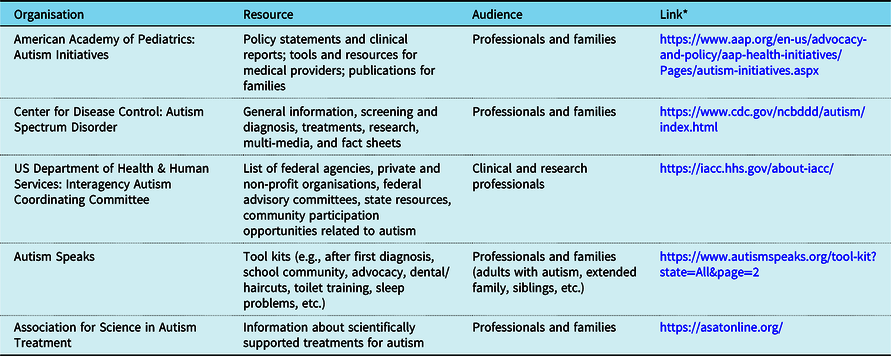
Limitations to the current study should guide future directions. The current sample is relatively small and thus allowed for very limited analyses of the much smaller subsample with autism. A larger sample would permit analyses of the effects of known risk factors, such as medical comorbidities (genetic disorder, neurological complications and prematurityReference Richards, Jones, Groves, Moss and Oliver49,Reference Kuzniewicz, Wi, Qian, Walsh, Armstrong and Croen50 ), developmental comorbidities (intellectual disability, attention-deficit/hyperactivity disorderReference McCormick, Kavanaugh and Sipsock39), and demographic characteristics (gender, age, race/ethnicity and parent educationReference Shattuck, Durkin and Maenner45,Reference Valicenti-McDermott, Hottinger, Seijo and Shulman51 ) on diagnosis and outcomes in children with CHD and autism. Of additional critical importance is to analyse factors that are modifiable, such as age at diagnosis, timing and quality of intervention, and types of services implemented. Furthermore, and perhaps most importantly, future directions should include the use of research to improve clinical practice. The burden of autism is high,Reference Ganz22 but the burden of both CHD and autism is certainly higher. Early diagnosis of autism and intervention changes the course of outcomes for children and their families.Reference Dawson, Rogers and Munson29,Reference Elder, Kreider, Brasher and Ansell52 This presents a major opportunity for all providers who work with CHD to increase their awareness and respective training as appropriate so they can either complete autism screening/evaluation as part of routine clinical care or make community referrals to specialists. Increased awareness and training for clinical practitioners alone can improve patient outcomes.Reference Swanson, Warren, Stone, Vehorn, Dohrmann and Humberd48,Reference Rotholz, Kinsman, Lacy and Charles53 See Table 5 for resources that can be shared with families and providers.
Autism resources for professionals and families

* Link to organisational resources will likely change over time but can be used to guide search for updates.
Acknowledgements
None.
Financial support
This research received no specific grant from any funding agency, commercial, or not-for-profit sectors.
Conflicts of interest
None.
Ethical standards
The authors assert that all procedures contributing to this work comply with the ethical standards of the relevant national guidelines on human experimentation according to the Belmont Report and with the Helsinki Declaration of 1975, as revised in 2008, and have been approved by the Institutional Review Board at Children’s Healthcare of Atlanta.