Introduction
Female Genital Mutilation (FGM), also known as Female Genital Cutting (FGC) or Female Circumcision (FC), is a traditional harmful practice that affects women and girls globally (WHO, UNICEF & UNFPA, 1997; Ministry of Health, 1999). Worldwide, over 140 million girls and women have undergone female circumcision (FC), with nearly 3 million girls at risk every year (WHO, 1998). The majority of these women live in 28 African countries (Barstow, Reference Barstow1999; Chalmers & Hashi, Reference Chalmers and Hashi2000; Eke, Reference Eke2000). In 1997, the World Health Organization, United Nations Children's Fund and United Nations Population Fund issued a joint statement that defined FGM/C as ‘all procedures involving partial or total removal of the external female genitalia or other injury to the female genital organs whether for cultural or other non-therapeutic reasons’ (WHO, UNICEF & UNFPA, 1997, p. 3). Female genital cutting is practised in a variety of ways and classified by the WHO into four broad types (WHO, UNICEF & UNFPA, 1997; WHO, 1998). All major types of FGC are found in Kenya (Ministry of Health, 1999).
The proper medical term for the circumcision of women is Female Genital Mutilation (FGM) to emphasize that it damages the female body irreversibly. Mutilation is defined as ‘any definitive and irremediable removal of a healthy organ’ (Shell-Duncan et al., Reference Shell-Duncan, Obiero, Muruli, Shell-Duncan and Hernlund2001). In the present study, the expression Female Genital Cutting (FGC) is used to prevent emotional accusations against those who believe in its cultural significance. Moreover, it is also less humiliating to circumcised women who are repentant for their operation (Schmidt, Reference Schmidt2005).
The bulk of Kenya's numerous ethnic groups extensively practise different forms of FGC. The Kenyan government estimates that 32% of all women between 15 and 49 years of age had undergone FGC (KDHS, 2003) in more than half of the country's districts. In some communities, FGC is associated with the progression into maturity, often forming part of an elaborate initiation ritual. In other communities, it is considered as a critical symbol of ethnic identity, and/or a religious requirement, or as a necessary prerequisite for marriage (among Maasai), either through symbolizing achievement of womanhood or, in the case of infibulations, as a means of preserving and indicative of virginity (FRONTIERS et al., 2006). In the traditional culture of the Maasai, at the age of 14 years girls are usually married. Genital cutting, which is considered as a prerequisite to marriage, is performed at the age of 10 years. Girls who undergo a cutting not only miss a chance to explore and realize their youth, but end up in polygamous marriages with co-wives as old as their mothers and husbands as old as their fathers. In the Maasai community, unmarried women are regarded as ‘pariahs’, and it is widely believed that genital cutting is the only way through which a girl can enter into adulthood by which girls are prepared for marriage. It is also believed that marrying an uncircumcised girl is an awful omen since her blood is ‘unclean’ (UNFPA, 2007).
In a few communities, infibulation is considered as the aesthetics of the sexual organs, and in the majority of communities women are highly hesitant about the decision of whether to be infibulated or not. Women feel strong pressure from their female counterparts, particularly from relatives and mothers, and other elder women in the local community. Sometimes infibulated women undergo re-infibulation after giving birth. This is mainly for purification and tightening of the vaginal orifice after giving birth (Landinfo, 2008). Despite FGC still being practised by many Kenyan communities, the severity of the genital cutting is declining day by day. The reason is, of course, its adverse effect on woman's health (Oloo et al., Reference Oloo, Wanjiru and Newell-Jones2011).
There are manifold undesirable health outcomes associated with FGC, such as severe pain, bleeding, difficulty in passing urine and faeces, infections, and Caesarean section, blood loss, low birth weight and increased perinatal mortality are associated birth risks. Neonatal death and stillbirth, resulting from prolonged labour due to the scarring of FGC Type III (i.e. infibulation), contribute significantly to the infant mortality rate (Philp, Reference Philp and Thomas1925; Thomas, Reference Thomas1998). Moreover, FGC may be a causal factor in maternal death. The mortality rate of women and girls undergoing FGC is not known since few records are kept and deaths due to FGC are rarely reported (Crowe & Melching, Reference Crowe and Melching2005). In addition, several psychological, social and sexual consequences are associated with FGC, such as anxiety, depression, memory loss, loss of libido (i.e. sexual desire) and dyspareunia (i.e. painful intercourse) (Kunnskapssenteret, 2009). It is also evident that FGC has a link with an increased risk of acquiring HIV (Maslovskaya et al., Reference Maslovskaya, Brown and Padmadas2009), either through shared sharp instruments at the time of cutting, or through the damaged tissue enhancing viral transmission (FRONTIERS et al., 2006). In this way, circumcised women experience permanent and irreversible health damage (Cheserem, Reference Cheserem2011).
Since traditional women practitioners perform most of the circumcisions (78.2% in the 2008–09 KDHS) in Kenya, it is important to understand the attitudes of women towards this practice. Even among trained nurse/midwives (13.6%), there is a clear inclination to the prolongation of the practice. In a study among midwives in Sudan (who were circumcisers), it was found that the majority of the respondents did not view FGC as harmful and insisted on continuing its practice for cultural motivation (Ali, Reference Ali2012). Therefore, in many African communities, FGC still exists.
Further, FGC is an extreme example of discrimination based on sex as young girls are cut indiscriminately by medical or traditional practitioners before they know what genital circumcision is and how it can be a severe health risk to them. Consequently, substantial effort should be made to discourage the continuation of the practice. Hence, there is a need to know the present attitudes of Kenyan women towards FGC. This study will help to understand the attitude of women, and whether mothers want their daughters to be circumcised or not. In addition, the major types of female circumcision and their association with demographic and socio-cultural characteristics of women in Kenya require the special attention of researchers and policy makers.
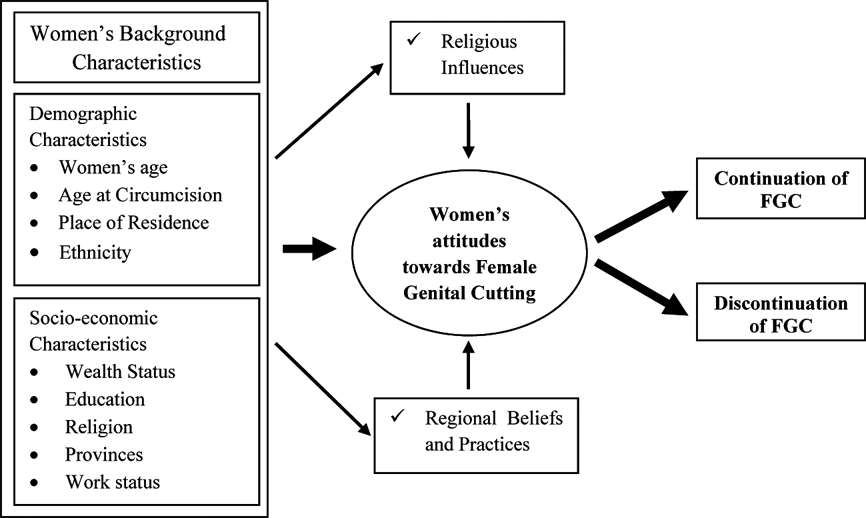
A conceptual framework for the study has been constructed (Fig. 1). This shows the influence of socio-cultural determinants of women's attitudes towards FGC in Kenya. Further, it indicates the mind-set leading to the continuation or discontinuation of FGC. Moreover, regional practices and religious influences play a significant role in determining women's attitudes. Therefore, women's attitudes and behaviours towards FGC ultimately determine the continuation or discontinuation of this traditional practice in Kenyan society.
Conceptual framework.

It has also been observed that, over last two decades, the percentage of circumcised women has been decreasing in Kenya (38.0% in 1998 KDHS; 32.2% in 2003 KDHS; and 27.1% in 2008–09 KDHS). This implies that there must be some change in the behaviour and attitudes towards FGC. The previous KDHSs lacked specific information on the attitude of women towards FGC. Hence, the change in attitudes of Kenyan women towards FGC can only be understood through systematic study of available information and reviewing the literature on FGC in Kenya.
Data and Methods
Data and sample
Data from the 2008–09 KDHS were used in the study. This was the first KDHS to collect national-level information on the attitudes of women (15–49 years) towards FGC. The 2008–09 KDHS had 8767 eligible women in the age group 15–49 years. Of these 8444 were interviewed: 2615 from urban areas and 5829 from rural areas. Therefore, the eligible women response rate was 96.3%. The analysis of circumcised women is based on a national sample of 2284.
Construction of variables
The dependent/outcome variable was ‘attitude towards FGC’; this was assessed by asking respondents their opinion on discontinuation of FGC. The response alternatives were ‘continue,’ ‘discontinue’ or ‘not sure/don't know’. In the current analyses, responses in all categories were included. Beliefs about FGC were assessed by asking the respondents: whether they are agreed or disagreed to the statement ‘FGC is required by their religion’; their views regarding the benefits of circumcision; and whether or not they intended to have their daughters circumcised in the future.
The independent variables included: age of the respondents, age at circumcision, place of residence, province, level of education (completed years of schooling), occupational status (worked for cash or not), ethnicity, religion and wealth index.
Statistical analyses
Simple bivariate analyses were carried out to see the association between dependent and independent variables. The significance of the association between the dependent variables (such as attitudes towards the discontinuation of FGC, whether FGC is required by religion or not, whether mothers want their daughters circumcision or not) and the different predictor variables (i.e. demographic and socio-cultural characteristics) was assessed using the chi-squared test. All statistical analyses were performed using the statistical software SPSS version 19.
Systematic review of available literature
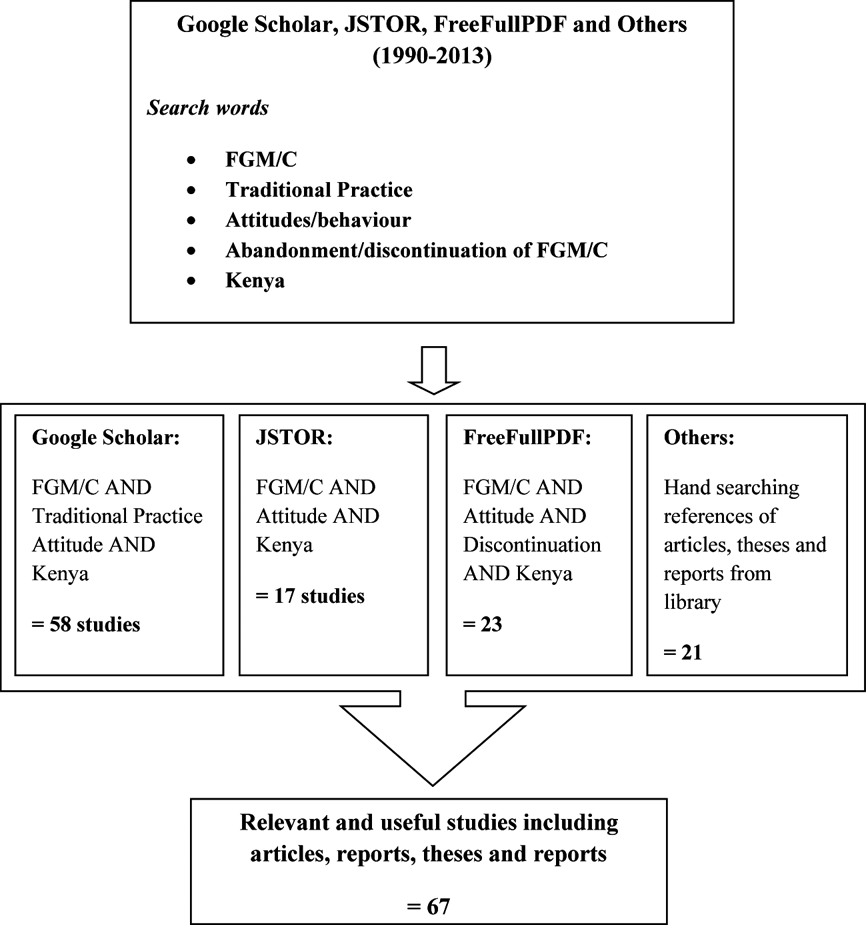
An extensive literature review was undertaken to understand the attitudes of women towards FGC in Kenya. This also helps to comprehend the changing attitudes of Kenyan women towards the traditional practice of FGC over the period. All the studies containing relevant information and published on the internet were included accordingly, to avoid predisposition. The sources of information were restricted to those offering free access from the databases used (Cheserem, Reference Cheserem2011) and available on Google Scholar, JSTOR and FreeFullPDF. The search keywords used were: FGM/C, traditional practice, attitudes/behaviour, abandonment/discontinuation of FGM/C and Kenya. Initially, 119 studies were considered, of which 67 recent studies (from 1990 to the present) were finally selected to capture the current changes in the attitudes of Kenyan women towards FGC. Figure 2 shows the search terms used in each database and the flow diagram illustrates how many studies are generated from each source and the inclusion criteria used to select the 67 articles for the full review. Important research may have been missed out due to inaccessibility and publication in languages other than English. References are only provided for relevant and useful articles, scientific research and reports.
Details of literature search.
Results
Prevalence of FGC in Kenya by women's background characteristics
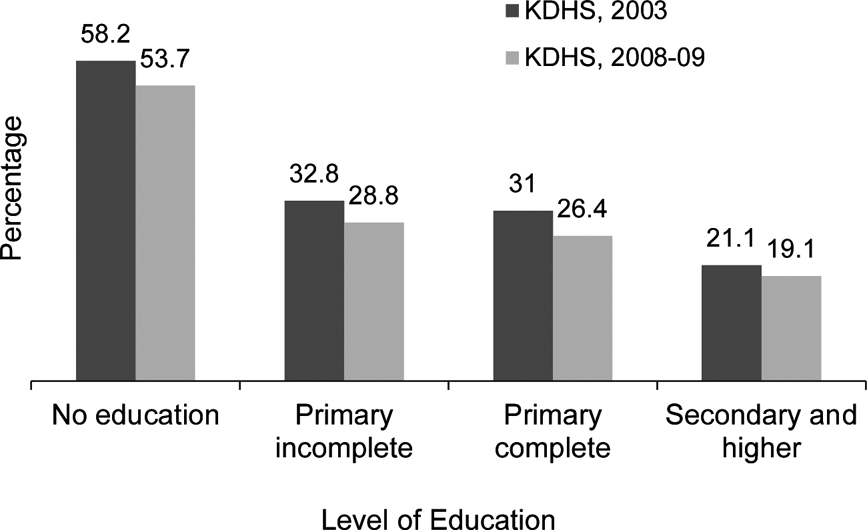
Female genital cutting is widespread in Kenya, with 27% of women aged 15–49 years reporting being circumcised in the 2008–09 KDHS. This shows that there has been a gradual decrease in the prevalence of FGC from 38% in KDHS-I (1998) and from 32% in KDHS-II (2003) to the KDHS-III. The practice is found in half of the districts in Kenya. Differences in the prevalence of FGC are evident among different ethnic groups. According to KDHS-III (2008–09), FGC is very common among the Kisii (96.1%) and Somali (97.6 %) communities and high among the Maasai (73%). Among all other ethnic groups, the prevalence is less than 50%. In the North-Eastern province, the percentage of circumcised women is exceptionally high (97.5%) compared with other provinces. The prevalence of FGC is much higher among Muslim women (51%) than women belonging to other religions. The rural–urban differential in the prevalence of FGC is very clear: in urban areas about 17% of women are circumcised whereas in rural areas the figure is about 31%. The study also found a negative association between educational level of women and prevalence of FGC from the last two round of KDHS (see Fig. 3).
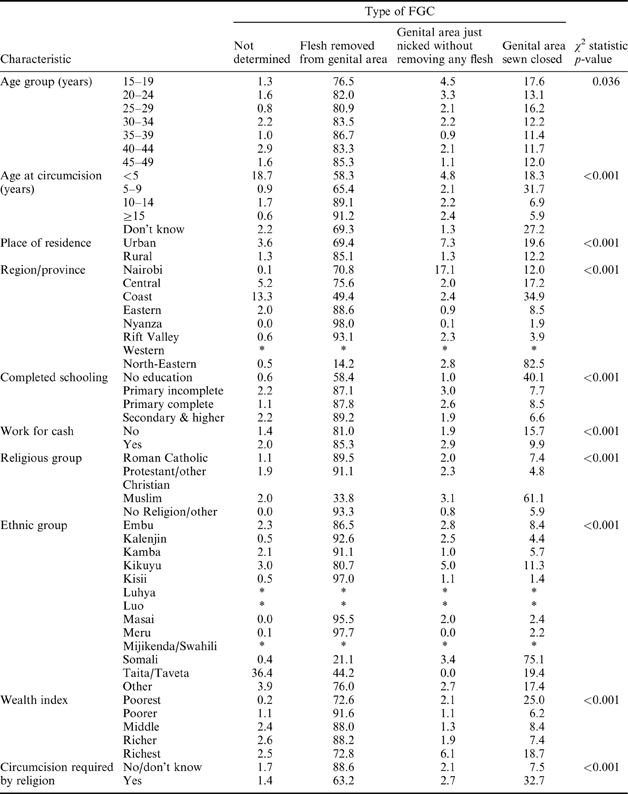
Among circumcised women, about 58.3% had flesh removed from the genital area before the age of five. About 5% of women just had their genital area nicked without removing the flesh, and 18% had their genital area sewn closed. About 91% of women circumcised at a later age (15 year and above) had flesh removed from their genital area. Among highly educated women, 89% had flesh removed from their genital area. Sixty-one per cent of circumcised Muslim women had their genital area sewn closed, and this was highest in the Somali community. In the highest wealth quintile, about 19% of women had their genital area closed by sewing (see Table 1).
Percentage distribution of circumcised women by different types of genital circumcision and their background characteristics, 2008–09 KDHS
* Percentage not shown as based on fewer than 25 cases.
Attitudes of women towards discontinuation of FGC
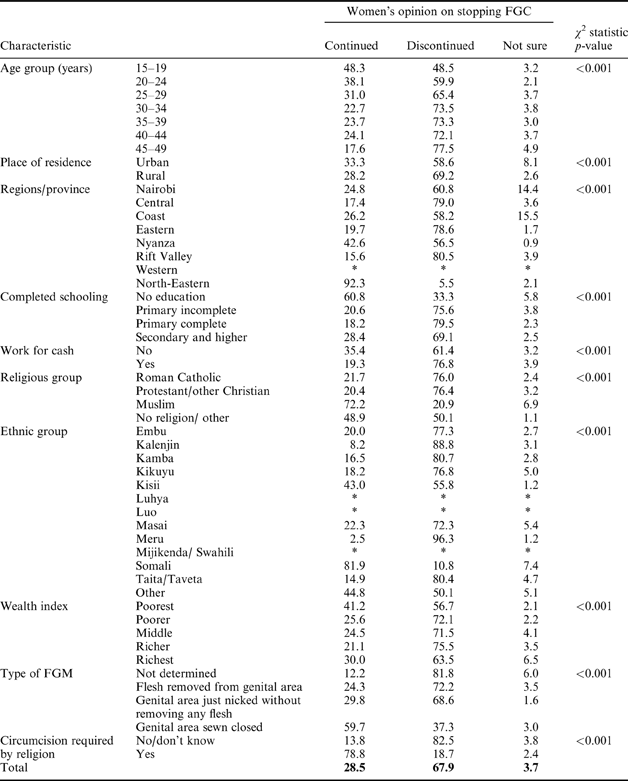
Women's attitudes towards the traditional practice of FGC widely varied with their background characteristics. Four out of five women (i.e. 82%) believed that female circumcision should be stopped. Only 7% of women believed that it was required by their religion, though the percentage for women in North-Eastern province was 87% (2008–09 KDHS). Whereas 68% of circumcised women wanted to discontinue the practice, 29% of women believed that it should be continued. About 69% of circumcised women in rural areas wanted to discontinue FGC, whereas in urban areas the figure was lower (about 59%; see Table 2).
Percentage distribution of circumcised women by whether they believe the practice should continue or be stopped by selected background characteristics, 2008–09 Kenya
* Percentage not shown as based on fewer than 25 cases.
Perception of circumcised mothers of their daughter's circumcision
The study explored the attitudes of circumcised mothers towards FGC, and whether or not they wanted genital cutting to be done to their daughters. The 2003 KDHS showed that the proportion of circumcised daughters among the respondents' eldest daughters (aged 15 or older) was 21%, but the circumcision status of the other daughters was not available (KDHS, 2003). In the 2008–09 KDHS questions were asked on women's attitude towards their daughter's circumcision. About 36% of circumcised women responded that their daughters (any) were already circumcised. Moreover, it was found that 13% of circumcised mothers intended their daughters to be circumcised in the future, and 49% of circumcised women did not want genital cutting of their daughters in the future. It is astounding that, despite the circumcision rate decreasing over the past decade, the thought of FGC still exists among circumcised women as a cultural norm, and as a means of preserving their daughter's virginity or to get better marriage prospects for them.
Changing attitudes towards the discontinuation of FGC
In Kenya, cultural beliefs and practices are the key influential factors for adherence to the practice of FGC. They impact on women's perceptions, and hence decide their status and rights. Like in other African countries, in Kenya, society has been passing through a remarkable change in respect of woman's status. A significant decline in the prevalence of FGC has been seen, and awareness about health complications due to FGC is found to be the main factor contributing to this trend (Livermore et al., Reference Livermore, Monteiro and Rymer2007). Over the period, changes in customs have been observed in the Kuria and Kisii communities. In the Kisii, there has been a trend towards the medicalization of FGC, with the use of medical staff to perform the procedures. Another change is found in the decline in the malice of cutting, with a move towards pricking the clitoris to draw blood, rather than cutting (Oloo et al., Reference Oloo, Wanjiru and Newell-Jones2011).
The age at which girls undergo FGC differs widely depending on ethnic group and geographical location. The event of FGC is often flexible, even within communities, since it is not tied to a ceremony, and people may also believe that its ceremonial significance is diminished (WHO, 2001). The proportion of circumcised women has been declining with age, and this indicates a decrease in the popularity of the procedure in younger generations (Allen et al., Reference Allen, Denise, Diakides, Waritay and Wilson2013).
Wangila (Reference Wangila2007) noted that the rituals involved in female circumcision have not only developed and changed over time, but the attitudes towards this practice have also changed. A marriageability convention typically regulates the traditional practice of FGC, and FGC is almost universal within communities with similar cultures. Hence, there is little scope to develop different beliefs and thus the practice becomes widespread. However, inter-community marriage introduces new beliefs, practices and exchange of ideas (Mackie & LeJeune, Reference Mackie and LeJeune2008). Therefore, the communities that don't practise FGC diffuse their thoughts and behaviours towards the communities where FGC is practised.
Community discussions also change the attitudes of men and women towards the discontinuation of FGC. It has been found that traditional female circumcisers who have attended a workshop do not participate in the old practice of circumcising girls and women. This shows some changes in their attitude and acceptance of new approaches to convince the community that uncircumcised and initiated girls are as good as the circumcised, and they are too are fit for marriage (Chebet, Reference Chebet2009).
The respondents of a study by Schmidt (Reference Schmidt2005) agreed that change within a culture (where FGC is abandoned) is not necessarily bad if it is gradual and doesn't jeopardize the stability of the community. Advancement in encouraging and promoting the abandonment of FGC has been started, but efforts are still at an early stage. In some cultural settings, the practice of female circumcision has been declining, and attitudes towards the practice appear to be changing. The experience of community-based programmes suggests that FGC may be fading (Population Reference Bureau, 2001).
There is a need to involve religious leaders (Matovu, Reference Matovu2011) to face the challenges of abandoning FGC in Kenya. According to a study by Abdi (Reference Abdi2007) in Kenya, Muslim respondents opine that they are willing to follow the direction of pious scholars concerning the accurate position of Islam on the practice. The respondents also said that FGC will not be stopped by legislation, but that they would be ready to stop anything that is not Islamic. In another study in Nairobi (Jaldesa et al., Reference Jaldesa, Guyo, Njue and Wanjiru2005), Muslim scholars stated that FGC was optional rather than obligatory in Sunna behaviour. Hence, it is believed that in Islam circumcised women are as well regarded as uncircumcised women. In Islam, men's circumcision is well accepted, but for women it is not obligatory.
There is substantial proof that health professionals are performing FGC increasingly in hospitals and health clinics, as well as in community settings sometimes, but not always, with medical provision (Population Reference Bureau, 2001). The medicalization of FGC in Kenya has become a trend that has been documented, particularly among the Kisii (Allen et al., Reference Allen, Denise, Diakides, Waritay and Wilson2013). The justification given for performing FGC by health professionals is that it reduces the pain and the risks to the girl's health as the operation is performed hygienically. Health professionals who perform FGC claim that medicalization is the first step towards the abandonment of the practice. If they refuse to perform FGC, the families will go back to the traditional practitioners who practise genital cutting in unhygienic conditions and without pain relief (Population Reference Bureau, 2001).
Schmidt (Reference Schmidt2005) interviewed a 32-year-old Samburu mother with five children who was circumcised at 10 years of age. She regretted that she was circumcised, and wanted to protect her daughters. However, she feared that when she visited her family her relatives would take her daughters and cut them. A woman who protests against a community by not circumcising her daughters may eventually endanger her family's social and economic support system (Gele et al., Reference Gele, Kumar, Hjelde and Sundby2012). However, the paradox is that the victims of the practice are also its strongest proponents. A recent survey report focused on ‘whether a woman does not cut her daughter; then as a mother that the daughter does not cut her own daughter; and as a grandmother, she will not cut her grand-daughter or others in the community’ (Allen et al., Reference Allen, Denise, Diakides, Waritay and Wilson2013, p. 4). Ultimately, over three generations (36 years) major change can happen; over five generations (60 years) FGC can be eradicated.
In a qualitative study by Gele et al. (Reference Gele, Kumar, Hjelde and Sundby2012), two mothers expressed their worries over this new behaviour:
First of all, I share my friend's concern over the probable growth of the clitoris and how it is going to look. We have never seen it. Secondly, we were circumcised and our mothers knew that we were virgins. But we cannot know what our uncircumcised daughters are doing. Whenever my daughter feels sick, I tell myself that ‘maybe she is pregnant’; it's worrisome.
(44-year-old woman, p. 14)This practice is not a religious requirement and, therefore, we have to stop it. We have experienced its pain, so how could we subject the same pain to our daughter?
(Another 44-year-old woman, p. 11)In this transition period, there is a dilemma in the perception of women regarding FGC. Those mothers who have performed their daughter's circumcision, considering it as part of the cultural norm, live with the guilt of being responsible for their daughter's physical pain and psychological trauma. Contrary to this, those mothers who have uncut daughters and don't support the brutal act of genital cutting face harsh societal prejudice. In Kenya, where moderate to high disapproval for the practice already exists among older women, younger women are also more prone to oppose the practice. This suggests that younger generations may have greater access to anti-FGC information, and are less influenced by tradition than the older generation (Population Reference Bureau, 2001).
Further, culture is a dynamic process that changes with circumstances. Factors such as migration, social framework and education level can amend a culture and play a significant role in reshaping a community's norms, behaviour and values (Lane & Robert, Reference Lane and Rubinstein1996). Henceforth, FGC can no longer be seen as a traditional custom. Although stopping female circumcision may be associated with slight or harsh measures, the practice will surely disappear very soon from the world, and therefore every effort should be made to stop it ultimately (Cheserem, Reference Cheserem2011). Kenyan's attitudes towards FGC seem to be changing enough to consider that FGC may be completely eradicated quickly. Female circumcision is gradually being seen less as an intrinsic part of growing up, and more as an unnecessary practice. The change in Kenyan societal attitudes towards FGC has the potential to spill over to neighbouring African nations such as Ethiopia, South Sudan and Somalia, where FGC is still widely practised (Utrikesperspektiv, 2012).
Discussion
Over the last few decades African countries have gone through major cultural changes. In some places FGC is continuing to embrace an unreflecting tradition mixed with superstitious beliefs. The capability to endure physical pain is no longer a necessary skill in modern African societies. In Kenya, the severity of female circumcision is found to be lower in urban areas than rural areas. About 85% of women in rural areas have had flesh removed from their genital area, whereas in urban areas the figure is only 69%. In fact, women who experienced the removal of flesh from their genital area (72%) oppose the practice more strongly than those who had their genital area nicked without removing the flesh (69%), and than those who had their genital area sewn closed (37%).
An evaluation of research published since 1991 has indicated a change in the attitudes and behaviour of both men and women in Kenya (Radeny, Reference Radeny2001). In both urban and rural areas, the percentage (9.4%) of women who think that the practice should be continued is much less than the percentage of women (about 27%) who have been circumcised. It appears that social pressure to conform to the practice is high, but attitudes are changing (KDHS, 2008–09). The role of education in influencing the attitudes towards the discontinuation of FGC is well-established. The present study has found that women with secondary and higher education were more inclined to the discontinuation of FGC (69%) than uneducated women (33%).
The Kenyan government has introduced a range of initiatives through the National Plan of Action, 2011, to encourage the abandonment of FGC (Oloo et al., Reference Oloo, Wanjiru and Newell-Jones2011). In Kenya, circumcision of girls under the age of 17 was outlawed in 2001, through measures in the Children's Bill passed by parliament (Cheserem, Reference Cheserem2011). At the end of 2011, the existing anti-FGM law was substituted by the robust prohibition of the Female Genital Mutilation Act 2011. This closed loopholes in the previous law, criminalizing all forms of FGC performed on anyone, regardless of age, taking someone abroad for FGC and stigmatizing women who have not undergone FGC (Allen et al., Reference Allen, Denise, Diakides, Waritay and Wilson2013).
In Kenya, public and private initiatives to stop FGC are also appreciable. Local NGO staff are trying to convince families to take girls back uncut after their schooling is completed. Since older girls are becoming more aware and raising their voice against FGC, some parents have begun to have their daughters cut at a younger age (around 5 years old or even as babies). At that time, they are more submissive and in no condition to protest (UNFPA, 2008). In the present study, it is also evident that women whose circumcision was performed before 10 years of age mostly had their genital area sewn closed (i.e. 18% and 32% for <5 and 5–9 years age groups, respectively). However, the practice is still in existence, predominantly in rural areas, despite the imprisonment of those found to have broken the law. There is a common sentiment that FGC is a cultural norm that cannot be directed by civil legislation (Jaldesa et al., Reference Jaldesa, Guyo, Njue and Wanjiru2005).
The law is a good and welcome move, although its use is restricted in very conservative Maasai or Somalian communities. It is very difficult to expect that a Somalian girl, belonging to a traditional family, will report against her parents for violating her rights. According to Zeituna Roba (a gender activist), very few communities that practise FGC are aware of the existing laws (Matovu, Reference Matovu2011). In North-Eastern province, for example, FGC is done in secret, and to maintain confidentiality it is performed at an early age by traditional circumcisers, without medical assistance and risking their girls' health. Thus, the forceful imposition of the law may indirectly encourage the practice. The law can only prevent public ceremonies, not the cutting. Now girls are sent secretly to hospital for circumcision because of the pressure from the government (Schmidt, Reference Schmidt2005). Among circumcised women of different ethnic (such as 82% of Somali) and religious groups (such as 72% of Muslim), there is a strong conviction for the continuation of the practice. Therefore, it is important to sensitize the communities with a view to changing their attitudes.
In Kenya, FGC doesn't determine the status of a woman in society anymore (Schmidt, Reference Schmidt2005). People believe that the practice serves an important social purpose, and it is difficult to convince them otherwise. The parents of uncut daughters still worry about their daughter's marriage in a traditional society (UNFPA, 2008). Thus research should not target the question of whether the practice should be stopped or not, but rather how it can be abandoned sensitively and effectively without hurting those who have been already suffered from it (Gele et al., Reference Gele, Kumar, Hjelde and Sundby2012).
The Naserian Women Group, which promotes the abandonment of female genital cutting among Kenya's Maasai, states now the Maasai have realized that economic power often comes with decision-making status in society. They are, therefore, undertaking income-generating projects that empower women to speak authoritatively in their male-dominated society (Wakabi, Reference Wakabi2007). The present study also shows that the circumcised women who are working for cash (77%) are more opposed to FGC than non-working women (61%). Consequently, progress towards the abandonment of girls' circumcision and the empowerment of women (Millennium Development Goal [MDG] 3) may contribute to the improvement of maternal health (MDG 5), and a reduction in child mortality (MDG 4) (Gele et al., Reference Gele, Kumar, Hjelde and Sundby2012).
Due to data constraints a few limitations of this study are noteworthy. In the large-scale demographic surveys, very little information was available on the attitude of Kenyan women towards FGC. Due to the lack of inclusion of similar indicators in previous demographic surveys, any trend or change in attitudes cannot be shown by performing advanced statistical analyses. Hence, the present study has tried to show the change in attitude of women towards FGC by carefully scrutinizing the available literature. Still, there is scope to explore the beliefs, perceptions and attitudes of men and women of older as well as younger generations towards traditional practices through meticulous research and proper investigation at the national level. Also, qualitative techniques like focus group discussions and in-depth interviews at the community level would be very useful to comprehend the current change in attitude towards FGC in Kenya.
Conclusions
This study found evidence for a gradual change in the attitudes of Kenyan women towards the discontinuation of FGC, irrespective of whether they themselves are cut or not. The majority of circumcised women don't want circumcision of their daughters. Mothers who have changed their behaviour and do not have their daughters cut need to take up an effective strategy that enables them to overcome dilemmas, neutralize opposition and stand firm against societal forces. This will ultimately help them to endorse and diffuse their new behaviour to others (Askew, Reference Askew2007; Gele et al., Reference Gele, Kumar, Hjelde and Sundby2012).
Educated people know how to protect their daughters through discussion. They understand that protection of their girls can't be assured through circumcision. (Norman et al., Reference Norman, Hemmings, Hussein and Otoo-Oyortey2009). Therefore, a good relationship between mothers and daughters is needed, as a friendly relationship and healthy conversation can strengthen the learning of both mothers and daughters. Moreover, research should focus on the availability and accessibility of information and health outcomes related to FGC, to the communities that practise FGC in Kenya. Successful strategies and proper monitoring of the anti-FGC campaign are also required. Promoting education and awareness among women against FGC, irrespective of whether they are circumcised or not, will transform their attitude towards abandonment of FGC in Kenyan society.