Introduction
Major depressive disorder (MDD) and bipolar depression (BD) continue to have high rates of treatment resistance (eg, treatment resistant depression [TRD]), with many mood disorder patients experiencing chronic and persistent depressive symptoms after numerous treatment trials. The Sequenced Treatment Alternatives to Relieve Depression Study demonstrated that only 60% of patients with MDD experienced full remission of symptoms, despite multiple intervention attempts.Reference Sinyor, Schaffer and Levitt 1 , Reference Rush, Trivedi and Wisniewski 2 Even higher rates of TRD are observed in BD, as indicated by the Systematic Treatment Enhancement Program for Bipolar Disorder Study.Reference Sachs, Nierenberg and JR 3 As such, low remission rates and inadequate response to current treatment options are a major unmet need within mood disorder populations.
When pharmacological and psychological interventions provide inadequate antidepressant effects, neurostimulation options (ie, repetitive transcranial magnetic stimulation [rTMS] and electroconvulsive therapy [ECT]) may be explored as evidence-based alternatives for TRD.Reference Milev, Giacobbe and Kennedy 4 Currently, ECT continues to be the gold standard and most effective treatment option for severe TRD. A recent meta-analysis by the Ontario government concluded that in trials directly comparing ECT with rTMS, there was a statistical and clinical benefit for ECT treatments. 5
It is estimated that response rates for ECT are between 70% and 80%.Reference Milev, Giacobbe and Kennedy 4 , Reference Kellner, Fink and Knapp 6 Converging lines of evidence suggest that a higher degree of treatment resistance is often predictive of poor treatment outcomes.Reference Rush, Trivedi and Wisniewski 2 , Reference Zarate, Rothschild, Fletcher, Madrid and Zapatel 7 , Reference Thase and Rush 8 Moreover, without maintenance treatment, relapses approximate 50%, even following successful ECT treatment.Reference Bourgon and Kellner 9 Therefore, patients unsuccessfully treated with ECT treatments are left to try experimental neuromodulatory treatments such as deep brain stimulation or focused ultrasound, which requires further trials to characterize their effect on TRD.Reference Rodrigues, Mithani, Meng, Lipsman and Hamani 10 , Reference Meng, Suppiah, Mithani, Solomon, Schwartz and Lipsman 11 Indeed, effective treatments for ECT-refractory depression are limited with minimal research and no consensus regarding optimal treatment after failing a course of ECT.Reference Milev, Giacobbe and Kennedy 4
Ketamine is a glutamatergic agent that has shown rapid and robust antidepressive effects and reductions to suicidal ideation (SI). 12–16 There is, however, a paucity of data regarding the effectiveness of intravenous (IV) ketamine in patients with a history of receiving neurostimulation. One study compared 17 patients with TRD who did not respond to ECT to 23 patients who were ECT-naïve receiving a single dose of IV ketamine.Reference Ibrahim, Diazgranados and Luckenbaugh 17 Overall, both groups exhibited a similar depressive symptom reduction with a trend toward favoring ECT-naïve patients that did not reach statistical significance. Given the small sample size, this study was likely underpowered to detect differences between response in ECT-refractory vs ECT-naïve patients. Herein, we aim to further extend these results by characterizing the overall antidepressant, antisuicidal, antianxiety, and antianhedonic effects of repeated-dose IV ketamine in a community sample of TRD patients that includes the largest clinical sample of patients receiving IV ketamine who had previously received neurostimulation (rTMS or ECT).
Methods
A total of 260 adult patients received repeated-dose IV ketamine infusions at the Canadian Rapid Treatment Center of Excellence (CRTCE) between July 2018 and April 2020. The CRTCE provided ketamine treatment, outside of a clinical trial, to adults, older than 18 years, with TRD (defined as Stage 2 treatment resistance or greater).Reference Thase and Rush 8 Retrospective data analysis was approved by a community institutional research ethics board (IRB#00000971) and registered on clinicaltrials.gov under the identifier NCT04209296. The treatment protocol and eligibility criteria have previously been characterized in detail.Reference McIntyre, Rodrigues and Lee 14 Only measures pertinent to this study will be described herein.
Briefly, patients deemed eligible for treatment by the clinic psychiatrist and anesthesiologists, and provided written consent to the treatment, received infusions of IV ketamine hydrochloride, diluted in 0.9% saline solution, over 40 to 45 minutes. In total, four infusions were administered, over 7 to 14 days, depending on patient scheduling and availability. The first two infusions were administered at a dosage of 0.5 mg/kg based on patients’ true body weight. Patients who did not experience clinical benefit (ie, ≤20% reduction in the total Quick Inventory for Depressive Symptomatology-Self Report 16-Item [QIDS-SR16 score]) following two infusions were eligible for a dose increase to 0.75 mg/kg, based on previous research suggesting that some patients require a higher dose of ketamine for full effects.Reference Cusin, Ionescu and Pavone 18 Eligibility for the dose increase was also based on patient preference and tolerance to the index dose. Following the four infusions, patients returned to the clinic for a follow-up visit with the treatment psychiatrist.
Assessments
History of ECT and rTMS treatments were ascertained from referral forms of patients. Following a chart review, patients who had received either treatment were grouped into the history of neurostimulation group, whereas patients who had not received ECT or rTMS were placed in the neurostimulation-naïve cohort.
Prior to each infusion, patients were administered a short self-report assessment battery to characterize severity of depression (ie, QIDS-SR16), anxiety (ie, Generalized Anxiety Disorder 7-Item [GAD-7]), and consummatory anhedonia (ie, Snaith–Hamilton Pleasure Scale [SHAPS]). 19–21 Suicidal ideation was measured using the QIDS-SR 16-Item 12. The QIDS-SR16 assessment was completed at all five timepoints (ie, baseline, post-infusions 1 to 4). The GAD-7 and SHAPS scales were administered at baseline, post-infusion 3 and the post-initiation treatment visit.
Statistical analysis
Data were collected at point-of-care from patients using a tablet device and stored directly onto Research Electronic Data Capture.Reference Harris, Taylor, Thielke, Payne, Gonzalez and Conde 22 , Reference Harris, Taylor and Minor 23 Data were analyzed using Statistical Product and Service Solutions (SPSS version 23 for Mac; SPSS, Inc., Chicago, IL) and Graphpad Prism 8.0.
A repeated measures linear mixed effects model was used to determine if there were between- or within-group differences in depression severity, suicidal ideation, anxiety severity, and anhedonic severity. Model terms were group (ie, history of neurostimulation vs neurostimulation-naïve), infusion, and group by infusion. A compound symmetry matrix was used, and the data were estimated using REML. The model was adjusted for any covariates that were significantly different between the two cohorts. The alpha was set to 0.05. Posthoc analyses were corrected for multiple comparisons using the Bonferroni method. Categorical outcomes for responders (ie, reduction of QIDS-SR16 Total Score ≥50% from baseline) and remitters (ie, QIDS-SR16 Total Score ≤ 5) were reported following each infusion. Subsequent analyses were completed comparing the effects of IV ketamine in patients with a history of rTMS to patients with a history of ECT. Patients who had received both modalities were included into the latter group, as ECT is the gold standard. Linear mixed effects models were used to determine between- and within-group effects in QIDS-SR16 Total Score, SI score, GAD-7, and SHAPS.
Results
Sample characteristics
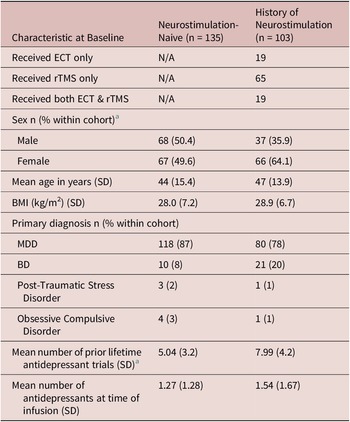
Of the 260 patients, a total of 135 (57%) patients had never received ECT or rTMS prior to beginning ketamine infusions, while 103 (43%) patients received at least one of the modalities. Within the neurostimulation-history group, 65 (27%) patients had received rTMS only, 19 (8%) patients received ECT only, and 19 (8%) patients had received both modalities. Neurostimulation data were unavailable for 22 patients and were therefore excluded from subsequent analyses. Baseline demographics are described in Table 1. There were no significant differences in age, body mass index (BMI), concomitant medications, or baseline depression severity between groups. There was a significant statistical difference in sex (X 2 (1) = 4.95, P = .026), as there were less males in the history of neurostimulation group, and the total number of past antidepressant trials prior to infusion (U = 3811, P < .001). Sex and past antidepressant trials were controlled for in subsequent analyses.
Baseline Characteristics.
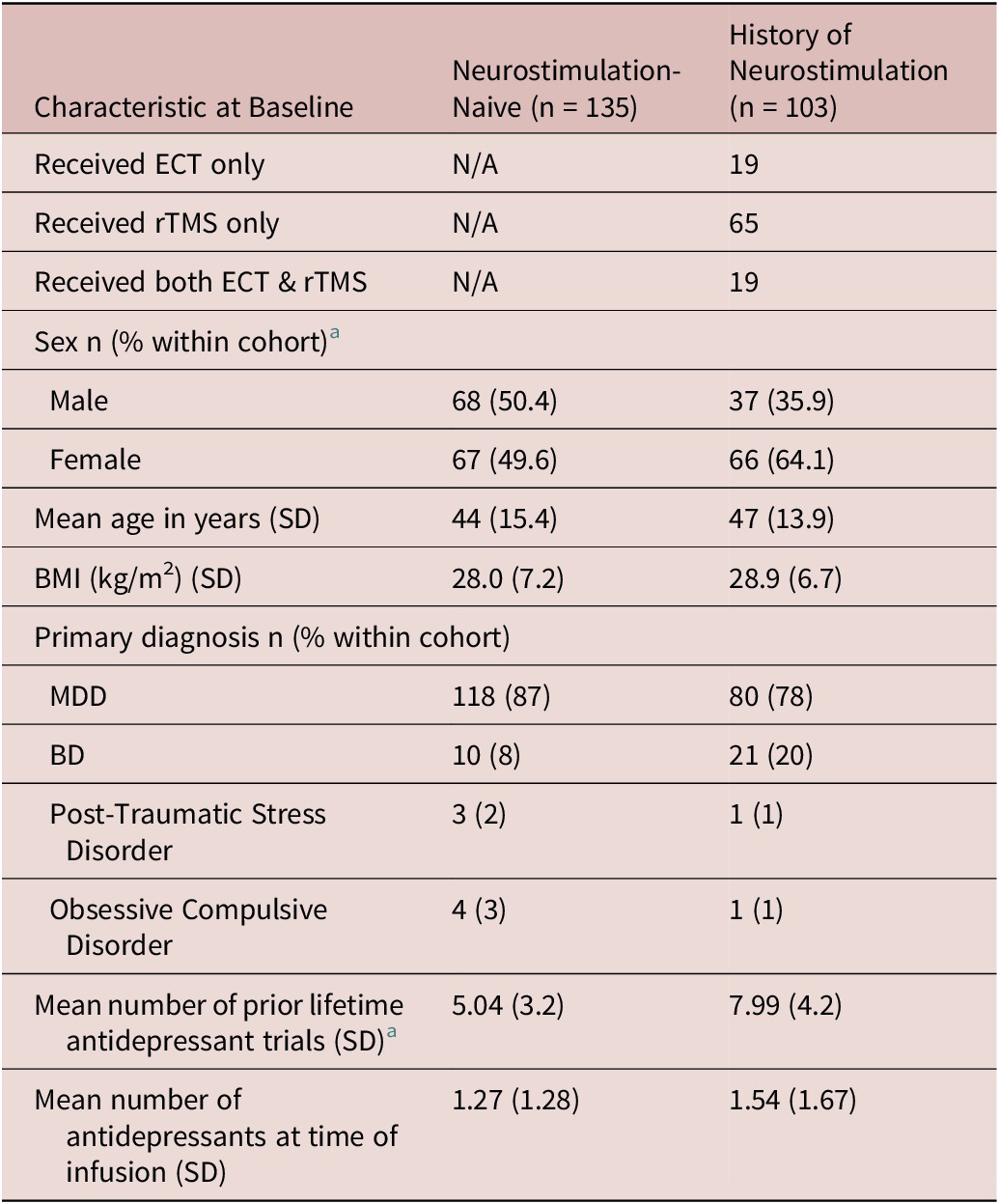
Abbreviations: BD, bipolar depression; ECT, electroconvulsive therapy; MDD, major depressive disorder; rTMS, repetitive transcranial magnetic stimulation; SD, standard deviation.
a A significant difference between the two cohorts (p < .05).
Clinical outcomes
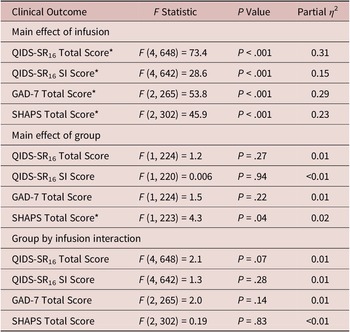
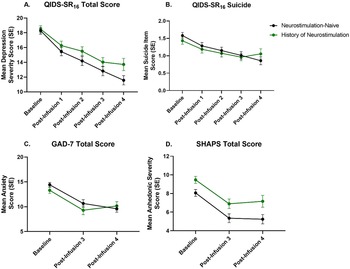
Omnibus statistical tests for all clinical outcomes are reported in Table 2. There was an overall significant main effect of infusion in the QIDS-SR16 Total Score but the main effect of group and group by infusion interaction were not significant. Bonferroni corrected pairwise comparisons indicated that there was a significant reduction in QIDS-SR16 Total Score from baseline to all subsequent timepoints (P < .001); from post-infusion 1 to post-infusion 3 (P < .001) and 4 (P < .001); and from post-infusion 2 to post-infusion 3 (P = .002) and 4 (P < .001) (Figure 1A). Overall, the neurostimulation-naïve patients had a mean reduction in QIDS-SR16 Total Score of 6.4 (standard deviation (SD) = 5.3), whereas the history of neurostimulation patients reported a 4.3 (SD = 5.3) point reduction.
Omnibus Statistical Tests Between the Neurostimulation and Neurostimulation-Naive Cohorts.
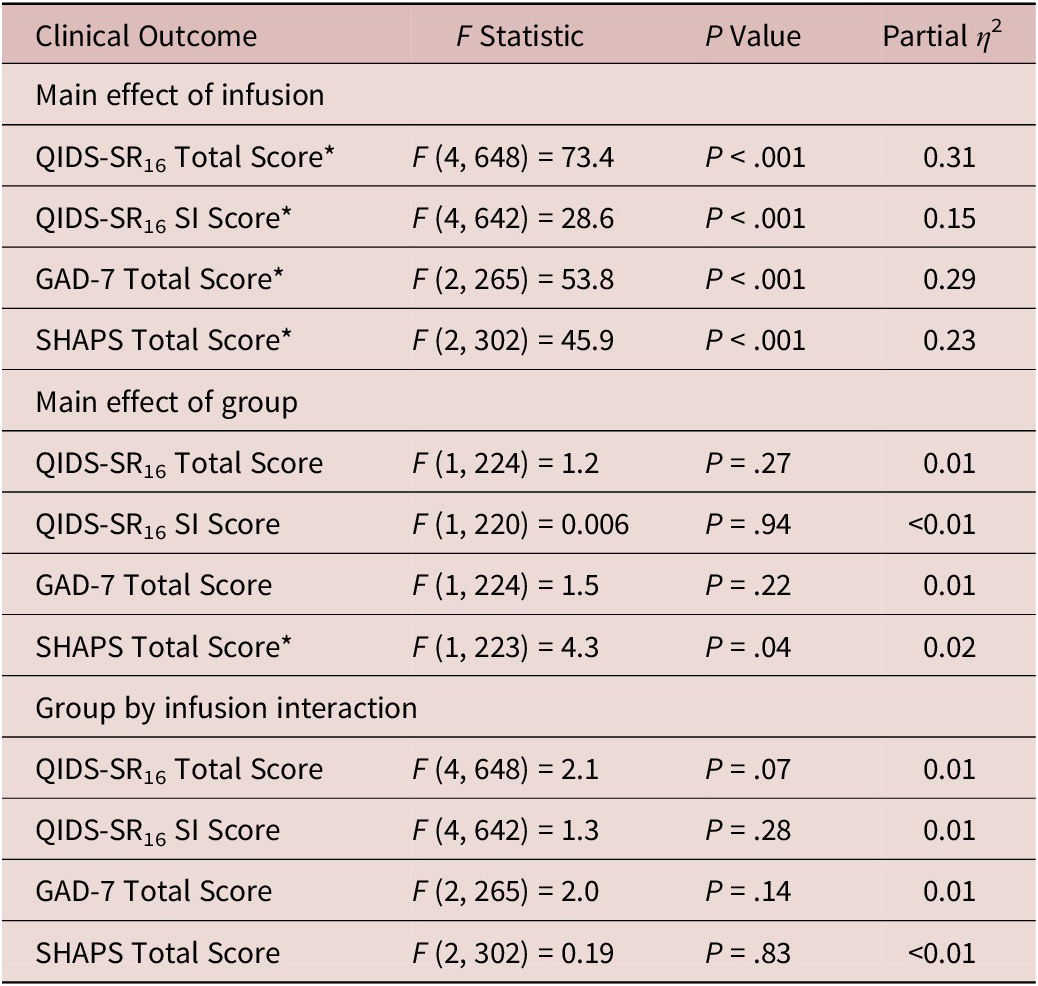
Abbreviations: GAD-7, Generalized Anxiety Disorder 7-Item; QIDS-SR16, Quick Inventory for Depression Symptomatology-Self Report 16-Item; SHAPS, Snaith–Hamilton Pleasure Scale; SI, suicidal ideation.
Comparison between the neurostimulation-naïve and history of neurostimulation groups across four IV ketamine infusions examining changes in (A). Mean Total Quick Inventory for Depression Symptomatology-Self Report 16-Item (QIDS-SR16) Total Score, (B) Mean score of the QIDS-SR16 Suicide Item, (C) Generalized Anxiety Disorder 7-Item (GAD-7) Total Score, and (D) Snaith–Hamilton Pleasure Scale (SHAPS) Total Score.
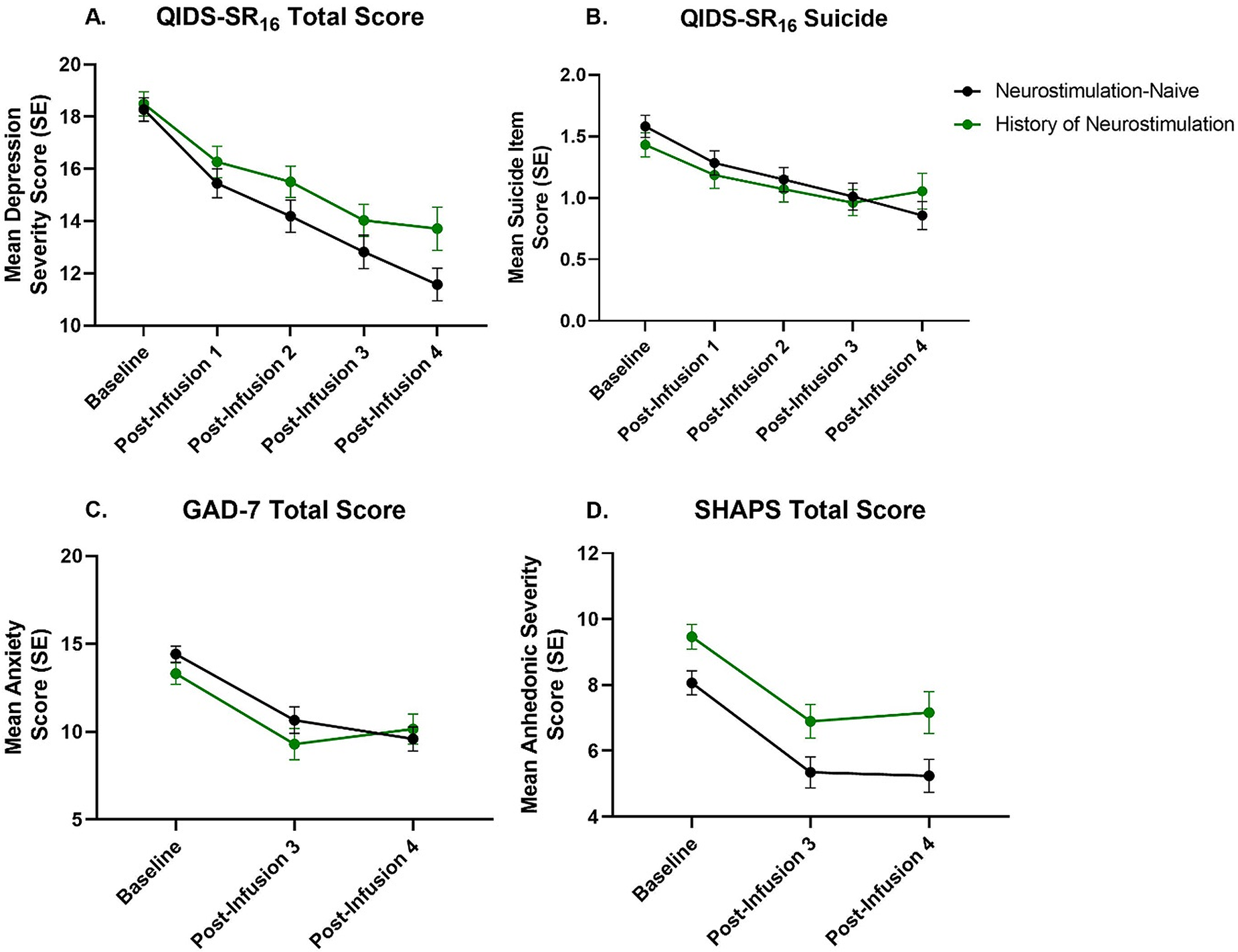
There was a significant main effect of infusion in the QIDS-SR16 SI score. Pairwise comparison indicated a significant reduction in suicidal ideation from baseline to all subsequent timepoints (P < .001); and from post-infusion 1 to post-infusion 3 (P < .001) and 4 (P < .001) (Figure 1B). The neurostimulation-naïve cohort reported a 0.65 (SD = 0.89) mean score reduction on the QIDS-SR16 Item 12. Patients who had received neurostimulation had a 0.41 (SD = 0.83) mean score reduction following infusions.
There was a significant main effect of infusion in anxiety severity total scores, but no main effect of group or group by infusion interaction. In addition, there was a significant reduction in anxiety symptom severity from baseline to post-infusion 3 and post-infusion 4 (P < .001) (Figure 1C). Overall, neurostimulation naïve patients reported a mead reduction of 5.28 (SD = 5.7) on the GAD-7 following four infusions, whereas the neurostimulation group reported a 3.1 (SD = 4.8) point reduction.
It was additionally observed that there was a significant main effect of infusion and a main effect of group in SHAPS total score. However, there was no significant group by infusion interaction. A significant reduction in anhedonic symptom severity from baseline to post-infusion 3 and post-infusion 4 was also observed (P < .001) (Figure 1D). Between-group differences in the estimated marginal means of patients who had received neurostimulation also emerged (Estimated Marginal Mean (EMM) = 7.65, standard error (SE) = 0.40) compared to those who did not (EMM = 6.51, SE = 0.35, P < .04). Overall, the neurostimulation-naïve patients reported a 2.8 (SD = 4.2) point reduction from baseline in SHAPS. Comparatively, patients who had received neurostimulation reported a 2.2 (SD = 3.9) point reduction.
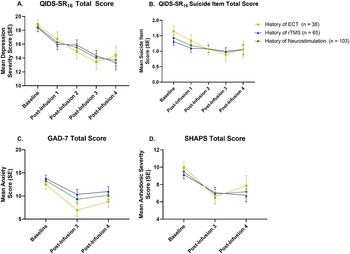
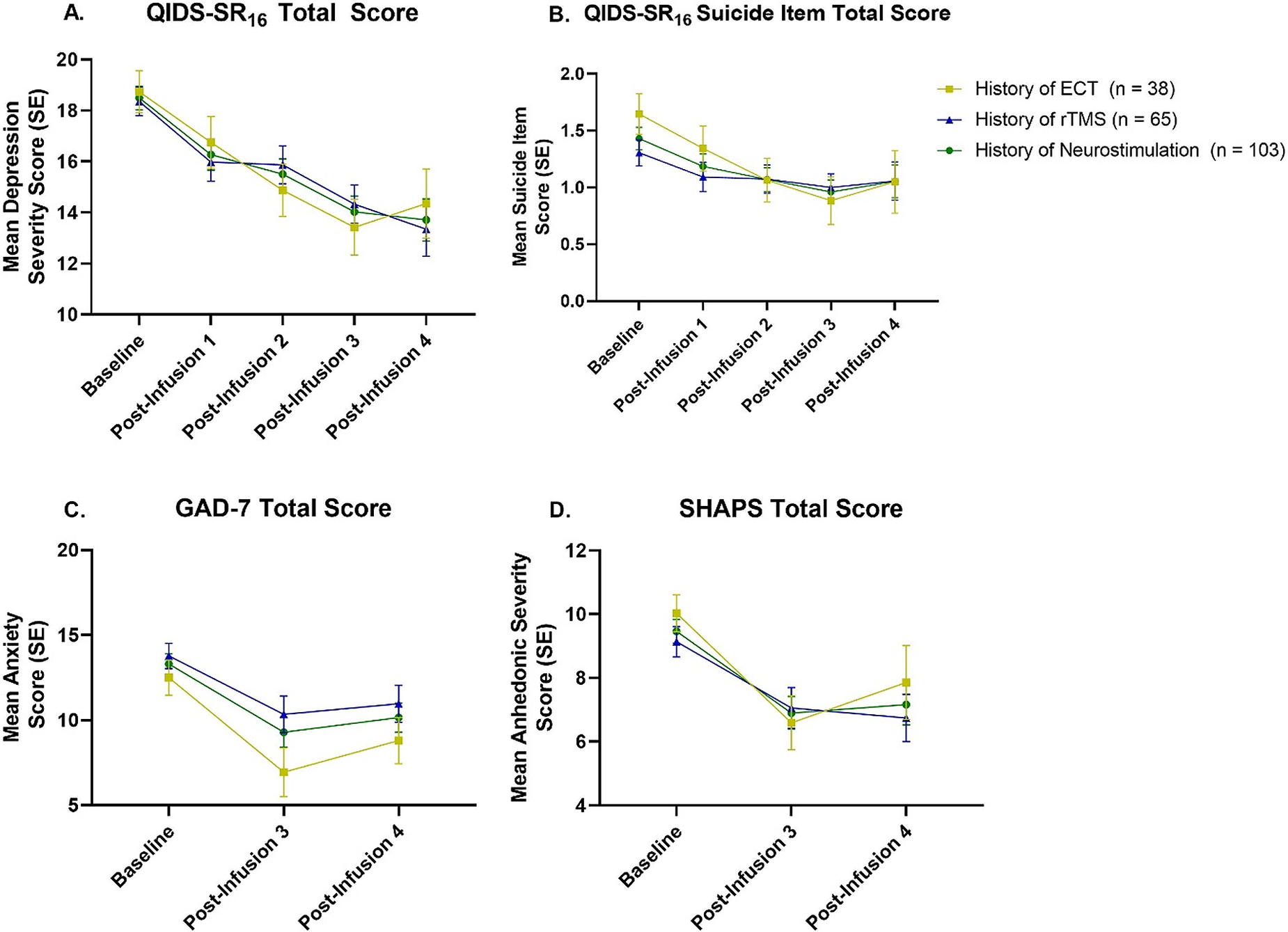
A subsequent analysis was complete within the neurostimulation history group, wherein patients who received rTMS were compared to those who had received ECT or ECT and rTMS. There were significant main effects of infusion for QIDS-SR16 Total Score (F (4, 297) = 23.5, P < .001), QIDS-SR16 SI (F (4, 295) = 10.4, P < .001), GAD-7 (F (2, 111) = 14.3, P < .001), and SHAPS (F (2, 143) = 18.4, P < .001). Overall, depression severity significantly decreased from 18.4 (SE = 0.55) to 13.3 (SE = 1.1) and 18.7 (SE = 0.83) to 14.3 (SE = 1.3) in the TMS history and ECT history groups, respectively (Figure 2A). Mean SI severity scores reduced from 1.3 (SE = 0.11) to 1.1 (SE = 0.17) in the TMS history group and 1.7 (SE = 0.18) to 1.1 (SE = 0.28) in the ECT history group (Figure 2B). Similarly, GAD-7 scores reduced following IV ketamine from 13.8 (SE = 0.75) to 11.0 (SE = 1.1) in the TMS group and 12.5 (SE = 1.0) to 8.8 (SE = 1.4) in the ECT group (Figure 2C). Finally, SHAPS scores in the TMS group reduced from 9.1 (SE = 0.48) to 6.7 (SE = 0.74), while, in the ECT group, reduced from 10.0 (SE = 0.58) to 7.9 (SE = 1.2) (Figure 2D).
(A) Mean Total Quick Inventory for Depression Symptomatology-Self Report 16-Item (QIDS-SR16) Total Score, (B) Mean score of the QIDS-SR16 Suicide Item, (C) Generalized Anxiety Disorder 7-Item (GAD-7) Total Score, and (D) Snaith–Hamilton Pleasure Scale (SHAPS) Total Score of patients who only received rTMS compared to those who received electroconvulsive therapy (ECT).
Discussion
The analysis presented herein aimed to determine if patients with TRD who did not respond to neurostimulation (ie, rTMS or ECT) had differential outcomes to repeated doses of IV ketamine than patients who had never undergone neurostimulation. Overall, both patient groups exhibited a nonsignificant differential reduction in depression severity, suicidal ideation, anxiety severity, and anhedonic severity from baseline to post-infusion 4. There was a large effect size across infusions for depressive symptoms and anxiety symptoms, and a medium effect size for suicidal ideation and anhedonic severity reduction. These findings comport and extend initial reports that a moderate effect size in depressive symptom reduction was associated with ECT-resistant patients (n = 17) who received a single infusion of IV ketamine.Reference Ibrahim, Diazgranados and Luckenbaugh 17 In addition, following four infusions, approximately 20% of patients with a history of neurostimulation responded to IV ketamine treatment (ie, reduction of QIDS-SR16 ≥50% from baseline) and 11% achieved remission (ie, QIDS-SR16 ≤ 5). In comparison, 32% of neurostimulation-naïve patients responded and 16% reached remission (Table 3).
Responder and Remitter Analysis following Individual Infusions

It should be noted that patients within the neurostimulation group presented with a high degree of treatment resistance to psychotropic medication (ie, average of eight unsuccessful past medication trials). Extant literature has indicated that higher degrees of treatment resistance portends a poorer likelihood to recover.Reference Rush, Trivedi and Wisniewski 2 , Reference Zarate, Rothschild, Fletcher, Madrid and Zapatel 7 It is therefore notable that after adjusting for the differences in treatment resistance between the two groups, patients unsuccessfully treated by neurostimulation exhibited significant symptomatic improvement. Moreover, given that approximately 20% of patients do not exhibit symptomatic improvement with ECT treatment, these findings indicate that ketamine provides a reliable alternative therapy for patients.Reference Kellner, Fink and Knapp 6 These results comport with Lu et al,Reference Lu, Agapoff and Olson 24 who reported that patients unable to receive ECT treatment due to medical risk may benefit from ketamine as a safe and effective treatment alternative.Reference Lu, Agapoff and Olson 24
Growing evidence suggests that ketamine’s antidepressant effects may be mediated through similar neural structures and functional networks targeted by neurostimulation modalities in refractory depression.Reference Morris, Costi, Tan, Stern, Charney and Murrough 25 , Reference Evans, Szczepanik, Brutsché, Park, Nugent and Zarate 26 Similarly, proton magnetic resonance spectroscopy in murine models suggests that ECT may elevate Gamma aminobutyric acid (GABA) and glutamate concentration.Reference Biedermann, Weber-Fahr and Zheng 27 To this end, there has been significant interest in combination therapy of ECT and ketamine as a viable treatment in TRD. Indeed, a meta-analysis of 346 patients receiving ketamine-ECT treatment demonstrated moderate antidepressant effects.Reference Li, Wang and Chu 28 However, the cardiovascular side effect profile was significantly worse compared to controls.Reference Li, Wang and Chu 28 Novel research paradigms will look to investigate whether nonresponders to ECT or ketamine can cross-over into the other modality for treatment.Reference Phillips, Jaworska and Kamler 29
Notably, it has been demonstrated that depression can be subdivided into neurophysiological subtypes based on distinct patterns of functional magnetic resonance imaging brain activity, and some biotypes show widely differential responses to rTMS.Reference Drysdale, Grosenick and Downar 30 Future clinical research may investigate patient response to neurostimulation vs response to ketamine as a function of depression biotype with possible implications for prognostication and increasingly targeted treatment of depression.
Importantly, this study should be evaluated under a number of methodological limitations. Primarily, this is a posthoc analysis of retrospective, naturalistic, and open-label data. There is no control group to serve as a comparator, and therefore we are unable to rule out expectancy effects. It should be further noted that there is a large amount of missing data at post-infusion 4 due to patient dropout and patients who were followed-up over telehealth did not complete the scales. Notwithstanding these limitations, the study included a large, real-world, community sample of patients with TRD.
Conclusion
The data presented suggests that repeated doses of IV ketamine produced similar reductions in depression severity, SI, anxiety severity, and anhedonic severity in patients who had received neurostimulation when compared to patients who had not. These findings suggest that ketamine may offer an alternative treatment strategy for patients with unsuccessful ECT and rTMS therapy. Future studies should conduct controlled trials with neurostimulation-resistant patients to parse the benefits of treatment targeting the glutamatergic system within this subpopulation of mood disorder patients.
Disclosures
Dr. Roger S McIntyre has received research grant support from CIHR/GACD/Chinese National Natural Research Foundation; speaker/consultation fees from Lundbeck, Janssen, Purdue, Pfizer, Otsuka, Allergan, Takeda, Neurocrine, Sunovion, Minerva, Intra-Cellular, and Abbvie. Dr. Roger S McIntyre is a shareholder and CEO of Champignon Brands, which acquired the Canadian Rapid Treatment Center of Excellence in May 2020.
Joshua D. Rosenblat has received research grant support from the Canadian Cancer Society, Canadian Psychiatric Association, American Psychiatric Association, American Society of Psychopharmacology, University of Toronto, University Health Network Centre for Mental Health, Joseph M. West Family Memorial Fund and Timeposters Fellowship and industry funding for speaker/consultation/research fees from Allergan, Lundbeck and COMPASS. He is the medical director of a private clinic providing intravenous ketamine infusions and intranasal esketamine for depression.
Kevin Kratiuk is the Vice President of Operations at the Canadian Rapid Treatment Center of Excellence (CRTCE). He is a shareholder of Champignon Brands, which acquired the CRTCE in May 2020.
Yena Lee received salary support from the Global Alliance for Chronic Diseases/Canadian Institutes of Health Research (CIHR)/National Natural Science Foundation of China’s Mental Health Team Grant and the CIHR Frederick Banting and Charles Best Canada Graduate Scholarship; personal fees from Champignon Brands.
Roger Ho has received research grant support from the National Medical Research Council of Singapore, National Parks Board of Singapore and National University of Singapore; speaker/consultation fees from Lundbeck, Janssen, Pfizer and Otsuka.
Danielle S. Cha has received Royalties from Oxford University Press and Cambridge University Press and has also received honorarium from Lundbeck.