

Introduction
While much of contemporary death penalty literature focuses on explaining its retention in the United States,Footnote 1 answering the riddle of the death penalty depends, as McGowen argued, on more than an exclusive focus on the United States: there is a need to “de-familiarize the issue” through wider comparisons opening “an unfamiliar landscape” that will unearth the variety of death penalty stories and practices, and “illuminate neglected corners of the investigation of capital punishment in the modern world” (Reference McGowen, Garland, McGowen and Meranze2011, 15–16).Footnote 2 This article uses the case study of Israel and the Occupied Territories to open up a fresh perspective on the politics and culture of the death penalty by examining its role in the situation of a protracted conflict, the meanings attributed to it by both its supporters and opponents, and its ability to resonate powerfully in political life even in the absence of executions.Footnote 3
The general question that anchors the inquiry is what role does the death penalty play in contexts of intense and protracted political violence and state repression? The attractiveness of the judicial execution is usually explained as a unique and necessary method to assert and demonstrate through sanctioned lethal violence the power and authority of the sovereign, or as a unique legitimate outlet for popular retaliatory sentiments (Foucault Reference Foucault1977; Sarat Reference Sarat and Sarat1999; Garland Reference Gazit2010). Where both these functions may appear to be satisfied by other means of repression, violence, and demonstrations of sovereign power, the prediction would be that in places such as Israel there would not be a widespread, intense attraction to the death penalty. At the same time, in such cases, where a society is accustomed to authorized nonjudicial killings and a variety of human rights violations, one could predict that there would also not be particularly intense opposition to the death penalty; as Banner argued in another context,Footnote 4 “a culture that carried out so much unofficial capital punishment could hardly be squeamish about the official variety” (2002, 229).
Yet the case of Israel defies both predictions. Since the 1967 occupation of the West Bank and Gaza, the death penalty has remained a lawful sanction in Israel's military courts, which have jurisdiction over Palestinians in the Occupied Territories, but it has never been carried out.Footnote 5 Nevertheless, across close to five decades, though the death penalty was never used, demands for its application have not ceased and the possibility of using it has never been abandoned: intense support for and opposition to the death penalty routinely form a prominent part of political, legal, and public life (see, e.g., Libai and Sheleff Reference Libai and Sheleff1975, 236; Ben-Haim Reference Ben-Haim1989, 37).Footnote 6
The issue remains highly topical. In the summer of 2015, the question of applying the death penalty to terroristsFootnote 7 captured the main headlines in Israel, triggered by discussions of a bill in the Knesset. The bill, cosponsored by several members of the Knesset (MKs) from three different parties, and initially supported by several ministers, including the Justice Minister, sought to reintroduce death penalty for “terrorist murder” in Israel's ordinary criminal law, to ease the procedural hurdles for death sentences in the military courts (e.g., abolishing the requirement that death sentences must be unanimous), and to make commuting of death sentences much harder (amendment, Death Sentences for Murder in Circumstances of Terror Bill, June 1, 2015).Footnote 8 Imposing the death penalty was also a demand of ongoing advocacy by civil society organizations and groups in the preceding period (Fuchs Reference Fuchs2014; Jewish Voice 2014; Lotan Reference Lotan2014), and, for example, Facebook pagesFootnote 9 and online petitions.Footnote 10 The scope and intensity of the public and political engagement with the issue led some to argue with alarm that “the death penalty is making a comeback in Israel” (Sheizaf Reference Sheizaf2015). The security establishment—the military, police, and the General Security Service—did not voice support for the bill, while the legal establishment mainly opposed it; Attorney General Weinstein threatened to resign if the bill was passed (Drucker Reference Drucker2015). In the end, after some maneuvering, the government decided to reject the bill, while appointing a committee to conduct further study and report back in a few months (Lis Reference Lis2015). This episode is the latest iteration in the struggle over the death penalty in Israel, repeating almost completely past episodes in which pro-death-penalty campaigns by politicians and the publicFootnote 11 were followed by intense debates in the media, the public sphere, parliament, and the government, and ultimately subsided without a change in policy—until the next cycle started.
Israel is categorized as a “de-facto abolitionist” state,Footnote 12 and its death penalty policies and debates have received scant attention in the comparative literature on the topic, or in the voluminous literature on the Israeli-Palestinian conflict.Footnote 13 However, I argue that the topic is legally, sociologically, and politically a rich case study that should provoke a number of intriguing questions for death penalty scholars and researchers studying penal policies and political violence more broadly.
First, why has Israel been squeamish about using capital punishment in its governance of the occupied Palestinian population, especially given that, as has been extensively documented, Israel has not balked at using extreme repressive measures, including the indiscriminate use of lethal force, deportations, administrative detentions, and punitive house demolitions?Footnote 14 Unlike these other practices, capital punishment is lawful under both Israel's local law and international law.Footnote 15 In the early years of the occupation, capital punishment was more common globally and had not yet disappeared from western Europe; moreover, the context in which it has been discussed was of responding to severe violence by Palestinians against Israeli civilians and security forces. Against this background, explaining Israel's total avoidance of executions since 1967 certainly merits attention.
But at the same time, the scope and persistence of pro-death-penalty rhetoric, which lacks any correspondence with the fact that there have not been any executions, is also intriguing and worthy of attention. As I detail below, throughout this period, support for the death penalty has been expressed continuously, including by at least two prime ministers (Begin and Shamir), Israel's founding father David Ben-Gurion, ministers and members of parliament, military court judges, public figures, and civil society groups. What role does this persistent pro-death-penalty rhetoric play, given its failure to change policy, and what explains the tenacious attachment to the idea of the death penalty, given the widespread use of other harsh punitive and military measures, including other forms of state-authorized killings?
In analyzing these questions, I argue that while instrumental considerations have shaped part of the debate, both supporters and opponents of the death penalty have used the topic mostly symbolically rather than as a practical public policy issue. Israel's decision not to use the death penalty has been shaped by several factors, including assessments that the use of the death penalty will harm Israel's security interests, and the resort to extrajudicial killings, which have rendered the death penalty at least partly superfluous. But most significantly, refraining from using it—in the context of so much violence inflicted by and against Israelis—has become a symbol of restraint, beneficial to Israel's efforts to protect its image abroad, and used also in the exercise of self-legitimation (Barker Reference Barker2001), as part of what Stanley Cohen (Reference Cohen2001, 157) termed Israelis' “defensive self-image” constructed in response to claims of human rights violations. For many other Israelis, on the other hand, advocacy for the death penalty has become a symbol of defiance against such perceived restraint. I propose the new concept of penal fantasy to describe and explain the nature and roles of this public support for the death penalty, which, I argue, symbolically and safely expresses frustration and outrage, without acting on the fantasy. This article therefore deploys the concepts of restraint and penal fantasy as organizational devices, using them as primary points of contrast and arguing that each reinforces the other, and that the prolonged existence of an unresolved debate—retaining the death penalty as constant temptation, neither abolishing it nor using it—has ultimately benefited both opponents and proponents of the death penalty.
The discussion in this article therefore eschews engaging directly in the normative and moral debates on the death penalty and, instead, drawing on Garland (Reference Gazit2010), seeks to identify the meanings that supporters and opponents of the death penalty attribute to it and the values and self-conceptions it exposes and shapes. Focusing on the discourse generated by the penalty, rather than on viewing it as a public policy issue, it examines the uses and functions of death penalty discourse and practice for various actors opposing and supporting it, even when such functions are not officially declared or acknowledged (Garland Reference Gazit2010, esp. 285–307). The research is based on a wide range of the relevant sources of the public debate and the penal fieldFootnote 16 relating to the death penalty in Israel, including records of Knesset debates on the death penalty, military court decisions that referenced the death penalty, opinion pieces and media accounts of death penalty debates, and materials from Israel's State Archives that address government decision making on the issue. In analyzing these sources, I have sought to identify the meanings attributed to the death penalty that are politically and culturally dominant: those that feature most prominently in political debate, command most agreement, and have most media prominence (Garland Reference Garland2007, 120).
The remainder of the article is structured as follows: the next section provides a brief historical background of death penalty policy and debates in Israel after 1967. The following section analyzes the decision not to use the death penalty and the notion of restraint. The subsequent section begins by defining the concept of penal fantasies, proceeds to examine the expression of such fantasies in relation to the death penalty, and then analyzes the regulation of these fantasies and the interplay between restraint and fantasies. The conclusions draw tentative broader implications from this case study, including lingering importance the death penalty can have in the politics of de facto abolitionist states.
Death Penalty Policies and Debates in Israel Post 1967: Background Narrative
The death penalty for ordinary murder was abolished in Israel in 1954, but it was retained for three categories of offenses: those related to the Holocaust and genocide, treason-related offenses, and certain offenses under Article 58 of the Defense (Emergency) Regulations (1945), which were inherited from the British Mandate (Sangero Reference Sangero2000). Only military courts are authorized to hear offenses under the emergency regulations. Between 1954 and 1967, there were several cases of death sentences imposed on Palestinians convicted of offenses under the Defense (Emergency) Regulations.Footnote 17 In all these cases, the death penalty was commuted to life sentence either by the Military's Chief of Staff or on appeal (Libai and Sheleff Reference Libai and Sheleff1975, 240–41).Footnote 18
With the occupation of the West Bank and Gaza in 1967, Israel held that the Defense (Emergency) Regulations were part of the preoccupation domestic law there and maintained them in force.Footnote 19 In addition, Article 51 of the Order Regarding Security Regulations, issued by the military commander in 1970, and codifying criminal offenses and procedures under the military regime, defined the offense of “deliberately causing death,” and specified that the penalty is “death or another penalty” (making the death penalty the maximum though not mandatory punishment). Several procedural requirements were put in place, including that death sentences must be passed unanimously, there is an automatic appeal, and the penalty cannot be imposed on minors (Ben-Haim Reference Ben-Haim1989, 41).
At the beginning of the occupation, the prospects of imposing death sentences appeared realistic. On the eve of the first trial with a potential capital offense in a military court, a newspaper headline read: “The Expected Punishment for the Accused: Death” (Limor Reference Limor1967), and there are other indications that the option was discussed seriously then (Shashar Reference Shashar1997, 204, 210; see the summary of governors meeting, Wednesday, October 11, 1967, issued by headquarters of military government, Israel State Archives, folder 4095/4). At the same period, Israeli citizens were writing to the government demanding the use of the death penalty against terrorists (Segev Reference Segev2007, 499). Yet fairly quickly, and before the first trial was concluded, the government adopted a resolution that “until a new decision is at place, [we are] instructing the attorney general and chief military prosecutor that military prosecutors appearing in military courts will announce that they do not request imposing death penalty on the defendants” (Government Resolution, October 29, 1967). The essence of this decision—refraining from using the death penalty but also not abolishing it—has remained the policy since then.
While this decision obligated the prosecutors not to request the death penalty, there were concerns that some judges would impose death sentences on their own initiative. The ingenious solution devised by the military-legal establishment was to pass an amendment to the relevant military orders, specifying that a death penalty can be imposed only by a panel with at least two jurists,Footnote 20 and then attempting to ensure that potential capital punishment cases had only one jurist (Gazit 1985, 297–98).Footnote 21
However, the issue of the death penalty did not disappear following these early decisions, and continued advocacy for applying it came from diverse sources, including Israel's founding father David Ben-Gurion (Reference Ben-Gurion1968). Thus, for example, in 1974, the government announced a reconsideration of the issue, following motions from MKs, demonstrations, and petitions, though in the end it did not change the policy (Jewish Telegraphic Agency 1974; Sangero Reference Sangero2000). In 1978, after what was known as the costal road attack where dozens of Israelis were killed, there was a “pressing outcry to invoke the death penalty” on captured perpetrators, and the issue was intensely debated in government and the judicial system; in the end, no death sentences were imposed (Straschnov Reference Straschnov1999, 529). Following the debate, the Attorney General Aharon Barak (who later became a highly influential president of the Supreme Court) submitted to the government an opinion outlining arguments and considerations in favor of and against the use of the death penalty against terrorists, without making a formal recommendation (Barak Reference Barak1978). In 1979, Prime Minister Begin expressed support for the death penalty,Footnote 22 and proposed a new government resolution, though in the end the government stopped short of imposing a change in policy (Harif Reference Harif1979).
Following a wave of violence in the mid-1980s, Prime Minister Shamir expressed support for the death penalty (Ma'ariv 1985), the influential editor of Ma'ariv newspaper published an article entitled “Death Penalty Now” (Disenchik Reference Disenchik1985), and Minister of Defense Rabin announced that the government would review the issue (Jewish Telegraphic Agency 1985), though an establishment of another committee to study the issue resulted in little change (Mann Reference Mann1985; Sedan Reference Sedan1985). A similar dynamic followed the eruption of the first Intifada in the late 1980s (Sedan Reference Sedan1988), including public support from Minister of Justice SharirFootnote 23 and other ministers (Ben-Joseph Reference Ben-Joseph1989), though following further reviews the policy remained unchanged (Sedan Reference Sedan1989). When in 1994 a military court imposed a death sentence on an organizer of a suicide attack, the political establishment reacted with concern (Ha'aretz 1994), and the sentence was changed to life imprisonment on appeal, with the prosecution dedicating space and efforts to make the case against the death penalty (Said Badarne v. Military Prosecutor 1995). When the second Intifada began at the end of 2000, there were once again discussions in the military-judicial system on the issue (e.g., Levinson Reference Levinson2011) and renewed calls to impose the death penalty, including from families of victims (Channel 7 2002), military court judges (Frish Reference Frish2003; Military Prosecutor v. Ra'ad Sheikh 2003), politicians (Galili Reference Galili2006; Ezra Reference Ezra2011), and public figures (Indor Reference Indor2011; Doron Reference Doron2014), leading to the 2015 bill described above.Footnote 24
Throughout the period since 1967, the issue has resonated in the political, judicial, and public realms. MKs submitted bills on the issue regularly, typically seeking to make the death penalty mandatory in some circumstances, to ease the procedural constrains, or to make the process of commuting harder.Footnote 25 In addition, members submitted many motions on the issue.Footnote 26 All the bills were private rather than government-supported bills, and all were rejected. In the military court system, notwithstanding the general policy, at least eight death sentences were imposed during this period (see, e.g., Davar 1972), all commuted by the military commander or on appeal.Footnote 27 In other cases, some members of panels supported the death penalty, but the decision was not unanimous.Footnote 28 In many other cases, military courts pointedly reminded defendants that they have the authority to impose the death penalty (Ben-Haim Reference Ben-Haim1989, 56), contemplated its use, or called for reconsidering the policy.Footnote 29 In the public realm, dozens if not hundreds of newspaper articles were published for and against the death penalty over the years; surveys and debates typically titled “In Favor [of] and Against the Death Penalty” have been a common feature in the media.Footnote 30 To sum up, while there have been intense debates and a host of reviews, Israel's death penalty policy has remained stable since 1967.
Restraining the Death Penalty
States fighting political violence with repressive means often also seek “to project an aura of restraint” (Ron Reference Ron2000, 446) in order to maintain their legitimacy (Balbus Reference Balbus1973). Israel's policy in relation to the death penalty—retaining capital punishment on the books, periodically coming close to resorting to it, but ultimately abstaining from executions—may be viewed in one light as a policy of restraint.Footnote 31 The restraint is evident both in the sense of not making use of an available lawful penal option and in comparison to Israel's overall harsh policies in the Occupied Territories. Indeed, the notion of restraint keeps appearing in official pronouncements and writings on the death penalty in Israel (e.g., Libai and Sheleff Reference Libai and Sheleff1975, 241). In many cases, military courts have emphasized that they have the authority and justification to impose the death penalty, but that they nevertheless choose to exercise restraint. For example, in a case relating to the 2002 Park Hotel bombing, in which thirty people were killed and 160 injured, the judges wrote: “this court is authorized to impose death penalty … nevertheless, due to the deep understanding that the strength of a society is not measured by the exercise of force but by its restraint … our view is that this authority should not be used” (Samaria Military Court 2003). A majority of a court panel that did attempt to impose the death penalty wrote with exasperation: “the court is always asked … to be restrained and not to use the full penal power given to it by law” (Military Prosecutor v. Ra'ad Sheikh 2003).
In this section, I wish to explore in greater detail this notion of restraint and the ways in which it is constructed, understood, and presented. The first subsection explores restraint as a result of assessments that the use of the death penalty would be risky to Israel's own security efforts. The second subsection presents the restraint as the result of using the partial substitute of extrajudicial killings. The third subsection argues that the display of restraint is also beneficial and serves positive functions of “self-legitimation” (Barker Reference Barker2001) by helping efforts to protect Israel's image abroad and assisting in maintaining a positive self-image of at least some segments of Israel's establishment and society.Footnote 32
The Death Penalty as Security Risk
One of the conspicuous features of Israel's death penalty debates is that the security establishment generally opposes its use (see, e.g., Bernstein Reference Bernstein1985; Meiri Reference Meiri1987; Sangero Reference Sangero2000, 203). This position, based on assessments viewing the use of the death penalty as potentially harmful to Israel's own security, rather than absolute moral objections, has shaped much of the opposition to the penalty (see, e.g., Bazaq Reference Bazaq1981, 102; Gazit 1985, 298; Zadok Reference Zadok1993).
One commonly identified risk is that using the death penalty will make the executed or those on death row into heroes, martyrs, and sources of inspiration for continuing the struggle, and will escalate and encourage terrorist activity (e.g., Zadok Reference Zadok1993; Alon Reference Alon1994). For many, the decisive factor is the danger that applying death sentences will risk the lives of Israelis held by Palestinian or Arab groups or otherwise lead to hostage taking by such groups, which will threaten to kill Israelis held by them if Israel executes Palestinians, as, for example, argued by then Justice Minister David LibaiFootnote 33 (see also Lapid Reference Lapid1987).Footnote 34
The prediction that it would not be feasible to implement death sentences, due to retaliatory hostage taking by Palestinian groups or to international pressure, is in itself conceptualized as a risk and is among the leading arguments expressed against the penalty (Sangero Reference Sangero2000, 199–200; Segev Reference Segev2007, 497). The scenario of canceling an execution under pressure (e.g., as a result of a hostage taking) appears to loom large for opponents concerned that this will expose the limits of Israel's power (Lev Reference Lev1987; Aridor Reference Aridor1989; Zadok Reference Zadok1993; Shashar Reference Shashar1997, 207), and they therefore conclude that it is better not to attempt it.
The political and judicial establishment has treated deviations from the policy as a risk. An internal memo by the deputy director of the Ministry of Foreign Affairs from 1970 is telling in its tone and content: “Tomorrow the military court in Nablus will issue a death sentence … the [military] administration has tried to intervene to prevent the sentence but to no avail. The Administration promised that immediately afterwards it will issue a decision on commuting the sentence” (Memo by Moshe Sasson, Deputy-Director of MFA, titled “Death Penalty in Nablus,” August 18, 1970 [emphasis in original], Israel State Archives, folder 4462/16).Footnote 35 Oded Pesanzon, a military judge who presided over a court that imposed a death sentence in 1994 (commuted after an appeal), similarly described very negative reactions from the political and military-judicial systems (interview with Ra'anan Alexandrowicz, from Alexandrowicz n.d.).
Enabled Restraint: Death Penalty as a Superfluous Sanction
While the restraint has been influenced by risk analysis, in analyzing Israel's abstention from resorting to the death penalty it is, of course, apposite to discuss Israel's practice of killing specific identified Palestinian militants (and suspected militants) through extrajudicial executions (EJEs).
Israel has used assassinations against Palestinian leaders and suspected militants for decades, sometimes officially and sometimes clandestinely.Footnote 36 During the first Intifada, for example, there were claims that special units of Israel's army, which operated in the West Bank, killed wanted Palestinian militants rather than attempting to arrest them (Yashuvi Reference Yashuvi1992). Since 2000, a policy of assassinations has been used officially and publicly, codified, regulated, and defended by the state at court. Officially described as “targeted assassinations,” it involved the killing of hundreds of Palestinians identified in advance by Israel as leading dangerous militants (Ben-Naftali and Michaeli Reference Ben-Naftali and Michaeli2003). While targeted assassinations should not be equated with the death penalty, they do share some attributes with capital punishment—they involve state-sanctioned killing by state agents of specific individuals, identified in advance and approved for killing in some sort of regulatory process. Although officially described as preventative actions—not as punishment for past crimes, but to prevent future attacks—these EJEs can certainly be seen as at least a partial de facto alternative to capital punishment. A military prosecutor who reflected on his decision not to ask for the death penalty for Hamas leader Ahmad Yasin during his trial in the 1990s, described Yasin's killing in a 2004 “targeted assassination” as a “de facto death sentence” (Yair Rabinovitch, interview with Ra'anan Alexandrowicz, from Alexandrowicz n.d.).Footnote 37 The pertinent point is that many of the people who were killed in EJEs might well have been candidates for the death penalty had they been captured and prosecuted.
Another pertinent issue is the killing of Palestinian militants and suspects during attacks and capture attempts. In many recent cases, it was suggested by human rights groups and other sources that Palestinian attackers who no longer posed any risk were killed by Israeli soldiers or police officers at the scene of the attack. In 2014, following claims that a Palestinian who attacked civilians in Jerusalem was shot and killed after no longer posing a threat, Minister of Internal Security Aharonovitch said all such events should be resolved in this way and that a terrorist who attacked civilians “should die,” a statement that a Ha'aretz editorial described as applying “the death penalty” (Ha'aretz 2014). The killing of attackers potentially no longer posing a threat, and statements from senior politicians in support of the practice, intensified in 2015 (Joint Statement of Nine Human Rights Organizations 2015). Leaving aside moral and legal considerations, for this context it means that many perpetrators whose trials would have elicited calls for the death penalty are killed on the spot and not prosecuted.
To be sure, extrajudicial killings should not be understood as a complete substitute for capital punishment. Many people who are accused of offenses that could theoretically result in a death sentence are captured alive, and Israel cannot and does not resort to EJEs in all circumstances. More importantly, even if it can be seen as a practical substitute, it would appear that the various functions and emotions aroused by and associated with the death penalty are not sated by the use of EJEs, as discussed below. However, the availability of the option and relative ease of resorting to it certainly means that the death penalty is much less needed, and to many intents and purposes it is superfluous. EJEs can fulfill the similar functions of incapacitation and deterrence that the death penalty—according to its supporters—is meant to achieve, but without many of the alleged costs associated with the death penalty: without court regulation, public pressure when people are on death row, and so on.Footnote 38
The death penalty can also be seen as at least partly superfluous given the prominence of suicide and suicidal attacks in the violence against Israel. It is obviously hard to argue for the deterrence effect of the death penalty against those who wish to kill themselves and, in any case, the suicide aspect means that direct perpetrators of many of the worst attacks are killed during the attacks and are not put on trial.
Restraint and Self-Legitimation: Death Penalty Policy as a Resource
While decisions on the death penalty have been partly shaped by the risks its usage would entail and by the fact that it is at least partly redundant, I argue that the issue also serves positive functions for Israel in presenting itself and its policies to the world and in maintaining a positive self-image among at least some Israelis. When pressed on Israel's violations of the Geneva Conventions, then Prime Minister Rabin said, in an interview reproduced on Israel's Ministry of Foreign Affairs: “But allow me to remind you that capital punishment is allowed according to the Geneva Convention. We have tried to refrain from using it. There are outcries for the penalty. Although it is legal in Israel we have not used it” (interview with Prime Minister Rabin in Al-Quds, June 10, 1993). This posture of “can but choose not to” and its deployment as a symbol or symptom of Israel's alleged moderation has been a constant theme in rhetoric on the issue.Footnote 39
Senior Israeli figures, writing in English or addressing international forums, have repeatedly raised the issue. Thus, Meir Shamgar, the architect of Israel's judicial policies in the Occupied Territories,Footnote 40 pointed out that “notwithstanding state of belligerency and internecine atmosphere … no death sentences were carried out” and defined the death penalty issue as a hallmark of Israel's policy of “judicial moderation” (Shamgar Reference Shamgar and Shamgar1982, 52). Former military Attorney General (MAG) Straschnov, writing in a US law review, similarly emphasized that “even though the laws … permit capital punishment in special circumstances, it is never applied” (1999, 528), and used the issue to argue that in Israel, “despite the constant struggle against terrorist activity, human rights still prevail over security” (530). Other Israeli officials have similarly used the death penalty policy in support of such claims.Footnote 41
The practice of not using the death penalty has been used directly and explicitly in Israel's foreign public relations efforts. In a statement at the UN General Assembly, for example, then Israeli ambassador Haim Hertzog said: “we are proud of our humane approach … despite the pressures and provocations over the years in which the most heinous crimes have been committed by terrorists, we have never carried out the death penalty” (Statement in the General Assembly by Ambassador Herzog, November 3, 1975).Footnote 42 It is telling that the fact that Israel can lawfully use the death penalty but chooses not to do so is included in a guide to “presenting Israel's case before international human rights bodies” (Israeli Foreign Ministry n.d.). Israeli figures have also frequently pointed out that, unlike Israel, neighboring Arab countries do practice capital punishment (see, e.g., Pach Reference Pach1977, 251; Shamgar Reference Shamgar and Shamgar1982, 52; Fechter Reference Fechter2011), using the issue to draw an “advantageous comparison” as part of the repertoire of responses to claims about Israel's human rights record (Cohen Reference Cohen1996, 536). This fits neatly within Israel's much vaunted presentation of itself as the “only democracy in the region” and the de facto absence of the death penalty is presented as another indicator of its rightful place among civilized nations (Cohen Reference Cohen2001).
Significantly, restraint in relation to the death penalty has also served to legitimize controversial policies such as administrative detentions, house demolitions, and deportations (which have all been criticized by the international community). Israeli spokespersons have justified them by the argument that “we are forced to demolish houses and deport a few individuals because we abstain from using a more extreme step—the death penalty” (Barak Reference Barak1978, 3 n24); then Advocate General of the IDF Dov Shefi, said, for example, that “if we do not use capital punishment what else remains to prevent others killing our people besides recourse to [administrative] detentions and deportations?” (Reference Shefi1981, 78).Footnote 43
The profession of restraint in relation to the death penalty is not meant only for international audiences, but also reflects the genuine self-image of at least some actors in Israeli society. For example, when then Attorney General Zamir wrote to the prime minister in 1981 that “[t]he state of Israel sees it as an honor” that the death penalty is not imposed (quoted in Ganor Reference Ganor1989, 17), this probably reflected genuine pride, shared among diverse actors.Footnote 44 In his seminal work on the mechanisms of social and personal denial in response to human rights abuses, Stanley Cohen dedicated specific attention to Israeli society and its “defensive self-image” (2001, esp. 157–59). He described Israeli liberals' experience of dissonance between their professed universal values and the existence of abuses carried out on their behalf.
One of the resulting dynamics is that while abuses are ripe and essentially authorized, specific cases or issues are at times disowned or condemned if they become too visible or gross, and are selected for “moral boundary-marking” (Cohen Reference Cohen2001, 158). These periodic condemnations serve to demonstrate Israel's character as just and democratic and to normalize other abuses. It is possible to identify the death penalty's role as one such moral boundary marker. Israel's political, legal, and military establishments, as well as many sectors of the public, seek to project a lawful, humane image not just to the international community, but also to themselves (Ron Reference Ron2000; S. Cohen Reference Cohen2001; Dudai Reference Dudai, Wilson and Brown2009). Lawyers working for the state's judicial system often also see themselves as involved in a struggle for human rights and the rule of law (Dotan Reference Dotan and Sarat2001), and even those who work for the military court system are keen to portray it—and themselves—as protecting human rights (Ben-Natan Reference Ben-Natan2014). The death penalty serves as one means in this context.
In one characteristic illustration, a military court, having referred to the accused as “a devil,”Footnote 45 wrote that “the maximum penalty which the appellant should expect … is the death penalty, and he deserves that penalty, but [the people of] Israel are ‘compassionate sons of compassionate fathers’ and their custom is not to impose this penalty” (Sharif Naji v. Military Prosecutor 2004). For jurists in the military court system, otherwise condemned for unfair trials, harsh punishments, and structural discrimination (see, e.g., Yavne Reference Yavne2007), the issue of the death penalty provides a rare and reliable context in which they can claim—externally and inwardly—being compassionate. They and others can point to the “moral conceptions of Israel” as the basis for not applying the death penalty (Military Prosecutor v. Ahmad Taqruri and others 1989; Military Prosecutor v. Ra'ad Sheikh 2003). The function of the death penalty as a moral boundary marker therefore allows some Israelis to position themselves as compassionate, as rational rather than vengeful.Footnote 46
To sum up, Israel's policies derive from a potent mixture of considerations: the need to protect Israel's image abroad and to maintain positive self-image, the use of extrajudicial killings as a partial de facto alternative, and the assessments—supported by Israel's security establishment—that use of the death penalty will harm Israel's interests.Footnote 47
The Death Penalty as Penal Fantasy
Given that Israel's death penalty policy has ultimately remained unchanged since 1967, how can we make sense of the incessant calls to change it? If the pro-death-penalty advocates—who have included prime ministers, government ministers, members of parliament, judges, public figures, civil society groups, and others—have simply disagreed with the arguments for restraint and engaged in genuine efforts to change policy, this is basically a story of failed advocacy.
While this is surely partly true, I would suggest that the expressions of support for death penalty are, in the main, not part of practical public policy debates, but take place in the symbolic realm of rhetoric. Former Likud minister Yoram Aridor observed astutely that “some of those who demand imposing the death penalty allow it to themselves as they know that their advice will not [be] accepted” (Aridor Reference Aridor1989). Indeed, rather than a failed attempt to change policy, the support for the death penalty can be seen as a symbolic expression of frustration and outrage, a form of safe release of emotion. This dynamic is defined here as a penal fantasy. I suggest that the penal fantasies on the death penalty serve several functions: they signal rejection of the legitimacy-seeking restraint ethos and provide a safety valve for feelings of frustration and powerlessness, an outlet for expressing outrage at perpetrators and solidarity with victims, a means to claim that terrorism can be beaten by force, and satisfaction by imagining oneself as saving lives.
Fantasies are imagined situations that express desires, and while the term is not used here in a clinical sense, it can be pertinent in explaining at least some of the expressed support for the death penalty in Israel. In particular, the notion of revenge fantasy is apposite in this context. Such fantasies arise from rage and hatred toward adversaries, as well as anxiety and self-disgust over allowing vulnerability, which lead to thoughts of vengeance. These thoughts have compensatory functions and often positive effects, including feeling good with a restored sense of control and power instead of a sense of helplessness and powerlessness, and pleasure at imagining the suffering of the other and being on the side of some primal justice. Crucially, in many cases, people do not wish to act on their fantasy (Lafarge Reference Lafarge2006; Horowitz Reference Horowitz2007). In situations of asymmetrical power relations, such fantasies are often described as a safe expression of aggression by the weaker party (Scott Reference Scott1990, 36–44). I argue that they can also be expressed by the powerful party.
The term “penal fantasy” is used here to denote the expression of desired images of harsh punishment. Penal fantasies are not geared at changing policy and, indeed, are conditioned by the lack of realistic prospects for their implementation. They enable safe satisfaction, without facing the costs, risks, and drawbacks (and potential disappointment) involved in serious attempts at carrying them out.Footnote 48 The concept of penal fantasies can apply to various punishments,Footnote 49 but is particularly apt in relation to the death penalty. As Garland argued, the death penalty can be as much about discourse as about practice, and talking about it can be “pleasurable and empowering” (2010, 304). Penal fantasies share attributes with the concept of “penal populism” (Pratt Reference Pratt2007), which is based on popular appeal rather than demonstrated efficacy, is associated with anger and frustration, and focuses on victims of particular offenses. At the same time, unlike penal populism, penal fantasies—as construed here—are imagined acts of aggression and control fueled by the improbability of implementing them. To be sure, it is not suggested that the enthusiasm for the death penalty is not authentic, but that it is often being expressed with the knowledge that it will not be operationalized. The story of the death penalty in Israel can be viewed as the expression and regulation of fantasies.Footnote 50
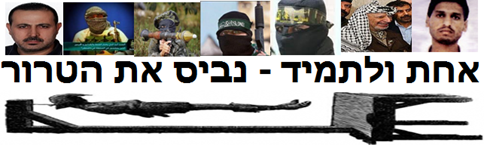
The image of the gallows, which is prominent in the pro-death-penalty advocacy,Footnote 51 seems quite archaic in an environment otherwise characterized by drones and other advanced technological tools, and the penal fantasies described here also share attributes with the notion of penal nostalgia described by Simon (Reference Simon1995) in relation to the contemporary US usage of measures such as boot camps and chain gangs. In both cases, the appeal to penal measures is based on the connotations they project and their use as “a palliative for anxiety” (Simon Reference Simon1995, 45), rather than on claims about their practical effectiveness. The imagined use of the gallows (and not the quick shot to the head or the missile strike of an extrajudicial execution) invokes the past of the death penalty and its symbols; there have been no proposals to use lethal injection, and it seems that the outmoded method of the gallows (and the figure of the hangman) account for some of the attractiveness of the fantasy.Footnote 52
I argue, therefore, that the rhetoric of death penalty proponents in Israel is more about performing willingness to inflict capital punishment than it is about offering it as a practical remedy. This rhetorical performance involves self-presentation and self-image, which are the mirror image of the ethos and mindset of restraint described above, and indeed thrives on its defiance: support for the death penalty also serves as boundary marking, its proponents marking themselves as uninterested in “what the world would think,” as uninhibited and unconcerned by considerations of legitimacy, rational pragmatic calculations, and anticipation of Palestinian countermeasures. While, as argued above, the restraint involves imagined “penal moderation” (Loader Reference Loader2010), the death penalty fantasies involve imagined “penal excess” (Garland Reference Garland, Brannigan and Pavlich2005) rather than practical advocacy. Support for the death penalty signals rejection of the desires for legitimacy of those who profess restraint.
Both sides in this debate position themselves on opposing poles of a profound debate on the nature of the imagined community more broadly: the meaning of security and the importance of Israel's relations with the world and with the notion of universal values. This debate also goes back to the initial abolition (for murder) decision following independence, which involved Israel's leaders embracing penal modernism ahead even of most of Europe, reflecting the self-image of the then-dominant wing of the Zionist movement as part of the leading edge of European progress and enlightenment.Footnote 53 In the realm of the political and cultural symbolic debate, the two positions can be articulated only through relational opposition: the meaning of civilized restraint becomes clear only as a deliberated, agonized response to outcries to use the death penalty, while penal fantasies' potency derives from the denunciation of the logic and values of restraint.Footnote 54
The Expression of Fantasies
It is possible to distill some overarching themes of pro-death-penalty rhetoric across the public, political, and judicial realms in which it is expressed. One such theme is the connection of the death penalty to national honor and strength, serving as a way of coping with a sense of perceived weakness. Thus, one death penalty proponent suggested that “the duty of national honor mandates using the harshest penalty” (Golan Reference Golan2014), and another that applying the death penalty in Israel “will show that something is left of our national honor” (Ben-Ari Reference Ben-Ari2011). Other death penalty supporters said that the death penalty would restore the nation as “firm and upright” (Rozner Reference Rozner2011, 11), or that death penalty would “recover the national morale and strengthen citizens” (Ganor Reference Ganor1989, 17). The death penalty is characterized in this theme as a means to stop Israel from being ridiculed by terrorists and to avoid the nation's disgrace by the success of Palestinian attacks (Margalit Reference Margalit2014; Moria Reference Moria2014), or to demonstrate that Israelis are not pushovers,Footnote 55 but act in a confident, proud way (Military Prosecutor v. Ra'ad Sheikh 2003). While the willingness to employ the death penalty is conceived in this vein as a symbol of “moral strength” (Putshovsky Reference Putshovsky1972, 184; Golan Reference Golan2014), the abstention from using the death penalty is seen as a sign of weakness (Indor, quoted in Besheva 2007). This sense of weakness is strongly connected to the fact that Israel is repeatedly forced to release Palestinian prisoners (in exchange deals or as part of political negotiations), which many see as a humiliation (e.g., Elizur Reference Elizur1995). Fantasizing on the death penalty therefore serves as compensation for feeling of weakness, humiliation, and dishonor.
A second theme in death penalty fantasies imagines it as a solution to terrorism, suggesting that if only Israel would finally use it, Palestinian violence would subside. There have been claims in this vein that if the death penalty was used, “national security will be strengthened, terrorists' motivation to go on attacks will be reduced” (Fuchs Reference Fuchs2014). A spokesperson for Legal Forum for the Land of Israel went as far as suggesting that “merely announcing today a change of policy [in relation to death penalty] would strengthen national security” (Putshovsky 2014). Military court judges often also make pronouncements in line with this theme of the fantasy of the power to beat terrorism with capital punishment. A judge who was part of a panel where a majority supported imposing a death sentence said: “You ask yourself how many lives you might save if you give the death penalty” (Alexander Ramati, interview with Ra'anan Alexandrowicz, from Alexandrowicz n.d.). Another panel wrote that imposing the death penalty would serve “to announce to the whole world that IDF soldiers will always enjoy full protection” (Military Prosecutor v. Ra'ad Sheikh 2003).
Some of the above may appear as unsubstantiated empirical conjectures rather than fantasy, and there may at times be a thin line between the two. Yet the real issue at stake in these pronouncements, it seems, is how to make sense of the state's inability to eradicate violence: while some conclude that the only full remedy will involve a political solution, others believe that there are security or penal solutions. The claim that if only the death penalty were used the situation would substantially improve is a ploy in this wider debate, a means to retain the belief that there is an available solution to terrorism, and maintaining the appearance that something can be done.Footnote 56 The fact that executions never took place sustains the hypothetical claims on their possible effects. Such claims seem more related to feelings of frustration over Israel's failure to eradicate terrorism than to offering a remedy.Footnote 57 They engage with the fantasy of being able to gain or regain security, order, and discipline (Loader and Mulcahy Reference Loader and Mulcahy2003, 311–15), which serves to repress acknowledgment of the state's inherent limitations in eradicating violence (cf. Garland Reference Garland1996, 460).
Another function of death penalty rhetoric is as an outlet to express hostility and superiority toward Palestinians and to dehumanize them, by marking them as worthy of executions, and through demarcating Palestinian terrorist murders from other murders. Thus, then Justice Minister Sharir said, in support of the death penalty, “there are cases where it is not tolerable that these criminals will continue breathing the air that we breathe” (quoted in Meiri Reference Meiri1987, 1); Geula Cohen, MK (Reference Cohen1985) said in support of the death penalty that “animals should not be allowed to live”; and military court judges contemplating the death penalty repeatedly referred to the accused as “animals” (Military Prosecutor v. Amjad Abidi and others 2004), or as “non-humans” (Military Prosecutor v. Abduallah Barghouti 2004; Ra'ad Sheikh v. Military Prosecutor 2004). The fact that the death penalty is possible only for terrorist crimes by Palestinians and is contemplated seriously only in this context serves to distinguish these crimes—and their victims—from other crimes (Barak Reference Barak1978).
This is the case both in general and in relation to specific attacks that are viewed as particularly grave and where the death penalty is referenced by courts and in public pronouncements (Levinson Reference Levinson2011; Doron Reference Doron2014). Attaching the death penalty symbolically to the category of terrorist murder but not to others, and to specific cases but not others, serves in this way as a gesture to convey outrage at the perpetrators and empathy and respect for the victims, even without prospects of actual executions. Death penalty rhetoric in Israel serves, then, as a “token of esteem,” much like US statutes ascribing aggravating factors for capital crimes in relation to some categories of victims (Simon and Spaulding Reference Simon, Christina and Sarat1999).
In a TV debate over the 2015 death penalty bill, Moshe Feiglin, a prominent right-wing figure and former MK, said, in response to the interviewer's question, that if the death penalty was applied, he would agree to serve as the executioner himself, and indeed that he would enjoy it; yet he also conceded that the bill in question should be seen less as a law proposal and more as declarative statement. Feiglin's words aptly capture the essence of the penal fantasy: the satisfaction and bravado from envisaging the death penalty, combined with tacit acknowledgment that this will not be fulfilled.Footnote 58
The Regulation of Fantasy, the Activation of Restraint
Several mechanisms act to regulate the fantasies and ensure that they are not fulfilled. In the context of the court system, this regulation works in several ways. First, there are the procedural and administrative requirements (mentioned above): these serve, on the one hand, to neutralize demands for the death penalty, but at the same time they enable safe articulation of support for the penalty. In several cases, courts suggested that had the panel included sufficient jurists, it would have imposed the death penalty (Ben-Haim Reference Ben-Haim1989, 60–61), or contemplated that the defendant deserves the death penalty, but the court cannot impose it as the panel does not have the sufficient number of lieutenant-colonels (Military Prosecutor v. Abduallah Barghouti 2004; Judea Military Court, 2437/08 2009). Indeed, at times it seems that courts are keen to express support for the death penalty exactly when they cannot impose it. In one case, for instance, the court wrote that “the accused is lucky to have been under 18, if he was above 18 it is very likely we would have imposed the death penalty” (quoted in Ben-Haim Reference Ben-Haim1989, 61–62); in another more recent case involving a minor, the court also reflected that the death penalty would have been an appropriate punishment had the defendant been an adult (Military Prosecutor v. Hakim Awwad 2011).
In other cases, courts relied on the difficulties of changing course in relation to death penalty policies when a specific case was presented. Over the years, in several instances, courts found that while the accused was responsible for heinous crimes, in other similar cases courts have not deviated from the penalty of life imprisonment, and to do that now would be arbitrary and discriminatory (Military Prosecutor v. Ahmad Taqruri and others 1989; Military Prosecutor v. Tourkman 1992; Samaria Military Court, cases 6165/02 and others 2003). This results in a self-perpetuating logic that makes changes to the policy difficult. And, although it is difficult to be definitive on this, it may be plausible that knowing that at least one member of the panel opposes the death penalty could make the rest of the panel more comfortable expressing support for a death sentence, knowing that in any case without a unanimous vote this would be no more than a cost-free symbolic gesture.
These escape routes of the military courts, which allow expressing support for the death penalty with the knowledge that it will not have a practical outcome, exemplify the broader trend in which the death penalty is invoked and put aside in Israel. In the political system, as I showed in the second section, pressure to change death penalty policies tends to be cooled by being channeled to appointing committees to study the issue, or by government resolutions that do not result in any change. A diffusion of responsibility also acts to defuse the pro-death-penalty demands. Military court judges often suggest that they would have considered the death penalty if prosecutors had asked for it; the prosecutors, in turn, place responsibility for the decision not to ask for the death penalty with the government (Ben-Haim Reference Ben-Haim1989, 54–55; see also Military Prosecutor v. Mahmood Harshe and others 1993; Military Prosecutor v. Amjad Abidi and others 2004). The government, then, typically refers back to the decision making of the judicial system; emphasizes that it merely defers to the security establishment, which opposes the death penalty; and perhaps most importantly, points out that existing law already enables the death penalty, so pro-death-penalty pressure is redundant and misguided.Footnote 59 This circular logic of the regulation of death penalty fantasies can be illustrated by a speech to the Knesset in behalf of the government, by Haim Ramon, during a hearing on a death penalty bill in 1992: “I want members of the house to know: there is [a] death penalty in Israel. The law enables it … there is no need for new legislation, and the judges who want to impose [the] death penalty, if the prosecution asks for it, can. The prosecution doesn't ask, because the government doesn't ask. So there is no need to legislate anything” (Knesset, December 23, 1992). This complex and diffused situation serves, on the one hand, to deflate the pro-death-penalty pressure by making its target opaque, and on the other hand it provides a safety net for those suggesting using the death penalty, who are well aware that another actor or procedure will stop their fantasy from being fulfilled. If revenge fantasies are often of the “what I would like to do if I didn't have to be prudent” kind (Scott Reference Scott1990, 38), these penal fantasies can then be defined as “what I say I like to do, knowing that someone else will be prudent and stop me.”
The calls for death penalty are occurring then—from this perspective at least—not despite the restraining factors described above, but because of them. The functions of both the fantasies and the restraint are being enabled by each other. For penal fantasies to perform their functions, they need the safety net provided by the restraining factors; for the restraint to perform its functions, it needs the push from the fantasies. As was analyzed in the previous section, the appearance of restraint serves Israel's image abroad, as well as serving as a moral boundary marker within Israel. For this to be credible, there need to be outcries for the death penalty, to which the restraint camp displays resistance (e.g., as in the Rabin quote above). Thus, the display of restraint depends on the expression of fantasy, while the fantasies in turn are conditioned by the existence of restraint policies. A ritualistic push-and-pull dynamic has created an equilibrium on the issue, and without serious attempts at either executions or abolition, the precarious status quo has remained stable.Footnote 60
However, it is far from certain that the status quo described here will continue indefinitely. In recent years, there has been escalation in Israeli public outrage over Palestinian violence and increasing support for harsh measures that previously attracted widespread criticism (Hanegbi Reference Hanegbi2015). Israeli authorities may come close to exhausting the repertoire of measures they can take to satisfy public opinion. If perpetrators of recent attacks that caused particularly intense outrage in Israeli society—such as the summer 2014 abduction and killing of three youths, or the massacre in a Jerusalem synagogue shortly afterward—had been captured alive,Footnote 61 the pressure to impose the death penalty could have been harder than usual to withstand. With yet another escalation in violence and public outrage at the time of writing, it becomes hard to predict with certainty that changes in legislation or policy will remain unfeasible. If a “perfect” case occurs—if an adult, unrepentant perpetrator of a particularly heinous attack is captured alive—the gentle balance of fantasy and restraint may not necessarily remain unaltered.Footnote 62
Conclusions
This article has aimed to generate insights through thick immersion in a single, hitherto neglected case study, studying its distinctive and peculiar forms (cf. Garland Reference Gazit2010, 17), but the research can also subsequently form part of a broader research agenda incorporating other comparative cases. The concept of penal fantasies, which also relates to broader debates in cultural and political sociology about legitimacy, group boundary, and discourse as identity, can be at work not only in the Israeli political sphere, but also in other cases where the clash between local and international attitudes to legitimate violence leads to similar debates on the role of punishment in political conflicts. These can include, for example, contemporary Russia, India, and Turkey, all states that face multiple challenges of internal political violence and that have ambiguous positions on the death penalty. Russia has been a de facto abolitionist state since the 1990s; extrajudicial killings are widespread (especially in Chechnya and the rest of the northern Caucasus), and calls for reinstating the death penalty abound (Light and Kovalev Reference Light and Kovalev2013). India retains the death penalty, but executions are very rare, while thousands are killed in so-called encounter killings (Johnson Reference Johnson2011). Turkey abolished the death penalty in 2002 (as part of negotiations over EU membership), but calls for its reinstatement in relation to terrorism have persisted, including calls from Prime Minister Erdogan (Hood and Hoyle Reference Hood and Carolyn2014, 57). Recent historical cases can also be pertinent. Apartheid South Africa carried out executions regularly, against both political opponents and ordinary criminals, while Northern Ireland provides yet another trajectory: at the beginning of the conflict, the death penalty remained on the statutes for some categories of murder; there were calls to apply it against IRA activists, opposed by the security establishment on the familiar grounds that it would fail as a deterrent and would produce martyrs. Unlike in Israel, however, the UK authorities' response to the debate was to hasten to abolish the death penalty for murder fully in Northern Ireland—exactly at the height of the Northern Ireland violence (Doyle Reference Doyle2015, 718).
Subsequent studies may attend to identifying generalizable factors that affect death penalty practices and discourses in such contexts. Such future comparative research can be guided by questions such as: is a legal landscape in which response to political violence is insulated from ordinary law enforcement through special offenses (e.g., terrorism), legislative frameworks (e.g., states of emergency), and institutions (e.g., military or other specialized courts) more or less likely to facilitate the death penalty than when it is subsumed under ordinary laws and procedures? Under what conditions can resistance to the death penalty become an effective symbol of restraint while fighting political violence? What is the role of the history of executions in a country (e.g., memory of notable miscarriages of justice, or consensus over the justness of notable executions such as in the Eichmann trial) in shaping subsequent policies in such contexts? When can penal fantasies on the death penalty subside, be replaced with other fantasies on the use of power—or ultimately acted upon?
While such questions can be answered only by subsequent studies, several conclusions with broader implications already arise from this case. One of them is a reaffirmation of the power of the death penalty both to attract and to repel, confirmed by the fact that such power is evident even in a context of widespread and protracted political violence. The emotional, symbolic, and political significance of capital punishment, for both its proponents and opponents, has remained intact even in a society saturated with violence, where the state kills thousands in air strikes in a few weeks and employs extreme penal measures, where its own civilians suffer horrific attacks, where “death is a way of life” (Grossman Reference Grossman2003). Even in such contexts, the formal, judicial killing—the “calm, bureaucratic bloodletting” (Sarat Reference Sarat and Sarat1999, 3)—retains its unique character in the eyes of both supporters and opponents and, indeed, it may be accentuated on the background of other forms of lethal violence. This article has demonstrated that killing as judicial punishment—and the satisfactory discourse it generates (Garland Reference Gazit2010)—remains distinct from other forms of state-sanctioned killings. The fact that extrajudicial killings of terrorists do not satisfy the desire for a death penalty confirms that penalty's distinctive character. The extrajudicial killings provide all the action with none of the talk, as the one thing the state cannot do is claim these as executions (rather than preventive measures). There is no substitute for the death penalty in this sense.
Not only that, but the article has shown that the death penalty can animate political and judicial lives, even in the context of de facto abolition. The terror, majesty, entrainment, and mercy long associated with the death penalty (Hay Reference Hay and Thompson1975) are so powerful that they can sufficiently resonate from political, public, and judicial deliberations on the issue, short of actual executions. Moreover, the debate between proponents and opponents of the death penalty—characterized here as the interplay between penal fantasy and restraint—can generate and sustain a stable situation benefiting both sides of the debate. Paraphrasing Tolstoy, Garland (Reference Gazit2010, 22) argues that “all abolitionist states seem alike, but every death penalty state is retentionist in its own way.” However, the category of de facto abolitionist states, which receives little attention and is often presented as merely a temporary stage toward inevitable formal abolition, can be more varied and dynamic than perhaps appears, as demonstrated here. The dichotomy of abolition/retention might obscure the importance that the death penalty can retain in certain societies even in the absence of executions. The fact that death penalty is restrained but not abolished is not incidental, and the notion of de facto abolition is not sensitive enough to capture the death penalty's role in such cases.Footnote 63
Finally, what can the Israeli case suggest regarding the prospects for the death penalty's “worldwide abolition” (Hood and Hoyle Reference Hood and Carolyn2014, 40–47; Neumayer Reference Neumayer2008)? On the one hand, the fact that Israel, faced with extreme levels of political violence against it and often unencumbered by human rights considerations, has been able to avoid using the death penalty should be encouraging news to the penalty's opponents. At the same time, the fact that even without a single execution, the death penalty on the books has survived and remained alive as a potent motif in public and political life, has not been formally abolished, and has never been fully discredited could be discouraging to those who assess the prospects of full formal global abolition. Hood and Hoyle argue that in most cases where states reach a stage of “minimal use” of capital punishment and death penalty is allowed to remain only “as a symbol” of state power, “it is only a matter of time before it is discarded” (2009, 38). However, this case demonstrates that the shift from a symbolic death penalty on the books to formal abolition may be less smooth. The absence of executions does not mean that the death penalty does not serve important functions for its proponents, as well as for those who benefit from professing restraint by not making use of it. This insight could make the prospects of full abolition—in Israel and elsewhere—appear less likely. As a penalty on the books, forever holding the possibility of materializing again, the death penalty may have a long life.