Inheriting a zines collection
‘I don't know who's reading this. I don't know why you should care or why you should continue. I know why I read zines: to get glimpses into the lives of other people, usually people who are well spoken and articulate, people who limn their daily details and make me remember them in random moments of my own days. Sometimes I have things in common with them, sometimes I have nothing in common with them […] I hope you see something I have written in a commonplace moment in your life, and maybe it makes you feel less alone, or laugh, or feel supported and encouraged.’ (Esperanza, Issue 2, December 2002)
I have been Library and Information Manager at Iniva's Stuart Hall Library for over a year and have recently been focusing on the zines collection. This was partly driven by the library's new Saturday opening hours and the corresponding wish to connect with younger library users than our traditional student and academic researcher base, and through a continuation of programming which the zines collection is integral to. It has also developed in response to initiatives by the UK and Ireland Zine Librarians listserv group, and particularly by the work of zine librarians Holly Callaghan and Leila Kassir in establishing the Zine Libraries Directory and organising zine libraries representation at zine fairs.
I have collected zines before, at Goldsmiths Library, but only from the perspective of artist self-publishing. The zines collection here, started by previous Stuart Hall Library staff, Library Manager Sonia Hope and Assistant Librarian Holly Callaghan, is much broader in scope. It was initiated with a callout for zines relating to cultural diversity, race, ethnicity, gender, and sexuality, as well as personal zines, political zines, artist zines and music zines.
The range of subjects currently collected include feminism, gender, sexuality, LGBTQ+, sex workers, race, political conflicts, mental health and neurodiversity, communities, faith, working class, music, punk music, jazz, anarchism, political struggles, art, post-colonialism, de-colonialism, environment, the diaspora, human rights, fanzine, activism and migration. Zines are often donated by zinesters or zine readers. The collection strengths lie in artists’ zines and intersectional issues, particularly race and identity in relation to LGBTQ+, feminism, disability and mental health. The majority of the zines we currently hold are made in the UK, followed by the US, where there are established zine cultures, but other places include Malaysia, Lahore, Barcelona, Canada, New Zealand, Australia, Brazil and Berlin. This fits with our wider collection policy focusing on art and artists from Africa, Asia and Latin America, diaspora artists from those continents, and non-Western-centric critical theory around race, class, gender and other intersections. The collection takes the work of Professor Stuart Hall as a guiding point, and much of the theory collected has a political, cultural studies lens.
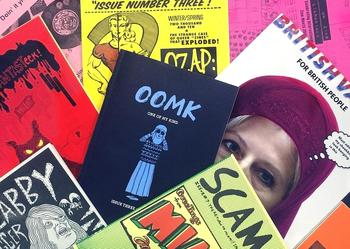
Although the majority of zines are published in the UK, many of them directly address global issues, such as The experiment of West Kurdistan where Zaher Baher of Haringey Solidarity Group and Kurdistan Anarchists Forum reports on his two weeks in Syrian Kurdistan. Hamja Ahsan and collective OOMK (standing for ‘one of my kind’) are important zinester artists for the collection, and the library works with them regularly in various contexts. Ahsan is an artist, activist and curator who has written and collaborated on many zines, including Bradicals, Redo Pakistan and Other Asias. He runs the Liverpool & Hillsborough Solidarity zine archive (1981–2017), an ongoing project collecting working class zines about Liverpool, Hillsborough and life in Thatcher's Britain, and is author of Bookworks publication Shy radicals. Footnote 2 He often recommends zines for the Stuart Hall collection, is a regular donor, and has held zines events and workshops in the library. Art publishing collective OOMK consisting of Rose Nordin, Sofia Niazi and Heiba Lamara publish the eponymously named biannual about women, art and activism, running since 2013. They have recently set up a community risograph printing press, Rabbits Road Press, in Manor Park, East London.
The collection holds many US politically engaged and anti-fascist zines, which are often rooted in the experiences of anarchic youth exploring gender, race and identity as well as questioning the dominant neoliberal ideologies through music and writing. These include Shotgun seamstress (issues 1–6 and 8, spanning 2003 to date) written by and for black punks, queers, feminists, artists and musicians, and Mend my dress (issues 1–6, 2005–2007) by Neely Bat Chestnut covering topics ranging from incest, self-harm, the riot grrrl movement, feminism, friendship, fairytale and healing as she reflects on her childhood and coming-of-age. Both are published by independent zines publisher Mend My Dress Press.Footnote 3 We also hold issues 13–16 of well-known US LGBTQ+ title Holy titclamps.
Zines from elsewhere include Gutterslug, documenting the author's travels through Australia featuring stories and cartoons; Hugs and kisses: tender to all gender, from Hamburg, on queer sexual practice, cinema and fashion, in German; Soap zine for dirty bitches, from Berlin, an arts zine about feminism, sexuality, queer art and nightlife; Incredibly Hot sex with hideous people a ‘perzine’ (personal or subjectively opinionated zine) and Out here: personal writings from queers in Aotearoa, both from New Zealand; the Other Asias series, London/Lahore/Dhaka; Minca documenting the history of zines in Barcelona; and Malaysian zine, Odd one out, from Selangor, featuring conversations and stories of individuals breaking out of norms and conventions, and how they maintain their individuality against a strong tradition
Artist zines in the collection include radical Puerto Rican zinester Marcia X who teaches us about race politics, white supremacy's evils, black struggle and feminism through her poetic DIY aesthetics and writings; Jacob V. Joyce's Fear brown queers: returning and de-centring the white gaze: an ongoing visual essay; various publications by Rudy Loewe, including Conversations on our hair, a zine made for, by, and about queer black people, with tips, experiences, feelings and artwork relating to hair; and his biographical zine, Claude McKay: queer, black and radical; BAM-BAM fanzine created by Barby Asante with members of Tate Collective, based on artists Keith Piper, Rita Keegan and Marlene Smith sharing their experiences of making work in the 80's, exhibiting work and the political climate of the time. Each participant made their own individual page drawing from these testimonies, visiting Tate Archive and their own personal research.
There are many zines recording radical histories and struggles, such as those by Past Tense zine collective, from Eastenders: glimpses of the radical history of East London, to Through a riot shield: the 1985 Brixton riot and The story of William Cuffay: Black Chartist; or the Black lesbians series published by Lesbian Herstory Archives.
Recent additions include downloadable print-it-yourself No Borders zines, with texts by anarchist thinkers, including Abolish whiteness by Noel Ignatiev; The abolition of work by Bob Black; An anarchist introduction to critical race theory by RACE Revolutionary Anti-Authoritarians of Color; An anarchist solution to global warming by Peter Gelderloos; hot pantz: diy gynecology / herbal remedies by Isabelle Gauthier & Lisa Vinebaum; The machinery of hopelessness by David Graeber; and Queering anarchism by Deric Shannon & Abbey Willis.Footnote 4
Other zines deal humourously with contemporary issues, as in Social notworking: an investigation into the causes and effects of social network syndrome by Dr Gustav Von Schneider University of Kominsance, but really by Sophia Niazi (2011); Future fantasteek by Jackie Batey, which offers ‘solutions and advice for modern living’ in the form of advertisements showcasing speculative ideas for hilarious and ridiculous inventions; or Flabby dagger, a satirical series about Hackney and gay culture with multiple contributors.
Collection development
I have been considering improving the cataloguing of zines for some time, and it was certainly my predecessor's plan. Having moved to a new Library Management System over the summer, and now writing a new cataloguing manual, it seemed a good time to make those changes. I have switched to cataloguing zines as book records rather than serials, and then attempted to map Zine Core standardsFootnote 5 onto the MARC21 template with RDA fields and vocabulary, with the help of an excellent article by Allison Jai O'Dell which includes example MARC and Dublincore records.Footnote 6 This change allows us to catalogue individual zine issues, making the collection more visible, with more complete records, searchable by item and keyword or subject heading. This will be important to the collection as we further develop local specialist subject headings. The new record format also allows us to add individual zine issues to online reading lists, which enhances their visibility as research resources.
Having made the zines collection more evident online, I made the obvious move to increase collection visibility in the library. They now sit in optimum placement next to the international group exhibition catalogues, with some front-facing display and where they are viewable from the library entrance.
Events and workshops
In its activist spirit, the Stuart Hall Library zines collection gets out and about regularly. A major annual zine fair of relevance for the Stuart Hall Library collection, run by Hamja Ahsan, OOMK's Sofia Niazi and Other Asia's Helena Wee, DIY Cultures showcases zines by artist and activists with focuses on people of colour, diaspora, mental health and Muslim communities.Footnote 7
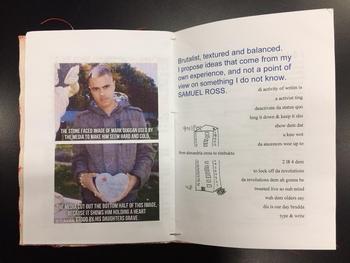
Bare fuckeries zine by Abondance Matanda.

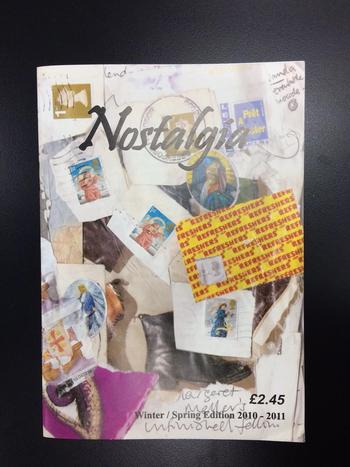
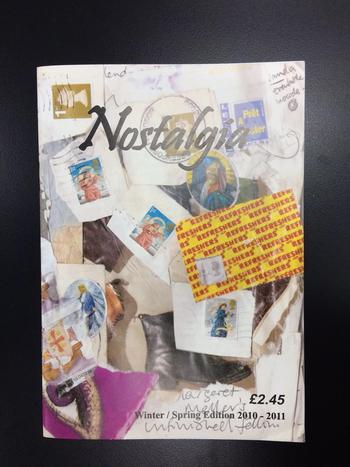
Nostalgia zine cover.
At DIY Cultures in 2016 Nick Brown (former Librarian at the Stuart Hall Library) was in conversation with Joy Gregory (artist) and David A. Bailey (artist, writer and curator). They introduced some key publications from the library collection associated with the UK Black Art movement and attempted to critically situate them. Those publications are actually not classified as zines – they are magazines and fall under the journals collection – but share many of the characteristics and aims of the zines as a means of disseminating subcultural political material cheaply and widely with an emphasis on accessibility and visual appeal. Produced during a time of cuts in public services and welfare, increasing social division and a dominant narrative in the popular press of racism and xenophobia, these are valuable for research around race, art and politics of the 1980s.
At DIY Cultures 2017, Adelaide Bannerman and newly formed collective Patchwork Archivists revisited these themes in the context of the collective's work around cultural archives crossing between India, Pakistan and Kashmir and South Asian diaspora in the UK. They explored the current importance of these magazines which might be used as a tool to help inform an emergent generation of cultural activists now facing an intensification of these same issues. Following on from this, Adelaide Bannerman in association with Iniva ran a public programme workshop for The Place is Here exhibition at the South London Gallery in 2017, offering insights on artistic practices and black British arts publishing of the 1980s. In previous iterations of the touring exhibition, the Van Abbemuseum and Nottingham Contemporary art gallery both borrowed library copies of Rasheed Araeen's Black Phoenix journal (1978–79) – an artistic project that operates somewhere between a journal and a zine, precursor to the now well-established Third Text journal on contemporary postcolonial art that he also founded.
Some Stuart Hall Library zines.

Zines as artistic and political outlets were the focus of Bookstop Sanaa's project Zine Futures East Africa, in partnership with the Stuart Hall Library. Sarita Mamseri ran workshops with local artists in Uganda and Tanzania. In the East African context, most artists cannot afford to make zines to express political viewpoints or as a hobby, they rely on producing commercial artwork for a living. Illustration is a very popular and commercialised art form in Tanzania and Uganda, seen in street art, satirical works and sign painting across both cities. However, there are few dedicated visual art spaces where illustration can be created and displayed. Zine Futures East Africa ran a series of workshops for artists with funding from the British Council, using for inspiration 60s and 70s editions of the formerly Kampala-based magazine Transition, a cutting-edge publication which facilitated artists, writers, poets, academics, and politicians to discuss African and Diasporic concerns. Transition still runs, it is one of the magazines we subscribe to, currently published in the US by Indiana University Press. Sarita produced a film of conversations about zine-making, held in the Stuart Hall library with UK-based zinesters OOMK and Hamja Ahsan, to be shown at the workshops.
Another past zines event, this time a one-day artist-lead event in 2015, Journeys through zine cultures, drew on the collection's zines dealing with race, political blackness, migration and identity. The day included a panel discussion on the infinite possibilities offered by zines and a zine-making workshop. It was led by artist-zinesters OOMK, Hamja Ahsan, Rudy Loewe, Marcia X, Between the Borders and Jacob V. Joyce (from art collective Sorryyoufeeluncomfortable).
For the future, I want to develop these strands – firstly, zine-making workshops around political and intersectional identities for young adults and teenagers, particularly with a view to engaging new audiences that our new Saturday opening hours are aimed at; secondly, zines as research resources. This requires simultaneous collection development focusing on gaps in current holdings, such as incomplete series; new zines by Black and Asian artists and activists; where they exist, zines from non-Western countries or cultures that are not represented well in the collection so far, as well as continuing to collect around intersectional issues from zinesters in the US, Canada and Australia; continuing to collect political non-fiction zines such as those by zinester collective Past Tense, or Canadian Eloisa Aquino's political biography series The Life and Times of Butch Dykes; and finally, zines as research material that fits with the library's collection policy on subject areas.
Future events ideas include:
• Calls for zines targeted at publications dealing in various ways with race, gender, class and other intersections, or by Black and Asian artists. This could manifest in a series of miniature zine fairs or meet-ups, where zinesters present their work to peers and the librarians, for swaps and purchase by the library if suitable.
• More curated events, such as themed presentations or themed calls for submissions via social media.
• Zines reading groups.
• Workshops on using zines as research resources, and making zines to present research. Zines often constitute a hybrid of practice based research and fanzine; coming from a radical tradition, political and activist content is also common; sometimes these are performatively embodied, using image and experimental writing forms.
The Stuart Hall Library zines collection is well used by zinesters, artists and students, and receives regular donations from these groups. It is a collection well-liked by young people volunteering in the library, and has been a means of engaging young people. Our first under-18 volunteer came in initially to sell the library a zine. Bare fuckeries by Abondance Matanda, is a zine of political, tough and beautiful poems to make you cry and shout with recognition. The red-painted canvas cover with blue and white painted title hand-sewn on, the whole thing punk-safety-pinned together.
Conclusion
The zines collection at the Stuart Hall Library is significant and growing. As a whole, it represents a slice of radical, subcultural histories, which constitutes a core part of our collecting policy. For a library with a smaller budget than larger institutional libraries, and a focus on contemporary collecting, it is both affordable and a source of constant new and relevant publishing. It also helps us in attracting teenage audiences, a priority as an Arts Council funded organisation. The main obstacle to keeping an up to date and wide-ranging selection is the difficulty of locating the material, particularly non-Western zines. While attending UK zine fairs is necessary, networks such as Zine Futures East Africa, DIY Cultures and Other AsiasFootnote 8 are essential for maintaining and developing the international aspect of the collection.