Surgical site infections (SSIs) complicate up to 10%–15% of cardiac surgical procedures, primarily coronary artery bypass grafting (CABG). They prolong hospital stay, driving up the costs of operation significantly, and they may also be associated with increased early mortality, despite the extensive use of negative-pressure wound therapy and advances in plastic and reconstructive surgery. Reference Mancone, Cavalcante and Modolo1–Reference Olsen, Sundt and Lawton7 In this context, it is of the utmost importance to be able to stratify the risk of SSIs accurately using specific risk scores, either before or immediately after surgery.
The National Healthcare Safety Network (NHSN) risk index, Reference Gaynes, Culver, Horan, Edwards, Richards and Tolson8 which stratifies patients according to the American Society of Anesthesiologists physical status classification, wound type, and duration of surgery, has been widely used to determine the risk of SSIs across a broad range of surgical operations. However, it has been criticized for not being able to accurately reflect the patient’s severity of illness before CABG and for not including the most important perioperative factors that might influence the risk of infection. Reference Roy, Herwaldt, Embrey, Kuhns, Wenzel and Perl9 In 2011, the NHSN risk index was improved and a CABG-specific model was devised Reference Mu, Edwards, Horan, Berrios-Torres and Fridkin10 ; the current version of the NHSN risk index for CABG was published online in March 2019. 11 Other risk scores specific for SSIs after CABG have been created over the years. Reference O’Connor, Plume and Olmstead12–Reference Raja, Rochon and Jarman16 However, most of these scores have shown suboptimal or even poor performance in external validation studies. Reference Gatti, Rochon, Raja, Luzzati, Dreas and Pappalardo17
In the present study, outcomes from a large series of CABG patients in a single Italian institution were retrospectively reviewed. The aims of the study were, firstly, to identify predictors of SSI after CABG from among the variables relating to baseline characteristics, perioperative course, and surgical techniques; and, secondly, to develop a new risk score based on the results of this analysis.
Methods
Between January 1, 1999, and September 28, 2018, a total of 7,098 patients underwent isolated or combined CABG at the Division of Cardiac Surgery of the University Hospital of Trieste, Italy, and their baseline characteristics, operative data, and most relevant information pertaining to hospital course were prospectively recorded in a computerized data registry. From the present study, in which we consider only infectious complications of the surgical site, 8 patients (0.1%) with sternal separation without infection were excluded. The remaining 7,090 patients constitute the study population and the derivation sample for a new risk score. Outcomes of this population were retrospectively reviewed and a risk factor analysis for SSIs was performed. A new risk score, called ASSIST (All Surgical Site Infections [risk] Stratification Tool), was derived from this analysis. The score was composed of 2 models, a model containing preoperative data only and a second combined model including preoperative, intraoperative, and postoperative variables.
ASSIST was compared with 6 of the most relevant risk scores for SSIs after CABG (totaling 10 models): (1) the Northern New England Cardiovascular Disease Study Group (NNECDSG) mediastinitis score; Reference O’Connor, Plume and Olmstead12 (2) the Alfred Hospital risk index (2 models, A and B); Reference Russo and Spelman13 (3) The Society of Thoracic Surgeons (STS) risk score for major infections (2 models, preoperative-only and combined); Reference Fowler, O’Brien, Muhlbaier, Corey, Ferguson and Peterson14 (4) the Australian clinical risk index (2 models, preoperative-only and combined); Reference Friedman, Bull and Russo15 (5) the NHSN risk index for CABG (2 models, the original and current); Reference Mu, Edwards, Horan, Berrios-Torres and Fridkin10,11 and (6) the Brompton-Harefield infection score (see Supplementary Tables S1 and S2 online). Reference Raja, Rochon and Jarman16
Both internal and external validation procedures were performed. The external validation samples consisted of 2 series of consecutive patients who underwent isolated or combined CABG at 1 of 2 French cardiac surgery units using similar surgical techniques and same definitions and approach to postoperative complications: (1) the Department of Thoracic and Cardiovascular Surgery of the University Hospital Jean-Minjoz, Besançon (sample 1: 1,137 patients; period of surgery, January 1, 2015, to December 16, 2017); (2) the Department of Cardio-Thoracic Surgery of the University Hospital Henry-Mondor, Créteil, France (sample 2: 1,523 patients; period of surgery, January 4, 2011, to October 17, 2019).
ASSIST was also used to predict sternal wound infections (SWIs) both in the derivation and validation samples.
Definitions are reported in the Supplementary Material (online). Reference Nashef, Roques and Sharples18–Reference Berríos-Torres, Umscheid and Bratzler21 Surgical techniques and perioperative management of the patients are reported in the Supplementary Material and Supplementary Table S3 (online). Reference Gatti, Fiore and Zilio22,Reference Abu-Omar, Kocher and Bosco23 The study was performed in accordance with the Declaration of Helsinki. Approval to conduct the study was given by the local ethics committee (Prot. No. 0006959/P/GEN/ARCS, March 8, 2019). The data retrieval was retrospective using data present in the medical files; thus, the need for individual written consent was waived.
Statistical methods
Discrete variables were reported in accordance with internationally agreed categories, and continuous variables were categorized in quartiles. Values were given as number of patients with the corresponding percentage of SSIs. Rates of SSIs according to baseline patient characteristics, surgical findings and operative data, and other adverse events early after surgery were analyzed using the χ2 statistic. Backward stepwise logistic regression was used to identify independent predictors of SSIs. All variables with a rate of missing data <3% and P < .05 by univariable analysis were included in the multivariable models. We constructed 2 multivariable models: (1) a preoperative-only model including preoperative variables alone and (2) a combined model including preoperative, intraoperative, and postoperative variables. For each variable, the odds ratio and the corresponding 95% confidence interval (95% CI) were calculated. Points were assigned to each variable retained in the model according to its regression coefficient (β); the lowest regression coefficient was set to a value of 1.0 point, and all other regression coefficients were compared to the lowest value and rounded to the nearest first decimal place. For each patient, an additive score was obtained by summing the points assigned to all the variables. We created 2 models (preoperative-only and combined) of a new risk score for SSIs after CABG (ASSIST). Goodness-of-fit (calibration) and accuracy of prediction (discriminatory power) of each model were evaluated with the Hosmer-Lemeshow test and area under the receiver-operating characteristic curve (aROC), respectively. Each model was compared 1:1, the 6 risk scores (totaling 10 models) specific for SSIs after CABG, as detailed above, using the method of Hanley and McNeil. The model for SSIs included both sternal wound and donor site infections. To attempt of improving performance of the original ASSIST, a new model of ASSIST, named improved (ASSIST-i), was created: (1) adopting a better classification of obesity, which was dichotomized and reported as body mass index (BMI) 30–35 kg/m2 and BMI >35 kg/m2; (2) adding poor glycemic control (defined as glycated hemoglobin >7.5%); and (3) adopting a better classification of duration of surgery, which was dichotomized and reported as total operating time 311–380 minutes and total operating time >380 minutes. ASSIST-i was compared with ASSIST (the original), as well as with all other risk scores that were considered. P < .05 was considered statistically significant. Data were analyzed using SPSS version 22 software (SPSS, Chicago, IL). Statistical methods concerning further analyses are reported in the Supplementary Material (online).
Results
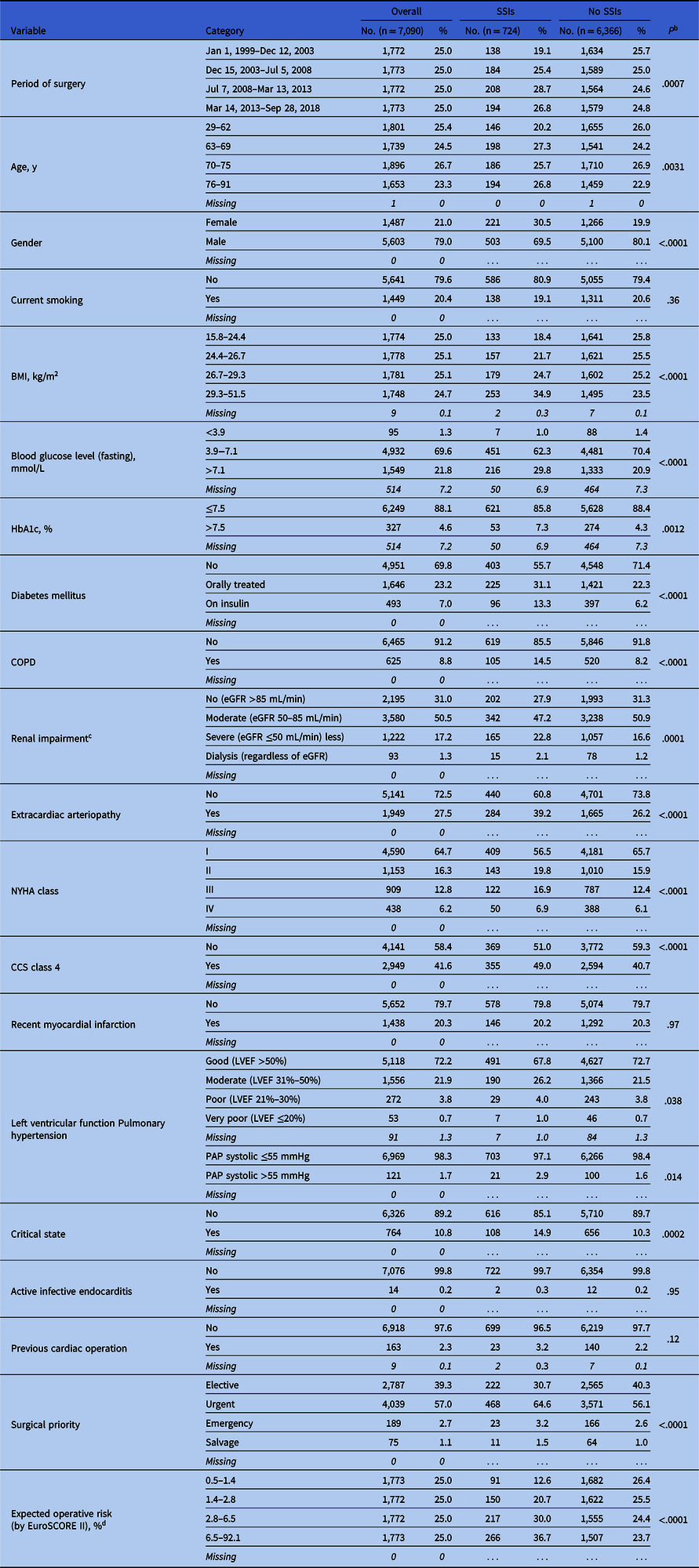
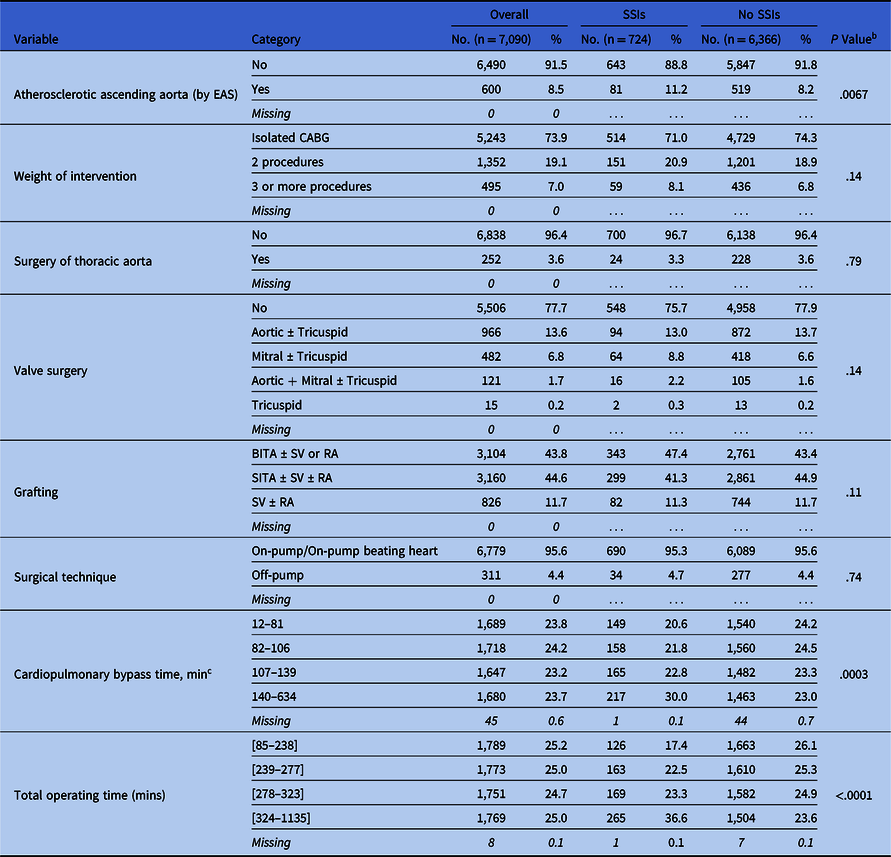
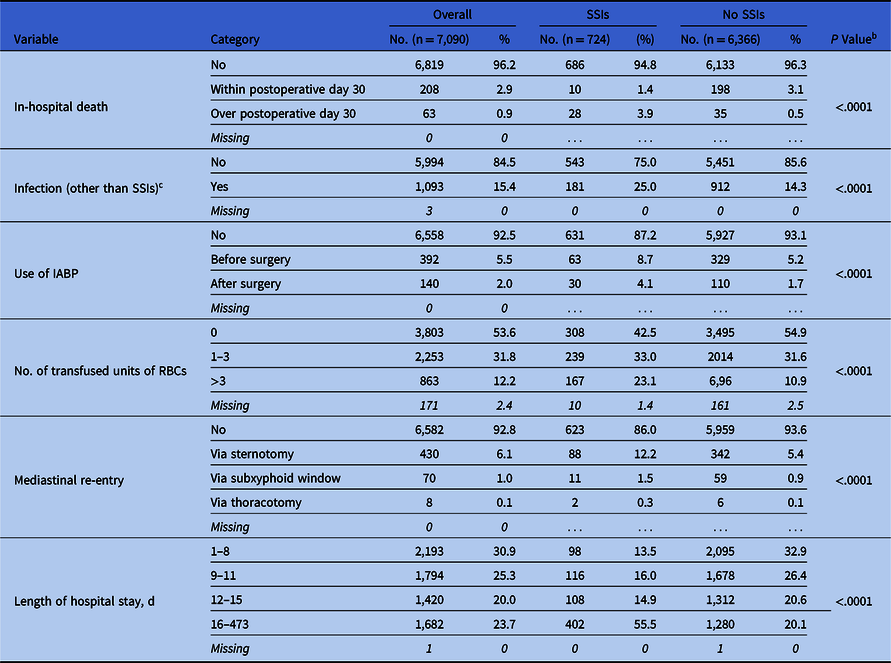
Among 7,090 patients (mean age, 68.2 ± 9.1 years) undergoing isolated (n = 5,243, 73.9%) or combined CABG (n = 1,847, 26.1%), 724 (10.2%) experienced at least 1 SSI, which was a SWI in 604 (8.5%) cases; SSI-related sepsis occurred in 39 patients (0.6%). SSIs were associated with increased 30-day mortality, increased rate of airway, urinary tract, and gastroenteric infections, as well as with prolonged hospital stay (≥16 days; P < .0001) (Tables 1–4 and Supplementary Fig. S1 online).
Sites of Surgical Wound Infections: Isolated Versus Combined CABG a

Note. CABG, coronary artery bypass grafting; IABP, intra-aortic balloon pump; SSI, surgical site infection.
a Values are number of patients having SSIs (with corresponding rate). 8 patients having sternal separation without infection were excluded a priori from this analysis. See the definitions in the Supplementary material (online).
b χ2 test.
c No. of patients undergoing femoral cannulation for cardiopulmonary bypass or IABP insertion.
d No. of patients undergoing saphenous vein harvesting.
e Radial artery harvesting and chest drain sites.
Baseline Patient Characteristics and Corresponding Rates of SSIs After Isolated or Combined CABG (Univariable Analysis) a
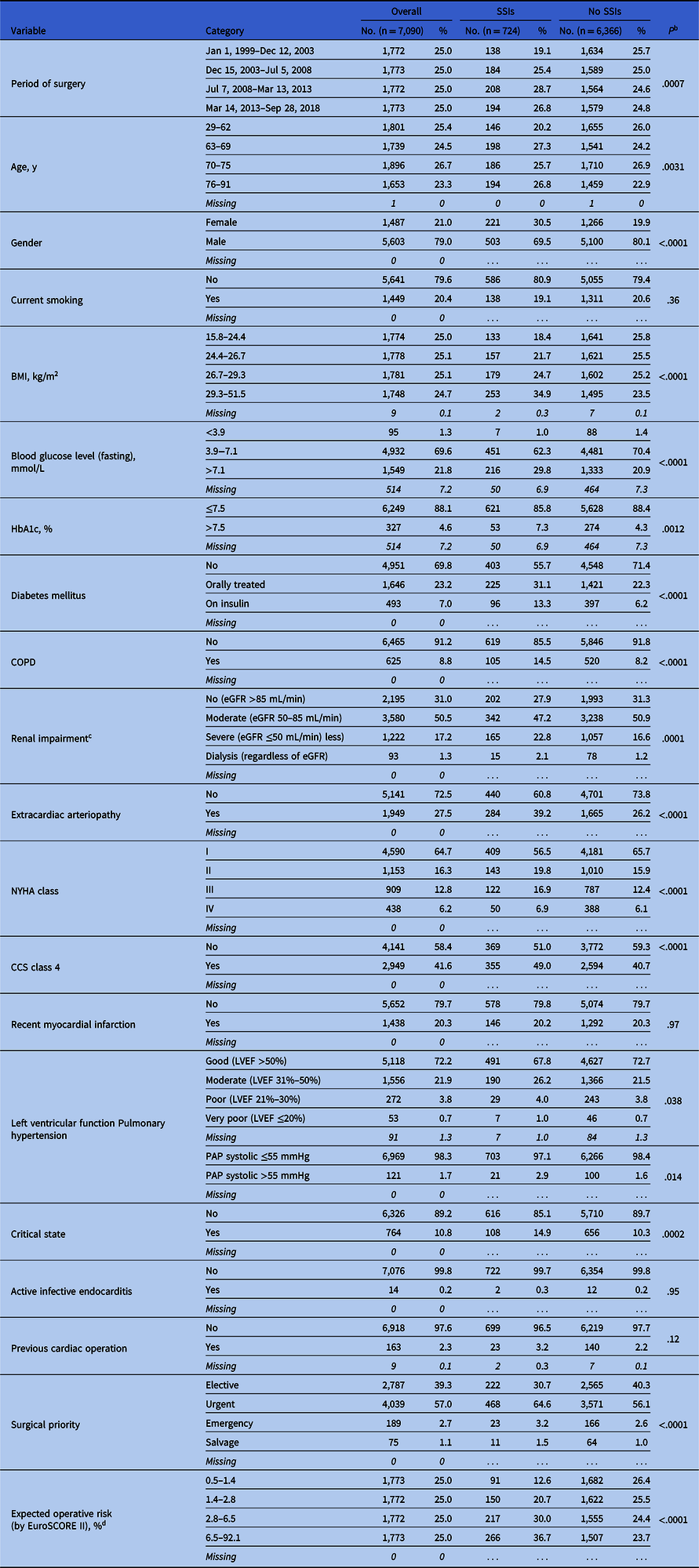
Note. BMI, body mass index; CABG, coronary artery bypass grafting; CCS, Canadian Cardiovascular Society; COPD, chronic obstructive pulmonary disease; eGFR, estimated glomerular filtration rate; EuroSCORE, European System for Cardiac Operative Risk Evaluation; HbA1c, hemoglobin A1c; LVEF, left ventricular ejection fraction; NYHA, New York Heart Association; PAP, pulmonary artery pressure; SSIs, surgical site infections.
a Values are number of patients having SSIs (with corresponding rate). 8 patients having sternal separation without infection were excluded a priori from this analysis. See the definitions in the Supplementary material (online). Discrete variables were reported in accordance with internationally agreed categories, while continuous variables were categorized in quartiles (with the range in brackets).
b χ 2-test.
c The creatinine clearance rate, calculated according to the Cockcroft-Gault formula, was used for approximating the GFR.
d Reference >Reference Nashef, Roques and Sharples18.
Operative Data and Corresponding Rates of SSIs After Isolated or Combined CABG (Univariable Analysis) a
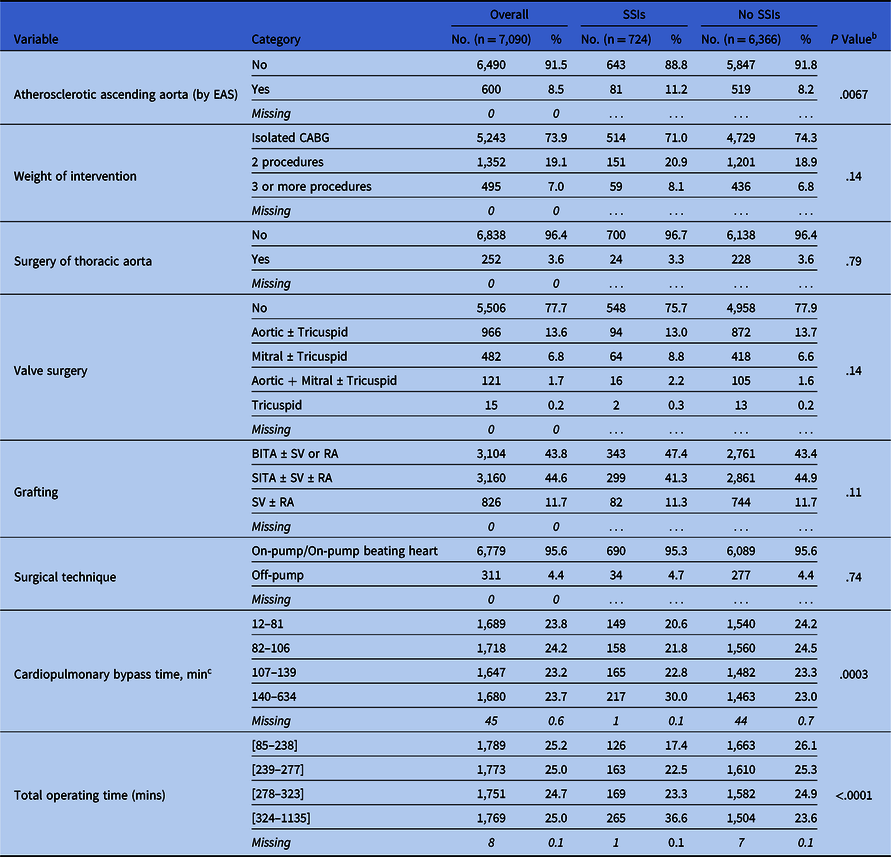
Note. BITA, bilateral internal thoracic artery; CABG, coronary artery bypass grafting; EAS, epiaortic ultrasonography scan; RA, radial artery; SITA, single internal thoracic artery; SSIs, surgical site infections; SV, saphenous vein.
a Values are number of patients having SSIs (with corresponding rate). 8 patients having sternal separation without infection were excluded a priori from this analysis. See the definitions in the Supplementary material (online). Discrete variables were reported in accordance with internationally agreed categories, while continuous variables were categorized in quartiles (with the range in brackets).
b χ 2-test.
c In 6,779 patients undergoing surgery using either on-pump or on-pump beating heart technique.
In-Hospital Mortality and Other Perioperative Events and Corresponding Rates of SSIs After Isolated or Combined CABG (Univariable Analysis) a

Note. CABG, coronary artery bypass grafting; IABP, intra-aortic balloon pump; RBCs, packed red blood cells; SSIs, surgical site infections.
a Values are number of patients having SSIs (with corresponding rate). 8 patients having sternal separation without infection were excluded a priori from this analysis. See the definitions in the Supplementary material (online). Discrete variables were reported in accordance with internationally agreed categories, while continuous variables were categorized in quartiles (with the range in brackets).
b χ 2-test.
c Airway, urinary tract and gastroenteric infections.
Predictors of SSIs after CABG
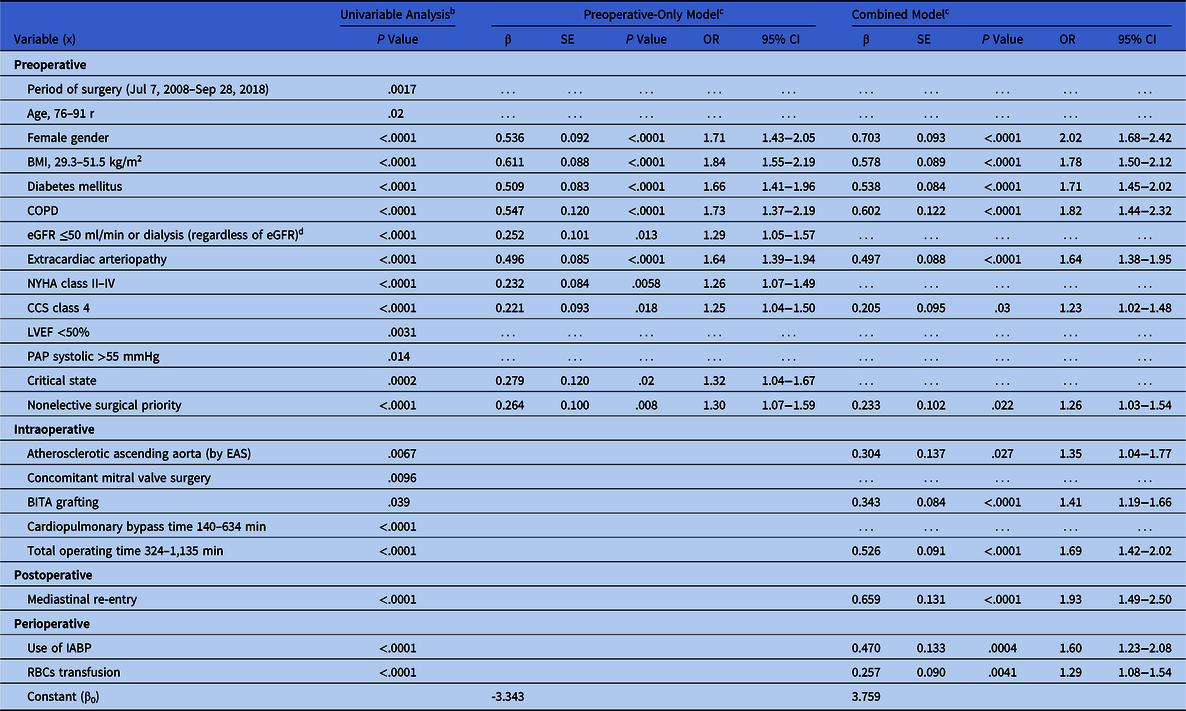
Risk factors for SSIs after CABG according to the univariable analysis are reported in Tables 2–4. The 2 multivariable models, preoperative-only and combined, are shown in Table 5.
Risk Factors for SSIs After Isolated or Combined CABG and 2 Models of Multivariable Analysis (n = 7,090) a

Note. BITA, bilateral internal thoracic artery; BMI, body mass index; CABG, coronary artery bypass grafting; CCS, Canadian Cardiovascular Society; 95%CI, 95% confidence interval; COPD, chronic obstructive pulmonary disease; EAS, epiaortic ultrasonography scan; eGFR, estimated glomerular filtration rate; IABP, intra-aortic balloon pump; LVEF, left ventricular ejection fraction; NYHA, New York Heart Association; OR, odds ratio; PAP, pulmonary artery pressure; RBCs, packed red blood cells; SE, standard error; SSIs, surgical site infections.
a Values are number of patients having SSIs (with corresponding rate). 8 patients having sternal separation without infection were excluded a priori from this analysis. See the definitions in the Supplementary material (online). Discrete variables were reported in accordance with internationally agreed categories, while continuous variables were categorized in quartiles (with the range in brackets).
b Only variables with a rate of missing data <3% and P value <.05 (χ 2-test) were considered for analysis. See Tables 2–4.
c Backward stepwise binary logistic regression.
d The creatinine clearance rate, calculated according to the Cockcroft-Gault formula, was used for approximating the GFR.
Risk stratification tool for all SSIs after CABG
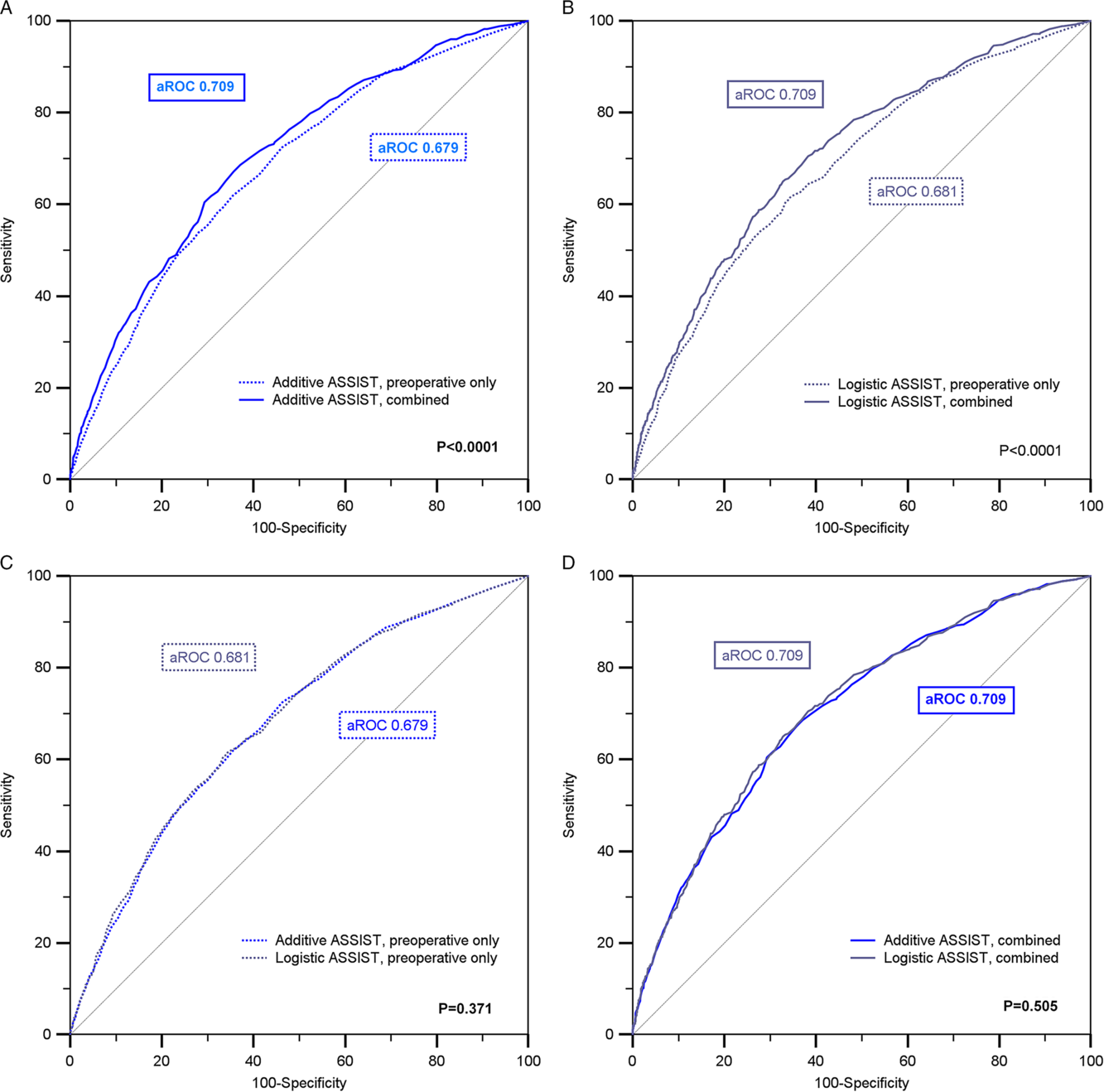
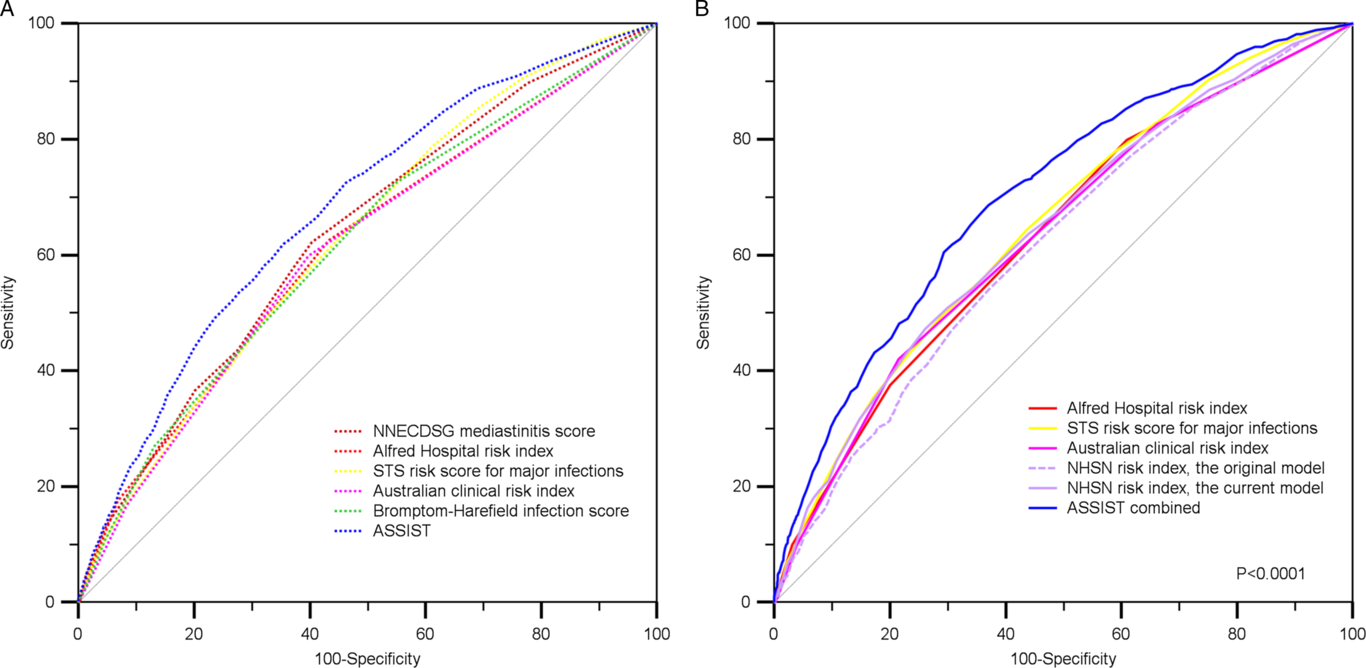
Based on the 2 multivariable models, 2 models of a new ASSIST risk score for all SSIs after CABG, were constructed. The preoperative-only model included 10 preoperative variables (Supplementary Tables S1 and S4 online) and showed good fit (Hosmer-Lemeshow test: χ2 = 9.819, degrees of freedom, 8, P = .278) (Supplementary Fig. S2C) but poor accuracy of prediction (aROC, 0.679; 95% CI, 0.658–0.699) (Fig. 1A and Supplementary Table S5).The combined model included 13 perioperative variables (Supplementary Tables S2 and S4) and showed good fit (Hosmer-Lemeshow test: χ2 = 10.659; degrees of freedom, 8; P = 0.222) (Supplementary Fig. S2D online) and fair accuracy of prediction (aROC, 0.704; 95% CI, 0.694–0.715) (Fig. 1A and Supplementary Table S5 online). The combined model showed better accuracy of prediction than the preoperative-only model (P = .0005) (Fig. 1A). Both models outperformed every corresponding model of the specific risk scores chosen for comparison in terms of accuracy of prediction (P < .0001) (Supplementary Table S5 and Fig. 2 online).
Accuracy of prediction (aROC) of ASSIST for SSIs after CABG in the derivation sample. The preoperative-only and combined model of ASSIST (A,B), as well as the additive and logistic version (C,D) were compared using the Hanley and McNeil method. Note. aROC, area under receiver-operating characteristic curve; ASSIST, All Surgical Site Infections [risk] Stratification Tool; CABG, coronary artery bypass grafting; SSIs, surgical site infections.

Accuracy of prediction (aROC) of 6 risk scores (10 models) specific for SSIs after CABG in the derivation sample of ASSIST. The preoperative-only (A) and combined models (B) were compared 1:1 to the corresponding ASSIST model using the Hanley and McNeil method. Note. aROC, area under receiver-operating characteristic curve; ASSIST, All Surgical Site Infections [risk] Stratification Tool; CABG,coronary artery bypass grafting; NHSN, The National Healthcare Safety Network; NNECDSG, Northern New England Cardiovascular Disease Study Group; SSIs, surgical site infections; STS, Society of Thoracic Surgeons.

A logistic version of ASSIST was also created. As for the additive version, the combined model had better accuracy of prediction than the preoperative-only model (aROC, 0.709 vs 0.681; P < .0001). Between the additive and the logistic version of ASSIST, there was no significant difference in terms of accuracy of prediction between the preoperative-only models (P = .371) or the combined models (P = .505) (Supplementary Table S5 and Fig. 1B–D online). The regression equation and the logistic regression equation used in ASSIST are reported in the Supplementary Material (online).
ASSIST validation
ASSIST underwent successful internal validation. Details pertaining to internal validation are reported in Supplementary Material and Supplementary Tables S6 and S7 (online).
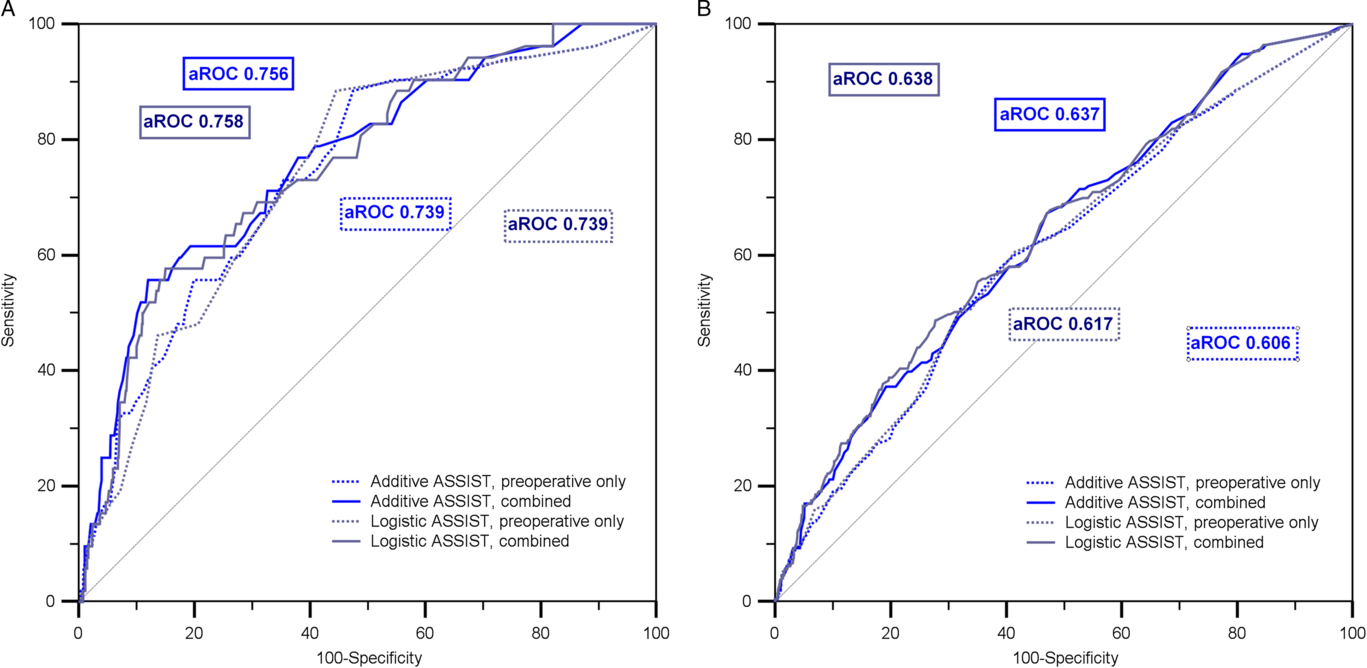
ASSIST was externally validated in 2 series of patients, namely validation sample 1 (mean age, 69.2 ± 9.9 years) and validation sample 2 (mean age, 67.2 ± 10.9 years). The validation samples were very different from the derivation series of ASSIST in terms of baseline patient characteristics, operative data, expected operative risk, and rates of SSI after surgery (4.6% and 12.7% in validation samples 1 and 2, respectively). Goodness-of-fit of the 2 models of ASSIST were good in both validation samples (Supplementary Fig. S3 online). For both models of ASSIST, the accuracy of prediction was fair in sample 1 and poor in sample 2, for both the additive and logistic versions. Additive and logistic ASSIST were equivalent in terms of accuracy of prediction (sample 1, P ≥ .394; sample 2, P ≥ .174). In both validation samples, he combined models showed better accuracy of prediction than the preoperative-only models (sample 1, P ≤ .405; sample 2, P ≤ .028) (Supplementary Tables S8 and S9 online; Fig. 3; and Supplementary Fig. S3 online).
Accuracy of prediction (aROC) of ASSIST (preoperative-only and combined model; additive and logistic version) for SSIs after CABG in validation sample 1 (A) and validation sample 2 (B). Note. aROC, area under receiver-operating characteristic curve; ASSIST, All Surgical Site Infections [risk] Stratification Tool; CABG, coronary artery bypass grafting; SSIs, surgical site infections.

ASSIST and prediction of SWIs
Details regarding performance of ASSIST in predicting SWIs after CABG both in derivation and validation samples are reported in the Supplementary Material and Supplementary Tables S5, S8, and S9 (online).
Improving ASSIST (ASSIST-i)
The goodness-of-fit and accuracy of prediction of both ASSIST-i models were higher than the corresponding models of the original ASSIST. However, the improvements were not significant (P = .264 and .270, respectively) (Supplementary Tables S4 and S10 and Supplementary Figs. S2G, H and S4 online).
Discussion
All of the variables (or their surrogates) commonly present in the current risk scores specific for SSIs after CABG (see Supplementary Material online) were considered in the present retrospective study. We performed a risk factor analysis for SSIs after CABG on >7,000 isolated or combined CABG patients derived from a single institution. We developed 2 models (preoperative-only and combined) of a new risk score, called ASSIST, specific for SSIs after CABG. All the above variables (or their surrogates) except older age and concomitant procedures were independent predictors of SSI after CABG in the derivation data set of ASSIST and were thus included in either the preoperative-only, or combined model, or both. Actually, even older age (≥76 years) and concomitant (mitral valve) procedures were risk factors for SSIs after CABG by univariable analysis but not by multivariable analysis. Renal impairment was defined according to estimated clearance of creatinine. New York Heart Association class II–IV, Canadian Cardiovascular Society class 4 and critical preoperative state (by the European System for Cardiac Operative Risk Evaluation II) Reference Nashef, Roques and Sharples18 were surrogates of heart failure. Intraoperative details regarding atherosclerotic ascending aorta (by epiaortic ultrasonography scan), Reference Nashef, Roques and Sharples18 bilateral internal thoracic artery (ITA) use and length of surgery, as well as the occurrence of postoperative complications, such as mediastinal re-entry, intra-aortic balloon pump (IABP) use, and blood transfusion, were included in the combined model. Female gender, BMI >29.3 kg/m2, diabetes, chronic obstructive pulmonary disease, extracardiac arteriopathy, Canadian Cardiovascular Society class 4 and nonelective surgical priority were independent predictors of SSIs after CABG common to both models.
A very important finding of the present study was that it is very difficult (if not impossible) to predict SSIs after CABG with good accuracy of prediction (aROC ≥0.8). In fact, every current risk score specific for SSIs after CABG that was evaluated in this study showed poor accuracy of prediction, despite good overall model fit. Even the new risk score that was derived from the present analysis (ASSIST) showed suboptimal performance. Its accuracy of prediction was indeed poor (preoperative-only model) or fair (combined model) in the derivation sample, fair (for both models) in validation sample 1, and poor (for both models) in validation sample 2. No significant prediction benefits were obtained using the logistic version of the score or its improved version (ASSIST-i), which includes glycated hemoglobin, and both obesity and total operating time were dichotomized in 2 classes of risk.
The rationale for presenting results of both ASSIST and ASSIST-i is to show that no significant increase in prediction of SSI after CABG could be obtained, even when a well-recognized predictor of infection after surgery is used or a possibly improved classification of continuous variables is performed. In our opinion, the main reason for this general failure of prediction is that the occurrence of SSIs after CABG, as well as after any cardiac operation or surgical intervention (albeit to a lesser degree), is a complex event that depends on several factors that are only partially established. Reference Mancone, Cavalcante and Modolo1–Reference Roy, Herwaldt, Embrey, Kuhns, Wenzel and Perl9,Reference Gatti, Rochon, Raja, Luzzati, Dreas and Pappalardo17,Reference Berríos-Torres, Umscheid and Bratzler21,Reference Abu-Omar, Kocher and Bosco23–Reference Gatti, Benussi and Brunetti27 First, least 4 agents are involved in this complex process: (1) the patient, with her/his baseline characteristics, cardiac disease, and immune response; (2) the microbial pathogen(s), with any potential drug resistance; (3) the healthcare workers; and (4) the hospital environment. Second, many technical details play significant roles in preventing or favoring surgical site complications after CABG: skin preparation for surgery (hair clipping and surgical site shaving, use of antiseptic scrub the night before surgery, wrapping the surgical site with impregnated disinfectant agent dressing, intraoperative use of povidone-iodine or chlorhexidine-alcohol, use of microbial sealant that immobilizes bacteria, etc), use of ITA (1, 2, or none) and the ITA harvesting technique (pedicled, skeletonized or semi-skeletonized), use of cardiopulmonary bypass (on-pump or off-pump technique), IABP implantation (percutaneous or surgical), surgical hemostasis (intensity of cautery, use of bone wax and biological sealants) and blood transfusion, sternal rewiring (single-loop, double-loop, or more complex reconstruction), duration of surgery, as well as wound dressing and management. Third, postoperative complications such as prolonged invasive ventilation, neurological complications causing poor mobility, prolonged ventilation and difficult feeding, acute kidney injury requiring renal replacement therapy, bleeding needing multiple blood transfusion and/or surgical revision, as well as the occurrence of other infections may be associated with an increased risk of SSI. Fourth, preoperative use of intranasal mupirocin to reduce nasal carriage of staphylococcal organisms, timing and dosage of prophylactic antibiotics, as well as preoperative glycemic control (evaluated preferably using glycated hemoglobin) and perioperative management of hyperglycemia should be taken into account as well. All of the aforementioned perioperative aspects interact with each other in determining the occurrence of SSIs after CABG; ideally, they should all be considered in specific risk scores. This concept seems to be confirmed by the results of this study. The risk scores that include a higher number of variables, such as the NNECDSG mediastinitis score (8 variables), Reference O’Connor, Plume and Olmstead12 the STS risk score for major infections (12 variables), Reference Fowler, O’Brien, Muhlbaier, Corey, Ferguson and Peterson14 the current version of the NHSN risk index (9 variables), 11 ASSIST (10 or 13 variables), and ASSIST-i (12 or 17 variables), showed (as expected) better performance than the scores with a lower number of variables (3–6) Reference Mu, Edwards, Horan, Berrios-Torres and Fridkin10,Reference Russo and Spelman13,Reference Friedman, Bull and Russo15,Reference Raja, Rochon and Jarman16 ; and where the combined model (when existing Reference Sharma, Berriel-Cass and Baran5 ) of every risk score showed a higher accuracy of prediction than the corresponding preoperative-only model. Accordingly, the combined model of ASSIST (additive and logistic) showed higher accuracy of prediction than the preoperative-only model, in both the derivation and validation data sets (although the difference was not significant in validation data set 1). This latter point is very important and is proven by the following 3 explanatory cases derived from common clinical practice: (1) A patient with a low score with the preoperative-only model, but undergoing mediastinal re-entry for bleeding or tamponade and multiple blood transfusion develops a higher risk of SWIs anyway, which is recognized and weighed by the combined model. (2) A patient with a low score with the preoperative-only model but having 2 ITAs harvested develops a higher risk of SWIs, which is promptly recognized and weighted by the combined model. (3) A patient having a low score with the preoperative-only model but undergoing CABG combined with multivalvular operation or complex aortic surgery requiring prolonged total operating time develops a higher risk of SSI. On the other hand, it is very difficult (as well as formally incorrect) to predict with a sufficient degree of accuracy the length of surgery and postoperative complications, such as bleeding requiring transfusion and/or surgical revision using preoperative variables only because all of these aspects pertain to the conduct of operation and the surgeon’s expertise and ability. Details regarding potential applications of ASSIST are reported in the Supplementary Material (online).
This study has several limitations. First, the derivation sample of ASSIST encompasses patients who were operated on over 20 years. It might be questionable whether a 20-year study that tries to apply its findings to today’s CABG setting may be necessarily a strength, given the changes in patient selection, clinical practice, and used surgical techniques that have occurred over such a long period. Second, the role of 2 well-recognized predictors of infections after surgery (ie, high preoperative levels of fasting blood glucose and glycated hemoglobin, as well as that of causative pathogens) could not be evaluated conclusively in the present analysis because of the lack of complete information. Actually, when glycated hemoglobin was added into the predictive model (ASSIST-i), no significant improvement in accuracy of prediction was achieved. Third, as expected, there was significant variability between participating centers regarding selection of patients for surgery, antibiotic prophylaxis, skin preparation, surgical techniques, selection of patients for bilateral ITA grafting, as well as regarding sternal closure, wound care, and perioperative management of patients. This variability could explain the different performance of ASSIST in the 2 validation samples. Fourth, for each predictive model, score attribution and SSI-risk calculation were performed retrospectively and separately by 3 senior authors (A.F., A.P., and G.G.). In the event of discordant evaluations, a consensus was reached with the other authors. Finally, acceptability, feasibility and impact of the models in clinical practice were not examined; thus, our results should be considered in no way conclusive and should be verified on a prospective and multicenter basis.
How to use ASSIST
There are numerous potential applications of the ASSIST tool by the surgeon for the benefit of patients. Perhaps the best way to explain how to utilize ASSIST is in the selection of patients for bilateral ITA grafting. This decision-making process depends on the relative weight of the following variables: (1) the age of the patient; (2) the surgeon’s estimation of the long-term survival benefits from the use of bilateral ITA graft; and (3) the rate of SSIs after isolated or combined CABG at the surgeon’s institution and the percentage of successful treatment. For example, a surgeon persuaded of the long-term survival benefit of bilateral ITA use but concerned about the risk of deep SWIs, mediastinitis, or SSI-related sepsis due to the high rate of SSIs after CABG at her/his institution would choose the preoperative-only model of ASSIST to exclude the use of bilateral ITA graft in patients aged 70 (or 75) or older with an expected risk of SSIs >10%. Conversely, a surgeon persuaded of the long-term benefit from bilateral ITA use and working at an institution with a low rate of SSIs could use the preoperative-only model of ASSIST to exclude patients aged 70 (or 75) or older with an expected risk of SSIs >15% and every patient with an expected risk of SSIs >20% (regardless of age). A surgeon firmly convinced of the bilateral ITA benefits could adopt bilateral ITA grafting for every patient regardless of age and use the combined model of ASSIST to identify the patients at high risk for SSIs to follow them closely early after surgery and to perform more aggressive treatment of superficial SWIs. In principle, to limit the risk of SSIs after CABG, 3 requirements are needed for the surgeon: (1) to know about the risk factors for SSIs in the patient scheduled for operation; (2) to perform reasonable preoperative selection of patients according to these risk factors; and (3) to adopt effective measures for prevention and treatment. It was the intention of the present authors to create and propose a reliable score to stratify the risk of SSIs in patients undergoing CABG. The authors do not presume to assign rigid rules; their intention was simply to suggest a way to assist practitioners in the selection of the patients and in the choice of suitable surgical techniques. In fact, the rates of SSIs (primarily SWIs) increased at the second decade of the study period and remained high at the third decade despite a number of interventions (Supplementary Table S11 online). In our opinion, this fact was primarily due to increased bilateral ITA use, and we also performed the present study including a risk factor analysis to identify the patients at high risk of SWIs and to perform a selection of patients for whom bilateral ITA could be used.
In conclusion, the most relevant current risk scores specific for SSIs after CABG show low accuracy of prediction despite satisfactory or even good calibration. SSIs after CABG are complex events with multifactorial etiopathogenesis that require a multidisciplinary approach; thus, new risk scoring methods are warranted. We propose a new risk stratification tool, ASSIST, in which the combined model incorporates a substantial number of preoperative, intraoperative, and postoperative variables and may yield less disappointing results.
Supplementary material
To view supplementary material for this article, please visit https://doi.org/10.1017/ice.2020.412
Acknowledgments
None.
Financial support
No financial support was provided relevant to this article.
Conflicts of interest
All authors report no conflicts of interest relevant to this article.