Introduction
Social anxiety disorder is a highly prevalent disorder (Davidson et al. Reference Davidson, Hughes, George and Blazer1993; Kessler et al. Reference Kessler, McGonagle, Zhao, Nelson, Hughes, Eshleman, Wittchen and Kendler1994; Bijl et al. Reference Bijl, Zessen, van Ravelli, de Rijk and Langendoen1998; Furmark, Reference Furmark2002;Grant et al. Reference Grant, Hasin, Blanco, Stinson, Chou, Goldstein, Dawson, Smith, Saha and Huang2005) and is associated with losses in quality of life (Stein et al. Reference Stein, Torgrud and Walker2000; Wittchen et al. Reference Wittchen, Fuetsch, Sonntag, Muller and Liebowitz2000), considerable economic costs (Patel et al. Reference Patel, Knapp, Henderson and Baldwin2002; Smit et al. Reference Smit, Cuijpers, Oostenbrink, Batelaan, de Graaf and Beekman2006), high levels of service use (Magee et al. Reference Magee, Eaton, Wittchen, McGonagle and Kessler1996; Stein & Kean, Reference Stein and Kean2000) and serious functional impairments in the educational, social and occupational domains (Davidson et al. Reference Davidson, Hughes, George and Blazer1993; Kessler et al. Reference Kessler, Stein and Berglund1998). In order to decrease the burden on individuals with social anxiety disorder, several psychological treatments have been developed in the past few decades (Deacon & Abramowitz, Reference Deacon and Abramowitz2004; Rodebaugh et al. Reference Rodebaugh, Holaway and Heimberg2004), including exposure, cognitive therapy, social skills training, applied relaxation, and several different combinations of these.
The effects of these psychological treatments on social anxiety disorder have been examined in a considerable number of trials since the late 1970s (Fremouw & Zitter, Reference Fremouw and Zitter1978; Shaw, Reference Shaw1979). Throughout this period, studies changed from small and uncontrolled trials (Heimberg et al. Reference Heimberg, Becker, Goldfinger and Vermilyea1985) to large, high-quality randomized controlled trials (Blomhoff et al. Reference Blomhoff, Haug, Hellström, Holme, Humble, Madsbu and Wold2001). In order to examine and compare the efficacy of these treatments some narrative reviews were conducted (Heimberg, Reference Heimberg1989; Chambless & Gillis, Reference Chambless and Gillis1993). However, it was not possible with those reviews to quantify their effects on social anxiety disorder. Subsequently, four meta-analyses that examined the effects of psychological treatments were published. The first compared the effects of cognitive behavioural therapy to exposure alone (Feske & Chambless, Reference Feske and Chambless1995). A little later, Taylor (Reference Taylor1996) examined the effectiveness of cognitive behavioural treatments (exposure, cognitive restructuring without exposure, exposure with cognitive restructuring, and social skills training) on social anxiety disorder. In 1997, Gould et al. (Reference Gould, Buckminster, Pollack, Otto and Yap1997) added the pharmacological studies to cognitive behavioural treatments and compared these two treatment approaches. The last meta-analysis was similar in design to the previous one (Federoff & Taylor, Reference Fedoroff and Taylor2001) and examined the psychological and pharmacological treatments of social anxiety disorder.
These meta-analyses showed that both psychological and pharmacological interventions are effective in the treatment of social phobia and have large effect sizes. All of them indicated that cognitive behavioural therapies were effective. However, they found somewhat different results concerning the superiority of specific interventions. Feske & Chambless (Reference Feske and Chambless1995) reported that there is no additional benefit of combining exposure and cognitive interventions over exposure therapy alone. Conversely, Taylor (Reference Taylor1996) found that the effects of exposure can be increased with cognitive therapy. In line with Feske & Chambless (Reference Feske and Chambless1995), Gould et al. (Reference Gould, Buckminster, Pollack, Otto and Yap1997) reported that exposure had a higher effect size than the combination of exposure with cognitive restructuring (cognitive restructuring alone had the lowest effect size). Although all of the earlier meta-analyses indicated that exposure is effective, the contribution of cognitive therapy seems to be a matter of debate. However, a possible explanation for this was reported in the review of Deacon & Abramowitz (Reference Deacon and Abramowitz2004) ; there are fewer trials with only cognitive therapy without any behavioural element. Therefore, to make a more strong comparison between cognitive therapies and exposure, the literature needs more studies with treatment conditions with cognitive therapies only.
On the other hand, pharmacological treatments of social anxiety disorder were also found to be effective. Although the most recent meta-analysis found that pharmacological treatments of social anxiety disorder were the most effective treatments at least in the short-term (Blomhoff et al. Reference Blomhoff, Haug, Hellström, Holme, Humble, Madsbu and Wold2001; Federoff & Taylor, Reference Fedoroff and Taylor2001; Clark et al. Reference Clark, Ehlers, McManus, Hackmann, Fennell, Campbell, Flower, Davenport and Louis2003; Davidson et al. Reference Davidson, Foa, Huppert, Keefe, Franklin, Compton, Zhao, Connor, Lynch and Gadde2004), there is a lack of studies that directly compare the effects of psychological and pharmacological treatments, so we can not make a clear comparison between them.
However, these previous meta-analyses suffer from several limitations (Rodebaugh et al. Reference Rodebaugh, Holaway and Heimberg2004). Most of them also included non-randomized and uncontrolled studies, which may have resulted in an overestimation of the effects. The one meta-analysis that did focus on randomized trials was conducted more than 10 years ago, and since then 14 new studies have been published that were not included in this meta-analysis. Another important shortcoming of earlier meta-analyses is that none of them conducted state-of-the-art analyses of the heterogeneity of the included studies, nor did they conduct subgroup analyses or meta-regression analyses to examine the sources of heterogeneity. Such analyses are important because they may indicate which differences among the studies affect the outcomes (Rodebaugh et al. Reference Rodebaugh, Holaway and Heimberg2004) and may also indicate which treatments are effective in which populations.
We decided, therefore, to conduct a new meta-analysis with 14 new studies, which is about half of the included studies. We wanted to examine whether the positive results of the earlier meta-analyses remain positive when limited to randomized trials and when all new studies in this area are included. We also wanted to study the heterogeneity of the studies and examine which characteristics of the studies are related to the effect sizes.
Method
Identification and selection of studies
Several methods were used to find the studies. First, we conducted a comprehensive literature search in bibliographical databases (from 1966 to January 2007). We examined 1820 abstracts in Pubmed (301 abstracts), PsycINFO (232), EMBASE (682) and the Cochrane Central Register of Controlled Trials (414). In order to find unpublished studies, we also searched Digital Dissertations (191 abstracts). We searched these databases by combining terms that are indicative of psychological treatment (psychotherapy, mental health treatment, psychological treatment, cognitive therapy, behavior therapy, exposure, social skills training, flooding, and relaxation) and social phobia (or social anxiety disorder). Second, we examined the references of the earlier meta-analyses (Feske & Chambless, Reference Feske and Chambless1995; Taylor, Reference Taylor1996; Gould et al. Reference Gould, Buckminster, Pollack, Otto and Yap1997; Fedoroff & Taylor, Reference Fedoroff and Taylor2001) and systematic reviews (Deacon & Abramowitz, Reference Deacon and Abramowitz2004; Rodebaugh et al. Reference Rodebaugh, Holaway and Heimberg2004). Third, we examined the references of the retrieved papers. No language restrictions were applied.
We included studies in which (1) the effects of psychological treatments (2) in subjects aged 18 years or older (3) with social phobia (4) were compared with a control condition (5) in a randomized controlled trial.
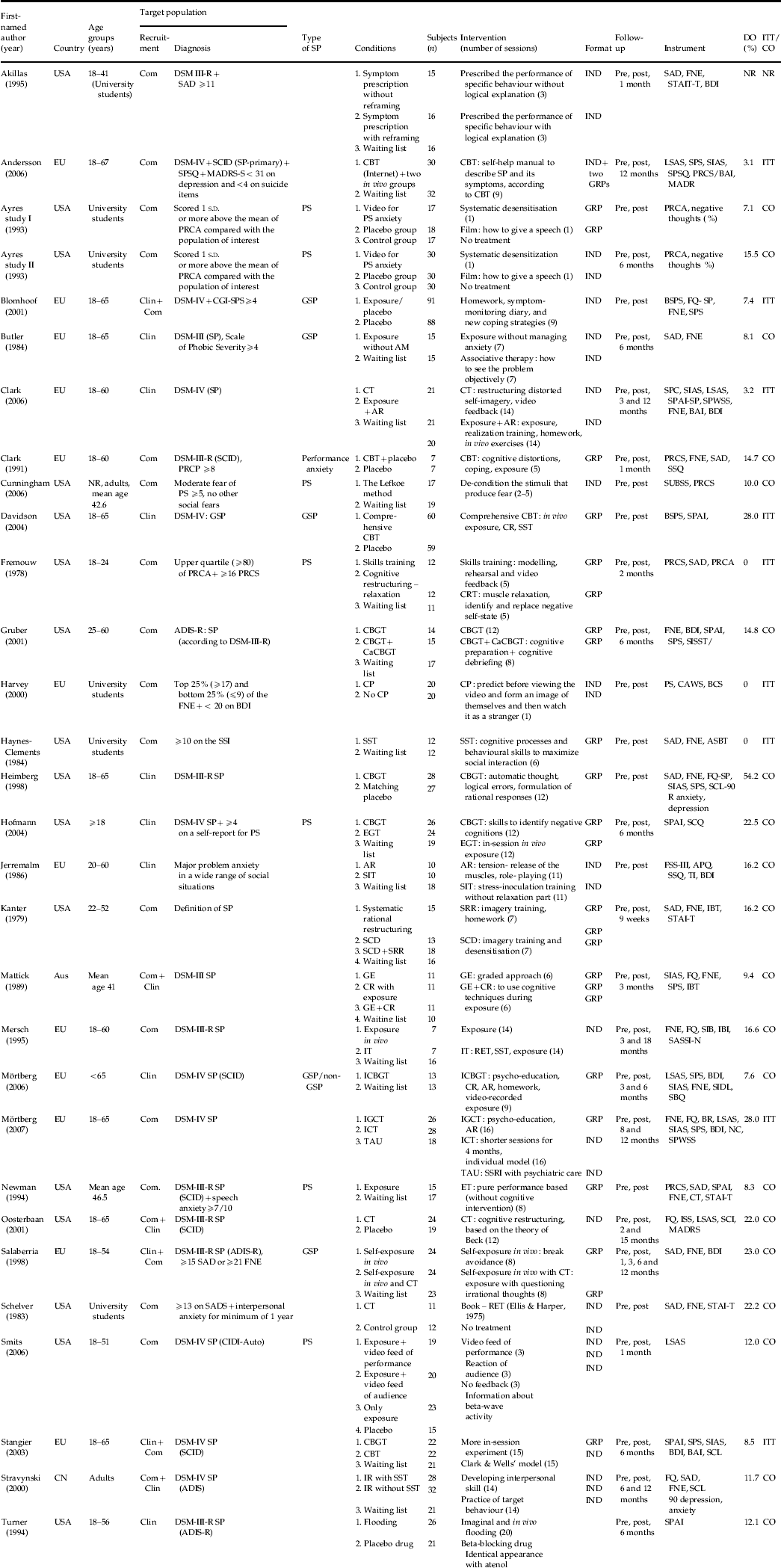
We included studies which used one of the following definitions: (1) social anxiety disorder according to Diagnostic and Statistical Manual of Mental Disorders (DSM)-III (APA, 1980), DSM-III-R (APA, 1987) or DSM-IV (APA, 1994) criteria; (2) scoring above a cut-off score on a self-rating or clinician-rated social anxiety disorder questionnaire (Table 1). Although to include studies with different criteria might cause heterogeneity, we did not want to exclude valuable randomized controlled trials. We aimed to solve possible heterogeneity problems by conducting subgroup analysis.
Characteristics of randomized controlled studies examining the effects of psychological treatments on social phobia

SP, Social phobia; DO, drop-outs; ITT, intention to treat; CO, completers; Com, community; DSM, Diagnostic and Statistical Manual of Mental Disorders; SAD, Social Avoidance and Distress Scale; IND, individual; FNE, Fear of Negative Evaluation; STAIT-T, State-Trait Anxiety Inventory-Trait; BDI, Beck Depression Inventory; NR, not reported; EU, European Union; SCID, Structured Clinical Interview for Psychiatric Disorders; SPSQ, Social Performance Scale Questionnaire; MADRS-S, Montgomery–Åsberg Depression Rating Scale – Self-rated; CBT, cognitive behavioural therapy; GRP, group; LSAS, Liebowitz Social Anxiety Scale; PRCS, Personal Report on Confidence as a speaker; BAI, Beck Anxiety Inventory; MADR, Montgomery–Åsberg Depression Rating; s.d, standard deviation; PRCA, Personal Report of Communication Apprehension; PS, public speaking phobia; Clin, clinical; CGI-SPS, Clinical Global Impression – Social Phobia Scale; GSP, generalized social phobia; BSPS, Brief Social Phobia Scale; FQ-SP, Fear Questionnaire Social Phobia Scale; AM, anxiety management; CT, cognitive therapy; AR, applied relaxation; SPS, Social Phobia Scale; SPAI-SP, Social Phobia and Anxiety Inventory – social phobia; SPWSS, Social Phobia Weekly Summary Scale; PRCP, Personal Report of Confidence as a Performer; SSQ, Self-Statement Questionnaire; SUBSS, Subjective Units of Bothersome Sensations Scale; CRT, cognitive relaxation therapy; SST, social skills training; ADIS-R, Anxiety Disorders Inventory Schedule–Revised; CBGT, cognitive behavioural group therapy; CaCBGT, computer-assisted cognitive behavioural group therapy; SISST, Social Interactions Self-Statement Test; CP, cognitive preparation; CAWS, Coming Across Well Score; BCS, Behaviors Composite Score; ASBT, Assessment of Self-Statement and Behavior Test; SCL-90 R, Symptom Checklist 90 Revised; EGT, exposure group therapy; SPAI, Social Phobia and Anxiety Inventory; SCQ, Social Cognitions Scale; SIT, Stress Inoculation Training; FSS-III, Fear Survey Schedule III; APQ, Autonomic Perception Questionnaire; TI, Thought Index; SCD, self-control desensitization; SRR, Systematic Rational Restructuring; IBT, Irrational Beliefs Test; STAIT, State-Trait Anxiety Inventory; Aus, Australia; GE, guided exposure; CR, cognitive restructuring; FQ, Fear Questionnaire; IT, integrated treatment; RET, rational emotive therapy; SIB, Scale for Interpersonal Behavior; IBI, Irrational Beliefs Inventory; SASSI-N, Social Anxiety Self-Statements Inventory-negative; ICBGT, intensive cognitive behavioural group therapy; IGCT, intensive group cognitive therapy; SIDL, Symptoms' Influence on Daily Life Scale; SBQ, Social Behaviors Questionnaire; ICT, individual cognitive therapy; TAU, treatment as usual; SSRI, selective serotonin reuptake inhibitor; BR, Belief Rating; NC, Negative Cognitions; CT, Cognitions during the Talk scale; STAI-T, State Trait Anxiety Inventory - trait; IIS, Inventory of Interpersonal Situations; SCI, Social Cognitions Inventory; MADRS, Montgomery–Asberg Depression Rating Scale; SADS, Social Avoidance and Distress Scale; CIDI-Auto, Composite International Diagnostic Interview; SCL, Symptom Checklist; CN, Canada; ADIS, Anxiety Disorders Inventory Schedule; IR, interpersonal relations.
Quality assessment
The validity and quality of the studies were assessed according to the Cochrane Handbook (Higgins & Green, Reference Higgins and Green2005). The four basic criteria were: allocation to conditions is done by an independent (third) party; adequacy of random allocation concealment to respondents; blinding of assessors of outcomes; and completeness of follow-up data.
Meta-analysis
We calculated effect size (Cohen's d) by subtracting (at post-test) the average score of the control group (M c) from the average score of the experimental group (M e) and dividing the result by the average of the standard deviations of the experimental and control group (s.d.ec; Hedges & Olkin, Reference Hedges and Olkin1985; Cooper & Hedges, Reference Cooper and Hedges1994). An effect size of 0.5 thus shows that the mean of the experimental group is half a standard deviation larger than the mean of the control group. Effect sizes of 0.56–1.2 can be assumed to be large, while effect sizes of 0.33–0.55 are moderate, and effect sizes of 0–0.32 are small (Lipsey & Wilson, Reference Lipsey and Wilson1993).
Effect sizes were calculated only from reliable and valid self-rated or observer-rated questionnaires. When means and standard deviations were not reported, we used other statistics (t value, p value) for the calculation of effect sizes. When more than one measure was used, we calculated the mean of the effect sizes for each study. In the studies that compared more than one experimental condition with a control condition, the number of subjects in the control condition was evenly divided over the experimental conditions so that each subject was used only once in the meta-analyses.
We calculated four effect sizes for each study: one measuring social anxiety disorder, another one measuring cognitive distortions, one of depression, and one measuring general anxiety.
The comprehensive meta-analyses computer program (version 2.2.021; Biostat, Englewood, NJ, USA) was used to calculate the pooled mean effect sizes. Because of the considerable heterogeneity, we calculated the mean effect sizes with the random-effects model. In the random-effects model, it is assumed that the included studies are from populations of studies that differ from each other systematically. In the random-effects model, the effect sizes differ because of the random error within the studies but also because of true variation in effect size from one study to the next.
As indicator of homogeneity, we calculated the Q statistics. A significant Q rejects the null hypothesis of homogeneity and indicates that the variability among the effect sizes is greater than what is likely to have resulted from subject-level sampling error alone. We also calculated the I 2 statistic, which is an indicator of heterogeneity in percentages. A value of 0% indicates no observed heterogeneity, and larger values show increasing heterogeneity, with 25% as low, 50% as moderate, and 75% as high heterogeneity (Higgins et al. Reference Higgins, Thompson, Deeks and Altman2003). Moreover, specific methods for subgroup analyses in the comprehensive meta-analysis version 2.2.021 were also conducted to see whether their effect sizes differ from each other.
Publication bias was tested by inspecting the funnel plot on primary outcome measures (effects on social anxiety at post-test), and by Duval & Tweedie's trim and fill procedure (Duval & Tweedie, Reference Duval and Tweedie2000), which yields an estimate of the effect size after the publication bias has been taken into account (as implemented in comprehensive meta-analysis, version 2.2.021). We also calculated ‘Orwin's fail-safe N’. This number indicates how many studies with an effect size of zero should be found in order to reduce the effect size that is found to a smaller value (e.g. 0.20). A larger N indicates that the effect size found can be further generalized.
Results
Description of studies
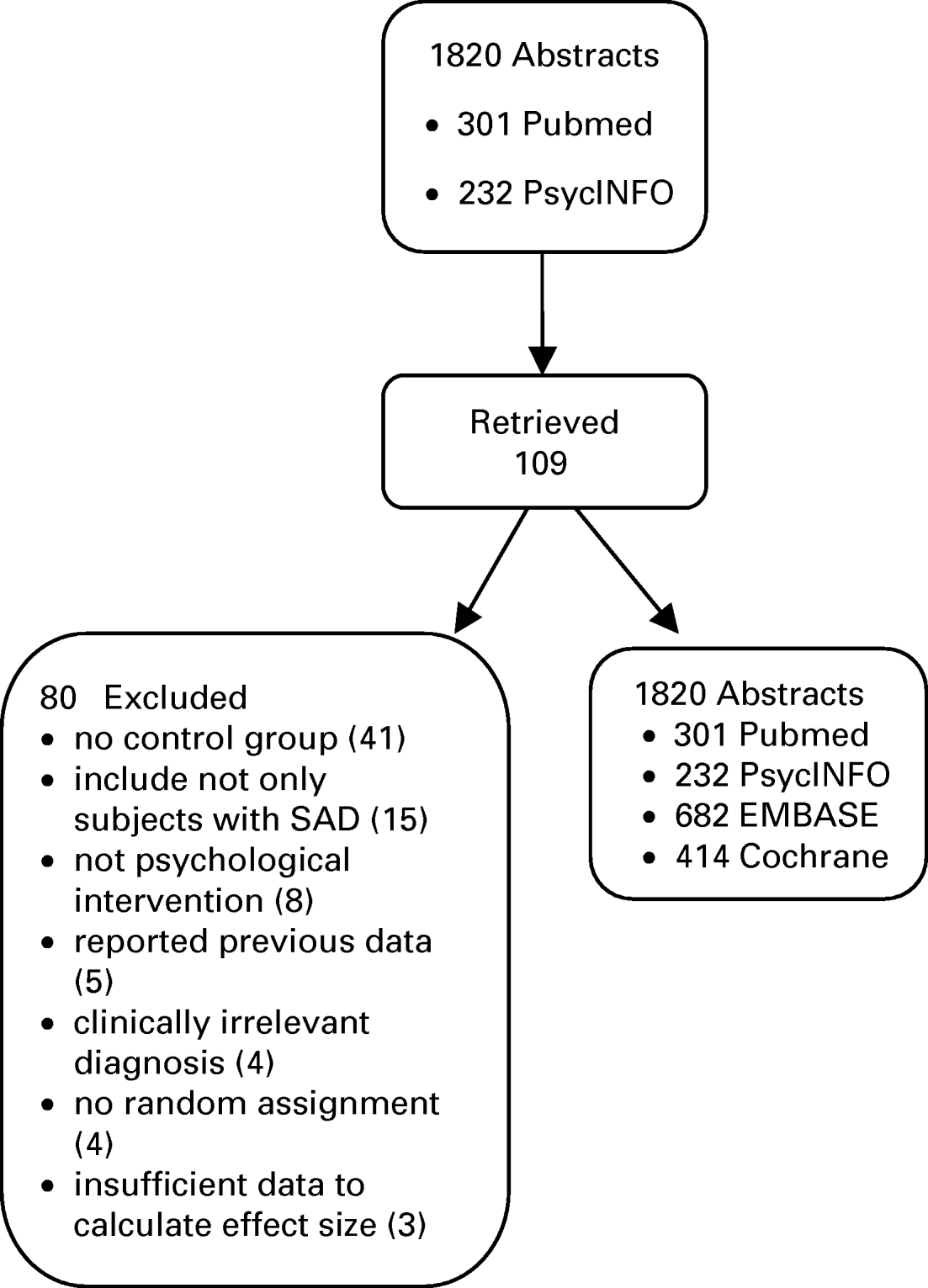
A total of 109 papers that possibly met our inclusion criteria were retrieved for further study. A total of 80 studies were excluded: four because the assignment to the conditions was not random; eight were excluded because the interventions were not psychological treatments; and four were excluded because of their clinically irrelevant diagnostic criteria. Moreover, 41 studies had no control group, three studies gave insufficient data to calculate the effect size, fifteen studies were not aimed only at patients with social anxiety disorder but also with other anxiety disorders, and five studies reported data identical to a later study published by the same authors. A total of 29 publications with 30 studies (with 49 separate controlled comparisons) that met inclusion criteria were included in this meta-analysis (Fig. 1). Characteristics of these 30 studies are described in Table 1.
Selection and inclusion of studies. SAD, Social anxiety disorder.

The studies included a total of 1628 respondents (979 in the treatment conditions and 649 in the control conditions). Selected characteristics of the included studies are described in Table 1. In 16 studies, subjects were recruited from the community, whereas in eight studies subjects were recruited from clinical settings. In the remaining six studies, a mixed recruitment method was reported. Seven studies focused on university students, while the remaining 23 studies were aimed at adults in general. In 21 studies the subjects had to meet diagnostic criteria for social anxiety disorder. The remaining nine studies included subjects who scored high on self-rating social anxiety measures, or used another definition of social anxiety disorder. In 14 comparisons, the psychological treatment was delivered in individual format, while in 15 comparisons a group format was used (in one study, group and individual formats were combined). The number of sessions varied between one and 20. The exclusive psychological treatments were cognitive behavioural therapy (14 conditions), cognitive therapy (four conditions), social skills training (three conditions), relaxation (two conditions), exposure (eight conditions), and other therapies such as symptom prescription with or without reframing, and the Lefkoe method. The Lefkoe method aims to eliminate the beliefs that are formed a long time ago by emphasizing the earlier circumstances. It also de-conditions the stimuli that produce negative emotions such as fear (Cunningham et al. Reference Cunningham, Lefkoe and Sechrest2006). In the remaining conditions, various combinations of those psychological treatments were applied (Table 1). In 22 studies, psychological treatments were compared with a waiting-list control group, while in seven studies a placebo control group was used; in the remaining study, a treatment-as-usual control group was used.
The quality of the 30 studies varied. Only in four studies was allocation to conditions conducted by an independent party. Concealment of random allocation to respondents was not possible or not reported in any of the studies. Twelve studies reported blinding of assessors, and drop-out rates ranged from 0 to 54.2% (in one study the drop-out rate was not reported). Intention-to-treat analyses were used only in a minority of the studies (n=9) while the majority of the studies (n=20) were limited to completers-only analyses (not reported in one study).
Effects of psychological treatments at post-test
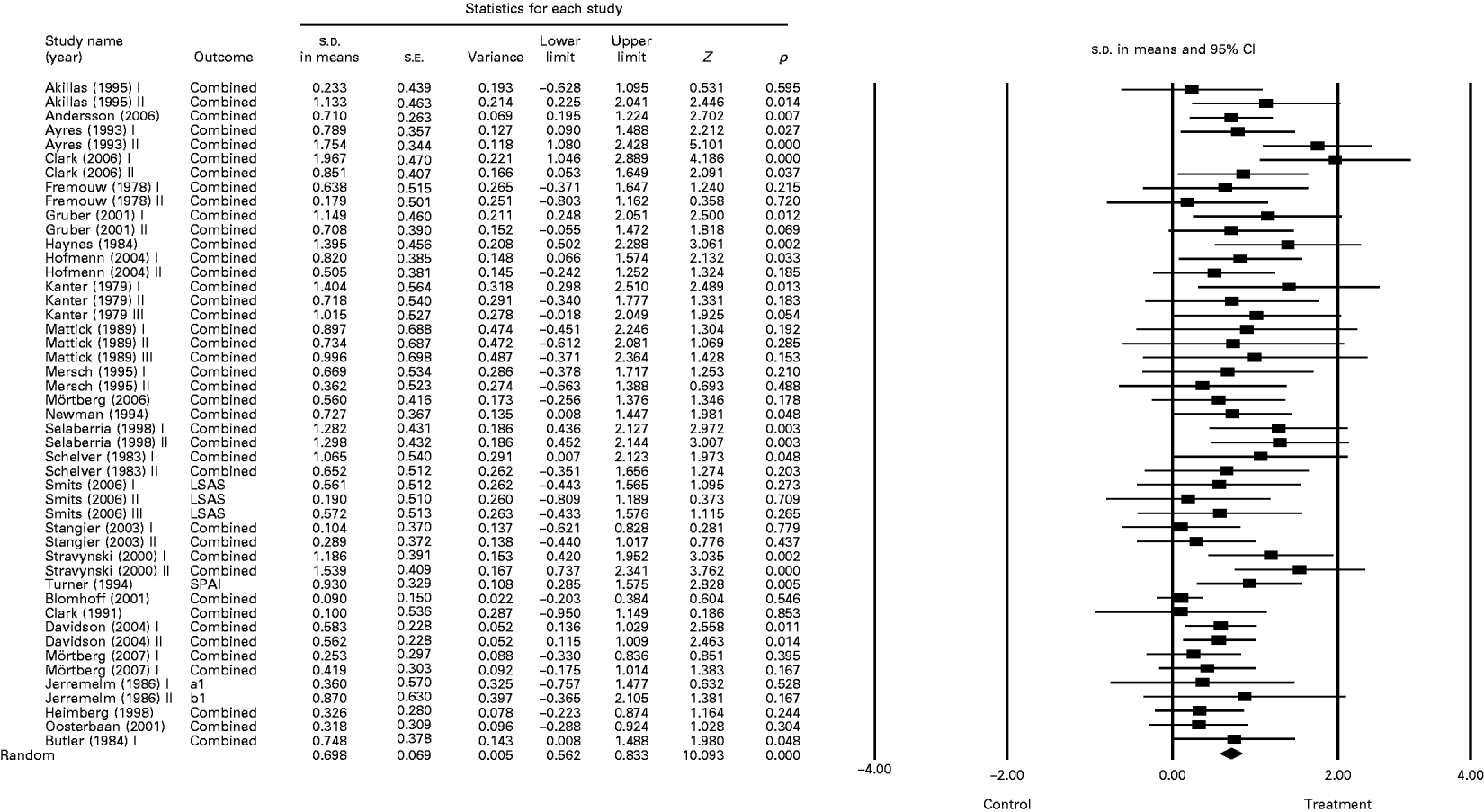
The effects of psychological treatments on social anxiety measures could be compared with a control group in 29 studies with 48 contrast groups. The mean effect size for measures of social anxiety disorder was 0.77 [95% confidence interval (CI) 0.60–0.94, Table 2]. In two studies, the psychological treatments were combined with placebo (Clark, Reference Clark and Agras1991; Blomhoff et al. Reference Blomhoff, Haug, Hellström, Holme, Humble, Madsbu and Wold2001). To check for possible differences, we conducted a meta-analysis without those two studies. The results were comparable (0.80, 95% CI 0.64–0.97, Q=82.8, p<0.001, I 2=45.6%) with the results when those two studies were included. Thus, we continued to include them in the following analysis. Heterogeneity was moderate (Q=101.1, p<0.001, I 2=53.5%), so we decided to check for the outliers. One study with an unusually high effect size (Cunningham et al. Reference Cunningham, Lefkoe and Sechrest2006) was considered as an outlier, and excluded from all further analyses. The mean effect size for the remaining 47 contrast groups was 0.70 (95% CI 0.56–0.83). The heterogeneity was considerably lower (Q=65.6, p<0.01, I 2=29.8%). We have plotted the effect sizes and 95% CIs of the comparisons in Fig. 2.
Standardized effect sizes of psychological treatments compared with control conditions at post-test. s.d., Standard difference; s.e., standard error; CI, confidence interval; LSAS, Liebowitz Social Anxiety Scale; SPAI, Social Phobia and Anxiety Inventory.

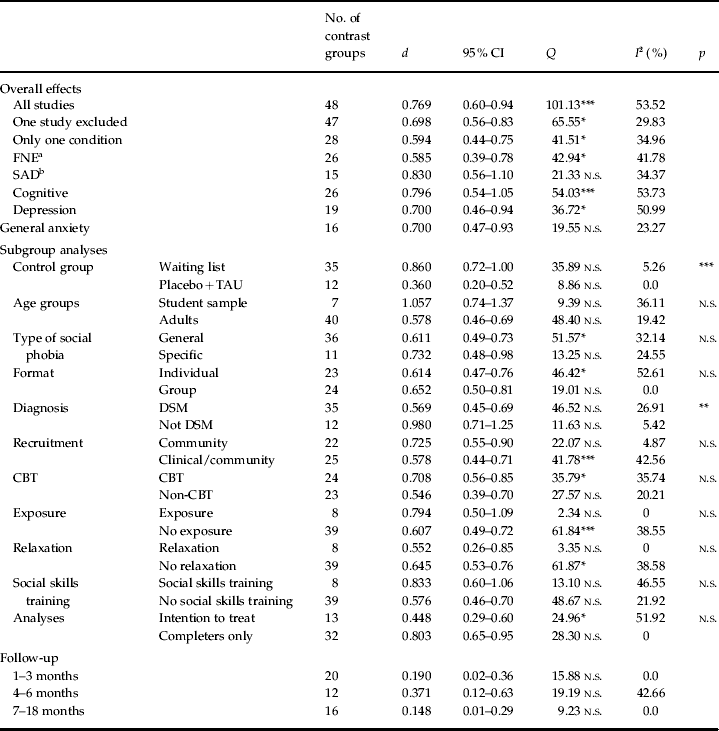
Meta-analyses of studies examining the effects of psychological treatments on social phobia (with subgroup analyses), cognitive, and depression/anxiety measures compared with control conditions at post-test: overall results and subgroup analyses

CI, Confidence interval; FNE, fear of negative evaluation; SAD, Social Avoidance and Distress Scale; n.s., non-significant; TAU, treatment as usual; DSM, Diagnostic and Statistical Manual of Mental Disorders; CBT, cognitive behavioural therapy.
a Only the effects on the FNE were included in this meta-analysis.
b Only the effects on the SAD were included in this meta-analysis.
* p<0.05; ** p<0.01, *** p<0.001.
In eighteen studies (26 contrast groups), the fear of negative evaluation (FNE; Watson & Friend, Reference Watson and Friend1969) was used as an outcome measure. In a meta-analysis in which the results were limited to FNE, comparable results were found (d=0.59, 95% CI 0.39–0.78, Q=42.94, p<0.01, I 2=41.7%), as was the case when we examined the effect sizes on the Social Avoidance and Distress Scale (Watson & Friend, Reference Watson and Friend1969; 11 studies, 15 comparisons; d=0.83, 95% CI 0.56–1.10, Q=21.33, p<0.05, I 2=34.4%).
We conducted three more meta-analyses; for cognitive outcomes, depression, and general anxiety measurements. We could compare the effects of the psychological treatments with a control group at post-test on cognitive measurements in 15 studies with 26 contrast groups (Table 2). The mean effect size for cognitive measures was 0.80 (95% CI 0.54–1.05, Q=54.0, p<0.001, I 2=53.7%). For self-report measures of depression, we were able to compare 12 studies with 19 contrast groups, which resulted in a mean effect size of 0.70 (95% CI 0.46–0.94, Q=36.7, p<0.01, I 2=50.9%). We compared the effects of the psychological treatments on general anxiety measures at post-test in nine studies with 16 contrast groups. The mean effect size was 0.70 (95% CI 0.47–0.93, Q=19.6, n.s., I 2=23.2%).
We have included multiple comparisons from one study in our analyses. However, these multiple comparisons are not independent from each other, and this may result in an artificial reduction of heterogeneity. Therefore, we conducted an additional meta-analysis, in which we included only one comparison per study. From the studies with multiple comparisons we included only the comparison with the smallest effect size, because this was considered the most conservative approach in estimating heterogeneity. As can be seen in Table 2, these analyses did indicate that heterogeneity increased somewhat, although the increase was relatively small.
Subgroup analyses
Because we found some heterogeneity, we decided to conduct a series of subgroup analyses for control group (waiting list versus placebo/treatment-as-usual), type of analysis (intention-to-treat versus completers only), diagnosis (according to diagnostic criteria versus scoring above a cut-off score or another measure of social anxiety disorder), age group (university students versus adults), type of social anxiety disorder (generalized social anxiety versus specific social anxiety disorder), format of intervention (individual versus group intervention), recruitment (volunteers from the community versus clinical population/both), and type of psychological interventions. We distinguished between interventions in which cognitive restructuring was included versus interventions in which this was not included. We also distinguished interventions in which exposure was and was not included; and interventions in which social skills training was and was not included. The results of the analyses are presented in Table 2.
The subgroup analyses resulted in only two subgroups of studies in which the effects sizes differed significantly from each other. Studies with waiting-list control groups had a significantly larger effect size than studies with placebo or treatment-as-usual control groups. Furthermore, studies aimed at subjects who met diagnostic criteria for a social anxiety disorder had a smaller effect size than studies in which other inclusion criteria were used. These two pairs of subgroups also had low to moderate levels of heterogeneity (I 2 in waiting-list control group=5.26; in placebo/treatment-as-usual=0.0; in studies in which diagnostic criteria were used=26.91; in studies in which another definition of social anxiety disorder was used=5.42).
Effects at follow-up
It was not possible to calculate the effects of psychological interventions compared with a control condition at follow-up in any study, because most studies used a waiting-list control condition. Instead, we calculated the effect sizes indicating the difference between post-test and follow-up in the treatment conditions. We could calculate these effect sizes in 20 studies. The follow-up periods ranged from 1 month to 18 months and the effect sizes ranged from −0.022 (at 6 months follow-up) to 2.32 (at 1 month follow-up).
In 10 studies with 20 conditions, the follow-up period was between 1 and 3 months. The resulting pooled random effect size was 0.19 (95% CI 0.02–0.36), indicating a small and a significant improvement from post-test to follow-up. Eight studies with 12 contrast groups also showed a significant change from post-test to 4 to 6 months (d=0.37, 95% CI 0.12–0.63). The change between post-test and 7 to 18 months follow-up could also be calculated in nine studies with 16 contrast groups, and resulted in a pooled effect size of 0.15 (95% CI 0.01–0.29), which is a small improvement. These results indicate that the effects of the psychological interventions on social anxiety disorder probably remain stable over time and may even improve somewhat.
Publication bias
The funnel plot and Duval & Tweedie's trim and fill procedure pointed at the possibility of some publication bias. The effect size indicating the difference in social anxiety between treatment and control conditions did not change significantly after adjustment for possible publication bias (observed d=0.70, 95% CI 0.56–0.83; adjusted d=0.45, 95% CI 0.30–0.60; both with the random-effects model). However, the adjusted value was considerably lower than the observed values, so one must be very careful about a possible overestimation of the mean effect size. The number of studies with a zero effect that should be found in order to reduce the effect size to 0.20 is 102 (‘Orwin's fail-safe N’). This large number of unpublished null trials led us to conclude that the present findings were unlikely to be biased by the ‘file-drawer’ problem.
Discussion
This study showed that a meta-analysis of randomized studies of psychological treatments of social anxiety disorder confirms the findings of earlier meta-analyses that supported the effectiveness of various kinds of psychological treatments of social anxiety disorder in adults (Feske & Chambless, Reference Feske and Chambless1995; Taylor, Reference Taylor1996; Gould et al. Reference Gould, Buckminster, Pollack, Otto and Yap1997; Federoff & Taylor, Reference Fedoroff and Taylor2001). The present findings are important because almost half of the included studies were not used in the earlier meta-analyses. The overall effect size of 0.70 indicated a large effect of psychological treatments on social anxiety disorder. However, a small to moderate heterogeneity (I 2=29.8%) in our meta-analyses pointed at some possible systematic differences among the included studies. Since one of the aims of this study was to explore the sources of heterogeneity, we conducted several subgroup analyses.
Subgroup analyses indicated that studies with pill-placebo or treatment-as-usual control groups had lower effect sizes than the ones with waiting-list control groups. The low heterogeneity of the two subgroups indicated that the overall heterogeneity of the present meta-analysis may be explained by the different control groups of the studies. Additionally, subgroup analyses also indicated that studies which included subjects meeting diagnostic criteria for a social anxiety disorder had significantly lower effect sizes than the studies that used other inclusion criteria. Heterogeneity was zero to low in these subgroups, which may indicate that this difference in diagnostic inclusion criteria may explain the heterogeneity in the overall analyses. In other words, the heterogeneity which is troublesome could be reduced if the researchers include only the studies which were conducted with the subjects who fulfill the diagnostic criteria for social anxiety disorder. Also, these results point at the possibility that social anxiety disorder can be treated better in patients with milder problems, and that treatment is more difficult in patients with more severe disorders. More research is needed to examine this.
We also found that studies in which a waiting-list control group was used had significantly higher effect sizes than studies with a care-as-usual or placebo control group, and in both subgroups very low levels of heterogeneity were found. This is in agreement with other research in other treatment areas where waiting-list control groups typically find higher effect sizes (Cuijpers et al. Reference Cuijpers, van Straten and Warmerdam2007).
We found no indication in our subgroup analyses that the inclusion of cognitive restructuring, exposure, social skills training, or applied relaxation resulted in higher effect sizes. However, most studies used a mix of several of these methods and very few studies examined only one of these techniques. This makes it impossible to draw definite conclusions about the effects of each of these techniques. More research and especially dismantling studies are needed to explore the specific effect of each of these techniques in more detail.
We found one outlier in our meta-analysis, with an unusually high effect size (Cunningham et al. Reference Cunningham, Lefkoe and Sechrest2006). It is not entirely clear why this study had this unusual effect size, but it differs from other studies in that it uses a very specific method (the Lefkoe method). It could be possible that this is a very effective intervention for social speaking anxiety. However, before this can be established, more studies confirming these very high effect sizes should be conducted.
This study has several limitations. First, although our meta-analysis included a relatively large number of studies, we did not have sufficient studies to examine more specific subgroups, such as studies with care-as-usual, placebo control groups, and studies in which subjects were recruited from clinical samples. Second, the quality of several studies was not optimal, and most studies conducted completers-only analysis instead of intention-to-treat analyses.
Despite these limitations, the present meta-analysis suggests that psychological treatments are effective in treating social anxiety disorder in adults, and this effect tends to remain stable to follow-up and may even improve somewhat. Although the number of studies on psychological treatment of social anxiety disorder is relatively high, more research is definitely needed. More research on clinical samples is needed, as well as research in which pill-placebo and treatment-as-usual are used as the control groups. Preferably, these should be high-quality studies with large sample sizes. In order to examine the active components of the psychological treatments, dismantling studies should be conducted.
Acknowledgements
None.
Declaration of Interest
None.