





Researchers are still coming to terms with the complex supernatural world of the ancient Maya. As a heuristic device, we frequently subdivide the supernatural world according to a series of distinctive labels, using terms such as gods, tutelary deities, spirit companions, and a host of lesser entities, including personifications of natural phenomena that range from weather to diseases. At times, we have a good basis for these divisions, basing our models on the actual terms used in antiquity to label and describe, and thereby using the very same emic terms as recorded in the hieroglyphic texts. Whereas that is a promising start to our classifications, the precise semantic domains of these terms, how these changed through time, and how much these overlap with other lexemes remains a matter of ongoing research, involving philologists, ethnohistorians, and students of comparative religions.
As a point of departure, the term k’uh as found in the inscriptions of the Classic Maya (ca. a.d. 300–900) is usually translated rather literally and narrowly as “god.” As such, it may be a simple matter of scouring the glyphic texts and noting all instances wherein the term occurs and we would be on a secure footing to reconstruct the polytheistic pantheon of the ancient Maya (see Taube Reference Taube1992, Reference Taube, Grube, Eggebrecht and Seidel2001). Nonetheless, it should be remembered that the term k’uh received the gloss of “god” in the wake of the Spanish conquest from the friars of the mendicant orders who were eliciting terms to gain knowledge of Mayan languages to then better translate Christian liturgical texts and enable the mass proselytization of the local population (Hanks Reference Hanks2012:459–467; Prager Reference Prager, Kettunen, Vázquez López, Vidal Lorenzo, Muñoz Cosme and Iglesias Ponce de Leon2018). In removing the Christian gloss from the term k’uh and considering it on its own merit within its own literary and cultural context, we can see that this does label some supernatural entities, but only a specific subset. Thus, personifications of natural phenomena were, overall, not considered k’uh, nor were the culture heroes of origin myths, no matter their import. The term k’uh should therefore not be reduced narrowly to “god,” although “deity” may operate as a useful—albeit provisional—heuristic stand-in, for referring to a particular emic category of supernatural entities and ritual actions. When used in titular form to style exalted monarchs, we see the derived adjectival form k’uhul, which may be better understood as “divine,” rather than “god-like.”
Historically, rulers could be considered “divine” precisely because they were the ones who communed with the supernatural and conducted symbolic scattering rituals to generate agricultural abundance (see Jobbová et al. Reference Jobbová, Helmke and Bevan2018:764–765, Tables 2 and 3). During these scattering ceremonies, the monarchs served as officiants, wherein they, in essence, undertook symbolic acts of sowing. Conventionally, representations of these streams of scattered materials included small droplets, of incense pellets and maize seeds, but these were at times also dotted with small glyphic elements to qualify these streams as something that would bring about agricultural abundance (Helmke Reference Helmke2017a:28, Figure 9). It is therefore significant that truncated renditions of these streams served as the graphic motivation for the logogram K’UH in Maya hieroglyphic writing (e.g., Houston and Stuart Reference Houston and Stuart1996:291–293; Ruiz Pérez Reference Ruiz Pérez2024). As such, we should bear in mind that k’uh cannot just narrowly refer to supernatural entities, as within its social and cultural context the lexeme referred to a larger semantic domain pertaining to “abundance, blessings, riches,” connected to symbolic emulations of agricultural acts. As the logogram K’UH graphically refers to the ritual act itself, we can also see that the semantic domain inherently carries a verbal connotation as well. This is bolstered by the derived form k’uh-u’n that is seen in reference to ritual specialists in Classic-period texts, where the root is suffixed by the denominative suffix -u’n (see Zender Reference Zender2004:187–190). In these contexts, the derived form must mean something along the lines of “to sanctify/sacralize,” but with a functional sense of “to worship/venerate.”
In contextualizing and clarifying this term k’uh, we are better able to discuss and present the appearance of the lexeme among local patron gods, which we in this article prefer to designate as tutelary deities. Here we focus on the nature of the supernatural, especially as it concerns their regional identities, by specifically analyzing local tutelary deities that are tied to both place and by extension communities. We will begin by considering long-standing examples of this phenomenon at Palenque, Tikal, and Naranjo, before briefly introducing a new find at Coba and finally, new interpretations of the evidence from the archaeological site of Caracol, the regional capital of an important Classic period polity, in what is now Belize (Figure 1). Precisely how these entities were conceived of, how they appeared in the textual and representational register, how they were made manifest in Classic Maya culture, and how they were tied to place will all be explored below, by first examining comparable tutelary deities at a selection of Maya sites across the lowlands.
Map of the Maya Lowlands showing the location of the archaeological sites mentioned in the text. Sites with triadic tutelary deities are marked with filled triangles, other sites are rendered with hollow triangles. Map by Christophe Helmke.

Figure 1 Long description
The map depicts the Maya Lowlands, highlighting various archaeological sites. Filled triangles represent sites with triadic tutelary deities, while hollow triangles indicate other sites. Key locations include Palenque, Tikal, Naranjo, Coba, Caracol, Dos Pilas, Tamarindito, Copan, Dzibanche, Santa Rita and Tulum Mul. The map covers regions in Mexico, Belize, Guatemala and Honduras, with a scale bar indicating 200 km for distance reference. The spatial distribution shows clusters of sites in northern Guatemala and southern Mexico, with notable sites in Belize and Honduras.
Tutelary deities
Tutelary deities of the ancient Maya are usually regarded as a secondary category of deities that are regionally specific (Baron Reference Baron2016). In this, they differ from the “gods” that were shared across the Maya area, and which can thereby be considered pan-Mayan and essentially would form part of what one may consider the ancient Maya pantheon, writ large (see Taube Reference Taube1992, Reference Taube, Grube, Eggebrecht and Seidel2001). The fragmented sociopolitical structure of Maya society, with its regional capitals and independent polities, resulted in highly distinctive regional identities in terms of architecture, material culture, and even language and local ideologies (see Chase et al., Reference Chase, Chase, Chase, Freidel, Chase, Dowd and Murdockin press). In this, it bears remembering that the label of “Maya” is one ascribed by Western Scholarship to a group of related cultures and linguistic groups that had and have very different identities and languages, differences that we can trace archaeologically over three millennia, to the earliest ceramic-producing settled communities of the lowlands (Helmke et al., Reference Helmke, Kupprat, Zrałka and Vázquez Lópezin press).
The tutelary deities play a significant role in this regard and served, to the best of our knowledge, broadly comparable functions as patron saints of Christendom or the tutelary deities of the Classical world (see Baron Reference Baron2013, Reference Baron2016; Farriss Reference Farriss1984). In this, ancient Maya tutelary deities were tied to a specific city and its community and were considered patrons and protectors of the settlement and its people. Archaeologically, this means that tutelary deities were connected to specific sites, and the hieroglyphic texts reveal that these were the focus of worship by the royal house that governed over the community, with rulers often maintaining a rather personal connection to these deities—or at least claiming to do so. As rallying points for community identity, tutelary deities were thought to be engaged in the very real activities of humans, including warfare, where these could communicate their will to ritual officiants. The defeat of tutelary deities in war, by capturing their effigies on the battle ground, was tantamount to the defeat of its community, and the loss of divine support (see Martin Reference Martin, Macri and McHargue1996, Reference Macri2000). Deity effigies taken in battle could be brought back as trophies and may even have been amalgamated into the local pantheon of a victorious city (see Helmke Reference Helmke2020:30–32).
We are increasingly gaining a better understanding of ancient Maya tutelary deities, thanks to recent readings of the ancient hieroglyphic texts (Houston and Stuart Reference Houston and Stuart1996; Stuart et al. Reference Stuart, Houston and Robertson1999:57–59), where these deities feature prominently, and thanks also to more dedicated studies (e.g., Baron Reference Baron2013, Reference Baron2016; Prager Reference Prager, Kettunen, Vázquez López, Vidal Lorenzo, Muñoz Cosme and Iglesias Ponce de Leon2018; Stuart Reference Stuart and Stuart2006). In addition to being tied specifically to particular communities, the texts also reveal that these deities were often listed in sets of three, which are usually referred to as triadic patron deities, although in some instances, these occurred also as dyads or even as quads (Helmke Reference Helmke, Didrichsen and Kettunen2012:85–89). For a long time, scholars have assumed that these deities preferentially occurred as fixed triads, yet, more recent analyses force us to acknowledge that these sets could be more fluid at times, and many sites name various tutelary deities (Baron Reference Baron2013, Reference Baron2016:173–187; Prager Reference Prager2013). As such, rather than fixed and wholly orthodox sets of deities, the tutelary deities of ancient Maya polities could be adapted and subject to alteration through variable selection processes.
At some of the sites in the Pasión region of Guatemala, for instance, we can see that the tutelary deities occurred not as triads, but as dyads, as for instance at Aguateca where the first of the set is a heron aspect of an anthropomorphic aquatic deity (known as GI among the triadic patron deities of Palenque). The second of the set is the adult aspect of K’awiil, the personification of lightning and royal power. Copan in western Honduras, has the distinction of having numerous tutelary deities, some of which are organized into a quad, specifically described as “four lords.” Later in the site’s history, the list of tutelary deities expanded to 14 (Prager Reference Prager, Kettunen, Vázquez López, Vidal Lorenzo, Muñoz Cosme and Iglesias Ponce de Leon2018:592–593). Revealingly, this quad of tutelary deities was collectively described as the kohkno’m “guardians” of Copan (Lacadena and Wichmann Reference Wichmann and Wichmann2004:106; Prager Reference Prager, Kettunen, Vázquez López, Vidal Lorenzo, Muñoz Cosme and Iglesias Ponce de Leon2018:592–594). This shows that the tutelary deities were indeed thought to serve in a protective capacity and that regular worship and the observation of rituals connected to these may have offered augury and protection for the community.
At the sites of Palenque, Tikal, Naranjo, Coba, and Caracol, tutelary deities had their own special designation in the Classic Mayan language recorded in the hieroglyphic texts (Baron Reference Baron2016:175–176, 190–198). This reveals that culturally, for the ancient Maya of these capitals, their deities formed a distinct and discrete set of supernatural entities. The term in question has been identified for some time now (Berlin Reference Berlin1963:94, Figures 7–8), although its reading continues to pose some challenges. The designation is typically written as 3-?-ti-K’UH, wherein the intervening sign, denoted by the question mark, remains unclear in its reading, but may be either syllabic lu or more probably, the logogram LUT (Figure 2a) (Baron Reference Baron2016:54–57).Footnote 1 Supporting this reading is the uncommon phonetic rendering found in the Dresden Codex (p. 69) where we find the reversed spelling 3-ti-lu K’UH.
The triadic patron deities of Palenque. (a) The ux luut? k’uh expression, followed by the names of three tutelary deities (detail of the carved bench of Temple 21). Drawing by Christophe Helmke, (b) the three major temples of the Cross Group—that together form a triadic complex—where the patron deities were worshipped at Palenque. Plan by Edwin Barnhart (after Barnhardt Reference Barnhart2001:7).

Figure 2 Long description
Panel a shows glyphs representing the triadic patron deities of Palenque, detailed with various symbols and patterns. Panel b shows a site plan of the Cross Group temples at Palenque, including GI, GII and GIII. The plan features contour lines indicating elevation and outlines of structures, with GI centrally located and GII and GIII flanking it. The map is oriented with north at the top, depicting the layout within the archaeological zone. The labeled temples are part of a triadic complex and the plan includes paths and plazas, enhancing spatial understanding.
Based on these transliterations, this would yield ux luut k’uh, or “three-in-a-set-deities” (see Schele Reference Schele1992a:127–128 for the reading of luut).Footnote 2 In this reading, luut would function as a numeral classifier, a common feature of Mayan languages (e.g., Berlin Reference Berlin1968)—here for sets of deities that occur in groups of three (Macri Reference Macri2000:29, Figure 3g), as specified in the initial numeral.
It is perhaps precisely because the polities centered on Palenque, Tikal, Naranjo, Coba, and Caracol each had triadic tutelary deities that we find this designation, since none of the other sites with dyads or quads of deities used this expression. Before we consider the evidence for Caracol, we will examine the deities of each of these other sites where the emic category “three-in-a set-deities” was used.
Palenque
Without a doubt, the three best-known tutelary deities of the ancient Maya are those of Palenque, given their prominence in the site’s extensive glyphic texts. Not surprisingly, it is this same site where the ux luut k’uh “three-in-a-set-deities” designation was employed most frequently. Before the phonetic decipherment of Maya writing, the names of these deities were identified by labels of convenience as GI, GII, and GIII (Berlin Reference Berlin1963) (Figure 2a). The first of this set is an aquatic anthropomorphic entity, as suggested by the spiny oyster shell that he wears as his earspool and the prominent shark’s tooth that replaces his upper incisors. The second is named Unen K’awiil, an infantile aspect of the deity known as K’awiil (“the bent one”), which as we have seen was the personification of lightning and royal power. And the third is a poorly understood aspect of the solar deity K’inich (“the radiant one”).
Fascinatingly, the temples where these deities were worshipped have been identified (thanks to the extensive texts that adorn each of these structures). These temples, suitably, form a triadic configuration (Figure 2b), occupying three sides of a quadrangular plaza; the temples each face this plaza, with the tallest and most dominant temple at the center, and the two smaller temples disposed laterally on either side. At Palenque, these temples, which were last dedicated in a.d. 692 during the reign of K’inich Kan Bahlam II (r. ad 684–702) (Martin and Grube Reference Martin and Grube2000:168–170), are together known as the Cross Group (a designation attributed by early explorers to the site), and the associated texts supply the mythological narratives connected with each tutelary deity (see Stuart Reference Stuart and Stuart2006).
The texts of these three temples focus on mythological narratives and refer to the birth of these deities in mythic times over a span of 18 days, with the firstborn of the triad (GI) “touching the earth”Footnote 3 around the end of October, 2359 b.c., the second (GIII) just four days later and the third (GII) two weeks later, at the start of November of the same yearFootnote 4 (Kelley Reference Kelley1965; Stuart Reference Stuart and Stuart2006; see also Stuart Reference Stuart2005).
The order in which these tutelary deities are referred to is highly consistent and yet only partly reflects the sequence of their purported births. The infantile aspect of GII may therefore also reflect something about it being the most junior deity of the set. Relatedly, the paramount deity of the triad is the firstborn GI and befitting the pre-eminent status of this deity is the temple that was dedicated to it, as this was the largest and tallest temple at the center of the triadic group. The texts likewise record that these deities were tended to personally by the local monarch via ritual observances, and the relationship between them is described in the same manner as a mother who nurtures and cares for her child (Houston and Stuart Reference Houston and Stuart1996:294; Guenter Reference Guenter2007:30, 37).
Adjoining structures in the Cross Group were likewise dedicated to secondary cults focused on the triadic patron deities and lesser-known aspects of these deities (Temples 19 and 21); another may have served as an ancestral oracular shrine (Temple 18), and one of the structures (Str. 16) served as storage of ritual paraphernalia and regalia, overseen by a special class of pyrolatrous priests known as a yajawk’ahk’, literally “vassal of fire” (Stuart Reference Stuart2005, Reference Stuart and Stuart2006, Reference Stuart2025; Zender Reference Zender2004:315–319).
Other texts at Palenque also refer to the ritual observations made in connection with the tutelary deities, including the offering of a long list of regalia, with the local monarch periodically dressing and adorning their effigies with vestments, necklaces, and earflares (Macri Reference Macri1988:116–117; Stuart Reference Stuart and Stuart2006:166–167). The same historical texts also go on to lament the years when these rituals were not observed, in the wake of a disastrous military defeat that set the royal house in disarray (Grube Reference Grube, Macri and McHargue1996:5; Guenter Reference Guenter2007:20).
These textual references reveal the central place of Palenque’s tutelary deities not only in terms of ritual observances and dynastic stability, but also in political and martial rhetoric, as is further illustrated by a text inscribed on the stairway leading to one of the halls of the palace complex (House C). The text poses some difficulties in its reading, including the particulars of its chronology, but recounts events around a.d. 599, and focuses on a military defeat that mentions both Palenque and one of the kings of the Kanu’l dynasty, which at the time had their capital at Dzibanche, in southern Quintana Roo, Mexico (Martin Reference Martin and Trejo2000:110–111). The conflict is phrased as an “axing,” usually to be understood as the defeat of a locality that fell under the axe, or more narrowly, as the beheading of a salient figure. Interestingly, the subclause that follows is headed by yalej, with the names of Palenque’s three tutelary deities listed in turn. For a long time this predicate was understood as involving the verbal root yal- “to cast” or even “to fall” and it was thereby thought that Palenque had suffered the attack and that in the turmoil of war, its patron deities had been cast asunder—quite literally by toppling the effigies of the deities within their temples (see Cuevas García et al. Reference García, Martha and Herbert2024:126–129, 175; MacLeod Reference MacLeod and Wichmann2004:316; Martin and Grube Reference Martin and Grube2000:160). As such, the temples of tutelary deities may in fact have been actual targets that were ritually sullied by enemy forces, thereby decidedly negating the protective powers of the tutelary deities (for a comparable discussion of the desacralization of ritual sites in times of war, see Helmke and Brady Reference Helmke, Brady, Helmke and Sachse2014). Nonetheless, a more fine-tuned analysis of the predicate instead suggests that it should be segmented as y-al-ej, involving instead the verbal root al- “speak,” in which case this form should be understood as “it is the utterance of” (Adánez Pavón et al. Reference Adánez Pavón, Ciudad Ruiz, Iglesias Ponce de León and Lacadena García-Gallo2010; Lacadena Reference Lacadena2010). In this interpretation, we can see that it is the triadic tutelary deities of Palenque who made the call to war, by calling out for an “axing,” here inflicted on an ally of the Kanu’l king. Thus, rather than the victims of a martial attack, the will of the patron deities may in fact have been used as a pretext to instigate an attack on an antagonistic polity.Footnote 5
Before considering the other sites that used the ux luut k’uh designation for their tutelary deities, we should pause here to note that Palenque’s prominent triad (GI, GII, and GIII) did not represent all of the tutelary deities at the site. Instead, a number of lesser deities also make an appearance, often sprinkled as an apparent afterthought among texts more clearly focused on the principal triadic deities. Whether these are secondary aspects of the greater tutelary deities or additional entities in their own right, is at present unclear. What stands out, however, is that throughout the Maya Lowlands, the designation of ux luut k’uh for triadic tutelary deities is restricted in its use to a handful of important sites. This shows that these sites shared not only a basic conception of their protective divinities, but that these likewise stand out as markedly different from the remainder of sites in the Maya Lowlands.
Tikal
Though triadic deities are rare in the monumental inscriptions of Tikal, Stela 26 (Figure 3a) does appear to introduce a deity triad using the same ux luut k’uh epithet observed at Palenque (Stuart et al. Reference Stuart, Houston and Robertson1999:57). As the listing of deities is truncated, the text is not altogether clear, but goes on to provide a description of gods, ancestors, and ritual paraphernalia. The triadic list appears at the end of this sequence and starts with Unen Bahlam “baby jaguar,” a name used elsewhere at Tikal as a theophoric royal name in addition to a theonym (Martin 2002). The second deity in the list appears to be the great celestial bird, Yax Kokaaj Muut, which is also named in the deity list on Stela 31. The third is an aspect of the Sun God, possibly related to Tikal’s dynastic founder Yax Ehb Xook (see Martin Reference Martin and Sabloff2003).
(a) The triadic patron deities of Tikal. Detail of Stela 26, drawing by Christophe Helmke (after Jones and Satterthwaite Reference Jones and Satterthwaite1982:Figure 44a), (b) plan of the penultimate phase of the North Acropolis, with the triadic temples emphasized (adapted after Coe Reference Coe1990:Figure 6k).

Figure 3 Long description
The diagram contains two distinct parts placed side by side, labeled a and b respectively. Part a, positioned on the left, is a line drawing of a glyph panel arranged in a grid of rows and columns. The glyphs display detailed rounded and angular carved forms. No text labels appear within part a beyond the letter a at the lower left corner. Part b, positioned on the right, is an architectural site plan enclosed within a roughly rectangular outer boundary with rounded corners. Within this boundary, three structure footprints are labeled with identifiers: 5D-23 appears toward the upper left area of the plan, 5D-32 appears toward the upper center-right area and 5D-24 appears to the right of 5D-23 in the upper portion of the plan. Each labeled structure is represented by a detailed rectangular footprint showing internal room divisions and terrace outlines. Additional smaller unlabeled structure footprints and enclosed spaces are visible throughout the lower and central portions of the plan. Thick and thin lines differentiate the outer boundary walls from interior divisions. The letter b appears at the lower left of this part. No scale bar, north arrow, or numeric measurements are explicitly visible in the image. The two parts are presented as a juxtaposed pair without any explicit connecting line or arrow between them.
Interestingly, though these three deities are explicitly listed together as a triad, they were not the most important deities of Tikal, or even the most prominent. Instead, that distinction falls upon Sak Hix Muut “White Feline Bird,” an entity that appears in the earliest inscriptions at Tikal (Stuart Reference Stuart2007) and which continues to be mentioned in some of the latest texts. This entity appears to have been conceived of as a type of apical ancestor, albeit a mythical one, serving as a type of pivot between the distant mythological past and the actual historical founder of the Tikal dynasty. So prominent was this figure, that we even find a reference to this entity in a shattered polychromatic mural at Teotihuacan, dated to around a.d. 450–550 (Helmke Reference Helmke, Cicero and Helmke2017b:119, Figure 12). Aside from the numerous mentions to Sak Hix Muut in the extensive stucco text the back of Temple VI at Tikal, the shrine that was dedicated to this ancestral deity (Beliaev et al. Reference Beliaev, de León Antillón, Galeev and Vepretskii2016), Sak Hix Muut even appears on the front of Stela 26 (Stuart Reference Stuart2007) where the triadic deities are also mentioned.
With regard to the location where the triadic tutelary deities of Tikal were worshipped during the Classic period, we suggest that the three central temples of the North Acropolis served precisely that purpose, at least from the fourth century a.d. onwards (Figure 3b).Footnote 6 The North Acropolis of Tikal constitutes the most important ritual locus at the site, with the largest concentration of temples clustered into a single architectural complex. For most of its history, the bulk of religious architecture at Tikal was concentrated at the North Acropolis (Loten Reference Loten2007), with the complex essentially serving as the royal necropolis. Each temple of this complex was dedicated to a significant deity in the local pantheon of Tikal, and it may be due to their importance in royal rites and pageantry that this complex was deemed a propitious place to inter the royal defunct (see Chase et al. Reference Chase, Chase, Chase, St-Hilaire and Canuto2026), perhaps securing these exalted ancestors a place in the rituals of their descendants as lesser deified entities in the local pantheon.
The religious importance of the North Acropolis is made patent by ritual deposits recovered that date to the Classic Period (Coe Reference Coe1990). The elevated platform of the North Acropolis was dedicated by a set of caches placed at the platform’s cardinal directions (Caches 86, 120, and 140a [the eastern stairway was not excavated]). Each of these caches contained the remains of both a crocodile and a turtle, serving to denote the platform as an emulation of the primordial sea (D. Chase and A. Chase Reference Chase, Chase and Houston1998:326). Associated ceramic vessels and the stratigraphic placement of these cache deposits (Coe Reference Coe1990:324, 366, 426; Culbert Reference Culbert1993:Figure 101d–e) suggest that this elevated platform was dedicated around a.d. 396 (8.18.0.0.0) during the reign of Yax Nun Ayiin I (r. a.d. 379–404?).
Following foreign incursions and major wars that greatly affected Tikal in the fourth and sixth centuries, a significant portion of the site’s stelae and altars were subsequently displaced and secondarily re-erected at the base of the North Acropolis. In fact, as many as 42 stelae and 32 altars were eventually reset at the foot of the North Acropolis (Coe Reference Coe1990:Figure 238).Footnote 7
Some of the most significant monuments (including Stelae 26, 31, and 40) were also reverentially interred in temples constructed during the sixth and seventh centuries, as if to lay to rest the royal predecessors that these depict and continuing the traditional funerary use of the complex (Chase et al. Reference Chase, Chase, Chase, St-Hilaire and Canuto2026). Stela 26 that mentions the triadic tutelary deities of Tikal was likewise interred in a masonry altar within the sanctuary of Str. 5D-34 (Coe Reference Coe1990:Figure 158).
At its most basic, the North Acropolis can be described as a large, elevated platform (designated Platform 5D-4), which by the seventh century measured 74 x 85 m at its base (east to west and north to south) and which rose some 13 meters above the level of the great plaza to the south. Its summit was crowned by three focal temples—Str. 5D-22 (north), Str. 5D-23 (west), and Str. 5D-24 (east), each facing onto the elevated central courtyard thus formed (Figure 3b). This triadic configuration, at the heart of this ritual complex, was maintained until the reign of Nuun Ujo’l Chahk, the father of Jasaw Chan K’awiil I (Martin and Grube Reference Martin and Grube2000:42–44). By the time this complex was completed in the Late Classic, five additional temples had been added to the summit, four raised at the intercardinal interstices between the triadic temples (i.e., Strs. 5D-20, 21, 25, and 27), and the fifth (Str. 5D-26), built at the top of the axial stair to the south, thereby restricting access to the summit of the platform. These types of structures typically serve to restrict access to ritually significant areas and also to segregate the ritual practitioners and the rites they conducted from the population at large.
Over time, four additional temples were built along the foot of the North Acropolis (Strs. 5D-32, 33, 34, and 35), and another set of three along the southeastern edge (Strs. 5D-29, 30, and 31) thereby further obstructing the North Acropolis, each undoubtedly dedicated to lesser deities. By the reign of Jasaw Chan K’awiil I (r. a.d. 682–734), temple Str. 5D-33-1st had been constructed directly at the base of the North Acropolis (Harrison Reference Harrison1999:127–129), engulfing its central stair. While greatly restricting access and obstructing views of the temples at the summit of the North Acropolis, this tall and imposing temple marked a radical shift in the architectural scheme of the great plaza. Turning its back to the old temples of the North Acropolis, this new scheme served to establish a new triadic configuration around the great plaza, involving Str. 5D-33 to the north and Strs. 5D-1 (Temple I, the funerary temple of Jasaw Chan K’awiil I) and 5D-2 (Temple II) to the east and west (Coe Reference Coe1990; Loten Reference Loten2007:66–68).
Identifying the central triadic temples of the North Acropolis as the locus for the worship of the tutelary deities, derives not only from the triadic layout of the temples themselves and their parallels to the temples of the Cross Group at Palenque, but also from the fact that these triadic temples, in each successive phase of construction were embellished with a series of large stucco masks representing supernatural entities. While detailed iconographic analyses of these masks are beyond the scope of this article, we should note that the masks of Str. 5D-22-3rd represent a feline personification of the nocturnal sun (Coe Reference Coe1990:Figures 97a, 314), those of Str. 5D-23-2nd that represent an anthropomorphic entity (Coe Reference Coe1990:Figure 123b) and those of Str. 5D-33-3rd appear to represent the great celestial bird (Coe Reference Coe1990:Figures 183, 317). Thus, although many aspects remain within the purview of future research, we postulate that the triadic temples of the North Acropolis specifically served the worship of the city’s tutelary deities, from at least the fourth through the seventh centuries a.d.
Naranjo
Triadic patron deities are also known for Naranjo (Stuart et al. Reference Stuart, Houston and Robertson1999:57). At Naranjo, the primary tutelary deity was clearly an aspect of the Jaguar God of the Underworld, known as Ik’ Chuwaaj. This deity is often represented in anthropomorphic form with a distinctively Roman nose, but with jaguar traits, including the ears and paws of the spotted feline. Often, this deity is represented with a black body, undoubtedly connected to its theonym, which can be etymologized as “the black burned one” (Lopes Reference Lopes2003). This is presumably related to an etiological myth that recounts how this entity came to be burned (see Schele and Mathews Reference Schele and Mathews1998:146–149) and how the jaguar got its spots. This deity was so connected to Naranjo, that an alternate name for this capital in antiquity was Chuwaaj-nib, the place where this deity occurs (see Helmke Reference Helmke, Kettunen, Vázquez López, Vidal Lorenzo, Muñoz Cosme and Iglesias Ponce de Leon2018:438–443).
A wide range of other deities connected to the royal house of Naranjo are now coming to light, especially given the recent discovery of a stela that depicts and names many of these (Stuart et al. Reference Stuart, Barrientos, Tokovinine, Aquino, Arroyo, Salinas and Álvarez2023). Nonetheless, one of the preferred tutelary deities was an aspect of the feline deity known as Bolon Piit Chuwaaj, literally, “nine palanquin Chuwaaj” (see Helmke et al. Reference Helmke, Beliaev and Vepretskii2020:19, Figure 18). The prominence of this deity in the ritual life of the kings is made abundantly clear from the many references in the texts of Naranjo, with mentions spanning from a.d. 586 through 820, covering the reigns of more than nine monarchs (see Martin and Grube Reference Martin and Grube2000:71–83). In its earliest reference (Stela 43), the longest-reigning monarch of Naranjo conducted a ritual impersonation of this deity, on the date corresponding to this deity’s ascribed birthday (Stuart et al. Reference Stuart, Barrientos, Tokovinine, Aquino, Arroyo, Salinas and Álvarez2023). Later references to this deity claim that it was present for the pre-accession ceremonies of local kings (Stela 32), as well as for jubilee celebrations of their reigns (Stela 2), and for calendrical rituals officiated by the monarch (Stelae 12, 19, 30) (see Helmke et al. Reference Helmke, Beliaev and Vepretskii2020:19, Figures 17–18). In these references, the tutelary deity is at times referred to as u-k’uh-il, “one of his gods,” indicating a very close and intimate relationship between the reigning monarch and this deity.
A hummingbird aspect of the Jaguar God of the Underworld (see Tokovinine and Fialko Reference Tokovinine, Fialko, Arroyo, Salinas and Álvarez2019), served more specifically as protector of the royal person as is made clear from the large effigy that adorned the palanquin, or litter, upon which the king was borne. The effigy of this deity literally towered over the seated monarch and was there to protect the ruler, and from the texts, we know that these effigies were named and described as deities in their own right. The royal litter of Naranjo kings is represented in Maya imagery, and we know of earlier examples from the sixth century wherein the deity is represented somewhat comically, lying prone, with its back arched and posterior raised (Figure 4a). In this aspect, the elongated beak of the hummingbird projected from the face of this deity, and its martial capacity is made clear by the circular shield and the spear that it wields (Figure 4b). One such depiction, rendered on a polychromatic vase shows the monarch holding an audience, with the palanquin stationed, or parked, as it were, behind them. Another depiction, rendered more hastily in a graffiti at the site of Tulix Mul in northwestern Belize, attests to a journey made by the king of Naranjo, perhaps on his way to the court of the kings of Kanu’l, to attend the crowning ceremony of one of his overlords at Dzibanche—in the latter half of the sixth century (either a.d. 561 or 579) (Figure 4c) (Helmke et al. Reference Helmke, Hammond, Thomas, Pieta and Colleen2019). In a military engagement, which took advantage of the new year’s observances, Tikal made a surprise attack on Naranjo in a.d. 744, resulting not only in the capture of her ruler, but also in the seizing of his palanquin (Martin Reference Martin, Macri and McHargue1996; see also Helmke et al. Reference Helmke, Hammond, Thomas, Pieta and Colleen2019:Figure 11). From this we can conclude that palanquins were not only the vehicles upon which royals were carried from one location to another, but that these were also marched out on the battlefield, with each monarch having the backing of their tutelary deity to provide divine protection for both them and their armies (Helmke et al. Reference Helmke, Hammond, Thomas, Pieta and Colleen2019:18–22). Notably, this capture is phrased not so much as the acquisition of a palanquin, but precisely as the capture of the god of the Naranjo king and the lengthy epithet of this deity is provided. Subsequently, the foreign deity was paraded through Tikal in a triumphal procession, this time with the king of Tikal seated on the captured palanquin, as if the foreign deity now smiled upon an erstwhile foe (Martin Reference Martin, Macri and McHargue1996:Figure 1).
The primary tutelary deity of Naranjo. (a) Rollout of a polychromatic bowl, showing a courtly audience. Photograph by Justin Kerr K7716), (b) detail of the scene showing the sixth-century palanquin of Naranjo, with an effigy of the tutelary deity represented upon its roof. Photograph by Justin Kerr, (c) the same palanquin shown in a graffiti incised into a wall at the site of Tulix Mul in northwestern Belize. Drawing by Christophe Helmke (after Helmke et al. Reference Helmke, Hammond, Thomas, Pieta and Colleen2019:Figure 16b).

Figure 4 Long description
Top: A long horizontal rollout photograph of a painted ceramic vessel. A band of repeated glyph blocks runs along the upper edge. Below the glyph band, multiple human figures stand and sit in a continuous scene. Several large circular elements and other painted motifs are placed among the figures. Bottom left: A photograph of a cylindrical ceramic vessel showing a painted scene. A row of glyph blocks runs around the rim. The main scene includes a large birdlike figure with an extended beak and a circular element near the lower part of the figure. Additional painted motifs and smaller figures fill the remaining space. Bottom right: A line drawing on a plain background showing a palanquin on supports. Two human figures are drawn on top of the platform, with one figure positioned toward the left and one toward the right. A small lowercase letter a is printed near the center above the bottom row, a small lowercase letter b is printed below the bottom-left photograph and a small lowercase letter c is printed below the bottom-right drawing.
Beyond these deities, Naranjo texts also place great emphasis on a mythic ancestor whose name is not fully deciphered but is nicknamed the “square-nosed beastie.” At Naranjo this entity figures as mythological founder of the dynasty, where it is involved in events placed some 22,000 years into the past, while another reaches back more than 896,000 years into cosmic Urzeit (Martin and Grube Reference Martin and Grube2000:70). The texts of Altun Ha, on the Caribbean coast of Belize, likewise referred to this entity, presumably as part of their local creation mythology (Helmke et al. Reference Helmke, Guenter and Phillip2018:127–128, Figure 12). The occurrence of this entity in the texts of Naranjo and Altun Ha, suggest some shared mythology, perhaps pointing to some connection surrounding dynastic founding figures (see Schele Reference Schele1992b:140–141). Although Baron (Reference Baron2013 and Reference Baron2016), in her previous work, initially argued that this figure was not a deity outright, recent work by Tokovinine and colleagues (Reference Tokovinine, Estrada-Belli, Fialko, McAnany and Masson2024:64) indicates that this figure was indeed designated as a deity, providing a rare example of a mythological royal ancestor doubling also as a tutelary deity.
Though the scribes of Naranjo did not use ux luut k’uh to label their triad of tutelary deities in their monumental texts, the phrase does appear on painted ceramics produced for the thirty-eighth ruler of Naranjo K’ahk’ Tiliiw Chan Chahk (r. a.d. 693–728+). This is seen most clearly on three vases, known respectively as the “Vase of the Seven Gods” (K2796) and the two “Vases of the Eleven Gods” (K7750 and Polyukhovych et al. Reference Polyukhovych, Luín and Stadnik2023) (Figure 5). The style of the glyphs and the features of the imagery are so close that we can conclude that these are works of one and the same scribe or at least the same royal workshop. Each vase depicts an underworld court, in which the aged God L sits within a mountainous canopy, as he presides before orderly rows of seated gods. The accompanying glyphic captions list the names of deities, though ambiguities of text and the different number of deities depicted in the iconography make it difficult to securely match each name to a corresponding deity. The accompanying caption refers to the ordering of the gods in the primordial darkness (tz’ahkaj ik’ ahk’ab tahn). The deities are then listed as a plethora of gods, starting with the poetic expression chanal k’uh, chabal k’uh “the celestial gods, the terrestrial gods” (Stuart et al. Reference Stuart, Houston and Robertson1999:II–43), and after a reference to the martial deity bolon yokte’ k’uh the “god of many strides/scaffolds” (Eberl and Prager Reference Eberl, Prager, Eeckhout and Fort2005), we find the now familiar ux luut k’uh “three-of-a-set-deities” phrase. It is thus as part of this extensive list that we see the reference to the triadic tutelary deities, and we can assume that the deities that are named after this expression are to be found among the gods that are shown seated before God L—although precisely which is which remains unclear, given iconographic variations of the scenes. Nonetheless, given the prominence of Ik’ Chuwaaj in the texts of Naranjo, we surmise that this entity must represent one, if not the most pre-eminent, tutelary deity in the triad. In fact, one of the deities that is seated at the head of the rows of deities, on all three vases, does exhibit the characteristic feline traits of Ik’ Chuwaaj, in line with what we know of the divine triad.
The gathering of deities at the court of God L at the time of creation as rendered on polychrome vases produced at the court of Naranjo, with the ux luut k’uh expression rendered in the associated captions. Glyph drawings by Christophe Helmke. (a) Vase of the Seven Gods (K2796; roll-out by Justin Kerr) and (b) Vase of the Eleven Gods (K7750; fold-out by Christophe Helmke).

Figure 5 Long description
The first image shows a polychrome vase known as the 'Vase of the Seven Gods.' It depicts an underworld court scene with God L presiding over rows of seated deities. The vase includes glyphic captions listing the names of deities. The second image features the 'Vase of the Eleven Gods,' showing a similar court scene with God L and seated deities. Glyph drawings are present alongside each vase, illustrating the associated captions. The imagery and style suggest these works are from the same scribe or royal workshop, highlighting the ordering of gods in primordial darkness. The deities are listed with expressions such as 'the celestial gods, the terrestrial gods' and references to the martial deity 'god of many strides/scaffolds.'.
At present we are not on secure footing to know precisely where at Naranjo the ux luut k’uh were worshipped, but unquestionably the most important ritual complex of the site is the triadic arrangement of pyramids of the C-Group in the eastern part of the monumental epicenter. There, the central temple (Str. C-9) towers over two lateral temples (Strs. C-6 and C-7), replicating the configuration of the Cross Group at Palenque. The main difference is the orientation of the two groups, with the main temple of the Cross group facing south, whereas at Naranjo the main temple faces west. Continued excavations of the C-Group at Naranjo, coupled with more fine-tuned epigraphic analyses may eventually reveal to which deities each of the temples were dedicated and whether this group was in fact dedicated to the local triad of tutelary deities.
Coba
Whereas the triadic tutelary deities of Palenque, Tikal, and Naranjo have now been known for several decades, an unexpected discovery at the imposing site of Coba in the northern Yucatan peninsula has changed this picture dramatically. During the summer of 2024, excavations around one of the reservoirs of the site exposed a large rocky outcrop that had been inscribed with a lengthy text, composed of 123 glyph blocks (INAH 2024). This text was found just 160 m from Nohoch Mul, the site’s largest pyramidal structure, which towers some 42 m above the surrounding rainforest. Whereas this text remains the subject of ongoing epigraphic analyses, preliminary readings indicate that this text was dedicated in a.d. 569 and records a heretofore unknown part of the site’s history (Pérez Rivas and Esparza Olguín Reference Chase, Chase, Carpenter, Chase and Badillo2025), including the founding of a settlement named Keh Witz-nal (“deer mountain-place”). Given its location, along the embankments of one of the site’s major reservoirs, we suspect that the dedicatory date is somehow connected to the refurbishment works undertaken during the reign of the local monarch.
More recent epigraphic observations identify a prominent female historical figure in the inscription, a ruler named Ixch’ak Ch’een, whose name appears several times in the narrative (Secretaría de Cultura 2025). Preliminary readings indicate that the text refers to her accession and associates her with a number of architectural works at Coba, including the construction of a ballcourt, building projects that were undertaken in conjunction with the completion of the seventh k’atun (9.7.0.0.0) in a.d. 573. Variants of her name are also known from other monuments at the site, including Panel 7, as well as Stelae 26 and 30, indicating that she was a significant figure of the ruling dynasty in the sixth century. In these inscriptions she is occasionally provided with extended and variant names, such as Ixch’ak Ch’een Yopaaht, while in the newly discovered text she may also be associated with the theonym K’awiil, reflecting the widespread practice among Maya rulers of adopting the names or attributes of salient deities (Grube Reference Grube, Blos, Cobos and Robertson2002). The inscription further situates this ruler within a narrative that connects historical events with mythological precedents and the tutelary deities of the site, indicating that the reign of Ixch’ak Ch’een was explicitly framed within the cultic practices of the local tutelary deities.
What most interests us here is one of the latter clauses of the text, which refers to the tutelary deities of the site, introduced by the ux luut k’uh “three-in-a-set-gods” expression. In this case, the tutelary deities include Bolon Tz’akbu Ajaw (“lord of many generations”), and less legible segments of the text may include Chahk (the thunder and rain deity) and K’awiil (Pérez Rivas and Esparza Olguín Reference Chase, Chase, Carpenter, Chase and Badillo2025:324). In addition to fleshing out heretofore unknown historical details of Coba, which are then connected to the local tutelary deities, what is most noteworthy about this text is the inclusion of the ux luut k’uh expression, this far north and at this relatively early date. This greatly expands the documented references to triadic tutelary deities among the Classic-period lowland Maya (Figure 1) and shows that even singular finds can substantially revise our understanding of the theogonic classificatory frameworks developed by ancient Maya priests to structure and conceptualize local panthea.
Caracol
We turn now to Caracol, where texts regularly include ux luut k’uh “three-in-a-set-deities” to designate the tutelary deities of the city. We will describe the veneration of these deities at Caracol as it compares to other Classic Maya communities, remembering that the ux luut k’uh titular epithet for the tutelary deities is otherwise only used at a few lowland sites, which speaks of a structural equivalence and shared theological conceptions of tutelary deities.
Chronological overview of mentions to the triad of tutelary deities of Caracol and its constituent members and associated titles

Table 1 Long description
The table lists five Caracol inscriptions and the three deity names recorded for each, labeled Deity 1 through Deity 3. Chuwaaj recurs across the corpus, appearing as Deity 1 on Stela 20 and as Deity 2 on Stela 16, Stela 14, Stela 3, and possibly the hieroglyphic stair. Deity 3 is consistently an “…hix” form on Stela 20, Stela 16, and Stela 14, but shifts to “3 Anthropophagic eagle Nah…Chan” on Stela 3 and is missing on the hieroglyphic stair. Deity 1 varies the most, including “Chuwaaj,” “Anthropophagic eagle K’inich Ajaw Tz’ikiin,” “Square-nosed beastie-firefly Anthropophagic eagle …Ajaw,” and “Patron of Pa” or “Patron of Pax.” Deity 2 is often a compound name pairing Chuwaaj with “Jaguar Paddler Nah Ho’ Chan Ajaw,” suggesting a stable association even when Deity 1 changes. Ellipses, question marks, and the bracketed missing entry indicate damaged or uncertain readings, so comparisons should be treated as provisional.
Located in present-day Belize, Caracol is among the largest sites in the Maya area, and boasts an important written corpus (D. Chase and A. Chase Reference Chase and Chase2017; Helmke et al. Reference Helmke, Chase, Love, Phillip, Awe and Arlen2026). Caracol is renowned for its extensive urban layout, integrating formerly independent satellite sites into a single, metropolitan city with an extensive dendritic road system (Chase Reference Chase2016, Reference Chase2023; Chase and Chase Reference Chase and Chase2001a). Established as a settlement in the Middle Preclassic (ca. 600 b.c.) (Chase and Chase Reference Chase and Chase2006b), Caracol has a royal dynasty by the fourth century a.d. (Chase et al. Reference Chase, Chase, Carpenter, Chase and Badillo2025) that flourished through to the Terminal Classic (a.d. 331–884), playing a dominant role in the politics and martial interactions of the central Maya Lowlands (Chase Reference Chase2023; Chase and Chase Reference Chase, Chase, Stanton and Katheryn Brown2020; D. Chase and A. Chase Reference Chase and Chase2017).
The earliest depictions of the triadic deities of Caracol date to a.d. 400 (Stela 20), where they appear alongside the portrayal of an early monarch named K’inich Tz’uutz’ (Helmke and Vepretskii Reference Helmke and Vepretskii2022:14–15) (Figure 6). The earliest mention in hieroglyphic texts dates to a.d. 534, at which point these they are said to preside over the calendrical rituals officiated by the monarch (Stela 16) (Figure 7a). The next mention occurs some 20 years later with a different ruler, when these tutelary deities are once more said to preside over the calendrical rituals on that date (Stela 14) (Figure 7b). On Stela 3, we see another reference to the triad, in conjunction with the initial accession of the local king, Tutum Yohl K’inich II, in a.d. 618 (see Helmke and Vepretskii Reference Helmke and Vepretskii2022:7–14). Interestingly, an agency expression attributes this action to the tutelary deities, representing them as directly responsible for the elevation of this ruler (Figure 7c).
An early depiction of the tutelary deities of Caracol on Stela 20. (a) The upper fragment of the stela portraying K’inich Tz’uutz’, (b) the three tutelary deities as they appear, emerging from the bicephalic ceremonial bar. Photograph and drawing by Christophe Helmke.

Figure 6 Long description
The image A showing a close view of a broken stone slab fragment with carved relief. The fragment has an uneven top edge and a wider base. The carved surface includes multiple stacked sections of small shapes and lines, including rectangular blocks, curved forms and repeated small marks. A narrow vertical band of carvings runs near the right edge of the fragment. A small lowercase letter a is printed below the photograph. The image B showing a line drawing that traces the carved relief from the stone fragment. The drawing uses outlines to show curved and scroll-like forms, stacked shapes and a long vertical element near the left side of the drawing. A small lowercase letter b is printed below the drawing. The background is plain.
Textual references to the tutelary deities of Caracol on: (a) Stela 16, (b) Stela 14, (c) Stela 3, (d) step two of the hieroglyphic stair. Drawings by Christophe Helmke.

Figure 7 Long description
The figure is a line drawing with four labeled sections showing carved-style hieroglyph blocks, presented together for comparison. Section a shows a cluster of glyph blocks arranged in two vertical columns. Each block contains curved and rounded linework. The label “a” is printed below this section. Section b shows multiple glyph blocks arranged in separate groupings. The letters “A” and “B” are printed near the top of this section and the letters “C” and “D” are printed near the middle. The numbers “8” and “9” are printed along the left side near the upper groupings and the numbers “4”, “5” and “6” are printed along the left side near the lower groupings. The label “b” is printed below this section. The letters and numbers appear as figure annotations printed on the page. Section c shows two horizontal rows of glyph blocks, with each row containing multiple blocks. The label “c” is printed below this section. Section d shows a rounded rectangular border enclosing several glyph blocks arranged in rows. The label “d” is printed below this section.
What is intriguing is that the configuration of the triad at Caracol does not appear to be as stable as that of other sites, such as Palenque, implying that different deities could be drawn together to form the triad. Alternatively, it may be that the tutelary deities of Caracol had more extensive nominal sequences and the degree of variance seen on the monuments may reflect lengthening or abbreviation of a given theonym (Table 1).
In the case of Stela 16, the first member of the triad consists of a raptorial bird that has the glyph for “man, person” in its mouth, to denote an anthropophagic avian entity. This entity is then styled with a title, perhaps read as k’inich ajaw men or “radiant lord eagle” or more succinctly as “solar eagle” (see Stuart Reference Stuart2024), ostensibly as an aspect of the great celestial bird of primordial myth. The second member has all the typical features of the personified nocturnal sun, the aforementioned Chuwaaj, including the feline features, the so-called cruller defining the eye, and a glyph for ahk’ab “darkness” on the side of his face. Intriguingly, this deity is styled with the Nah Ho’ Chan Ajaw “ruler of the first/great five skies” title on both Stelae 14 and 16. This title involves the supernatural toponym Nah Ho’ Chan (Stuart and Houston Reference Stuart and Houston1994:71), which is usually attributed to a pair of deities known as the “paddler gods,” as they ferry the deceased Maize God to the underworld (Stone and Zender Reference Stone and Zender2011:51, 69). The paddler that sits at the stern of the canoe is known as the “stingray paddler” because his septum is pierced by the spine of a stingray; while the paddler at the bow is known as the “jaguar paddler” owing to his jaguar traits. Whereas not all Caracol texts are explicit in this, when styled with the Nah Ho’ Chan Ajaw title, it stands to reason that the second tutelary deity of Caracol was conceived of as the jaguar paddler. However, other textual references to the patron deities of Caracol, notably on the great hieroglyphic stair dedicated by Tutum Yohl K’inich II in a.d. 642 (see Helmke and Vepretskii Reference Helmke and Vepretskii2024), do not include the celestial title (Figure 7d). Likewise, mentions to this deity in the lengthy text of Stela 22 does not appear to include the celestial title (analyses of this text are still ongoing, but for preliminary results, see Helmke et al. Reference Helmke, Bercu, Drug, Jakovlev, Kjær, Saulins and Vepretskii2022:5–10). As such, we are left to wonder if we are dealing with two distinct, but comparable tutelary deities, or whether one aspect of Chuwaaj was, at times, identified as the jaguar paddler, in the local mythology of Caracol.Footnote 8 The third member of the set is a spotted feline that is qualified as a ?-hi-HIX,…hix or “feline,” apparently named without an accompanying title.
Armed with this information, we can take another look at the iconography of Stela 20 (Figure 6) and see that the three stacked entities depicted on this monument are likewise an aspect of Chuwaaj (uppermost), a raptorial bird that may well be an aspect of the great celestial bird (in the middle), and a feline (lowest) that is qualified by an object that is bound in a bow (possibly to cue the same ?-hi sign combination seen on Stela 16).
On Stela 14, the names of the tutelary deities are unfortunately rather eroded, but visible among the outlines is the name of the anthropophagic bird (D4), and its title (C5), as well as Chuwaaj/Jaguar Paddler (D5) and his title (C6). Enough remains to allocate the last glyph block to the feline of the triad (D6). Where the names differ are in the first two glyph blocks, which we surmise spell out an extended name phrase for the first member of the set. A detailed inspection of the monument reveals that the very first glyph block represents the head a firefly, which is combined with the head of the aforementioned “square-nosed beastie” (Figure 8a). The combination of this “beastie” with the squared nose—an entity embodying meteors and related with stellar light—with the firefly, indicates that we are looking at a supernatural entity that is thought to generate light in nocturnal environments.
The supernatural entity combining the “square-nosed beastie” and the firefly in Classic Maya texts and imagery. Glyphs of: (a) Stela 14 at Caracol, (b) Dos Pilas, Panel 18, (c) Stela 5 at Tikal. Detail of the iconography of (d) Stela 16, (e) 20 at Tikal, (f) Stela 3 at Tamarindito, showing historical rulers wearing masks that represent the facial attributes of this supernatural entity. Drawings by Christophe Helmke.

Figure 8 Long description
Six separate line drawings are arranged in two rows of three, each labeled with a lowercase letter. a: A head in profile facing left. The mouth is open with a curved upper lip and a rounded lower jaw. A curled element sits above the head and a small spiral appears near the cheek. b: A head in profile facing right inside a rounded rectangular frame. The face has a large eye, a prominent nose and an open mouth. Curved elements fill the space above and below the face. c: A compact, framed glyph with a face-like form in the center. The top has a banded section. The right side shows a vertical column of rounded shapes. Curved and looped elements fill the lower area. d: A larger figure facing left with a tall headdress made of stacked bands and curled ornaments. The face area shows a long, curved nose and an open mouth. A long horizontal scroll-like element extends leftward from the lower part of the figure. e: A larger figure facing left with a wide headdress made of layered bands and a central vertical element. The face area includes a long, curved nose and an open mouth. A horizontal scroll-like element extends leftward from the lower part of the figure. f: A larger figure facing left with a headdress that includes rounded, dotted elements near the top. The face area shows a long, curved nose and an open mouth. A horizontal scroll-like element extends leftward from the lower part of the figure.
The same entity, or a related aspect, named … mo’ kuhkay ek’ “square-nosed beastie macaw firefly star” is cited in the texts of Dos Pilas (Figure 8b). In the text of Panel 18 of that site, it is first named in connection with the creation events in 13.0.0.0.0 or 3114 b.c. and goes on to mention pyrolatrous torch rituals that were conducted at the summit of one of the main temples at the site (Str. L5-49) (see Houston Reference Houston1993:100–101). Following the fissioning of the royal house of Tikal in the sixth century and the founding of Dos Pilas by a splinter branch of the dynasty (Martin and Grube Reference Martin and Grube2000:56), the cadet branch evidently maintained and invoked the deities that they brought with them from Tikal (see Houston et al. Reference Houston, Stuart, Taube, Kerr and Kerr1992:503). Among these is precisely this supernatural firefly deity, which is also named on the monuments of Tikal (Figure 8c). This shared theistic inheritance is made explicit in the monuments of Tikal and sites of the Pasión region, where rulers appeared in the guise of this deity as part of impersonation rituals (Figure 8d–f). The mention of this supernatural entity in the texts of Caracol, in the context of tutelary deities, may likewise imply some connection, or at least perceived connection, between these dynasties in the distant mythological past.
On Stela 3 the passage mentioning the tutelary deities occupy just four glyph blocks. The whole is apparently closed by a self-referential, albeit eroded u-k’uh-il Uxwitza’, “these are the gods of Caracol” (wherein ux-witz-a’ “three mountain place” is the ancient toponym of the city). The first deity in this instance is another figure, which is usually nicknamed as the “Patron of Pax” since this deity serves as the patron to the sixteenth month in the solar calendar, named Pax (see Helmke 2013:10–11). The second is once more Chuwaaj or the Jaguar Paddler. The third is a variant of the anthropophagic bird but is here prefixed by the numeral “three” indicating that we are looking at an alternate aspect. Oddly, the avian figure, which elsewhere is the first in the set, is here shunted to the last position and here bears a truncated Nah Ho’ Chan title, which is otherwise ascribed to the Jaguar Paddler. Despite these alternations, we are not in doubt about the identity of these tutelary deities since the same deities occur in the same sequence, in an analogous text carved onto the imposing hieroglyphic stair, raised during the reign of the same king (Helmke and Vepretskii Reference Helmke and Vepretskii2024:755–756) (Figure 7d). The text on the hieroglyphic stair also records this first accession of the monarch in a.d. 618 and it is precisely in this connection that we once again see the same set of tutelary deities credited with the king’s elevation.
Whereas the mythology of Caracol deities is less well documented, there is an excerpt that is preserved in a partial stucco text that once adorned the central structure in the C-Group palace compound of the site (Str. B64; see Chase and Chase Reference Chase, Chase, Inomata and Houston2001b:123). This text starts by evoking a fire ritual (1–3), which precedes a calendar round (4–5) that serves to date a birth event (6), here naming a deity, designated as a chit k’uh or “master deity” (8), named Ahk’ab Xiiw (“dark fear”) (7) (Figure 9) (for the translation of chit as “master,” see Stuart et al. Reference Stuart, Houston and Robertson1999:II–56). This follows the same structure and phraseology as the creation mythologies recorded in the texts of Palenque (see Stuart Reference Stuart2005) and also evokes the same prose as the more recently discovered texts at Naranjo (Stuart et al. Reference Stuart, Barrientos, Tokovinine, Aquino, Arroyo, Salinas and Álvarez2023) where mythological events, on specific dates, serve to establish temporal parameters for like-in-kind recreation events in historical times.
The stucco text that once adorned Structure B64 at Caracol, recording the mythological birth of a master deity named Ahk’ab Xiiw. Drawing by Christophe Helmke, courtesy of the Caracol Archaeological Project. Provisional glyph designations are provided below.

Figure 9 Long description
The illustration depicts glyphs numbered 1 to 15, arranged in two rows. Glyphs 1 to 3 are positioned at the top, while glyphs 4 to 15 form a continuous sequence below. Each glyph features distinct motifs, including animal heads, faces and geometric elements. The style is black-and-white line art with outline-only designs, resembling carved or inscribed symbols. The glyphs are part of a structured sequence, possibly representing a narrative or text. No mood or tone is explicitly conveyed, focusing instead on the visual arrangement and stylistic features.
Evidence for royal palanquins with deity effigies representing the tutelary deities is extremely rare in the Maya area (see Martin Reference Martin, Macri and McHargue1996, Reference Martin and Trejo2000; Helmke et al. Reference Helmke, Hammond, Thomas, Pieta and Colleen2019), but a depiction has been found at Caracol, which is not represented on a public monument or a portable object, but as a graffito that was incised into the stucco of an interior wall of Str. B20-2nd at the site (Chase and Chase Reference Chase and Chase1987a:20, Reference Chase, Chase, Inomata and Houston2001b:Figure 4) (Figure 10). The scene shows a procession of individuals, with several bearers carrying the palanquin. In front of the palanquin stands a figure, whose tall and cylindrical headdress identifies him a type of priest, known as an ajk’uhu’n (literally “one who worships”) (Zender Reference Zender2004:180–195). Significantly, the deity effigy on the palanquin shows three stacked profiles, the lowest with an anthropomorphic guise and the uppermost exhibiting traits of a bird with a human figure in its beak. This palanquin thereby represents an effigy of the triad of tutelary deities, such as those that we have been examining.
(a) The graffiti of Structure B20-2nd at Caracol that shows the ritual procession of a palanquin supporting the effigy of triadic tutelary deities (after Chase and Chase Reference Chase and Chase1987a:20).

Figure 10 Long description
The graffiti shows a ritual procession featuring a palanquin supported by several bearers. The palanquin carries effigies of triadic tutelary deities, with three stacked profiles. The lowest profile has an anthropomorphic guise, while the uppermost exhibits traits of a bird with a human figure in its beak. In front of the palanquin stands a figure identified as a priest by his tall, cylindrical headdress. Several other figures are part of the procession, each holding various items or gesturing.
This in turn raises the question as to where the triadic tutelary deities of Caracol were worshipped in the Classic period. Based on mounting epigraphic evidence connected with renewed efforts at documenting the lengthy text of Stela 22, which was erected at the summit of Str. A2 (Grube Reference Grube, Chase and Chase1994:87–90; Helmke et al. Reference Helmke, Bercu, Drug, Jakovlev, Kjær, Saulins and Vepretskii2022:5–10), we would suggest that three of the temples of the A-Group at Caracol served as places of worship for these deities during the Classic period. If Str. A2 was the primary temple dedicated to the central feline deity of the triad (Chuwaaj/Jaguar Paddler), then possibly the southern (Str. A1) and northern (Str. A3) temples of the group may have been dedicated to the two remaining deities of the triad (Figure 11a). This certainly agrees with findings made archaeologically by the Caracol Archaeological Project, whose excavations in the associated E Group (Strs. A4–A8; which together form the eastern side of the complex) have found material evidence to support the idea that the tutelary deities were worshipped in this architectural setting (A. Chase and D. Chase Reference Chase, Chase, Freidel, Chase, Dowd and Murdock2017a:63–64, Figure 12.2; D. Chase and A. Chase Reference Chase, Chase, Chase, Freidel, Dowd and Murdock2024:370–373, 378–383).Footnote 9 Future research should aim to review this material evidence to parse out spatial distribution of finds and ascertain if distinctive patterns can be identified that align with the features of one or another of the tutelary deities.
(a) Plan of the A Group architectural complex at Caracol, showing the location of Strs. A1, A2, and A3 in the E Group, as well as the monuments mentioned in the text (adapted from Chase and Chase Reference Chase and Chase1987b:Figure 46), (b) the Caana architectural complex as it appeared at the close of the Late Classic period (after A. Chase and D. Chase Reference Chase and Diane2017b:Figure 2), (c) penultimate phase of Str. B20-2nd-B (after Ballay Reference Ballay, Chase and Chase1994:Figure 5.4b), (d) the remains of the stucco mask at the base of Str. B20-2nd, as exposed during the 2018 field season. Photograph by Arlen Chase.

Figure 11 Long description
The image consists of four distinct parts. The first part, labeled as 'a', is a plan of the A Group architectural complex at Caracol. It shows the location of structures A1, A2 and A3 within the E Group, along with other structures such as A5, A6 and A7. Monuments like Stela 16, Stela 20 and Stela 3 are also marked. The second part, labeled as 'b', depicts the Caana architectural complex as it appeared at the close of the Late Classic period. This plan includes structures B18, B19 and B20, with a scale indicating 18 meters for reference. The third part, labeled as 'c', illustrates the penultimate phase of Structure B20-2-B, showing detailed architectural features such as staircases and platforms. The fourth part, labeled as 'd', is a photograph of the remains of a stucco mask at the base of Structure B20-2, exposed during the 2018 field season. The image captures the archaeological excavation site with visible stonework and earth surrounding the area.
Whereas for much of Caracol’s history the primary place of worship of the triad of tutelary deities may have been the temples of the A Group until the reign of Tututm Yohl K’inich II (r. a.d. 618–658) (see Helmke and Vepretskii Reference Helmke and Vepretskii2022), an alternate place of worship may have been established elsewhere at the site later on. During the eighth century, the summit of the site’s largest pyramid, named Caana (“Sky House”) by archaeologists (Figure 11b), was refurbished to serve as the palatial complex, and as one of the primary administrative centers for the ruling monarch (Ballay Reference Ballay, Chase and Chase1994; Chase and Chase Reference Chase, Chase and Houston1998:304–311, Reference Chase and Diane2017b). During the early part of the Late Classic, two temples existed at the summit, one to the north, the other to the east. As part of a dynastic shift in the eighth century (Chase and Chase Reference Chase and Chase2007, Reference Chase, Chase, Okoshi, Chase, Nondédéo and Arnauld2021) a third temple was raised on the western side, forming a triadic arrangement around the open courtyard. The largest and central temple of this triadic arrangement is Str. B19 (at the north), with the two lateral temples being Strs. B18 and B20 (to the east and west). In its final form, these temples conform to the same triadic arrangement as the temples seen at Palenque and Tikal and respect the same orientation with regards to the cardinal directions.
Unfortunately, there are no extensive texts associated with these three structures to bolster the hypothesis that these temples served as alternate, and more socially restricted place of worship of the tutelary deities during the Terminal Classic. Yet, noting that the summit of Caana bears the archaeological signature of a dynastic shift at the onset of the Terminal Classic Period (Chase and Chase Reference Chase and Chase2017:207, 216), it is possible that the construction of the final temple on Canna’s summit constitutes an effort by the new dynasty to incorporate the titulary deities into its own architectural assemblage. The remaining stucco mask at the base of Str. B20 supports this, as it may have represented the tutelary deity of Caracol with feline traits (Chuwaaj/Jaguar Paddler; see Chase and Chase Reference Chase, Chase and Houston1998:Figure 3) (Figure 11c–d). These lines of evidence suggest that these temples were dedicated to none other than the local triadic patron deities of Caracol and that this was the place where the tutelary deities were worshipped during the Terminal Classic, quite possibly for more private forms of worship by the royal household. In identifying the Caana as one of the triadic temple complexes where the local tutelary deities were worshipped in the latter part of the site’s history, we can now also consider the evidence that we have from the remaining stucco decorations of each structure, as well as the caches and offerings that were deposited at each temple to assess how these contribute to our understanding of their complex symbolism (see Chase and Chase Reference Chase, Chase and Houston1998:306–308, 314–319).
Conclusion
This study has explored the role of a particular category of ancient Maya deities, namely triadic tutelary deities. In so doing, we have established that these occupied a central and enduring position within the ritual life and political theology of ancient Maya polities. Far from being marginal entities, these deities were integral to community identity, the performance of statecraft, and the sanctification of dynastic authority. Through our analyses of the epigraphic, iconographic and archaeological evidence, we have demonstrated that triadic tutelary deities were not merely passive foci of veneration but were actively engaged in the ritual activities that defined Classic-period rulership. References to these supernatural entities in calendrical rituals, royal accessions, temple dedications, and even warfare confirms their active role as divine patrons of individual polities.
Another contribution of this study lies in clarifying the conceptual distinction between these tutelary entities and other deities within the wider ancient Maya pantheon. Although frequently referred to with divine epithets, tutelary deities are not synonymous with the broader class of k’uh. Instead, they represent a specialized subset—intrinsically bound to cities and the seats of power established there. As such, our reappraisal of the semantic range of k’uh helps to bring into sharper focus the need for a more precise theological vocabulary in discussions of Classic-period religion. This has further allowed us to articulate the specific roles of tutelary deities in relation to personified natural phenomena, mythic culture heroes, and ancestral figures, which, while occasionally overlapping in iconographic registers or mythological narratives, do not share the same ontological, ritual, or political status.
We have considered the nature of tutelary deities and found them to span the gamut from anthropomorphic figures with animal traits to fully zoomorphic entities. Hierarchical and, to a certain extent, generational qualities of tutelary triads have also been considered. In this, we have found that one deity of each triad was considered as the more paramount entity, leaving the remaining pair to occupy more subsidiary roles, sometimes with distinctly infantilized attributes. These internal hierarchies, encoded in architectural prominence, naming order, and iconographic portrayals, offer an important window into the underlying rationale that structured the formation of local panthea. Moreover, these configurations are clearly distinct from site to site and involve lesser-known aspects of deities, as markedly localized divinities, apart from more widely attested pan-Maya deities. The specific composition of triadic groupings therefore reflects local theological concerns and regional preferences. At some cities we observed the diachronic stability of triadic arrangements, especially when preserved across multiple generations, which speak of deeply entrenched and institutionalized cults, maintained through regular rites, renewal, and legitimating gestures on the part of royal personae. At other sites, the composition of tutelary triads was highly variable, even within a single reign, and thereby must reflect ritual, theological, and possibly political, concerns of the moment, with specific rituals perhaps prompting the formation of a distinct set of tutelary deities, deemed most appropriate to the event at hand.
Careful analyses and redrawings of relevant texts from Caracol have revealed heretofore unknown details concerning the tutelary deities of that city, not only in terms of the specifics of the theonyms but also in terms of the variability of triadic groupings attested from the fifth to ninth centuries. Likewise, careful readings of the glyphic texts pertaining to triadic tutelary deities have revealed that these deities were cast as active agents who could witness rituals, sanction royal accessions, and even issue martial proclamations. This shifts our understanding of the political valency of tutelary deities, situating them not as passive protectors of the polity but as active instruments in geopolitical rhetoric, ascribed agency in historical events. Such a reframing has major implications for our readings of historical texts and for how we comprehend and model the emic relationship between the supernatural and ancient Maya historical agents of the Classic period.
Finally, one of the most promising and methodologically applicable contributions of this article lies in the identification of architectural templates for the temples where tutelary deities were venerated in the Classic period. Through careful examination of structural groupings—particularly triadic configurations involving central axial temples flanked by two lateral temples—we have outlined a recurrent pattern that can serve as a template for future archaeological investigations. This model, derived from extensive evidence at the Cross Group of Palenque, when applied to the North Acropolis of Tikal, the C Group at Naranjo or the A-Group at Caracol, reveals consistent, formal, spatial, and symbolic features that map directly onto the cultic practices associated with local patron deities. The utility of this model is twofold: first, it offers a heuristic for evaluating as yet unexcavated temple groups as potential loci of tutelary cult activity; and second, it provides a comparative framework for analyzing the spatial distribution and architectural expressions of localized divine triads across the Maya Lowlands. We anticipate that as new sites are excavated—or as earlier material culture and finds are reinterpreted—this model will offer a means of detecting, contextualizing, and classifying tutelary cults at the level of site-planning principles and concomitant architectural expressions.
Looking ahead, we acknowledge that several important avenues of inquiry remain underexplored in this study. Notably, the precise material correlates of tutelary cult practice—ritual paraphernalia, offertory deposits, spatial arrangements within temples and the effigies of tutelary deities themselves—require closer scrutiny and more integrated approaches combining archaeology, iconography, and epigraphy. Likewise, while we have touched upon aspects of the identities of tutelary deities, a fuller exploration of gender roles, especially in relation to priestly agents and the participation of royal women in associated rites, remains to be undertaken. The role of officiating figures—especially ritual specialists—also deserves further consideration, particularly in understanding their mediation with the royal household, or whether tutelary deities were specifically the prerogative of royal worship.
Much work remains to be done to reveal the mechanisms through which tutelary deities were transmitted, adapted, or contested across dynastic ruptures, political upheavals, or geographic expansions. The persistence of certain tutelary deities across distinct royal houses—such as those documented in collateral branches or cadet lines—hints at shared theistic conceptions, which are not appreciated at first glance. Finally, the distinction and relationship between tutelary deities and more widely venerated pan-Maya “gods” deserves continued attention, especially as concerns processes of syncretism, regionalism, and the integration of cosmological and ancestral cults within the society at large. What role and place did tutelary deities serve within the wider community? Were these specifically tied to royal houses or did their worship have much wider currency within a given polity?
This study thus offers a framework for recognizing and interpreting the cults of tutelary deities, specifically triadic groupings of deities in Classic-period Maya society across time and space. We hope that the interpretations proposed here will stimulate further comparative and intersite studies and that the philological, iconographic, and architectural markers we have outlined will be taken up and further refined by our colleagues. While much remains within the purview of future research, the study of tutelary deities offers a particularly fertile vantage into Classic Maya religion—one that brings into focus the intersections of kingship, place, identity and the divine.
Acknowledgements
Our thanks to Evan Peugh for permission to reproduce illustrations from the Tikal Reports published by the University Museum, and to Ed Barnhard for his excellent map of Palenque. The roll-out photographs by Justin Kerr are reproduced under a Creative Commons CC BY-SA 4.0 license, from the Justin Kerr photograph collection, hosted by the Dumbarton Oaks Research Library and Collection. Many thanks to Bettina Smith for assistance in reproducing photographs in the Kerr collection. Finally, we would like to express our gratitude to the three anonymous reviewers for their insightful comments and constructive feedback.
Competing interests
The authors declare none.
Data availability statement
Data are in possession of the authors and are available, upon request from the corresponding author. Season Reports and published articles for the Caracol Archaeological Project are available at www.caracol.org.
Funding statement
The Caracol Archaeological Project operates in conjunction with the Belize Institute of Archaeology and has been most recently funded by the Alphawood Foundation, the Geraldine and Emory Ford Foundation, the KHR Family Fund, and the University of Houston. The project has also received funding from: the Ahau Foundation; the Dart Foundation; the Foundation for the Advancement of Mesoamerican Studies, Inc.; the Government of Belize; the Harry Frank Guggenheim Foundation; the National Science Foundation (NSF); the Stans Foundation; the United States Agency for International Development; the Trevor Colbourn Endowment from the University of Central Florida; Pomona College, the University of Nevada, Las Vegas; and private donations to the UCF Foundation, the UNLV Foundation, Pomona College, and the UH Foundation. The LiDAR research has been supported by the NASA Space Archaeology Program (Grant No. NNX08AM11G), the UCF-UF-Space Research Initiative, the Alphawood Foundation, the Pan-American Lidar Initiative, and private donations; the western Belize over-flights were undertaken by the National Center for Airborne Laser Mapping (NCALM), which is supported by NSF and located at the University of Houston.


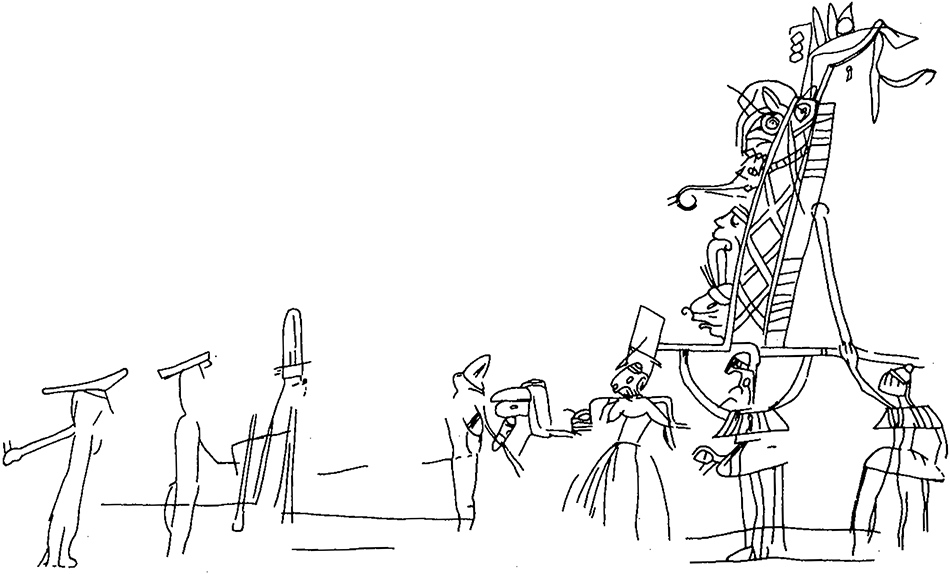


 Open access

