COVID-19 and E-Health in Africa
Despite many fatal diseases and harsh living conditions, Africa has a rapidly growing population that could increase more than fivefold over this century. Reference Brandt, Rasmussen and Peñuelas1 Yet, as evidenced during the coronavirus disease (COVID-19) pandemic, there is a scarcity of health care providers. Reference Dyer2 In fact, there is a decreasing number of physicians relative to the rest of the population. 3 In general, health care workers in low-income countries are scarce: The average low-income country has 0.2 physicians and 1 nurse per 1000 individuals, compared to 3 and 8.8 in high-income countries. Reference Gage and Bauhoff4
For decades, various country governments across the African continent have not prioritized health care or health systems, something acutely felt during the Ebola epidemic and the current COVID-19 pandemic. Reference Wadvalla5 While only 8.9% of the greater population tested positive for COVID-19, experts expect the actual infection rate to be significantly higher due to the low level of testing. Reference Wadvalla5 With alarming increases in COVID-19 cases in Ethiopia and other parts of Africa, there is even greater concern around the mortality rates of already-vulnerable populations due to comorbidities including HIV, tuberculosis, malaria, as well as disparities in socioeconomic status and access to quality health care services. Reference Asemahagn6–Reference Olum, Chekwech and Wekha8
Health care workers have been labeled the highest risk group for COVID-19 infection due to the nature of their occupation. Reference Asemahagn6 Special attention to ensure health care workers have both safe workplaces and necessary knowledge is essential. With the COVID-19 infection rates rising over 200% in African health care workers Reference Wadvalla5 , the immediate need for educational information on both the COVID-19 and managing chronic illnesses is essential. Reference Asemahagn6 Recently, with very limited data available, e-Health educational activities in Africa have been shown to be successful and sustainable. Reference Mars9 Specifically, even within resource constraints, e-learning has been used for education and training in the health care sector in Africa and is well received by students and practitioners. Reference Mars9 Grounded in an established theoretical framework Reference Gaglio, Shoup and Glasgow10 and following evidence-based best practices, Reference Abramson, Abramson and Abramson11 this intervention advances the field of dissemination and implementation science by demonstrating how to transition health care training and delivery from an in-person to digital medium in low-resource settings. Reference Neta, Brownson and Chambers12
RE-AIM
The RE-AIM (Reach, Effectiveness/Efficacy, Adoption, Implementation, and Maintenance) framework has been highly compatible with community-based public health intervention dissemination and implementation in various fields. Reference Gaglio, Shoup and Glasgow10,Reference Messiah, Sacher and Yudkin13 This framework was built to evaluate interventions and public health programs, to produce a more balanced approach to internal and external validity, and to address key issues important for dissemination and generalization. Reference Gaglio, Shoup and Glasgow10,Reference Messiah, Sacher and Yudkin13
While RE-AIM is one of the most frequently applied frameworks to guide implementation science in the health care field including e-health platforms, Reference Kwan, Mcginnes and Ory14,Reference Vinson, Stamatakis and Kerner15 it has rarely been used in both international Reference Quinn, Neta and Sturke16 and non-research settings. Reference Kwan, Mcginnes and Ory14 Employing the RE-AIM framework not only standardizes data collection and reporting but also cultivates a global dialogue around e-health implementation that allows for the bidirectional flow of information.
This paper (1) assesses the efficacy of a COVID-19 e-health educational intervention in Ethiopia targeting health care workers and (2) employs the RE-AIM framework to describe the implementation science features.
Methods
Study Description and Design
An international transdisciplinary team of public health professionals, including providers from local clinics and community stakeholders in Ethiopia, designed an e-health educational intervention to translate findings and experiences from settings where COVID-19 had already hit (eg, New York City) to settings where COVID-19 had not yet arrived (eg, Ethiopia). In other words, these seminars were designed to improve medical knowledge and preparedness among health care workers in Ethiopia before the health care system was overwhelmed with cases. The cross-sectional study design employed a mixed-methods measurement tool to assess both the interventions efficacy and identify best practices for developing e-health training interventions for medical professionals in Ethiopia. This Human Studies committee determined that this report did not require IRB oversight.
Procedures
A series of three 1-hour medical seminars were established to provide global health experts from the United States with experience in treating COVID-19 a platform to share lessons learned and best practices for low-resource settings. The number and length of seminars were determined based on recommendations from local stakeholders and organizational capacity. The seminars took place between May and August in 2020.
Participants
While targeted for health care workers in Ethiopia, the seminars were made available for anyone interested, including health care workers from other low-income countries. Participants were recruited using a variety of methods: targeted online advertisement on Facebook and LinkedIn; emails to partner organizations and nongovernmental organizations (NGOs); and posters, word of mouth of colleagues and hospital administration at the local hospitals in Ethiopia.
Intervention Content
The content was designed using an equity-oriented approach with both local stakeholders in Ethiopia and American physicians who had firsthand experience treating the COVID-19 pandemic. The content development was led by an American-trained physician who has been working in Ethiopia for over 30 years and delivered on Zoom. Specifically, for the first session, the aforementioned physician consulted with both local clinic staff in Ethiopia, asking what information they would like to know from physicians treating the pandemic [as the pandemic had yet to arrive in Ethiopia], and leading American-based doctors, asking what tricks, tips, and or knowledge that had been learned from the outbreak in America could be translated back to Ethiopia. The subsequent 2 seminars employed an adaptive design that both incorporated the aforementioned process as well as direct feedback from participants and local stakeholders, including representatives from the local Public Health Association.
Dissemination Platform Description
Measures
After each seminar, an anonymous de-identified mixed-methods survey was sent out to seminar participants to assess (1) the seminar’s effectiveness and (2) whether the seminar was meeting the needs and preferences of the target audience in a safe and respectful manner, including marketing and communication strategies. The full list of questions and measurement tool can be found in Appendix A. Each seminar was iterative, in the sense that changes to both format and content were made based on the feedback from participants. The measurement tool (ie, survey) was designed prior to the intervention to evaluate the seminars using the RE-AIM framework and remained the same.
Iterative process
Importantly, based on feedback provided using the mixed-methods measurement tool, each medical seminar was modified to respond to participant needs and preferences. Briefly, the first medical seminar was a high-level overview of COVID-19’s etiology, prevalence, and risk factors. The second medical seminar was focused on preparing both the medical facility and staff to test, triage, and treat COVID-19. The third medical seminar used real de-identified case studies that included imaging and lab work so that providers could have firsthand exposure and experience in virtually treating a COVID-19 patient.
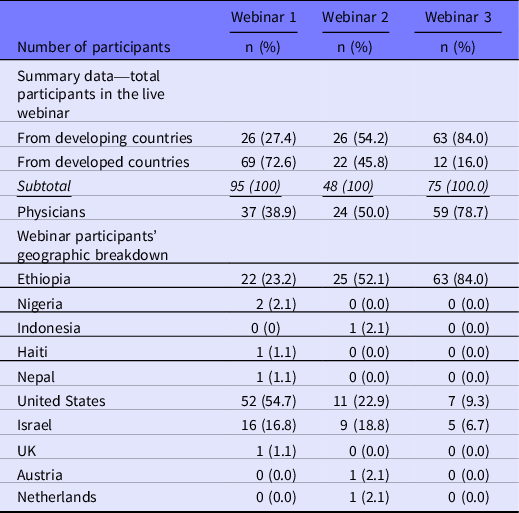
As a result, while just under 40% of the participants in the first medical seminar were physicians, the second and third medical seminars comprised 50% and almost 80% physicians, respectively. Similarly, while just under 30% of the participants in the first medical seminar were from developing countries, the second and third medical seminars comprised 54% and 84% persons from the developing world, respectively. In other words, each medical seminar more successfully reached and responded to the needs of our target population, health care providers from Ethiopia and developing countries.
Participants were informed both in writing and verbally at multiple points both during and after the seminar that all information collected was done both on a voluntary basis and anonymously.
Statistical analysis
All descriptive statistics (eg, frequencies, percentages, and averages) were computed using STATA/SE 14.2 (StataCorp, College Station, TX).
Results
Reach
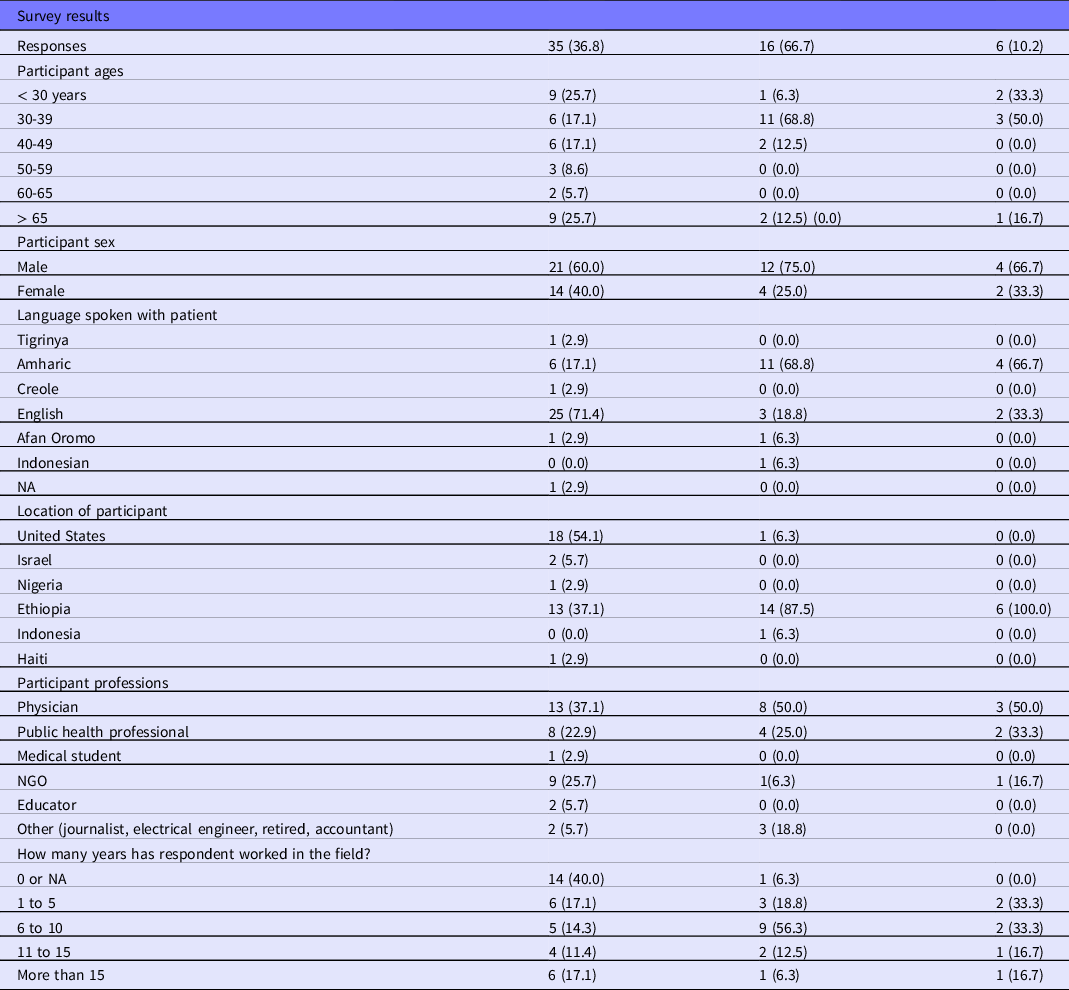
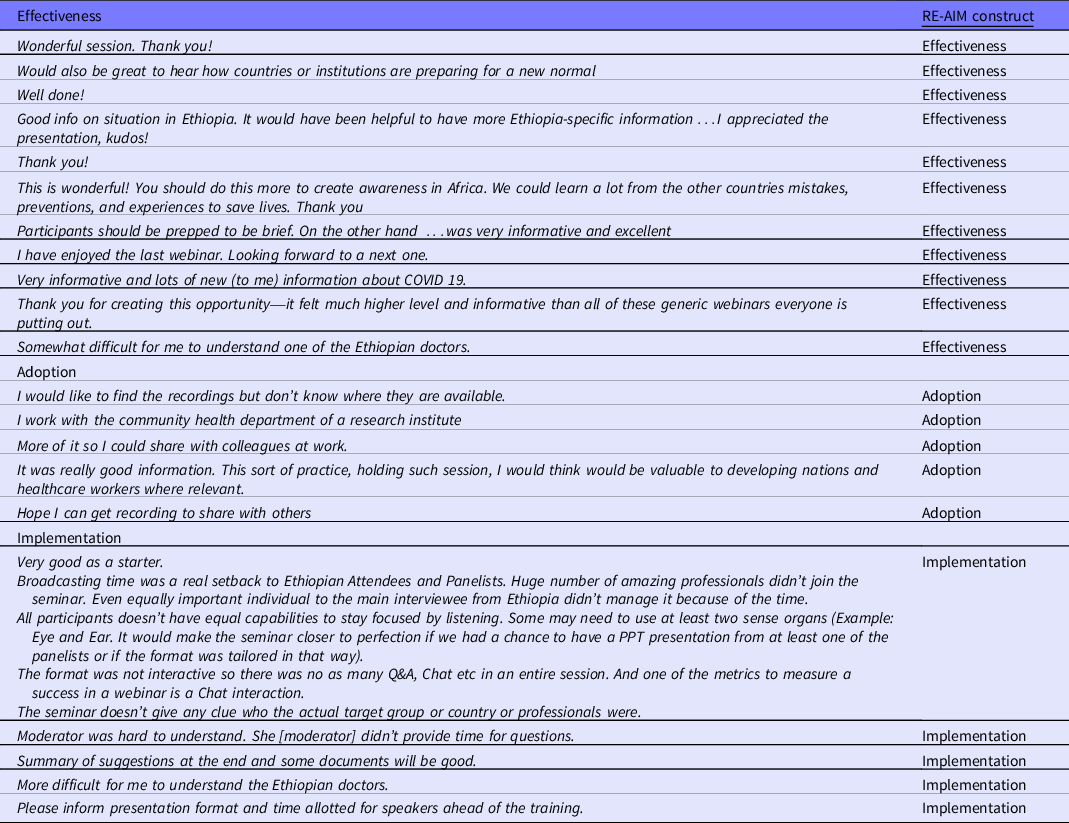
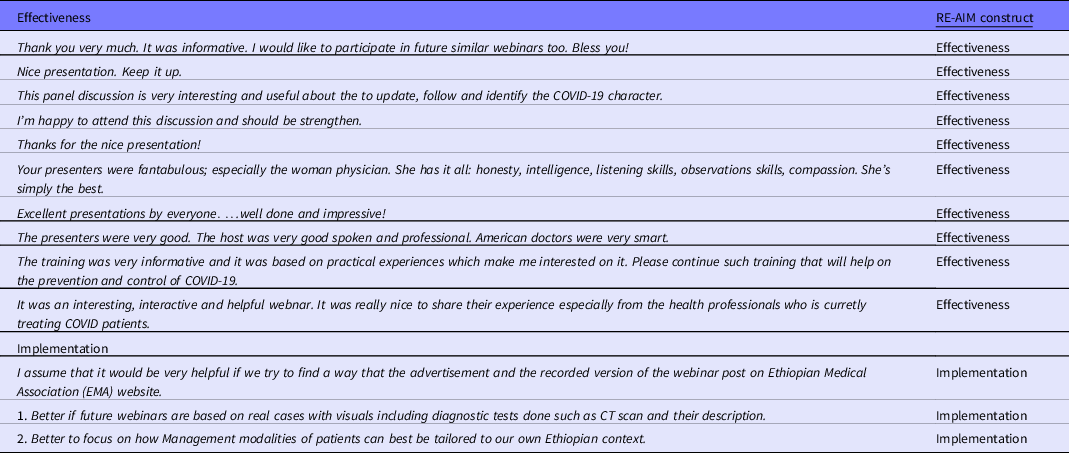
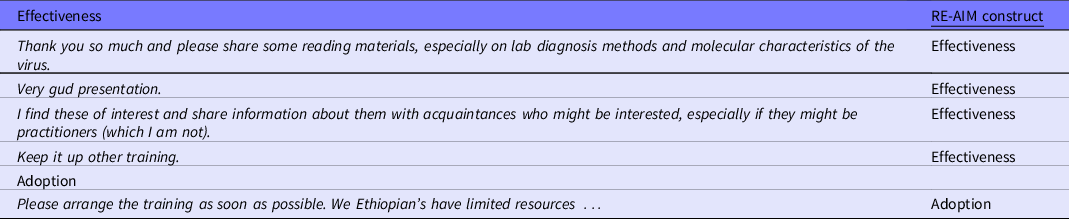
Three e-health medical seminars took place between May and August 2020, approximately 6 weeks apart using the Zoom platform and conducted in English. Demographic information describing seminar participants can be found in Table 1. Across all 3 seminars, there were a total of 324 participants, 218 live participants during the medical seminar itself, and 106 participants who viewed the recorded seminar at a later point. From the project inception, the RE-AIM framework was used to guide both the intervention development and the cross-sectional measurement tool that was developed for project evaluation. Qualitative participant responses describing the RE-AIM constructs evaluated and described below can be found in Table 2.
Indicators measuring the “reach” construct from the medical webinar

Indicators measuring the “reach” construct from survey

Qualitative data supporting the RE-AIM evaluation from Medical Seminar 1

Qualitative data supporting the RE-AIM evaluation from Medical Seminar 2

Qualitative data supporting the RE-AIM evaluation from Medical Seminar 3

Importantly, the marketing strategy changed between each medical seminar. For the first event, almost 200 000 profiles viewed the event on Facebook over the 5-day advertising period for the first seminar, 68 NGOs were emailed about the opportunity, and 3 hospitals in Ethiopia agreed to share the opportunity with medical providers. By the third seminar, only 4253 people saw the event over the 10-day advertising period, but 187 NGOs were emailed about the opportunity, and 15 hospitals shared the opportunity with medical providers.
Effectiveness
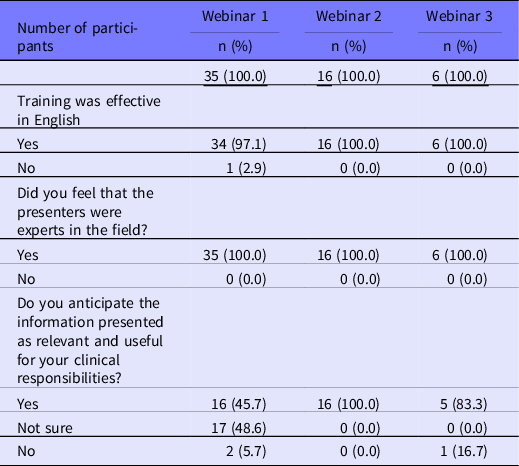
Across all 3 medical seminars, almost 100% of participants reported the training to be effective in English— only 1 person reported challenges. Importantly, 100% of participants reported the presenters to be experts in their field; 45.7%, 100%, and 83.3% of participants of the 3 seminars, respectively, reported that they anticipate the information presented will be relevant and useful for their clinical responsibilities. The iterative development of the medical seminar ensured that participant needs and preferences were incorporated. See Table 3.
Indicators measuring the “effectiveness” construct

Adoption
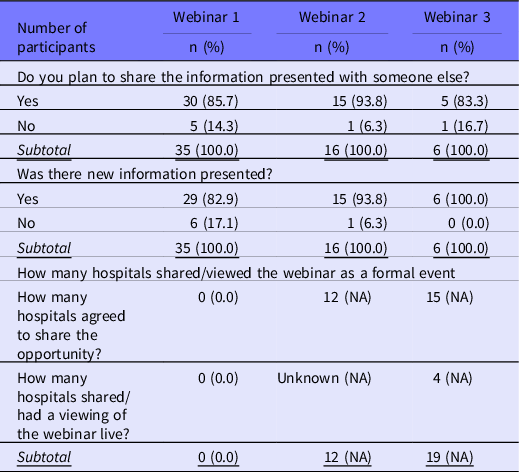
On a settings level, the research team assessed adoption through its ability to not only cultivate the necessary internal trust and willingness of the organization to develop this medical webinar series but also with organizations, including the Ethiopian federal government, to offer this program to the appropriate target population. On a participant level, over 80% of participants reported that they planned to share the information presented with someone else after all 3 medical seminars. In fact, over 80% of participants in all 3 medical seminars reported that the information presented was new. Finally, by the second and third seminars, hospitals began to both advertise and offer live viewings of the seminar. See Table 4.
Indicators measuring the “adoption” construct

Implementation
The format and content of each medical seminar evolved, based on the feedback from the previous medical seminar. For example, feedback from the first medical seminar indicated that the information was generic and high-level, and professionals were looking for more specific recommendations for their facilities. In terms of format, they wanted it to be more interactive (as opposed to frontal) with a longer question and answer session. After the second medical seminar, participants asked whether it would be possible to review real cases that the presenters have treated. While they appreciated the more interactive nature of the second medical seminar, they wanted more of a virtual workshop where they were actively participating.
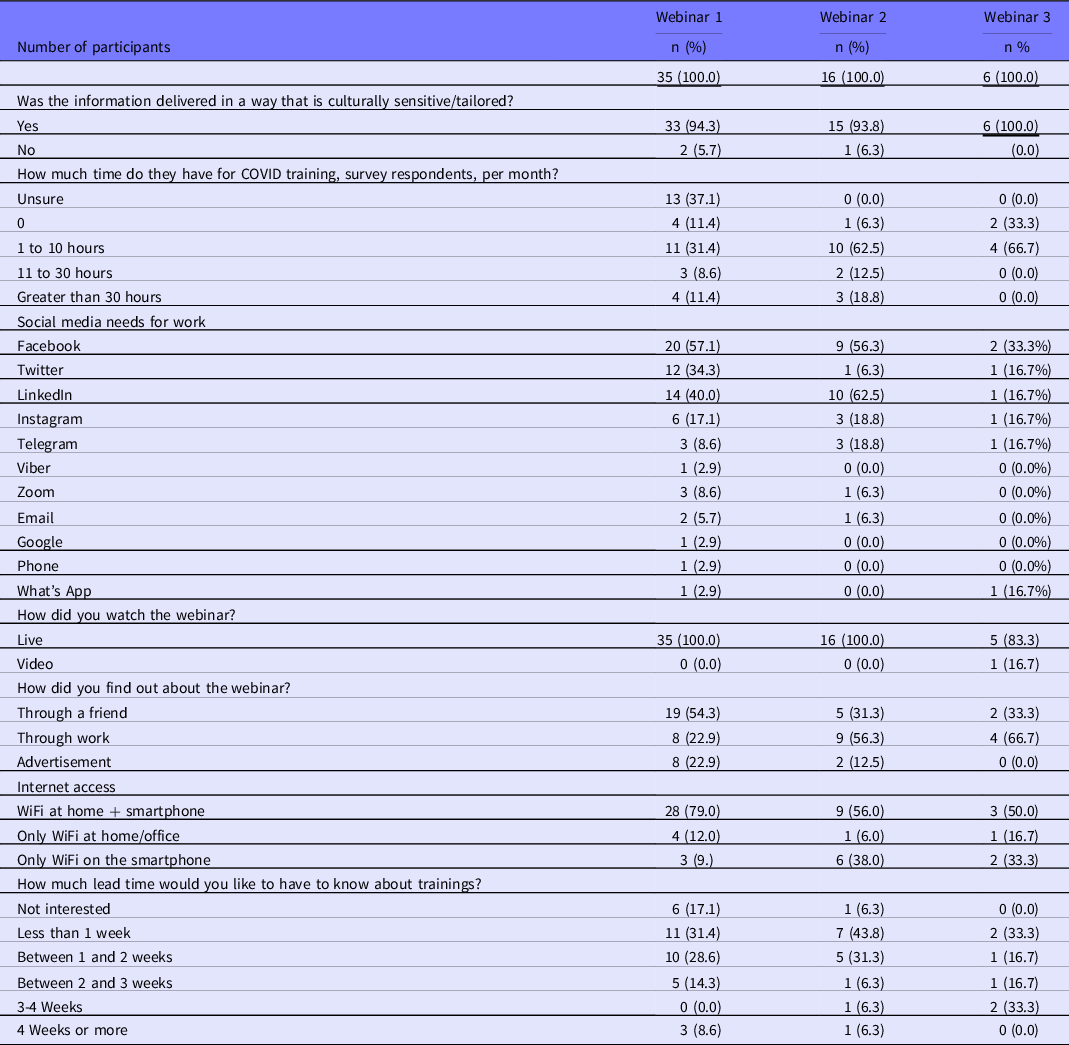
Keeping in mind the iterative nature of the intervention, over 90% of participants reported that the information was delivered in a culturally sensitive/tailored manner after all 3 medical seminars. As the pandemic arrived in Ethiopia, participant expectations for COVID-19 training decreased. While participants reported having as high as 96 hours a month to train for COVID-19 after the first medical seminar that took place as COVID-19 was arriving in Ethiopia, the maximum amount of time reported for COVID-19 training after the third medical seminar was 10 hours.
Participants were asked about which social media platforms they use for work in order to better understand how to reach the target population. LinkedIn and Facebook were most popular, followed by Telegram and Instagram and then Twitter. Additionally, participants were asked about their access to the Internet. In all 3 medical seminars, 50% or more reported having Internet access both at home and on a smartphone, around a third reported having Internet access only on their smartphone, and around 10% reported having Internet access at home only.
While over half of the participants in the first medical seminar reported finding out about the seminar from a friend, over half of the participants reported finding out about the opportunity via work for the second and third medical seminars. Similarly, while advertisements brought in over 20% of the participants for the first seminar and over 10% of the participants for the second seminar, no participants for the seminar reported that they learned about the experience from advertisements. Finally, when asked about how much lead time participants would like to have to know about trainings, most reported less than 1 week followed by 1-2 weeks. See Table 5.
Indicators measuring the “implementation” construct

Maintenance
The research team and organization that developed the medical seminars has applied for funding to continue offering medical seminars. At the current time, there are no additional plans to offer more seminars. However, there is significant organizational interest in piloting additional e-health training programs for their staff and stakeholders in Ethiopia and other developing countries.
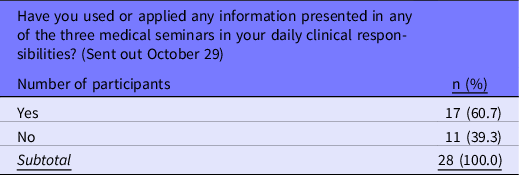
One follow-up question was sent to all participants to assess maintenance on the patient level at the end of October 2020, almost 6 months after the first medical seminar,. When participants were asked whether they had used or applied any information presented in any of the 3 medical seminars in their daily clinical responsibilities, over 64% reported they had, demonstrating a high level of maintenance or long-term effects of the intervention. See Table 6.
Indicators measuring the “maintenance” construct

Discussion
Key Findings from the COVID-19 Medical Seminar Series
As demonstrated, this iterative series of medical seminars that was developed and evaluated using the standardized RE-AIM framework to prepare medical professionals in Ethiopia where COVID-19 had not yet spread was largely successful. Participants reported the e-health intervention to be effective, measured by comprehension, subject matter expertise, and relevance to both expected and actual clinical responsibilities. Moreover, a novel finding is that medical providers preferred to engage in such trainings together at their place of work at the end of the workday in the middle of the week. Another key finding is that effective stakeholder engagement happens on many levels, and it requires engaging individuals, hospitals, and associations. Finally, the RE-AIM framework can be effectively employed in both non-research and international settings.
Learnings for Developing an E-Health Intervention for Medical Professionals in Ethiopia and Other Low-Income Countries
Through assessing an urgent e-health intervention to empower and prepare medical providers to respond to the COVID-19 pandemic, important descriptive information that describes the needs and preferences of medical providers in Ethiopia and other low-income countries was obtained. For example, consistent with the literature, Internet technologies are relatively widespread and efficacious to facilitate medical training with medical leaders from around the globe. Reference Namiki and Kobayashi17,Reference Sarfo, Adamu, Awuah and Ovbiagele18 Similarly, training conducted in English is effective. Participants reported that trainings should take place in the middle of the week and at the end of the local workday, that way they can participate with colleagues, together, at hospitals without it interfering with either their work and or home responsibilities. While acknowledging they had sufficient Internet access outside of their workplace, it appears that medical providers preferred to participate in trainings with colleagues in their workplace setting.
Most medical professionals were under 40 years old, as older physicians were in a higher risk category. Through the iterative process, we were able to better tailor our intervention for our target population: health care providers from Ethiopia. Specifically, Ethiopian health care providers reported preferring interactive sessions based on real case studies as opposed to frontal presentations that provided an overview of global incidence trends and etiological information. Moreover, they are self-aware of their needs and eager to advocate for specific information to which they do not have access. As a result, it is critical to engage local stakeholders— both individuals and institutions— in developing content, recruitment, and implementation strategies. This aligns with equity-oriented Reference Pratt19,Reference Pratt, Merritt and Hyder20 and community-based participatory methods for engagement best practices. Reference Viswanathan, Ammerman and Eng21 Participants reported having local medical leadership frame the experience before the seminar began. They also appreciated the opportunity to follow up with experts after the seminar ended.
Finally, especially in terms of building emergency trainings for medical professionals, the approach to translate and disseminate findings from other settings was endorsed by participants.
RE-AIM Framework
As evidenced, the RE-AIM has widespread use and has proven to be an effective dissemination and implementation research framework for many settings, intervention types, and target populations. Reference Glasgow, Harden and Gaglio22 There is also limited published research on its application in both international and non-research settings. Reference Kwan, Mcginnes and Ory14,Reference Quinn, Neta and Sturke16 Therefore, employing the RE-AIM framework in this international non-research resetting was an effective and novel way to show its versatility and utility in these settings. Importantly, the implementing team decided to use the RE-AIM framework when designing the intervention to inform both the intervention design and measurement tool. By verifying its applicability and encouraging the uptake of the RE-AIM framework in more settings, it creates a standardized way in which global research can build on itself, with an ultimate goal of decreasing the extreme lag between research and touching a patient. Reference Neta, Brownson and Chambers23 This standardized and bidirectional flow of information is critical to improve the quality of research, be it in developing equity-oriented interventions or assessing external validity.
E-Health as a Tool for Medical Training in Ethiopia and Other Low-Income Settings
As evidenced in this intervention and others, Reference Mars9 e-health trainings for medical providers are effective in Ethiopia and other low-income settings. Specifically, within the constraints of bandwidth, cost, and power, e-learning has been used for health care education and training in the health care sector in Africa and is well received by students and practitioners. Reference Mars9 This intervention supports this finding, as, after every seminar, participants expressed appreciation and a desire for more like opportunities.
Therefore, e-health has been proposed as a solution to both limit the burden of diseases like the COVID-19 pandemic and address aforementioned infrastructural challenges, including, but not limited to, the insufficient number of health workers. 24 In fact, given the significant expansion in telecommunication infrastructure, especially in many rural regions, Reference Namiki and Kobayashi17 over the last 2 decades in places like Ethiopia in Sub-Saharan Africa, Reference Sarfo, Adamu, Awuah and Ovbiagele18 e-health and international cross border telemedicine are becoming imperative to efficacious care. Reference Mars9 Systematic reviews demonstrate that successful e-health endeavors in Africa and other low-income countries have relied on international collaborative efforts between centers in Africa and counterparts in North America or Europe. Reference Sarfo, Adamu, Awuah and Ovbiagele18 Therefore, given the uneven spread of the pandemic across the globe, this e-health intervention instructed by renowned medical leadership in the United States who have already treated COVID-19 cases for health care workers in Ethiopia and other low-income countries supports this finding and is an example of an evidence-based and efficacious approach to developing e-health educational activities on COVID-19 for health care workers.
Additionally, as there is significant inequality in medical care in Africa, Reference Mars9 e-health approaches are an innovative and equitable approach to delivering training to health care workers and improving health outcomes in marginalized and deprived populations, Reference Sarfo, Adamu, Awuah and Ovbiagele18 such as rural communities. Reference Kobayashi and Namik25 In fact, e-health interventions have been proven to have added benefits for rural providers such as improve their self-esteem and promote continuing professional development and the recruitment and retention of rural physicians in rural regions. Reference Asemahagn6,Reference Mars9,Reference Namiki and Kobayashi17 The full potential of global e-health to meet both national and global health objectives is not being tapped, and it may be the necessary tool to strengthening health systems like those in Africa. Reference Mars and Scott26 In fact, developing nations and the International Standards Organization have also supported e-health via policy or legislation. Reference Mars and Scott26 This intervention supports this finding.
Limitations and Future Research
The primary limitation of this study is potential selection bias, in that survey respondents may differ from nonrespondents. Additional limitations are based on the measurement tool and study design. Specifically, given the anonymous cross-sectional measurement tool that was employed in this study, it was not possible to measure the number of returning participants from seminar to seminar. Additionally, as groups of physicians reported watching the medical seminars together at their respective hospitals, their survey response now, at times, represented groups of individuals rather than just a single participant and perhaps should have been weighted. However, given that all responses were anonymous, there was no way to adjust for the grouped response.
Therefore, future research should incorporate a more effective way to include individual and grouped responses and consider employing deidentified rather than anonymous data collection approaches. Additionally, by incorporating the recommendations in this paper, future research should work with local hospitals and health care institutions to increase the sample size. Finally, future research should assess maintenance at a longer-term interval, especially for e-health trainings not focused on global pandemics or urgent responses.
Conclusions
As demonstrated in both other settings and populations, e-health technologies can be an effective tool to train medical providers in Ethiopia and, perhaps, other low-income countries both in Africa and abroad. In this case study, due to the uneven spread of the COVID-19 pandemic, e-health technologies empowered medical expertise to be shared and employed in clinical settings across the global when travel was prohibited. E-health trainings empower the dissemination and implementation of best practices and encourage the bidirectional flow of information that ultimately cultivates a more transparent and accessible global dialogue around evidence-based practices. Similarly, the RE-AIM framework standardizes data collection and reporting processes with the same end goal. Ultimately, if employed correctly and equitably, e-health technologies have the opportunity to decrease global health disparities, increase the retention of health care workers (especially in vulnerable communities), improve health outcomes of patients, and reduce the overall cost of health care.
Supplementary material
For supplementary material accompanying this paper visit https://doi.org/10.1017/dmp.2022.224
Acknowledgments
We would like to thank the American Jewish Joint Distribution Committee’s GRID team for facilitating these medical seminars. Additionally, we would like to thank Drs Neil Schluger and Tenange Hail-Mariam for their medical expertise and insight.
Author contributions
JY conceived the idea for the study, drafted the manuscript, performed all the analyses, and finalized the submitted draft with the approval of all authors. RH developed the content, facilitated the intervention, and provided feedback on the manuscript. ASL managed the marketing, logistics, and data gathering process for the intervention and provided feedback on the manuscript. SM helped draft the manuscript and provided significant feedback on the manuscript.
Funding statement
None.
Conflict(s) of interest
None.
Ethical standards
While the Human Studies committee at the University of Texas Health Science at Houston determined that this report did not require IRB oversight, this study was run in accordance with the Principles of the Ethical Practice of Public Health.