INTRODUCTION
Parasite infection is a major constraint on productivity in sheep industries worldwide (Jackson et al. Reference Jackson, Bartley, Bartley and Kenyon2009). Of particular importance are nematode parasites that colonize the mucosa of the abomasum and small intestine, resulting in decreased appetite and growth rates in lambs and persistent diarrhoea in both young lambs and immune-competent, adult sheep. Virtually all sheep grazing improved pastures in both temperate and tropical areas are infected, either clinically or subclinically, with nematode parasites. Despite much effort there are still no licensed vaccines for nematode parasites of sheep and the control of parasites has traditionally been based on treatment with anthelmintic chemicals. High levels of parasite resistance to anthelmintic treatment, as well as consumer demand for chemical-free agricultural products, has stimulated a large amount of research into chemical-free control options. These include dietary supplements and bioactive forages that help the host to improve its resistance to the parasite (Sykes, Reference Sykes2008; Kotze et al. Reference Kotze, O'Grady, Emms, Toovey, Hughes, Jessop, Bennell, Vercoe and Revell2009) and also harnessing natural immunity by selectively breeding sheep that have a strong immune response and consequently high resistance to parasite infection (Sayers and Sweeney, Reference Sayers and Sweeney2005; Karlsson and Greeff, Reference Greeff and Karlsson2006).
However, researchers have recently demonstrated that a strong immune response may have some detrimental side effects for the host, and that many of the clinical signs of nematode infection may be in fact due to immune-mediated pathology (Greer et al. Reference Greer, Huntley, MacKellar, McAnulty, Jay, Green, Stankiewicz and Sykes2008; Williams et al. Reference Williams, Karlsson, Palmer, Williams, Vercoe, Greeff and Emery2008). As a result, it has been suggested that it may be more sustainable to breed sheep that do not have a strong immunity to parasites (i.e. they do not resist the infection) but are able to maintain a reasonable level of production despite a heavy parasite burden (‘resilience’).
The aim of this review is to summarize the current knowledge of immune-mediated pathology of nematode infection in sheep, and demonstrate the benefits and drawbacks of breeding sheep that have a strong resistance to parasite infection. This knowledge comes from Australian work with Merino sheep that have been bred for almost 25 years to be resistant to nematode parasites. Some recent reviews have focused on the seemingly negative elements of immunity, i.e. the nutritional and hence production costs to the animal (Colditz, Reference Colditz2008; Greer, Reference Greer2008). In the current paper, it will be argued that a strong immune response is desirable and that breeding sheep for a strong resistance to parasites is not only feasible but also sustainable. The reasoning for this being that any undesirable immunopathology is outweighed by epidemiological and welfare benefits, as well as marked decrease in reliance on anthelmintic chemicals.
IMPACT AND LIFE CYCLE OF NEMATODES
Parasitic nematodes of sheep have a simple, direct life cycle. Sheep become infected when they ingest infective larvae from pasture. Larvae penetrate the mucosa of the abomasum (acid compartment of the stomach) or proximal third of the small intestine and moult several times, reaching adulthood in approximately 3 weeks. Adult females can lay several thousand eggs that are excreted in the faeces. Eggs then require sufficient moisture and optimal temperatures to hatch, but once hatched larvae can survive for months on pasture, waiting to be ingested by another sheep to complete the life cycle.
Infection has marked effects on the host. Young lambs are most susceptible to infection, a situation exacerbated by increased larval numbers on pasture due to higher egg shedding of the lactating ewe (the ‘peri-parturient rise’). Infected lambs have significantly lower growth rates than their non-infected counterparts as well as a range of other clinical signs depending on the nematode species. Infection with the haematophagic nematode Haemonchus contortus rapidly leads to anaemia whereas infection with the mucosal-browsing Teladorsagia circumcincta and Trichostrongylus sp. causes severe scouring (diarrhoea). Reduced weight gain is caused mainly by inappetence in infected sheep rather than reduced absorption of nutrients in the intestine. However, protein deficiency is also a classic symptom of infection, due to re-partitioning of essential amino acids to repair the mucosal epithelium and replace endogenous secretions (Sykes and Greer, Reference Sykes and Greer2003). It has been well established that supplementary feeding animals with extra amounts of protein can alleviate the severity of infection (Sykes, Reference Sykes2008).
As sheep mature they gradually build up a degree of immunity to nematodes which is dependent on both age and continual exposure to infective larvae (Dobson et al. Reference Dobson, Waller and Donald1990). Therefore, parasite infection is considered to be less of a problem in adult sheep. However, it is now recognized that parasites still cause considerable issues for mature animals. First, pregnant and lactating ewes experience a temporary but significant lapse in their acquired immunity that allows a clinical worm burden to establish. It is generally accepted that this is due to the increased nutritional demands for the growing fetus and for milk production taking priority over nutrient supply for an effective immune response (Kahn, Reference Kahn2003), although reproductive hormones such as prolactin have also been hypothesized to contribute to the immunodeficiency at this time (Barger, Reference Barger1993). In addition, adult sheep also suffer signs of parasite infection such as diarrhoea, despite the absence of other noticeable signs of infection such as weight loss or large numbers of worm eggs in faeces. It was long thought that this observed diarrhoea was non-parasitic in nature, and could be attributed to nutritional factors such as ingesting pasture with a high content of water or soluble carbohydrates. However, Larsen et al. (Reference Larsen, Anderson, Vizard, Anderson and Hoste1994) showed that ingesting parasitic larvae was a necessary causal factor for this diarrhoea to occur but the severity was not necessarily related to a heavy worm infection. Therefore, it is apparent that the larval challenge per se could be responsible for some of the pathological signs of nematode infection and sheep with a strong immune response are not necessarily exempt from the signs of worm infection.
IMMUNOLOGICAL BASIS OF RESISTANCE
Nematode parasites are large, complex organisms and as such elicit a diverse and equally complex immune response from the host. Immunity to nematodes in sheep is still a concept that is not fully understood, but a general picture of the mechanisms involved has now been established. Immunity to nematodes is primarily mediated by Th2 cytokines such as IL-4 and relies on humoral, rather than cell-mediated, immunity. During primary infections, larvae invariably penetrate and reside in the mucosa of the abomasum or small intestine. In the case of T. circumcincta and T. colubriformis, the parasite spends most of its life securely buried within the mucosa while H. contortus re-emerges to browse the lumen of the gastric pits. Several antigen-presenting cells, such as macrophages and dendritic cells, are able to present nematode antigens via their MHC Class-II receptors to T-cells within gut-associated lymphoid tissue. It is clear that T-cells stimulated by worm antigens secrete cytokines that are largely biased towards a Th2 immune response. These include IL-4, IL-5 and IL-13, although Th1 cytokines such as IFN-γ are also released during this process (Pernthaner et al. Reference Pernthaner, Cole, Morrison and Hein2005). The large number and diversity of nematode antigens means that acquired immunity is slow to develop, and when it does it is rarely complete (Emery, Reference Emery1996).
Consistent with the Th2 bias of the immune response, IgG1 and IgE are produced and high levels of parasite-specific antibody from these isotypes has been correlated with low worm burdens in immune sheep (Bendixsen et al. Reference Bendixsen, Windon, Huntley, MacKellar, Davey, McClure and Emery2004; Williams et al. Reference Williams, Palmer, Williams, Vercoe, Emery and Karlsson2010c). However, it is not clear whether these antibodies directly facilitate removal of the parasite. IgG has a strong affinity for certain carbohydrate larval antigens and can retard worm growth (Harrison et al. Reference Harrison, Pulford, Doolin, Pernthaner, Shoemaker and Hein2008) but is also likely that end-effector mechanisms are inflammatory cells that are ‘armed’ by binding to the Fc region of antibodies that have encountered worm antigens (such as excretory/secretory fluids or surface molecules). Th2 cytokines stimulate the proliferation and recruitment of granulocytes (particularly mast cells and eosinophils) from the bone marrow into the lamina propria in the gut. With appropriate antibody involvement, these cells degranulate and release inflammatory mediators that ‘flush’ larvae from the gut through increased peristalsis and mucus secretion. These Th2, allergic-type mechanisms are consistent with the release of mediators such as histamine, cysteinyl leukotrienes and bradykinin which have been shown to be released during larval challenge of sheep and negatively correlated with adult worm burdens (Steel et al. Reference Steel, Jones and Wagland1990; Williams et al. Reference Williams, Karlsson, Palmer, Vercoe, Williams, Greeff and Emery2010b). In addition, eosinophils have been shown to be intimately associated with third-stage larvae in histological sections from the abomasa of sheep infected with either H. contortus or T. circumcincta (Balic et al. Reference Balic, Bowles and Meeusen2002, Reference Balic, Bowles, Liu and Meeusen2003). Eosinophils can release potent mediators such as eosinophil peroxidase and the lectin-binding protein galectin-14 (Doligalska et al. Reference Doligalska, Moskwa and Stear1999; Kemp et al. Reference Kemp, Robinson, Meeusen and Piedrafita2009) and it has been suggested that these may be directly involved in parasite killing, either through toxic effects of reactive oxygen species or inhibition of larval migration due to alterations in the mucosal environment (Meeusen et al. Reference Meeusen, Balic and Bowles2005).
In addition to this rejection of larvae, parasite-specific IgA has repeatedly been shown to be negatively correlated with female worm length and fecundity and it has been speculated that worms residing in the mucosa may have their feeding activities inhibited by secretory IgA in the lamina propria (Stear et al. Reference Stear, Strain and Bishop1999). Furthermore, attempts to vaccinate sheep with a recombinant excretory-secretory antigen from T. colubriformis resulted in a significant IgA response in the jejunal mucosa, suggesting a direct protective role for this isotype (McClure, Reference McClure2009). IgA may be produced by plasma cells in the intestine that are stimulated to differentiate from B-cells by dendritic cells that encounter worm antigens in the Peyer's Patches (Miller, Reference Miller1996). Thus, this process may be independent from the granulocyte production that probably arises from antigen presentation in the lymph nodes. It is likely that IgA production may be the first facet of acquired immunity to arise and lambs first develop the ability to regulate worm length and fecundity through this mechanism, before being able to regulate worm numbers through rejection of incoming larvae (Stear et al. Reference Stear, Boag, Cattadori and Murphy2009).
Once immunity has been developed, subsequent larval challenges can be expelled remarkably quickly. It has repeatedly been shown that sheep made immune by repeated larval infection and then challenged are able to reject the majority or, in some cases, the entire challenge within 1–2 h (Wagland et al. Reference Wagland, Emery and McClure1996; Harrison et al. Reference Harrison, Pulford, Gatehouse, Shaw, Pfeffer and Shoemaker1999). Consistent with the hypothesis that mast cells are the major mediators of this process, isolated mast cells from immune sheep abomasum and intestinal tissue are able to release histamine and leukotrienes within 30 min of stimulation with worm antigens (Bendixsen et al. Reference Bendixsen, Emery and Jones1995). This is probably due to the extraordinarily high affinity of IgE to FcεR receptors on mast cells. Therefore, mucosal mast cells are normally coated in parasite-specific IgE and binding of worm antigens results in immediate degranulation without the need for any T-cell involvement.
Despite the evidence that these Th2 mechanisms are protective, the similarity of these processes with allergic disorders such as asthma and enteric food allergies raises the possibility of undesirable side effects from the immune response. Mulcahy et al. (Reference Mulcahy, O'Neill, Donnelly and Dalton2004) described the concept of a ‘goldilocks’ immune response, whereby too little immune response would result in an unhealthily large parasite burden but too much response would trigger unwanted immunopathology. In a natural host-parasite system, it would be expected that the host would evolve a ‘just right’ immune response that would allow appropriate regulation of the parasite without damaging consequences to the host. Indeed, it has been speculated that sheep do develop such an immune response and that allergic-type mechanisms such as excessive IgE production are ‘dampened’ down after the first year or two of the animal's life (Meeusen, Reference Meeusen1999). However, many modern sheep production systems interfere with this natural host-parasite relationship. This is unavoidable, and is due to either weather conditions in Mediterranean climates such as in Southern Australia that result in a larval challenge for only half the year due to hot, dry summers, or else European production systems that house sheep indoors during the winter and, again, result in sheep only being exposed to parasite challenge for a limited amount of time each year. These systems may result in sheep overreacting to the re-establishment of larval challenge each season. As a result, immunopathology may be a large consequence of parasite challenge.
IMMUNE-MEDIATED PATHOLOGY
The concept that the immune response may be a source of pathology to the host has been noted before, by among others, Simpson (Reference Simpson2000) and Greer (Reference Greer2008). Greer (Reference Greer2008) questioned whether an immune response was desirable at all. Pathology due to the immune response can be grouped into 2 broad areas, first, loss of bodyweight due to a competition of nutrients between growth and, second, the immune system and the direct effects of immune mechanisms on tissues and/or metabolic systems.
Competition for nutrients
Observations on the trade-offs between immunity to worms and growth and production have generally come about in flocks of sheep genetically selected for either resistance or resilience to worms. It has long been recognized that those animals that display the least clinical signs of infection are not necessarily the same animals that best resist the infection. Clunies-Ross (Reference Clunies-Ross1932) first made the distinction between ‘resistance to infection’ and ‘resistance to the effects of infection’. When the feasibility of breeding sheep to withstand nematode infection naturally was first investigated in the 1970s and 1980s two separate breeding objectives were defined (Albers et al. Reference Albers, Gray, Piper, Barker, Le Jambre and Barger1987). Large-scale experiments in New Zealand to investigate the effects of selective breeding provided telling information on the relationship between resistance to parasites and animal performance. Perhaps surprisingly, researchers consistently found that sheep selected for parasite resistance (i.e. a low faecal worm egg count – FWEC) consistently had lower growth rates and wool growth than unselected control flocks or flocks selected for a high FWEC (Williamson et al. Reference Williamson, Blair, Garrick, Pomroy, Douch and Green1997; Morris et al. Reference Morris, Vlassoff, Bisset, Baker, Watson, West and Wheeler2000). It was hypothesized that essential amino acids, such as cysteine and methionine required for the immune response, were being diverted away from muscle and fat deposition and also wool growth. Because of this, it was suggested that breeding for resilience may be a more feasible breeding objective and experimental flocks were established to investigate this idea (Bisset and Morris, Reference Bisset and Morris1996).
Coop and Kyriazakis (Reference Coop and Kyriazakis2001) established a framework for the partitioning of nutrients in the growing lamb and concluded that nutrients would first be prioritized to muscle and fat deposition, taking preference over the nutritional cost of an effective immune response to parasites. This could explain the well-established susceptibility of young lambs to parasite infection. However, this reasoning implies that those sheep with weaker immune responses will in fact grow faster – as less nutrients are committed to the immune response more nutrients will be available for growth. This needs to be balanced with the direct effects of parasites in the gut. Nematodes hydrolyse components of their host tissue (e.g. mucins) for their own protein sources (Liu et al. Reference Liu, Masters and Adams2003), so large numbers of parasites will lead to more protein being partitioned for repair of the mucosal epithelium. It is not clear exactly how much of the protein deficiency associated with parasite infection is due to direct parasite effects and how much is due to the immune system sequestering protein for antibody production and replacing endogenous mucus and plasma secretions in the gut. This may be influenced by breed and environmental differences, as evidenced by conflicting reports in the literature about the relationship between FWEC and body weight in grazing sheep. There have been consistent reports from Europe that there is a negative genetic correlation (ranging from −0·02 to −0·61) between FWEC and bodyweight, i.e. those sheep with less worms grow faster and have better body condition (Bishop et al. Reference Bishop, Bairden, McKellar, Park and Stear1996; Bouix et al. Reference Bouix, Krupinski, Rzepecki, Nowosad, Skrzyzala, Roborzynski, Fudalewicz-Niemczyk, Skalska, Malczewski and Gruner1998; Bishop et al. Reference Bishop, Jackson, Coop and Stear2004). It has also been reported that there is a favourable correlation between body weight and parasite resistance in an outbred population of wild sheep, suggesting that natural selection favours those sheep that are able to actively resist nematode infection (Coltman et al. Reference Coltman, Pilkington, Kruuk, Wilson and Pemberton2001). Conversely, data from Merino and Romney sheep in Australia and New Zealand give inconsistent results. McEwan et al. (Reference McEwan, Mason and Baker1992) reported an unfavourable genetic correlation between FWEC and bodyweight (0·11), while Eady et al. (Reference Eady, Woolaston, Lewer, Raadsma, Swan and Ponzoni1998) observed unfavourable genetic correlations between wool growth and FWEC (0·21), but a favourable correlation with bodyweight. Further work in Western Australia with Merino sheep revealed mostly neutral or slightly favourable genetic correlations between FWEC and a range of production traits including bodyweight, wool production and eye muscle depth (Greeff et al. Reference Greeff, Karlsson and Besier1999; Pollott et al. Reference Pollott, Karlsson, Eady and Greeff2004). However, it is interesting to note that as sheep mature the correlations become more consistently favourable (Pollott et al. Reference Pollott, Karlsson, Eady and Greeff2004), supporting the hypothesis that in young, growing animals a strong immune response can divert nutrients away from growth, whereas once a sheep has reached its mature bodyweight any detrimental effects are manifested mainly by direct effects of parasites in the gut, and hence here a strong immunity is desirable. This may have important implications for parasite-management in different production systems, depending on whether the aim is to quickly fatten lambs to a target weight for slaughter or to graze for several years to grow wool. However, the relationship between production and immunity is further complicated by the direct effects that an immune response can have on the host.
Direct effects
The immune system is a complex system and research in human immunology has repeatedly demonstrated that many of the symptoms of infection and illness, such as diarrhoea, fever, inappetence and mucus secretion are due to the effects of the immune response rather than effects of the infectious agent. Infection with human parasites such as Plasmodium spp. leads initially to fever and diarrhoea that are thought to be mainly attributable to immunopathology caused by the release of pro-inflammatory cytokines such as TNF-α (Riley et al. Reference Riley, Wahl, Perkins and Schofield2006). In the case of malaria, however, any side effects of the immune response are a necessary evil, given that unchecked the parasite will cause the rapid death of its host. Can the same be said of nematode infection in sheep? H. contortus is certainly extremely pathogenic and, without an efficient immune response to clear the parasite, death is a very real possibility. However, the effects of the mucosa-browsing nematodes T. circumcincta and Trichostronglyus spp. are generally considered to be less pathogenic and death is rarely an outcome of infection. Therefore, the trade-offs between resistance to the parasite and immunopathology need to be considered.
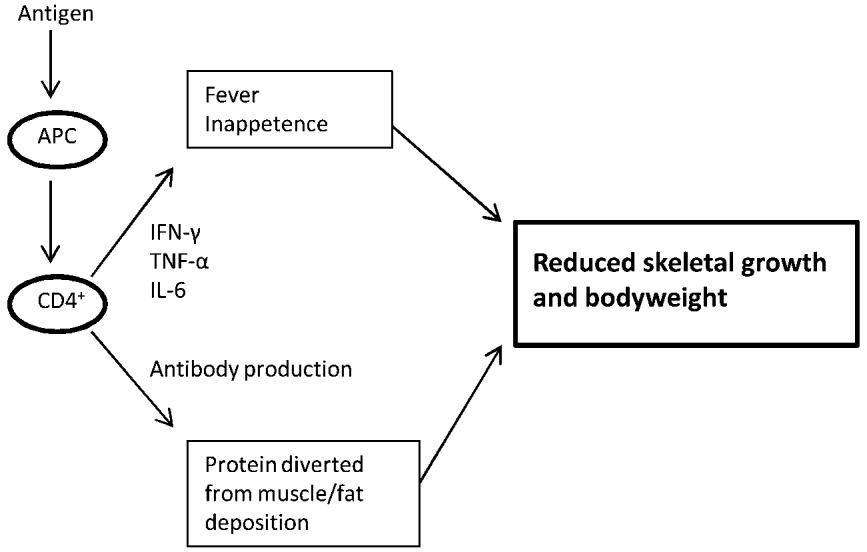
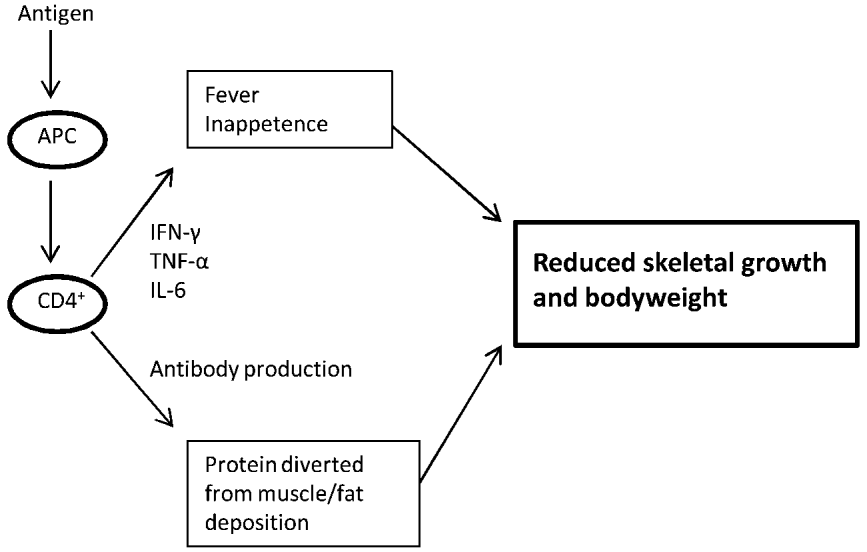
In a series of experiments, Greer and his colleagues showed that depressing the host's immune response by treatment with corticosteroids reversed the inappetence seen in lambs during infection with either T. colubriformis or T. circumcincta (Greer et al. Reference Greer, Stankiewicz, Jay, McAnulty and Sykes2005, Reference Greer, Huntley, MacKellar, McAnulty, Jay, Green, Stankiewicz and Sykes2008). This was clear evidence that this decrease in food intake was not due to the presence of large amounts of worms in the gut but rather was immune mediated. The mechanisms of this immune-mediated pathology are illustrated in Fig. 1. The release of cytokines such as TNF-α and acute-phase proteins is indicative of the developing immune response in young lambs but also has profound effects on the host's metabolism. In particular, the release of IL-6 can interact with the hypothalamus to decrease appetite (Colditz, Reference Colditz2003). Thus, lack of appetite and consequently lack of growth, is possibly a direct effect of the immune response. Consistent with this, Greer et al. (Reference Greer, Huntley, MacKellar, McAnulty, Jay, Green, Stankiewicz and Sykes2008) found that the immune-suppressed lambs grew more quickly than their immune counterparts, despite having a 5-fold higher worm burden.
Possible mechanisms leading to immunopathology during acquisition of immunity to nematodes in young sheep. Antigen-presenting cells (APC) encounter nematode antigens and prime T-helper lymphocytes (CD4+). Inflammatory cytokines reduce appetite, while the proliferation of B-lymphocytes and consequent immunoglobulin production affects nutrient partitioning for fat and muscle deposition.
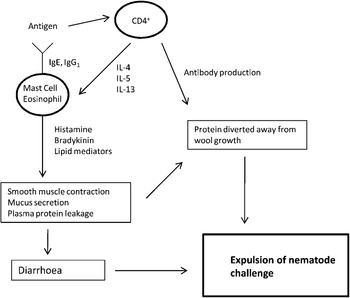
In the case of T. circumcincta and Trichostrongylus spp., the other major sign of infection, apart from a loss of weight, is diarrhoea. Similar to loss of weight, diarrhoea has typically been associated with a heavy worm burden but it is now apparent that this is not the case. First, Larsen et al. (Reference Larsen, Anderson, Vizard, Anderson and Hoste1994) demonstrated that parasite-related diarrhoea was not associated with a high worm burden but was in fact associated with high numbers of tissue eosinophils, a hallmark of acquired parasite-resistance in sheep (Meeusen, Reference Meeusen1999). Further results from sheep bred for parasite resistance revealed a trend for the resistant sheep to have a higher build up of faeces on the wool around the breech (‘dags’), an indicator of diarrhoea (Bisset et al. Reference Bisset, Vlassoff, West and Morrison1997; Karlsson et al. Reference Karlsson, Pollott, Eady, Bell and Greeff2004). Therefore, it became apparent that diarrhoea might also be a consequence of immunopathology. Further research has supported this concept. Shaw et al. (Reference Shaw, Morris, Green, Wheeler, Bisset, Vlassoff and Douch1999) noted a positive genetic correlation (ranging from 0·17 to 0·43 depending on the time of year) between dags and concentrations of parasite-specific IgE in serum. More recently, Jacobson et al. (Reference Jacobson, Bell and Besier2009) noted that diarrhoea was associated with a high FWEC in young lambs but with a low FWEC in adult sheep. This suggests that diarrhoea in lambs may be a consequence of a heavy infestation of worms directly affecting gut function whereas diarrhoea in more mature sheep may be mediated by acquired immunity. Consistent with this, parasite-resistant rams challenged with relatively low doses of nematode larvae have a significant decrease in faecal dry matter (FDM) within 14 days of the challenge commencing, compared to unchallenged rams (Williams et al. Reference Williams, Karlsson, Palmer, Vercoe, Williams, Greeff and Emery2010b, Reference Williams, Karlsson, Palmer, Williams, Vercoe, Greeff and Emery2008). This decrease in FDM was despite very few adult worms establishing, and could probably be attributed to the rejection of incoming larvae by a hypersensitive immune response that resulted in marked mucus secretion and contraction of smooth muscle in the gut. Fig. 2 illustrates how the same mechanisms that result in nematode rejection may cause diarrhoea. Consistent with this, large amounts of mast cells, eosinophils and associated inflammatory mediators such as cysteinyl leukotrienes and bradykinin were produced in abomasal and intestinal tissue and mucus and tended to be negatively correlated with numbers of adult worms. However, tissue eosinophils in the small intestine were also negatively correlated (r=−0·61) with FDM (Williams et al. 2010b). Interestingly, Karlsson et al. (Reference Karlsson, Pollott, Eady, Bell and Greeff2004) found that this immune-mediated scouring was more pronounced in environments with a Mediterranean climate with an abundant winter rainfall but hot, dry summers. Diarrhoea was less common in sheep grazing year-round in areas with consistent monthly rainfall, providing support for the hypothesis that at least some immune-mediated pathology can be linked to over-reacting to larvae after a period of no immune challenge.
Possible mechanisms leading to immunopathology during recall immune response. Mast cells are already with parasite-specific IgE – stimulation with nematode antigen leads to immediate degranulation and release of histamine and other inflammatory mediators. Th2 cytokines recruit more mast cells and eosinophils, as well as stimulating antibody production, which diverts essential amino acids from wool production. Histamine and bradykinin contract non-vascular smooth muscle in the gut while proteases released from mast cells disrupt the mucosal epithelium, allowing fluid secretion into the lumen. Leakage of plasma protein and diarrhoea is a consequence.

Diarrhoea is a major problem in sheep production due to faecal material on wool making sheep highly prone to blowfly strike. Blowflies increase financial penalties and labour costs for producers as the soiled wool needs to be removed and discarded. Taken together, the evidence for some of the major signs of nematode infection being associated with a strong immune response would seem to be reason for advising against selecting animals with a strong parasite resistance. However, as it will now be discussed, many of these unwanted side effects can be nullified by genetic selection with indices. In addition, many benefits of parasite-resistant sheep are not always fully realized and need to be considered.
BENEFITS OF A STRONG IMMUNE RESPONSE
The concept of ‘resistance’ to parasites in sheep refers to an ability to expel actively incoming larvae and/or adult worms. This expulsion is immune mediated and therefore parasite-resistant sheep are those with a heightened immunity to parasites. As explained above, there are several negative consequences associated with a strong immune response. However, these consequences are balanced by many apparent benefits of parasite resistance. As noted above, once a sheep reaches a mature bodyweight fewer nutrients are partitioned towards growth and, consequently, a strong immune response is advantageous to the animal. This was well illustrated by Liu et al. (Reference Liu, Smith, Karlsson, Palmer and Besier2005b) who found that, compared to unselected control sheep, Merino sheep from a line bred for low FWEC required an extra 0·02 MJ of metabolizable energy per kg of metabolic liveweight (W0·75) and an extra 0·19 g of metabolizable crude protein per W0·75 at 10 months of age. This increased requirement was presumably due to the extra demands of their enhanced immune response. The effectiveness of this stronger immunity was evident in a significant decrease in FWEC. This extra nutritional requirement represented 4% and 5% of the total energy and protein requirement, respectively. By 18 months of age there was no difference in nutritional requirements between the resistant and control lines. Greer (Reference Greer2008) suggested that the advantages of resistance will only be manifested when the animal has an opportunity to recoup the nutritional investment that it makes during the acquisition of immunity, i.e. it must live for a sufficient time after puberty. In the case of sheep, the useful life of a breeding ewe, ram or a castrated male used for producing wool is about 6 years. Therefore, it can be argued that for breeding stock or wool-producing sheep the advantages of parasite-resistance outweigh the immune-mediated pathology. However, it could also be said that in many sheep production systems the aim is simply to fatten lambs as quickly as possible. In these systems, lambs are often sent for slaughter at 4–5 months of age. In this case, would it be preferable to have animals with little or no parasite-resistance that divert all their nutritional efforts into growth?
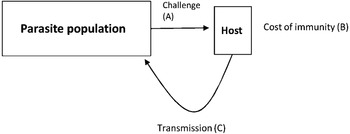
Superficially, this is a reasonable proposition. However, it is sometimes overlooked that one of the major benefits of parasite resistance in sheep is the effect that their reduced FWEC can have on the epidemiology of that parasite. This was elegantly shown by Bishop and Stear (Reference Bishop and Stear2003) with the aid of computer modelling. They demonstrated that the genetic progress possible by selecting animals with low FWEC is much faster than that predicted by quantitative genetic theory, because of the reduced parasite challenge that each subsequent generation faces due to the lower parasite transmission of their predecessors. For example, ewes selected for low FWEC will excrete fewer worms and contaminate pastures less than unselected sheep which, in turn, means their lambs are less likely to ingest worms from pasture (Fig. 3). This concept of ‘transmission blocking’ is now a major research thrust for parasitologists, particularly for pathogenic human diseases such as malaria (Dinglasan and Jacobs-Lorena, Reference Dinglasan and Jacobs-Lorena2008). The case of malaria is different, of course, because the parasite has 2 vectors and most research efforts into disrupting the parasite's epidemiology are focused on stopping parasite infection in the mosquito host – for the ultimate benefit of the human host. Similar approaches have been proposed for the liver fluke parasite of sheep, by blocking transmission from the snail vector (Hurtrez-Bousses et al. Reference Hurtrez-Bousses, Meunier, Durand and Renaud2001). For nematode infection in sheep, there is only 1 host and consequently the benefits of less parasites being transmitted from the host is immediately beneficial for all the other hosts in the population. The point here is that any detrimental effects a host faeces, e.g. diarrhoea during larval rejection, are counteracted by the benefits of less parasites now being present in the population and in subsequent generations. Herein lies a problem with some previous studies where sheep that have been selected as parasite resistant are grazed together with not only unselected control sheep, but also sheep actually selected as being parasite susceptible. In these studies, the epidemiological benefits of parasite resistance were now nullified. Bisset et al. (Reference Bisset, Vlassoff, West and Morrison1997) investigated the effect of grazing these resistant and control lines separately from each other and noted that larval availability on the pastures grazed by the resistant sheep was reduced nearly 10-fold. The long-term benefits of grazing resistant sheep, in the same environmental conditions but physically separately from control animals, have been investigated in Western Australia with Merino sheep. Greeff and Karlsson (Reference Greeff and Karlsson2006) found that, under these conditions, adult ewes weighed up to 10% more than the controls. In addition, resistant sheep grew an extra 0·2 kg of clean wool and this had a significantly lower fibre diameter than the control animals (L. J. E. Karlsson, personal communication). Interestingly, Liu et al. (Reference Liu, Smith, Briegel, Murray, Masters, Karlsson, Palmer, Greeff, Besier and Gao2005a) conducted an experiment using sheep from the same parasite-resistant and control lines in a controlled, animal-house environment. When the two groups of sheep were given the same larval challenge dose, body weight and wool growth were not different. This strongly suggests that the observed advantages of the resistant sheep under field conditions are likely due to a reduced larval challenge, brought about by a cumulative lower transmission of parasites.
Effect of host immune response on cumulative parasite challenge. The cost of immunity (B) is dictated by the magnitude of the parasite challenge (A). A strong immune response (i.e. a high cost ‘B’) will reduce transmission (C). Therefore, the parasite population will decrease and future challenges will be of lesser magnitude. It follows that the cost of immunity (B) that is required to reduce transmission (C) is diminished in every subsequent parasite generation.

These results support the hypothesis that in adult sheep immunity is advantageous for the animal. However, the work of Greeff and Karlsson (Reference Greeff and Karlsson2006) goes further – in this experiment lambs born to resistant ewes weighed more (up to 20% heavier) than control lambs at weaning (4 months of age). The resistant lambs also had a much lower FWEC than the control lambs, so their immune response was perfectly functional. Therefore, the reason for this advantage is probably epidemiological. Using the same lines of sheep, Williams et al. (Reference Williams, Greeff, Vercoe, Dobson and Karlsson2010a) showed that following gestation and lactation the amount of infective larvae on pastures grazed by the resistant ewes was only a third of that on pastures grazed by control ewes. Both lines of sheep showed a rise in FWEC characteristic of the peri-parturient relaxation in immunity but the rise was significantly lower in the resistant ewes. Consequently, the larval challenge faced by the newly born lambs as they acquired immunity was much less. Thus, they appeared able to acquire a functional immunity without sustaining damaging amounts of pathology. This suggests that the immediate disadvantages of immune-mediated pathology are in fact outweighed by longer-term, cumulative advantages in animal health and production due to reductions in the parasite population.
Genetic solutions also offer a method of controlling some of the other direct effects of pathology, such as immune-mediated diarrhoea. As mentioned above, diarrhoea in parasite-resistant sheep is mainly attributable to a hypersensitive immune response in the gut, triggered by Th2 cytokines and manifested by inflammatory cells such as eosinophils. However, within parasite-resistant flocks susceptibility to immune-mediated diarrhoea varies. In addition, diarrhoea (as measured by the incidence of ‘dags’, the build up of faecal material on wool around the breech) is moderately heritable (Pollott and Greeff, Reference Pollott and Greeff2004; Karlsson and Greeff, Reference Greeff and Karlsson2006). As a result, sheep can be bred for reduced susceptibility to immune-mediated diarrhoea, just as they can be bred for enhanced resistance to parasites. Williams et al. (Reference Williams, Karlsson, Palmer, Vercoe, Williams, Greeff and Emery2010b) have shown that some sheep that are highly resistant to parasites, and have a characteristic eosinophil response to larval challenge in the gut, do not suffer an accompanying softening of faeces. This may be due to some underlying physiological difference in fluid absorption in the lower gut. Regardless, it is therefore possible to breed sheep that have both a strong immunity to parasites and do not suffer from diarrhoea. This can be achieved by selection indices, which combine a variety of traits that rank animals on genetic merit. Selection indices are routinely used in sheep breeding to combine a range of both health and production traits. Importantly, these indices have previously been used by animal breeders to improve, simultaneously, traits that are considered to be negatively genetically correlated. These include improvement of both cell-mediated and humoral immunity in pigs (Wilkie and Mallard, Reference Wilkie and Mallard1999) or, as a production example, improving fibre diameter in sheep without significant decreases in fleece weight (Wuliji et al. Reference Wuliji, Dodds, Land, Andrews and Turner2001).
CONCLUDING REMARKS
Many clinical signs of parasite infection in sheep, such as reduced appetite, weight loss and diarrhoea are not due to the direct effects of the parasite but rather to pathology due to the host's own immune response. There may be short-term benefits for lambs that have a low immunity to worms in terms of quicker growth rates. However, in the longer term, promoting a strong immunity to parasites will be of benefit to sheep producers. The impact that parasite-resistant sheep have on the epidemiology of the parasite ensures that, over time, young animals get a healthier and more robust start to their growing phase due to a reduced parasite challenge from pasture. Other signs of immune-mediated pathology such as diarrhoea can be controlled through selective breeding. Therefore, in the face of growing anthelmintic resistance and consumer demand for chemical-free agricultural products, sustainable control of nematode parasites of sheep should focus on promoting a strong immunity through breeding for enhanced parasite resistance.
ACKNOWLEDGEMENTS
The foresight and dedication of Drs J. C. Greeff and L. J. E. Karlsson for their work in breeding parasite-resistant Merino sheep is gratefully acknowledged, as are Drs I. H. Williams, P. E. Vercoe, D. G. Palmer and D. L. Emery for stimulating discussions. A. R. W. has been supported by Australian Woolgrowers and the Australian Government through Australian Wool Innovation Ltd, and has also received funding through a Young Scientist and Innovators grant sponsored by the Australian Meat Processors Corporation and the Department of Agriculture, Forestry and Fisheries.