Introduction
The poultry industry requires safe and effective adjuvants that promote protection and, at the same time, do not cause any pain or distress to birds when administered with the vaccine. However, currently used adjuvants do not fulfil these requirements. Hence, there is an increased need for effective and better vaccine adjuvants that avoid discomfort to the birds.
Consequently, investigators are exploring the potential of using formulations with specific adjuvants in a vaccine to develop specific immune responses (Singh et al., Reference SINGH, UGOZZOLI, BRIONES, KAZZAZ, SOENAWAN and O'HAGAN2003). A new approach is to use ‘pattern recognition receptors’ (PRR) including toll-like receptors (TLRs) and cytokines as adjuvants, which can result in the development of both innate as well as adaptive immune responses with fewer side effects (Cox, 1997). The poultry industry strongly relies on meat quality and negative site reactions from traditional adjuvants can lead to carcass damage, which affects the meat quality and productivity. This review article, focusses on various novel TLRs and cytokines used as adjuvants in poultry vaccines.
Toll-Like Receptors
The innate immune system is ancient in evolutionary terms, with presence in all multi cellular organisms, whilst the adaptive immune system is present only in vertebrates (Janeway, Reference JANEWAY1989). Though acquired immunity is more specific and powerful, it takes time to act against microorganisms after infection. The conserved molecule on pathogens, referred to as the ‘pathogen associated molecular pattern’ (PAMPs), are recognised through pattern recognition receptors (PRRs; Medzhitov et al., Reference MEDZHITOV, PRESTON-HURLBURT and JANEWAY1997). The PRRs bind with specific PAMPs and up-regulate the expression of cytokines, reactive oxygen (ROI) and nitrogen intermediates (RNI), co-stimulatory molecules, type 1 interferons, antimicrobial proteins and chemokines. These responses help in the activation of the adaptive immune system (Werling and Jungi, Reference WERLING and JUNGI2003; Takeuchi and Akira, Reference TAKEUCHI and AKIRA2010). There are several types of PPRs, namely, toll-like receptors (TLRs), nucleotide oligomerisation domain like receptors (NOD-1 and NOD-2) and retinoic acid inducible gene -1 (RIG-1)-like receptors (RLRs; Gordon, Reference GORDON2002). These proteins play roles in immunity against pathogens (Akira et al., Reference AKIRA, TAKEDA and KAISHO2001; Jin and Lee, Reference JIN and LEE2008). To date, 10 members of the TLR family have been identified in humans (Rock et al., Reference ROCK, HARDIMAN, TIMANS, KASTELEIN and BAZAN1998), 13 in mice (Chen et al., Reference CHEN, CHENG and WANG2013) and 10 in chickens (Temperley et al., Reference TEMPERLEY, BERLIN, PATON, GRIFFIN and BURT2008; Kawai and Akira, Reference KAWAI and AKIRA2011).
TLR ligands as adjuvants in poultry vaccines
Many TLR ligands have shown to be potential candidates as vaccine adjuvants in human vaccines. Some of them have been licensed to be used in human vaccines while others are in late phases of clinical trials. Even in avian species, many TLR ligands have been used as vaccine adjuvant and these adjuvants show significant enhancement of the immune response.
TLR2
TLR2 has the largest range of ligands, such as lipoproteins, peptidoglycan (PGN), lipoteichoic acid (LTA), lipopolysaccharides (LPS) from some bacterial species, porins from Neisseria, lipoarabinomannan from mycobacteria, and zymosan and phospholipomannan from yeast cell walls. Pam3CSK4, a TLR2 agonist, significantly enhanced cellular, humoral and mucosal immune responses in chickens when used as an adjuvant in H4N6 avian influenza vaccine and provided partial protection from an experimental avian influenza viral challenge. It showed significant reductions in virus shedding compared to control (St. Paul et al., Reference ST. PAUL, BRISBIN, BARJESTEH, VILLANEUEVA, PARVIZI, READ, NAGY and SHARIF2014).
TLR3
TLR3 detects dsRNA in endolysosomes. Polyinosinic-polycytidylic acid (poly I:C) is a dsRNA analogue and induces type 1 interferon expression. When poly I:C was used as an adjuvant with influenza virus vaccine (HA vaccine) through the intranasal route in chicken, the expression of type 1 IFNs as well as Th1 and Th2 cytokines was upregulated (Ichinohe et al., Reference ICHINOHE, WATANABE, ITO, FUJII, MORIYAMA, TAMURA, TAKAHASHI, SAWA, CHIBA, KURATA and SATA2005). Liang et al. (Reference LIANG, FU, KANG, LIN, YU and YANG2013) reported that when poly I:C was given with the H5N1 vaccine in chickens through the intranasal route, it up-regulated immune responses in the local respiratory tract and systemic immune responses, and promoted the proliferation of spleen lymphocytes in vitro. In another study, prophylactic treatment of birds with poly I:C significantly reduced virus shedding and conferred the greatest AIV immunity compared to control birds (St. Paul et al., Reference ST. PAUL, MALLICK, READ, VILLANUEVA, PARVIZI, ABDUL-CAREEM, NAGY and SHARIF2012). Marcus and Sekellick (Reference MARCUS and SEKELLICK2011) reported that when poly I:C was added to chicken embryo cells and exposed to NDV and avian reovirus, it induced an antiviral state and reduced plaque forming capacity against both the viruses. When chickens were immunised through the respiratory route with herpes virus (HVT) vaccine along with poly I:C before and after infection, birds showed lowest incidence of tumours when challenged with virulent strain of Marek's disease (MDV; Parvizi et al., Reference PARVIZI, MALLICK, HAQ, HAGHIGHI, OROUJI, THANTHRIGE-DON, ST. PAUL, BRISBIN, READ, BEHBOUDI and SHARIF2012).
TLR4
LPS is recognised by TLR4 (Palsson-McDermott and O'Neill, Reference PALSSON-MCDERMOTT and O'NEILL2004). When LPS was used as an adjuvant with H4N6 influenza vaccine in chicken, it showed immune-stimulatory effects and significantly reduced virus secretion. This may be due to significant upregulation of IFN-γ in spleen (St. Paul et al., Reference ST. PAUL, MALLICK, READ, VILLANUEVA, PARVIZI, ABDUL-CAREEM, NAGY and SHARIF2012). Tseng et al. (Reference TSENG, CHIOU, CHEN, DENG, CHUNG, HUANG and LIU2009) reported that, when LPS was used as an adjuvant and liposome as intranasal antigen delivery system for the NDV antigen, significant secretory IgA in tracheal lavage fluid and serum IgG levels were induced. In a challenge study this provided 80% protection against the challenge. Parvizi et al. (Reference PARVIZI, ABDUL-CAREEM, MALLICK, HAQ, HAGHIGHI, OROUJI, HEIDARI, BEHBOUDI and SHARIF2014) explored the immune-stimulatory properties of LPS and found that intra air sac administration of LPS before being challenged with the RB1B strain of Marek's disease virus (MDV) via the respiratory route delayed disease onset and reduced viral load in spleen as compared to control. Haddadi et al. (Reference HADDADI, KIM, JASMINE, VAN DER MEER, CZUB and ABDUL-CAREEM2013) found that when MQNCSU cells were treated with LPS, and the resultant supernatant transferred to infectious laryngeotracheitis virus (ILTV) replicating in macrophages, there was inhibition of replication of ILTV in macrophage cell line. Further, it has been reported that the antiviral activity of LPS is due to production of NO in cells.
TLR 5
Bacterial flagellin is the ligand for TLR5. Both gram-negative and gram-positive bacteria secrete flagellin which stimulates TLR5. Chaung et al. (Reference CHAUNG, CHENG, HUNG, TSAI, SKOUNTZOU, WANG, COMPANS and LIEN2012) exploited Salmonella spp. flagellin as an adjuvant with inactivated H5N2 vaccine in specific pathogen-free (SPF) chicken via intramuscular or intra-nasal routes and demonstrated an enhanced titre of influenza specific IgA antibody in intramuscular immunised birds. The nasal IgA levels were significantly higher than that of vaccine alone, meaning thereby it can act as mucosal adjuvant against mucosal invading pathogens. In another study, flagellin was used as an adjuvant with inactivated H4N6 vaccine in SPF chicken via the subcutaneous route. The group of SPF birds that received vaccine with flagellin showed higher IgY antibody titre as well as higher HI titre than that of control birds. Flagellin provided partial protection against virulent challenge but the control could not (St. Paul et al., Reference ST. PAUL, BRISBIN, BARJESTEH, VILLANEUEVA, PARVIZI, READ, NAGY and SHARIF2014). Recombinant Salmonella flagellin (rFliC) was tested for its use as a vaccine against the S. enteritidis. Immunisation of birds with rFliC resulted in significantly reduced bacterial counts in liver and caecal contents when challenged with S. enteritidis (phage type 4 strain HY-1; Okamura et al., Reference OKAMURA, MATSUMOTO, SEIKE, TANAKA, TERATANI, TOZUKA, KASHIMOTO, TAKEHARA, NAKAMURA and YOSHIKAWA2012). Huang et al. (Reference HUANG, YIN, PAN, ZHANG, ZHU, LIU and JIAO2010) reported that when chickens were immunised intranasally with chitosan-DNA nanoparticles carrying a flagellin gene (flaA), they produced significantly higher anti-C. jejuni IgG in serum and secretory IgA in intestine as compared with those treated only with chitosan-DNA without flaA. In another study, Widders et al. (Reference WIDDERS, THOMAS, LONG, TOKHI, PANACCIO and APOS1998) found that, when birds were immunised with flagellin antigen of C. jejuni and challenged with live bacteria, the immunised birds showed flagellin specific IgG and reduced colonisation of the bacteria in the serum. Birds immunised against Eimeria tenella, either by chimeric subunit vaccine consisting of EtIMP1-truncated fliC or EtIMP1 with Freund's complete adjuvant (FCA), demonstrated higher immune response with fusion protein than with FCA (Yin et al., Reference YIN, QIN, LIU, SUO, TANG, TAO, HAN, SUO and WU2013).
TLR7 and TLR8
TLR7 and TLR8 recognise single stranded RNA and play an important role in antiviral immune response. When the TLR7 agonist (loxoribine) was used as an adjuvant with influenza vaccine in chickens, it inhibited the growth of influenza A virus in vitro and in ovo in a dose dependent manner (Stewart et al., Reference STEWART, BAGNAUD-BAULE, KARPALA, LOWTHER, MOHR, WISE, LOWENTHAL and BEAN2012). In chicken, resiquimod (TLR7 or TLR8) significantly enhanced higher antigen specific humoral as well as cellular immune responses when used with inactivated NDV vaccine and potentiated the protective response to 100% against virulent NDV challenge, while this was only 80% in the vaccine alone group (Sachan et al., Reference SACHAN, RAMAKRISHNAN, ANNAMALAI, SHARMA, MALIK, SARAVANAN, JAIN, SAXENA, KUMAR and KRISHNASWAMY2015). R-848 has prophylactic potential against very virulent infectious bursal disease virus. R-848 pre-treatment reduced mortality, bursal damage and significantly protected the birds from vvIBDV induced immunosuppression in chicken following vvIBDV challenge (Annamalai et al., Reference ANNAMALAI, RAMAKRISHNAN, SACHAN, KUMAR, SHARMA, KUMAR, PALANIVELU, VARGHESE, KUMAR, SARAVANAN and KRISHNASWAMY2016). Pre-treatment of day-old chicks with loxoribine significantly reduced the S. enteritidis load in spleen and liver and showed protection against virulent challenge (Swaggerty et al., Reference SWAGGERTY, HE, GENOVESE, DUKE and KOGUT2012).
TLR21
In chickens, TLR21 responds to unmethylated CpG DNA (Brownlie et al., Reference BROWNLIE, ZHU, ALLAN, MUTWIRI, BABIUK, POTTER and GRIEBEL2009; Keestra et al., Reference KEESTRA, DE ZOETE, BOUWMAN and VAN PUTTEN2010). CpG ODN is the most widely used adjuvant against different viral diseases in chickens (Mallick et al., Reference MALLICK, PARVIZI, READ, NAGY, BEHBOUDI and SHARIF2011). CpG ODN significantly increased levels of secretory IgA in the respiratory tract and anti-AIV specific antibodies in serum when used as an adjuvant with H5N1 vaccine of influenza in chicken through the intranasal route. CpG ODN led to significantly higher levels of cellular immune response (Liang et al., Reference LIANG, FU, KANG, LIN, YU and YANG2013). Hung et al. (Reference HUNG, TSAI, WANG, LI, HUANG, LIEN and CHAUNG2011) immunised birds with the H5N2 vaccine along with a plasmid containing multiple copies of CpG motifs intramuscularly. This caused a significant increase in HI titres, proliferation of peripheral blood mononuclear cells and expression of different interferons. In a challenged study, combinations of CpG ODN with an AI vaccine provided 100% protection against virulent challenge of H5N1 strain which was greater than that seen for vaccine alone. In another study, when birds were immunised with inactivated H5N1 vaccine and CpG ODN through the intranasal route there was a significant increase in influenza specific IgA antibodies in respiratory tract (Fu et al., Reference FU, LIANG, KANG, LIN, YU and YANG2013). Various other experiments reported similar findings, including increases in mucosal IgA level and serum IgG level, reduced virus shedding and enhanced rate and production of different cytokines such as IFN-γ, IFN-α and IL-8 when CpG ODN was used as an adjuvant with H5N1, H4N6 or H5N2 influenza vaccine (Wang et al., Reference WANG, SHAN, MING, LIU, DU and JIANG2009; Xiaowen et al., Reference XIAOWEN, QINGHUA, XIAOFEI and QIAN2009; St. Paul et al., Reference ST. PAUL, MALLICK, READ, VILLANUEVA, PARVIZI, ABDUL-CAREEM, NAGY and SHARIF2012). Zhang et al. (Reference ZHANG, ZHANG, LI, CAO, TIAN and ZHOU2008) exploited the potential of CpG as a mucosal adjuvant in SPF chicken. Intranasal delivery of CpG ODN with inactivated NDV significantly enhanced the humoral, cellular and mucosal immune responses. In another similar study SPF chickens were immunised by CpG ODN with inactivated NDV by the intramuscular route. This combination resulted in eliciting significant higher IgG levels in serum and lymphocyte proliferation and provided significant protection against the virulent challenge (Linghua et al., Reference LINGHUA, XINGSHAN and FENGZHEN2007). A DNA vaccine containing VP2 protein of IBD has been shown to elicit high antibody titres when given either with commercial live IBD vaccine or CpG ODN 1826 as compared with a live attenuated IBD vaccine or VP2 alone. TLR agonists have been assessed as an adjuvant with DNA vaccines against IBD. CpG ODN was used as an adjuvant with constructed plasmid pcDNA3.1-VP2 or pCI-VP2 and has been shown to protect chickens in an effective manner against oral challenge of vvIBDV (Wang et al., Reference WANG, JIANG, DEEN, WU, LIU and XU2003). Dar et al. (Reference DAR, POTTER, TIKOO, GERDTS, LAI, BABIUK and MUTWIRI2009) found that CpG ODN administration effectively enhanced resistance to IBV propagation in different embryonic tissues from chickens and enhanced expression of IFN- γ, IL-1β, IL-6 & IL-8 in the embryonic spleen. Parvizi et al. (Reference PARVIZI, ABDUL-CAREEM, MALLICK, HAQ, HAGHIGHI, OROUJI, HEIDARI, BEHBOUDI and SHARIF2014) found that intra air sac administration of CpG ODN in chicken enhanced antiviral response against MDV, significantly delayed disease progression and reduced MDV in the spleen of infected chicken.
Shahrokhi et al. (Reference SHAHROKHI, RAD and KALIDARI2013) reported that when newly hatched chicks were treated with CpG ODN and challenged with S. enteritidis, a significant reduction in colonisation in spleen and liver was observed. Reductions in viral load was observed after challenge. In vivo administration of CpG ODN enhanced the activation of heterophils and reduced colonisation by S. enteritidis in chickens (MacKinnon et al., Reference MACKINNON, HE, SWAGGERTY, MCREYNOLDS, GENOVESE, DUKE, NERREN and KOGUT2009). When chickens were immunised with combinations of CpG ODN, recombinant IFN-γ and killed Salmonella vaccine, the combination significantly improved the protection against virulent S. enteritidis challenge as compared to the vaccine alone (Hartley et al., Reference HARTLEY, SALISBURY and WIGLEY2012). Pre-treatment of broilers with CpG ODN significantly improved protection rate against a virulent strain of S. typhimurium (Taghavi et al., Reference TAGHAVI, ALLAN, MUTWIRI, VAN KESSEL, WILLSON, BABIUK, POTTER and GOMIS2008). Gomis et al., Reference GOMIS, BABIUK, GODSON, ALLAN, THRUSH, TOWNSEND, WILLSON, WATERS, HECKER and POTTER2003 reported that intramuscular or subcutaneous administration of CpG ODN significantly reduced the size of cellulitis lesions and enhanced survival rate upon E. coli challenge, indicating local and systemic protection. In another study, in neonatal broilers, CpG ODN provided significant protection against a virulent challenge from E. coli when it was given through intramuscular or in ovo routes (Gomis et al., Reference GOMIS, BABIUK, GODSON, ALLAN, THRUSH, TOWNSEND, WILLSON, WATERS, HECKER and POTTER2003). When CpG ODN was used as an adjuvant with killed E. coli vaccine in chicken, significant higher protection rates were demonstrated upon virulent challenge compared to vaccine with an oil adjuvant (Gomis et al., Reference GOMIS, BABIUK, GODSON, ALLAN, THRUSH, TOWNSEND, WILLSON, WATERS, HECKER and POTTER2003). CpG-ODN formulated with polyphosphazenes and delivered in ovo was able to increase the immunoprotective effect against E. coli in neonatal chickens. This combination provided significant protection against virulent strain of E. coli (Taghavi et al., Reference TAGHAVI, ALLAN, MUTWIRI, VAN KESSEL, WILLSON, BABIUK, POTTER and GOMIS2008). Dalloul et al. (Reference DALLOUL, LILLEHOJ, OKAMURA, XIE, MIN, DING and HECKERT2004) reported that treatment with CpG ODN significantly enhanced the immunity of birds against coccidiosis, as evidenced by reduced oocyst shedding and improved weight gain of birds. In another investigation, in ovo immunisation of bird with CpG ODN and Eimeria spp. recombinant microneme protein-2 gave significant enhanced resistance to E. acervulina (Dalloul et al., Reference DALLOUL, LILLEHOJ, OKAMURA, XIE, MIN, DING and HECKERT2004).
Cytokines
Cytokines are naturally derived, small proteins that are produced in response to infection and play an important role in controlling the immune system. In mammals, they provide signals that help to direct the immune response towards either an antibody-mediated or a cell-mediated response. Besides naturally occurring cytokines, the use of recombinant cytokines as adjuvants is new alternative to existing adjuvants. Cytokines have been shown to be effective adjuvants in several studies (Odean et al., Reference ODEAN, FRANE, VAN DERVIEREN, TOMAI and JOHNSON1990; Bliss et al., Reference BLISS, MAYLOR, STOKES, MURRAY, KETCHUM and WOLF1996; Nunberg et al., Reference NUNBERG, DOYLE, YORK and YORK1989; Pardoll, Reference PARDOLL1995). Recent identification of a number of chicken cytokine genes has provided the possibility of studying their effectiveness in enhancing the immune response during infection and vaccination. Cytokines are excellent candidates for developing naturally occurring therapeutics and vaccine adjuvants. Cytokines are functionally divided into two categories as either Th1 type and Th2 type. Except for IL-6, all cytokines cloned in chicken are being categorised as Th1 like. Similarly, based on function, chicken cytokines have been classified as pro-inflammatory (IL-1β, IL-6, il-8), Th1 (IFN-γ, IL-2, IL-8), Th2 (not described), Th3/Tr1 (TGF-β) and other chemokines (IFN-α, IFN-β, IL-15, IL-16).
chicken cytokines as adjuvants in poultry vaccines
Due to their recent discovery, chicken cytokines are a new field of interest for the researcher. In comparison to mammalian cytokines, the adjuvant activities of chicken cytokines are less well characterised, although, some have been examined for their potential use as vaccine adjuvants.
IL-2
IL-2 was first used as a potential adjuvant in mouse models, whereby it enhanced the immune responses to inactivated rabies vaccine (Nunberg et al., Reference NUNBERG, DOYLE, YORK and YORK1989) and a herpes simplex virus antigen (Rouse et al., Reference ROUSE, MILLER, TURTINEN and MOORE1985). IL-2 has been extensively studied as a vaccine adjuvant due to its pleiotropic properties and crucial role in activating T-cell proliferation (Sundick and Gill-Dixon, Reference SUNDICK and GILL-DIXON1997).
ChIL-1β
The immune adjuvant activity of chicken IL-1β has been assessed using the tetanus toxin as an antigen, and has been shown to increase the antibody response in vivo. Combined administration of ChIFN-α, ChIFN-γ and ChIL-1β increased antibody responses to the tetanus toxin in an additive manner (Schijns et al., Reference SCHIJNS, WEINING, NUIJTEN, RIJKE and STAEHELI2000).
ChIFN-α
ChIFN-α is widely used as an adjuvant and immunomodulator. Co-expression of NDV and ChIFN-α in a fowl pox vector (FPV) protected birds from challenge with NDV. When NDV alone was delivered with the vector it provided protection, however, the chickens lost weight. When ChIFN-α was co-administered with the NDV gene in FPV, the birds did not lose weight compared to non-vaccinated birds. This supported the concept that ChIFN-α treatment prevented disease through its antiviral activity whilst maintaining the vaccination potential (Karaca et al., Reference KARACA, SHARMA, WINSLOW, JUNKER, REDDY, COCHRAN and MCMILLEN1998). Combined administration of ChIFN-α, ChIFN-γ and ChIL-1β increased antibody response to the tetanus toxin in chicken (Schijns et al., Reference SCHIJNS, WEINING, NUIJTEN, RIJKE and STAEHELI2000).
rChIL-2
rChIL-2 is used as an immunomodulator. In one study rChIL-2 induced the expression of cell surface IL-2 receptors (CD25) on peripheral blood lymphocytes and increased the proportion of CD4+, CD8+ T cells and T-cell populations. This showed that rChIL-2 can be used as an adjuvant (Sun et al., Reference SUN, CHU, LIU, WANG, LEU and CHIANG2000).
ChIFN-γ
Chickens injected with SRBC and ChIFN-γ simultaneously showed no significant effect on primary antibody responses, but increased secondary (IgG) antibody responses and allowed a 10-fold lower dose of antigen to be used (Min et al., Reference MIN, LILLEHOJ, BURNSIDE, WEINING, STAEHELI and ZHU2001). These studies supported IFN-γ as having adjuvant activity. IFN-γ was effective when used with the influenza vaccine in immunocompromised animals (Sundick and Gill-Dixon, 1997). A cytokine encoding gene was incorporated into a DNA vaccine or into a viral or bacterial vaccine vector like IFN- γ into an NDV vaccine carried in a fowlpox vector in turkeys (Rautenschlein et al., Reference RAUTENSCHLEIN, SUBRAMANIAN and SHARMA1999). Co-administration of ChIFN-γ with a DNA vaccine expressing the F-protein in chickens resulted in higher levels of morbidity and mortality, and higher amounts of virulent virus shedding after challenge when compared to the group that did not receive ChIFN-γ (Cardenas-Garcia et al., Reference CARDENAS-GARCIA, DUNWOODY, MARCANO, DIEL, WILLIAMS, GOGAL, BROWN, MILLER and AFONSO2016).
Chicken myelomonocytic growth factor
Chicken myelomonocytic growth factor (cMGF) enhanced the growth of macrophages and granulocytes from avian bone marrow progenitor cells (Leutz et al., Reference LEUTZ, BEUG and GRAF1984). cMGF has been used with live fowl pox virus (fp/cMGF; York et al., Reference YORK, STROM, CONNICK, MCWATERS, BOYLE and LOWENTHAL1996). In another study, highly susceptible birds to MDV were divided in three groups. One group was a control (without vaccine), another treated with vaccine alone and a third group was treated with fp/cMGF. Four days later, the treatment group was injected with a commercial vaccine (HVT). After one week, groups were challenged with a virulent (RB-1B) strain of MDV. In this trial, non-vaccinated birds suffered 100% mortality after challenge, while those vaccinated with HVT alone suffered 33% mortality whereas vaccinated birds that were treated with cMGF had no mortality (Djeraba et al., Reference DJERABA, MUSSET, LOWENTHAL, BOYLE, CHAUSSÉ, PÉLOILLE and QUÉRÉ2002). This demonstrated adjuvant property of cMGF. The cMGF enhanced the growth of macrophages and granulocytes from avian bone marrow progenitor cells (Leutz et al., Reference LEUTZ, BEUG and GRAF1984).
IL-18
IL-18 has been used in various trials. Incorporation of IL-18 into an attenuated vaccine strain such as the 9R vaccine (Smith, Reference SMITH1956) caused an increased Th1-type response, in turn leading to the production of IFN-γ and macrophage activation, with subsequent clearance of Salmonella spp. from macrophages.
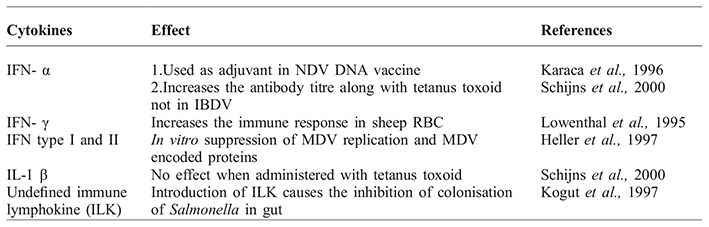
Table 1 below shows the application of cytokines as adjuvants for vaccines.
Experimental application in chicken hosts of few avian cytokine as adjuvant.

Future challenges
Chickens can be a good model system to study the effectiveness of cytokine therapy in controlling animal diseases. One of the main drawbacks of cytokine therapy in poultry is its delivery as an injection of recombinant cytokine proteins, which is not feasible in commercial situations. Alternatives, like bacterial and viral vector technology (oral or aerosol) or in ovo injection of protein or targeted vectors (through automated egg injection system) to specific sites such as respiratory tract or digestive tract, have to be explored. Administration of single or multiple cytokines with the immunogen is possible with the help of new generation delivery mechanisms. As cytokines play an important role in infectious and non-infectious immunity development, its therapeutic role should be investigated thoroughly. By increasing the understanding of the adjuvant properties of cytokines, especially along with DNA vaccines as well as live viral vaccines, more effective strategies can be formulated for the betterment of poultry. As most of the meat producing countries have been advised to use alternative methods to protect from diseases and avoid antibiotic resistance as well as chemical residues, cytokines may be a suitable alternative in the poultry industry.