Introductıon
Cardiac catheterisation procedures are generally considered safe procedures for paediatric patients. However, as with all invasive procedures, it involves significant risks that may occur at all stages of the procedure. Appropriate patient selection and preliminary evaluation before catheterisation are important in determining the risks that may be associated with complications. It has been reported that the incidence of major complications and deaths that may occur as a result of paediatric cardiac catheterisations has decreased significantly compared to previous years. Today, the increasing use of cardiac catheterisation in the treatment of CHDs has contributed to the development of new complications.Reference Ravndal, Christensen, Døhlen and Holmstrøm1
Recent studies have reported different findings in terms of complications.Reference Mori, Takahashi and Nakanishi2–Reference Jacobs7 For example, a study that included only interventional cases reported a complication rate of 4.1%, whereas a study that also included other diagnostic procedures found a complication rate of 19%. Some reports evaluated the degree of each complication separately and defined it as minor or major. The classification of the types of complications may vary depending on the way they occur, their type, and severity. Different inclusion criteria and classification systems in studies may lead to incomparable results.Reference Mori, Takahashi and Nakanishi2
Systemic, cardiac, and peripheral vascular complications of cardiac catheterisation performed for diagnostic and therapeutic purposes in paediatric patients are increasing as the practice becomes increasingly widespread. Systemic (anaphylaxis, embolism, anaemia, etc.) and cardiac (perforation, arrhythmias, etc.) complications may result in mortality. After cardiac catheterisation procedures, local complications such as thrombosis, pseudoaneurysm, dissection, laceration, arteriovenous fistula, uncontrolled bleeding, infection, and distal embolization may occur at the catheter entry site. During the catheterisation process, there is a risk of developing thrombosis in the catheter entry area due to vascular endothelial damage and arterial spasm.Reference Mori, Takahashi and Nakanishi2 Patients who undergo cardiac catheterisation should be closely monitored for possible local and general complications.
It is well established in the literature that low body weight and young age are important risk factors for the development of complications. However, real-world data comprehensively evaluates paediatric patients undergoing both diagnostic and interventional cardiac catheterisation—particularly with respect to the type, timing, and distribution of complications according to procedure type—remain limited. Therefore, this study aims to contribute to the literature by evaluating the frequency, types, and timing of complications following paediatric cardiac catheterisation in a single-centre, long-term cohort.
Materıal and method
Study characteristics and patient selection
In this retrospective study, patients aged 0–18 years who underwent cardiac catheterisation between 01 January 2012 and 31 July 2020 by Dicle University Facultty of Medicine, Department of Paediatric Cardiology were included. Patients who had a catheter applied but whose other clinical-laboratory data could not be obtained were not included in the study. Before starting the study, necessary permissions were obtained from Dicle University Faculty of Medicine Ethics Committee.
The patient’s demographic data, data regarding cardiac catheterisation (time of the procedure, type of procedure, catheter name, and size), laboratory results, pre- and post-procedure period findings, and data during clinical follow-up were accessed by scanning the data in the hospital information technology system. Epicrisis reports, treatment and follow-up charts, and catheterisation reports of each patient were examined.
Patients were categorised according to their diagnosis as complex, isolated CHD and normal structural heart diseases. Types of performed operations were classified as interventional and diagnostic cardiac catheterisation. Diagnostic procedures; They were grouped as patients who underwent vasoreactivity test due to pulmonary hypertension and other (normal diagnostic).
Complications were classified into two groups as major and minor, based on previously defined classifications in the literature. Major complications were defined as events requiring pharmacological or invasive intervention, the need for blood transfusion, ICU admission, or resulting in permanent morbidity or mortality. Minor complications were defined as transient and clinically mild conditions that resolved spontaneously without the need for additional treatment or intervention. This classification was based on previously published studies in the field of paediatric cardiac catheterisation.Reference Mori, Takahashi and Nakanishi2,Reference Bergersen, Marshall and Gauvreau4
Statistical analysis
SPSS 22.0 program was used during the statistical analysis of the study. Statistical significance was accepted as p < 0.05. Patient data were analysed as percentage, mean ± standard deviation, and median range. Pearson chi-square and Fisher’s tests were used to compare categorised variables. Shapiro–Wilk and Kolmogorov–Smirnov tests were used to evaluate the distribution of continuous variables. Independent t test was used to analyse normally distributed data. Mann–Whitney U test was used for data that did not show normal distribution. In the analysis of descriptive values, number (n), percentage (%), and mean±standard deviation were calculated. Various patient-related or catheterisation-related risk factors were analysed by univariate analysis. Variables tested included the patient’s age, weight, gender, and type of procedure. Among these variables, those with p < 0.05 were considered significant and were included in the multivariate logistic regression model analysis. The odds ratio values and p value for these univariate analyzes were summarised as a table.
Results
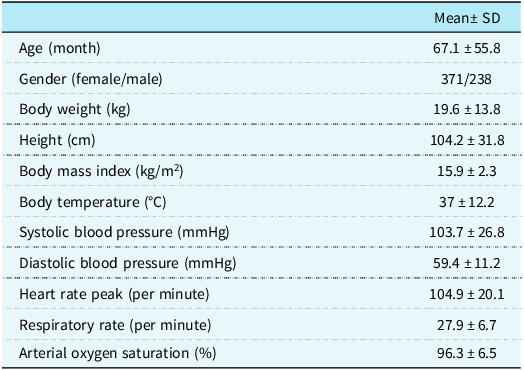
Our study included 609 patients who underwent cardiac catheterisation by Department of Paediatric Cardiology between 01 January 2012 and 31 July 2020. The mean age of our patients, whose ages ranged from 0 to 216 months, was 67.1 months (SD ±55.8). 60.9% of the patients were female. The demographic data, anthropometric measurements, and vital signs of the patients are shown in Table 1.
Evaluation of patients in terms of demographic characteristics and vital signs

Considering the distribution of the procedures performed, interventional cardiac catheterisation was performed in 419 patients (68.4%), and diagnostic catheterisation was performed in 193 patients (31.6%). Patients were classified according to the type of heart disease as isolated, complex, and normal structural. It was determined that 555 patients (91.1%) had isolated heart disease, 42 patients (6.9%) had complex heart disease, and 12 patients (2%) had normal structural heart disease.
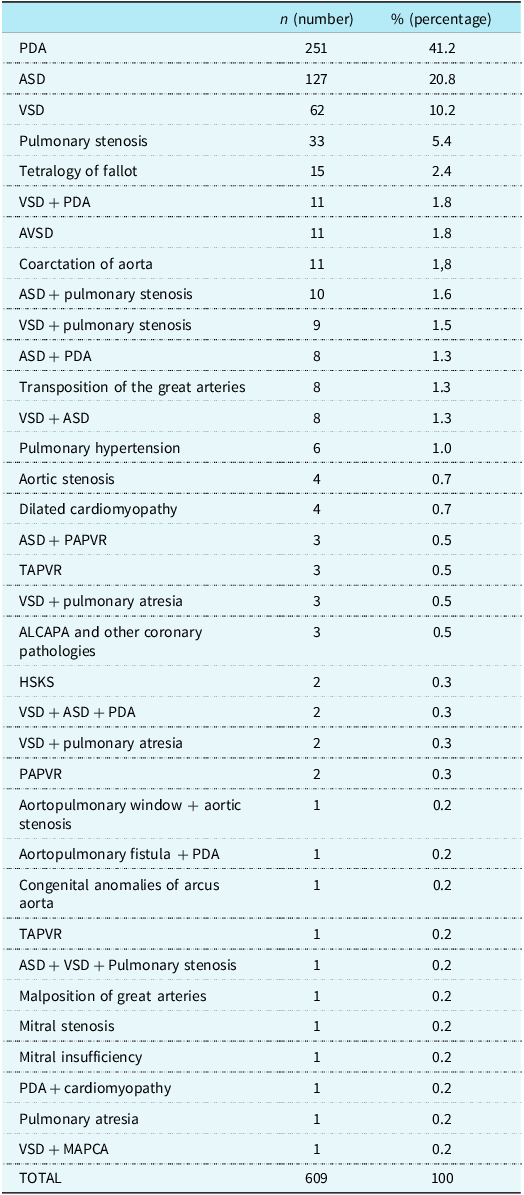
As the patients were evaluated in terms of their diagnosis, it was seen that the most common patients who underwent cardiac catheterisation were patients diagnosed with patent ductus arteriosus (PDA), and the second most frequent was patients diagnosed with atrial septal defect. The diagnoses of the patients are shown in Table 2.
Distribution of patients according to their diagnoses

ALCAPA = anomalous left coronary artery from the pulmonary artery; ASD = atrial septal defect; AVSD = atrioventricular septal defect; HLHS = hypoplastic left heart syndrome; MAPCA = major aortopulmonary collateral arteries; PAPVR = partial anomalous pulmonary venous return; PDA = patent ductus arteriosus; PVRA = pulmonary venous return anomaly; TAPVR = total anomalous pulmonary venous return; VSD = ventricular septal defect.
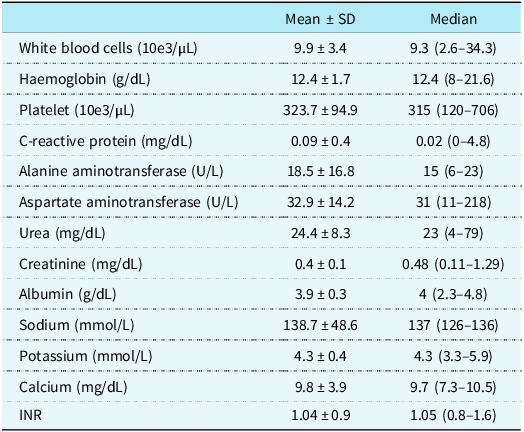
Laboratory data of the patients are shown in Table 3.
Laboratory data of patients

INR = international normalized ratio.
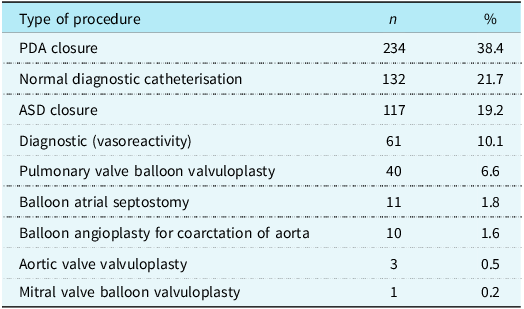
The patients were analysed in terms of the procedures performed. It was observed that PDA closure was most frequently performed, followed by normal diagnostic catheterisation (diagnostic catheterisations not requiring intervention). Catheterisation types and frequency are shown in Table 4.
Numbers and percentages of types of procedure

ASD = atrial septal defect; PDA = patent ductus arteriosus.
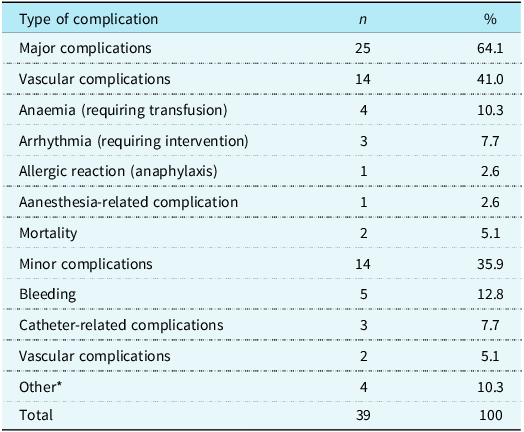
Complications were observed in 39 (6.4%) of 609 patients who underwent cardiac catheterisation. Complications were classified as major and minor complications. Of the patients with complications, 25 (64.1%) had major complications and 14 (35.9%) had minor complications.
Complication types of patients with complications are shown in Table 5. Complication types were classified in order of frequency as vascular complications, bleeding, anaemia, arrhythmia, catheter-related complications, allergic reactions, anaesthesia-related complications, catheterisation-related complications, mortality, and other complications. The most common type of complication in our study was vascular complications in 16 patients (41%). Hourly peripheral circulation pulse monitoring was performed on the patients in the first 24 hours after the procedure, and further examination was performed in patients with a pulse difference or in whom a pulse could not be detected in the extremity where vascular intervention was performed: arterial and venous blood flows were evaluated with Doppler ultrasonography. Of the 16 patients with vascular complications, 8 (50%) had arterial occlusion, 4 patients (25%) had deep vein thrombosis, and 2 patients (12.5%) had arteriovenous fistula. In the other 2 patients (12.5%), no pathology was detected on Doppler ultrasonography, but treatment was given because the pulse difference in the lower extremities continued. The vascular complication in two patients that resolved spontaneously was considered minor. The complications in the other patients were considered major complications because they required treatment.
Number and percentages of types of complication

* Spontaneous resolution of transient hypoxia (1 patient), transient bradycardia (1 patient), heparin-induced thrombocytopenia (1 patient), and transient vision loss (1 patient).
In our study, prolonged bleeding was observed at the catheter entry site after the procedure in 5 patients (12.8%), and bleeding diathesis was detected in one patient. Since these patients did not require blood transfusions, prolonged bleeding was considered a minor complication. In our study, anaemia was observed as a complication in 4 patients (10.3%) and was considered a major complication because all of these patients required transfusion.
Arrhythmia requiring intervention occurred in three patients (7.7% of all complications). The first patient was 6 years old and supraventricular tachycardia developed during the atrial septal defect closure procedure and the tachycardia improved with the application of adenosine. The second patient was a patient who was observed to have short-term AV block (2.1) during the follow-up between the first 1–24 hours after atrial septal defect closure. The third patient was a 15-year-old patient who underwent interventional catheterisation due to coarctation of aorta, and ventricular fibrillation developed during the procedure. Sinus rhythm was achieved by defibrillation.
As an anaesthesia-related complication, methemoglobinaemia developed in one patient after the procedure was started and resolved with treatment. In one patient, after contrast material was administered during PDA closure, sudden onset hypotension, hypoxia, and anaphylaxis symptoms were detected. Anaphylaxis was treated, and the patient was followed up in the ICU for the first 24 hours.
In our study, catheter-related complications were observed in 3 patients. The catheter kinked during the procedure in all 3 patients, and the procedure was completed successfully without major complications such as cardiac perforation or tamponade.
Other complications were spontaneous resolution of transient hypoxia (1 patient), transient bradycardia (1 patient), heparin-induced thrombocytopenia (1 patient), and transient vision loss (1 patient). A 2-year-old patient, weighing 12 kg, who underwent interventional PDA closure due to PDA, developed heparin-related thrombocytopenia in the first 24 hours of follow-up after the procedure and it resolved spontaneously.
Mortality occurred in two patients. Both patients were newborns with body weights <3 kg and in poor general condition. The first patient was a 0-day-old baby diagnosed with Transposition of great artery (TGA), restrictive atrial septal defect, thin PDA, and early neonatal sepsis and was followed intubated. The patient underwent a successful atrial septostomy procedure, but died 2 hours after the procedure while receiving antimicrobial treatment in the neonatal ICU due to neonatal sepsis. The second patient was a patient who underwent successful atrial septostomy due to TGA, restrictive atrial septal defect, early neonatal sepsis, metabolic acidosis, and hypoxaemia. The patient died 23 hours after the procedure while receiving neonatal sepsis treatment in the neonatal ICU.
Complications were classified according to the time of occurrence. Patients were categorised according to the time of complication occurrence as complications seen during the procedure, complications seen between the 1st and 24th hours, complications seen between the 1st and 7th days, and complications seen ≥7 days. In 9 patients (23.1%), between the 1st and 24th hours; in 28 patients (71.9%), between 1 and 7 days; in 2 patients (5%), complications were observed in ≥7 days.
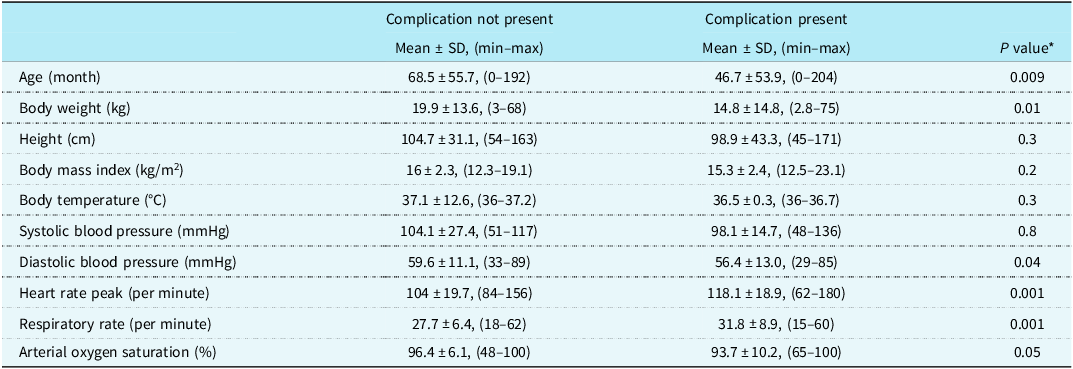
Demographic data, anthropometric measurements, and vital signs of patients with and without complications were compared. It was observed that the patients with complications were younger, their body weight and diastolic blood pressure were lower, and their respiratory rate and heart rate were higher. Comparison of parameters according to complication status is presented in Table 6.
Comparison of patients who developed and did not develop complications in terms of age, anthropometric measurements, and vital signs

* Independent samples t-test.
Patients with and without complications were compared in terms of complete blood parameters (white blood cell, haemoglobin, and platelet), alanine aminotransferase, aspartate aminotransferase, albumin, blood urea and creatinine levels, blood glucose level, serum sodium, potassium and calcium levels, C-reactive protein levels, and international normalised ratio. No significant difference was detected in these parameters compared between the two groups.
Thirty-three patients (5.4%) were diagnosed with Down syndrome. No significant difference was found in terms of the frequency of Down syndrome between the groups that developed complications and those that did not.
62 (10.2%) of our patients had pulmonary hypertension. No significant difference was detected in terms of complications between the groups of patients with and without pulmonary hypertension.
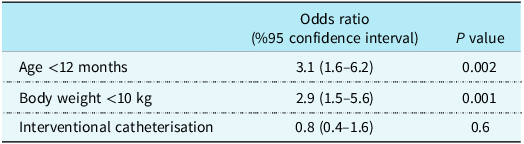
Univariate logistic regression analysis was performed to determine the patients’ risk of developing complications. In the univariate analysis, it was seen that being under 1 year of age increased the risk of complications by 3.1 times, and having a body weight of less than 10 kg increased the risk of complications by 2.9 times. It was observed that there was no significant difference in terms of the type of interventional procedure and the risk of developing complications. Data showing univariate analyzes of variables are presented in Table 7.
Univariate analysis of the relationship between patient variables and complications

Discussion
Cardiac catheterisation, which was used as a diagnostic tool in the early stages of paediatric cardiology, has recently become an interventional treatment tool rather than a diagnostic tool. Interventional procedures have become the preferred treatment option for many cardiac pathologies as an alternative or adjunct to surgical treatment. Studies addressing catheterisation complications have led to important developments in both the prediction and management of complications. The findings of this study are consistent with previous reports indicating that younger age and lower body weight are significant risk factors for the development of complications. However, the distinctive strength of our study lies in the detailed evaluation of the type and timing of complications in a large paediatric cohort in which both diagnostic and interventional cardiac catheterisation procedures were analysed together. Furthermore, the finding that interventional procedures did not increase the overall complication rate may reflect the interventional expertise of our centre as well as the effectiveness of standardised patient management protocols. In this regard, our study contributes to the existing literature by providing real-world data on paediatric cardiac catheterisation practices.
The complication rate due to cardiac catheterisation has been reported to be between 3.9% and 24%.Reference Mehta, Lee, Chaturvedi and Benson3–Reference Jacobs7 In a study from Turkey, the complication rate in cardiac catheterisation in children was reported to be 3.9%, and 2.3% were reported to be major complications.Reference Yilmazer, Ustyol and Güven5 In our study, the complication rate was found to be 6.4%, 4.1% of which was major. When compared to the literature, the complication rate of our study is similar to other studies.
The rate of our patients with Down syndrome is 5.4%. In the study conducted by Uçar et al.Reference Uçar, Kılıç and Karataş8 in our country, it was reported that 4.4% of the patients had Down syndrome, and the presence of Down syndrome increased the risk of complications. In our study, no significant relationship was found between the presence of Down syndrome and the development of complications. The data need to be supported by more studies involving Down syndrome. Catheterisation was performed in 10.1% of the patients in our study due to pulmonary hypertension. In the study conducted by Lin et al.,Reference Lin, Hegde and Marshall9 it was reported that 6% of the patients had pulmonary hypertension and complications developed in 2% of them, but no significant relationship was found between complications and the presence of pulmonary hypertension. In our study, no significant relationship was found between the presence of pulmonary hypertension and the frequency of complications.
In some studies, it has been reported that patients <12 months and <5 kg are at risk for the development of complications. In the study conducted by Yılmazer et al.Reference Yilmazer, Ustyol and Güven5 in our country in 2012, it was determined that being under one year of age increased the risk of complications by 3.6 times and being less than 5 kg increased the risk by 2.4 times. This study also stated that interventional procedures increased the risk of complications by 2.8 times. In the study conducted by Metha et al.,Reference Mehta, Lee, Chaturvedi and Benson3 it was shown that the risk of complications increased in the group of patients who underwent interventional procedures and were younger than 6 months. In the study conducted by Bennett et al.Reference Bennett, Marcus and Stokes10 in England, it was reported that the complication rate was higher in patients under 1 year of age and in patients who underwent interventional catheterisation. In our study, it was found that the risk of complications increased 3.1 times in patients <12 months and this risk increased 2.9 times in patients <10 kg. In our study, unlike other studies, no significant difference was found in terms of the type of procedure performed (diagnostic or interventional catheterisation) and the development of complications. We think that our department’s experience in interventional procedures may be related to the low complication rate in interventional procedures.
Various complications have been identified at varying rates in the literature. The frequency of vascular complications varies between 0.6% and 17.6%.Reference Mehta, Lee, Chaturvedi and Benson3,Reference Glatz, Shah and McCarthy11–Reference Avila, Shah and Brandão13 In some studies, only arterial interventions were considered when calculating this rate. In the study conducted by Glatz et al.Reference Glatz, Shah and McCarthy11 in which 3859 arterial interventions were examined, the arterial complication rate was found to be 4.9%. In the study of Roushdy et al.,Reference Roushdy, Abdelmonem and El Fiky12 vascular complications were reported as 17.6%, temporary pulselessness, 2% haematoma, 0.2% vascular injury, and 0.2% DVT. In the study of Uçar et al.Reference Uçar, Kılıç and Karataş8 from Turkey, only local vascular complications were evaluated, and the rate was given as 3.9%. In another study including 519 patients from Turkey, where patients with temporary pulse differences (between two measures) and improved after heparin administration were not evaluated; The arterial complication rate has been reported as 1.1%.Reference Yilmazer, Ustyol and Güven5 In our study, consistent with the literature, the most common complications are vascular complications, accounting for 41% of all complications.
Situations such as taking many blood samples during cardiac catheterisation and bleeding from the puncture site after the procedure may cause anaemia.Reference Stefanescu Schmidt, Armstrong, Kennedy, Nykanen, Aboulhosn and Bhatt14 In a study conducted by Ligon et al.Reference Ligon, Downey and Gruenewald15 in 2020; red cell suspension transfusion rates during and after cardiac catheterisation were evaluated in 6028 patients aged 0–21 years. It was stated that 13.7% of the patients required blood transfusion within the first 72 hours. Bergersen et al.Reference Bergersen, Marshall and Gauvreau4 reported the frequency of anaemia after the procedure as 0.5%. In the study conducted by Vitiello et al.Reference Vitiello, McCrindle, Nykanen, Freedom and Benson16 on 1086 paediatric patients, only patients requiring transfusion were evaluated as anaemia and the rate was given as 0.1%. In our study, procedure-related anaemia and transfusion need developed in a total of 4 patients, one of whom occurred during the procedure. Since the study was retrospective, cases with mild anaemia that did not require transfusion may not have been recorded. Therefore, this rate is lower than reported in the literature.
Arrhythmias in cardiac catheterisation in children are lower than in adults and have been reported as complications that are generally temporary and can often be resolved without the need for pharmacological treatment.Reference Mori, Takahashi and Nakanishi2,Reference Phillips, Cabalka, Hagler, Bailey and Cetta6,Reference Jacobs7 In the study by Mori et al.Reference Mori, Takahashi and Nakanishi2 including adult and paediatric patients, the arrhythmia rate was reported as 5.6% in adult patients and 5.2% in paediatric patients. In a study by Backes et al.Reference Backes, Cua and Kreutzer17 conducted only in patients under 1 year of age, arrhythmia (28%) was reported as the most common complication. In a study conducted by Kasar et al.Reference Kasar, Tanıdır and Öztürk18 in 2017 in our country, 93 (7%) of 1316 patients who underwent cardiac catheterisation developed arrhythmia, 58 of them had bradyarrhythmia, and 35 had tachyarrhythmia; 39% did not require treatment. In the study conducted by Yılmazer et al.Reference Yilmazer, Ustyol and Güven5 catheterisation-related arrhythmia was found to be the most common complication, and the rate was reported as 2.8% among all patients and 41% among complications. In our study, 7.7% (3 patients) of all complications were detected as arrhythmia. In our study, some types of arrhythmia (temporary bradycardia, etc.) that do not cause haemodynamic problems and resolve within seconds may not have been recorded. Therefore, the actual frequency of arrhythmias may actually be higher.
Allergic reactions due to contrast agents administered during cardiac catheterisation have also been reported.Reference Lindsay, Paterson and Edgar19 Cochran et al.Reference Cochran and Bomyea20 compared the risks of contrast agents in terms of anaphylactoid reaction development, and the complication rate was stated to be 12% for ionised agents and 0.2% for non-ionised agents. In the study by Mori et al.,Reference Mori, Takahashi and Nakanishi2 the rate of allergic reactions in paediatric patients was given as 3.4%, and it was stated that it ranked third among complications. In our study, one patient developed anaphylaxis after contrast material injection, and the patient was stabilised with early intervention. Therefore, it should not be forgotten that early recognition of anaphylaxis findings during the procedure and appropriate intervention saves lives.
Complications related to the catheter and device used in the procedure have also been reported. Kinking of the catheter or indirectly causing cardiac perforation, cardiac tamponade or air embolism, or device dislocation during interventional procedures can be cited as examples of these complications.Reference Vitiello, McCrindle, Nykanen, Freedom and Benson16,Reference Finnemore, Groves, Hug M.I., Kretschmar, Rizzi and Albisetti21,Reference Rhodes, Asnes, Blaufox and Sommer22 In the study of Mori et al.,Reference Mori, Takahashi and Nakanishi2 the frequency of catheter-related complications in children was found to be 1%. In a study conducted on 519 paediatric patients in Turkey, catheter-related complications were observed in only 2 patients, and it was stated that in both patients, the catheter was successfully withdrawn and the procedure was terminated due to the catheter kink.Reference Yilmazer, Ustyol and Güven5 In our study, catheter-related complications were observed in 3 patients. In all 3 patients, the catheter kinked during the procedure, and the catheter was successfully withdrawn without major complications such as cardiac perforation or tamponade.
It has been reported that mortality due to paediatric cardiac catheterisation is particularly associated with young age, low body weight, and type of procedure.Reference Yilmazer, Ustyol and Güven5,Reference Bennett, Marcus and Stokes10,Reference Moustafa, Kolokythas, Charitakis and Avgerinos23 Mortality is more common in newborns and in patients with poor haemodynamic and clinical conditions before the procedure. Mortality may sometimes be directly related to cardiac catheterisation, but it may also be due to underlying cardiac pathology or other accompanying anomalies. In the literature, the mortality rate varies between 0.05% and 2.7%.Reference Mori, Takahashi and Nakanishi2,Reference Bergersen, Marshall and Gauvreau4–Reference Phillips, Cabalka, Hagler, Bailey and Cetta6,Reference Lin, Hegde and Marshall9,Reference Glatz, Shah and McCarthy11,Reference Odegard, Bergersen and Thiagarajan24,Reference Zeevi, Berant, Fogelman, Galit and Blieden25 In the study by Bergersen et al.,Reference Bergersen, Marshall and Gauvreau4 the mortality rate was reported as 0.29%, and it was stated that the patients were newborns and were haemodynamically unstable cyanotic patients before the procedure. In a study from Turkey, mortality was reported as 0.4%.Reference Yilmazer, Ustyol and Güven5 In our study, this rate was found to be 0.3% (2 patients). Both patients were newborns and had poor haemodynamics before the procedure. It is not clear whether our mortality rate is directly related to the catheter or whether other additional causes contribute to mortality in the patient who was already in a poor haemodynamically clinical condition before the procedure.
In conclusion, a significant portion of our patients consist of patients with CHD and those who underwent interventional cardiac catheterisation. The frequency of complications does not increase in patients diagnosed with Down syndrome and patients with pulmonary hypertension. Additionally, the frequency of complications does not increase in interventional procedures compared to diagnostic procedures. The most common complications are vascular complications, followed by bleeding and anaemia. Patients with body weight <10 kg and age <12 months have a higher risk of developing complications. For this reason, the catheter indication should be well determined in this patient group and one should be prepared for possible complications.
Limitations
Since our study was a retrospective study, minor complications that were considered unimportant or not recorded after the procedure could not be accessed, so such complications could not be included in the study. In addition, long-term follow-up results of complications are not mentioned.
Acknowledgements
This manuscript is produced from the thesis of first author under the supervision of the second author.
Financial support
None.
Competing interests
None.