I. INTRODUCTION
Metal matrix composites (MMCs) reinforced with the ceramic reinforcement phases in the form of ceramic whiskers, particles, and fibersReference Lu, Yang, Lu, Liu, Qiao and Bao1–Reference Krishnamurthy, Matikas and Karpur3 exhibit considerably enhanced mechanical properties and wear resistance at both room temperature and high temperature. Cu alloy matrix composites (Cu-MMCs) with high thermal conductivity, good mechanical property, and superior wear resistance have wide applications in automotive and aviation industry and thus have aroused special interests of researchers in recent years. Ferkel prepared Cu-MMCs reinforced with nanoscaled Al2O3 particles by powder metallurgical techniques.Reference Ferkel4 The low volume fraction of dispersoids significantly improved the hardness, flow stress, and tensile strength of composites. Shehata et al.Reference Shehata, Fathy, Abdelhameed and Moustafa5 also produced the Cu–Al2O3 nanocomposites from nanosized powder prepared by in situ chemical routes. They pointed that the grain refinement and uniform distribution of nanometer Al2O3 particles in the copper matrix were beneficial to the improvements of mechanical properties. The formation of copper aluminate (CuAlO2) was detected at the interfaces and was considered to be responsible for improving bonding between Cu and Al2O3 particles. Xue et al.Reference Xue, Wang, Liu and Fei6 fabricated the β-LiAlSiO4 (Euc) particulate–reinforced Cu composites and indicated that the interfacial reaction in the Euc/Cu–Al composite effectively improved the interfacial bonding strength and prevented local interfacial sliding, which was beneficial to the reduction and stabilization of the CTE of the composite. Apart from ceramic particles such as Al2O3, SiC, and TiB2,Reference Hao and Xie2,Reference Tu, Wang, Yang, Qi, Liu, Zhang, Lu and Liu7,Reference Zhan and Zhang8 ceramic fibers have been also used to prepare Cu-MMCs. Wan et al.Reference Wan, Wang, Luo, Dong and Cheng9 produced carbon fiber–reinforced Cu-MMCs and indicated that the tensile strength of composites was enhanced by the fibers. They also pointed that the alloy elements (Ni or Fe) induced into the composites had important influence on the property of composites. Similar results were also concluded by Zhu et al.Reference Zhu, Kuang, Carotenuto and Nicolais10 in their work about carbon fibre–reinforced copper composites.
Compared with particles, ceramic whiskers with a high aspect ratio are more efficient in reinforcing metal matrix. Compared with fibers, whiskers in the metal matrix are isotropous, and the whisker-reinforced composites are easy to be processed. Consequently, ceramic whiskers are becoming good candidates of reinforcement phases in MMCs.Reference Li, Xia, Zhang, Wang and Wang11,Reference Zhou, Yu, Zhao, Shi, Liu, Du and He12 β-Si3N4 whisker exhibits a large aspect ratio and many other excellent properties, such as high hardness and bending strength,Reference Zhu and Sakka13,Reference Hirao, Nagaoka, Brito and Kanzaki14 low coefficient of thermal expansion, low density, and excellent wear resistance. Lu et al.Reference Lu, Yang, Lu, Liu, Qiao and Bao1 used β-Si3N4 whisker to prepared aluminum matrix composites. The work indicated that the composites with certain amount of β-Si3N4 whiskers exhibited a quite high hardness and bending strength. Apart from good mechanical properties, β-Si3N4 whisker also possesses a high thermal conductivity,Reference Hirosaki, Ogata, Kocer, Kitagawa and Nakamura15 which makes it favorable reinforcing phase in high thermal conductive composites, for instance, copper (or copper alloys) matrix composites. However, the Cu (or copper alloys) matrix composites reinforced with β-Si3N4 whiskers have been seldom reported up to now.
In this work, β-Si3N4w/Cu/Sn is prepared by powder metallurgy method. The objective of this work is to investigate the effect of β-Si3N4 whiskers on mechanical properties of β-Si3N4w/Cu/Sn. Bending strength and hardness of composites sintered under different conditions are tested in this work, and the strengthening mechanisms are discussed. Thermal conductivity of composites is also researched in this work.
II. EXPERIMENTAL PROCEDURE
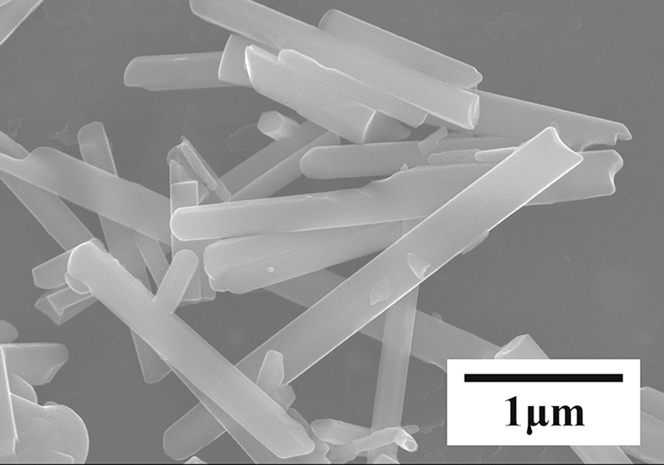
Cu/Sn alloy powder with D 50 = 20.7 μm and purity ≥99.5% was applied in the experiment, and a mass ratio of Cu and Sn in this powder was 0.95:0.05. β-Si3N4 whiskers with the average diameter of 0.34 μm and the average length of 2.11 μm were prepared in our laboratory. The aspect ratio of β-Si3N4 whiskers was 6.43, and the SEM micrograph is shown in Fig. 1. The powder mixtures of Cu/Sn alloy with β-Si3N4 whiskers were ball-milled by planetary ball mill for 3 h to form uniform mixtures using Si3N4 balls and ethanol as the grinding media. Volume fractions of β-Si3N4 whiskers in mixtures were, respectively, 0, 5, 10, 15, and 20%. The mixtures were dried at 60 °C for 3 h to remove ethanol followed by pulverizing and passing through a 100-mesh sieve. The resulting powder mixtures were hot pressed in a graphite die under a uniaxial load in vacuum following different sintering programs. Specimens were divided into 5 groups: composites in groups A, B, and C were, respectively, sintered at 740, 820, and 900 °C for 1 h, and the pressure was 25 MPa; composites in groups D and E were, respectively, sintered under the pressures of 15 and 35 MPa at 820 °C for 1 h. Each specimen was cut into 6 rectangular bars and 2 cylinders. All rectangular bars were processed into 3 × 4 × 40 mm for bending strength tests. Hardness was tested on the polished surfaces of the rectangular bars. One cylinder was processed into 10.2 mm in diameter and 3 mm in thickness, and the other was 5.5 mm in diameter and 0.5 mm in thickness. Both cylinders were prepared for thermal conductivity tests.
SEM micrograph of β-Si3N4 whiskers.

Phase composition of composites was analyzed by x-ray diffraction (XRD; D8 discover, Bruker, Karlsruhe, Germany). Scanning electron microscopy (SEM; JSM-6390, JEOL, Tokyo, Japan) was applied to characterize microstructures of fractured surfaces of composites. Densities of composites were measured using Archimedes method in deionized water as an immersion medium. Bending strength was tested by universal testing machine (Instron-5566, Instron, Boston, MA) on rectangular bars with a span of 30 mm at a cross-head speed of 0.5 mm/min. Hardness was tested by Rockwell hardness tester (Wilson-2000, Instron), and the load of 60 kg was applied by the spherical indenter of 1.58 mm in diameter. Thermal conductivities were tested by the laser flash thermal analyzer assembled by our institute.
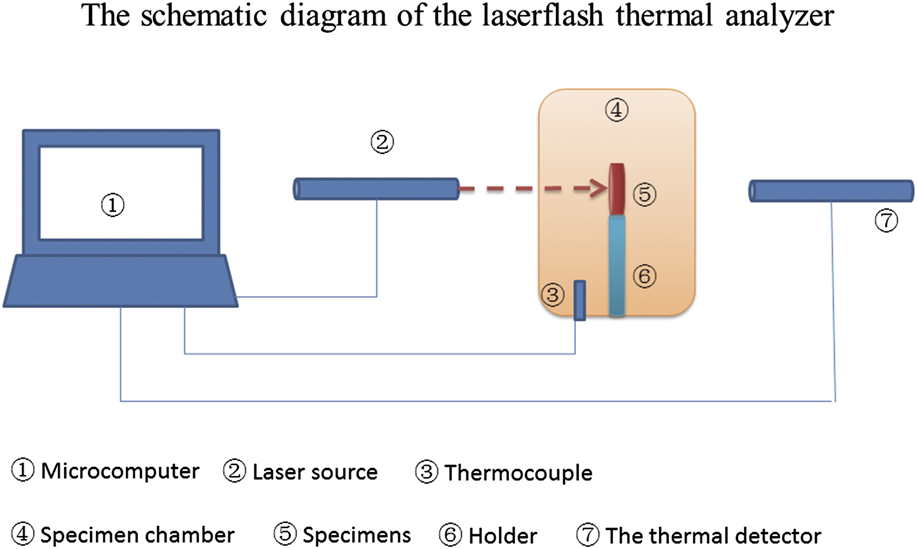
Figure 2 shows the schematic diagram of the laser flash thermal analyzer. First, the specimen chamber was heated to a certain temperature, and both the specimen and its environment were held at this constant temperature. Then the specimen was heated by a laser flash from the laser source, so the temperature of the specimen was higher than that of the environment instantaneously. Now the specimen undergoes the cooling process. The temperature change of the specimen was detected by the thermal detector and recorded by the microcomputer. The thermal diffusion coefficient of specimen (α) was concluded according to the temperature change curves. Finally, the thermal conductivity (λ) was calculated by the following equation:
 $${\rm{\lambda }} = {\rm{\rho \alpha }}{C_{\rm{p}}}\quad .$$
The schematic diagram of the laser flash thermal analyzer.

Here, ρ was the density of specimen and C p was the specific heat capacity.
III. RESULTS AND DISCUSSION
A. Phase composition of β-Si3N4w/Cu/Sn
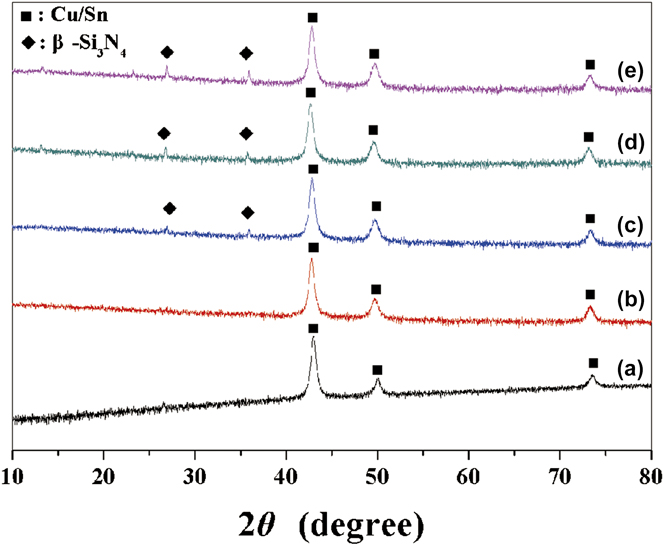
Figure 3 shows the XRD patterns of β-Si3N4w/Cu/Sn with different β-Si3N4 whisker contents sintered at 820 °C. The results reveal that β-Si3N4 whisker and Cu/Sn alloy are still the main phase of the composites after sintering. The stable phase composition can be helpful to maintain the intrinsic good properties of β-Si3N4 whiskers and Cu/Sn alloy matrix, such as the good mechanical property of β-Si3N4 whiskers and the high thermal conductivity of Cu/Sn alloy matrix. The pattern of β-Si3N4w/Cu/Sn composites with 5 vol% β-Si3N4 whisker addition (5%β-Si3N4w/Cu/Sn) shows no peak of β-Si3N4 whiskers, which can be because of the low content of β-Si3N4 whiskers. As shown in Figs. 3(c)–3(e), XRD peak intensity of β-Si3N4 phase shows a clear increase, which agrees well with volume fractional improvement of β-Si3N4 whiskers.
XRD patterns of the specimens: β-Si3N4w/Cu/Sn containing (a) 0, (b) 5, (c) 10, (d) 15, (e) 20 vol% β-Si3N4 whiskers sintered at 820 °C for 1 h under the pressure of 25 MPa.

B. Microstructure analysis of β-Si3N4/Cu/Sn
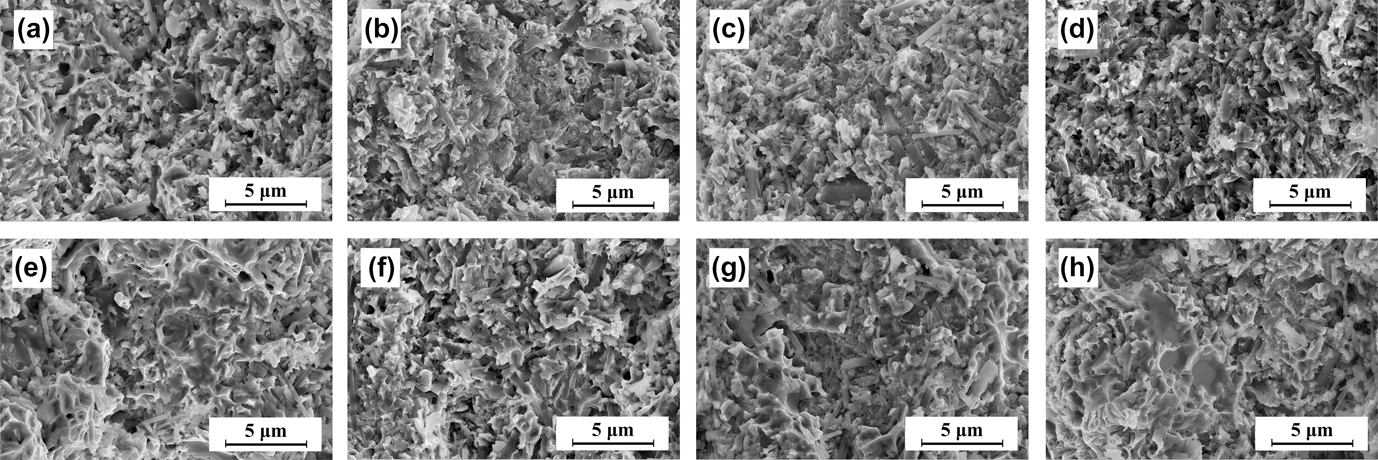
Figure 4 shows the fractured surface SEM micrographs of β-Si3N4w/Cu/Sn sintered at 820 and 900 °C. β-Si3N4 whiskers pulled out and residual holes can be observed from the fractured surfaces, which are beneficial to high bending strength of composites. β-Si3N4 whiskers are randomly distributed in composites, but the aggregation becomes serious with the β-Si3N4 whisker content increasing, and other papers also reported the similar phenomena.Reference Kennedy, Karantzalis and Wyatt16,Reference Kaftelen, Unlu, Goller, Ovecoglu and Henein17 Although the elongated β-Si3N4 whisker is beneficial to good mechanical properties, it is harmful to the densification process during sintering, and because of that β-Si3N4 whisker hinders the mass transfer of composites, so the number of pores increases with the increase of the β-Si3N4 whisker content. The fractured surfaces of β-Si3N4w/Cu/Sn sintered at 900 °C exhibit less pores, which reflect better densification at higher sintering temperature.
Fractured surface SEM micrographs of β-Si3N4w/Cu/Sn with (a) 5, (b) 10, (c) 15, (d) 20 vol% β-Si3N4 whiskers sintered at 820 °C for 1 h, and fractured surface SEM micrographs of β-Si3N4w/Cu/Sn composites with (e) 5, (f) 10, (g) 15, (h) 20 vol% β-Si3N4 whiskers sintered at 900 °C for 1 h. The pressure is 25 MPa.

C. Relationship between the relative density of β-Si3N4/Cu/Sn and the β-Si3N4 whisker content
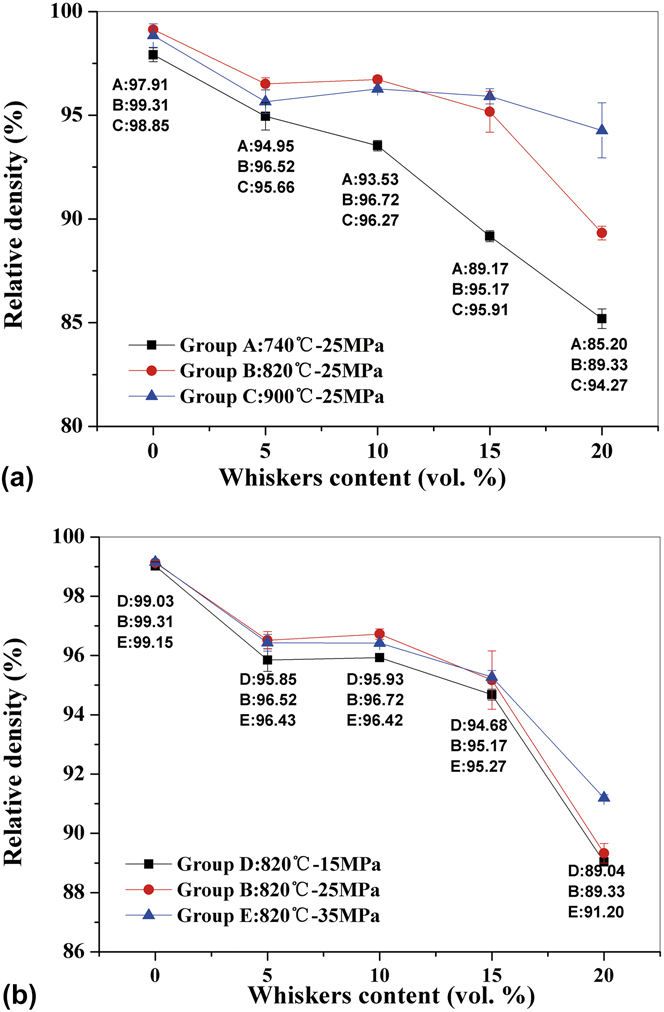
Figure 5 shows relative densities of β-Si3N4w/Cu/Sn with different β-Si3N4 whisker contents. The β-Si3N4w/Cu/Sn is sintered under different conditions including varied temperatures and pressures. It can be noted from both Figs. 5(a) and 5(b) that relative densities of composites in all groups exhibit a gradual decrease with the volume fraction of β-Si3N4 whisker increasing from 0 to 20 vol%. Obviously, β-Si3N4 whisker is the major factor to inhibit the densification process of the composites. The rod-like β-Si3N4 whiskers can reduce the stacking density of green body to prevent from densification of composites during the sintering process. Meanwhile, β-Si3N4 whiskers, the inert second phase, can weaken the mass transfer between metal grains by the pinning effect. Moreover, the poor wettability between whiskers and metal matrix can further enhance the inhibition.Reference Chu, Liu, Jia, Chen, Liang, Gao, Tian and Guo18,Reference Cho, Kikuchi, Miyazaki, Takagi, Kawasaki and Tsukada19 As a result, the more whiskers, the lower relative density as shown in Fig. 5, which can affect the mechanical properties and thermal conductivity inevitably.
Relative densities of β-Si3N4/Cu/Sn (a) sintered at different temperatures and (b) sintered under different pressures.

It can be observed from Fig. 5(a) that the composites with 5 vol% β-Si3N4 whiskers sintered at 740 °C possess almost the same relative density with those sintered at 820 and 900 °C, but possess much lower relative density when the volume fraction of β-Si3N4 whiskers is more than 5 vol%. The disparity can be attributed to the weak interdiffusion between Cu grains at 740 °C. When the volume fraction of β-Si3N4 whisker is not more than 15 vol%, relative densities of composites sintered at 820 and 900 °C are almost the same. However, as the volume fraction of β-Si3N4 whisker further increases to 20 vol%, composites sintered at 820 °C exhibit much lower relative densities than those sintered at 900 °C. According to Cu–Sn phase diagram, Cu/Sn alloy consisting of 95% Cu and 5% Sn reaches the phase transformation point at about 850 °C. When temperature is above 850 °C, Cu/Sn alloy can be in the liquid–solid equilibrium. The liquid promotes densification,Reference Yih and Chung20 while β-Si3N4 whisker plays a side effect. When the β-Si3N4 whisker content is low, the densification process meets weak inhibition, and both groups obtain high relative densities. However, the promotion of densification by liquid becomes obvious when the β-Si3N4 whisker content increases to 20 vol%, so composites sintered at 900 °C obtain much higher relative densities. In addition, according to the research by Oh et al.,Reference Oh, Cornie and Russell21 higher temperature is helpful to better wettability between ceramics and metals because of the change of surface energies and faster interfacial reactions. Better surface wettability between metal grains and whiskers is also good for the densification.
The effect of pressure on the densification of β-Si3N4w/Cu/Sn is also investigated as shown in Fig. 5(b). Relative density of composites with no more than 15 vol% β-Si3N4 whiskers presents a slight increase with the pressure increasing. It can be conclude that the excessive pressure has little help to the densification of composites with low β-Si3N4 whiskers content because the composites already have quite high relative density. However, the case is different for the composites with 20 vol% β-Si3N4 whiskers, and the 20%β-Si3N4w/Cu/Sn sintered under the pressure of 35 MPa has a markedly higher relative density than those sintered under lower pressures. As a result, high pressure is quite necessary to the densification of composites with high β-Si3N4 whiskers content.
D. Bending strength of β-Si3N4w/Cu/Sn
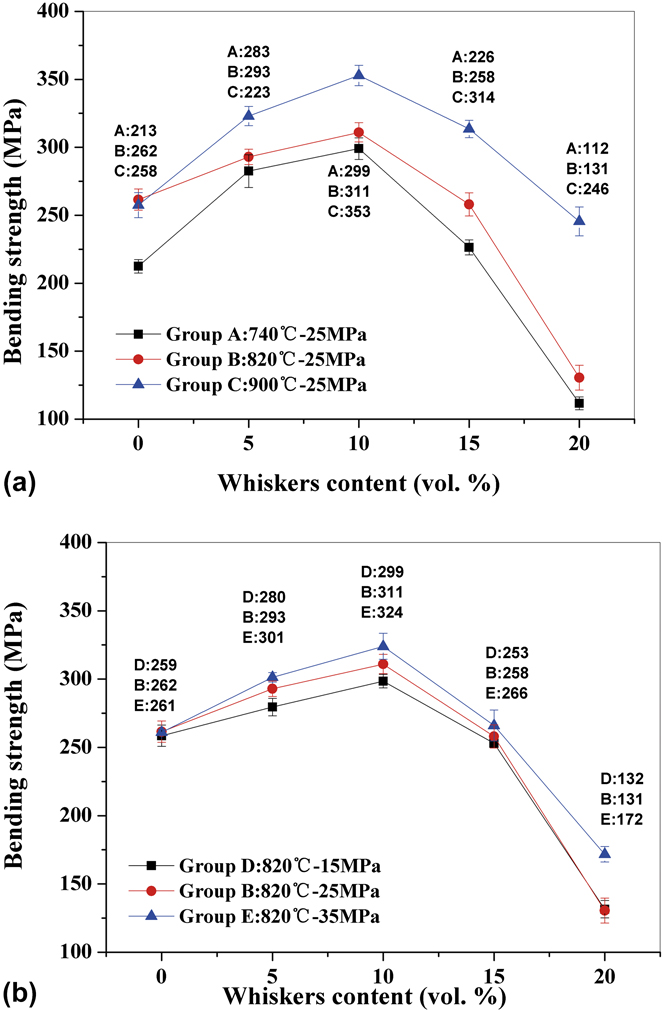
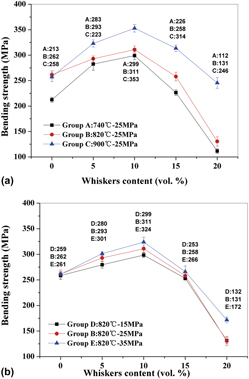
Figure 6 shows the bending strength of β-Si3N4w/Cu/Sn sintered under varied temperatures and pressures. In Fig. 6(a), the bending strength of composites in all the three groups presents an increase with increasing of β-Si3N4 whisker contents from 0 to 10 vol%, and the highest bending strength, respectively, reaches to 353, 311, and 299 MPa. However, excessive whisker additions do not lead to further increasing of bending strength as a result of poor densification and aggregation of whiskers. Composites sintered at higher temperature possess higher bending strengthen than ones sintered at lower temperature. The disparity can be attributed to better densification and interfacial bonding strength at elevated temperature.
Bending strength of β-Si3N4w/Cu/Sn (a) sintered at different temperatures and (b) sintered under different pressures.

The effect of pressure on the bending strength is shown in Fig. 6(b). The composites sintered under 35 MPa possess the highest bending strength, especially when the β-Si3N4 whisker content is 20 vol%. The result is consistent with the changing trends of relative density, so the pressure can affect the bending strength by influencing the densification of composites.
E. Hardness of β-Si3N4w/Cu/Sn
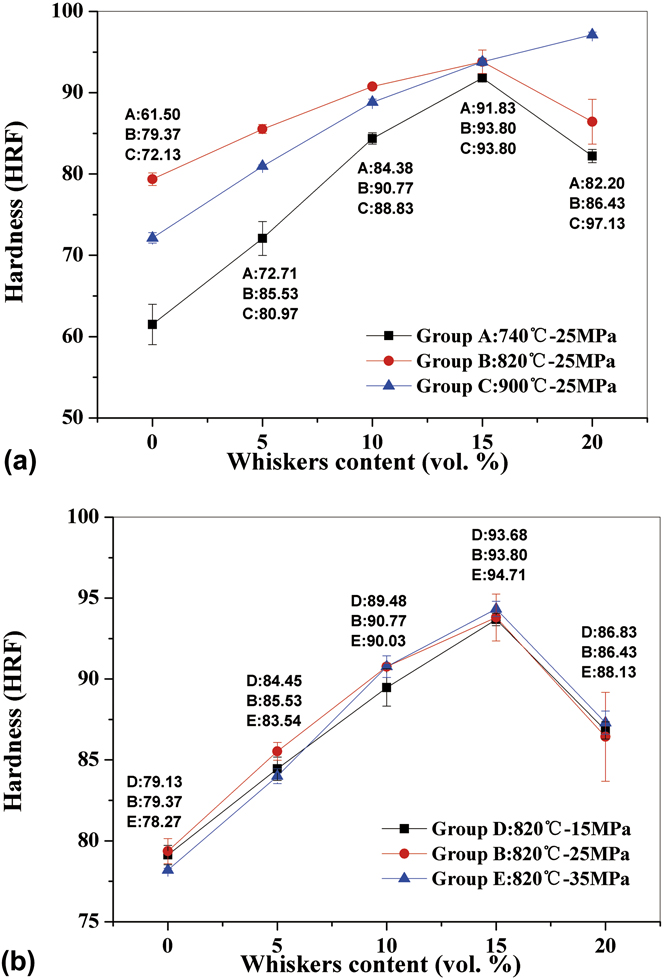
Figure 7(a) shows the hardness of composites sintered at different temperatures. With the β-Si3N4 whisker content increasing from 0 to 15 vol%, hardness of composites in all the three groups presents a steady increase. Obviously, the hardness of composites has tight relation with the volume fraction of the stiff β-Si3N4 whiskers. The composites sintered at 740 °C possess lower hardness than those sintered at 820 and 900 °C, which can be attributed to the lower relative density. However, the hardness of composites sintered at 900 °C exhibits lower hardness than ones sintered at 820 °C when β-Si3N4 whisker content is less than 15 vol%, although the relative density is almost the same. The lower hardness at 900 °C can be attributed to the loss of Sn when it is above the phase transformation temperature, and the low Sn content results in a decline of hardness of Cu/Sn alloy matrix. The hardness disparity between unreinforced Cu/Sn alloy sintered at 900 and 820 °C can be observed from Fig. 7(a), and the hardness decline of metal matrix consequentially reduces the hardness of composites. Another difference between the line of 900 °C and the rest two lines is that the hardness of specimens sintered at 900 °C exhibits a continuous increase during the entire test range [Fig. 7(a)], whereas the hardness of specimens sintered at 740 and 820 °C reaches the highest peak when β-Si3N4 whisker content is 15 vol%. Further increased β-Si3N4 whisker content results in a decline of hardness as a result of low densification of composites sintered at 740 and 820 °C.
Hardness of β-Si3N4w/Cu/Sn (a) sintered at different temperatures and (b) sintered under different pressures.

Figure 7(b) reveals the effect of pressure on the hardness of composites. It can be noted that the hardness of composites in the three groups is almost the same, indicating that the pressures has little effect on the hardness of composites.
F. The strengthening mechanisms
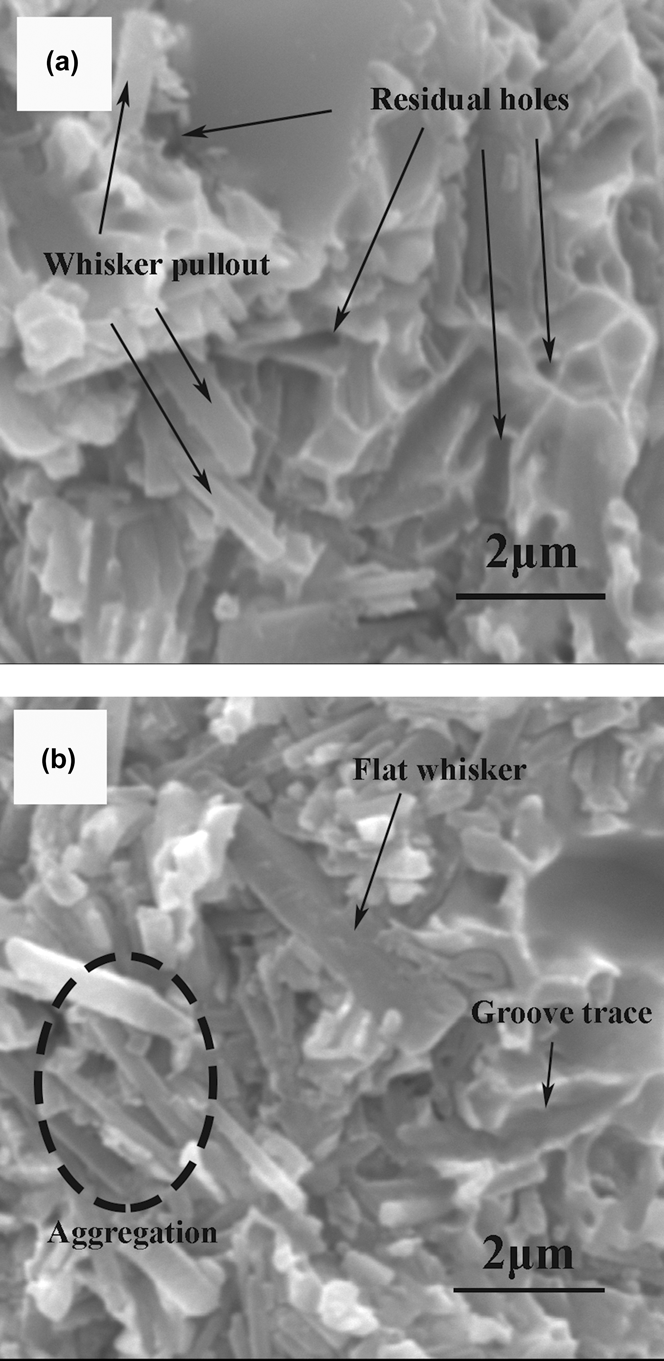
The rod-like β-Si3N4 whisker can contribute to the enhanced bending strength of β-Si3N4w/Cu/Sn by improving the work of fracture. When load is applied onto the composites, it should be carried by the Cu/Sn matrix because the distribution of β-Si3N4 whiskers is discontinuous. The load causes the deformation of metal matrix and then is transferred to β-Si3N4 whiskers. The fracture process of composites can be divided into two mechanisms: the ductile rupture of Cu/Sn matrix and the strengthening behavior of β-Si3N4 whiskers. The Cu/Sn matrix can be failed by ductile rupture when overstretched and is pulled up into rupture ridges on the grain surfaces. The rupture ridges of metal matrix can be observed from the fracture surface in Fig. 8. Unlike the ductile ruptured Cu/Sn matrix, the stiff β-Si3N4 whiskers with high elastic modulus can hardly deform following the behavior of metal matrix, thus stress concentration generates at the interfaces between and Cu/Sn alloy matrix. If the interfacial bonding is extremely high and the Si3N4/alloy interface is hard to be debonded, the β-Si3N4 whisker fracture happens, and the crack can expand traversing the fractured whiskers. However, the actual Si3N4/alloy interfacial bonding is naturally weak and the β-Si3N4 whisker possesses quite high bending strength, so the whisker fracture can hardly happen in the discontinuous reinforced composites. As a result, debonding between β-Si3N4 whiskers and Cu/Sn matrix occurs, and the crack expands along the Si3N4/alloy interfaces.Reference Wang, Song, Sun and He22
The morphology of the fractured surface of β-Si3N4w/Cu/Sn with (a) 5 and (b) 15 vol% β-Si3N4 whiskers sintered at 820 °C for 1 h under the pressure of 25 MPa.

In the interfacial debonding process, the orientation of the β-Si3N4 whisker has an important influence on the crack propagation. If the orientation of the β-Si3N4 whisker is approximately parallel to the fracture surface or the angle between β-Si3N4 whisker orientation and the fracture surface is small, the primary crack propagates along the Si3N4/alloy interface or makes a slight adjustment to be adapted with the orientation of the β-Si3N4 whisker. In this case, the β-Si3N4 whisker may be flat on the surface, and the traces left behind by the debonded β-Si3N4 whiskers come up on the counter face. Figure 8 shows the flat β-Si3N4 whiskers on the fractured surface and meanwhile the groove traces. If the orientation of the β-Si3N4 whisker is approximately perpendicular to the fracture surface, the crack cannot propagate along the surface of β-Si3N4 whisker, and the rod-like β-Si3N4 whisker is pulled out from the Cu/Sn matrix, leaving behind the residual holes in the counter face. The β-Si3N4 whiskers pullout and the residual holes are presented in Fig. 8. The process of β-Si3N4 whiskers pullout applies shear stress to the alloy matrix and forms rupture ridges around the residual holes. The rod-like β-Si3N4 whisker pullout can act as a strong resistance to the crack propagation and contribute to the high strength of composites by requirement of more energy to overcome the pullout process. So, the whisker pullout is quite important to the high bending strength. As stated above, interfacial bonding strength plays a crucial role in affecting β-Si3N4 whisker pullout, and higher interfacial bonding strength means more debonding resistance. β-Si3N4w/Cu/Sn sintered at 900 °C obtains better interfacial bonding than the one sintered at 820 °C as a result of betterment of interfacial wettability at elevated temperature.Reference Oh, Cornie and Russell21 So, β-Si3N4w/Cu/Sn sintered at 900 °C presents higher bending strength than composite sintered at 820 °C.
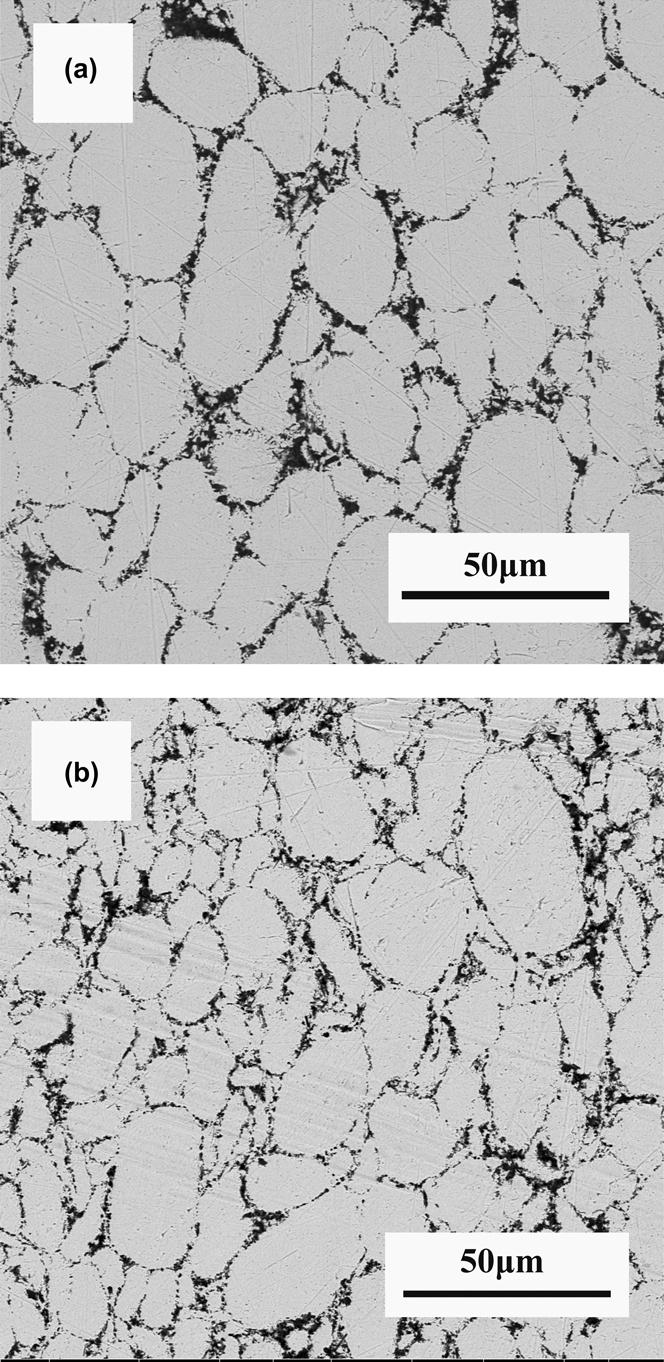
In addition, β-Si3N4 whiskers, as the second phase between Cu grains, generate grain refinement of Cu matrix and result in more grain boundaries. Figure 9 reveals the grain refinement of β-Si3N4 whiskers. It can be noted that the Cu grains in 5%β-Si3N4w/Cu/Sn are mostly large, and the small grains are almost combined by the large ones. There are seldom small grains left in the 5%β-Si3N4w/Cu/Sn. In the case of 15%β-Si3N4w/Cu/Sn, some large grains also come up, but they are surrounded by many small grains. In addition, the small grain results in high-density grain boundaries. The high concentration of grain boundaries in 15%β-Si3N4w/Cu/Sn provides barriers to transmission of deformation from one grain to the next and is also beneficial to high strength.Reference Arsenault, Wang and Feng23
Polished surfaces of β-Si3N4w/Cu/Sn with (a) 5 vol% and (b) 15 vol% β-Si3N4 whiskers sintered at 820 °C for 1 h under the pressure of 25 MPa.

Although the β-Si3N4 whiskers are beneficial to high mechanical performance of composites, it also should be noted that excessively high β-Si3N4 whisker content does not produce further enhanced properties. The decline of mechanical properties at high whisker content can be attributed to the low densification and the aggregation of β-Si3N4 whiskers. As the inert phase, β-Si3N4 whiskers act as the densification barriers during sintering process, leaving behind massive pores in the body. Meanwhile, the high β-Si3N4 whisker content is more likely to form the whisker aggregation between Cu grains. Both the pores and the loose whisker aggregation are easy to be crack origins because of the high stress concentration.Reference Conlon and Wilkinson24 Prangnell et al.Reference Prangnell, Barnes, Roberts and Withers25 studied the fracture of MMCs reinforced by particles and suggested that there is a change in dominance of damage mechanism from particle fracture at low volume fractions to void formation in strongly clustered regions. As a result, excessively high β-Si3N4 whisker additions are not beneficial to high mechanical performance.
G. Thermal conductivity of β-Si3N4w/Cu/Sn
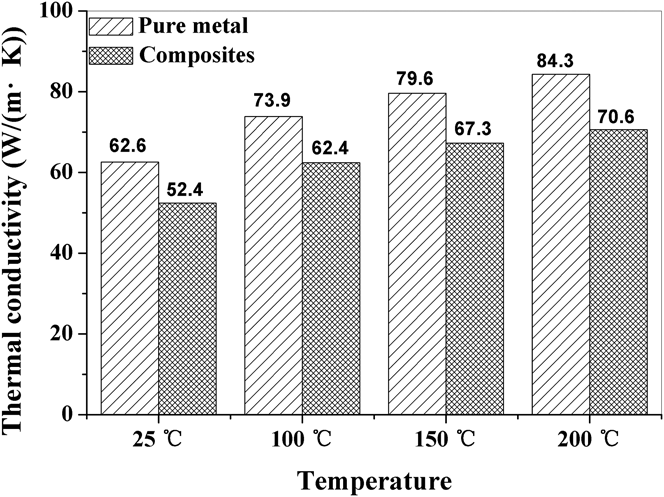
Because thermal conductivity is one of the most important factors that influences application of Cu/Sn alloy, the evaluation of thermal conductivity of β-Si3N4w/Cu/Sn is necessary. Generally, ceramic reinforcement can reduce the thermal conductivity of metal matrix because of massive interfaces and pores. Figure 10 shows thermal conductivity of Cu/Sn alloy and 10%β-Si3N4w/Cu/Sn sintered at 820 °C for 1 h. 10%β-Si3N4w/Cu/Sn possesses lower thermal conductivity than Cu/Sn alloy at each temperature. Although thermal conductivity of composite is slightly weakened compared with Cu/Sn alloy, it still keeps at a quite high level which is helpful for composite to be used in thermal conduct devices.
Thermal conductivity of Cu/Sn alloy and 10%β-Si3N4w/Cu/Sn sintered at 820 °C for 1 h under the pressure of 25 MPa.

IV. CONCLUSIONS
β-Si3N4w/Cu/Sn composites are prepared by powder metallurgy method. The conclusions can be given as below:
(1) Bending strength and hardness of β-Si3N4w/Cu/Sn are improved by β-Si3N4 whisker additions. The highest bending strength of β-Si3N4w/Cu/Sn reaches 353 MPa, and the highest hardness of composites reaches 93.8 HRF.
(2) The rod-like β-Si3N4 whiskers can improve the work of fracture of composites by modifying the crack propagation and can also bring about grain refinement of the matrix. Both are beneficial to the improvement of mechanical performance. However, excessively high β-Si3N4 whisker content is not beneficial to the high bending strength because of the low densification of composites and the aggregation of whiskers.
(3) β-Si3N4w/Cu/Sn composite possesses high thermal conductivity, even it is slightly lower than Cu/Sn alloy.