Introduction
Head and neck cancer includes cancers of the oral cavity, pharynx, larynx, nasopharynx, skin of the head and neck, paranasal sinuses, and salivary glands. It is the world's sixth most common type of cancer category.Reference Jemal, Bray, Center, Ferlay, Ward and Forman1
Treatment of head and neck cancer involves surgery, radiotherapy, chemotherapy or a combination of these. Commonly experienced side effects can be debilitating and include xerostomia, difficulty with swallowing and speaking, poor nutrition, compromised cosmesis, and psychological distress.Reference Jabbari, Kim, Feng, Lin, Tsien and Elshaikh2,Reference Rathod, Livergant, Klein, Witterick and Ringash3 Many quality of life (QoL) measures have been developed to record and monitor health outcomes after treatment for head and neck cancer. Although these instruments are not used routinely,Reference Morton4 many clinicians recognise the need for some kind of patient-reported outcome measure to identify psychological distress and needs that may benefit from intervention by cancer support services. Such specific health requirements may be defined as supportive care needs or unmet needs.Reference Morton4,Reference Giuliani, McQuestion, Jones, Papadakos, Le and Alkazaz5
To our knowledge, no group has studied the impact of head and neck cancer on QoL, unmet needs or psychological distress in a rural population; however, this type of study could inform the development of effective survivorship care plans for rural communities.
Northland, New Zealand, is a rural area with a geographically isolated population, including a high prevalence of Māori (indigenous New Zealanders; 29.6 per cent). Patients may reside up to four hours away by car from the nearest treatment facility.6
The aim of our study was to understand whether the specific needs, QoL and levels of psychological distress of our patients in rural centres differed from that described in international literature.
Materials and methods
Patient processing
Patients diagnosed with head and neck cancer in Northland, New Zealand, are referred to a tertiary regional centre in Auckland, where they are reviewed in a multi-disciplinary clinic and definitive treatment is recommended and delivered. Patients are referred back to Northland for post-treatment review and surveillance.
Institutional ethical approval for this study was granted by Northland District Health Board in December 2017. Approval was also sought from Takawaenga (Māori cultural service). Informed consent was obtained in writing from all individual participants included in the study.
Patients
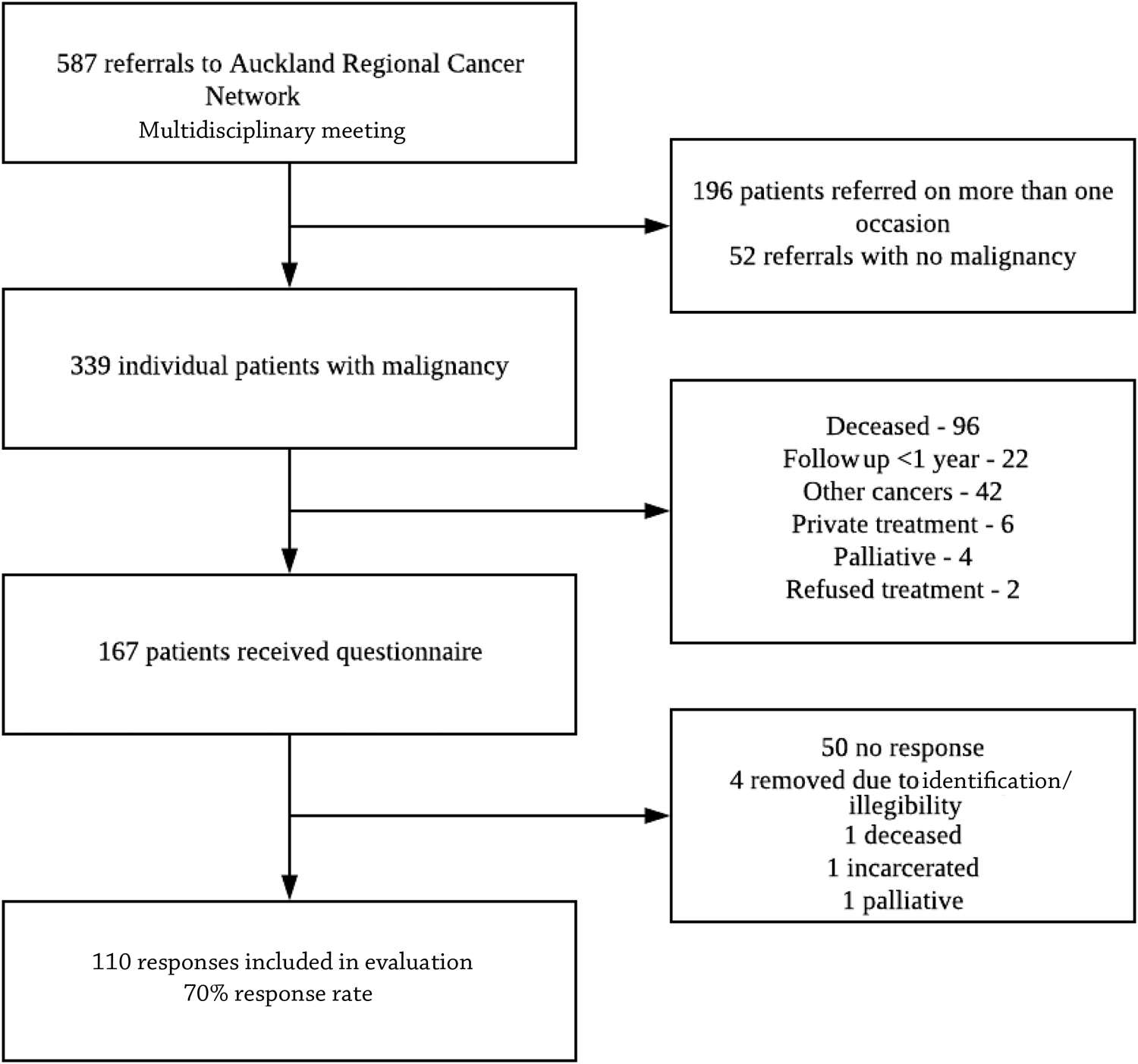
There were 339 individual patients from Northland registered with head and neck cancer between January 2011 and December 2017. Patients were excluded if they were deceased, followed up for less than one year, opted to have their treatment privately, refused treatment or opted for alternative treatment, were followed up by specific cancer streams (melanoma, sarcoma, liposarcoma, thyroid), or were receiving palliative treatment at the time of survey. There were 167 eligible patients (Figure 1): one patient died before the deadline for response, one patient's care became palliative and one patient was unable to be contacted because of incarceration. Eligible patients received a five-part questionnaire.
Schematic diagram of included and excluded patients.

Demographic details and treatment information were sourced from electronic medical records. Cancers were staged according to the American Joint Committee on Cancer staging guidelines (stage I–IV).Reference Amin, Edge, Greene, Byrd, Brookland and Washington7
Sociodemographic data
Sociodemographic data were recorded including: medical data (type of cancer, comorbidities, health literacy, smoking status), socioeconomic data (occupation, home environment, dependents, income), cultural data (effects of cancer on culture) and travel requirement data (distance to treatment centre, access to car, difficulties with travel).
Hospital Anxiety and Depression scale
The Hospital Anxiety and Depression scale assesses patients’ current mental state. Fourteen questions are scored with scores ranging from zero to three. Seven questions relate to depression and 7 relate to anxiety giving 2 separate scores from 0 to 21. Less than 7 is graded as normal, 8–10 is graded as borderline, and 11–21 indicates likely anxiety or depression.
Quality of life
Two instruments (Quality of Life Questionnaire Core 30 and Quality of Life Questionnaire Head and Neck Cancer 35) from the European Organisation for Research and Treatment of Cancer focus on QoL of patients with cancer.Reference Aaronson, Ahmedzai, Bergman, Bullinger, Cull and Duez8 These instruments were scored according to European Organisation for Research and Treatment of Cancer scoring guidelines.Reference Fayers, Aaronson, Bjordal, Grønvold, Curran and Bottomley9 Quality of Life Questionnaire Head and Neck Cancer 35 has been validated and used for QoL research in head and neck cancer.Reference Bjordal, De Graeff, Fayers, Hammerlid, van Pottelsberghe and Curran10–Reference Nutting, Morden, Harrington, Urbano, Bhide and Clark14 Higher numbers on symptom scales are correlated with higher symptomatology. Higher numbers on functional and global scales are correlated with higher level of functioning or improved QoL.
Cancer Survivors’ Unmet Needs measure
The Cancer Survivors’ Unmet Needs measureReference Hodgkinson, Butow, Hunt, Pendlebury, Hobbs and Lo15 includes 35 questions to evaluate the needs of cancer patients across five categories: existential survivorship, comprehensive cancer care, information requirements, QoL and relationships. The Cancer Survivors’ Unmet Needs measure is scored from 0 to 35, with a higher score correlating to higher needs.
Free-text
A free-text section was used for patients to indicate possible improvements to our service and to highlight unmet needs.
Statistical analysis
Analysis of the European Organisation for Research and Treatment of Cancer instruments was performed using SPSS® (version 25.0) statistical software.Reference Fayers, Aaronson, Bjordal, Grønvold, Curran and Bottomley9 Ten points difference on any European Organisation for Research and Treatment of Cancer Quality of Life Questionnaire Core 30 or Quality of Life Questionnaire Head and Neck Cancer 35 scale was considered clinically significant, regardless of statistical significance.Reference Hammerlid, Silander, Hörnestam and Sullivan13,Reference Ringash, O'Sullivan, Bezjak and Redelmeier16–Reference Osoba, Rodrigues, Myles, Zee and Pater19
All ordinal and scale variables had non-normal distribution (p < 0.001, Shapiro–Wilk test of normality). For comparisons between different cohorts of patients (Quality of Life Questionnaire Core 30, Quality of Life Questionnaire Head and Neck Cancer 35) and continuous outcomes (unmet needs, total needs), Mann–Whitney U tests were performed. Significance levels were set at 0.05. Fisher's exact test was used for comparisons between proportions or categorical variables.
Free-text responses were recorded, reviewed separately from the rest of the questionnaire and graded independently by two graders (M Sunderland and C Matthews) as positive, neutral or negative. Each category was examined for common themes, recorded by each researcher. These were compared, and if agreed on by both researchers, they were deemed common and recorded. Disagreements were discussed and resolved before recording.
Results
The survey response rate was 70 per cent (114 of 164). Most non-responders (47 of 50) were unable to be contacted or missed the deadline for completion. Three patients declined to participate, and four survey responses were illegible and were excluded, leaving a total of 110 questionnaires for analysis (Figure 1).
Tumour site
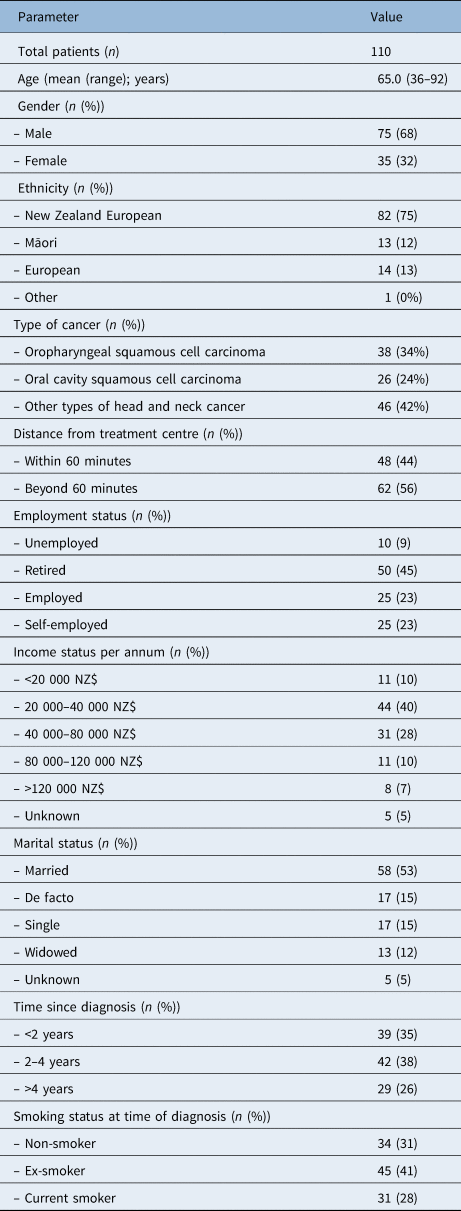
Over half of respondents (64 of 110; 58 per cent) had squamous cell carcinoma (SCC) of the oral cavity or oropharynx. Other malignancies included cutaneous SCC, metastatic SCC, salivary gland tumours, nasopharyngeal carcinomas, invasive basal cell carcinoma and olfactory neuroblastoma. Higher numbers of current smokers had oral cavity or oropharyngeal SCC related cancer compared with other types of cancer. The immunohistochemical marker p16 status was recorded for all patients with oropharyngeal SCC: 45 per cent were p16 negative.
Age
The average age of respondents was 65.0 years. Our sample population of patients was not significantly different to our overall cohort of all 290 head and neck cancer patients in Northland (2011–2017).
Income
Many of the patients who returned surveys were retired (45 per cent) or unemployed (9 per cent), with correspondingly low incomes: half of the patients who returned surveys had household annual incomes less than NZ$40 000 (see Table 1). Income higher than NZ$40 000 per annum was not correlated with any parameter other than (better) physical functioning. Māori patients encountered more financial difficulty than non-Māori patients, and older age was also associated with financial difficulty.
Demographic information of patients returning the Northland District Health Board head and neck cancer questionnaire

Sociocultural issues
The majority of patients (68 per cent) were in a stable relationship at the time of diagnosis. All respondents perceived that their cultural beliefs had been respected throughout treatment.
Access to healthcare
Most patients (93 per cent) had to travel to Auckland during their treatment; almost half (45 per cent) found this journey difficult, and 22 per cent of patients also found it difficult to get to routine local appointments. More than a quarter of patients (28 per cent) had been affected in a way that interfered with their ability to work, and 29 per cent were more concerned about their financial situation since diagnosis. Only 21 per cent had private health insurance at the time of diagnosis, 5 per cent of patients had no personal access to a car and a third of patients (36 per cent) self-reported at least one significant health-related comorbidity.
Psychological distress
The Hospital Anxiety and Depression scale questionnaire was completed by 103 patients, 27 of whom (26 per cent) scored 8 or more on at least one of the two scales, representing borderline or likely anxiety or depression. More patients were likely to have anxiety (n = 24; 23 per cent) than depression (n = 15; 15 per cent), and 12 of the 27 patients (44 per cent) scored highly on both anxiety and depression scales although there was no statistical significance in Hospital Anxiety and Depression scale scores by ethnicity, financial status, stage or type of cancer, age, or distance from treatment centre.
Quality of life
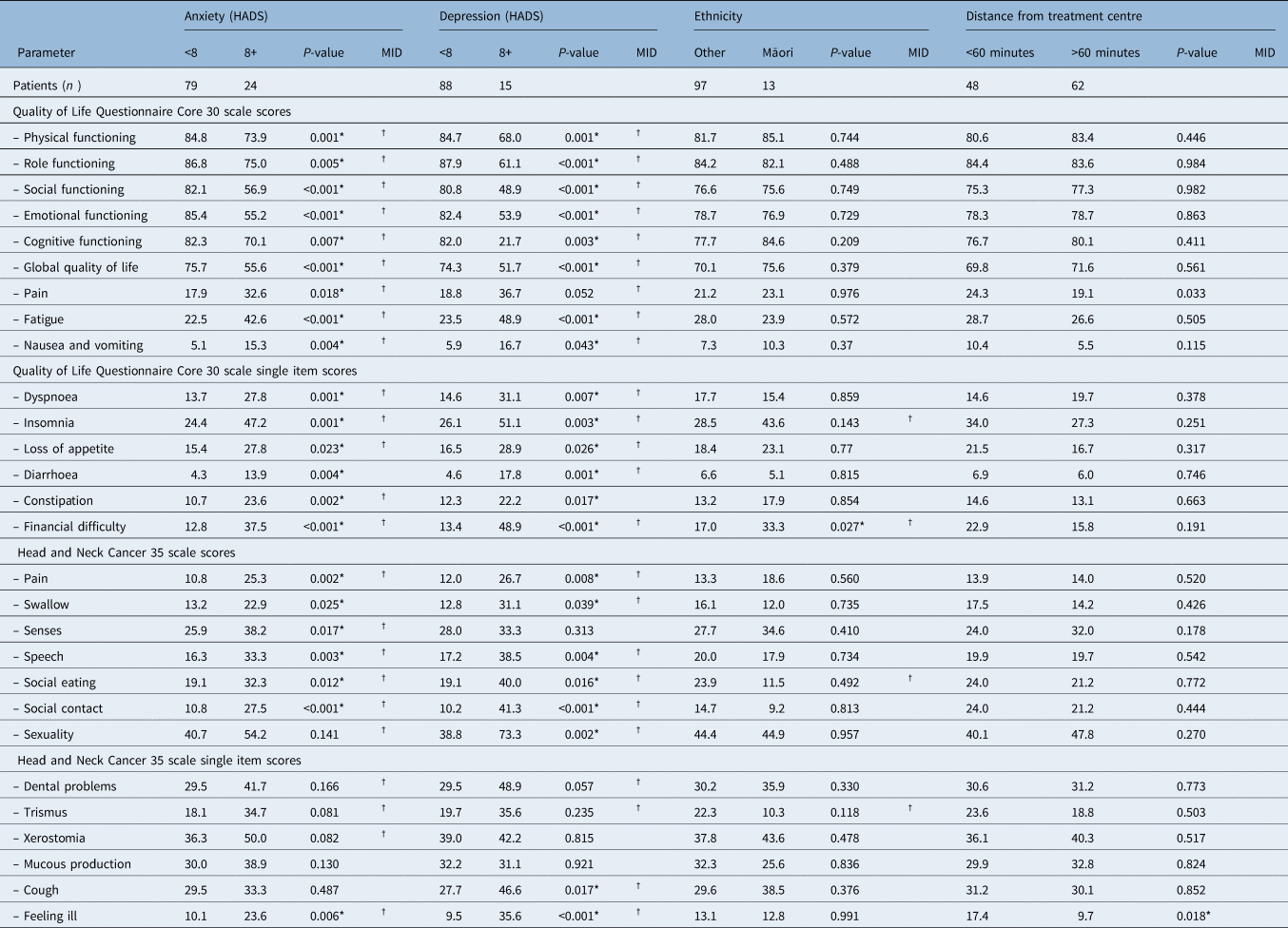
The European Organisation for Research and Treatment of Cancer Quality of Life Questionnaire Core 30 and Quality of Life Questionnaire Head and Neck Cancer 35 were completed by 109 patients (Table 2). Later stage cancer (III or IV) at diagnosis was associated with lower average functional QoL scores and higher average symptom scales. Differences by tumour stage (I–II versus III–IV) included social eating, sensory changes, trismus, xerostomia and cognitive functioning. Patients living within 60 minutes of the treatment centre (self-reported distance from Whangarei, the location of our main hospital) were more likely to feel generally unwell. Patients with borderline or probable anxiety or depression had significantly worse QoL functional scores and higher symptom severity scores (Table 2). Māori patients had more financial difficulty, and older age was associated with decreased physical functioning.
European Organisation for Research and Treatment of Cancer Quality of Life Questionnaire Core 30 and Quality of Life Questionnaire Head and Neck Cancer 35 scores

*Statistically significant data; †minimally important difference (MID) more than 10 points. HADS = Hospital Anxiety and Depression Scale
Needs
With regard to the Cancer Survivors’ Unmet Needs supportive care needs questionnaire, an average of score of 9.30 (median, 6; range, 0–35) was found for overall needs. More than half of the patients reported no unmet needs, and the average score of unmet needs was 3.42 (median, 0; range, 0–35). The most common unmet need was regarding hospital accessibility for appointments.
Patient needs were generally related to comprehensive cancer care, information requirements and psychological requirements. Those with borderline or likely anxiety or depression had an average score of total needs of 19.7 and 21.8, respectively, compared with those with no anxiety or depression who had an average needs score of 6.70. There was no difference in the average needs score of patients who lived rurally compared with those who lived less rurally (i.e. within 60 minutes of travel to the treatment centre).
Free-text feedback
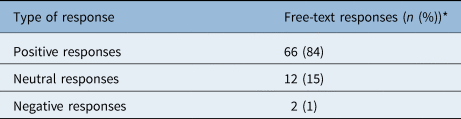
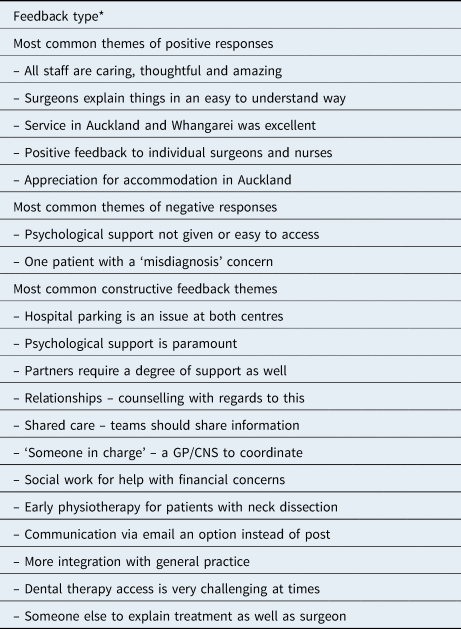
There were 80 responses (62 per cent) that included free-text feedback, with 66 responses that were positive, 12 that were neutral and 2 that were negative (Table 3). One negative response related to lack of psychological support. The other negative response related to misdiagnosis. Neutral responses were constructive. Positive responses comprised praise or expressions of gratitude to individual staff members or the healthcare team. The identified themes are summarised in Table 4.
Number of responses to the free-text section of the Northland District Health Board head and neck cancer questionnaire

*Total n = 80
Themes in the free-text section of the Northland District Health Board head and neck cancer questionnaire

*Total n = 80. GP = general practitioner; CNS = XXX
Discussion
Our results demonstrated that quality of life and patient needs are not affected by rural status. Regardless of distance from the nearest treatment centre, patients’ QoL and supportive care needs remain similar. Anxiety and depression are associated with poorer QoL and increased need, and there were no factors that can help us to predict patients who are more at risk of suffering from these conditions. It is not possible to ascertain whether patients become anxious or depressed as a result of having poorer QoL or increased need related to their cancer, or if those patients who are anxious or depressed perceive poorer cancer-related QoL or increased need. It remains clear that despite patient location, emphasis must be placed on improving psychological support.
Quality of life is an important outcome measure for cancer patients, yet often survival and complication rates are the main reported outcomes.Reference Morton4 Quality of life may be defined as the feeling of wellbeing and overall satisfaction with life.Reference Morton and Izzard20 Survivorship care plans are utilised in head and neck cancer treatment centres globally,Reference Cohen, LaMonte, Erb, Beckman, Sadeghi and Hutcheson21,Reference Jefford, Karahalios, Pollard, Baravelli, Carey and Franklin22 and research has been generated in large centres, not immediately applicable to rural communities.
• Quality of life in patients with cancer is not routinely measured in clinical practice around the world
• There are particular challenges for lower-resourced cancer treatment centres
• These challenges include difficulty travelling, low socioeconomic background and decreased accessibility to healthcare
• Rural centres do not otherwise differ significantly, and survivorship care plans should focus on specific cancer-related factors
• Psychological distress is associated with decreased quality of life and is an obvious treatment target
• Cultural differences must be considered when creating care plans for patients
Household incomes of head and neck cancer patients are significantly lower than the national average in New Zealand. Financial stress extends beyond the patient and places significant burden on those who support the patient.Reference Myles, Phyllis, Eleanor, Rachael, Aileen and Linda23 Those with higher social and financial isolation are less likely to comply with treatment plans and to attend appointments.Reference de Souza, Kung, O'Connor and Yap24 Indigenous patients are often socially or financially isolated, and our Māori patients described increased financial difficulty. Social work and financial counselling must be taken into account in survivorship care plans and must be available in a culturally appropriate way. Rural centres typically have larger numbers of indigenous patients, and cultural awareness should continue to remain a focus.
Although providing valuable information for service provision, generalising about individual patient needs based on population needs is unlikely to create a suitable survivorship care plan. A brief assessment of QoL, psychological status and needs conducted at each clinic visit would be useful to direct an individualised survivorship care plan for each patient. Our unit is committed to incorporating this into our practice in the coming years. Psychological support must be available for patients when treating head and neck cancer, regardless of rurality. More research is required to understand the effects of survivorship care plans on patient-specific survivorship.Reference LaGrandeur, Armin, Howe and Ali-Akbarian25
Conclusion
Although travel and financial difficulty remains challenging for patients, the most important considerations involve improving access to psychological services and ensuring the wise use of follow-up appointments to tailor individualised care plans for patients. This work has demonstrated that creation of a survivorship care plan is not dependent on the location of a patient.
Acknowledgements
We would like to acknowledge all our patients who are at the forefront of our work. This research is for them. We are hopeful that we can continue to work in this area and improve all aspects of holistic patient care in the future. Funding for this study was received from the New Zealand Society of Otorhinolaryngology, Linsell Richards Education Foundation (no grant number).
Data availability statement
The datasets generated and analysed during the current study are available from the corresponding author on reasonable request.
Competing interests
None declared