Introduction
The acclaimed Ghanaian investigative journalist Anas Aremeyaw Anas is often at the forefront of human rights and anti-corruption issues in sub-Saharan Africa. Highly controversial, he has been described as a “hero,” a “sensationalist,” and a “vigilante.”Footnote 2 Celebrated for his undercover investigating, he is infamous for operating behind various disguises and under a cloud of anonymity. Anas’s most celebrated works, broadcasted in a variety of venues in Ghana and abroad, have dramatically transformed debates about corruption in Ghana. In this edited interview, originally conducted in August 2018, Anas Aremeyaw Anas and Rachel Ama Asaa Engmann discuss the Ghanaian culture of corruption and the role journalism plays in the anti-corruption movement in Ghana and Africa more broadly.
Anas’ use of disguise is one of his more striking contributions to investigative journalism. He describes disguise as his “secret weapon,” despite an alleged “unmasking” in a British Broadcasting Corporation (BBC) interview in 2015. Operating under the mantra “name, shame, and jail,” Anas describes himself as a “modern day crime fighter who exposes corruption and helps police arrest some of the worst criminals in Africa.” Since 2008, Anas has worked together with his investigation and production team, Tiger Eye PI Media, and also the BBC and Al-Jazeera. Since that time, he has worked on numerous projects, such as: Imams School of Shock (2008); In the Interest of the State (2010); Ghana’s Madhouse (2010); Orphans Home of Hell (2010); Enemies of the Nation (2011); Deadly Gold (2012); Spirit Child (2013); How to Rob Africa (2013); The Messiah of Mentukwa (2013); Ghana Sex Mafia (2014); Soul Takers (2014); Ghana’s Food for Thought (2014); Nigeria’s Baby Farmers (2015); Ghana in the Eyes of God (2015); and Number 12 (2018), among others.Footnote 3 Over the years, he has won more than forty-five awards in Ghana and internationally. Barack Obama praised him in a speech during his 2009 visit to Ghana. In 2015, Foreign Policy named Anas as one of that year’s leading global thinkers. In 2016, the Press Foundation in Ghana named an award after him. In the run-up to Ghana’s 2016 elections, Anas founded the “Anas4Peace,” a multimedia campaign initiative using Ghanaian celebrities to advocate for peace during the election period. In 2017, Anas started The Tiger Eye Foundation in Ghana and the United States, whose mission is to educate and support other journalists through workshops and outreach programs, investigative programs, and broadcasts in Ghana and Nigeria, demonstrating his commitment to bringing change in the field of journalism in Africa.
Anas’ work has much to proffer for understanding corruption in Ghana. His use of multimedia to publicly speak about corruption represents a social and political act. His work is part of a larger global trend in search of the identification, exposure, and cure for corruption; it demonstrates that corruption is often a transnational phenomenon by illustrating just how nations and societies whose ethical and moralistic stance typically situates them as exempt from charges of corruption are, in fact, oftentimes complicit. Hence, Anas, through his media portrayals, ushers in new conversations and debates in the public domain. Indeed, this is equally matched by Anas’ collaborations with international journalists and filmmakers, as well as organizations such as the BBC and Al-Jazeera. At the same time, his work plays a central role in placing social justice at the forefront of popular discourse, which in turn has implications for monitoring and curbing corruption at the national agenda level. This is vital because strategies for reducing and/or removing corruption must originate internally within Ghana, as opposed to being imposed by outside international organizations, in order to be effective.
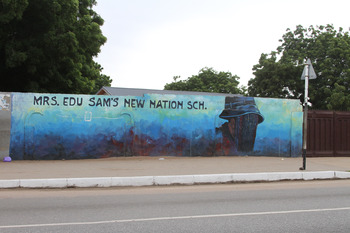
Presently, Ghana is witnessing a coming together among analysts, government, civil society and the public as to how to tackle corruption strategically. For as Mlada Bukovansky (Reference Bukovansky2006:186) points out, “Just as secrecy is a defining component of corrupt practices, publicity is a defining component of anti-corruption campaigns. Public rationales for anti-corruption efforts are worth studying precisely because they help to constitute such efforts.” Nevertheless, as Anas highlights in his discussion of the gift and the bribe, differentiation between understandings of corruption require cultural contextualization (Malinowski Reference Malinowski1922; Mauss Reference Mauss1925; Smith Reference Smith2001) (See figure 1).
Anas, Nima in Accra. Photo courtesy of the Author.

Exposing Corruption in Africa and Beyond
“Africa” and “corruption” are two terms that remain inextricably entangled within the discourse on Africa. Corruption is of interest to scholars in a variety of disciplines; it affects democracy, politics, elections, governance, and power relations; natural resources and wealth; trade and international investment; international aid and development; social relations and gender dimensions. Therefore, understanding the micro- and macroeconomic factors, as well as social costs and impacts of corruption and anti-corruption interventions, are of relevance to Africanist scholars beyond those who specifically study corruption.
Notwithstanding, several African nations score better than some European countries on corruption/integrity surveys.Footnote 4 Corruption, a term recurrently deployed by countless governments, supranational bodies, and individuals, in multiple, multifarious ways, particularly regarding African developing nations and transition economies, is a slippery concept that embodies many practices (Leys Reference Leys1965). So, how has corruption been defined by scholars, and how is it viewed by the lay public? Political scientists, economists, historians, sociologists, and anthropologists studying corruption offer competing and complementary definitions, but by and large, it is widely accepted that corruption is both private and institutional, financial and non-financial, and involves the misuse of public funds for private gain (Agbiboa Reference Agbiboa2015; Harsch Reference Harsch, Wohlmuth, Bass and Messner1999; Nye Reference Nye1967; Sissener Reference Sissener2001). Hence, “corruption is treated like pornography—people are expected to know it when they see it” (Bukovansky Reference Bukovansky2006:186).
The “corruption complex,” that is, associated practices including nepotism, abuse of power, embezzlement, and other various forms of misappropriation, though not corruption in the strictest sense of the word, are typically considered as belonging to the same behavioral category (Olivier de Sardan Reference Oliver de Sardan1999). In spite of this, counter scholarly discourse argues for corruption as an inevitable consequence of modernization, making mention of its positive effects, namely, its ability to humanize the inner workings of bureaucracy and remove excessive and inefficient official legislation and rules (Bukovansky Reference Bukovansky2006; Huntington Reference Huntington, Heidenheimer, Johnston and LeVine1987; Ward Reference Ward1989).
Postcolonial understandings of corruption in Africa may be viewed in terms of their larger historical contexts of political, economic, and social inequality (Amin Reference Amin2011; Haruna Reference Haruna2003; Smith Reference Smith1964). Contemporary corruption discourse genealogies are rooted in colonial discourse. Corruption’s origins are customarily analyzed as endogenous and as the continuation of pre-colonial forms of social organization (Pierce Reference Pierce2016). Some associate it with “tribalism” and patronage, looking after one’s own ethnic group or patrimonial client networks (Pitcher, Moran & Johnston Reference Pitcher, Moran and Johnston2009; Smith Reference Smith2007). Even though in the past, gift-giving and gift-receiving transactions involving chiefs, sub-chiefs, and subjects were regulated and monitored, chiefs were punished or deposed for extortion, misappropriation, and/or misuse of resources (Busia Reference Busia1951). Paradoxically, corruption is also evaluated as a consequence of colonialism (Sissener Reference Sissener2001), since colonial rule was justified as replacing oppression and chaos with “good government” (Tignor Reference Tignor1993). Corruption may also be theorized through colonialism and its legacies (Mulinge & Lesetedi Reference Mulinge and Lesetedi1998); it was maintained and enacted as resistance to the colonial project, continued through independence and the transition from a one-party state (often through military regimes), to multiparty democracy ensued in the name of eradicating or curtailing corruption. But, as observers note, certain dictatorships have been less corrupt than some democracies, and vice versa.
Currently, throughout the African continent, corruption is conceptualized as a conflict between “traditional African” and “Western-modern” forms of governance and politics (Atuguba, personal communications, August 15, Reference Atuguba2018). It is this alleged misalliance that is commonly (mis)understood as the root cause of corruption. Likewise, corruption is seen to occur because official formal norms surrounding state and public administration are in competition with other norms: informal rules and practical rules (Blundo & Olivier de Sardan Reference Blundo and de Sardan2006), albeit the notion of a separation of the public and private in the African context, has undergone critique (Routley Reference Routley2016; Sissener Reference Sissener2001). This applies in particular to prebendal politics, whereby elected government officials and workers feel that they possess the right to a share of national revenues and subsequently employ them to the benefit of themselves, their supporters, and other social affiliates, such as ethnic and religious groups (Adebanwi & Obadare Reference Adebanwi and Obadare2013; Joseph Reference Joseph2014). The boundaries between a legal and illegal commission (gift vs. bribe) fluctuate according to whether one is a beneficiary or not, suggesting there is a continuum between the bribe and gift for services rendered (Olivier de Sardan Reference Oliver de Sardan1999). What is more, rather than a view of corruption as alienated, self-interested greed and enrichment, it may also be seen as being shaped by larger sociocultural factors such as power, privilege, and responsibility (Hasty Reference Hasty2005). Thus, what is considered corruption often varies from one context to another. Rather than privileging a seemingly Western concept, it is empirically justified and theoretically important to examine the spectrum of ideas and behaviors that fall under the rubric of corruption, because they represent collective conceptualizations, revealing the complex intertwining of popular morality, contemporary social processes, and postcolonial statecraft (Smith Reference Smith2007). The challenge to the study of corruption is the fact that it does not lend itself well to academic or journalistic fieldwork, for the reason that it endangers participants as well as those around them.Footnote 5
In terms of corruption, investigative journalism is regarded as a watchdog and catalyst for social change, according to classical liberal democratic traditions (Nyamnjoh Reference Nyamnjoh2005; Obijiofor & Hanusch Reference Obijiofor and Hanusch2011). Its role in the fight against corruption is gaining ground, insofar as foreign aid-induced investigative journalism has created networks of exchange and support, and it has become an instrument in the fight against corruption through the development of professional associations, training institutes, and reporting centers (Myers Reference Myers2014; Oyodele, Lasisi & Kolawole Reference Oyodele, Lasisi and Kolawole2018). For example, international centers (e.g., The African Network of Centers for Investigative Reporting, The African Investigative Publishing Collective), African continent-wide organizations (e.g., The Forum for African Investigative Reporters), as well as national centers (e.g., Information for Development Trust [Zimbabwe], INK Centre for Investigative Journalism [Botswana], The Wole Soyinka Centre for Investigative Journalism [Nigeria]) have emerged.
The International Consortium of Investigative Journalists, based in Washington, D.C. (U.S.), recently partnered with thirteen reporters from eleven West African countries for six months. Together with the Burkina Faso-based Norbert Zongo Cell for Investigative Journalism they analyzed over 27.5 million leaked files and unearthed illicit financial activities from numerous countries such as Niger and Senegal, not to mention prominent public figures including individuals from Mali, Togo, and Côte d’Ivoire. Other examples demonstrate momentum in this respect. The Daily Monitor (in 2018) investigated Ugandan government officials who extorted sex from refugees. The Centre for Investigative Journalism Malawi investigated Beautify Malawi Trust, a non-profit owned by Gertrude Mutharika, Malawi’s first lady, regarding the relationship between their charity sanitation projects and private energy company contracts. In addition, Kenya’s Daily Nation investigated the use of defective transformers, which in turn, inflated customers’ utility bills. And in South Africa, the Daily Maverick conducted an investigation that led to the collapse of VBS Mutual Bank (Mpubani Reference Mpubani2019).
Corruption in Ghana
In 2017, Ghana ranked 78/180 on the Transparency International’s Corruption Perception Index. Successive Ghanaian governments, anti-corruption agents, and measures combatting corruption have adopted many approaches, such as presidential supervision over anti-corruption initiatives, passage of anti-corruption laws and decrees, and the implementation measures include the reinforcement of anti-corruption agencies, such as the establishment of the Commission for Human Rights and Administrative Justice (CHRAJ), the Serious Fraud Office (SFO), Fast Track Courts, and most recently, the Office of the Special Prosecutor (Asamoah & Ofosu-Mensah Reference Asamoah and Ofosu-Mensah2018; Asibuo Reference Asibuo2001). There has also been the recruitment of religious leaders, confiscation of property acquired through corruption, and public executions of persons convicted of corruption charges (Atuguba Reference Atuguba2018). The challenge lies in accruing well-documented incontestable substantiation to fight the war against corruption, rather than the current constant condemnations without evidence.
Many Ghanaians argue that corruption has reached unprecedented levels. Ghana’s most eloquent exponent on corruption, Raymond A. Atuguba, a scholar, lawyer, and public intellectual, notes, “Corruption is a wily and horrifying issue, which has a plethora of truly devastating effects on the fabric of society, as well as the well-being and development of many a country. It destroys governments and democratic institutions, subverts economic growth and stability, and makes a mockery of the rule of law” (Atuguba Reference Atuguba2018:1). This view is reflected in public discourse. Talking about the endemic, embedded nature of corruption in the country has become a national pastime and has given rise to a plethora of accusations, confessions, and anecdotes. Stories of corruption’s configurations are disturbingly omnipresent, dominating popular, legal, political, scholarly, and literary discourse (Armah Reference Armah1968; Engelbert Reference Engelbert2015; Englund Reference Englund2002; Le Vine Reference Vine and Victor1975; Werlin Reference Werlin1972, Reference Werlin1973).
Corruption conversations erupt in tros-tros (informal bus transport), chop bars (affordable eateries), upscale restaurants and bars, and media, including newspapers, radio stations, and television channels. Corruption operates on a continuum. Certain forms of corruption are differentiated as “grand corruption,” which involves large sums of money as “kick-backs” and “commissions” and encompasses top tier and lower level arenas, ranging from singular acts, notably, local and national elections, government and corporate contracts, chieftaincy and land affairs, investments practices, and national and international non-governmental development aid. Conversely, “petty corruption” and other everyday social practices may involve bribing a policeman to avoid a traffic offense fine, a customs officer at the port, or an electricity agent to provide a connection. Actors include political figures, government public officials, businesspersons, educators, and almost anyone else one can imagine. Corruption is considered to comprise “salary supplements,” “gifts,” “expressions of gratitude,” “facilitation/introductory fees,” and/or “compensation.” Furthermore, normative discursive semiology serves to justify, legitimize, and/or stigmatize corruption in multiple ways, as a means of recovery and survival (for example, coping strategies in contexts of inadequate public sector salaries); good manners (the obligation to give and receive a tip); privilege (an office perk); redistribution (no denial of illicit transactions but justified since not a direct beneficiary); mimesis (“doing as everyone else does”); challenge (as a sign of character), and/or act of borrowing (to be reimbursed later) (Blundo & Olivier de Sardan Reference Blundo and de Sardan2006).
In many respects, the Ghanaian pidgin corruption lexicon exemplifies what Jean-François Bayart famously referred to as “the politics of the belly” (Reference Bayart1993). It is directly connected to consumption, through the use of the verb “to chop.” Highly animated, treatments of rapacious “chopping”—and its associated appellations, “chopability,” “chopilization,” “chopiful,” and “chopocratic”—can best be characterized as an inimitable amalgamation of outrage, exasperation, resignation, and/or humor. Stories abound of individuals who “chopped” and then invested, banked their monies, or own properties (always “mansions”) abroad. Conversely, anti-corruption employs the vomiting metaphor (Hasty Reference Hasty2005). Yet, while corruption features in the media headlines daily, Ghanaians also complain that most corruption cases never make the news, and even when they do, they recurrently go unpunished. Paradoxically, as much as Ghanaians are against corruption, they also recognize their participation in, and perpetuation of the (re)production of various everyday forms of corruption. This is most evident in the deployment of the “motivational incentive” or “dash,” the standard monetary lubricant for a plethora of transactions. In sum, everyone is implicated.
******
I recently had the opportunity to meet Anas. In our conversation, Anas explained his multimedia approach to social justice and social change and why it resonates with other regions in Africa and elsewhere in the developing world. Among other things, we discussed his most recent film on the Ghana football administration and corruption, titled No. 12.Footnote 6 The British Broadcasting Company (BBC) released the exposé a week before the 2018 Fédération Internationale de Football Association (FIFA) World Cup; the film implicated many Ghanaians, as well as other African nationals, and forced the Ghanaian President of the Football Association to resign.
The Art of the Bribe
RAAE: Today, you are described as “Africa’s most notorious journalist.” How did you come to be an undercover investigative journalist? Was it by accident or by design?
AAA: I started out as a “normal” journalist, where I had observed the trends in the various military regimes in Ghana. Although at the time Ghana was a democracy, in my opinion, it was a pseudo-democracy. I say this because it was “military grown,” so to speak. You see, as a child I grew up with my family in the military barracks at Burma Camp [in Accra], and this impacted my formative years. Later, as a young adult, I read the important works of a number of prominent journalists, such as K.K. Inkoom [Daily Graphic] and Tommy Thompson [Free Press of Accra], who had undergone a great deal of challenges and obstacles in order to produce their work. But, even back then, I observed that only minimal changes resulted as a consequence of their efforts. There just was not that “knock out” punch to their work. By this, I mean, this was not work that could remove criminals from society. Rather, I viewed the situation as reinforcing criminality in society. So, it was then that I first began to consider the option of working as an undercover journalist. I was also interested in appealing to the youth. At that time, journalism in Ghana was operating according to an old paradigm, whereby journalists created an exclusive story, kept whatever information they gathered to themselves, and did not share it with law enforcement agencies. This led me to think that, if we, as Ghanaians, are aiming at creating a just society, why not collaborate [with law enforcement agencies]? Certainly, I was aware of the importance of exclusivity for journalists, and the notion of not having a relationship with government that would compromise our work—nonetheless, it did not make sense to me. To my mind, once we as journalists are convinced of a story, and able to position ourselves in way that we can work without being inadvertently influenced or manipulated, it does not stop us from working with others in enforcing the law. Besides, as journalists, we do not possess the powers to arrest people, so if we seek justice, we can assist in fighting crime. It is in keeping with this philosophy that I developed my mantra, “name, shame, and jail.”
RAAE: But you also studied law?
AAA: Yes, I studied at Ghana Law School and was called to the bar in 2013. I would describe my career as a metamorphosis. After working for some time as a journalist, I then asked myself, “How do I, or rather, what are the necessary steps to take in order to have an impact on society?” and “What is the shortest, and most effective route to take?” Journalism embraces a lot of advocacy and also the opportunity to represent the voiceless. The next step was to solidify the journalism and make myself almost impenetrable in terms of legalities. So, I decided to become a lawyer. Knowledge of the law helps so much because even if you are undercover, you must know the “ingredients,” so to speak, if you want to have a successful prosecution. Law is the backbone of our kind of work. I am not a typical lawyer who is always practicing in court. But I know enough law in order to help “get me around.”
RAAE: How do you view your approach?
AAA: I consider my approach as a simple solution to a problem specific to my country, Ghana. Of course, such an approach might not work in other parts of the world, so it was also a matter of knowing my society. Yet, I also see Ghana’s problem as an “African problem,” for the reason our situation resonates elsewhere in the continent. However, I should add that when I attended a screening of the film about my life, Chameleon [named for Anas’ penchant for disguises] in Mexico, I discovered that my Brazilian colleagues loved the film.Footnote 7 I was shocked, but I learnt they faced similar problems to those we have in Ghana, so I realized this paradigm might be applicable in different places. So, whilst I had to explain to the British and North Americans attending the event, I did not have to [explain] to the Brazilians that my purpose was to bring a smile to my peoples’ faces.
RAAE: I was introduced to your work through some of your early documentaries, such as Deadly Gold, How to Rob Africa, and Ghana in the Eyes of God. I wonder if you could speak about your decision to turn from print to film? Why film? Why is film so special to you? What does film do? Both for you and for your audiences?
AAA: It grew organically. I am a product of our society. Although I started in print [the newsroom], when civil society started developing here, there was a need for a much stronger evidence—in other words, the bar for proof in the public domain kept rising. So that was when the concept of multimedia emerged. I felt there was a need to combine methods. Initially, as a print person [working for The New Crusading Guide with editor and mentor Kweku Baako Jnr], whenever I went to the various locations to do my stories, I also took my camera. Still, what was I to do with these photographs after having printed them? Or, with videos that I had created? In the beginning, I gave my material to the news stations so they could cut bits of it and use it for their news items. That was when I had a ten-minute footage. But as my investigations became bigger and stronger, and I started to collect hours of footage, naturally, I asked myself, “What do I with all of this?” So, this is how I became a television or radio journalist. It grew organically. I had the information. People at several international organizations remarked upon the fact that I had a great deal of material and suggested that I turn to television. So that is how I became what I am today. I still call myself a “multi-media” person because I love print. I am a typical print person. You can see my print in television. You can even feel it, that this guy [myself] is not just committed to being just a typical broadcaster. You will notice that people say, “I saw it.” In my view, “I saw it” and “I read it” are not the same thing. Film simplifies, and film increases credibility.
RAAE: What are peoples’ reactions to watching your films?
AAA: I think it depends on the issue in the film. I have produced many films that make people very uncomfortable, that they don’t want to watch, or they will watch parts of it, and say, “I just can’t watch it” [in its entirety]. There is a mixture of reactions. Whatever the situation, such responses are good, because it means that perhaps this is a topic that all of us must look at. Nonetheless, the person who says, “I heard about the movie and tried to watch it, but I couldn’t” is as committed to fighting that menace as the one who watched it.
RAAE: So, do you think Ghanaians are becoming increasingly more discerning? And, if so, why is this?
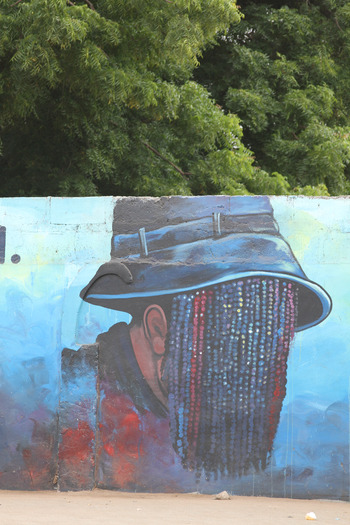
AAA: Yes. I always congratulate the middle class that is growing. Education is important. Apart from the upper and middle classes, the other people, they are consumers of information, but today, if you say, “Anas is corrupt,” they believe it. Tomorrow, if you say, “Anas is not corrupt,” they believe it. They are so gullible; they have no position. They are not critical thinkers. On the other hand, the situation in Ghana is getting better, and it will go through a phase of pruning over a period of time. People did not use their voices because they thought they had no voice. Now, they are beginning to realize, “Oh wow, this little thing that I wrote has gone viral.” For example, consider the recent police brutality case at a bank. Someone puts the documented footage in his/her social media wall. S/he goes to buy food and come [back home]. And by the time s/he returns, finds that the post has been shared a million times. The person puts his hand on his head and asks, “Is it me? When did I become a king?” By the evening time, the President is commenting upon it. That is how you grow society. That is how you empower people. The person asks, “Am I that important?” These are the little changes. But they are growing. People sit in their houses and they are bored. They do selfies and they talk. Other people respond, so they ask themselves, “So, I can sit in my bedroom and people will listen?” This is the metamorphosis we are going through. It can only lead to good things. Initially, it will start with a lot of trash. But time will take care of all of this (see Figure 2). Anas, Nima in Accra. Photo courtesy of the Author.
In my mind, this is not the time to shut down dissenting opinions. Let us encourage more people to turn to social media and let their voices be heard, whether their views are wrong or right. Then, in this way, three, four, or five years down the line we will now start [to develop into something more critical] … social media has its own particular way of vetting people and adding credibility to the voices we hear, and the things we read on our [social media] walls. For instance, I have friends who “block” people. That is a way of sanitizing social media. And, there are also people who write on social media and no one comments. Why? So, it’s all a matter of time. But for now, every Ghanaian should concentrate on encouraging more people to join social media. Our government states that they don’t operate according to what is portrayed on social media. But whatever issue is depicted on social media, they follow it. This is because the government knows [the power that social media holds]. The rights of the middle classes are creating a lot of fear and panic in government. I am perhaps feared because of the following that I have.
RAAE: Still, throughout your career, you have faced a great deal of controversy and criticism over a number of things. For example, your methodology of obtaining information is a longstanding popular topic of conversation amongst Ghanaians. Certainly, your work focuses on secreted, clandestine, or concealed practices that are oftentimes illicit. But there has been much disagreement over your approach with suggestions that it is unethical, and also that the public is led to verdicts before a court has found them guilty of a crime.
AAA: Sure, we have a growing middle class in Ghana. It is the middle class critiquing my methodology. On the other hand, I am such a controversial journalist that when I don’t get critique on a story, I am not happy. What is the point in doing a story and no one is talking about it? Ask anyone who knows me. If I finished a story, and all was uneventful and accepted, I would ask myself, “So what is the controversy in the story?” Where is the “fear” factor or the “wow” factor? It exists in every story. At times at a high level, and at others at a lower level. Sometimes, a story can be quiet, but when it is released, it is accompanied by death threats. Nonetheless, the story is not complete if there is no controversy.
RAAE: I understand. But I want to ask you, is there not controversy and critique, and then what we are witnessing now, which is far more serious, far more alarming? Recently, there was a film exposé Who Watches the Watchman? aired by Kennedy Agyapong, a Ghanaian Minister of Parliament and businessman. The film was intended to expose you for your “dubious investigative operations.” But more than that, I have also read newspaper articles that state that you have been forced to go “on the run,” constantly moving location, sleeping in taxis, and so forth. A few weeks ago, another newspaper article claimed you went to the American embassy in order to get visas for your family to leave Ghana. Are these urban myths? Please, can you speak to this?
AAA: I have not been sleeping in taxis (laughing). And, the American embassy is a public institution. So, if I have gone there, definitely, people will know. The reality is, I have not travelled since my film No. 12. Then again, as for detractors… The point is, if I have just taken a whole group of people out of office, they are bitter. They have lost their income; they can’t cheat, and they can’t steal. Most of these people, they have been disgraced. Now, whatever they say, or whatever they will do to bring your career down, that is another issue. Then again, the good thing is that [working with] the likes of the BBC and Al Jazeera, is that they care about the credibility of their reporting. So, every single allegation that you make, they will investigate it, in order to satisfy themselves whether there is any merit in the allegations. As for this most recent situation, this is not the first time, and it will not be the last.
RAAE: Are organizations such as the BBC and Al Jazeera conducting research into allegations in order to satisfy themselves because it is their reputation, or because they are concerned about your welfare, or is it a combination of the two?
AAA: It’s a combination. It’s also about having the issue under control. So, whatever swipes are taken at a certain person, it will not end up in the death of our reporter. That is important to them. In addition, if our reporter was wrong, we need to know how to address it. I mean if someone says, “hang the journalist” and “the journalist has killed people.” Outrageous. When people make such statements, others come and see me, and we laugh. We laugh, for the reason, who would say that a journalist should be killed in this day and age? Even those who feel insulted [as a consequence of my work], I would never wish for that. The key thing is that we should encourage more dissenting voices in Ghana. That said, such work is “a package.” You can never have the fame and all the accolades without these scratches. And the more the scratches, the more people put your work under close scrutiny to convince themselves you are good, and you are what you portray yourself to be. For example, when somebody alleges that one has done this and that, and then you sue the person, all the issues that s/he claimed are brought before the court. At the end of the day there will be a verdict. What does the verdict do? It serves to enhance my credibility. Anybody who thinks that when you take a swipe at such “big” people in society and no such suits will come at you is a joker. I am saying that No. 12 is not the first. It will not be the last. Even my film Malawi’s Human Harvest generated a lot of critique directed at me. It is normal. Although, they now tell me that they have arrested the murderers who have confessed to murdering one person. So, the same people who were formerly blasting me and insulting me now have admitted that I have done a good job.
RAAE: Earlier on, you spoke about doing something that is appropriate for the Ghana context. But, since your work has a very large international appeal, I am also thinking about your non-Ghanaian audiences. Are you concerned that perhaps your documentary films continue to perpetuate old, ethnocentric, racist, colonial stereotypes? That is, it reinforces problematic framings of Africa and Africans for non-Africans?
AAA: I think that the African continent is in transition. I think that when you read United States or British history, you realize that where we are now, as a people, they have been there. People had to make sacrifices. We have the benefit of hindsight [vis-à-vis other histories]. In Ghana, the transition is on. We simply have no choice but to push at the frontiers. There are defined institutions that we need to make things work but they require individuals pushing. It’s not going to be rosy path. It will not be “a tea party.” Nevertheless, the moment we decide to stop the push, that will be when our problems begin. It is important to note that pushing the frontiers means taking hard decisions that will affect peoples’ financial and social status, including the fact that we may sometimes fail. If you attempt to take away the financial and social status from any human being, s/he will bounce back and fight. That’s why the fight is ruthless. What is more, people even prefer dying than to your disgracing them because of their needs. We, as people, have a pride that we will do everything we can to protect, whether one has committed evil or not. When I look at our history, I think we are better off today (than in the past). Sometimes, it’s a very slow change. If we are not careful, people can become despondent and feel that we have been doing this for so many years and nothing has changed—there is always corruption. However, people have forgotten that ten years ago, the police, military, and government impunity was so high. Today, it is reduced. They have forgotten that ten or fifteen years ago, there was nothing like media freedom in Ghana. We fought for it. There is a class of people, who, because of what they are gaining from corruption, would prefer people to think that nothing is happening. They want for people to conclude that all that we are doing is for nothing and is a waste of time. According to their view, “why don’t we just and sit watch the system and pray to God?” I keep saying, whatever people say, we will not just push the frontier but encourage young people to learn to also push the frontiers of democracy. In the United States, United Kingdom, and other places, they have reached other levels of pushing the frontiers; they have not just gone to bed. Look at for example, President Trump. People are pushing against Trump. There is also Michael Cohen, President Trump’s personal lawyer and the Federal Bureau of Investigation (FBI) investigation. Cohen knows what he is doing, even though it’s making the President uncomfortable. He is aware that even if the President sacks him, the whole of America will support him. Those are the kinds of institutions that we want; institutions that are strong. You can only have strong institutions when you have strong individuals. We are not very far from that [scenario].
RAAE: But again, I want to come back to people who live outside or have never travelled to the continent, who have certain ideas or imaginaries about what Africa is—do you think that showing films about child trafficking, “witchcraft,” or corruption just reinforces those stereotypes?
AAA: I don’t think so. I think it depends on what people see. I provide the viewer with the problem, but also with the solution. Now, there is trafficking in the United States, United Kingdom, and so on. But the thing is, how do we deal with it, in Ghana, as a people? I just did a film called The Invisible Hands (2018), where there were lots of children working on cocoa farms. It was about letting the world know that cocoa farms involve child labor, there are institutions that have not “gone to bed,” and that if the Ghana police is aware of this problem, they will take stringent measures to ensure that ends. The film also looks at the role of multinationals, making the connection between the problems in Africa and the rest of the world. It was premiered at the United Nations. So, my journalism is not only about portraying the problem, but also about finding the solutions to the problem. That’s my take.
RAAE: I would now like to turn to discuss corruption. This is a topic, perhaps best exemplified in your film Ghana in the Eyes of God: Epic of Injustice (2015) on corruption in the Ghana judiciary system, which resulted in the removal of office a number of high court judges, lower court judges, court registrars, and interpreters,Footnote 8 ,Footnote 9 and also your latest film No. 12 (2018) on the Ghana football administration, which forced the Ghana president of the Association to resign.Footnote 10 Nonetheless, corruption is a globalized phenomenon and of concern for many, in many parts of the world. Yet, there seems to be a great deal of ambivalence about how to define corruption. It speaks to the complexities of issues such as gift exchange, reciprocity, kinship, patronage and other associations, ethics, and moral economies. In other words, what constitutes and does not constitute corruption? Why is it so prevalent? Thinking about the African context, there is a long historical tradition of gifting. In my mind, I am curious to know if you think we can disentangle any discussions of bribery from gifting? What is the difference between the bribe and gratuity, known locally as a “dash”? So, can I ask, is there a difference between bribery and gifting? Is that one is done before and the other after? Is it the amount? Is there a moral distinction? Or, is it about something else? Or rather, is the dash just a more socially accepted way of paying a bribe? I am not saying that corruption in the past did not exist, but do you think it’s gifting transformed? I am also wondering if in a society where people are related through kin networks, the gift can come at any moment in time, and can take many different forms. But in the contemporary, urban setting, where those old networks have broken down, it’s a different kind of network that requires a different kind of gift? My apologies, these are a lot of questions.
AAA: I can tell you how I apply it when I am working. A gift is a gift. If the rules say you are not allowed to take a gift, you should not take that gift. Therefore, terming something a “gift” alone does not make it so. It can still be a gift and also a bribe. For example, if someone approaches the director or governor of the bank of Ghana in search of a license with the understanding of giving a gift of two million dollars, clearly it is not the label that makes the difference. I determine whether something is a gift or bribe by paying close attention to the question of [personal] interest or motivation, at that time. In a typical African society, somebody says “thank you” after the whole job has been done, for example, when you are naming your child and you bring an MC. You didn’t buy the MC, but he came to do it. The family decides to go to his house to thank him with tubers of yam. I can’t see corruption anywhere. That is what I would classify as a proper gift.
I would look at after [an event or transaction]. I ask the question: What is your interest? I mostly focus on interest. In the case that someone reveals that they will donate a gift afterwards, that dilutes it. That is why interest is important. Certainly, it’s very difficult to decouple culture and cultural settings from the act of giving. But, once we allow cultural settings to “seep into our pores,” people take it a notch higher and think it’s the norm to give gifts prior. Furthermore, even if you give before, they still want it afterwards. So, we now have a situation where there are those who want it before and after. When you come before, they will demand. And afterwards, if you don’t bring [it], they will come to your house and say, “bring it.” So, the earlier, we say “no”—right from the onset, the better.
Now, back to your point about escalation. Yes, that is the point. It’s the gifting that people are twisting and taking advantage of. Certainly, gifting gives room for bribery. Sometimes, when someone wants to bribe, they can sometimes approach a friend or the people around a person. So, the surest way, and I have said this before, is to codify the gift—what should and what should not be declared. Our laws, apart from what the president is allowed to receive and must account for, do not translate down to the Ministerial level, spelling out what s/he can or cannot receive as gift. This gives room for people to take advantage. Hence, I am calling for codification of the gift. This is a bottom-up approach. We must not only focus on the top. When we do this, it becomes clear. For example, when I was doing No. 12, and I read the Fédération Internationale de Football Association (FIFA) rules, I knew straight away that Kwesi Nyantakyi could not receive a gift.Footnote 11 So, giving him money and saying it was “a gift” was immaterial. In fact, when I was giving him the money, I said “this is a gift for you.” Still, some Ghanaians don’t understand, because they say, “you yourself said this was a ‘gift.’ Why are you saying he is corrupt?” Thus, there is this confusion. I believe that we must begin to codify and set the record straight about what is and is not acceptable.
RAAE: But, we would have to do this in all arenas, no?
AAA: First of all, we need to know what are the areas and/or professions that attract corruption. For example, in a school it may not be the teacher, but rather, it is likely to be the school head because of admissions. So, anywhere that that net can catch, we must apply the code.
RAAE: It seems corruption is a complicated project because it is governed by specific rules, codes, and practices; in other words, one needs to know the whom, how, and when, as well as how much. These things are not explicit. And, there is also the question of the actors’ various hierarchies.
AAA: It is very, very complicated.
RAAE: I want to return to the role of kinship again vis-à-vis corruption.
AAA: You mean in the traditional settings?
RAAE: Yes, and also contemporary, urban contexts.
AAA: I think this is the case everywhere. Who you know matters. Who you know has its positive angles. Nonetheless, we must develop our institutions and set our standards. For instance, if you want a job and you have the necessary qualifications, it does not matter whether you know anyone. It is not wrong to suggest a person for a professional position.
RAAE: So, a kind of mild nepotism is acceptable?
AAA: I don’t know what to call it. I would prefer to have an array of people to choose from. Let’s have a strong set of rules, so that no one is cheating to put anyone there. Why do we advertise positions? We advertise because we want people. Inasmuch as the “who you know” is not going to lead to people bending the rules, I don’t mind, they can bring everybody. But, only if the [decision-making] person there is a strong-minded person to conduct such activities. Who you know is everywhere. It’s how you put it to use.
RAAE: What are the conditions that allow for corruption to take root and flourish?
AAA: Poverty would be one reason. When people feel that they are poorly paid and unable to take care of their family, they are tempted turn to corrupt practices, forgetting the fact that if everyone were to decide to “dip their hand in the kitty” there would be nothing left. There is also inertia within government to stop corruption. When you are living in a society where you know government condones corruption, you are not bothered, because you know you can do whatever you want and no one is going to do anything to you. When you have a society where the people are quiet and seem unaffected when they are cheated, then corruption thrives. When you have systems that encourage the energy of the fraudsters and the reckless, without the journalists, there is no one to check anything, so corruption will thrive. When you have a government that sets out to clamp down on vociferous individuals and human rights organizations, they fail to realize and are seeking to say that they want chaos to raise its head in our society. All these together encourage corruption.
RAAE: Has corruption always been an issue?
AAA: I think it’s getting better because of the middle class and social media. Today, it’s not just me alone. When I get up in the morning and I scroll through Facebook, for example, I see that other people are also fighting—even if it’s in a small way.
RAAE: Ghana has conducted and published numerous official investigations into corruption. It appears there is a large anti-corruption industry comprised of government officials, committees, and non-governmental organizations and consultants, for example, Transparency International—and you! An anti-corruption stance has become a powerful political tool. In Ghana, we witnessed this in the run-up to the last elections (2016). A short while ago, you gave President Nana Akufo-Addo the privilege to watch No. 12 prior to its release. That said, it is difficult to eradicate corruption in reality, as we are seeing now. Nevertheless, our president has created a role for Ghana’s first Special Prosecutor, Martin Amidu, and the newly created Office of the Special Prosecutor. What is your view?
AAA: Yes, our president said he would apply the “Anas principle” when he comes to power. He is yet to use it … But people appreciate what it can do. When you come into power and sit on the throne, you know that if you want to implement the Anas principle, the whole government can come down. I am still waiting. It is not easy and will never be easy. I don’t think that the special prosecutor alone is capable, because until we orient the investigators we are getting nowhere. I would rather see an institution than a personality. This is not about Martin Amidu per se. It is not about individuals. But our president seems to be more fixated with a person. I am not sure why. He is working from a top to bottom approach. I would rather work from the bottom up, so that we have a strong institution and so that anybody can be placed at the top and it will still run. I think the Office of the Special Prosecutor will do very well, in the future. But in the short term, it will face a lot of problems. Since the Special Prosecutor draws his powers from the Attorney General, it is not an exceptional strategy.
RAAE: It will take time. Even so, do you ever wake up in the morning and think to yourself, “Oh, not today”? Do you ever have your “down” moments?
AAA: Usually, the “down” moments come when one is looking for solid impact but instead, gets very little. Yet, in those moments, one only has to check their email inbox and see the countless messages from people asking for help on a number of issues. You think about the many children that you have helped that would have died without your intervention. You think about your inability to act, and the consequences of your inaction. It is important to understand, as African journalists, we have no luxuries, because the decision not to act in certain situations can lead to many problems. The guy is assembling the guns, and he is going to kill them if you don’t intervene. So, you can have blood on your hands by your inaction. Sometimes you can’t sleep because you don’t have the capacity or the financial resources to act. You also know, only too well, that if you had that capacity you could have ended this violence. That is another moral dilemma that many of us go through, not just me, many other African journalists. Then again, you can only do what you can.
Sometimes, the stories that the West tells about Africa and our societies are not exactly the sort of stories that we want to communicate. But, in order to get them to tell our stories, you can only join them. And nudge them towards what the real story is. I wish I had the capacity—without the support of the BBC and Al Jazeera—to be able to determine the story that is important to grandma, my kinsmen, and the people of Kenya and South Africa—the story they want to hear. Unfortunately, we have to compromise and tell a story that people in the United Kingdom find palatable and that also appeals to Kenyans, South Africans, and Ghanaians. It’s always a matter of trying to create and maintain that certain balance. Not because we love it [balance], but because that is where we [as African journalists] find ourselves. No. 12 is a typical example. It’s my people’s story. The BBC would call it betraying the games. For the reason, they are describing it from their perspective. But I have to say, “No, I want to tell my people’s story.” Even then, one has to fight, because they will say, “No, we have the exclusive right, why do you want to portray the story in a different way?” I have to say, “I agree, you have the exclusive right, but I also need to do the film in this way.” BBC will not enter politics. They don’t care. But, I know what it means to me here.
RAAE: Perhaps those are the BBC’s politics?
AAA: Exactly.
RAAE: So, what would be a story that your grandmother would like? Could you please give me an example?
AAA: There are so many stories! One story would be, why they just fixed the road a month ago and it’s already broken down.
RAAE: I would love that story!
AAA: Exactly! Another story would be: Why is that we are planting corn, and the corn is not growing as it used to grow five years ago? They bring us fertilizers every day. What is the quality of this fertilizer? Or, another still: What about the fetish that kills children? Is it true? These are the stories that we, as Ghanaians, want to hear. If we can make an impact at the little corners, from where we are, that is how we can grow and develop our society. When we demystify all the myths that surround us, there will be nothing stopping us.
RAAE: There is one question I must ask, if I may. You are immersed in this work and I get the sense that oftentimes, the adversity in your work drives you, but what about those around you? How does your family feel? Do they want you to this? Do they support you?
AAA: It’s not about “want.” Everyone has a right to choose his/her profession. It’s about how you counsel the people around you. You have to let them understand from the beginning that this work is not “a tea party.” Those around me won’t be happy about certain things, but they have to make do with the fact that that is my chosen path. Apart from it being a profession, it’s also a passion. I am unfulfilled doing anything else. But back to your question, one cannot do anything about people being worried. Other peoples’ emotions are not your emotions. It may hurt, but you can only reassure. That is the reality. When we [as a team] decide on a story, we expect that it will “ruffle a few feathers.” No story comes on a silver platter. All stories leave marks, indelible marks. Either on your skin or in your head. It’s normal. I have gone through this, over and over and over again.
RAAE: Lastly, how do you see the future?
AAA: We are not “out of the woods” yet. We will have to make our mark. Posterity will not forgive us if we don’t. There will be a constant fight between evil and good in society. Our decision to stop fighting can only lead to more problems, because it’s not as if the evil goes to bed. We need to make that choice. Our choices are hinged on our survival as a people. And, in making that choice, we should know that it will come with thorns capable of even taking our lives. I feel positive. It will be tough. But, we have to be prepared. In my lifetime, we will achieve some, but not all.
RAAE: I hope so. Thank you so much for making the time to talk to me.
AAA: Thank you, too.
Conclusion
Anas is one of the leading local anti-corruption actors in Ghana today. Throughout the course of this interview, Anas explained his personal experiences, understandings, and response to corruption. His critical analysis of corruption engages with the global institution and state systems, practices, and discourses surrounding good governance and anti-corruption measures. More specifically, Anas argues for the need for strong institutions, as opposed to leaders who are strong individuals or personalities. He recognizes the long tradition and cultural issues of gift-giving and gift-receiving, yet does not think that culture should be employed as a justification for corruption. What is more, he contends that there should be well-defined rules and constant monitoring surrounding prebendal practices.
Anas’ investigative journalism, by way of a multi-media approach, represents an emerging and novel response to corruption “on the ground.” If, as Giorgio Blundo and Jean-Pierre Olivier de Sardan (Reference Blundo and de Sardan2006:9) suggest, “it is one of the characteristics of corruption that it is constantly condemned without major proof … we are essentially dealing with allegations, accusations, suspicions that are aired in the press or in private conversations. In this regard, we are approaching a sociology of rumor,” then Anas provides evidence for how the discourse and practice of corruption operates. For this reason, his work resonates profoundly with most, if not all Ghanaians, despite their varying responses to the ways in which he implements his approach toward combatting corruption. Anas’ investigations expose just how corruption has become central to investigative journalism’s popularity on the one hand, and the manner by which it has also become focal to political critique, popular interest, and exposé of corruption on the other. Still, it is unclear if these anti-corruption scandals will produce the necessary positive practical results. This crusade against corruption, while politically embarrassing, may also inadvertently discredit the various institutions, structures, and actors in a such a way that diminish their effectiveness. It is not insignificant that state and private journalists, including Anas himself, have been accused of being corrupt, both privately and publicly.
The impetus behind this interview was to take note of Anas and his work and to depict how investigative journalism can usefully contribute to academic understandings of corruption, and in turn, to the development of public policies and practices that address corruption. Anas creates and produces films that attract large audiences. His work is dramatic; it is controversial and elicits attention, even if, at times, the attention is negative. Academics too, have been successful in their critical understandings of the “corruption complex” and “moral economies,” among other terms. However, it is still undetermined the extent to which scholarly knowledge traverses beyond the boundaries of academia and contributes to conversations within the public domain. Taken together, investigative journalism and academia can play an ongoing and constructive role in understandings of corruption. They illuminate the fact that corruption remains intimately enmeshed within complex historical, political, economic, socio-cultural, and psychological realms, and is thus difficult to eradicate. It is clear there is as much a “culture against corruption” as there is “culture of corruption” (Smith Reference Smith2007:6). In the final analysis, and contrary to Ghanaian journalist K. Yeboa-Konadu’s exclamation in Reference Yeboa-Konadu1969, that the topic of corruption was so exhausted that to talk about it could be seen as “an unnecessary boredom,” it seems corruption will continue to be a topic to be discussed by journalists, academics, and the public for quite some time to come.
*Postscript
In 2018, Kwesi Nyantakyi resigned from his FIFA position.
Ahmed Hussein-Suale, an investigative journalist and member of the Tiger Eye Team, was murdered on January 16, 2019, in Madina in Accra.
In April 2019, Anas announced the creation of the Tiger Eye App, produced together with the Swedish company Klarity, designed to encourage the youth to participate in the fight against corruption.
Acknowledgments
I extend special thanks to Anas Aremeyaw Anas for this interview. I thank Selase Kove-Seyram. I thank Kennedy Agyapong for our conversation. I owe thanks to Raymond Akongburo Atuguba for his constant support. My gratitude also to Benjamin N. Lawrance for his advice and feedback. I also thank the four anonymous reviewers for the African Studies Review.