Introduction
Common mental disorders (CMDs) such as anxiety, depressive and adjustment disorders are highly prevalent in the working populations and are associated with long-term sickness absence and poor work functioning (Ahola et al. Reference Ahola, Virtanen, Honkonen, Isometsa, Aromaa and Lonnqvist2011; Perbellini et al. Reference Perbellini, Tisato, Quintarelli, Dal, Pelizza, Riolfi, Zonzin and Romeo2012). Sickness absence due to these disorders is increasing in many high-income countries, contributing substantially to disability claims and permanent exclusion from the labour market (Kivimaki et al. Reference Kivimaki, Forma, Wikstrom, Halmeenmaki, Pentti, Elovainio and Vahtera2004). For instance, a UK study showed that mental disorders account for almost 40% of sickness absence claimants (Shiels et al. Reference Shiels, Gabbay and Ford2004). In Canada, mental disorders accounted for 30% of short- and long-term disability claims (Mental Health Commission of Canada, 2016). Interventions enhancing return to work (RTW) among sick-listed workers with CMDs, therefore, have significant public health and economic implications. Primarily, RTW is a goal for workers who are absent from their job, as they want to avoid negative consequences, such as prolonged work disability and loss of earnings (Arends et al. Reference Arends, Bültmann, van Rhenen, Groen, van and Klink2013).
To enhance RTW, a number of interventions have been developed in the past decades, including psychotherapy, stress-reduction treatment, pharmacotherapy, and psychoeducation. Some studies suggested that psychological interventions focusing on restoring contact with the workplace and multidisciplinary interventions (i.e. interventions involving professionals from more than two healthcare disciplines and working in an integrated team) might have positive effects on achieving a fast and safe RTW (Martin et al. Reference Martin, Nielsen, Madsen, Petersen, Lange and Rugulies2013; Netterstrøm et al. Reference Netterstrøm, Friebel and Ladegaard2013). Graded activity approaches might also improve initial (partial) RTW rates and reduce sickness absence, but the recurrence of sickness absence appears to be high and continues to be a challenge. Another group of studies revealed that these interventions had no superior effect over control groups (Nystuen & Hagen, Reference Nystuen and Hagen2006; Vlasveld et al. Reference Vlasveld, van der Feltz-Cornelis, Ader, Anema, Hoedeman, van Mechelen and Beekman2013a , Reference Vlasveld, van der Feltz-Cornelis, Anema, van Mechelen, Beekman, van Marwijk and Penninx b ; Volker et al. Reference Volker, Zijlstra-Vlasveld, Anema, Beekman, Brouwers, Emons, van Lomwel and van der Feltz-Cornelis2015a , Reference Volker, Zijlstra-Vlasveld, Brouwers, van Lomwel and van der Feltz-Cornelis b ). A study even showed that patients in the intervention group had more sickness absence and a delayed RTW than the control group (Martin et al. Reference Martin, Nielsen, Madsen, Petersen, Lange and Rugulies2013). Organization and system level factors such as the social security system, sickness certification process, and occupational healthcare policy might contribute to the effectiveness of a certain RTW intervention.
In occupational mental health literature, interventions differ with regard to content and methods, but have some shared elements. Interventions developed for RTW in workers with a CMD are primarily based on cognitive behavioral therapy (CBT) principles and coping strategies. These strategies share common goals and can be combined into interventions that address work issues. Descriptive reviews have been conducted on sickness absence and work disability in individuals with musculoskeletal disorders, depression and adjustment disorders (Franche et al. Reference Franche, Cullen, Clarke, Irvin, Sinclair and Frank2005; Durand et al. Reference Durand, Vezina, Loisel, Baril, Richard and Diallo2007; Williams et al. Reference Williams, Westmorland, Lin, Schmuck and Creen2007; Bethge & Muller-Fahrnow, Reference Bethge and Muller-Fahrnow2008; Blank et al. Reference Blank, Peters, Pickvance, Wilford and Macdonald2008; Shaw et al. Reference Shaw, Hong, Pransky and Loisel2008; Carroll et al. Reference Carroll, Rick, Pilgrim, Cameron and Hillage2010; Cornelius et al. Reference Cornelius, van, Klink, Groothoff and Brouwer2011; Desiron et al. Reference Desiron, de Rijk, van Hoof and Donceel2011; Hamberg-van Reenen et al. Reference Hamberg-Van Reenen, Proper and Van den Berg2012; Higgins et al. Reference Higgins, O'halloran and Porter2012; Hoefsmit et al. Reference Hoefsmit, Houkes and Nijhuis2012; Pomaki et al. Reference Pomaki, Franche, Murray, Khushrushahi and Lampinen2012; Streibelt & Egner, Reference Streibelt and Egner2012; Odeen et al. Reference Odeen, Magnussen, Maeland, Larun, Eriksen and Tveito2013; Dewa et al. Reference Dewa, Loong, Bonato and Joosen2015; McDowell & Fossey, Reference Mcdowell and Fossey2015). However, there are only two meta-analyses in individuals with depression and adjustment disorders (Arends et al. Reference Arends, Bruinvels, Rebergen, Nieuwenhuijsen, Madan, Neumeyer-Gromen, Bultmann and Verbeek2012; Nieuwenhuijsen et al. Reference Nieuwenhuijsen, Faber, Verbeek, Neumeyer-Gromen, Hees, Verhoeven, van der Feltz-Cornelis and Bultmann2014). These reviews also excluded employees with other CMDs and focused entirely on sickness absence without addressing RTW. Particularly, RTW is a major challenge at workplaces in the mental health field. Moreover, major depressive disorder, anxiety disorders and other stress-related disorders are internalizing disorders, which represent overlapping variations of emotional distress in response to life stressors and difficulties. From a clinical practice perspective, it is important to aggregate commonly diagnosed mental illnesses in workplaces including depression, anxiety disorders (panic attacks, generalized anxiety disorder and phobias), obsessive compulsive disorder (OCD), and post-traumatic stress disorder (PTSD). Anxiety and depressive disorders have also a high rate of co-morbidity. In a large clinical sample, current and lifetime co-morbidity of the DSM-IV anxiety and mood disorders was found to be 55% and 75%, respectively (Brown et al. Reference Brown, Campbell, Lehman, Grisham and Mancill2001). Therefore it is prudent to address them together.
The objective of this study was to systematically review and examine the effectiveness of interventions aimed at enhancing RTW in individuals with a CMD.
Method
Protocol and registration
This systematic review and meta-analysis was conducted in accordance with PRISMA guidelines (Liberati et al. Reference Liberati, Altman, Tetzlaff, Mulrow, Gøtzsche, Ioannidis, Clarke, Devereaux, Kleijnen and Moher2009). A protocol was developed in advance of conducting this review and registered at PROSPERO (CRD42016033092) http://www.crd.york.ac.uk/PROSPERO.
Information sources and literature search
An extensive search in biomedical, psychological and economic databases Medline/PubMed, PsycINFO, EMBASE, SocINDEX, Open Grey, and Human resource and management databases was conducted to find relevant articles regarding interventions enhancing RTW in individuals with CMD. Other search methods included screening references listed in relevant systematic reviews and identified RCTs, searching abstracts of relevant meetings, and personal communication with content experts in the field. Our search strategies for each database and PRISMA flow chart are shown in the Supplementary Appendix. We searched for relevant articles written in English with a publication date from January 1995 to 2016. Two authors (M.U. and S.M.) performed the search on electronic databases. Duplicates were searched for and excluded, obtaining a final sample of references to be screened. References were initially screened by two authors (Y.T.N. and Y.L.) by titles and abstracts and finally by reading the full text if indicated. When the reviewers did not agree about the inclusion or exclusion of a certain paper, discussion took place to achieve consensus.
Eligibility criteria
Studies were selected if they met the following criteria:
Population
Employees aged ⩾18 years who were absent from work due to a CMD including depressive disorders, any anxiety disorders (panic attacks, generalized anxiety disorder and specific phobias), OCD, PTSD or adjustment disorders.
Interventions
Any clinical or work-focused interventions aimed at enhancing RTW.
Study design
Randomized controlled trial (RCT) and cluster RCTs were included. When there were different publications for the same intervention, we included the one that presented the latest results and most relevant outcome measures to our review, which was RTW.
Outcome measures
(1) RTW was defined as proportion (percentage) of employees who returned to work after the intervention; (2) time or duration until full RTW was defined as the number of sick-leave days until RTW in employees with CMD from the day of randomization until full RTW to the employee's previous position with equal earnings, for at least 4 weeks without (partial or full) recurrence. Recurrences of sick leave within 4 weeks of full RTW are considered as belonging to the initial period of sick leave.
Data synthesis and analysis
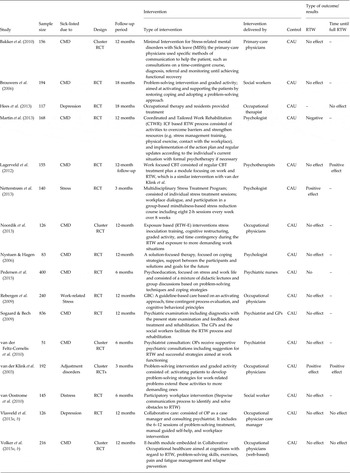
We designed a data extraction sheet, and two authors (Y.T.N. and Y.L.) independently assessed each of the studies included in the final sample (see Table 1 for included study details). We included relevant information about the study (publication year, sample size, population, design, intervention, person who delivered the intervention and control, follow-up period, result by type of outcome). Data from the retrieved RCTs were used to perform a meta-analysis of the RCTs on RTW and time until full RTW in terms of sick-leave duration. Cochrane Review Manager 5.2 was used for the meta-analysis. For time until RTW, we used mean and standard deviations (s.d.s) as the index of integration. For papers with missing s.d. data, s.d.s were calculated on the basis of 95% confidence intervals (CIs).
Studies included in the meta-analysis of RTW interventions in individuals with a common mental illness

CMD, Common mental disorders; RCT, randomized controlled trial; RTW, return to work; CAU, care as usual (conventional case management); CBT, cognitive behavioral therapy; GP, general practitioner; GBC, guideline-based care; ICF, International Classification of Functioning, Disability and Health.
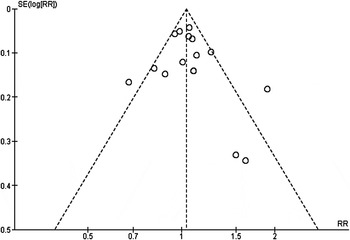
As different mental disorders and interventions were included, we used random-effects models to calculate the across-study effect size. To assess heterogeneity, we used the I 2 statistic. Publication bias was assessed through visual inspection of the funnel plot.
Assessment of risk of bias of individual studies
The quality of the studies was assessed by using the Cochrane Collaboration's risk of bias tool (Higgins et al. Reference Higgins, Altman, Gotzsche, Juni, Moher, Oxman, Savovic, Schulz, Weeks and Sterne2011). Y.T.N. and Y.L. independently assessed the risk of bias of the included studies. We used the following items to assess risk of bias in the included studies: random sequence generation (selection bias), allocation concealment (selection bias), blinding of participants and personnel (performance bias), blinding of outcome assessment (detection bias), incomplete outcome data (attrition bias), and selective reporting (reporting bias) and other biases.
We presented the proportion of risk that came from studies at low, unclear, or high risk of bias for each item in the tool. It is difficult to apply double blinding in trials of psychological interventions, therefore we considered blinding as positive if the assessor was blind.
Results
Description of studies
We retrieved 2347 peer-reviewed articles from five main databases. The titles and abstracts of these articles were examined, and 136 articles were selected by excluding ineligible articles that were either unrelated to CMD or the subjects were not workers, with 97% level of agreement between two authors (Y.T.N. and Y.L.) during screening. The full texts of these 136 papers were subsequently examined. A total of 11 RCTs and five cluster RCTs were ultimately selected (Brouwers et al. Reference Brouwers, Tiemens, Terluin and Verhaak2006; Nystuen & Hagen, Reference Nystuen and Hagen2006; Rebergen et al. Reference Rebergen, Bruinvels, Bezemer, Van Der Beek and van Mechelen2009; Sogaard & Bech, Reference Sogaard and Bech2009; Bakker et al. Reference Bakker, van Marwijk, Terluin, Anema, van Mechelen and Stalman2010; van der FeltzCornelis et al. 2010; van Oostrom et al. Reference van Oostrom, van Mechelen, Terluin, De Vet, Knol and Anema2010; Lagerveld et al. Reference Lagerveld, Blonk, Brenninkmeijer, Wijngaardsde, IJ and Schaufeli2012; Hees et al. Reference Hees, De Vries, Koeter and Schene2013; Martin et al. Reference Martin, Nielsen, Madsen, Petersen, Lange and Rugulies2013; Netterstrøm et al. Reference Netterstrøm, Friebel and Ladegaard2013; Noordik et al. Reference Noordik, van der Klink, Geskus, De Boer, van Dijk and Nieuwenhuijsen2013; Vlasveld et al. Reference Vlasveld, van der Feltz-Cornelis, Ader, Anema, Hoedeman, van Mechelen and Beekman2013a , Reference Vlasveld, van der Feltz-Cornelis, Anema, van Mechelen, Beekman, van Marwijk and Penninx b ; Pedersen et al. Reference Pedersen, Sogaard, Labriola, Nohr and Jensen2015; Volker et al. Reference Volker, Zijlstra-Vlasveld, Anema, Beekman, Brouwers, Emons, van Lomwel and van der Feltz-Cornelis2015a , Reference Volker, Zijlstra-Vlasveld, Brouwers, van Lomwel and van der Feltz-Cornelis b ).
Table 1 describes the overall characteristics of the 16 trials. Overall, 3345 patients were included in the meta-analysis. Ten out of 16 studies included employees who were absent due to a CMD. Three studies targeted employees with work-related stress (Rebergen et al. Reference Rebergen, Bruinvels, Bezemer, Van Der Beek and van Mechelen2009; van Oostrom et al. Reference van Oostrom, van Mechelen, Terluin, De Vet, Knol and Anema2010; Netterstrøm et al. Reference Netterstrøm, Friebel and Ladegaard2013), and two studies were limited to employees with major depressive disorder (Hees et al. Reference Hees, De Vries, Koeter and Schene2013; Vlasveld et al. Reference Vlasveld, van der Feltz-Cornelis, Ader, Anema, Hoedeman, van Mechelen and Beekman2013a ). One study was conducted in employees with adjustment disorders (van der Klink et al. Reference van der Klink, Blonk, Schene, Van and JK2003). No RCTs were conducted on enhancing RTW in patients with anxiety disorders, OCD or PTSD.
The majority of the studies targeted employees who had been absent from work from 2 weeks to >4 weeks, and one study targeted police officers without specified time-frame of absence (Rebergen et al. Reference Rebergen, Bruinvels, Bezemer, Van Der Beek and van Mechelen2009).
RTW definition
All of the selected studies denoted RTW as an outcome, which was defined by either the number of sick-leave days until RTW and/or the proportion of RTW cases. Of the included studies, five reported both RTW and the number of sick-leave days until RTW (van der Klink et al. Reference van der Klink, Blonk, Schene, Van and JK2003; Lagerveld et al. Reference Lagerveld, Blonk, Brenninkmeijer, Wijngaardsde, IJ and Schaufeli2012; Noordik et al. Reference Noordik, van der Klink, Geskus, De Boer, van Dijk and Nieuwenhuijsen2013; Vlasveld et al. Reference Vlasveld, van der Feltz-Cornelis, Ader, Anema, Hoedeman, van Mechelen and Beekman2013a , Reference Vlasveld, van der Feltz-Cornelis, Anema, van Mechelen, Beekman, van Marwijk and Penninx b ; Volker et al. Reference Volker, Zijlstra-Vlasveld, Anema, Beekman, Brouwers, Emons, van Lomwel and van der Feltz-Cornelis2015a , Reference Volker, Zijlstra-Vlasveld, Brouwers, van Lomwel and van der Feltz-Cornelis b ). The follow-up time to assess the proportion of RTW varied by study as did the findings. Two studies (van der Klink et al. Reference van der Klink, Blonk, Schene, Van and JK2003; Netterstrøm et al. Reference Netterstrøm, Friebel and Ladegaard2013) assessed RTW by 3 months, three studies (van der Feltz-Cornelis et al. Reference van der Feltz-Cornelis, Hoedeman, De Jong, Meeuwissen, Drewes, van der Laan and Ader2010; van Oostrom et al. Reference van Oostrom, van Mechelen, Terluin, De Vet, Knol and Anema2010; Pedersen et al. Reference Pedersen, Sogaard, Labriola, Nohr and Jensen2015) by 6 months, and 11 studies examined RTW 12–18 months (Brouwers et al. Reference Brouwers, Tiemens, Terluin and Verhaak2006; Nystuen & Hagen, Reference Nystuen and Hagen2006; Rebergen et al. Reference Rebergen, Bruinvels, Bezemer, Van Der Beek and van Mechelen2009; Bakker et al. Reference Bakker, van Marwijk, Terluin, Anema, van Mechelen and Stalman2010; Sogaard & Bech, Reference Sogaard and Bech2010; Lagerveld et al. Reference Lagerveld, Blonk, Brenninkmeijer, Wijngaardsde, IJ and Schaufeli2012; Hees et al. Reference Hees, De Vries, Koeter and Schene2013; Martin et al. Reference Martin, Nielsen, Madsen, Petersen, Lange and Rugulies2013; Noordik et al. Reference Noordik, van der Klink, Geskus, De Boer, van Dijk and Nieuwenhuijsen2013; Vlasveld et al. Reference Vlasveld, van der Feltz-Cornelis, Ader, Anema, Hoedeman, van Mechelen and Beekman2013a , Reference Vlasveld, van der Feltz-Cornelis, Anema, van Mechelen, Beekman, van Marwijk and Penninx b , Volker et al. Reference Volker, Zijlstra-Vlasveld, Anema, Beekman, Brouwers, Emons, van Lomwel and van der Feltz-Cornelis2015a , Reference Volker, Zijlstra-Vlasveld, Brouwers, van Lomwel and van der Feltz-Cornelis b ).
The content of RTW interventions
Interventions used in the RCTs included problem solving strategies, CBT, developing and restore coping strategies, exposure-based therapy, occupational therapy, psychoeducation, diagnosis and consultation and referral. There was no trial that examined the effectiveness of pharmacotherapy (i.e. antidepressant or anxiety medications) on RTW.
Five studies included work-focused interventions to enhance RTW in such a way that the patients were motivated to develop problem-solving strategies for work-related problems (van der Klink et al. Reference van der Klink, Blonk, Schene, Van and JK2003; Brouwers et al. Reference Brouwers, Tiemens, Terluin and Verhaak2006; Lagerveld et al. Reference Lagerveld, Blonk, Brenninkmeijer, Wijngaardsde, IJ and Schaufeli2012; Vlasveld et al. Reference Vlasveld, van der Feltz-Cornelis, Ader, Anema, Hoedeman, van Mechelen and Beekman2013a , Reference Vlasveld, van der Feltz-Cornelis, Anema, van Mechelen, Beekman, van Marwijk and Penninx b ; Volker et al. Reference Volker, Zijlstra-Vlasveld, Anema, Beekman, Brouwers, Emons, van Lomwel and van der Feltz-Cornelis2015a , Reference Volker, Zijlstra-Vlasveld, Brouwers, van Lomwel and van der Feltz-Cornelis b ). For instance, the coordinated and tailored work rehabilitation was focused on identifying work disability and functioning, overcoming barriers and strengthening resources for RTW (e.g. stress management training, physical exercise, and contact with the workplace (Martin et al. Reference Martin, Nielsen, Madsen, Petersen, Lange and Rugulies2013). Two studies (van der Feltz-Cornelis et al. Reference van der Feltz-Cornelis, Hoedeman, De Jong, Meeuwissen, Drewes, van der Laan and Ader2010; Vlasveld et al. Reference Vlasveld, van der Feltz-Cornelis, Ader, Anema, Hoedeman, van Mechelen and Beekman2013a , Reference Vlasveld, van der Feltz-Cornelis, Anema, van Mechelen, Beekman, van Marwijk and Penninx b ) included a collaborative and multidisciplinary approach where the occupational physicians (OPs) worked together with psychiatrists to facilitate RTW. OPs were trained to provide treatment for mental disorders and became known as occupational physician care managers.
Overall, there were some variations across interventions during the implementation, particularly in the context of the intervention itself and the person who delivered the intervention. However, most trials had common elements in the interventions, such as CBT, stress reduction and fostering patients’ problem-solving skills. These strategies focused on workplace dialogue and addressing individuals’ specific barriers to RTW (Brouwers et al. Reference Brouwers, Tiemens, Terluin and Verhaak2006; Nystuen & Hagen, Reference Nystuen and Hagen2006; Rebergen et al. Reference Rebergen, Bruinvels, Bos, Van Der Beek and van Mechelen2010; van der Feltz-Cornelis et al. Reference van der Feltz-Cornelis, Hoedeman, De Jong, Meeuwissen, Drewes, van der Laan and Ader2010; Lagerveld et al. Reference Lagerveld, Blonk, Brenninkmeijer, Wijngaardsde, IJ and Schaufeli2012; Hees et al. Reference Hees, De Vries, Koeter and Schene2013; Netterstrøm et al. Reference Netterstrøm, Friebel and Ladegaard2013; Vlasveld et al. Reference Vlasveld, van der Feltz-Cornelis, Ader, Anema, Hoedeman, van Mechelen and Beekman2013a , Reference Vlasveld, van der Feltz-Cornelis, Anema, van Mechelen, Beekman, van Marwijk and Penninx b ; Volker et al. Reference Volker, Zijlstra-Vlasveld, Anema, Beekman, Brouwers, Emons, van Lomwel and van der Feltz-Cornelis2015a , Reference Volker, Zijlstra-Vlasveld, Brouwers, van Lomwel and van der Feltz-Cornelis b ).
Effect of the interventions on outcomes
RTW
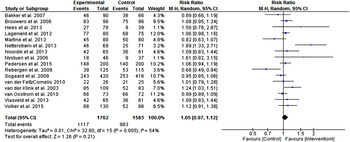
To assess the effectiveness of the interventions on RTW, we pooled data from the studies comparing interventions involving some form of CBT v. the control group using RevMan 5.3 (http://tech.cochrane.org/revman). The average proportion of RTW in the experimental and control group was 65 and 60%, respectively. Overall, the pooled risk ratio (RR) for RTW rate was 1.05 (95% CI 0.97–1.12), with 54% heterogeneity (p = 0.005), indicating there is no clear evidence supporting the effectiveness of the available RTW intervention on RTW proportions.
Forest plot of overall effectiveness of interventions on return to work proportion.

Post-hoc analysis by separating Dutch and Scandinavian studies showed that the pooled RR for RTW was 1.05 (95% CI 0.98–1.12) and 1.10 (95% CI 0.90–1.35), respectively, indicating that origin of the trials (and thereby the social security system) had no effect on the outcome of the intervention except heterogeneity. Figs 2 and 3 show forest plots of RTW proportions for Dutch and Scandinavian studies, respectively.
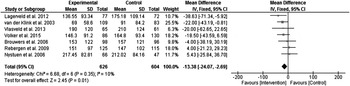
Forest plot of overall effectiveness of interventions on sick-leave days until return to work.

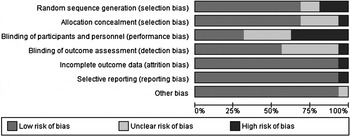
Methodological quality graph. Reviewers’ risk assessment of bias presented as percentages across all included studies.

Sick-leave duration until RTW
To estimate the average sick-leave duration until full RTW, we pooled data from six studies that reported sick-leave days until RTW. The average sick-leave duration until RTW for the intervention and control groups was 151 days (s.d. = 95) and 165 days (s.d. = 103). The meta-analysis showed that the intervention group had significantly shorter sick-leave duration until RTW than the control group, with a mean difference of −13.38 days (95% CI −24.07 to −2.69), and heterogeneity (I 2 = 10%, p = 0.35) (Fig. 4). The standardized mean difference was –0.14 (95% CI −0.26 to −0.01) indicating small effect size based on Cohen's rule.
Funnel plot of published return-to-work studies.

Risk of bias in included studies
Fig. 3 presents the assessment of bias presented as percentages across all included studies scores for each item. The most prevalent shortcomings ‘high risk’ were found in the item about blinding of participants and personnel (performance bias in which only five of the 16 studies scored ‘low risk’). Seven out of 16 studies had unclear risk regarding blinding of the outcome assessment. Although attrition bias appeared to be smaller in the included studies, there was a lack of information about adherence to the intervention in which the non-significant results might be related to the quality and consistency of the intervention implementation.
Discussion
This systematic review and meta-analysis identified 16 RCTs published since 1995. All interventional trials were designed based on CBT approaches with variations in content and forms of implementation. The results showed that compared to the control group, no significant difference was found in overall success of RTW. The average sick-leave duration until RTW was significantly shorter for the intervention group. In general, interventions focusing on RTW are limited and results are inconclusive when it comes to establishing the most effective forms of intervention.
Most of the studies that fitted the search terms did not examine interventions that specifically and explicitly addressed RTW. Rather, they examined the recovery of mental health symptoms or resumption of employment, which might not automatically lead to full RTW (van der Feltz-Cornelis et al. Reference van der Feltz-Cornelis, Meeuwissen, De Jong, Hoedeman and Elfeddali2007; Thunnissen et al. Reference Thunnissen, Duivenvoorden, Busschbach, Hakkaart-van Roijen, van Tilburg, Verheul and Trijsburg2008; Waghorn et al. Reference Waghorn, Dias, Gladman, Harris and Saha2014). In this review, we examined 16 RCTs on RTW in which the interventions varied by settings and by therapists who delivered the skills or interventions. Out of these, 11 studies were conducted in The Netherlands where the occupational healthcare guideline separates the treatment sector from the sick-leave certification, and the OPs play an important role in the guidance of sickness absence and in facilitating the RTW process (Bakker et al. Reference Bakker, van Marwijk, Terluin, Anema, van Mechelen and Stalman2010). The higher the performance and quality of the personnel, the faster employees returned to work. The remaining studies came from the Scandinavian countries where the sick-leave certification is often administered by physicians. This system could result in lack of attention to working conditions and unsuccessful implementation of the RTW process by physicians (Bakker et al. Reference Bakker, van Marwijk, Terluin, Anema, van Mechelen and Stalman2010). The essence of the included trials was targeted to mitigate the professional gaps by developing collaborative, multidisciplinary and guideline-based interventions with respect to RTW. In particular, the Dutch trials evaluated interventions combining the competences of OPs, care managers and psychiatrists.
Among the included RCTs, three trials with positive effects included CBT, stress reduction and fostering patients’ problem-solving skills in the interventions (van der Klink et al. Reference van der Klink, Blonk, Schene, Van and JK2003; van Oostrom et al. Reference van Oostrom, van Mechelen, Terluin, De Vet, Knol and Anema2010; Lagerveld et al. Reference Lagerveld, Blonk, Brenninkmeijer, Wijngaardsde, IJ and Schaufeli2012; Netterstrøm et al. Reference Netterstrøm, Friebel and Ladegaard2013). Martine et al.’s study also had these features, yet their results suggested that patients in the intervention group had more sickness absence benefits and a delayed RTW compared to the control group. Implementation and program failures might explain the delayed RTW in the intervention group. Undetected or unreported psychiatric disorders among sickness absentees may also have contributed to the prolonged time to RTW (Sogaard & Bech, Reference Sogaard and Bech2009).
The pooled results found no evidence that the available interventions aimed at enhancing RTW in employees with a CMD were effective. However, there was evidence to support that the interventions reduced the duration of sick leave until RTW by 13 days, which is equivalent of an effect size of 0.14. According to Cohen's rule, this effect size is small indicating that the resulting difference might not be clinically relevant (Cohen, Reference Cohen1988). However, the 13-day difference might have significant economic implication as it represents considerable savings in healthcare and employment costs at the population level. A previous review (Nieuwenhuijsen et al. Reference Nieuwenhuijsen, Faber, Verbeek, Neumeyer-Gromen, Hees, Verhoeven, van der Feltz-Cornelis and Bultmann2014) also found moderate effect of occupational care with CBT on sick leave in depressed patients. Another review also showed little evidence regarding the effectiveness of workplace interventions on sickness absence regardless of the type of work disability (van Oostrom et al. Reference van Oostrom, Driessen, De Vet, Franche, Schonstein, Loisel, van Mechelen and Anema2009). In the existing studies, the RTW process was solely focused on the context of sickness absence. However, it is not clear to what extent these participants were ready to RTW, and the factors that are associated with readiness to RTW including quality of life, work functioning and self-efficacy readiness to RTW (Vlasveld et al. Reference Vlasveld, van der Feltz-Cornelis, Ader, Anema, Hoedeman, van Mechelen and Beekman2013a , Reference Vlasveld, van der Feltz-Cornelis, Anema, van Mechelen, Beekman, van Marwijk and Penninx b ; Volker et al. Reference Volker, Zijlstra-Vlasveld, Anema, Beekman, Brouwers, Emons, van Lomwel and van der Feltz-Cornelis2015a , Reference Volker, Zijlstra-Vlasveld, Brouwers, van Lomwel and van der Feltz-Cornelis b ) were not measured in these trials. Generally, the existing RCTs provided weak evidence about the effectiveness of psychotherapy (irrespective of collaborative or multidisciplinary, work-focused CBT or CBT alone) on RTW and sick leave.
Strengths and limitations of the review
This review has methodological strengths and limitations. First, an extensive and systematic search was conducted including a range of relevant databases. Considerable efforts were made to retrieve all available articles published since 1995 to 2016. Second, we pooled data of comparable parameters about RTW proportions and sick-leave days until full RTW to reduce the bias of the descriptive analysis.
Despite these strengths, the review has some limitations. First, the search was restricted to reports of RCTs published in peer-reviewed journals, excluding other sources which may include relevant studies. To assess this, we used the funnel plot to investigate how much our results were potentially influenced by publication bias. Second, most of the trials had relatively small samples – only two trials (out of 16) had a sample of more than 400 participants. Third, the validity of our results may be influenced by performance bias as blinding was unattainable for most of the psychological interventions. Lack of blinding normally inflates the difference between experimental and control groups, but their difference is small in the present study. Moreover, it is not clear the extent which the trial participants of the trials were ready to RTW. Previous studies showed that individuals who scored high on the RTW inability factor (indicator of readiness to work) were associated with low future work participation (Braathen et al. Reference Braathen, Brage, Tellnes, Irene, Chris and Eftedal2014), indicating that the participants might not intend to initiate any activities or change behaviors to support their RTW. The unmeasured levels of readiness to RTW may have contributed to the small difference in RTW in the meta-analysis. Finally, this review focused on interventions that aimed at enhancing RTW. Studies on workplace relapse/recurrence prevention were not included. Relapse/recurrence prevention in workplace should be a focus of future research.
In conclusion, this review found no evidence supporting the effectiveness of RTW interventions in employees with a CMD. The RTW interventions have a modest effect on reducing the number of days of sick leave to RTW, which is positive. As mental health problems are affecting a large proportion of working population, and are often disabling and recurrent, having a reduced number of days of sick leave or faster RTW has both public health and economic implications. The effects of psychotherapy on RTW to date underline the need for more well- designed RCTs in this field.
Supplementary material
The supplementary material for this article can be found at http://dx.doi.org/10.1017/S0033291716002269.
Acknowledgements
This study was supported by an operating grant from the Canadian Institutes of Health Research (MOP: 119399)
Declaration of Interest
None.